Get Premium
Dark mode theme is available exclusively for premium users. Learn more about the benefits of subscribing.
No fees, cancel anytime.

 Dark Mode Ad-Free Browsing Unlimited Content
 Ad-Free Browsing Unlimited Content Dark Mode
Join 1.2 million Panda readers who get the best art, memes, and fun stories every week!
Family obligations are one of those things that most people feel they (and others) have, but few can actually identify exactly where they begin and end. So it’s unfortunately a common cause of conflict and drama when one family member has expectations of another that don’t match reality.
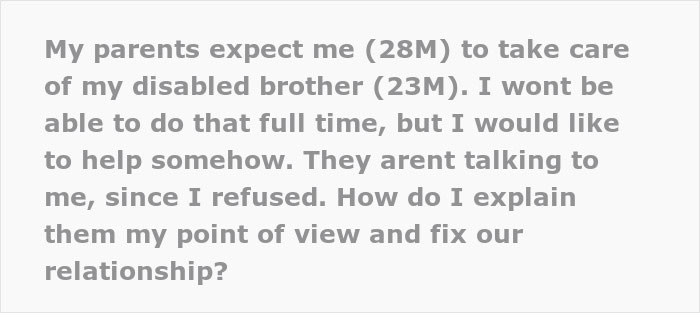
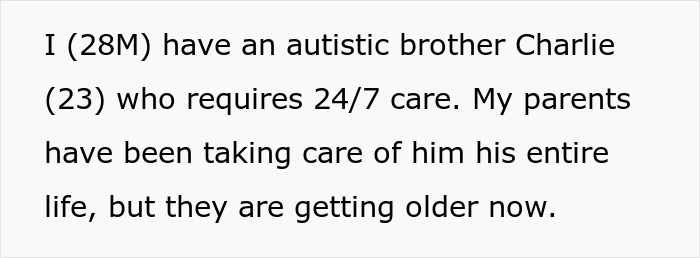
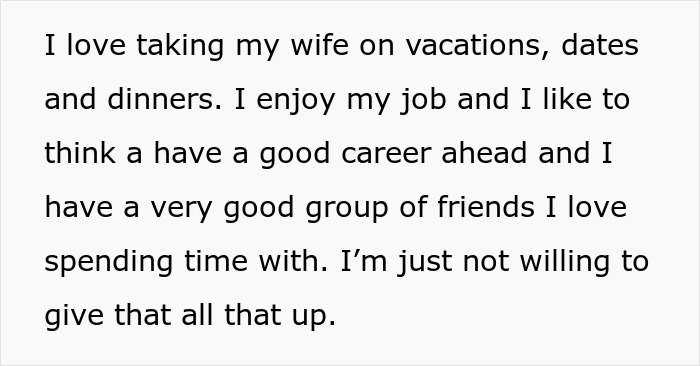
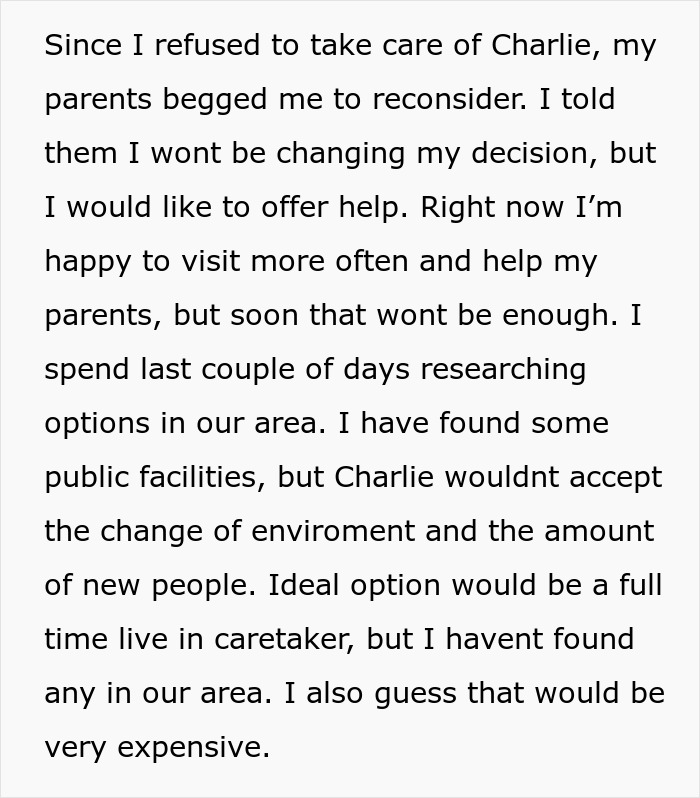
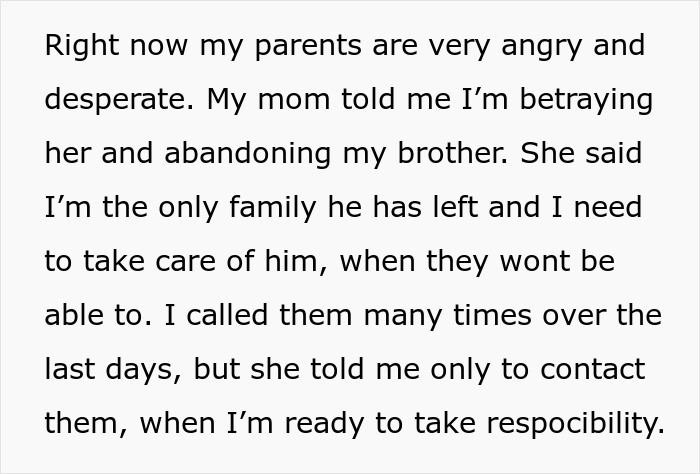
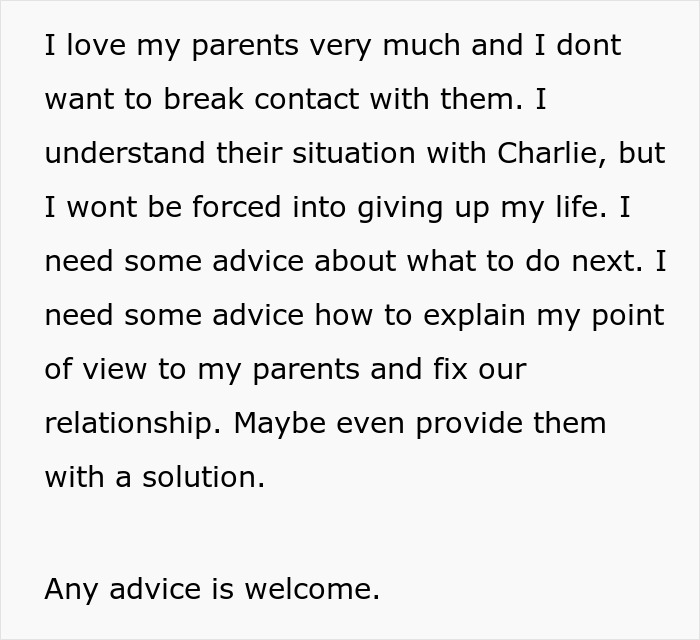
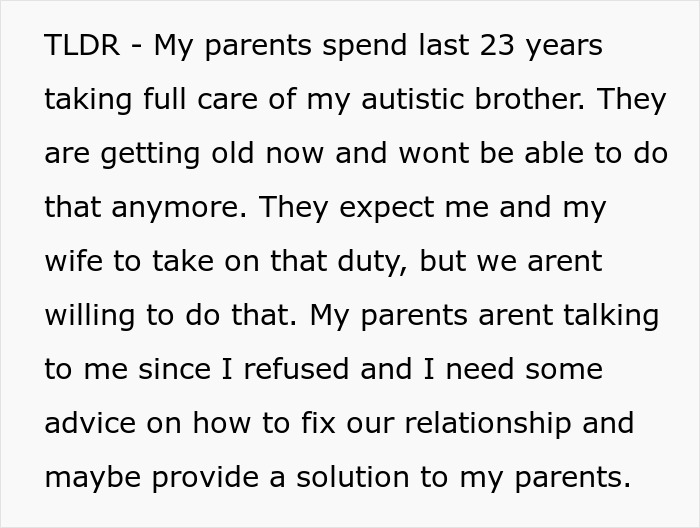
A man asked the internet for advice on how to handle a family situation that arose when his parents asked him to take in his non-verbal autistic brother. When he initially refused, they stopped talking to him. We reached out to the man who made the post via private message and will update the article when he gets back to us.
Image credits: rawpixel.com / freepik (not the actual photo)
Image credits: Andrej Lišakov / Unsplash (not the actual photo)
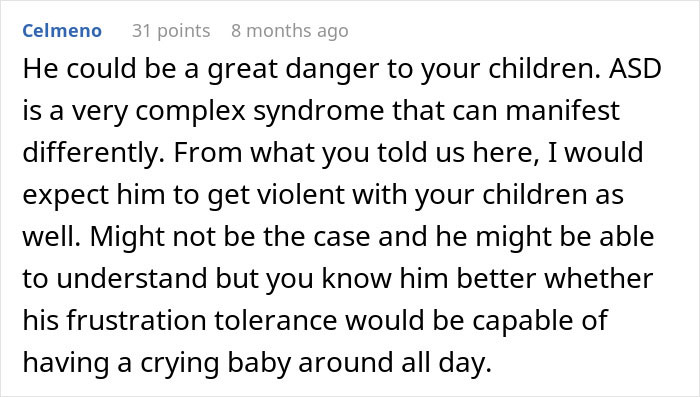
Image credits: PlaceboPill / freepik (not the actual photo)
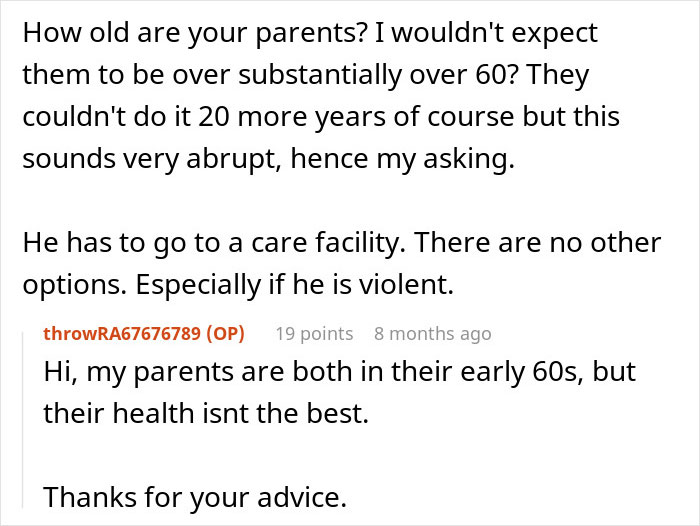
Image credits: throwRA67676789
Some family situations don’t have easy answers
Family ties are strong, and when one of the family members has a disability, these ties get challenged in multifaceted ways. For a 28-year-old male whose parents insist that he bring home his 23-year-old non-verbal autistic brother, the battle is high-stakes. When he declined, his parents shut him out, leaving him with what feels like an inner conflict between wanting to assist and being aware that he cannot realistically care for his brother on a full-time basis. These circumstances are more common than most are aware, and they require compassion not only for the disabled person, but for both sides of the care arrangement.
Step one is knowing that knowing your limitations does not mean you don’t care. Twenty-four-hour caregiving is tiresome, not only for your emotions but your body as well. It typically requires specialized training, money, and support systems. One inexperienced person can easily burn out, serving no one, certainly not the brother who needs capable, routine care. By understanding you cannot do this alone, you are actually protecting your brother from an unworkable situation.
Parents assume that the siblings will “step up” as caregivers when they are no longer able to. That is a natural expectation of love and fear, but one which can also unrealistically burden one person with a lifetime of duty. It is natural to feel guilty about refusal, but guilt does not require responsibility. Your worth as a brother is not gauged by whether you are able to equal the competence of a professional caregiver. It’s quantified by how much you help in ways that are feasible and meaningful. Just because you can’t be there full-time doesn’t mean you can’t assist. Some functional alternatives include:
Image credits: jet-po / freepik (not the actual photo)
Being estranged by your parents is painful but typically reflects their fear of the future over anything else related to you. They may fear what will happen to your brother once they are no longer capable of taking care of him. That fear can take the form of pressure or anger. If contact is re-established, try to listen with empathy and hold firm boundaries. You can say that you do want to be involved, but only in a way that will work with your life. Boundaries are not rejection, indeed, they are clarity.
You don’t have to go through this alone. Processing feelings of resentment and guilt in therapy might prove useful, and calling disability advocacy groups may get you some concrete choices. Adult care programs, group homes, or supported living arrangements are often available in communities to help lift the burden off families. Being aware of what’s out there may assuage your parents’ fears and give you bargaining leverage when you meet with them again.
No single sibling must bear the entire burden of lifelong responsibility. Families, professionals, and communities all chip in. By refusing to accept an unsustainable situation, you’re not abandoning your brother. You’re safeguarding both you and him from a dynamic that would collapse under pressure. Your role can still be significant, it just needn’t be total. You can be an engaged, loving brother without being a caregiver all the time. Boundaries are not selfish. It’s an act of integrity that provides your brother with consistent, professional care he needs, and keeps you healthy enough to be present in his life in a sustainable way.

By entering your email and clicking Subscribe, you're agreeing to let us send you customized marketing messages about us and our advertising partners. You are also agreeing to our Privacy Policy.
Thank you! You've successfully subscribed to newsletters!


As someone who spent 21 years being a caregiver for a completely-disabled family member, I can tell you that, no matter how much you love the person, it will destroy you. When you're family, you can't just "quit" caregiving. I don't begrudge my dad the years I devoted to caring for him after his accident, as I loved him dearly, but I was 18 when it happened and 39 when he died. I never finished college, never got a Bachelor's degree. I never had a "real" job or a career. I never got married or had a family. I never felt like I could even progress in my relationship with my now-ex, because I was living at home taking care of my dad and had no end in sight. I have no skills or certifications. I'm kind of effed. I rarely went on vacations during those two decades. If you're caring for the person in your own home, you don't really get a "day off". Even hiring professionals doesn't give you entire respite. Charlie needs to be in a facility. My dad SHOULD have been in one. But it sucks.

My wife is the legal guardian for two half-siblings who are bipolar schizophrenic. Her mom couldn't handle it, so my wife took it on. It has been difficult and I try to support her. Her brother has been violent, so he was never allowed to live with us. The sister stayed with us a short time. But both have been homeless or we put them up in hotels or rented them apartments. Eventually, she got them into care homes. That's really the only option for OP. The parents should have worked on that when he was a teenager, not planning to burden their other child. *I'm sorry you didn't have the opportunity to lighten your burden, LW.
Load More Replies...
I would recommend talking to Adult Social Services and a specialist lawyer familiar with the legal and social support system in your country, to find out what legal sibling responsibility exists, and what care options will be available for Charlie when his parents are no longer able to manage. Residential care is likely Charlie's best option, soon, while his parents are able to visit frequently, and monitor his situation and quality of care. Charlie may even benefit from the move. He may have more access to occupational and communication therapy, and the chance to be around peers, and possibly to enjoy friendship and companionship his parents or brother can't give him. The transition will be difficult, but a transition to his brother as the main carer would also be difficult. OP is right to refuse - Charlie's situation is tragic, but he should not sacrifice his own career, relationships and entire life to personally be Charlie's carer.

The one good thing about this situation is the parents are engaging in succession planning. They understand they have a responsibility to their autistic son to ensure his needs are being met when they are no longer able to do so. Their prefered solution is not a good one; it will not work. One possible way forward would be to start with a bit of respite care, and then transition their autistic son into a residential home.

They started the process too late. They " took care " of Charkie, but didnt do it right. Charlie bit tge OPs friend, so sounds like Charlie is nit oroperly socialised. Transitioning to a care home now will be hard and traumatic. The parents did the best they could, but not the best for Charlie.
Load More Replies... As someone who spent 21 years being a caregiver for a completely-disabled family member, I can tell you that, no matter how much you love the person, it will destroy you. When you're family, you can't just "quit" caregiving. I don't begrudge my dad the years I devoted to caring for him after his accident, as I loved him dearly, but I was 18 when it happened and 39 when he died. I never finished college, never got a Bachelor's degree. I never had a "real" job or a career. I never got married or had a family. I never felt like I could even progress in my relationship with my now-ex, because I was living at home taking care of my dad and had no end in sight. I have no skills or certifications. I'm kind of effed. I rarely went on vacations during those two decades. If you're caring for the person in your own home, you don't really get a "day off". Even hiring professionals doesn't give you entire respite. Charlie needs to be in a facility. My dad SHOULD have been in one. But it sucks.
My wife is the legal guardian for two half-siblings who are bipolar schizophrenic. Her mom couldn't handle it, so my wife took it on. It has been difficult and I try to support her. Her brother has been violent, so he was never allowed to live with us. The sister stayed with us a short time. But both have been homeless or we put them up in hotels or rented them apartments. Eventually, she got them into care homes. That's really the only option for OP. The parents should have worked on that when he was a teenager, not planning to burden their other child. *I'm sorry you didn't have the opportunity to lighten your burden, LW.
Load More Replies... I would recommend talking to Adult Social Services and a specialist lawyer familiar with the legal and social support system in your country, to find out what legal sibling responsibility exists, and what care options will be available for Charlie when his parents are no longer able to manage. Residential care is likely Charlie's best option, soon, while his parents are able to visit frequently, and monitor his situation and quality of care. Charlie may even benefit from the move. He may have more access to occupational and communication therapy, and the chance to be around peers, and possibly to enjoy friendship and companionship his parents or brother can't give him. The transition will be difficult, but a transition to his brother as the main carer would also be difficult. OP is right to refuse - Charlie's situation is tragic, but he should not sacrifice his own career, relationships and entire life to personally be Charlie's carer.
The one good thing about this situation is the parents are engaging in succession planning. They understand they have a responsibility to their autistic son to ensure his needs are being met when they are no longer able to do so. Their prefered solution is not a good one; it will not work. One possible way forward would be to start with a bit of respite care, and then transition their autistic son into a residential home.
They started the process too late. They " took care " of Charkie, but didnt do it right. Charlie bit tge OPs friend, so sounds like Charlie is nit oroperly socialised. Transitioning to a care home now will be hard and traumatic. The parents did the best they could, but not the best for Charlie.
Load More Replies...





























 No fees, cancel anytime
















38
29