Get Premium
Dark mode theme is available exclusively for premium users. Learn more about the benefits of subscribing.
No fees, cancel anytime.

 Dark Mode Ad-Free Browsing Unlimited Content
 Ad-Free Browsing Unlimited Content Dark Mode
Join 1.2 million Panda readers who get the best art, memes, and fun stories every week!

You were probably told from a young age that if you’re a loyal, hard worker, your efforts will surely be rewarded. You’ll be given promotions, raises and the respect of your employer. And you’ll never have to worry about job security! Unfortunately, however, that does not reflect the current job market. And the days of working for the same company for decades are long gone, as companies have proven time and time again that they don’t value their loyal workers.
One woman who learned this lesson the hard way recently reached out to Reddit to share her story. Below, you’ll find all of the details about why she refuses to train her replacement, as well as some of the replies invested readers shared.
Image credits: Getty Images / Unsplash (not the actual photo)
Image credits: Raymond Petrik / Unsplash (not the actual photo)
Image credits: diana.grytsku / freepik (not the actual photo)
Image credits: Guscioni-Mibida
The idea of paying a new hire more than someone who’s been at the company for years sounds absurd. Shouldn’t the seasoned veteran be rewarded for their dedication? Well, unfortunately, companies don’t always see it that way. There’s a reason why many experts recommend changing jobs every three to five years.
Raises aren’t always guaranteed, even if you’re loyal to a company for many years. In fact, a Monster survey found that over a quarter of workers haven’t received a raise in over a year, and 18% of workers polled had never received a raise. Meanwhile, Resume Worded reports that job switchers tend to see between a 5% and 15% salary increase when they start a new position.
So why are new hires being paid more? Well, Bloomberry says there are a few explanations. First of all, your employer might actually want you to leave. Some Big Tech companies even fire the bottom 10% of their workforce every year to make room for more skilled employees. By refusing to give you a raise, your company might be nudging you towards the door.
Another potential explanation is that the company might have a capped budget for salary raises. But their hiring budget might be even larger. At the same time, HR often doesn’t realize the long-term impacts that come along with paying new hires more than the people they’re replacing. It might make sense on paper, but the loss of experience and skill can come back to bite them.
There’s also a common misconception that experience collected at other companies is somehow more valuable than experience garnered in house. New hires are attractive to companies because they bring unique perspectives to the table, but that doesn’t necessarily mean that they’ll be a good fit.
Image credits: Tahir osman / Unsplash (not the actual photo)
While employers are prioritizing attracting new talent, Harvard Business Review warns that paying replacements more is a great way to get top performers to resign. When workers realize that they’re not being valued, they’ll start seeking out new opportunities. After all, nobody wants to miss out on a higher salary if they might be able to find one elsewhere.
Of course, this can also take a huge toll on morale within a company. Veterans might be bitter about new hires earning more than them, and as more tenured employees begin to jump ship, the company loses out on valuable expertise. Plus, if everyone in the office is a relatively new hire, they might not have the necessary skills and knowledge to keep the company afloat.
There are steps companies can take to prevent these issues from arising, though. Hppy recommends carrying out regular payroll audits to ensure that employees are being paid fairly. It’s also a good idea to have open conversations about pay structure.
Employees should understand exactly why they’re earning their current salary. Meanwhile, adjustments should be made when necessary. And workers should feel comfortable expressing any concerns they may have about their wages. It’s better to address these issues than to suffer in silence, especially if someone with 5 years less experience is out-earning you.
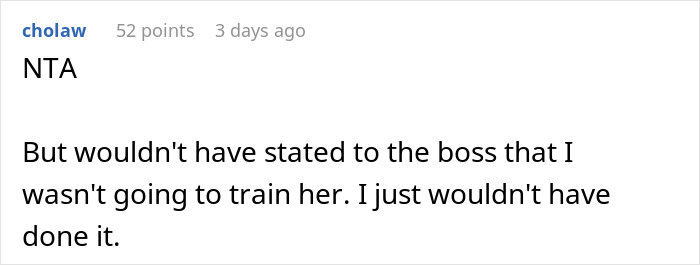
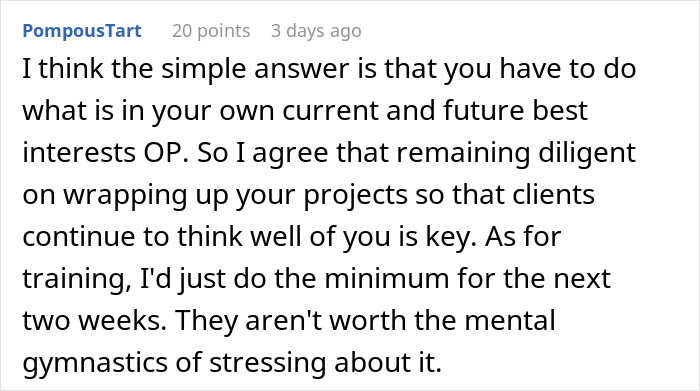
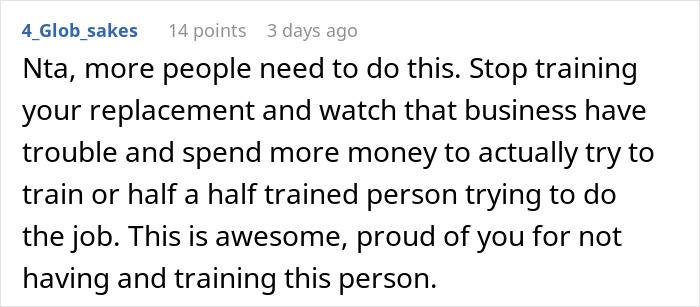
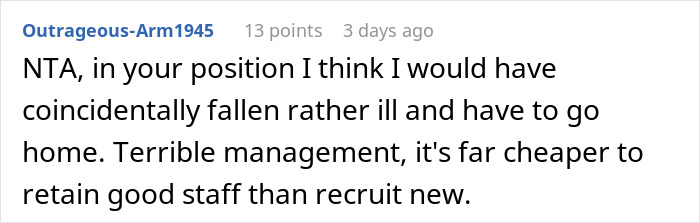
We would love to hear your thoughts on this situation in the comments below, pandas. Do you think this woman made the right call by refusing to train her replacement? Then, if you’re looking for another Bored Panda article discussing similar workplace drama, look no further than right here.

By entering your email and clicking Subscribe, you're agreeing to let us send you customized marketing messages about us and our advertising partners. You are also agreeing to our Privacy Policy.
Thank you! You've successfully subscribed to newsletters!


See folks? THIS is why employers have tried to gaslight employees into thinking it was against the rules to discuss salary. I even had one past employer years ago try to make their employees sign a f*****g contract stating that we would not discuss salary with other employees—-ILLEGAL! By LAW we can discuss our salaries with anybody we d****d well please, including our fellow employees. That way, management can’t hide paying someone they favor more than their cohorts (for varying reasons, mostly because they’re family, friends, or side pieces, rarely because they’re better, more talented, educated, or qualified—-in fact they’re usually total s**t at the job). Knowing your rights when it comes to work is a valuable thing, and can help keep you from being cheated.

And it took time and effort to get here - I remember getting tossed from a job in the '80s for mentioning salary. Not DISCUSSING it - MENTIONING it.
Load More Replies...
This happened to my daughter (UK). She's an Accountant. Her bosses 'encouraged' employees not to talk about salaries (red flag there), but back then she was newly qualified. Five years on, having average % increments yearly as she rose slowly higher - "We're a small company" excuses (it wasn't that small). A young bloke, fresh from AAT College, was hired in the section she supervised, and was asked to train him up to spec. The salary discrepancy, came out the same way as this story. He was earning £5,000 pa more than her. One of her Account clients, that she'd become friendly with over the years, offered her a direct job offer after she disclosed it. She got £12,000 more p.a. - which was about right for her level over the Pond, and good raises p.a./skill levels. Glad the OP moved onto better prospects. NTA.

It's illegal in the UK to prevent employees from discussing salaries. It's covered under the equality laws.
Load More Replies...

Probably the same ones who would throw a fit if it happened to them. Or do as little work as possible and justify it by saying well if I was paid more I'd do better.
Load More Replies... See folks? THIS is why employers have tried to gaslight employees into thinking it was against the rules to discuss salary. I even had one past employer years ago try to make their employees sign a f*****g contract stating that we would not discuss salary with other employees—-ILLEGAL! By LAW we can discuss our salaries with anybody we d****d well please, including our fellow employees. That way, management can’t hide paying someone they favor more than their cohorts (for varying reasons, mostly because they’re family, friends, or side pieces, rarely because they’re better, more talented, educated, or qualified—-in fact they’re usually total s**t at the job). Knowing your rights when it comes to work is a valuable thing, and can help keep you from being cheated.
And it took time and effort to get here - I remember getting tossed from a job in the '80s for mentioning salary. Not DISCUSSING it - MENTIONING it.
Load More Replies... This happened to my daughter (UK). She's an Accountant. Her bosses 'encouraged' employees not to talk about salaries (red flag there), but back then she was newly qualified. Five years on, having average % increments yearly as she rose slowly higher - "We're a small company" excuses (it wasn't that small). A young bloke, fresh from AAT College, was hired in the section she supervised, and was asked to train him up to spec. The salary discrepancy, came out the same way as this story. He was earning £5,000 pa more than her. One of her Account clients, that she'd become friendly with over the years, offered her a direct job offer after she disclosed it. She got £12,000 more p.a. - which was about right for her level over the Pond, and good raises p.a./skill levels. Glad the OP moved onto better prospects. NTA.
It's illegal in the UK to prevent employees from discussing salaries. It's covered under the equality laws.
Load More Replies... Probably the same ones who would throw a fit if it happened to them. Or do as little work as possible and justify it by saying well if I was paid more I'd do better.
Load More Replies...





































 No fees, cancel anytime

























44
35