Get Premium
Dark mode theme is available exclusively for premium users. Learn more about the benefits of subscribing.
No fees, cancel anytime.

 Dark Mode Ad-Free Browsing Unlimited Content
 Ad-Free Browsing Unlimited Content Dark Mode
Join 1.2 million Panda readers who get the best art, memes, and fun stories every week!
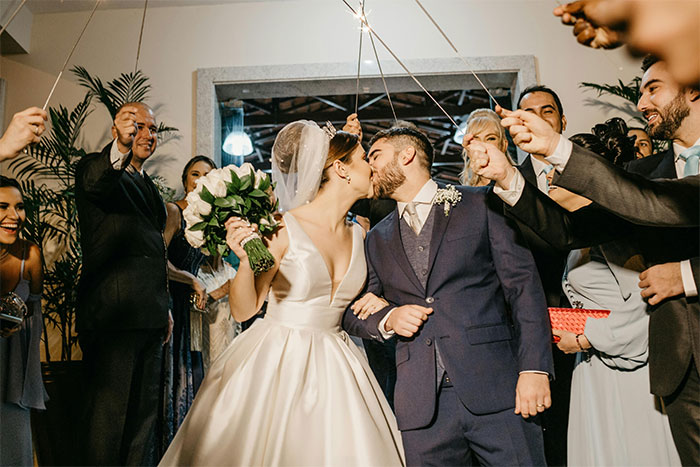
For something that lasts just one day, weddings can get shockingly pricey. In the US, wedding planners alone can run anywhere from around $800 for day-of coordination to $25,000+ for full-service planning—numbers that make you want to clutch your wallet.
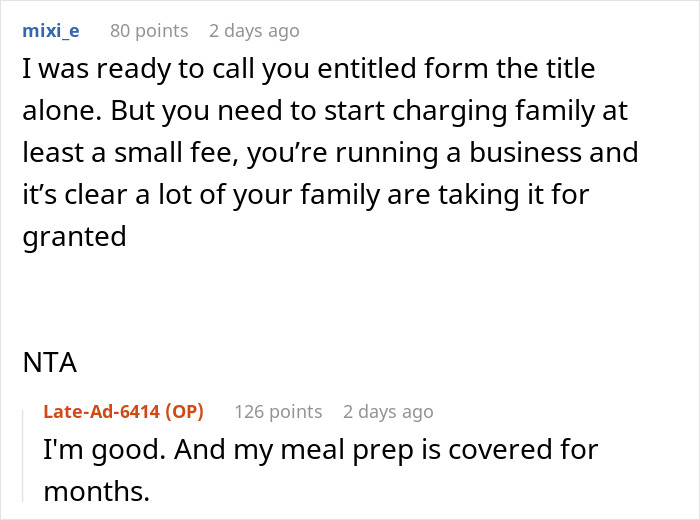
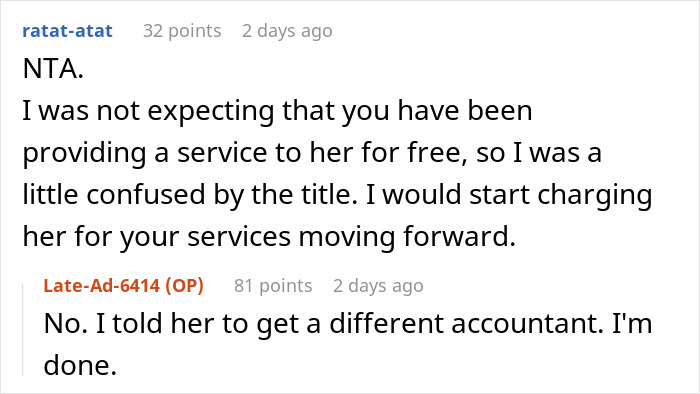
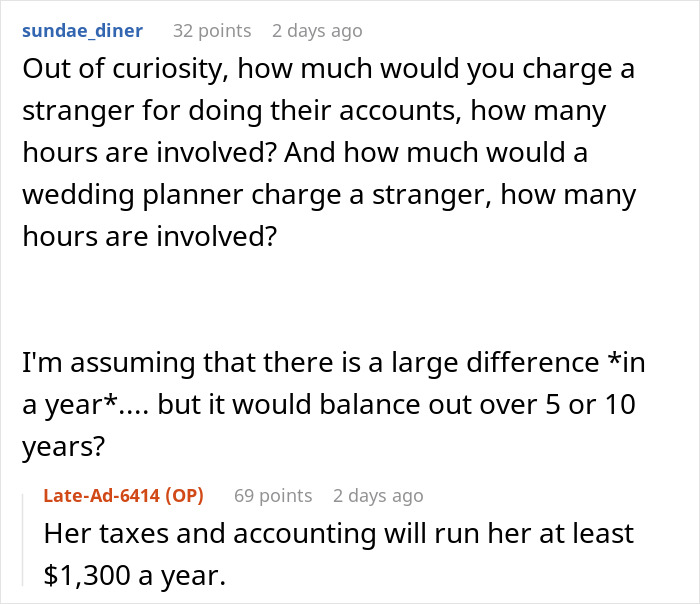
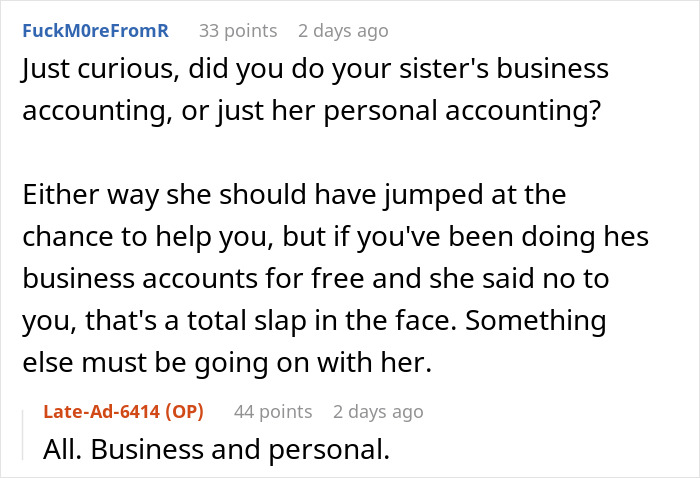
When one Redditor got engaged, she thought she had a fair solution: ask her sister, who runs a wedding planning business, to help plan her big day for free. After all, she’d been providing her sister with accounting services at no cost for a while, and expected that favor to be returned.
But her sister flat-out refused. Shocked, the bride-to-be decided to turn the tables and give her a taste of her own medicine, sparking a full-blown family drama in the process. Read the full story below.
Image credits: Jonathan Borba / Pexels (not the actual photo)




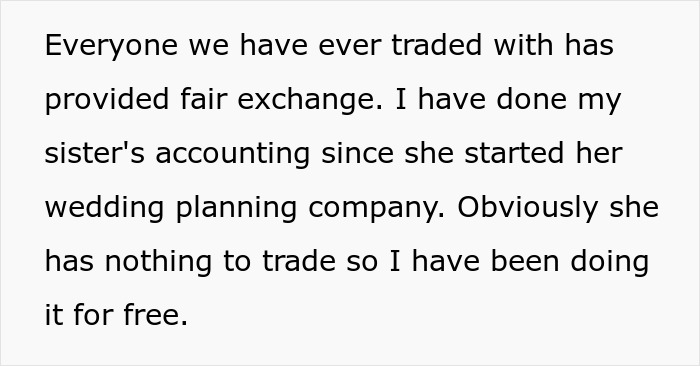
Image credits: Getty Images / Unsplash (not the actual photo)

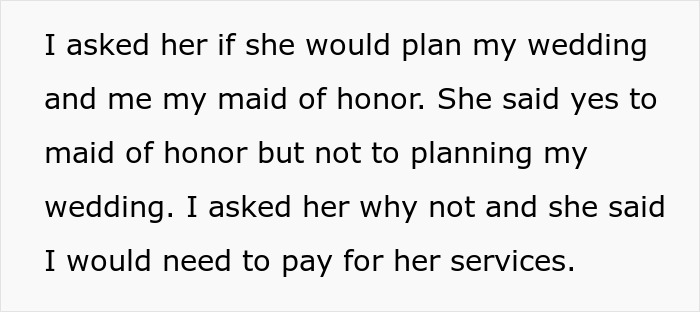



Image credits: Chris Yang / Unsplash (not the actual photo)


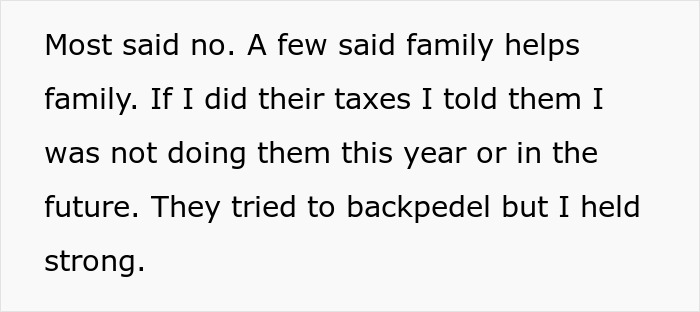
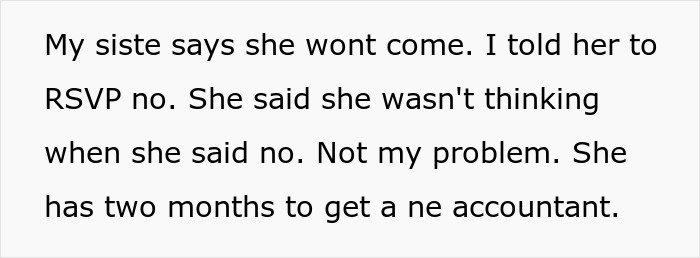
Image credits: Late-Ad-6414
Image credits: Kateryna Hliznitsova / Unsplash (not the actual photo)
Weddings have become serious financial commitments. The average couple in the US now spends around $36,000 on their big day, according to 2026 data from wedding platform Zola.
Breaking down where all that money goes can feel overwhelming. The venue typically eats up the biggest portion of the budget, often running between $6,900 and $10,300 just to secure a space. Then there’s catering, which can cost $7,000 when you factor in food and drinks for all your guests.
Photography packages vary wildly depending on how many hours you need and what kind of editing you want, but couples should expect to spend anywhere from $3,500 to $5,300. Hair and makeup average around $1,000, flowers run about $6,000, and even the cake and desserts can add another thousand to the bill.
Those are sweat-inducing prices for sure, but are they worth it? Research suggests not really. According to a LendingTree survey, 67% of newlyweds in 2025 took on debt to pay for their wedding. One in three couples felt pressured to overspend just to impress their guests.
The aftermath reveals even more regret: more than half of newlyweds wish they’d spent less, and 16% have considered divorce over wedding-related money stress. When you’re facing that kind of financial and emotional toll, asking a family member who runs a wedding planning business for help seems like the smart move.
Image credits: Anna Shvets / Pexels (not the actual photo)
At the same time, this story shows why mixing business with family can get tricky. The bride had been handling accounting for her sister and other relatives in exchange for things like food. It’s the kind of informal barter system that keeps communities tight and helps everyone get by.
The problem came when she expected the same arrangement to work in reverse. Her sister draws a clear line between family favors and her professional services, and suddenly the whole system falls apart. It’s a pattern many people have learned the hard way: keep business and family separate.
There are good reasons that advice exists. Steve M. Cohen, president of Labor Management Advisory Group and author of Mess Management: Lessons From a Corporate Hit Man, lays out the potential negatives in a Psychology Today piece.
Family baggage inevitably gets dragged into the workplace, he explains. Relatives struggle to stay objective about work duties. When problems arise with one family member, those issues tend to spill over and affect relationships with other family members who are also employees. Even unrelated employees get caught in the crossfire.
Cohen does acknowledge that family businesses can work, especially smaller operations. Family members already know each other, so there’s no need to establish trust and loyalty from scratch.
James M. Kerr, a leadership coach and author of The Indispensable Leader’s Handbook, takes this idea further. He argues that completely avoiding business with friends or family is actually a cop out. There are real benefits to working with people you already have history with.
That existing relationship cuts down on stress and uncertainty. Friends offer encouragement and emotional support when things get tough, making the inevitable ups and downs feel less isolating. Shared values often lead to more harmonious decision-making.
Honest conversations happen more naturally, which improves problem-solving and collaboration. And when you genuinely enjoy your business partner’s company, work feels less like a grind and more like a shared adventure.
But Kerr warns that making it work requires clear boundaries and open communication upfront. Without those guardrails, conflicts can easily destroy friendships.
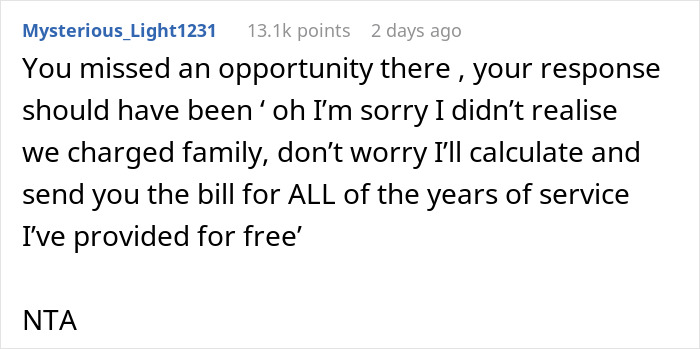
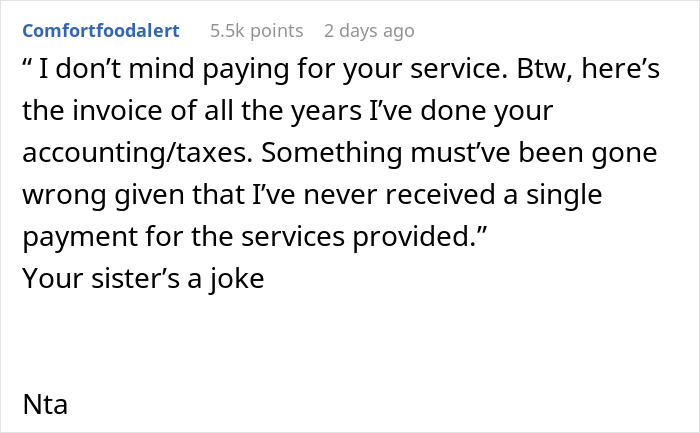
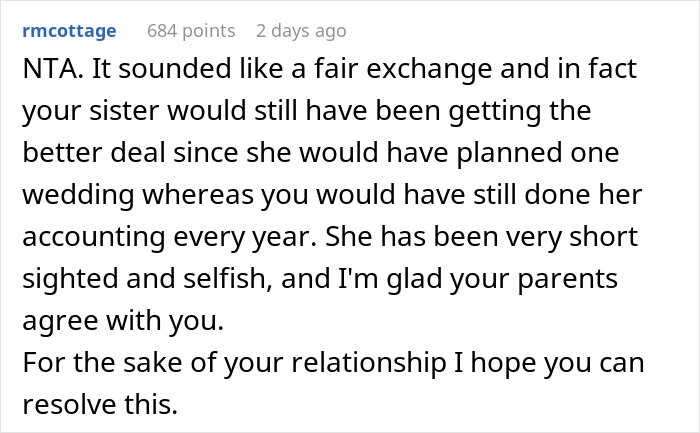
That’s exactly where things fell apart in this story. The communication broke down when the bride asked her sister to reciprocate the free services, and her sister declined. The whole system collapsed from there, leaving an unfortunate rift between them. At the very least, it’s a lesson for both of them going forward.










By entering your email and clicking Subscribe, you're agreeing to let us send you customized marketing messages about us and our advertising partners. You are also agreeing to our Privacy Policy.
Thank you! You've successfully subscribed to newsletters!


I honestly don’t get op not charging family at all, that’s not how you run a business, being paid in food won’t pay the bill,s might get you fat but bills etc not so much ! Family rates ,ie half price maybe ,but as for sister she’s got a nerve , I would ligit be working out how much doing her taxes have cost from day dot , n handed over an invoice ,saying you have 28 days to pay ! well clearly you don’t do things for free, so neither am I now !

Luckily family is only about 10% of the business. Besides, she does get paid back, just not in money, especially when you figure in the value of the time alone that it takes to make the barter items or do the barter services—-especially since it frees her up to take on another accounting client or two or three, which is extra income for her—-it’s a fair trade. Like one commenter said, sister should’ve planned the wedding for free, because she’s had years of free accounting services, and this would be a chance to pay OP back. It was selfish of sister not to do that.
Load More Replies... I honestly don’t get op not charging family at all, that’s not how you run a business, being paid in food won’t pay the bill,s might get you fat but bills etc not so much ! Family rates ,ie half price maybe ,but as for sister she’s got a nerve , I would ligit be working out how much doing her taxes have cost from day dot , n handed over an invoice ,saying you have 28 days to pay ! well clearly you don’t do things for free, so neither am I now !
Luckily family is only about 10% of the business. Besides, she does get paid back, just not in money, especially when you figure in the value of the time alone that it takes to make the barter items or do the barter services—-especially since it frees her up to take on another accounting client or two or three, which is extra income for her—-it’s a fair trade. Like one commenter said, sister should’ve planned the wedding for free, because she’s had years of free accounting services, and this would be a chance to pay OP back. It was selfish of sister not to do that.
Load More Replies...



































 No fees, cancel anytime











35
5