We and our trusted partners use technology such as cookies on our site to personalize content and ads, provide social media features, and analyze our traffic. You can read more about it and change your preferences here.
Parents choose gentler parenting styles because they want to break cycles. Some promise to never parent their kids like they were parented. According to a 2025 survey of parents with kids aged 0-6, 37% of young parents are focused on healing generational trauma. That often involves gentle parenting, but if not done correctly, it can backfire spectacularly.
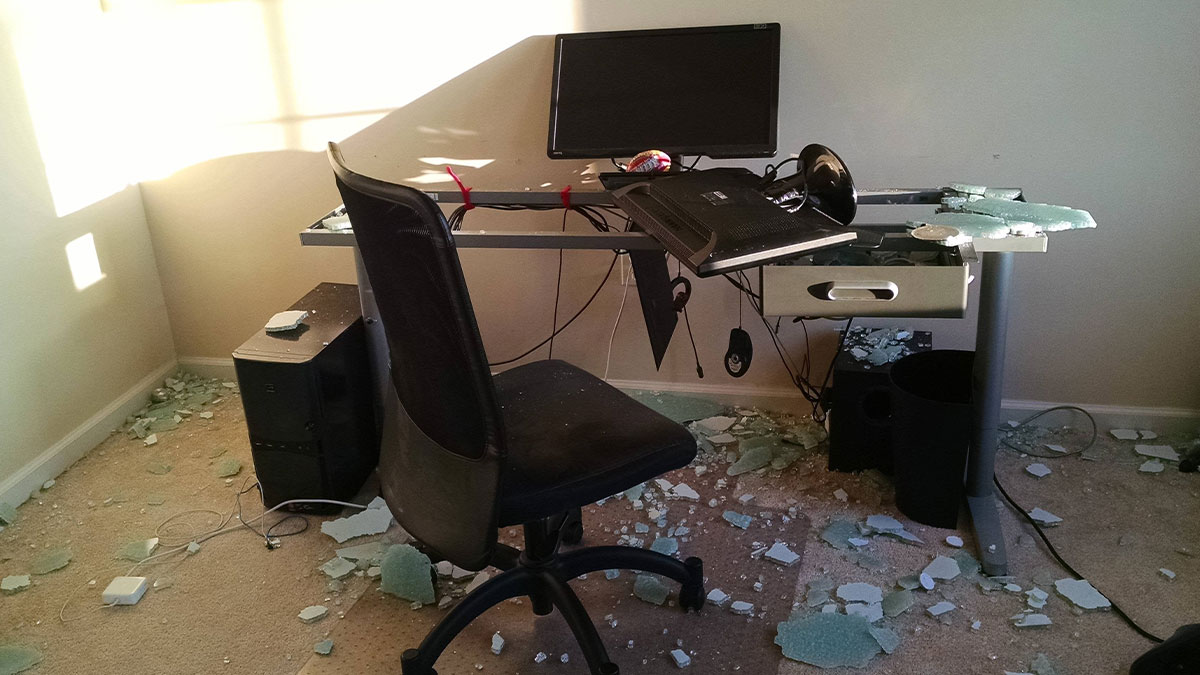
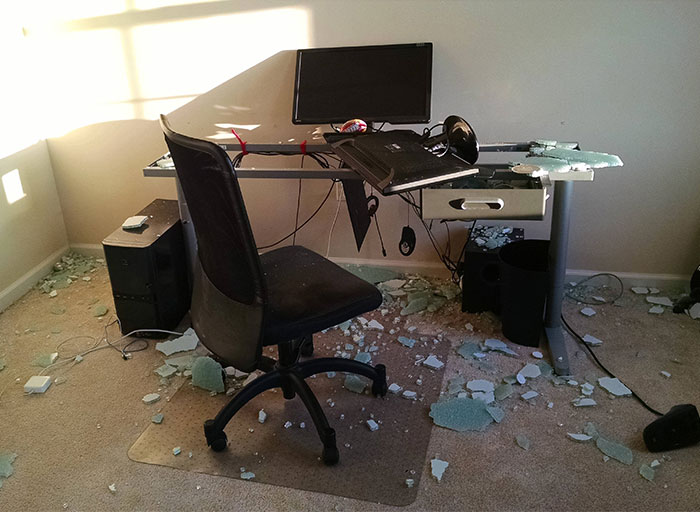
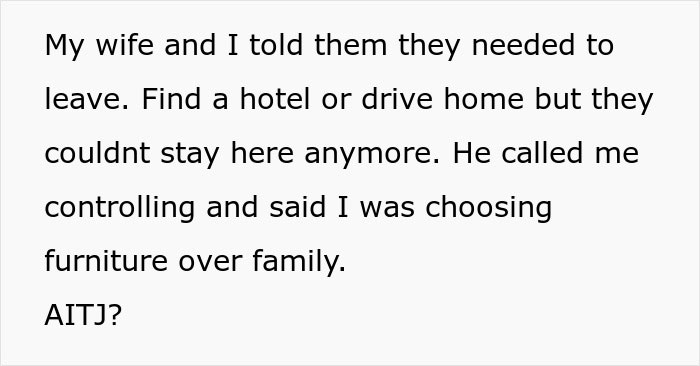
This person had such a hard time with their brother’s kids that they had to cut their visit short. After the children destroyed their home office, chipped their patio glass door, and the parents did nothing, the sibling just couldn’t ignore it any longer. “They don’t do any kind of punishment or consequences,” the person shared in disbelief.
RELATED:
Unruly kids became the reason a brother was kicked out of his sibling’s house during a visit
Smiling young boy holding a phone, jumping indoors, illustrating sibling and parenting challenges in a family setting.
After they destroyed their home office, the host asked the brother to either discipline them or get out
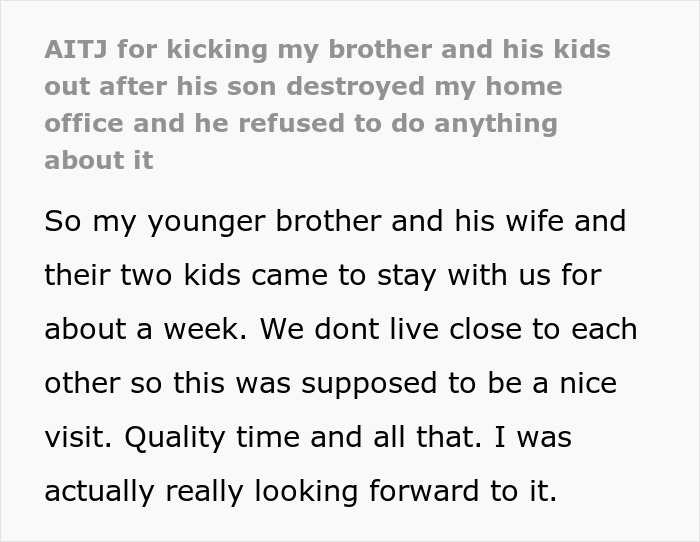
Text excerpt discussing sibling conflict after brother and his kids visit leads to sibling kicking them out.
ADVERTISEMENT
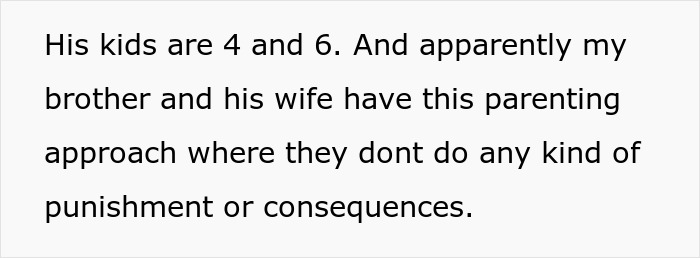
Text about brother’s kids aged 4 and 6 and his parenting style with no punishment or consequences discussed.
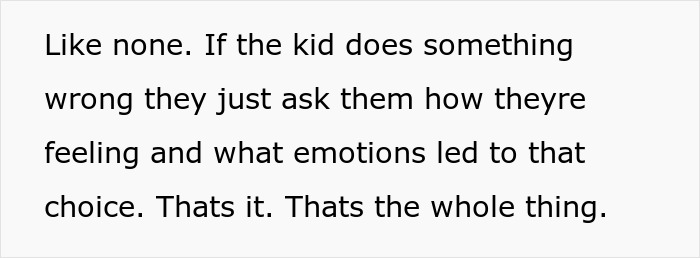
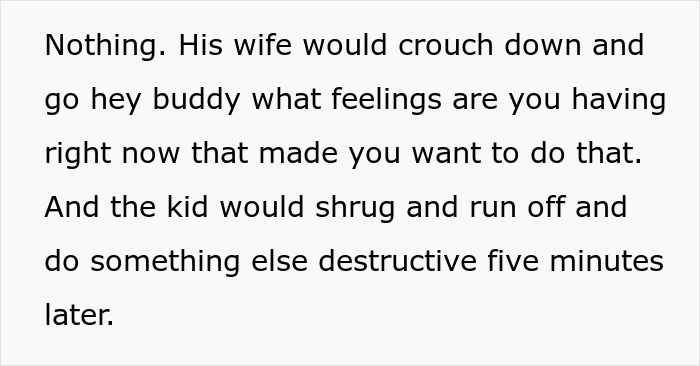
Text excerpt on a white background discussing no consequences parenting and emotional responses to children's behavior.
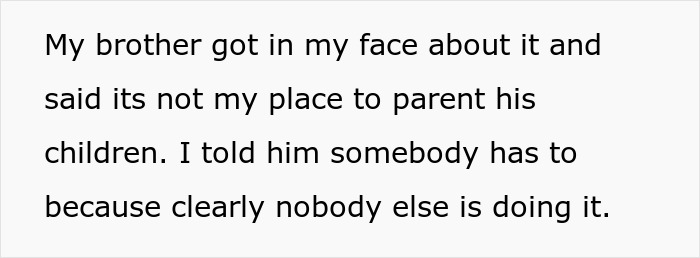
Text explaining confusion about parenting decisions, highlighting sibling kicks out brother and his kids after no consequences parenting.
ADVERTISEMENT
ADVERTISEMENT
Family conflict erupts as sibling kicks out brother and his kids after no consequences parenting causes issues
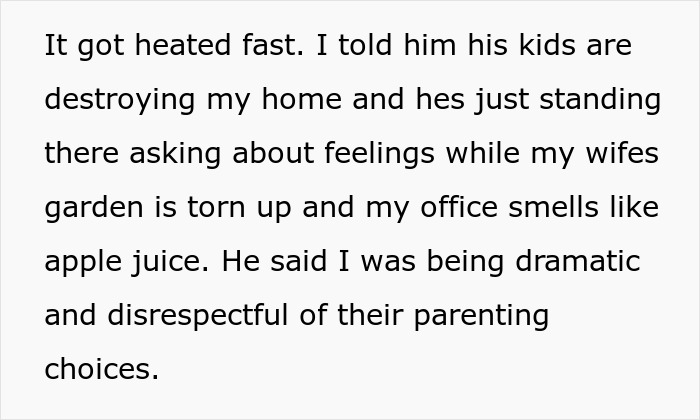
Text about sibling kicking out brother and his kids after no consequences parenting leads to chaos in home office with spilled juice on desk and keyboard.
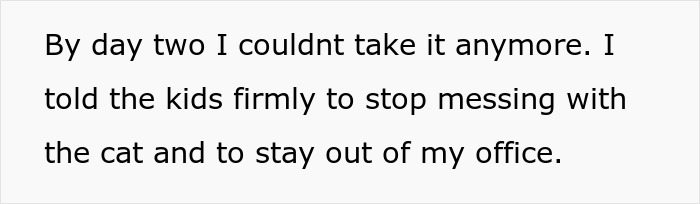
Text describing a sibling kicking out brother and his kids after no consequences parenting causes problems and conflict.
ADVERTISEMENT
Child holding a cat indoors near curtains, symbolizing sibling conflict and no consequences parenting challenges.
Parents can discipline their kids in gentle ways, too; they don’t have to be permissive
We’ll never know whether the story is an exaggeration or not. Maybe the kids were unruly to the point that the house would have been destroyed. Perhaps the parents did gentle parenting right, and the sibling was just too prejudiced to notice.
But whatever the real situation was, one thing is true: children need discipline. Even the UK’s Supernanny, Jo Frost, says that discipline teaches kids self-control and helps them feel secure. Kids need and thrive when there are rules, so a household where everything is permitted will only do developmental damage in the long run.
Children need to learn that there are consequences to their actions, or they might get a brutal reality check when they step into the real world as adults. Some parents may avoid disciplining their children because they’ve had bad experiences when they were children.
ADVERTISEMENT
However, parents can dish out consequences in such a way that doesn’t traumatize their kids. Child therapist Jess VanderWier, MA, RP, explains that there is a difference between punishments and boundaries.
“I’ve heard concerns like, ‘Won’t saying ‘no’ all the time crush their spirit?’ or ‘I don’t want to be the bad guy – I want my child to like me!’ These fears are understandable, but research tells a different story if boundaries are applied correctly,” she writes. “Research consistently shows that children actually thrive when they have clear, consistent limits.”
Discipline doesn’t equal punishment, and research shows that setting clear boundaries and guiding children to adhere to them is much more effective than any form of punishment.
Boundaries need to be consistent, set firmly, and always followed through with
What does setting boundaries for children look like exactly? VanderWier likens it to parents acting as the child’s “external prefrontal cortex.” Essentially, kids act out or do questionable things because their brains aren’t fully developed yet. So, parents need to guide them and teach them how to navigate the world.
The most effective ways to set boundaries can be:
Consistency. If parents change rules from one day to the next, it confuses children. If a room is off-limits today, it must be so tomorrow, too.
Authoritative but gentle delivery. Shouting or raising your voice only intimidates and scares children. Tone and body language matter, so parents need to be confident yet compassionate.
When you say ‘no,’ offer a creative ‘yes.’ VanderWier gives an apt example with a cat. Instead of saying, “Don’t touch the cat,” say, “I won’t let you pull the cat’s fur. Let’s practice touching her with soft hands.”
Use natural consequences. This is the “Mess around and find out,” but for children. According to Julie Wales, family and special needs counselor, “this helps associate negative outcomes with specific behaviour.”
All in all, parents can be authoritative and compassionate at the same time. “Boundaries and love go hand in hand,” VanerWier adds. “You can enforce a boundary while still offering comfort and support.”
ADVERTISEMENT
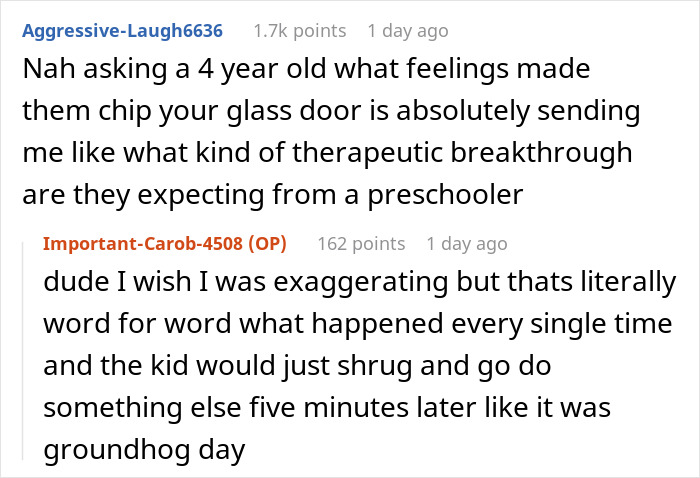
“I wish I was exaggerating,” the homeowner detailed in the comments
Reddit users discuss no consequences parenting and its impact on sibling relationships and family dynamics.
ADVERTISEMENT
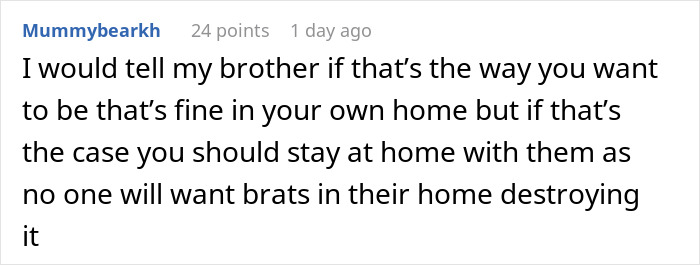
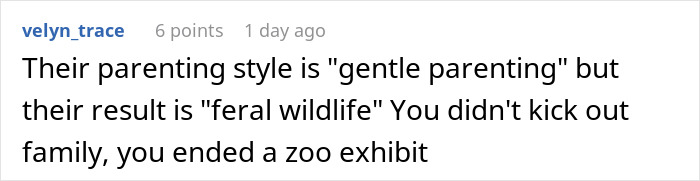
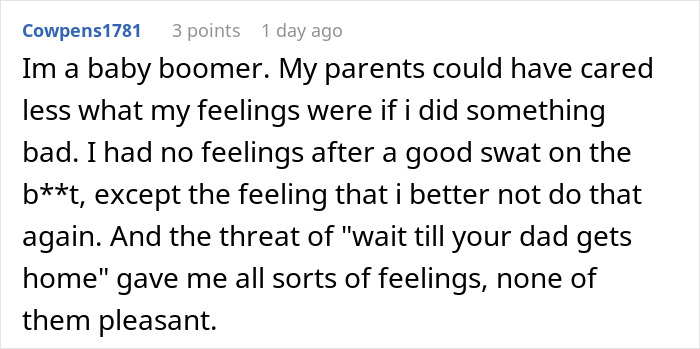
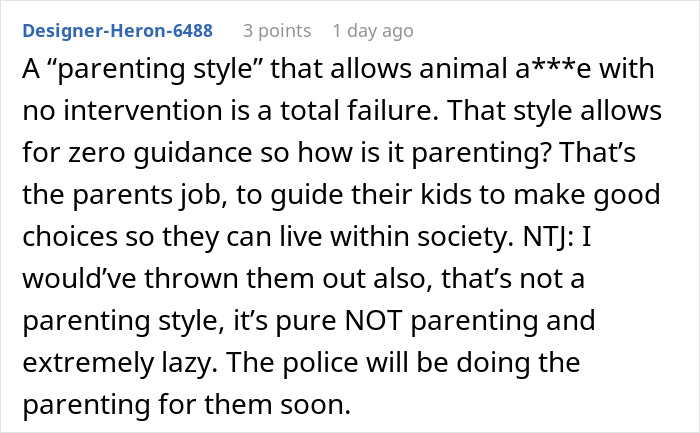
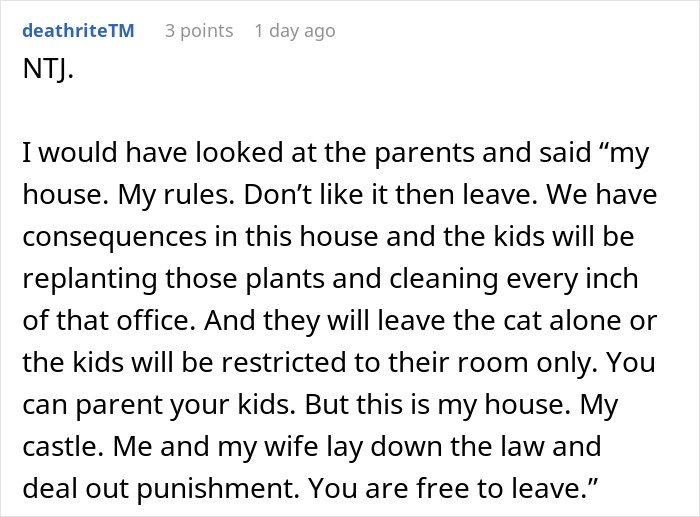
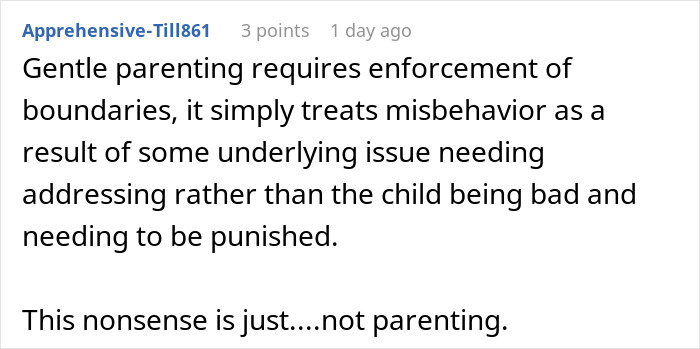
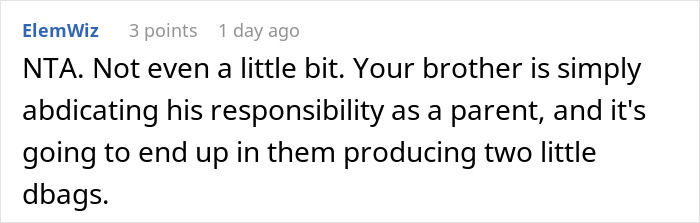
Most commenters sided with the hosts: “They’re raising future sociopaths and narcissists”
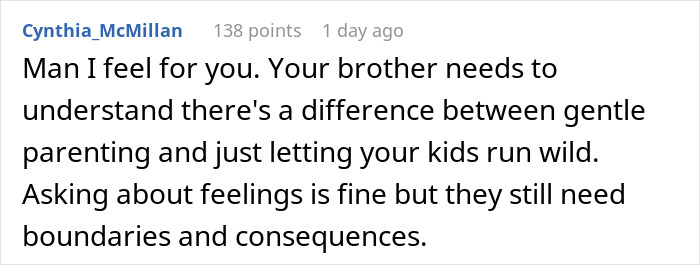
Comment highlighting the consequences of no boundaries in parenting, relating to sibling conflicts and family issues.
Screenshot of a Reddit comment discussing consequences and boundaries in no consequences parenting and sibling conflict.
ADVERTISEMENT
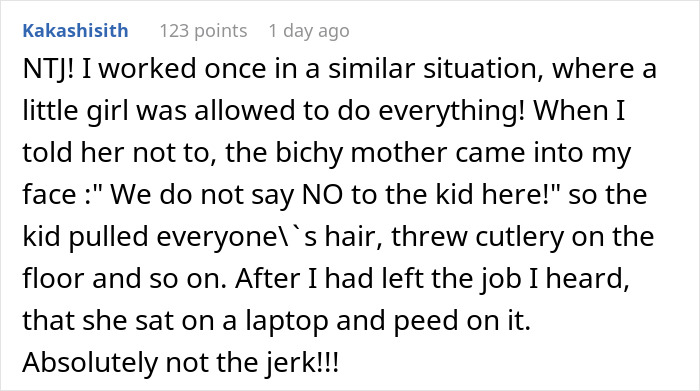
Comment describing a no consequences parenting story where sibling kicks out brother and his kids after issues escalate.
Reddit comment discussing sibling conflict and consequences of no consequences parenting after kids destroy property.
ADVERTISEMENT
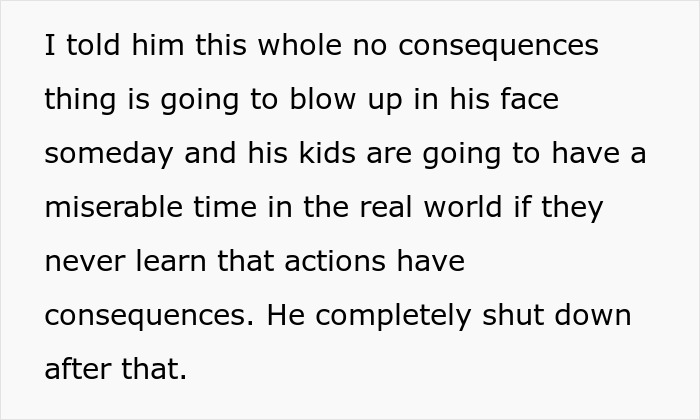
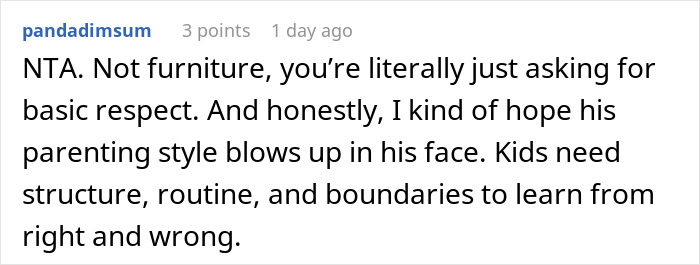
Comment discussing sibling kicking out brother and his kids due to no consequences parenting blowing up in his face.
ADVERTISEMENT
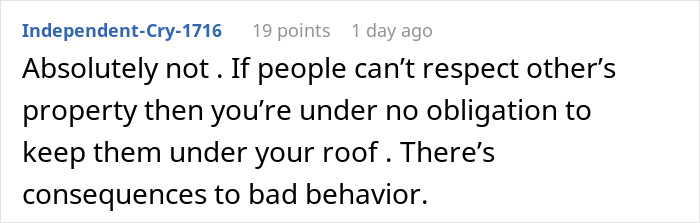
Comment from Independent-Cry-1716 arguing that lack of respect for property justifies sibling kicking out brother and kids.
Screenshot of a Reddit comment about consequences of no consequences parenting and sibling conflict over family issues.
Reddit comment discussing sibling kicking out brother and kids after no consequences parenting leads to problems and consequences faced.
ADVERTISEMENT
ADVERTISEMENT
Comment on sibling conflict about respect and space, reflecting consequences of no consequences parenting style issues.
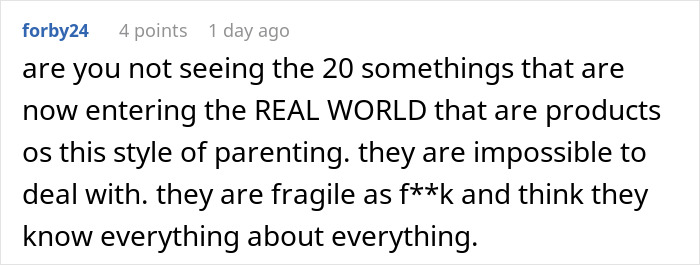
Reddit comment expressing concern about kids becoming difficult due to no consequences parenting and sibling conflict.
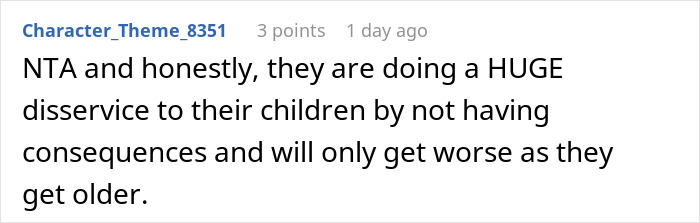
Comment on sibling kicking out brother and kids after no consequences parenting leads to chaotic behavior.
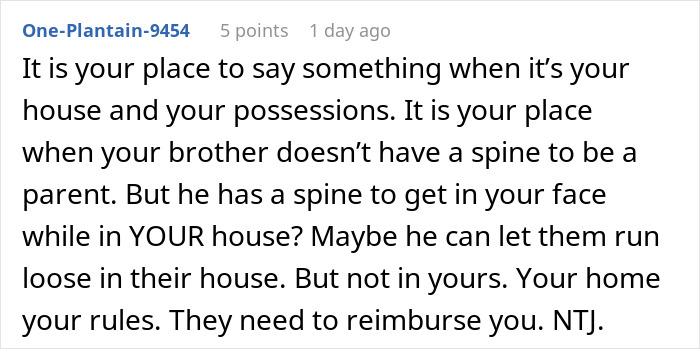
Text comment on a white background reading Your house, your rules about sibling kicks out brother and his kids after no consequences parenting.
ADVERTISEMENT
ADVERTISEMENT
Comment text on a white background discussing boundaries and self-preservation in sibling and no consequences parenting conflict.
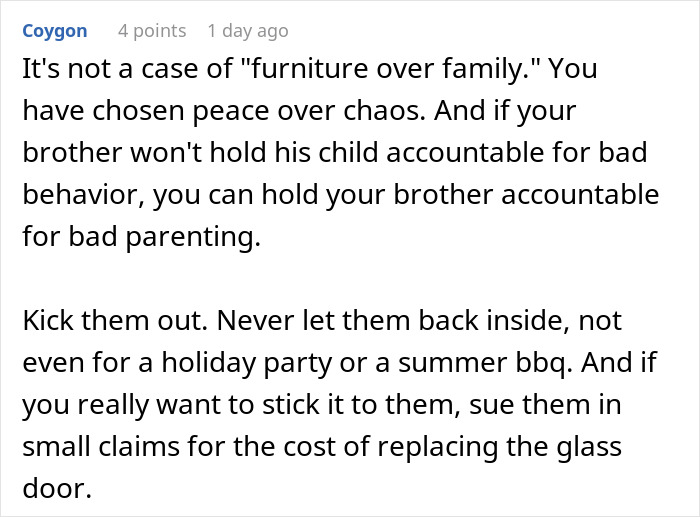
Comment discussing sibling kicking out brother and his kids due to no consequences parenting and house rule enforcement.
Text comment explaining sibling relationship conflict and no consequences parenting leading to kicking out brother and kids.
ADVERTISEMENT
Screenshot of a Reddit comment discussing consequences in parenting related to sibling kicking out brother and kids.
ADVERTISEMENT
Screenshot of a user comment reacting to sibling kicking out brother and his kids over no consequences parenting issues.
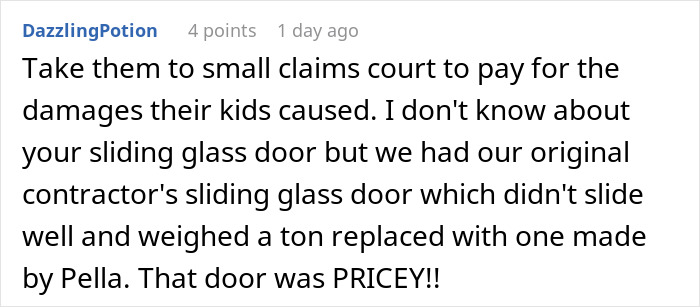
Screenshot of a forum comment discussing consequences and damages caused by kids in a sibling conflict situation.
ADVERTISEMENT
Comment on a forum discussing consequences of no consequences parenting and its effects on sibling and family dynamics.
Screenshot of an online comment related to sibling kicking out brother and kids after no consequences parenting dispute.
ADVERTISEMENT
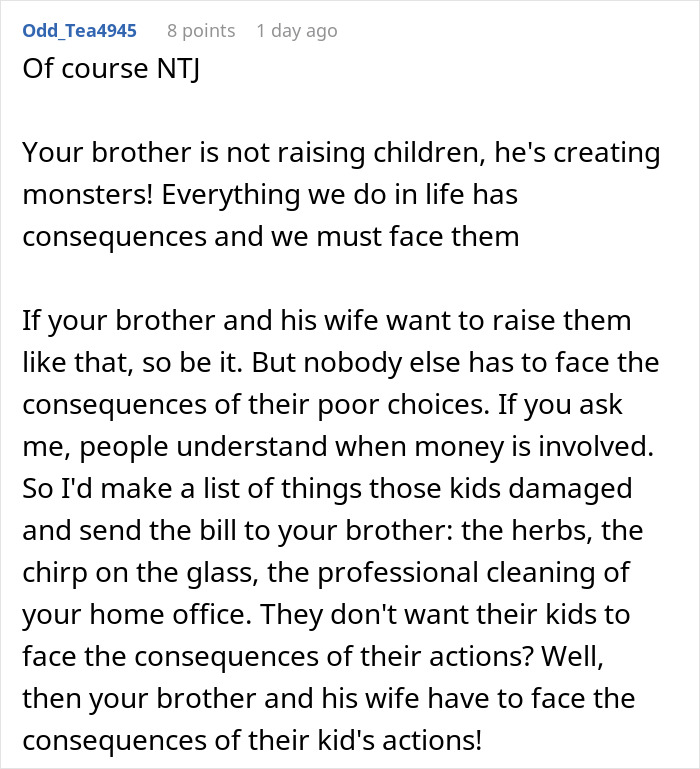
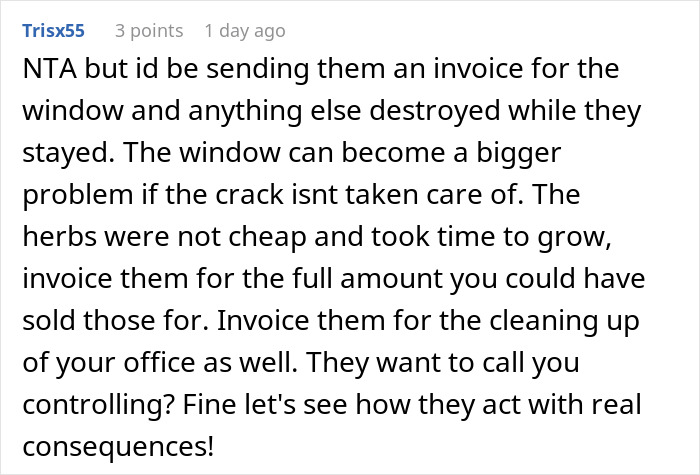
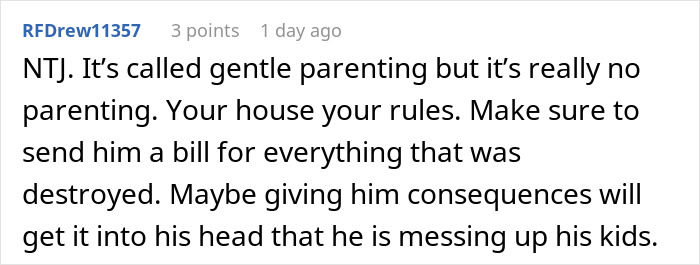
Comment urging to invoice brother and kids for damages after no consequences parenting causes problems and sibling kicks them out.
ADVERTISEMENT
Alt text: Comment discussing no consequences parenting and its impact on sibling and brother relationship issues.
Comment discussing no consequences parenting causing sibling conflict and a brother being kicked out with his kids.
Comment text from JoyReader0 discussing behavior improvements using furniture, related to sibling kicking out brother and kids after no consequences parenting issues.
ADVERTISEMENT
ADVERTISEMENT
Alt text:
Comment discussing consequences in parenting leading to sibling kicking out brother and his kids after no consequences approach fails.
Comment discussing consequences of no consequences parenting and its impact on sibling and brother relationship.
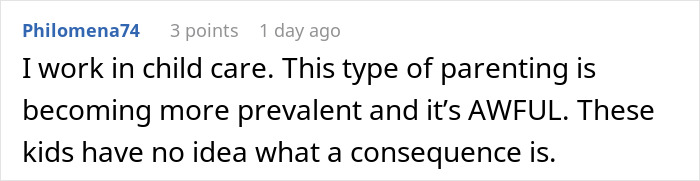
Comment about no consequences parenting in child care, highlighting concerns about kids lacking understanding of consequences.
ADVERTISEMENT
Comment text discussing sibling conflict and the impact of no consequences parenting on brother and his kids.
ADVERTISEMENT
Reddit comment discussing no consequences parenting and its effects on sibling kicking out brother and his kids.
Comment on no consequences parenting style causing psychotic children with zero boundaries in an online discussion forum.
ADVERTISEMENT
Commenter Fun-Yellow-6576 responding to parenting conflict, supporting sibling who kicks out brother and his kids.
Comment discussing no consequences parenting leading to behavioral issues and sibling kicking out brother and his kids.
ADVERTISEMENT
Comment on parenting consequences discussing sibling kicking out brother and his kids after no consequences approach backfires.
ADVERTISEMENT
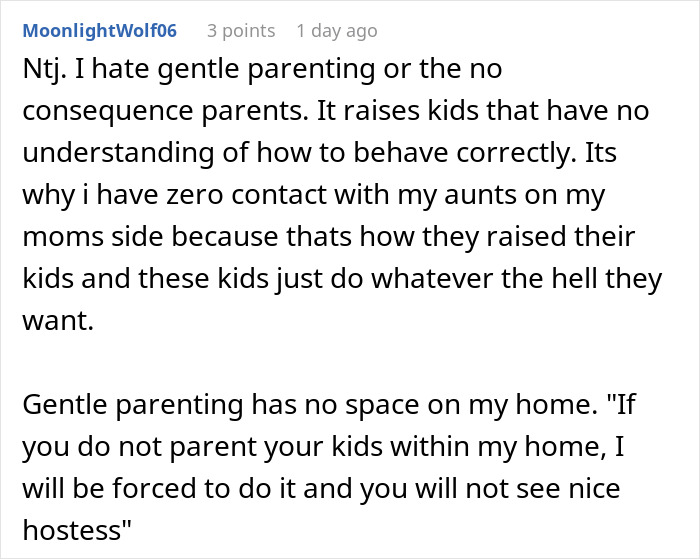
Comment discussing no consequences parenting and suggesting setting house rules to address sibling conflict involving brother and his kids.
Screenshot of a Reddit comment discussing no consequences parenting and a sibling kicking out brother and his kids.
Screenshot of a Reddit comment criticizing brother's parenting and mentioning no consequences leading to family conflict.
ADVERTISEMENT
ADVERTISEMENT
Screenshot of an online comment discussing family conflict after no consequences parenting causes issues between siblings.
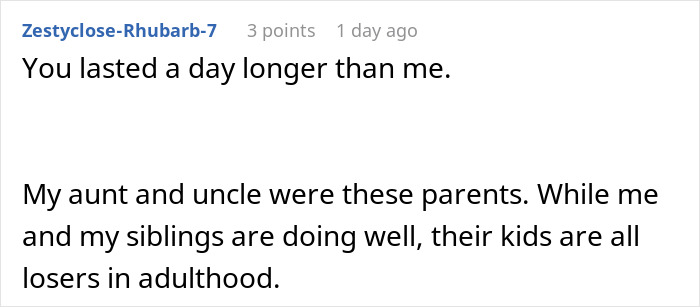
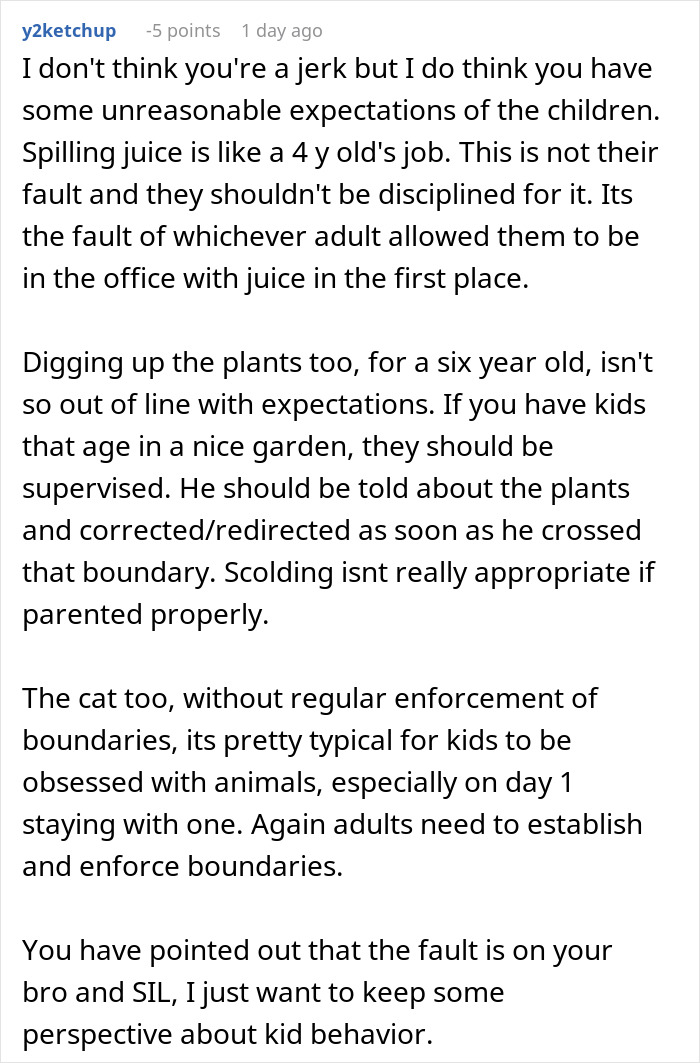
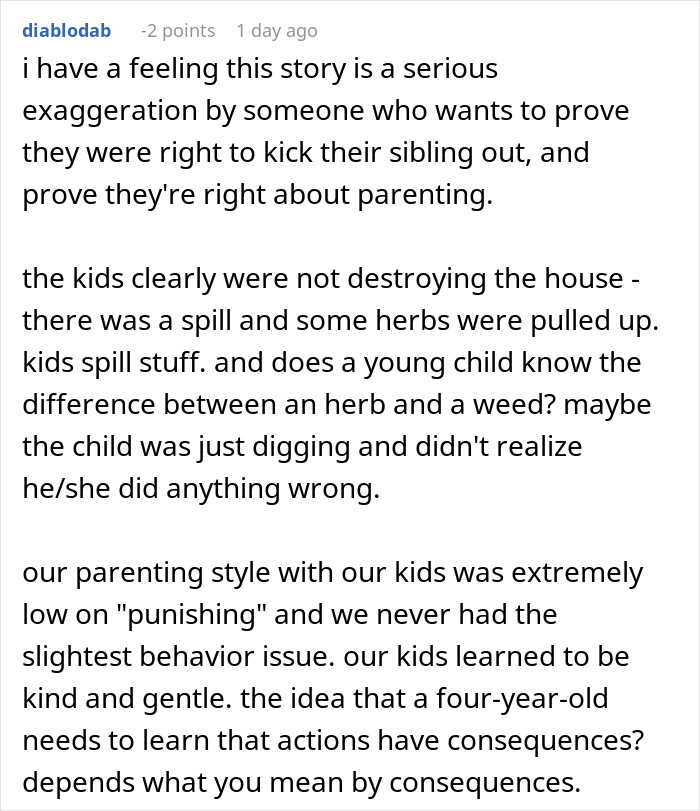
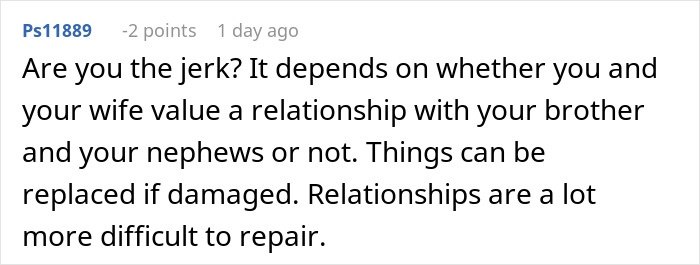
Others pointed out that all kids will misbehave: “Kids can be replaced if damaged”
Screenshot of a forum comment discussing no consequences parenting and sibling conflicts involving kids and boundary setting.
Reddit user discussing sibling conflict and no consequences parenting after brother and his kids were kicked out.
ADVERTISEMENT
Comment discussing the impact of no consequences parenting on sibling relationships and repairing damaged bonds.
ADVERTISEMENT
Poll Question
Total votes ·
Thanks! Check out the results:
Total votes ·
Newsletter
Subscribe to Access Exclusive Polls
By entering your email and clicking Subscribe, you're agreeing to let us send you customized marketing messages about us and our advertising partners. You are also agreeing to our Privacy Policy.
Thank you! You've successfully subscribed to newsletters!
Hi there, fellow pandas! As a person (over)educated both in social sciences and literature, I'm most interested in how we connect and behave online (and sometimes in real life too.) The human experience is weird, so I try my best to put its peculiarities in writing. As a person who grew up chronically online, I now try to marry two sides of myself: the one who knows too much about MySpace, and the one who can't settle and needs to see every corner of the world.
Hi there, fellow pandas! As a person (over)educated both in social sciences and literature, I'm most interested in how we connect and behave online (and sometimes in real life too.) The human experience is weird, so I try my best to put its peculiarities in writing. As a person who grew up chronically online, I now try to marry two sides of myself: the one who knows too much about MySpace, and the one who can't settle and needs to see every corner of the world.
Yes, gentle parenting focuses on empathy and understanding instead of punishment and shame, but one of the key point is firm boundaries and consequences. Consequences aren't presented as a punishment for a wrongdoing but as a logical outcome of a bad decision. Asking how a child felt when he did something wrong isn't gentle parenting, it's no parenting at all.
A few people pointed out that kids misbehave. I suspect the bigger problem is that the father ignores them and mother asks about their feelings and then they run off. This isn't gentle parenting - it's just lazy and stupid.
I think it's okay to ask about feelings (in an age-appropriate way) when a child is unhappy. If a kid is misbehaving, they need to be told that they're misbehaving and sometimes deal with consequences. They're not born knowing how to navigate human relations.
................so glad my nieces and nephews do not follow this parenting model raising their children..........and as five of them enter their pre-teen years it is wonderfully apparent it's been the right choice...........
Yes, gentle parenting focuses on empathy and understanding instead of punishment and shame, but one of the key point is firm boundaries and consequences. Consequences aren't presented as a punishment for a wrongdoing but as a logical outcome of a bad decision. Asking how a child felt when he did something wrong isn't gentle parenting, it's no parenting at all.
A few people pointed out that kids misbehave. I suspect the bigger problem is that the father ignores them and mother asks about their feelings and then they run off. This isn't gentle parenting - it's just lazy and stupid.
I think it's okay to ask about feelings (in an age-appropriate way) when a child is unhappy. If a kid is misbehaving, they need to be told that they're misbehaving and sometimes deal with consequences. They're not born knowing how to navigate human relations.
................so glad my nieces and nephews do not follow this parenting model raising their children..........and as five of them enter their pre-teen years it is wonderfully apparent it's been the right choice...........

 Dark Mode




















































 No fees, cancel anytime







30
6