Get Premium
Dark mode theme is available exclusively for premium users. Learn more about the benefits of subscribing.
No fees, cancel anytime.

 Dark Mode Ad-Free Browsing Unlimited Content
 Ad-Free Browsing Unlimited Content Dark Mode
Join 1.2 million Panda readers who get the best art, memes, and fun stories every week!



Archaeology is the discipline that keeps on giving. We might think that we know enough about history already, but every now and again another new and fun find pops up that reveals even more about the way people lived thousands of years ago.
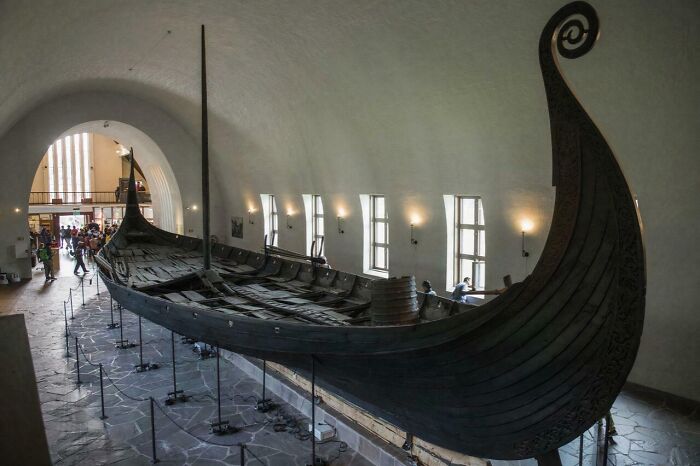
Bored Panda has made a compilation of some interesting, well-preserved artifacts from history that you may not have seen before. Ever wondered what a true Viking longship looks like? Or maybe you'd like to see the hats Roman soldiers used during their campaign in Ancient Egypt?
Thanks to this list, you don't have to blindly wonder anymore. You'll find answers to these and more historical ponderings as you scroll through the most well-preserved historic items that we still have today!
This post may include affiliate links.

Better put on a case or something, I suspect some idiots will try to ruin it.
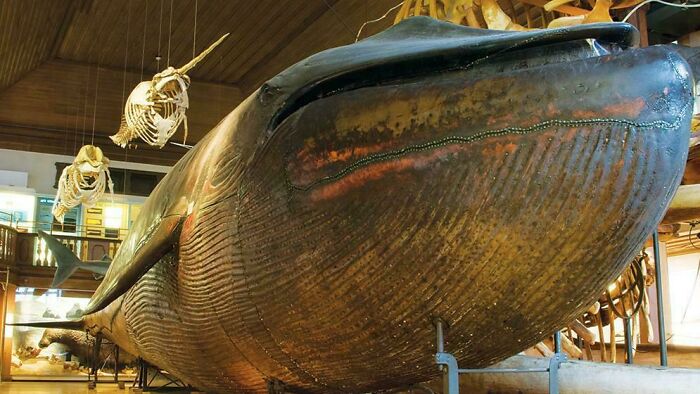
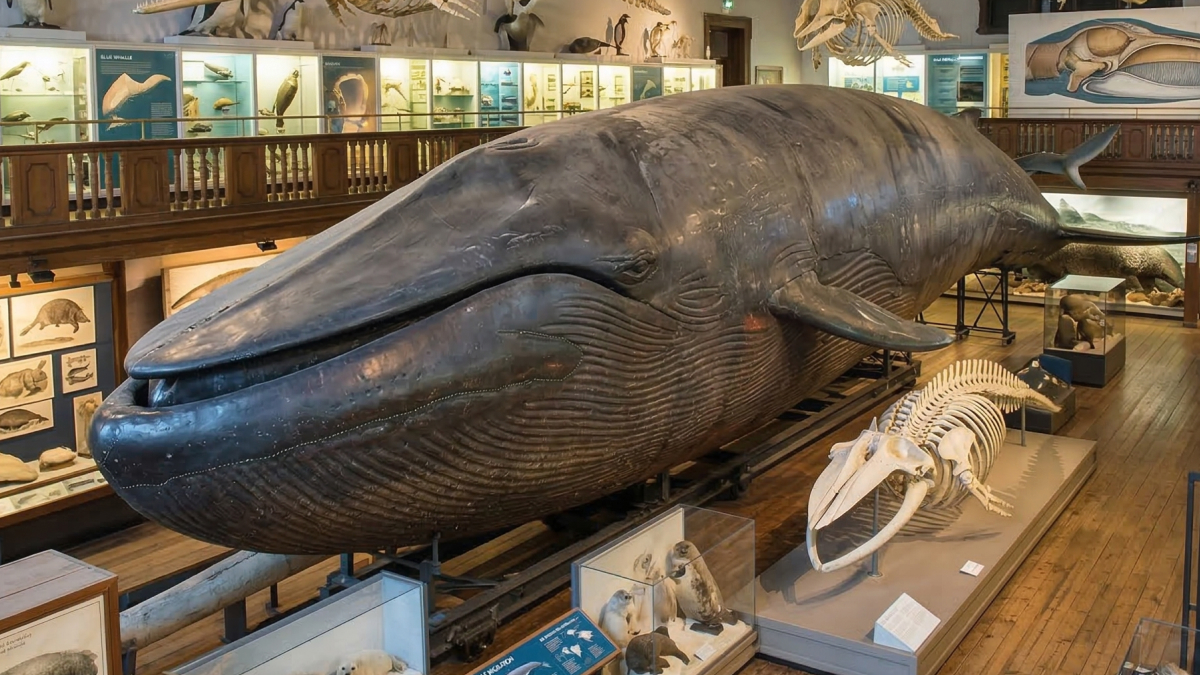
The story of the only taxidermied blue whale in the world might be sadder than many of us think. The mammal was found on the beach of Askim Bay, close to the city of Göteborg. In the 19th century, the notion of "rescuing" animals that had washed ashore was still quite a foreign concept. Today, rescue and government organizations, volunteers, and marine life sanctuaries conduct rescue operations.
But, back in the day, the unlucky animals would get exterminated. Such was the destiny of the Malm whale. The process was quite inhumane, too: the fishermen who found it first poked its eyes out (so that it wouldn't see them), then axed, speared, and shot the poor thing until it bled out.
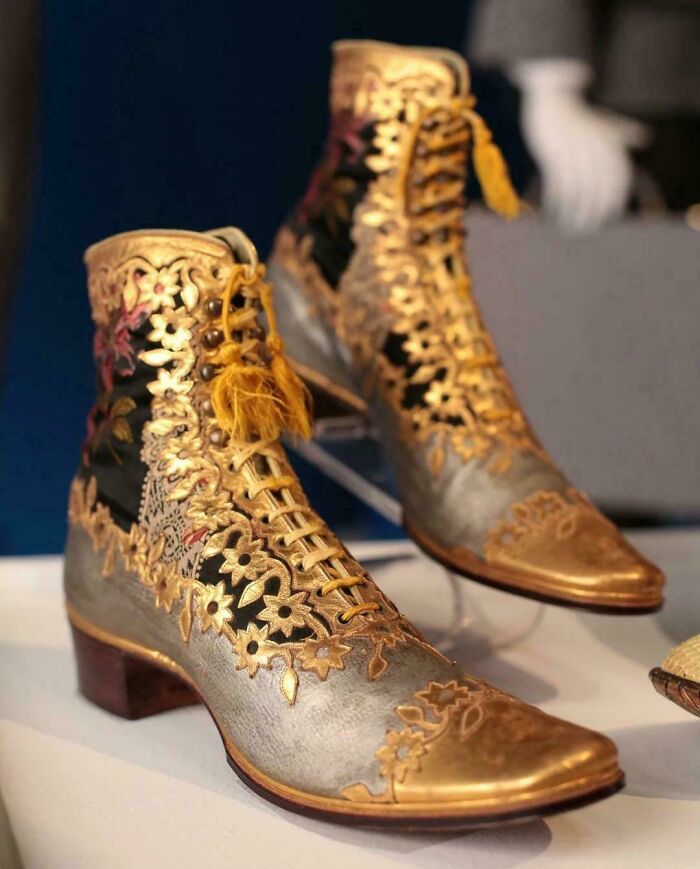
With meticulous attention to detail, these ankle boots are a blend of silvered leather, black silk brocade, and gold gilded accents.
The next day, the taxidermist and curator of the Gothenburg Museum, August Wilhelm Malm, bought the whale. Yet, he didn't want it chopped and sent in parts. He concocted a plan on how to transport the animal whole. With the help of three steamboats and two coal barges, the whale was dragged to Gothenburg.
Until the 1930s, the stuffed whale was exhibited with its jaws open, and people could walk inside its belly. There were even benches, carpets, and wall hangings inside it. However, sometime in the 1930s, a couple was found inside "making love," and the museum decided to open the whale's jaws for special occasions only.
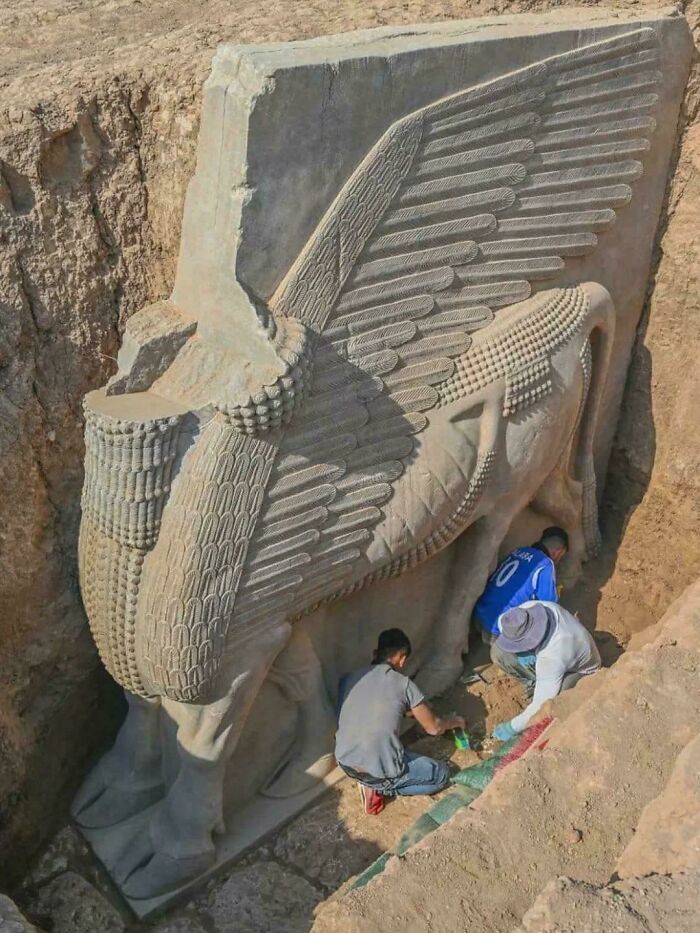
The 2,700-year-old Assyrian Lamassu sure looks majestic, but what exactly is a Lamassu, and why is it so significant? In Mesopotamia, Lamassus were protective deities in the form of winged bulls (or lions) with human heads. They were placed at the entrances and gates of significant sites and were symbols of the king's power and their symbolic protectors.
Although they look like statues, they were actually "double-aspect" reliefs that one needed to look at either from the front or from the side. Lamassus could have four or five legs (the one on this list from Dur-Sharrukin has five), but you could only see the five if looking from the side.

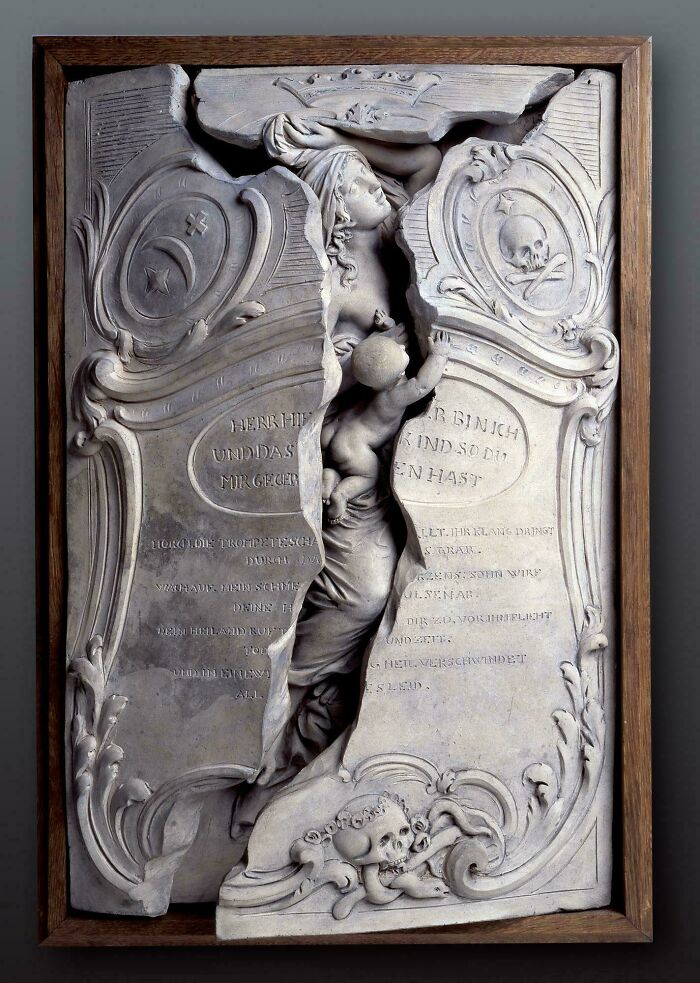
I can't read the smaller type, but the words in the oval at the top say "Lord, here am I, and the child you have given me."
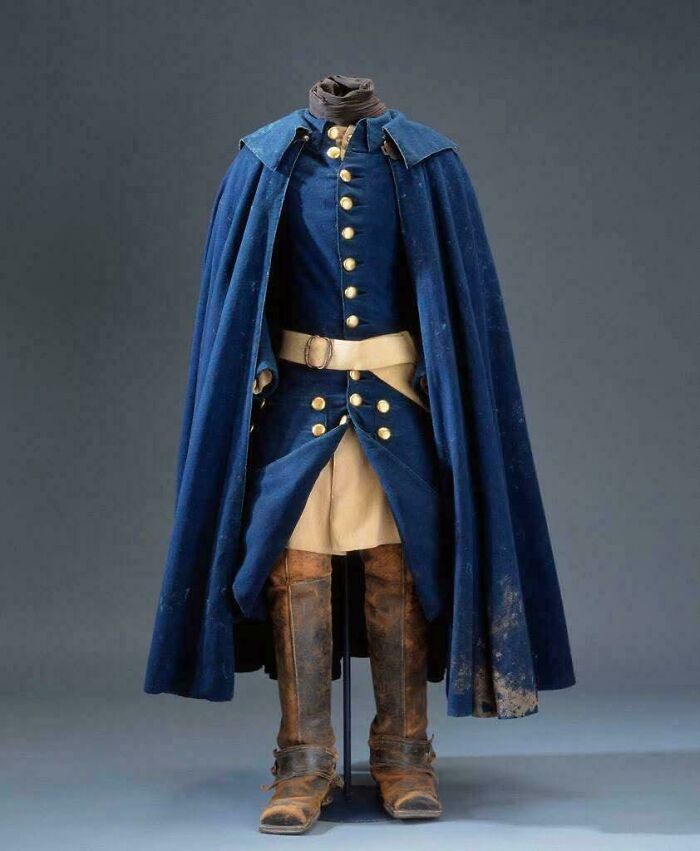
King Charles XII of Sweden passed 300 years ago, but the uniform he wore on the day he was shot still remains preserved immaculately. However, there have been some speculations from historians about the circumstances of his passing. Some suggest that the bullet that penetrated the king's skull came from his own men, not his Danish enemies. This theory gained traction because none of his soldiers saw the king get hit; they only witnessed him slump forward in the trenches.
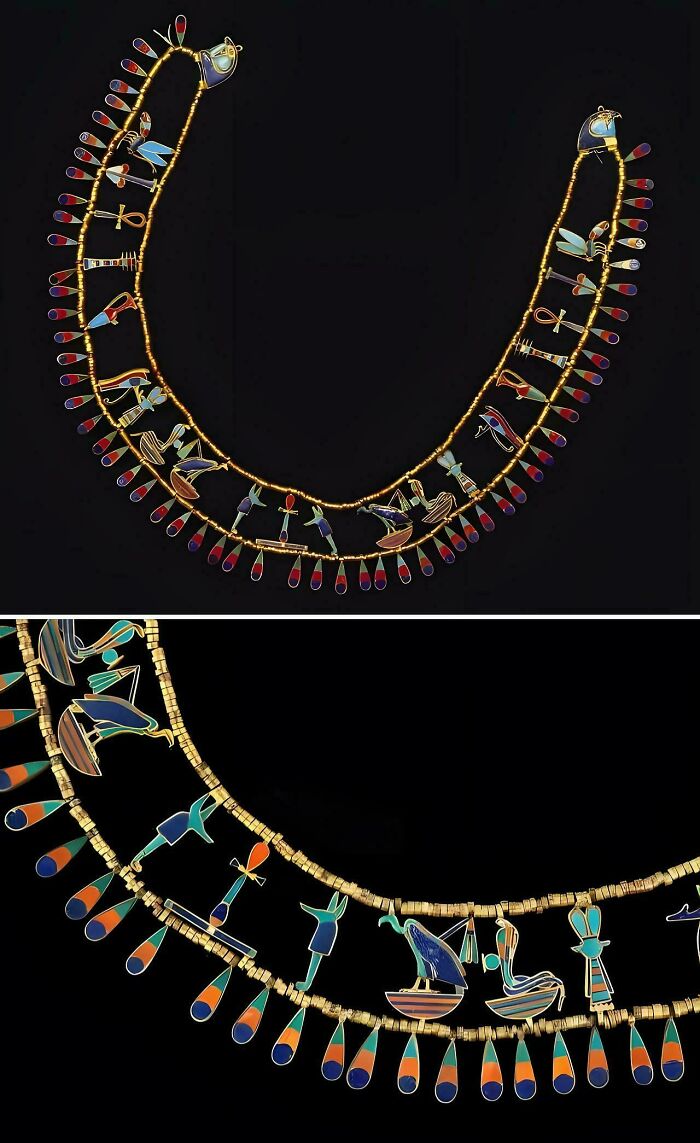
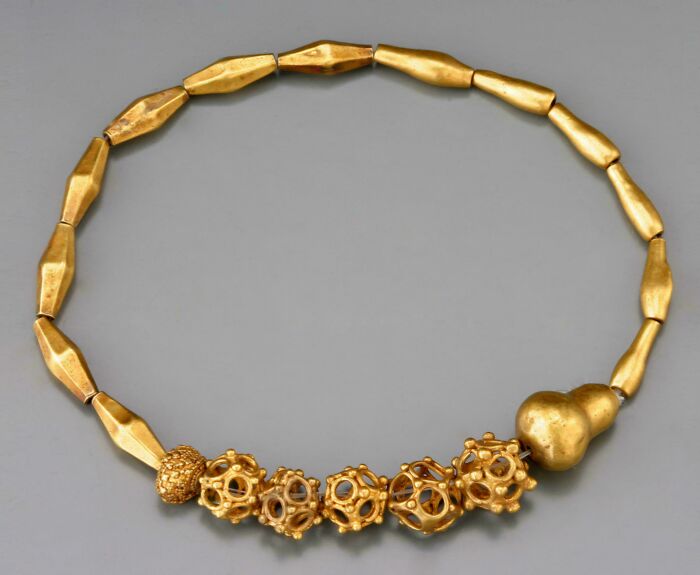
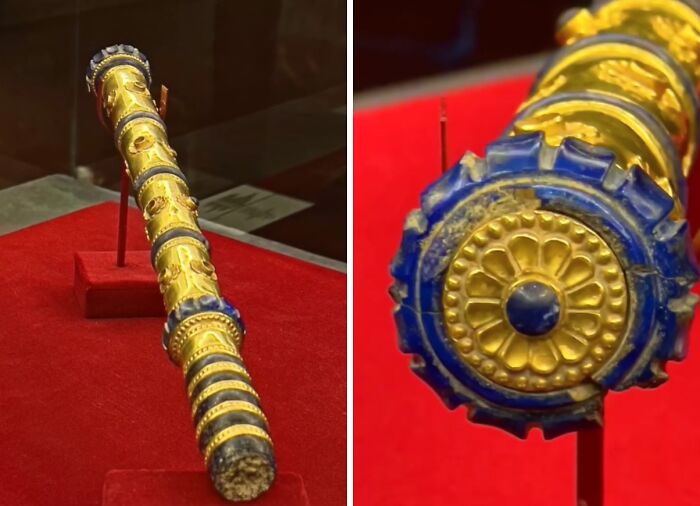
It was found on her mummy, and is formed of a series of amulets made of gold, and set with semiprecious stones, such as carnelian, turquoise and lapis lazuli.
Some speculate that many people wanted King Charles XII to be gone. His successor, brother-in-law King Frederick I, reversed many of Charles's decisions almost immediately after becoming king. He ended the Northern War, canceled the 17% tax on capital, and offed his right-hand man and chief minister, Baron Goertz.
There was also the case of the exit wound: historians speculated that because the hole was larger on the left side, he had to have been shot from the right – the opposite side of the enemy's fortress. Still, in 2022, researchers revisited the case and concluded that it had been shot from the enemy's lines.
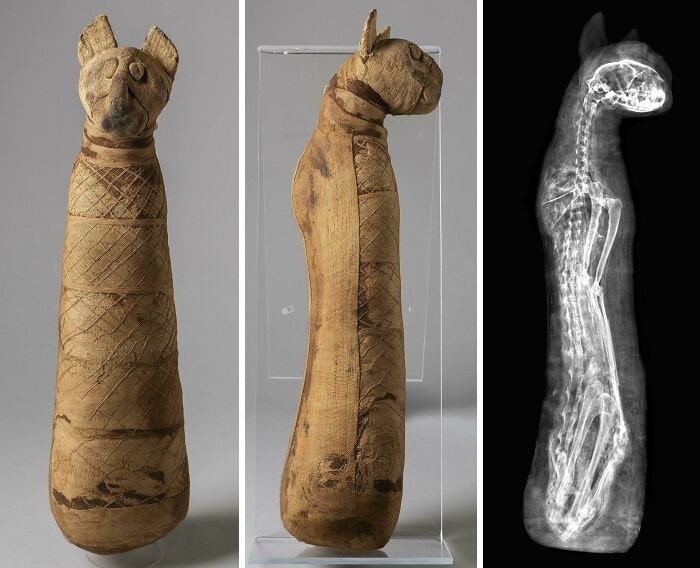
What new things have you learned today, Pandas? Was it that Roman soldiers had to wear hats during their conquest of Ancient Egypt so that they didn't overheat? Or was it how a mummified cat's X-ray looks? Let us know in the comments which one of these well-preserved artifacts surprised you the most! And, in the meantime, check out some incredible facts about Ancient Egypt if this list has got you craving more historical stuff.
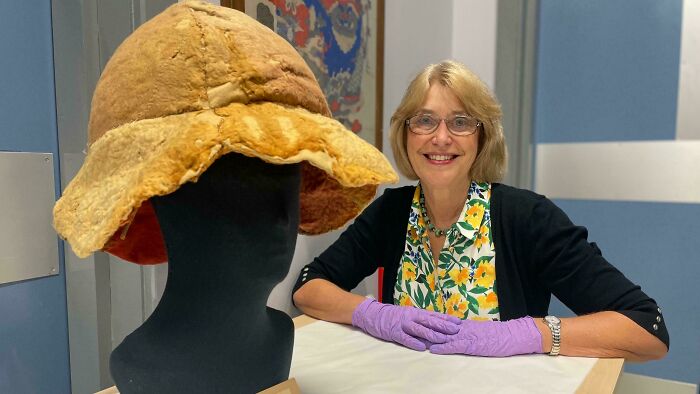
It was intended to keep Roman soldiers cool in the heat of the desert following their conquest of ancient Egypt has been painstakingly brought back to life.
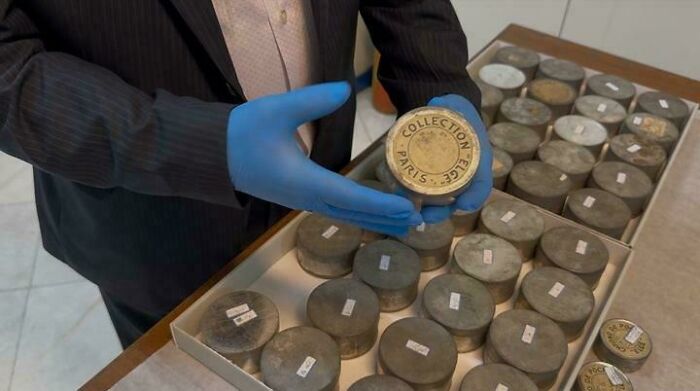
They contain some of the earliest footage in Iran’s history, featuring Persian celebrations during that period, government officials in royal palaces, and the dawn of the country’s cinema.
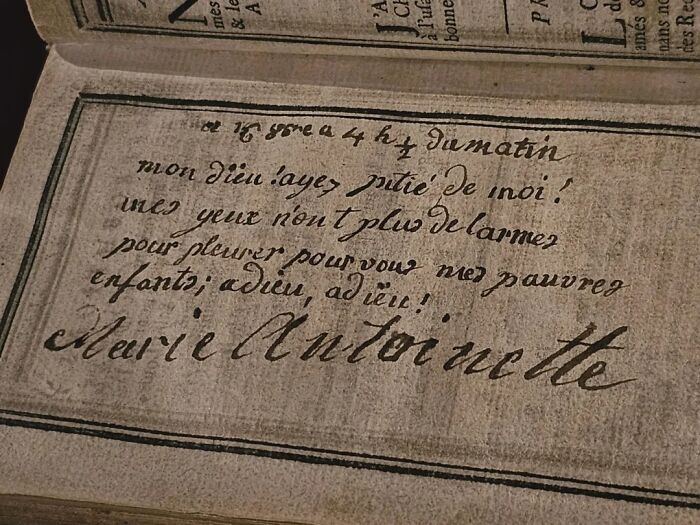
Translation: ‘My lord, have pity on me! My eyes have no more tears to cry for you my poor children; farewell, farewell!’ It's currently on display in the Marie Antoinette exhibition at the Victoria and Albert Museum.

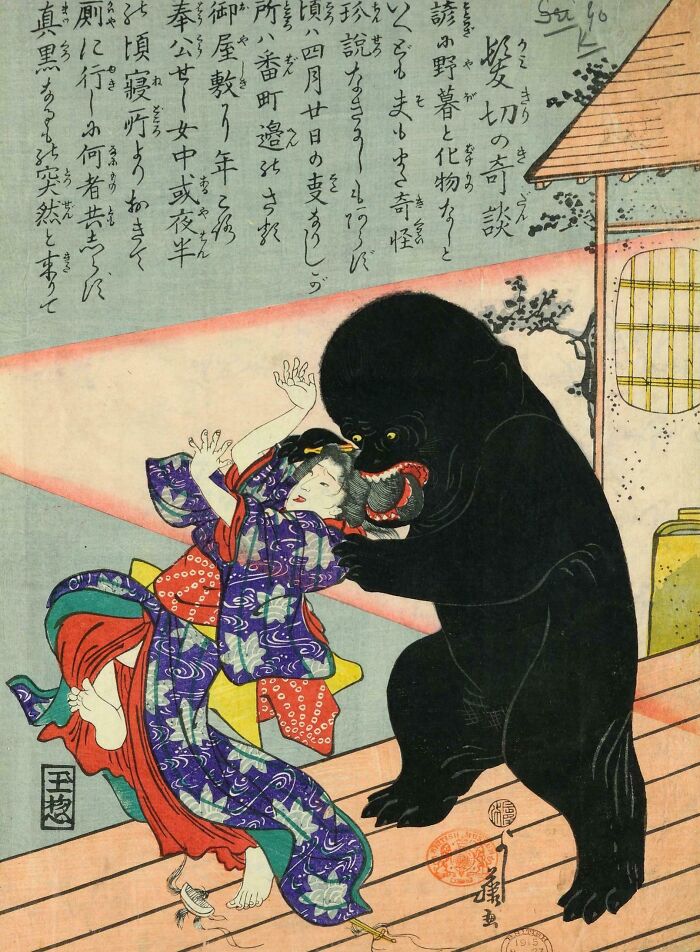
The only reason this happened is because her cats didn't accompany her to the outhouse.
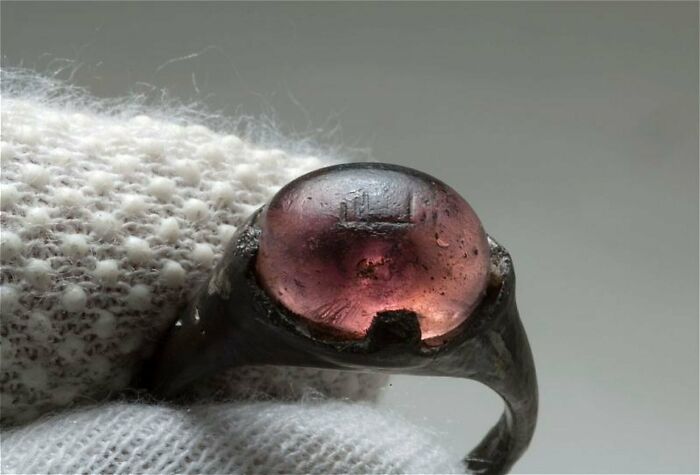
The ring constitutes a unique material evidence of direct contact between the vikings and the Abbasid Caliphate.




































 No fees, cancel anytime