Get Premium
Dark mode theme is available exclusively for premium users. Learn more about the benefits of subscribing.
No fees, cancel anytime.

 Dark Mode Ad-Free Browsing Unlimited Content
 Ad-Free Browsing Unlimited Content Dark Mode
Join 1.2 million Panda readers who get the best art, memes, and fun stories every week!
Jumping to conclusions is never a good idea. Sure, at best it amounts to nothing more than a simple misunderstanding. But at worst, it can cause serious, irreparable damage—and you never really know which way it’s going to go.
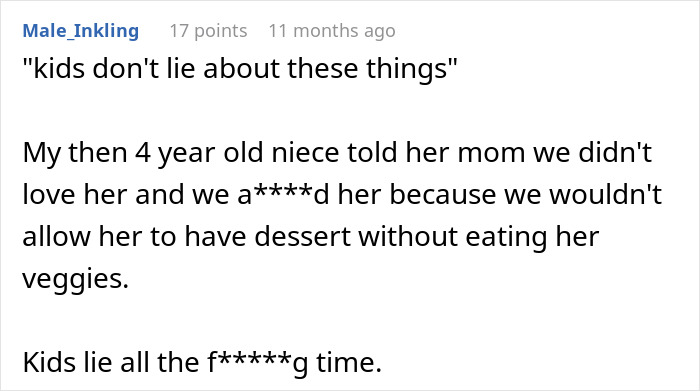
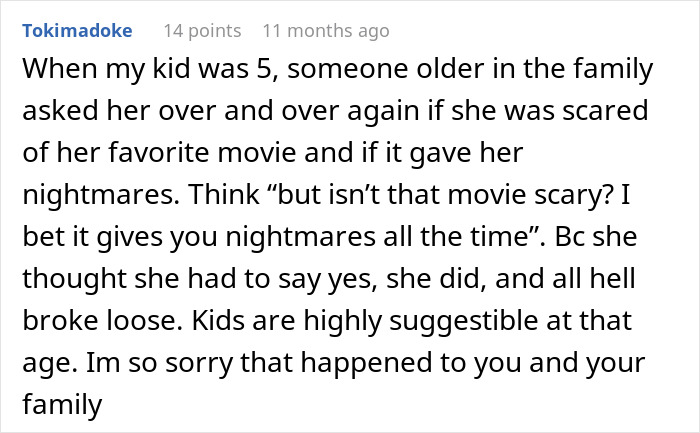
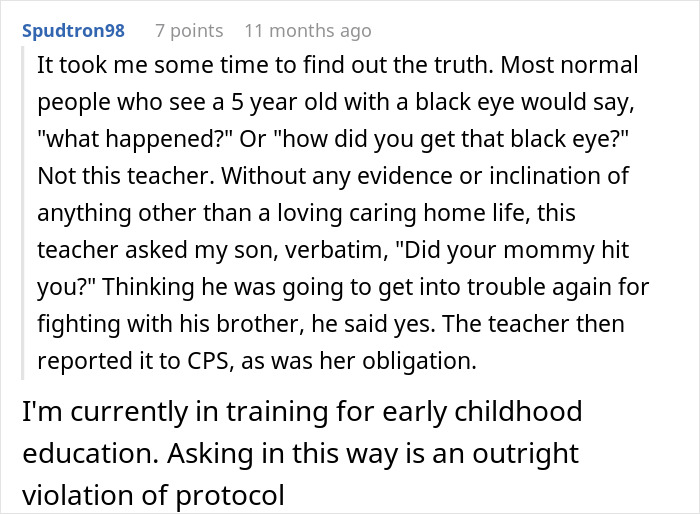
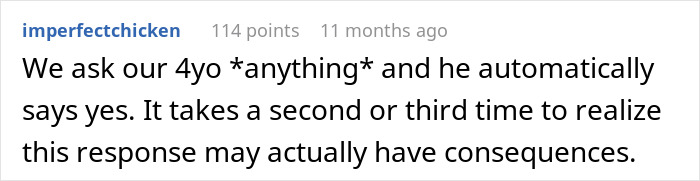
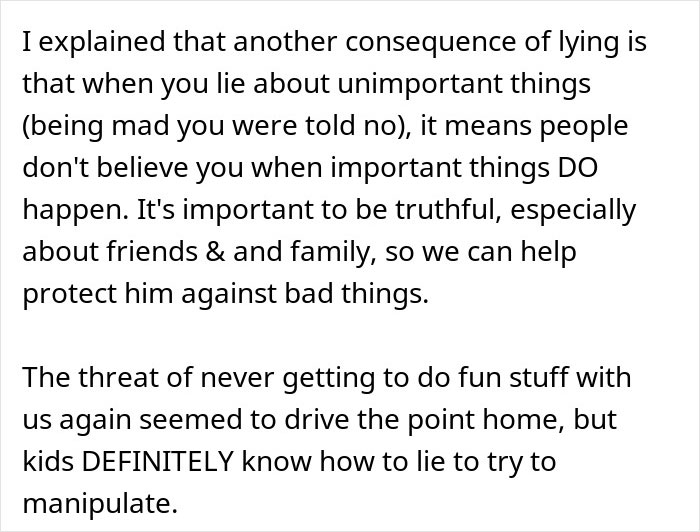
One man ended up on the receiving end of the latter. His two young sons had been roughhousing over a toy when one accidentally elbowed the other in the face, leaving him with a black eye. He stepped in, calmed them both down, and figured that was the end of it.
It wasn’t. When the boy’s teacher noticed the bruise the next morning, she skipped every question a reasonable person might ask and went straight to calling CPS. That one snap judgment was all it took to tear an entire family apart. Read his heartbreaking story below.
Image credits: Elina Fairytale / Pexels (not the actual photo)



Image credits: Anna Shvets / Pexels (not the actual photo)
Image credits: Andrej Lišakov / Unsplash (not the actual photo)
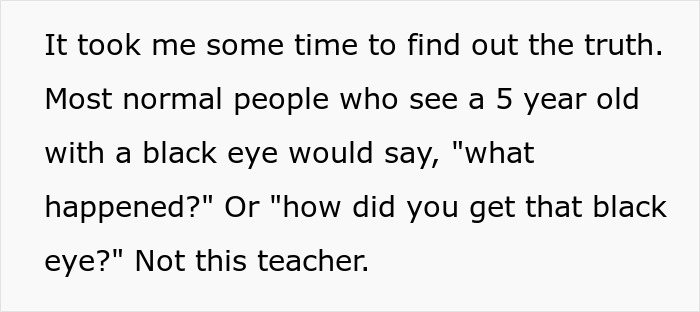
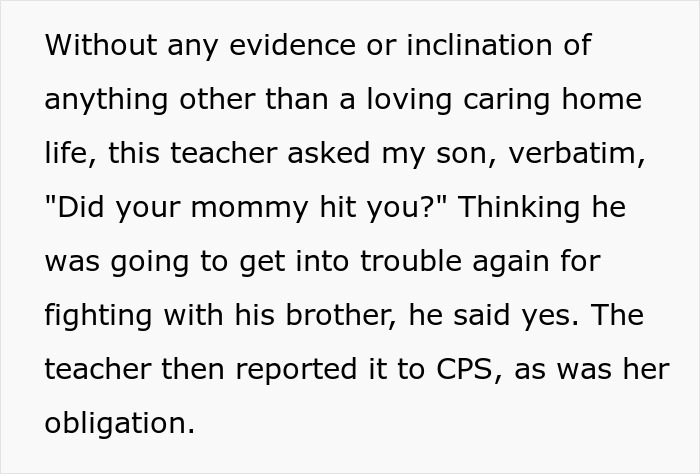
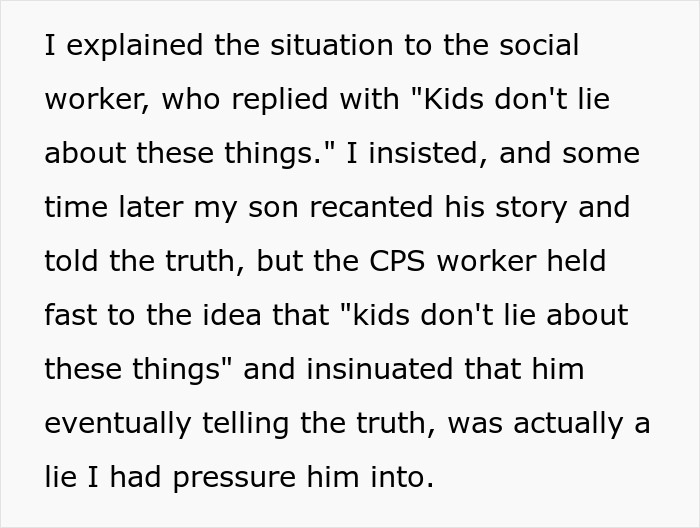
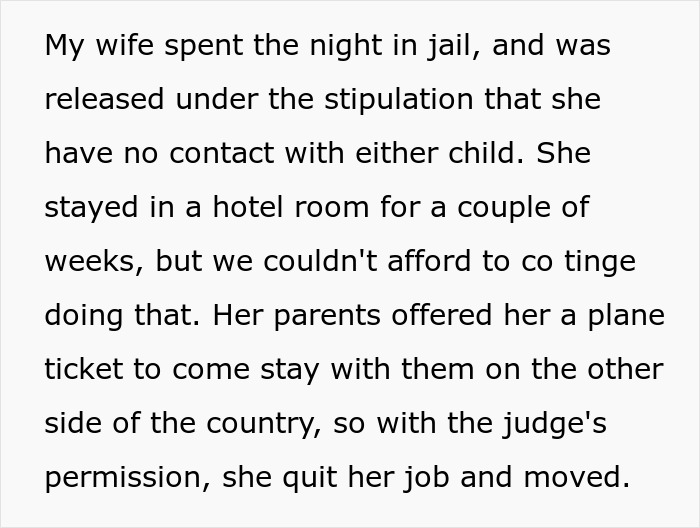
Image credits: cottonbro studio / Pexels (not the actual photo)

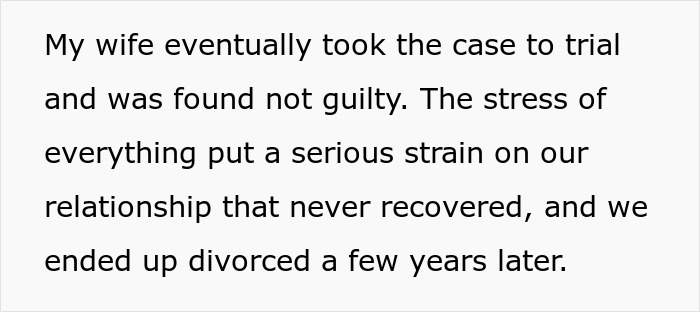
Image credits: oopsiedoodle3000
Every day we make countless decisions, one after another. Some are small, like picking something off a new menu or figuring out which bus to take during rush hour. Others are bigger, like choosing a car or planning a vacation. And then there are decisions that carry real weight, like the one this teacher faced when she noticed a bruise on one of her students.
Do you think you approach those bigger decisions carefully? That you take enough time to weigh things out properly? Most people would like to think so. But the reality is that many of us spend far less time on our decisions than we realize.
Studies have found that before buying a car, most people make two or fewer trips to a dealership. And when choosing a doctor, many people simply go with a friend’s recommendation rather than doing any real research, according to an analysis published in the journal Health Services Research.
Some people are more careful, sure, and some probably overthink everything. But a fair number of people do jump to conclusions. One study found that 20% of participants jumped to conclusions during a decision-making task. Another study using the same task put that number as high as 51%.
Image credits: Andrea Piacquadio / Pexels (not the actual photo)
Jumping to conclusions is more than just a saying we use when someone ignores the facts. It is actually a recognized thinking pattern that psychologists call a cognitive bias, which is basically a mental shortcut the brain takes when processing information. In this case, the shortcut means reaching a conclusion based on very little evidence.
This kind of thinking also shows up in people dealing with conditions like anxiety, depression, and schizophrenia, which gives you a sense of just how deeply rooted it can be.
So why does the brain do it at all? Because shortcuts actually serve a purpose. The brain is constantly being hit with information, and these shortcuts help it process things faster so we can keep moving through our day without getting overwhelmed. The problem is that when those shortcuts kick in at the wrong moment, they can lead to some pretty bad calls.
Image credits: Keira Burton / Pexels (not the actual photo)
Two researchers, Carmen Sanchez and David Dunning, dug deeper into what jumping to conclusions actually does to a person’s thinking overall. What they found was pretty eye-opening. People who tended to jump to conclusions more often, who they called “high jumpers,” also struggled more in other areas of thinking. They performed worse on reasoning tests, had a harder time evaluating logical arguments, and showed overconfidence when answering questions on topics like civics and current events.
They also made more errors when learning new tasks, like diagnosing a hypothetical medical condition. And they were more likely to hold conspiratorial beliefs, such as the idea that health officials are hiding evidence that cell phones cause cancer, or that the moon landing was faked.
The takeaway is pretty straightforward. Jumping to conclusions is not a harmless habit. It can affect the people around you in ways you never intended, and as this story shows, sometimes the damage it leaves behind is not so easy to undo. So the next time you are about to make a call that could affect someone else, it is worth slowing down, even just a little.
















By entering your email and clicking Subscribe, you're agreeing to let us send you customized marketing messages about us and our advertising partners. You are also agreeing to our Privacy Policy.
Thank you! You've successfully subscribed to newsletters!

This is either completely made up or not close to the full story There were no follow up questions from the investigators? White, straight two parent households with no other complaints, no medical or behavioural issues, rarely have their kids taken off them. Certainly one incomplete story about being hit once wouldn't be enough. If they didn't find d***s or any corroborating testimony from someone else there's no way they'd go through the expense of charges and trial l.
This is either completely made up or not close to the full story There were no follow up questions from the investigators? White, straight two parent households with no other complaints, no medical or behavioural issues, rarely have their kids taken off them. Certainly one incomplete story about being hit once wouldn't be enough. If they didn't find d***s or any corroborating testimony from someone else there's no way they'd go through the expense of charges and trial l.































 No fees, cancel anytime














25
10