Get Premium
Dark mode theme is available exclusively for premium users. Learn more about the benefits of subscribing.
No fees, cancel anytime.

 Dark Mode Ad-Free Browsing Unlimited Content
 Ad-Free Browsing Unlimited Content Dark Mode
Join 1.2 million Panda readers who get the best art, memes, and fun stories every week!

47submissions
1week left

It’s humanly impossible to know everything. Even though our brains are extraordinary and can store mass amounts of information, they're no match for the amount of data humans produce in a year or even a day.
However, this fact shouldn’t stop us from learning or discovering something new; after all, it helps us to feel happier and more fulfilled in our lives.
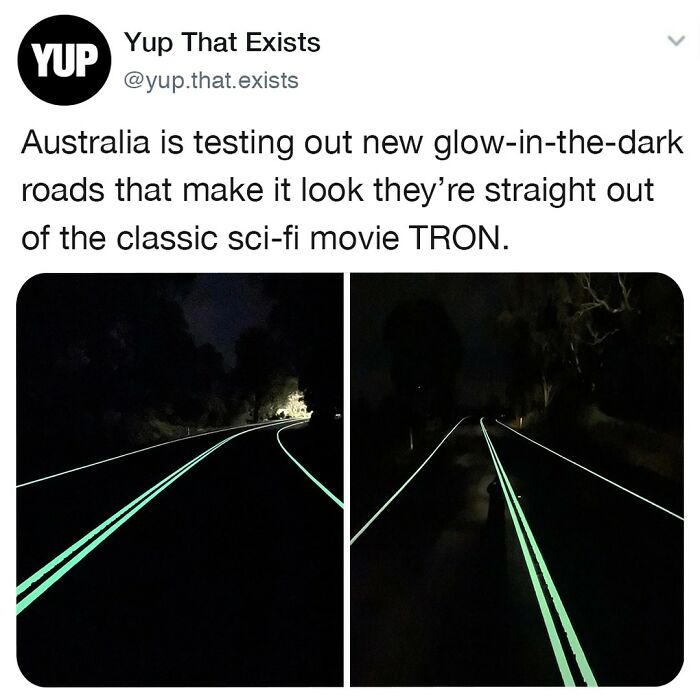
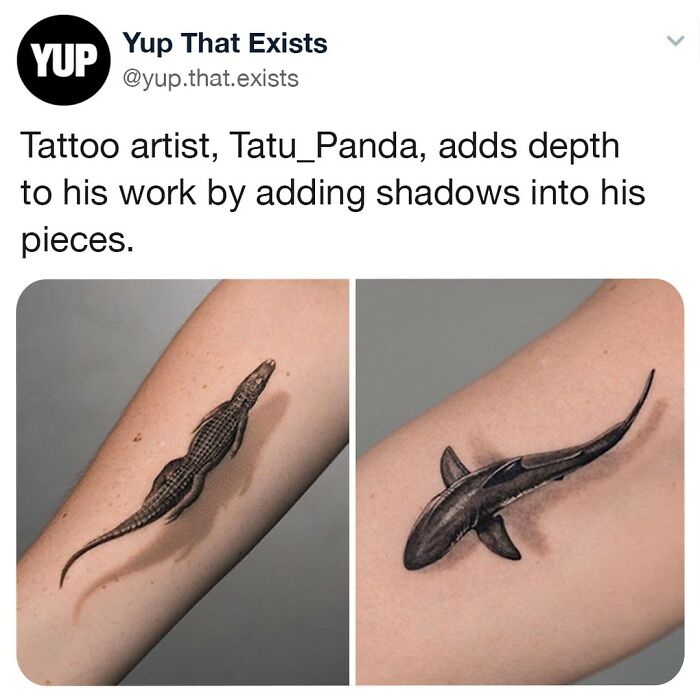
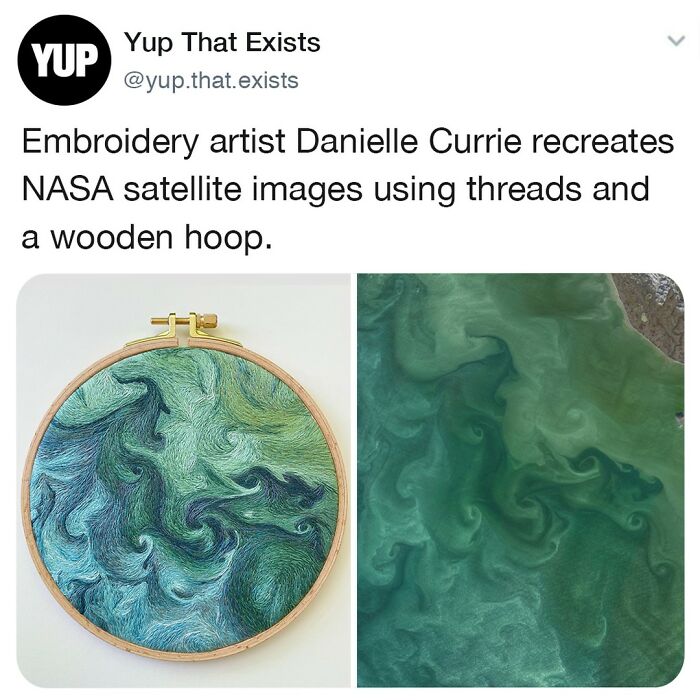
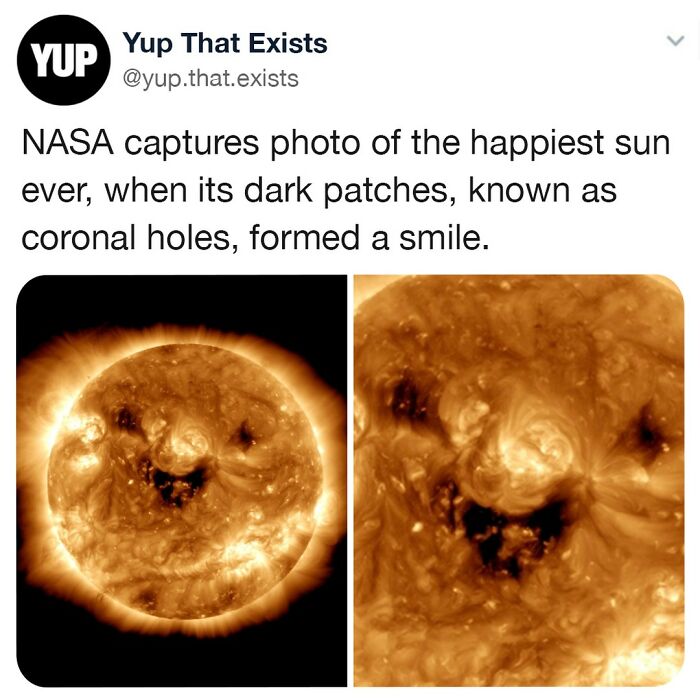
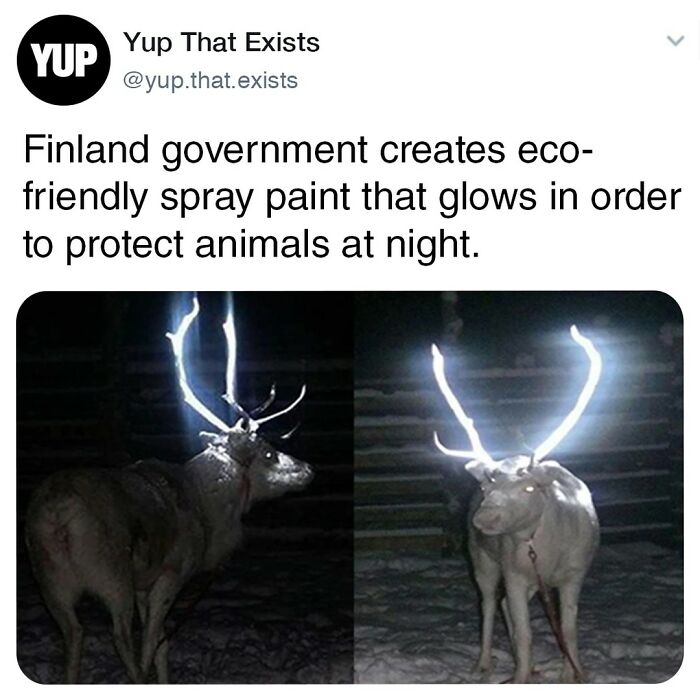
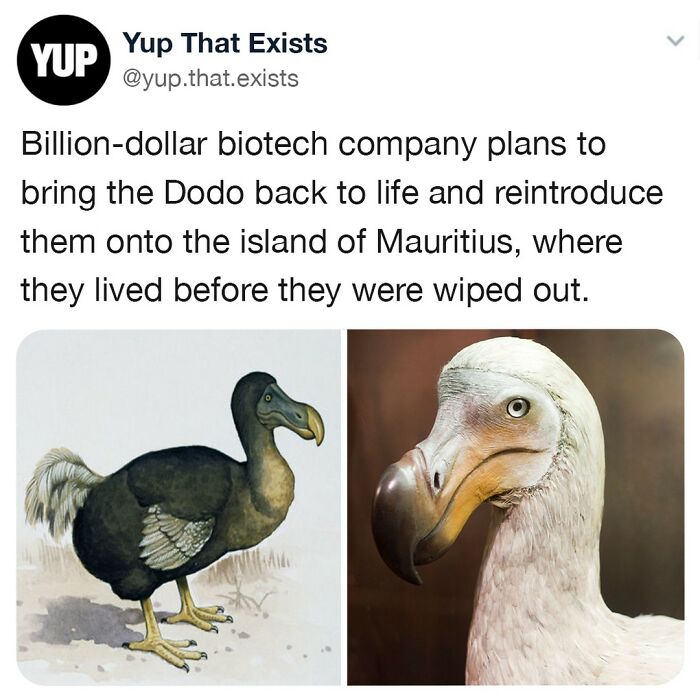
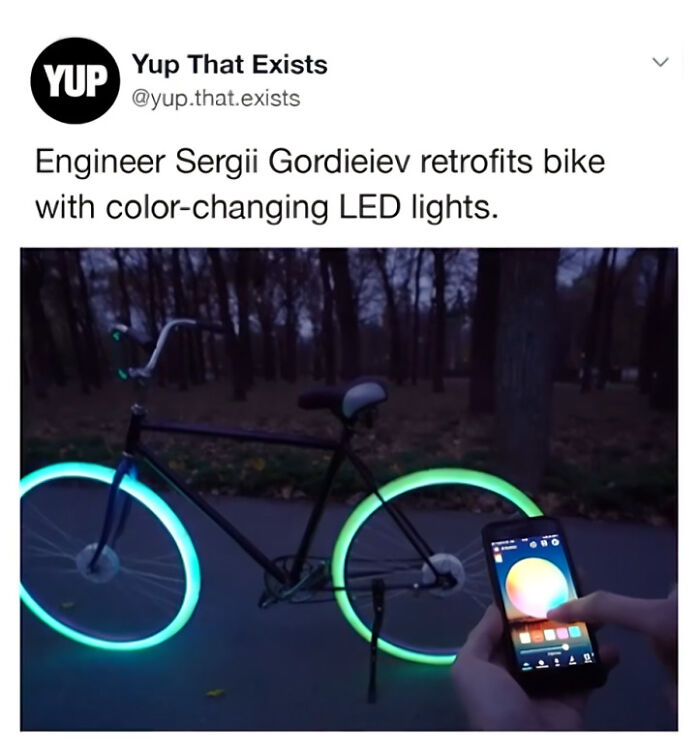
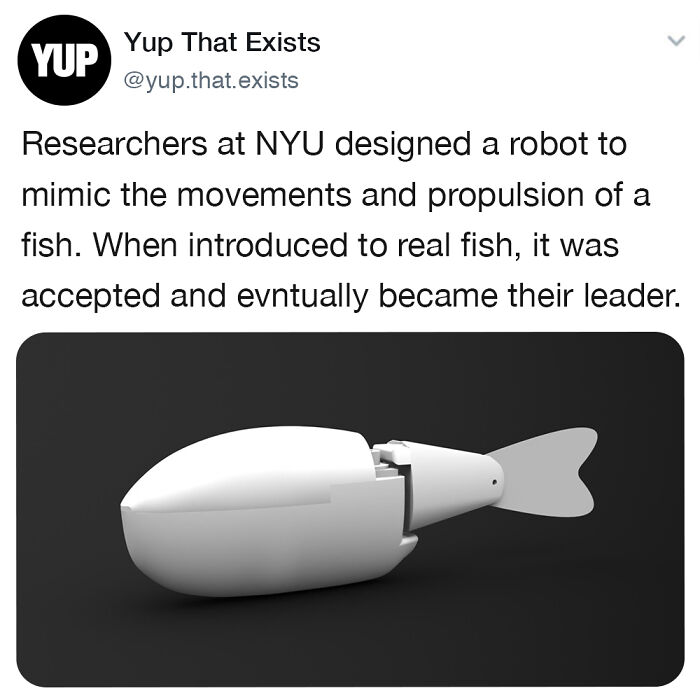
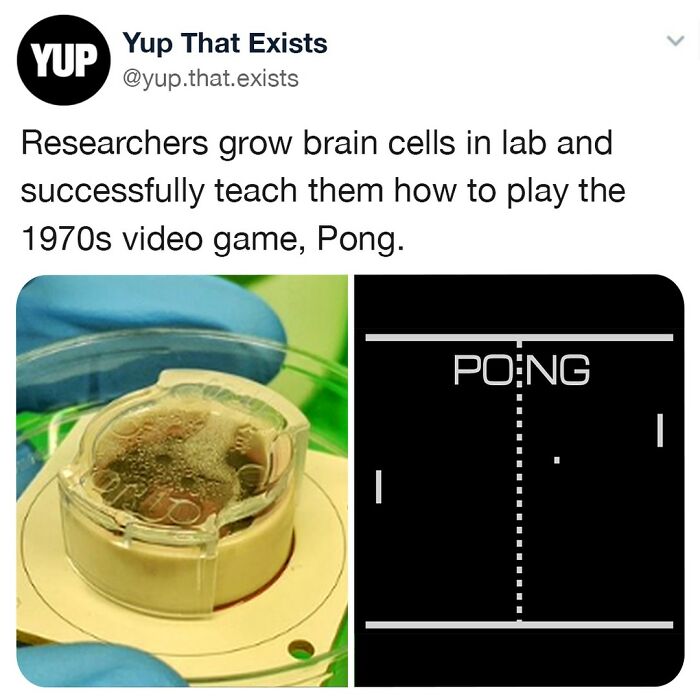
This is where the Instagram account “Yup That Exists” comes in, which provides its followers with the most peculiar and unique phenomena, inventions, and products most of us never knew existed. So, what are we waiting for? Let’s get comfortable and explore something yet undiscovered!
While you're at it, make sure to check out a conversation with Zaid Suhail, an electrical engineer and science communicator from "Scientifically Explained", who kindly agreed to tell us more about his love for discoveries and how they're important for personal growth.
Click here & follow us for more lists, facts, and stories.
This post may include affiliate links.
Bored Panda reached out to an electrical engineer and science communicator from "Scientifically Explained", Zaid Suhail, who kindly agreed to tell us more about his love for discoveries and how learning is important for personal growth.
Naturally, we were curious to know what initially sparked his interest in science. He told us, "Curiosity has always been a driving force behind my interest in discovery and science. From a young age, I found myself constantly questioning the world around me and wanting to understand how things worked.
Additionally, Islam, with its emphasis on seeking knowledge and understanding the universe as a reflection of the Creator's wisdom, further fueled my passion for discovery and exploration. The teachings of Islam encouraged me to pursue knowledge, ask questions, and seek understanding, ultimately shaping my interest in science and discovery."
Zaid believes that discovering and learning new things is crucial for personal growth, societal advancement, and the progression of humanity as a whole.
He says, "Throughout history, discoveries and learning have driven innovation, improved quality of life, and expanded our understanding of the world. They allow us to adapt to changing circumstances, solve complex problems, and push the boundaries of what is possible. Continuous discovery and learning foster creativity, critical thinking, and empathy, ultimately leading to a more informed and enlightened society."
We were also curious to know more about the process of scientific discovery in his research. He told us that it involves a combination of rigorous experimentation, theoretical analysis, and innovative problem-solving techniques.
"I start by thoroughly reviewing existing literature and identifying gaps or areas for further exploration. Then, I design controlled experiments or simulations to test hypotheses and gather data. I analyze the results using statistical methods and computational tools to uncover patterns or correlations.
Additionally, I collaborate with colleagues and seek interdisciplinary perspectives to gain fresh insights and approaches. Continuous iteration, peer review, and feedback are integral parts of my research process to ensure the reliability and validity of my findings.
Overall, my goal is to contribute to the advancement of knowledge and technology in the field of electrical engineering through systematic inquiry and creative thinking."
Zaid was also kind enough to provide some advice to those who might be stuck or can't seem to bring themselves to learn something new.
He said, "I would recommend approaching the challenge with a combination of patience, persistence, and flexibility. Firstly, it's important to recognize that learning is a process that takes time and effort, so it's okay to encounter obstacles along the way. Break down the subject matter into smaller, manageable chunks, and set realistic goals for yourself."
He additionally recommends seeking more diverse sources like textbooks, online courses, tutorials, and peer-reviewed articles to gain multiple perspectives and insights. "Don't hesitate to ask questions and seek help from experts or peers in the field. Collaborating with others can provide valuable support and encouragement," Zaid adds.
He further encourages to "embrace failure as an opportunity for growth rather than a setback. Analyze what went wrong, adjust your approach accordingly, and keep pushing forward. Remember that everyone learns at their own pace, so be kind to yourself and celebrate small victories along the way."
He signed off by saying, "Stay curious and maintain a positive attitude towards learning. Approach challenges with an open mind and a willingness to explore new ideas. With dedication and perseverance, you can overcome obstacles and successfully master new concepts or skills."
We, as humans, have more information than ever before, with 90% of the world’s data being produced in the last two years. And every two years, its volume doubles in size.
While some of us might think that this would accelerate new discoveries even more, it turns out that isn’t the case. There’s been a significant decline in the number of scientific and technological innovations over time, according to a report published in Nature.
Even though areas like artificial intelligence and biotechnology seem to be blooming, the same thing can’t be said about the fields outside them.
As of 2021, there were more than 8.8 million scientists worldwide, but the report published in Nature in 2023 called “Papers and patents are becoming less disruptive over time” claims that we can see exponential growth in new scientific and technological knowledge, but it’s less likely to be groundbreaking and innovative.
To prove this, the team behind the project analyzed 45 million papers and 3.9 million patents from the past 60 years. They found that different fields of science saw a 90–100% slowdown from the high we saw back in the ’40s to early 2010s.
The early 20th century witnessed discovery after discovery that drastically changed the way we lived and viewed the world. Some of them include the chemical process of nitrogen fixation, which allowed to feed billions, the structure of DNA, radio, general relativity, nuclear chain reactions, and so much more.
Some attribute the current slowdown to the fact that all available innovations have already been made. The co-author of the report, Russell Funk, told Marketplace, “I mean, once you discover the electron or the theory of relativity, you can’t rediscover that, and everything else just seems a little bit less exciting, less monumental.”
Meanwhile, others emphasize the amount of knowledge scientists are required to obtain to become specialists in the field, leaving less time for them to discover something new.
Furthermore, science has substantially grown over the years, and larger groups of people working together tend to approach science in different ways, which makes it more challenging to organize and achieve something monumental.
Funk believes that the slowing down of new technology can affect the economy as it relies on progress in science and vice versa.
“And that’s not to say that we’re not seeing lots of really great progress in both science and technology. I mean, we see all these incredible breakthroughs in AI with ChatGPT. And we see recent breakthroughs with mRNA vaccines, and detection of gravity waves, and so forth,” he adds.
However, the science that’s being conducted right now tends to confirm the existing theories and knowledge rather than take it in a new direction.
When asked if something could be changed, he highlights the funding process and how new projects are selected to be financed. Of course, the government wants to make sure that they are putting money into something that will have a tangible outcome that ends up pushing new products and supporting industries. And when a new project is submitted, it has to lay out its steps several years in advance. This might be a problem, as a lot of breakthroughs tend to be unexpected.
So now experts are thinking about funding things in different ways. Some are suggesting that maybe it’s better to finance the scientists personally and not the specific objects. This way, it supports investigators in pursuing what they feel is the most significant problem at the time.






























 No fees, cancel anytime