“How often do you think about the Roman Empire?” It's a question that became a viral trend back in 2023. Thanks to a Swedish influencer who curiously asked her followers to find out. Women all over were asking their men how often the ancient civilization popped into their heads. Surprisingly, many admitted to thinking about the Roman Empire a couple of times a week. Some even said "at least once a day."
Many men, and some women, have been long fascinated with what went on in Ancient Rome. There've been blockbuster movies like Gladiator and Troy, HBO’s Rome, and of course, the Netflix series simply titled Roman Empire. Whether you're someone who can't stop thinking about that ancient time in history, or you're just wondering why others are so fascinated with it, keep scrolling.
Bored Panda has put together a list of fun facts about how people lived back then. Next time someone asks you when last you thought about the Roman Empire, you might be able to impress them with some of the interesting tidbits you found here.
This post may include affiliate links.
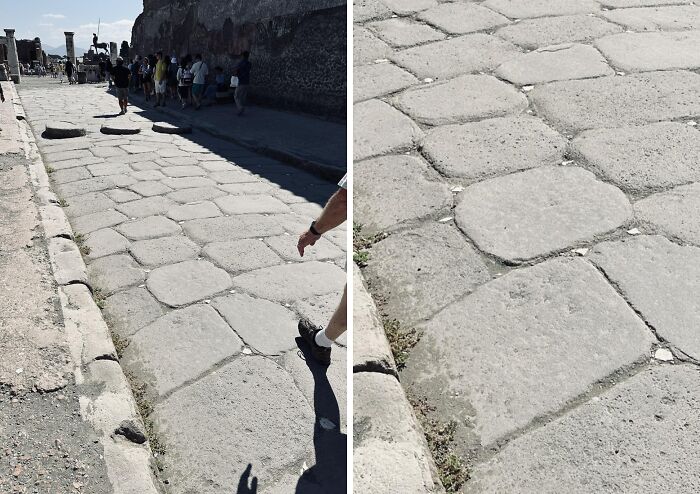
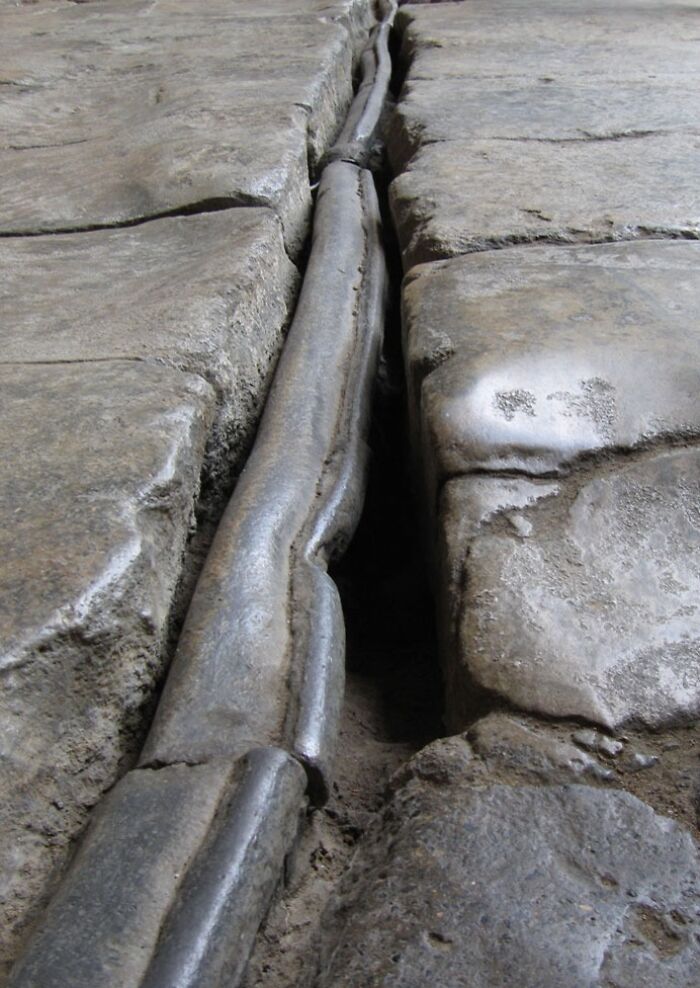
The Romans put white shiny stones in some of their roads to increase visibility at night catching the moonlight.
It's amazing that the Roman Rhodes could still be used today just as they were back in Roman times. But the brand new RHODES that they just put up in Tucson Arizona need to be replaced and patched after just three months.
The Roman Rhodes that were built hundreds of years ago are still being used whereas the roads in Tucson Arizona fall apart less than three months after they're built.
Trivia is a Latin word! It combines "tri-" and "via" meaning "three roads”. In ancient Rome, the term "trivia" referred to the three-way intersections where people would gather to socialize and exchange information. Over time, the word evolved to refer to common or insignificant bits of information, which is how we use it today when talking about trivial facts or details. Romans invented the word for interesting facts!
Trivia was also the goddess of crossroads in Roman mythology, I believe
Not really. "Trivius dea" was a Roman nickname for a goddess that identifies with the Greek goddess Hecate (an evolution herself from the Egyptian goddess of magic and fertility Heket, that came from Tracian origins). It meant "the triple goddess", because -in the continuous effort by the Romans to amalgamate their pantheon with the ones from cultures that were absorbed, including the Greek culture- it came to be traditionally seen as the unification of three different goddesses: Diana (the earth), Proserpina (the underworld) and Luna (the sky). Being three entities in one, it added the protection of crossroads to her duties of Goddess of Magic, Witchcraft, Death and Ghosts, Night and the Moon.
Load More Replies...Mostly wrong. Trivia is a derivation from "trivial", that in itself comes from the latin "trivialis", meaning "ordinary, commonplace" that effectively come from the "trivium" crossroads, but allude to the fact that they were a in fact a "common" feature in ancient roads. People did not "gather to socialize and exchange information" simply because 1) doing so at the public forum or at the baths was the norm and 2) those were typically outside of the urban centers.
"Trivia" as "insignificant bits of information" came in use only in the 1960s (with other occasional use before but in different meaning that did not take hold), starting as the informal name of a party game that became a fad in the Ivy League universities, going on to become commonplace in the 1980s with the publication of the boardgame "trivial pursuit".
Load More Replies...From merrian-webster: https://www.merriam-webster.com/wordplay/trivia-word-history
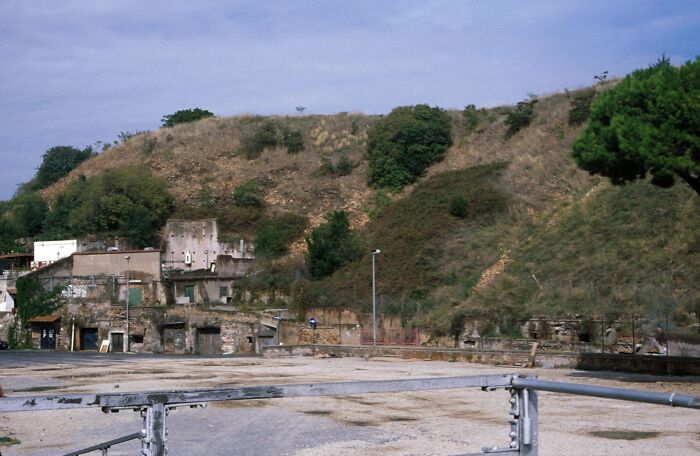
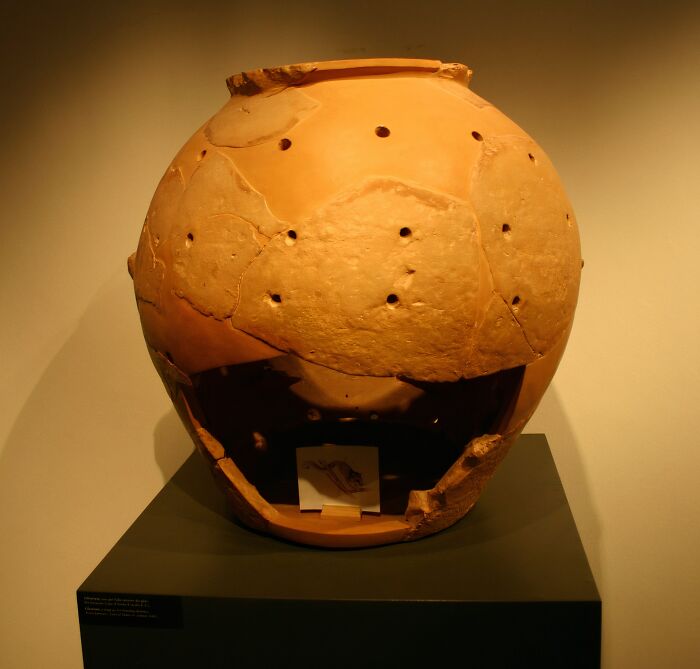
Load More Replies...There's a massive artificial hill in Rome called "Monte Testaccio" which is the result of the Romans dumping milions of used oil jars over the centuries as they could not reuse them due to the residue. The hill is still accessible today and it's literally a huge pile of thousands of layers of terracotta.
Bearing in mind that terracotta means 'baked earth', the jars just went home.
There are any number of ancient cities which basically turned themselves into hill settlements this way - dumping the rubbish in place and just carrying on: https://en.wikipedia.org/wiki/Tell_(archaeology)
It is said that Rome wasn't built in a day... And if you've ever delved into Roman history, you might understand why.
According to the Franklin Templeton knowledge centre, it was an English playwright called John Heywood who first said that “Rome wasn’t built in a day, but they were laying bricks every hour.” The site explains that in the beginning, Rome was just a conglomeration of few hamlets. It then it became a city state (a sovereign state that consists of a city and its dependent territories), and eventually a vast empire.
"The grandeur that Rome achieved was a result of centuries of tireless effort and ceaseless energy devoted by her people. In picturing the empire that they eventually wanted, Romans did not forget that they will have to tirelessly lay each brick continuously over decades together," reads the site.
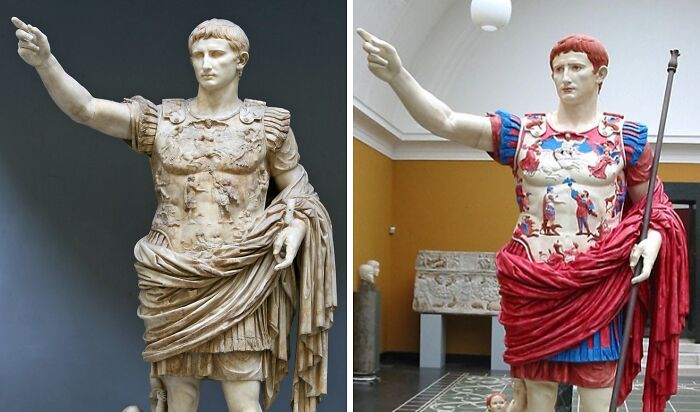
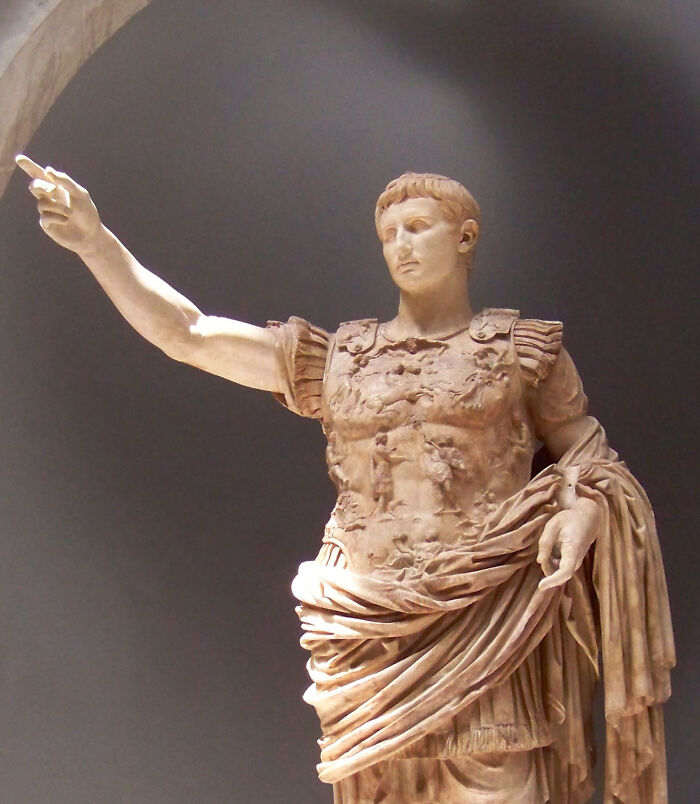
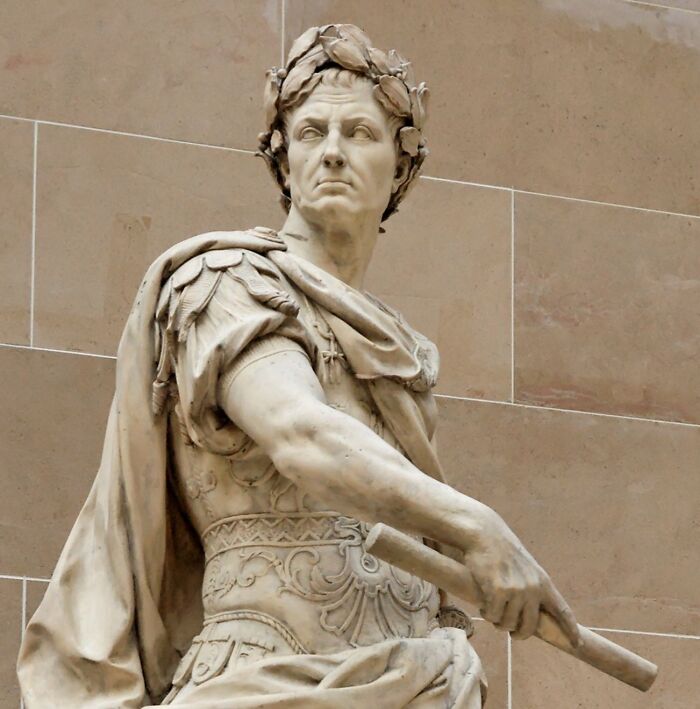
The famous “white” marble and stone statues of emperors, gods, and other individuals in most cases were actually painted and colorful. Archaeologists and art scientists found traces of the paint pigments upon closer examination in recent decades. The colorized Roman statues especially of Caligula can be quite creepy looking but it’s awesome.
They didn't look like that second picture either though. The colours were not flat, bright, bold shades; there were important things like layering and shading and realism. They didn't paint their important statues by slapping on garish colours like a toddler, they spent time and care to paint them realistically.
That would make so much more sense, thank you. I unsuccessfully spent a while gazing at the painted version trying to get my senses unoffended!
Load More Replies...like someone said below they painted them to look realistic not like what you see on the right as one solid color. it was shaded and dynamic. what was also interesting is they used semi precious stones for the irises in many of the larger statues. their temples and buildings were also painted
It is simply amazing that they could find those paint pigments and show what those statues looked like so long ago.
This is a more realistic colorization of the statue 2025-04-28...0b7ded.jpg
Roman concrete has chunks of calcium in it called lime-clasts - they help self-heal the concrete.

"Material properties" https://en.wikipedia.org/wiki/Roman_concrete#:~:text=Material%20properties,-edit
Roman cement was very durable. They tried to recreate it based on recipes- the catch? It didn't work because nobody wrote down you need SALTwater.
I’m pretty sure that is one of those ‘secret ingredients’ that only works because of the rest of the ingredients. Ordinarily salt water makes concrete less structurally sound and fall apart more quickly. (Or maybe its a ratio thing?)
Load More Replies...The details were worked out fairly recently: https://news.mit.edu/2023/roman-concrete-durability-lime-casts-0106 (a multinational research programme involving Italian and Swiss researchers working with academics from MIT and Harvard in Massachusetts)
I was just coming here to say this. for hundreds of years scientists teid to figure out what made roman cement last so long esp compared to modern cement. it wasnt till recently they figured out how it was made.
Load More Replies...Romans discovered a waterproof concrete made with “pozzolana” sand (from Pozzuoli). Waterproof as in, it magically dried under water and became hard as a rock. Without that, they couldn’t have maintained the huge net of aqueducts they’re famous for, and probably couldn’t build the lasting empire we know.
Do yourself a favour and check out Pont du Gard if you’re ever in Avignon. What an amazingly breathtaking piece of architecture - 50 metres high, the aqueduct had a drop of 25cm per kilometre to allow for ware to move along it. Roman engineering 😮
Isn't that is why we have so many Romann objects? Because they were made out of a type of concrete that last until our time?
The secret ingredients were saltwater and quick lime. Using that version of lime produces a hot reaction which allows different chemical bonds and if it's done at normal room temperature.
I feel like this is what new Basketball courts are topped with nowadays.
The Ancient Romans contributed a lot to society, and thousands of years later, their influence is still visible. It's in our art, architecture, technology, literature, language, and law. We
If there's one thing the Romans were good at it was engineering. "They understood the laws of physics well enough to develop aqueducts and better ways to aid water flow. They harnessed water as energy for powering mines and mills," explains National Geographic. "They also built an expansive road network, a great achievement at the time. Their roads were built by laying gravel and then paving with rock slabs."
The Romans built such a massive road system that until today, we say that “all roads lead to Rome.”
Emperor Octavian once bought a Raven from a merchant who taught it to say “hail Caesar!” (Ave Caesar!)
In the time of Julius Caesar, you could send a letter from Rome to Athens in nine days. Today, the Italian post can’t even come close.
With the Italian post? No you can't. When my mom, that still lives in Italy where I was born and grew up, sends a card for birthday or whatever to me or my kid or my husband (we live in Switzerland, we share a border with Italy), it doesn't arrive in less than 12/15 days. There are options to make it faster, but they are more costly, and frankly, it's annoying to have to pay more just to have a letter delivered in a reasonable time. When I send something to Italy, it doesn't need more than 4/5 days, ffs!
Load More Replies...I saw on TV years ago a reporter did a story complaining about the slow postal service in Australia and he said he can get a letter from Melbourne to Sydney quicker by stage coach...and he did. Only trouble was the cost! A letter by postal service cost about 0.1% of the cost of hiring a stage coach.
Long before the Pres. Dwight Eisenhower US Interstate Highway System, there was the U.S. Postal Highway network. It's not anything like the Autobahn because most of its highways go through cities, having traffic lights at their major intersections. But, authorized directly by the U.S. Constitution, they allowed for relatively quick cross-country travel. The most famous U.S. Postal Highways are Route 66 (1926), once going from Chicago to Los Angeles, but now supplanted by interstate highways, and Route 1 (1911), going from the Southern tip of Florida to the Maine-Canada border. But the first US highway (eventually numbered Route 40) was built in 1806, to connect the Atlantic coast in Maryland to the Ohio River, from which you could go downstream and reach New Orleans, or head back upstream once you reached the Mississippi-Missouri River and reach Idaho!
There had been a study, conducted by the US Army, done in the 1930s about the feasibility and usefullness of an interstate highway system to the defense of the United States. That study was headed by an Army major named Eisenhower.
Load More Replies...Huh, my sister was an exchange student in Italy, I just figured she was too busy and that’s why it took her so long to reply by snail mail. Good thing we talked by phone:)
When in Rome, go to the Vatican post office, they will deliver mail in a more timely fashion.
It bothers me a great deal that I can buy something from an eBay seller in the States, it crosses the Atlantic in a matter of hours, and yet it takes *days* - anything up to a week - to get from one end of the UK to the other.
Back in the 80s and 90s the Royal Mail First Class next day delivery was typically in the 90% success rate. The TPO (Travelling Post Office) trains would sort the mail en route and get it to hubs throughout the night ready for resorting and sending to sorting offices for delivery. I dont know what's gone wrong with the system but First Class post is 10 times more expensive and 3 or 4 times slower now.
Load More Replies...Truth be told, there probably weren't a lot of letters going anywhere. Not everyone was literate and sending a letter was probably very expensive.
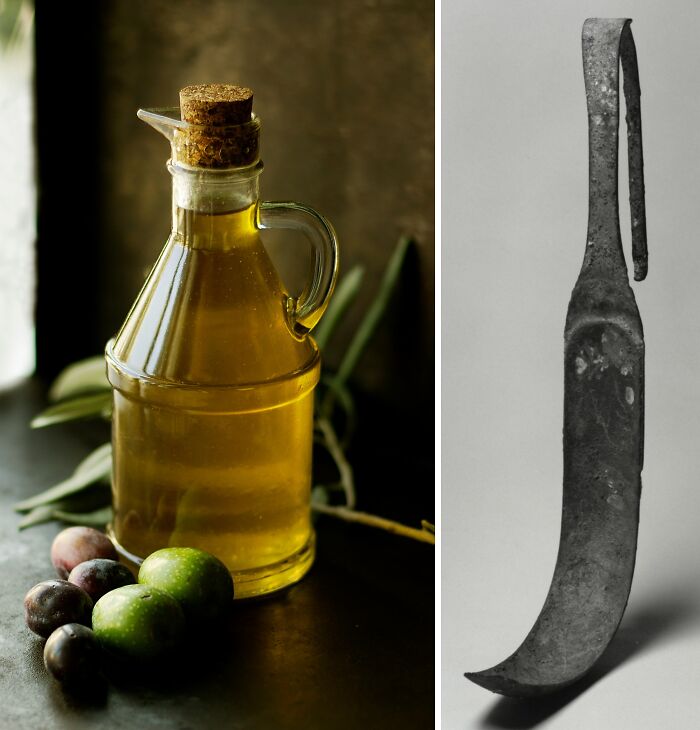
They thought “soap” was gross and only used it for textiles and other industry! For cleaning themselves they used olive oil, lotions and perfumes then just scraped it all off with a bronze or wooden stick called a Strigil.

In the series Rome there is a scene where James Purefoy's character has a 'wash' that way. Quite a fascinating scene...
This is not true. Soap being viewed as gross is false. For a period of time the Romans viewed soaps made from animal fats and lye (as opposed to oil based soaps) as a negative because the Celts in Gaul invented animal fat soap and romans viewed anything from the "Barbarians" as something of derision. As Gaul became more integrated into the Roman empire, they adopted animal fat soap.
Exactly, most of these are BS to anyone with a bit of knowledge of the Roman culture. Soap as we know it was uncommon, simply because it was not easily accessible, but definitely not "gross"; it is documented in Pliny, but the commonplace alternative was a a mix of oil, ash, dried flour from the bean's leftovers, clay and crushed seeds from a plant called Equisetus, or "Horse Tail"; it is basically the "scrubs" you buy today at Sephora. People would scrub the skin, remove the excess with the strigil, and then wash in running water. According to Seneca a body wash was commonly done every week or so, and they washed their teeth with sodium carbonate, ash or finely crushed pumice, using leaves or stick sometimes from fragrant plants.
Load More Replies...Strigil or stlegis (στλεγγίς) was invented by the Greeks and the Romans adopted it later.
As with 98% of all Roman culture - they took it from the Greeks.
Load More Replies...I mean, given the state of soap at the time, they might have possibly been right. Soap of that era was pretty harsh, made of some pretty gross ingredients, and probably not at all good for your skin.
Lye soap is nasty. Burns. Took some fiddling to make soap pleasant to use.
Alot of the time I use a washcloth soaked with witch hazel to "shower". Women have been washing their faces with things like cold cream and waterless cleansers forever probably. It's the thinking soap is gross that gets me.
The truth is a bit more complicated. Galen approved of soap. https://en.wikipedia.org/wiki/Soap#True_soaps_in_the_Ancient_world. More here: https://www.soaphistory.net/soap-history/
The Romans were also great farmers. They managed to figure out the climate, soil, and did deep-dives into how to make their plants prosper. Today, some of the ancient Roman techniques are still used by farmers around the world. We're talking things like crop rotation, pruning, grafting, seed selection, and manuring.
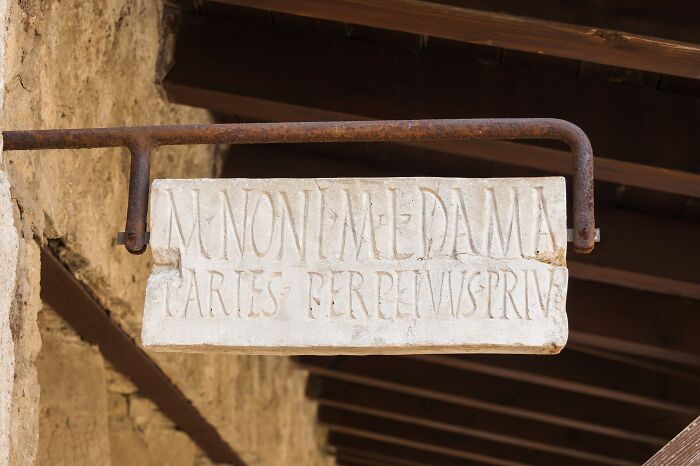
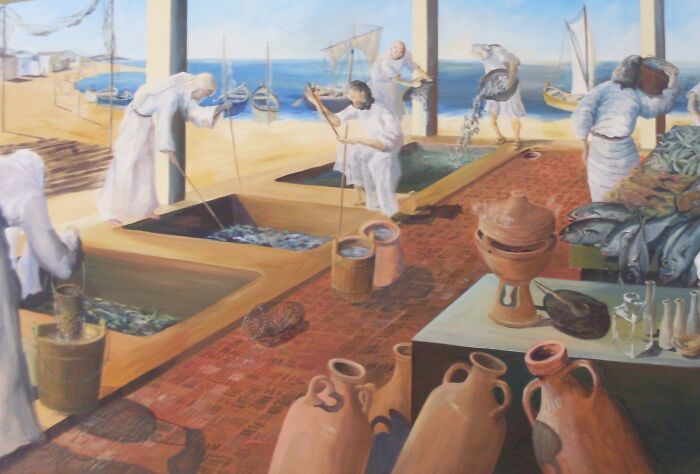
The Romans had road side billboards just like us. Advertising a lot of different things, including fermented fish sauce Garum!

They had “follow me” incised into the soles of their sandals to imprint in the mud
Load More Replies...The sign above is obviously advertising cookies. I know this because it begins "M-NONI-M"
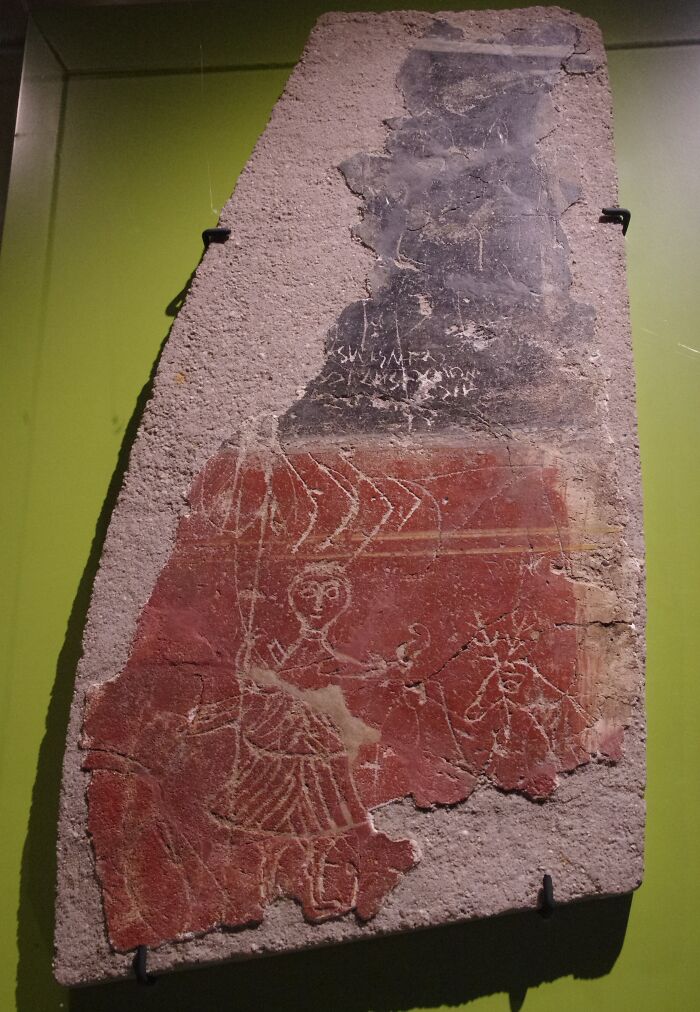
Graffiti was a commonly used and popular political tool. If the Roman people were unhappy with something they would paint it on walls of buildings and it was just an accepted normal thing.

Reminds me of the scene in The Life of Brian where the Roman soldier teaches Brian the difference between Romanes eunt domus and Romani ite domum.
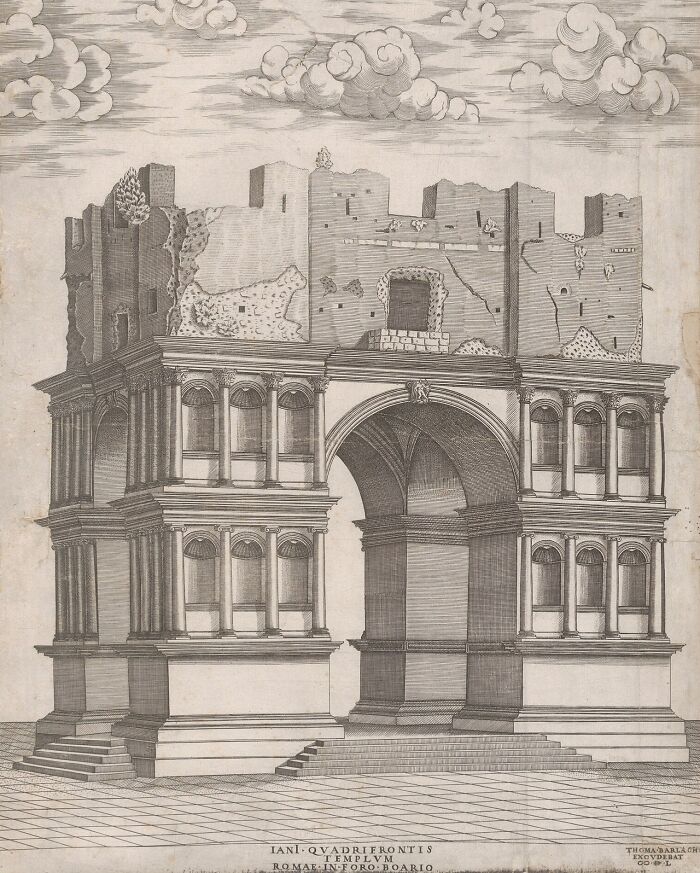
The Roman temple of Janus, the two-faced god, had gates closed during peacetime, and open during war. They were once open for 400 years in a row, and hardly ever closed. The rare (and brief) times they were closed were accompanied by festivals, and new coins being minted to mark the occasion.
You don't have to be a history buff to have heard of the Colosseum. The ancient Romans built the large amphitheater somewhere between 70 and 72 CE. And today, it's one of the Seven Wonders of the World. Also known as the Flavian Amphitheatre, it's the largest amphitheater in the world, measuring 189m long, 156m wide and 50m high.
Again, we see influences of the Roman Empire in our world today. Think about the sports stadiums that host major matches... That oval shape and the tiered seating are based on the structures the Romans built back in the day.
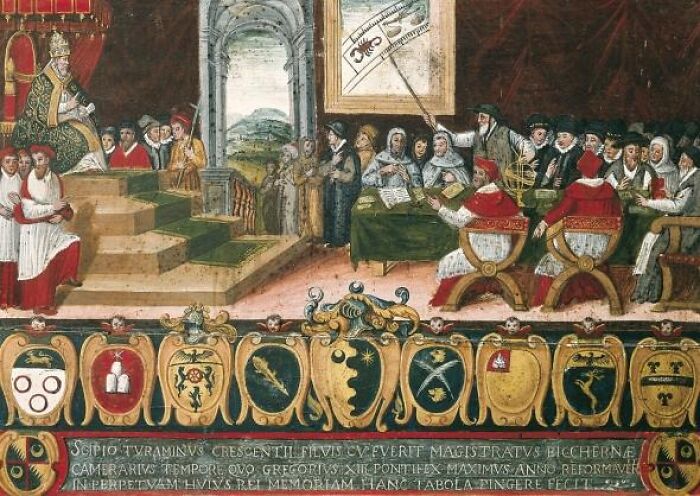
Julius Caesar and his advisors made the calendar that we use today, with minor adjustments by Pope Gregory. It's called the Gregorian calendar nowadays but Caesar really contributed more.

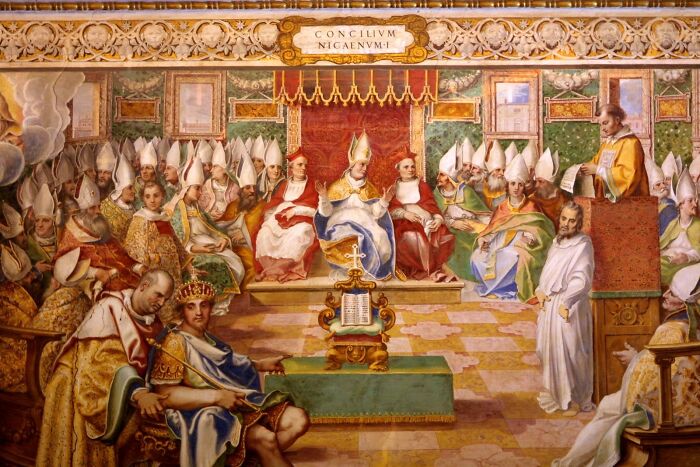
Those minor adjustments like being more accurate with leap years so that the calendar wasn't consistently off around one day/century - the equinoxes in the Julian calendar and observation were noticed as being off by days in the years after the First Council of Nicea in 325AD, making their calculation of Easter incorrect, which is kinda important in Christianity.
I don't know why, Easter is designated as the first Sunday after the first full moon after the spring equinox. It's not a specific date like Christmas.
Load More Replies...The Julian calendar is the one that the Eastern Christians use, which is why they celebrate Christmas on January 6th/7th: to them, it's December 25th.
It always baffles me that OCTober, NOVember, and DECember aren’t months number 8,9, and 10 respectively. Whoever is responsible for that should be stabbed. ;)
Pretty simply because Julius and Augustus inserted July and August. Watch out for Trumptember...
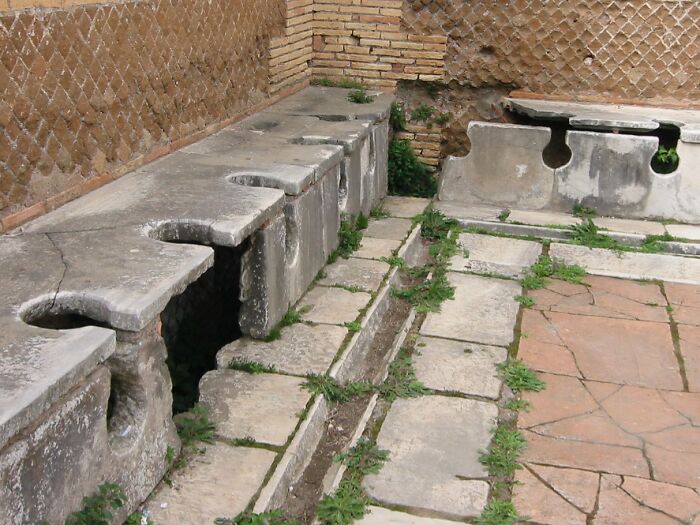
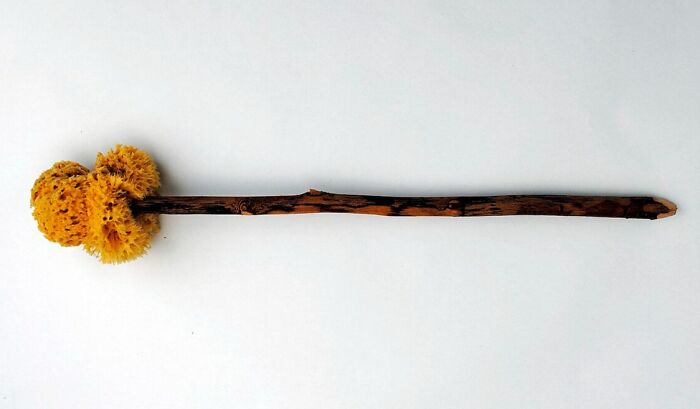
Load More Replies...There were no stalls on Roman Bathrooms. Everyone was just sitting there staring at each other as they did their business and then cleaned themselves with community sponges.

I heard they are also use as cleaning agent thanks to the ammonia.
Load More Replies...Not weird if you grew up seeing it, plus we still do this today with urinals. Also, the stick they held the sponge with was communal, but each person would take a single sponge and throw it away once they'd used it.
Is that true? I’ve been there. I’ve taken tours. No one mentioned throwing the sponge away. In fact it was pretty much stated everyone used the same sponge and rinsed it off. Enjoy your poop sponge.
Load More Replies...I am sure it was more like the Forum than people staring at each other
Maybe we should all get a little less precious. We're all doing it...
It also appears that the hole in the lower portion of each "toilet" can be used like a urinal. Neat.
No one going to mention American cubicles? Nothing I like better in a public toilet than catching the eye of a guy in the mirror who's crimping one off while I wash my hands! (I'm compelled to put /s here so some of you understand this is humorous and I'm not really weird)
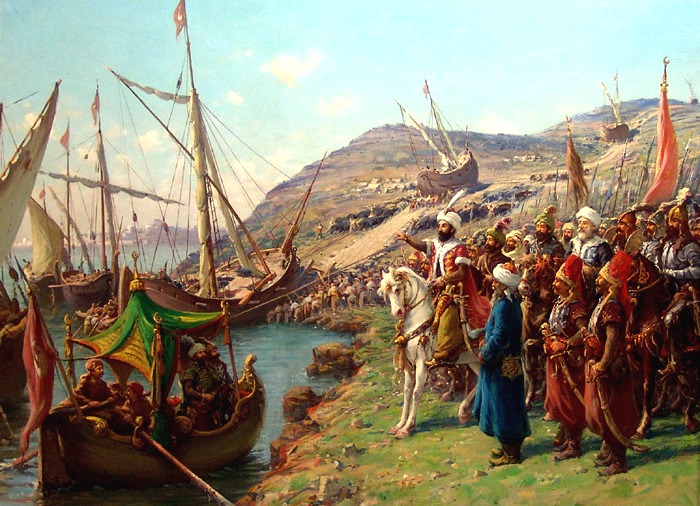
The fall of Constantinople in 1453 closed the Silk Road and other trade routes to Europe. This forced Europeans to sail west to find new trade routes and accidentally discover (/rediscover) the new world.
Another BS entry. The Silk Road was not "closed". It was a network of trade routes that the Ottomans managed and kept open, but also subjected to tariffs and strict control. The Ottomans provided services to the merchants, and even started their own trade companies, but the western nations were not keen to finance a country that was so culturally opposite. The main issues came fro the fall of the Mongol Empire, that greatly reduced the safety of travel eastwards than the Ottoman Empire, and the technical innovations in shipbuilding made possible to attempt different ways of trade, both coastal and oceanic. Ships were cheaper, faster and often safer than land routes, all while moving several tons of goods at a time with a fraction of the manpower. The commerce would have moved away from land based routes with or without the Ottomans.
Nothing in the new world was "discovered," there were indigenous people living there for centuries.
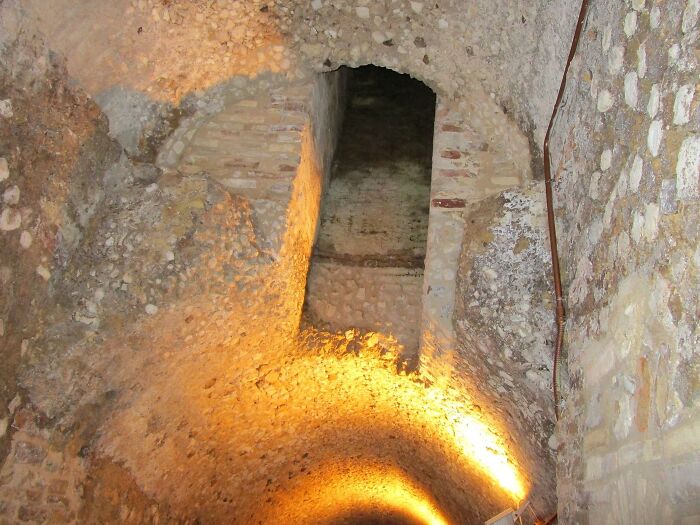
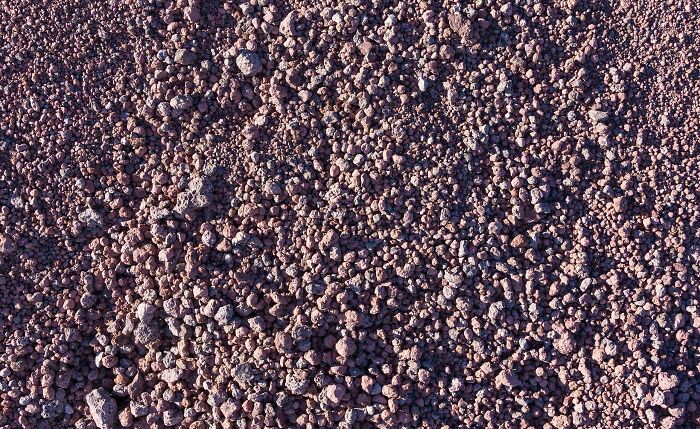
What's truly remarkable is that the Colosseum still stands today, thousands of years later. It's arches are made out of cement. The ancient Romans made the super strong building material with what was available around them: volcanic ash and volcanic rock. And its for this reason modern scientists believe the Colosseum hasn't crumbled.
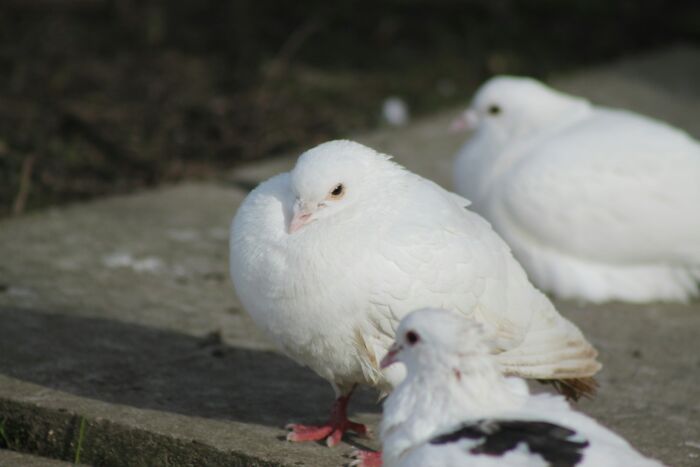
Romans loved doves that were in the streets and they were associated with Venus. Unlike now when we dislike their decendants the pidgeons in the cities.
Pigeons used to be very useful to us. They've only got a bad press since the 1960s. They clean up a lot of the mess that we humans leave behind - bits of food, vomit etc.
Back in the 60s you could feed them for tuppence a bag.
Load More Replies...I love the doves. I have a few around my house and I love hearing them cooing during the summer!
I love birds but all those pidgeons downtown... I had one p*o right on my head once :'^(
*:'^( there, fixed your head to show the pơop!
Load More Replies...Not everyones native and daily spoken and written language is English. Even with the British efforts of colonisation, they missed some spots on the globe. Or English just wasn't catching on, because not suitable for certain cultures.
Load More Replies...Romans had special terracotta containers called Glirarium to raise dormice so they could eat them.
The formal English name is “ European edible dormouse”. Check Wikipedia… I don’t know any other animal which name includes “edible”.
Despite many being so...edible swine, edible chicken...
Load More Replies..."very similar to squirrel, with a rich, greasy flavor and only a few mouthfuls of meat on each one.
The Middle Ages started with the fall of the Roman Empire and ended at the fall of the Roman Empire.
No, actually I believe they mean the Byzantine Empire (1453). The Holy Roman Empire fell the year Babe Ruth switched to being an every-day hitter (1918). Fun three-roads fact: When the Pope named Charlemagne the Holy Roman Emperor, he was recognizing Charlemagne as the legitimate king of the Lombards (774), the rulers of the rump Roman Empire. The city of Rome fell (476), but the Roman Empire persisted in the form of two kingdoms, that of Constantinople/Byzantium and of the Lombards.
Load More Replies..."Roman underwater structures proved to be even sturdier," reports National Geographic. "Seawater reacting with the volcanic ash created crystals that filled in the cracks in the concrete. To make a concrete this durable, modern builders must reinforce it with steel. So today, scientists study Roman concrete, hoping to match the success of the ancient master builders."
The roman "ketchup" Garum was used in almost everything. Very much like tomato ketchup nowadays. Only... It was made of rotten fish guts...
Fermented, not rotten. It is said to be akin to Vietnamese fish sauce. Which is an incredible umami bomb; I use it in anything savory.
Worcestershire sauce is also a fermented fish sauce
Load More Replies...It was the best of shires, it was the Worcestershire.
Load More Replies...Have you heard an American trying to pronounce it?!
Load More Replies...Townsend's did a video on mushroom ketchup, it's pretty good. https://youtu.be/cnRl40c5NSs?si=GF1amQ1ZFqPi5o0j
Load More Replies...Recent research suggests that the xylospongium/tersorium was used as a toilet scrub.
Found this: The xylospongium or tersorium, also known as a "sponge on a stick", was a utensil found in ancient Roman latrines, consisting of a wooden stick with a sea sponge fixed at one end. Academics disagree as to its exact use, about which the primary sources are vague.
And I’m now singing sponge on a stick, sponge on a stick in blankety blank style…. (You probably need to have watched the last series of the great pottery throwdown to get the reference)
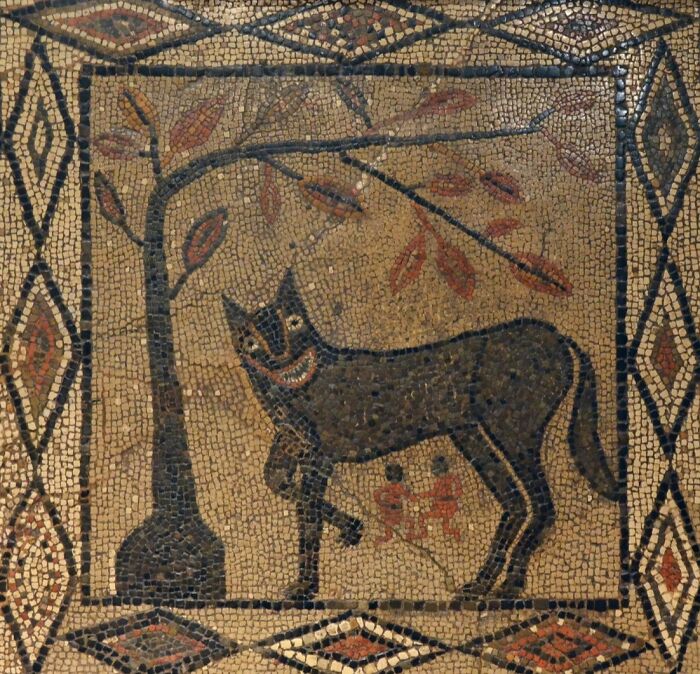
Load More Replies...The founder of Rome, Romulus, and his brother, Remus, were both supposedly raised by a wolf mother. This, of course, after being born by a human mother and the god of war, Mars. That’s the story we have at least.
The Latin word for wolf is the same as the word for prostitute. Makes the origin story more interesting.
In Pompeii, you can see the remains of the Lupanar (= the local brothel, translates as House of the She-Wolves)
Come on Bored Panda, stay on topic. The article is about Roman history, not Star Trek planets.
We could argue that mythology is part of the history of a civilization
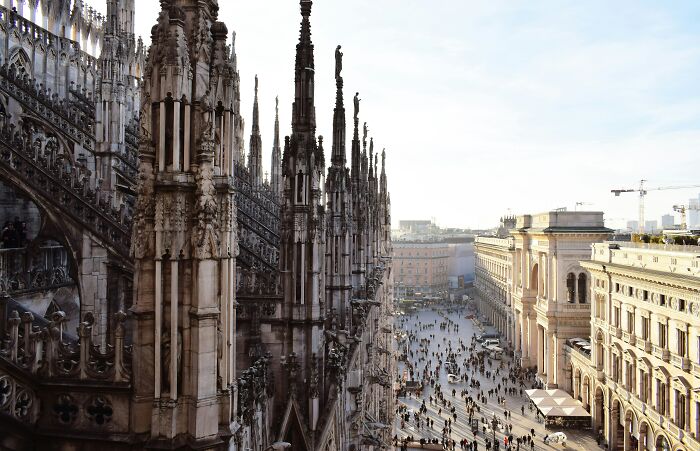
Load More Replies...After 286 AD, Rome was no longer the capital of the empire. Instead, Mediolanum (todays Milan) became capital for the WRE. It was moved again in 402 AD to Ravenna.
But of course it was Constantinople that was the actual capital of the empire.
No? The OG capital was Rome. As of 286, the western portion of the empire was governed from Mediolanum, then Ravenna. While the western portion of the empire was governed from Nicomedia. Rome remained the main capital. Then Constantinople was founded, and over the course of the 5th century it grew to become a capital equal to Rome, then became the new capital.
Load More Replies...This isn’t exactly true. As of 286, the western portion of the empire was governed from Mediolanum, then Ravenna. While the western portion of the empire was governed from Nicomedia. Rome remained the main capital. Until of course Constantinople.
Some people still see Europe as Rome in a sense. The Roman empire was pretty large at one point, so it makes sense to have governors etc. Like the US and Canada broken but whole.
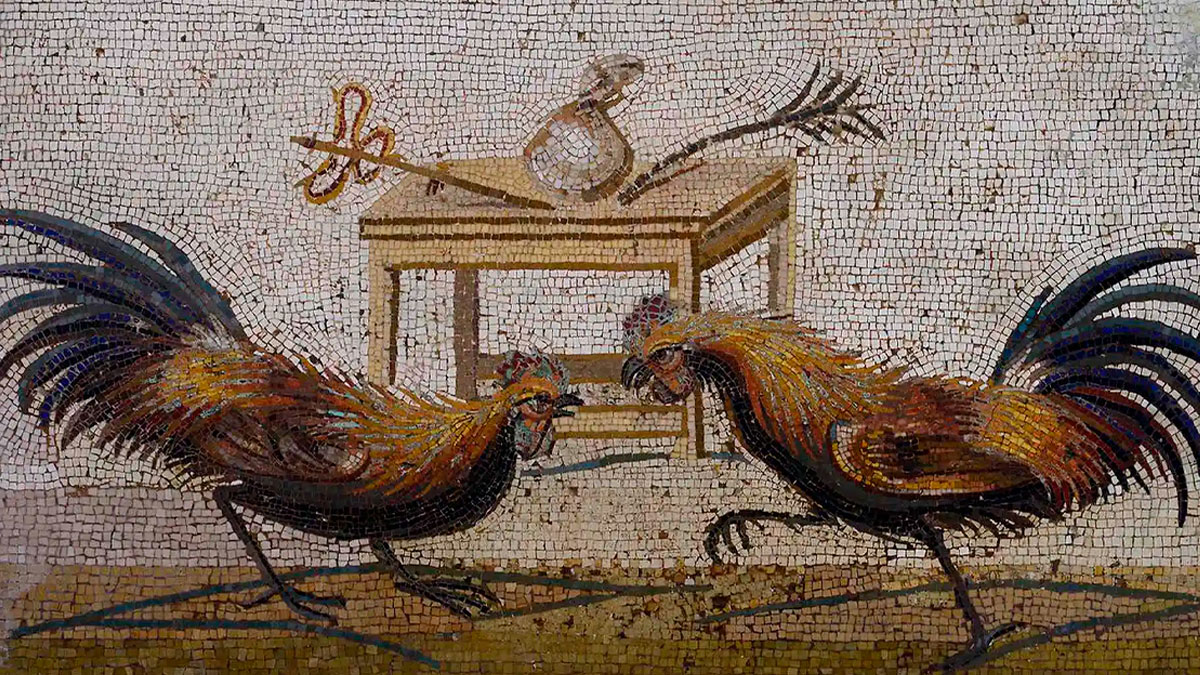
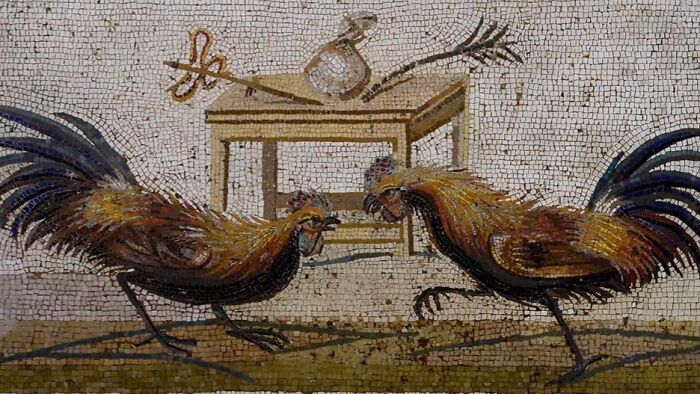
Load More Replies...Romans used to bring sacred chickens to battle with them and would “consult” the chickens before battle to see if they should proceed.
Romans took divination very seriously, but not all of them. In one documented case before the naval battle of Drepana, during in the First Punic War in 249 BC, Roman commander Publius Claudius Pulcher was warned by the soothsayer not to go to battle as the sacred birds would not eat, which was a bad omen. Pulcher replied "They wont't eat, will they? Let's see if they have a drink." He tossed the sacred birds overboard, went to battle anyway, and won.
Ace: augury looked at the behaviour of the birds, not their entrails; haruspicy was the sort you're thinking of. https://en.wikipedia.org/wiki/Augury and https://en.wikipedia.org/wiki/Haruspex
Load More Replies...That sounds like a DEI; you get a tariff!
Load More Replies...The Rostra, the platform in Rome where people would give speeches, has the Rams of enemy Warships from the Latin Wars built into it. (Rostrum = a warships ram)
Cicero’s head was nailed to it, after Anthony’s wife jabbed the tongue with her hairpin
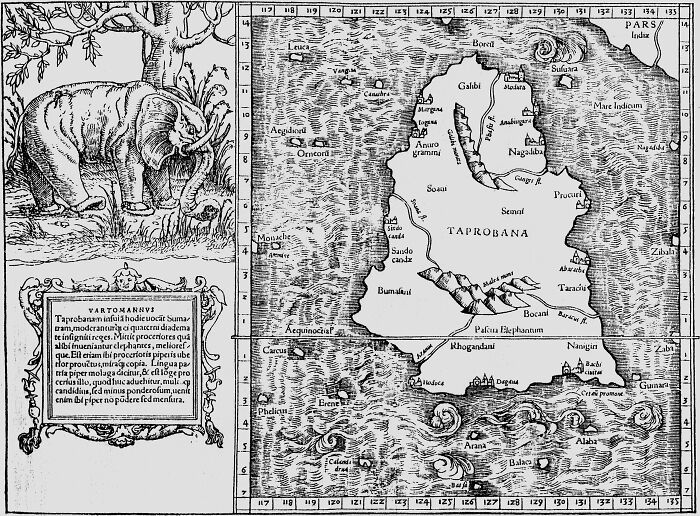
Rome had contact and trade with Sri Lanka and called it Taprobane.
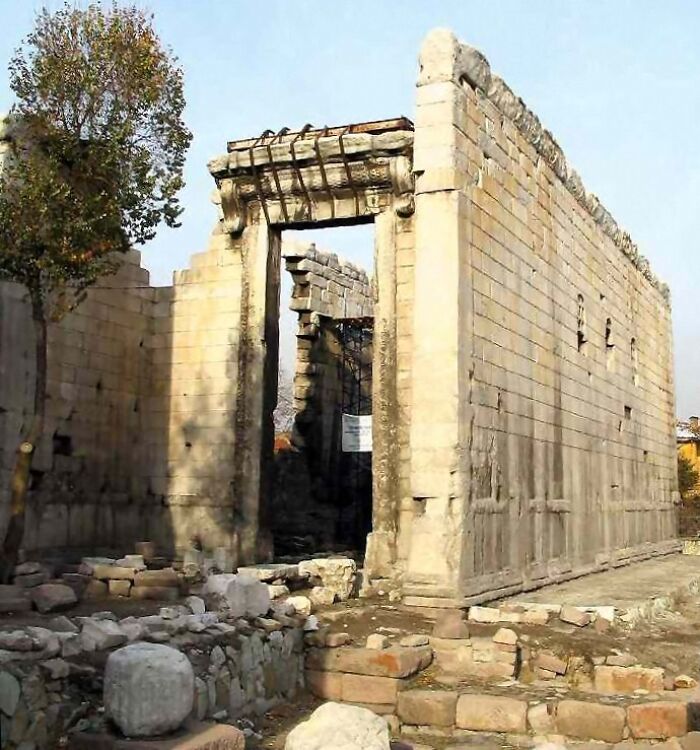
Julius Caesar invented newspapers, and Augustus published his autobiography as a gigantic wall called Monumentum Ancyranum.
Hmm - I doubt the claim about Julius Caesar. https://en.wikipedia.org/wiki/Newspaper#History
All the baths, at least in Bath, England, were lined in lead, so all the Romans who thought they were having a nice relaxing dip in the hot tub were exposing themselves to lead poisoning.
Can't find anything other than the Great Bath at Bath specifically. Given that lead can create a deposit of lead oxide, which is safer, I guess I will have to do more reading on Roman baths specifically. People were quite likely to be exposed to lead more through defutum - a grape must concentrate used to sweeten other foods that was often reduced inside lead vessels.
Your probably right. Acidity leaches the lead way more than water would.
Load More Replies...It is indeed well documented that people in Roman times knew the lead poisoned them
But it made that wine so, so sweet - totally worth the damaged children it produced! 😜
Load More Replies...Bathing in water containing a little lead contamination isn't much of a problem - you have to get the lead inside you for it to have toxic effects. The bigger problem these days with bathing in the baths at Bath is the brain-eating amoeba Naegleria fowleri: https://en.wikipedia.org/wiki/Roman_Baths_(Bath)#Water_quality
That's in the original baths, where the water just looks like it contains nasty stuff. In the modern baths, the water is treated and very safe.
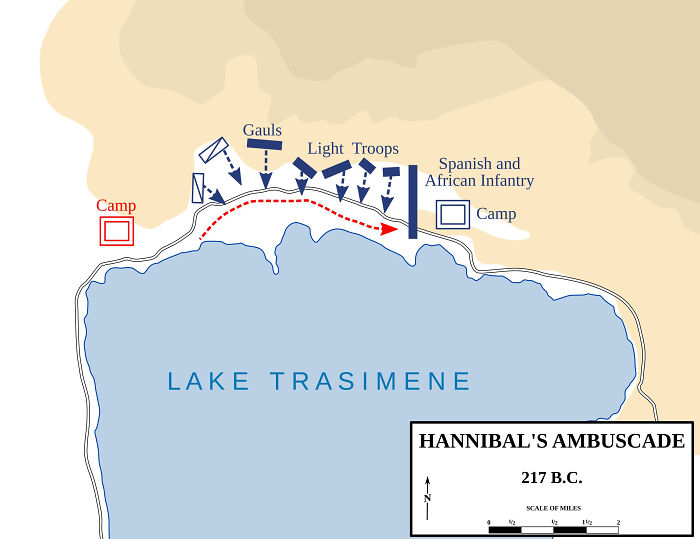
Load More Replies...The battle of lake Trasimene in 217BC is still to this day the largest military ambush in human history. Military historian Basil Liddell Hart called the Battle of Trasimene “the greatest ambush in history.” The Roman losses were at least 15,000.

Like Robert E. Lee, Hannibal was very fortunate in his opponents. That didn't last long enough for either of them..
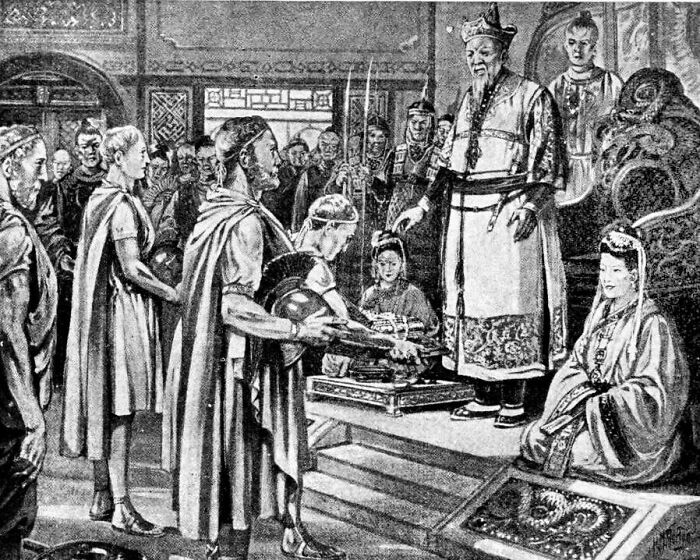
Romans were in direct contact with China - not just through trade. Embassies are attested by several sources. A roman embassy reached China in 166 AD. Even the presence of a roman legion is reported.
The Roman Legion in China story has been debunked. Great story- legionaries end up fighting as mercenaries in China after the battle of Carrhae in 53BC leading to the presence of tall fair haired blue eyed Chinese in Liqian China - but DNA testing has revealed it’s due to straightforward genetic mixing in a region where east meets west that saw heavy population movements 500-1000AD
I’m not sure these are contradictory explanations.
Load More Replies...Christianity was officially recognized by the empire in 380 AD by Theodosius through the Edict of Thessalonica.
According to that beloved open source online encyclopedia, the Edict of Thessalonica declared the Nicene Creed as the only legal form of Christianity in the Empire. Other forms of Christianity, such as the Arian form favored by the so-called barbarians (e.g. the Goths) were declared heretical and subject to persecution. Christianity itself had become a favored religion within the Empire early in Constantine's reign, following his ascension to sole Emperor after the Battle of the Milvian Bridge, where his rival Maxentius was defeated.

Organize it to control it. Still a method used by governments.
Load More Replies...Christianity was being practiced (tolerated on and off) in Rome in different ways by each church, similar to modern day denominations, with different importance placed on different rites and rituals. That was until Constantine became emperor and converted to Christianity and decided it needed to be regulated. All churches then needed to practice the same way and this continued for a long time.
There is a christian claim that Constantine, although favored chrstianity, became christian at his death bed.
Load More Replies...Apart from sanitation, wine, education, public order, aqueducts....
Load More Replies...Well that was a very detailed post, but I am still no wiser as to what the Romans have ever done for us

Well, we have the word trivia, so they have summed up our existence quite neatly.
Load More Replies...How often does I thinks about the Romans? Them milksops? I thinks about the Comanche!
How often do I think of ancient Rome? Whenever I "remind" my kids of their Latin homework. Old-fashioned as it is, there is an advantage in a non-spoken foreign language for not-so-vocal kids. They all have to study English at school anyway. The alternative to Latin would have been French at their school.
According to my college Latin prof, their language is very agricultural, and full of barnyard puns that sail right past many scholars. I'm not a scholar, so I dunno.
I was cursing the Brits for driving on the left but just learned it was due to the Romans.: )
Apart from sanitation, wine, education, public order, aqueducts....

Load More Replies...Well that was a very detailed post, but I am still no wiser as to what the Romans have ever done for us
Well, we have the word trivia, so they have summed up our existence quite neatly.

Load More Replies...How often does I thinks about the Romans? Them milksops? I thinks about the Comanche!
How often do I think of ancient Rome? Whenever I "remind" my kids of their Latin homework. Old-fashioned as it is, there is an advantage in a non-spoken foreign language for not-so-vocal kids. They all have to study English at school anyway. The alternative to Latin would have been French at their school.
According to my college Latin prof, their language is very agricultural, and full of barnyard puns that sail right past many scholars. I'm not a scholar, so I dunno.
I was cursing the Brits for driving on the left but just learned it was due to the Romans.: )