Get Premium
Dark mode theme is available exclusively for premium users. Learn more about the benefits of subscribing.
No fees, cancel anytime.

 Dark Mode Ad-Free Browsing Unlimited Content
 Ad-Free Browsing Unlimited Content Dark Mode
Join 1.2 million Panda readers who get the best art, memes, and fun stories every week!
The world doesn’t always make sense. Nor do people. And as frustrating as that can feel when you’re reading about, say, politics or the economy, sometimes the healthiest response is to simply accept that not everything has a clear explanation. So we invite you to get a little practice in doing just that.
This list, compiled from pictures we found on the Instagram account Jorish McTumbles, is not only pretty unhinged but also uncomfortable enough to leave you questioning what you’re even looking at. Here’s the challenge: see if you can scroll through it without groaning and asking, “Why?” Instead, try to embrace the absurd and maybe it’ll prepare you for surviving tomorrow’s news cycle. At least a bit.
More info: Instagram
This post may include affiliate links.
However, the proliferation of questionable content is likely one of the reasons why people no longer view the internet as a fully trustworthy source of information.
For example, according to a survey of 2,000 adults in the United States, less than half of what they see and read online is believed to be accurate, and this level of skepticism is at an all-time high.
Americans believe only 41% of what they consume online is accurate, fact-based, and created by a real human.
In fact, respondents believe that 23% of online content is completely false and intentionally misleading, while over a third (36%) falls somewhere in between.
Three-quarters say they trust the internet less today than ever before.
At the same time, 78% agree that the internet has “never been worse” when it comes to distinguishing between what’s real and what’s artificial.
To put the survey’s findings into perspective, consider this: the average American comes across information they know—or at least suspect—was generated by AI about five times per week, with 15% saying it happens more than 10 times.
Social media posts (48%), news articles (34%), and chatbots (32%) are seen as the top three sources most likely to contain AI-generated or misleading content.
In fact, those surveyed believe that about half (50%) of the news stories and articles they encounter online contain some element of AI, whether in the images or the text.
Despite their suspicions, fewer than a third (31%) say they are confident in their ability to distinguish between AI-generated and human-written text.
To test this, researchers showed participants a set of business reviews and asked them to identify whether each one had been written by a human or generated by AI. Only three in 10 respondents (30%) were able to correctly determine which reviews were AI-generated and which were written by people, confirming their concerns.
In fact, two of the three human-written reviews ranked at the very bottom of the list, highlighting just how easy it has become to be fooled online.
Why is that? A study published in Nature Human Behaviour suggests that the combination of information overload and our limited attention spans plays a major role in what spreads online.
The researchers found only a weak link between the quality of content and its popularity. In other words, in digital spaces flooded with information, low-quality posts can be just as likely to go viral as high-quality ones.
Plus, seeing too much information — for example, in the form of a constant flow of posts in the news feed — can also affect cognition. Confirmation bias, or our tendency to share information that supports our beliefs, is exacerbated on social networks because we often don’t have the time to properly analyze every incoming post and tend to pay attention only to the ones we already like or agree with.
However, if you're not writing a school paper or preparing a presentation for work but instead are willingly and recreationally indulging in bizarre and absurd images, the experience can take on a different meaning.
"Absurdity, at its core, arises from the clash between our desire for meaning, order, and clarity and the universe’s inherent indifference," says Jason Shimiaie, M.D., an assistant clinical professor at Mount Sinai Hospital who researches relational psychoanalysis, trauma, and dissociation.
"This concept is most famously articulated by the existential philosopher Albert Camus, who described absurdity as the 'divorce' between human longing and the silence of the world. Imagine climbing a mountain to see the sunrise, only for heavy fog to obscure the view. The effort and expectation clash with an indifferent reality, creating a moment of absurdity."
This tension, according to Shimiaie, isn’t just philosophical; it’s deeply psychological.
"As humans, we’re wired to seek patterns, explanations, and a sense of purpose," he adds. "Absurdity challenges those instincts, confronting us with contradictions and ambiguity. While this can provoke discomfort, it also invites us to think creatively, embrace humor, and redefine what matters most."

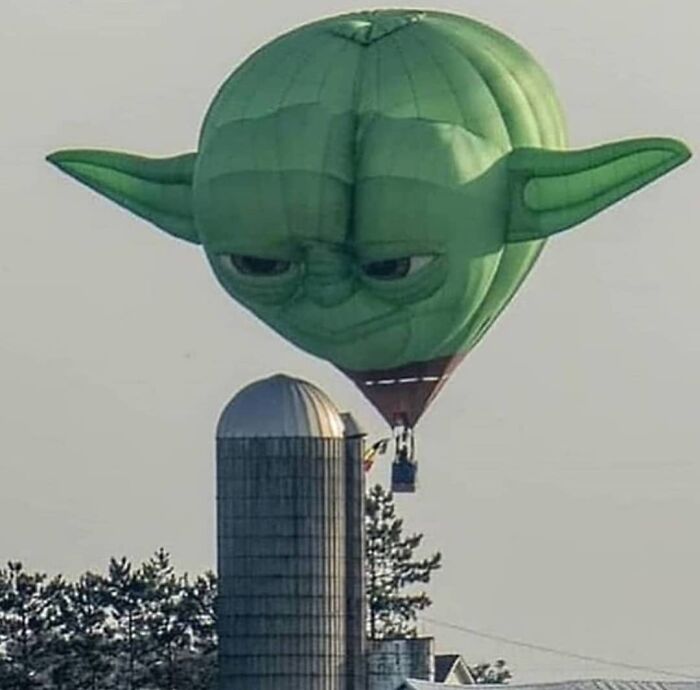
"Store grain, you must. Feed cattle, you will. Become my cheeseburgers, they shall."


Latex (paint) is a form of rubber. I'm impressed it's not leaking anywhere. Yet.

The Earth has turned into an apocalyptic, lifeless, lawless wasteland with no hope of being restored to its former glory. After two weeks, the gamers started to suspect something is amiss.

One way to get your game-obsessed kids outside... I'll have to try it with mine!

Oh that's just nasty! Why would anybody take their shoes off in a public bathroom? 🤢🤢🤢🤮🤮🤮

University of Wisconsin fan. ("Singles" also accurately describes his lifelong status.)
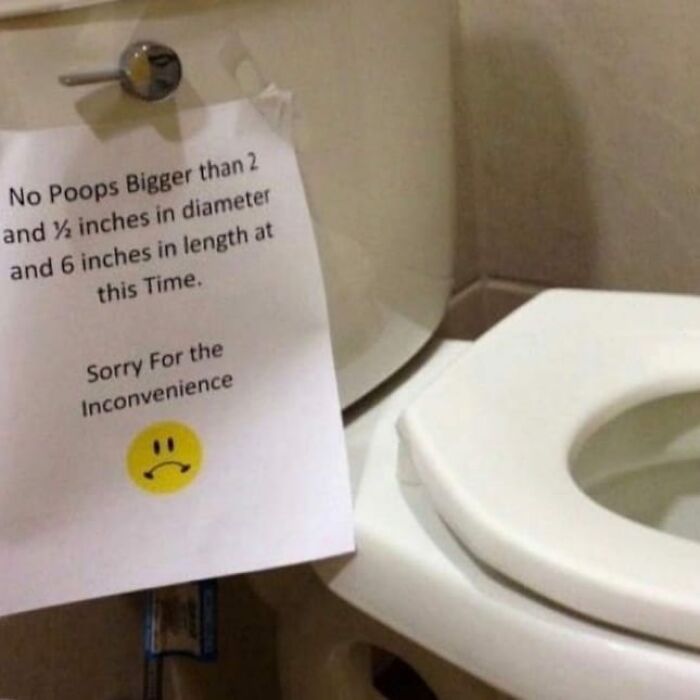
Only if it's no bigger than two and a half inches in diameter and six inches in length.























 No fees, cancel anytime