Get Premium
Dark mode theme is available exclusively for premium users. Learn more about the benefits of subscribing.
No fees, cancel anytime.

 Dark Mode Ad-Free Browsing Unlimited Content
 Ad-Free Browsing Unlimited Content Dark Mode
Join 1.2 million Panda readers who get the best art, memes, and fun stories every week!



According to the World Health Organization, over a billion people across the globe are currently living with a mental health condition. Meanwhile, the National Institute of Mental Health in the United States reports that nearly half of all adolescents have struggled with a mental disorder. Considering how prevalent these issues are, it would be wonderful if more of us actually understood what’s going on in our minds.
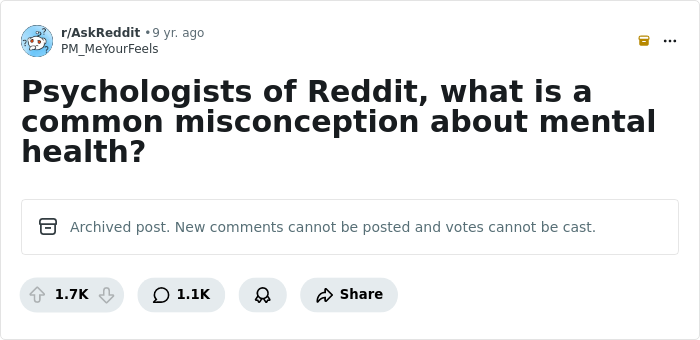
To remove some of the mystery that mental health is often shrouded in, experts have been weighing in on Reddit to dispel some of the most common misconceptions about mental health. Whether you have ever struggled with any of these conditions or you simply want to express your emotions more accurately, you might be able to learn something from this list, pandas. So enjoy scrolling through, and be sure to upvote the replies that you think many people could benefit from reading!
This post may include affiliate links.
 Obligatory "not a psychologist", but as someone who has mental illness and has spent the entirety of it since the onset (fourteen years and counting) picking it apart and trying to discover the roots and heal the wounds through thought and introspection, the one thing I can say is a huge misconception is the level of "cuteness" involved.
I have major depressive disorder and social anxiety. Its not about being sad, or feeling a little awkward around people; it can't be fixed by love, and it's not some cute picture on Tumblr or Instagram about "burrito blankets". It's going without showering and brushing your teeth for a week or more, because the thought to take care of yourself only comes around when you are reminding yourself that it's something you are socially obligated to do, or when you're berating yourself for not doing it. It's hiding from interaction, or running away at the mere thought of it.
There was nothing "cute" about me sobbing in stores because I was convinced everyone was staring at me. There was nothing "cute" about me missing my sister-in-law's wedding dress fitting, because she sent her friends to pick me up and I got so scared about being in the car with them that I hid in my room and held my breath until they gave up pounding on the door and screaming my name, just in case they could somehow hear me breathing from the second floor and refused to leave. There is nothing "cute" about feeling numb and distant, and cutting off communication with friends and family because the idea of being "present" for any length of time makes you even more depressed because you know you can't do it. There is nothing "cute" about wanting desperately to not be alone in this world, and finding an opportunity to save yourself, only to have your own mind rip it all out from under you and tell you that this is the "safest" option, it's "better this way", and you are completely and totally powerless against it, against your own chemistry--it's not cute. It's not fun. It doesn't make you special. It's not something to throw around lightly. My life, and the lives of millions of others, are being ruined by this, and it's "cute".
You know what happens, when common people find out that someone else's depression and anxiety can't be fixed by burrito blankets, or making jokes, or "being there"? They leave. They say "this is too much, I don't know how to help" and leave. We need to stop putting out this idea that illness can be fixed by good intentions, or finding a partner, or any little "good thing" that happens. If you're just upset about your life and the people in it, good things happening to you will probably help--but if you're depressed, none of it will help or change anything, because depression and anxiety aren't external, they're practically woven into your DNA, and I think we can all agree that a smile can't change your DNA. The answer has to come from you, and that process sure isn't "cute" either.
 The misconception that someone with mental illness or serious traumas is always going to show their symptoms openly. People suffer privately a lot of the time and get skilled at pretending to be fine until something sends them spinning.
We don't get to see each other's thoughts and feelings of what they're up against. Even body language that looks like generic stress or impatience could be someone fighting off an intrusive thought.

100%. Masking is a skill many who suffer become highly adept at. But, the brightest lights often hide the darkest demons...
 Depression is not feeling sad all day, every day. It comes in many forms and affects different people differently.

Exceptionally ignorant people call anti-depression meds “happy pills.” They don’t make you happy, you idiots. They make you want less often to end your life.
 That OCD is some hilarious disorder and the people who have it simply have a compulsive need to be overly organized. In reality it's more like having a personal demon in your brain that's constantly bullying/torturing you and making you feel miserable most of your waking life.
Edit: I'm not a psychologist btw but suffer from it myself.

I don't have OCD but I do have OCD traits because of my autism. They're stuff like having to do everything in a multiple of five, eating the same thing for breakfast every morning and completely skipping breakfast if I can't, if one of my fingers brushes against something I then have to brush my other nine fingers against it while making sure that they all touch it for the same amount of time, checking every lock in my house five times before going to sleep. And intrusive thoughts, so many awful intrusive thoughts, and they arent 'teehee, i dyed my hair, teehee, i ate a whole box of donuts' no, they're stuff like 'What if my dad SAd me?' It's hell.
 Mental health patient of 15 years: It's not your fault.

So you shouldn't focus on blaming yourself. But it is your problem. Nobody else can "fix" it for you. Changing your mindset can be useful. Understanding the underlying issues, triggers and workarounds. We need more and better mental healthcare and to stop treating it like a personal failing of an individual.
 Not a psychologist, but I was an educator for children with Autism.
Just because a child has Autism, it doesn't mean they are a genius like Rain Man. That is a very rare percentage of the population. Very often individuals with the disorder will have cognitive and developmental delays.
To add to this, unless you're diagnosed by a clinician, do not self-diagnose your social awkwardness as "Aspergers", because often its not Aspergers and instead social awkwardness.

My daughter was diagnosed with Global Developmental Delay, then later Intellectual Disability. ID is a tough diagnosis to pinpoint because it tends to be used as a blanket term for other intellectual disabilities, like Autism, ADHD and Down Syndrome. Some people assume she has Autism right off the bat when they communicate with her. She was evaluated for Autism 3 times, all showing negative results. There's a lot of overlap with symptoms between Intellectual Disabilites, and Intellectual Disability can be it's own diagnosis. It's very complicated, and to the untrained person, it can seem like someone with ID is normal with a few quirky habits and in need of a tutor. Yet, it goes way deeper than that. As my daughter turned into an adult, it became clearer and clearer how much immature and slower she is compared to other adults her age. She was EAP at school. Struggled in a normal class. Had tutoring. She tried very hard in her classes. Some things were just too abstract to comprehend.
 People do not have any knowledge about depression, or they have underestimate the seriousness of depression, depression often comprehend as just an emotion only. Moreover, depression always linked to words like weak, losers and negative, which resulting in those who are on depression don’t have the courage to seek for help, because they don’t want to look “weak” while everyone is looking alright.

something people sometimes dont understand depression is not feeling sad its the absence of any feelings
 I'm a recovery specialist, and one time my client said..
" I guess I missed the transition from when the ground was lava and imaginary friends became schizophrenia"
That broke my heart.
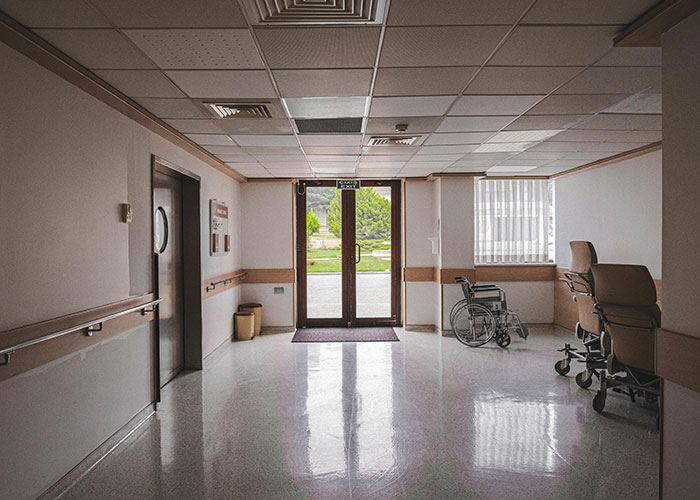 Not a psychologist, but a therapist working at a large psychiatric hospital.
One of the big misconceptions about psych hospitals/mental health care is that psych wards are all like One Flew Over the Cuckoo's Nest, or that they are full of weird/psychopathic/crazy people. Truth is, most of my patients are pretty average people who have had a bad run of it and who are pretty sick. With medication and therapy as well as supports when they discharge, they can go on to live completely normal lives.
What strikes me often is how easy any of us could be in their shoes. I'm not sure most people realize that. We are all a few bad decisions or bad circumstances away from mental illness yet it is stigmatized and seen as this "other" thing.
Another thing that I feel is a misconception is that many people with mental illness are difficult to deal with or prone to mistreating family and friends. On the contrary, about 85% of my patients are victims or other trauma at some point in their lives.

When I was about 14, a family friend was an inpatient at a mental health facility. I was nervous because I thought other patients would all look scary. Instead, they were really calm and friendly, just like my friend.
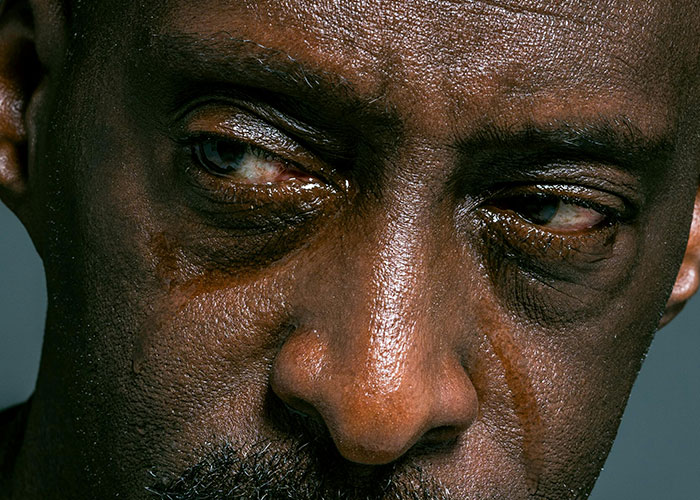 It's not a sign of weakness for men to cry or openly display emotions commonly associated as feminine, it is in fact, very healthy and reduces compound/chronic stress, and reduces the risk for a variety of physical illnesses including heart disease.

I wish this could be more normalized. Men are people too and subject to the same emotions that women are. They also feel disappointment and hurt and grief. They should be allowed to express those emotions. Society even now looks on a crying man as a sissy and less than. We need to do better. Anger should not be the only acceptable emotion for men
 Not a psychologist, child of one - psychologists can have mental health problems too. Actually, it's often the reason they start studying mental health. It's a lot easier to help people fix their problems than fixing your own.
 Obligatory "the symptoms of bipolar disorder aren't what's described in Katy Perry's "Hot'n'Cold" at all" response.
NATB I have bipolar disorder type 1, and managing it ends up being impressively banal (take some pills in the morning and others at night, get to bed at a time that allows you to get 7 hours of sleep, don't substitute coffee for food, sit upright in your room for 10 minutes every day with your eyes closed and think about whatever comes to mind).
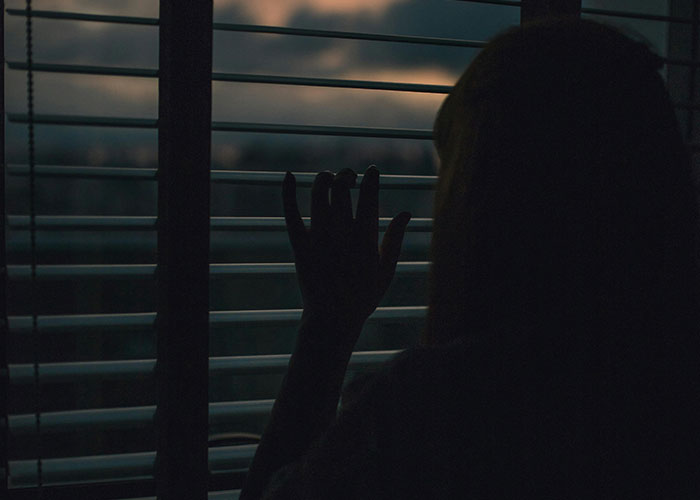 Social Work student specializing in mental health here. There are a LOT of misconceptions about schizophrenia. Schizophrenia is actually a pretty broad term, and there are a variety of symptoms that can manifest - it doesn't mean that you are just watching around in a perpetual acid trip, despite how it's commonly portrayed.
Depression isn't always, as a particularly bad counselor once told me, the "common cold of mental illnesses." Depression can manifest as psychosis and catatonia in severe cases - just because it is commonly recognized and widely treated does not mean that it is easy to live with, by any means.
I have a friend who has schizophrenia and when I asked her, she told me that she has visual hallucinations and 'hears voices' pretty rarely (Obvs these can happen to folks with schizophrenia, I'm just saying that not all schizophrenic people experience them on the daily)
 Not a psychiatrist, but I have ADHD, and easily the biggest misconception is that people with ADHD are just lazy. They could do better, but they're just lazy and don't want to. I believed it for the longest time about myself, and it just wasn't true. The first time I got medication, it was like something finally clicked. I'd spent years dealing with it, and I had already had some coping mechanisms, and with medication I could do all the things I had wanted to do before. It's still hard, but it's manageable now.
I can't tell you how many hours I've spent spinning my wheels against problems that should be easy just because I can't focus. It's like your brain is a web browser and you have been tasked with searching for the tab with the definition for a word you need. But when you open up your browser, you find out that there are 10,000 tabs and you don't have a good filing system. So you start opening tabs at random, and after you've gone through a few songs, a page on ornithology, some witticisms, and a tab on how to make a casserole, you forget that you were even meant to find that word to begin with.
After getting medication, it's like those tabs are still there but now the one I need has had a blinking light attached to it so that if I get off track, I can look at that light and remember that I'm supposed to be looking for that word. It doesn't stop me from getting distracted, but it helps me stay on track and get back on track when I do get distracted. Of course, it's a bit of a double-edged sword. I can also accidentally focus on something that I absolutely shouldn't, like writing this post. The light's a bit faulty at times, but having it is better than not having it.
The wildest misconception I've heard is "people with ADHD are attention seekers. That's why it's called attention deficit. I hate people ADHD. They just go around making noise, pounding the table when they walk by, making sure they're the center of attention." This is said by someone who actually does smack the table a bunch of times at restaurants when they're demanding their turn to talk, again. Did I call them out on it? Not at that time because I know they would deny doing that then get defensive and start getting really angry. It's not worth it the argument. I did correct them, tho, on the term and what ADHD really means, without giving away that I have ADHD.
 Not a therapist, but a mid-20s person who has required a good amount of therapy.
1) Everyone can benefit from therapy, whether you just need to get your head straight and gain insights about yourself or it you're full-on hearing voices. It helps.
2) While people of some socioeconomic backgrounds are far more prone to mental illness, anyone can have a mental health problem. I'm a white female from a well-to-do suburb and I've given up trying to explain my mental illness to people. I've been called melodramatic, selfish, and egotistical. Only my closest friends know, now, and I have a few I regret telling.
3) My therapist told me this and I agree: a lot of therapists out there suck. Some you simply don't click with, some are honestly just bad. I went to one whose office was a barely furnished room in an office building. Everyone who worked at this business entirely unrelated to mental health stared at me while I walked by. The therapist spent half of the session talking about herself and how she got her job. It was stunningly unhelpful. I was in-and-out of therapy for a long time before I found the therapist I go to now. It's frustrating but worth it to find a therapist you "click" with.

My Dad believed that therapy should be treated like taking your car in for a tuneup; something smart people do in order to keep everything running smoothly. My Dad was a smart man. Annoyingly, as I have gotten older, I have found that Dad was right about pretty much everything.
 People in today's culture are very quick to judge the concept of trigger warnings and safe spaces under the assumption that they're only used when "feelings are hurt" and the like.
While they certainly can be misused in this fashion, both trigger warnings and safe spaces are fantastic resources for the treatment of mental ailments such as PTSD.
TW is commonly used on certain helpline pages. Trigger Warning. It's we're talking about something that's happened to us and it could possibly cause a PTSD attack or Panic Attack. Cause you to remember something you don't want to so don't continue to read it. We're going through something and hope it doesn't hurt you
 OCD is not just thinking you HAVE to straighten that picture frame our or its going to "bug you the entire night." OCD is having to turn the lights on and off 23 times before you leave a room because if you don't the world will fall apart. It's having to touch EVERYTHING with both hands otherwise you can't function a step farther. There are a lot of people who are over dramatic when it comes to small stuff and call themselves OCD, and as someone who has seen it's effect on a person it frustrates me. Please be understanding of what you're actually saying because it can also be insulting to those that actually have OCD.
And it’s not always major things like germs. It’s often a collection of small things that most of us wouldn’t worry about but are huge for somebody with OCD
 I work in a highly religious area. You would be shocked at the amount of people who genuinely believe that mental illness is the result of demonic possession.
Edit: I should point out that I am not a psychologist, but an LPCA.

You would be shocked by how many people think *anything* they don't understand or don't like is because of "demons". And I'm the one who needs counseling?
 There's a myth that asking for help is a sign that you are weak. Asking for help is the strongest, most courageous thing you can do.

 A common misconception is that people see the person, not the label. People quickly forget the person and see only the label. A diagnosis is taboo to many people.

One reason I'm open about my bipolar and autism is simple. It weeds out shallow and stupid people so I don't waste my time and my precious fvcks. I never have enough of either.
 That depressed people aren't doing literally everything they can to survive even if it seems they're lazy or aren't trying hard enough or need to go out or just don't seem to change or sometimes do anything.
Unlike you, half or more of my mental constitution needs to be dedicated to keeping the degrading voice and fabricated microcosm of my emotions from destroying me and sometimes from even being heard by me. Yes I'm worthless I know that, now shut up.
Of course people can't accept that.. nor can they actually decide to be there like they said they would. Literal definition of a friend isn't what people really are willing to give if it requires effort beyond the norm. Its not hard to care...
We’re not lazy. We know that there are things that need to be done. We just do not have the energy, mental spoons to do them. And them we beat up on ourselves for not doing the things. Which makes us even more depressed
 Cognitive Neuropsychologist here; Everybody judges others in the first moments of contact, and the way they're doing it would be considered discriminatory if people acted on it.
It's actually a really good thing that we did this, as it helped us survive as groups before the dawn of civilization. Even today it's helpful as it is a massive shortcut in cognition that would otherwise require tons and tons of energy.
We've evolved socially and culturally to overcome these judgments and be tolerant, which is even better.
I wish that were true. But right now it seems like we’re becoming less tolerant and more judgmental
 I'd love to know if there actually is a strong relationship between high levels of intelligence/creativity and being prone to depression.
Not all super smart people I know are mentally ill (as far as I know), and not all depressed people are super smart. But I've definitely noticed there's an odd effect there where a lot of the very intelligent people I know also struggle with depression or have in the past. I wonder if it's a coincidence, or if it's truly a thing in psychology.
My family is like this - my parents are incredibly gifted and they passed their intelligence onto us, but also a bit of their depression. I'd say I've mostly overcome my issue with depression (which was mainly an issue when I was a teen), but I do have my days here or there where I deal with it a bit. It doesn't control my life at all, but I've managed to use exercise as a form of therapy and I've always prioritized my happiness over career or other things like pleasing others. But the more I discuss existential issues or get philosophical or analytical, the harder it is to pretend it's all good as I'm very aware of the state of affairs. My siblings are the same, but unfortunately my parents are just depressed and probably always will be. I think all of us have dealt with the "I feel alone" thing, too, as it's harder for us to find peers who think like we do. It's not impossible, but maybe not as easy as it would be if we were "average".
I find a lot of dumb people don't have this problem. "Ignorance is bliss", literally.
I think it's because intelligent people see more connections between things around them, patterns and such. That makes it easier to stumble across one that hurts you and triggers your fears.
 The most important piece of data to collect from someone hearing voices is the CONTENT of those voices. Are they telling them to hurt others?(watch out) are they telling them to hurt themselves?
I think the biggest problem with the general public in dealing with the seriously mentally ill is a lack of knowledge when it comes to the "content of thought" when dealing with mentally ill folks.
The hearing voices... It's scary. Tramadol is one of the worst d***s ever. I hate them. It caused me to have hallucinations. Some of the voices I heard though? They were my friends telling me that I'm okay. I wasn't mentally ill, it was the Tramadol and a different d**g that interacted with each other and caused it. I remember saying to the d***s team the next day after being given the 'antidote'? Id have absolutely no idea what I'd have done had I even thought about hurting someone else. That's not me. Been hurt enough in my life... But the voices were supportive. I was sat there, telling them all this, about my violent ex who was still living downstairs at the time but shouldn't have been and a tiny purple bug flew across my eyeline... They asked "What did you just see?" Told them and "Oh btw? You've a ladybird on your shoulder"... I've no idea how long I was like that. In that state but I was told that they felt no danger from me.
 I'm not a psychologist but I have been told this by a relative who works in the mental health industry. Mental illnesses aren't all-or-nothing. They are spectrums. People can be slightly autistic without being an extreme aspergers patient that needs constant aid. People can have OCD without constantly needing to arrange every little detail of their lives and the lives of those around them.

i hate the phrase a little autistic, they just blend in easier
 Not a psychologist, but I feel like the people need to understand that for instance, someone who said suffers from depression cannot just stop feeling sad, or someone with anxiety cannot just stop feeling anxious. This goes for both people looking into other people situations and thinking this and for people who are suffering themselves.
Help is available, get educated, and do your best to overcome, whatever it is you are suffering from!
A great analogy I heard was - imagine depression is like a broken leg. You would never tell someone with a broken leg that it's all in their head, or to "just stop having a broken leg". You certainly wouldn't expect them to run a marathon on a broken leg - so why would you expect someone with depression to "just get over it"? (I'm sorry as I'm probably mangling the interpretation, but I'm sleepy and my meds have worn off).
 Seeing a mental health therapist is just like seeing a physical therapist. If you had a lingering pain in your knees, wouldn't you go get it checked out?
Except for some reason there's a huge stigma about it, like admitting you're depressed or anxious or something means you're "crazy" or you "have problems.".
Funny how your mind is supposed to look after itself and not get ill, in the way that bodies aren't expected to.
 Therapist here -
I always have people who I can just tell think that something is already inherently wrong with them when they come into my office - even before really even starting a session.
I think having kids get familiar with their school psychologists and social workers at a young age is crucial to develop the sense that talking about feelings is an ok thing to do.
I used to go to counselling a lot in school every year since 5th grade yet I’ve been shamed by both the school and my parents as they think I’m being weak. I once told one of the counsellors that I’d been feeling süicidal and she called my parents who essentially laughed at me with her and the principal and then later yelled at me since they thought that I can never be süicidal •-•
 That it can't happen to you.
We're all on the edge, but you know what they say, if you aren't living on the edge, you're taking up too much room.
 Psychology student here that is very interested in paraphilia and personality disorder and criminality.
Not all pedophiles are harmful to society and they Can be helped through therapy sessions and counciling. There's no need to lock someone up or treat them like a criminal when they have a mental disorder and hasn't hurt anyone.
Contrary to popular belief. There aren't much we can do to help certain personality issues. Sometimes people with mental disorders don't think that anything is wrong with them and simply refuse treatment.
When people with antisocial disorder or psychopathy enter the crime scene, there's not much we can do to help "fix" them. Best we can do is teach them safer outlets or different social behaviors. But it depends on them if they want to change.
Sociopathy on the other hand, are a bit more likely to be helped.
But. Sociopaths are more likely to become criminals over antisocial or psychopaths.
Anorexia has the highest mortality rate over any other disorder.
People are Really good at hiding themselves. And it's Very difficult to help another person with disorders. Love, compassion, and patience goes a long way.
I would argue that depression has a higher mortality rate than anorexia (Suícide is the second highest cause of death among those 15-24 in the US) but because many go undiagnosed, the numbers are skewed.
 That it's separate from physical health.
Careful with this one. They're linked, but the causality is more complex. For example, "Do sports" isn't a cure-all, since for someone whose fitness has degraded due to lack of self care, attempting to do sport can be painful, arduous and without any visible progress for a long time, which might fling one even deeper into depression when you consider yourself a failure (while everyone else goes on about how wonderful it is). Start with elementary self care. That's often difficult enough. (Even getting a bath or haircut counts)
 I have body focused repetitive behaviors. I bite my nails and pick at my skin compulsively. It's not just a bad habit. When my skin has a breakout and I have a pimple that's particularly annoying me, it's all I can think about. When I start picking my skin, I go into a trance-like state and could pick away for upwards of an hour. The same goes for biting my nails or having a blemish in my cuticles.
A lot of BFRBs have roots in OCD but some of them can also stem from low self-esteem. BFRBs also include hair pulling, nose picking, and skin biting and eating.
I am a lifelong nail-biter. Sometimes it is clearly triggered by anxiety or boredom, but I think it may also be a kind of stimming. (Which might explain some things...) When stressed I also often pat or rub my chest in a soothing way. And I talk to myself like Smeagol/Gollum.
 Clinical psychologist here. Biggest misconception that I meet is that entering therapy is that you commit to something big. If you struggle with anxiety or depression, or any other mental health issue. Seek out a therapist for an assessment session. It's hard to know what therapy is or isn't before you have tried it.
 Therapists will try their best to help you as an individual, but psychological treatments are designed based on statistical samples, not individuals. Your therapist really can't know whether a thing will help you, just whether it usually helps people who report a certain set of symptoms. Similarly, psychiatric diagnoses are not necessarily distinct ailments, the way a broken knee is distinct from the common cold. There is more of a spectrum of symptoms that often manifest particular groupings and intensities. Common groupings get names like "bipolar disorder."
Treatments and medication are not designed to make you feel better. They are designed to do a specific thing. Doctors choose a given treatment with a certain effect because that effect tends to be beneficial to people with certain symptoms. But you are an individual, not a statistically typical person. A given treatment may or may not work for you. If it does work, the thing that it does may or may not make you feel better.
There's a bit of a difference between psychiatry and psychotherapy. Psychiatrists are the ones who can diagnose and prescribe medical treatments. Psychotherapy is for chatting about your problems and they provide you with mental exercises you can do.
 That therapy is a forever thing. Episodic care is best in 80% of cases because it gets people the help they need without creating a dependency on counselling.... and that all good therapists have a therapist. It should be that all good therapists consult each other on stuck cases and get clinical supervision, but having their own therapist is not a necessity. Sidenote: I am a social worker not a psychologist and am employed as a youth and family therapist.
I think it's important to note that it's also okay if therapy does become a long-term thing. I personally have had the feeling that if I've been seeing a therapist for a certain length of time, I'm failing and wasting their time. For various reasons, I only have one or two people I can talk to about the hard things, so my therapist helps me to not feel so alone/lonely. And she also reassured me that it's okay to need her support until I can find it in other people, no matter how long that takes. There should never be any pressure to "complete" therapy after a certain amount of time.
 That we are still in some Freud/Lacan type of thinking. That our approach is very distant to reality. That we're some kind of voodoo people. Or even we're often mistaken for a psychiatrist.
Luckily we got over the past few years a more holistic point of view, more evidence based practice.
Sigmund Freud would have a field day with PornHub'$ approach to stepmothers.
 Therapists shouldn't only be consulted if something's wrong. Treat them like doctors; have a "brain physical" every few months.
It's not even common to have a regular 'physical' where I live, especially if you have to pay for each appointment.
 Something like 33% of people will suffer a diagnoseable mental illness in their lives, something like 25% in the USA will suffer from depression of some kind.

How's it only 33? I can't think of one person I know that wasn't some kind of mental at some point
 That medication alone can "cure" mental disorders.
ie.
Most people suffering from anxiety/depression are seen by a general physician who prescribes anti-depressants or the equivalent, and rarely follow up with a therapist. Medication is meant to be a crutch to get brain chemistry back in order--not meant for a long term solution. Follow up is key in order to restructure intrusive thoughts.
So in short: its crucial that medication be coupled with therapy.
No. Medication is not a crutch. And for many people it has to be taken long term. For major depression therapy is just as effective as meds. But therapy + meds is more than twice as effective. Also, if you have 1 major depressive episode there's a 60% chance you'll have a second. At that point we recommend a trial without meds. If you've had 2 major depressive episodes your chances of having a 3rd are 80%. We leave it up to you whether you want to try to come off meds at that point. But after 3 episodes your chances are greater than 90% of having another episode. At this point in time lifetime medication is recommended until we come up with something better.

I spent 6 months away from home last year, in the psych ward and then residential treatment center. I've been struggling ever since I've been home. The help I was told I'd receive didn't follow through and getting the right combo of meds is a frustrating process. Life can become so overwhelming and most of the time dealing with normal everyday things are exhausting. Adding the fact that my main companion Melvin the dog passed away, it makes everything so much harder to deal with. So my fellow Pandas have some empathy.

Thinking of you daily, dear Ginger, and sending positive thoughts your way.
Load More Replies... So most of these were written by "not a therapist." And some of them are just plain wrong. This should be titled something like "People with mental illness, what do you think you have you learned?"

Was going to post the same. Also worth pointing out that a "therapist" is not necessarily even a psychologist. Edit: and for those, several of the posts, suffering from real mental illness what you need first is a psychiatrist, who is a real doctor able to diagnose and medicate for real illnesses. 'Therapy' of some sort may also be prescribed, but is not in itself a substitute for proper medical treatment.
Load More Replies... 1. Depression or anxiety can't be magically cured with phrases such as, "stop wallowing in self pity", "cheer up", "smile", "what have YOU got to be depressed about?", "there are people far worse off than you, you know". In fact it makes people suffering from depression or anxiety feel ten times worse, that their issues are trivial or unworthy, and therefore less likely to seek any help or support. 2. People who have mental health issues or have had mental health issues in the past do not need others to tiptoe around them or lie to them for fear of upsetting them. I have my issues and I get this a lot. People are not honest with me about things and it frustrates the hell out of me. I can take it. I can deal with it. I'm not a porcelain doll. I'm not going to shatter into a thousand pieces or crumble at a bit of bad news. I'd rather people be straight with me and tell the truth, even if it's something I'm not going to want to hear.
I spent 6 months away from home last year, in the psych ward and then residential treatment center. I've been struggling ever since I've been home. The help I was told I'd receive didn't follow through and getting the right combo of meds is a frustrating process. Life can become so overwhelming and most of the time dealing with normal everyday things are exhausting. Adding the fact that my main companion Melvin the dog passed away, it makes everything so much harder to deal with. So my fellow Pandas have some empathy.
Thinking of you daily, dear Ginger, and sending positive thoughts your way.
Load More Replies... So most of these were written by "not a therapist." And some of them are just plain wrong. This should be titled something like "People with mental illness, what do you think you have you learned?"
Was going to post the same. Also worth pointing out that a "therapist" is not necessarily even a psychologist. Edit: and for those, several of the posts, suffering from real mental illness what you need first is a psychiatrist, who is a real doctor able to diagnose and medicate for real illnesses. 'Therapy' of some sort may also be prescribed, but is not in itself a substitute for proper medical treatment.
Load More Replies... 1. Depression or anxiety can't be magically cured with phrases such as, "stop wallowing in self pity", "cheer up", "smile", "what have YOU got to be depressed about?", "there are people far worse off than you, you know". In fact it makes people suffering from depression or anxiety feel ten times worse, that their issues are trivial or unworthy, and therefore less likely to seek any help or support. 2. People who have mental health issues or have had mental health issues in the past do not need others to tiptoe around them or lie to them for fear of upsetting them. I have my issues and I get this a lot. People are not honest with me about things and it frustrates the hell out of me. I can take it. I can deal with it. I'm not a porcelain doll. I'm not going to shatter into a thousand pieces or crumble at a bit of bad news. I'd rather people be straight with me and tell the truth, even if it's something I'm not going to want to hear.



























 No fees, cancel anytime