Get Premium
Dark mode theme is available exclusively for premium users. Learn more about the benefits of subscribing.
No fees, cancel anytime.

 Dark Mode Ad-Free Browsing Unlimited Content
 Ad-Free Browsing Unlimited Content Dark Mode
Join 1.2 million Panda readers who get the best art, memes, and fun stories every week!
When I was in school, history was one of my favorite subjects. I loved learning about entitled kings, the domestic lives of ancient civilizations, and how people used to smuggle books like they were something illegal. Around 20% of Americans agree with me; they say social studies or history was their favorite subject in school.
But they don't teach you everything about history in school. Some snippets of history are deemed too insignificant for school curriculums. Luckily, pages like the IG Historians account fill this gap for those of us with a curious mind. Thus, here we have a collection of some of their most fascinating posts.
And since our subject is interesting but lesser-known historical moments, Bored Panda got in touch with Liz Covart to chat about whether history is really written by the victors. Liz is an award-winning historian of early America, the Founding Director of Colonial Williamsburg Innovation Studios at the Colonial Williamsburg Foundation, and host of the Ben Franklin's World podcast. She kindly agreed to tell us more about how history enthusiasts can seek out history's untold stories.
More info: Instagram
This post may include affiliate links.
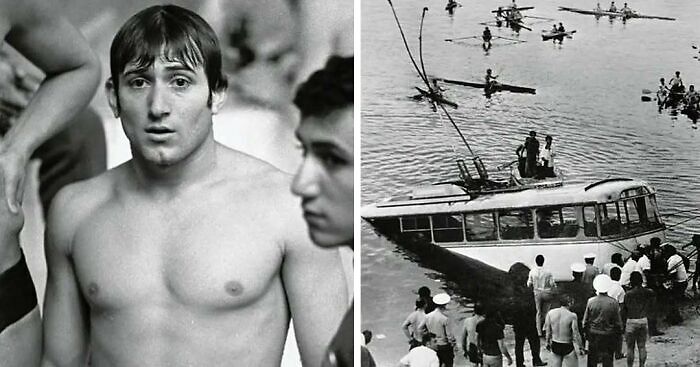
This is Shavarsh Karapetyan, a retired Armenian swimmer. In 1976, he had just completed a 26 km (16 mile) run when he heard a loud crash. A trolleybus had lost control and had fallen into a reservoir. It was 25 meters (82 ft) offshore and had sunk to a depth of 10 meters (33 ft). Karapetyan immediately dived into the sewage-infested waters and managed to kick the back window of the trolleybus with his legs, despite zero visibility from the silt that had risen from the bottom. Of the 92 passengers onboard, Karapetyan pulled out 46 people, 20 of whom survived. The combination of cold water and the multiple lacerations from glass shards led him to be hospitalized for 45 days. He developed pneumonia and sepsis. While he was able to recover, damage to his lungs prevented him from continuing his career as a swimmer. "I knew that I could only save so many lives; I was afraid to make a mistake. It was so dark down there that I could barely see anything. One of my dives accidentally grabbed a seat instead of a passenger. I could have saved a life instead. That seat still haunts me in my nightmares," he said. In 1985, Karapetyan came upon a burning building with trapped people inside. He rushed in and began pulling people out. He was badly burnt and had to once again be hospitalized. Later in life, he moved to Moscow and founded a shoe company called "Second Breath." He is still alive today and continues to run his business.
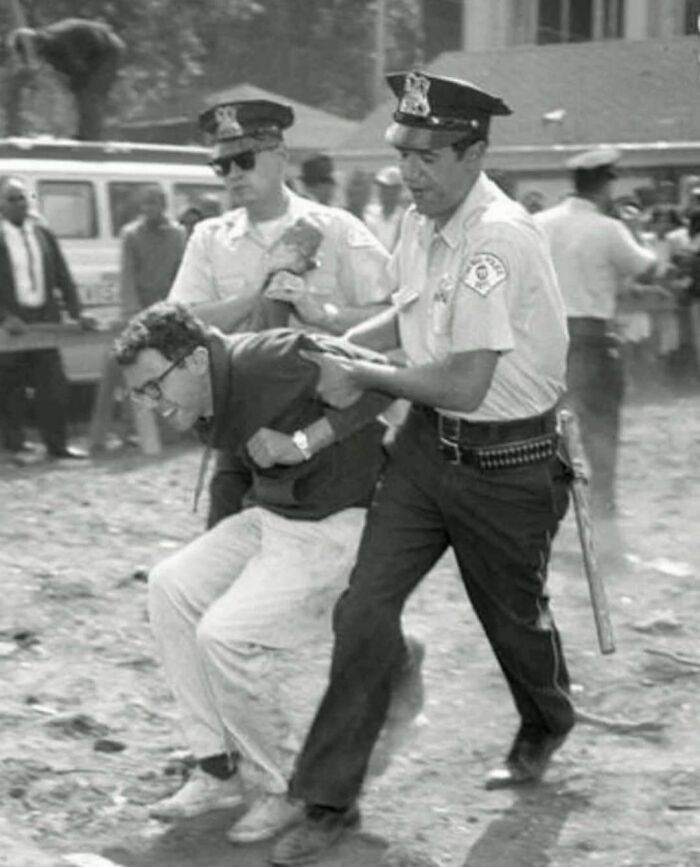
Twenty-one year old Bernard Sanders before becoming a U.S. politician. Arrested for protesting segregation of on campus housing at the University of Chicago in 1963.
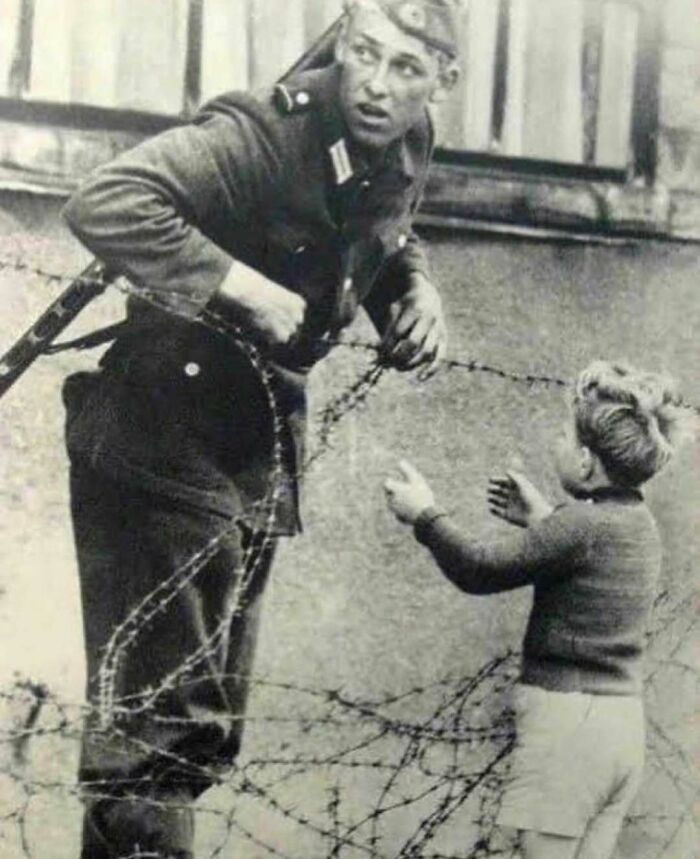
East German soldier helps a little boy sneak across the Berlin Wall the day it was erected in 1961. The boy had been left behind in the chaos of people fleeing to be with their families on either side of the wall.
Historian Liz Covart explains that history isn't just about what happened but how we interpret it as well. "The past happened, but history is made," Liz says. "Every generation makes its own history. Each generation attempts to understand who they are and how their present-day world came to be."
For this generation of Americans, it might be the reconciling with its history of racism. "Many of us want to understand how American society still experiences racism and racial inequalities and inequities. The past holds answers for us," Covart suggests.
"Developing a better understanding of slavery, the way slavery informed racist ideas, and how Americans in the past valued enslaved bodies – both as a type of economic savings account and as less than human – goes a long way to helping us understand why so many people in the United States think and treat people of color negatively."
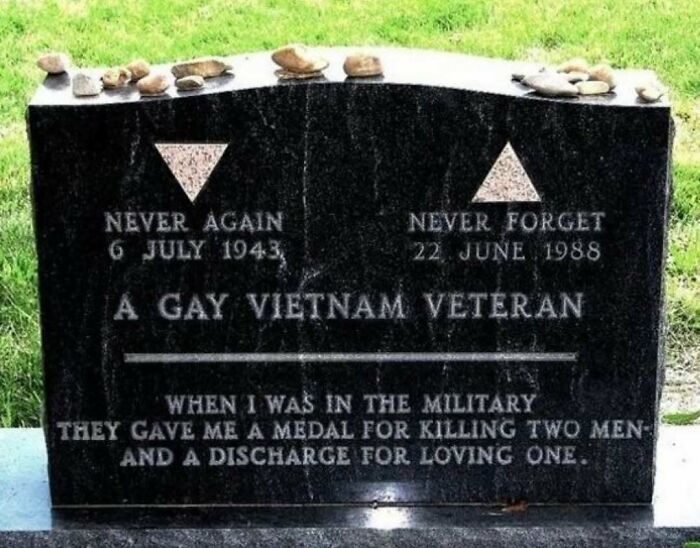
Leonard Matlovich was a decorated Vietnam War veteran with a Purple Heart and a Bronze Star. He was also the first gay American service member to purposely out himself to the military in order to fight their ban on gay people. However, despite his impeccable record, the United States Air Force discharged him after he came out to his officers. Undeterred, Matlovich became a fierce advocate for the rights of the LGBTQ community. In 1975, he was featured on the cover of "TIME" magazine, making him a symbol for gay service members and gay Americans as a whole. When Matlovich passed away in 1988 from HIV/AIDS complications, his headstone was inscribed with the following words: "When I was in the military, they gave me a medal for killing two men and a


'In America - At This Restaurant Only One Person Is Served' by Yuliy Ganf, published in Krokodil #4, 1953
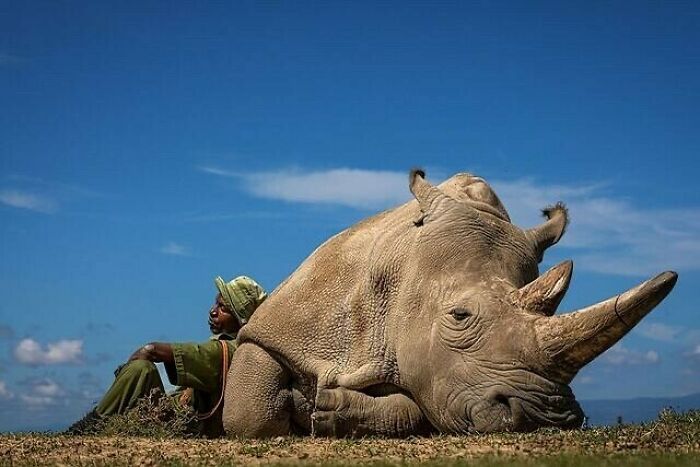
One of the two remaining northern white rhinos in the world, guarded 24 hours a day
Covart says that history almost always comes with a bias. "This history may not seem so obvious to many because each generation uses the history it creates to portray itself in a good light. There is a saying that a good history book will tell you just as much about the history the historian researched as it does about the time period [in which] the historian wrote it."
These sorts of biases are mostly unconscious. "While historians are trained to be as objective as possible when they research and write histories, they also can't help but be shaped by their present," Covart admits. "The present frames how they look at the past and the questions they ask about it."
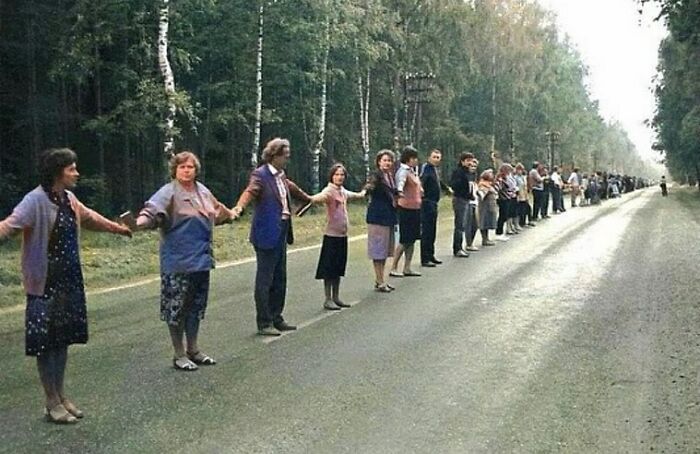
In 1989 two million people joined their hands to form a human chain spanning 690 kilometres across the three Baltic states of Estonia, Latvia and Lithuania. At the time they were occupied and annexed by the USSR, and the protest named 'The Baltic Way' was to show their desire for independence.
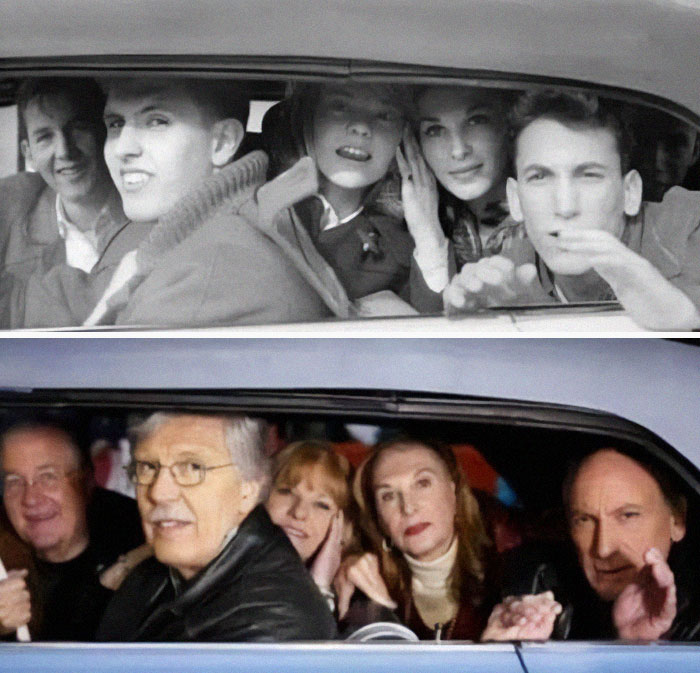
In 1964 a group of high school kids skipped class to go see the Beatles. They didn't get into the concert but while they were driving Ringo pulled beside them & snapped their picture. When they told their friends no one believed them. Fast forward 50 years & Ringo publishes a book of his photographs. They were in it. They reposed the shot as they look today.
Other biases, however, come to historians consciously. "History is never neutral," Covart points out. "In addition to having our questions about the past informed by our present-day lives and circumstances, people also use the past for political purposes." She takes the American Revolution as an example and tells us how some historians presented a more united America than it was.
"For a small amount of perspective at this moment, imagine you were born in 1900… Then on your 14th birthday, World War I starts, and ends on your 18th birthday. 22 million people perish in that war, including many of your friends who volunteered to defend freedom in Europe. Later in the year, a Spanish Flu epidemic hits the planet and runs until your 20th birthday. 50 million people die from it in those two years. Yes, 50 million. On your 29th birthday, the Great Depression begins. Unemployment hits 25%, the World GDP drops 27%. That runs until you are 38. The country nearly collapses along with the world economy. If you were lucky, you had a job that paid $300 a year, a dollar a day. When you turn 39, World War II starts. You aren't even over the hill yet, but don't try to catch your breath. If you lived in London, England, or most of continental Europe, bombing of your neighborhood, or invasion of your country by foreign soldiers along with their tank and artillery was a daily event. Between your 39th and 45th birthday, 75 million people perish in the war. At 50, the Korean War starts. 5 million perish. At 55, the Vietnam War begins and doesn't end for 20 years. Millions of people perish in that conflict. On your 62nd birthday, there is the Cuban Missile Crisis, a tipping point in the Cold War. Life on our planet, as we know it, could have ended. Sensible leaders prevented that from happening. In 2020, we have the COVID-19 pandemic. Thousands have died; it feels pretty dangerous; and it is. Now think of everyone on the planet born in 1900. How do you think they survived all of the above? When you were a kid in 1965, you didn't think your 65-year-old grandparents understood how hard school was, and how mean that kid in your class was. Yet they survived through everything listed above. Perspective is an amazing art. Refined as time goes on, and very enlightening. So, let's try and keep things in perspective. Let's be smart, we are all in this together. Let's help each other out, and we will get through all of this.” -Author Unknown
I don't think many of those born in 1900 had to think about how to survive Covid in 2020.... Other than that, though - yes, horrible. As many generations before them because of countless wars. But idiots and insecure weaklings who need violence to feel like a man want another war, even against their own citizens.
In 1971, 17-year-old Juliane Koepcke was flying over the Peruvian rainforest with her mother when she got sucked out of the airplane after it was struck by a bolt of lightning. She fell two miles to the ground, strapped to her seat. "The plane jumped down and went into a nose-dive. It was pitch black, and people were screaming. Then the deep roaring of the engines filled my head completely. Suddenly, the noise stopped, and I was outside the plane. I was in a freefall, strapped to my seat bench and hanging head-over-heels. The whispering of the wind was the only noise I could hear. I could see the canopy of the jungle spinning towards me. Then I lost consciousness and remember nothing of the impact. Later I learned that the plane had broken into pieces about two miles above the ground. I woke the next day and looked up into the canopy. The first thought I had was: 'I survived an air crash.'" Koepcke's first instincts were to try and find her mother, but she was nowhere to be found. After eating some sweets found at the crash site, Koepcke waded downstream and followed the river. After 10 days, she found a moored boat. She poured the gasoline from the boat's fuel tank onto her wounds, which were infested with maggots. She then spent the night in a makeshift shelter. "I remained there, but I wanted to leave. I didn't want to take the boat because I didn't want to steal it." The next day, she was discovered by loggers and was soon reunited with her father. She later discovered that her mother had initially survived the crash, only to die of her injuries several days later. Like her parents, Koepcke went on to study biology at the University of Kiel in Germany, graduating in 1980. She received her doctorate from Ludwig Maximilian University of Munich and returned to Peru to conduct research in mammalogy, specializing in bats.
"In the early United States, David Ramsay and Mercy Otis Warren were the first historians to write about the history and origins of the United States," Covart begins. "They told a story about how the 13 British American colonies on the North American East Coast banded together despite their regional, cultural, and economic differences to form a union capable of besting the best military in the world (the British Army) and securing the independence of the United States." They did, however, leave out a lot of "events and troublesome episodes."

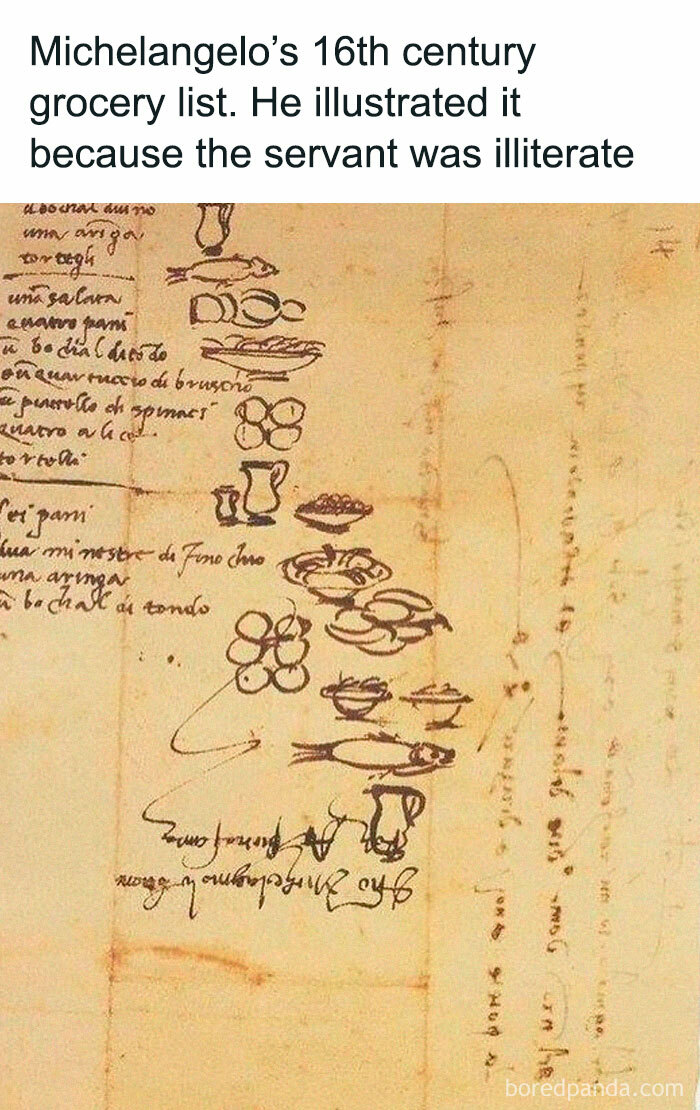
Here I am, as promised in my previous post. This is the full list, that the artist wrote on the back of a letter (https://it.m.wikipedia.org/wiki/Lista_della_spesa_di_Michelangelo) Due pezzi di pane Two pieces of bread Un quarto di vino A quarter of wine Un'aringa One herring Tortellini Tortellini Una insalata One lettuce Quattro pezzi di pane Four pieces of bread Un quarto di (vino) tondo A quarter of round wine Un quarto di (vino) brusco A quarter of brusco wine (typical Tuscany wine) Un piattino di spinaci A small dish of spinach Quattro alici Four anchovies Tortellini Tortellini Sei pezzi di pane Six pieces of bread Due minestre di finocchio Two fennel soups Un'aringa One herring Un boccale di (vino) tondo A jug of round wine
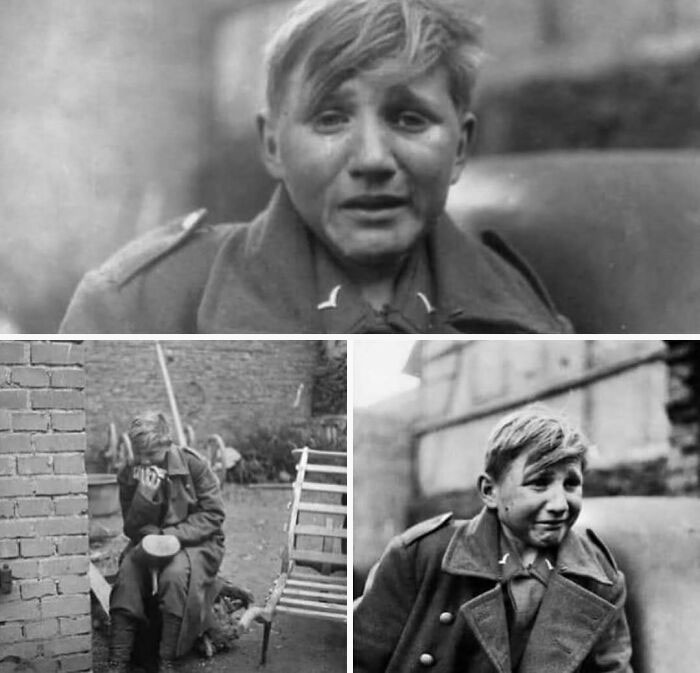
These photos show 16 year old German soldier, Hans-Georg Henke, after he was captured by the US 9th Army on April 3rd 1945.
Photographer Birk Möbius photographed a plane being struck by lightning while inside a rainbow.

Not sure why The Gays™️ and Thor were hating on a plane, but there you go.
"Their aim in writing their histories was to unite a disparate group of 13 states into a national union with a shared past and culture," Covart explains. "They wrote their histories during what historians call the 'Critical Period,' the time after the United States achieved its independence but before it adopted the United States Constitution in 1789."
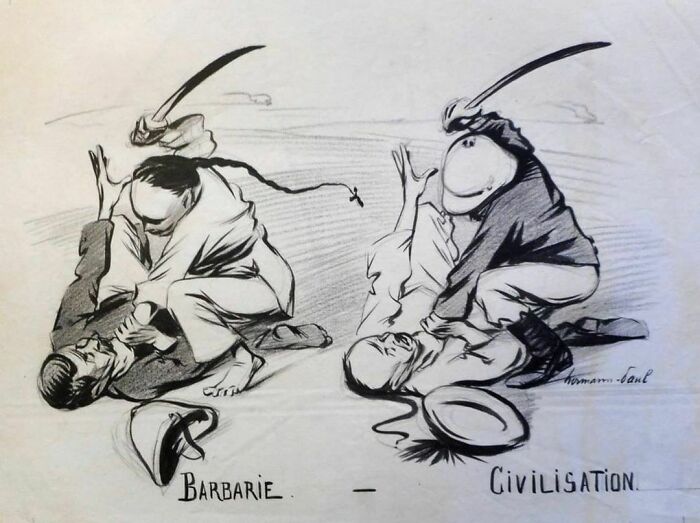
"Barbarie - Civilisation" is an illustration by René Georges Hermann-Paul, which was first published in 1899 in Le Cri de Paris magazine at the start of the Boxer Rebellion in China. It was accompanied by the following caption: "It's all a matter of perspective. When a Chinese coolie strikes a French soldier the result is a public cry of "Barbarity!' But when a French soldier strikes a coolie, it's a necessary blow for civilization."

the word used here for a manual worker is now considered a racist slur in south africa but I knew a guy in Bali who still used it, I had to warn him that in my country it's considerd racist. It comes from some hindi word meaning manual worker. In my country it's a slur for a person from India
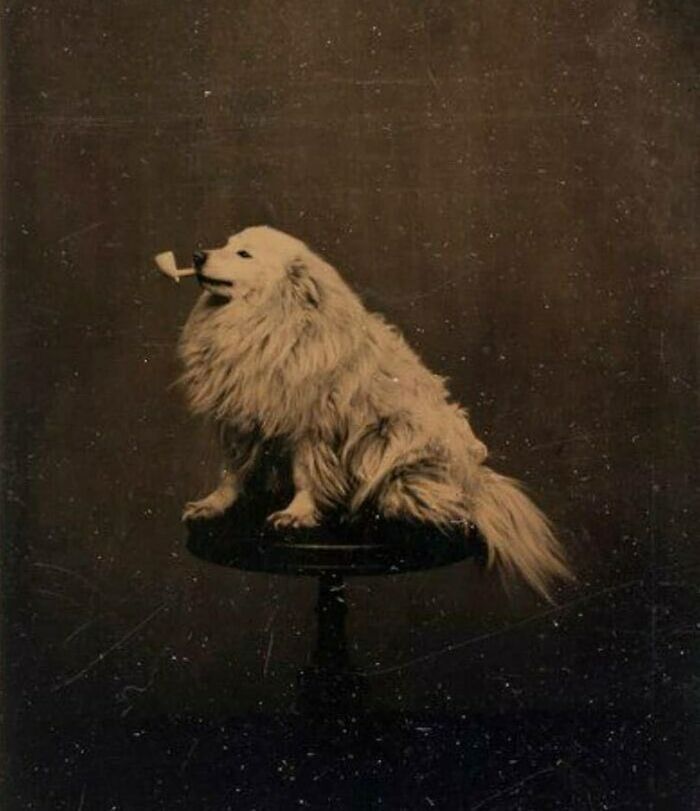
It’s nice to know that over 145 years ago people were taking silly pictures of their pets, 1875
"During this period, Americans experienced economic, social, and political turmoil. The mob actions that these historians had praised for uniting Americans and causing the American War for Independence looked different and more negative when they took place after independence as they did during the Shays' Rebellion," Covart continues.

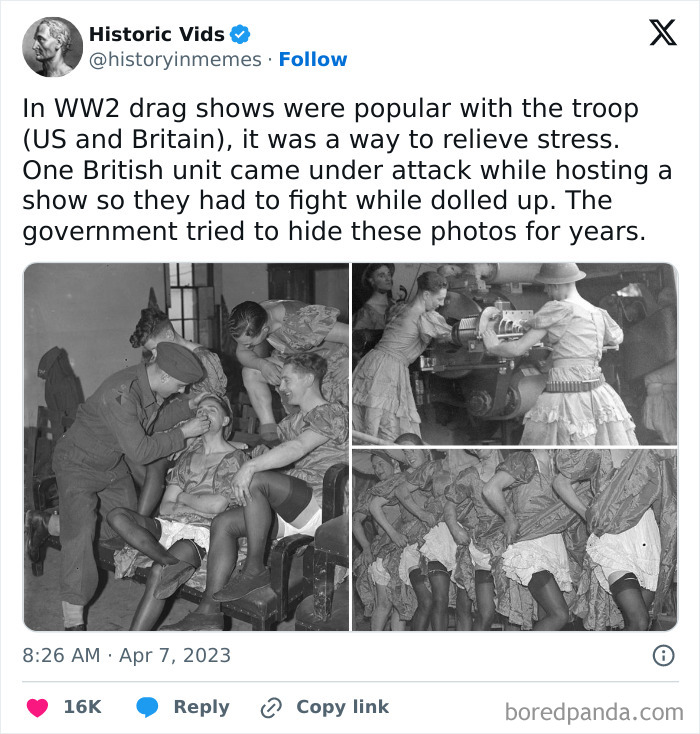
It's 'funny' how if I - as a woman- dress in men's clothes nobody would even notice or care. When men dress in women's clothes they're not real men anymore, but women. When a Trans woman (born male) dresses as a woman, she'll always 'stay a man' and never 'be a real woman'. That's how misogyny hurts everyone
Pale Blue Dot is a photo of Earth that was taken by the Voyager 1 space probe in 1990 from a distance of about 6 billion kilometers (3.7 billion miles) as it was leaving our solar system. This is what Carl Sagan said about the photo: "Look again at that dot. That's here. That's home. That's us. On it, everyone you love, everyone you know, everyone you ever heard of, every human being who ever was, lived out their lives. The aggregate of our joy and suffering, thousands of confident religions, ideologies, and economic doctrines, every hunter and forager, every hero and coward, every creator and destroyer of civilization, every king and peasant, every young couple in love, every mother and father, hopeful child, inventor, and explorer, every teacher of morals, every corrupt politician, every 'superstar,' every 'supreme leader,' every saint and sinner in the history of our species lived there — on a mote of dust suspended in a sunbeam. The Earth is the only world known so far to harbor life. There is nowhere else, at least in the near future, to which our species could migrate. Visit, yes. Settle, not yet. Like it or not, for the moment the Earth is where we make our stand. It has been said that astronomy is a humbling and character-building experience. There is perhaps no better demonstration of the folly of human conceits than this distant image of our tiny world. To me, it underscores our responsibility to deal more kindly with one another, and to preserve and cherish the pale blue dot, the only home we've ever known.”
It can get as low as -40c in Finland during the winter. The trees get covered in so much snow on frost, it ends up looking like a landscape on another planet.
"The discord and squabbling between Americans from different states threatened to end the United States before it began," Covart adds. "So, Ramsay and Warren wrote histories of the Revolution that showed more unity among the American people than actually existed. They omitted details and lessened the discord between revolutionaries, Loyalists, and the disaffected who fought a bloody civil war against each other."
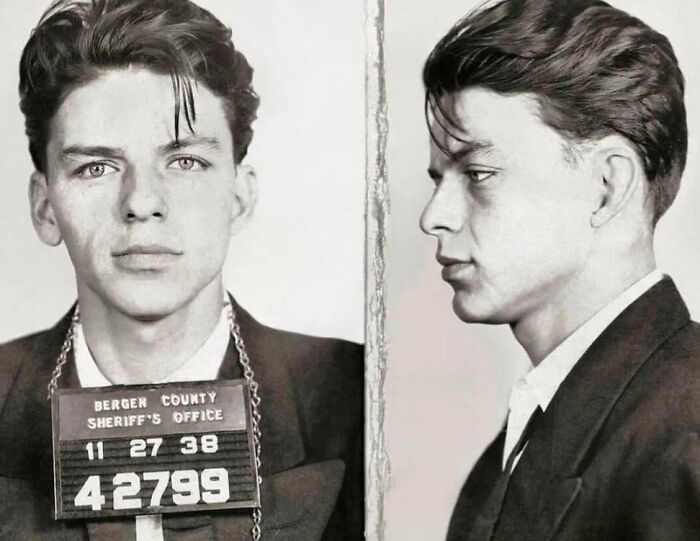
Frank Sinatra, a prominent figure in the entertainment industry, demonstrated unwavering dedication to the civil rights movement and was an outspoken advocate against racism. He actively took part in promoting racial integration and equality during a time when such stances were not always well-received. Sinatra made a conscious decision to boycott hotels and clubs that practiced racial segregation, refusing to perform at venues that did not allow black individuals. Furthermore, he ensured that his band members, regardless of their race, received equal treatment and pay, setting a progressive example for the industry. One pivotal moment in Sinatra's efforts for integration occurred during the rise of Las Vegas as a popular entertainment hub. At that time, black performers were allowed to play in showrooms but were barred from staying in the hotels. Sinatra took it upon himself to confront the board of directors, who had questionable histories, and urged them to embrace progress by allowing equal access for everyone. He challenged their outdated beliefs by emphasizing that "the money is green," emphasizing the importance of inclusivity. Through his influence and support, particularly for fellow artist Sammy Davis Jr., Las Vegas ultimately became an integrated city. Not only did Sinatra act on his beliefs, but he also used his fame and platform to support other civil rights activists. He actively supported Martin Luther King Jr. and contributed significantly to fundraising efforts that bolstered the Civil Rights Movement. In 1958, Sinatra eloquently expressed his belief in universal friendship devoid of racial or class distinctions, emphasizing that true connections are built on mutual respect, affection, and shared values. Frank Sinatra's commitment to racial equality and his belief in universal friendships served as an inspiration to many during a critical period in American history. His actions and advocacy demonstrated the impact a public figure can have when using their influence to promote positive change and unity among all individuals.
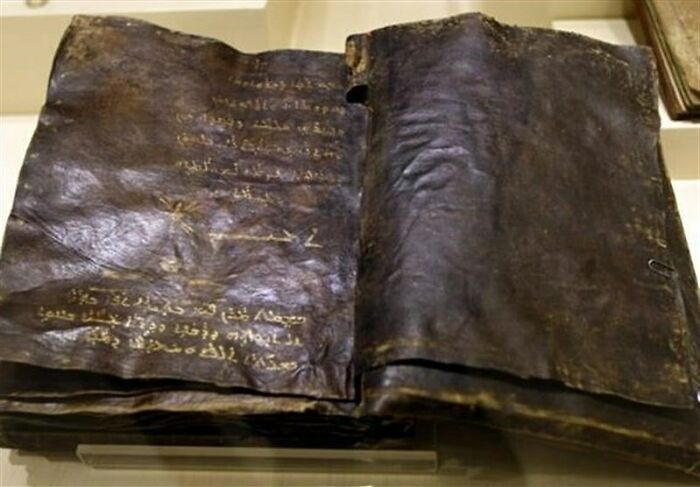
A 1,500-year-old Bible known as the Gospel of Barnabas challenges Jesus Christ's crucifixion, suggesting it was Judas who was crucified. This ancient text recently emerged in Turkey's Ethnography Museum, causing controversy, especially within the Vatican. The book, hidden since its discovery in 2000, offers an alternative account of Jesus' life, portraying him as a Prophet, not the Son of God, and questioning Apostle Paul's authenticity. Its authenticity remains debated, but it could have significant implications for Christian teachings, prompting thought-provoking questions and encouraging further exploration of religious history.

It's not that unusual for people to believe Jesus was a prophet not the son of God- Jewish and Islam texts say the same.
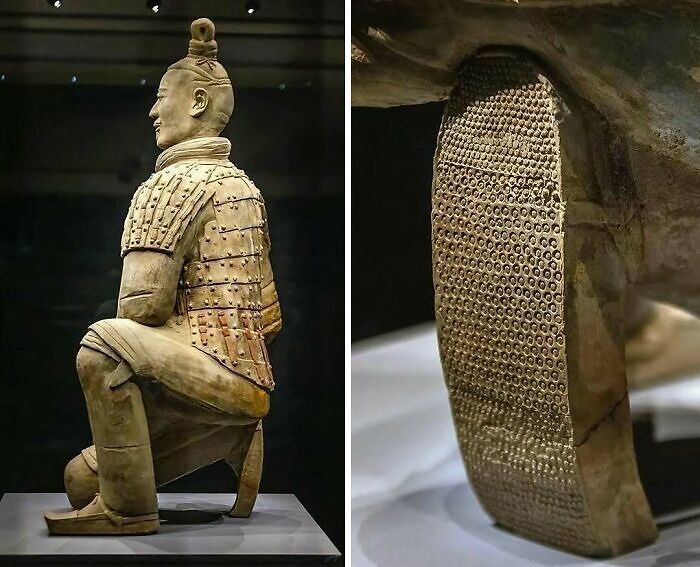
This is one of the only terracotta warriors that was found almost completely intact. Note the detail on the bottom of his shoe, showing that grip and traction were considered in footwear even 2,200 years ago. Each life-size clay warrior was crafted to be completely unique and there are no two terracotta warriors-among the 8,000 total—that are exactly the same. Shortly after the completion of the tomb in 210-209 BC, it was looted for weapons and burned, causing the roof to collapse, crushing the terracotta warriors. All the other terracotta warriors that are currently on display were painstakingly restored. What's even more remarkable is that the terracotta warriors were originally painted in bright colors by skilled artisans. Unfortunately, when they were exposed to air and sunlight during the excavation in the 1970s, the colors began to curl up almost immediately and disappeared within minutes. These terracotta warriors were put in place to guard the tomb of the first emperor of unified China—-Qin Shi Huang. To this day, the tomb has yet to be opened. According to ancient historians, the tomb contains an entire kingdom and palace in which the ceilings are decorated with pearls to mimic the night sky. The tomb is also said to contain extremely rare artifacts and has been rigged with crossbows to shoot anyone trying to break in. To keep its location a secret, the workers were entombed with the emperor. The Han dynasty historian, Sima Qian, also mentioned that inside the tomb, "mercury was used to fashion the hundred rivers, the Yellow River and the Yangtze River, and the seas in such a way that they flowed." Modern tests have indicated extremely high levels of mercury in the surrounding soil.
I was lucky to see some of these on display at my college in Pasadena in the 70's. Awesome.
Covart explains that these histories of "one united America" impacted how we understand the American past today. "Rather than starting our story of early America with Indigenous peoples and cultures, or with Spanish, French, or Dutch colonists, we begin our history with the last group of North American settler-colonists: the English," she says. "We then focus on how English, later British, experiences 'united' the American people and informed the American Revolution."
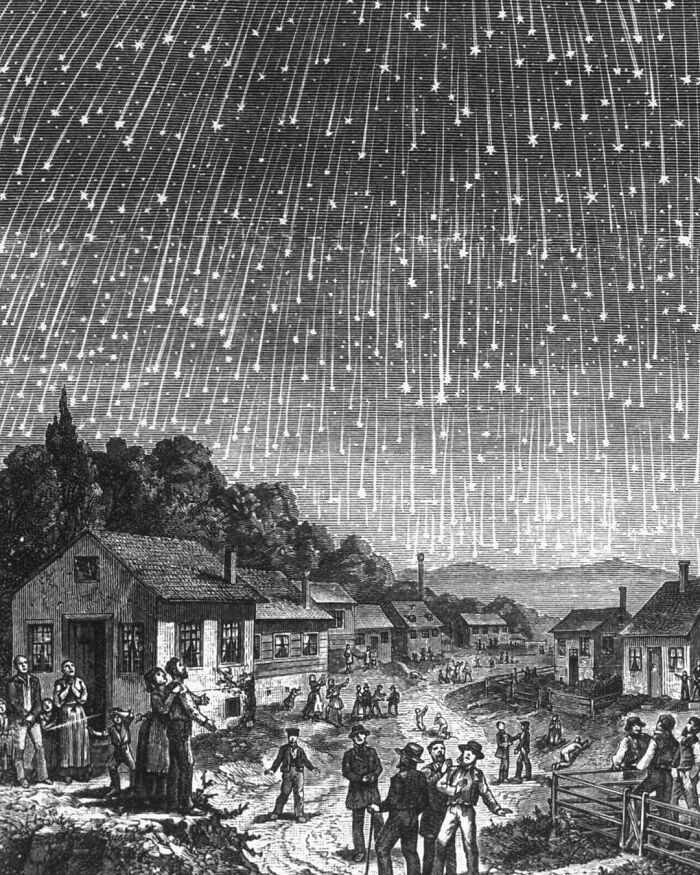
On November 12, 1833, there was a meteor shower so intense that it was possible to see up to 100,000 meteors crossing the sky every hour. Many at the time believed it was the end of the world, leading Adolf Vollmy to create a woodcut inspired by the event.
In 1971, a cement truck crashed near Winganon, Oklahoma. The mixer was too heavy to move so they left it. The locals have since repainted it to look like a NASA space capsule.

Needs a live-sized replica of Charlton Heston standing nearby and scratching his head.
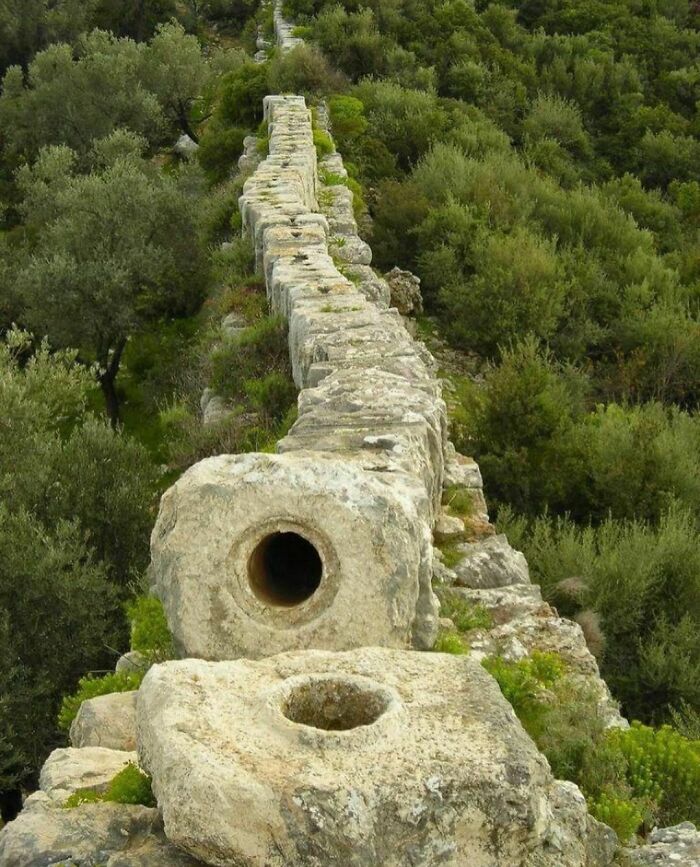
The Ancient Roman aqueduct in modern-day Turkey, dating back thousands of years, is a testament to the incredible engineering and architectural skills of the Roman Empire. These aqueducts were designed to transport fresh water to densely populated areas, and they were a significant improvement over the earlier structures built by civilizations in Egypt and India. The Roman aqueducts were constructed over a period of 500 years, from 312 BC to AD 226, and were funded by both public and private sources. Some of the most famous Roman rulers, such as Augustus, Caligula, and Trajan, commissioned the construction of these aqueducts. The aqueducts were made up of pipes, tunnels, canals, and bridges, which utilized the natural slope of the land and gravity to channel water from sources like lakes and springs to the cities. Once the water reached the cities, it was used for various purposes, including drinking, irrigation, public fountains, and baths. The capital city of Rome had as many as 11 aqueduct systems, some of which were sourced from as far as 92 km (57 miles) away. Interestingly, some of these ancient Roman aqueducts are still functional and continue to provide modern-day Rome with water. For example, the Aqua Virgo, an aqueduct built by Agrippa in 19 BC during the reign of Augustus, supplies water to the iconic Trevi Fountain in the heart of Rome. This remarkable feat of engineering demonstrates the enduring legacy of the Roman Empire and its impact on the development of modern infrastructure.
"Past generations have framed our national story so that it can only begin with events that led to the creation of the United States," Covart observes. The contributions from the Indigenous communities and African cultures then get lost.
"This framing omits the discord that existed between Americans by the mid-to-late 18th century, the vital work Indigenous communities did to cultivate and shape the land and create trade networks across the continent, or the critical cultural influences African cultures have had on the development of colonial and American cultures," Covart says.
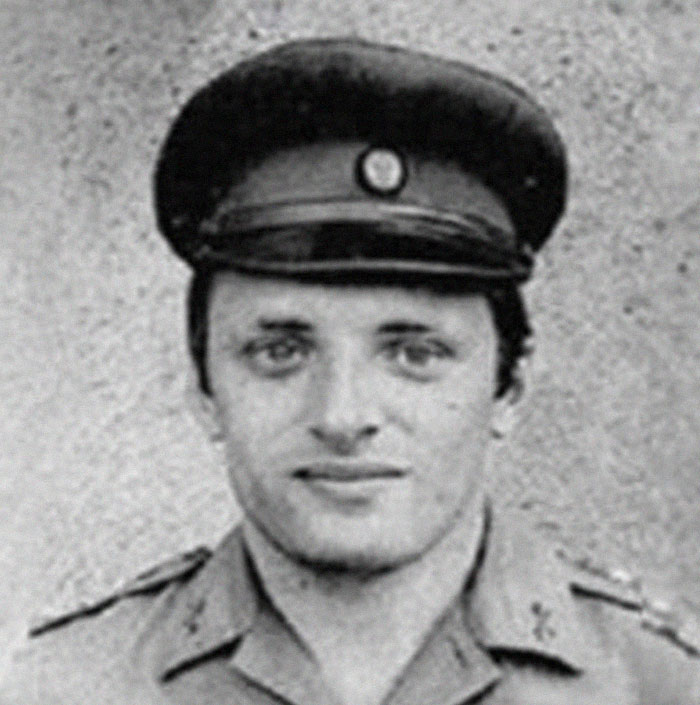
András Arató is a Hungarian internet celebrity who has gained global fame as one of the most beloved memes, thanks to his iconic "Hide the Pain Harold" expression. He shared a photo of himself from his time in the military, which demonstrates that he was "hiding the pain" long before becoming a meme. Arató posted a black-and-white picture of his younger self on his Facebook page, dating back to his service in the Hungarian army. If internet memes had existed during his military days, he might have achieved international popularity much earlier, as his distinctive facial features were already present.
His face does look remarkably like one on the common pain scale used by doctors.
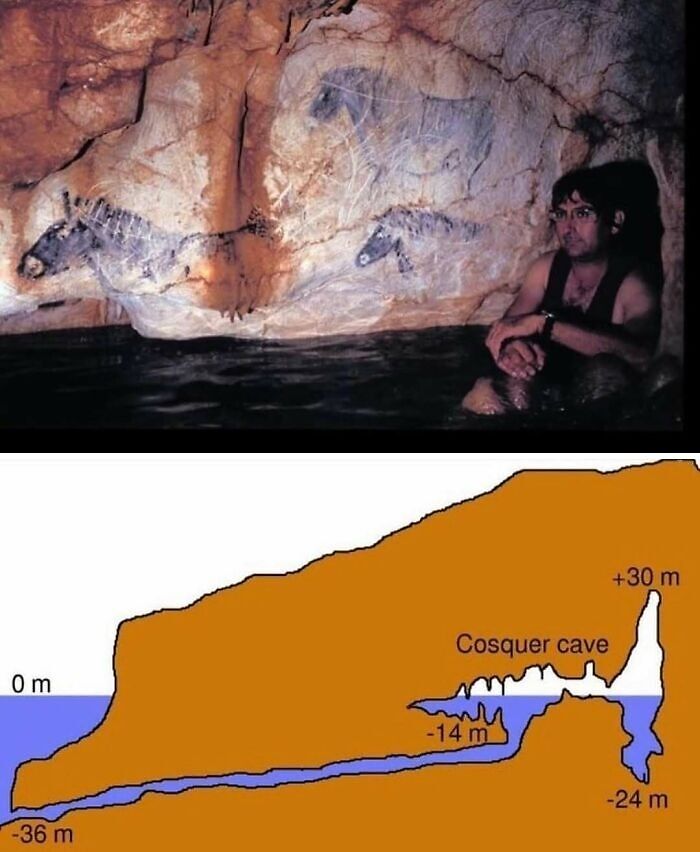
In 1985, diver Henri Cosquer made a remarkable discovery while exploring the waters off the coast of Marseille, France. His persistence led him to uncover a hidden cave, known as the Cosquer Cave, which held a breathtaking collection of ancient cave paintings and artifacts. This extraordinary find captivated people worldwide, evoking feelings of awe, primal instinct, and deep appreciation. The cave, affected by rising sea levels, is believed to have contained over 800 pieces of art at one point. Sadly, due to flooding, much of this precious heritage has been lost to the passage of time. However, the surviving artworks offer valuable insights into the lives of early humans who once inhabited the cave, allowing us to better understand our ancestors on a profound level. Estimated to be around 27,000 years old, the art within the cave was created by our species, Homo sapiens. The cave walls showcase a diverse range of wildlife depictions, including horses, deer, bison, seals, penguins, fish, and even a cat and a bear! Experts have identified 229 artworks representing 13 different species. Notably, there are 63 horses, 28 ibex, 17 deer, 10 bison, and 7 aurochs. Additionally, the cave features 16 marine animal depictions, such as seals and great auks, as well as various figures that could represent fish or cetaceans. Many of the art pieces also incorporate human elements, including over 60 black and red handprints attributed to men, women, and children. Notably, a carving within the cave, depicted in image 5, is believed to represent the female genitalia, possibly signifying an appreciation for the beauty of women or carrying religious symbolism associated with new life. Carvings of penises are also present, further illustrating the multifaceted nature of the ancient artworks found within the cave.
It contains drawings from two distinct and very separated periods in history. The 27,000 years old paintings are mostly hand stencils where a hand is placed against the wall & color drawn around it. The fancy ones are from a bit later and kept up until about 19,000 years ago though there's evidence people still used the caves longer. https://news.cnrs.fr/articles/the-mysteries-of-the-cosquer-cave
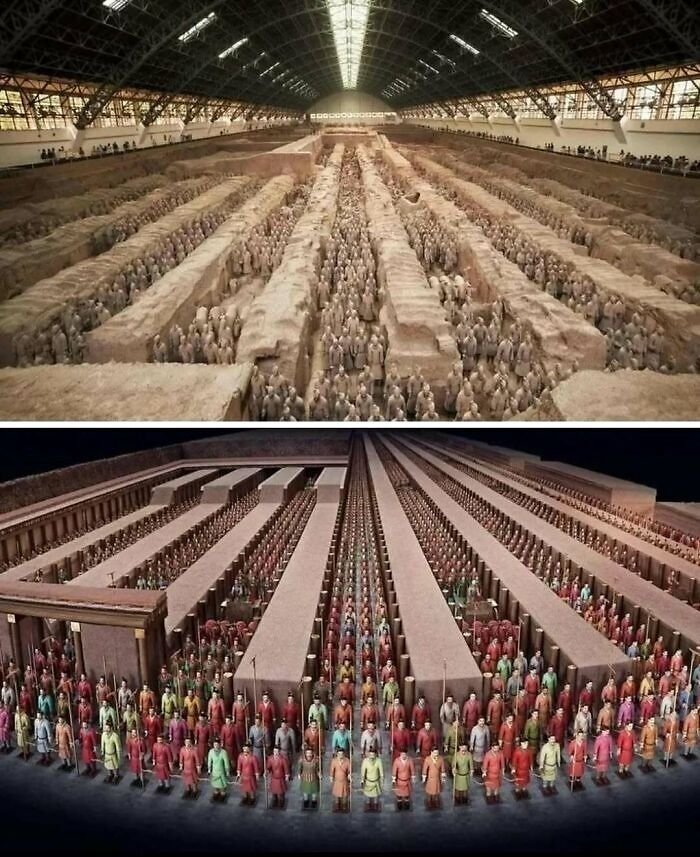
It is believed that the Terracotta Army, referring to the soldiers guarding the tomb of Qin Shi Huang, looked like this when they were first crafted around 2200 years ago.
It makes sense they were painted, like most sculptures, but for some reason I am surprised they were wearing different clothes. I assumed they would be in uniform so they looked the same. This is really interesting.
"The framing also omits how Great Britain skirts over this period of British American history in its own history textbooks and how it refers to the War for American Independence as the War of American Rebellion," Covart also points out. "Historians are doing a lot of work to uncover and bring back these crucial histories to our understanding of the early American past," she adds.
You can hear about some of this work on Ben Franklin's World, a podcast about early American history that features known and unknown parts of history.
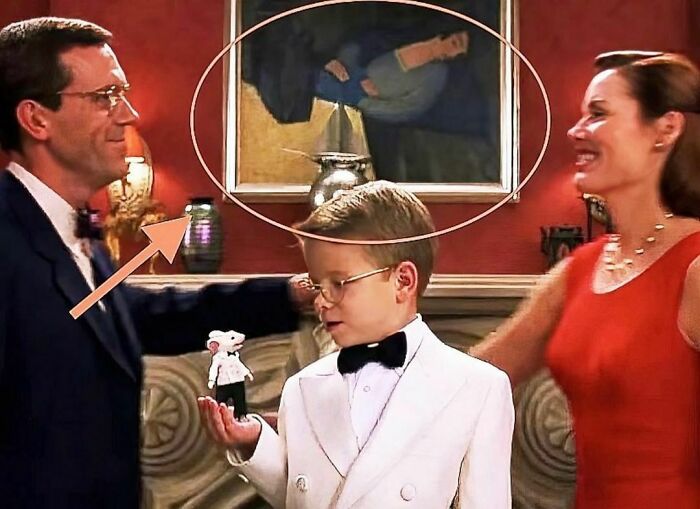
In 2009, Gergely Barki, a Hungarian art historian, made a remarkable discovery while watching the movie "Stuart Little" (1999). He noticed a painting titled "Sleeping Lady with Black Vase" by Róbert Berény, which had been missing for 90 years and had been used as a prop in the film. Barki, who had only seen a faded black-and-white photo of the painting from an exhibition in 1928, immediately recognized it as the original artwork. Realizing the significance of his finding, Barki promptly reached out to the film's production companies, Sony Pictures and Columbia Pictures, via a series of emails. However, it took two years for him to receive a response, which came from a former set designer who had worked on the film. According to Barki, the set designer informed him that she had acquired the painting from an antiques shop in Pasadena, California, at a bargain price. Unaware of its true value, she had thought its avant-garde elegance would be a perfect fit for the living room set of "Stuart Little."
Additional info on this painting; Ultimately, the set designer sold the work to an art collector, who put it up for auction in December 2014.The painting was listed with a reserve of $121,220 and was sold on 13 December to an unnamed Hungarian collector for $285,700. Because of the publicity generated by its unusual rediscovery it has been described as the most widely known Hungarian painting.
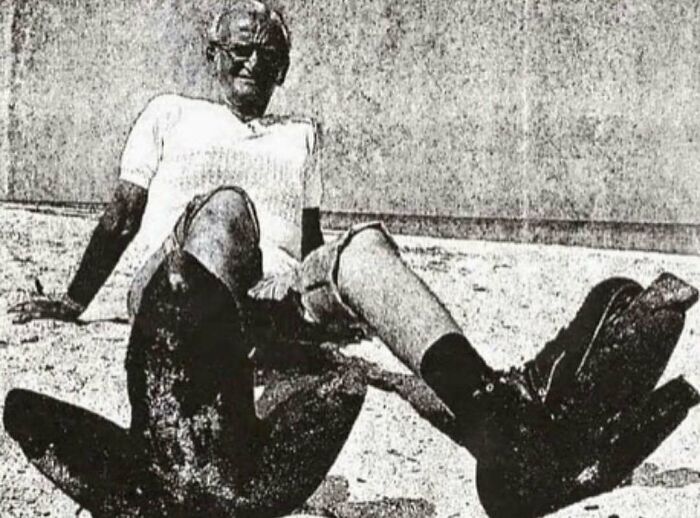
In 1948, a man wore 30lb, 3 toed lead shoes & stomped around a Florida beach at night. The footprints lead people to believe that a 15 ft tall penguin was roaming around. He kept up the prank for 10 years, visiting various beaches. The hoax wasn't revealed until 40 years later.
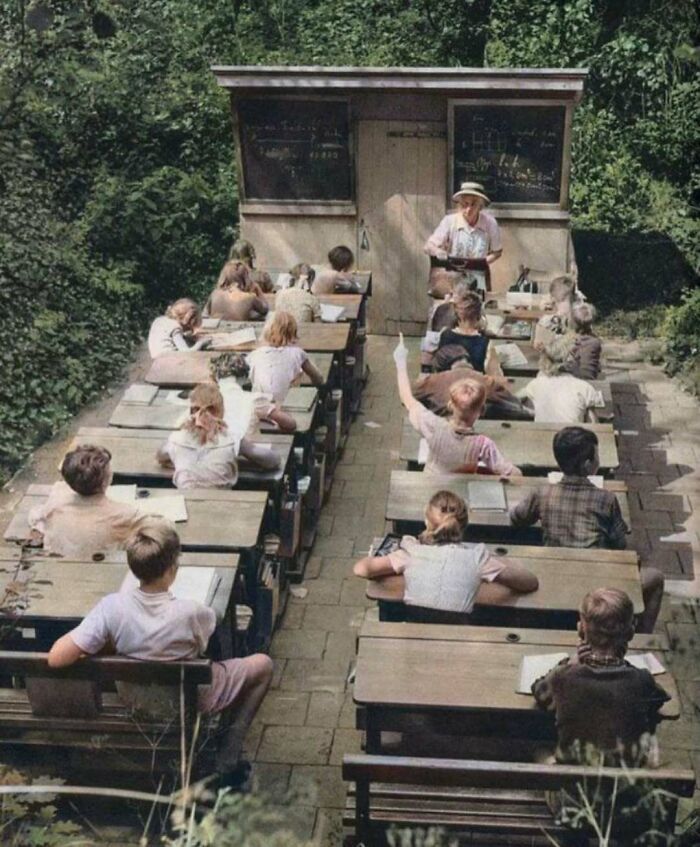
An open air school in the Netherlands. In the beginning of the 20th century a movement towards open air schools took place in Europe with classes taught in nature, so that students would benefit physically and mentally from clean air and sunlight.
Every time I see this picture I think how wonderful it would have been. We didn't spend nearly enough time learning outdoors when I was in school in Australia. It used to be more common, my grandad had a particular interest in teaching 'nature studies' when he was teaching between the 60s-90s. They would often spend a whole day outside exploring creeks, studying insects, reptiles and birds etc. Of course, I wouldn't be keen on catching butterflies and gassing them to study closer, or collecting eggs out of birds nests, but it was different back then. There was one school I read about in Australia at that time that went even further, with the outdoors considered more. I can't remember the name of the school, but they did art lessons outside often and were encouraged to do construction and what today we would call 'risky play' experiences outdoors, all child-led.
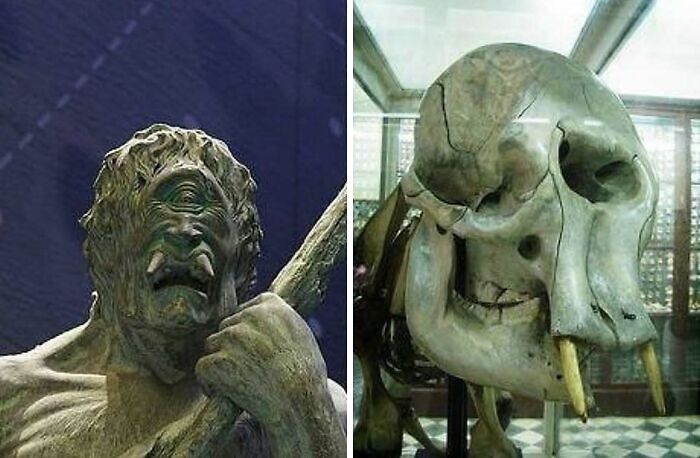
The fossil skulls of Pleistocene dwarf elephants scattered throughout the coastal caves in Italy and the Greek islands most likely inspired the one-eyed Cyclopes in ancient Greek mythology. During the Pleistocene ice age (2,580,000 to 11,700 years ago), land bridges emerged, allowing ancient elephants to move to emerging islands to escape predators and/or find new food sources. As sea levels rose around the Mediterranean, these ancient elephants became trapped and had to compete for limited food, leading to the island rule, where mammals tend to shrink or grow depending on resource availability in their environment. The isolated ancient elephants evolved into different species depending on the island they found themselves on. Those on Cyprus were approximately 6 feet tall, nearly double the size of the ones found on Sicily and Malta. Humans arrived on the islands around 11,000 years ago, leading to the over-hunting and extinction of the ancient elephants within a century. By the time the Romans and Greeks came to occupy the Mediterranean islands, all that remained were skulls twice the size of those belonging to humans, and these massive skulls had a single hole in the center, which the Greeks and Romans mistakenly believed was an eye socket. In fact, it was a socket connected to the trunk of an ancient elephant.
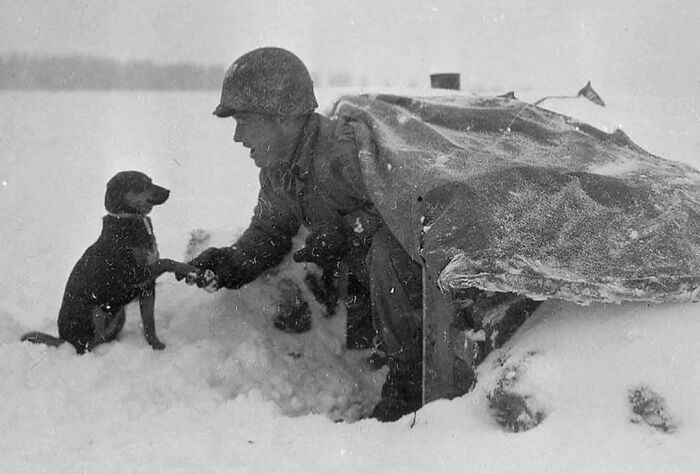
U.S soldier shakes hand with a dog in Luxembourg during the Battle of Bulge, 1944.
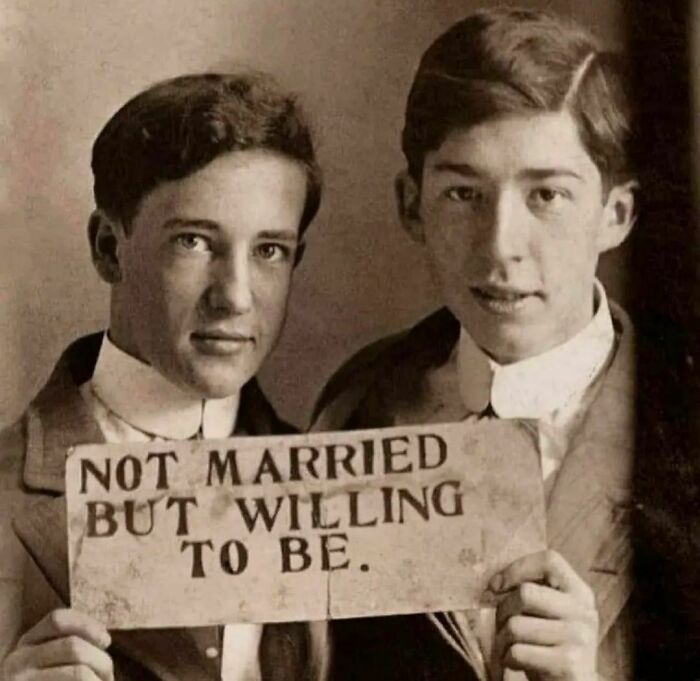
Two young men hold a pre-printed sign, approximately 120 years ago, proclaiming their bond and willingness to be legally wed to one another.
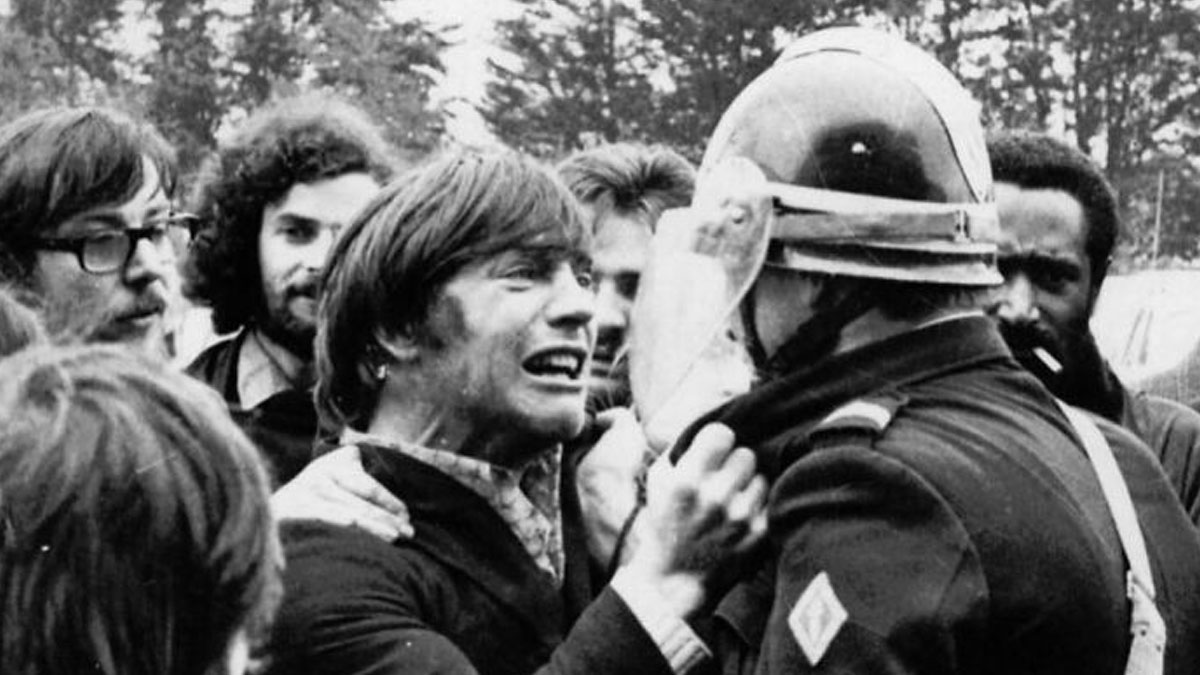
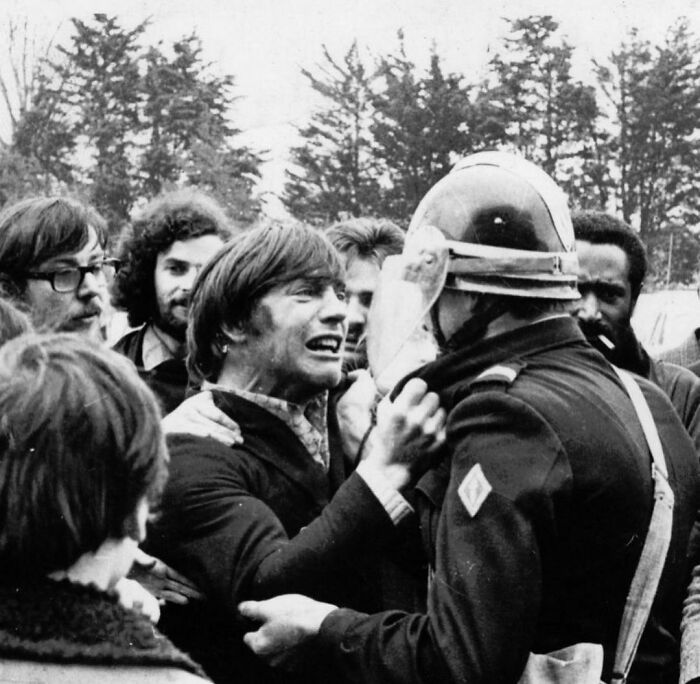
Two childhood friends meet during a protest. One is a factory worker, the other is a riot officer. Guy Burmieux and Jean-Yvon Antignac were childhood friends but they chose different paths in life. On April 6, 1972 in Brittany, France, Guy was part of a protest to get better working conditions. Jean-Yvon and other riot officers were called in to quell the protestors.
Take a look at the ingredients of a cough syrup manufactured in Baltimore back in 1888
Ducklings as Integral Medical Companions in 1956 In 1956, an unconventional approach to medical treatment emerged, utilizing ducklings as an integral part of therapy. This unique method aimed to provide emotional support to patients during their recovery. Let's delve into this intriguing story further. Hospitals and clinics in the mid-1950s introduced ducklings into various departments, particularly for children and individuals experiencing emotional distress. The presence of these endearing creatures brought joy, reduced anxiety, and fostered companionship, positively impacting patients' emotional well-being. Ducklings proved to be effective companions, creating a welcoming and uplifting atmosphere within medical facilities. Children, in particular, formed deep emotional connections, finding solace in their presence. This therapy gained popularity worldwide during the 1950s, but as evidence-based practices emerged, traditional therapies took precedence, leading to the decline of duckling therapy. The use of ducklings as integral companions in medical treatment in 1956 marked an unusual but captivating chapter in medical history. Although this approach may seem unconventional today, it highlights the importance of emotional well-being in the healing process. While duckling therapy faded with time, its legacy reminds us to continually seek innovative and compassionate methods to enhance the medical experience for patients.
I wouldn't say it's really unconventional today, though it was back then. Now there are often dogs and even horses that are taken to visit patients in hospitals.
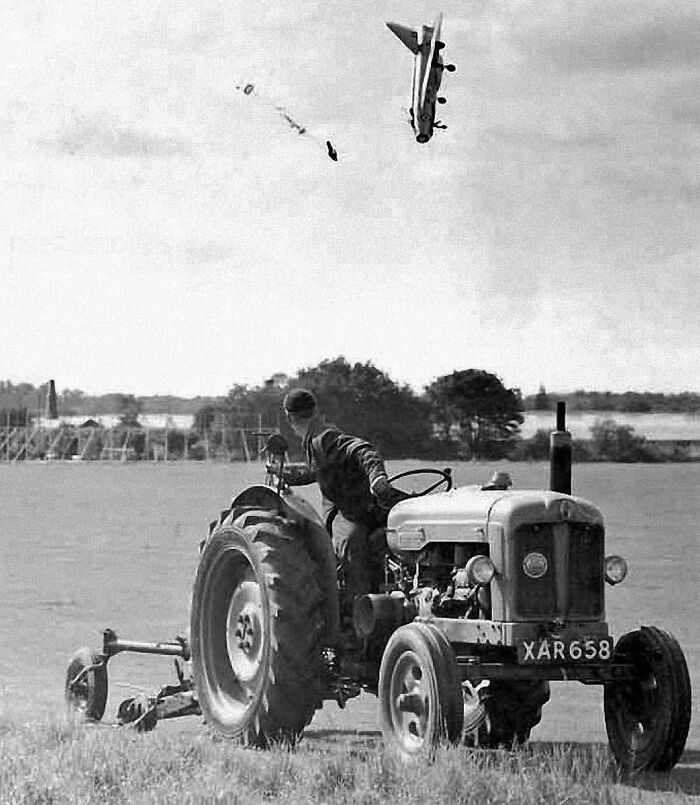
Test pilot George Aird narrowly escapes death by ejecting sideways from an English Electric Lightning F1 aircraft that nosedived in 1962, as a farmer casually watches from his tractor.
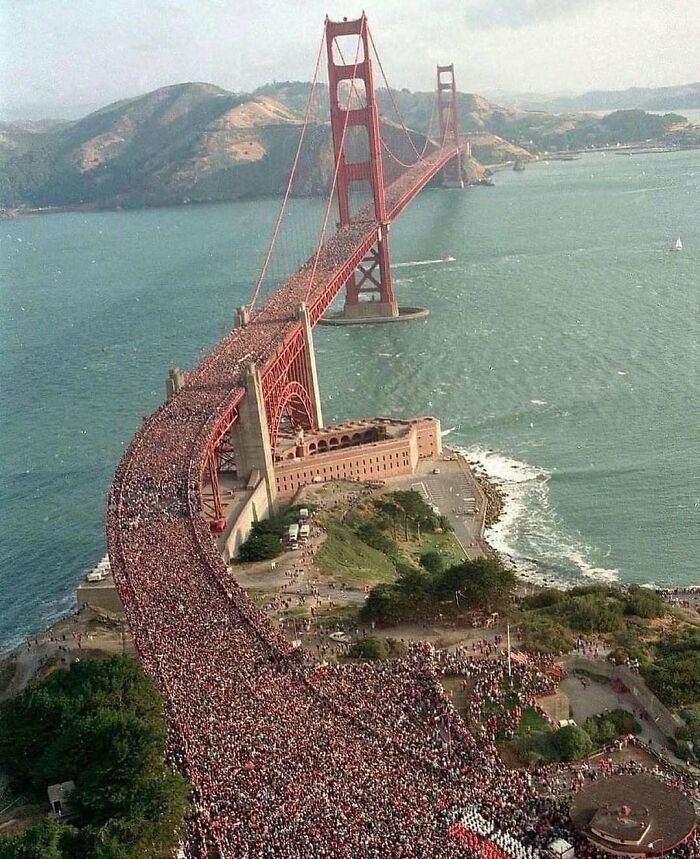
In 1987 an estimated 800,000 people flocked to the the Golden Gate Bridge for its 50th anniversary. The weight of the large crowd caused the bridge to sag 7 feet, flattening its usual convex shape. Engineer Daniel E. Mohn reaffirmed the bridge was not overstressed as a result of Bridgewalk '87.

That is also a great view of Fort Point under the southernmost part off the bridge.
Occupied for over 4 millennia, Rathcroghan is an archaeological site located in the west of Ireland. It comprises structures dating from the Neolithic to the early Middle Ages, consisting of 240 buildings that include tombs, temples, and residences. The establishment of Rathcroghan led to the formation of a small centralized society, predominantly composed of Celts, around 1000 BC. In ancient times, this region was recognized as the entrance to the Celtic underworld and encompassed several sacred sites that served as venues for ceremonies and religious festivals. The structure depicted in the photo is Mount Rathcroghan, constructed using multiple layers of gravel and earth. It measures 89 meters in diameter and stands at an impressive height of nearly 6 meters. The summit likely served as a tomb for the burial of King Dathí, the last pagan king of Ireland, in the year 445. Legend has it that Dathí, who held the title of Supreme King of Ireland, met his demise when he was struck by lightning on an expedition to the Alps. His tomb was enclosed by log walls and was accompanied by a gate and other royal residences. Throughout history, Rathcroghan was a frequently visited site for pilgrimages. However, during the Middle Ages, it experienced depopulation and gradually transformed into a country estate owned by various Irish individuals. By the 6th century, the site was practically uninhabited. Presently, the archaeological complex of Rathcroghan serves as a tourist attraction. However, there is limited information available regarding its structures or the people responsible for their construction.
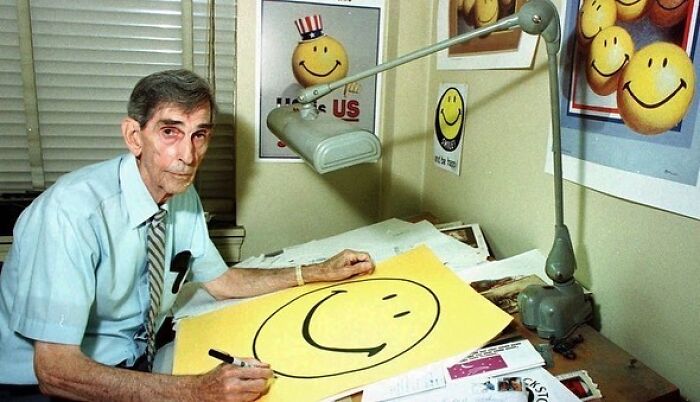
Harvey Ross Ball, a graphic designer from Worcester, Massachusetts, is credited with inventing the iconic smiley face in 1963. At the time, Ball was approached by a local insurance company, State Mutual Life Assurance Company, to design an image that would uplift the spirits of their employees. The company wanted a symbol that would promote a positive work environment and improve employee morale. In a mere 10 minutes, Ball sketched the now-famous smiley face, consisting of a bright yellow circle with two black dots for eyes and a gentle, curved line representing a smile. The simplicity and universal appeal of the design made it an instant hit. For his creative contribution, Harvey Ross Ball was compensated with a modest payment of $45. Little did he know that his creation would go on to become one of the most recognizable symbols worldwide.

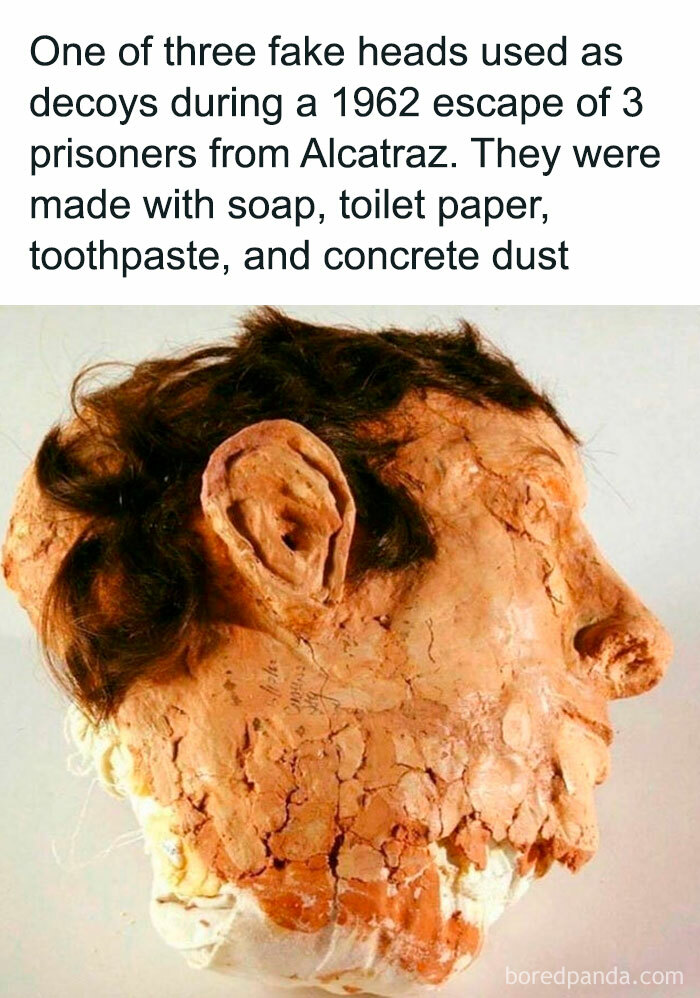
For those asking how the guards were fooled, couple things to note: One, there were no lights on in the prison at night, and the inmates were made to sleep with their heads near the bars. The guards would flash a dim flashlight over them during the counts. Just long enough to verify that there was a head there. They wouldn't take too close a look at it beyond that. Second, over time, the materials used to make the fake heads, has dried out and broken down, causing the shape to crack and break down like we see here. At the time, it was enough that a person just glancing at it through the dim beam of a flashlight, would be hard pressed to know the difference.
International Posture Queen, 1957. The young woman with the straightest spine and the most perfect poise and personality would win. Contestants were given X-rays to determine whose spine was the straightest. Crooked spines were grounds for elimination.
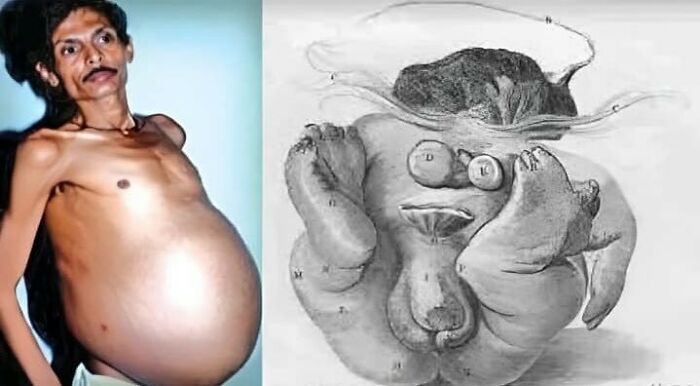
Sanju Bhagat was born in Nagpur, India, in 1963. He had a normal life until his late 20s when his abdomen began to protrude as if he was pregnant. It kept increasing until he couldn't carry out his daily activities. Things got out of hand in 1999 when his breathing almost stopped due to his extremely enlarged abdomen which didn't give his chest room to take in air; he was rushed to the hospital. At the hospital, the doctors believed he had a massive tumor growing inside of him and worked him up for surgery. To their utter amazement, when they opened him up, they saw a baby in his stomach. It appeared Sanju didn't have a tumor, he had his unborn brother growing inside of him for more than 35 years. In medical terms, this was a rare case of fetus-in-fetu. Basically, what happens is that one twin doesn't fully separate from the other during development, and ends up growing inside of the other twin's body. The twin that's growing inside is usually very small and undeveloped, and is called a "parasitic twin.”
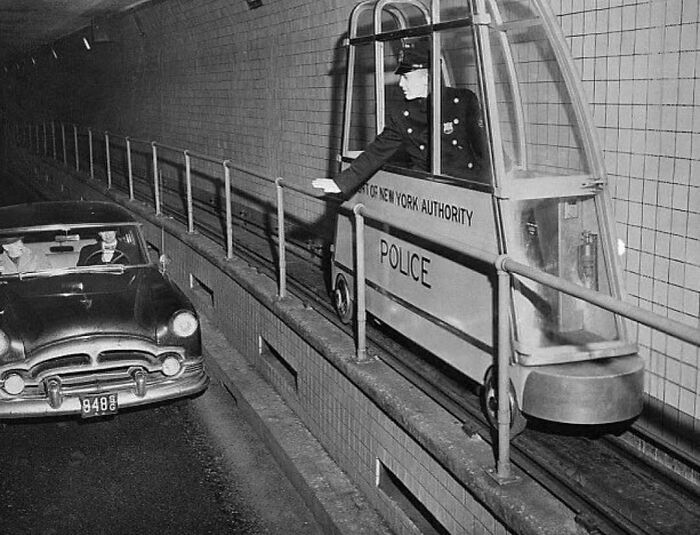
New York tunnel police in the 1950s. Propelled by eight-horsepower gas engines, they could reach a top speed of 35 mph. They were prevented from sailing over the rail and into traffic by guide rails on one side and supported on their road-facing side by a single rubber wheel. Catwalk cars were operated into at least 2011, according to The New York Times. The catwalks remain, of course, but there appears to be no sign of the tracks that once guided the vehicles designed to travel them. It's not hard to imagine why the PAPD retired its catwalk cars—there's little point in breathing exhaust fumes all day when cameras can serve as law enforcement's eyes in the tunnels.
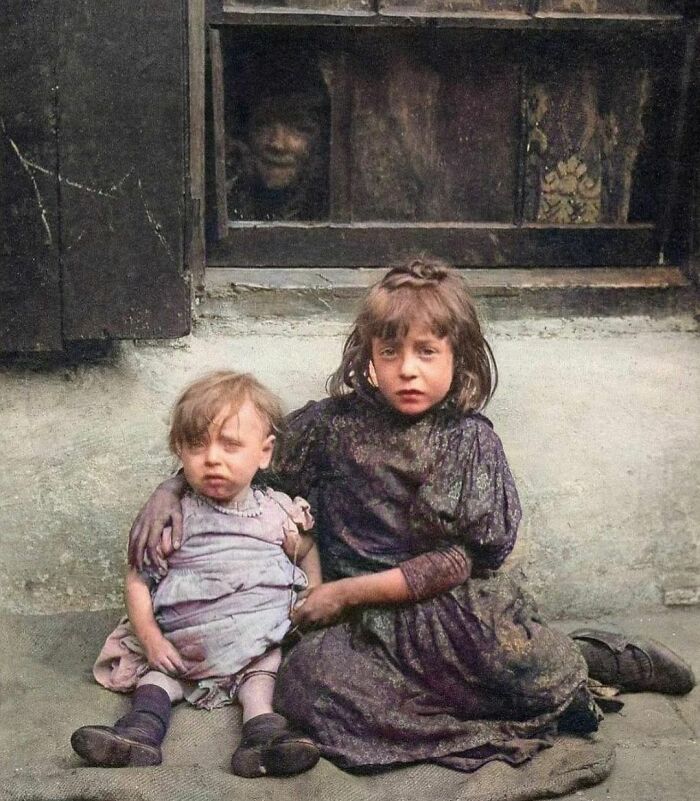
Victorian poverty, 1900. Annie, seven, and one year old Nellie, sit on a sacking outside their house in London. They were among ten children born to single mother Annie Daniels. Five of their siblings died in childhood.
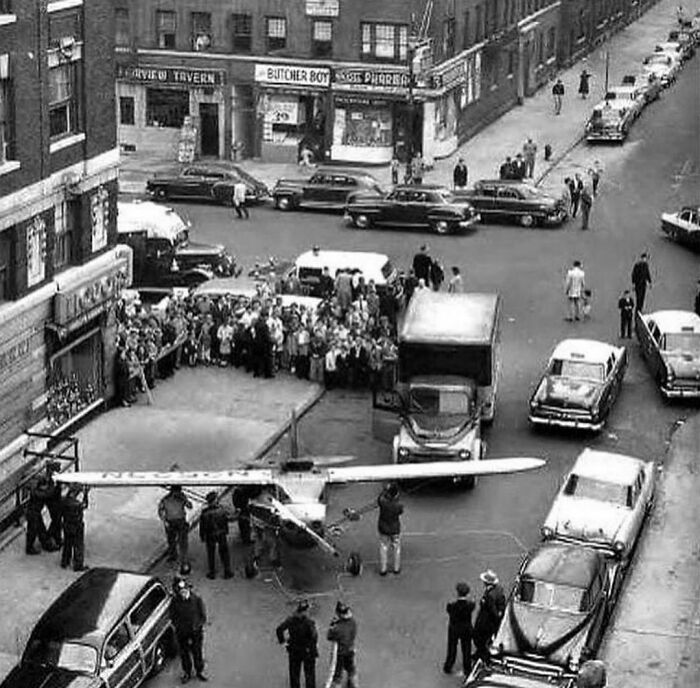
While drinking, a Pilot bet he could land outside the bar, 2 hours later he touched down in central New York in a stolen aircraft. Years later he repeated the stunt because someone wouldn't believe him. In September 1956 after drinking heavily at a bar in New York City, Thomas Fitzpatrick made an intoxicated barroom bet that he could travel from New Jersey to New York City in 15 minutes. At 3 a.m. he stole a single-engine plane from the Teterboro and flew without any lights or radio before landing on St. Nicholas Avenue near 191st Street in front of the bar where the bet was made. The New York Times called it a "fine landing" and a "feat of aeronautics". For his illegal flight, he was fined $100 after the plane's owner refused to press charges. In October 1958 just before 1 a.m., Fitzpatrick again stole another plane from the same airfield and landed on Amsterdam and 187th after another bar patron disbelieved his first feat. For his second stolen flight, judge John A. Mullen sentenced him to six months in prison. When asked why did had undertaken the 2nd flight Fitzpatrick told the police "he had pulled off the second flight after a bar patron refused to believe he had done the first one" Fitzpatrick was a Marine during the Korean War and received a Purple Heart. He has three sons and was married to his wife, Helen, for 51 years working as a steamfitter. He died in 2009 at the age of 79. Fitzpatrick has a mixed drink named after him for his feat called the "Late Night Flight"
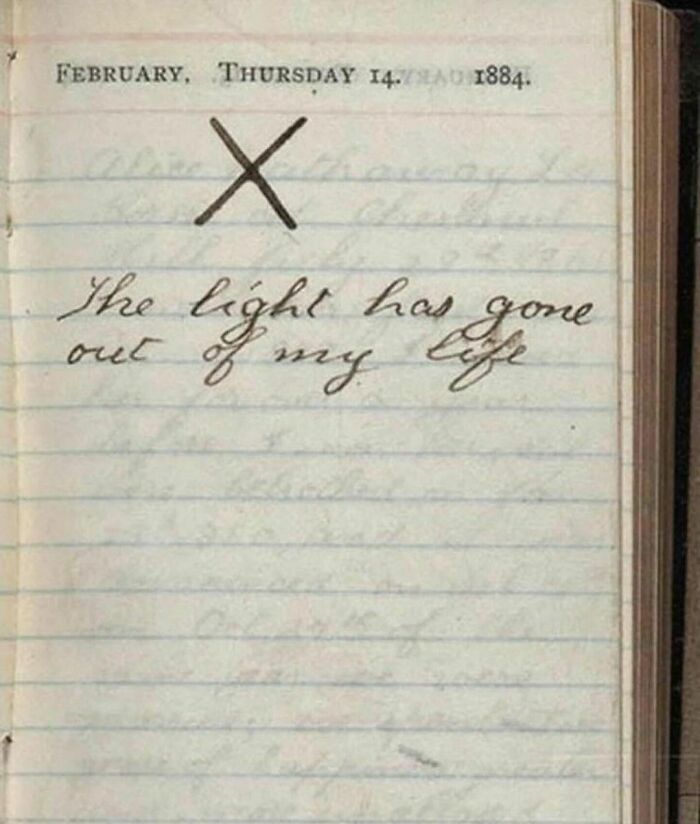
Theodore Roosevelt received a terrible news, his wife & mother died within hours of one another in the Roosevelt house. His mother, 50, succumbed to typhus, and his wife Alice died at the age of 22 giving birth to her namesake. The following diary entries lovingly describe his courtship, wedding, happiness in marriage, and his grief over the death of his wife Alice. In his ever-present pocket diary on February 14, 1884, Theodore Roosevelt simply wrote an “X” above one striking sentence: “The light has gone out of my life”. Roosevelt had been called by telegram back to New York City from Albany where he was a New York State Assemblyman. The concern was his mother’s fading health. Alice had just given birth to a baby girl two days earlier. But by the time Theodore reached his home Alice’s condition had taken a serious downward turn. He was greeted at the door by his brother, Elliott, who ominously told him that “there is a curse on this house”. Since he first cast his eyes upon Alice’s face in 1878, Theodore Roosevelt had filled pages of his diary by writing about her nearly as often as he thought about her. He noted the simplest expressions, the smallest acts of recognition, the quietest smiles, the loudest silences, and every action that resulted in a memory that they could replay again-and-again in the future that they had planned together. After his wife died, Roosevelt not only never spoke her name again, but never allowed anyone else to speak her name in his presence. That included their daughter, Alice Longworth Roosevelt, who never heard her father speak her mother’s name. His belief was, and he told this to a friend who also lost his wife, that the pain had to be buried as deep inside as possible or it would destroy you. This is the opposite of the current opinion that feelings should be shared.

Alice Longworth Roosevelt is a name to look up as well. Quite the woman.
In 1948, Swiss pharmacologist Peter Witt studied the effect of drugs on spiders. He conducted an experiment in which he dosed the spiders by feeding them drugged flies or by giving them a drop of a drug in water. He then photographed their webs before and after the drugs were administered. These were the results. In 1957, researchers noted that spiders on low doses of LSD were "unaware of outside influences and concentrated on the job." Their webs showed consistent regularity. On depressants, "they 'forgot' to finish what they had started and the result was a very ineffective food gathering device."
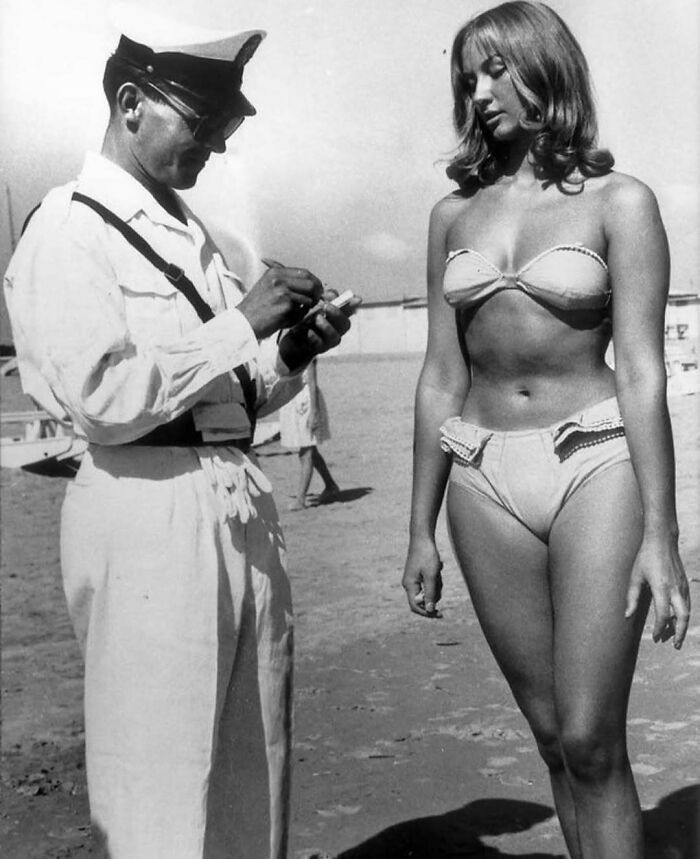
A police officer issuing a woman a ticket for wearing a bikini on an Italian beach, 1957. At the time the bikini was banned from beaches and public places on the French Atlantic coastline, Spain, Italy and Portugal.
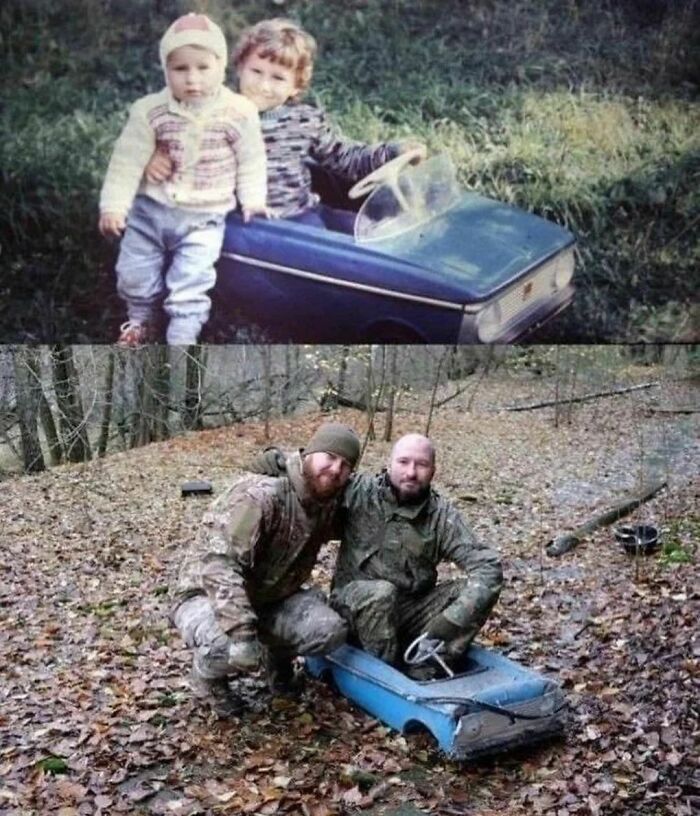
After a three-decade absence from Pripyat, the brothers revisit their toy car, a poignant reminder of the Chernobyl Nuclear disaster that occurred between 1986 and 2016.

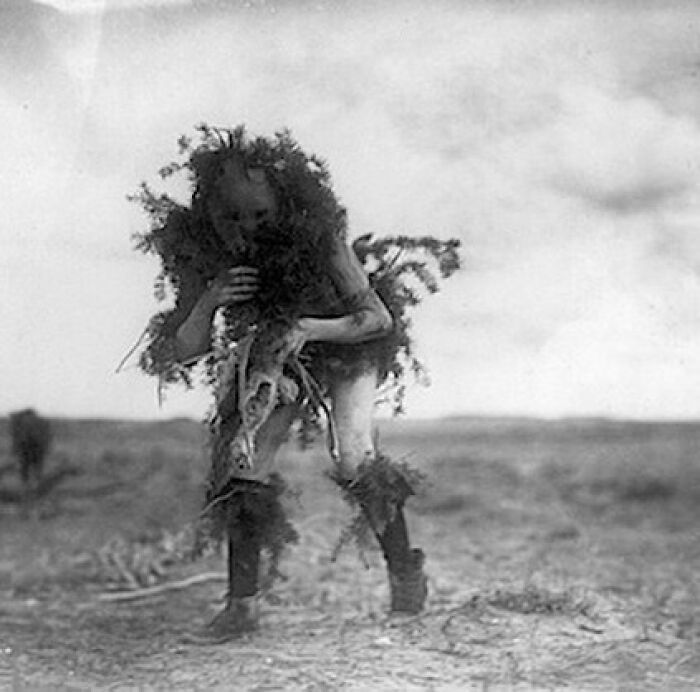
1904 colorized photo of a Navajo man. He is dressed as Tó Neinilii, the rain god of Arizona and New Mexico's Navajo people. He was said to play tricks, and when dancing wore a mask to play the part of a clown.
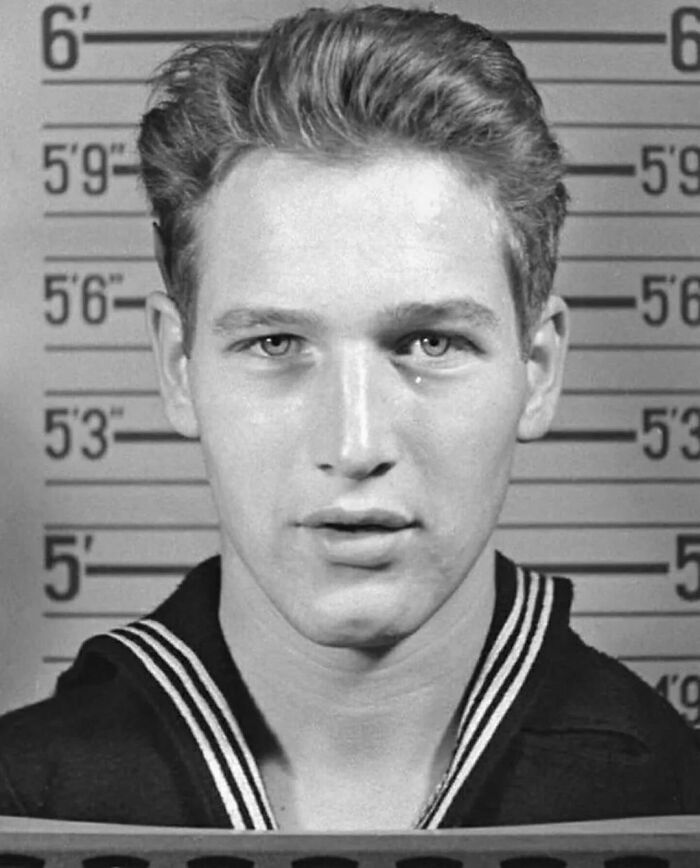
In 1943, Paul Newman enlisted in the Navy, joining the V-12 program to become a pilot. But when he was discovered to be colorblind, he was sent to basic training where he became a rear-seat radioman and gunner for torpedo bombers. In May 1945, his unit was assigned to the aircraft carrier USS Bunker Hill. But the pilot developed an earache and another crew was sent in their place. A few days later kamikaze planes attacked Bunker Hill, k*lling almost 400 onboard. “When you miss something like that because your pilot happened to have an earache..wow!” Paul recalled. “You can’t say God is looking after you because He gave your pilot an earache but put the 15 other guys in coffins!”

One of Newman's early films was titled "Somebody Up There Likes Me".
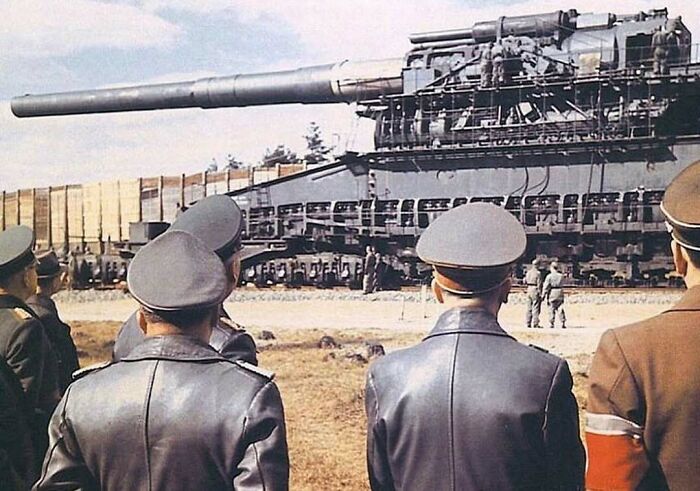
The Schwerer Gustav in 1943, the largest calibre rifled weapon ever used in combat. The fully assembled gun weighed nearly 1,350 tons, and could fire shells weighing 7 tons to a range of 47 km. It was transported using railway.
The gun was so large that it utilized a double track line to fire from. However it was not transported to the firing site like this. Rather, the guns would be disassembled and transported in pieces to the location they were going to fire from, then over the course of a month or so, reassembled. Since the guns were able to fire shells some 50 miles, and they were expected to deal with emplaced fortifications, this long time to emplace and build, wasn't seen as a downside.
A restaurant in Bangkok has been continuously cooking and serving from the same soup for over 45 years, a form of "perpetual stew."
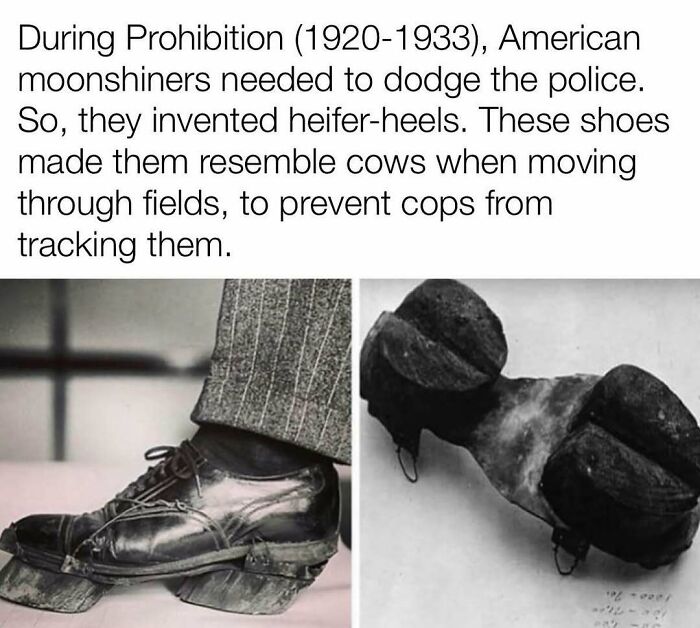
During the Prohibition era, a time when the production, sale, and consumption of alcohol were illegal in the United States, moonshiners had to get creative to stay one step ahead of the law. Among their many tricks was the creation of what became known as “heifer-heels.” These were not just any shoes; they were designed with a specific purpose in mind: to leave footprints that looked like those of a cow. Imagine you’re a moonshiner in the 1920s, hauling your homemade liquor through the countryside. You know that the police or federal agents might be on your tail, looking for signs of human activity. So, you slip on these heifer-heels, which are essentially shoes with soles shaped like cow hooves. As you walk, you leave behind a trail that, to the untrained eye, looks like a cow has just wandered through. This wasn’t just about fooling the eyes; it was about playing with the mind. Law enforcement officers, expecting to track humans, might find themselves following what they believe to be a cow’s path, only to realize too late that they’ve been duped. The shoes were crafted with care, often made from materials that would mimic the texture and depth of a real cow’s hoof print, ensuring that the deception was as convincing as possible.

Threre is a episode of Andy Griffith where cows were being stolen. Instead of hoof prints. The rustler were putting shoes on the cows so it look liked only people were walking away instead of cows.

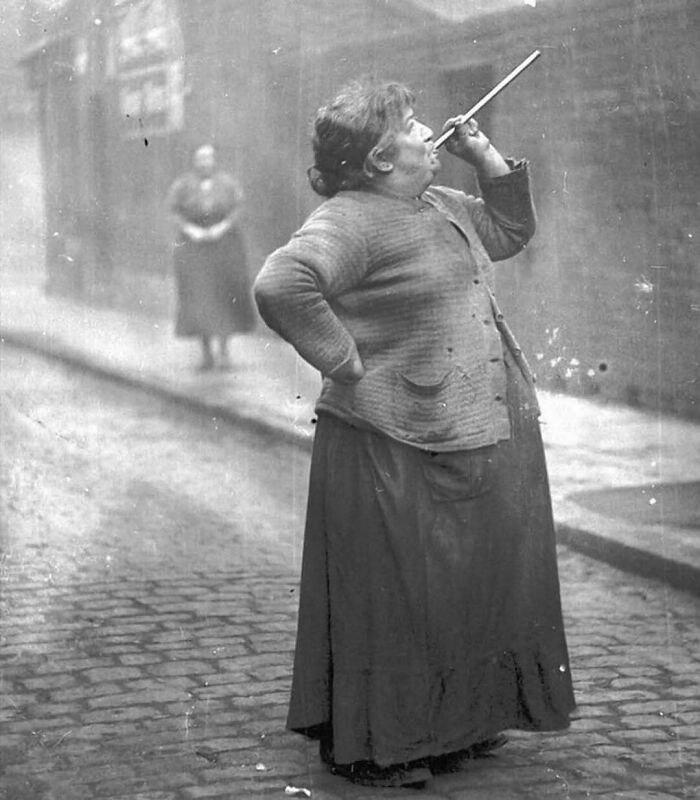
When alarm clocks were unreliable and expensive, a knocker-upper was a person whose primary job it was to wake people up. In the 1930s, Mary Smith in these slides earned six pence a week by shooting dry peas out of a pea shooter at the windows of employees that weren't waking up in East London. She would not leave a window until she was sure that the workers had woken up.

I don't know why, but I love everything about this woman's no-nonsense body posture. She looks like the consummate mother who's had enough of everyone's bs ;0)
Miss Idaho Potato, 1935 The Miss Idaho Potato pageant is a beloved tradition since 1935, celebrating the beauty and versatility of Idaho's famous crop. Contestants are judged on poise, personality, and potato knowledge, adding a fun twist to the competition. The winner receives a unique tiara made entirely of potatoes, symbolizing Idaho's agricultural heritage. This cherished event promotes Idaho potatoes, showcases the state's agricultural heritage, and fosters camaraderie among potato enthusiasts. The pageant captures the spirit of Idaho, honoring the humble potato and its significance to the state's identity. It continues to captivate audiences and highlight the beauty of both contestants and Idaho's remarkable potato industry.

That's a lot of text for just saying that Idaho is known for potatoes
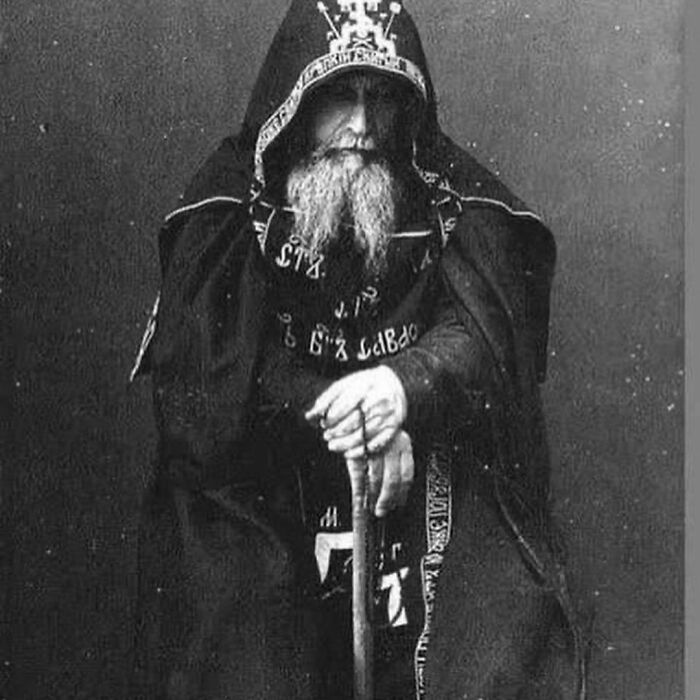
The man who passed away without ever setting eyes on a woman. Born in 1856, Mihailo Tolotos faced a tragic start to his life when his mother passed away a mere four hours after his birth. With no father or other family members coming forward, the young boy found himself abandoned on the steps of a monastery situated atop Mount Athos. Fortunately, the monastery took him in and became his new home. Due to the strict rules in place, Tolotos had limited interaction with the outside world and was never exposed to women, as they were prohibited from entering monasteries or setting foot on the mountain. Although male tourists were permitted, they primarily came to experience the monastic lifestyle or seek a life as monks themselves. Mihailo Tolotos lived his entire life in seclusion, shielded from the external world, and without ever encountering a woman. Eventually, in 1938, at the age of 82, he passed away, having never laid eyes on the appearance of a woman.
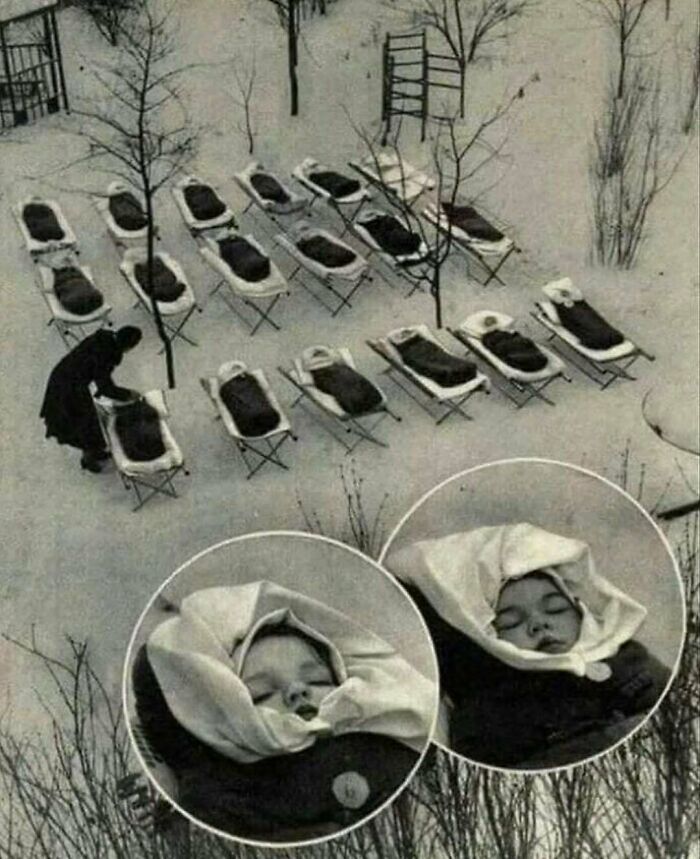
Winter Proofing New Russian babies, Moscow, 1958. They believe that the cold, fresh air boosts their immune system and allows them to sleep longer.
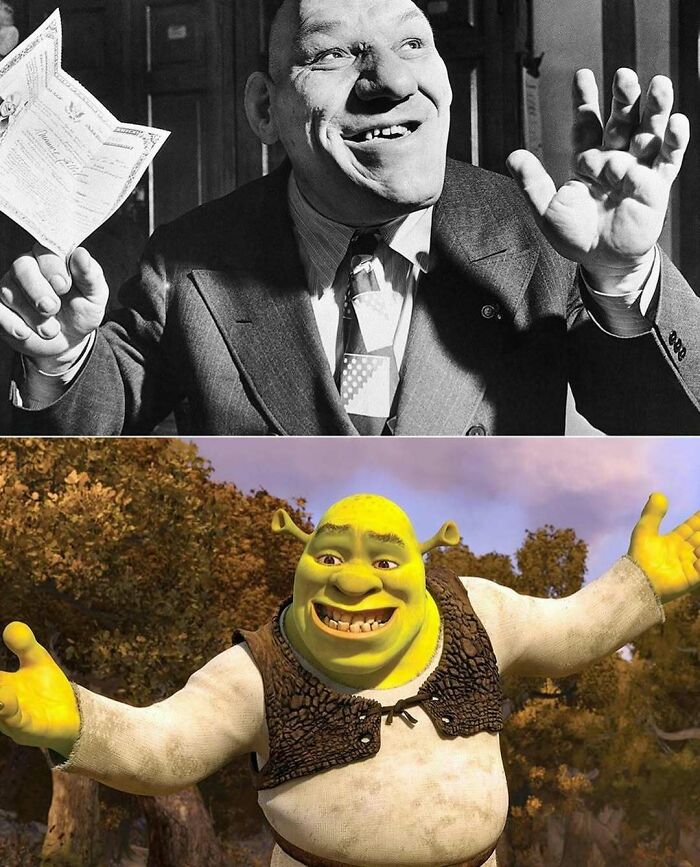
Maurice Tillet, the rumored inspiration behind Shrek, was a Russian-born French professional wrestler known as The French Angel. He achieved success in the 1940s, becoming a World Heavyweight Champion. Diagnosed with Acromegaly at 19, he faced physical challenges but pursued a career in law, acting, and wrestling. Despite early dating experiences, his attitude toward women changed in the 1940s, believing they were interested in his money. Tillet passed away in 1954 from a heart attack upon hearing about his friend’s death.
Everytime I see this image it is terrifying as ever . . .
In the late 1990s and early 2000s, LAN parties were a cornerstone of young gamers' social lives. These gatherings, typically hosted in someone's basement or a local community center, revolved around connecting multiple computers through a local network. This allowed groups of friends to delve into the world of multiplayer gaming in an era where high-speed internet was still a luxury. Amidst the dim glow of computer screens, young enthusiasts would engage in epic battles in games like Age of Empires and Quake, all while sipping on caffeinated sodas and indulging in a smorgasbord of snacks, from pizza to candy bars. These LAN parties often stretched late into the night, much to the exasperation of concerned parents and the delight of the participants. These gatherings were about more than just gaming; they were about forging lasting friendships, honing teamwork skills, and creating unforgettable memories in an era when online gaming as we know it today was still in its infancy.
OH MY GOD how is my childhood in a history post what the actual f**k?!
Operation Upshot-Knothole was a series of 11 nuclear tests conducted by the United States in Nevada in 1953. The primary goal of these tests was to gather data on new weapon designs. One notable test, named “Grable,” involved the firing of a nuclear artillery shell that traveled seven miles before detonating. However, there were unintended consequences, as radioactive fallout from the “Simon” test in the series reached as far as Albany, New York.
It's kinda scary how many nuclear weapons were developed back then, like the Davy Crockett grenade launcher or the nuke backpacks we in Germany had to close the Fulda Gap
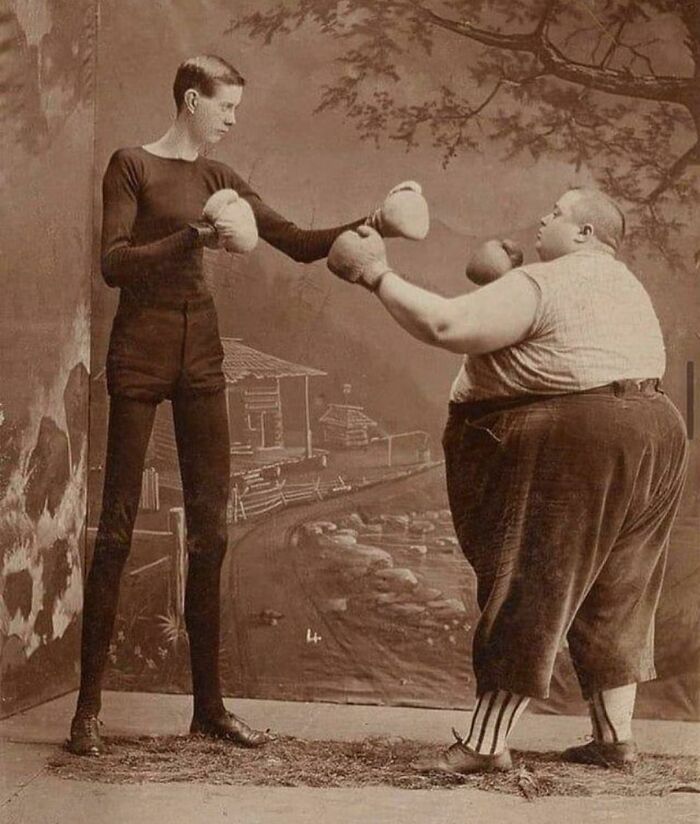
In 1897, there were two notable circus performers known as George Moore, also known as "the living skeleton," and Fred Howe, nicknamed "the fat man." Unfortunately, there is a scarcity of information about them during that time period. However, from the limited available sources, here is what I could gather: Fred Howe's father worked as a carpenter in Pennsylvania, and young Fred initially followed in his footsteps to learn the trade. However, due to his increasing weight, he had to abandon that path. At the age of eighteen, he joined the Forepaugh Circus as a "tat boy" and it was there that he first encountered his future sparring partner. On the other hand, George Moore was born in Helena, Montana. His father owned a small dry goods shop, but George had a strong desire to explore the world beyond his hometown. When a major circus arrived in Helena, the manager offered him an opportunity to showcase himself as the "living skeleton." Eager to pursue his dreams, George immediately accepted the offer. As fate would have it, Howe and Moore developed a friendship and would engage in private sparring matches for amusement. One day, the circus manager witnessed their impromptu bouts and saw potential in their dynamic. He promptly offered them a longer engagement, with a higher salary, to publicly box each other. According to available information, George Moore stood at an impressive height of 6 feet 3 inches and weighed a mere 97 pounds, while Fred Howe was significantly shorter at 4 feet 2 inches and weighed a staggering 422 pounds.
is it wrong for me to want to know who won more? because I kinda wanna know who won more.
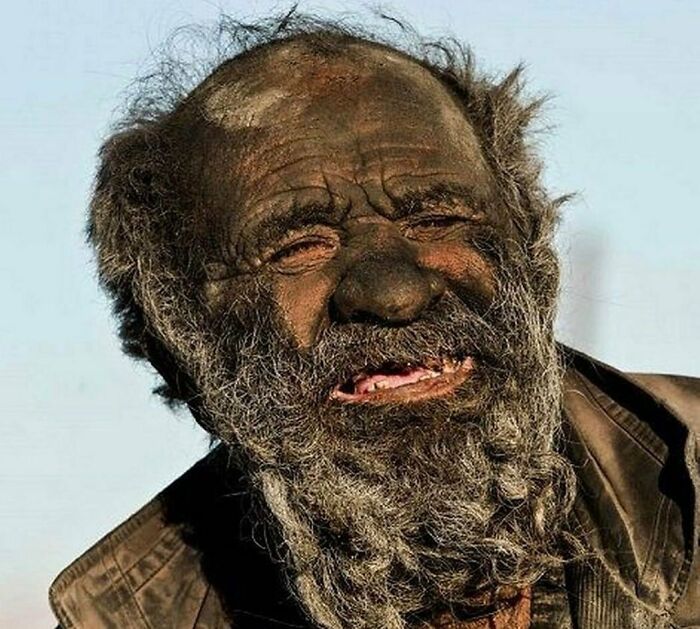
'World's Dirtiest Man' dies in Iran at the age of 94. Amou Haji, who gained notoriety as the 'world's dirtiest man,' has passed away in Iran at the age of 94. Local media reported that Haji, who lived in a cinder block shack, was covered in soot and had not bathed with water or soap for over 60 years. In 2014, the Tehran Times documented Haji's peculiar habits, which included consuming roadkill, smoking a pipe filled with animal excrement, and holding the belief that cleanliness would make him ill. However, a few months ago, villagers managed to convince him to wash for the first time.
Bored Panda Staff: "Let's repost this photo series every couple weeks. It's easier than finding new content."

Bored Panda users: Let's make the same joke about the knocker- uppers' knocker- uppers again.
Load More Replies...
Nice to see both more context and proper capitalisation. Now we just need to stop the constant reposting of material.

I wish they'd use proper terminology. BCE instead of BC, CE instead of AD. Just a pet peeve.
Load More Replies... Only some of these were reposts this time. Getting better... but still basically the same title as ever.
Hmm. Yeah, but it's better than horrible real life horrors.
Load More Replies...

Bored Panda Staff: "Let's repost this photo series every couple weeks. It's easier than finding new content."
Bored Panda users: Let's make the same joke about the knocker- uppers' knocker- uppers again.
Load More Replies... Nice to see both more context and proper capitalisation. Now we just need to stop the constant reposting of material.
I wish they'd use proper terminology. BCE instead of BC, CE instead of AD. Just a pet peeve.
Load More Replies... Only some of these were reposts this time. Getting better... but still basically the same title as ever.
Hmm. Yeah, but it's better than horrible real life horrors.
Load More Replies... 






























 No fees, cancel anytime