Get Premium
Dark mode theme is available exclusively for premium users. Learn more about the benefits of subscribing.
No fees, cancel anytime.

 Dark Mode Ad-Free Browsing Unlimited Content
 Ad-Free Browsing Unlimited Content Dark Mode
Join 1.2 million Panda readers who get the best art, memes, and fun stories every week!



It’s not uncommon for people to watch the world go by without paying much attention to something happening in the background. That is until they see something seriously confusing, like a dog with six legs, only to realize that it wasn’t much more than an optical illusion.
It’s also not uncommon for people to take pictures of such optical illusions, some of which eventually end up on the internet. As you’ve probably guessed by now, optical illusions are what we’re focusing on today, and on the list below you will find some of the most mind-bending ones, as shared by the Facebook group fittingly titled ‘Illusions.’ If you’re curious to see what sights have made people do a double take or prompted them to take out their camera (or, more likely, a phone now in 2024), scroll down to find some confusing yet cool pictures below and make sure to upvote your favorites.
This post may include affiliate links.
The door is real and the rest is graffiti.
Artwork by Rodrigo Miguel Sepulveda Nunes aka Vile.
'The Kissing Cactus' near Tucson, Arizona.
This list is just the tip of the iceberg of optical illusions that are floating around the online world. Some, such as the white-gold-black-blue dress, which went viral nearly a decade ago, have even taken the internet by storm.
You might vaguely remember something about a dress or have vivid memories of heated discussions about its color, but no matter how involved you were, if you were on the internet back in 2015, you definitely saw it.
Cross country skiers looking like musical notes.
Fossavatn, Island. Haukur Sigurdsson.
If you’re wondering, ‘So, what was the color of the dress that broke the internet?’, the answer is… black and blue. To many people’s surprise, the garment, which many swore to be nearly as bright as the sun itself, was actually a shade way darker.
But despite the truth, more people saw it as white and gold, rather than black and blue, according to the poll on Buzzfeed that started this optical illusion craze.
The optical illusion-of-a-dress became so viral, everyone from celebrities to scientists voiced their opinions. In an interview with BBC, one of the latter, Professor of Color Science and Technology at the University of Leeds, Dr. Stephen Westland, suggested that the reason people saw the same dress so differently was the lighting.
“If it hadn't been taken under very strange lighting this probably wouldn't have happened because if you look at the manufacturer's picture, it is indisputably blue and black,” Prof. Westland told the BBC.
However, the professor noted that the way people see colors varies significantly, as does the way we name or interpret what color something is. “It is possible that people could literally be seeing different colors, but it's impossible to know what is in someone's head.”
Dr. Patrick Cavanagh, researcher of visual neuroscience and perception and co-founder of the Vision Sciences Lab at Harvard, noted that the viral dress was arguably one of the things that brought the general public’s attention to optical illusions.
In his paper on illusions, titled ‘Using Illusions to Track the Emergence of Visual Perception’, he noted that the Google search hits for ‘illusions’ went from just six million back in 2006 to a whopping 635 million in 2023. It’s safe to assume that tens, if not hundreds, of millions were the result of the dress going viral.
In the aforementioned paper, Prof. Cavanagh suggested that illusions arise when perception and cognition are in conflict – when there is a difference between what we see and what we think we should see. “This is not a mismatch between perception and what is physically out there; it is a mismatch between perception and what we think should be out there,” he wrote.

Monty Python sketch showed a man doing this and a reporter lying next to him interviewing him as if he's climbing a mountain.
This isn't a Photoshop work; however, it’s a good optical illusion. Photographer Renatas Jakaitis captured three deer heads seemingly sprout from one body as they peer at you from the forests of Lithuania.
The expert continued to point out that not all conflicts between cognition and perception are illusions, though. “I may have ordered a hamburger at the restaurant, but my vision says I received a hot dog; I saw my chosen card go back in the deck, but the magician just pulled it out of my pocket. In these cases, the conflict arises due to some external agent—human error or human sleight of hand.
“For an illusion, the trickster must be internal, our own brain, so that we cannot attribute the mismatch to anyone else and, more importantly, so we can use the mismatch to better understand the brain or teach about its principles. The illusion also has stability over time, ruling out other, less reliable tricksters such as hallucinations and delusions.”
It's not broken.
Prof. Cavanagh noted that sometimes the conflicts between cognition and perception arise because of an external agent, such as a magician, for instance. Discussing how they use illusions in their tricks, magician Alan Hudson pointed out that magicians have been entertaining audiences with them for centuries. “From making objects disappear to reappearing in a different location, magicians have mastered the art of exploiting our perception and cognition with psychological tricks,” he wrote.
Hudson noted that the art of magic is all about making the impossible seem possible. “Magicians often rely on a range of psychological tricks to create their illusions. One popular technique is misdirection, where the magician diverts the audience’s attention away from their secret moves. By using a combination of verbal and nonverbal cues, magicians are able to manipulate our attention and perception.”

While few things or people can trick our minds like magicians do, sometimes all it takes to make a mind-bending optical illusion is perfect timing and the right angle, as the images on this list show. If you’ve enjoyed browsing them, we have an entire category dedicated to optical illusions here on Bored Panda, so you might want to check that out next. Happy scrolling!
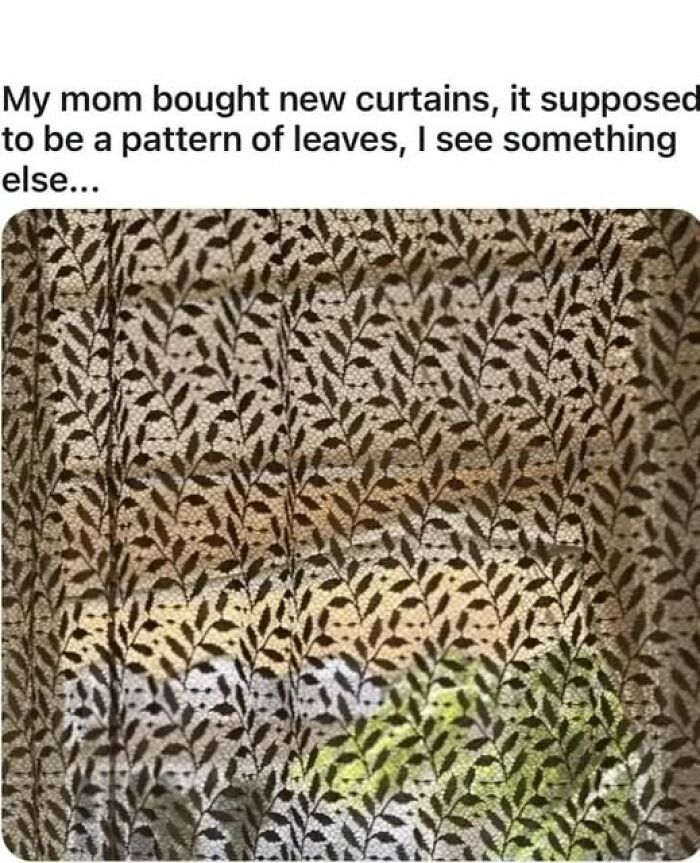
I'm seeing Edgar Allan Poe. Or 2/3 of his face at least, on repeat.
A dog with a dog face on its ear.
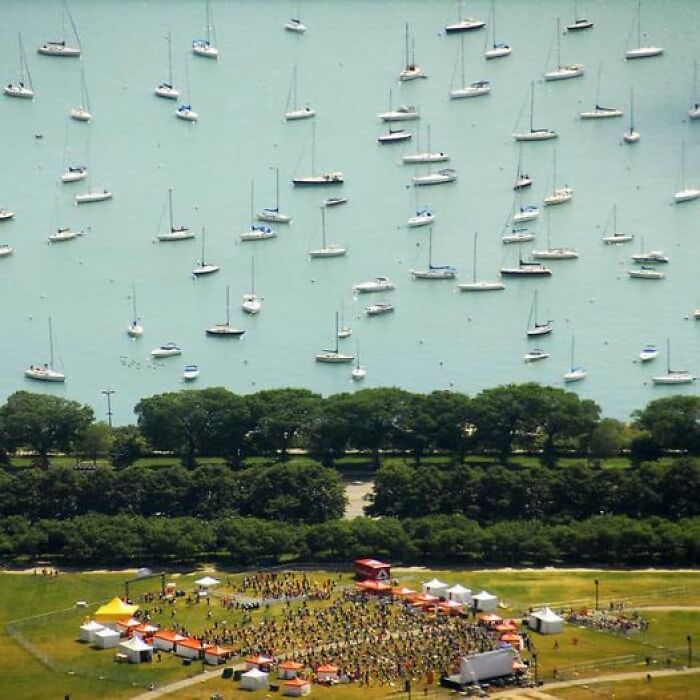
Not birds.
I have stared at this photo for about 5ish minutes and the only thing I can come up with other than birds are motor bikes
Can someone please explain how this appears to have 2, almost completely, opposite colors? I can see that the window reflection is causing the color variations but the car next to this one, which looks like either a Mercedes or a VW, only has a slight change in color, like blue to black or vice versa.
It's fascinating how our brains get tricked by optical illusions, making a simple picture appear as something entirely different. This is similar to what happens with expertly crafted illusions that are created with photographs or drawings.
In fact, exploring how confusing perspectives can manipulate our perceptions further deepens our understanding of these phenomena.
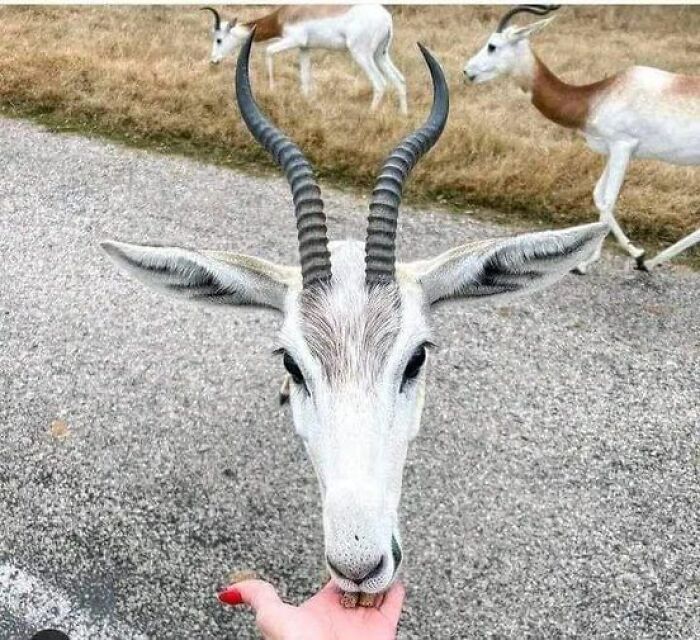
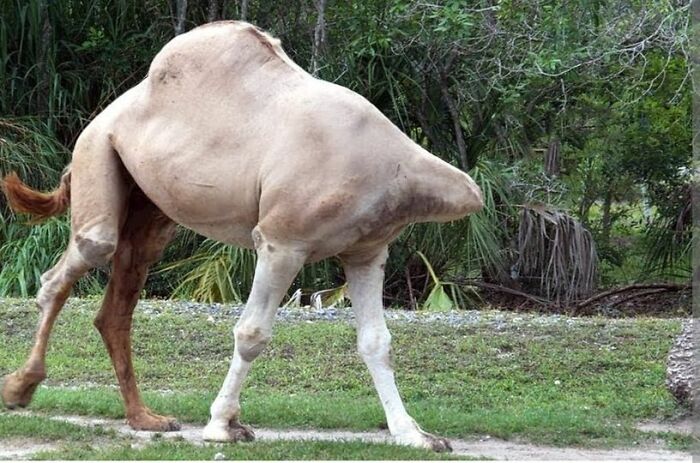
If it wasn't for that tiny glimpse of leg/hoove in the background, I would still think this head was floating, somehow. Crazy angle makes the body almost invisible.

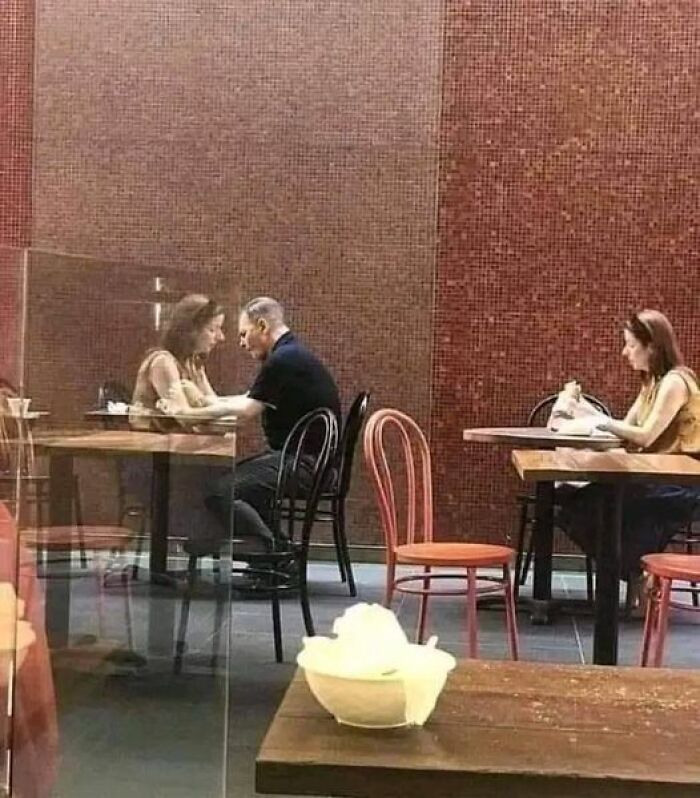
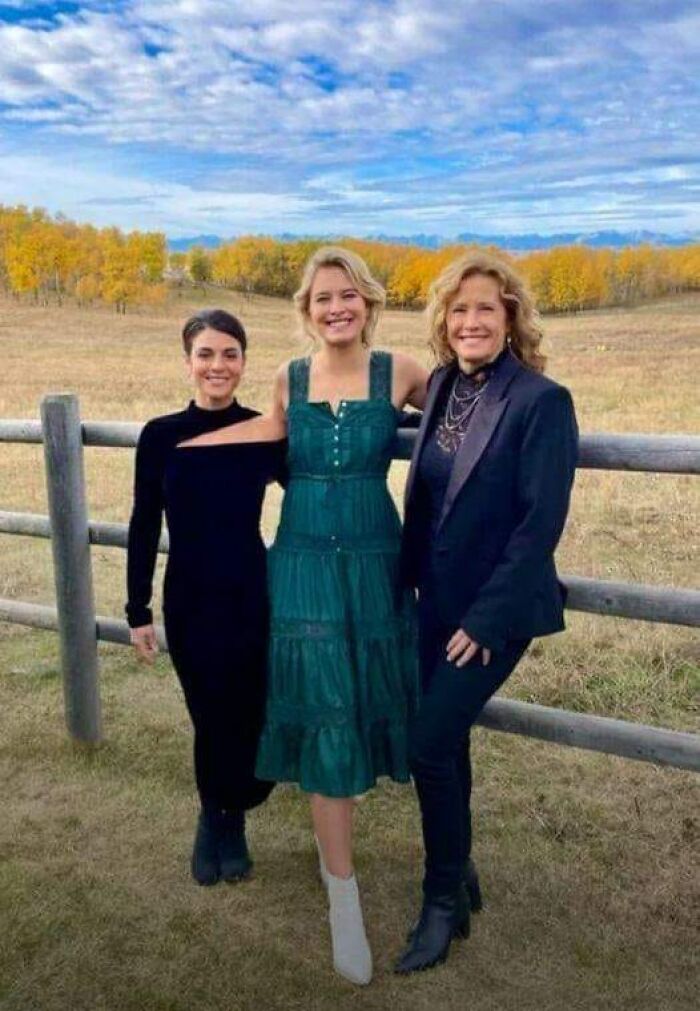
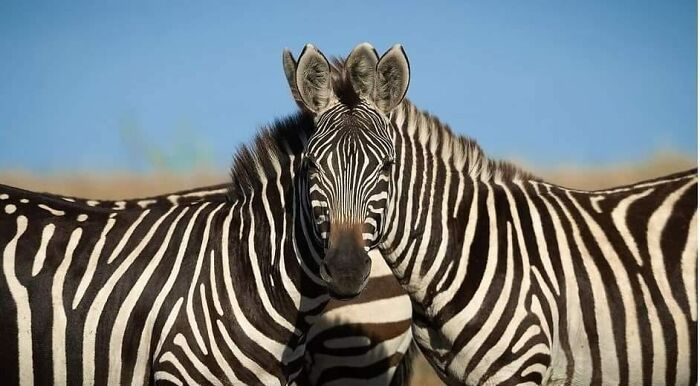
Reminds me of the story about two identical twin girls, wearing identical outfits, walking down the sidewalk one evening. There was an inebriated gentleman standing in their path, so without breaking stride, they split and went around him, one on each side. He turned and looked at them as they walked away, confusedly wondering "How on earth did she do that?"
Photo by Eric Burgers.

Behold the rarely seen Pacific Piping Pickaxe Plover Pheasant.
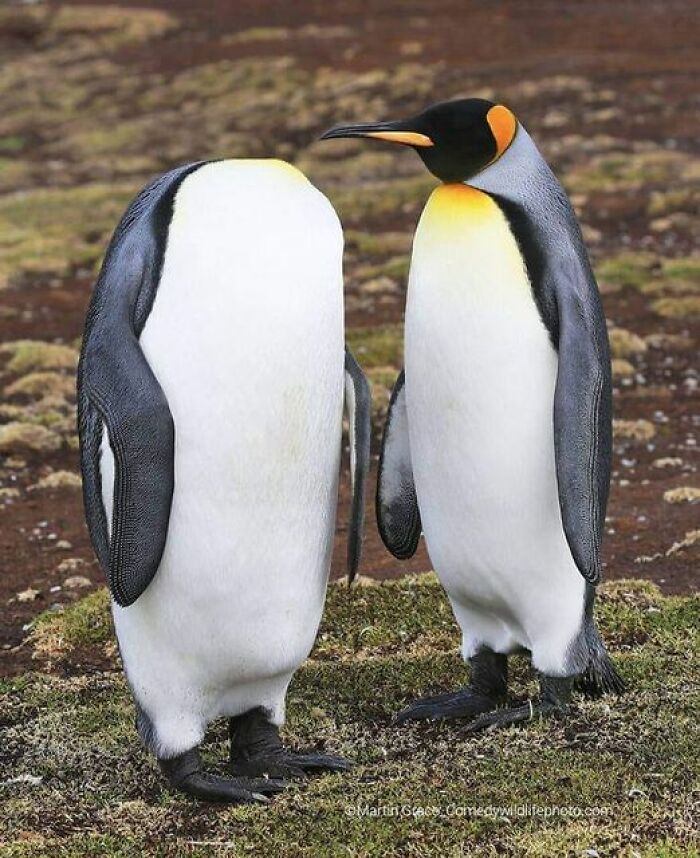
I thought this happened when the female praying mantis was all done with her male mate? Maybe this particular penguin just wasn't doing it for the lady penguin? 🤷♀️
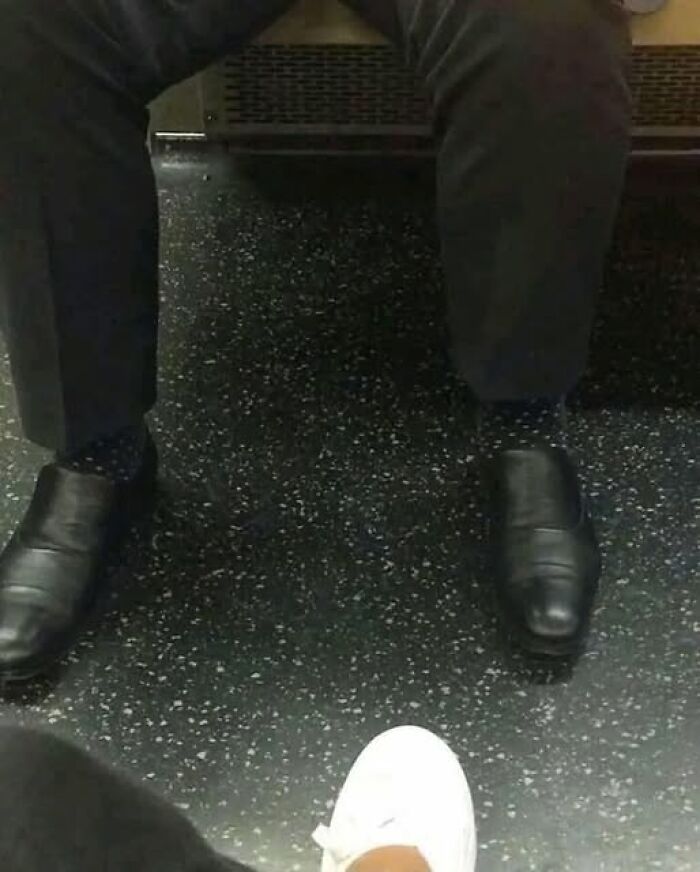
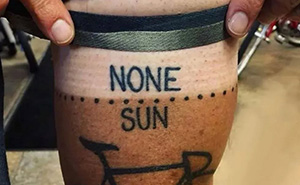
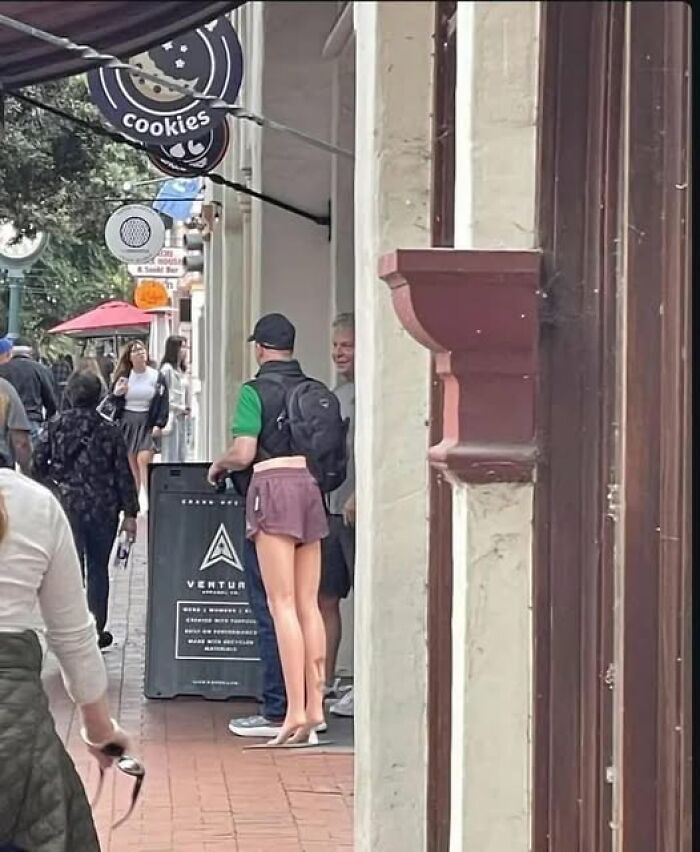
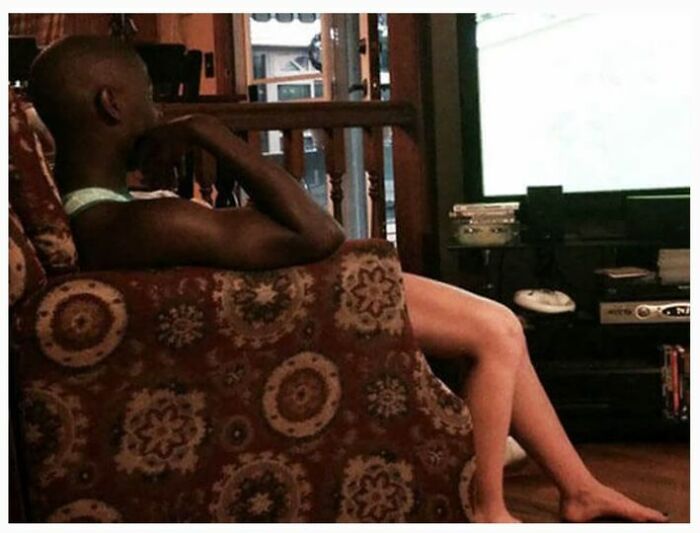
I think it would help if this guy let his smooth unhairy legs, get exposed to a little bit of Sun, every so often.
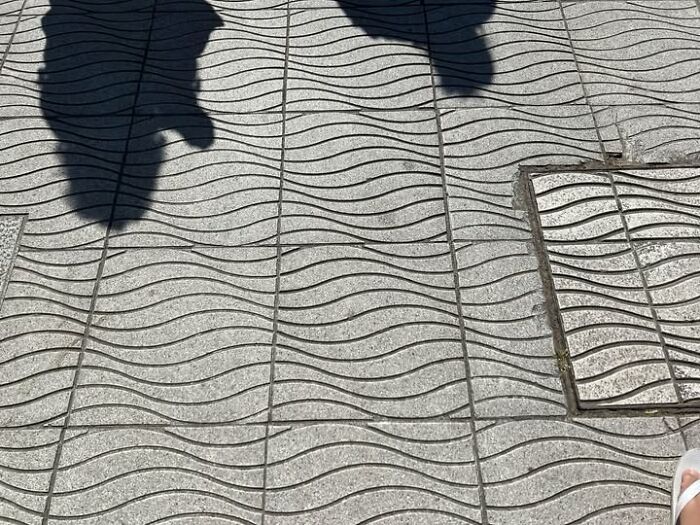
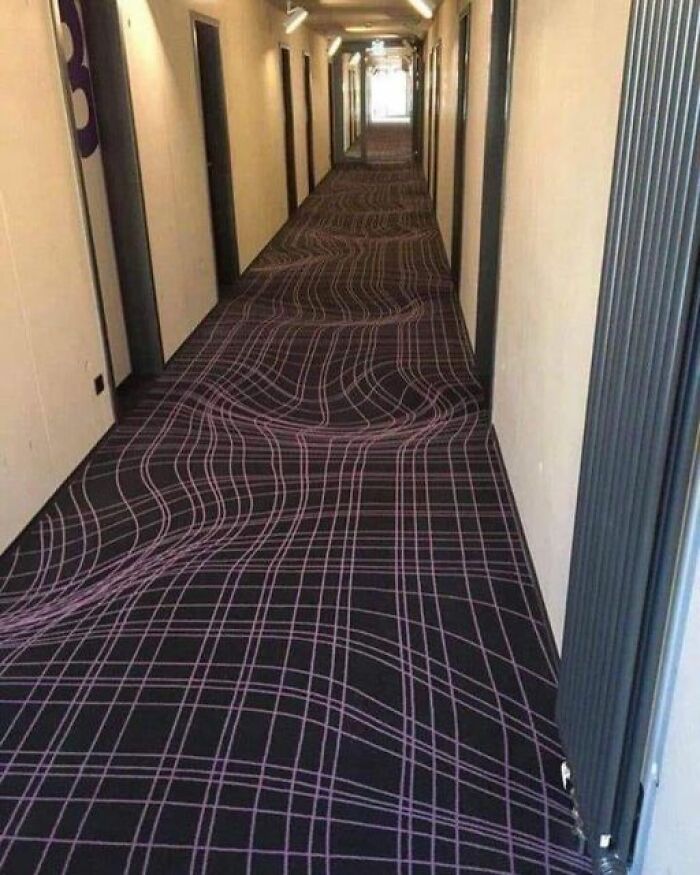
No waves, just the wavy pattern!

Who thought it would be a good idea to design it, and who decided to buy it?
I would never make it down this hallway drunk let alone sober lol
























 No fees, cancel anytime