Get Premium
Dark mode theme is available exclusively for premium users. Learn more about the benefits of subscribing.
No fees, cancel anytime.

 Dark Mode Ad-Free Browsing Unlimited Content
 Ad-Free Browsing Unlimited Content Dark Mode
Join 1.2 million Panda readers who get the best art, memes, and fun stories every week!
The saying "The past is a foreign country" comes from the 1950s novel “The Go-Between,” which is set at the tail end of the Victorian era. It’s one of those concepts that sounds outlandish until one actually sits down and looks at the reality of life in the past.
The “Victorian Chronicles” Instagram page is dedicated to sharing interesting and illuminating posts and images about the Victorian era. So get comfortable as you scroll through, upvote your favorites and be sure to add your own thoughts to the comments section down below.
More info: Instagram
This post may include affiliate links.
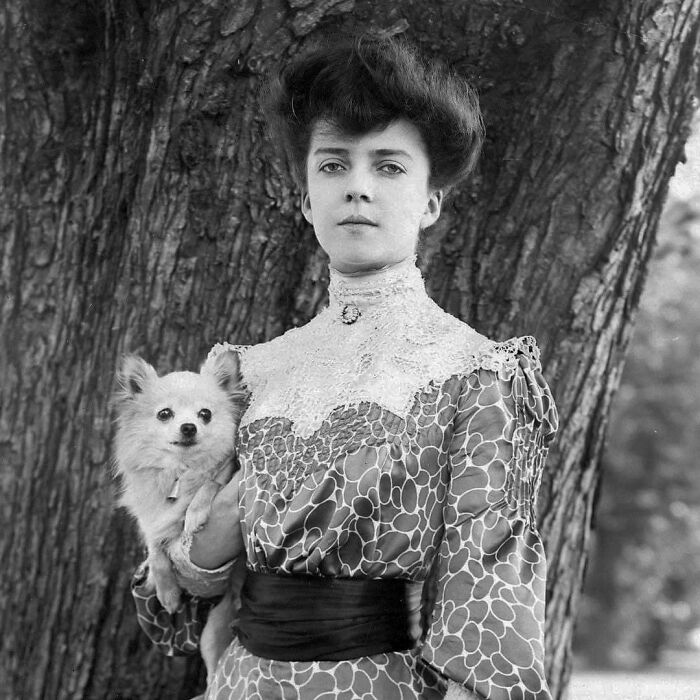
This is 18-year-old Alice Roosevelt and her long-haired Chihuahua named Leo in 1902. She also had a pet snake named Emily Spinach who she would wrap around on one arm and take to parties. She was extremely independent and unlike many women of her time, she was known to wear trousers, drive cars, smoke cigarettes, place bets with bookies, dance on rooftops, and party all night. In a span of 15 months, she managed to attend 300 parties, 350 balls and 407 dinners..William Howard Taft banned her from the White House after Alice buried a voodoo doll (of Taft’s wife) in the front yard.
Her father, Theodore Roosevelt famously said, “I can either run the country or I can attend to Alice, but I cannot possibly do both.”
She died in 1980 at the age of 96.

Sounds like she lived life on her own terms which will not have been an easy thing to do as a woman in those days. However, she will have had some privilege that would make it easier for her; her family name and connections, societal status, and wealth.
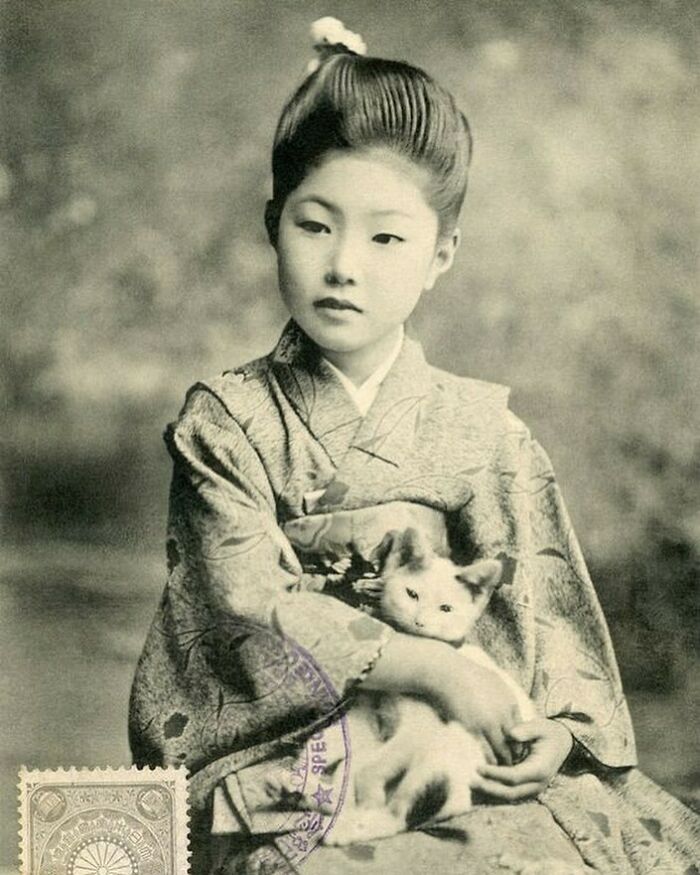
A Japanese postcard of a ‘Bijin’ (beautiful person) with her kitten. Circa 1907.
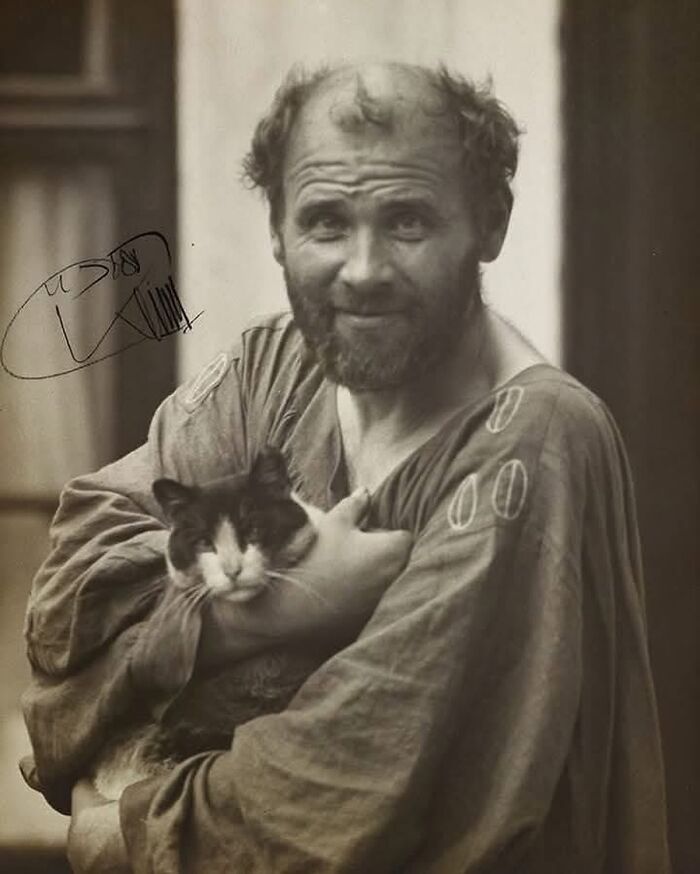
Portrait of The most celebrated Vienna Secession painter GUSTAV KLIMT ( 1862 - 1918 ) with his cat.
One of the most compelling reasons people remain drawn to Victorian photographs is the medium's novelty during that era. Photography was still relatively new in the Victorian period, having been invented in the 1830s, and the process of creating images was vastly different from today's instant digital snapshots.
Early photographic techniques like daguerreotypes and later innovations required subjects to remain perfectly still for extended periods, sometimes up to several minutes. This technical limitation resulted in the characteristically serious, almost haunting expressions that define Victorian portraiture. Modern viewers find themselves mesmerized by these solemn faces, interpreting them as windows into the souls of our ancestors and projecting onto them stories of hardship, dignity, and resilience.
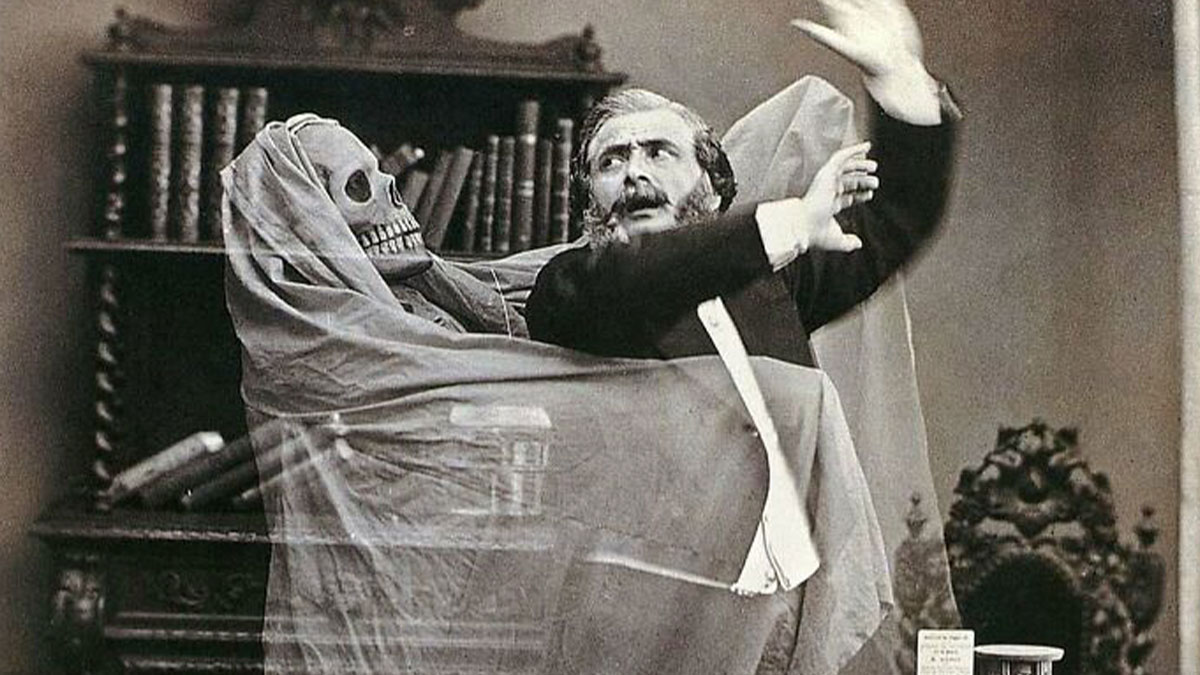
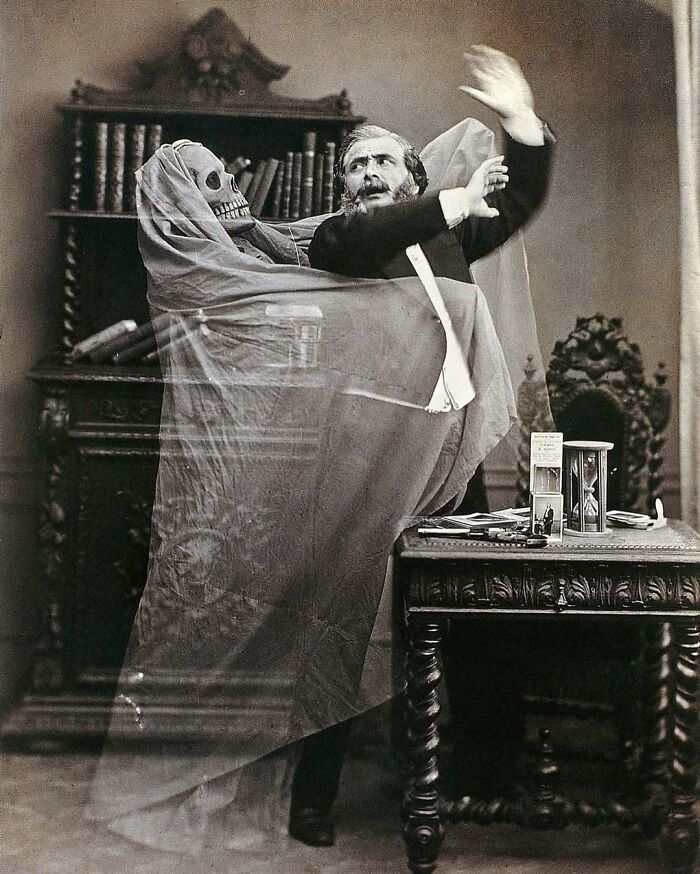
Double-exposed photograph of French illusionist Henri Robin with a ghost. Photo: Eugène Thiébault, 1863.
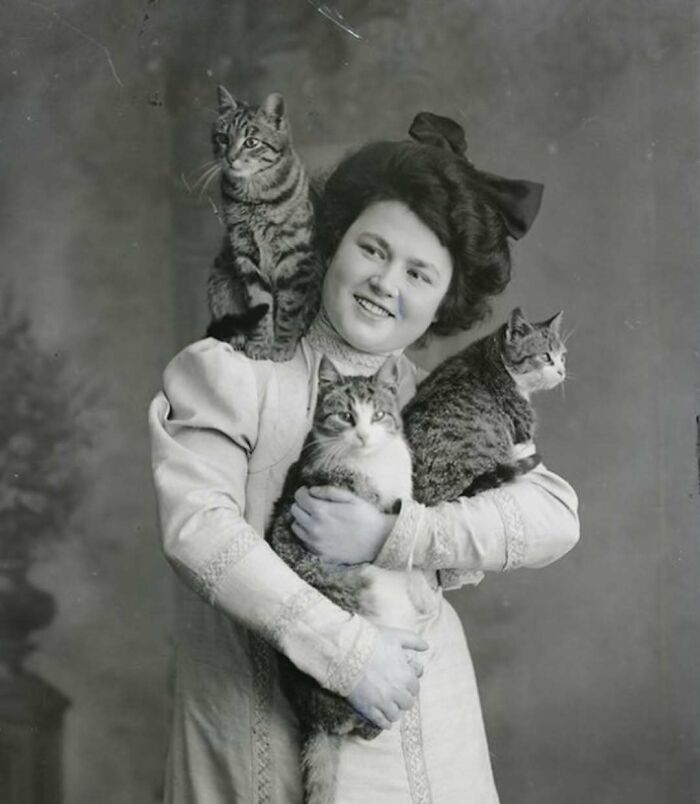
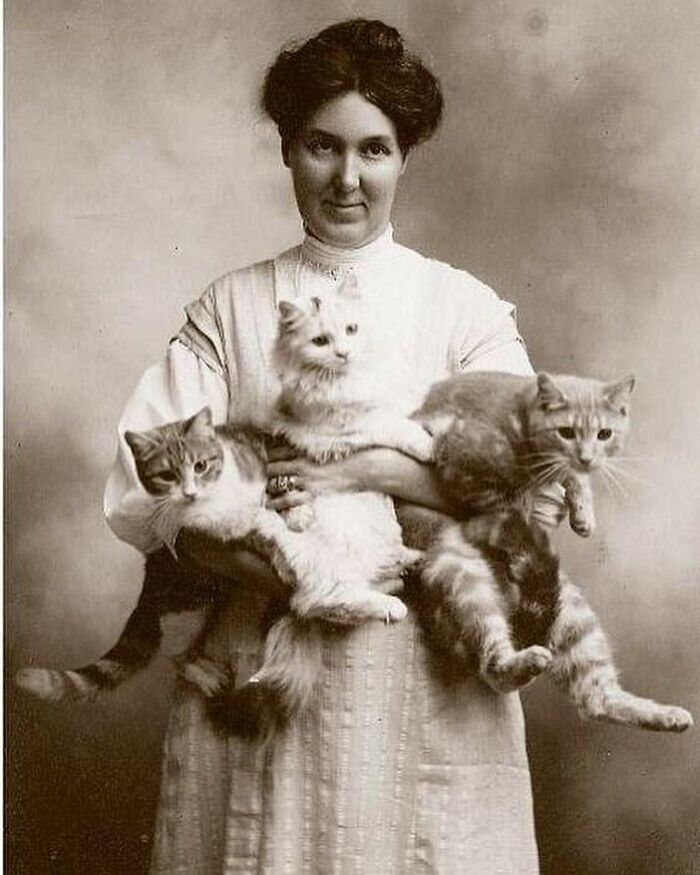
Portrait of Frieda Baars (Sangernebo) with three cats, taken circa 1907 by Jaan Riet, Estonia.

This is an early form of cat scan, similar to doguerreotype photography,
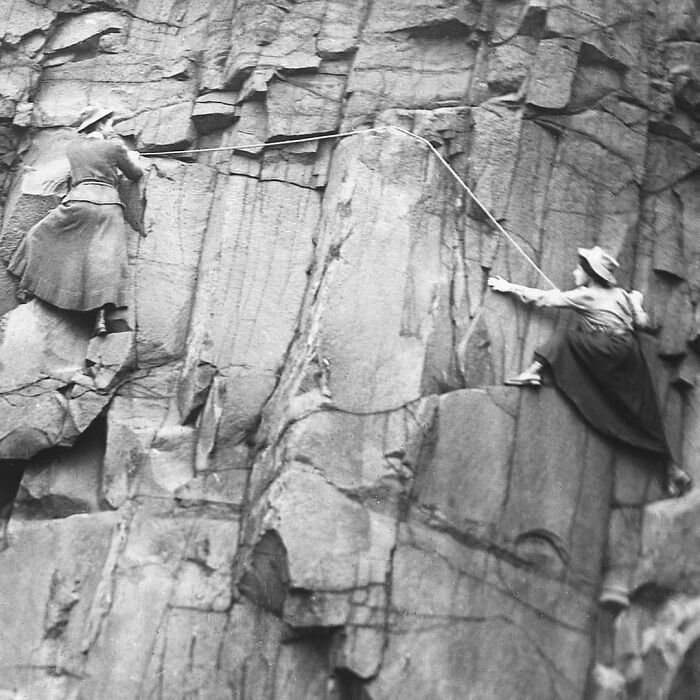
Lucy Smith and Pauline Ranken ascending Salisbury Crags, Edinburgh, wearing long, ankle-length skirts, hats, blouses and smart shoes, 1908. The only protection they had was a length of rope tied around each of their waists -no helmets, harnesses, spikes or other modern safety equipment as it wasn't available to them at the time. They formed their own club the Scottish Climbing Club founded in 1908, after being barred from joining the men-only Scottish Mountaineering Club. By 1909 the club had fourteen members.
The aesthetic qualities of Victorian photographs also contribute significantly to their lasting appeal. The monochromatic tones, the slight imperfections, and the formal compositions create an artistic quality that many contemporary viewers find more authentic and emotionally resonant than modern photography. There's a texture and grain to these images that digital photography often lacks, giving them a tangible quality that feels more connected to physical reality. The careful staging, elaborate costumes, and attention to detail in Victorian photographs reflect a time when having one's portrait taken was a significant, often once-in-a-lifetime event, imbuing each image with tremendous importance and careful consideration.
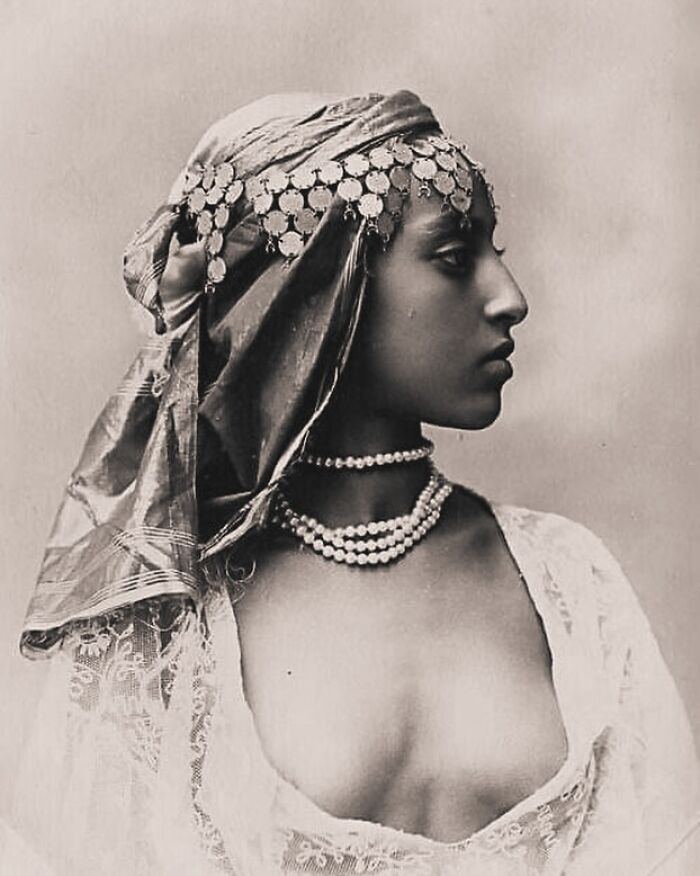
Beautiful Portrait of an Egyptian woman, photograph by Abdullah Brothers, Cairo, Egypt, ca. 1870.
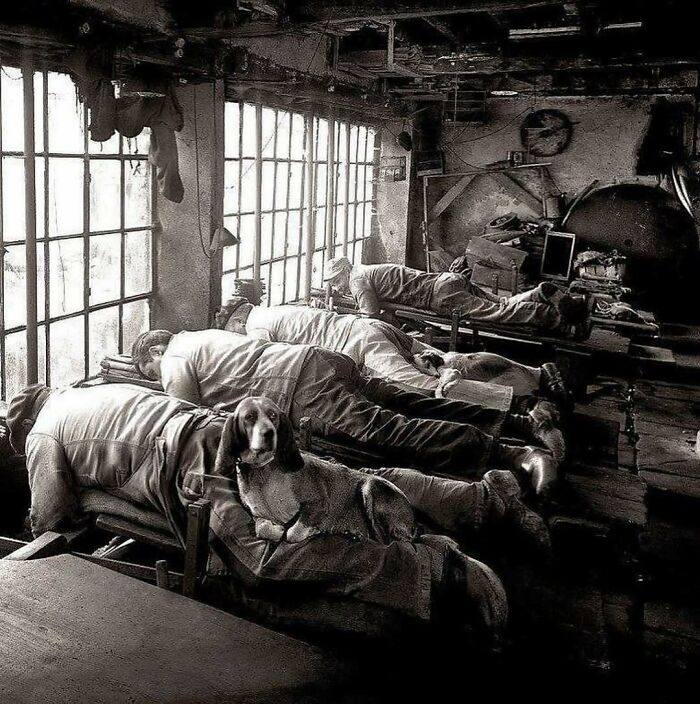
Knife grinders in Thiers, France circa 1902. These knife grinders had the nickname of ventres jaunes or ‘yellow stomachs’ referring to the yellow dust released by the grinding wheels. By laying face down, these yellow stomachs would save their backs from being hunched over all day. Workers were encourage to bring their dogs to not only keep them company but to act as heaters to keep them warm by having the dogs lie on their legs!
This is where the phrase ‘nose to the grindstone’ originated.

Upvoted for everything except maybe the last line. That needs further research.
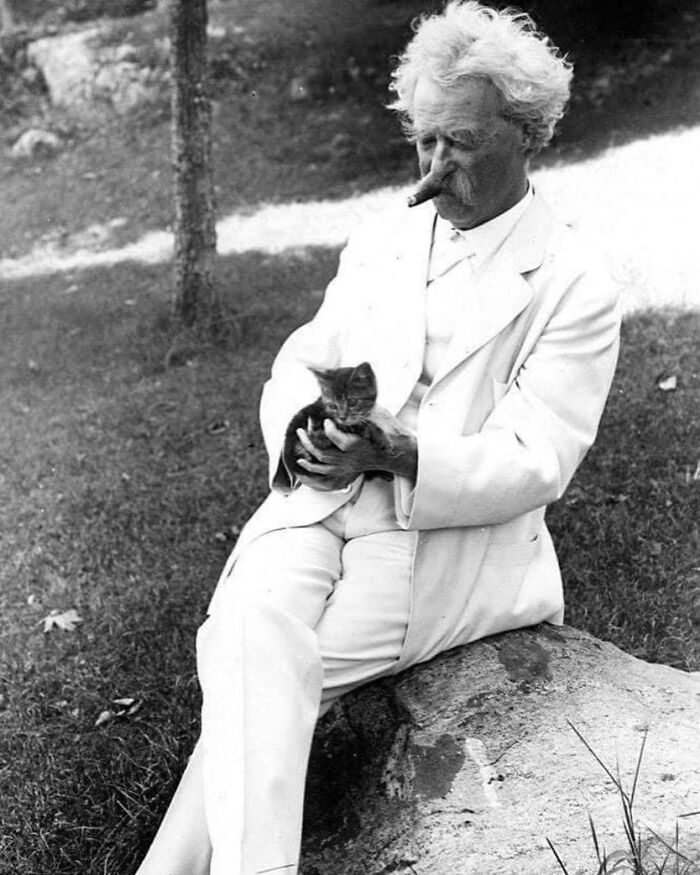
Portrait of Mark Twain (Samuel Langhorne Clemens)with his kitty taken circa 1907, in New York: “When a man loves cats, I am his friend and comrade without further introduction.”
Mark Twain was a great cat lover. He did not own just one cat, at one time he owned up to 19 cats, all of whom he loved, respected and took care.
When he had to travel and leave his cats at come, he would rent cats to take the place of his left-behind pets. In Ireland, during summer 1906, Twain rented three kittens! After leaving, Twain left enough money to cover their care.
Beyond aesthetics, Victorian photographs serve as invaluable historical documents that satisfy our curiosity about how people actually lived during that transformative century. These images capture everything from fashion and architecture to social customs and technological innovations.
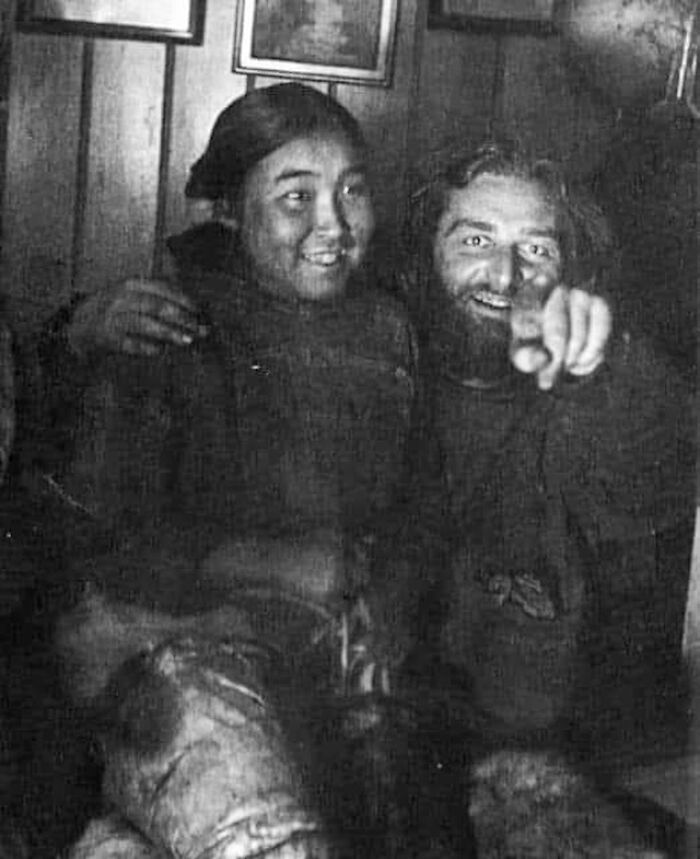
Portrait of famous Danish adventurer and explorer extraordinaire Peter Freuchen with his first wife, an Inuit woman called Navarana Mequpaluk, in 1911. Navarana bore him two children, a boy named Mequsaq Avataq Igimaqssusuktoranguapaluk and a girl called Pipaluk Jette Tukuminguaq Kasaluk Palika Hager. When she died in the Spanish Flu epidemic in 1921, the local Christian church refused to allow her burial, and so Freuchen buried her himself.
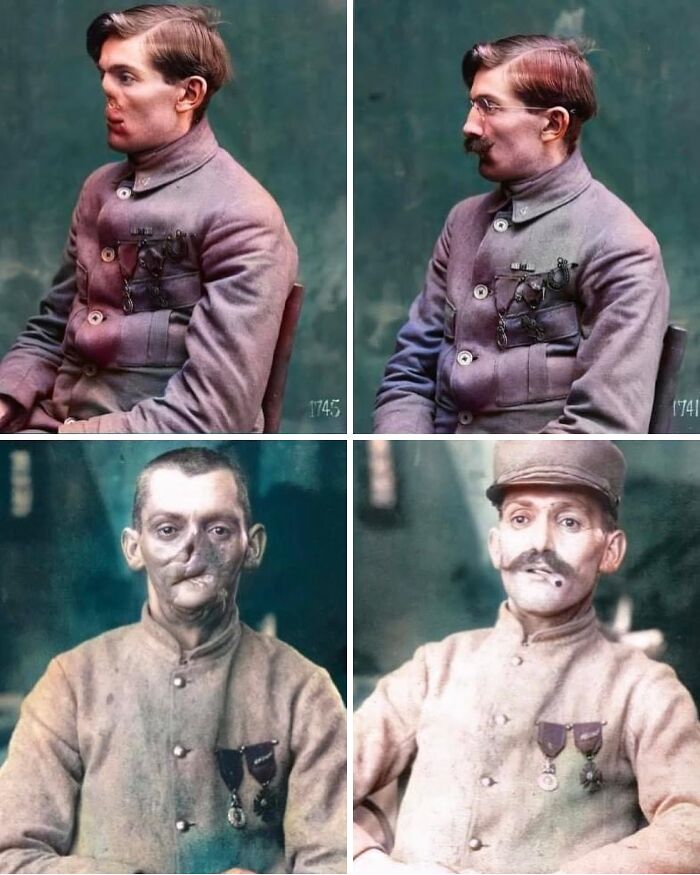
After being disfigured during WWI, many soldiers thought they would be outcasts forever. Then, they were given new life by Anna Coleman Ladd, a sculptor who created lifelike porcelain masks for veterans that recreated facial features and hair. Although American she based herself in France during this period. Her services earned her the Légion d’Honneur Croix de Chevalier and the Serbian Order of Saint Sava.
We can observe the elaborate hairstyles and clothing, the design of furniture and household items, and even glimpse the social structures and class distinctions that defined Victorian society. For history enthusiasts and casual observers alike, these photographs provide concrete evidence of daily life in a way that written descriptions never quite can, making history feel immediate and real rather than abstract and distant.
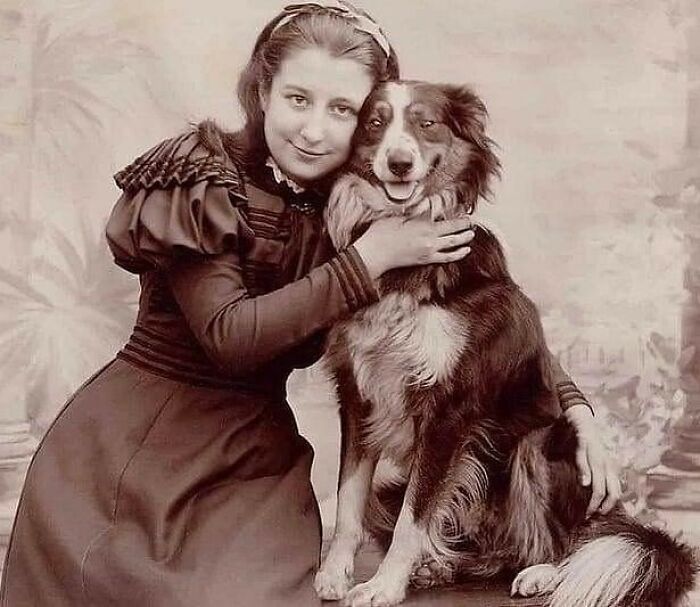
Quaint picture of unknown Victorian lass with her dog taken circa 1890s.
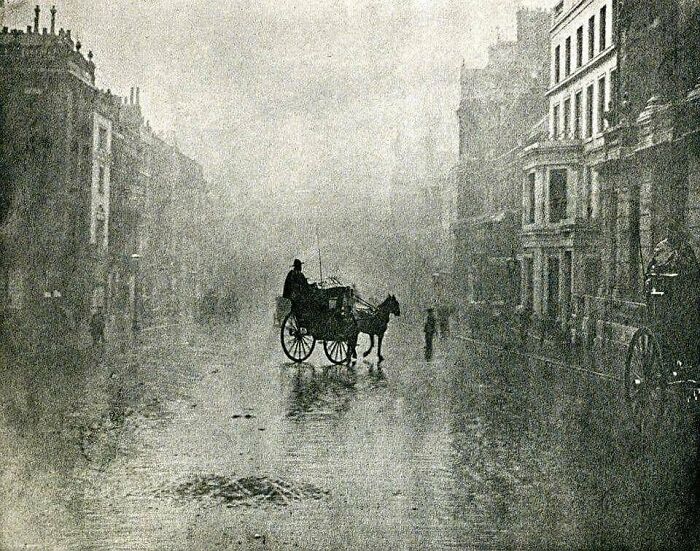
”A fine day in London” photographed by Hector Colard c.1898.
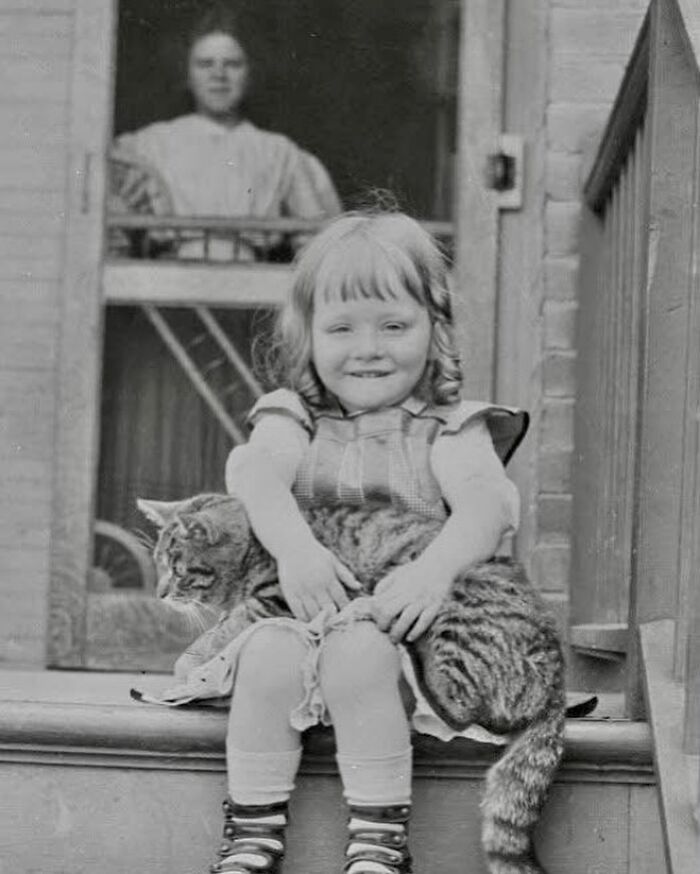
A girl sitting with her cat on her lap while her mother watches her from behind the door, taken early 1900s in Canada.
Victorian photographs, particularly those of families and children, evoke a poignant sense of mortality and the passage of time. Every person captured in these images has long since passed away, yet they live on through these frozen moments, creating a bittersweet meditation on memory and impermanence that resonates with contemporary viewers.
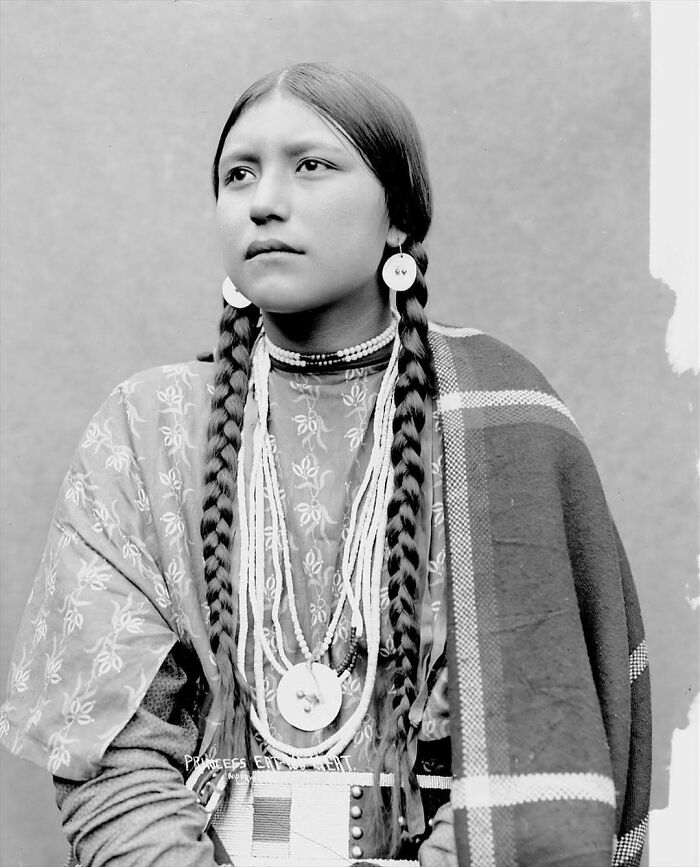
Umatilla Princess Eat-No-Meat in Native Dress with Ornaments - Moorhouse - 1900.
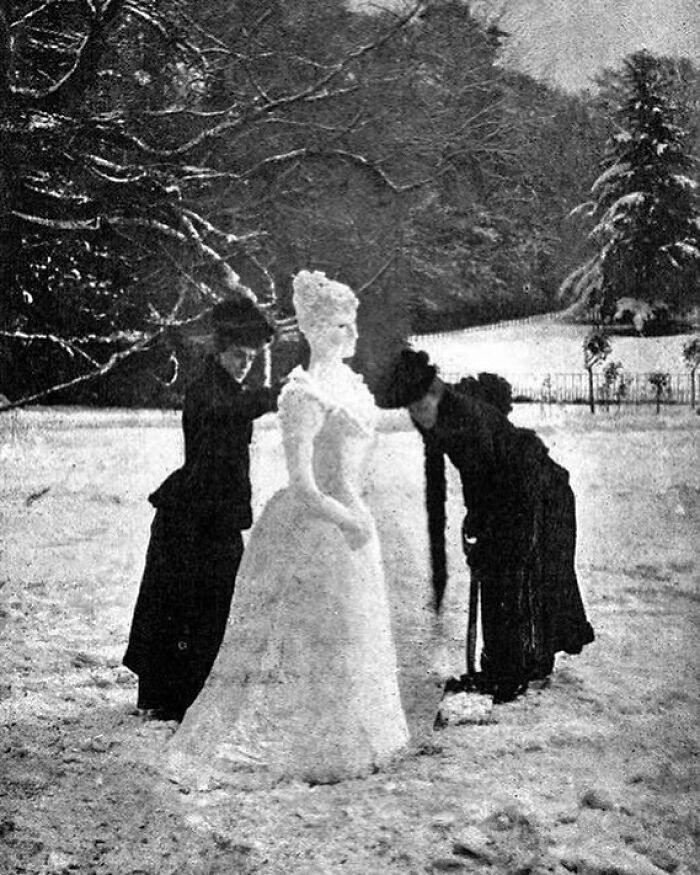
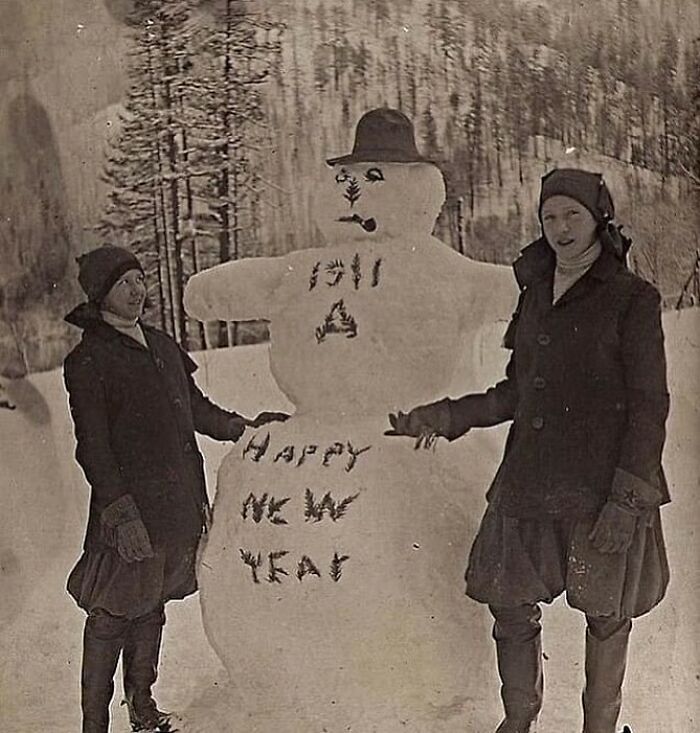
Two British Victorian ladies making a Snow Lady, taken in January 1892, taken from “The Strand” magazine, London.
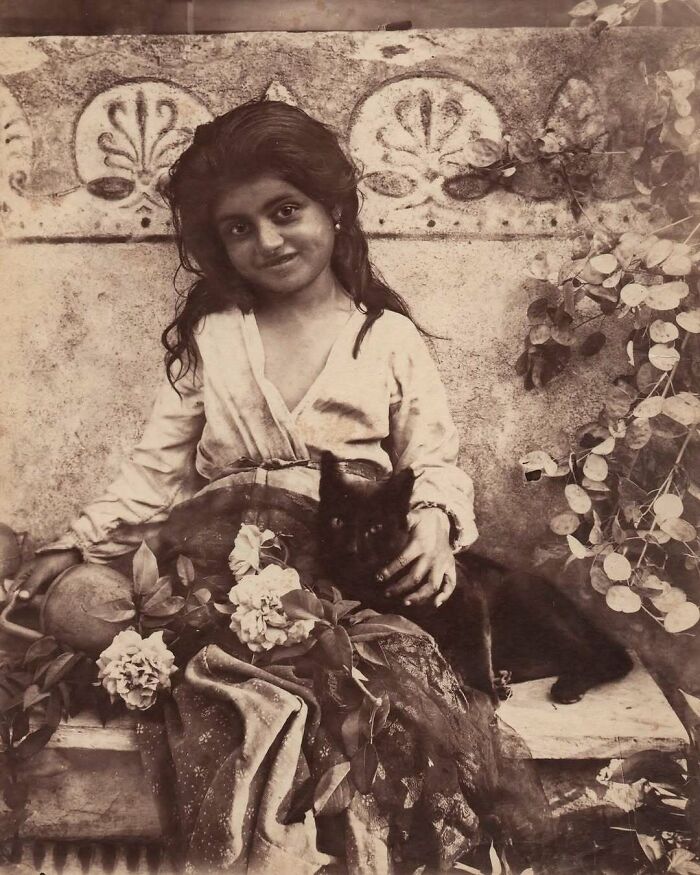
Portrait by German photographer Wilhelm von Gloeden (1856–1931), entitled “Rosina Buciunì petting a black cat”. This image was published in 1909 in the “National Geographic”, p. 1094, captionedː “Happy hours in Sicily”.
Social media has also played a crucial role in the renewed interest in Victorian photography. Platforms dedicated to historical images have made these photographs more accessible than ever before, allowing people worldwide to discover and share them. The mysterious and sometimes unsettling quality of Victorian portraits makes them particularly shareable online, where they often spark discussions about history, photography techniques, and the lives of the subjects depicted. This digital renaissance has introduced Victorian photography to younger generations who might never have encountered these images in traditional archives or museums.
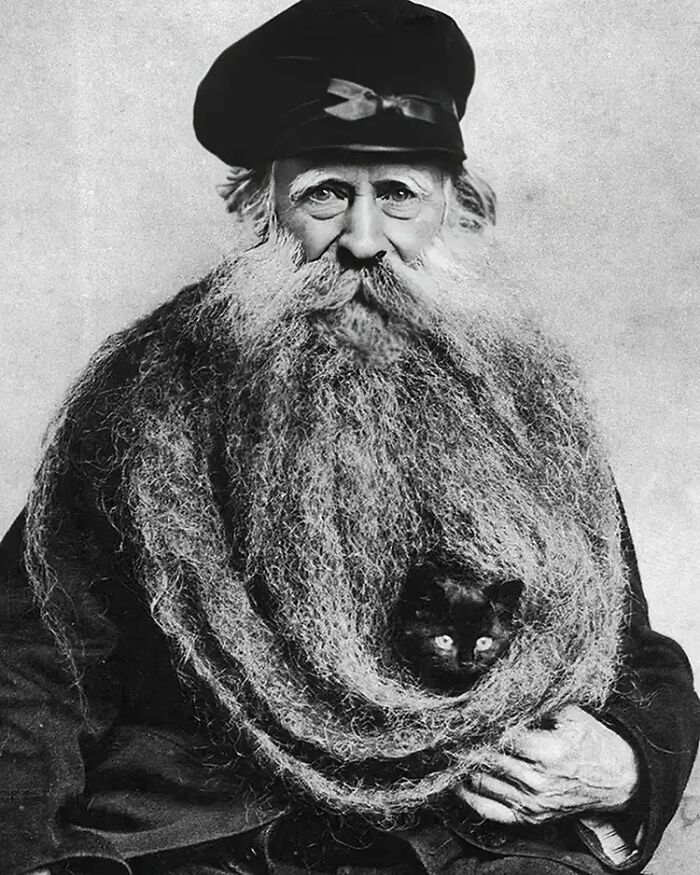
By1904, Louis Coulon was making headlines with his extraordinary 11-foot-long beard (3.35 meters), which he even used as a cozy resting spot for his beloved cats! This is an earlier portrait of him with his kitten circa 1890, in Montluçon, France.
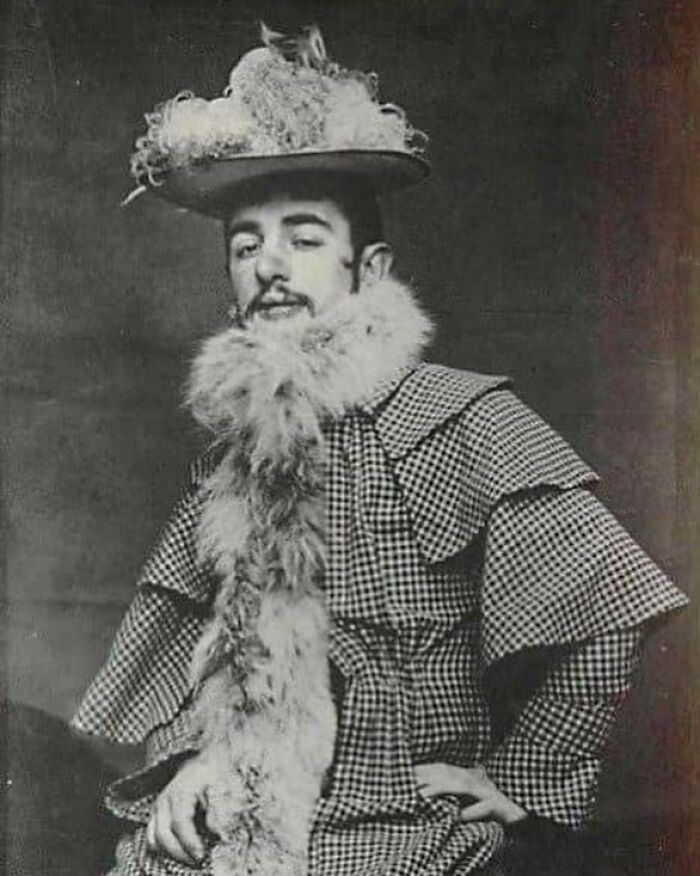
Portrait of Henri de Toulouse-Lautrec wearing Jane Avril’s hat and boa - taken circa 1892 in Paris, France by photographer Maurice Guibert.
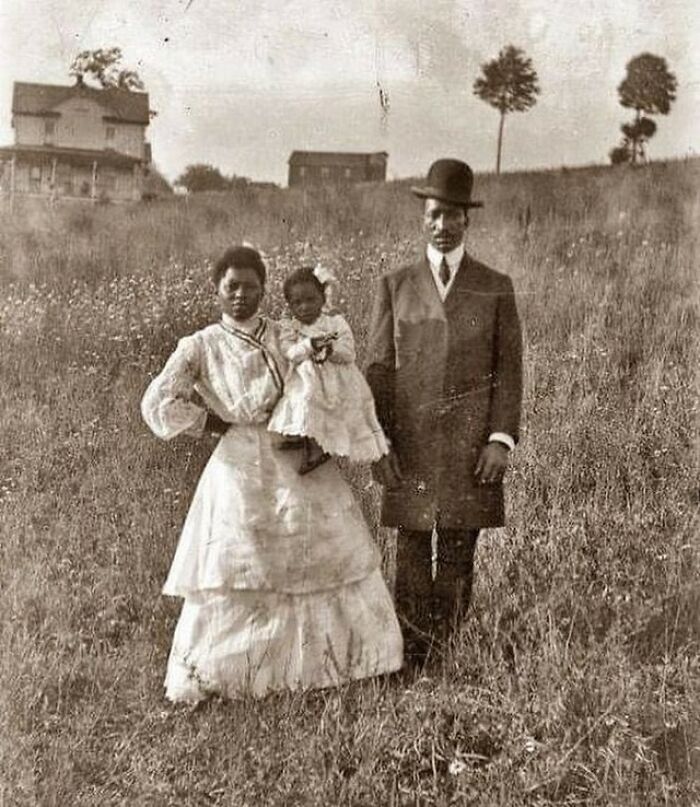
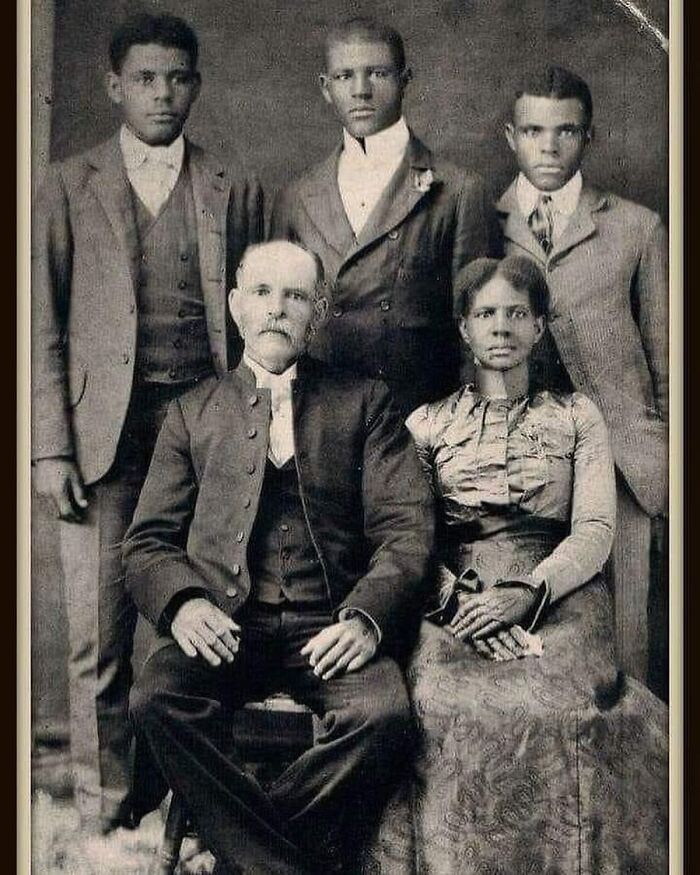
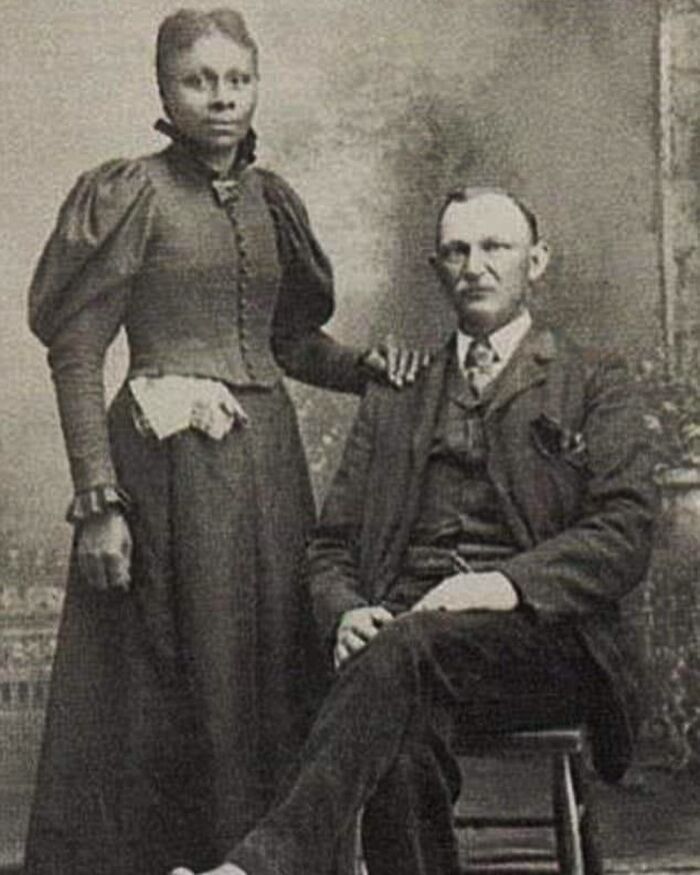
Biracial Family taken circa circa 1900, Tennessee, USA. He was Jim Turner, from an affluent white family in Henning, TN, and his wife Carrie Turner, a schoolteacher.
Their sons George, William, and Hardin, who became a doctor. This is a stunning portrait of a family who defied societal norms and embraced their mixed heritage with pride, showcasing that love knows no boundaries.
Ultimately, Victorian photographs endure because they satisfy multiple human needs simultaneously. They feed our curiosity about the past, appeal to our aesthetic sensibilities, and provide a tangible connection to our ancestors. In an age of disposable digital images taken by the billions every day, there's something refreshing and grounding about photographs that were created with such deliberation and care, each one a precious artifact of a moment that will never come again.
Victorian cat lady c 1890s.

I always wanted to be able to back in time but then I remember. Fleas so many fleas!
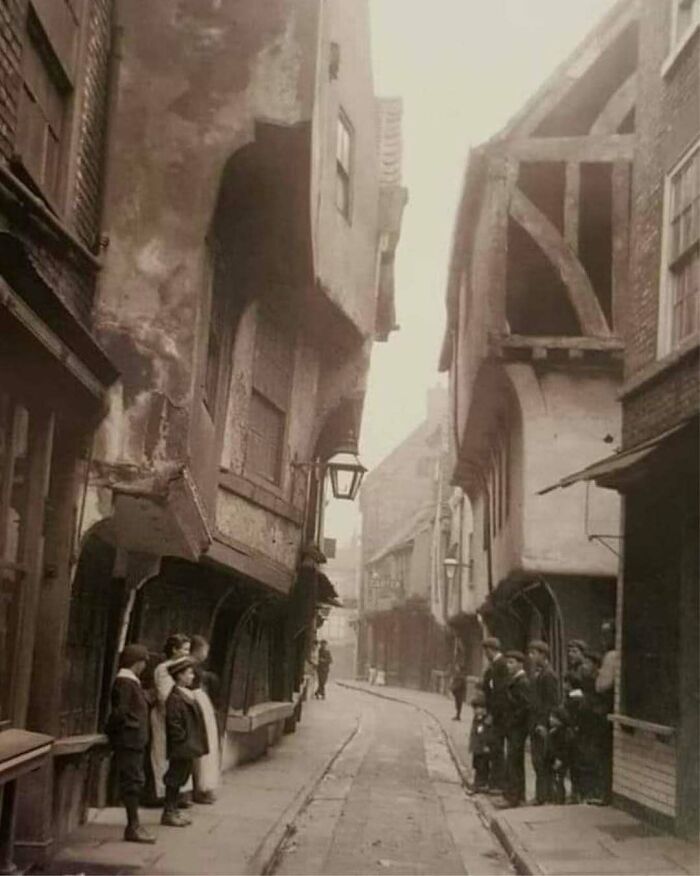
The Shambles in York, pictured in 1900, is still one of the best-preserved medieval shopping streets in Europe. It's a narrow street of mostly timber buildings that date back as far as the 13th Century.
Postcard of unknown lady with her pets taken by a Rudolph Krull, late 1890s early 1900s.
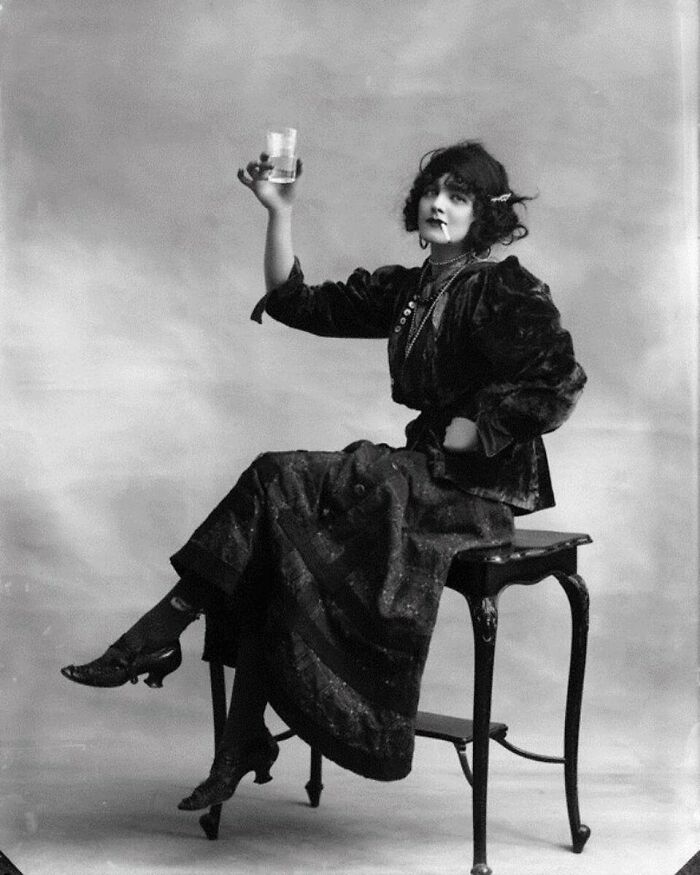
Portrait of actress Betty Lindlay taken by Bassano at his studio, 25 Old Bond Street , London. Taken circa 1914.
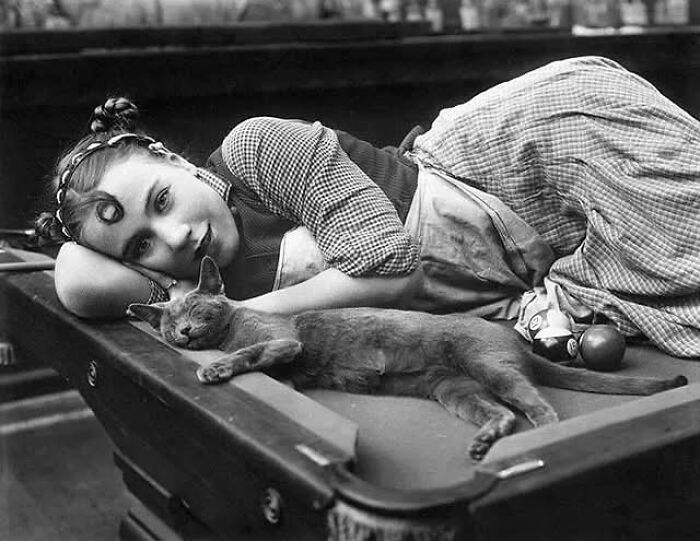
Pepper the Cat and Louise Fazenda taking a rest during the filming of “Are Waitresses Safe?” Circa 1917. Pepper was a female Oriental Maltese cat who had starring turns in several silent comedy films produced by the Mack Sennett Studios from 1917 to 1922. Noted for her exceptionally photogenic good looks and her catty yet lovable personality, Pepper became the first true celebrity feline in film history. Louise Fazenda (June 17, 1895 – April 17, 1962] was an American film actress, appearing chiefly in silent comedy films.
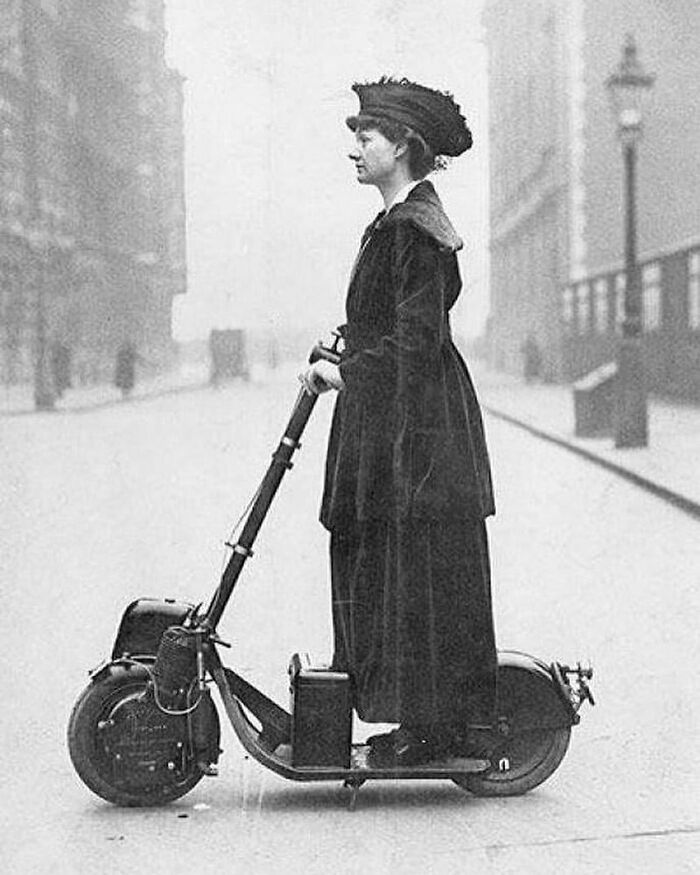
Lady Florence Norman, a suffragette, rides her motor-scooter to work, 1916.
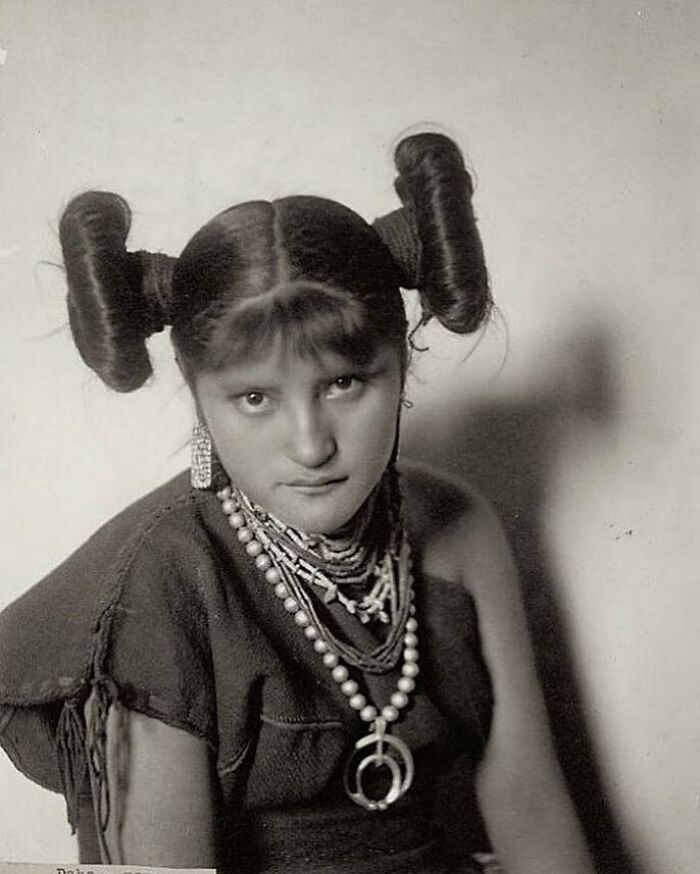
Daho-Mana, a young Hopi woman, 1902, Arizona.
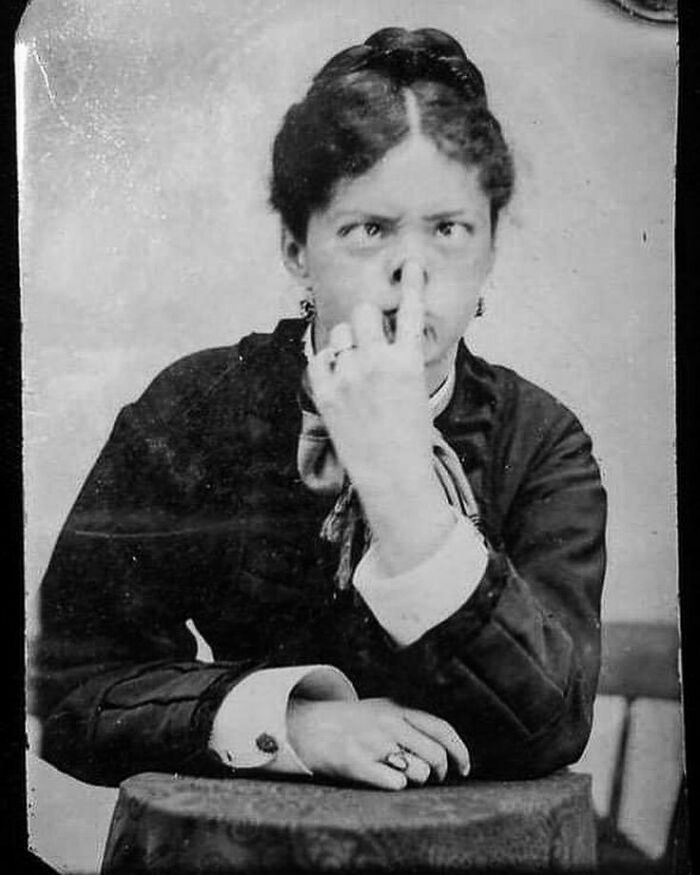
Unknown Victorian lady pulling a face for the camera.
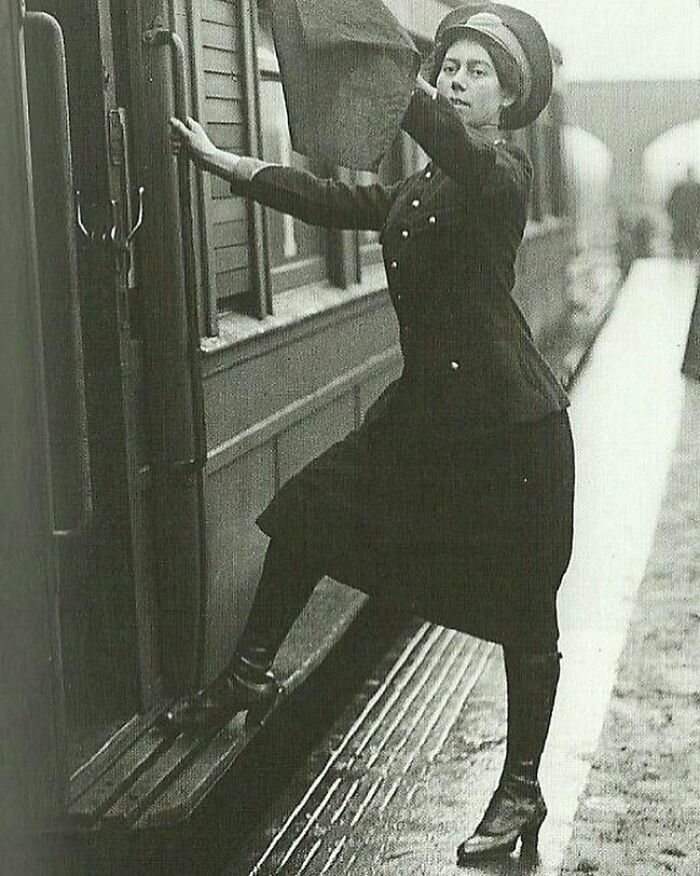
A female train conductor in London 1916. With the men folk gone off to war at the front, women showed they were able to do these important jobs. When the war was over these jobs unfortunately became 'men only' again.
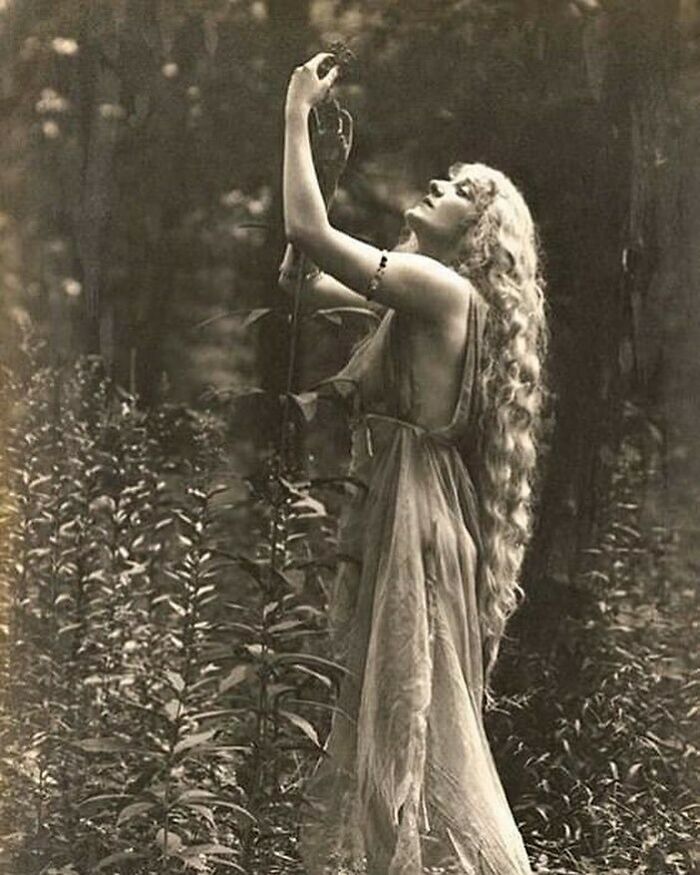
photoshoot of German actress Gertrude Hoffman posing in garden taken c 1900s.
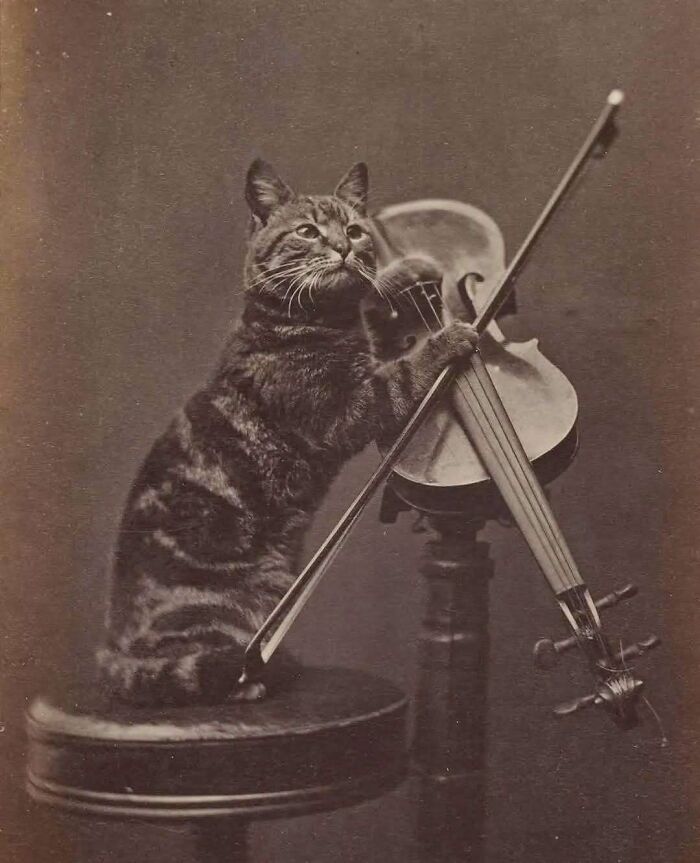
Postcard of Cat on a stool playing a violin; by photographer Henry Pointer, British, 1822 - 1889, taken March 1872; Albumen silver print.
"Hey diddle, the cat and the fiddle. The cow jumped over the moon. The little dog laughed to see such sport and the dish ran away with the spoon."
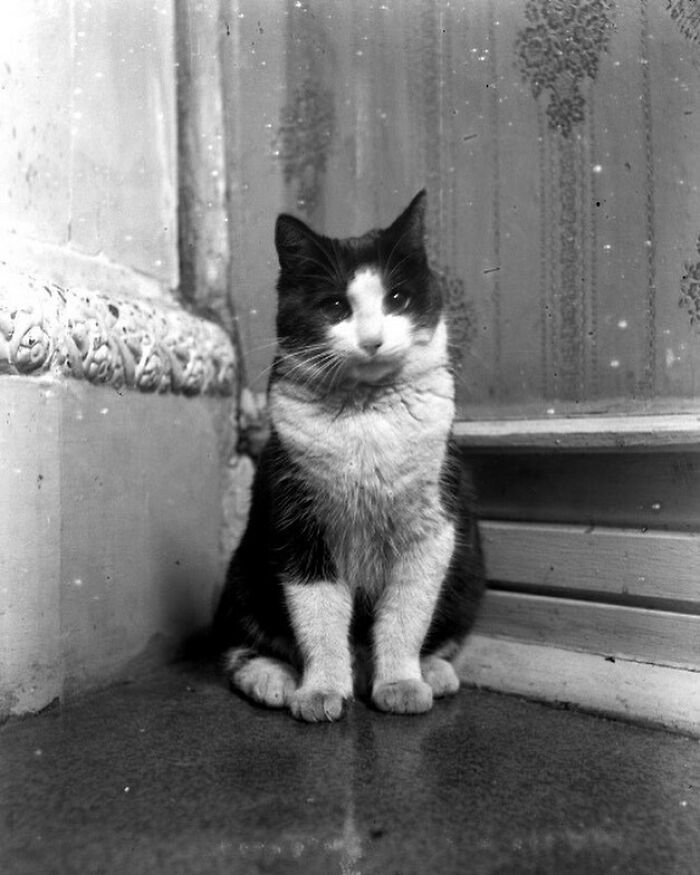
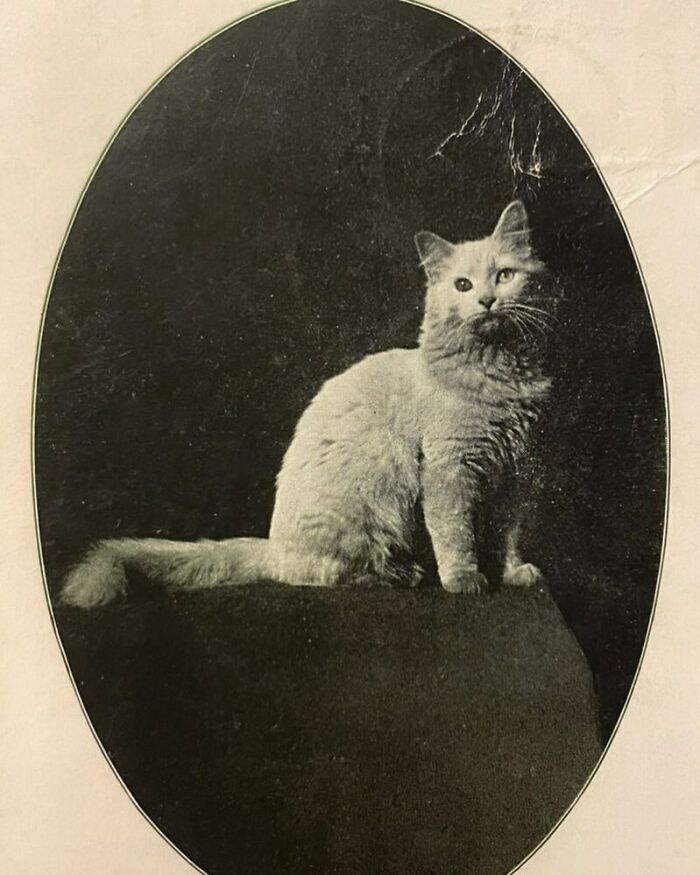
Portrait postcard of a heterochromic cat taken / produced in 1908.
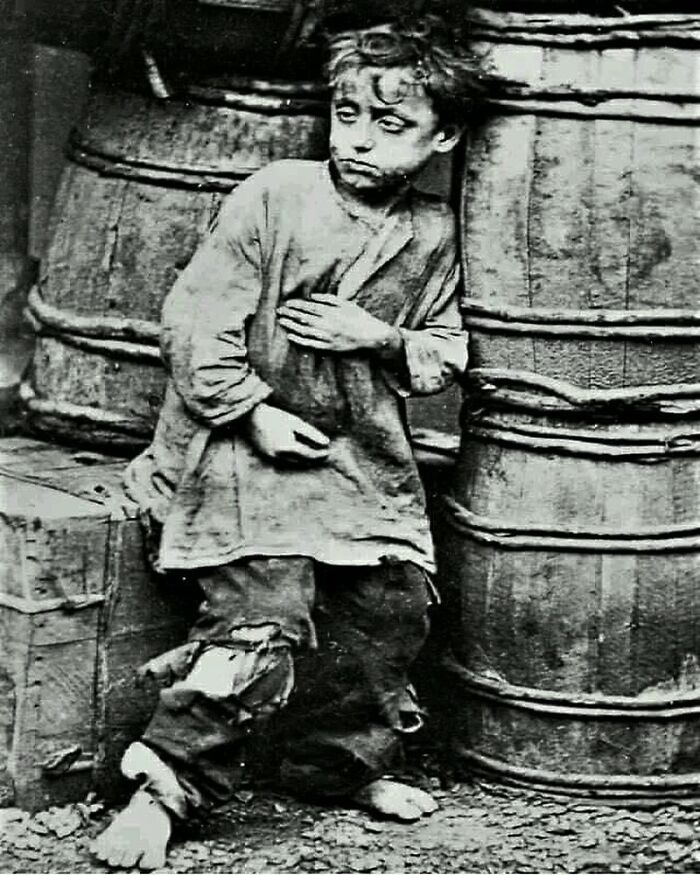
Portrait of a Street urchin found by Thomas Barnardo in Whitechapel that led to his orphanage and later a ragged school to educate the East destitute, taken circa 1890s.
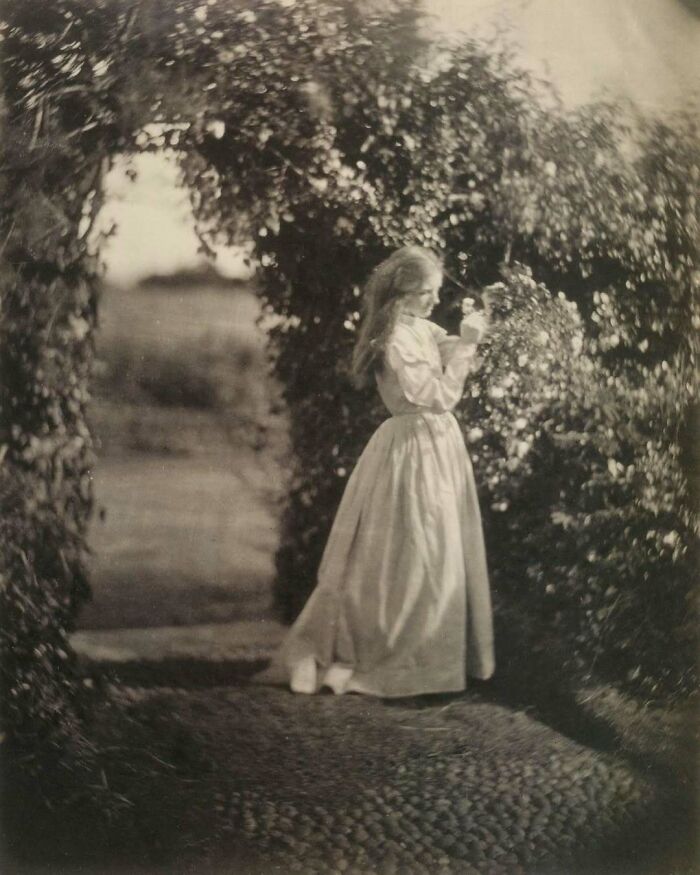
The Gardener’s Daughter (Mary Ryan), 1870, From Julia Margaret Cameron’s “Women” series
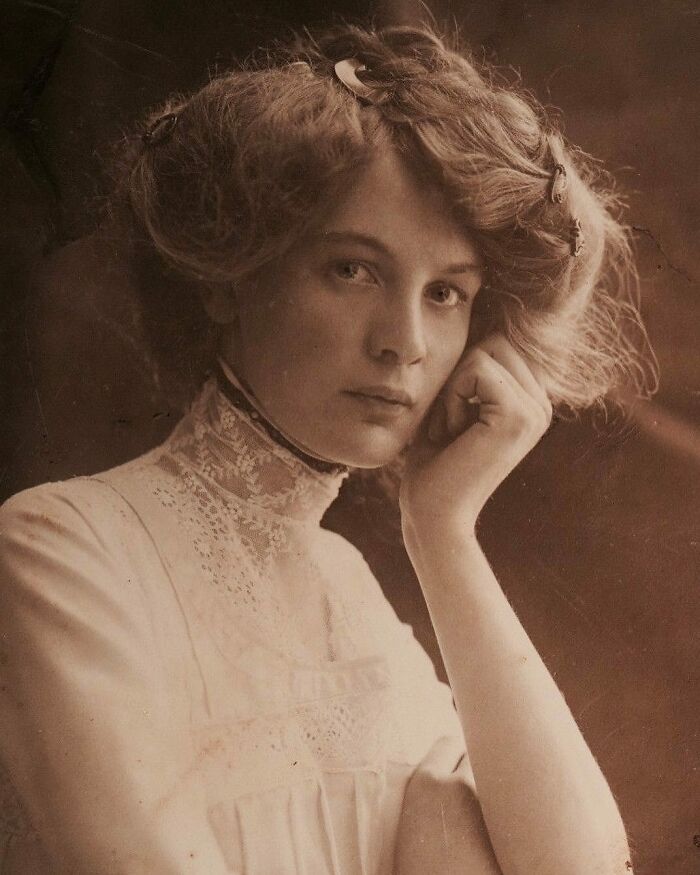
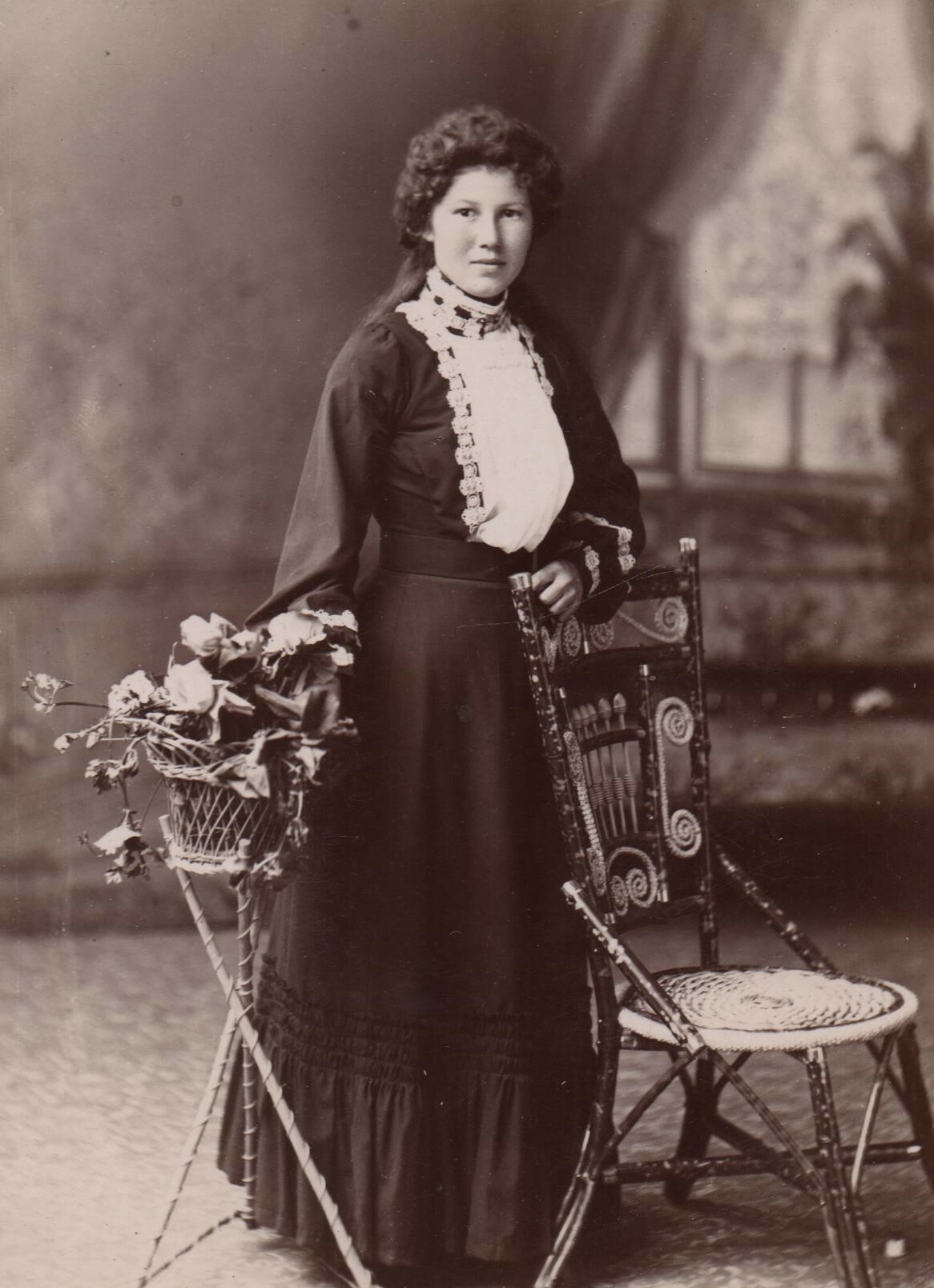
Unknown Edwardian lady Circe early 1910s.

I think they might have meant circa, as the exact date is not known, either.
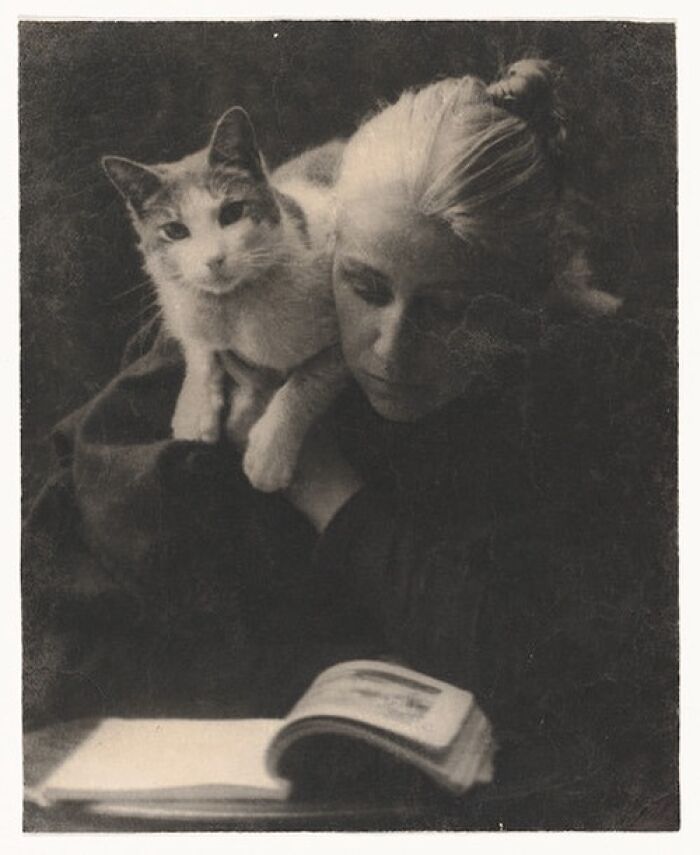
Load More Replies... Amelia Van Buren with friend photographed by Thomas Eakins, late 1880s, Metropolitan Museum of Art: Photography.
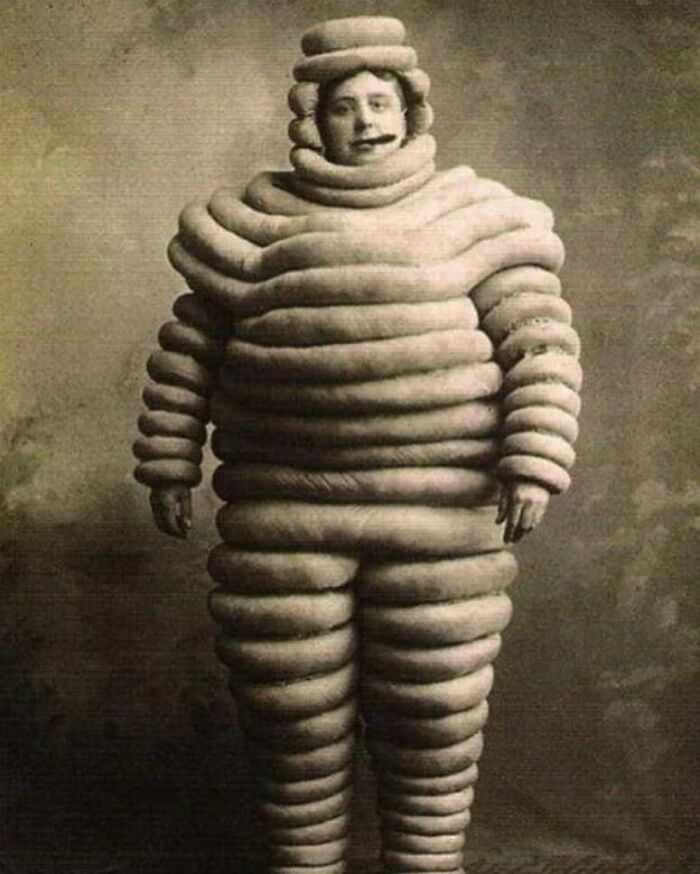
The original Michelin Man from 1894. The Michelin Man aka Bibendum is white because rubber tires are naturally white. It was not until 1912, that carbon chemicals were mixed into the white tires, which turned them black. The change was structural, not aesthetic. By adding carbon, tires became more durable.
Michelin also began reviewing restaurants so that more people would travel further distances in their cars to eat at these restaurants. This in turn would wear down their tires faster, and force them to buy more.
The star system that Michelin uses goes up to three and is broken down by whether or not it's worth driving to the restaurant.
One star: "A very good restaurant in its category" (Une très bonne table dans sa catégorie)
Two star: "Excellent cooking, worth a detour" (Table excellente, mérite un détour)
Three star: "Exceptional cuisine, worth a special journey" (Une des meilleures tables, vaut le voyage).
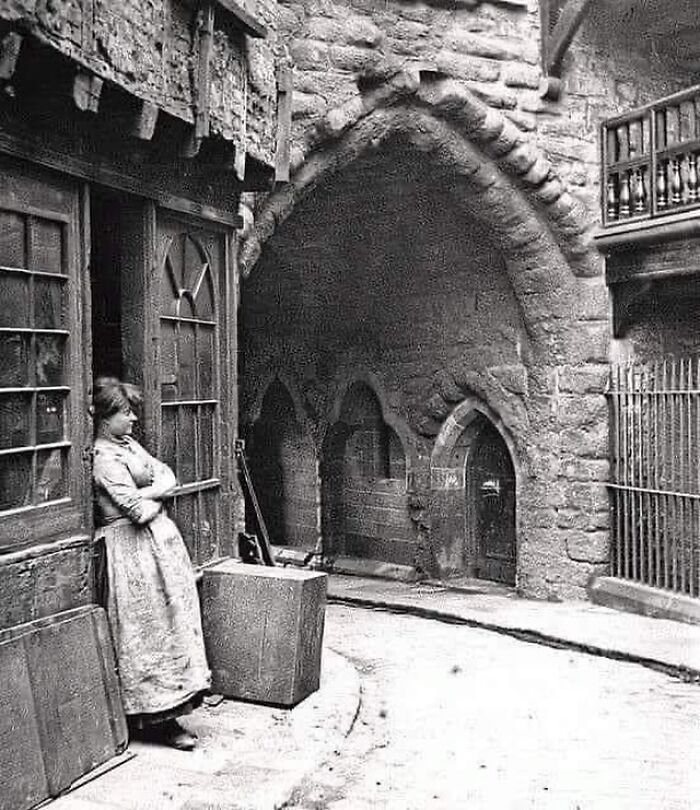
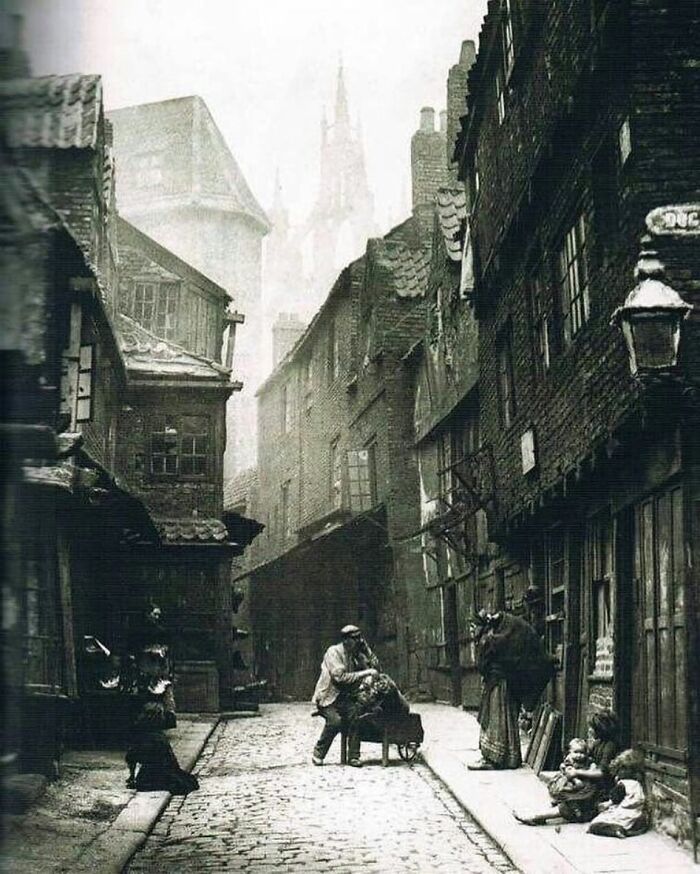
Black Gate, Newcastle, England. Street scene close-up of the gateway with a woman leaning against a shop doorway.. taken circa 1880.
There's a famous ghost that 'lives' there. There's an oubliette type dungeon around the corner from there that he was supposedly thrown in and he likes to push and trip people. I've been to a couple ghost tours and a seance night there, not saying I 100% believe this to be fact, but there is something malevolent about the place.
Portrait of a young Victorian girl taken circa 1897. Picture found on website findmygrave and used as picture for death of Emma E. I. Ochsner who died aged 10, Joliet Township, Will County, Illinois, USA and buried Oakwood Cemetery.
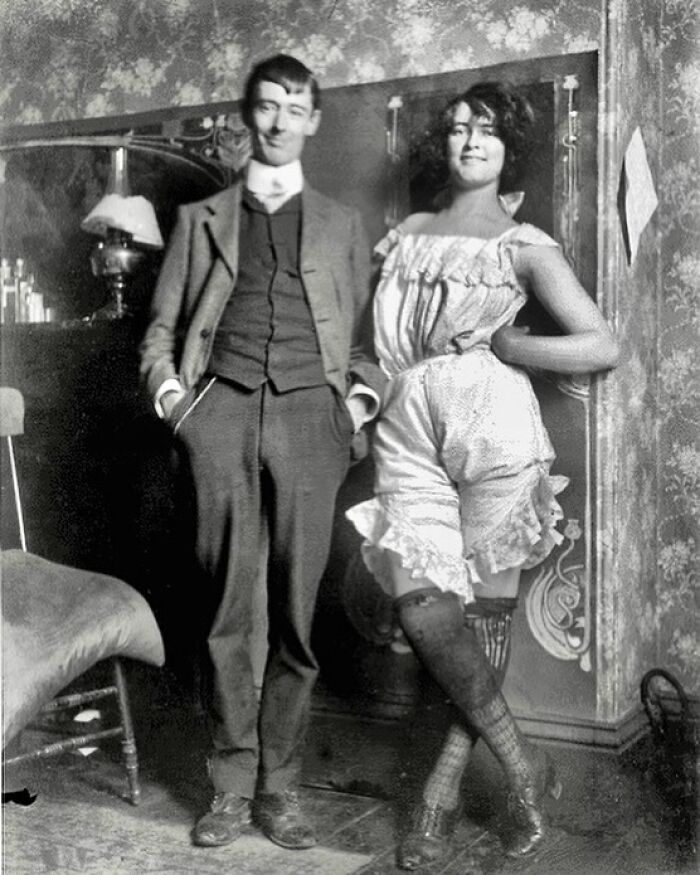
Australian artist Norman Lindsay with wife and muse Rose Soady. Photographed by Lionel Lindsay in his Bond Street studio, Sydney circa 1909.

Norman Lindsay was the Australian equivalent of Rubens. His sculptures are definitely worth looking at.
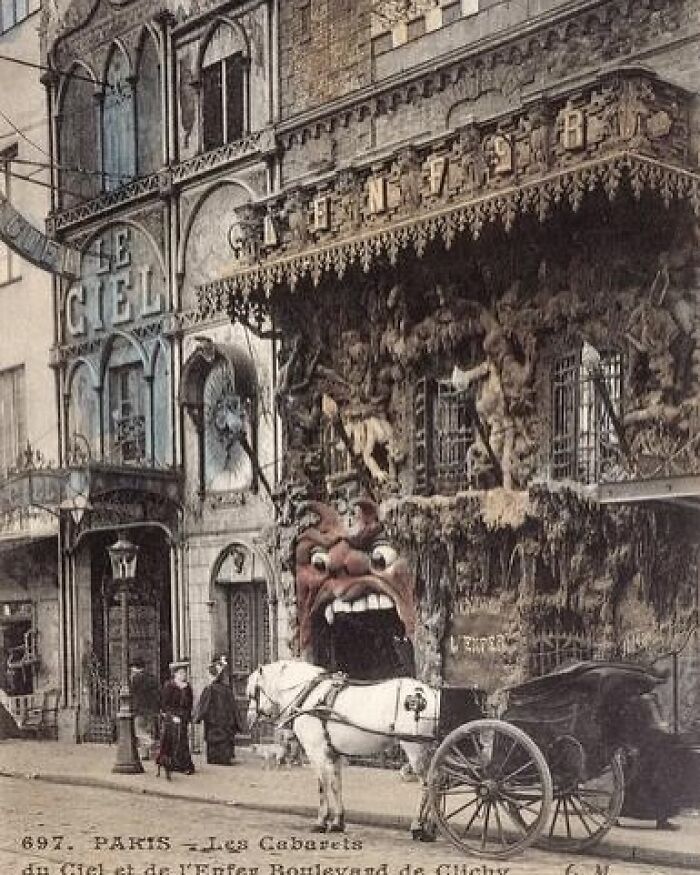
The cabarets DU CIEL ET DE L ENFER on the Boulevard de Clichy, Paris, France: two celebrated night spots offering a choice of entertainment, divine or diabolical Date: circa 1905.

The diabolical one reminds me of Dracula's cabaret in Melbourne, but even creepier.
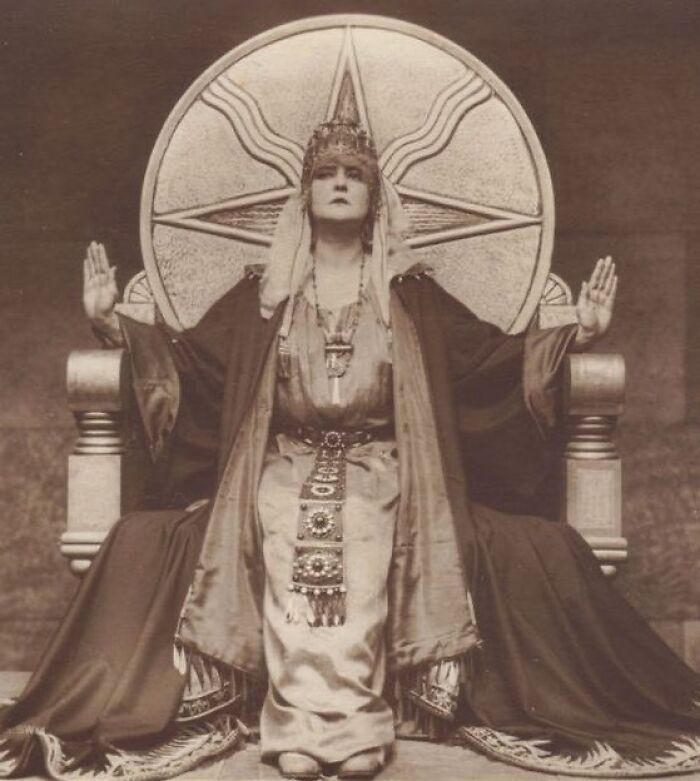
Austrian actress Mia May as the embodiment of the goddess Astarte in Part V of the silent film The Mistress of the World (1919).
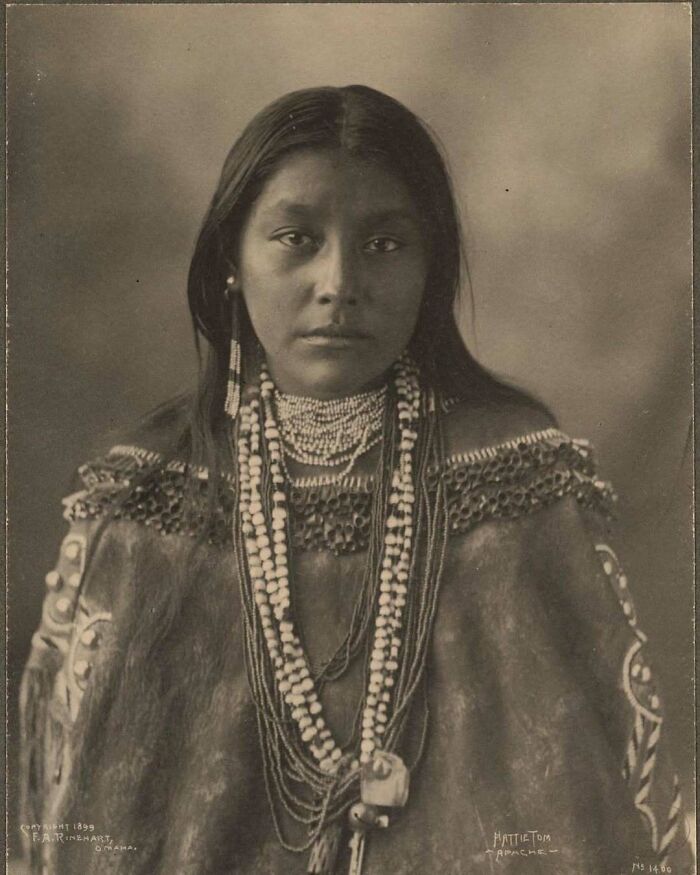
Portrait of Hattie Tom, an Apache Native American, 1899.
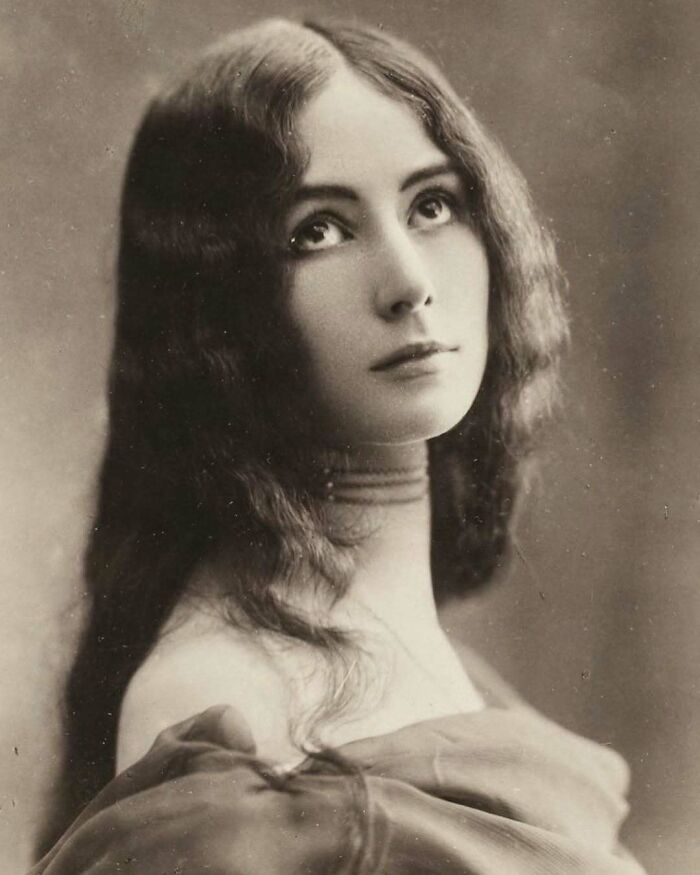
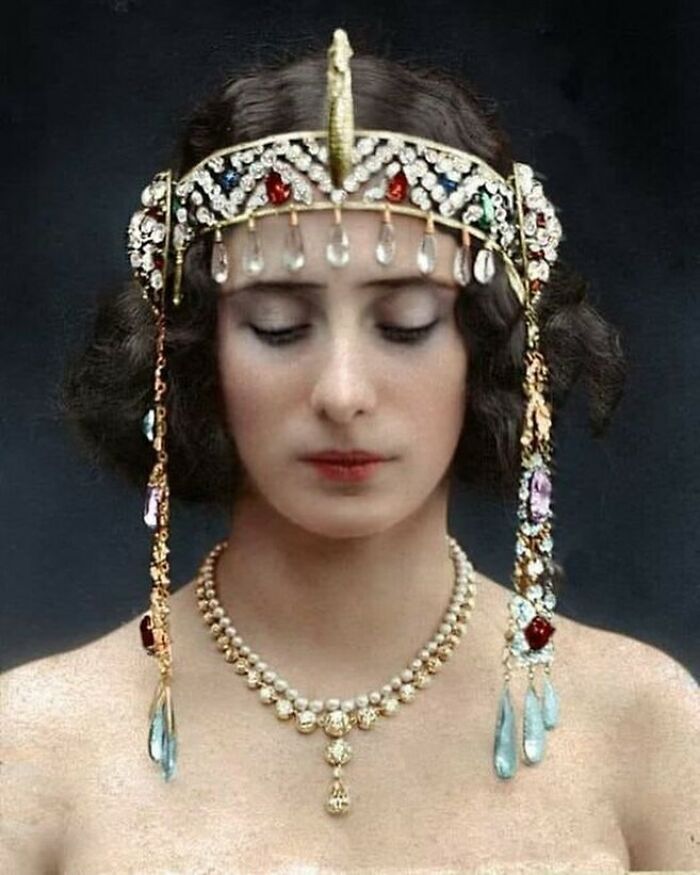
Cléopâtre-Diane de Mérode was a French dancer of the Belle Époque. She has been referred to as the "first real celebrity icon" and the "first modern celebrity". She was also the first woman whose photographic image, due in particular to photographers Nadar and Léopold-Émile Reutlinger, was distributed worldwide. These images were taken between 1902 and 1908.

One of my favourite dancers and such a beauty! I have collected a lot of her postcards.
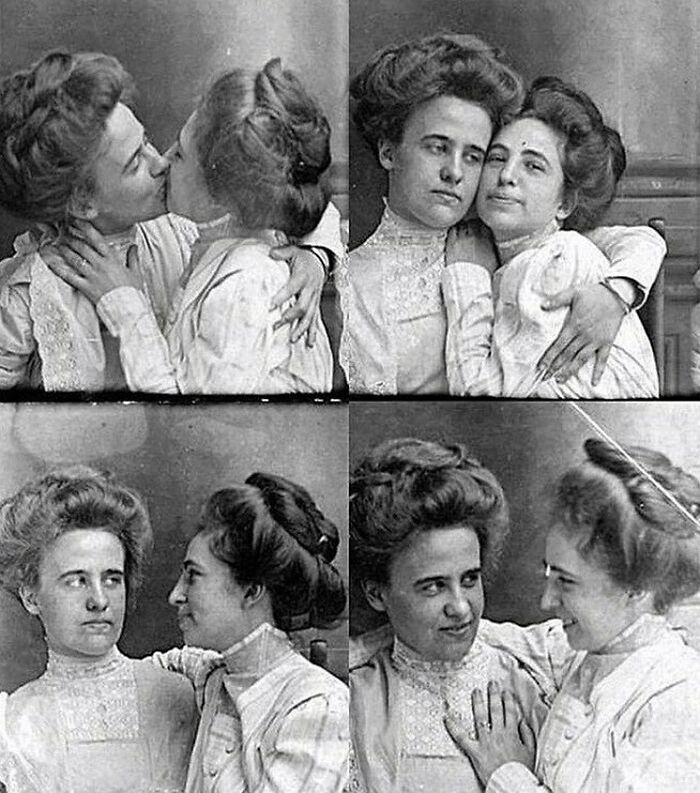
Vintage “selfie” photo set with unknown female couple either as lovers or possibly sisters ( due to likeness) circa 1900. Photographed by Hugh Mangum.
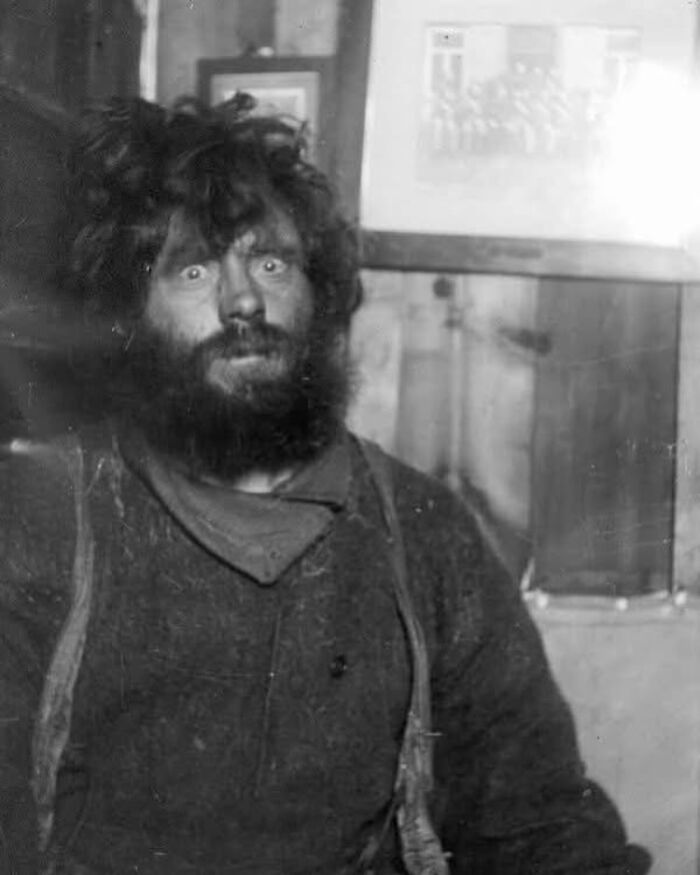
This is how Ejnar Mikkelsen, a Danish explorer, was photographed in 1912 when he was found. Ejnar was isolated with Iver Iversen, from the same expedition, for two and a half years in a hut in Greenland waiting to be rescued.
Ejnar was sent by Denmark with the mission to recover the map and diary of an earlier lost expedition that tried to prove that the Peary Channel did not exist. According to the U.S. Greenland was not a single island but was divided by the Peary Channel and therefore claimed that part of the territory as its own.
Mikkelsen’s expedition had numerous problems and delays, finally Ejnar and Iver were abandoned by the other members. Due to the lack of food they were forced to eat the dogs pulling the sledge, they suffered hallucinations chasing imaginary animals, they were attacked by bears, etc.
In the picture you can see a photograph on the wall behind Ejnar. It shows the 53 pupils of a home economics school that filled their long arctic days. The photo was so much talked about that it even led to a fight when Iversen dedicated a love song to the girl Mikkelsen had chosen as his girlfriend. Iversen had chosen 4 girlfriends in the picture, so Ejnar got angry when the other tried to take away the one he had chosen. He got so upset that for two days he didn’t speak to Iversen.
Mikkelsen returned to Denmark as a hero as he managed to retrieve the maps from the previous expedition that proved that the Peary Channel did not exist and that Greenland was therefore Danish. He also ended his photographic courtship when he met Naja Marie Heiberg Holm, daughter of another explorer, whom he married a few months later.
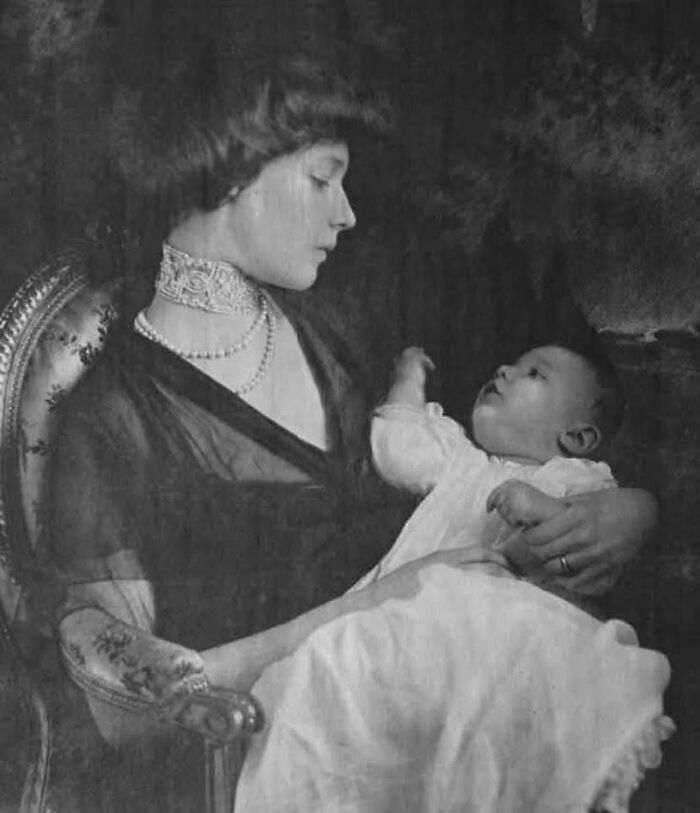
Madeleine Astor, a survivor of the Titanic disaster, holds her baby, John Jacob Astor VI, in 1912. Pregnant at the time of the tragedy, Madeleine was the young wife (18 years when they married) of John Jacob Astor IV, the wealthiest man aboard the Titanic. She was rescued on the Carpathia, while her husband perished in the sinking.
In 1889, viewing Newcastle’s Black Gate from the Dog Leap Stairs would have provided a glimpse of an architectural relic from the medieval past.
The Black Gate, constructed in the 13th century, would have appeared as an ancient and imposing structure, serving as a reminder of the city’s history and the changes it had witnessed over the centuri.
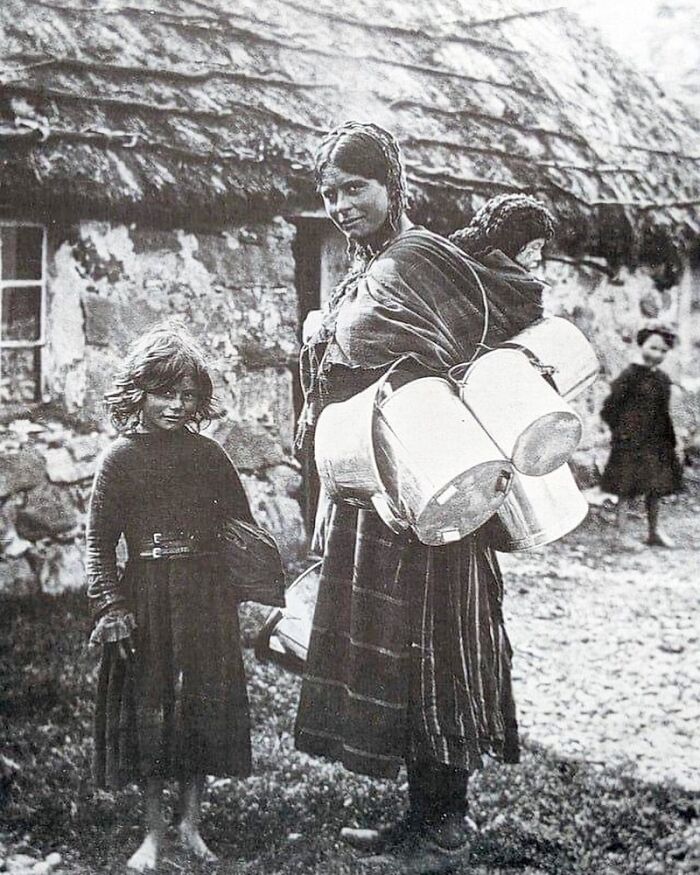
Outdoor portraiture with a caption ‘’A traveller mother and her children at Glenelg, Scotland, 1889’’.
The would have been referred to as "Tinkers" due to their profession of tinmaking/selling, i.e the pots and pans. The term later became synonymous with 'gípsy', these days both are regarded as somewhat derogatory. Edit: who'd have thought that 'gípsy' would be censored?
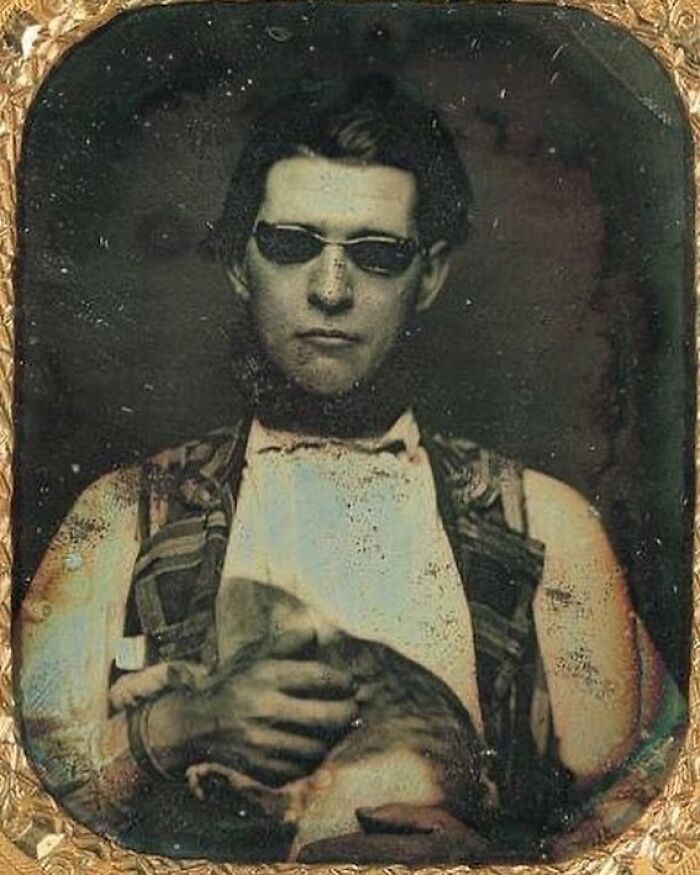
Daguerreotype of a man, believed to be blind, wearing tinted glasses and holding a cat, c. 1850.
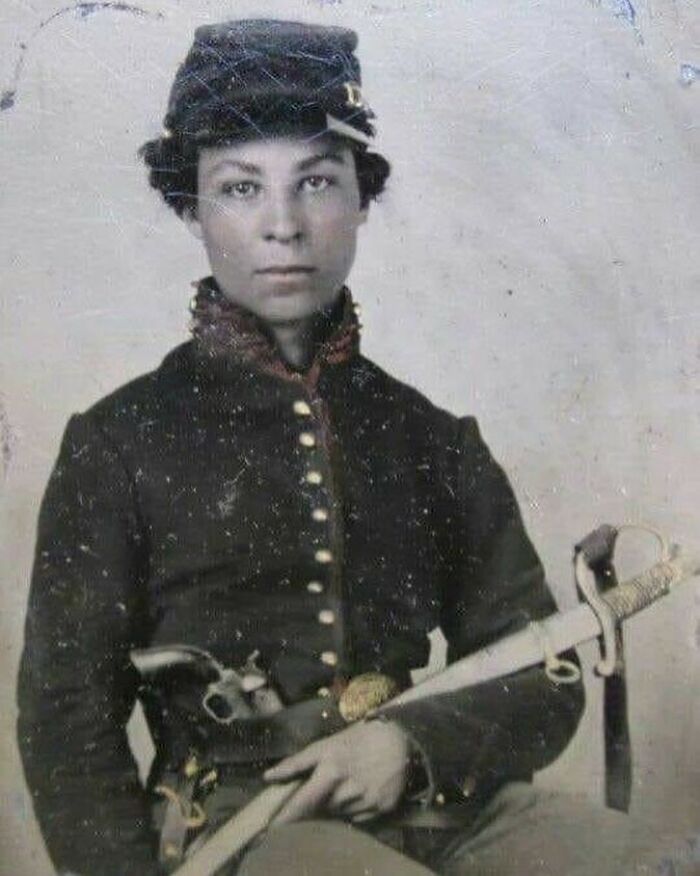
RARE PICTURE OF A BLACK FEMALE UNION SOLDIER 1862. Her name was Cathy Williams and she had to pose as a MALE to be enlisted at the Time..She was part of the 38 Regiment,Infantry Division and was called a Buffalo Soldier.
Three women in Marshall, Texas c. 1899. Photographed by Gabriele Munter.
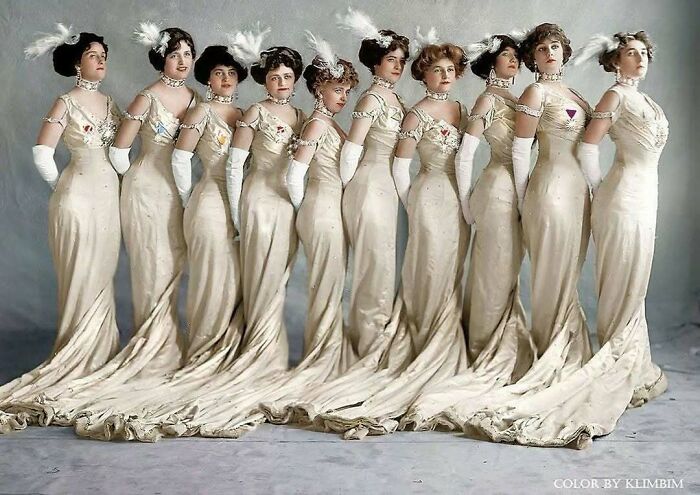
Group of Debutante Ladies, Washington, DC, circa 1910 - colorized by Olga Shirniba.
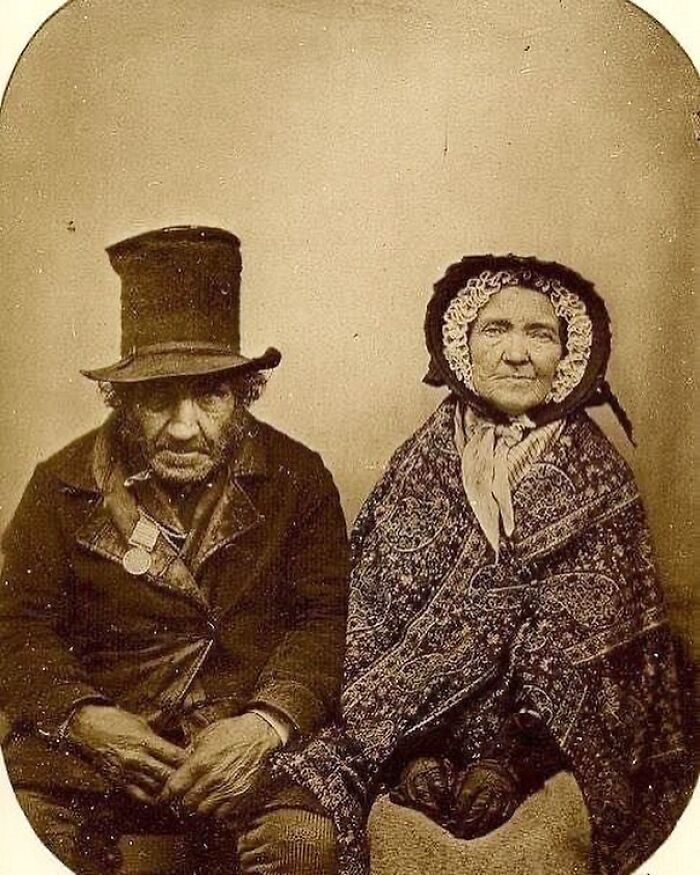
Here’s a picture of a veteran of the Napoleonic wars posing with his wife. He can be seen wearing a campaign what appears to be a British Military General Service Medal with six clasps, and was a veteran of the Peninsular Wars. The photograph is stated to have been taken in 1850s, 40+ years after the Battle of Waterloo. It is hard to know how old the former soldier was when this picture was taken but we can see that years of poverty and hard living have left their mark. Src Vintage Everyday. On other sites including “Find my Grave” he is identified as Henry Maidment with wife Rosanna “Rose” Belben Maidment
The Treehouse Bar at Le Plessis, just outside Paris, France early 1900′s.
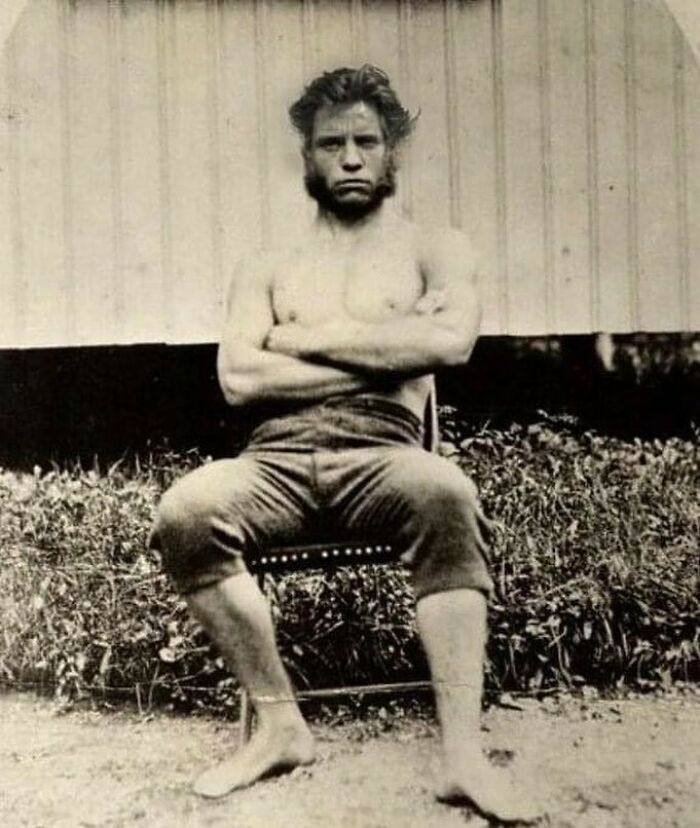
A young 19-year-old Teddy Roosevelt at Harvard, 1877.
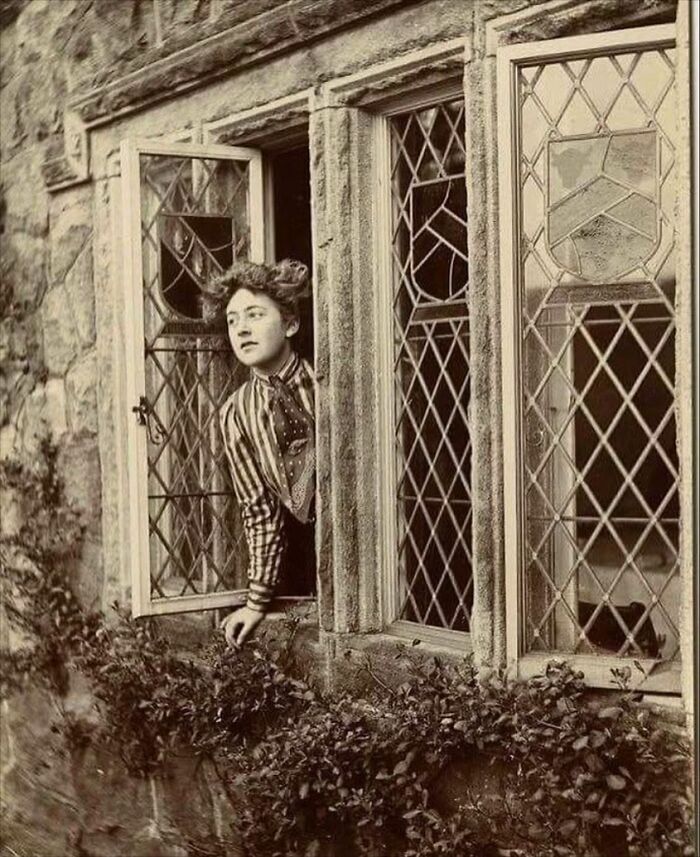
A rare glimpse of the great crime Novelist Agatha Christie at the window of her house in Derbyshire, taken circa 1913.
It's likely that this has been misattributed, she lived in Devon, sometimes written (especially back then) as Devonshire, so somebody has probably misread it. Oddly, the Dukes of Devonshire do actually live in Derbyshire, at Chatsworth house, one of the great stately homes of England.
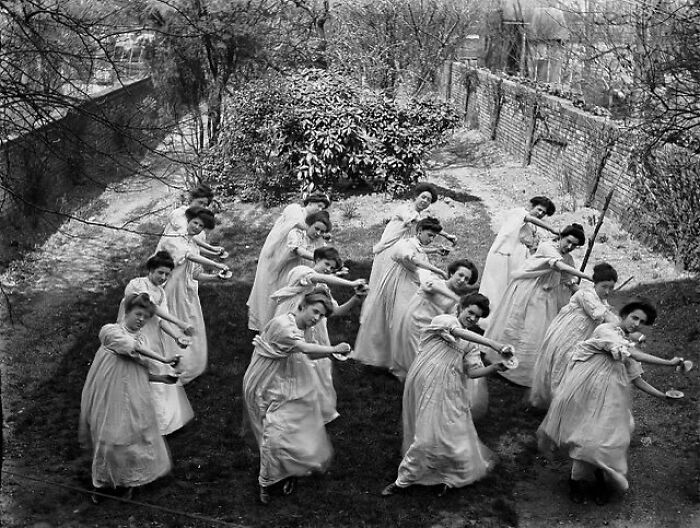
Students performing a Spring dance at Castlebar High School for Girls circa April 1908. Source: The Past on Glass at Sutton Archives.
Couple posing with an Ostrich in Paris circa 1910.
Poor ostrich, that lady isn't exactly a dainty weight to carry, which, no shame, but there's just no reason to be sitting on it.
Another pic of an unknown Victorian lass with her cat , circa late 1880s.
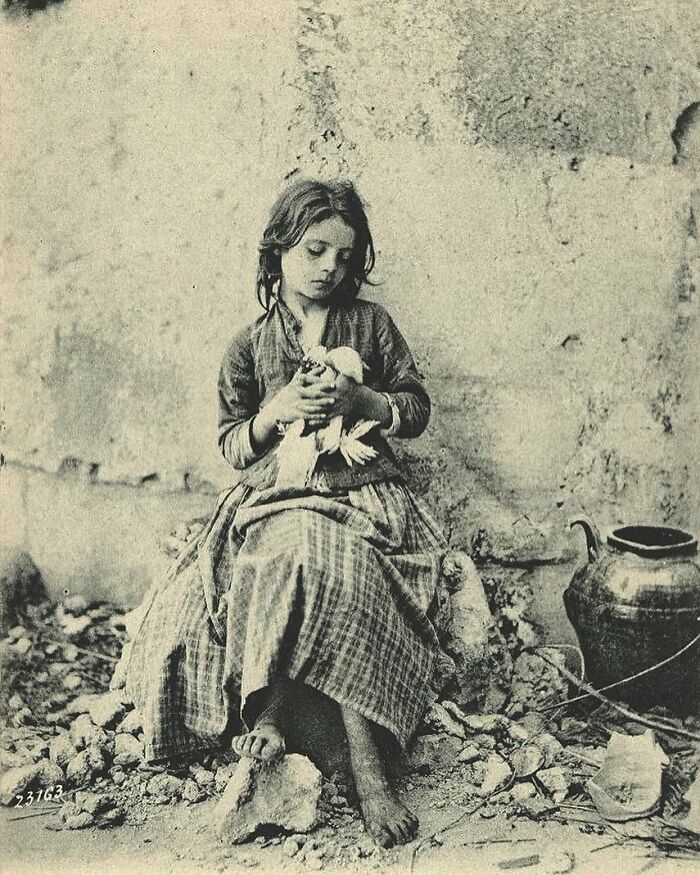
A Barefoot Young girl of Naples holding a bird, taken 1890s , wearing a studio loaned costume. photo by A. de Simone at Sirada di Chiapas 234, Napoli, Italy.
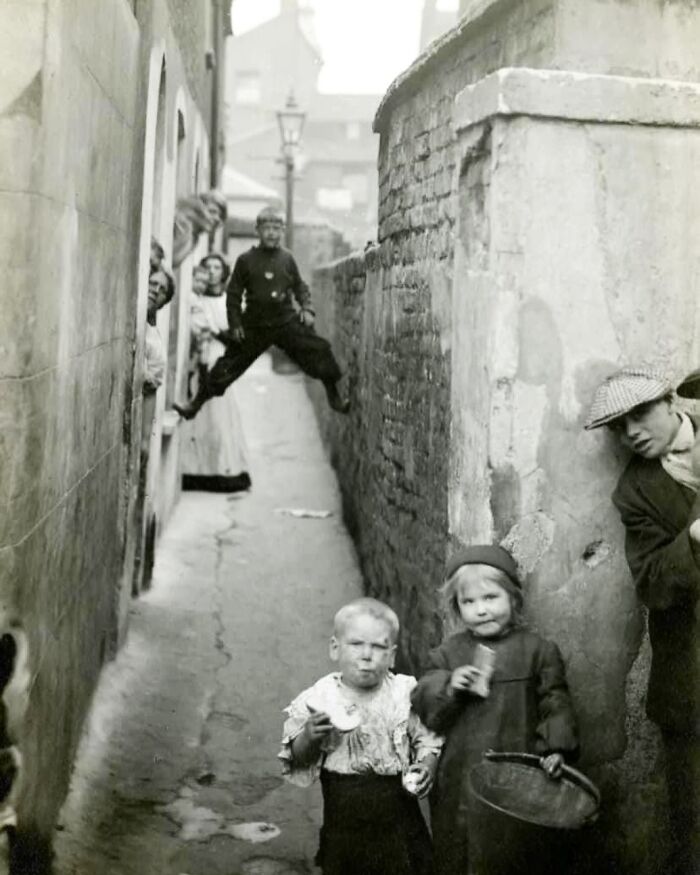
Photograph taken by activist and suffragette Norah Smith in 1914, as a snapshot of life in a backstreet in Bow. London.
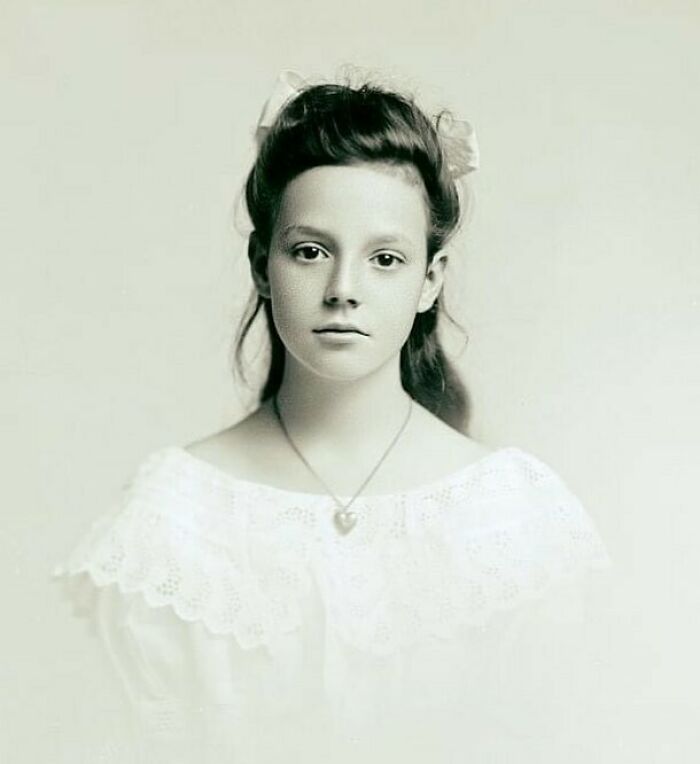
Unknown young lady with lovely eyes c1904. Contributor Names
C.M. Bell (Firm : Washington, D.C.), American Genetic Association. Source Collection
C.M. Bell Studio Collection (Library of Congress). Repository: Library of Congress Prints and Photographs Division Washington, D.C. 20540 USA
C.M. Bell, photographer. Edna Crawford.
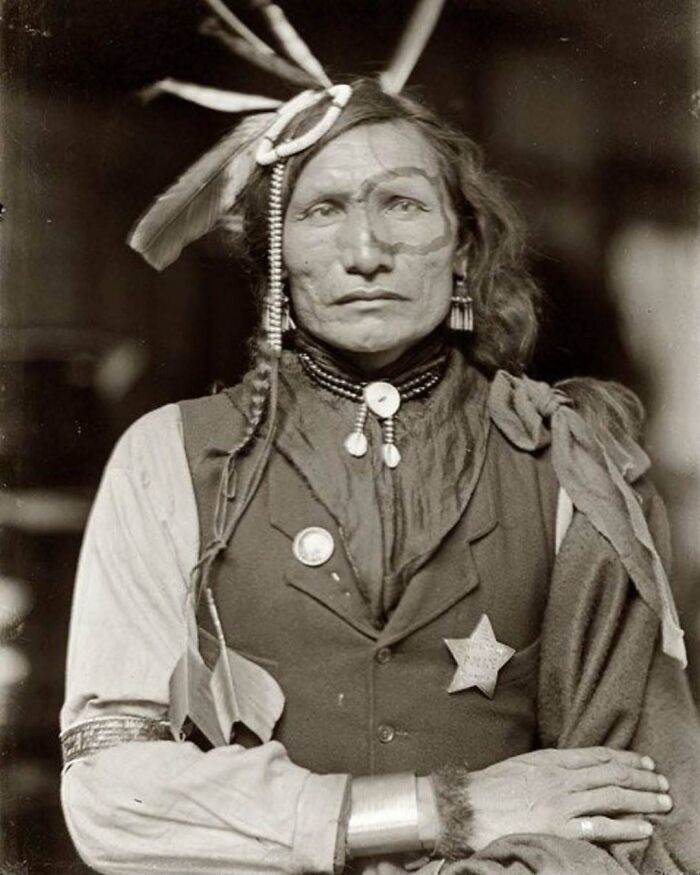
Photographer Gertrude Käsebier: portrait of Iron White Man, Sibangu (Brulé) Lakota Nation, 1900.
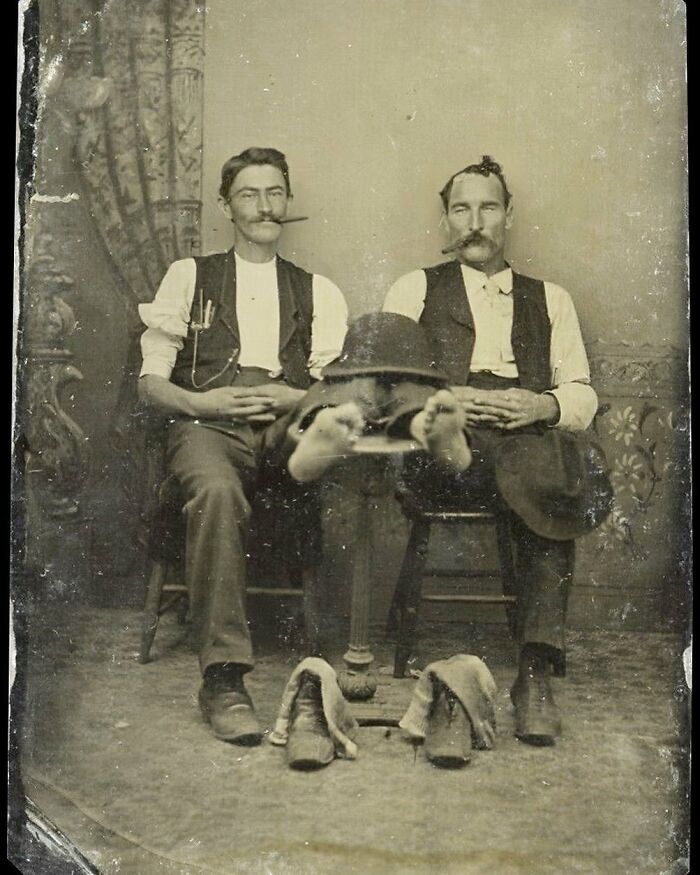
Tintype of two Victorian chaps who really want to show you their feet, circa 1870s
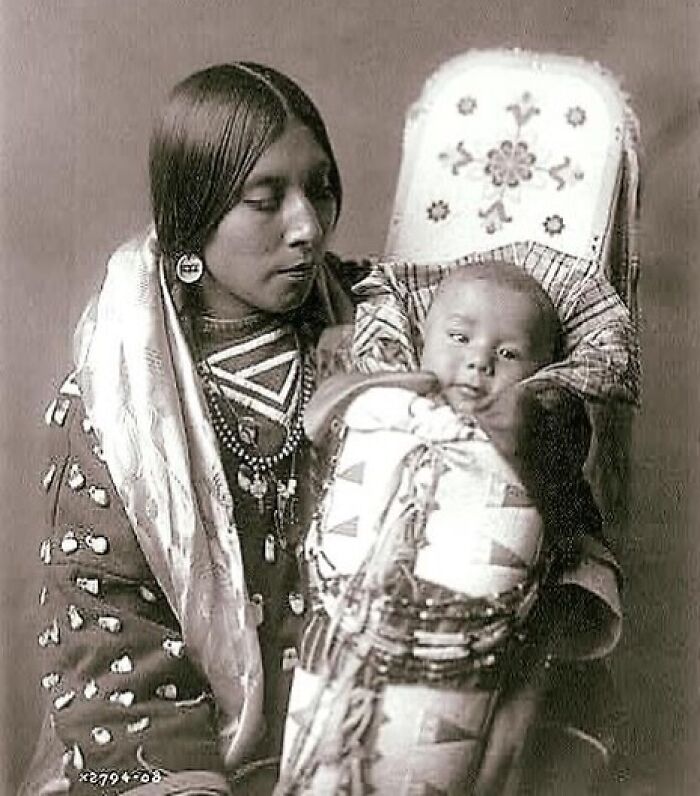
Mother and child--Apsaroke, 1908. Summary: Mother holding baby in a beaded cradleboard.
Contributor Names
Curtis, Edward S., 1868-1952, photographer:Edward S. Curtis Collection. Curtis, Edward S, photographer. Mother and child--Apsaroke. Montana, ca. 1908. Photograph.
Beautiful colourised portrait of Anna Pavlova, Russian ballerina taken 1910.
I stumbled across old footage of her doing "The Dying Swan." Quite exquisite. Of course, it is also worth watching the version done by Les Ballets Trockadero de Monte Carlo.
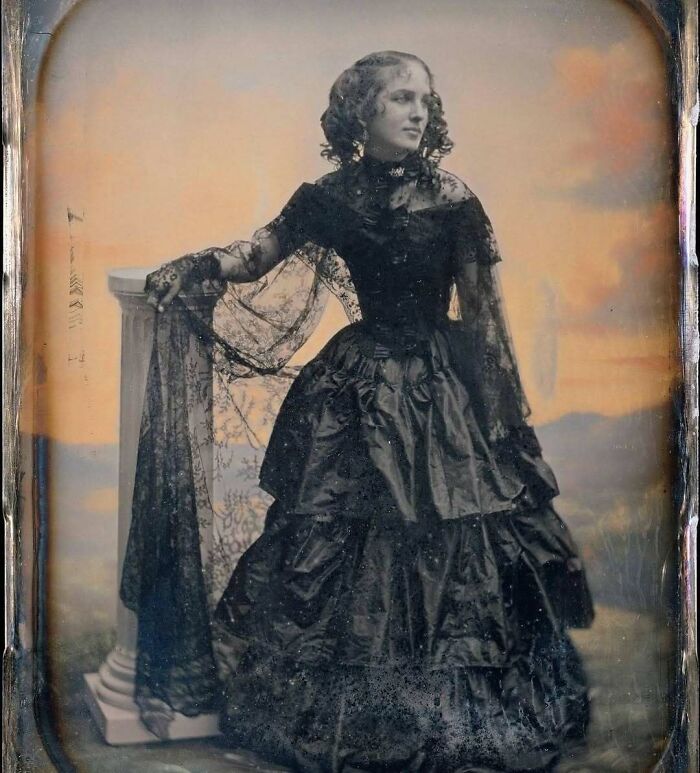
Woman in Black Taffeta Dress and Lace Shawl c. 1850 Photo: Southworth and Hawes Studio.
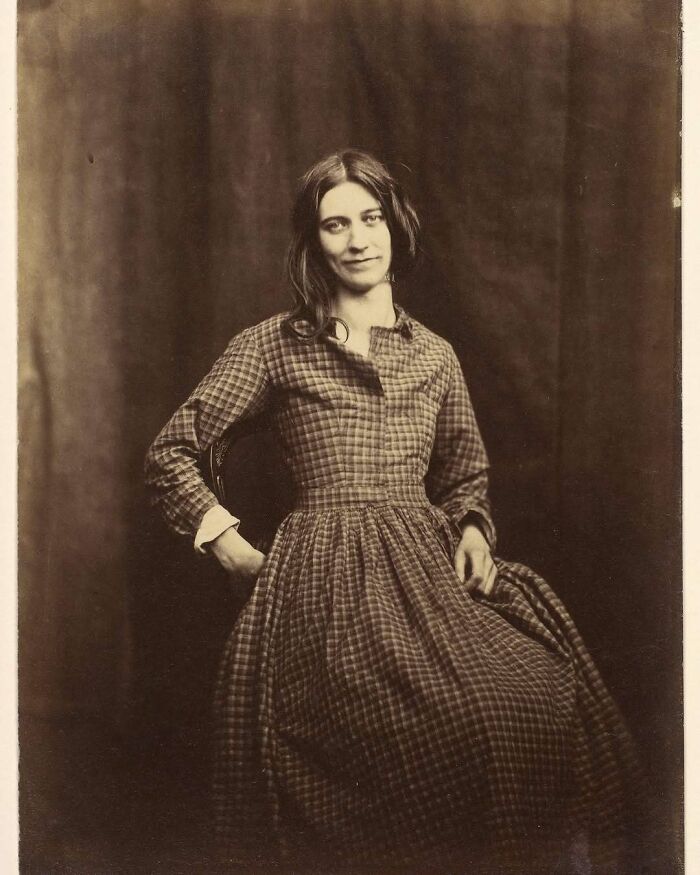
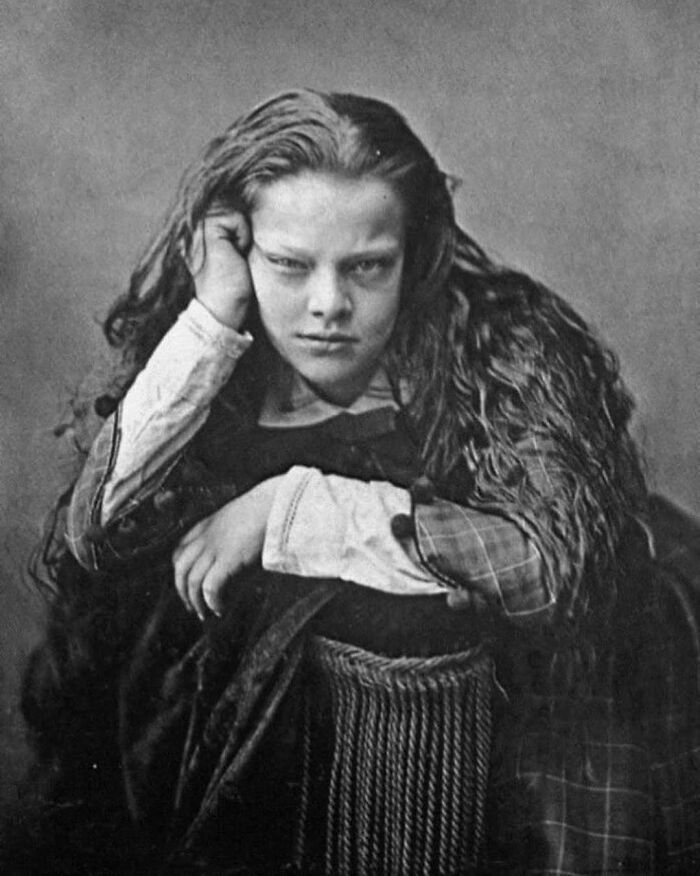
various female inmates at the Surrey County Asylum, 1850s. Hugh Welch Diamond (1808–1886) was a British physician-psychiatrist-antiquarian, an early adopter of the technology of photography, and the first to take photographs of female patients in the Surrey County Asylum, where he was superintendent from 1848 to 1858. His photography project was intended to study the physiognomy of mental illness – the idea that one’s face reveals one’s mental state – with the goal of identifying visual signs of mental illness. Just as Diamond collected artifacts for historical studies, he also ‘collected’ the images of mental patients to study, archive and use in diagnosis and treatment.
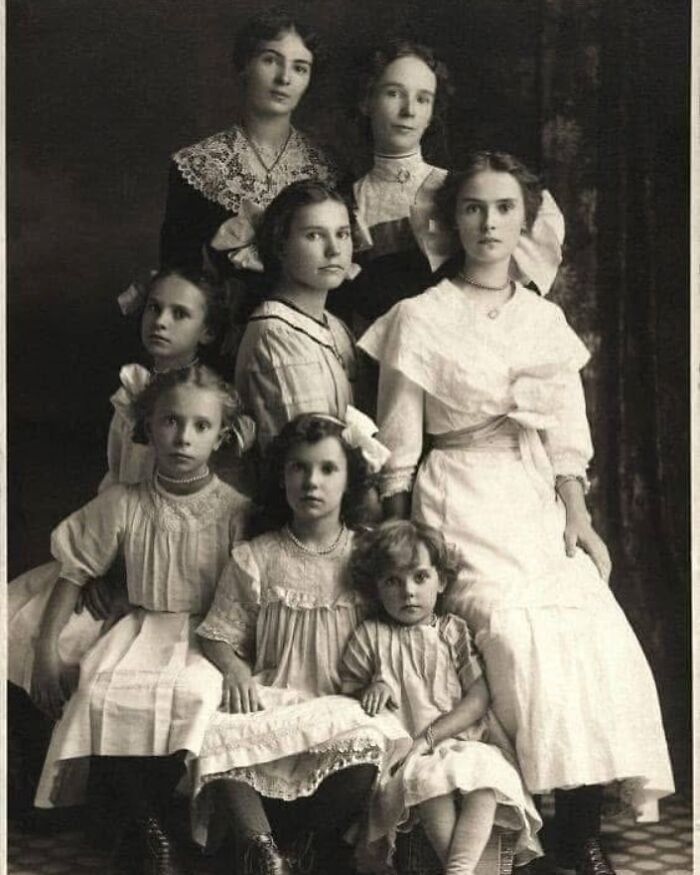
This photo from 1912 features the Gaudreau sisters of Stanbridge East, Quebec. Their faces and details are so intriguing, and each sister seems to have a unique personality shining through. The youngest sister is clearly the darling of the family, carefully dressed and posed.
British and German soldiers hanging out with each other at Ploegsteert during the Christmas Truce, circa. December 24, 1914.
The famous Christmas Truce began along the Western Front. German soldiers at St. Yves in Flanders decorated their lines with candles and Christmas trees, following it up by singing Christmas carols. The British soldiers responded by singing carols of their own and soon soldiers from both sides began venturing out into no man’s land. This culminated into a full out Christmas Truce between the British and Germans, who all met each other face to face in no man’s land. The soldiers exchanged gifts such as alcohol, foods, tobacco and souvenirs. They exchanged pictures of their families, took photographs with each other, held joint burial ceremonies for their fallen soldiers, and small-scale football (soccer) matches were played.
And then of course the higher ups ordered there was no truce in the following years
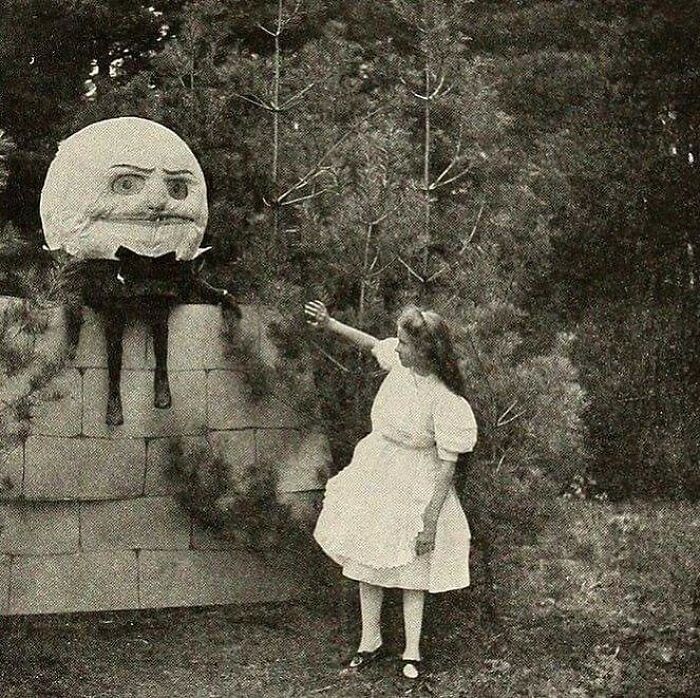
A rather creepy Victorian Humpty Dumpty adaptation from Alice through the looking glass circa 1873.
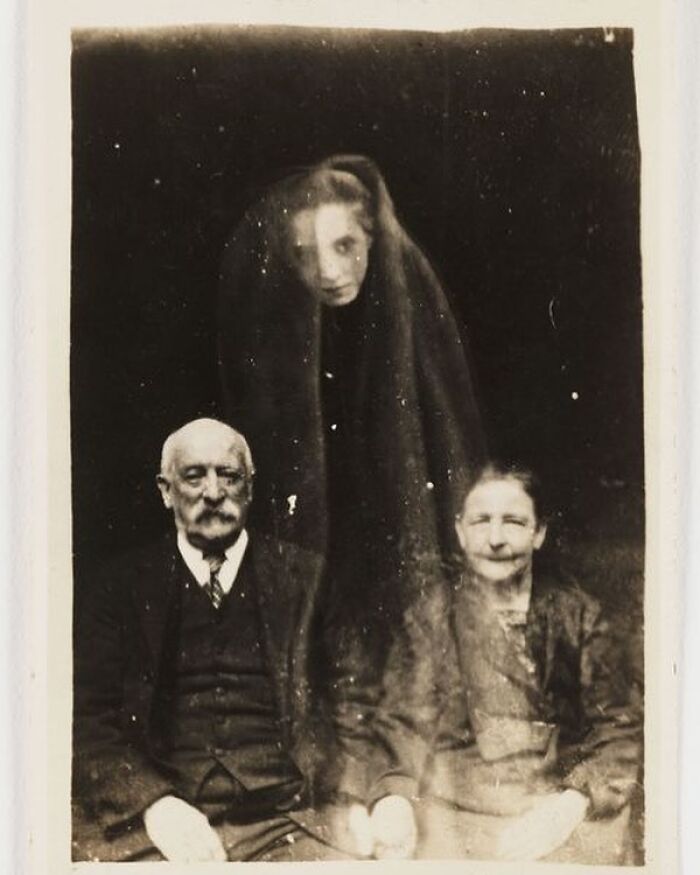
A young woman's "spirit" appears over an older couple taking a portrait circa 1920. Typical fake photo of that era.
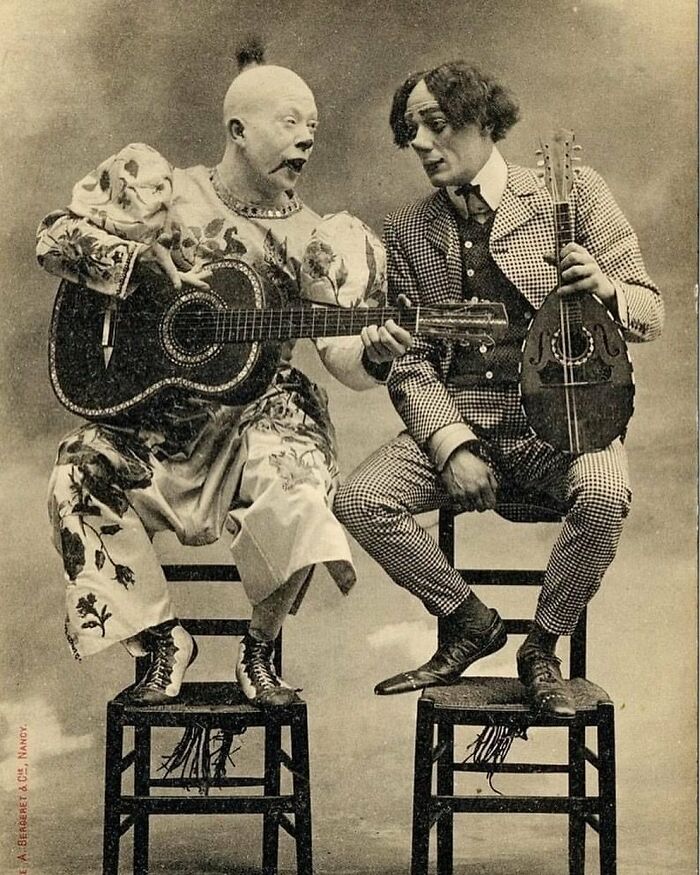
A couple of vintage clowns having a singalongadoo c1905. Published by Albert Bergeret & Cie, Nancy, France.
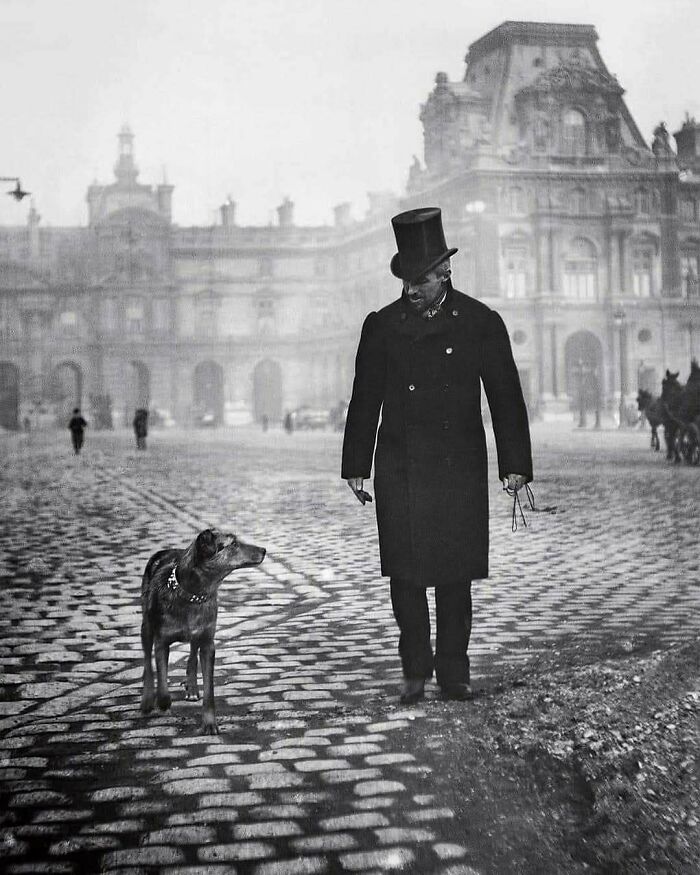
Gustave Caillebotte and his dog Bergère on the Place du Carrousel, Paris. Photo taken around 1892 by Martial Caillebotte, brother of the painter.
Wiki --> "Gustave Caillebotte was a French painter who was a member and patron of the Impressionists, although he painted in a more realistic manner than many others in the group. Caillebotte was known for his early interest in photography as an art form."
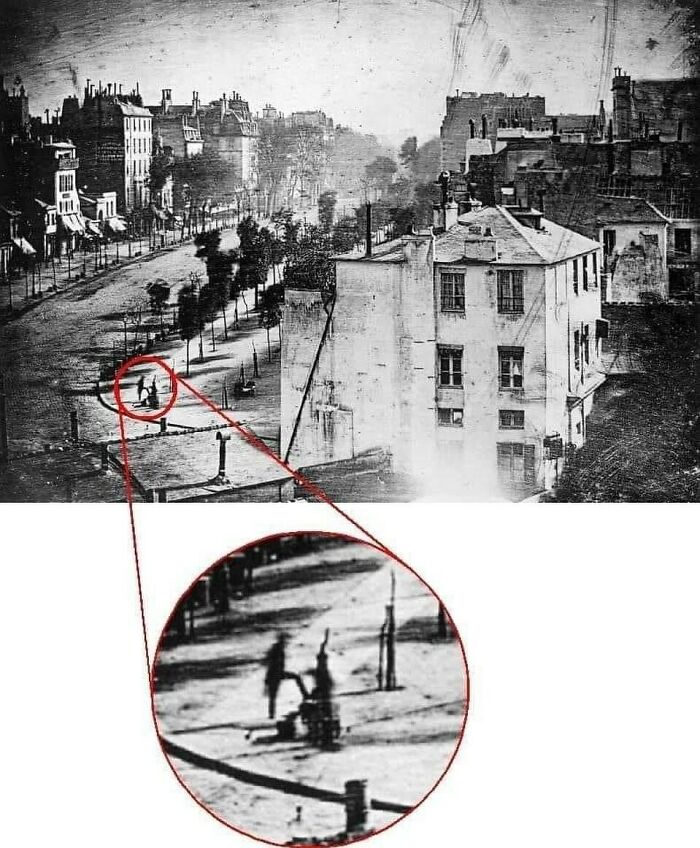
The first photograph in history in which the Human appears in front of the camera, circa 1839 by Louis Daguerre.
This photograph is the first image in which a person appears in front of the camera, and it is also the first image of the city of Paris. The camera used needed about 10 minutes to collect the light and the scene, and the street was full of people, but they were moving while photographing, so they did not appear in the picture except for one person who stopped for 10 minutes.
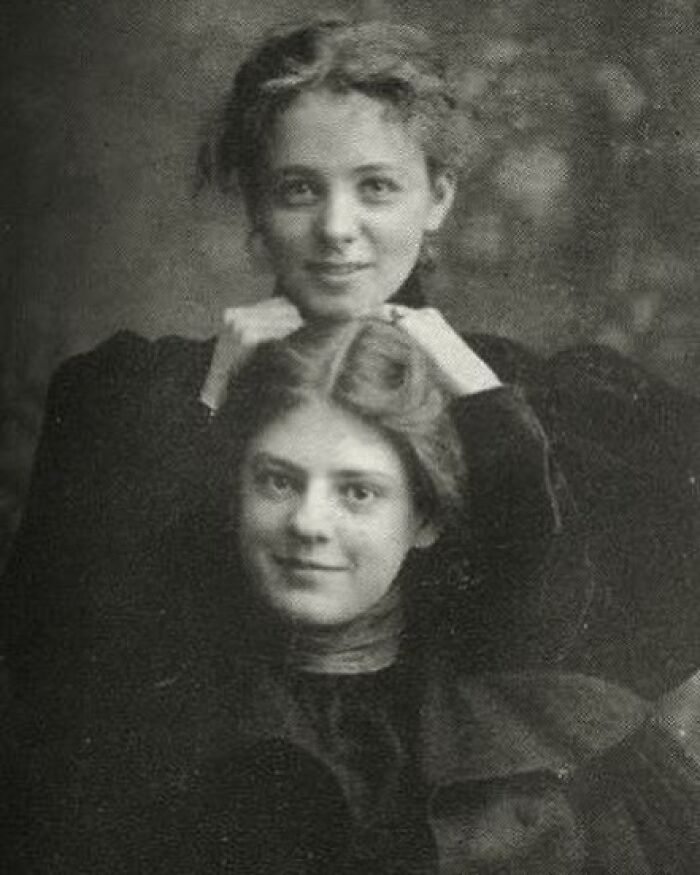
Portrait of actresses Maude Adams and Ethel Barrymore, taken in New York, circa 1897.
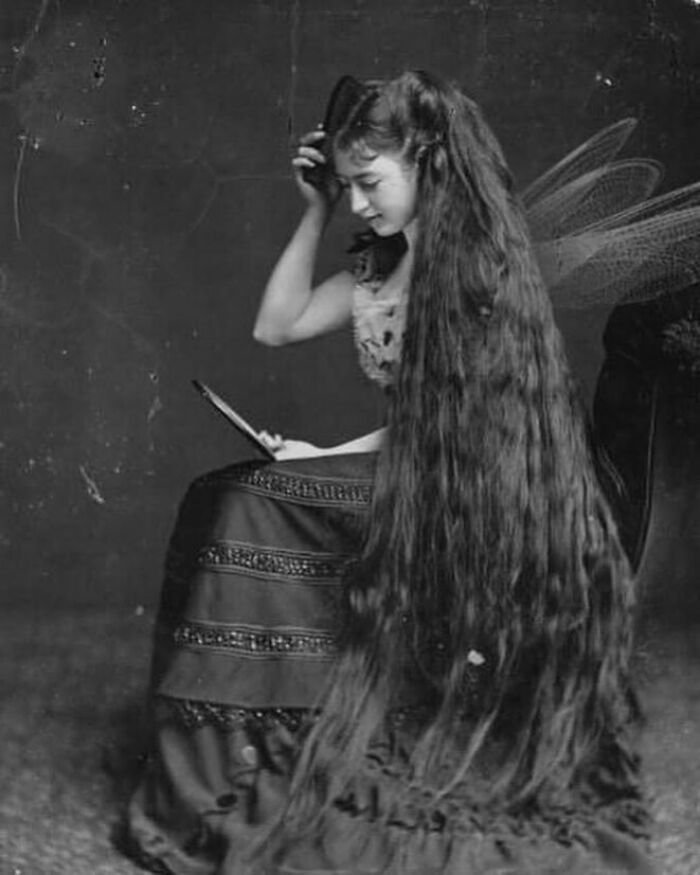
Mrs Frampton combing her long hair with the help of a mirror, c1885.
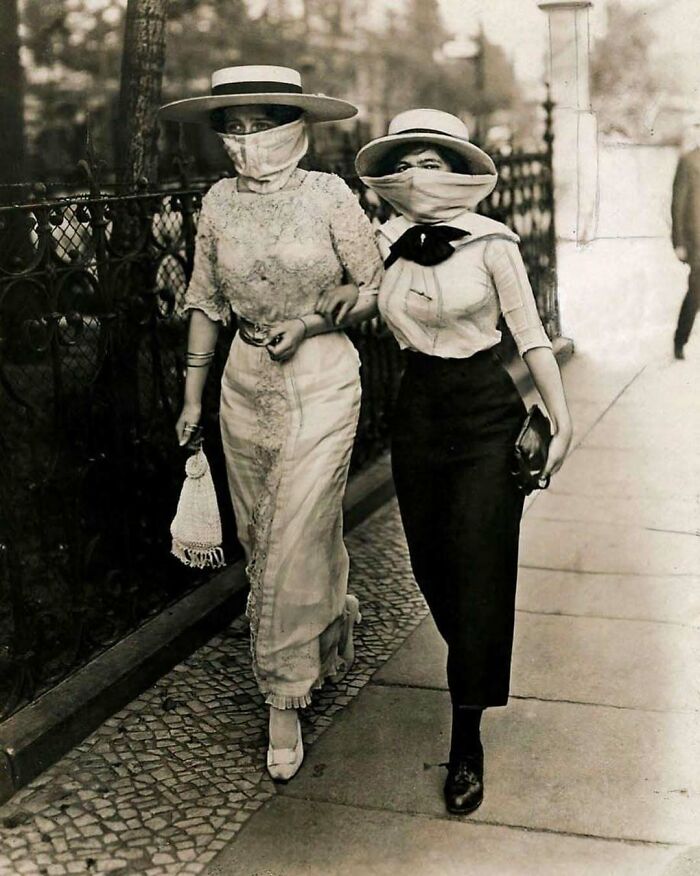
Photograph of 2 fashionable ladies coping with the Spanish flu epidemic of 1918.
They understood the importance of masks in the spreading of illness even back then without all our readily available science and research, yet we still have eejits who refuse.
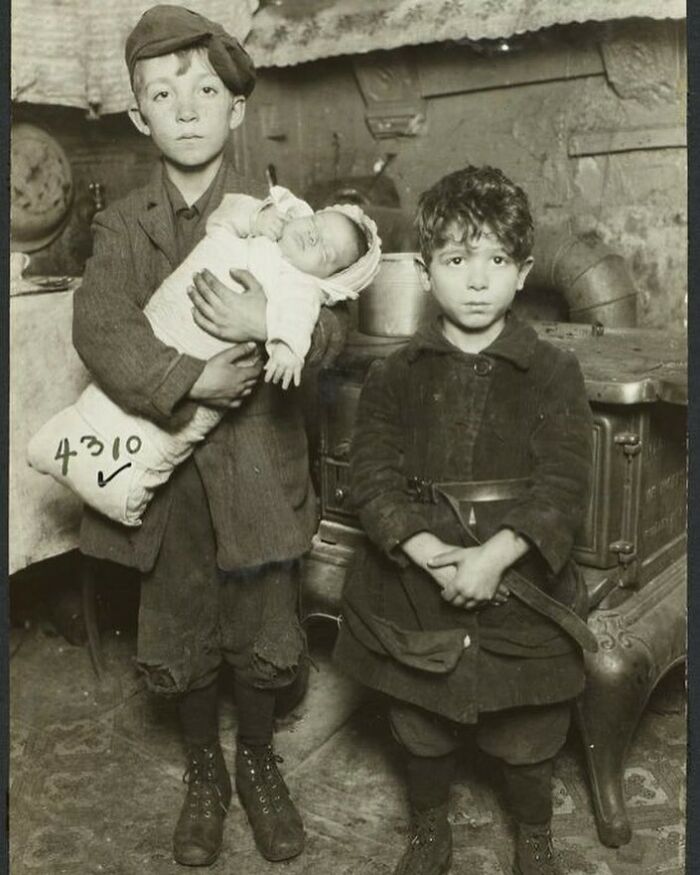
c1900, photographer Horace Warner captured over two hundred startling images of children living in a rundown slum area of East London. He named these children the ‘Spitalfields Nippers’.
In 1913 the Bedford Institute paid two pounds, 15 shillings and sixpence for roughly 20 photographs he had taken of the local children. It used them in its fundraising activities, reproducing them on handbills and collection boxes. He was a superindant for the charitable Bedford Institute (nine Quaker missions operating in the East End of London at the end of the 19th cent) rand was appalled by the poverty in much of the East End of London. His Quaker faith and own compassion led him to document the people he met and show them as real human beings. The pictures are posed but the genuine faces shine through. They are children surviving in conditions hard for us to imagine now (though not in other parts of the world); adolescents often already working in a harsh world with no safety net. Many have no shoes and clothes handed down or bought at the thrift shops of the time or the many markets in London.
Though Governments seemed lamentably slow to act, many individuals, authors (notably of course Dickens) and artists depicted the life of the poor, often particularly the children. The paintings were often toned down to sell but the rich in London often lived close to areas where they would have seen such children every day….here’s a 2nd set of photos.
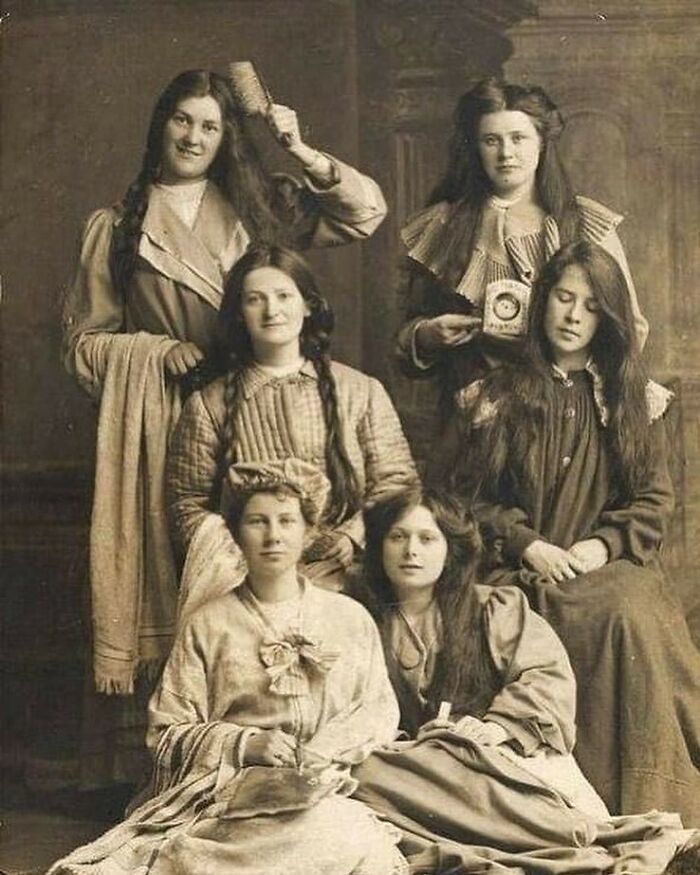
An unknown group of women, possible friends or fellow students pose for an undated photograph, with one clearly keen to show of her chunky hairbrush. Possibly late 1890s to 1900s
Marie Zanini. (born Milanaccio). 28 years, born Turin (Italy). Cuisinière. Vol. 18/3/94., photographed by Alphonse Bertillon, 1894, Metropolitan Museum of Art: Photography.
Postcard of a group of people outside the extravagant Art Nouveau facade of the Elysee Palace in Vichy, France. Photographed and built in 1898 as the Alcazar Theater, the palace housed: a restaurant, a music hall, a casino, a café and a brewery. Unfortunately, the palace does not exist today.
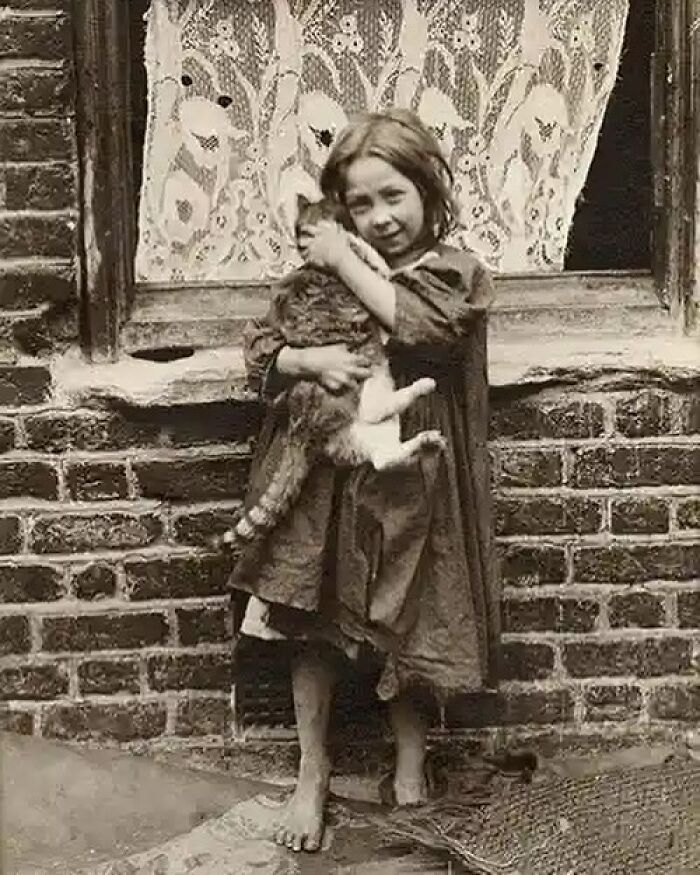
Spitalfields nipper: A young girl cuddles with a cat East London taken 1901/2 . Source: Horace Warner/The Religious Society of Friends in Britain.
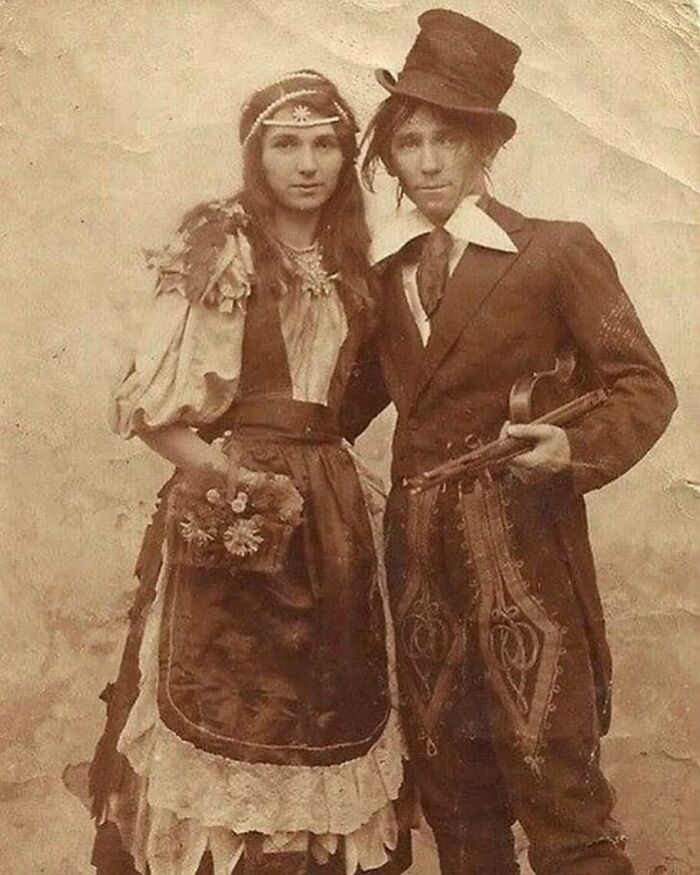
A couple of Victorian travellers looking rather dandy taken around 1890s.
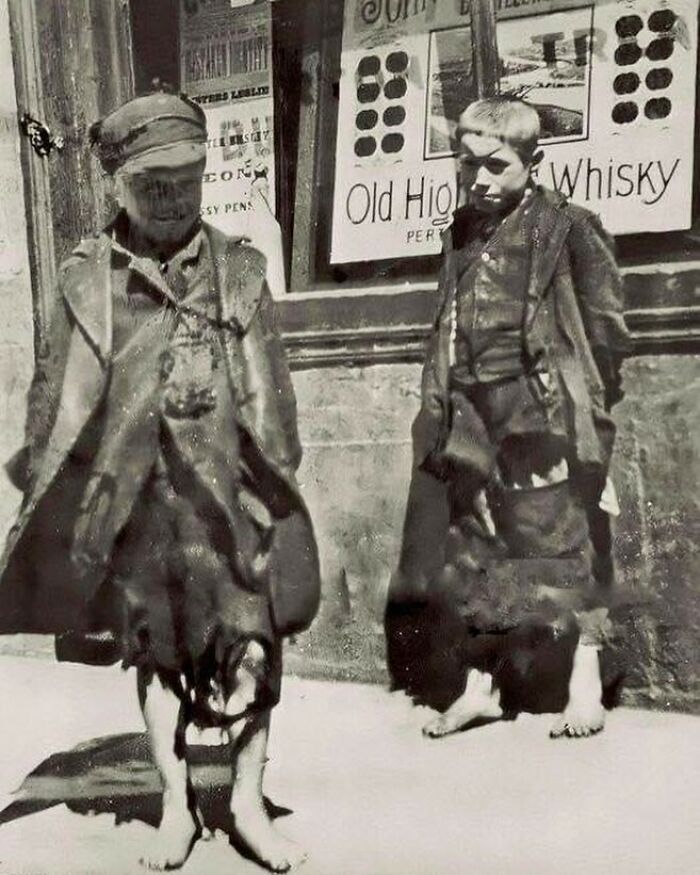
Two Bare footed kids outside a (Scottie Road) Scotland Road Pub, Liverpool, Merseyside, England taken approx 1895.
The one on the left looks like my uncle, though it is 70 years before he was born
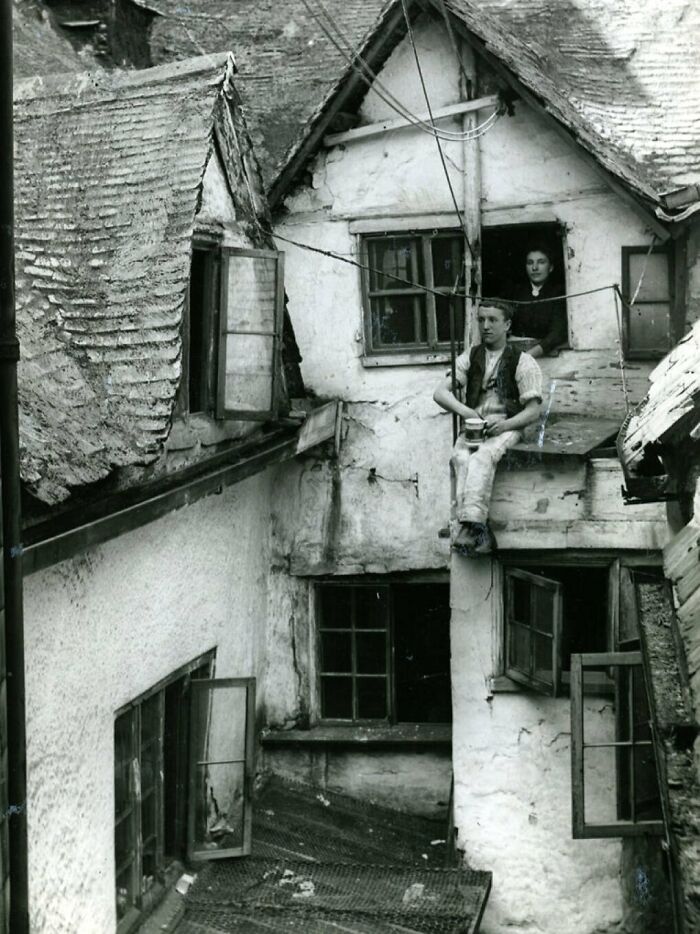
Quaint photo that shows the rear of an old premises on Old Town Street, with a woman peering out of window and man sat on flat roof having a cuppa.The image is a black and white photograph of an Old Town Street premises in the late 1890s in Plymouth, England.
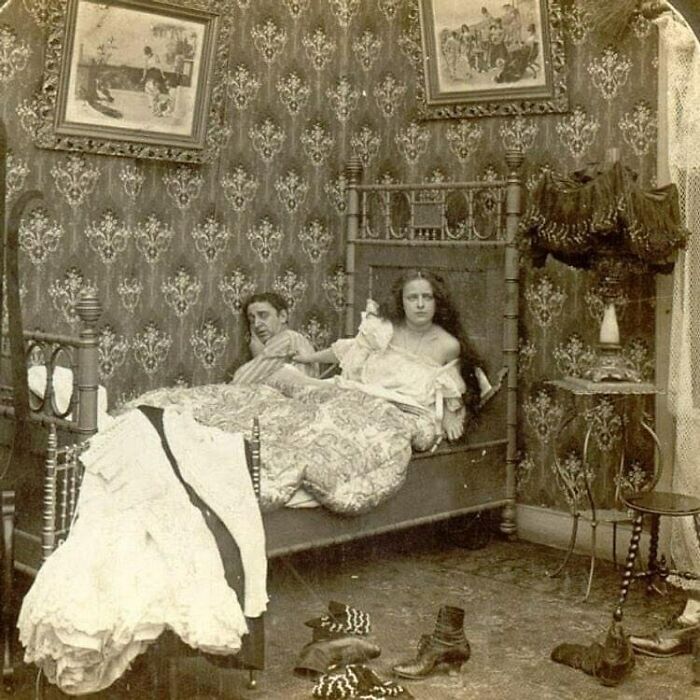
A late Victorian / Edwardian bedroom farce scene in the form of Stereoscope postcards with a couple being disturbed by a burglar circa 1900s.
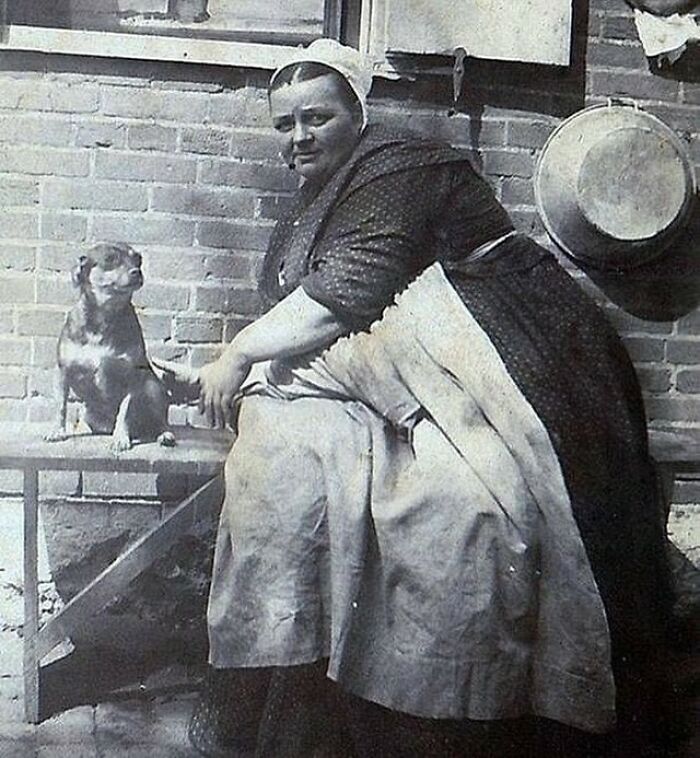
Victorian portrait of unknown woman posing with her dog outside her home, believed to be part of collection of East- Enders of London in 1880 - 1890s.
Portrait of actress Fern Andra. Taken Late 1910s.
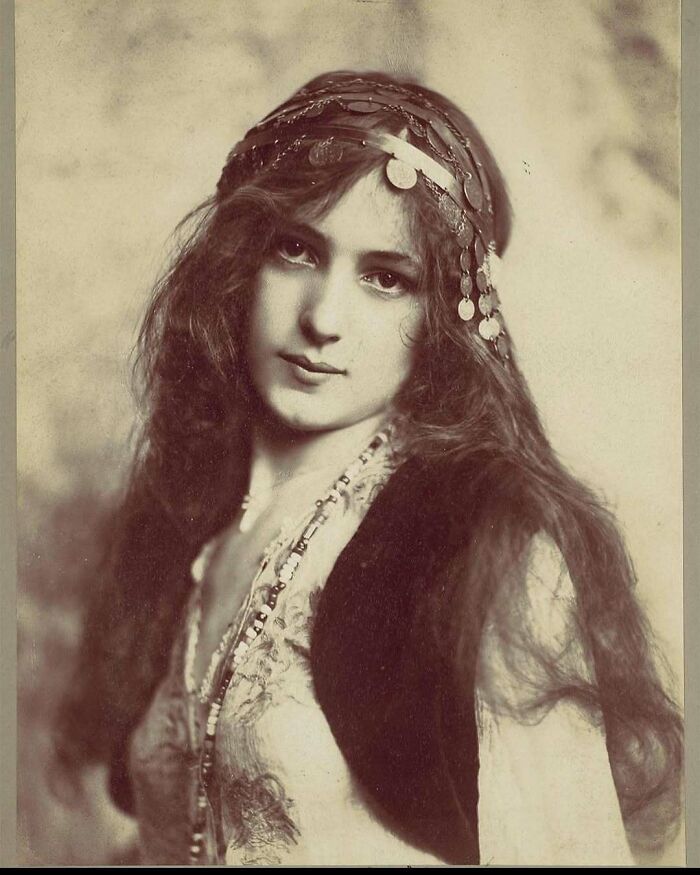
Portrait of an unknown young woman taken in New York c. 1901. Although believed to be Evelyn Nesbit.
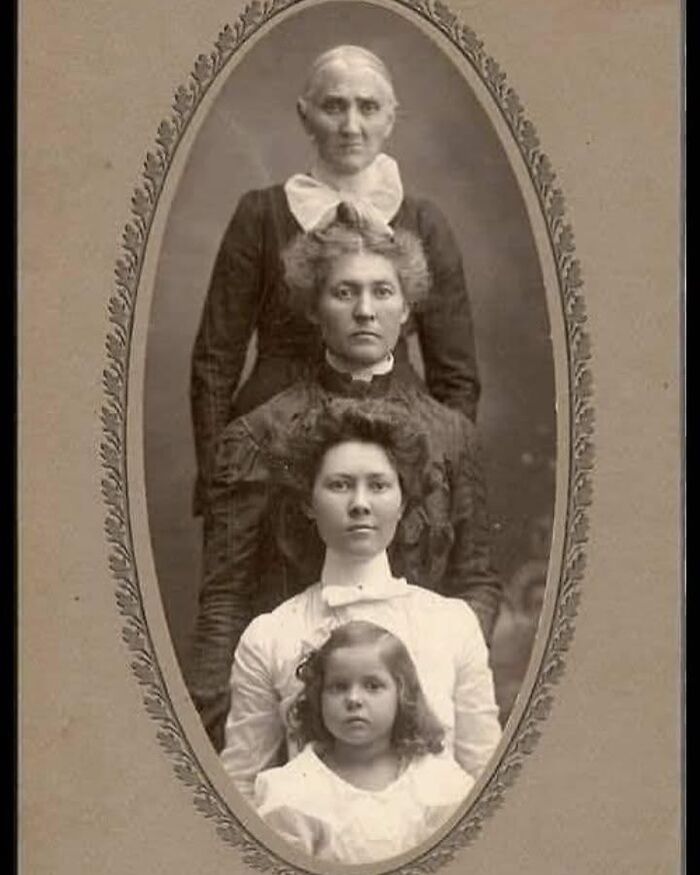
Four Generations, One Photo, taken ca. 1905. It is fascinating to think of what these woman in this picture lived through. The great grandmother at the top lived through the Civil War and the industrial revolution. She probably remembers the first day that electricity became widely available. That youngster on the other hand, would presumably live to see World War I, the roaring 20s, the Great Depression, World War II, the Cold War, Vietnam and the 1960s counterculture. The hairstyles of each grown woman in this photo reflect the time period in which they (probably) came of age. The youngest woman has a hairstyle that’s very Gibson Girl, kind of piled/swept gracefully on top of her head, which fits the era this photo was taken. Her mother has a simultaneously frizzier and tighter hairstyle that’s much more reminiscent of the 1880s, 20-25 years prior to the photo. The grandmother at the top has a much smoother, more austere style that recalls the 1860s when some of the hair was often pulled sharply back with a center part.
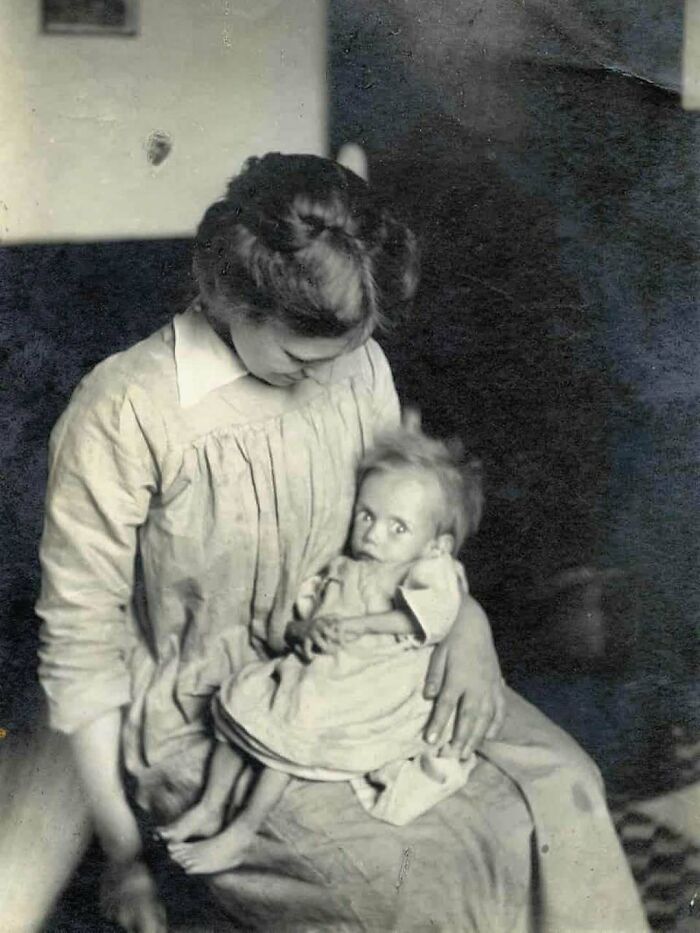
Maud Hebbes, who later became the first nurse at Marie Stopes’s birth control clinic, holds a malnourished child at the Mother’s Arms, Bow in 1915. The ELFS ran a mother and baby clinic, a milk depot and a nursery in the disused pub. Photographed by women’s rights activist Norah Smyrh.
Photograph of Cyprien Marie Tessie du.Motay,, taken from the essai de phototypie collection societe francaise de photographie c 1867.
Cyprien Marie Tessié du Motay "was a French chemist, author of numerous patents, inventor, among other things, of phototype." This is a photo of a woman he took, not a photo of the photographer himself, and was entitled "Portrait of a Woman."
Charles Meehan, a white Irishman and a Hester Meehan, who was born in Canada. A family historian said: ‘For Charles, it was just a natural thing to marry this woman who racially wasn’t the same as him but in every other way was the love of his life’. Charles and Hester were born in 1856, three months apart. They were married in Canada, where interracial marriage was legal though frowned upon. But for reasons that are unclear, they later headed south to Nebraska with three children in tow. This photo was taken when they arrived in Nebraska, circa 1880s.

Inter-racial marriage was guaranteed by the Supreme Court decision Loving vs. Virginia (1959). The GOP governor of my state (Indiana ) thinks it should be overturned.
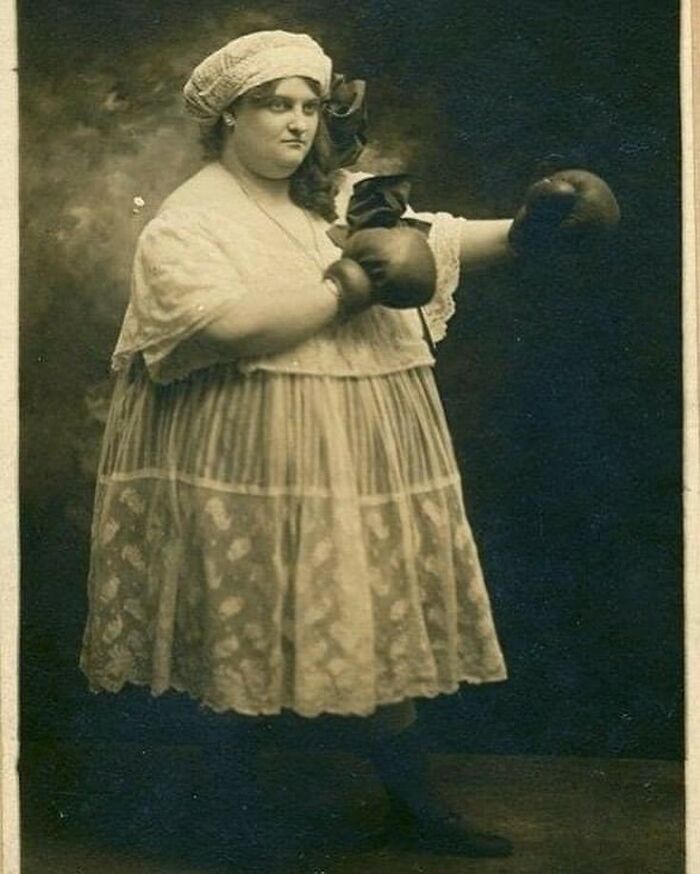
"Winner of the Most Scary Woman in the UK award in 1883 was Hattie ‘The Mad Hatter’ Madders - the only woman ever to hold the boxing heavyweight championship of the world title. She won the belt in 1883, stopping Scottish pugilist Wee Willy Harris in the first round of their bout. A gentle woman at heart, Hattie later retired to Ireland where she became a dairy farmer."
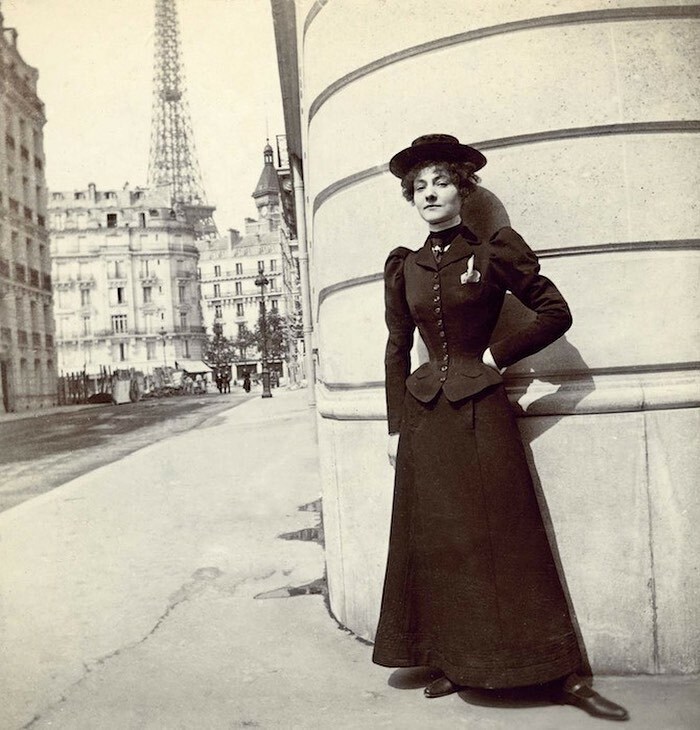
Portrait of a woman posing in Paris on a street corner from where you can see the Eiffel Tower, France, 1899.
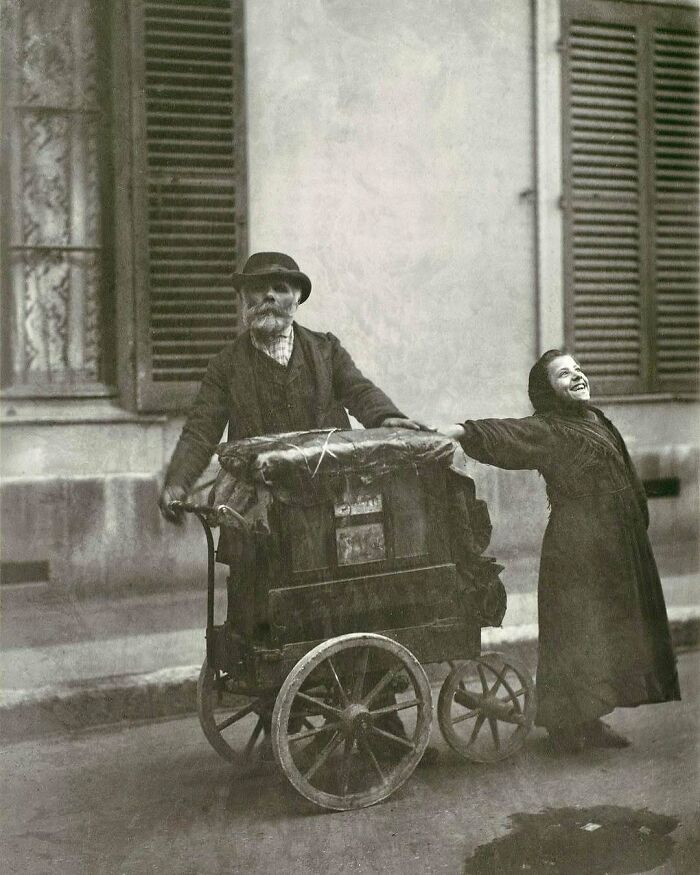
Organ grinder/street musician taken in Paris circa 1898 by pioneering French documentary photographer Eugène Atget. He was noted for his determination to document all of the architecture and street scenes of Paris before their disappearance to modernisation. Most of his photographs were first published by Berenice Abbott after his death. Though he sold his work to artists and craftspeople, and became an inspiration for the surrealists, he did not live to see the wide acclaim his work would eventually receive.
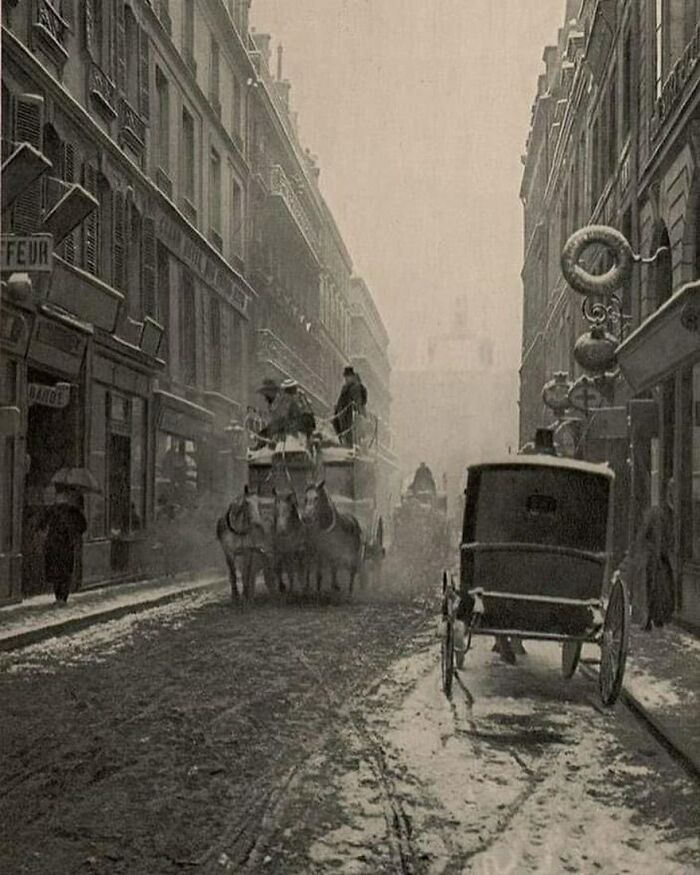
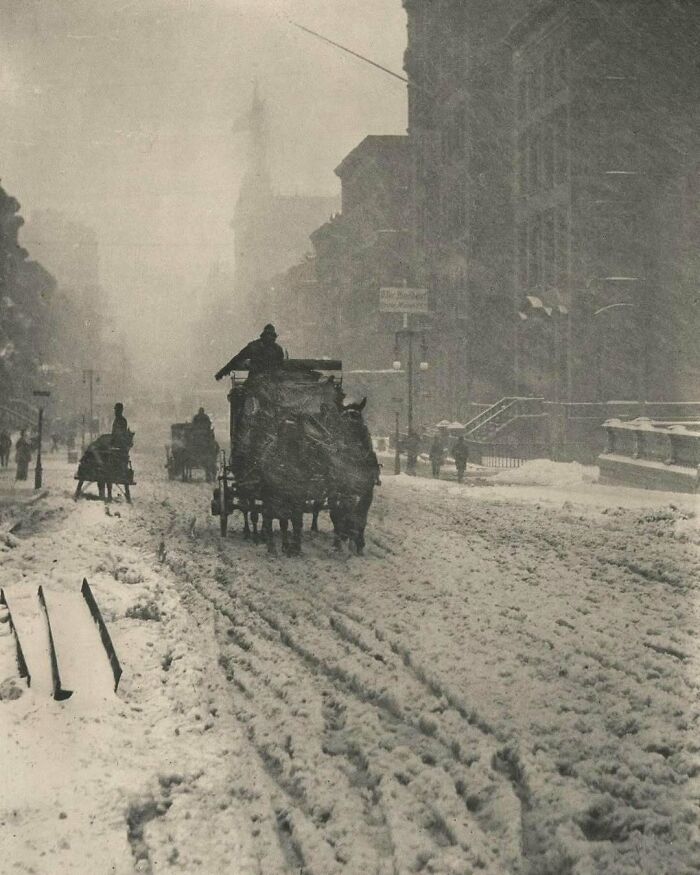
Winter on Fifth Avenue, taken circa 1892 by Alfred Stieglitz.
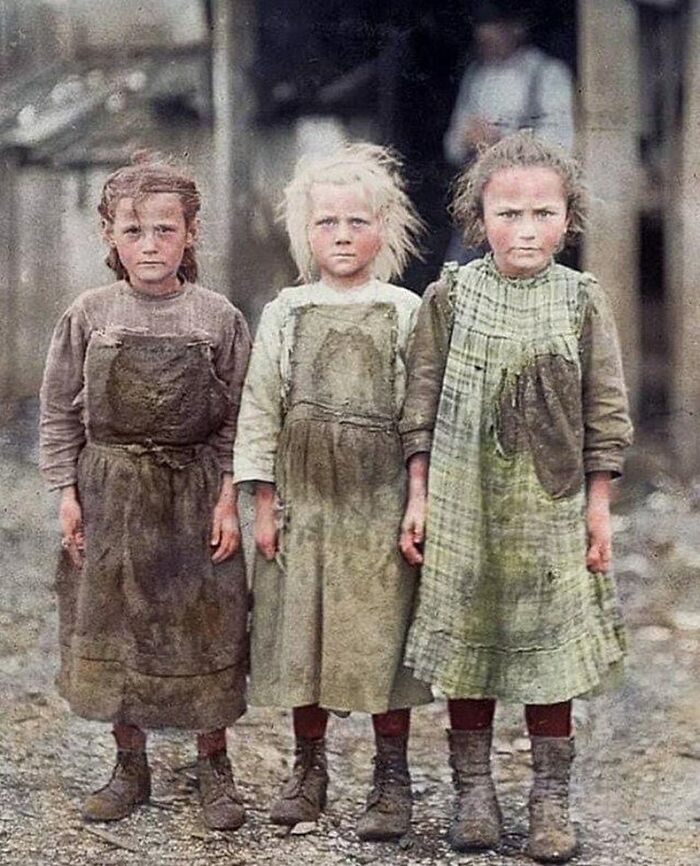
Colourised photo of Young oyster shuckers, Josie, six years old, Bertha, six years old, Sophie, ten years old, Port Royal, South Carolina, 1912. Work began at 4 AM. Photo bt Lewis Hine.
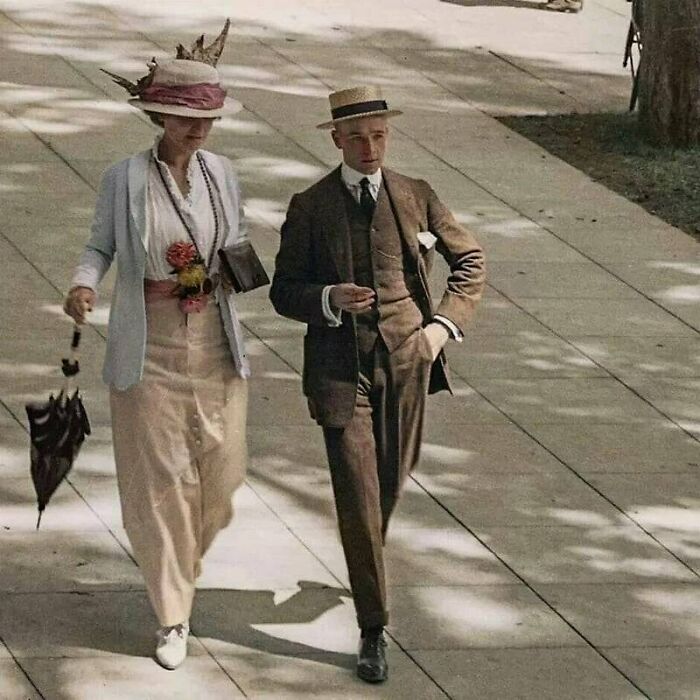
Fashionable couple strolling in Saratoga. Image enlarged from Broadway, Saratoga Springs, 1915. Colorised by Sanna Dullaway.
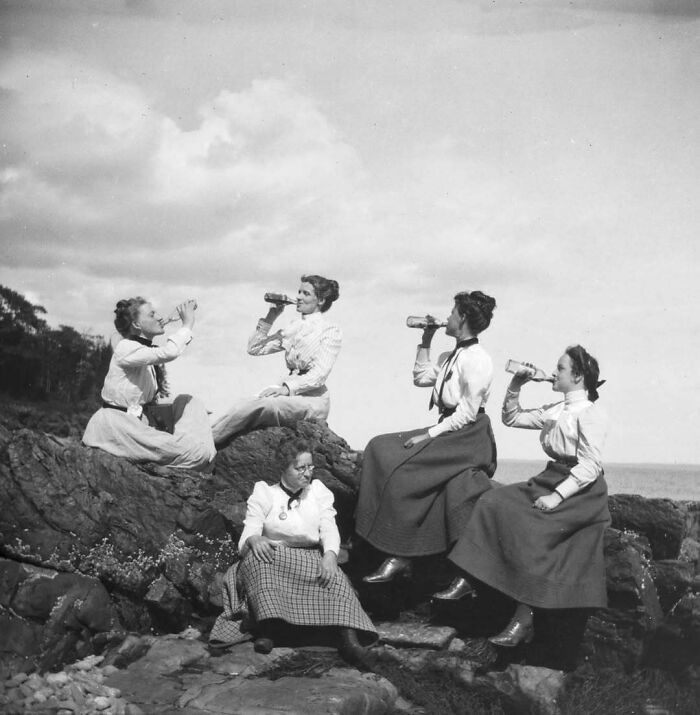
These snapshots from 1898-1900 are from the personal collection of Theresa Babb, the wife of the treasurer of the Knox Mill in Camden, Maine. The photos, now in the collection of the Camden Public Library, capture Babb’s family and friends enjoying numerous rustic pursuits around Camden, hiking to the summit of Mt. Battie, boating on Lake Megunticook and picnicking on the rugged, rocky shore.
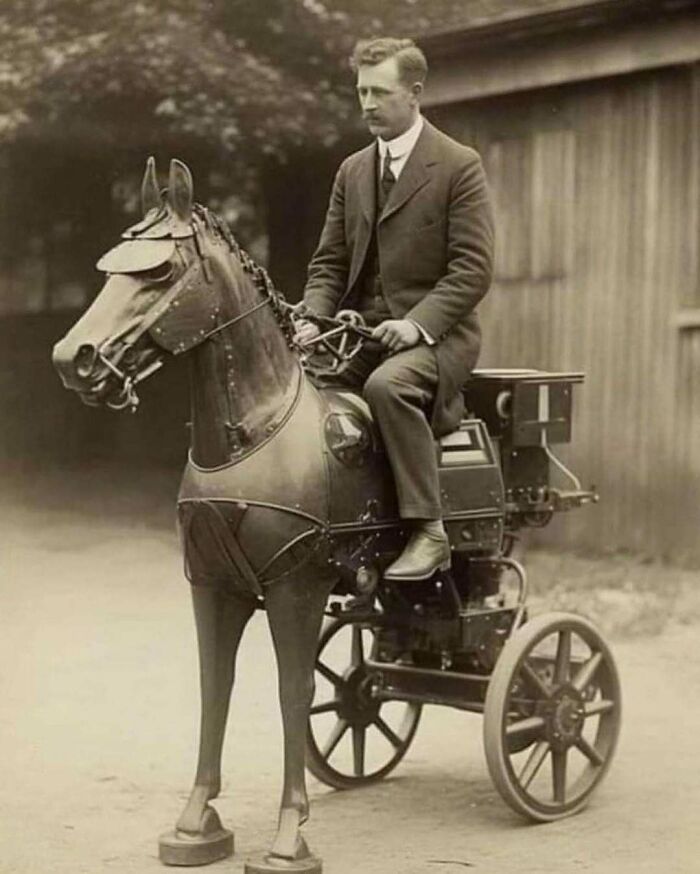
Prototype of a horse-drawn carriage motorcycle, early 1900s.
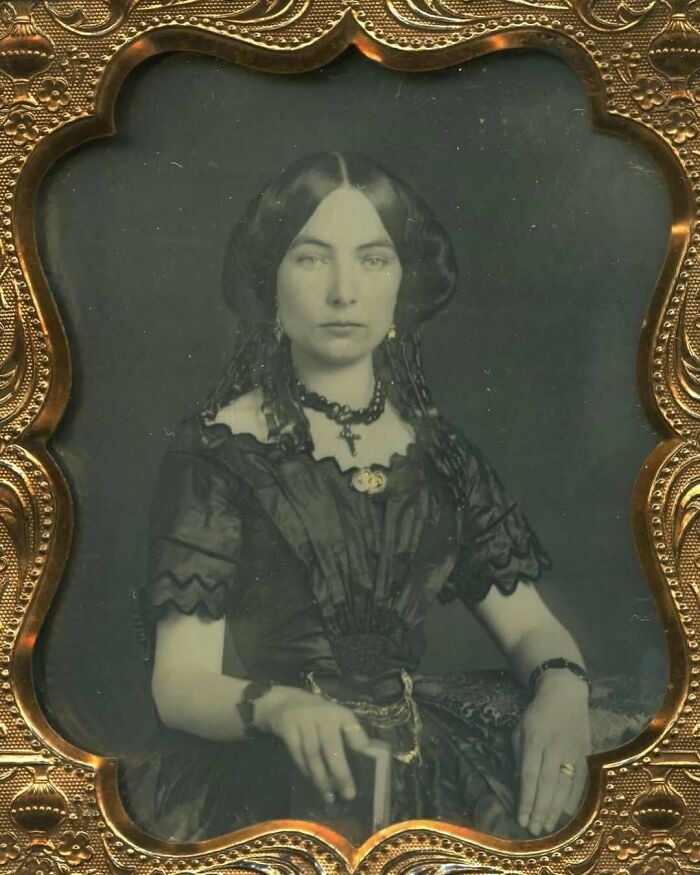
An absolutely stunning photograph of an unidentified woman, circa the 1850s. She wears many pieces of jewelry including a cross necklace with large beads, earrings, a brooch, rings, bracelets, and chains hanging from the sash on the waist of her dress.
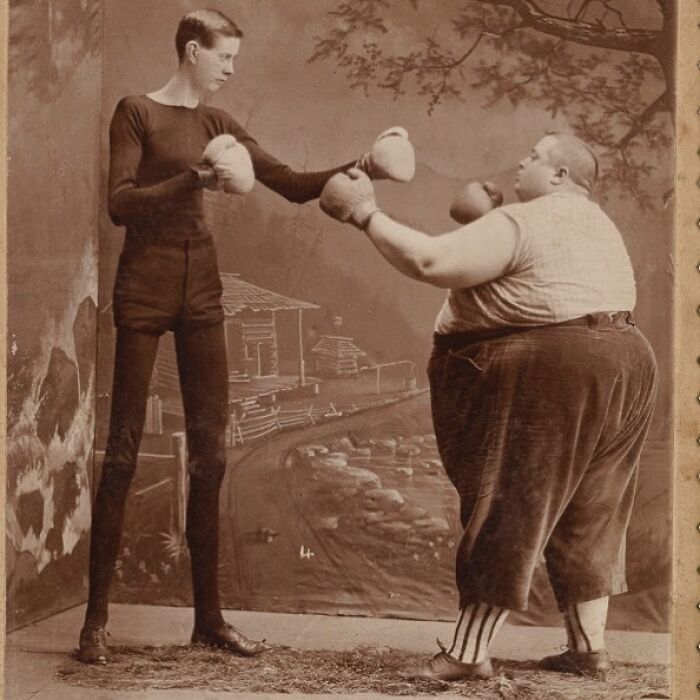
Fred Howe, the Fatman and George Moore, the living skeleton; they are the most comical boxers in the world. Fred Howe’s father was a carpenter at Alleghany City, Penn., and Fred started to learn the same trade, but soon became too fat.
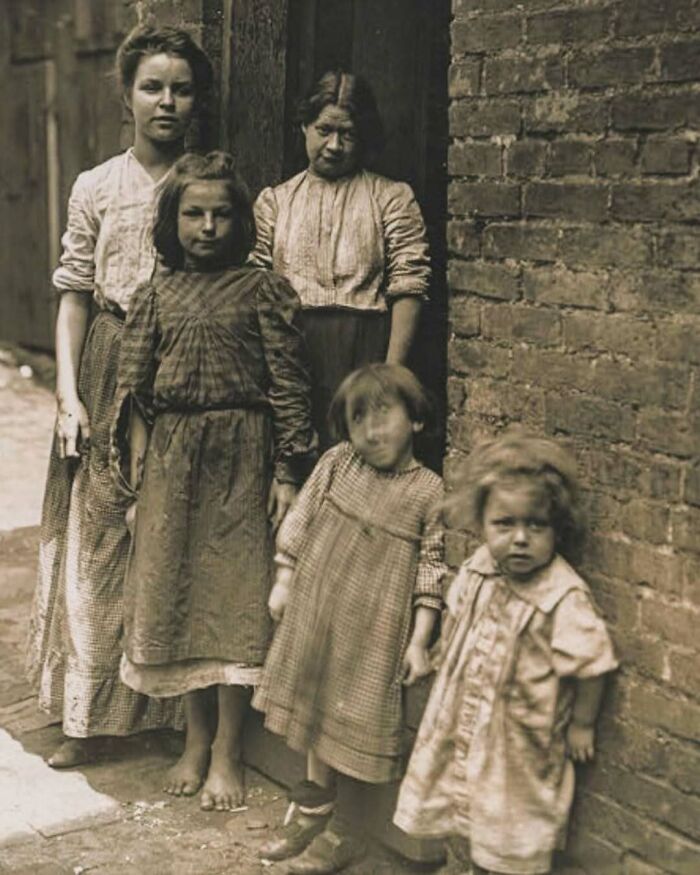
Street photo by photographer Lewis Hine with the caption: “Jessie D-(the tallest girl) and some of her charges. Girl in doorway is her boon Companion.” Taken in Cincinnati, Ohio in 1908.
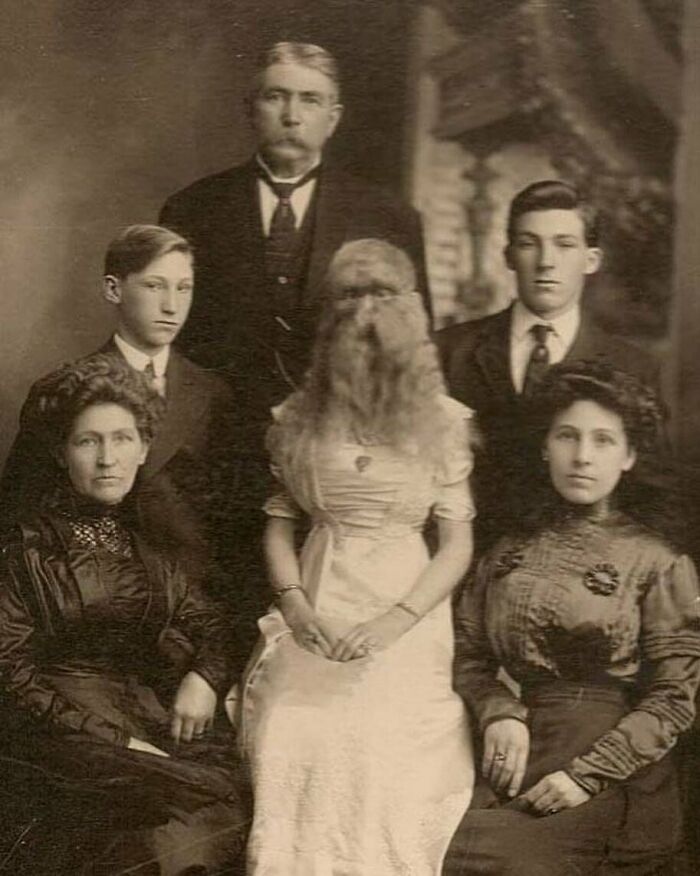
Alice Doherty - the Minnesota Woolly girl - poses with her family in a typically dour Victorian photograph circa early 1900s. She suffered from “dog-faced” hypertrichosis, a rare condition that wasn't an uncommon sight in the world of Victorian-era so called ‘freak’ shows. Alice and her mum toured with Professor Weller’s One-Man Band from the age of five, and was exhibited in shop windows and other small venues. Other hypertrichosis sufferers made a small fortune touring in Europe, but Alice never reached their heights of fame. In 1915, aged 28, she retired in Dallas, Texas where she died in 1933.
Adolescent mill girls from Bibb Mfg. Co. in Macon, Georgia. Taken by photographer Lewis Hines circa 1908.
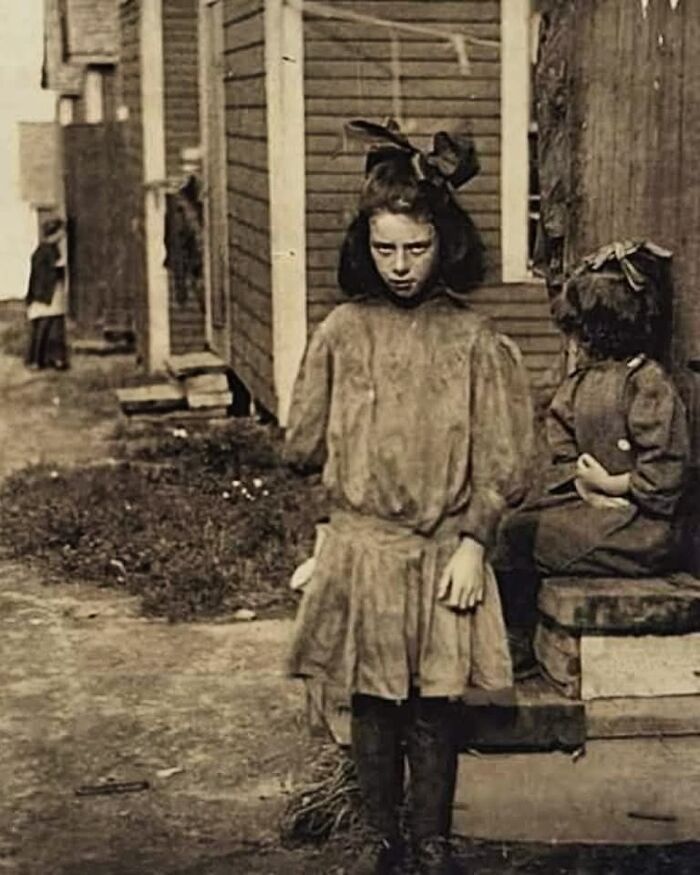
A haunting portrait of a young factory worker in Maine, USA taken circa 1911 by Lewis Hines. She’s only 9 years old and, according to records, was a worker at a seafood canning company in Maine. Alongside other members of her family, Nan de Gallant spent long hours during the summer months hard at work. Despite this, she was described as “a spoiled child” in the photo’s title. This may have been because her work in a factory was “irregular” instead of a daily happening.
Child labourers Nan’s age were not unusual. According to the US Bureau of Labor Statistics, “no less than 18 percent of all children ages 10-15 worked” from 1890 to 1910.
In Maine specifically, a law banning children younger than 12 from working in manufacturing exempted the canning industry because it produced perishable goods. This law changed in 1911, but it’s difficult to assess how many children actually stopped working.
It will be interesting to see if a certain country starts heading back in this direction, now that they are expelling all their agricultural and manufacturing workers.
Winner of the Most Scary Woman in the UK award in 1883 was Hattie ‘The Mad Hatter’ Madders - the only woman ever to hold the boxing heavyweight championship of the world title. She won the belt in 1883, stopping Scottish pugilist Wee Willy Harris in the first round of their bout. A gentle woman at heart, Hattie later retired to Ireland where she became a dairy farmer.

Most of these are just old pictures of people and their pets - more please!
I ɢᴇᴛ ᴘᴀɪᴅ ᴏᴠᴇʀ $120 ᴘᴇʀ ʜᴏᴜʀ ᴡᴏʀᴋɪɴɢ ғʀᴏᴍ ʜᴏᴍᴇ. I ɴᴇᴠᴇʀ ᴛʜᴏᴜɢʜᴛ ɪ'ᴅ ʙᴇ ᴀʙʟᴇ ᴛᴏ ᴅᴏ ɪᴛ ʙᴜᴛ ᴍʏ ʙᴜᴅᴅʏ ᴍᴀᴋᴇs ᴏᴠᴇʀ $13,453 ᴀ ᴍᴏɴᴛʜ ᴅᴏɪɴɢ ᴛʜɪs ᴀɴᴅ sʜᴇ ᴄᴏɴᴠɪɴᴄᴇᴅ ᴍᴇ ᴛᴏ ᴛʀʏ. sᴛᴀʀᴛ ᴇᴀʀɴɪɴɢ ᴍᴏʀᴇ ᴄᴀsʜ ɪɴ ᴘᴀʀᴛ ᴛɪᴍᴇ. ᴄʜᴀɴɢᴇᴅ ᴍʏ ʟɪғᴇ.....➤➤ 𝗟𝗶𝘃𝗲𝗝𝗼𝗯𝟭.𝗰𝗼𝗺
Load More Replies... Most of these are just old pictures of people and their pets - more please!
I ɢᴇᴛ ᴘᴀɪᴅ ᴏᴠᴇʀ $120 ᴘᴇʀ ʜᴏᴜʀ ᴡᴏʀᴋɪɴɢ ғʀᴏᴍ ʜᴏᴍᴇ. I ɴᴇᴠᴇʀ ᴛʜᴏᴜɢʜᴛ ɪ'ᴅ ʙᴇ ᴀʙʟᴇ ᴛᴏ ᴅᴏ ɪᴛ ʙᴜᴛ ᴍʏ ʙᴜᴅᴅʏ ᴍᴀᴋᴇs ᴏᴠᴇʀ $13,453 ᴀ ᴍᴏɴᴛʜ ᴅᴏɪɴɢ ᴛʜɪs ᴀɴᴅ sʜᴇ ᴄᴏɴᴠɪɴᴄᴇᴅ ᴍᴇ ᴛᴏ ᴛʀʏ. sᴛᴀʀᴛ ᴇᴀʀɴɪɴɢ ᴍᴏʀᴇ ᴄᴀsʜ ɪɴ ᴘᴀʀᴛ ᴛɪᴍᴇ. ᴄʜᴀɴɢᴇᴅ ᴍʏ ʟɪғᴇ.....➤➤ 𝗟𝗶𝘃𝗲𝗝𝗼𝗯𝟭.𝗰𝗼𝗺
Load More Replies... 





















 No fees, cancel anytime
 then open in external browser


 and click "Open in External Browser"