Get Premium
Dark mode theme is available exclusively for premium users. Learn more about the benefits of subscribing.
No fees, cancel anytime.

 Dark Mode Ad-Free Browsing Unlimited Content
 Ad-Free Browsing Unlimited Content Dark Mode
Join 1.2 million Panda readers who get the best art, memes, and fun stories every week!
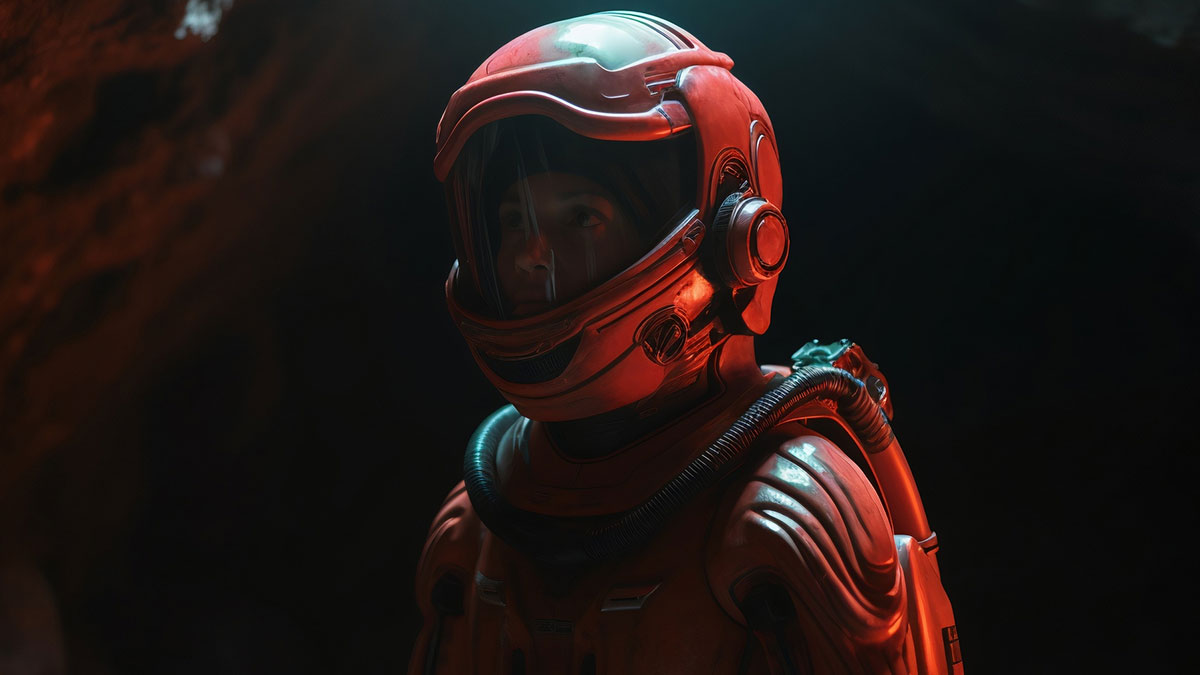


The concept of space is so intriguing that it fascinated our ancestors, and to this day, humans have been trying to figure out the big mysteries that it possesses. Even with all the technology that we have, we barely know anything about it.
However, what we do know for sure is that it’s scary as hell, literally! From black holes to monster moons, space comprises so many disturbing things that our brains won’t even be able to digest a few of them. If it still fascinates you, then scroll down to check out some terrifying facts about it that netizens have shared!
This post may include affiliate links.

 Time is not linear due to the constant expansion of space therefore time is expansive.
Phytanic replied:
also time is a function of gravity. the earths core is ~2.5 years younger than the crust
Velocity_Rob replied:
I can relate to that. I feel like my core is still only 28 but my crust is definitely 40.


People assume that time is a strict progression of cause to effect, but actually from a non-linear, non-subjective viewpoint, it's more like a big ball of wibbly-wobbly, timey-wimey... stuff"
Load More Replies...
Time is an abstract concept of something that doesn't really exist. Yes, it can be marked and measured, but only by devices which we have fashioned to do so to suit or concept.

Time is expansive. It always expands to the amount of time allotted to the job.

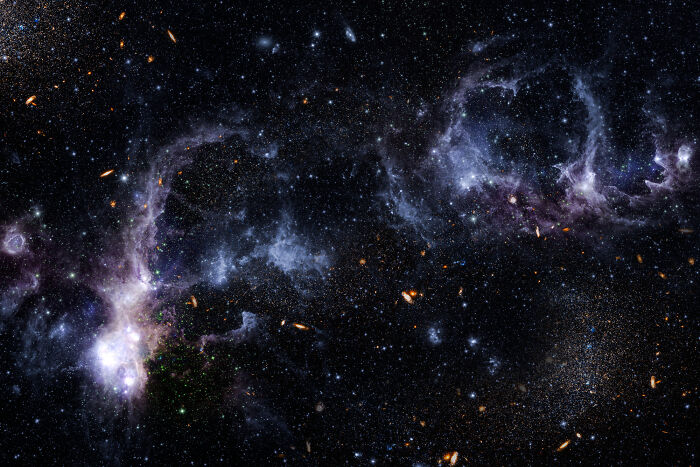 That the universe is expanding, but not into anything. Space itself is stretching, and there’s no edge, no center, no “outside.” It’s not just vast, it’s fundamentally beyond how our brains are wired to understand reality.

“Space is big. You just won't believe how vastly, hugely, mind-bogglingly big it is. I mean, you may think it's a long way down the road to the chemist's, but that's just peanuts to space.”

Yes but wait till it ends. You can have a nice sit down with a lovely meal and a great view. I hear the steak is excellent but a poor conversationalist.
Load More Replies...

We are on the expanding three dimensional surface of a 4 dimensional sphere.
This should be heard in the voice of either Carl Sagan or Rod Serling.
Load More Replies...  Terrifying? Maybe not terrifying…but the fact that all the stupid stuff we are doing to earth and each others doesn’t mean squat in the grand sense of things. Our earth could suddenly be destroyed by so many things in so many ways by some extraterrestrial event….and it won’t matter, we won’t matter. This is all we’ve got and we’re making a right mess of it all.


It only matters to us. We are not capable of 'destroying the world'. The world was here before us and will continue long after we are gone. We are, however, capable of destroying ourselves, and doing a scarily good job of it.
Load More Replies...

Sometimes the fact that something doesn't matter itself doesn't matter.

I literally had goosebumps when I was scrolling through the list because some of these facts are so destructive, it honestly put me in an existential crisis. Now you might wonder why that happens, but the truth is that the universe is something completely unknown. While science continues to push the boundaries of our understanding, the deeper we delve, the more we uncover how little we truly grasp.
It has been observed that humans thrive on sameness, repetition, and ritual, but fear the unknown, the unfamiliar, the uncertain. When confronted with facts that challenge our perception of reality or highlight the fragile nature of our existence, it’s only natural to feel disturbed, isn't it? After all, we are trying to find order and meaning in a universe that offers neither!
 If we are truly alone in the universe and mankind wipes itself out, the universe will continue to exist without any life, no one to comprehend the universe. That seems sad and scary.
If we are not alone, then that is an equally scary prospect.
I wonder if aliens are better to their planet than we are to ours

IIRC, there is that theory that is one explanation for Permi's Paradox in that every civilization that gets to a certain point, technology wise, ends up destroying itself. Which explains why we haven't found evidence of aliens and why they may never find us.
Load More Replies... If mankind wiped itself out, there still would be other forms of life existing (and grateful that their trashy neighbors have gone).

Mankind is the only life on the planet? There was life before humans came along, there will be life long after we've gone. Perhaps the OP means sentient life? Something will evolve to take its place at the top of the tree.


I've a cartoon photo someone made during 2020. It was an alien holding it's chin with Earth in the palm of its hand and the thought bubble said "Erm, nope!"
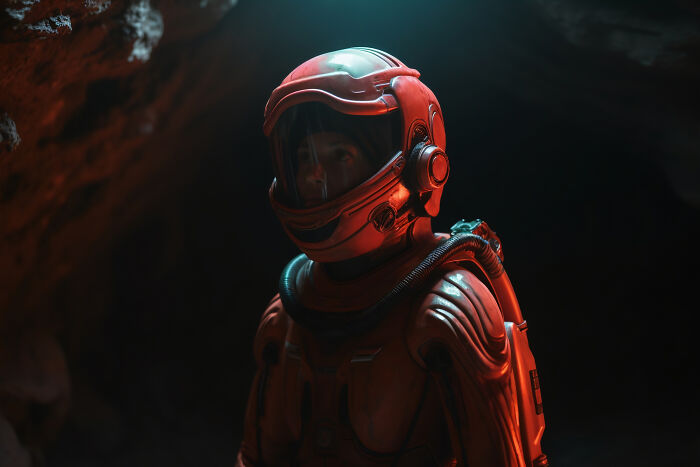 There are voids in the universe that are so big that if you were teleported to the center with a spacesuit on, you would just see pitch darkness in all directions.
EDIT: Whoah. This blew up quickly. Thank you for the silver! EDIT: And the Wholesome! And the Helpful!




Forget the darkness in all directions; if you held your hand one inch in front of your eyes, you would not see it. You literally would be blind because there would be zero light for your eyes to perceive.
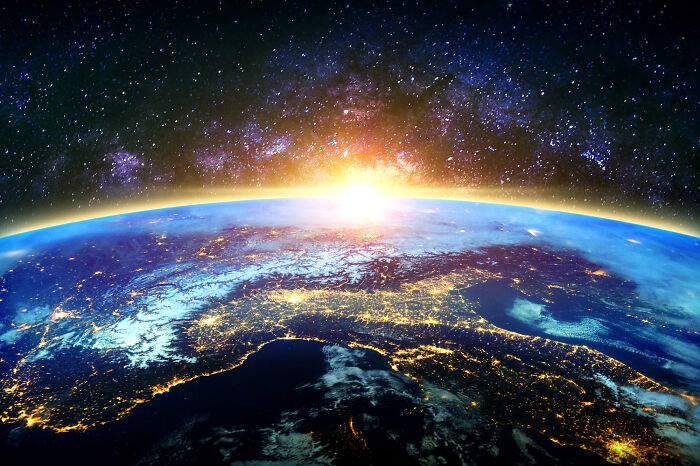 It's a big bunch of stuff zipping around with no regard for us and there's almost nothing we can do to influence it.
A giant rock could be flung into our planet and wipe out all life, and the universe would go on without a blip. We don't matter in the least.

Don't worry, the President will send the National Guard into space to protect the nation's interests.
And Bruce Willis will sacrifice his life to save the money [edit:I mean planet]
Load More Replies... 

Maybe for once a conversation doesn’t have to devolve into a political discourse? Let’s just talk about space. So much anxiety and negativity in the world.
I agree with you so here, have an upvote 🙂
Load More Replies...As wild and unsettling as some of these things might sound, just imagine actually seeing them in person. Being an astronaut might seem like the ultimate dream job, and in many ways, it is, but the reality of going to space is way more intense than most of us realize.
In fact, research suggests that space travel can take a heavy toll on astronauts, ranging from positive effects like ‘the overview effect’ to negative effects such as sleep deprivation, anxiety and depression. The overview effect is when astronauts see Earth from space and get this deep, almost spiritual sense of how fragile Earth is, and how they are connected to it.
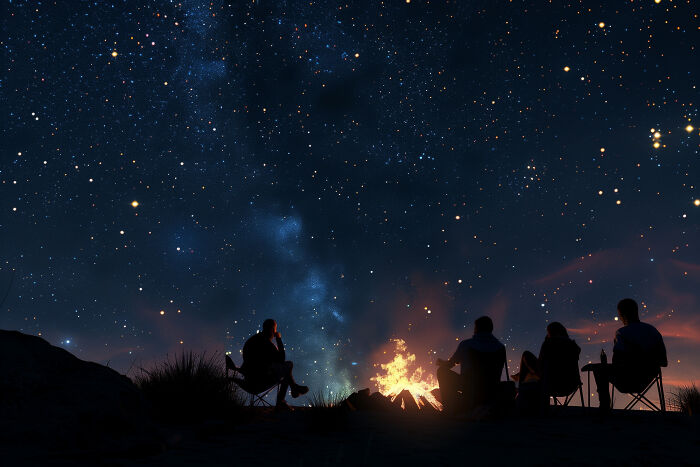 On a grand scale, everything is getting further and further apart. Stars will one day disappear from the sky.
Everything is getting farther and farther away - peace of mind, financial solvency, the rule of law, ...


This isn't true. The stars within our own Galaxy are not getting further from us. And that's most of what you see up there. The other galaxies, almost all of which require a telescope to see even in the darkest of locations, are what will eventually go away...
The stars will disappear due to reaching the end of their life, but not due to cosmic expansion. Almost all stars we can see with the naked eye are part of the Milky Way, and thus gravitationally bound to it. This prevents the stars from passing outside of our cosmological horizon.

I think eventually the expansion is supposed to get so fast that even light can't keep up with it, preventing the light from the stars from reaching earth because the space between the light and earth is growing larger faster than the light is moving
Load More Replies... This is true from the TV programmes I've watched but we don't have to worry about it because by the time it happens? Chances are we humans will have been extinct for a few millennia 👍🙂
IIRC, I think the craziest thing I've read about expansion is that it's growing faster than light so there are parts of the universe that we'll NEVER be able to see because the light will never reach us.

Cosmological horizon or cosmic event horizon. There are actually a few different kinds, with lots of math in their definitions.
Load More Replies...  The sun is unbearably loud. All stars are very loud.
Enough_Estimate7141 replied:
This is a stunning thought.


From Astronomy.com: One heliophysicist crunched the numbers and estimates the noise would be around 110 decibels, or about the same volume as speakers at a rock concert.
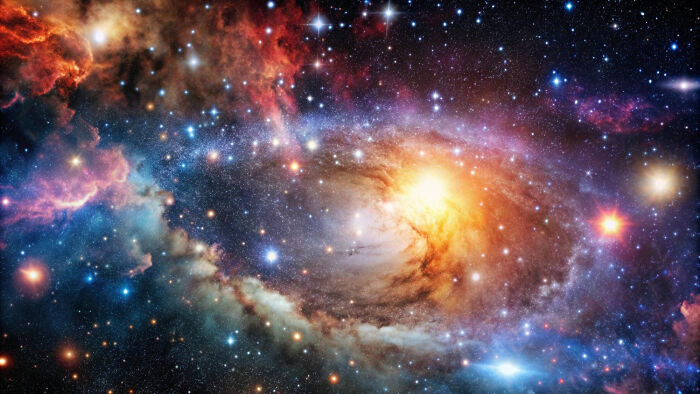 How incomprehensively large the universe is.
UrdnotZigrin replied:
There are about 400 billion stars in our galaxy, with an average of slightly more than one planet per star. That means that within our galaxy, there are over 400 billion opportunities for life to have evolved. This isn't even counting all of the moons, comets, asteroids, etc. within our solar system, or even the idea that life could evolve twice on the same world.
On top of that, we live in a pretty average-sized galaxy that is one of over two trillion galaxies estimated to be within the observable universe. Given that the Cosmological Principle essentially says that space is the same in all directions, that would mean an average of over 400 billion chances for life to appear, 2 TRILLION times.
There is life elsewhere in this universe. No matter how rare the existence of life is, even if it's a 1 in a trillion chance, that's still more than 800 trillion chance of life appearing.

To me, it's impossible for there not to be more life in all of the the universe. We may never know about them, but they are out there, somewhere.
"And still it's all a speck I'm at 100 billion stars in a galaxy we call the Milky Way. It's 60,000 trillion miles from one end to the other and still that's just a fraction of the way. Cuz there's 100 billion galaxies that stretch across the sky filled with constellations planets moons and stars. And still the universe extends to a place that never ends which is maybe just inside a little jar."

"We are thinking in a way that separates intelligence from the rocks. Where there are rocks, watch out! Because the rocks are going eventually to come alive, and they'll have people crawling over them." --Alan Watts
I think that it can be pretty arrogant of us to think we're the only intelligent type of life form in the whole universe. There's probably life out there but not life forms as they are on Earth. They may just be single cell organisms or whatever. Bacteria...
The Fermi Paradox explores why this huge probability of life elsewhere without us having yet made contact with it actually means we never will. It is a really interesting topic to delve into, if you are interested.

While something like the overview effect might seduce you, let's not forget that the astronauts are in an environment where day and night don’t exist in the usual way, are cut off from family and normal life, and know they're floating in a vacuum. It can be a lot to take in, so while space travel is incredible, it's also incredibly challenging on a human level.
Strange is it not that despite knowing all the dread that space has in it, we still just can't stop thinking about it, learning about it and knowing about it? There’s probably something in us, some deep, restless curiosity, that makes us keep reaching out.
We build bigger and better telescopes to see farther. We launch robots and satellites to explore planets we’ll probably never walk on. We send things into the void, just in case someone, or something, is out there listening. Humanity just keeps trying!
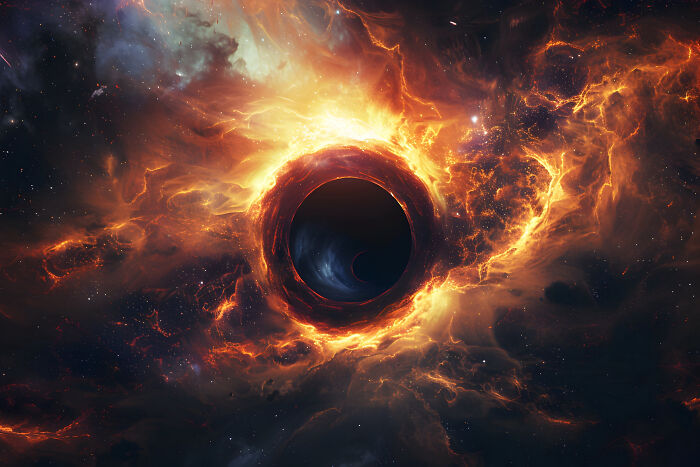 The sheer size of everything. There is a black hole called TON 618 that has a diameter 30 to 40 billion times our solar system with a mass of 40 billion suns.
“Space is big. You just won't believe how vastly, hugely, mind-bogglingly big it is. I mean, you may think it's a long way down the road to the chemist's, but that's just peanuts to space.” ― Douglas Adams
John Q. Public doesn't even fully grasp how far away the moon is from the earth, let alone the scale of the solar system. I blame all the pictures/graphics/videos that are used when explaining/teaching astronomy. I also think that's how a lot of flat-earthers get started down that rabbit hole. They don't have any concept of the physical reality beyond the earth (and sometimes not even upon the earth).
This numbers are extremely wrong and a bit wrong. Nebula around it is 2x our galaxy, but black hole size is 40x Neptune orbit. So much less then 30 to 40 billion times our solar system;D. Mass is 66 billion times out sun so 1.5 more then in here. Much smaller error.
The original estimated mass of 66 billion solar masses was revised in 2019, when new measurements found a lower velocity of the surrounding gas, placing the estimated mass at ~40.7 billion solar masses.
Load More Replies...
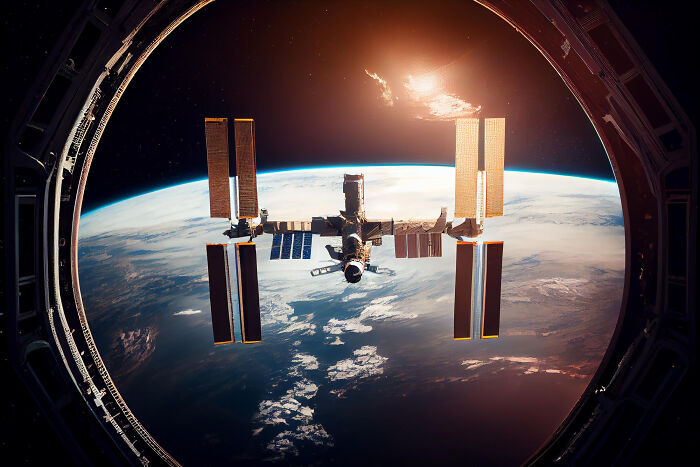 Astronomer here! There are a lot of things posted here that are not really likely to happen any time soon or affect your life on Earth much. So, if you want something to worry about, may I introduce you to the Carrington Event of 1859. Basically Carrington was a scientist who noticed a flash from a huge cluster of sunspots, which was the biggest coronal mass ejection from the sun ever recorded (aka a ton of material ejected from the sun at high speeds). It hit Earth within a day- aurora were seen as far south as Hawaii, wires on telephone poles burst into flame, and telegraph operators even reported contacting each other *when not connected*. If a similar event were to strike Earth today, it would cause billions of dollars in damage, because blown transformers are super hard to replace and a lot of satellites wouldn’t be able to handle it (and it goes without saying you’d have a serious radio blackout for a bit until it ended on a ton of essential frequencies).
The crazy thing about the Carrington event though is we really have no idea how often such events happen. But we do know that in 2012 there *was* a Carrington-level solar flare that barely missed Earth...
Edit: for those making “next in 2020” jokes, this is not super likely this year. We do know these biggest flares happen during solar maximum- the sun has an 11 year cycle of sunspots and the period with the most is solar maximum. We are just coming out of a minimum so the next max would be 2025-2026 or so.
However we really don’t know how common these big flares are. Interestingly data from other stars shows they seem to be much more common around other stars than our own, with huge implications for life in some cases.
Edit 2: apparently this was on a YouTube channel this week coincidentally, you don’t need to be the 100th person chiming in to mention it.
"We are just coming out of a minimum so the next max would be 2025-2026 or so." GULP
This is the worst possible time in history for bad leadership. 🤦🏻♂️ And dealing with supporters who revel in the most cartoonishly unhelpful positions people can land on.
Yes, it's definitely a bad time to have an idiot as your president
Load More Replies...
Imagine waking up and its like 1782. It will not be an easy fix. There are no warehouses full of replacement transformers etc sitting waiting to be shipped out. No power, no internet, failed satellites, blown pipelines. So, just wondering. How sharp are your coopering, blacksmithing and husbandry skills?

None of those, but... My EMS, Firefighting, and Rescue skills are top. Also, my Infantry skills are still pretty decent.
Load More Replies...
Wait. So the flare was so big, actual fire hit us? Is that what he means by telephone poles burning or am I misinterpreting?

It was the wires that burned. Essentially the solar burst sent out a huge electro-magnetic wave (highly simplified but you get the picture) which hit the transformers, causing huge power surges down the lines causing them to overheat and briefly burst into flames. Have you ever seen a lightbulb filament burn out after a power surge? Same thing but on a massively greater scale.
Load More Replies... 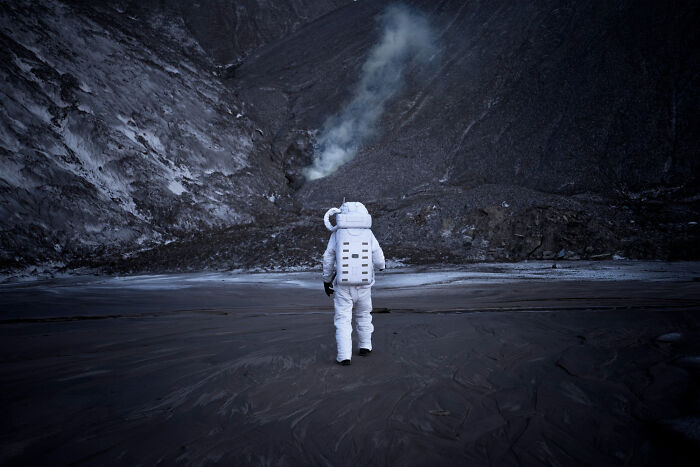 You'll never set foot on another planet, and humans are unlikely to ever set foot in another system at all.
Hell, it would take even the Voyager craft 83,500 years to reach the next nearest star and that left in the 1970's and is already nearly dead.
Chances are, humans will die as a species on Earth, but certainly without ever having seen any other system.

Star Trek says one day we'll live on a united Earth. Don't hold your breath.
Load More Replies... It's possible that this is completely wrong. Traveling these distances would require technological advances we can't even imagine, but that doesn't mean said advances are impossible. tl;dr We don't know what we don't know.

there are some theories. eg Alcubierre drive. there will be better ones.
Load More Replies... You see, we've been watching you. You can explore your system as much as you like but only unmanned probes will be allowed further. You won't be allowed out until you, as you like to say, "Grow the %$#@ up"

Heck, we have not even explored the deepest part of our oceans very much.
April 5, 2063. First contact with an extraterrestrial intelligent species. Yes, that's a fantasy. It's imagination. But it's as 'true' as your claim' because you can't prove your claim to be correct. You assume that it is. I choose to assume that it isn't. Time will tell, because no one knows the future.

This is all wrong. As seen on Alien: Earth, writers and billionaires are into BRAIN UPLOADING, into an android body. Elon is working on it.
I don't think space will ever stop fascinating humans. In fact, did you know that experts have compared the universe to our brains? That's right! Crazy as it sounds, our brains and the universe actually have a lot in common.
Even though they're totally different in size, scientists have found some surprising similarities in how they’re structured. Both are made up of huge, complex networks, the brain with around 69 billion neurons, and the universe with over 100 billion galaxies. In both cases, those pieces connect in long filaments and clusters, kind of like a giant cosmic spiderweb.
However, what's more cool is that about 30% of each system is made up of the active stuff, neurons in the brain, galaxies in space. The other 70% is kind of mysterious. In your brain, it's water, and in the universe, it's dark energy, and we’re still figuring out what that means!
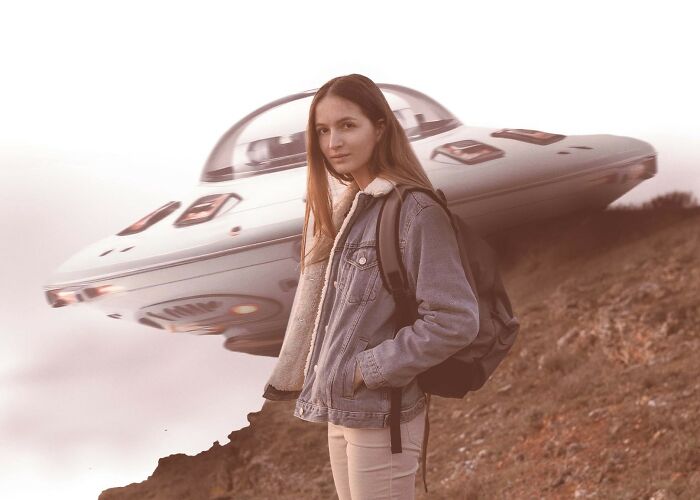 If we built a ship, and some portion of the population left in it to explore like Star Trek, we would never see those people again.
llathosv2 replied:
Nobody seems to appreciate that your point is about relativity.

When the billionaires finally reach Mars, they may suddenly realize that their vast wealth was a social construct based on the consent of 8 billion people who are now 125 million miles away, celebrating.
How many people realize that the billionaires who want to colonize Mars, are really sending everyone who goes on a one way trip? And, those said billionaires, well they will still be here on Earth, with their millions.

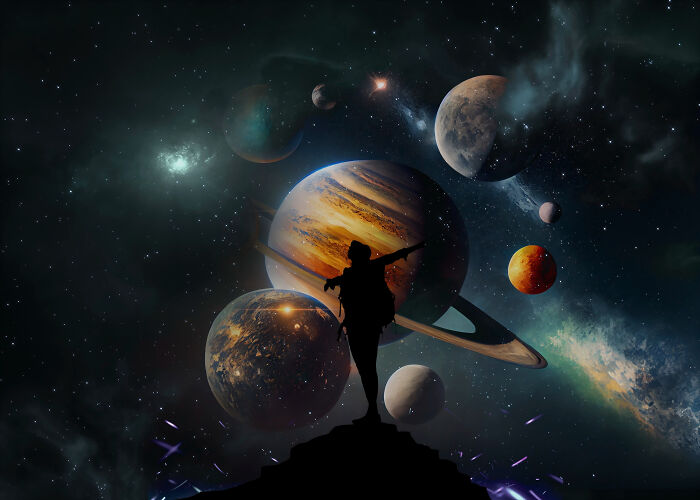 That we, as a planet, are literally flying through Space.
I dont just mean around the Sun, because our Solar System is flying through space as well.
Along with our Galaxy too. Where Earth was one minute ago is a point in space that we will never return too.

Aww, man. All those idiots who invented time travel, only to find themselves floating, watching the Solar System fly away from them.
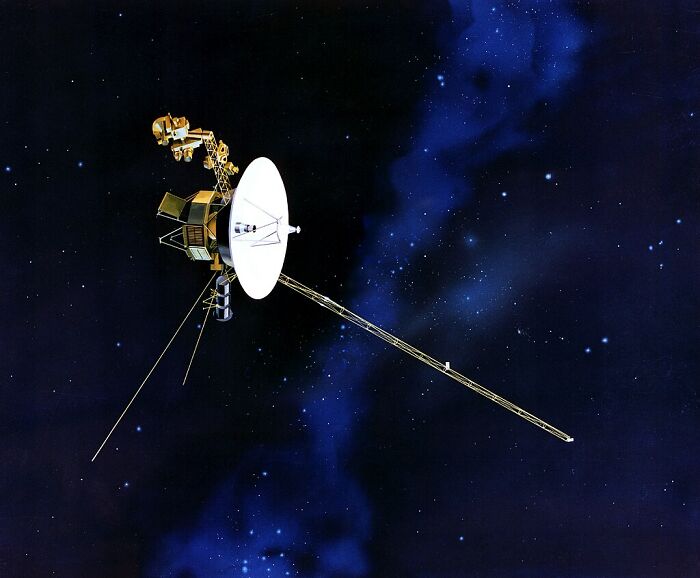 The fact that Voyager 2 Space probe after over 40 years has not even hit a pebble.....
disgruntled-capybara replied:
I find the Voyager probes to be fascinating, especially because last I knew, Voyager 2 is still functioning and sending back a limited amount of data. But even the whole mission--suddenly bringing all these worlds into sharp focus that had never been seen up close before. All the questions answered and places explored. And there it is, still floating along and talking to us. For now.
Yeah, about that debris, I think we should have a plan to clean it up. Whoever put that stuff up there should be responsible for cleaning it up. That would mostly be the U.S. and Russia. We won't do anything because it will cost mega money. We have to save up to buy Greenland, persuade Canada to become a state, and solve all the world's conflicts so that he can be Person of the Year.
Load More Replies... Well folks, that's it from our end, and now we leave you to enjoy the rest of the terrifying thread. I hope that you don't get as caught up in it as I did and end up with an existential crisis! Also, if you know any other such bone-chilling space facts, don't let them float in the dark void, but share them with us in the comments below!
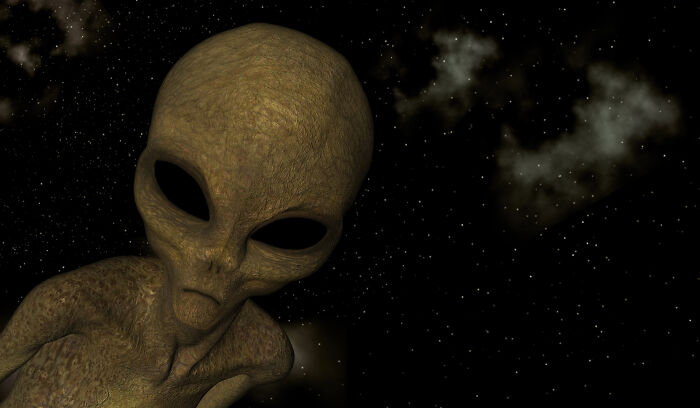 The number of theories as to why, if intelligent life besides humanity exists, it hasn't contacted us on a large scale yet. To wit, some of them are:
1.We lack the capacity for interstellar communication
2. Earth is essentially a space backwater, and that humans are so relatively primitive that alien life has decided it's better to leave us alone, like a nature preserve
3. The same, except the aliens are afraid of our savagery relative to theirs
4. There is no (intelligent) life besides ours
5. We have been in contact, but cannot perceive said beings
6. Extraterrestrials are too distant to be contacted.
7. Dark forest theory. intelligent civilizations hide and remain silent out of fear of being discovered and destroyed by other, potentially hostile, civilizations.

It's just the Prime Directive. They can't interact with us until we develop warp drive technology later this century. Saw a film about it once.
The universe is so vast, and humans have only been broadcasting "we are here" for a little over a hundred years. Even if other civilizations are listening to the Earth, would they have received the message yet?
I like that cartoon where a alien is explaining it to a human. Can't find it but something along the lines of "Imagine there is an angry monkey. He is filling his house with weapons and shouts all day. He looks out the window and the neighbourhood is empty. Should he be surprised?"
The best proof of the existence of intelligent extraterrestrial life, lies in the fact that they never contacted us

7. The aliens have no idea we exist. 8. Even if they did, they have no means of traveling outside their solar system. 9. They are too busy binge watching CSI episodes.
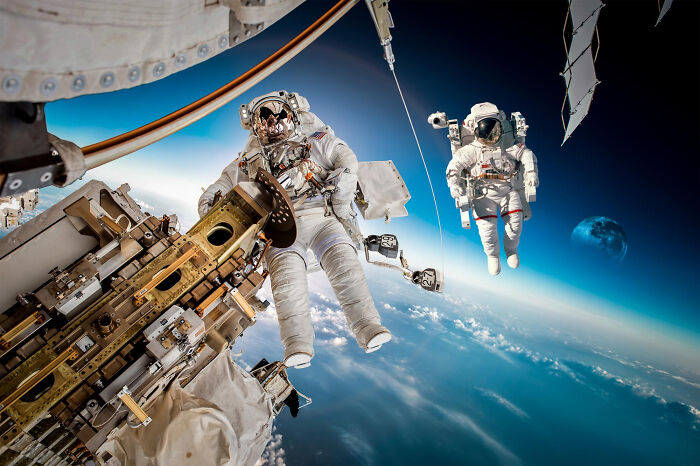 It’s not actually empty and every time astronauts go outside of the space station they risk pieces of debris flying through their bodies like bullets.

To be fair, I'm not convinced that staying inside the space station offers much more in the way of protection! 🤔
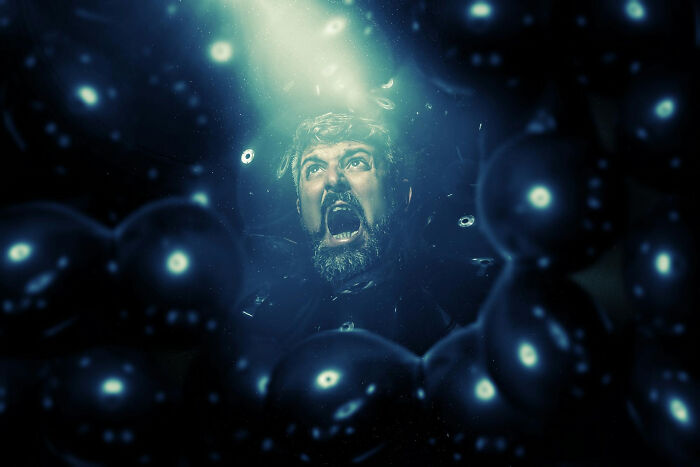 No one can hear you scream.
Relevant_Maybe_9291 asked:
Does this all mean if something exploded in space like a missile or a ship it doesn’t make a sound?
theObfuscator replied:
Yes and no. Sound needs a medium to travel through. Conventional explosives are nothing more than extremely rapidly expanding gas and heat. If you were close enough to an explosion in space for this expanding gas to impact you, you would feel and “hear” it. If you were far enough away to see it but not have the explosion itself reach you, the sound cannot move through the vacuum that exists between you and the edge of the explosion’s influence.
 I can't accept the fact that there is no end in space. But if there is indeed an end, then... what's beyond it?
I'm stucked in absurdity.
Edit: In the numerous answers I've received, the one that seems to come back the most is "the universe is curved, you would end up back where you started". Seems fair enough. Then again,that wouldn't mean there is no limit. On the contrary, that would just mean we are trapped in (or on the surface of) a sphere, but there is still a limit to this sphere. So the question remains... what's beyond it?
I look at the universe like this: The universe is a balloon. The air is like the vacuum of space. Floating around inside the balloon are a few particles, those are the galaxies. If you zoom in enough, the atoms of the particles are the individual solar systems. Zoom into the electrons and those are planets. On one of those planets is another balloon. There the cycle starts again. Who knows how many times this cycle repeats. Millions? Billions? Infinitely?
And still the universe extends to a place that never ends, which is maybe just inside a little jar. It's a great big universe, and we're all really puny.
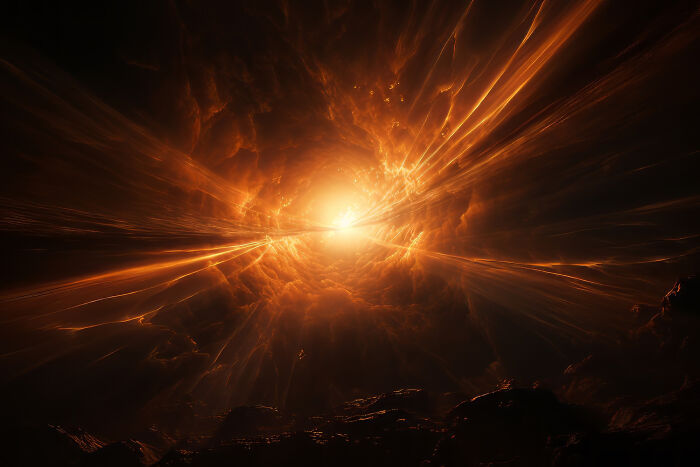 There are things out there that could k**l you before you can conceive of your own demise. Fun ones are a gamma ray burst pointed straight at Earth or a false vacuum decay!!
You’ll either be melted or turned into non existence!!
so I wouldn't feel any pain or fear? it seems like the best way of dying.
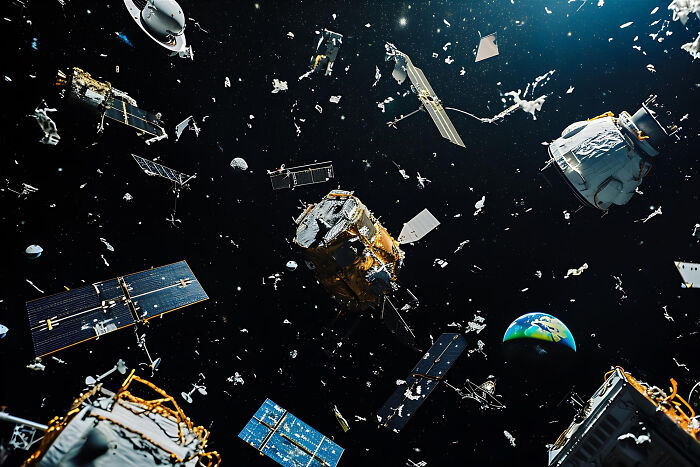 Here’s one closer to home. The Kessler Effect is the theory that a single destructive event in Low earth orbit could create a cascade where satellites break up into tiny fragments taking out other satellites, breaking up into smaller fragments and so on, until the earth is completely surrounded by a massive cloud of tiny flying death shrapnel which would make leaving this planet almost impossible. If you look up how much space debris there is already up there and how many satellites currently orbit, plus the continued growth of the commercial space industry... I think about it a lot.
This is one of the core concepts in Cowboy Bebop. Earth is nearly uninhabitable due to the amount of space debris surrounding it and regularly hitting it.
 If you gathered together all the matter in the universe we can observe right now and squished it together until it had the density of water (1gm/cm^3) it would fit into a cube about 1 light year on each side. There are several disturbing things about this:
-A single light year is almost unimaginably huge
-A cubic light year is a ridiculous volume of space
-The observable universe is 33 orders of magnitude larger than that
-It is almost entirely empty.
I would offer to help but I'm planning on washing my hair (assuming I can find it)! 😉
Load More Replies... 

My understanding is that space isn't actually empty. It's just filled with dark matter that we can't really interact with, we don't really know what it is exactly, and we have pretty much no understanding of other than that it's fundamental to the universe.
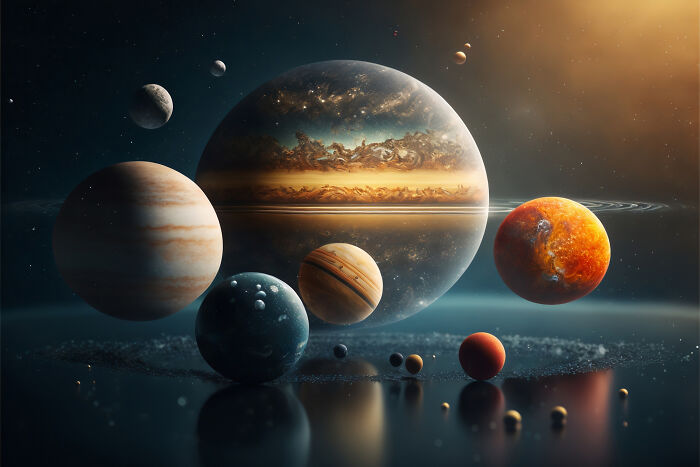 Rogue planets
Such objects have been ejected from the planetary system in which they were formed or have never been gravitationally bound to any star or brown dwarf. If a rogue planet invade our Solar System, things could go very wrong.
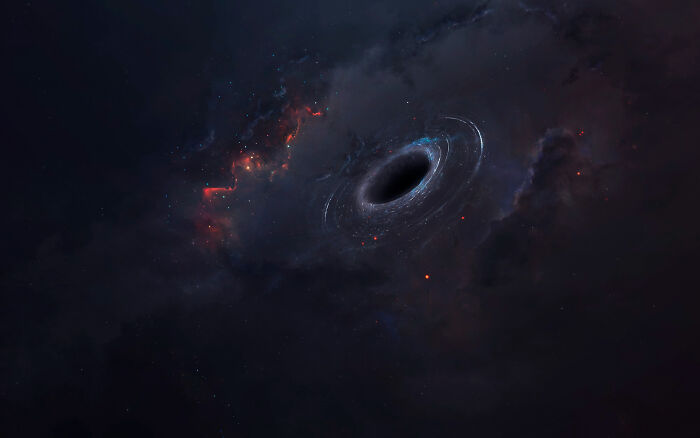 The largest black hole we have discovered has a diameter of 490.000.000.000 km. Earths diameter is roughly 13.000 km.
It's over on the right side of the image. You might have to zoom in a bit...
Load More Replies... 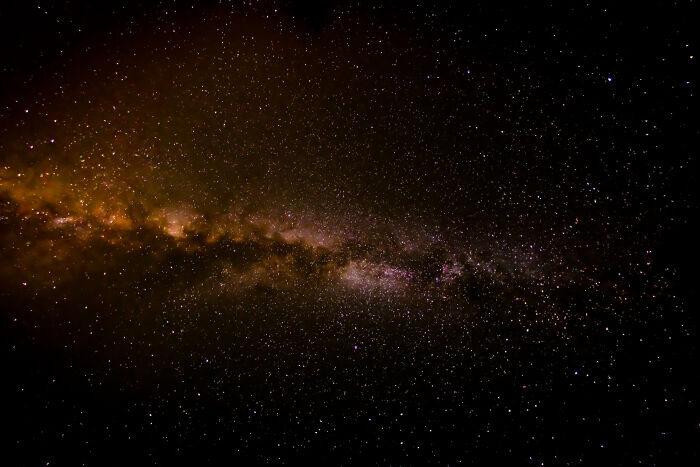 The farthest galaxy we can detect was 13.4 billion light years away when it emitted the light we see today.
That light (not the galaxy, the light itself) is three times as old as the Earth.
No, it wasn't. The light travelled for 13.4 billion years, but due to the expansion of the universe, the distance at emission time was different. The objects that emitted light of this kind of age were generally closer than the distance travelled by the light itself.
 It's size and age alone is disturbing. I have had an ongoing existentialcris crisis since I was a child when I realized just how small and vulnerable we are.
"Space is big. Really big. You just won’t believe how vastly hugely mindbogglingly big it is. I mean you may think it’s a long way down the road to the chemist’s, but that’s just peanuts to space" - Douglas Adams.

Yes, its age is unfathomable. Even so when we realize that our universe is an "adolescent"if not a child: it is about 1.3*10^10 years old and its life expectancy is about 10^100 years.
 Vacuum decay is one of the scariest concepts to me. We don't know if it exists, and we won't know until it's too late.
Tom_Brokaw_is_a_Punk replied:
On the other hand, you'll never know. You'll just blink out of existence one day. So nothing to worry about.
 On the surface of Mars right now is a Blur CD
God help us if aliens find that first.
[deleted] replied:
You need to answer this, and it is vitally important. What blur cd?
the_Athereon said:
Beagle 2 crash landed with a Blur album saved on board its computer. The intent was to broadcast the music playing from the surface of Mars.
[deleted] asked:
The second vital question, does that album include parklife? If not all hope is lost
 The Bootes void. An area of space where there should be 50,000 or so galaxies (compared to other areas of the same size)but there's only about 60. Could just be empty space for some unknown reason, or it could be an ever expanding intergalactic empire using Dyson spheres. Also I think it appears to be growing but that could just be galaxies moving away from the void
Edit: so it turns out it's 2000 and obviously it's not gonna be aliens but the theory is still cool af.

I think it's more likely they would use Dyson swarms, which are a lot harder to detect
 MOBILE
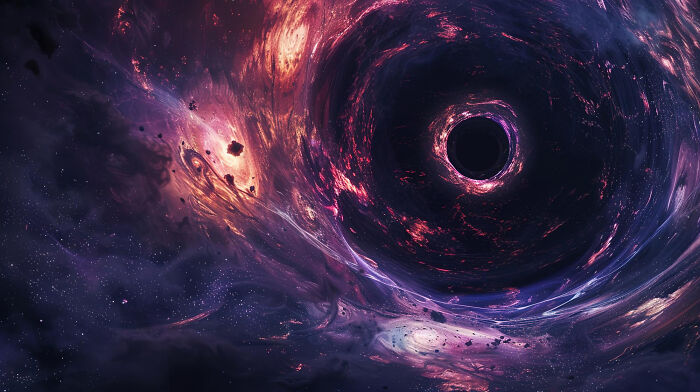
BLACK HOLES.
Voyager 1 will outlive planet earth.
EDIT: Wow! Didn’t expect this post would generate so much interest. Couple of clarifications. First, I was referring to Voyager 1 not 2 - so fixed that. (Which is not to say that Voyager 2 also won’t also outlive planet earth.)
Second, my source mentions that it is “plausible” to imagine that Voyager 1 will outlive our planet given how incomprehensibly vast space really is. You can watch the interesting and rather fun video here https://youtu.be/PmmHfhwFlQQ.
We still don't know exactly how it came into existence.
[deleted] replied:
true.
Fine tuned?
Coincidence?
Big Bang?
Something else?
it always existed?
whatever the reason, it made many people very angry and has been widely regarded as a bad move
What was before the big bang? I think it is just impossible for a human to comprehend pure nothing or infinity. I myself had a stroke at age nine due to a ruptured vertebral artery and lost a third of my visual field. I can confirm that it is not black, a good analogy is it is like what you see behind your head. on the other hand, infinity is so large that if you spent your whole life writing a one then zeros on paper, that insane number would still be 0% of infinity. I just think there is no way to fully understand the universe and there never will be. This is why even ancient societies explained things with gods because they didn’t understand how the reality we live in started and I don’t think we ever will.

There's also the fact that everything in the Universe came from the Big Bang, so there's nothing we could measure to know what (if anything) was before that.
I think everything is terrifying about space, and I f*****g love it.
But one thing it scare me a lot, it's if space in infinite, imagine what kind of gigantic monster can be in there.
At some point in the distant future the Milky Way and Andromeda galaxies will collide, and yet despite each galaxy containing hundreds of billions of stars the distance between any two stars is so vast that the galaxies will simply pass through each other. The chance of two stars actually hitting each other is infinitesimally small. The gravity of the larger galaxy (the Milky Way) will then pull the other back towards it and another fly-through will happen, then another and another until the two merge to form a single galaxy.

We, the earth, the solar system, the galaxy, the whole visual universe is only a firecracker bang moment in the larger macros. It won't last long, but life found a way to exist in the flickering limitation of a firecracker bang. There will be other firecrackers. If there isn't, there's nothing we can do about it. So there.
Interesting. I think it's good there's some things humans will never know, as striving for that knowledge keeps life interesting.

At some point in the distant future the Milky Way and Andromeda galaxies will collide, and yet despite each galaxy containing hundreds of billions of stars the distance between any two stars is so vast that the galaxies will simply pass through each other. The chance of two stars actually hitting each other is infinitesimally small. The gravity of the larger galaxy (the Milky Way) will then pull the other back towards it and another fly-through will happen, then another and another until the two merge to form a single galaxy.
We, the earth, the solar system, the galaxy, the whole visual universe is only a firecracker bang moment in the larger macros. It won't last long, but life found a way to exist in the flickering limitation of a firecracker bang. There will be other firecrackers. If there isn't, there's nothing we can do about it. So there.
Interesting. I think it's good there's some things humans will never know, as striving for that knowledge keeps life interesting.








































 No fees, cancel anytime
 then open in external browser


 and click "Open in External Browser"