Get Premium
Dark mode theme is available exclusively for premium users. Learn more about the benefits of subscribing.
No fees, cancel anytime.

 Dark Mode Ad-Free Browsing Unlimited Content
 Ad-Free Browsing Unlimited Content Dark Mode
Join 1.2 million Panda readers who get the best art, memes, and fun stories every week!



There are some moments in time that are so incredible that they're almost unbelievable. The "receipts or it didn't happen" things.
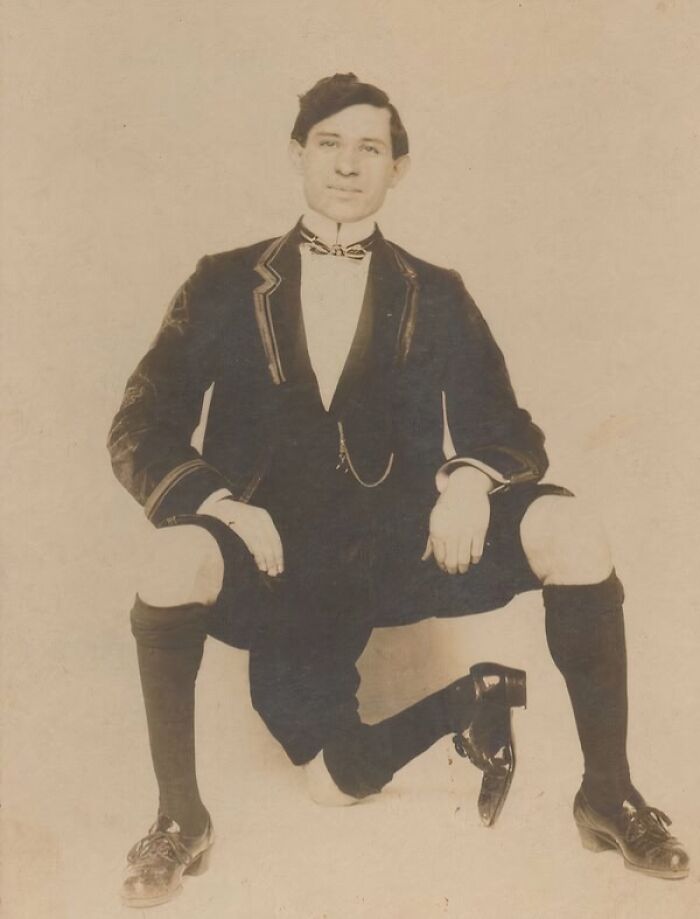
Like a man born with three legs, four feet and 16 fingers who worked as a circus performer by day and built a relatively "normal" life with his wife and four kids. Or how a guide dog saved her owner's life by leading him down 78 flights of stairs in the World Trade Center before they collapsed on the morning of the 9/11 attacks.
Facebook pages Old Historical Pictures and Old Photo Archive share such "receipts" of fascinating stories from years gone by. The unique and rare vintage photos include some surprising facts about famous folk, as well as extraordinary tales of ordinary people.
Bored Panda has put together a compilation of the best. Keep scrolling as you take a peek behind the curtain of history and don't forget to upvote your favorites.
This post may include affiliate links.
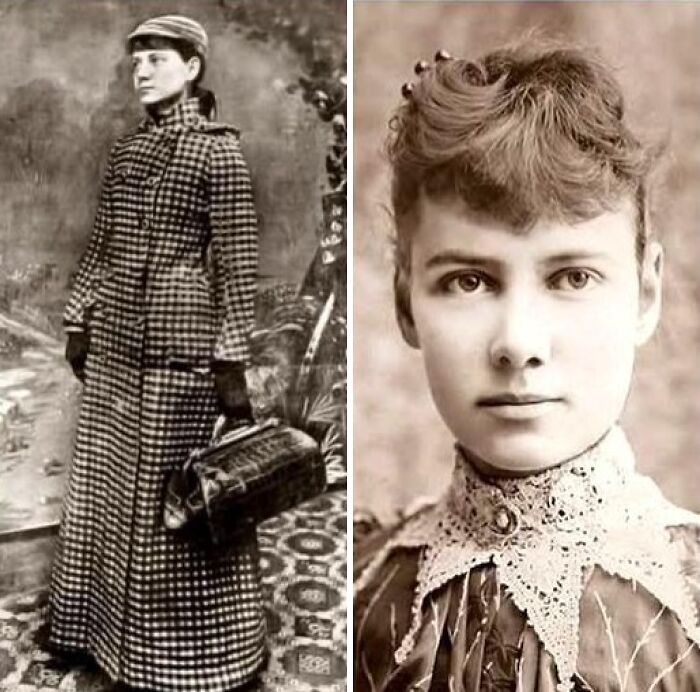
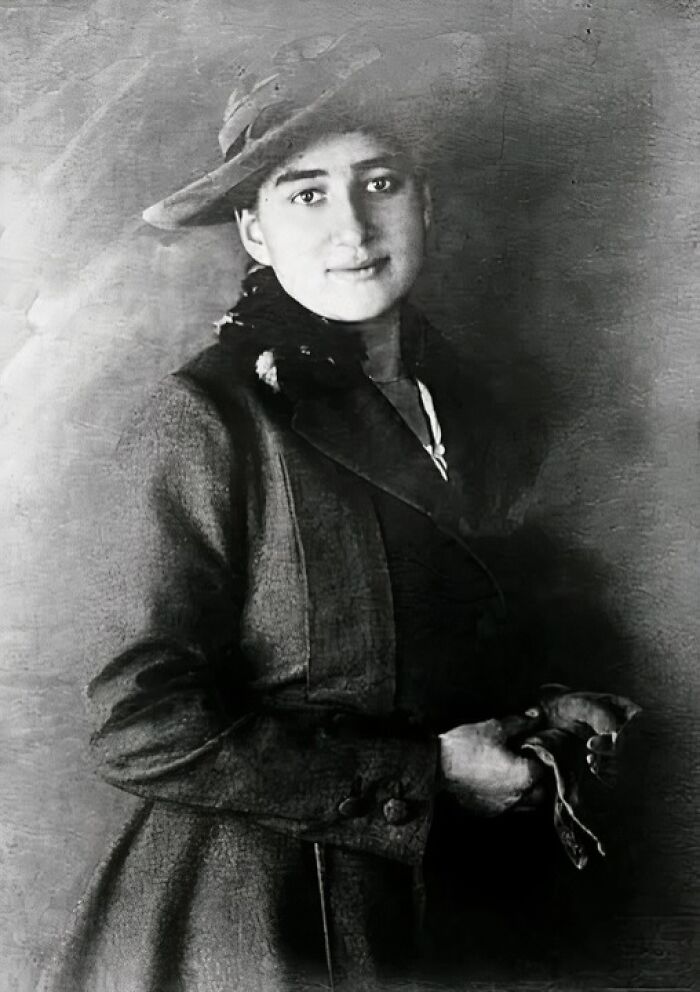
At 18, Elizabeth Cochrane lived in Pittsburgh when she read an article titled What Are Girls Good For, which claimed their only purpose was to have children and manage the home. Outraged, she wrote an anonymous rebuttal that impressed the local newspaper editor so much that he hired her.
Following the custom of the time, he gave her a pen name taken from a Stephen Foster song: Nellie Bly. Passionate about investigative journalism, Bly was assigned to "women’s topics" like fashion and society.
However, after exposing the harsh conditions of factory workers, she traveled to Mexico at just 21 to report on the working-class population. Her writings got her into trouble with the authorities, forcing her to flee.
At 23, she was hired by Joseph Pulitzer’s New York World and undertook the investigation that made her famous: she posed as a patient in the Women’s Lunatic Asylum in New York. Her shocking report led to reforms in the treatment of the mentally ill.
In 1889, inspired by Around the World in 80 Days, she embarked on a solo journey around the globe. Her return after 72 days set a record and made her an international celebrity. At 31, she married industrialist Robert Seaman and left journalism, helping run his business and patenting two inventions.
During World War I, she returned to reporting, becoming one of the first women to cover an active war zone. She passed away on January 27, 1922, at the age of 57, leaving behind a groundbreaking legacy in journalism.

This chick ruled. I mean, to do what she did with her life is incredible. No matter the gender. But specially as a female when so much opposition and prejudice existed against a woman attempting to do anything inside the world that men had carved out for themselves.
If history classes were as fascinating as the stories on this list, I might have paid a lot more attention. Sometimes it's not the famous historical figures who hold the most interesting stories. But rather the ordinary people who never made it into the text books.
Take Francesco (Frank) Lentini for example. Born in 1889, with three legs, a fourth foot extending from his knee, sixteen fingers and two nether regions. His rare condition developed while he was in the womb. Lentini had a parasitic twin connected at the bottom of his spine. As time passed, he became the dominant twin, and the other one stopped developing.
The baby's parents wanted his extra leg amputated but surgeons weren't willing to carry out the procedure at the risk of his life. He grew up being taunted and bullied because of his appearance, and earned the nickname "the little monster."
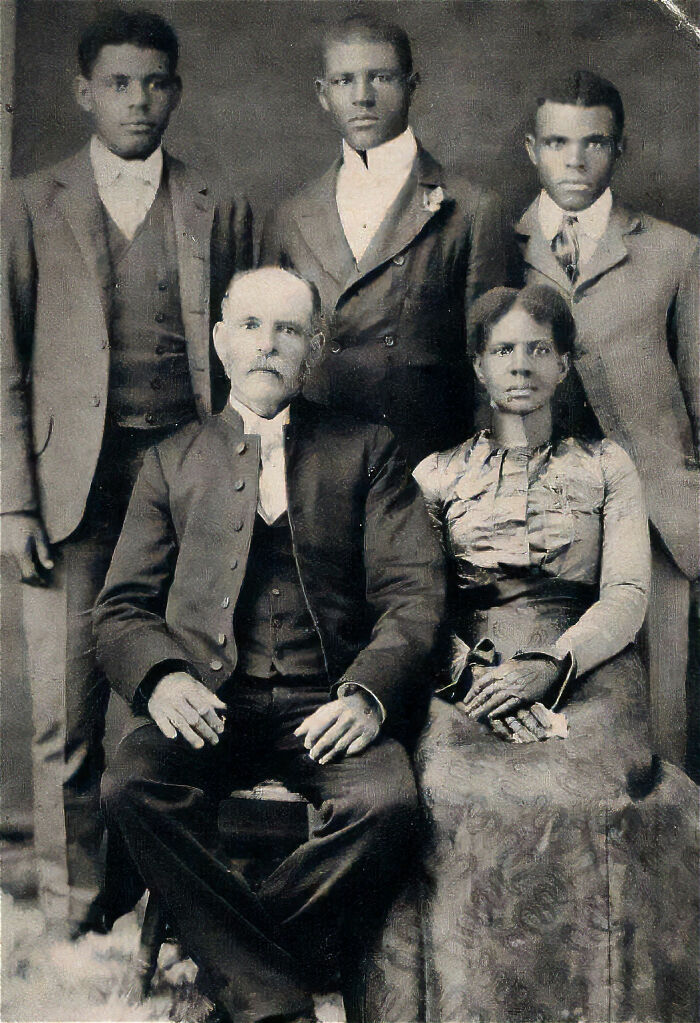
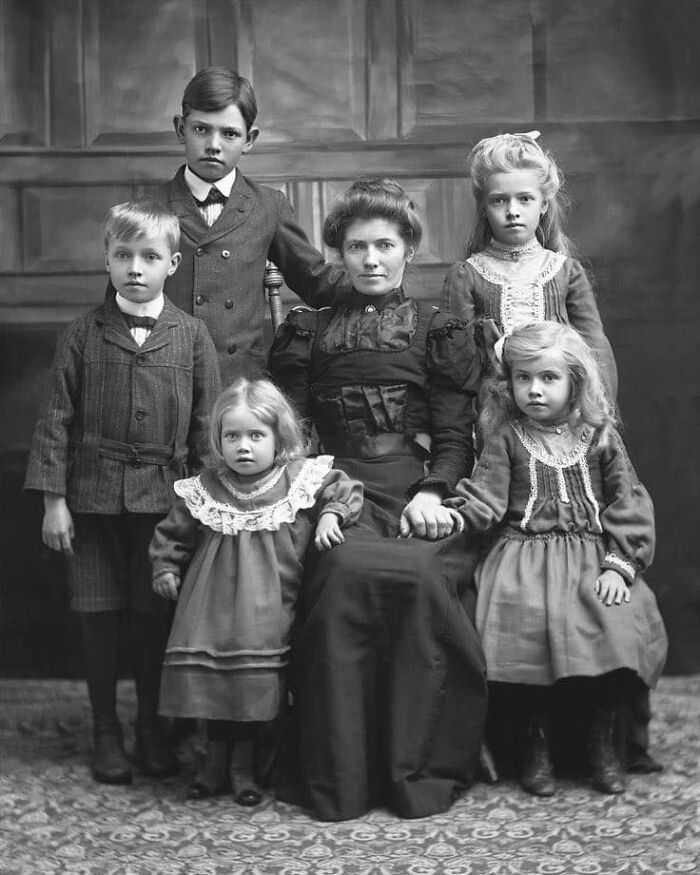
Biracial Family taken circa 1900, Tennessee, USA. He was Jim Turner, from an affluent white family in Henning, TN, and his wife Carrie Turner, a schoolteacher. Their sons George, William, and Hardin, who became a doctor. This is a stunning portrait of a family who defied societal norms and embraced their mixed heritage with pride, showcasing that love knows no boundaries.

Y'all pay no mind to the odd stares. Photographic technology was such the subject(s) had to hold a pose, and a stare, for multiple seconds or else be blurred in the image. I do have an issue with which AI-bot still can't deal with singular-plural breaks: which son, or sons, became physician/physicians?
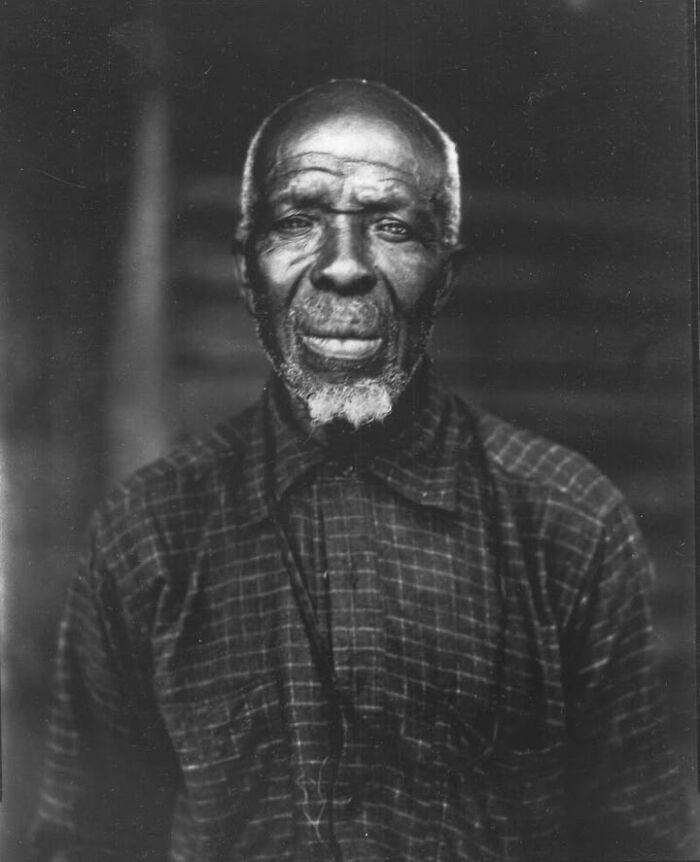
The last American slave ship docked illegally in Mobile, Alabama in 1860, carrying about 160 West African captives. Among them was Cudjo Lewis, who recognized how his birth culture might be erased while toiling in this new land.
So when he was freed, he purchased two acres and started a self-sufficient community of survivors of the last slave ship. Known to outsiders as Africatown, Lewis' neighborhood was modeled on his West African home, where extended families lived together, members conversed in their regional languages, and partook in traditions that might otherwise be lost to them in America. Today, Africatown still exists and houses the descendants of the nation's last slave ship community.

This is wonderful, and i am also angry... I am a 53 year old American - and I never heard of this. Why?? This should be celebrated and talked about more! But this country no longer resembles the America I used to know. It breaks my heart what's happening to my country.
But Lentini would go on to overcome his challenges and make history. In 1898 he traveled to America, and within a year, people were paying money to see him perform at the circus.
Instead of the "little monster," the Italian was billed as "The Three-Legged Sicilian," "The Greatest Medical Wonder of All Time, "The Great Lentini," and "The Only Three-Legged Football Player in the World," reports History Expose.
Lentini's talents, and extra leg, earned him celebrity status and a lot of money. He got married, had four kids, got divorced, got married for a second time and lived life to the fullest. He sadly died of lung failure in 1966, at the age of 77.
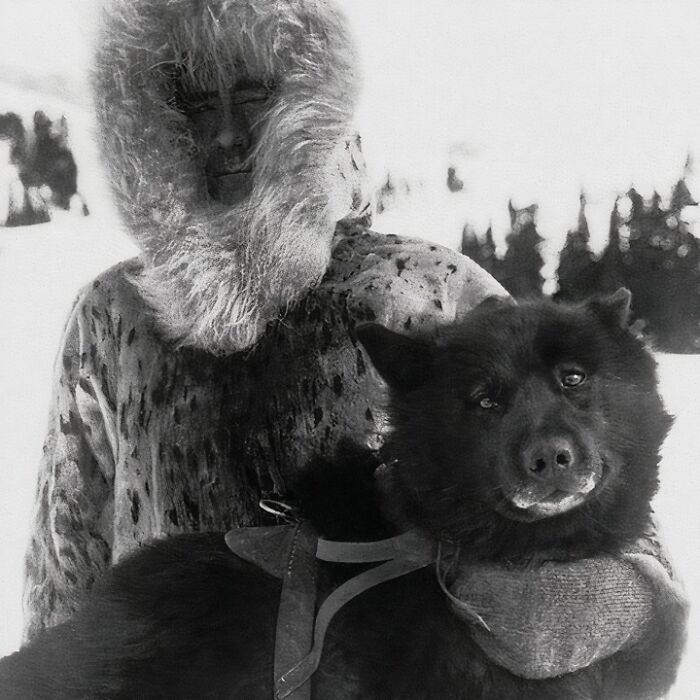
In January 1925, a diphtheria epidemic tore through Nome, Alaska. The closest medication was over 500 miles away — and the only way to transport it was by dog sled. More than 20 mushers volunteered to set up a relay to quickly move the antitoxin serum to Nome through brutal winter conditions in temperatures of 30 degrees below zero. Though a dog called Togo completed the longest and most dangerous part of the route, it was a husky named Balto who led the final team of dogs into Nome with the life-saving medicine and became a national hero.
Ya know, now there is a vaccine for diphtheria. Falls on RFK Jr's deaf ears. The arsehole.
For over 15 years after his father Bob Ross died in 1995, Steve Ross couldn't bring himself to stand in front of an easel, let alone teach his painting classes. But now, the son of the famed "happy trees" painter has picked up his brush again — and he's teaching the Bob Ross technique in various states.
I'm still astounded how Bob Ross was a former Air Force Master Sergeant. And good for his son to overcome his trauma in his own time.
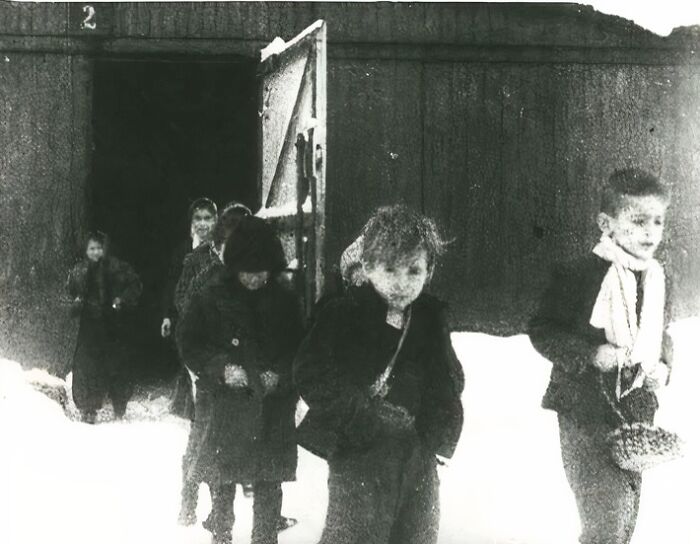
7 Oct 1943, Ottla Kafka, beloved sister of author Franz Kafka, was gassed on arrival at Auschwitz after volunteering to escort a group of orphans from the Terezin ghetto so they wouldn’t be afraid.
It's not only human beings who go down in history for their heroic acts. The name Roselle deserves a special mention. The yellow labrador was taking a nap under her owner's desk one morning when she woke to the building shuddering. People were shouting and chaos ensued but the dog calmly got up and did what she was trained to do.
She led her blind owner Michael Hingson from his 78th-floor office down dozens of flights of stairs until they reached the bottom. "It wasn’t until they were outside that the group realized the extent of the damage caused to the World Trade Center during the 9/11 attacks," reports All That's Interesting.
With people running and screaming, Roselle led Hingson through the crowds and to a subway station. Just ten minutes later, the North Tower collapsed.
The day after she graduated high school in 1964, Dolly Parton left her home in Tennessee's Great Smoky Mountains and boarded the first bus to Nashville with a suitcase made of cardboard — and filled with songs. She quickly impressed Nashville's country music moguls with her compositions, but they insisted that her voice just wouldn't make her a star.
A child with polio learning to walk inside parallel bars (around the time physical therapy was born).
Polio causes paralysis in approximately one out of every 200 cases. Survivors like this two-year-old child, often underwent months or even years of physical therapy to regain mobility.
Polio Rehabilitation Center Sudbury General Hospital, Canada, 1953.
A sharecropper mother from Transylvania, Louisiana, educates her children at home, focusing on letters and numbers. (1937)
Roselle received an award from the American Kennel Club in 2002 in honor of “canine excellence” among service dogs.
"Two years later, a veterinarian diagnosed Roselle with immune-mediated thrombocytopenia, a disease that affects blood platelets," reports the All That's Interesting. "Hingson believes the toxic air conditions that she faced helping him escape on 9/11 caused her condition."
Roselle lived another seven more years before she crossed the rainbow bridge on June 26, 2011, with Hingson by her side.
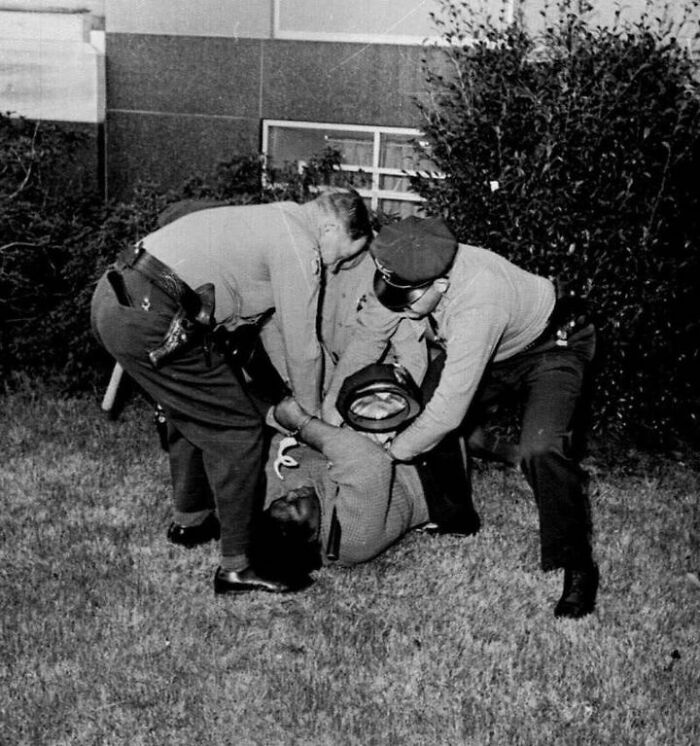
In January 1965, an Alabama woman named Annie Lee Cooper lined up at her county courthouse to vote. This was not her first attempt, as she had been turned away from the polls just two years earlier. And after failing the impossible literacy tests made to keep Black people from the ballot box, Cooper decided that this time would be different.
When a notoriously racist cop named Jim Clark began to demand that she abandon her spot in line, Cooper did her best to ignore him. But when he poked her in the neck with his billy club, Cooper took action — and punched him square in the face.
Annie Lee Cooper lost her job and got blacklisted just for trying to vote - in 1962. More here: https://www.pushblack.us/news/she-raised-her-fist-he-could-raise-his-baton and here: https://allthatsinteresting.com/annie-lee-cooper
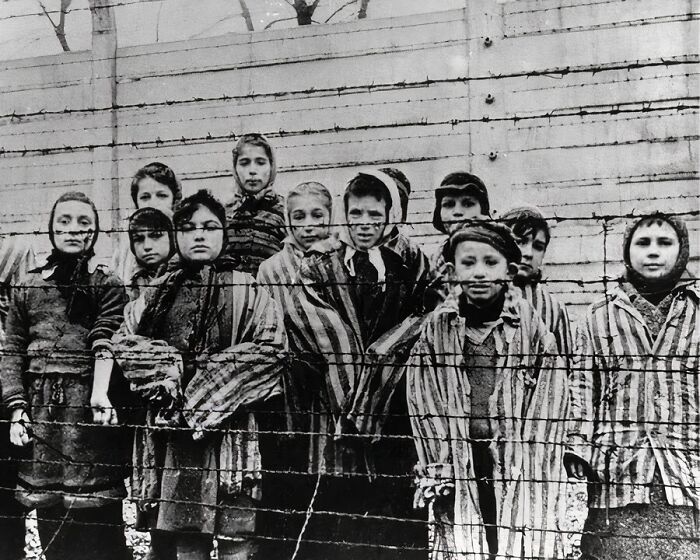
On January 27, 1945, Soviet scouts in southern Poland stumbled upon what appeared to be an abandoned N*zi camp near the town of Oświęcim. They had no idea that the camp even existed and were stunned to see thousands of emaciated and brutalized prisoners, some barely clinging to life, staring at them through the barbed-wire fence.
They just opened a concêntration camp in Florida. If you haven't heard of it look up Alligator Alcatraz. If your link is to a conservative news source, scroll down to the comments. Tells you everything you need to know about conservatives/Christians/Republicans. They are relishing the misery and suffering and can't hide it in the comments. True colors from the truly vile.
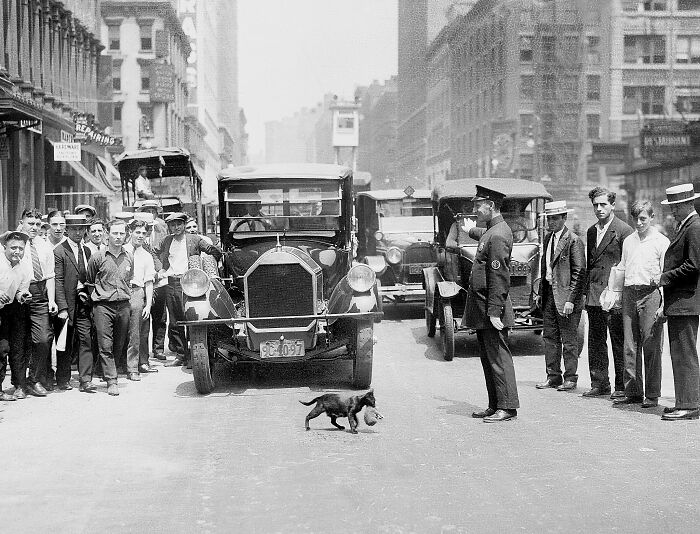
Cop stops the traffic so a mother cat holding a kitten can cross safely. According to the book "Great News Photos and the Stories Behind Them", photographer Harry Warnecke missed the original crossing but convinced the cop to reenact it three times - to the consternation of irate motorists - until he got the shot just right. It was the craziest thing that happened that year. New York, 1925.
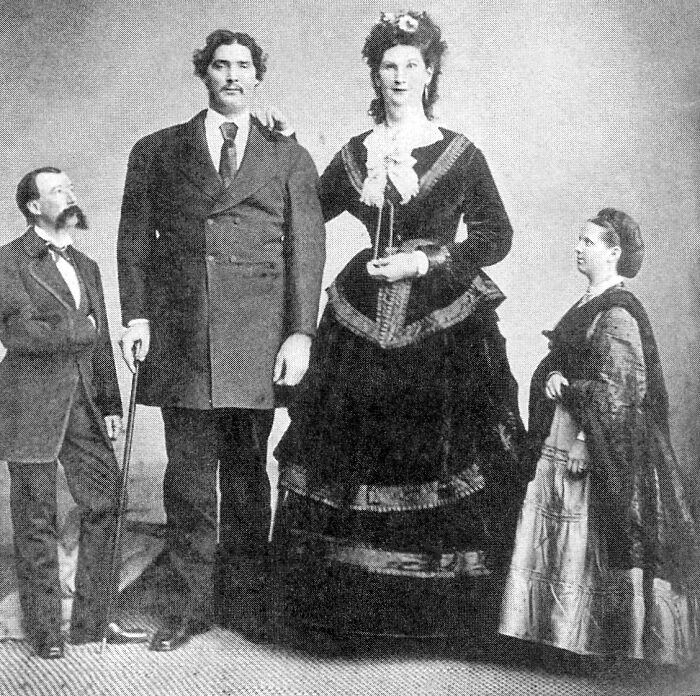
In 1871, Anna Swan married Martin Van Buren Bates in London. It was an eye-catching wedding — as both the bride and the groom stood almost 8 feet tall and, in fact, the bride was a bit taller.
Before I ready this I was thinking "wow, their kids look really mature!"
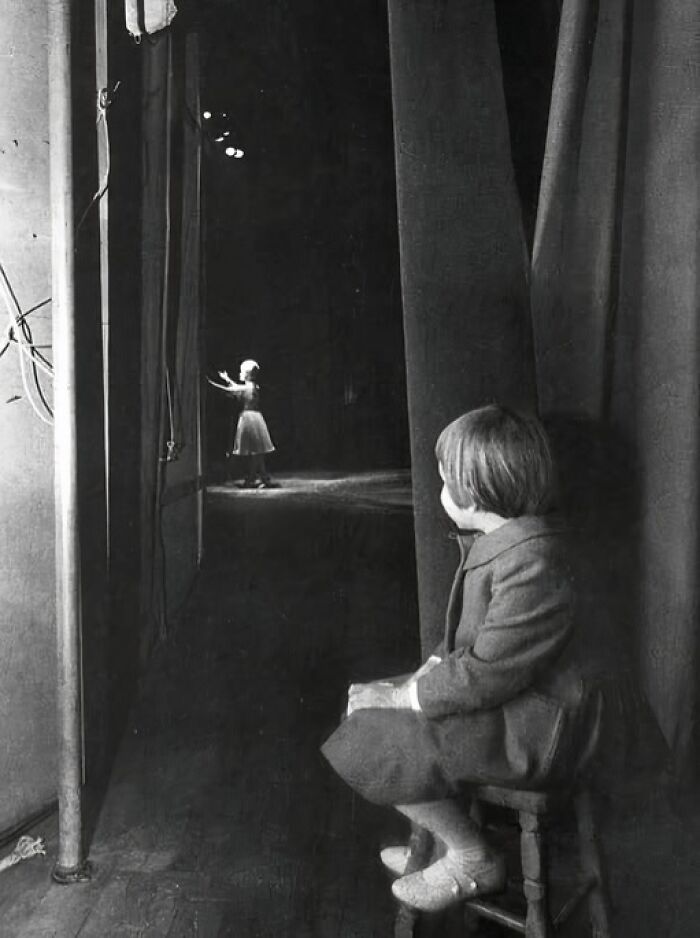
A young Carrie Fisher watches her mother Debbie Reynolds perform on stage. (1963)

GNU Carrie Fisher. She drowned in moonlight, strangled by her own bra.
Soba noodles deliveryman in Tokyo, Japan. 1935. Photo by the Mainichi Shimbun.
And sometimes I can't even get a bowl of cereal to the table!
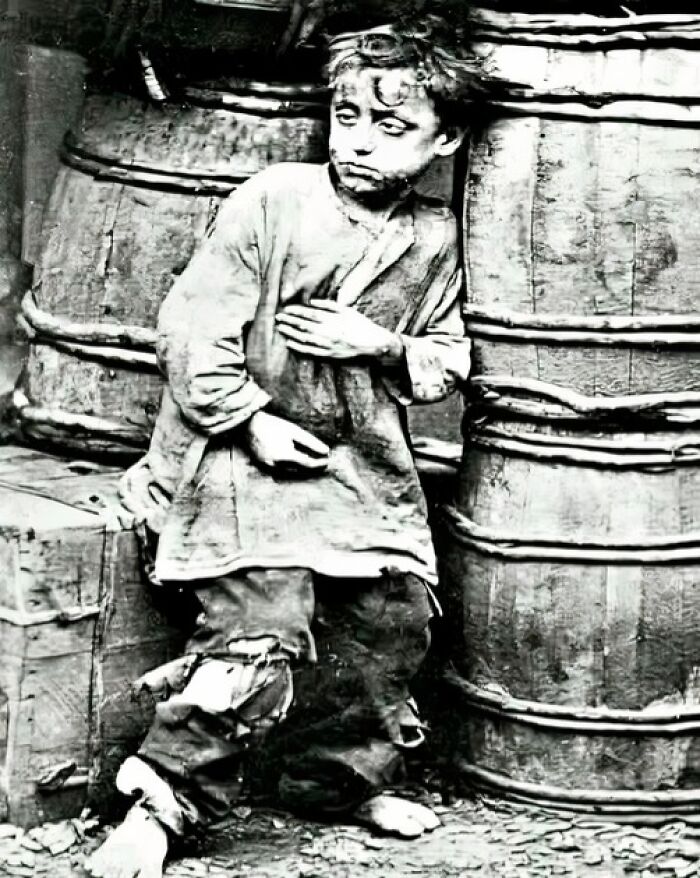
Street urchin found by Thomas Barnardo in Whitechapel that led to his orphanage and later a ragged school to educate the East destitute!
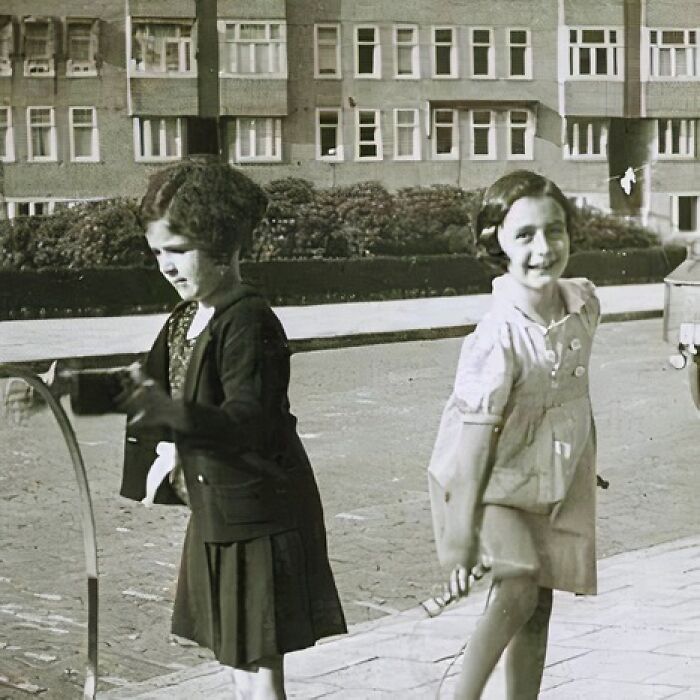
“Of course, we tried to keep in mind how hard it was for the child. She was hungering for the world outside, for life with other children, and when my wife came up, Anne would greet her with an almost unpleasant curiosity. She would ask about /.../ our daughter. She wanted to know what [she] was doing, what boyfriends she had, what was happening at the hockey club, whether [she] had fallen in love. And as she asked she would stand there, thin, in her washed out clothes, her face snow-white, for they all had not been out of doors for so long. My wife would always bring her something, a pair of sandals or a piece of cloth; but coupons were so scarce and we did not have enough money to buy on the black market.”
(Johannes Kleiman) Photo: Anne (right) with her friend Sanne Ledermann, around 1935.
Know this for fact. The EXACT mentality (mentality not necessarily agenda) that eventually lead to the holocàust, is fully embraced by Christian conservative republicans in America right now. 1:1. It may not manifest in antisemitic genocide, but know that the underpinnings, just watching while a neighbor gets quietly escorted away, is happening as we speak at Republican voters behest and enjoyment. If you've ever wanted to hate a Nazî, know that your republican neighbor is becoming a modern facimile 100%.
In 1938, Bertha Hill, a coal miner's daughter from West Virginia, was captured doing the family’s laundry — a task that required strength, perseverance, and hard work. The laundry wasn’t done with the convenience of running water, as the family had to carry water uphill from a nearby spring to wash their clothes. This photo, taken by M.P. Wolcott, highlights not only the daily hardships faced by coal miner families but also the resourcefulness and dedication required to make life work in the mountains. For Bertha and others like her, even routine chores demanded significant physical effort, yet these tasks were often done with little complaint, as they were essential for keeping the family going. The image is a poignant reminder of the resilience of coal miner families in rural Appalachia during the Great Depression.
My garden is very dry because we've had no rain. I decided to bring my bathwater downstairs by the bucket full to put on my borders. I gave up after one. How this lady and my nans, and Forrest's nan, would laugh at me.
Margot is a pretty young lady. She dresses well and wears fashionable glasses. Margot is also athletic. She plays tennis, likes to skate and rowing with her classmates. She is a member of the “society for the promotion of water sports among young people” and win first price in a rowing match in Zaandam, together with her three teammates. She is also a member of a tennis club. In 1941 Jews were forbidden to be members of tennis clubs. Margot is also forbidden to take part in the rowing matches. Her teammates shows solidarity and refuses to take part, too. Photo: Margot (wearing sunglasses) with her classmates on a tennis court during the summer of 1940.
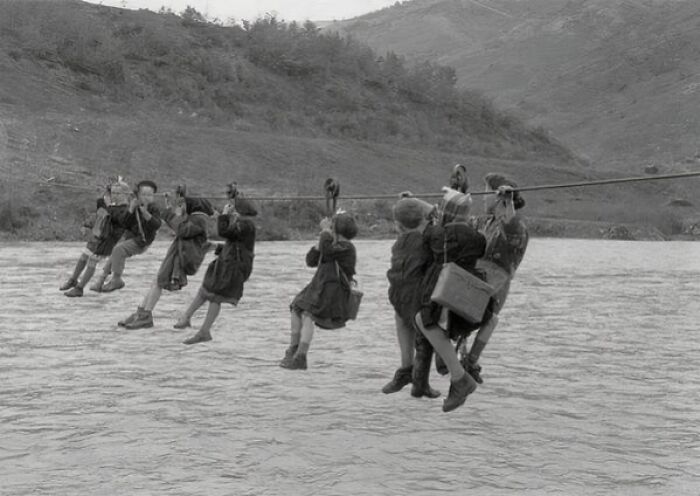
Children going to school having to cross a river by pulley, Modena, Italy, 1959

Before Barbie's official debut in 1959, most young girls were given baby dolls as toys, meaning that they often found themselves playing the role of a mother or a caregiver. But since Barbie looked like an adult woman, it allowed girls to imagine a variety of different futures and careers for themselves, ranging from cheerleaders to doctors to astronauts. While much has been said about this iconic doll, not everyone knows about its creator, Ruth Handler.
When Calvin Graham was 11 years old, he began shaving, convinced it would make him look older than he was. He also practiced speaking in a deep voice, pretending to talk like a man.
Two years later, he forged his mom's signature to enlist in the U.S. Navy and ended up being awarded both the Bronze Star and Purple Heart before he turned 14.

and was put in to the brig (navy jail) when it was discovered for forging documents. public pressure got the charges dropped and he was given an honorable discharge and his medals restored, minus the purple heart. as a navy veteran, 86-95, i am amazed that he managed the physical training of boot camp at that age! ricky schroeder played him i think.
27 January 1945 | On Saturday, at around 9 a.m. the first Soviet soldier from a reconnaissance unit of the 100th Infantry Division appeared on the grounds of the prisoners' infirmary in Monowitz. The entire division arrived half an hour later. The same day a military doctor arrived and began to organize assistance. In the afternoon soldiers of the Red Army entered the vicinity of the Auschwitz main camp and Birkenau. Near the main camp, they met resistance from retreating German units. 231 Red Army soldiers died in close combat for the liberation of Auschwitz, Birkenau and Monowitz.
Two of them died in front of the gates of Auschwitz main camp. One of them was Lieutenant Gilmudin Badryjewicz Baszirow. The first Red Army troops arrived in Birkenau and Auschwitz at around 3 p.m. and were joyfully greeted by the liberated prisoners. After the removal of mines from the surrounding area, soldiers of the 60th Army of the 1st Ukrainian Front marched into the camp and brought freedom to the prisoners who were still alive. On the grounds of the main camp were 48 corpses and in Birkenau over 600 corpses of male and female prisoners who were shot or died in the last few days.
At the time of the Red Army's arrival, there were 7,000 sick and exhausted prisoners in the Auschwitz, Birkenau and Monowitz camps. Read about the final days of the operation of the German N*zi camp Auschwitz, the tragedy of evacuation, the moment of liberation by the Soviet Army on 27 January 1945 & fate of some 7,500 liberated prisoners in our online lesson full of accounts of Survivors.
Dying did not stop with liberation, as some were sick and/or so emaciated that their bodies could not handle regular food. (Learning this struck me pretty hard...so much suffering comtinued.)
Born on Dec. 4, 1961, Rocky Dennis had a rare disease known as craniodiaphyseal dysplasia that contorted the bones in his face. His life became the inspiration for the 1985 film Mask.
Doctors predicted that Dennis would die by the age of seven.
Finnish personnel disarm a floating sea mine from a small wooden rowboat in the Gulf of Finland near Haapasaari, Autumn 1944. Photo by SA-Kuva.
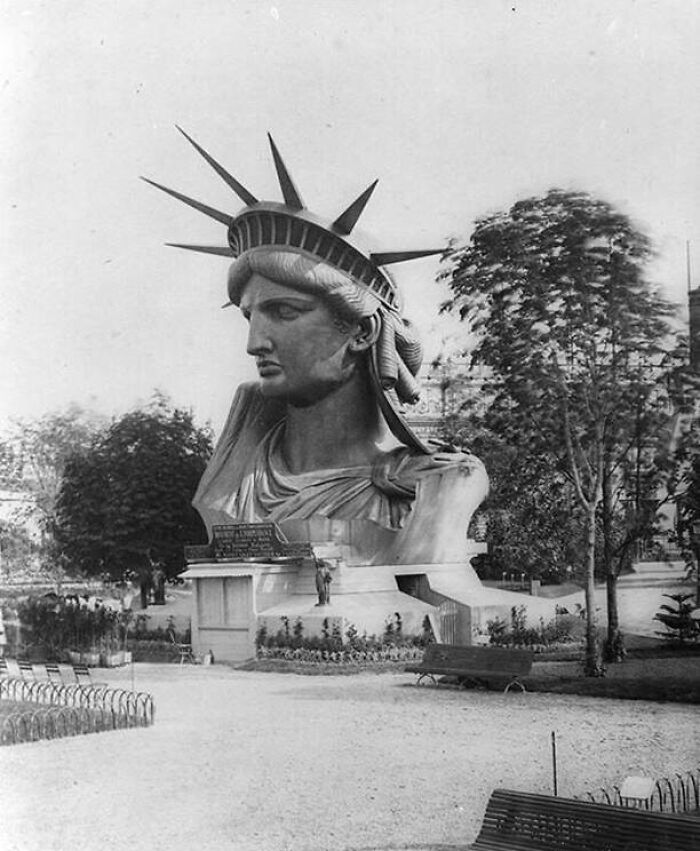
The head of the Statue of Liberty on display in Paris during the World's Fair in 1878. Seven years later, the entire statue would be disassembled and shipped to New York.
When Jim Carrey was 12, his father lost his job as an accountant. The family became homeless and lived out of a Volkswagen van that was too small for everyone, so Carrey and his brother slept in a tent outside. When his father finally did find work again, it was at a tire factory, and just to make ends meet, Carrey and his brother had to work there too, doing odd jobs as janitors and security guards for eight-hour shifts after a full day of school. Eventually, he dropped out at age 16 and never returned.
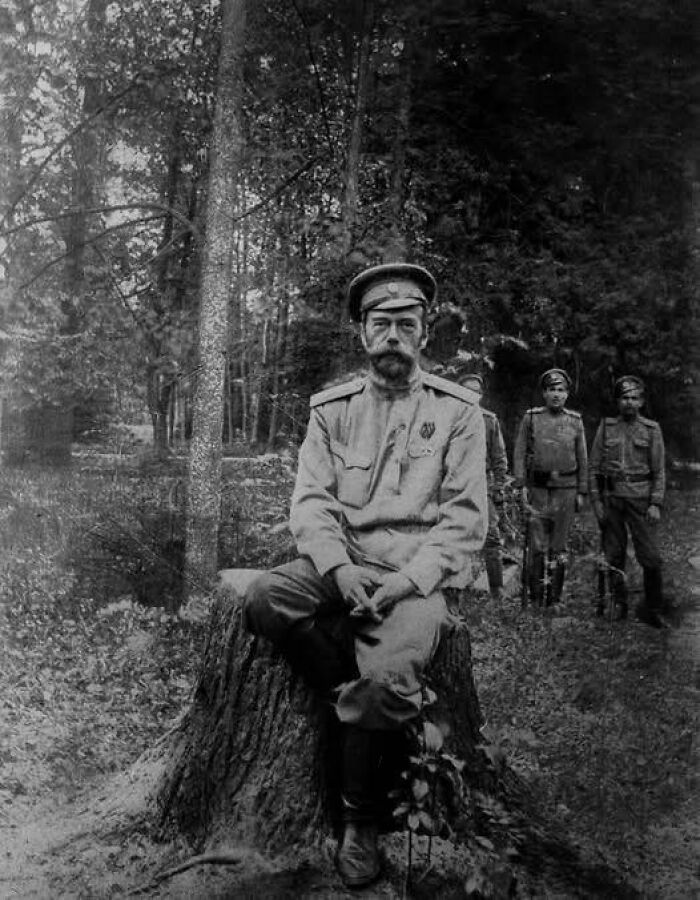
The last known photograph of Tsar Nicholas II, on the grounds of his royal residence, 1917.
When it was 10 cents to call someone. NYC in the 1980's.

Do these still exist? Every time I see one of these I'm reminded of that gag scene in "Superman" where Clark Kent races around to find a phone booth to change in and encounters a phone stand instead.
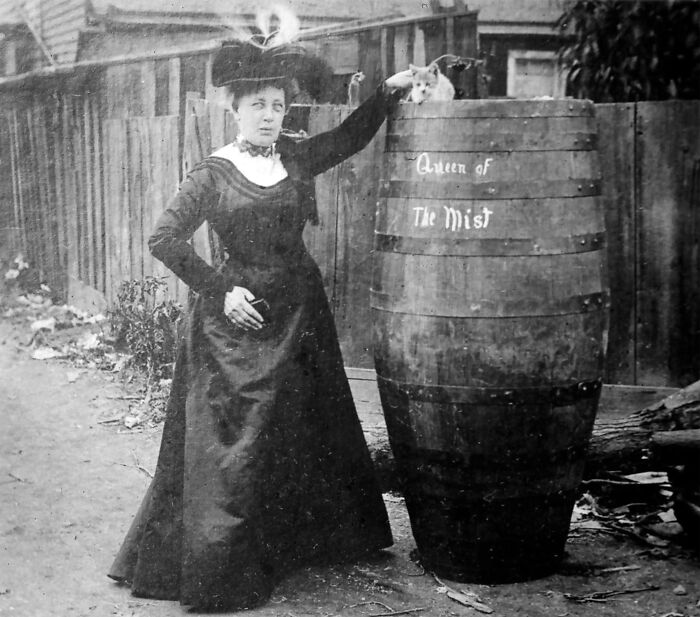
Annie Edson Taylor poses with her cat and the barrel she successfully rode over Niagara Falls in 1901.
An elderly resident of Berlin sits among the ruins, Berlin. Germany, 1945.
So heartbreaking that similar pictures can be taken in Kyiv, Gaza, Aleppo and too many other places today. Btw, 80 years after WW II, there are still unexploded bombs from WW II in German cities. Discovered during construction of new buildings and so far deactivated without harm (that I am aware of), just evacuation of the surrounding area (during deactivation). 80 years after this war ended. How much time will it take to remove landmines and everything in today's war-struck areas? How many people killed or maimed, long after the fighting has stopped?
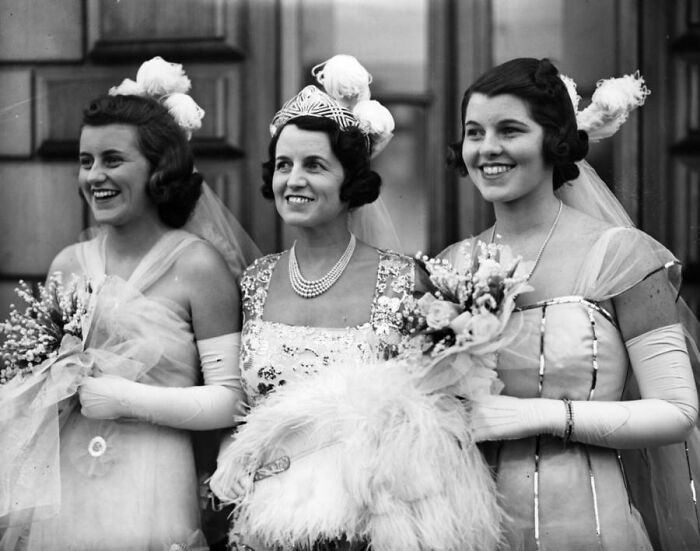
Rosemary Kennedy was unlike her siblings, and after a convent failed to control her "urges" when she was in her early 20s, Joseph Kennedy had his eldest daughter lobotomized and institutionalized.
What was once a bubbly woman who wanted to be a kindergarten teacher was turned into a barely functional individual who could only shriek and grunt.
RFK Jr. says he never heard about mental illness or autism when he was younger. That’s because this is what his family did to anyone who was slightly different
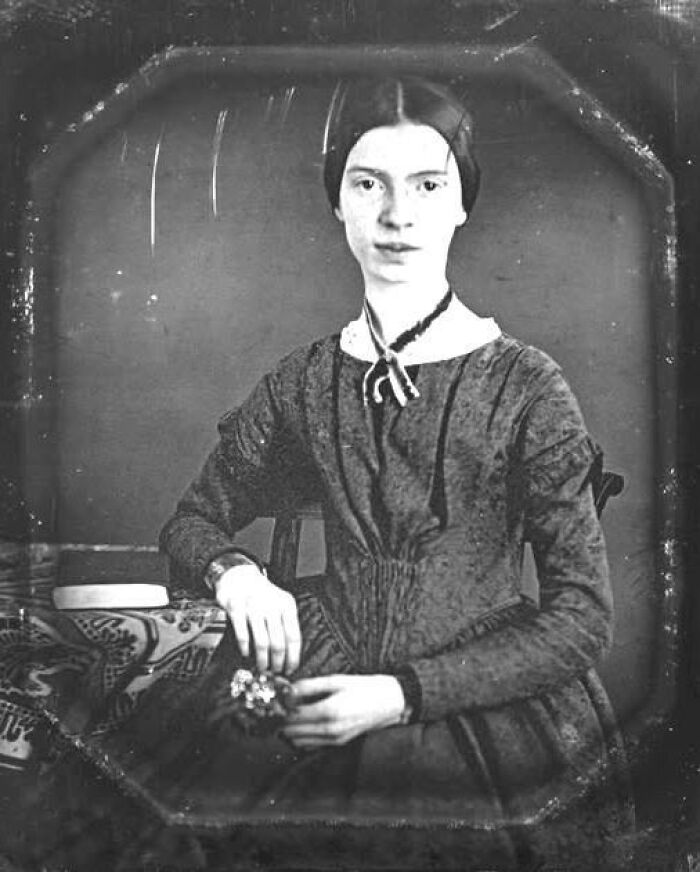
Emily Dickinson decided to withdraw from society and live a life of near-total seclusion in her family's home in Amherst, Massachusetts. While the exact reasons for her reclusiveness remain a mystery, this choice became a defining feature of her life and legacy. In her late twenties, Dickinson began to retreat from public life, rarely leaving her home and communicating with the outside world primarily through letters. Despite her physical isolation, she maintained rich and meaningful correspondences with friends, family, and literary figures, including Thomas Wentworth Higginson, a prominent editor and abolitionist. Their letters reveal a deep intellectual connection, with Dickinson often sharing her poetry and thoughts on life, nature, and art. One particularly fascinating event during this period was Dickinson's "white dress" phase.
Around the early 1860s, she began wearing only white clothing, a choice that has sparked much speculation among scholars. Some believe it symbolized her purity, her identity as a poet, or even her desire to separate herself from societal norms. This eccentric habit added to her mystique and contributed to her reputation as the "Belle of Amherst," a figure both enigmatic and captivating. Despite her seclusion, Dickinson's creative output during this time was extraordinary. She wrote nearly 1,800 poems, many of which explored themes of death, immortality, nature, and the human soul. Her decision to live a life of solitude allowed her to focus intensely on her craft, resulting in some of the most innovative and enduring poetry in American literature. Emily Dickinson's withdrawal from society and her dedication to her art make her one of history's most fascinating literary figures. Her life reminds us that creativity often thrives in the quietest corners, away from the noise of the world.
Things I learned when I visited the Dickinson Homestead in Amherst. She had red hair. She is 18 years old in this picture. This is the only official photograph of her that exists. There are a few others that are unconfirmed. Both she and her sister never married, living at the homestead until their deaths. She was from one of Amherst's most influential families, so whatever she did with her life would create gossip in that small town. Her brother built a house neighbouring the Dickenson homestead. His marriage was unhappy, rumour has it Emily and her sister in law were VERY fond of each other. He looked a lot like a young Joaquin Phoenix.
Born with three legs, four feet, 16 fingers, and two p**ises, Frank Lentini was a sight to behold, even among circus performers. One of the most famous sideshow attractions of the late Victorian era, Lentini eventually amassed a small fortune while building a relatively "normal" life with his wife and four children.
Why can't there be a legit source on this site within each post? I know to click the link/name under the entry, however I don't have Facebook, Instagram, Reddit, etc. Anyone with me? Regardless, citing a source should be bare minimum for websites.
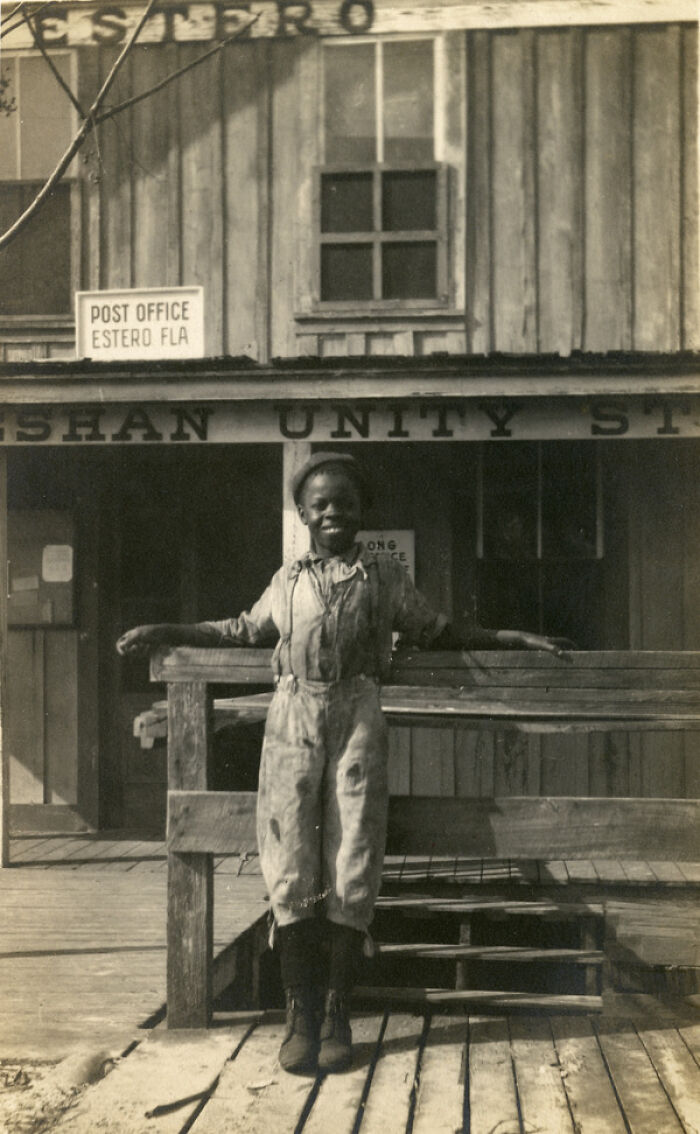
An unidentified young man standing in front of Koreshan Unity general store on the Estero River, Florida c.1890-1910
A hotdog stand in New York. 1963)
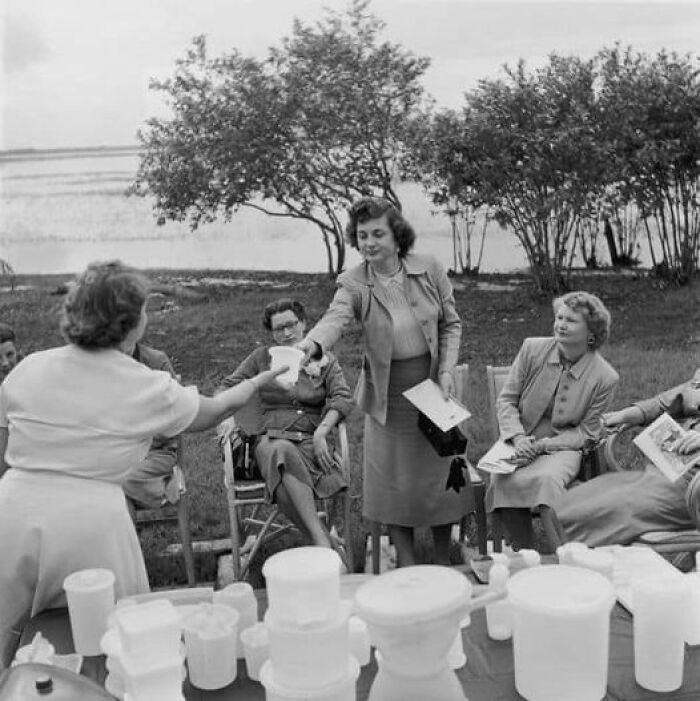
A man named Earl Tupper invented Tupperware in the 1940’s, but the American public simply didn’t like plastic.
The Company nearly went under until it took a cue from its leading seller, a woman named Brownie Wise in Miami, Florida. Ms. Wise and her mother had pioneered the idea of Patio Parties, which quickly caught on and became the now-famous Tupperware parties.

One of my exes went to a party featuring s*x toys. The hostess called it a Schtupperware Party.
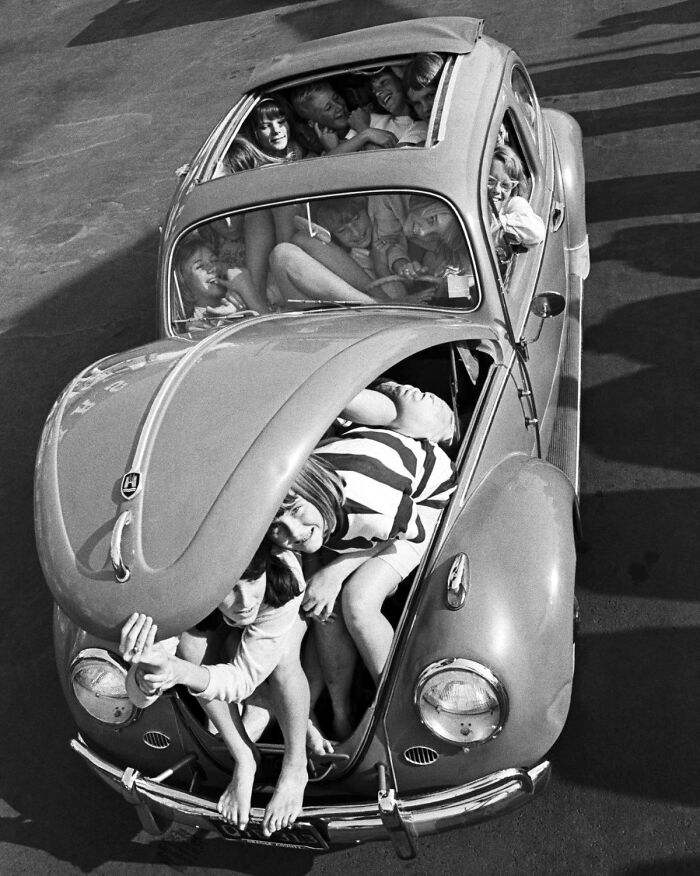
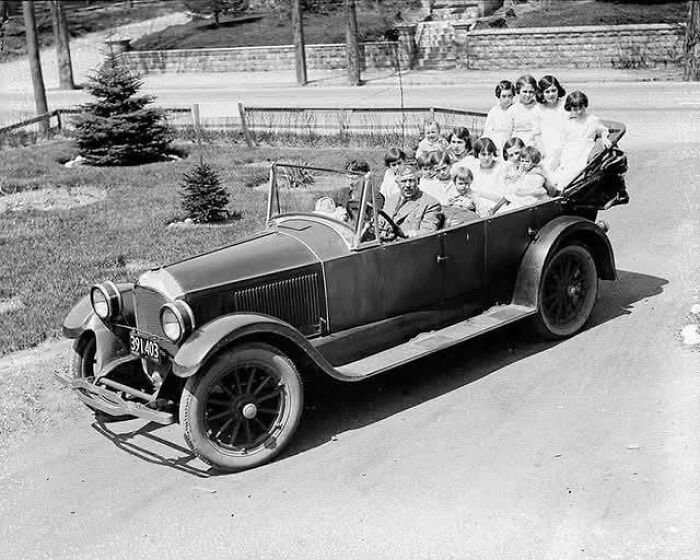
Teenagers Cramming into a VW Beetle, 1964

The was a trend at one stage in Australia in the 60s to see how many students could fit into a phone box. No apparent reason.
The great-grandson of John D. Rockefeller, aspiring explorer and ethnographer Michael Rockefeller had no interest in managing his family's empire upon graduating from Harvard in 1960. Instead, he set out for the remote wilds of Dutch New Guinea to collect art made by the largely uncontacted Asmat people. But before he could reach the Asmat, Rockefeller's boat capsized and he was forced to attempt an arduous swim to shore.
Despite a gargantuan search effort and a media firestorm, Rockefeller was never found and the authorities eventually declared him dead due to drowning in 1964.
The Asmats were cannibals, if I remember correctly? Not to imply he was eaten, just that this picture is kind of unsettling
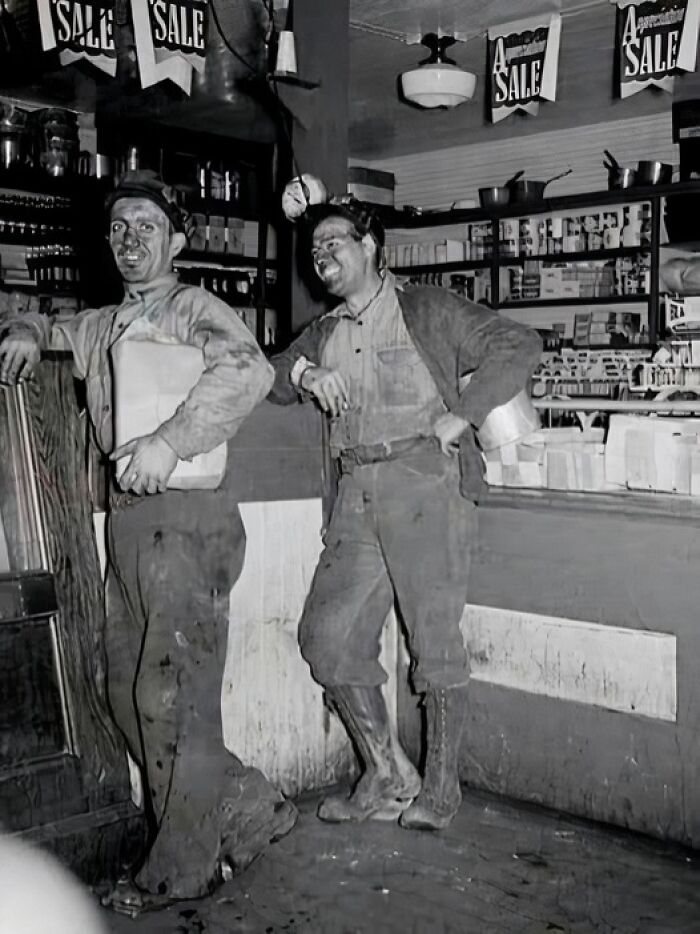
These coal miners are buying groceries in the company store, still covered in coal dust. This company store was in Pursglove, West Virginia.
Worm vending machine. (1957)

Fishin' worms, fishin' worms, everybody's wishing they had fishin' worms
Unexploded parachute mine, Liverpool November 1940
I think that one's been defused - there's what looks like an empty screw threaded socket about half way down the side facing the camera. "Naval mine dropped from an aircraft by parachute" https://en.wikipedia.org/wiki/Parachute_mine
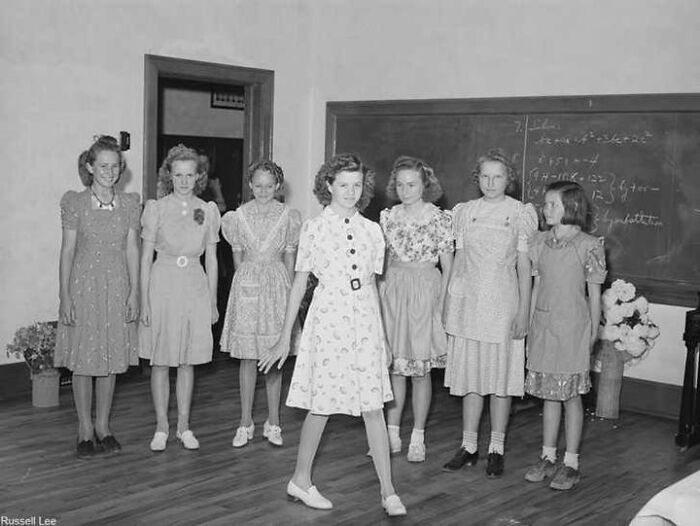
Home economics was one of those classes that gets a bad rap today, but which was really useful back in the day. Young ladies in those days were expected to understand homemaking and skills like pattern cutting, sewing, and home decor were likely to be used often once she married and had a family. While some never quite got the hang of it, many girls were practically sewing masters by the time they graduated high school, thanks to what they learned both at home and in home ec classes. Many home ec classes that followed in the 1980s onward didn’t even teach sewing and those that did focused on small projects that didn’t require much time, patience, or skill.

When I was in high school back in the late 60s early 70s, they had a class called family living where boys and girls were taught basic skills of sewing and cooking nothing as in depth as home ec, just the basics.
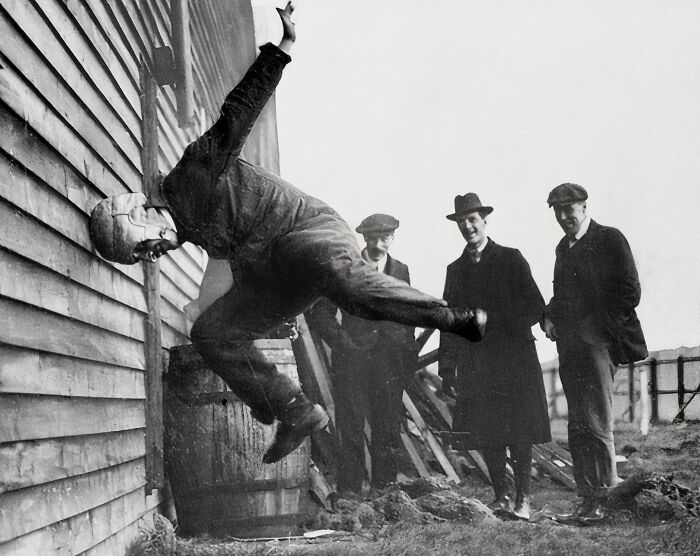
Testing football helmets, 1912.
as one who was a star defensive end in high school in the early 80s, i admit that i would probably do this for fun with a modern helmet! LOL!
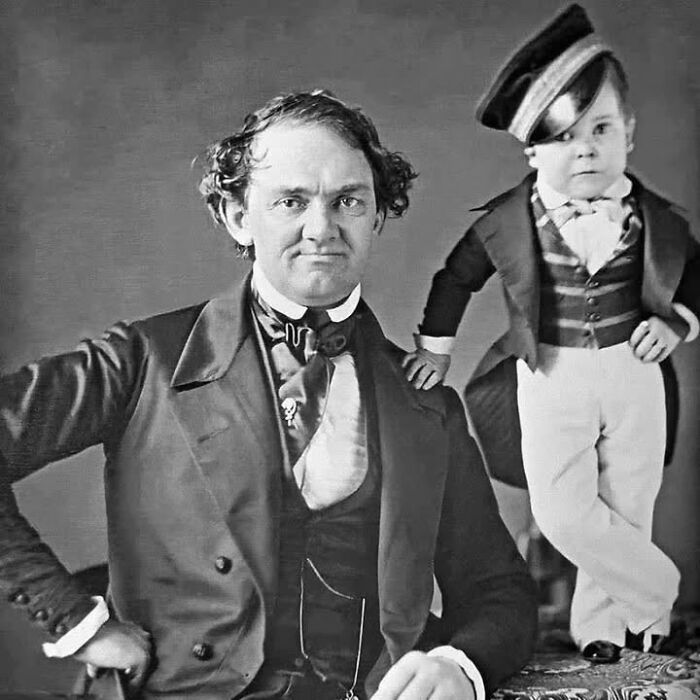
When Charles Stratton was born in 1838, he was a normal baby of slightly above-average weight. But at six months old and 25 inches tall, he simply stopped growing. By the time Stratton was four, showman P.T. Barnum had heard about the mysterious boy who wouldn't grow, and promptly offered Stratton's parents three dollars a week to let him display the boy at his American Museum in New York City.
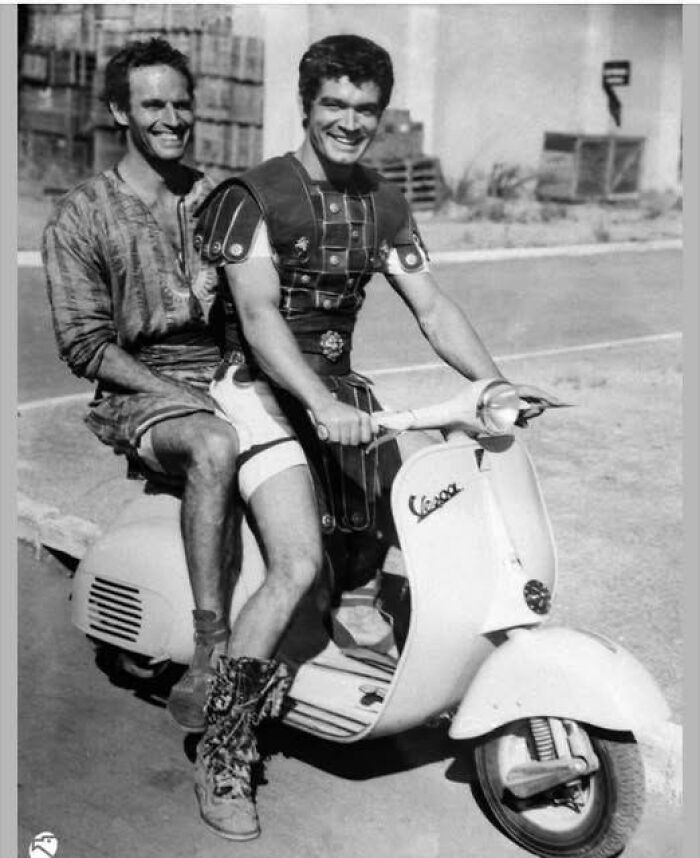
Charlton Heston and Stephan Boyd on a scooter while shooting in Rome for the epic classic, BEN-HUR. 1959
Charlton Heston was the NRA president who exploited the Colombine High School M******e in the NRA's never ending fight to support universal access to killing machines - they held a pro-gun rally in Colorado shortly after. https://www.creators.com/read/daily-editorials/11/21/how-the-nra-used-the-columbine-m******e-to-make-gun-control-the-enemy and https://www.npr.org/2021/11/09/1049054141/a-secret-tape-made-after-columbine-shows-the-nras-evolution-on-school-shootings
Teenagers listening to music and eating cookies with a glass of milk. (1948)
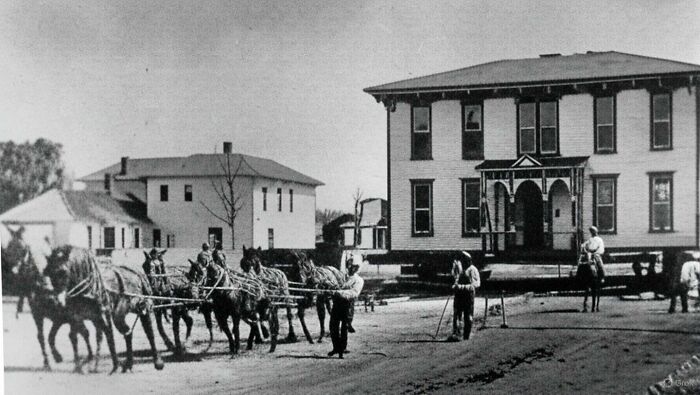
When people moved entire houses by horses, late 1800s.
Not by horses, but I've seen house moves like this twice. Once in the 50s in Seattle and once in the early 60s in northern New Jersey.
Before she became Donald Trump's mother, Mary Anne MacLeod was a poor Scottish immigrant who boarded a steamship bound for America in 1930. With just $50 in her pocket, she moved in with her sister and worked as a maid — until she married an up-and-coming businessman named Frederick Trump.
Pre-Civil War Tourism and Exploration
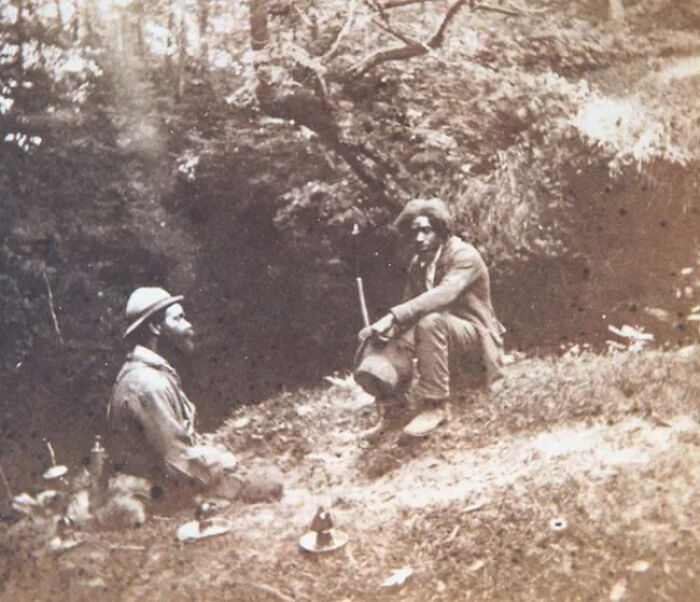
After the war ended, Mammoth Cave transitioned from a saltpeter production facility into a world-renowned tourist destination that African Americans also helped to create. Enslaved men and women worked in the Historic Mammoth Cave Hotel to clean rooms, change linens, and prepare meals.
In the cave, some of the early guides were young enslaved men such as Stephen Bishop, Mat Bransford, Nick Bransford, and Alfred Croghan. These men, along with many others, discovered and helped develop cave tour routes that enhanced the visitor experience throughout the 19th and early 20th centuries.
Each enslaved guide eventually saw his freedom, but their life was fraught with hardship in a time where the country was divided on their place in society. During their life they may have never realized the importance of their existence. However, today they are not viewed as slaves or lower class citizens but as legends. Their stories and discoveries continue to live on within the avenues of Mammoth Cave and in the words you will hear on our cave tours of today.
Mat (left) and Nick (right) Bransford near the entrance to Mammoth Cave.
Ahem. Americans explored caves before history began. https://en.wikipedia.org/wiki/Cave_painting#North_America
Zeiss mobile 9.5-inch refractor. California, 1933.

I'm BIG into astronomy - that is one AWESOME telescope!
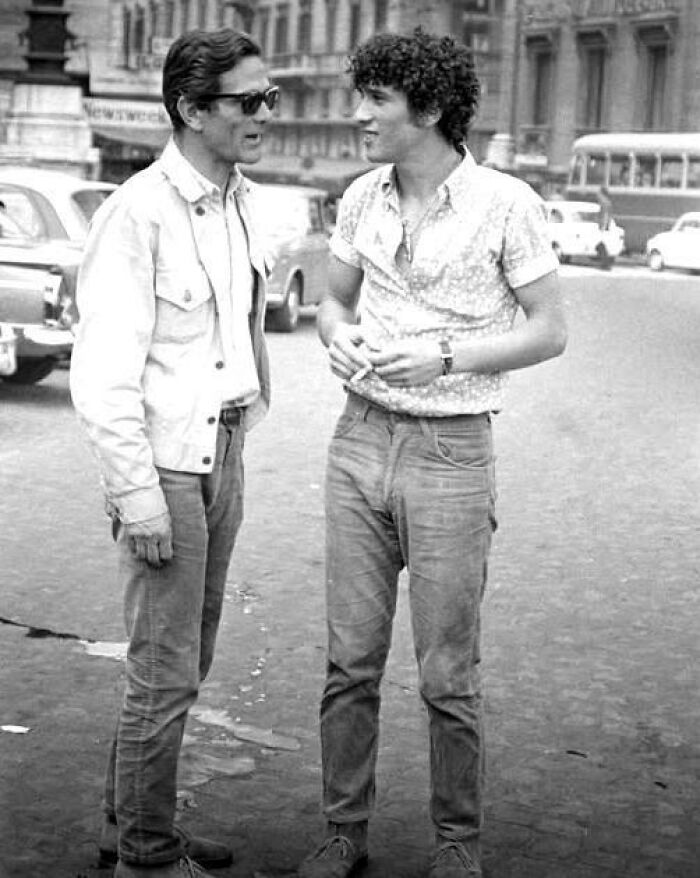
Pier Paolo Pasolini, the iconic Italian filmmaker, poet, and intellectual, is known for his bold and often controversial works that pushed societal boundaries. One of the most notable aspects of his life and career was his relationship with actor and muse, Ninetto Davoli. Davoli, who began working with Pasolini in the early 1960s, became a frequent collaborator and close confidant, embodying the idealized, raw, and natural beauty that Pasolini sought in his work. Their professional relationship evolved into a deep personal bond, with Davoli playing key roles in many of Pasolini’s films, including Accattone (1961), The Hawks and the Sparrows (1966), and Teorema (1968). Pasolini’s films were often a mixture of social commentary, sexual liberation, and political critique, all of which were expressed through characters like those portrayed by Davoli. The actor’s youth and physicality captured the essence of Pasolini's vision of the human body and spirit—both untamed and vulnerable. Beyond their artistic collaboration, their relationship was also marked by an intense emotional connection. Pasolini, who had a complicated personal life and a reputation for his unapologetic exploration of sexuality, found in Davoli a partner who both inspired him and provided a sense of companionship in his tumultuous world. The bond between Pasolini and Davoli, while often misunderstood, played a crucial role in shaping some of the most provocative and enduring works in Italian cinema. Pasolini's tragic and untimely death in 1975 left an indelible mark on world cinema, and Davoli’s memory of their time together remains integral to understanding the passion and complexity of Pasolini's art.

Apparently Pasolini was brutally m*rd*r*d in 1975.. Davoli is still alive today though
On September 20, 1991, the commercial fishing vessel Andrea Gail left port in Gloucester, Massachusetts for the Grand Banks of Newfoundland, planning to fill the boat with swordfish and return in a month. Instead, on October 29, three devastating storms converged, sending waves as high as 100 feet and striking the vessel with winds reaching 92 miles per hour in an event that would become known as the "Perfect Storm" of 1991.
At some point during the storm, the Andrea Gail vanished — and neither the ship nor its crew were ever seen again.
On January 5th, 1919, Boston experienced one of the most bizarre and tragic events of the 20th century. A sticky substance suddenly flooded the streets with a 15-foot wave traveling at speeds of 35 mph, destroying everything in its path. It's known as The Great Molasses Flood.
A construction worker making preparations for the removal of the original Statue of Liberty torch in 1985. The old torch went on a tour of the US before it was moved to the Statue of Liberty Museum.
During the Great Depression, families across America faced unprecedented economic challenges, and a typical scene often depicted their struggles to survive. In one such instance, a family of five huddles together in a ramshackle dwelling, its walls patched with scraps of wood and cloth to keep out the cold. The parents, weathered and thin, sit close to a modest wood stove, their faces lined with worry and exhaustion. Nearby, their children, clad in tattered clothes, play quietly with makeshift toys—sticks, stones, and tin cans. The setting is humble, yet the bond among the family members radiates a sense of resilience and determination.
The scarcity of resources is evident in every corner of their environment. The table bears a meager spread: a loaf of bread, some potatoes, and a jug of water. Each meal is carefully rationed to stretch for days. The mother, resourceful and industrious, sews patches onto old garments to ensure they last through another season, while the father scans newspapers for any signs of work. Despite their dire circumstances, the family clings to hope, sharing stories and laughter to buoy their spirits during dark times. This family’s experience was shared by millions during the Great Depression, a period marked by unemployment, homelessness, and widespread poverty. Yet, amidst the struggles, their story reflects the enduring strength of the human spirit. Communities often came together to share resources and support one another, highlighting the collective resilience that helped many endure the hardships of the 1930s. This familial unity and perseverance became a hallmark of survival during one of America’s most challenging eras.
Rockstar Jerry Lee Lewis was 22 years old in 1957 when he married his cousin — who was just 13 at that time. Her young age, coupled with the fact that his divorce from his previous wife hadn't been finalized, completely destroyed his reputation.
And she had two kids with him as well, the first one was born when she was 14 yo 🤢🤢 wtf
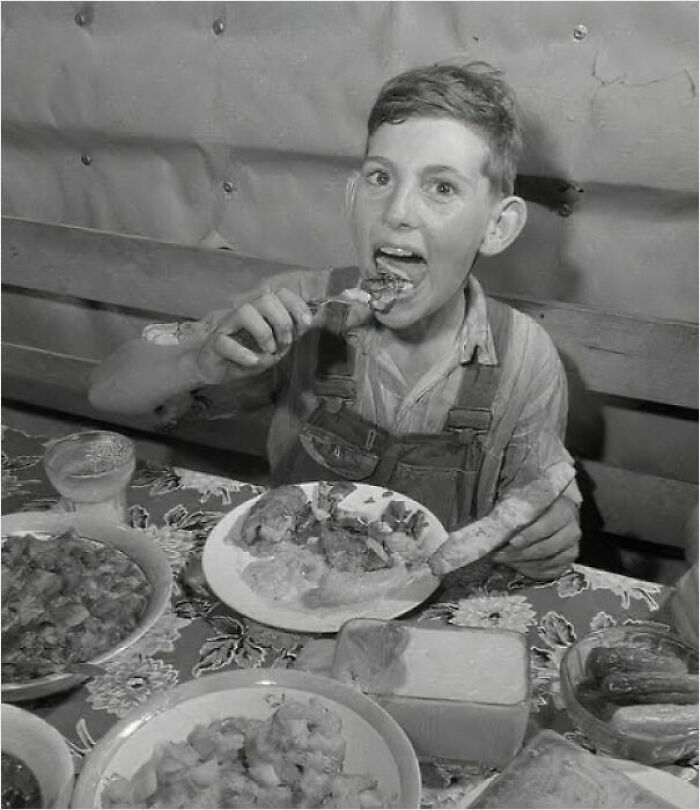
A candid moment of a young boy at the dinner table in Claiborne County, Tennessee, is captured in the 1940s, with his mouth open wide as he prepares to take a bite. He holds a fork in one hand and a piece of bread in the other, with an eager expression speaking to the simple pleasures of a meal in the rural Appalachian region. Dressed in overalls and a long-sleeve shirt, his outfit depicts the simple lifestyle that most families living in this rural area had at the time. The table in front of him is filled with different dishes, which implies that the family managed to make do with what they had, probably using locally grown produce or home-cooked meals. The photograph shows the daily life of a rural family in the 1940s, where meals were a time to gather and share, despite the economic challenges of the era. The boy's enthusiasm for his meal captures a sense of warmth and comfort, evoking the nurturing environment of a family home. Provided through Joe Clark, this photograph lives in the Clark Family Photo Collection; it captures for posterity one of the aspects of life within Claiborne County during hardship. It testifies to rural families' spirit and community endurances. Through this photograph lies a poignant expression of the simplest joys of life in families at that time; the strength between families that characterized the 1940s was immense.






































 No fees, cancel anytime