Get Premium
Dark mode theme is available exclusively for premium users. Learn more about the benefits of subscribing.
No fees, cancel anytime.

 Dark Mode Ad-Free Browsing Unlimited Content
 Ad-Free Browsing Unlimited Content Dark Mode
Join 1.2 million Panda readers who get the best art, memes, and fun stories every week!
35submissions
Finished

The tools that past generations used look quite different from what our homes hold today, thanks to decades of innovation. But if you’d like to experience a blast from the past, we’ve got the perfect list for you. Bored Panda has scoured the internet for photos of early versions of the inventions we still use every day, so enjoy scrolling through this virtual museum and be sure to upvote the tools you’d happily purchase at an antique shop!
This post may include affiliate links.

The first electric blender was developed in 1922, specifically for making malts and milkshakes at soda fountains. In 1932 its inventor, Stephen J. Poplawski, received patents for a machine that would reduce fruits and vegetables to a liquid.
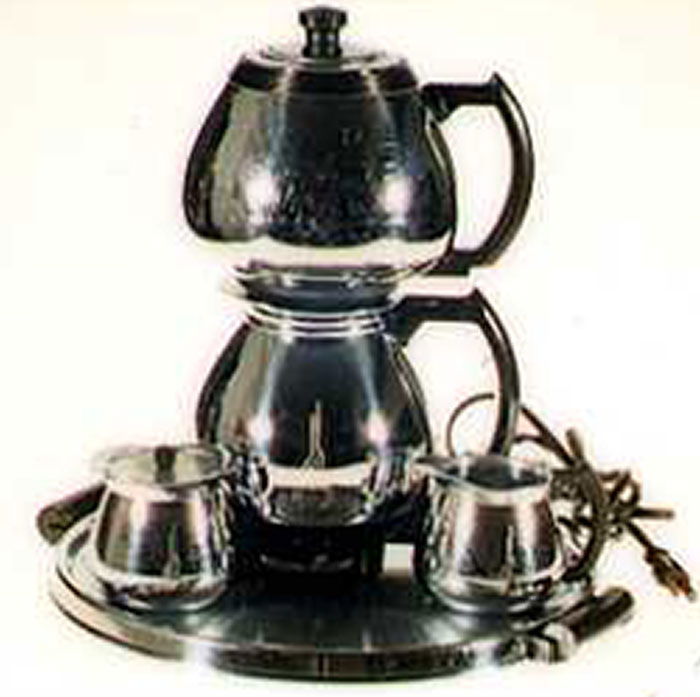
In 1940 this coffee maker sold singly for $16.00 or for $23.50 as part of a matched set. Its design was modern, one of many industrial designs by Alfonso Ianelli who was brought to Chicago in 1913 by Frank Lloyd Wright.
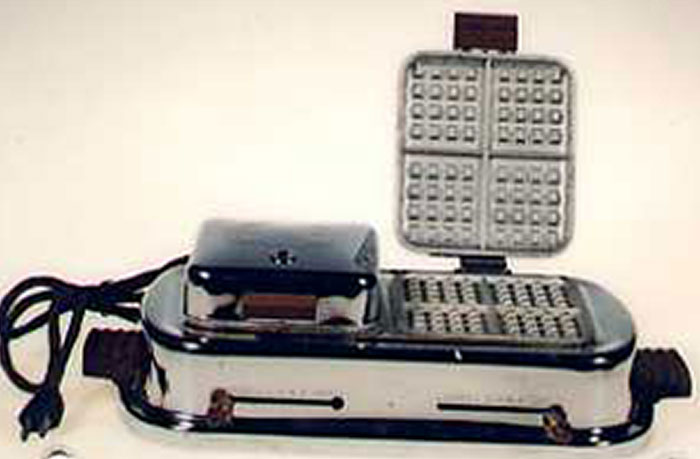
This deluxe Dominion waffle iron has twin grids that are controlled separately and have adjustable indicators for light or dark waffles. Companies advertised the cast aluminum grids as "fast heating" and "greaseless".

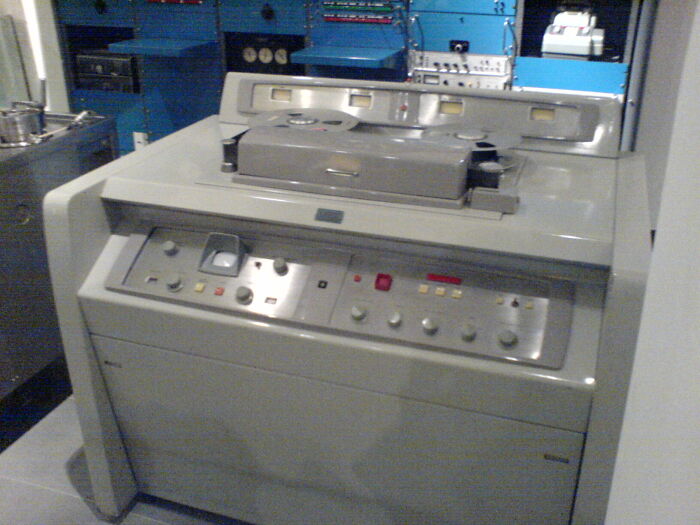
Charles Ginsberg was the team leader at RCA. Many people were on the team that invented the first VCR. Most notably Les Paul was a significant contributor.
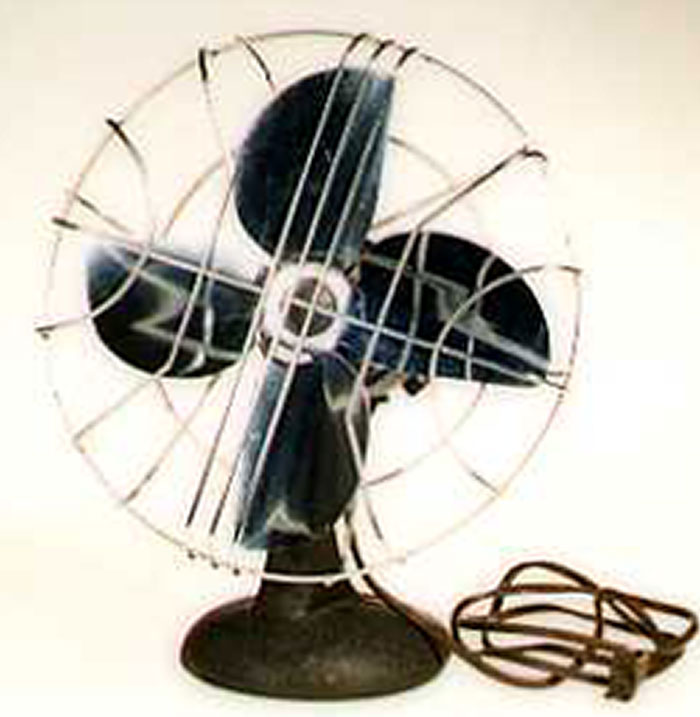
The electric desk fan has been around since 1882 when it was little more than a motor attached to two blades. This fan delivered "powerful breezes" in an arc around the room. It was turned on or off by a single switch, and the oscillator arm could be disconnected. Fans similar to this one were advertised as "economical to use" and of a "modern streamline design."
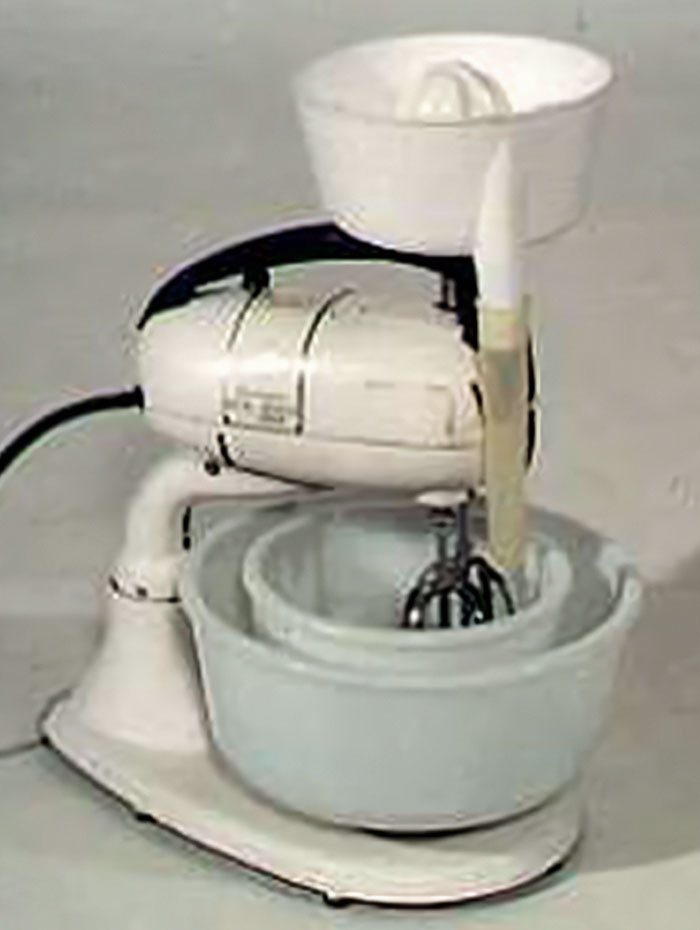
This Meal Maker mixer was purchased by Gerald and Shirley Berg of rural White Hall, Illinois. The Bergs butchered fifty chickens to raise the money necessary to buy it. The motor of this 1950 Meal Maker is adjustable to five speeds: mashing, mixing, beating, whipping, and "juice-grind." The juicer, which sits above the beaters, was designed with a long spout that allowed the juice to pour directly into the bowl. An attachment was also available for grinding meat.
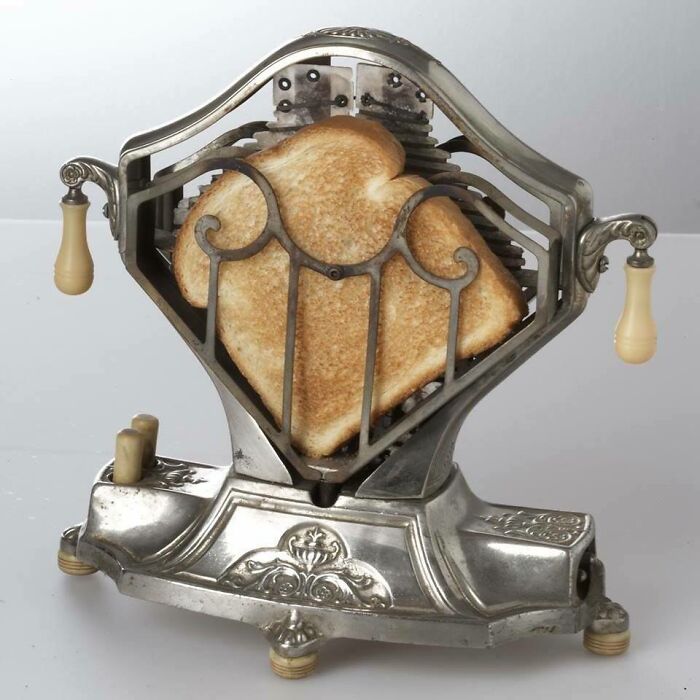
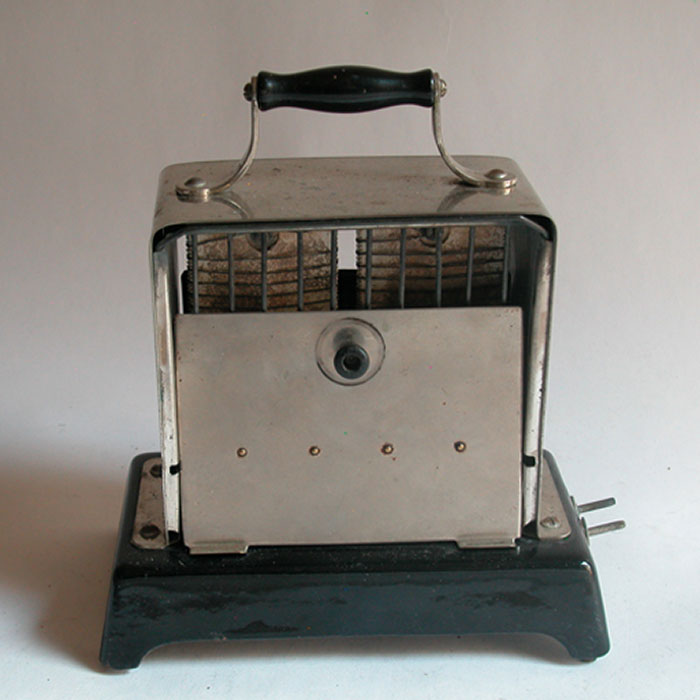
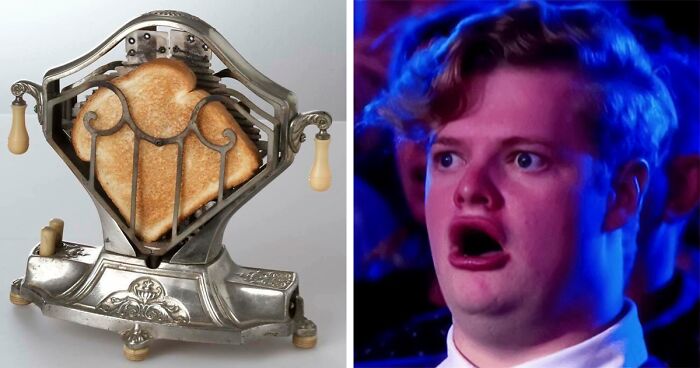
The patent for this Simplex toaster was applied for in 1909, and manufactured by a Boston company, The Simplex Electric Heating Company. According to William F. George, author of Antique Electric Waffle Irons 1900-1960 A History of the Appliance Industry in 20th-Century America, it was a division of Simplex Wire & Cable Company that grew from The Simplex Electrical Company incorporated in 1895 and doing business on Franklin Street in Cambridge.
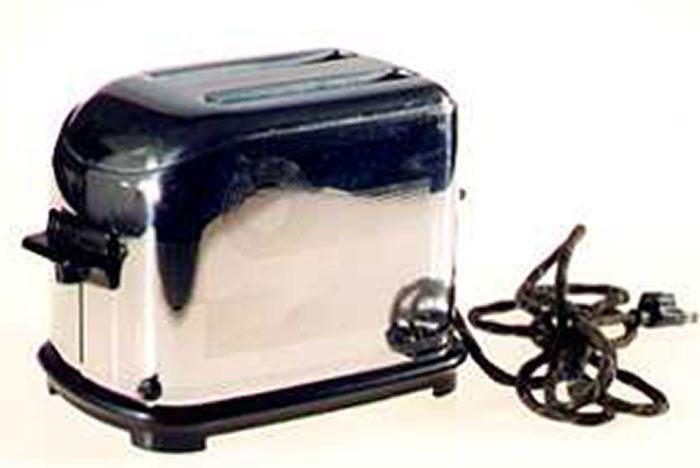
The first pop-up toaster was introduced in 1926 by the McGraw Electric Company. The Toastmaster sold for $12.50 and promised: "Perfect toast every time without watching, without turning, without burning." Over the years many mechanisms were introduced to improve temperature control. In 1939 the model shown here was sold alone or as part of the "Toastmaster DeLuxe Hospitality Set," which included trays, glass relish dishes, and a toast-cutting board.
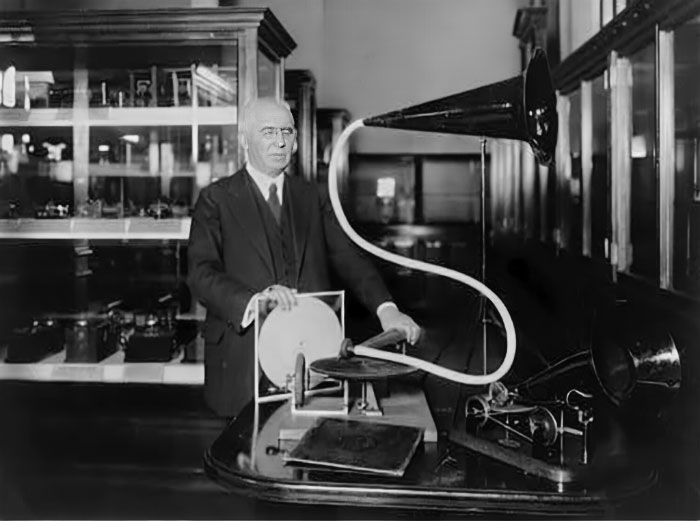
First phonograph was a cylinder recorder invented by Thomas Edison. Emile Berliner invented the first flat disk recorder.





































 No fees, cancel anytime
 then open in external browser


 and click "Open in External Browser"