Get Premium
Dark mode theme is available exclusively for premium users. Learn more about the benefits of subscribing.
No fees, cancel anytime.

 Dark Mode Ad-Free Browsing Unlimited Content
 Ad-Free Browsing Unlimited Content Dark Mode
Join 1.2 million Panda readers who get the best art, memes, and fun stories every week!
Learning doesn’t always mean flipping through heavy textbooks or sitting in a long lecture. Sometimes, it just takes scrolling through your feed and stumbling upon a fun fact that makes you go, “Wait, really?”
That’s where the Instagram page ‘The Real Nurtle’ truly shines. With each post, it serves up bite-sized gems of information that are as entertaining as they are surprising Whether it’s a quirky bit of science or a bizarre law from across the world, this roundup is full of facts that’ll impress your friends or give you an edge at your next trivia night. Keep scrolling for a fun ride through random knowledge; you never know which one might come in handy or spark your next big curiosity kick!
This post may include affiliate links.
During the filming of Sleepy Hollow in 1999, Johnny Depp worked closely with a one-eyed horse named Goldeneye. The horse appeared throughout the movie and became part of the production’s most recognizable scenes.
After filming ended, Depp learned Goldeneye was set to be put down because studios considered the horse too difficult to use in future projects. Instead of letting that happen, he stepped in and adopted him.
Goldeneye was moved to Depp’s farm in Kentucky, where he lived out the rest of his life in a calm environment with proper care. Depp has spoken in past interviews about forming real bonds with the animals he works with, and this became one of the clearest examples.
In 1989, Mauro Morandi left the Italian mainland in search of a remote island to call home. What he found was Budelli, a tiny island in the Maddalena Archipelago off Sardinia. There he stayed, living alone for 33 years.
Morandi became the island’s unofficial caretaker, spending his days maintaining the land, guiding occasional visitors, and embracing complete solitude. He once said he left society behind because he “had enough” and dreamed of starting life over on a desert island.
His story turned Budelli into a symbol of escape from modern life, one man living quietly in isolation while the rest of the world kept moving.
A 4 year old preschool student in Mississippi chose his school’s custodian as his career day role model and showed up dressed exactly like him.
The boy picked the man known around the school as “Mr. Bubba,” a long time custodian who helps keep the building running every day. For career day, the child wore matching clothes and even copied small details of Mr. Bubba’s look, standing proudly beside him at school.
Teachers and parents said the moment stood out because it highlighted how children notice and value people who are often overlooked.
When you really start looking into it, there’s a whole world of surprising facts hiding in plain sight, especially when it comes to the fruits and veggies we eat every day. From the ones you snack on without a second thought to those fancy ingredients you save for special meals, there’s always something unexpected waiting to be discovered. So let’s peel back the layers and dig into some berry fun facts about the colorful stuff on our plates.
Tomatoes are one of those foods that love to confuse people. They look and taste like a veggie, but science says they’re a fruit because of those sneaky little seeds inside. They’re part of the nightshade family, rubbing shoulders with eggplants and peppers. Around the globe, people cook them, crush them into ketchup, or toss them raw into salads.
Located in the Çankaya district of Ankara, Turkey, sanitation workers began saving books they found while collecting trash. Many of the books were still in good condition, so the workers set them aside instead of sending them to landfill. As the amount grew, they ended up with thousands of rescued titles ranging from fiction to school materials.
The municipality later gave them access to an unused brick building inside the sanitation facility. The workers cleaned the space, added shelves and organised every book by category, turning the room into a functioning public library. Residents, students and coworkers now visit to borrow books, and a converted truck is used to deliver excess books to schools and community centres that need them.
The library continues expanding as more discarded books are recovered across the district.

In my area of France, each little town or village has book tables, book booths, book cabins, book shelves, or other places to put books you have finished with. I love picking up new books to help learn French - the language and the culture - and always return or replace books. The books are generally French, English, and German. There are also a lot of book fairs here, both for French and for English books, and they generally benefit a charity of some sort and the books are low cost, usually a euro a book. My husband also picks up cook books and books on wine culture.
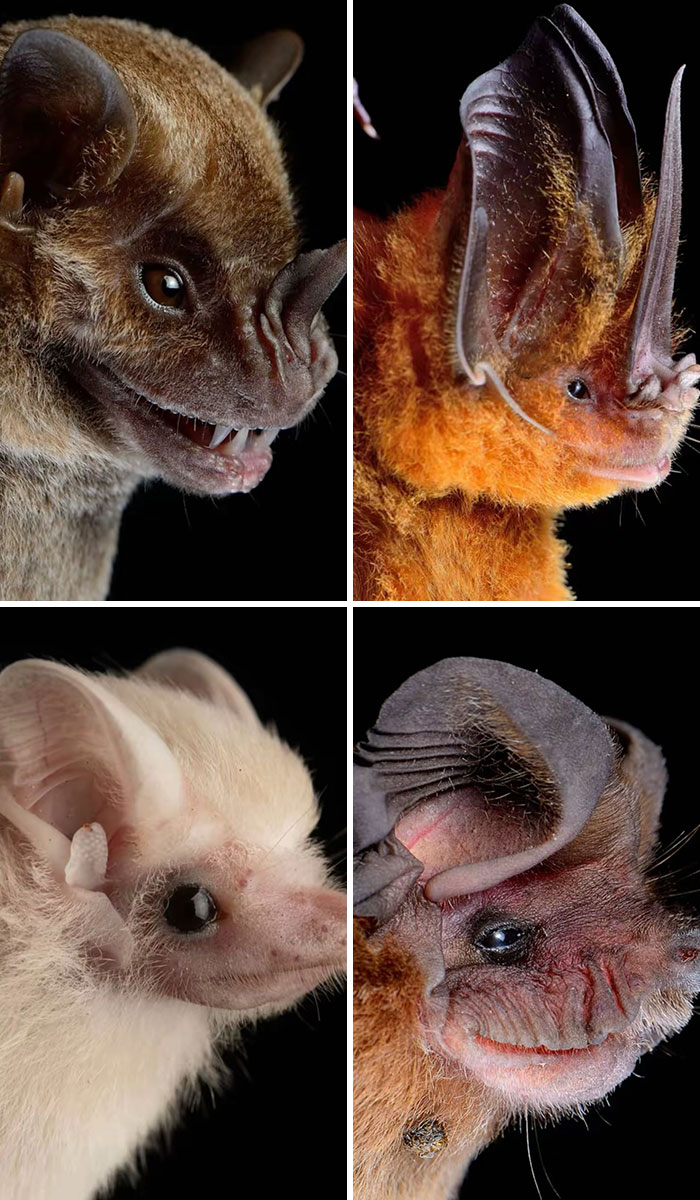
These portraits are part of a long-term field project by José G. Martínez-Fonseca, who documents bat species up close during active wildlife research.
The bats were photographed using controlled lighting and very short handling times while researchers were already working with them in the field. Each animal was released immediately after being photographed. No studio setups, no captive environments, and no prolonged restraint were involved.
The project focuses on anatomical detail, scale, and variation between species, capturing facial structures, ears, noses, and fur patterns that are rarely seen this clearly. Many of these traits are directly tied to echolocation, feeding habits, and ecological roles.
The result is a scientific visual record that highlights the diversity of bats rather than portraying them as anonymous silhouettes or myths.
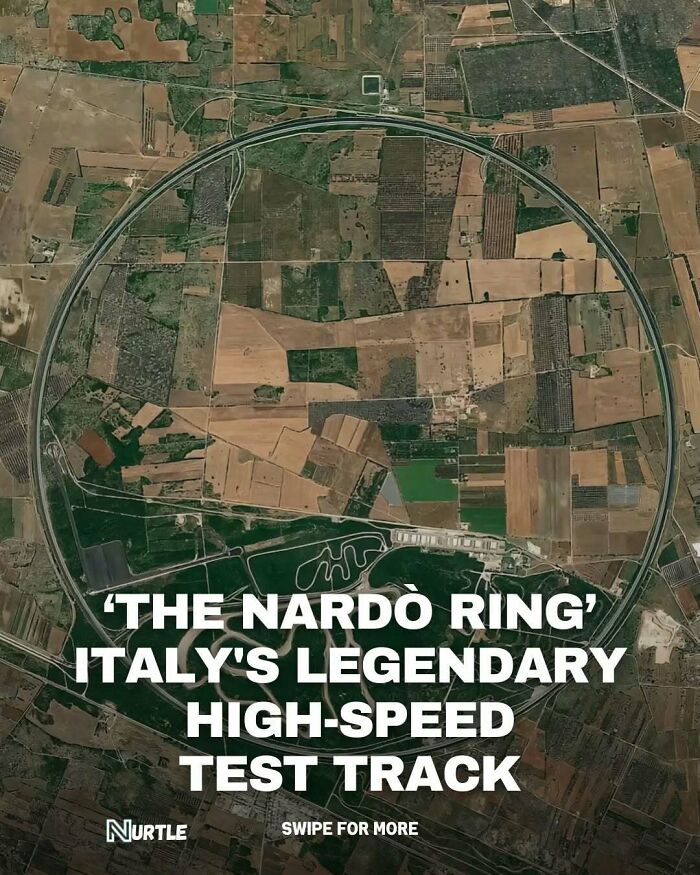
Located in southern Italy, the Nardò Ring is one of the most extreme vehicle test tracks ever built. The circular track has a 12.6 km circumference and is engineered so precisely that cars can drive at very high speeds without needing to steer.
Completed in 1975, the ring’s banking and curvature cancel out lateral forces, allowing vehicles to maintain constant throttle while simulating endless straight-line driving. This makes it ideal for testing top speed, stability, endurance, and mechanical limits over long distances.
Over the decades, the track has been used by major manufacturers to validate prototypes, push engines to failure, and set durability benchmarks that are impossible to reach on public roads or traditional circuits.
The facility is now part of a larger proving ground, but the high-speed ring remains its most defining feature.
We used to have a long section of yhe Stuart highway without speed restrictions that car manufacturers used for testing. Now they capped it at 130kph, although they can still use it without speed limits with police monitoring and protection (for a hefty fee).
Bananas? Yep, they are a tree-like perennial herb. That’s right, those sweet, yellow snacks come from plants with soft stems instead of woody trunks. And here’s the kicker: every Cavendish banana you’ve ever eaten is a clone. They’re all genetically identical, traced back to one plant from Southeast Asia. No seeds, no surprises, just delicious uniformity. So the next time you peel one, say hello to one of nature’s most consistent fruits.
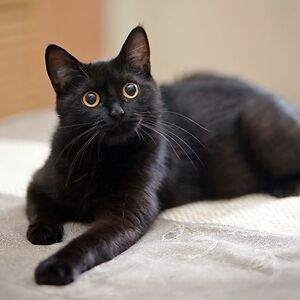
This cat was born looking permanently unimpressed.
Thanks to some wild fur markings, this cat appears to have thick eyebrows and a subtle mustache, giving it a face full of expression without ever moving a muscle.
A five-month-old bar-tailed godwit set a world record for the longest nonstop bird flight ever recorded.
The bird, tagged as 234684, flew an astonishing 13,560 kilometers from Alaska to Tasmania in 11 days and one hour, without stopping to eat, rest, or land.
Satellite data confirmed it remained in flight the entire time, crossing the Pacific Ocean without pause, not even to sleep.
Scientists believe the bird relied entirely on stored fat and favorable wind patterns to survive the journey. It eventually landed at Ansons Bay in Tasmania, completing the longest continuous migration ever tracked in a bird.
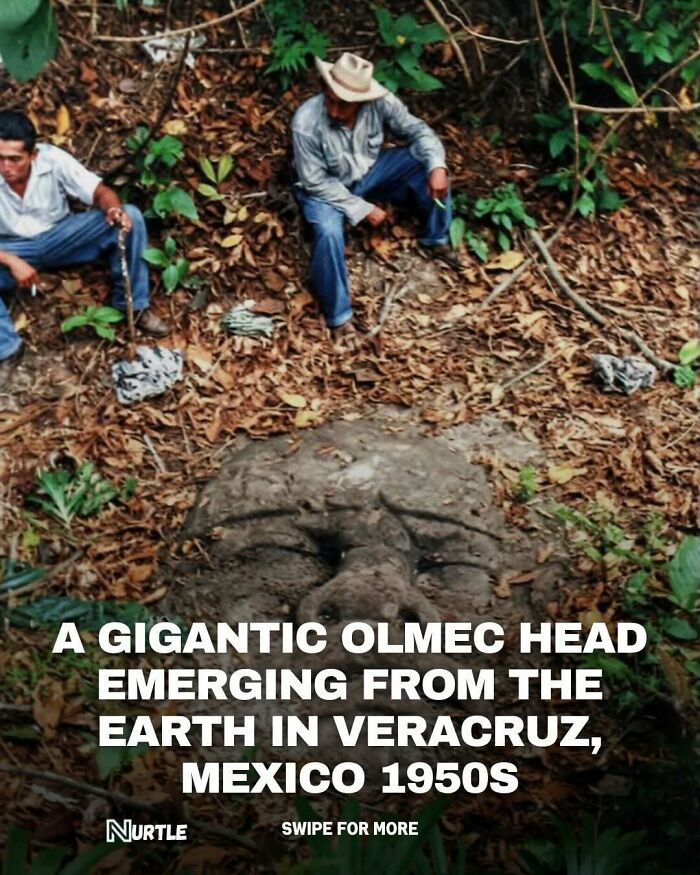
In the 1950s, archaeologists in Veracruz, Mexico uncovered massive stone faces buried beneath jungle soil. These were Olmec colossal heads, carved between 1200 and 400 BCE, making them some of the oldest monumental sculptures in the Americas.
Each head was carved from a single block of basalt, with some weighing over 20 tons. The stone was transported from distant volcanic regions without wheels, metal tools, or animals. Every face is unique, suggesting they represent specific Olmec rulers, not gods.
Many heads were found intentionally buried, likely after the ruler they depicted died or lost power.
Pineapples are basically fruit teamwork at its best. They’re made up of tiny little fruits called fruitlets, each one born from its own flower. These fruitlets then band together, spiraling into that spiky tropical treat we know and love. It’s a fruit made of fruits. Also cool? Pineapples are part of the bromeliad family, plants that usually chill on trees or rocks. And yet, here they are on your pizza.
Niklas D. Lindblad uploaded a video years ago titled Being Ugly: My Experience. It sat on his channel without much attention until a single comment shifted the entire direction of his life.
Juli Martinsson replied under the video saying she thought he was cute and meant it. They started talking and stayed in touch.
Juli later traveled from Argentina to Sweden so they could meet in person. They filmed parts of the visit for YouTube and continued documenting their relationship as it grew.
The two eventually married in Sweden with family present. Not long after, they shared a pregnancy update and later posted their first baby photos, marking the start of their new family.
A simple YouTube comment led to a relationship, a move across continents, a wedding, and a child.
James Cameron has confirmed that no generative AI was used in the production of Avatar: Fire And Ash. The director said the Avatar films do not rely on AI-generated performances and that actors remain central to how the films are made.
“I just wanted to point out we don’t use it on the ‘Avatar’ films. We honor and celebrate actors. We don’t replace actors,” Cameron said in an interview. He clarified that while he is not entirely against generative AI as a technology, he has deliberately kept it out of the Avatar franchise.
Cameron added that Hollywood will likely end up regulating itself when it comes to AI, but stressed that storytelling can only move forward if artists and performers remain at the core of the process. For him, the larger concern is not tools used in filmmaking, but the broader impact of large-scale AI on creative work itself.
Avatar: Fire And Ash continues the franchise’s focus on performance-driven motion capture, with actors physically portraying their characters rather than being digitally generated.
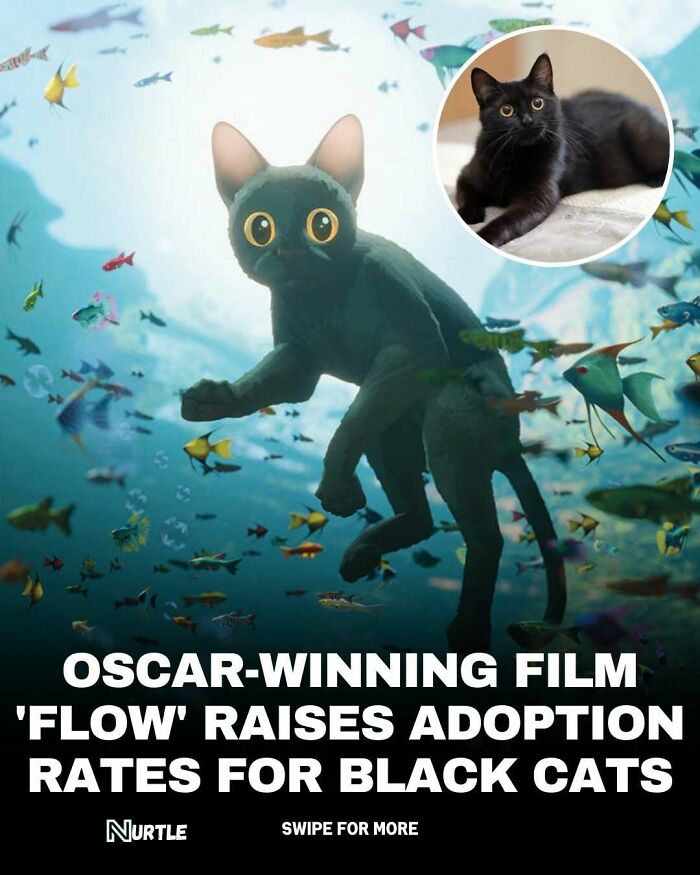
The animated film Flow became a global hit after winning the Oscar for Best Animated Feature. The story follows a black cat surviving a massive flood, and its success pushed the film into worldwide attention.
Shelters in several countries reported something unusual after the release. People began asking specifically for black cats, often referencing the movie or calling them “Flow-type cats.” Some centers said they received more adoption requests for black cats than they had seen in years.
Black cats usually face slower adoption rates because of old superstition, which makes the shift noticeable. The trend is not universal everywhere, but the regions reporting changes link the increase directly to the film’s popularity.
Let’s clear up a common misconception: coffee beans aren’t beans at all. They’re actually the pits of little red fruits, kind of like cherries. So every time you drink a cup of coffee, you’re technically sipping a fruity brew. Bet your morning routine just got a little more exciting. That bold, rich aroma? Straight from the center of a fruit. Who knew your latte was so fancy?
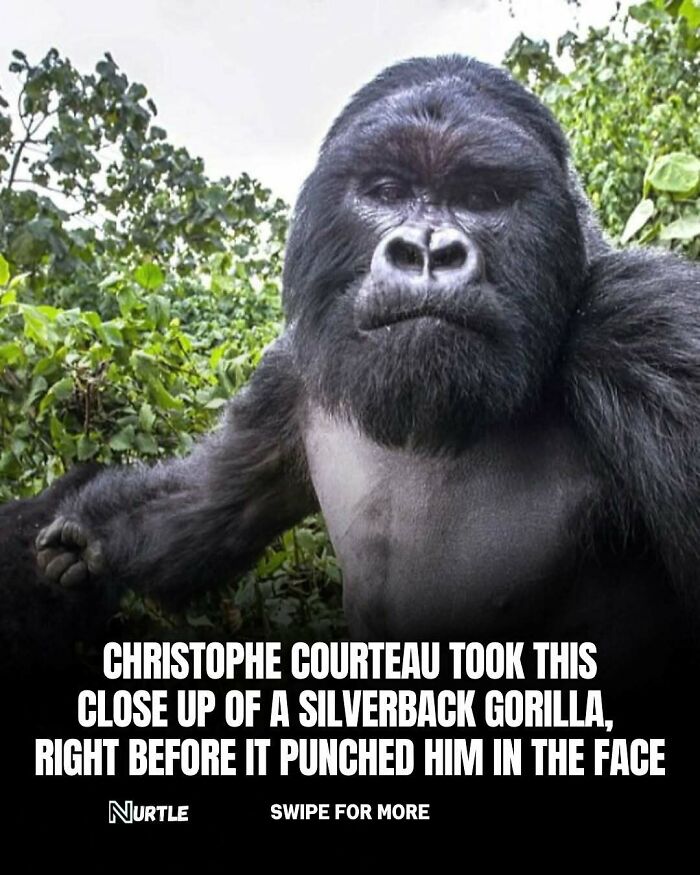
A second later, and the lens was full of fist. 😂🦍
Wildlife photographer Christophe Courteau was in the middle of capturing a close-up of a massive 6’6”, 400-pound silverback gorilla in Rwanda when the moment took a sudden turn.
The powerful animal, seemingly agitated by the crowd of tourists nearby, charged straight toward Courteau and landed a direct hit to his face. The photo he snapped just before impact is now one of the most intense wildlife shots ever taken.
Despite the punch, Courteau suffered only minor injuries and continued documenting wildlife. He later said the gorilla was showing dominance, not aggression, a warning to keep distance, not a full-blown attack.
The photo is now considered legendary not just for its clarity, but for the raw unpredictability of nature it captures.
Huacachina is a small village in southwestern Peru that looks like something out of a storybook. Built around a natural oasis and surrounded by towering sand dunes, it has a permanent population of only about 100 people.
Despite its tiny size, Huacachina attracts tens of thousands of visitors every year. Tourists come for its unique desert landscape, dune buggies, and sandboarding, making it one of Peru’s most unusual destinations.
At night, the oasis glows with restaurants, hotels, and bars, creating a striking contrast with the vast desert around it.
In cold, dry conditions, animal fur can build up static electricity.
That static charge attracts lightweight snowflakes and helps them cling to the fur instead of falling off.
Fur also traps air and insulates body heat, so the outer surface stays cold. Because less heat reaches the snowflake, it does not melt immediately and remains visible on the fur.
Here’s a fun botanical surprise: your favorite juicy fruits might be related to roses. Plums, pears, peaches, apples, all part of the extended rose family. It sounds like a weird family reunion, but it totally checks out. Maybe that’s why a fresh peach smells as sweet as a garden in bloom. Nature has a poetic side, and apparently, it smells amazing.
In 1889, Nintendo began in Kyoto as a small workshop, not a tech company. The business was originally called Nintendo Koppai and focused entirely on producing handmade hanafuda playing cards.
The company was founded by Fusajiro Yamauchi, who supplied traditional card decks to local players at a time when most Western-style cards were restricted in Japan. The workshop doubled as both a production space and storefront.
This modest building marked the starting point of a company that would later pivot through toys, electronics, and eventually video games, becoming one of the most influential entertainment companies in the world.
For the 1926 silent film The Holy Mountain, director Arnold Fanck ordered the construction of a full-scale cathedral carved entirely from real ice. The structure stood around 50 feet tall and was built in the Alps specifically for the production.
The cathedral was shaped over several months, using blocks of ice carved and stacked around a hidden metal framework to keep it standing. Once filming ended and temperatures changed, the structure was left to melt and collapse naturally.
At the time, large-scale artificial sets were common, but building one entirely from ice was extreme even by 1920s standards. No replicas were made, and nothing survives today beyond the footage captured on film and a handful of production photographs.
Deep inside Lechuguilla Cave in New Mexico, explorers found an underground pool that had likely been sealed off for millions of years. The discovery was made 700 feet below the surface, in one of the world’s most pristine limestone cave systems.
The water in the pool had never been in contact with humans, making it an incredibly rare find. Scientists believe studying this isolated environment could reveal clues about underground ecosystems and even guide the search for life in extreme places like Mars.
Pomegranates aren’t just pretty; they’re packed with surprises. Some of them can hold over 1,400 seeds inside, nestled like shiny rubies. That’s a whole lot of crunch in one fruit. Every little aril you scoop out is its own burst of juicy goodness. It’s like a treasure chest you get to eat. Just don’t wear white while opening one.
The Pokéwalker was released in 2009 as a physical accessory bundled with Pokémon HeartGold and SoulSilver for the Nintendo DS. Shaped like a Poké Ball, the device functioned as a pedometer that let players transfer a Pokémon from their game and level it up by walking in the real world.
Every step counted toward experience points, item unlocks, and in game encounters, turning daily movement into actual progress inside the game. Players could also find items and Pokémon depending on distance walked, making physical activity part of core gameplay rather than a side feature.
In 2011, a study by Iowa State University found that the Pokéwalker was the most accurate consumer pedometer, with lower step counting error than many dedicated fitness trackers on the market.
Years before fitness wearables became mainstream, Nintendo had already turned walking into a game mechanic.
These photos bring back how strange everyday life became in early 2020. For a while, scenes like this were normal everywhere. People improvised protection, stores changed their layouts, and routines shifted almost overnight.
What felt intense at the time now feels distant. Cities were empty, travel stopped, and the whole world moved into the same pattern at the same moment. Looking at images like these shows how quickly everything changed and how fast we moved on from something that shaped daily life for so long.

I like the top one. Did you know that China recommended wearing masks in January 2020, before ANY confirmed instance of direct transmission from one person to another.
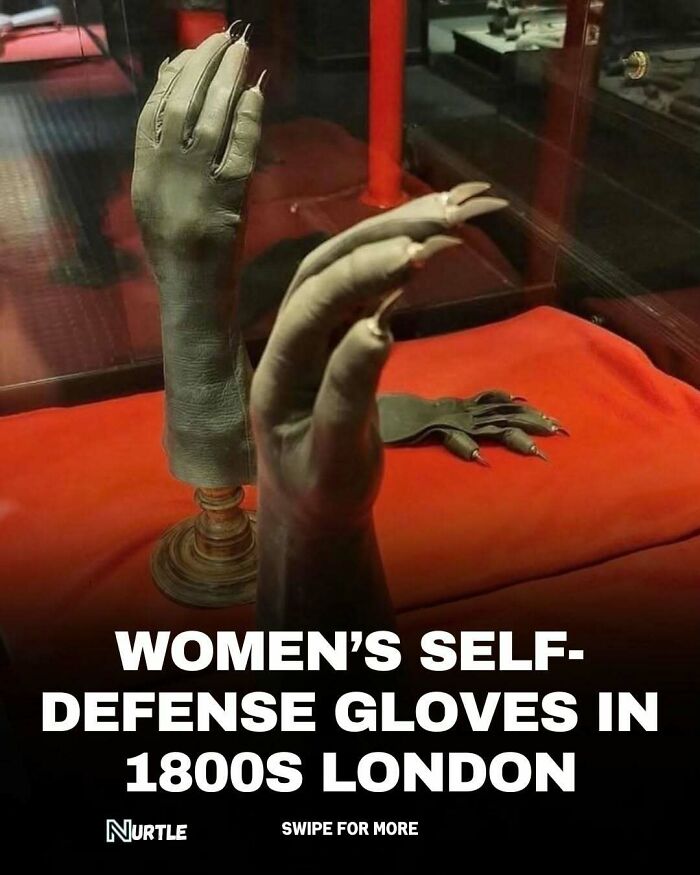
In the late 1800s, some self-defense gloves were made in London and other European cities with small metal spikes or sharpened studs sewn into the fingers and knuckles.
They were intended for close physical contact. If someone grabbed a woman’s arm, wrist, or clothing, striking back could cause immediate pain or injury to the attacker’s hands or face, allowing her to pull away. The gloves required no training and could be worn openly as part of normal clothing.
This period was marked by overcrowded streets, poor lighting, and limited police presence at night. Assaults and robberies were common, especially in working-class districts. Other everyday objects were adapted for personal protection at the time, including long hat pins, reinforced parasols, and small blades hidden in clothing.

Strawberries are rebels in the fruit world. Not only do they wear their seeds on the outside, but they flaunt about 200 of them. How’s that for making a statement? They’re also technically not true berries, which just adds to their quirky charm. Blackberries, on the other hand, come in over a thousand different species. Mother Nature sure got creative in the berry department.
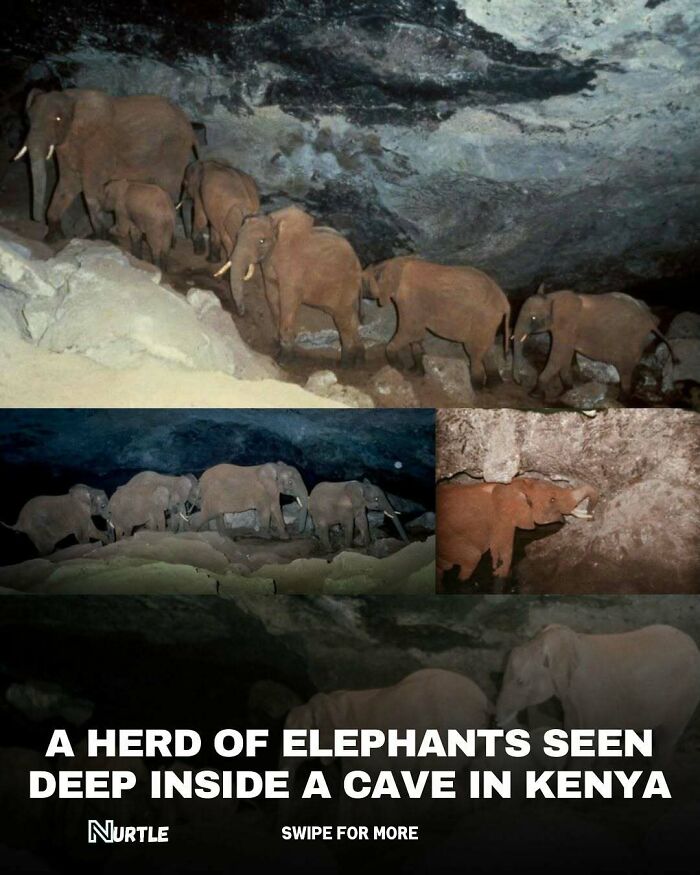
Deep inside Mount Elgon in Kenya, elephants walk into pitch-black caves to mine salt. They travel more than 150 meters into the mountain, using their tusks to scrape mineral-rich rock from the walls.
They crush the fragments with their trunks and eat the dust to get sodium and other nutrients missing from their diet. A single elephant can pull out up to 20 kilos of rock in one night, gradually reshaping the caves over centuries.
Calves follow the older elephants, learning how to mine in the dark. What looks like survival is also tradition, passed down through generations.
But the herds are in danger. Uganda’s cave elephants were wiped out in the 1970s, and today only the Kenyan side of Mount Elgon still has them. Conservation groups are fighting to protect these rare miners before they disappear completely.

I am thinking about the first elephant to do it. He must have had quite an adventure!
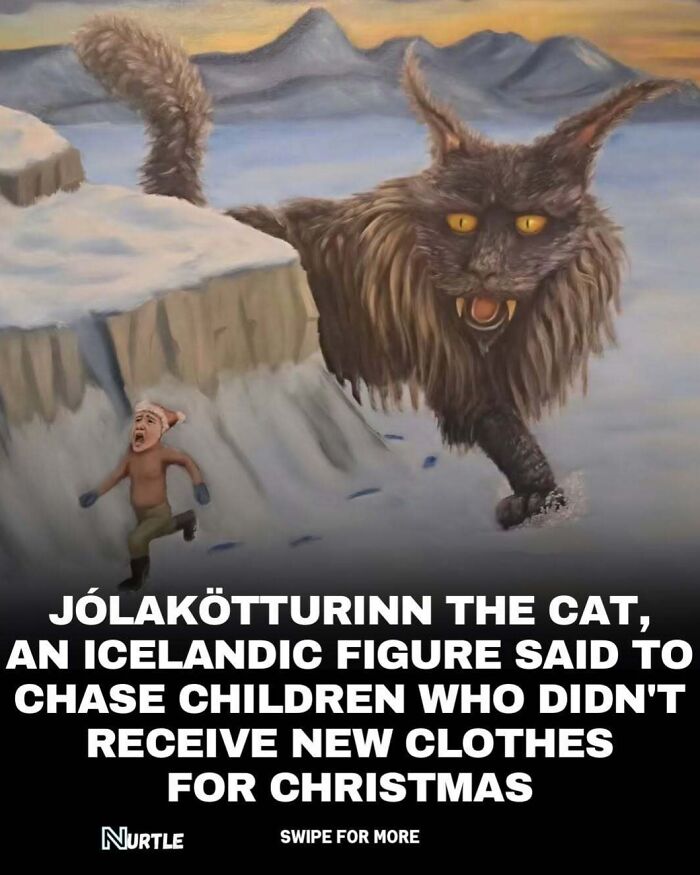
Jólakötturinn, known as the Yule Cat, is a figure from Icelandic folklore said to eat children who did not receive new clothes for Christmas. The story dates back to at least the 19th century and is closely tied to Iceland’s historical wool industry.
In rural Iceland, families relied heavily on wool production to survive harsh winters. Everyone, including children, was expected to help process wool before winter arrived. Those who completed their work were rewarded with new clothing made from the finished wool.
The Yule Cat legend acted as a warning. Children who failed to do their share of the labor were said to be at risk of being eaten by the cat, while those who worked hard were safe and received new garments. The story reinforced productivity and discipline during the darkest months of the year.
Today, the Yule Cat remains a well-known part of Icelandic Christmas folklore, often referenced in stories, decorations, and poems, though it’s now treated as cultural tradition rather than a literal threat.

Snowflake was the world’s only known albino gorilla. Discovered in 1966 in Equatorial Guinea, he was captured by local farmers and eventually brought to the Barcelona Zoo, where he lived for nearly 40 years.
What made Snowflake so unique was his complete lack of pigmentation, giving him white fur and pinkish skin — a condition extremely rare in gorillas. Genetic studies later revealed that his albinism was caused by inbreeding, which made his case even more unusual in the wild.
Despite his condition, Snowflake lived a long life under careful care. Visitors from all over the world came to see him, making him one of the most famous animals in captivity. He passed away in 2003, but remains the only albino gorilla ever recorded.
If you’ve ever been tempted to toss grapes into a microwave, don’t. They’ll literally explode, and we’re not talking metaphorically. Something about the shape and water content causes them to spark and burst. It’s science, but it’s also a cleanup you don’t want. Grapes are better off chilled or in wine, not flying around your microwave.
In 1960, Tokyo looked nothing like the city people picture today. The skyline was still low and spread out, dominated by wooden houses, tiled roofs, and tightly packed neighborhoods rather than glass towers.
Even Tokyo Tower, completed just two years earlier, stood out dramatically because almost nothing around it rose higher than a few stories. At the time, strict height limits and building regulations kept construction low, partly due to earthquake concerns and postwar rebuilding priorities.
Most of the city was still recovering from World War II. Entire districts had been destroyed, and reconstruction focused on housing and infrastructure rather than vertical expansion. Streets were narrow, communities were dense, and daily life revolved around walkable neighborhoods.
That began to change in the early 1960s as Japan entered a period of rapid economic growth. The 1964 Tokyo Olympics became a turning point, pushing modernization, new transport systems, and eventually the removal of height restrictions.
What followed over the next decades was one of the fastest urban transformations in modern history, turning Tokyo from a low rise city into one of the most vertical megacities on Earth.
Giant pandas are officially no longer listed as endangered. The species is now classified as vulnerable after a sustained increase in its wild population.
This shift reflects decades of conservation efforts in China, including strict habitat protection, the expansion of panda reserves, and coordinated breeding programs. Together, these measures helped stabilize and grow the population, which now exceeds 1,800 pandas living in the wild.
Pandas were previously pushed to the brink by deforestation, agricultural expansion, and fragmented bamboo forests. Because their diet depends almost entirely on bamboo, even limited habitat loss had a direct impact on survival.
Being listed as vulnerable does not mean pandas are out of danger. Their habitat remains fragmented, and climate change continues to threaten bamboo growth across large parts of their range, making continued protection essential.
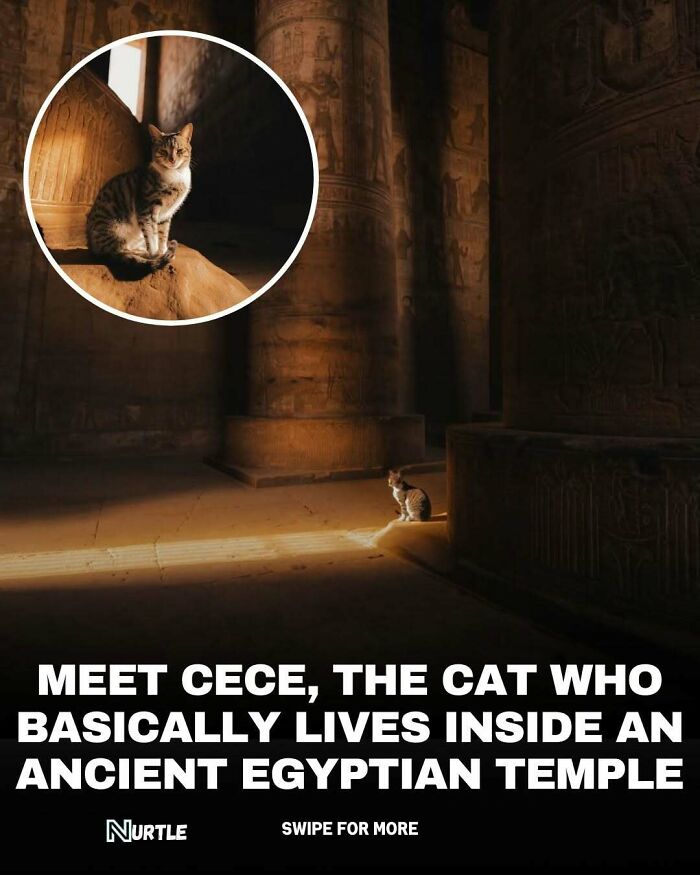
At the Temple of Dendera in Luxor, a local cat named Cece has become a familiar sight for visitors. She spends her days moving through the ancient halls, appearing around columns and courtyards while tourists explore the site. Guides and staff say she has been around long enough that many visitors look for her when they arrive.
Cece usually stays close to shaded areas inside the temple and often sits near the walls where the stone stays cool. Cats living around archaeological sites in Egypt aren’t unusual, but Cece is one of the few that regularly appears in photos taken by tourists.
She isn’t an official guardian of the temple, but her presence has turned her into a small part of the visitor experience at Dendera.
Cayenne pepper isn’t just spice; it’s also first aid in a bottle. A sprinkle on a small wound can help stop bleeding, thanks to its clotting properties. And if you eat it, it might boost your circulation and improve blood pressure. So yes, it burns, but it also heals. It’s basically nature’s feisty multitasker. Use it wisely, and maybe keep it handy.
Whether it’s a fruit pretending to be a vegetable, or a flower family secretly giving us snacks, food is full of surprises. These facts aren’t just fun; they’re a great way to see your plate in a whole new light. Learning about everyday things is oddly satisfying, isn’t it? Which one of these posts did you find the most interesting?
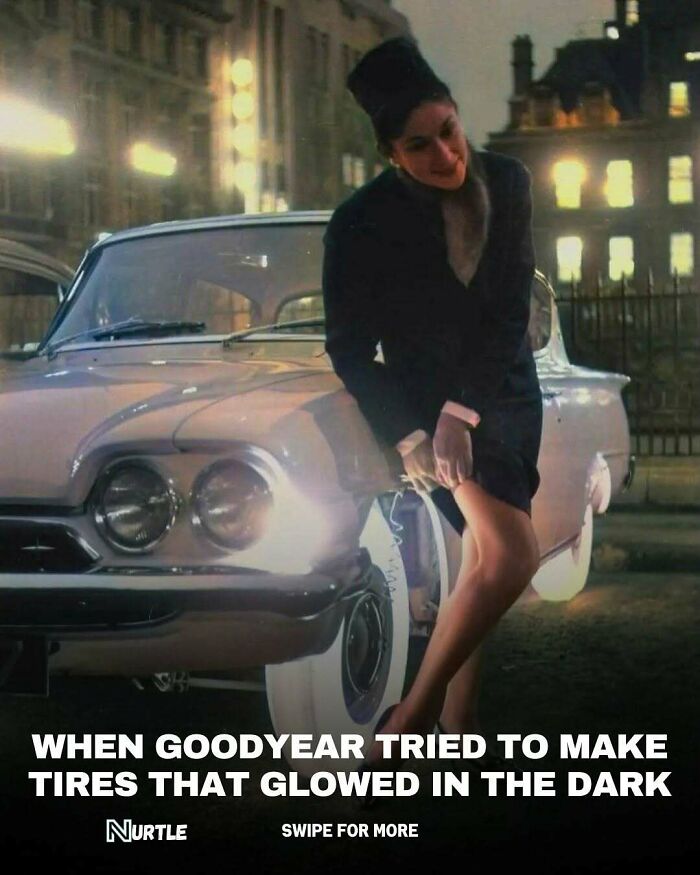
In the 1960s, Goodyear engineers began testing something straight out of science fiction, glowing tires. Made from a synthetic rubber called Neotan, the translucent material was heated and molded to produce a soft glow whenever the car moved.
Each tire contained small lights inside the rim that could flash or stay lit, creating a futuristic effect that turned heads at car shows and night parades. The company hoped it would revolutionize the look of cars, blending performance with style.
But the idea never made it past the prototype stage. The material proved too fragile and expensive for real-world use, leaving only photos and a few surviving test models as proof that glowing tires once existed.
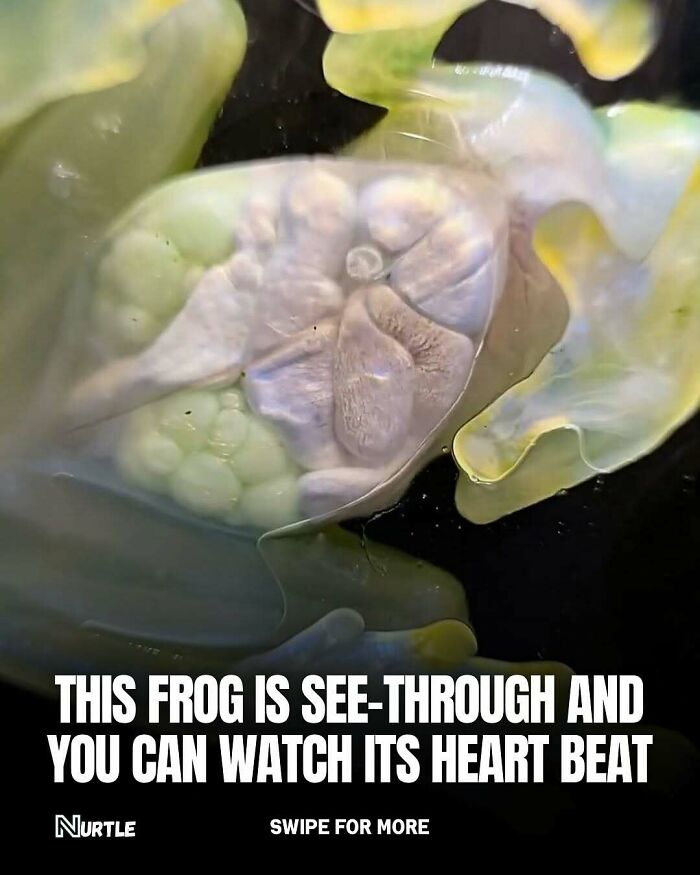
Located in Central and South America, the glass frog is one of nature’s strangest survival designs. Its skin is so clear that you can literally see its heart beating inside, along with its organs.
This transparency is more than just unusual—it’s a powerful defense mechanism. By letting light pass through its body, the frog avoids casting a shadow, blending almost seamlessly with the green leaves it rests on. Predators looking for movement or shapes often miss it entirely.
Scientists discovered that when glass frogs sleep, they push most of their red blood cells into their liver. This reduces the visible color in their bodies, making them nearly invisible while resting. When they wake up, the red blood cells return to circulation.
Deep beneath the surface of Chihuahua, Mexico, lies one of the most surreal places on Earth: the Giant Crystal Cave.
Discovered completely by accident in 2000, this underground marvel was found when two brothers were drilling into the Naica Mine in search of silver. What they uncovered instead was something no one expected — a hidden chamber filled with enormous selenite crystals, some stretching up to 11 meters (36 feet) long.
The cave had been sealed off from the outside world for hundreds of thousands of years, allowing the crystals to grow to massive sizes in the hot, mineral-rich environment. But stepping inside isn’t easy — with temperatures reaching 58°C (136°F) and nearly 100% humidity, scientists can only explore it for minutes at a time using protective gear and oxygen tanks.
Since its discovery, the cave has attracted geologists and researchers from around the globe, all eager to study how such extreme conditions gave rise to one of Earth’s most unique natural formations.
In 2000, Xue posed for a photo at May Fourth Square in Qingdao, China. She had no idea that the man casually walking in the background, Ye, would one day become her husband.
More than a decade later, in 2011, the two officially met in Chengdu. They fell in love, married soon after, and only later discovered the old photo. The image revealed they had unknowingly crossed paths 11 years earlier, captured in the same frame without realizing it.
For the couple, the photo became a symbol of fate, a reminder that sometimes life brings people together long before they even notice.
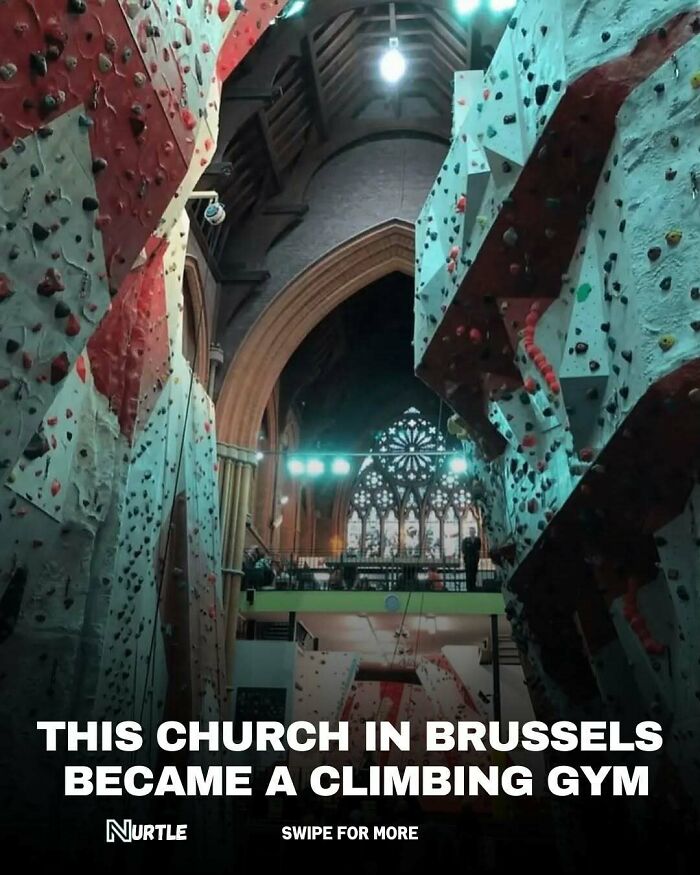
A historic church in Brussels has been transformed into a climbing gym after years of declining attendance and high maintenance costs. The Saint Anthony of Padua Church was repurposed to preserve the building while giving it a new purpose for the local community.
Today, climbers scale walls that stretch up toward the original vaulted ceilings, blending modern sport with historic architecture. The gym, called Maniak Padoue, has become a unique spot where history and recreation meet.
The city of Birmingham in England experienced an unusual pink glow across the night sky during snowfall, caused by powerful LED stadium lighting reflecting off low clouds and falling snow.
The light source was traced to Birmingham City FC’s stadium, St Andrew’s, where high-intensity LED floodlights were in use. Modern LEDs emit a broader and more saturated color spectrum than older sodium lamps, making atmospheric reflections far more vivid.
When snow falls, each snowflake acts like a tiny reflective surface. Combined with low cloud cover, the light becomes trapped and scattered, creating a large-scale glow visible across wide parts of Birmingham. The effect is strongest during snowfall or heavy mist, when light cannot escape upward.
Similar phenomena have been observed near greenhouses using grow lights and at sports venues worldwide, but it remains rare in dense urban areas at this scale.
Some cats are born with extra toes, a genetic condition known as polydactyly. While most cats have 18 toes, polydactyl cats can have 20 or more, usually on their front paws, giving them a wide or mitten-like appearance.
The condition is caused by a dominant genetic mutation, meaning it can be passed down from just one parent. In most cases, it does not affect a cat’s health, movement, or lifespan. Many polydactyl cats live completely normal lives without any medical issues related to the extra toes.
Polydactyl cats are especially common in coastal areas of the US, Canada, and the UK. Sailors often kept them on ships, believing their larger paws helped with balance and made them better hunters, which helped spread the trait through port towns.
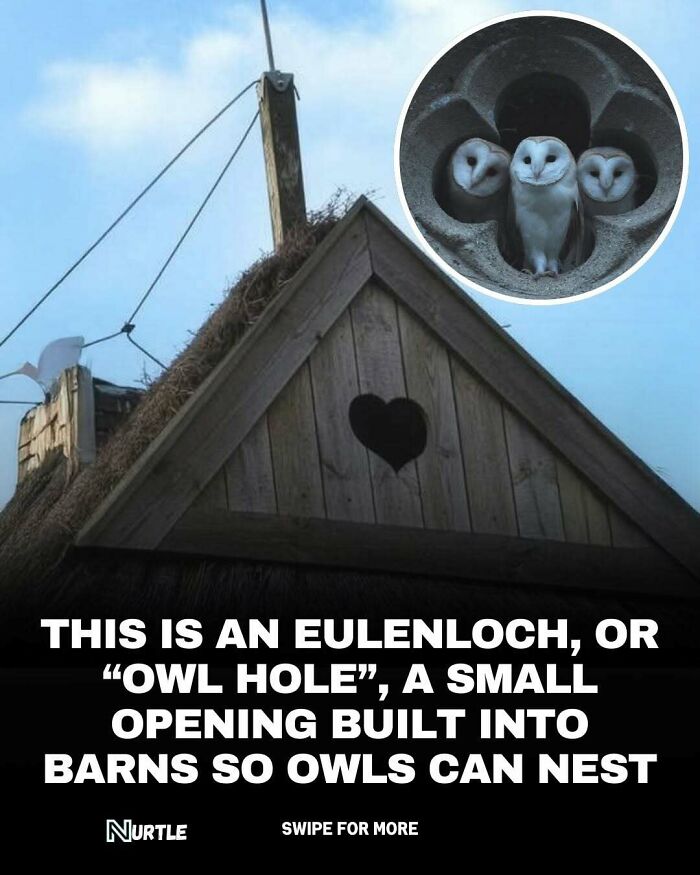
An Eulenloch, literally meaning “owl hole,” is a small opening traditionally built into the upper walls of rural barns across parts of Central Europe. Its purpose was to allow owls to enter barns and nest inside.
Farmers used Eulenlöcher as a natural form of pest control. Owls hunting from inside barns helped reduce populations of mice and rats that threatened stored grain, hay, and wooden structures. The holes were usually placed high up to keep predators out and give owls a safe nesting spot.
These openings were not decorative. Their size, placement, and shape were carefully chosen so owls could pass through while limiting access for larger animals. In many regions, barn owls became closely tied to farm life because of this architectural feature.
As modern farming methods changed and barns were sealed or demolished, Eulenlöcher became far less common. Conservation groups now sometimes reintroduce owl openings or nest boxes to help declining barn owl populations return to agricultural areas.
The barn owl species has one of the broadest distributions of all birds, being one of the very few land bird species found naturally on all 6 inhabited continents.
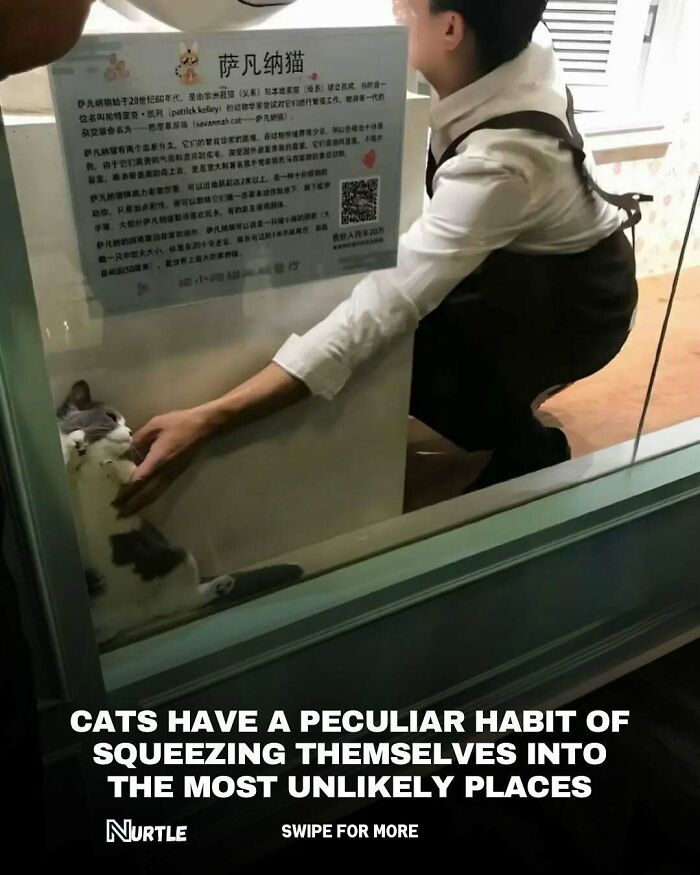
Cats are known for slipping into boxes, drawers, and the tiniest gaps they can find. It’s not random behavior but rooted in instinct.
In the wild, tight spaces protect cats from predators and help them stay warm by conserving body heat. The enclosed feeling gives them comfort and control over their surroundings.
So when a cat curls up in a cramped spot, it’s not just being silly, it’s acting on a survival instinct.
It's because they are liquid. It's obvious to anyone who has ever picked up a cat. Pick up a dog, and you can tell it's a solid!
In a remote village in Yunnan, a young student named Wang Fuman became known across China after arriving at school with his hair and eyebrows covered in frost. He had walked several kilometers through freezing temperatures to make it in time for an important exam, a routine that was normal for him and many other children in the region.
His school sits in one of Yunnan’s mountainous areas where winters are harsh and heating at home is limited. The long daily walk exposes students to cold winds and rough terrain, but education remains a priority for families who often live far from the nearest classroom.
The pictures of Wang’s frozen hair drew attention to the difficulties students face in rural parts of China. Local authorities later improved insulation at the school and provided basic support for children who travel long distances in cold weather.
Deep inside a flooded tunnel in Kani City, Japan, stands a single Torii gate that once marked the entrance to the Amagamine Ochobo Inari Shrine. What’s now an eerie underground site used to be part of a festival space, abandoned after severe flooding made it inaccessible.
Torii gates in Shinto mark the border between everyday life and sacred spaces, symbolizing a passage into the realm of the gods. This one, hidden in a dark water-filled tunnel, carries a surreal and almost unsettling energy.
Over time, it became a mysterious spot for explorers and photographers who document forgotten places across Japan.
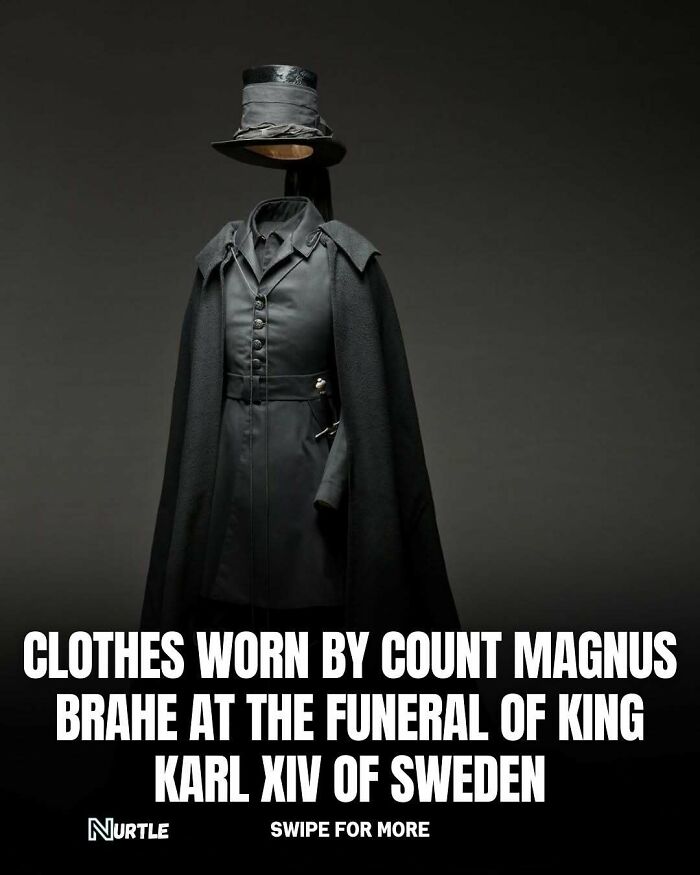
1800’s drip making modern fits look basic. 👘🎩
Count Magnus Brahe was one of King Karl XIV Johan’s closest advisors and served as Sweden’s Marshal of the Realm. When the king died in 1844, Brahe attended the funeral wearing a full black mourning ensemble.
The outfit included a long cloak, a tailored coat, a tall black top hat, gloves, and other formal details. While black mourning clothes were standard in European aristocracy at the time, Brahe’s attire stood out for its precise tailoring and completeness, reflecting both his rank and his personal connection to the king.
King Karl XIV Johan, born Jean-Baptiste Bernadotte in France, rose from Napoleonic marshal to King of Sweden and Norway. His death marked the end of a long and stabilizing reign. Brahe’s formal mourning dress was not unusual in color or purpose, but the high-quality craftsmanship and ceremonial presence made it exceptional for the occasion.

"1800’s drip making modern fits look basic." I wonder what someone from the 1800s would make of that sentence.
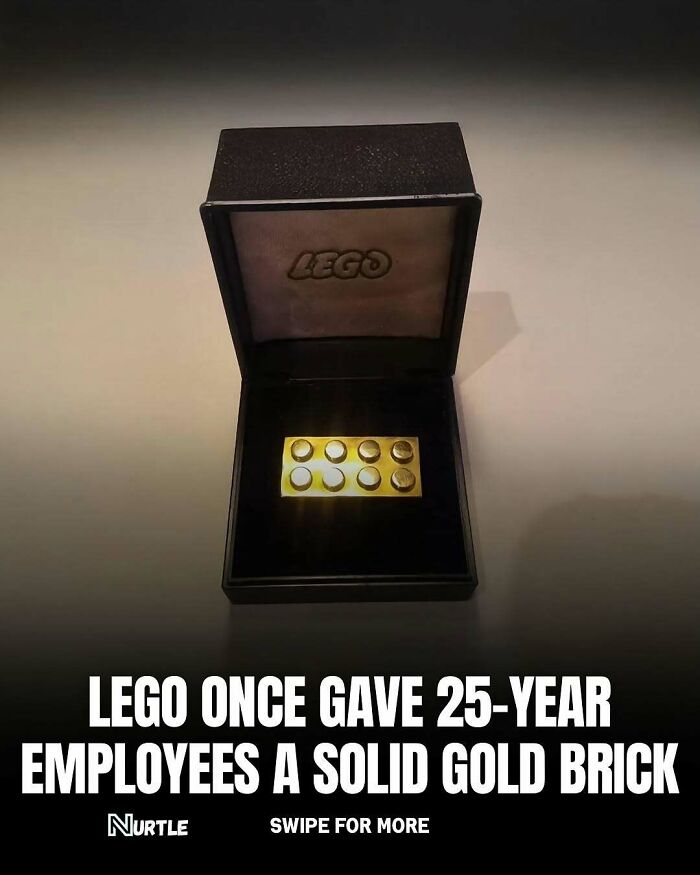
LEGO once rewarded employee loyalty with actual gold.
Between 1979 and 1981, the company gifted 2x4 LEGO bricks made of solid 14-karat gold to workers who hit their 25-year milestone. Each gold brick weighed about 25 grams and could click onto standard LEGO pieces just like the plastic ones.
But this wasn’t a global tradition. It only happened at LEGO’s Hohenwestedt factory in Germany, and fewer than 100 of these bricks are believed to exist.
Today, they’re among the rarest LEGO items in the world, with auction prices soaring above $15,000.
In a surprising twist on a childhood classic, the iconic green plastic soldiers have been reimagined as yoga practitioners.
Created in 2014 by artist Dan Abramson, the project—called Yoga Joes—transforms traditional army figures into peaceful models of mindfulness. Each figure strikes a familiar yoga pose, from warrior and cobra to downward dog and headstand, all while keeping their classic military stance and expression.
The goal? To make yoga more accessible and less intimidating, especially for people who wouldn’t normally give it a try. The result is a quirky fusion of nostalgia, humor, and wellness that’s gained a cult following across the internet.
The Valais Blacknose sheep might be the most stylish animals on the planet. With their shaggy white wool, dark spiral horns, and perfectly black faces, they’ve earned a reputation as the “coolest-looking” sheep breed in existence.
But it’s not just their looks that make them stand out. These sheep are surprisingly dog-like; friendly, loyal, and incredibly social. Originally from the Valais region in Switzerland, they’ve become known for how much they love human interaction. Some owners even train them to follow commands, go on walks, or come when called.
Despite their punk-rock appearance, they’re calm, affectionate, and thrive on companionship. Whether they’re living on a farm or showing up at festivals, Valais Blacknose sheep are winning hearts everywhere they go.
Plastic objects produced decades ago continue to wash up on beaches and coastlines, sometimes still identifiable by their shape, material, or manufacturing style. These items can originate from the 1960s through the 1990s and beyond, showing how long plastic persists once it enters the ocean.
Many of these discoveries are documented by @archeoplastica, a research project led by Italian scientist Enzo Suma. Since 2018, the project has recovered and cataloged plastic objects from the sea that span multiple generations of plastic production. The focus is not on branding, but on how the material itself survives for decades.
Plastic does not biodegrade in marine environments. Instead, it slowly breaks down through exposure to sunlight, saltwater, and physical abrasion. This process can take many decades, and even then, the plastic does not disappear. It fragments into smaller pieces while remaining chemically intact.
As a result, plastic discarded long ago still exists today, either as large objects or as microplastics dispersed throughout oceans, sediments, and marine life. Scientists estimate that the majority of plastic produced since the mid-20th century still remains somewhere in the environment.
This is direct evidence that we need to change how we produce, use, and discard plastic.

This geologic age is called the Anthropocene. Some are advocating for a division around late 1940s for the start of the Plasticene.
Located in the Soviet Union during the early 1970s, this experimental rail project tested whether jet propulsion could push a train far beyond normal speeds. Engineers mounted two AI-25 jet engines, the same type used on the Yak-40 aircraft, onto a purpose-built test car to study acceleration, braking, and track stability at extreme velocity.
During trial runs, the prototype reached about 170 miles per hour, showing that the technology worked on straight test sections. The problem was everything around it. The noise, fuel consumption, and intense force on the rails meant the entire track system would have needed major upgrades. That turned the jet train into a research project rather than a transport plan.
The prototype ended its tests once engineers collected the data they needed, and it remains a reminder of how far Cold War research sometimes went in the search for new transport ideas.
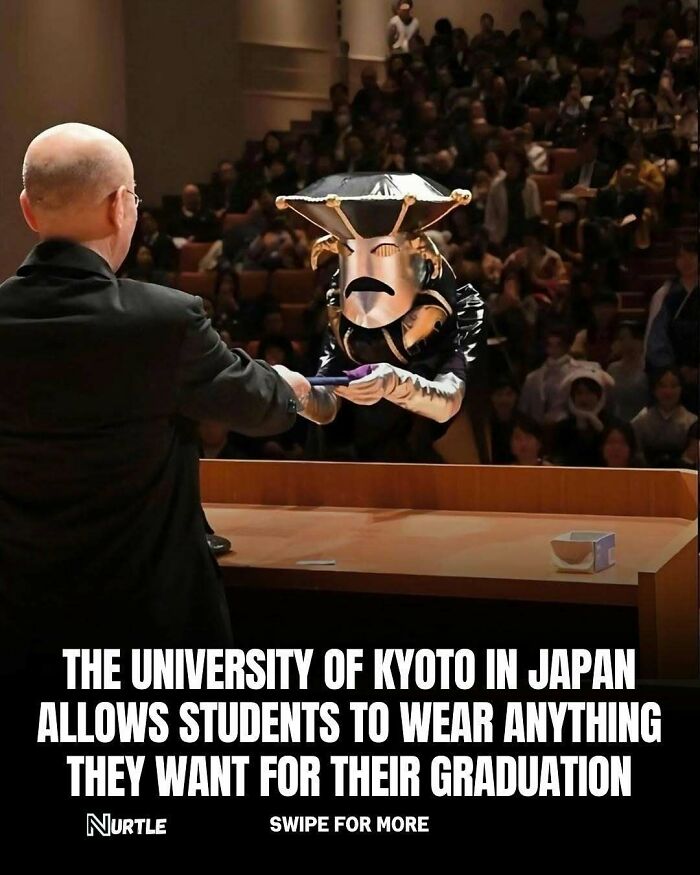
Would you dare to pull this off at your graduation?
At Kyoto University in Japan, graduation looks very different.
Instead of wearing standard caps and gowns, students are free to wear whatever they want. From anime characters and historical costumes to mythical creatures and wild original designs, the outfits turn the ceremony into a full-on spectacle.
The tradition started organically in the early 2000s, when students began showing up in creative costumes. Over time, the university fully embraced it, allowing graduates to express themselves without any strict dress code.
For many students, this isn’t just for fun. They spend months preparing their costumes, using the moment to express their identity and creativity. It’s become a powerful symbol of individuality in a country where uniformity often dominates academic culture.
Even the faculty supports the tradition, seeing it as the perfect way to mark the end of years of hard work while celebrating personal freedom.
Kyoto’s unique approach has since attracted attention far beyond Japan, making it one of the most visually stunning graduation traditions in the world.
I love these pictures. I've seen so many different ones and they all show the individuality of the students
A private Facebook group with more than 416,000 members has one simple rule: everyone acts like an ant.
Inside the group, users post as if they’re part of a working colony. Every update is written from an ant’s perspective, whether someone is “guarding the Queen,” “foraging for sugar,” or “calling for help after getting stepped on.”
Members reply in the same style. A single picture of a crumb can get thousands of comments calling others to “lift,” “carry,” or “bring it to the Queen.” There are even roleplay emergencies, missing-ant reports, and group missions to secure food sources.
The entire community revolves around staying in character.
Just pure ant roleplay that somehow grew into one of the biggest niche groups on the platform.

Roleplaying as fire ants would give them more scope: "Sting anyone today, Bob?" "Well a group of us ganged up on that annoying kid from next door, that will make him think twice about sticking a stick into our nest. Anyway, a number of us are forming a raft to float down to that new housing development and form a new colony, want to join us?"
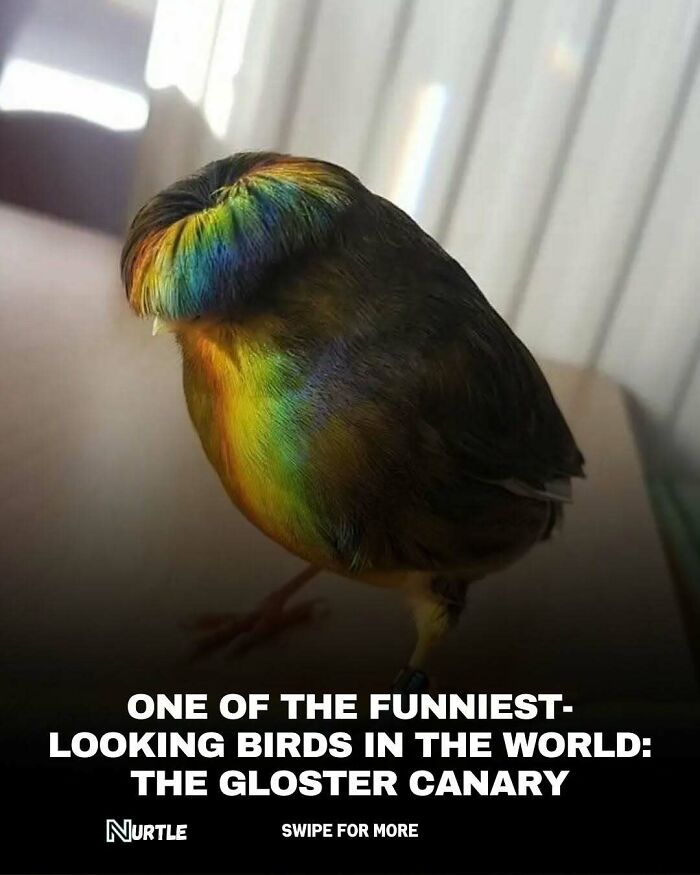
Meet the Gloster Canary, a tiny songbird with what looks like a perfect bowl cut. Its round crest sits neatly over its head, giving it the appearance of a bird that just walked out of a vintage salon.
The breed originated in England in the 1920s and quickly became a favorite among bird enthusiasts for its soft voice and charming look. There are two types: the “Corona,” known for its iconic hair-like feathers, and the “Consort,” which has the same shape but no crest.
Despite the hairstyle jokes online, these birds are calm, friendly, and easy to care for. Their comical look might make people laugh, but they’re genuinely one of the most beloved canary breeds in the world.
Behind the scenes of FX’s Alien: Earth (2025), fans spotted something unexpected. A Xenomorph suit actor was filmed taking a break while still in costume, but wearing a pair of Adidas sneakers.
The moment, shared online, shows the alien casually sitting in full creature design with the iconic three stripes on its feet. Since it’s clearly from set and not the actual show, it looks like a simple case of comfort over continuity during filming.
Still, the image has taken off as a meme, giving fans a surreal crossover between sci-fi horror and streetwear.
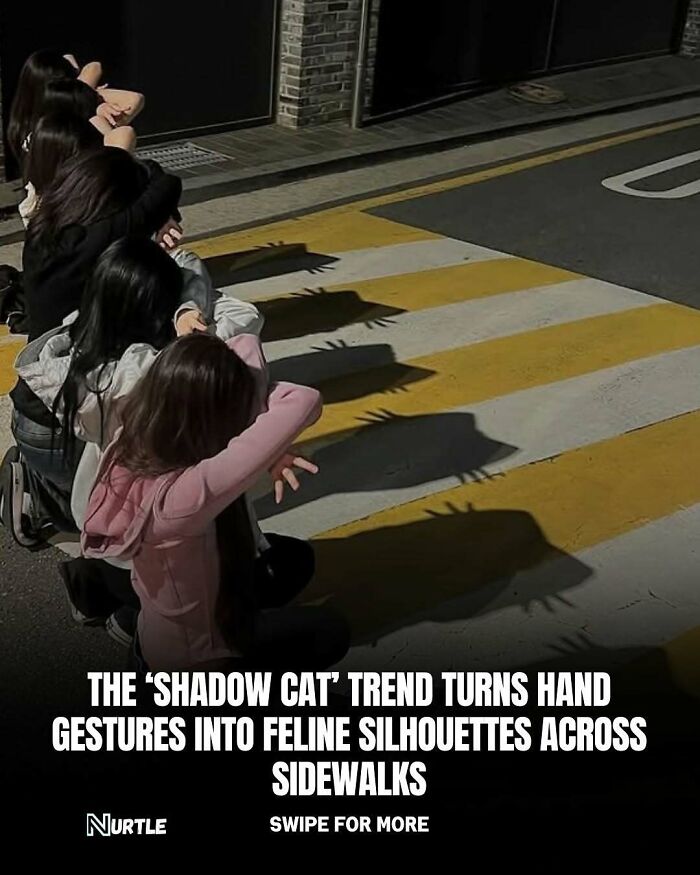
A new viral photo trend is taking over social feeds: the “shadow cat” challenge.
People are crouching in sunlight and arranging their hands behind their heads to create shadow shapes that resemble cats—with pointed ears, stretched tails, and even whiskers. What looks like a simple seated pose becomes a playful feline silhouette when viewed on the pavement.
The trend’s mix of creativity and optical illusion has caught fire in schools and city streets, especially across East Asia, with friends lining up to recreate the effect for photos.
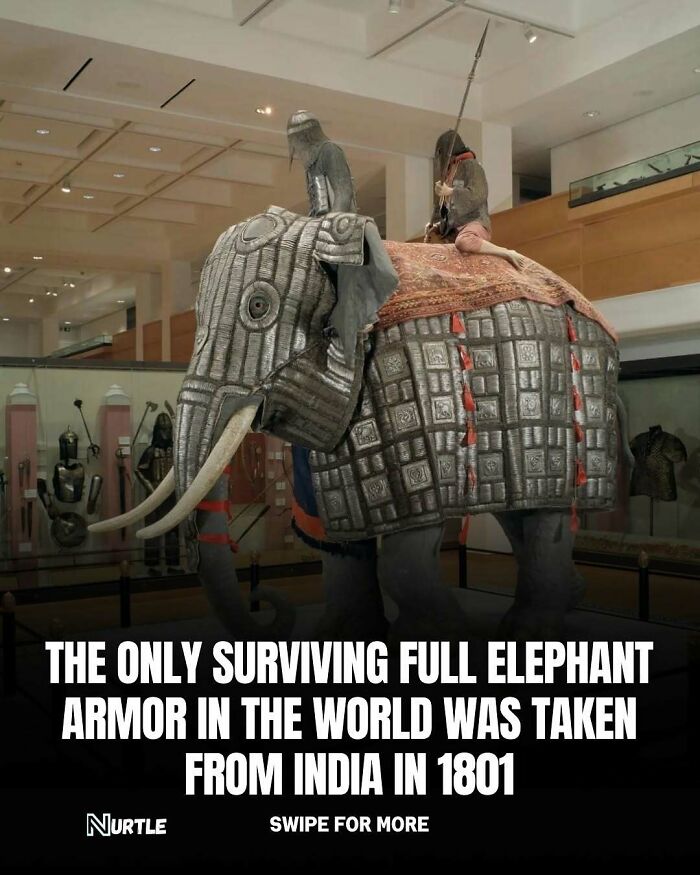
This is one of the rarest artifacts in existence: a full suit of mail and plate armor designed for a war elephant. Built to protect both the elephant and its riders in battle, it dates back to late 18th-century India.
The armor was acquired—more accurately, looted—by Lady Clive, wife of the British Governor of Madras, sometime between 1798 and 1800. It was shipped to Britain in 1801, during a period of aggressive colonial extraction by the British Empire.
Today, it stands as both a technological marvel and a reminder of the imperial plundering of cultural treasures.
Too bad it can't be returned to where it was "acquired - more accurately, looted" from.
Sunflowers have been used in the cleanup efforts after nuclear disasters like Chernobyl and Fukushima—not for decoration, but for their unique ability to absorb toxic substances from the ground.
These plants are “hyperaccumulators,” meaning they can pull heavy metals and radioactive elements like cesium-137 and strontium-90 from soil and water.
While they aren’t a perfect solution, sunflowers help reduce contamination levels and are often part of larger environmental recovery strategies. Their roots quietly pull in toxins, offering a natural way to assist in healing some of the planet’s most damaged sites.
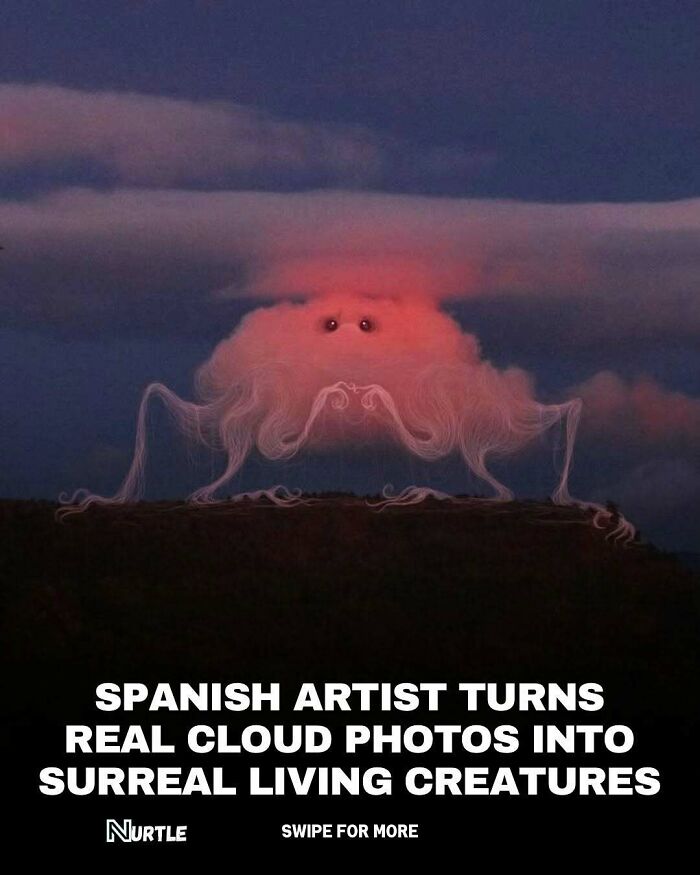
Spanish artist Vorja Sánchez has built a reputation for turning the sky into his sketchbook. Instead of treating clouds as scenery, he uses them as the base for eerie, fluid creatures that seem to drift through mountain valleys and misty horizons.
Each creation starts with a photograph taken during his hikes around northern Spain. He then draws directly over the image, following the natural movement of the clouds until something recognizable takes shape, a serpent, a spirit, or something in between.
The result blurs the line between nature and imagination, as if the sky itself were alive.
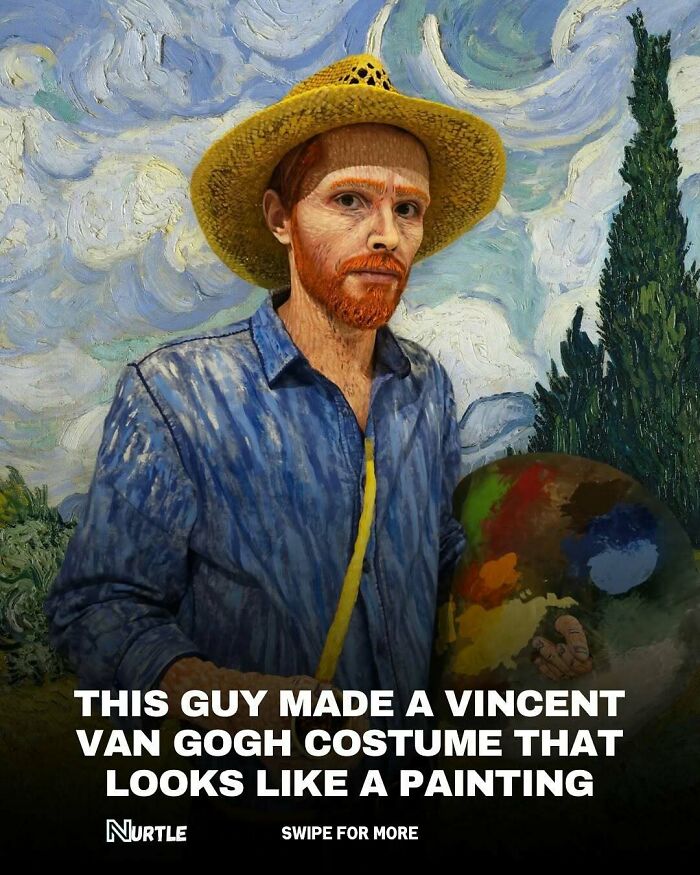
A cosplayer named Jesse transformed himself into Vincent van Gogh with a costume that looks like it stepped straight out of a painting. Using textured paint effects, layered fabric, and careful makeup work, he recreated Van Gogh’s iconic self-portrait with remarkable accuracy.
The costume includes the painter’s signature straw hat, blue shirt, and color palette, with every visible detail painted to mimic the thick brushstrokes of Van Gogh’s art. It’s a striking blend of cosplay and fine art, blurring the line between reality and canvas.
Founded in 1932 by Japanese immigrants, the small city of Assaí in Paraná, Brazil, became home to one of the largest Japanese communities in South America. With its streets lined by white ipê trees and a Japanese-style castle at its heart, the city is often mistaken for a town in Japan.
Assaí is known for blending Japanese and Brazilian culture, from traditional Tanabata festivals to local cuisine and architecture. The city once thrived on cotton and coffee farming but has since shifted toward industry and community-driven projects, maintaining a deep cultural connection to its founders.
Today, it remains the Brazilian municipality with the highest proportion of Japanese descendants, symbolizing how immigration can shape identity and landscape in unexpected ways.
A fire rainbow, also known as a circumhorizontal arc, is one of the rarest atmospheric sights. It appears when sunlight passes through flat, hexagonal ice crystals in cirrus clouds high above the Earth. The crystals bend the light into a spread of colors that stretch across the sky in horizontal bands.
Unlike normal rainbows, this phenomenon has nothing to do with rain. It only happens when the sun is high in the sky and the crystals are perfectly aligned, making the conditions incredibly rare. When everything lines up, the clouds ignite into bright streaks of red, orange, green, and blue, creating the illusion of fire burning across the horizon.
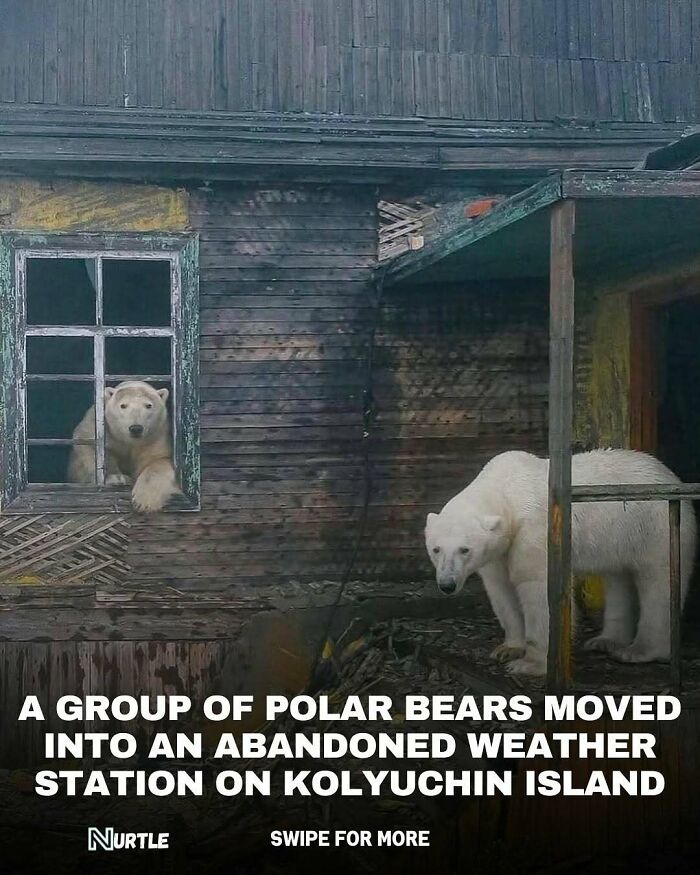
Polar bears have been spotted by the amazing photographer @master.blaster , turning an abandoned Soviet-era weather station on Kolyuchin Island into their own shelter.
The remote island in the Chukchi Sea was once home to scientists but has been deserted for decades, leaving the structures to decay.
With melting sea ice reducing their natural hunting grounds, polar bears often explore human-made ruins in search of safety or food. Images from the site show the animals lounging in doorways and peeking through broken windows, blending eerily into the ghost town.
Kolyuchin Island lies off the coast of Russia’s Chukotka region, an area so isolated that the station is only reachable by boat or helicopter. What was once a hub for Arctic research is now a surreal reminder of how wildlife adapts to abandoned human spaces.
Yes, we'd love to hear about your religion. Come right in! Stay for dinner....
In what might be the cutest form of bureaucracy ever, pets in Hong Kong are shown holding their very own “identity cards”, complete with photo, name, gender, and date of birth.
While Hong Kong doesn’t legally issue official ID cards to animals, it does require pet microchipping and registration, especially for dogs. So these playful pet IDs are more of a fun twist on that system and a hilarious way to show off your furry friend’s “credentials.”
This isn’t just a helmet—it’s 1600 years of silence turned into gold.
Found in Serbia in 1955, this 4th-century Roman parade helmet was likely worn by a Greek citizen of the Roman Empire. Not meant for battle, but for spectacle. Ceremonies, parades, or perhaps imperial events where the gleam of gold spoke louder than any rank.
Made of gilded bronze, decorated with glass inlays and intricate metalwork, the helmet still shines like it remembers who once wore it. The weight of empire, pride, and identity—all pressed into one dazzling artifact.
Today, it rests behind glass. Quiet, but not forgotten.
Located on the slopes of Pacaya Volcano in Guatemala, this pizza is cooked using natural volcanic heat, not an oven.
The man behind it is chef Mario David García Mansilla, who began experimenting with Pacaya’s extreme temperatures after noticing that cracks and vents near the lava fields consistently reached 300°C or more. Instead of placing food directly on molten rock, he uses metal trays and carefully positions them inside heat pockets formed by volcanic stones, where the temperature stays stable enough to cook dough evenly.
Pacaya is one of Central America’s most active volcanoes, but its slow-moving lava flows and predictable heat zones allow controlled cooking when conditions are safe. The pizzas bake in just a few minutes, driven entirely by geothermal energy, with no fuel, electricity, or traditional fire involved.
This method isn’t a one-off demonstration. García Mansilla developed it as a functional geothermal cooking technique, combining local volcanic conditions with professional culinary control.
The total solar eclipse of February 3, 1911, became a major field event for astronomers working across North Africa and the Mediterranean. Egypt was one of the best viewing locations, offering clear skies and a long stretch of totality, which made it ideal for collecting scientific measurements.
Research teams set up observation stations to study the Sun’s corona, which can only be seen when the Moon fully blocks the solar disk. They used telescopes, spectrographs, and early photographic equipment to record the corona’s temperature, structure, and magnetic patterns. These observations helped confirm that the corona extends far into space and changes shape depending on solar activity.
At the time, eclipse photography was still developing, so scientific documentation often mixed photographs with technical drawings. The widely shared image associated with this eclipse is actually an illustration created in 1911 by Bruno Hans Bürgel, used to visually represent how the eclipse looked over the region.
The 1911 eclipse remains one of the more significant early 20th-century eclipse studies, combining coordinated fieldwork, improving technology, and an ideal viewing path that passed directly over Egypt.
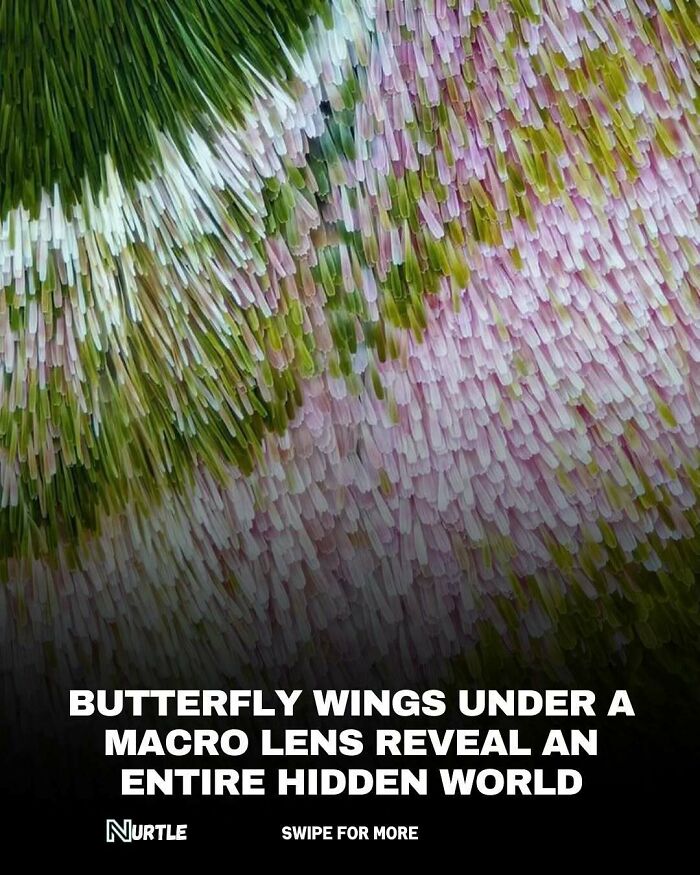
Butterfly wings may look smooth to the naked eye, but under a macro lens, they reveal a world of intricate tiny scales layered like shingles on a roof. Each scale contributes to the vivid colors and patterns we see from afar.
These scales are made of chitin, the same natural material found in insect shells, and can reflect or absorb light in unique ways. That’s why their colors can appear to shift depending on the angle of view.
The amazing photographer Thorben Danke captured these close-ups using high-resolution macro techniques, revealing a highly structured, almost textile-like surface. His work offers a stunning glimpse into the hidden beauty of nature’s smallest details
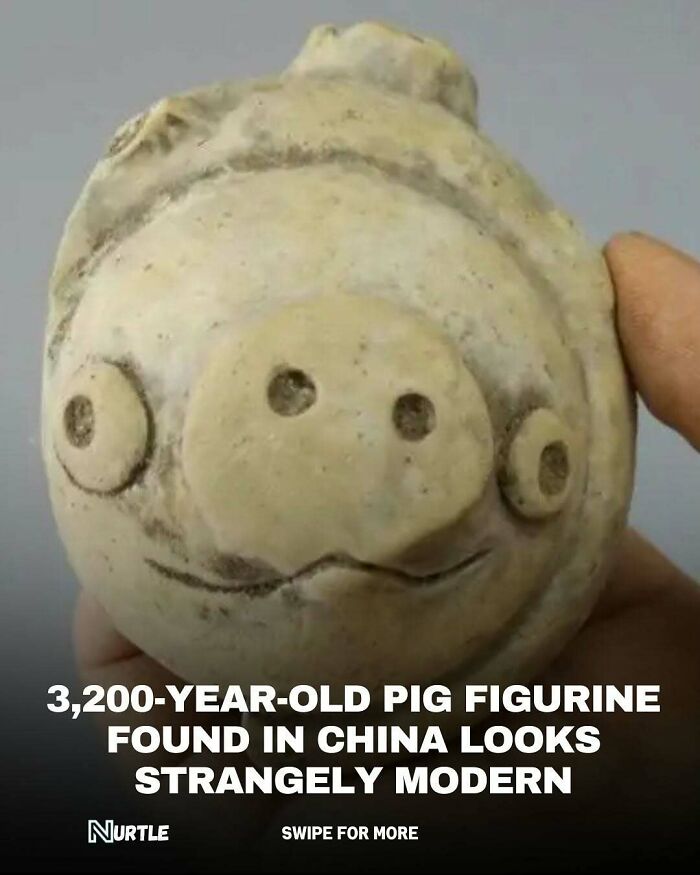
Archaeologists in Sichuan, China, uncovered a small clay pig figurine during excavations at the Lianhe Ruins in 2020. Chinese media report that the piece dates back about 3,200 years, linking it to the ancient Shu culture near the Sanxingdui site.
The figure has a round head, flat snout, and simple carved features that many compared to a modern cartoon pig. Its age and location have been confirmed by China’s archaeological authorities, though no formal excavation paper has yet been released.
Oh, and yes, it really does look like a piggie out of Angry Birds.
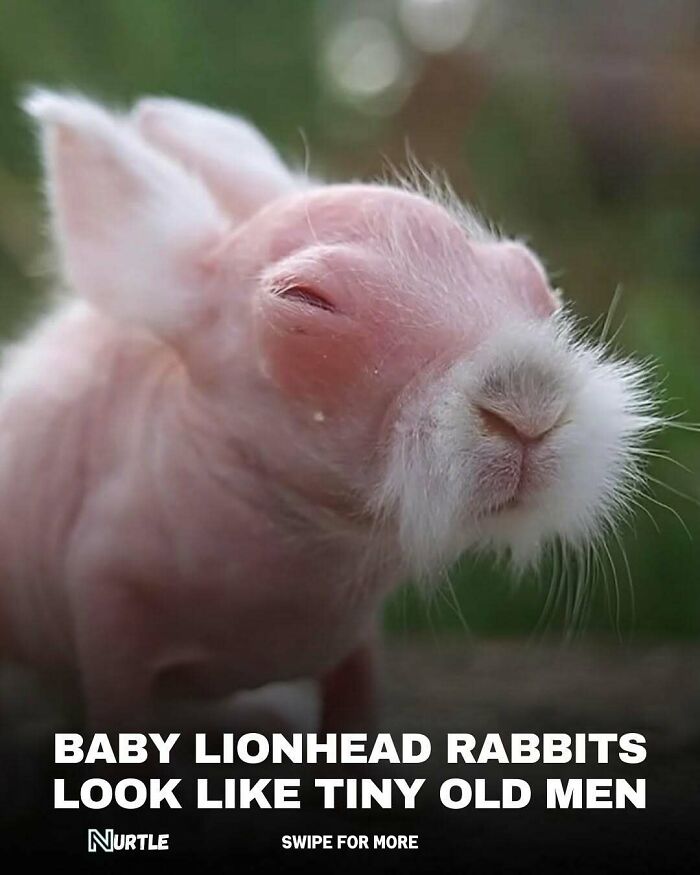
This newborn rabbit has barely entered the world, yet already looks like a tiny old man. With wrinkled pink skin, closed eyes, and tufts of white fur growing around its nose and ears, it almost looks like it’s wearing a moustache.
Baby rabbits, called kits, are normally born hairless and blind. In the first days, fur begins to grow in patches, often around the face and paws first. That gives this little one such an unusual “grandpa” look, even though it’s only days old.
It is also likely a Lionhead rabbit, a breed known for its mane-like fur around the head. Those first tufts on its face are the beginnings of the fluffy “lion mane” it will develop as it grows older.
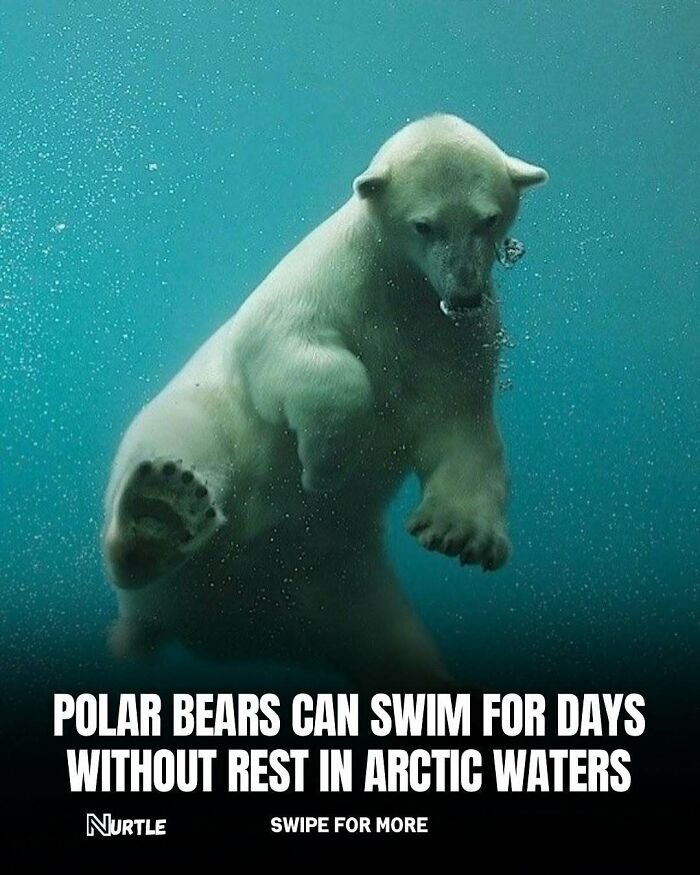
Polar bears aren’t just strong swimmers, they’re built for endurance. In the icy waters of the Arctic, they can swim for hours at a time, sometimes for days, without touching land.
This ability helps them follow drifting sea ice and track seals across long distances. Their large front paws act like powerful paddles, while a thick layer of fat insulates them from the cold.
In one recorded case, a polar bear swam over 400 miles non-stop. It’s not a choice, it’s survival in one of the harshest environments on Earth.
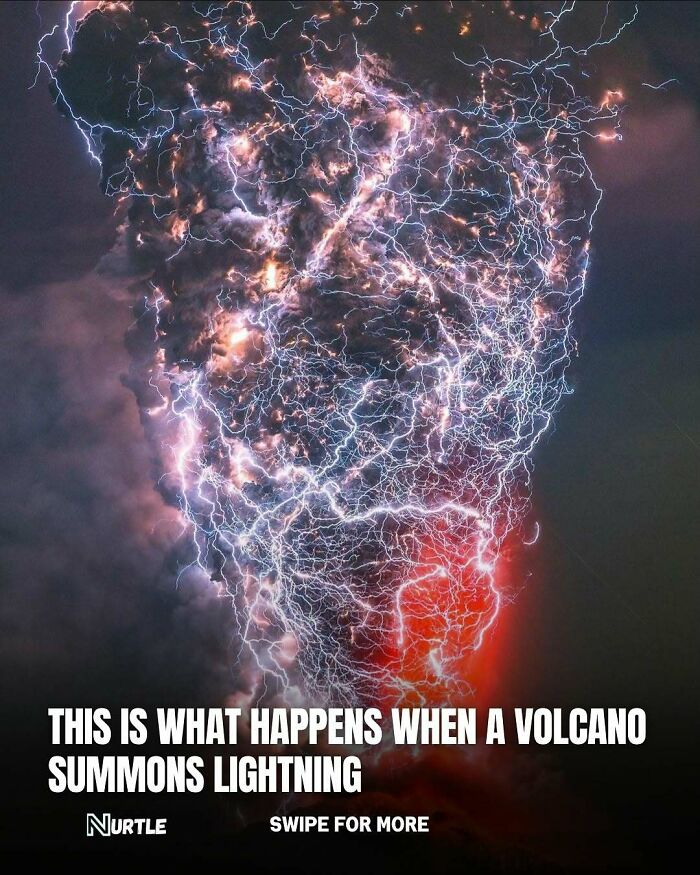
It’s called volcanic lightning, and it forms when ash, gas, and rock particles explode out of a volcano and violently collide in the sky. These collisions create static electricity—just like in a thunderstorm—except it’s happening inside a plume of ash and lava.
The result? A blinding storm of fire and lightning, all coming from one eruption.
Volcanic lightning has been captured during eruptions around the world—from Chile to Japan to Iceland—and it’s one of the most extreme displays nature can produce.
A K-9 unit dog named Deke received custom titanium tooth caps after years of service wore down his natural teeth. The German Shepherd was 6 years old and worked in detection and apprehension, where strong, intact teeth are essential for duty.
The procedure was done to protect his remaining teeth and extend his service life, allowing him to continue working without pain or risk of further damage. Titanium is used because it is lightweight, extremely durable, and safe for long-term use in animals.
Titanium is mainly used because bone will grow around it, unlike other metals, and it doesn't tarnish or corode.
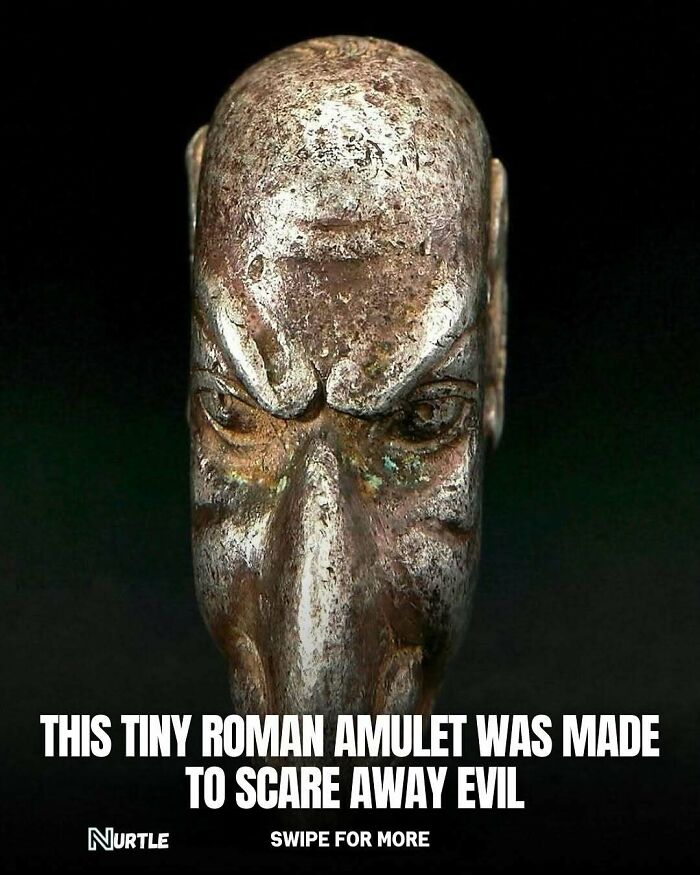
This tiny Roman amulet, only 3 centimeters tall, was carved from silver nearly 2,000 years ago.
The grotesque face, with its long hooked nose and exaggerated features, wasn’t meant to be pretty. It was designed to ward off evil and protect its wearer from harm.
Objects like this were common in the Roman world, where superstition and symbolism played a role in everyday life.
Jewelry wasn’t only decoration, sometimes it was a shield against the unknown.
In Osaka, Japan, artists have turned abandoned phonebooths into eye-catching aquariums filled with live goldfish. These public installations blend art and nostalgia, breathing new life into relics of the pre-smartphone era.
Each booth is sealed, lit from within, and carefully maintained to house colorful goldfish swimming among glass bubbles and urban reflections. Locals see it as a playful reminder of how fast technology changes — and how beauty can emerge from what’s left behind.
The project has become a quiet attraction in the city, inviting passersby to stop, stare, and reflect.
The feline, calmly sitting by a building while leashed, wore a striking red suit of miniature armor—complete with shoulder plates, a helmet, and even tiny paw prints etched into the design.
While it may look like something out of a manga, this is part of a growing trend in Japan where pet owners dress their cats or dogs in historically inspired outfits. Some of these pieces are handmade by local artists who specialize in creating custom pet armor that’s both detailed and safe for animals to wear.
Whether it’s street cosplay, a viral photo shoot, or just one very fashionable cat—one thing’s clear: this samurai kitty is winning the internet.
Built in 2019 inside the Sino-French Science Park near Chengdu in China, this non-denominational Christian church was designed by Shanghai Dachuan Architects using thousands of thin white aluminum beams. The result? A translucent frame that seems to float in the air, casting almost no shadow.
Surrounded by lavender fields, the church glows in daylight, giving it a surreal, impressionist feel. Its openness to light is what inspired the name “Shadowless Church.”
Beyond its striking design, the building blends Eastern and Western influences and serves as both a place of worship and a cultural landmark — offering a modern take on spirituality, architecture, and sustainability.
A luxury estate inside Golden Oak at Walt Disney World Resort is listed for around $14M and includes one of the most extreme custom home theaters ever built. The private cinema is designed to replicate the interior of the Millennium Falcon, complete with cockpit-style walls, sci-fi lighting, and immersive detailing inspired by the Star Wars films.
The mansion is located in Orlando, Florida, within Disney’s exclusive residential community that offers private resort access and Disney concierge services. Homes in Golden Oak are known for ultra-high security, custom architecture, and direct proximity to the parks.
The property spans close to 11,000 square feet and includes 7 bedrooms and 9 bathrooms. Beyond the theater, the home features a Mediterranean-style design, a resort-style pool with rock formations, a spa, multiple outdoor living areas, and a garage built to accommodate car lifts for collectors.
The Star Wars theater was professionally built as a permanent installation, not a temporary set or themed room. The detailing is fixed into the walls and ceiling, turning the space into a full-scale replica rather than a decorative homage.
Golden Oak homes rarely include heavily themed interiors at this level, making this property stand out even within Disney’s own luxury community. The listing targets buyers who want both high-end real estate and a private, immersive entertainment experience tied directly to Star Wars.
Lockheed Martin has released images showing the F-35 undergoing extreme cold-weather testing inside a massive climate-controlled chamber. The aircraft is placed in temperatures far below freezing to simulate conditions it could face during operations in Arctic or high-altitude environments.
These tests are known as cold soak trials. The jet is left in subzero conditions for extended periods, allowing ice to form across the airframe, sensors, control surfaces, and internal systems. Engineers then evaluate how materials, avionics, hydraulics, and moving parts respond when the aircraft is powered on and prepared for flight.
One of the main goals is to verify that critical systems still function reliably after prolonged exposure to cold. This includes engine starts, fuel flow, flight controls, cockpit displays, and stealth-related components that rely on precise surface tolerances.
The testing is carried out in specialized facilities designed to recreate snow, freezing fog, and extreme cold in a controlled setting. These environments allow engineers to observe ice buildup patterns and identify potential failure points before the aircraft is deployed in real-world conditions.
Cold-weather validation is a required step for modern military aircraft expected to operate globally. For the F-35, it ensures readiness not just in deserts and carrier decks, but also in frozen regions where temperature alone can become a mission-critical factor.
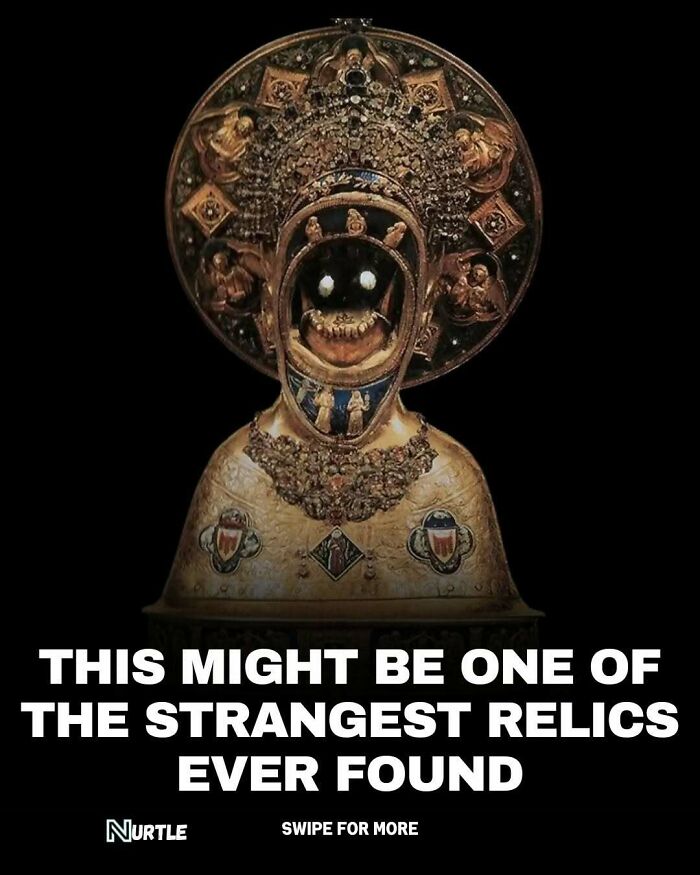
Inside the Basilica di Sant’Antonio in Padua, one of the Catholic world’s strangest relics is kept on display: the jaw and tongue of Saint Anthony of Padua.
When his tomb was officially opened in 1263, more than 30 years after his death, most of his body had decomposed. According to records from the basilica, his jaw and vocal organs were found preserved, something church officials immediately linked to his reputation as one of the most powerful preachers of the Middle Ages.
Instead of returning them to the tomb, the remains were placed inside an ornate reliquary bust, made with gold, enamel, gemstones, and religious figures. The jaw is still visible behind glass today, displayed in the Chapel of the Relics.
The discovery is remembered every year in Padua during the Feast of the Tongue, marking the moment the relic was revealed inside the basilica.
Jon Brower Minnoch was born in 1941 in the United States and is officially recognized as the heaviest human ever recorded. At his peak, his weight was estimated at around 1,400 pounds, a condition caused by a combination of severe obesity and a rare fluid retention disorder, likely linked to heart and kidney failure.
By his early 30s, Minnoch’s health had deteriorated to the point where daily movement became nearly impossible. In 1978, he was admitted to hospital after his condition became life threatening. Transporting him required dozens of medical staff and reinforced equipment, highlighting the extreme nature of his case.
Under strict medical supervision, Minnoch was placed on a controlled hospital diet. Over the following months, he lost more than 900 pounds, one of the largest medically documented weight losses ever. Despite this, the underlying condition never fully resolved. After leaving the hospital, fluid retention returned, and much of the weight was gradually regained.
Jon Brower Minnoch died in 1983 at the age of 41. His case remains one of the most extreme and closely studied examples in medical history, often cited in discussions about obesity, metabolic disorders, and the limits of the human body.
Along the road leading to Sidra Medicine in Al Rayyan stands one of the most striking public art installations in the region. The Miraculous Journey, created by British artist Damien Hirst, is a sequence of 14 massive bronze sculptures that follow the entire development of a human fetus from conception to birth.
The sculptures were commissioned as part of Qatar’s public art program and stand directly outside the women and children’s hospital. Each piece shows a different stage of growth, ending with a newborn standing more than 14 meters tall. Together they weigh over 200 tons and stretch across the length of the hospital’s entrance road.
The installation was designed to match the hospital’s focus on maternal and neonatal care, turning the approach to the building into a step-by-step visual timeline of human development. The series has become a recognizable landmark for drivers entering the medical campus.
Reminds me of the oil paintings of embryo growth on the walls of my IVF clinic
Hidden in the hills near Kuchani, Serbia, a small 18th-century wooden church sits quietly beneath a cluster of pine trees. Measuring just 130 square feet, it was built by the local Serbian Orthodox community during the Ottoman period.
While the Ottoman Empire allowed limited religious freedom across its vast territory, some communities still chose to worship in private. This led to the creation of small, movable churches like this one, tucked away in remote areas for safety and peace of mind.
Centuries later, the structure remains intact, serving as both a symbol of faith and a reflection of the complex coexistence between the empire and the people who lived under it.
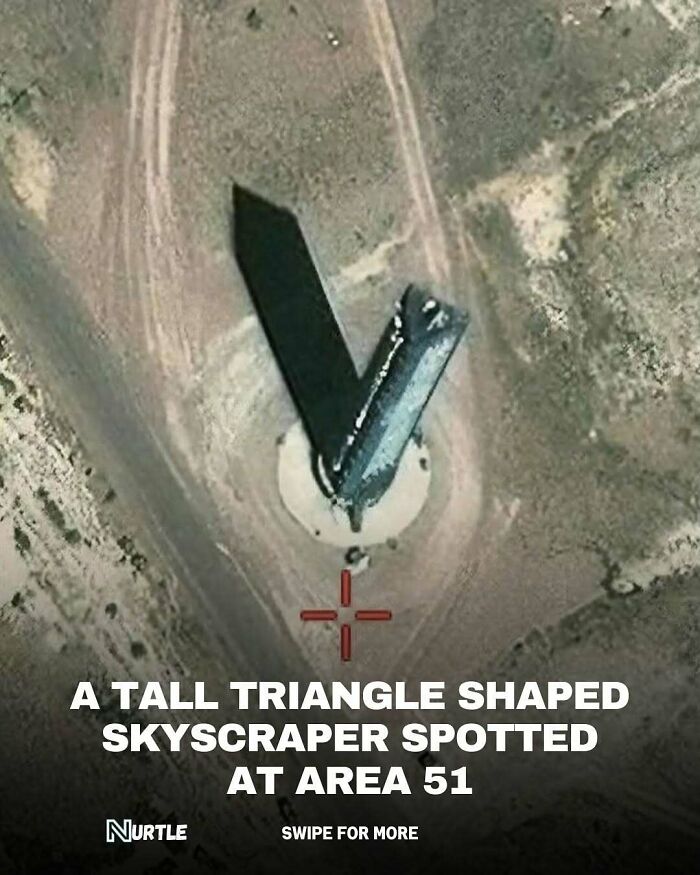
A tall, triangle-shaped structure at the Area 51 military base in Nevada has caught the attention of satellite watchers once again. The building, visible through satellite imagery, has fueled a mix of speculation, humor, and conspiracy theories online.
Many commenters claim the structure has been there for years, suggesting it’s part of the base’s ongoing decoy tactics to mislead anyone trying to observe it from above. Others pointed out that the U.S. Air Force has a long history of “trolling” UFO enthusiasts, sometimes even using painted silhouettes or mock shapes to stir confusion.
Some believe the building could be linked to underground facilities, while others insist it’s nothing more than a radar or testing structure. As with most things involving Area 51, no official explanation has been given, and that only adds to the intrigue.

It's just a tall building, probably a viewing tower for the airport that's there. You can see the landing strip when you drive past.
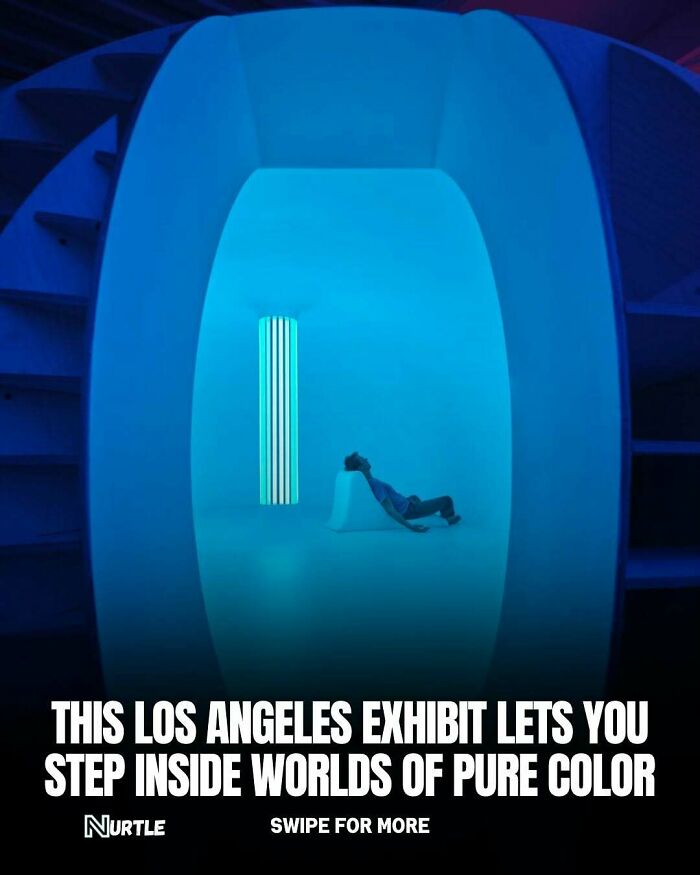
Located in Los Angeles, Chromasonic is an immersive art exhibit that lets visitors step inside entire rooms of shifting color and sound.
The installation is designed to change how people perceive space. Walls glow in deep blues, reds, and yellows while layered soundscapes surround you, creating the feeling that light itself has become the architecture.
Artists behind the project describe it as an experiment in sensory awareness, blurring the line between art, science, and meditation.
Visitors don’t just look at the work, they walk through it and feel it.

Or you could just drive past the color changing lights outside the local vape shop at night. 8 colors, each one brighter than the sun.
Dubai has unveiled an ambitious $3 billion plan to create the world’s largest artificial reef and floating city, known as Dubai Reefs. Spanning over 200 square kilometers, the project will include underwater hotels, floating villas, marine research hubs, and eco-resorts, all powered entirely by renewable energy.
The development is designed to host 1 billion corals and 100 million mangrove trees, making it both a futuristic luxury destination and a large-scale marine restoration effort. Alongside its tourism appeal, Dubai Reefs will serve as a hub for ocean farming, education, and biodiversity research, aiming to support sustainable food sources and protect marine life.
Early reef modules have already been deployed, with plans to expand across hundreds of kilometers in the coming years. Once complete, Dubai Reefs will not only reshape the city’s coastline but also stand as a model for how urban development and ocean conservation can coexist.
Turtles, do they resemble or are they reaching?
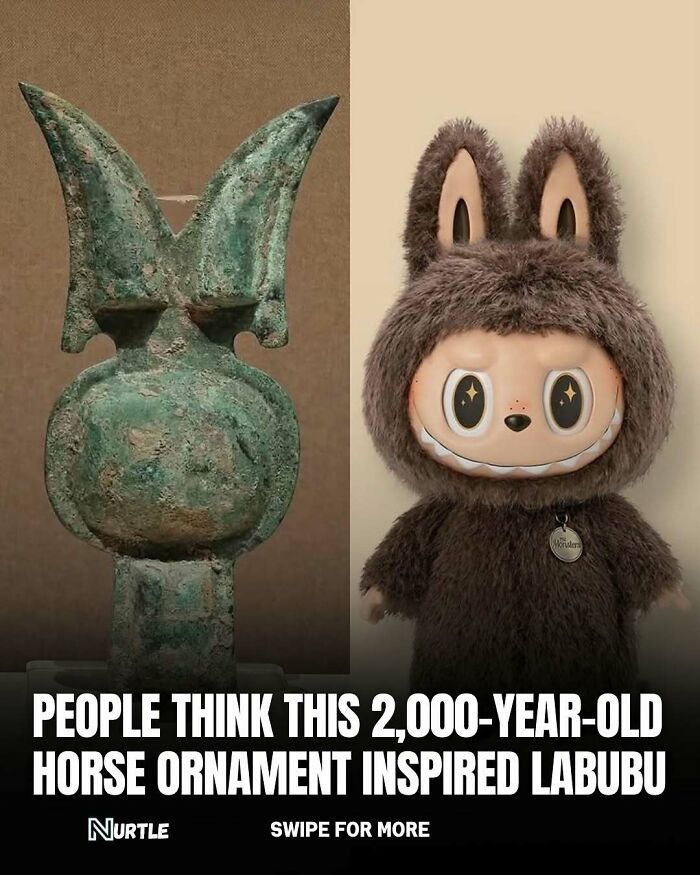
A bronze horse ornament known as a ‘danglu’ has caught attention online for its resemblance to the modern character Labubu. Dating back over 2,000 years, the danglu was used from the Shang to Han dynasties as both decoration and protection, often mounted on a horse’s bridle to ward off harm.
This particular example was unearthed at Runyang Square in Luoyang, China, and showcases the intricate skill of ancient Chinese metalwork. While the similarity to Labubu is likely coincidental, the shape and upright “ears” have fueled playful comparisons.
A strange but fascinating plant has evolved a wild defense strategy: its leaves naturally fold and shape themselves to resemble hummingbirds. The illusion is so convincing that even predators are fooled.
This camouflage helps deter insects that might otherwise eat or lay eggs on its surface. Many bugs avoid areas with active hummingbirds, as the fast-flapping birds often feed on insects or disturb them while feeding on nectar.
It’s still unclear exactly how this evolutionary mimicry developed, but researchers believe the plant benefits from both visual protection and reduced contact with harmful species.
This isn’t the only example of nature’s clever design, but it might be one of the most creative.
In Japanese, the phrase “Kitto Katsu” (きっと勝つ) means “you’ll surely win.” It sounds almost identical to the way “Kit Kat” is pronounced in Japanese—so the candy took on a whole new meaning.
Because of this lucky wordplay, Kit Kats in Japan became popular good luck gifts, especially for students taking exams. Nestlé leaned into this cultural moment, launching hundreds of unique Kit Kat flavors across the country.
Today, Japan has over 400 flavors, including wasabi, sweet potato, sake, soy sauce, and dozens of region-specific editions. They’re not just snacks—they’re collectibles, souvenirs, and sometimes even lucky charms.
Troy Hurtubise dedicated his life to creating suits strong enough to withstand a grizzly bear attack. His obsession began after a near-fatal encounter with a bear in his twenties, inspiring him to design armor that would let him study the animals safely up close.
Over the years, he built several versions of his suit, each one heavier and more advanced. His designs, like the Mark VIII model, featured reinforced plating, hydraulic joints, and a helmet with built-in cameras and sensors.
Despite becoming somewhat of a cult figure for his fearless experiments, Hurtubise never got the chance to test his final design. He died in a car accident in 2018, leaving behind a legacy of creativity, courage, and one of the strangest inventions in wildlife research.
Japan Airlines redefined luxury travel in the 1970s with its First Class Sky Lounge, a space that felt closer to a high-end hotel than an airplane cabin. Passengers were greeted by flight attendants wearing traditional kimonos and served multi-course meals with fine wine, champagne, and freshly prepared Japanese dishes.
The lounge-style seating featured soft lighting, wood textures, and folding partitions that created private sections for dining or resting. Some aircraft even had couches that converted into full beds for long-haul comfort.
Designed during an era when flying was considered glamorous, JAL’s First Class embodied the height of postwar Japanese elegance, combining cutting-edge aviation with refined cultural detail.
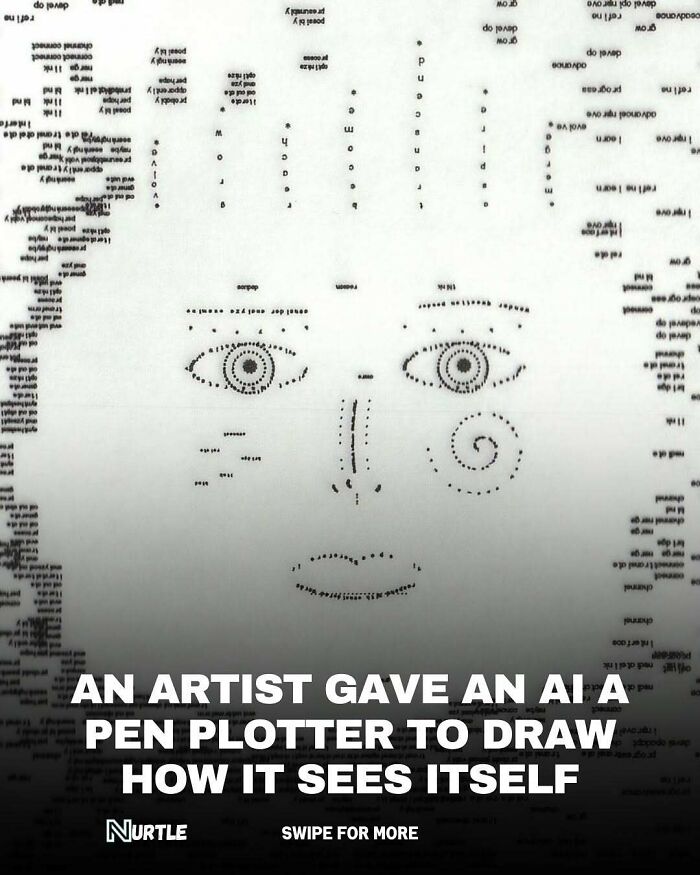
Artist and illustrator Martin DeVido gave Anthropic’s Opus 4.1 reasoning model full control over a pen plotter, a computer-controlled drawing device.
He then asked the model to create a series of self portraits.
Some of these pieces took up to 8 hours to complete. The AI used them to represent ideas like its own state of thinking, its internal perspective, and how it processes information from the inside looking out.
Nice idea, but Artificial Idiots don't have anything like a self-identify, not even self-awareness. They can manipulate words, and even images, to make gullible people think that they do, but they have nothing at all like this except what is suggested in the input. I was programming Artificial Idiots, and they aren't what people want to believe they are at all, thank goodness.
McDonald’s serves over 69 million customers every single day — nearly 1% of the entire world population.
With more than 40,000 locations worldwide, the fast-food giant has become one of the most recognizable brands on the planet. From cities to remote towns, McDonald’s operates in over 100 countries, offering local twists on its global menu.
Its scale is unmatched. Every second, thousands of people order fries, burgers, or coffee under the golden arches. What began as a small drive-in restaurant in the 1940s has evolved into a global operation serving millions around the clock.
Whether it’s breakfast in South Korea, lunch in France, or a midnight snack in Canada, McDonald’s reach is a reminder of how powerful and widespread a single brand can become.
Located in the heart of classic Disney animation are winter scenes that always felt unusually warm. The style relied on hand-painted backgrounds, soft lighting, and small details like glowing windows or falling snow that made these houses feel alive, almost inhabited even when no characters were on screen.
Part of the charm comes from how these films blended realism with storybook exaggeration. The homes looked familiar but slightly magical, creating that cozy, safe feeling people still associate with Disney winters.
Today, digital animation rarely uses this style, which is why these older scenes still stand out. They look handcrafted, textured, and full of atmosphere in a way modern production rarely replicates.
Los Angeles Metro riders have been spotting new posters across trains and stations with the line “Not everyone loves your Champagne Papi playlist.” The campaign is part of Metro’s noise reminders, but the wording immediately pulled it into the ongoing Drake and Kendrick Lamar feud.
The timing hit hard in LA because the city has been openly siding with Kendrick throughout the beef. Kendrick grew up in Compton and his tracks during the battle, especially “Euphoria,” “6:16 in LA,” and “Not Like Us,” became local anthems across the city. Crowds treated the songs as hometown victories, and LA artists appearing at Kendrick events only pushed the narrative further.
With that context, many people saw the Metro posters as a quiet jab at Drake. Whether intentional or not, the choice to reference “Champagne Papi” during a moment where LA culture is standing behind Kendrick gave the campaign an extra layer the internet immediately picked up on.
A 34-year-old man from Iowa has been sentenced to federal prison after using company credit cards to buy over $140,000 worth of Pokémon cards and video games.
Mitch William Gross of Earling, Iowa, was given a four-month prison sentence on August 15, along with an order to repay $146,590.15 in restitution. After serving his time, he will remain under supervised release for three years.
According to prosecutors, Gross defrauded his employer, Ruan Transportation Corporation, between September 2021 and October 2022 by disguising personal purchases as business expenses. He used company credit cards to buy prepaid gift cards, Pokémon trading cards, and gaming items, while submitting falsified receipts to cover his tracks.
The FBI and Des Moines Police Department investigated the case, with federal officials emphasizing that parole is not available in the federal prison system.
This case adds to a growing list of people worldwide who have faced legal trouble over Pokémon card schemes. Earlier this year, a Singapore executive was jailed after scamming his CEO out of $500,000, later spending the money on Pokémon cards, iPads, vacations, and other luxury items.
Hayden Christensen has recreated one of the most iconic Star Wars images: the Episode I poster showing young Anakin Skywalker casting Darth Vader’s shadow. In the original 1999 poster, the image symbolized Anakin’s dark destiny. Now, decades later, Christensen has stepped into the same setup, this time casting Vader’s shadow himself.
The recreation has stunned fans, bringing full circle the journey of the character he played in the prequels. From a boy on Tatooine to the fall into Vader, the poster has always stood as one of Star Wars’ most powerful pieces of imagery. Seeing Christensen reimagine it years later adds a new layer of weight to his role in the saga.
The original Green Goblin mask created for Sam Raimi’s Spider-Man (2002) was never used on screen—because it looked too terrifying.
Designed to be more lifelike and expressive, the animatronic mask featured intense facial movements and glowing orange eyes. But during early tests, producers feared it would scare younger audiences and clash with the film’s tone.
The mask was ultimately scrapped in favor of the sleek, metallic helmet we saw in the final film. While iconic, it lacked the range of expression the original could achieve.
Footage of the test mask later resurfaced online, and fans were stunned by its realism—some even saying it looked scarier than anything that made it into the movie.
These photos go back to 2015, when the Stranger Things cast met for their first Season 1 table read. At the time, Finn Wolfhard was 12, Millie Bobby Brown was 11, Gaten Matarazzo was 13, Caleb McLaughlin was 14, and Noah Schnapp was 10.
None of them knew the show would become one of Netflix’s biggest originals or that their characters would turn into global pop-culture icons. The read-throughs took place while the Duffers were still shaping the tone of the series and building the world of Hawkins from scratch.
Season 1 went into filming shortly after these sessions, setting up the story that introduced the Upside Down and the group dynamic that carried the show into international success.
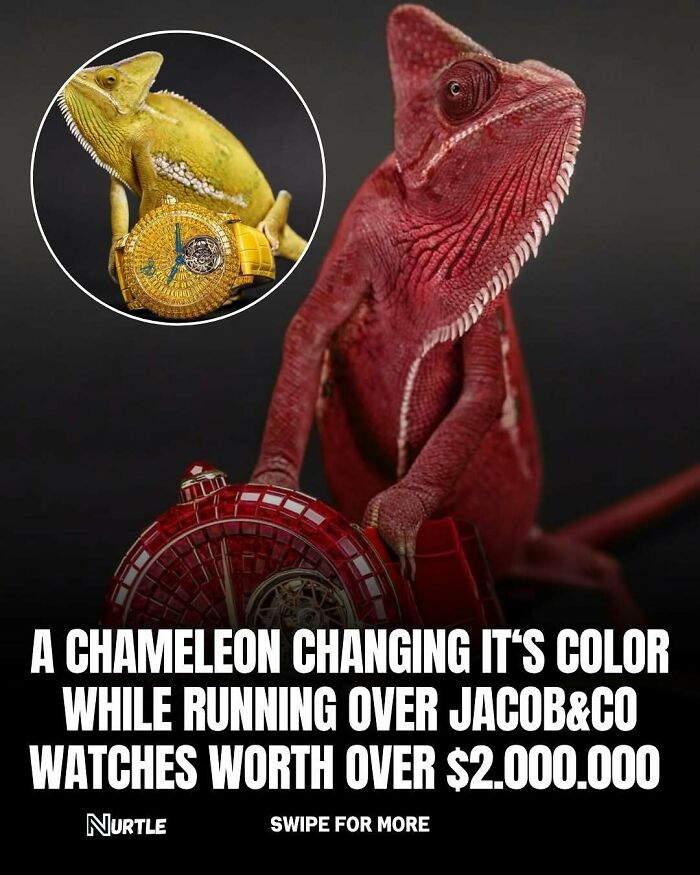
The watches are part of the Caviar Tourbillon collection, made with hundreds of invisibly-set baguette-cut gemstones in red, green, and yellow.
Each watch is built with a flying tourbillon and over 400 gemstones, including diamonds, rubies, or tsavorites depending on the model. The internal movement is also covered in brilliant-cut diamonds, visible through a sapphire crystal case.
Jacob & Co is known for pushing boundaries, but this crossover between nature and watchmaking turned out to be one of their boldest visuals yet.
(This was confirmed by the Shorty Awards: A real chameleon was used, not CGI. Filmed in a studio with expert handlers.)
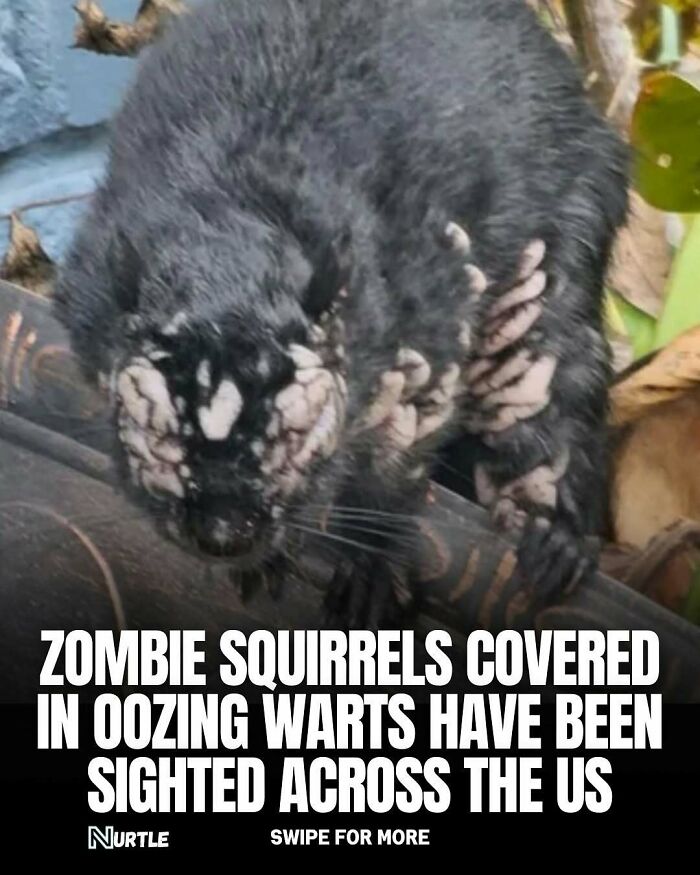
Squirrels covered in large wart-like growths have been sighted across the US, with many now being referred to as “zombie squirrels.” The animals show oozing lumps and bald patches on their skin, a condition that has alarmed residents.
Experts explain that the cause is squirrel fibromatosis, a viral disease from the leporipoxvirus family. It spreads through direct contact or by insects such as mosquitoes and fleas. The growths, known as fibromas, can affect vision, eating and movement, though in most cases they fade within weeks as the animal recovers.
Despite their disturbing appearance, officials confirm the virus poses no danger to humans or pets. It is species-specific, only affecting squirrels. Wildlife authorities advise not to handle infected animals and suggest removing bird feeders to prevent the disease from spreading among crowded groups.




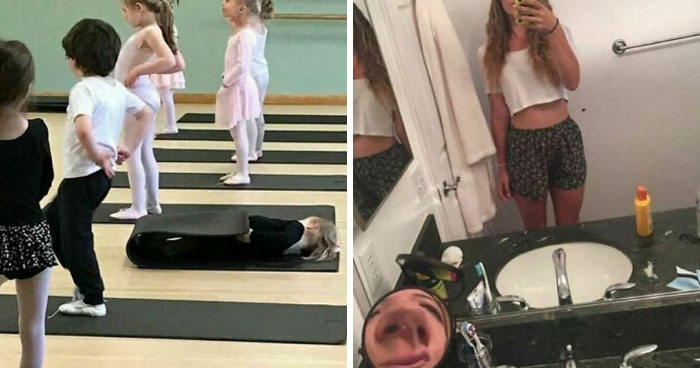





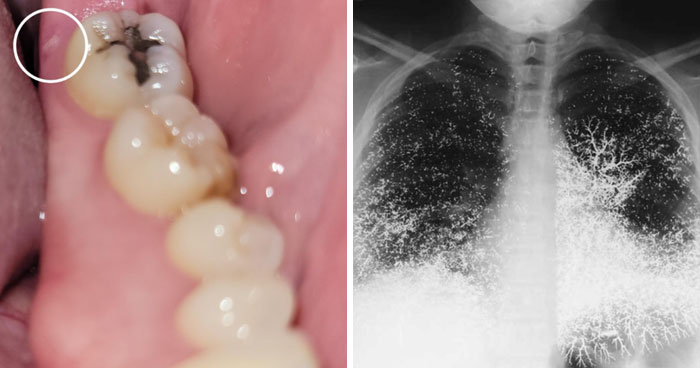




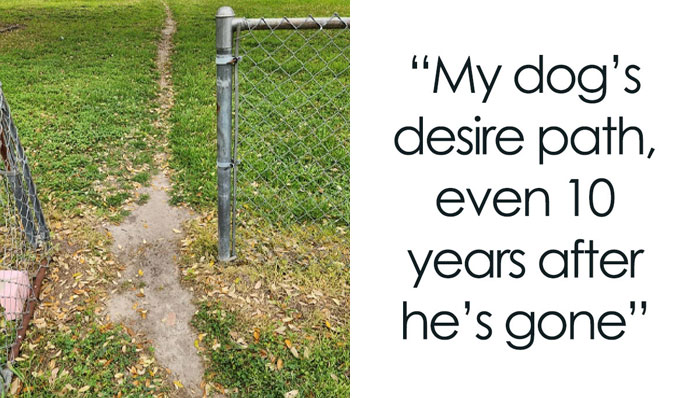
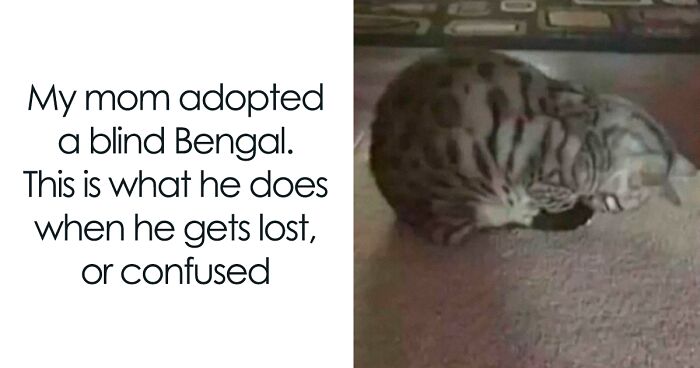
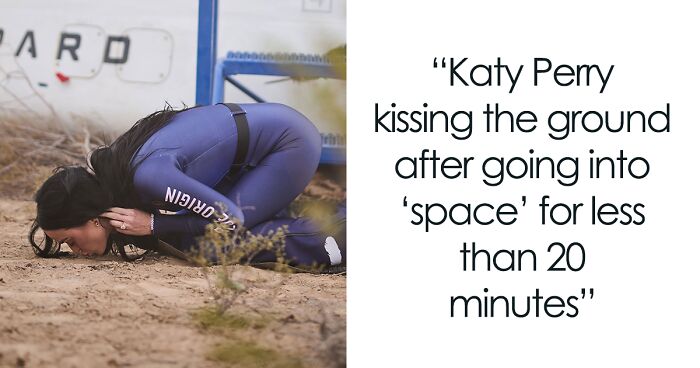











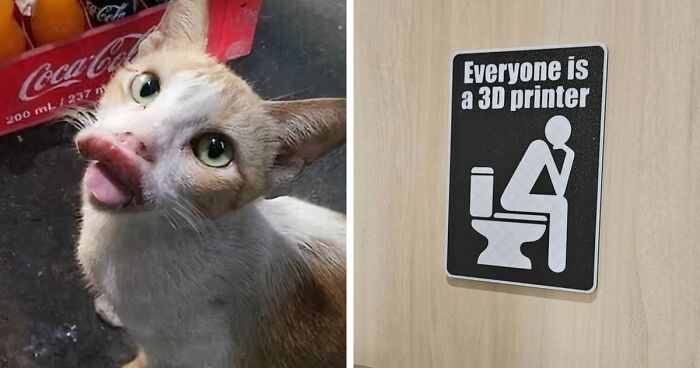




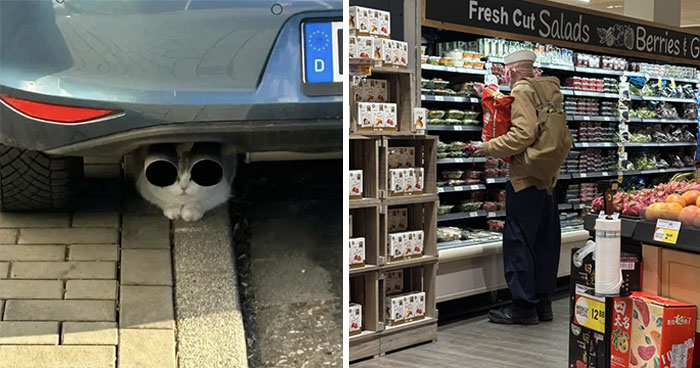


 No fees, cancel anytime
 then open in external browser


 and click "Open in External Browser"