Get Premium
Dark mode theme is available exclusively for premium users. Learn more about the benefits of subscribing.
No fees, cancel anytime.

 Dark Mode Ad-Free Browsing Unlimited Content
 Ad-Free Browsing Unlimited Content Dark Mode
Join 1.2 million Panda readers who get the best art, memes, and fun stories every week!



Let’s be real: procedures and processes in the workplace are pretty much just part of the job. But what happens when office dogma goes too far? Nothing good, it seems, according to the people who’ve lived through it.
Someone asked an online community, “What is the most infuriating example of ‘We’ve always done it this way.’ that you’ve witnessed at work?” and netizens were only too happy to share their wildest stories. Dive into this collection of the best.
More info: Reddit
This post may include affiliate links.
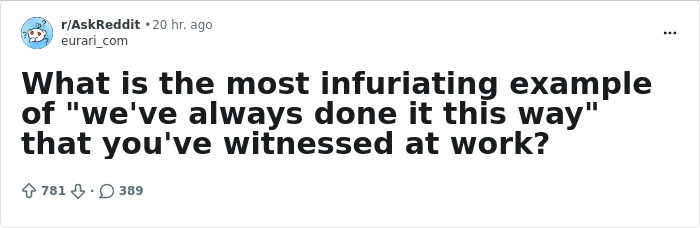
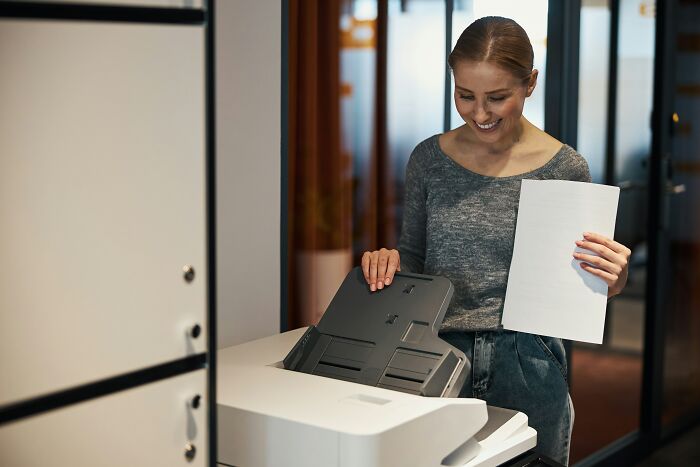 It was a while ago but it went like this:
* Doris used to receive forms by post. She made a copy and filed them in two filing cabinets.
* Forms arrived by fax. She did the same.
* Forms began arriving by email too. She printed 2 copies and filed them.
* The filing system went online and Doris got a scanner to scan in the posted and faxed ones.
I arrived after things had stopped arriving by fax or post. Doris was printing the emailed PDF form twice, scanning it twice, and saving the scanned PDFs separately into two different digital files.
 I don't know that it was infuriating but the question reminded me of an incident...
A small company I worked at many years ago would get a cake for birthdays, asking the birthday person what kind of cake they wanted. My bday came around and the receptionist, whose job it was to procure said cake, asked what kind of cake I wanted. I said, "I'm not a big cake fan - Let's shake it up - let's have bagels & cream cheese so everybody can enjoy with their coffee."
She blinked and said, "No, it has to be cake." I ask, "Why?" She replied, "Because thats the way we've always done it."
I laughed and said, "Well, it's my bday and I don't want cake. I want bagels. I think we're safe changing this up." She was so flustered, she had to go ask the boss if it was OK LOL. We had bagels LOL.

I don't get the people who say, but it's about all the other office workers. Nobody expects cake every day. And I don't know anyone who doesn't like bagels. If the office workers are that keen on cake, they can do cake every Wednesday or something rather than hang about hoping someone is having a birthday.
 I do data entry for pharmacies, a *lot* of prescribers have switched from handwritten to escripts, or at least typed out and faxed prescriptions.
But some doctors still do handwritten and it's usually the ones with the absolute worst handwriting.
There are a few in particular who are notorious for how bad the scribbles are.
And it's extra bad because working in this job for as long as a lot of us have, we've gotten used to bad handwriting, so we can usually decipher it. But there are those few Drs whose handwriting is just so horrible that none of us can read it, and it has to be sent back to the store so the store can call the doctor and get clarification.
It's so, so dumb because this could easily be very serious for a patient. Imagine they need .1 mg and it's read as 1 mg. Or they're supposed to take half a tablet daily and it's read as 1 tablet twice a day.
They just need to be made to use escripts, or at least use a scribe who can write better than a chicken having a seizure.

Because of national health insurance system requirements here, ALL prescriptions (that are paid for by NIH, so 99% of them) have to be electronic. Most pharmacists won't even touch a handwritten prescription any more unless they can verify it online and will instead recommend that you "try somewhere else".
Many workplaces cling to outdated routines with the same enthusiasm a cat has for a warm laptop, insisting things stay exactly as they are because “that’s how we’ve always done it.” This mindset creates unnecessary bottlenecks and obstacles, stifles creativity, and leaves employees wondering why progress is treated like a myth rather than an opportunity.
These rigid systems often start innocently, built decades ago by someone now long gone, yet they survive like a cockroach after the apocalypse. Workers inherit them without questioning, unsure who owns the rulebook or even why it’s considered so sacred. The result is a culture where innovation somehow becomes accidental instead of encouraged, and frustration becomes a standard operating procedure.
 Ages ago, I was hired to be the assistant to a manager who insisted that we round by 3s. This was before computers were in stores, and so we had to take daily sales and tabulate them on physical spreadsheets, which were rounded off to the nearest dollar. I was flabbergasted.
"You round by 5s," I insisted.
"NO!" She shouted. "It doesn't matter WHAT you round by, as LONG as you use the SAME NUMBER! I have ALWAYS done it this way, and you don't know what you are talking about just because you are a MAN!"
"... k."
So when I called in the numbers for the weekly sales, they were always way off. The DM got sick of correcting her, and so when the manager was demoted and replaced, I asked, "do I still have to round by 3s?" to the new manager.
"What? No! You round by 5s! Did Laura round by threes??"
"Yeah, I tried to explain to her why that was bad, but she got all pissy about it, so I pick my battles."
We had to redo all the spreadsheets by hand for the current and previous fiscal year to get all the numbers straight. The DM said, "No wonder her numbers were so far off.".
 Do you know those carbon copy books - the ones with the yellow and white paper and you slide the cardboard in and what you write on the yellow paper transfers to the white?
You know, the ones they used to use back in like the 1960's?
We still use those. We. Still. Use. Those.
 In advertising - Insertion Orders to buy outside of large tech platforms.
You know the joke "this call could have been an email?" Hold my beer.. Major retail company in the UK signs with one of our ad agencies who creates the campaign and gets them to agree to contact terms. Ad agency then sets a meeting with another one of our agencies that works on the floor below them, said agency comes up with a cost proposal and walks it upstairs to hand deliver it to the other company team. Company reviews, walks down the stairs to let the team know they approve and the downstairs company writes up an insertion order to then be walked back upstairs for signature and they send a copy via fax to the client and both advertising companies manually enter the information into their respective billing software - which is the same software. Eventually the downstairs ad company prints out an invoice and walks it back upstairs to the sister ad company.
"We've done it this way for 30+ years!" and I reply "Yes but the software you pay an annual license fee to and are manually entering this into at the end has been able to do everything you just described from an online portal for 20 years."
This is part of the world's largest advertising company, accounting for roughly 25% of every dollar spent globally on ads..
Employees quickly learn that suggesting improvements can feel like poking a sleeping dragon. Even simple tweaks, like streamlining forms or updating ancient software, become battles against invisible guardians of tradition. Many give up before trying, deciding it’s safer to follow the old path, even if that path winds through unnecessary spreadsheets, duplicate meetings, and manual tasks.
The Inter-American Center of Tax Administrations says part of the issue lies in fear; the fear of risk, change, or admitting that a process no longer serves its purpose. Some managers associate updates with potential failure, preferring predictable inefficiency over potentially uncertain improvement. This resistance lets outdated practices thrive.
 Years ago I took over supervising one of my company's biggest contracts that had been floundering for years.
One of the employees followed me around and insisted I couldn't make any changes because "we've always done it that way"
Eventually, I got annoyed and told a whole room full of employees that "always doing it that way" was the reason they were failing miserably.

And what were you doing?? Edit OP:" A few people quit, and I fired a few. Strangely, not the guy who followed me around. It took about a year to get the place on track, and I stayed for 6 more before getting promoted out. I left my 2IC in charge, and he kept it running for another 2 years before changing careers, and then it all went to s**t and is still currently s**t. By then, I had left to work for a competitor."
 RTO. Return to office mandates. Everyone discovered how productively they could work from home and management said, nope, we need to SEE people in the office to know that they’re doing their jobs, just like it’s always been.

I went absolutely cuckoo working from home. There was no separation between work and home. I personally prefer to work from office. But that is me, not for everyone.
 Insisted on using paper and pen for everything and barely touching their computers.
This was in an AV team of a university IT department which had to track a lot of expensive equipment and they wondered why they kept losing stuff. I tried to get them to implement a digital way of doing it, got a free trial with a really good system, taught them all how to use it.
Didn’t last a week till they were back to the old ways.
I quit shortly after.

A friend of mine (this is in the UK) got a job with a mobile phone shop. Their stock management system was Excel. No 'scanning in/out' of delivery barcodes or shipping labels. He said if he wanted to walk off with a pallet of iphones, he could have just deleted a column from the spreadsheet and they would have essentially 'vanished' as far as the shop was concerned. He could then have just put them in the back of his car and left.
Another reason workplaces resist change is comfort. Familiar procedures, no matter how clunky, feel reliable to leadership who’ve built their careers around them. Updating workflows might mean learning new tools, revising responsibilities, or acknowledging blind spots. Harvard Business School says that, for some, that’s uncomfortable, so they cling to stability, even when it’s slowing everything (and everyone) down.
But employees aren’t powerless. Challenging outdated processes starts with curiosity and evidence. Simply asking why a procedure exists often reveals there’s no real reason. Clearly demonstrating how a small improvement saves time or reduces errors can shift perspectives. The prospect of change also lands better when it’s supported by data, patience, and empathy, instead of confrontation or frustration.
 Be 2015. Open word, make set of pages with page numbers, print said set of pages (one sided). Feed pages back into printer's paper tray. Print pdf onto said set of pages (one sided). Scan printed pdf. Voilà, pdf with page numbers.
This had been going on for years.

have you tried inserting page numbers into a word doc, after is has been typed?
 I once worked for a company that was updating its accounting software. The project was 2 years delayed and over budget because the company kept demanding modifications to the software to make it work like the old software did. In other words they wanted the screens to look like they used to and reports to be formatted like they used to.
 Late 90s I worked for a university affiliated medical center which caters to the city’s underserved communities. Every week we had to prepare specific reports to send out to various state and federal reporting agencies. I had to tediously hand type several dozen mailing addresses on labels meant for a typewriter every week. Yes, a freaking typewriter when we all had our own, individual PCs with Office and the office had several functional laser jet printers. I was the youngest staff member by far. I suggested we create a file in Word and just simply print out the saved labels every week instead of hand typing out these addresses. The reaction I got from all the office ladies was intense. You would have thought I suggested we all come to work without clothes. I was basically told that I was too young and naive to make these kind of suggestions. Yes, saving and printing out labels instead of hand typing them was too radical for them. This is 1998 not 1980.
Employees can also build allies by sharing benefits clearly; things like less repetitive work, faster results, fewer headaches. Showing how change truly improves everyone’s day (not just yours) often helps break down resistance to it. People actually respond better when solutions feel collaborative rather than imposed, and small wins can create a momentum that eventually cracks the “we’ve always done it that way” wall.
Storytelling helps too. Sharing examples from other teams or companies often normalizes the idea that innovation is healthy. When leadership sees real-world proof of successful change, fear actually shrinks. Encouraging experimentation and treating mistakes as learning opportunities can gradually transform workplaces from stagnant systems into adaptable, resilient spaces.
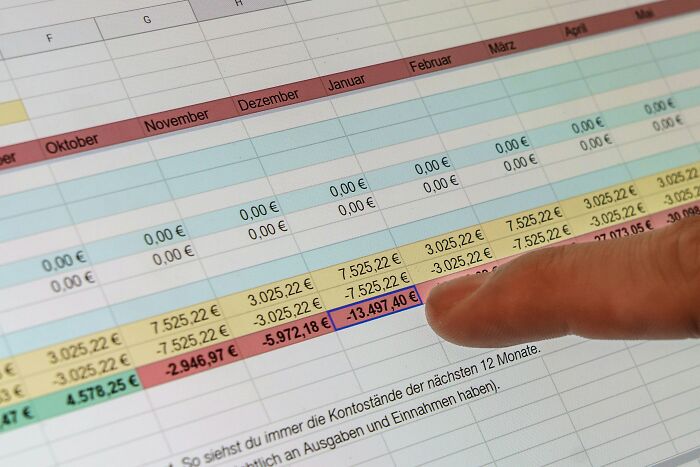 When they insisted on using this ancient Excel sheet for hours of manual data entry instead of automating it. It’s like watching a giant productivity sinkhole and nobody even questions it.
One woman had this spreadsheet but barely knew formulas. She went a way for a week during which I looked after the spreadsheet. When she came back the spreadsheet looked the same but magically calculated her totals and now had macros at the touch of a button.
 Somehow related:
My boss will email me. Print the email and put it in my in box. Then call me to tell me to check my email.
Is that passive aggressive behaviour or a complete misunderstanding of how email works?
 At one job we still printed out every single invoice, walked it to a manager for a handwritten signature, then scanned it back into the system and emailed the PDF.
The software we used already had digital approval built in and the manager literally sat ten feet away, but any time someone suggested changing it the answer was “this is how audit likes it”.
Audit had changed platforms years earlier and didn’t care anymore. We were wasting hours every week shuffling paper for a rule nobody was actually enforcing.
I did things "the way audit liked it" for years longer than necessary because audit never shared that they had changed their ways and dragged themselves into the 1990s.
In the end, breaking outdated processes isn’t about rebellion, it’s about growth. Workplaces that welcome change empower employees, boost efficiency, and create cultures where curiosity thrives. Challenging old habits can feel daunting, but every improvement begins with someone asking, “Does this still make sense?”.
What do you think of the persistent procedures and processes netizens shared in this list? Upvote the ones you found most ridiculous and feel free to leave a comment if you can relate!
 So I work for a farming company and I’m taking over the food safety department. Well there’s a huge lack of communication on what’s being applied where and when. My department is always the last to know.
Now there are certain regulations we have to follow to ensure whatever is applied is safe and has a certain time interval. Well yesterday I just found out that a certain organic fertilizer was applied and I didn’t even have the proper documents showing the product was safe. That product was applied beginning of November and was harvested 4 days later.
I was like YOU ARE KIDDING ME.WHO is making the calls?! Welp the owner was. And the gal training me said “that’s just how things are here. You can’t keep getting pissed off when something new like this happens”
Uhhhh yes I can. God forbid we run into a recall situation or audit. Because we would be in trouble. But yeah sure. Keep doing it like this.
OPs dept is probably regarded as "those annoying paper-pushers who cause all these unnecessary delays". Wouldn't surprise me one bit if the owner thinks he outsmarted the safety dept in the example OP gave here.
 I work at an engineering company that designs buildings. In the last 10 years, the quality of work from contractors has steadily declined. At this point, it's not uncommon for contractors to completely ignore our engineered drawings.
I routinely come across things that don't make sense, will not work, and/or are against code (the law). When calling out contractors on these things, I often hear, "that's how we always do it." I respond by saying just because they did it that way doesn't make it correct.
There is one contractor that has been a thorn in my side for a while now. For every project, they send the developer a list of "qualifications". It's basically a list of grievances. The items are either things they just don't want to do or things that they say are wrong on our drawings that really aren't wrong. One of their guys in particular has a knack for misinterpreting code and then trying to throw us under the bus like we did something wrong. I often respond to these lists with, "that code section doesn't even apply to this project."
This wouldn't be that big of a deal except that the building inspector will stop construction if it doesn't match the approved drawings. Then the developer will tell us we need to change our drawings to match what was built. Instead of telling the contractor to fix his mistakes. Then they get mad at me for charging them money for changing their drawings. Even worse when I say I can't change the drawings because what they built won't work.

I got used to these problems in software development (very similar, hence it's called engineering). I always used to put assumptions and such into the contract. Always worked. People didn't like it, but it stopped me losing money!
 Hygienist not wearing proper eyewear during patient care, she said she didn't have to at her previous office...
 I’m in education, so… a lot.
Yeah, the older teachers who still cling to decades-old curriculum.
But honestly, with the issues that we have now, admin especially not acknowledging that these kids are still in pandemic-induced trauma and that because *parenting* and society have changed significantly in the last 5ish years. THE KIDS ARE NOT ALL RIGHT. I teach 1st grade, and kids come in unable to regulate themselves (throwing tantrums and things because they have not been taught how to handle their own feelings and needs), totally screen and with seemingly uninterested parents. We try to advocate for solutions with admin and get answers like, “well this is a problem nation-wide” and “the kids seem to even out by 3rd grade” (they don’t, according to their teachers). The kids have fundamentally changed (when you bring this up, you get “that’s what they thought about rock music and video games”) and education is uninterested in changing with them, so it’s a fight.

I've been a teacher for 34 years and when you try to explain to management (who are all younger than me!) that the kids are behaving differently because of the pandemic and different parenting these days, you get accused of being lazy and just told to be stricter. Being stricter is not going to make up for cognitive deficiencies the kids have due to interrupted learning for TWO YEARS and being constantly on screens at home. This is all going to blow up in our faces within a decade.
 Marketing ignored a thoughtful, well-done analysis of their marketing email open, reads, and click throughs that suggested "the data suggest that customers open *these* kinds of emails four times more often than *those* kinds of emails and have been doing so for the last several years so let's send more of *these* kinds of emails" and instead said "nah. We know what our customers want. We'll keep sending them the same nonsense every day.".
And my automated email management thanks you for making them easier to identify and delete!
 Having IT manage the scheduling of meetings for an entire Branch of an Org because Outlook Calendaring runs on a PC, and therefore, it's IT's responsibility.
 My own grandfather. When the old CRT television glitched, he would throw his crutch at it, and sometimes it worked. When the new plasma TV first glitched, he instinctively threw his crutch at the screen. The result was destructive. When asked why he did it, he simply replied: "I've always done it this way!".
 We had to fill out paper forms, scan them, email the scans to a coworker, who printed them again so the boss could sign them by hand. I suggested we just use an e-signature. Boss said: We’ve always done it this way, it works fine. The coworker’s entire job was literally printing and scanning these forms.
 Printing off a part of a spreadsheet. Taking it to the scanner. Scanning it to email to then forward to who needs to see it.
Happens every day whilst I sit down and send mine by print as pdf file then email.
 We had to FAX documents to other companies and weren't allowed to email them. In 2023. I cringed every time I had to ask someone for their fax number, which they never had of course.
I last sent a fax twenty years ago, and it was considered old fashioned even then.
Thats like the company motto around here. "Hey boss, the rollers arent working, and we cant get material in auto from the transfers!" "Its always been like that. Keep running." "Hey boss, the the forklift is on fire next to the propane station!" "It always does that, get back to work." Literally every problem that pops becomes something thats always been like that just so nobody has to work on it. Eventually it becomes true.
World War III breaks out "Yeah, it's always like that, keep working!"
 I started working for a medium sized wheat farming company. We would have to check the vehicles each morning before use (oil, coolant, fluids, etc)
I noticed none of the barrels and drums were properly labeled or stored. I told the supervisor and he got angry at me saying “it doesn’t matter the type of oil! As long as it’s got something in it”
It does matter.
They had 6 vehicles out of action at that point. Another few at the mechanics and a few smoking and sputtering relentlessly.
I told them that their issues lie with people using the wrong oils in these machines. I got the “This is farming, City Boy, it’s always done like this”.
I worked for a company that had carbon copy forms (the 5 different color pages) that they used a typewriter to complete. This is within the last 6-8 years... so they were way behind with the times. And they had computers! Which was mind blowing. I told them that we needed to move to a computer based form and the carbon copy forms would go the way of the dodo bird. It saved the company money because they stopped using those old 1970's forms (that they special ordered and paid a lot of money for) and they could process orders much faster. At first I did get some pushback with them saying "we've always done it this way" but then they saw how much more cost effective it was. Thank you technology.
 My first employer did not use Autocad to it's full potential. They claimed it was too much of a time sink to get the smart elements to work and then that people would "trust the computer" too much instead of doing things by hand. CAD can create 3D surfaces with contours, pipe networks that interact with other pipes so you know if you have conflicts, smart labels that read your surfaces, alignments, profiles and spit out a label that needs to go on the construction plans.
They had me hand draw all of it. Never even knew the program could do half of that until we got new hires that would use the tools they had. Company would then try to force them to hand draw. Ridiculous. All because one guy who was the CAD manager and had been working for the company for like 25 years didn't like it.
CAD is a total pain in the balls, but it's a heck of a lot easier to have an editable software version than to draw out a diagram only to find that it has a conflict in it. That diagram can then be circular filed...
 When I first started at this medical invoice billing place a few years ago, The lady who was training me would always make sure to emphasize how important it was to go over any specific invoices that I had questions about on their cover page.
So one cover page would have a following of probably 2 to 300 pages of invoices. She would print off this entire ream so that she could only use the cover page to input things in the system. Since she was older sometimes she couldn't tell what something on the cover page said so she would then look at one of the invoice pages she had printed off to fix the issue.
However, normally she would just throw all 300 pages directly in the shredder after printing them off without even needing to check them. Every day.
When it was my turn to do the task, I just looked at it in the PDF reader and didn't need to print it out at all. This made it easier for me to zoom in on stuff I couldn't read and it really solved the whole problem without wasting any paper.
I told her this because I thought it was an efficient improvement to the process. She got so mad she packed her entire computer and everything in her cubicle into a copy paper box and walked right out.
Mandatory face to face large scale meetings. Not everyone can get to them, and for part time staff, they take up the entire day. They are "so important" that they are mandatory, but if they did them as hybrid meetings, they could be recorded, and those people that can't attend would be able to access the "important" content.
Of course, they are vanity projects for senior managers, so there isn't actually any important content...
"[I]t could have been a fax that was printed and then scanned an[d] emailed to all!"
 Retired from teaching, but when I was in the business, the most infuriating example was assigning students to classes based on their date of birth rather than their skill level.
I worked somewhere in 2018 that still had the old clock in and out system. They did everything so old I quit pretty quickly . Who wants to do labor where you seen machines do it faster and easier at other places? And I’m talking about like lifting stuff that people shouldn’t be lifting for 10 hours a day.
 Our company uses entity framework and it's "always" been standard practice to let entity handle all of the database calls. Well we had a long running process that was pulling it a huge table with all dependencies and then stripping what we don't need. This isn't even for editing, just a simple select. I created a stored procedure to only get what we need to display at the out set and it ruffled some feathers because "we've never used stored procedures before". Meanwhile the app was choking on a massive query and taking upwards of 2 minutes to display something I was able to return in under a second.
I did the same for a bank that is named after a city in Victoria. They had a single person analysing transaction histories from potentially 100s of customers, looking for certain cc numbers that were in the list to identify where someone wws skimming cc numbers. It took me 2 days (because NOBODY had the details of indexes on a database we couldn't change. Once I had the details, I racked up a query that looked at literally 100s of millions of transactions and returned the common place cc numbers had been used in order of frequency. In less than a second (Oracle is a fast database). This woman's entire jib was redundant. She had refused all requests to learn how she was identifying perps (and not efficiently, either). Sorry, not sorry.
I’m an engineer and I was at a new job, designing a new piping project. I asked the maintenance worker who would be assisting the contractor to sit down with me to go over my design. We hadn’t been sitting there for 5 minutes before he said “We don’t normally do anything with the design work. We just help with the construction.” I just looked at him and said “And how much time do you spend complaining about how terrible the design is?” He just laughed and told me it’s a lot.
The project went really smooth with minimal complaining.
I used to work for a tech company that had its heyday in the late '90s-'00s. And in 2015, this company developed an infrastructure orchestration system that it was selling to customers, so our internal systems should follow suit and use it, right ? Well...
Using this new system would have required some (very smart !) engineers to learn a simple formatting language (XML), and they resisted SO HARD, it was.. something. I was championing the new way, but the manager who was resisting the hardest then became my manager. So, that was the end of that. 😝
I left the company not long after. I'm not sure if they ever converted, but this is a perfect example of complacency hurting the business. And this was a TECH COMPANY !!!
Smart people are often the worst at spotting their own mistakes. BECAUSE they are smart, they must be doing things the right way, because only stupid people make mistakes. That's why really smart people can believe absurd conspiracies, or get hustled by scammers - they have so much faith in their own competence, they overlook things.
The back parts room was a mess with literally no rhyme or reason. I had just gotten my red seal ticket and decided to organize it properly. My boss was livid because now he couldn't "find anything" and i said well did you check the location on the computer? "Well I never had to before"
Like okay.
Don't even get me started on inventory season. It was always awful and a mess and always came back to me doing it wrong but the reality is he didnt feel like paying us OT to come in after work or a weekend to do it. He insisted on keeping the store open. It was impossible to get numbers right while people are still purchasing. "Well we always did it this way, and I'm not paying more than I need to".
Petty cash, in a lock box, with paper receipts.
I wish we still had that. Our mop broke, we had to wait for the ordering day, it was then a special item off the usual ordering form so it had to be approved then purchased then sent, 6 weeks for a bloody mop! When we could have popped down the local supermarket with petty cash and bought one the same day.
Chopping veggies in a cambro. Those onions and peppers are already sliced but people will take a knife and stir around in the container.
I threw out a batch of alfredo because it was left in the pot on a counter overnight to cool.
Leaving 50-60lbs ground beef out of the walk in overnight to thaw.
Temp'ed at a bank over 20 years ago - as IT was just getting a hold. We used to run a daily report - extract from Mainframe and manipulate the data - all very whizz. On Saturday I ran the report and took the print to the manager - he wasn't in so gave it to his deputy and was asked "what's this" - it was the overnight position report or similar. This guy was mad (the polite version) he did this manually every day for his boss took him over 4hrs and he knew what he was doing, took me 5m and I'd no clue what the figures meant - his boss then compared the results - they were the same daily. This had been going on for months - I could understand a weekly check with the new system - but.... Or when reports went electronic - used to email a large report to the women across the office - instead of a wave and thanks - she'd "forward" me an email with said report and a thank you

I work freelance short-term contracts, so my direct employer is always changing, but systems across the industry are pretty standardised. Usually in order to get paid I will have to fill out a timesheet and send an invoice. However, the basic hours I work can change each day, and there is always at least a small amount of overtime each day, which can also vary a lot. There are also a couple hundred or so people contracted at the same time, all of whose basic hours and overtime amounts will be different from each other, and change daily. So it's complicated to keep track of as a whole. Last year I did one job where the accounts team sent out these Excel spreadsheets for us to track our timesheet hours on, and they were just the worst design. They were supposed to automatically calculate our overtime etc., but the formatting was so bad it would throw out all the calculations. It was also about 30 columns wide and 5 rows deep. Multiple departments complained several times, but accounts refused to even correct the spreadsheet.
The kicker was that head office had us using an online software system that many other companies in the industry used, and it had an inbuilt timesheet function that worked perfectly, that everyone who worked there was already familiar with. We used it for employee forms, contracts, esigning. They'd just inexplicably disabled the timesheet function in order for us to use this Excel spreadsheet from hell.
Load More Replies...
Worked in a/r at a bakery that serviced several grocery stores. Those which covered the whole of earth insisted they needed to see the receiver's ink stamp if reviewing an invoice. We had electronic invoices, but I had to find physical invoice in files, scan it, and then email to their a/p department. Wasted so many hours that way...
Temp'ed at a bank over 20 years ago - as IT was just getting a hold. We used to run a daily report - extract from Mainframe and manipulate the data - all very whizz. On Saturday I ran the report and took the print to the manager - he wasn't in so gave it to his deputy and was asked "what's this" - it was the overnight position report or similar. This guy was mad (the polite version) he did this manually every day for his boss took him over 4hrs and he knew what he was doing, took me 5m and I'd no clue what the figures meant - his boss then compared the results - they were the same daily. This had been going on for months - I could understand a weekly check with the new system - but.... Or when reports went electronic - used to email a large report to the women across the office - instead of a wave and thanks - she'd "forward" me an email with said report and a thank you
I work freelance short-term contracts, so my direct employer is always changing, but systems across the industry are pretty standardised. Usually in order to get paid I will have to fill out a timesheet and send an invoice. However, the basic hours I work can change each day, and there is always at least a small amount of overtime each day, which can also vary a lot. There are also a couple hundred or so people contracted at the same time, all of whose basic hours and overtime amounts will be different from each other, and change daily. So it's complicated to keep track of as a whole. Last year I did one job where the accounts team sent out these Excel spreadsheets for us to track our timesheet hours on, and they were just the worst design. They were supposed to automatically calculate our overtime etc., but the formatting was so bad it would throw out all the calculations. It was also about 30 columns wide and 5 rows deep. Multiple departments complained several times, but accounts refused to even correct the spreadsheet.
The kicker was that head office had us using an online software system that many other companies in the industry used, and it had an inbuilt timesheet function that worked perfectly, that everyone who worked there was already familiar with. We used it for employee forms, contracts, esigning. They'd just inexplicably disabled the timesheet function in order for us to use this Excel spreadsheet from hell.
Load More Replies... Worked in a/r at a bakery that serviced several grocery stores. Those which covered the whole of earth insisted they needed to see the receiver's ink stamp if reviewing an invoice. We had electronic invoices, but I had to find physical invoice in files, scan it, and then email to their a/p department. Wasted so many hours that way...


































 No fees, cancel anytime