Get Premium
Dark mode theme is available exclusively for premium users. Learn more about the benefits of subscribing.
No fees, cancel anytime.

 Dark Mode Ad-Free Browsing Unlimited Content
 Ad-Free Browsing Unlimited Content Dark Mode
Join 1.2 million Panda readers who get the best art, memes, and fun stories every week!
The world is a pretty complicated place. Just think about all the moving parts it takes to get sliced bread delivered, regularly, to your local grocery store and then apply that to every facet of life. However, there is nothing like a problem to really get human creativity going.
Someone asked “What complicated problem was solved by an amazingly simple solution?” and people from across the internet shared their favorite examples. So get comfortable as you scroll through, upvote your favorites and be sure to share your own thoughts in the comments down below.
This post may include affiliate links.

 There was a mayor called Jaime Lerner in the southern city of Curitiba in Brazil who was famous for using simple creative solutions for solving third world urban problems
In Curitiba’s slums, where garbage trucks could not enter, he created a trash-for-vegetables program. Residents collected their waste and exchanged it for fresh vegetables grown in city gardens, improving cleanliness, nutrition, and public health at the same time.
To clean polluted rivers and lakes, Lerner paid fishermen to collect trash from the water instead of fish in the off season. This protected wildlife, cleaned the waterways, and still provided sustainable income for the fishermen.
Another example is flood control. Instead of building costly concrete canals, Lerner turned flood-prone areas into public parks. These green spaces absorbed excess water during heavy rain and became recreational areas when dry. This solved environmental problems while improving quality of life. Rather than paying for expensive lawn mowing maintenance he introduced flocks of sheep.
Rather than building an expensive underground metro he developed an overground Bus Rapid transit system on dedicated roads with stations that moved the same amount of people at one sixth of the cost. One problem was lining the bus exactly up with pedestrian bus stations which his foreign consultants had many expensive technology solutions. He solved it with a pencil marking.

That is the type of things I'm here for. Just people with grumption. My town and others nearby also adopted sheep as landmowers and they're the cutest, people love to have a walk and see them, several of us know their names. And how nice it is to walk away from the city centre and see a lil bit of countryside-like peace 🐑
 The Japanese ["Pointing and Calling"](https://en.wikipedia.org/wiki/Pointing_and_calling) safety standard, *Shisa Kanko* (指差喚呼), in the railway industry. By physically pointing at and saying what you're about to do, human error was reduced by almost 85%. It engages more areas of your brain (seeing, speaking, hearing, motion) which act like fail-safes.
I've implemented similar habits in real life. I always touch my key/wallet/phone before leaving the house; keep my eyes on what I'm working on; I do an ok👌gesture after locking the door, so I don't forget; etc.
 Kinda surprised nobody has mentioned this yet but crop rotation was a simple solution to a very complicated problem.

And many ancient cultures already knew this, but colonisers didn't understand/wouldn't listen
 Shipping containers.
Before the 1950s, shipping goods across the ocean was expensive and chaotic. Every piece of cargo had to be loaded and unloaded manually from trucks, to trains, to ships, which was incredibly time-consuming, and also resulted in a lot of theft, damage, or your goods ending up mixed in with someone else else's goods.
Malcolm McLean invented a simple steel box that stacks and transfers easily between ships, trucks, and trains. It cut loading time *from days to hours*, and cut costs *by 90%*, and quickly became the standard for global trade.
 Airports were frequently dealing with p****d off passengers who were able to get off the plane fairly quickly, but I hated the long wait for their bags. They tried to hire more staff to speed it up, they tried to move the belts faster, but people were still angry and annoyed at the time spent standing around waiting for their bags to be unloaded.
The simple fix? Just move the baggage claim further from the arrival gate, so that passengers spent more time walking. By the time they got to their bags, they were often waiting, and the number of complaints plummeted.

So that's why I had to walk literally around the airport to get the bag...geez.
 This is an old one they tell in management classes: a toothpaste factory has a major issue. The defect rate of boxes being packed for shipment that, through human error, do not have toothpaste inside is too high, greater than 1%. It’s leading to significant issues for the brand as customer complaints start piling up.
The management team calls in experts from all over. They begin engineering solutions. A scale to measure the weight of the boxes? Hiring a team of checkers to manually vet each employee’s packed orders? The potential solutions roll in, as do the potential increased costs for each solution. Then one day? The defects stop.
Management is befuddled by this. The fancy experts had not yet implemented any solutions. How could the defects have stopped? Curious they walk the assembly line to see. Edna, the chief toothpaste packer of 40 years, has made a small change: she set up a box fan on the conveyor belt right before the boxes get placed into the delivery truck.
Full toothpaste box, good to go? The breeze from the box fan isn’t strong enough to impact it.
Empty dud that escaped human notice? The light cardboard is no match for the fan and blows to the floor, safe from being shipped out.
The moral of the story in management classes is that listening to your own people is more powerful than hiring experts, but in the possible world where it’s a true story Edna and her box fan solved a complex problem very simply.
 Many deadly infections were cured after the discovery of a forgotten moldy petri dish.
Penicillin and antibiotics rule!

And it wasn't even Alexander Flemming that discovered it, it was known for some decades that these fungi produce antibiotics but the discovery didn't have the reach before WW1 showed the necessity for such treatments being mass producable
 Simply being more sanitary/clean helped slow down or almost completely put an end to allot of the health problems caused in the middle ages through the 19th century. I'm so glad I live in an era where being clean is something most people have adopted. Even just brushing teeth & using TP helped create a significantly healthier & better standard of living for most people.
 Small pox was very d***ly (estimates put the mortality rate for outbreaks somewhere between 20-30% but with some outbreaks as high as 35%). A few different solutions were tried. In China powdered scabs could be used to induce a mild case and then immunity but with a 2-3% mortality rate. Despite the risk this was considered worthwhile enough the knowledge spread to Europe and Africa.
Edward Jenner developed a better solution using the pus from cowpox infections to inoculate people against smallpox.
 Water chlorination. Prior to it, water borne parasites and diseases ( think typhoid and cholera) were rampant and a major public safety concern. Water chlorination in public water supplies has saved countless lives.
 Breaking a large hole in the the ice on a reservoir during a deep freeze in winter reduces the blue green algae growth in the warmer months.
(Northeast USA) Reservoir management turn on reservoir “bubblers” in the middle of a deep cold snap in winter to break the ice layer above the bubbler. This then allows the exposed water below the ice to drop in temperature a few degrees. This few degrees is enough to k**l off the non-native fish species en-masse (ie Alewives) who cannot survive the colder temperatures. Non native fish species populations are directly correlated with the size and health of blue green algae populations within those reservoirs. Blue green algae/ cyanotoxins in fresh water used for drinking= bad.
 Saving lives during a cardiac arrest by putting all the necessary supplies on a mobile cart. Rather than wasting precious minutes on finding the required medications/equipment, everything is just wheeled into the room.
 Woman and their newborns dying from infection after child birth.
Solution? Doctors washing hands before and after meeting a patient.
Forgot the name of the doctor that thought of it but I remember he was striped of all his titles and sent to an asylum for trying to push doctors to implement this into there practice.

His name was Ignaz Semmelweis, an Austrian doctor who noted that in a hospital where hand washing was encouraged, the death rates among pregnant mothers from puerperal fever were lower than in one where it was not. Thanks to his work promoting this concept, the chances of a mother dying in Vienna when giving birth went from one in four in 1841 to four in one hundred in 1846 to one in four hundred in 1860. Typical of the time, his ideas were pilloried by the medical community and doctors offended by the proposition they should wash their hands mocked him. In 1865, Semmelweis may have suffered a nervous breakdown. As a reward for his contribution to saving lives, his colleagues committed him to an asylum where he was so badly beaten by the guards that he died fourteen days later.
 I dunno if that happened everywhere but in France, Iodine deficiency was a major public health problem in the mountains and in places far away from the sea because before refrigirated transport, they couldn't have access to seafood. They simply added a little bit of iodine to table salt and it erased the problem overnight.

It was a big thing in Switzerland, more than France, with some populations of remote alpine valleys being dubbed "crétins des alpes" due to mental disabilities in children whose mothers developed goiters due to iodine deficiency, which once identified (by a French doctor in the 18th c.) helped to identify the causes of the disease.
 Marvin Pipkin, an engineer with GE, was experimenting with acid washes to "frost" clear light bulbs. Clear light bulbs are very fragile and are difficult to use for tasks like reading and close work so efforts to diffuse the brightness were very important. Pipkin filled a bulb with an acid solution and then stepped away to take a call, rather than pour the acid out immediately. When he returned, he tipped the bulb off the table by mistake and instead of breaking it bounced off the floor and stayed intact. Turns out that leaving a weak acid solution inside the bulb for a longer time was the only requirement for making light bulbs commercially viable.
 Aircraft checklists. Before a 1935 crash of a B-17 prototype, pilots just trained on how to do the necessary steps of starting, taking off, cruising, etc etc. A very experienced test pilot forgot to take off the gust locks before takeoff (a control restrictor so that things don't move around in the wind while sitting on the ground). After the crash engineers developed the first checklist for each stage of flight so that each little/big item would be sure to be attended to and so you didn't have to depend on your memory.
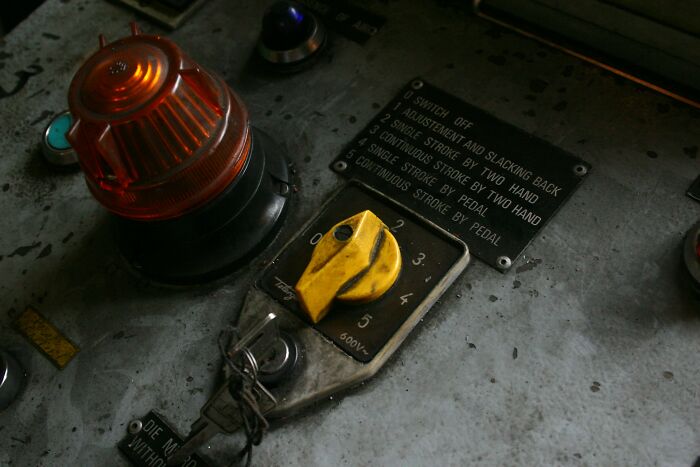 I have a friend who is a pretty big deal consultant. He works with companies in a ton of different fields and you bring him in when you have a process that is causing you major problems and no one else has been able to figure out a solution. It could be a scheduling process issue, a QC issue, a safety issue, etc. Basically, he is the last guy you call before you give up.
He has tons of stories like this, but this is my favorite:
One day he is contacted by a large company somewhere in Asia (I can't remember the exact country ATM). They are having a major issue with injuries on the factory floor and have spent hundreds of thousands, if not a million dollars trying to figure out how to solve the issue. He goes to the factory and spends about 20 minutes on the floor before going to meet with the president of the company.
During the meeting he tells the president that he has a solution for his problem, but it is so simple that he is going to rewrite the cotract with a reduced fee, but he is going to require payment up front because (as he tells it) no one would ever pay him for such a simple solution.
Turns out the offending machine required something like six people to operate and they all had to use various controls while the machine was operating. However, when using the controls, the operators would frequently end up getting hurt by the machine. His solution....move the controls for each person by 2 feet. Last I heard no one has been injured since. He did get his payment.
 Clean water. A whole bunch of complicated public health issues were solved/reduced by controlling city water supplies and making them clean. Clean water laws had a more immediate impact on longevity than vaccines and antibiotics. For vaccines and antibiotics, it takes a generation for the increased life span to start showing up in your statistics. The evidence that sanitary water saved lives was clear within a couple of years. Source: Gerald Grob, The Deadly Truth: A History of Disease in America.
 The "Mind the Gap" warnings on the London underground (both audio and visual) are generally considered effective due to a combination of frequency, psychological impact, and clarity, which contributes to overall passenger safety despite significant increases in passenger numbers.
 Small children don't wake up from smoke detector alarms consistently, so researchers created one that just had a woman's voice saying "Wake up, the house is on fire." It was much more effective at getting them up and out of bed.
 Barbed wire was revolutionary for farming.
It was cheap and allowed for the erection of large scale fencing for the first time, ultimately leading to the industrialisation of agriculture.
 Putting a little image of an insect in the men’s urinal helps the aim better and reduces a serious amount of people splattering outside it.
 Oh I have a good one. So, with lung transplants, an issue has always been "how long can the lungs be out of the donor and still be viable". Traditionally, you store them on ice around 4 degrees Celsius and 5 to 6 hours is kinda typical for the ischemic time, longer you start to have issues. This creates many logistical issues. Now there's more and more devices out now that can extend that, keep it warm, pump blood through it, oxygenated, etc, but those are all complex and Hella expensive.
Turns out, if you just store the lungs in a fridge at 10 degrees Celsius, the ischemic time can be increased to 12 hours or even more without worse outcomes vs traditional cold storage.
 Instead of digging the Panama Canal (took long time exposing workers to tropical diseases longer), build a dam and partially flood the same path. Use locks to navigate height.
One I was personally involved in:
We had dozens of cnc machines all exactly alike and making automotive parts. The engineering team had miscalculated and the coolant supply was inadequate, causing hundreds of faults daily. Every fault required an operator to manually reset and restart the machine. Those operators were so busy resetting faults that they could not perform other tasks.
A friend of mine asked me to help him solve the issue. We went out there together and figured it out in about 10 minutes. We had an engineer add 2 seconds to the pressure switch timer. The coolant switch now waited that little bit extra time before it would fault out, allowing the pressure to build. As soon as all the machines were modified in this way, the faults went from hundreds every day to just a handful.
Everybody was super happy and my friend and I split a max suggestion award, which was $12,500 each. We literally saved the company millions by eliminating downtime and not having to replace expensive coolant systems.

We installed a huge painting facility in our plant. It would automatically shut down (paint fumes are burned rather than exhaust VOC's into the air) about the same time every day. It was finally determined someone had included the parking lot lights on the circuit. Every time it got dark, the overload from the lights coming on would shut it down.
 Outhouses. In many areas without plumbing or outhouses people just kinda go walk out into the woods and p**p. This makes them vulnerable to hookworms. Outhouses separate p**p from the walking places and limits infection.
Hookworms can result in calorie deficiencies and as result people can be lethargic and not as intelligent. So outhouses can literally improve test scores and society at large just by digging a big hole in the ground and pooping through a hole in a bench.

In the right circumstances, even primitive measures most people would sneer at can be quite beneficial.
Scientists had been trying to get a single layer of graphite, called graphene. Graphite is just a specific structure of carbon atoms, so for a single layer, we're talking about a single carbon atom thick. It's the thinnest two dimensional material known to man or mollusc. They tried all the fanciest equipment. Teams of people at competing companies, universities, and agencies were trying to crack it.
One of those fancy tools was a laser. To prep graphite block, they would use scotch tape to remove dust. IIRC, one night, after some drinking, one of the scientist had a "brain blast" moment, called his coworker, raced down to the lab, and immediately found the graphene! Turns out that the tape would pull graphene sheets off the block, so they had been throwing graphene in the trash the whole time. They won a Nobel prize in physics for their experiments with graphene.
Anyway, graphene is cool because it's conductive, strong, flexible, and transparent. Problem is that the scotch-tape method isn't a great method for mass production. There's been a few other methods tried with varying success and promise. Most people will probably never see a device advertised as containing graphene, but it, and it's mimics, will be everywhere. [Here's more information](https://www.science.org/content/article/twenty-years-after-its-discovery-graphene-finally-living-hype).

The same scientists who got graphene were the ones who won the Ig Nobel award for managing to levitate a frog with the help of magnets.
 The person who realised some of the water wells were contaminated with human waste and that was a reason for all the deaths - no one believed him - there was one family who got really sick but no one in the area got sick but that was coz they walked all the way to a different well because they liked the taste….
Jon Snow. Cholera. London. The better taste thing is invention. One of the things he had noticed was that families of brewers were much less likely to contract the disease, he surmised that it might be because they drank (weak) beer all the time instead of water. Then he removed the handle from one pump once he'd identified a particular cluster of cases.
The Hubble space telescope was launched with fault mirrors that collected light incorrectly. The team at NASA discussed a lot of potential options would fix the issue but weren't feasible to do. They ended up removing the least used piece of equipment to install the equivalent of eye glasses. This gave us some of the most amazing pictures of space that anyone has seen.
The main mirror, built by Perkin-Elmer, had been ground to the wrong curve. I remember watching a science documentary about the Hubble, made and shown before the Hubble launched, in which the presenter spoke with someone from Perkin-Elmer. This guy didn't even really talk about the Hubble itself. All he could go on about was the new technology that P-E had never had before, that they had to bring in house to make that mirror, and spent his air time salivating about all the neat things they could do now that they had that technology. After the Hubble was launched, and the flaw in the mirror was publicized, the memory of that documentary left me with a sour feeling that P-E was only interested in the Hubble as a way to get this new manufacturing tech, to the point where they didn't bother with proper testing.
Personal story here.
First job - I was in charge of preparing a weekly excel report that ran into multiple hundreds of lines. Mostly automated with visual basic. In one of the review meetings, a bunch of these lines were deemed unnecessary, and all heads turned to me, asking how long before I could update the sheet and the code to remove the unwanted lines. Everyone had mentally prepared for a 2 week cycle on this.
My suggestion was to just hide the unwanted rows and roll out the “updated” version immediately.
No one clapped, but there definitely were a couple of startled laughs!
At least according to Malcom Gladwell, Korean air safety was improved dramatically by simply ensuring every pilot spoke English well enough to effectively communicate with international air traffic control.
The game series Wing Commander used more memory than the base memory limit of the (pre-Windows) Microsoft DOS operating system, which means it requires expanded memory management which is more complex.
During development of the first game in the series, there was a defect that after a user exited the game the expanded memory manager would output a specific error message to the command interface, which looks bad but is a non-issue because the game is exited.
To buy themselves some time to fix the issue while still being able to demo the game to stakeholders, one of the developers edited the expanded memory manager itself to change that one specific error message to “Thank you for playing Wing Commander”.
 I worked at a company branch where there was lots of f**kery afoot. Lazy managers who didn't do their jobs, favored employees, nepotism, and theft. The owner solved it by firing everyone and dissolving that branch of the company.

I've worked in govt and private sector. Bureaucracy is bureaucracy. Easy to take pot shots at govt but I've seen good and bad on each side.
 Type 2 diabetes. It runs in my family. I was on my way. I cut back on sugar, and stopped snacking after dinner. Completely reversed.

I was heading to Type 2 as well. (My brother had it bad.) My wonderful wife found all these keto substitutes, and my a1c level has reversed directions.
 The longitude problem. Centuries of complex maths and astronomy failed the solution turned out to be a good clock. Knowing the time difference instantly told sailors their longitude. Simple idea, huge impact.
Not quite true. This was known for a long time but the real problem and what was thought impossible was actually making a suitable clock that would work reliably over a long period of time whist being shaken about on a ship, and subject to large temperature variations. There is a very good book called "longitude" about this
 Captain cook cured scurvy with sauerkraut. Maybe an oversimplification but still applicable since he didn’t know why at the time.

No, Cook didn't cure scurvy, naval surgeon James Lind had already cured scurvy using citrus, lemon juice, in 1747.
Using base two arithmetic in computers. The early models tried to use base ten and it was ugly. Then they discovered that it was quite simple to represent a 1 or a 0 based on voltage level. Problem solved.
Twos complement arithmetic was also a magnificent solution to representing negative numbers in a register. (When you add two numbers together using simple binary arithmetic you get the correct answer, regardless of the signs.) It was the "wheel" of computing.
The man who invented the automatic sensor for bathrooms, had a problem after installing them. He couldn’t figure out why the men’s rooms worked, but the women’s wouldn’t work all the time. He couldn’t figure out a solution until he went home and explained it to his wife who immediately knew what was going wrong. She explained to him that a lot of women don’t actually sit on a public toilet seat, that actually a lot of them hover over the toilet seat. So the solution was to put the sensor higher than it had originally been.
A great example of a completely invented story, and also of some Americans' reluctance to use actual English words like Toilet. This is based on the dreadful idea of automatic toilet flushing systems, whose main function is to try and force users to spend less time using them or risk getting a wet bûm.
 The British military couldn’t get their soldiers to take their doses of antimalarial. At the time, it was quinine mixed with water (and called tonic water). Quinine tastes incredibly bitter. So the soldiers kept getting sick or dying from malaria because they would not drink their daily tonic water. The simple solution was to give the soldiers a ration of gin, which alters the flavor of the quinine.
And thus, the gin and tonic cocktail was born.
No. Soldiers never got a gin ration. No, gin does not make the quinine taste better. No, this was never a thing for ordinary soldiers. Mixing the quinine with lots of sugar helps disguise the bitter taste, so tonic water was used as a delivery mechanism, just like "a spoonful of sugar" and it became popular amongst the officers.
GPS receiver. Radio navigation, like Loran, was very complicated with hyperbolic curves intersections. To solve it digitally in the reciever back in 1980s would make a very expensive big powerhungry device. Even today it is a big problem.
Now the genius solution: just solve the problem using straight lines. Your calculation will be wrong, maybe by 100s of kilometer off course and useless. And then just do it again, using straight lines from your previous position. An surprisingly, after a few iterations your position converge and is accurate. And even better, this is how the receiver works in normal mode; calculate a new position every second or so. .

It doesn't work like that. Each GPS satellite continuously transmits a unique timestamped code that allows the GPS receiver to identify the satellite and it's position, and by comparing the time difference between when the code was transmitted and when it was received, to tell how far away that satellite is. When a GPS receiver receives the transmissions from 4 or more satellites it is able to pinpoint it's position very accurately.
Why do so many people want to take perfectly good and interesting historical facts and embroider them into almost complete fiction like so many of these? Presumably by the time they get posted on articles like this the people doing so have already taken the mostly-invented story as actual historical fact.

That's what people have been doing for centuries...read any holy book, for example.
Load More Replies...
My father worked in a large foundry where it got incredibly hot in the summer time. They had large fans in the roof to pull air through but someone had to climb up on a catwalk and pull chains to open the covers. My father told the boss to make the covers out of a lighter weight material so they would open when the fans started. The boss dismissed it until weeks later when he took my father over to the fan controls flipped the switch and the covers opened. Father never got any recognition. Boss told all the credit.

When I worked for the Michigan highway department my boss did the same thing with my suggestions; I learned to only make them with several supervisors around thus getting proper credit, and $$ bonuses.
Load More Replies...
TIL about a simple solution to the devastating effects by invasive crown-of-thorns starfish on coral reefs. When divers inject them with plain old vinegar, they die in a day or so with no toxic effects on the environment or other species.
Why do so many people want to take perfectly good and interesting historical facts and embroider them into almost complete fiction like so many of these? Presumably by the time they get posted on articles like this the people doing so have already taken the mostly-invented story as actual historical fact.
That's what people have been doing for centuries...read any holy book, for example.
Load More Replies... My father worked in a large foundry where it got incredibly hot in the summer time. They had large fans in the roof to pull air through but someone had to climb up on a catwalk and pull chains to open the covers. My father told the boss to make the covers out of a lighter weight material so they would open when the fans started. The boss dismissed it until weeks later when he took my father over to the fan controls flipped the switch and the covers opened. Father never got any recognition. Boss told all the credit.
When I worked for the Michigan highway department my boss did the same thing with my suggestions; I learned to only make them with several supervisors around thus getting proper credit, and $$ bonuses.
Load More Replies... TIL about a simple solution to the devastating effects by invasive crown-of-thorns starfish on coral reefs. When divers inject them with plain old vinegar, they die in a day or so with no toxic effects on the environment or other species.




































 No fees, cancel anytime
 then open in external browser


 and click "Open in External Browser"