ADVERTISEMENT

You could argue that the history of humankind is the history of work. In order to thrive, not just survive, people learned to specialize in a wide range of crafts. However, in this day and age, with so many folks working from behind a computer, you can sometimes forget that it’s still working-class people who form the backbone of society. It’s workers who keep civilization running. It’s they who keep the literal and proverbial lights on.

Our team at Bored Panda has painstakingly curated this list of the most impressive and powerful vintage photos of the American working class. Scroll down for a trip into the past and enjoy these old-timey pictures. The details in them are fascinating!

Bored Panda wanted to learn about how current industry trends such as the spread of automation and generative AI might affect the working and middle classes, so we reached out to marketing psychology expert Matt Johnson, PhD, the host of the Human Nature and Psychology of Marketing blogs. You'll find the insights he shared with us below.

#1

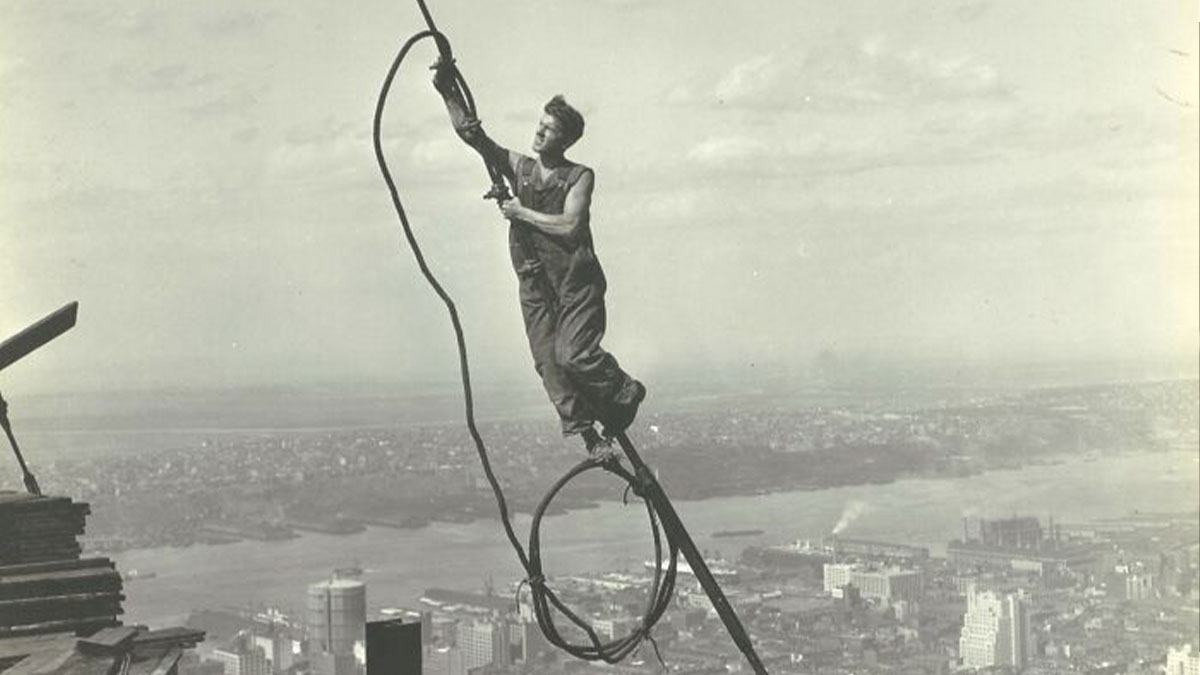
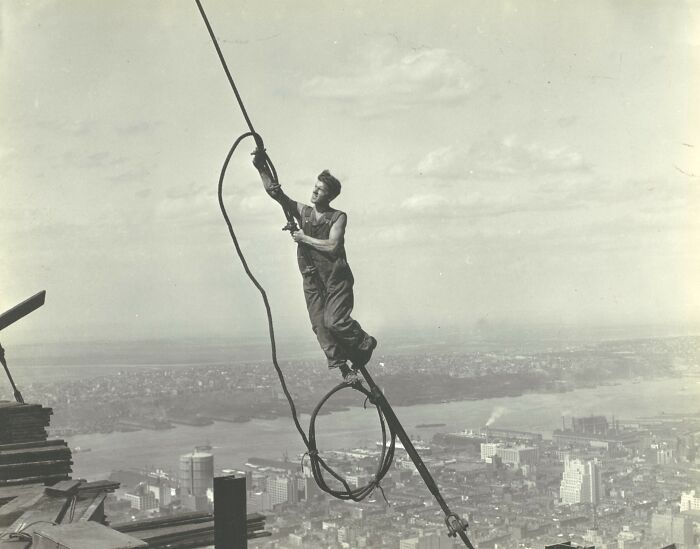
Icarus, Empire State Building, 1930

American working class man balancing on steel beam, handling cable high above city during vintage construction work.

Lewis Hine Report

Tucker Cahooter
Community Member
5 months ago Created by potrace 1.15, written by Peter Selinger 2001-2017

Let's assume for our own sanity that, just like the clock scene in Harold Lloyd's film "Safety Last", if he did lose his grip he would only fall a few feet onto a nice soft mattress rather than plummeting several hundred feet to his messy death

Jrog
Community Member
5 months ago Created by potrace 1.15, written by Peter Selinger 2001-2017

This is how most of the famous promotional photos for the Empire State Building were shot, including the "lunch atop the skyscraper". Just out of the frame there was a finished deck. Falling would hurt, but it would be a 3 meters fall, not 300.

Load More Replies...
I'm.Just.A.Girl
Community Member
5 months ago Created by potrace 1.15, written by Peter Selinger 2001-2017

Poster child for the harness Kickstarter campaign

AnnaB
Community Member
Premium
5 months ago Created by potrace 1.15, written by Peter Selinger 2001-2017

It's all in the perspective.

Debra
Community Member
5 months ago Created by potrace 1.15, written by Peter Selinger 2001-2017

Oh my God, I hope back then that he returned to safety, how super, super scary

Hippopotamuses
Community Member
5 months ago (edited) Created by potrace 1.15, written by Peter Selinger 2001-2017

Hmm. Very familiar. I remember commenting on this pic last month.

Mike F
Community Member
5 months ago Created by potrace 1.15, written by Peter Selinger 2001-2017

That's odd, I'm here every day and I don't remember having seen this pic.

Load More Replies...
View more comments

"As automation and AI tools become more widespread, they’re likely to reshape jobs across the working and middle classes. This will mean some roles will be re-imagined, while others will be replaced entirely. Routine, repetitive tasks are most vulnerable, which disproportionately affects roles in logistics, retail, and even clerical white-collar work," Johnson explained to Bored Panda in an email.

"But the impact isn’t purely economic—it’s also psychological. As job identities shift or erode, so too can people’s sense of status and stability. It's tied to a sense of personal value and identity. The decline in middle-class identification reflects not just financial strain, but a deeper uncertainty about the future of work. Without intentional policy, reskilling, and investment in human-centered roles, these technologies could widen perceived class divides and undercut social cohesion," he said.

"At the same time, there’s a growing recognition of the resilience and value of blue-collar trade jobs (e.g. plumbing, electrical work, carpentry, HVAC) that cannot be easily outsourced or automated," Johnson told us.

ADVERTISEMENT
RELATED:
    #2

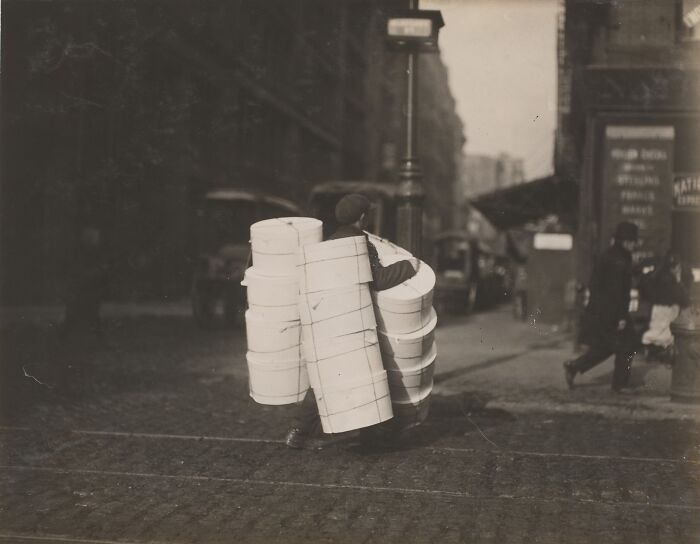
    Boy Carrying Hats. Bleecker St., New York, 1912

    Vintage photo of an American working class person carrying multiple hat boxes on a city street during work.

    Lewis Hine Report

    El Dee
    Community Member
    5 months ago Created by potrace 1.15, written by Peter Selinger 2001-2017

    Ahhh, child labour, the good old days (sarcasm)

    Barbara Wilcock
    Community Member
    5 months ago Created by potrace 1.15, written by Peter Selinger 2001-2017

    Parmigiana delivery. Now thats something I can get on board with

    Dorota A
    Community Member
    5 months ago Created by potrace 1.15, written by Peter Selinger 2001-2017

    first I thouth is toilet tissues :) very common view in Poland 80s

    #3

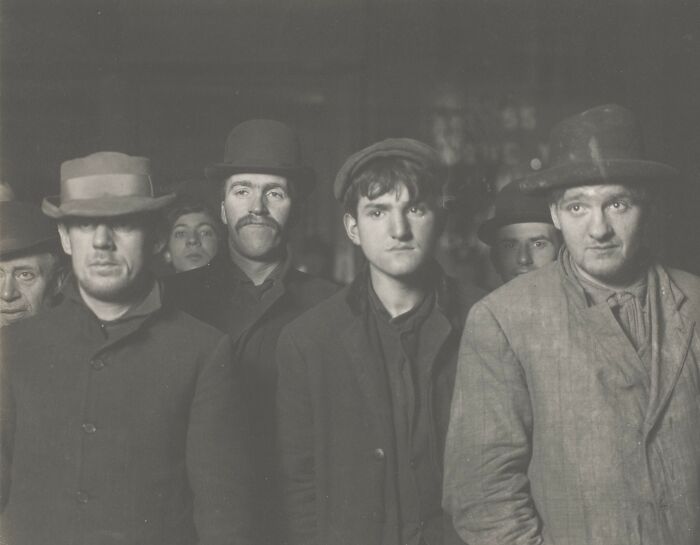
    Midnight At The Bowery Mission Bread Line, 1906-7

    Group of vintage American working class men wearing hats and coats in a black and white photo at worksite.

    Lewis Hine Report

    TiNaBoNiNa
    Community Member
    5 months ago Created by potrace 1.15, written by Peter Selinger 2001-2017

    Apparently, the Mission still exists. https://www.bowery.org/timeline/#section-1870s

    I'm.Just.A.Girl
    Community Member
    5 months ago (edited) Created by potrace 1.15, written by Peter Selinger 2001-2017

    I don't know what homeless people looked like back then, there definitely is some noticeable differences between today's hungry and the hungry back then. And I was homeless for 10+ years. (7 years in recovery in August).

    "As generative AI increasingly disrupts white-collar professions, these skilled trades may not only prove more secure but may also rise in status. In a world of artificial intelligence, hands-on human expertise could become one of the most enduring competitive advantages."

    Bored Panda also asked Johnson for his thoughts on how blue-collar Americans can create a personal brand and stay competitive. "For blue-collar Americans, building a personal brand starts with owning your story: what sets you apart, what values you bring to the work, and how you serve your customers. In today’s digital world, visibility matters. Even a basic online presence (e.g. Google reviews, social media, or a simple website) can build credibility and trust," he advised.

    ADVERTISEMENT
    ADVERTISEMENT

    "Consistency, reliability, and craftsmanship are powerful brand assets, especially in trades where word-of-mouth still reigns. Sharing before-and-after photos, highlighting testimonials, or even short videos explaining your process can humanize your work and differentiate you. A strong personal brand doesn’t require flash, but it does require clarity, consistency, and a willingness to be seen."

    #4

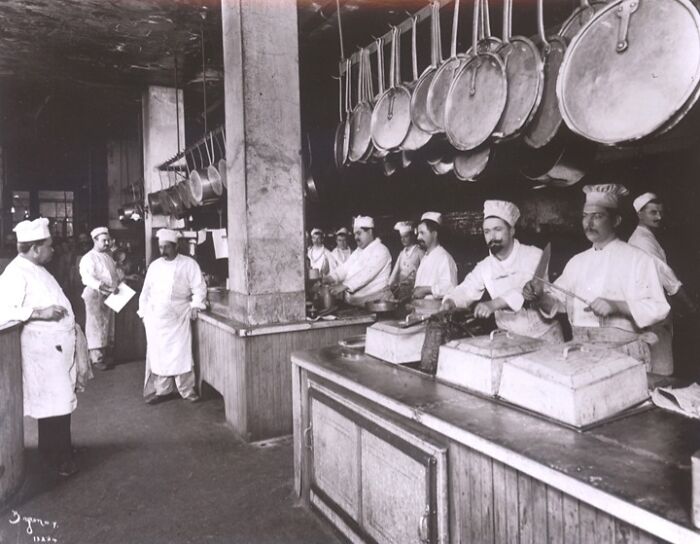
    The Kitchen At Delmonico's, New York, 1902

    Group of vintage American working class chefs preparing food in a busy kitchen at the middle of their jobs.

    The New York Times Report

    Jrog
    Community Member
    5 months ago Created by potrace 1.15, written by Peter Selinger 2001-2017

    Delmonico's is the oldest NY high-end restaurants and steakhouse, in the Financial district, opened in 1827. They claim, the rather recklessly, to have invented the Egg Benedict (that were actually invented at the Waldorf Astoria), the Lobster Newburg (that is just a renaming of the French Thermidor), the strip steak (long predating the restaurant) and the Baked Alaska (that existed for over one century with the name "Norwegge Omelete"). They were involved in a nasty legal dispute over the name and copyright, and were closed for a few years until a recent reopening. They opened other branches, some of whom were apparently involved in serious health code violations.

    I'm.Just.A.Girl
    Community Member
    5 months ago Created by potrace 1.15, written by Peter Selinger 2001-2017

    Oh some scandalous tea in the restaurant world 😈 lol it is interesting though.

    Load More Replies...
    #5

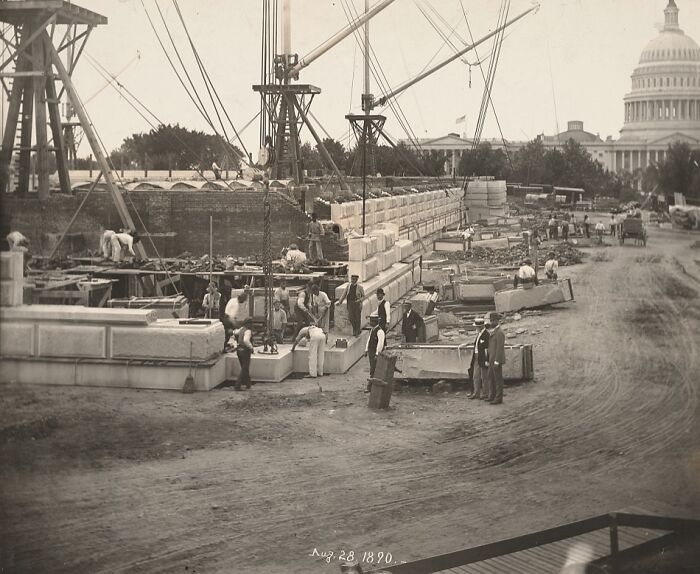
    Laying Of The Cornerstone Of The Library Of Congress, Washington, D.C., 1890

    Vintage photo of American working class men constructing a large stone structure near the US Capitol building in 1890.

    Library of Congress Report

    panther
    Community Member
    5 months ago Created by potrace 1.15, written by Peter Selinger 2001-2017

    Just wait until TACO Don decides we don't need any libraries.

    Gerry Higgins
    Community Member
    5 months ago Created by potrace 1.15, written by Peter Selinger 2001-2017

    He already has. He's fired librarians at the Library of Congress and his bill defunds libraries nationwide.

    Load More Replies...
    TiNaBoNiNa
    Community Member
    5 months ago Created by potrace 1.15, written by Peter Selinger 2001-2017

    25 years after the end of the Civil War, the majority of the men in that picture were either formerly enslaved or the children of formerly enslaved people. These men were likely paid a very low wage for hard and dangerous work using non-motorized and non-electric tools. Every time you see one of these beautiful buildings, think about all of the labor and skill that went into constructing them.

    Jack Crocker
    Community Member
    5 months ago Created by potrace 1.15, written by Peter Selinger 2001-2017

    Man, you people.need to get a life.. more to life than politics..

    martymcmatrix
    Community Member
    5 months ago Created by potrace 1.15, written by Peter Selinger 2001-2017

    »I think we got it cornered over here.« 🤷🏽

    O. Puntia
    Community Member
    5 months ago

    This comment is hidden. Click here to view.

    YOU guys elected him ...

    Bryn
    Community Member
    5 months ago Created by potrace 1.15, written by Peter Selinger 2001-2017

    No we didn't. The electoral college did and there are a good number of americans who hate him

    Load More Replies...
    View more comments
    #6

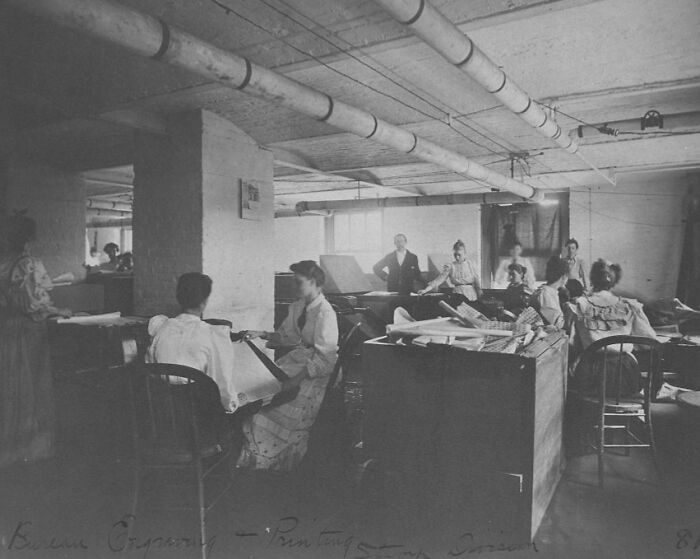
    Workers In The Postage Stamp Gumming And Drying Room In The Stamp Division At The Bureau Of Engraving & Printing, 1895

    Vintage photo of American working class people operating machinery and handling materials in an early 20th-century factory setting.

    Johnston, Frances Benjamin Report

    ADVERTISEMENT

    Broadly speaking, working-class people earn their living via wage labor and are most often found in blue-collar positions and service-oriented professions. Just a few examples of blue-collar workers include the following professionals:

    1. Construction workers;
    2. Contractors;
    3. Welders;
    4. Mechanics;
    5. Plumbers;
    6. Truck drivers;
    7. Technicians;
    8. Boilermakers;
    9. Firefighters;
    10. Police officers;
    11. Postal workers;
    12. Power plant operators.
    ADVERTISEMENT

    Meanwhile, other working-class jobs include clerical work, food industry positions, retail sales, manual labor vocations, and low-level white-collar workers, according to Investopedia.

    #7

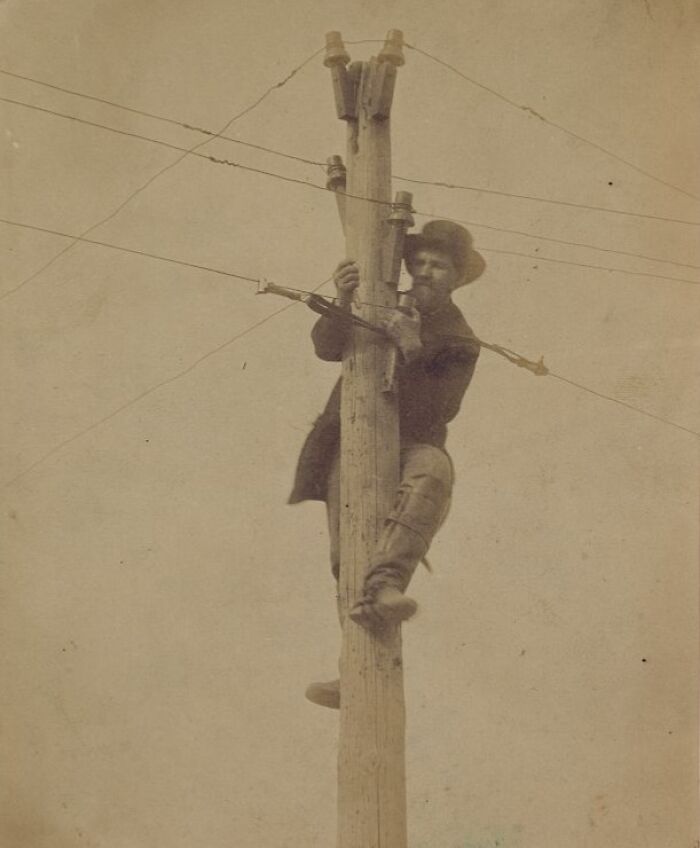
    Worker Repairing Telegraph Line, 1862 Or 1863

    Vintage photo of an American working class man climbing a utility pole performing his job on the job site.

    Russell, Andrew J. Report

    TiNaBoNiNa
    Community Member
    5 months ago Created by potrace 1.15, written by Peter Selinger 2001-2017

    An early lineman. Telegraph lines ran on electricity, so this was a dangerous job.

    #8

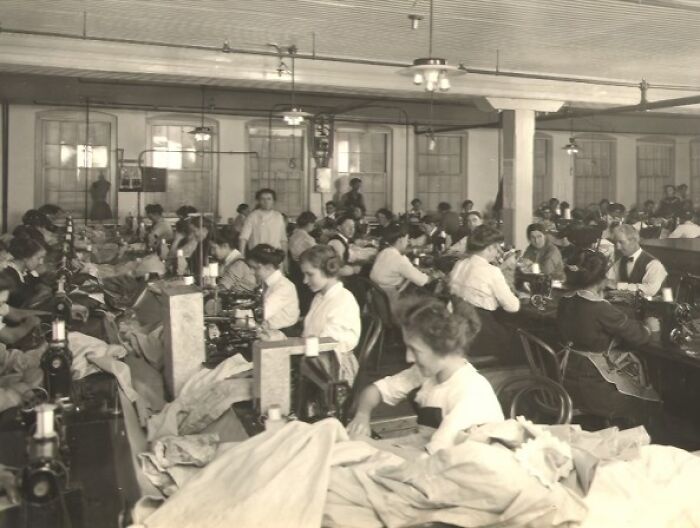
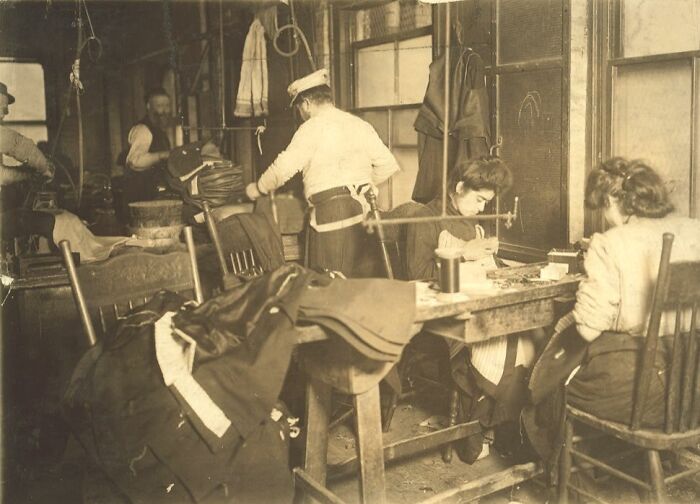
    Garment Factory,1900s

    Vintage photo of American working class people sewing and managing textiles in a crowded factory during their jobs.

    Toledo-Lucas County Public Library Report

    MK-C PHD
    Community Member
    Premium
    5 months ago Created by potrace 1.15, written by Peter Selinger 2001-2017

    They enjoyed living indoors and eating. That was a good job for women of the day who had little education and needed the income. Remember what alternatives were available to women then. It was respectable and clean. Some (not all) would have been able to keep working after marriage until pregnancy forced them out (a practice that lasted well into the 1970s!) so all in all this was a happy(ier) place.

    HardBoiledBlonde
    Community Member
    5 months ago Created by potrace 1.15, written by Peter Selinger 2001-2017

    The Triangle Shirtwaist Factory fire was in 1911. The exit doors were locked to "prevent theft" and 146 workers died all women and girls. Sweatshops were not and are not happy places.

    Load More Replies...
    Hippopotamuses
    Community Member
    5 months ago (edited) Created by potrace 1.15, written by Peter Selinger 2001-2017

    The ultimate in sweat shops! I guess they were told to look happy, or else....

    Jrog
    Community Member
    5 months ago (edited) Created by potrace 1.15, written by Peter Selinger 2001-2017

    For the time, it was not even a bad arrangement. Manual work but not physically taxing, in an ample and clean environment. They were likely running on the 8-hour-6 days per week, that started being common in US factories in 1900-1920, or at worst the 10-hour day. Other businesses such as mining or male-dominated manufacturing businesses were not uncommon to work 12 hours per day and in some cases (such as construction tradesmen) over 14 hours per day, 7 days per week.

    Load More Replies...
    DowntownStevieB
    Community Member
    5 months ago Created by potrace 1.15, written by Peter Selinger 2001-2017

    The one with Leia hair looks like she's enjoying herself

    David
    Community Member
    5 months ago Created by potrace 1.15, written by Peter Selinger 2001-2017

    my great-grandmother worked in a factory like that. She came to the US alone at 16 and worked in a garment factory until her 20s

    Gerry Higgins
    Community Member
    5 months ago Created by potrace 1.15, written by Peter Selinger 2001-2017

    There's Princess Leia right in the middle

    View more comments
    #9

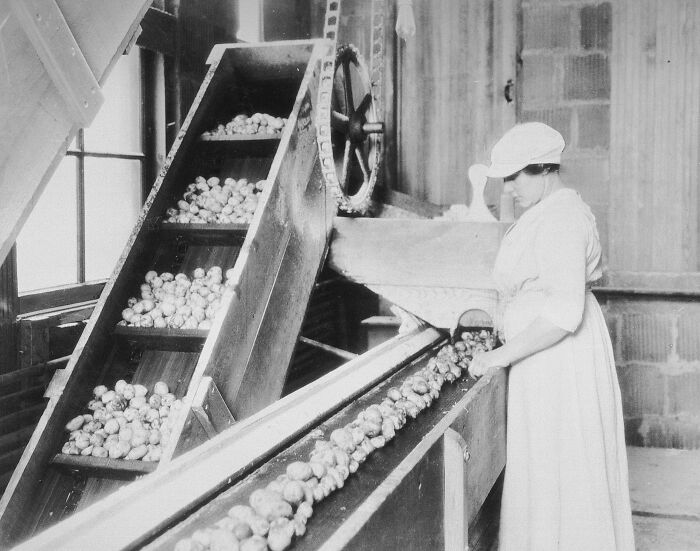
    Potatoes Move Down A Conveyor Belt Before Being Made Into Potato Flakes, Between 1892 - 1952

    Vintage photo of American working class woman sorting produce on a conveyor belt in a factory setting.

    National Archives and Records Administration Report

    ADVERTISEMENT

    Working-class jobs generally pay less than $15/hour, and many don’t actually include health benefits. There are far fewer factory and industrial workers these days, as the nature of work has been shifting over time and these positions have been on the decline in the United States for decades.

    Typically, working-class people work outside of offices and do manual labor. Many working-class individuals may not have a college degree. Some live paycheck-to-paycheck and have little savings.

    However, as Investopedia points out, some working-class jobs are very stable and pay reasonably well. For instance, if you’re a nuclear power plant operator or boilermaker, you can earn as much as many folks doing middle-class jobs.

    ADVERTISEMENT
    #10

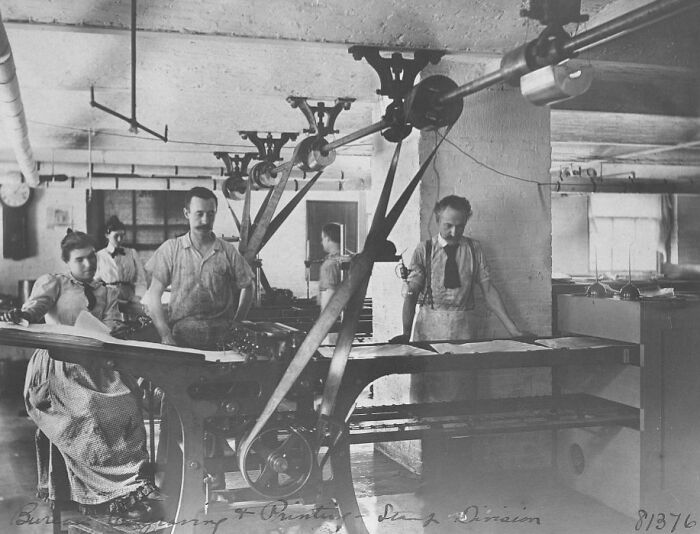
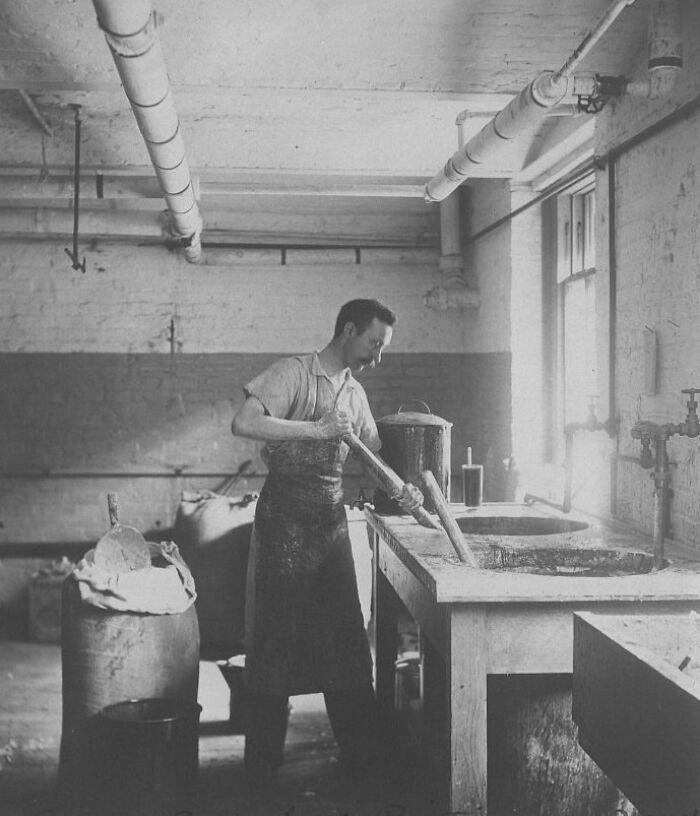
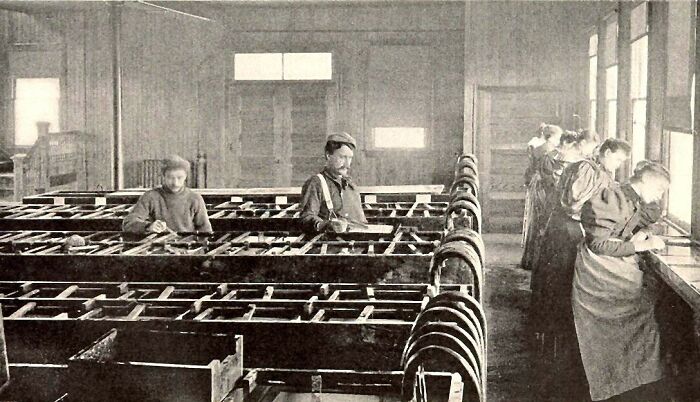
    Worker Prepares Gum For Postage Stamps In The Stamp Division At The Bureau Of Engraving & Printing, 1895

    American working class man in vintage photo stirring mixture in industrial workspace with pipes and window light.

    Johnston, Frances Benjamin Report

    Mike F
    Community Member
    5 months ago Created by potrace 1.15, written by Peter Selinger 2001-2017

    And let's add a pinch of dirt from the floor for flavor.

    #11

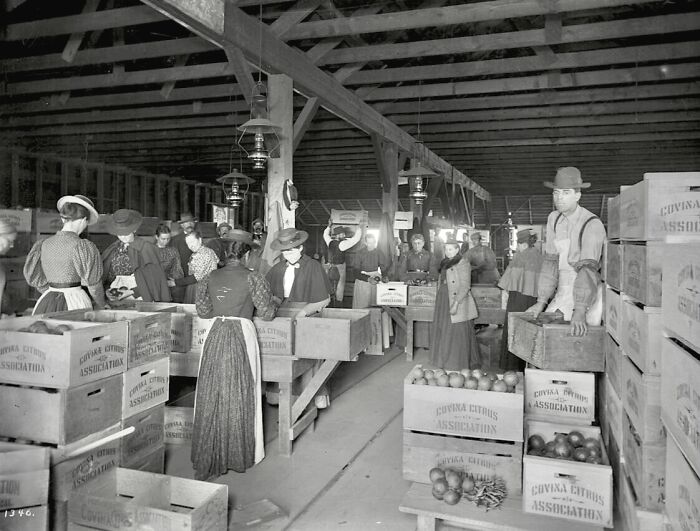
    Men And Women Working Inside Of An Orange Packing House, Probably Covina, California, 1900

    Vintage photo of American working class people packing fruit crates in a warehouse during their jobs in the early 20th century.

    USC Digital Library Report

    Huddo's sister
    Community Member
    5 months ago Created by potrace 1.15, written by Peter Selinger 2001-2017

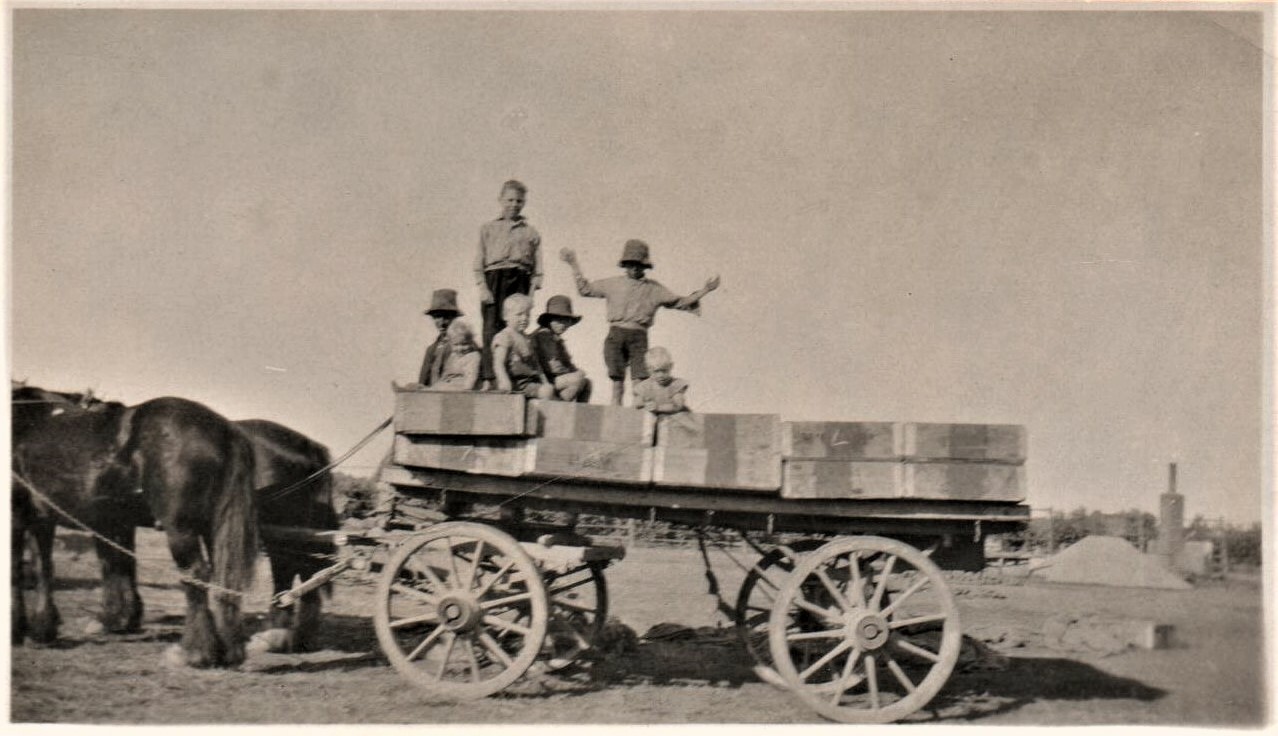
    One of the main things my family used to grow was citrus. Carting-fr...0-jpeg.jpg Carting-fruit-2-6852a6d4adb90-jpeg.jpg
    Mike F
    Community Member
    5 months ago Created by potrace 1.15, written by Peter Selinger 2001-2017

    I used to store my records in old peach crates. That didn't indicate that there were peaches inside. 🤷

    Bored Sailor
    Community Member
    5 months ago Created by potrace 1.15, written by Peter Selinger 2001-2017

    "Probably Covina, California" I guess the poster can type the title but not read the boxes.

    TiNaBoNiNa
    Community Member
    5 months ago Created by potrace 1.15, written by Peter Selinger 2001-2017

    That's the description on the original archive post. They are assuming Covina due to the packaging. Perhaps the administrative offices are located in Covina and the brand name is Covina, but the orchards or packing house may be located outside Covina. It's a qualifier meaning they don't know this photo was 100% taken in Covina.

    Load More Replies...
    ADVERTISEMENT
    #12

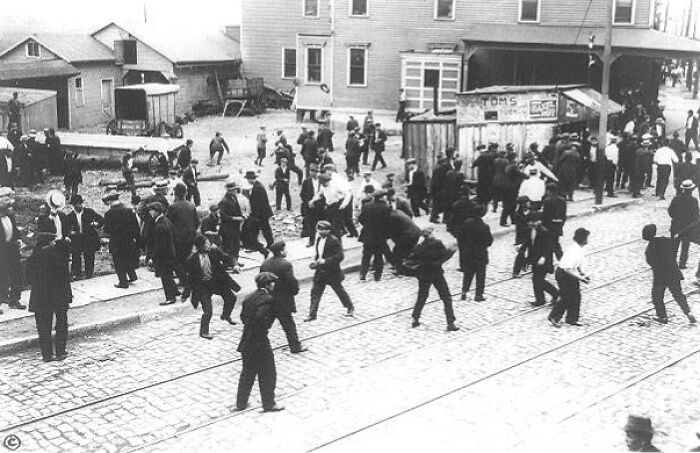
    Standard Oil Strikers Throwing Bricks At Bayonne Police, 1915

    Group of American working class people gathered on a cobblestone street in the middle of their jobs vintage photo.

    Library of Congress Report

    Jrog
    Community Member
    5 months ago (edited) Created by potrace 1.15, written by Peter Selinger 2001-2017

    Workers demanded a small pay rise, the 8-hours day (6 days a week), and basic safety conditions. John D. Rockefeller was notorious for his hard line against labor demands, so Standard oil denied the request. 1200 workers walked out and camped in front of the gates. Standard Oil called in 250 strikebreakers and an undisclosed number of undercover "agent provocateurs" to infiltrate the protest; then they called their attorney Pierre Garvey, who was also a republican politician as well as the town major. Garvey sent in the police to disrupt the protest through violent means. Police shot and killed a worker. Workers rioted and tried to set fire to a refinery building. Police killed five more workers, and the protesters rioted throwing stones to the police (in the photo). Ultimately the company accepted some scaled down demands, but later reneged leading to a second strike in 1916 that ended up with two dozen dead workers and significant concessions on pay raise, working conditions & safety

    Michael None
    Community Member
    5 months ago Created by potrace 1.15, written by Peter Selinger 2001-2017

    You forgot to mention that it wasn't until 1935 that workers earned the legal right to bargain without fear of retaliation. A right that is once again under threat.

    Load More Replies...
    olaff 422
    Community Member
    5 months ago Created by potrace 1.15, written by Peter Selinger 2001-2017

    Remember why we celebrate Labor Day. Not because the government wants to, but made it a holiday to cover up the fact the killed American workers that wanted a better life. Feels like we're reliving history.

    Based on a 2022 Gallup poll, just over a third (35%) of respondents said that they are members of the working class.

    This is compared to 38% of Americans who see themselves as middle class and 14% who believe they are upper-middle class.

    11% of American adults said that they are lower class, and just 2% identified as upper class.

    #13

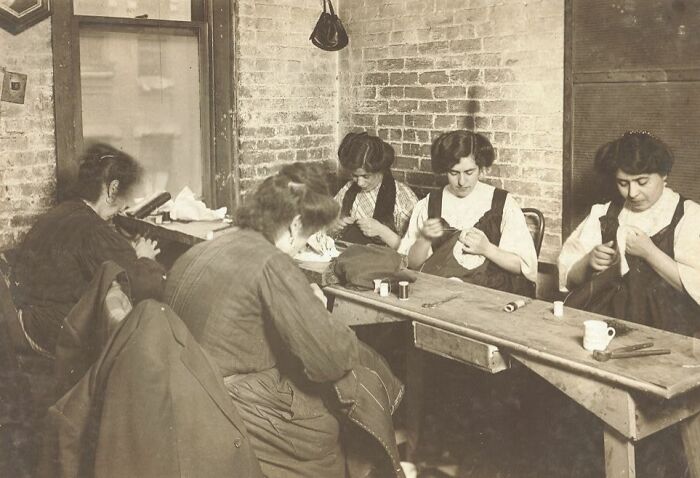
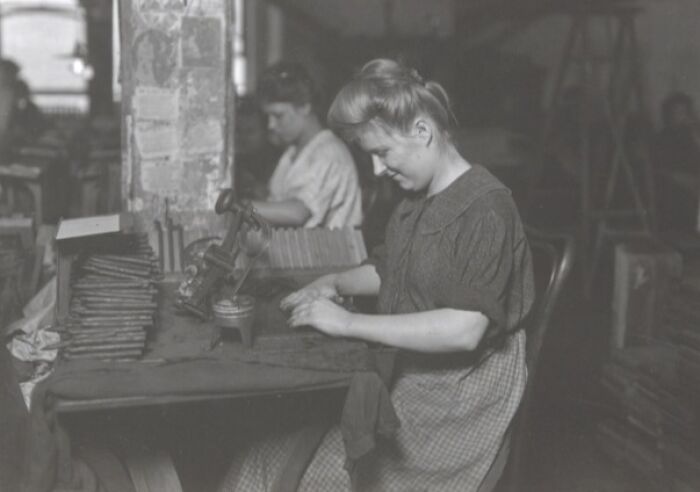
    Sweatshop Of Mr. Goldstein, 30 Suffolk St., New York, 1908

    Vintage photo of American working class women sewing garments indoors during their jobs in a brick-walled workshop environment.

    Lewis W. Hine Report

    Leslie Victor
    Community Member
    5 months ago Created by potrace 1.15, written by Peter Selinger 2001-2017

    Has fashion always had indentured labor?

    TiNaBoNiNa
    Community Member
    5 months ago Created by potrace 1.15, written by Peter Selinger 2001-2017

    The women are huddled around a window. This is likely their main light source. This room likely did not have electric lighting installed, yet, so they would use natural light and perhaps gas lighting during the early or later hours. 30 Suffolk St. is gone now. Currently, a large building stands at 28 Suffolk St., housing the Chinese American Planning Council.

    Timbob
    Community Member
    5 months ago Created by potrace 1.15, written by Peter Selinger 2001-2017

    They’re making sweat ?

    Susan Reid Smith
    Community Member
    5 months ago Created by potrace 1.15, written by Peter Selinger 2001-2017

    They're working hard at a very low paying job, likely being paid by the piece rather than by the hour.

    Load More Replies...
    ADVERTISEMENT
    #14

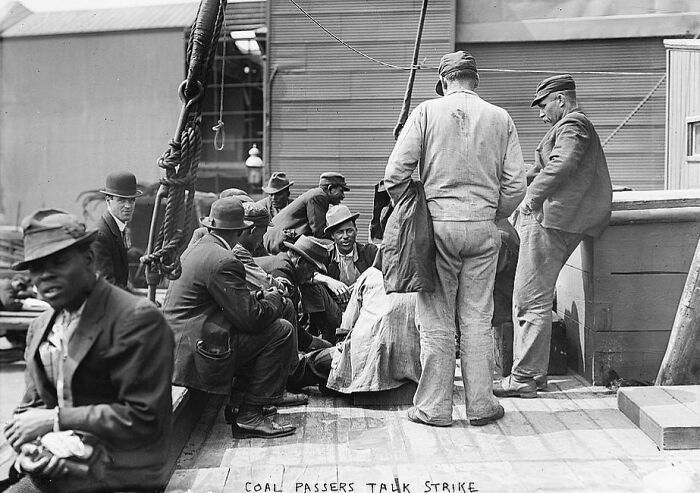
    Coal Passers Talk Strike, 1911

    Group of vintage American working class men gathered on dock, engaged in conversation during their jobs in early 20th century.

    Library of Congress Report

    Tom Hutcherson
    Community Member
    5 months ago (edited) Created by potrace 1.15, written by Peter Selinger 2001-2017

    I was on strike twice, once at AT&T Information Systems, and and Mtn. Bell. (It was the '80s. EVERYTHING was information systems. And against Safeway with the ufcw, 2000-2002. In the '80s, we got everything we wanted in the contract. Everything. In 2000, we'd get maybe half of our demands. Trickle down economics at it's finest.

    Load More Replies...
    olaff 422
    Community Member
    5 months ago Created by potrace 1.15, written by Peter Selinger 2001-2017

    So far, this is the only pic with anyone other than white folks in it. Watch out for ICEis, my POC friends.

    TiNaBoNiNa
    Community Member
    5 months ago Created by potrace 1.15, written by Peter Selinger 2001-2017

    "Coal Passers A new rating was established to accommodate the ranks of men assigned the rugged task of shoveling coal on board ship: the coal passer. Sailor Frederick Wilson, a former coal passer, commented on their lot in life in his diary: that most humble, but necessary, evil, the lowest rating in the service, an object that isn't supposed to be human at all, but has to delve wherever dirt and grime is thickest, in back connection, in bilge, in mucky feed tank, in boiler, and in [coal] bunker. Poor coal passer! Cursed and damned by all parts of the ship, whose very foot prints are watched as he crosses spotless deck[s], who is blamed for every spot of dirt on deck and paint work as a matter of course. He is even looked askance by landsmen and marine, poor non-combatant that he is. Like many others of humble rating, his necessity and worth goes unrecognized." http://www.steelnavy.org/history/exhibits/show/steelnavy/hardlife/coal

    ADVERTISEMENT
    #15

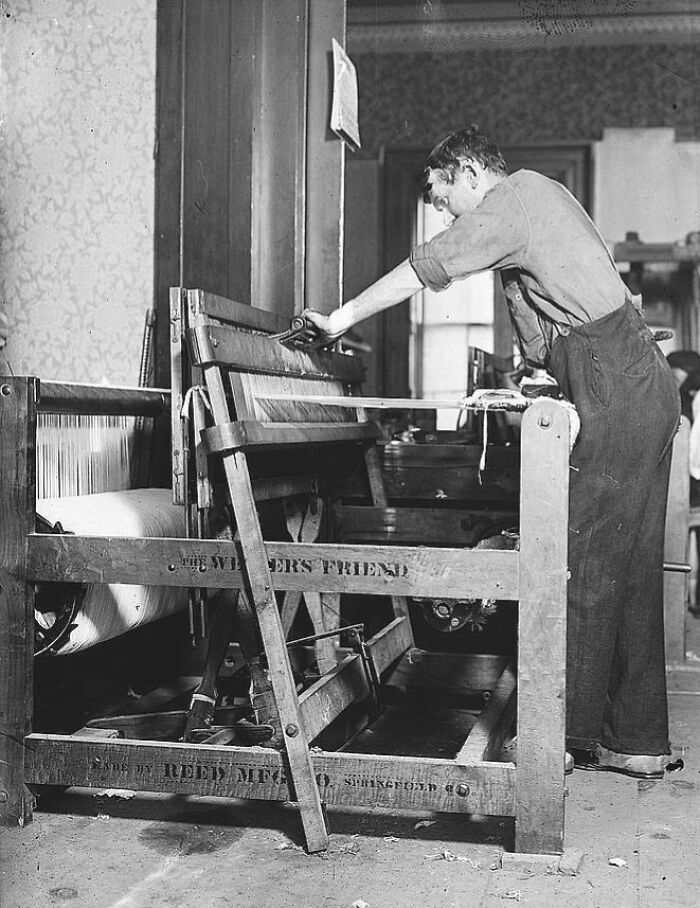
    Self-Master Colony - Rug Making, 1910

    Vintage photo of an American working class man operating a textile loom machine in the middle of his job.

    Library of Congress Report

    TiNaBoNiNa
    Community Member
    5 months ago Created by potrace 1.15, written by Peter Selinger 2001-2017

    The Self Master Colony also known as Floyd's Self Master Village was a residence for men in need of help that existed from 1908-1938. It was an experiment in housing the homeless in Union Township, Union County, New Jersey. https://en.wikipedia.org/wiki/Self-Master_Colony

    Gallup states that these days, fewer Americans identify themselves with the middle and upper-middle classes than they did before the Great Recession hit in late 2007/early 2008.

    Since the recession, more Americans have identified themselves with the working or lower class.

    #16

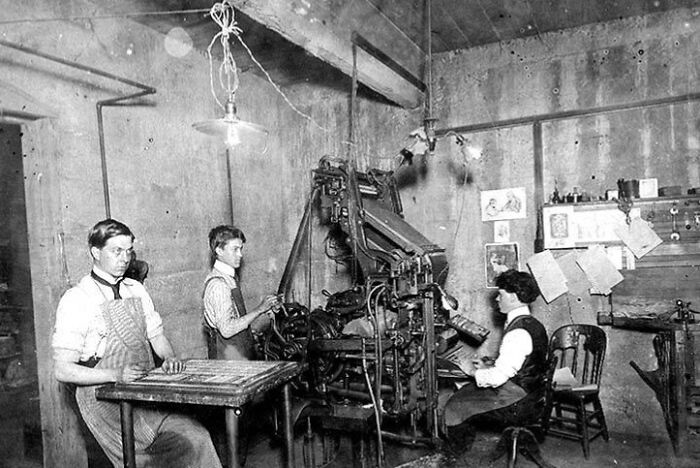
    Linotype Operators In The Erikson Building, Seattle, Washington, 1906

    Three American working class people operating machinery and preparing materials in a vintage industrial workspace.

    University of Washington Report

    Bill Swallow
    Community Member
    5 months ago (edited) Created by potrace 1.15, written by Peter Selinger 2001-2017

    Considering Linotypes worked using hot molten lead, not the healthiest idea to run one in an enclosed unventilated space. Yet they were the indispensible flip side, with the movable type printing press, in spreading news, literacy, and literature on a truly massive scale, and were a much-overlooked major force in shaping today's world. We've moved beyond them, which is a good thing in many ways, but we owe Mr. Merganthaler quite a debt. Here's the whole story - https://www.youtube.com/watch?v=VDM-EbDCiQg EDIT: System Source Museum near Baltimore has one on display. In Twilight Zone's episode "Printer's Devil", you can see Burgess Meredith run one.

    Ray Heap
    Community Member
    5 months ago Created by potrace 1.15, written by Peter Selinger 2001-2017

    Classical trained typesetter here. They would drink milk the whole day as it was supposed to bind the fumes from the molten lead.

    Load More Replies...
    M O'Connell
    Community Member
    5 months ago Created by potrace 1.15, written by Peter Selinger 2001-2017

    That would have been hot stuffy work, not ideal to do in a basement

    martymcmatrix
    Community Member
    5 months ago

    This comment is hidden. Click here to view.

    Please don't ask how Linotype worked, wether what it's supposed to be...just gaze at the picture for a year and then it's just 100% self-explanatory...🤭 🤷🏽

    #17

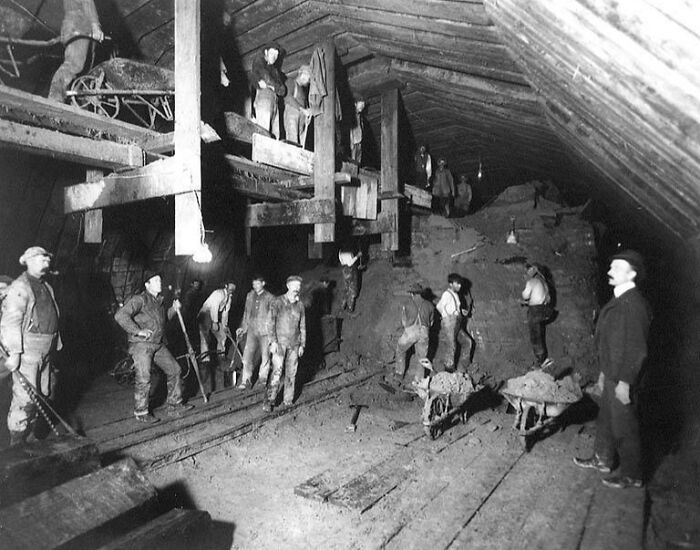
    Construction Of Great Northern Railroad Tunnel Beneath Downtown Seattle, 1903

    Vintage photo of American working class people laboring in an underground mine, using wheelbarrows and hand tools.

    Asahel Curtis Report

    ADVERTISEMENT
    #18

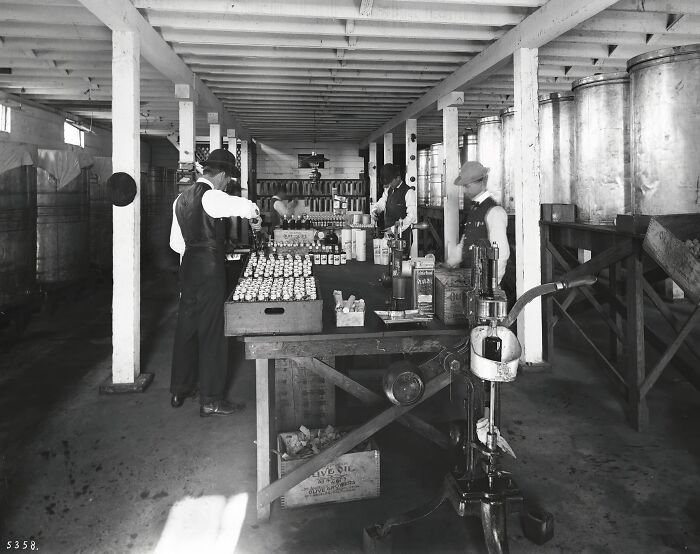
    Workers Bottling Olive Oil, San Fernando Valley, Los Angeles, 1900

    Vintage photo of American working class people bottling and packaging products in a factory setting.

    USC Digital Library Report

    TiNaBoNiNa
    Community Member
    5 months ago Created by potrace 1.15, written by Peter Selinger 2001-2017

    "They paved paradise and put up a parking lot."

    Tom Hutcherson
    Community Member
    5 months ago Created by potrace 1.15, written by Peter Selinger 2001-2017

    https://youtu.be/KLODGhEyLvk?si=Jc2tDyf5klg6xg2H

    Load More Replies...
    Vicki Thompson
    Community Member
    5 months ago

    This comment has been deleted.

    ADVERTISEMENT

    “In general, social class identification is strongly related to educational attainment and household income.

    Upper-income Americans and college graduates (including those with postgraduate education) are most likely to say they belong to the middle or upper-middle class, while lower-income Americans and those with no formal education beyond high school generally identify as working or lower class,” Gallup states.

    #19

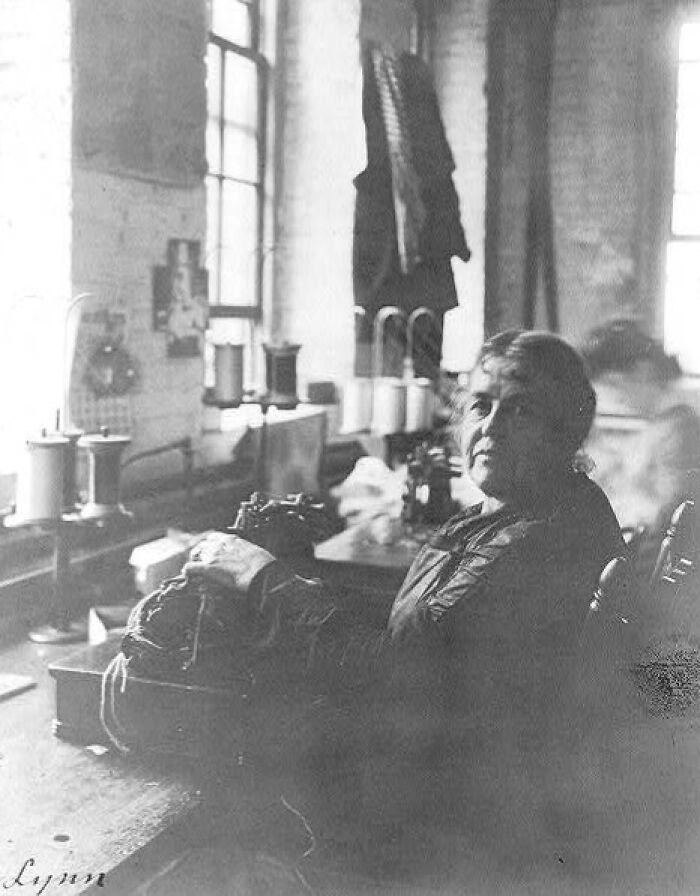
    Miss Eliza Combs, Typical Old Maid Worker, Massachusetts, 1895

    Woman vintage photo of American working class people stitching fabric in a factory, focused on her sewing job.

    Johnston, Frances Benjamin Report

    MK-C PHD
    Community Member
    Premium
    5 months ago Created by potrace 1.15, written by Peter Selinger 2001-2017

    Elderly unmarried women were labeled “old maid” or “spinster” and with no husbands they had to find employment unless their family’s were able to provide.

    Catherine Graves
    Community Member
    5 months ago Created by potrace 1.15, written by Peter Selinger 2001-2017

    Don't forget how much definitions change. The term "old maid" is rarely heard now. My mother was called an old maid in the early 50s, because she was still unmarried at 25 years old. That is a big change in societal standards in only 2 generations.

    Bryn
    Community Member
    5 months ago Created by potrace 1.15, written by Peter Selinger 2001-2017

    Not necessarily. Could be her husband is also working. Could be working because her husband died

    Load More Replies...
    Vicki Thompson
    Community Member
    5 months ago Created by potrace 1.15, written by Peter Selinger 2001-2017

    So what did they call men who never married? Probably a stud. Glad those days are pretty much behind us.

    Kabuki Kitsune
    Community Member
    5 months ago Created by potrace 1.15, written by Peter Selinger 2001-2017

    Old Maid. In this period, women who were unmarried were called either "Old Maids", or "Spinsters". Given the male dominated world at the time, it was difficult for them to survive, so they often did menial tasks, or worked in sweat shops. Note: Sweat Shops, weren't always bad places to work. Some were actually rather decent work with decent pay. They get the name "sweatshop" because there were a lot of workers, and the buildings didn't have good airflow... so, women and men working in them, were covered in sweat. It didn't help that people wore four or five layers of clothing even in the summer.

    Load More Replies...
    #20

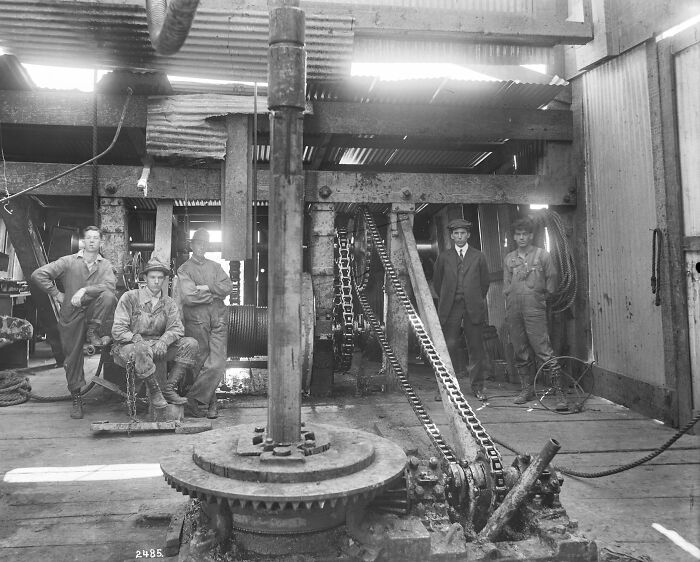
    Five Workmen Standing Around The Rotary Drill System In Action, Brayer Field, 1910

    Vintage photo of American working class men posing amidst industrial machinery inside a factory during their jobs.

    C. C. Pierce Report

    JoNo
    Community Member
    5 months ago Created by potrace 1.15, written by Peter Selinger 2001-2017

    Can you guess which one's the supervisor?

    martymcmatrix
    Community Member
    5 months ago Created by potrace 1.15, written by Peter Selinger 2001-2017

    Yeah, it's probably the (only) one wearing a tie...👔

    Load More Replies...
    Cara Vinson
    Community Member
    5 months ago Created by potrace 1.15, written by Peter Selinger 2001-2017

    I see 3 working man, 1 supervisor, and 1 suit

    TiNaBoNiNa
    Community Member
    5 months ago Created by potrace 1.15, written by Peter Selinger 2001-2017

    Just a little reading from the link page: this photo was developed from a glass negative.

    martymcmatrix
    Community Member
    5 months ago Created by potrace 1.15, written by Peter Selinger 2001-2017

    If giants rode bicycles...🚲 🔗 ⚙️

    #21

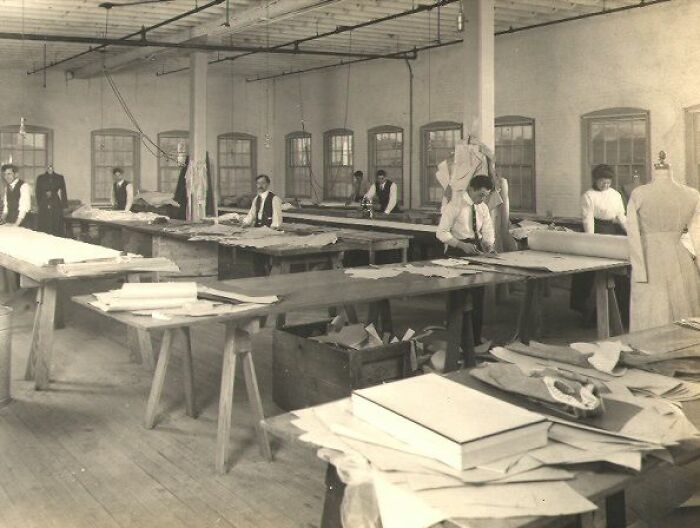
    A Room In A Garment Factory With Men And A Woman, Standing At High Tables, Making Patterns, 1900s

    Vintage photo of American working class people in a garment factory measuring and cutting fabric for clothing production.

    Toledo-Lucas County Public Library Report

    Bill Swallow
    Community Member
    5 months ago Created by potrace 1.15, written by Peter Selinger 2001-2017

    With that dressmaker's dummy there on the right?

    Load More Replies...
    ADVERTISEMENT
    ADVERTISEMENT

    As per Statista, in March 2025, there were 23.1 million people in the US working in the healthcare and social assistance industry, nearly 22.6 million employed in professional and business services, and just shy of 17 million in the leisure and hospitality industry.

    Meanwhile, 15.6 million work in retail trade, 15.1 million are in local government, and nearly 12.8 million are in manufacturing.

    #22

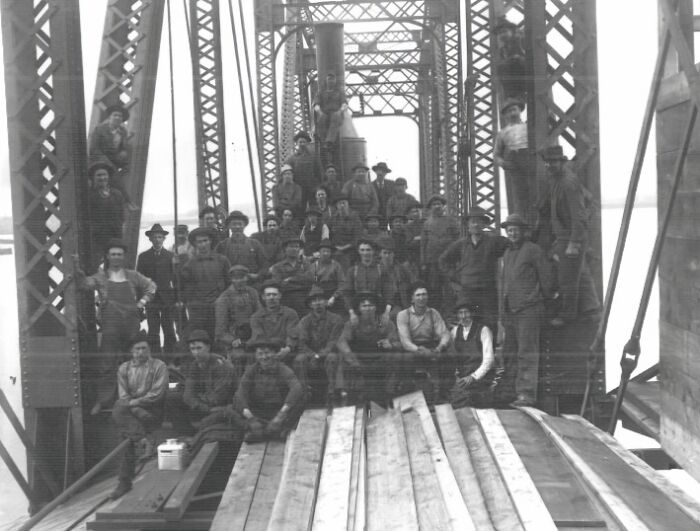
    Toledo Terminal Maumee River Bridge Workers, Toledo, Ohio, Around 1902

    Group of vintage American working class people posing on a steel bridge construction site in the middle of their jobs.

    Toledo-Lucas County Public Library Report

    #23

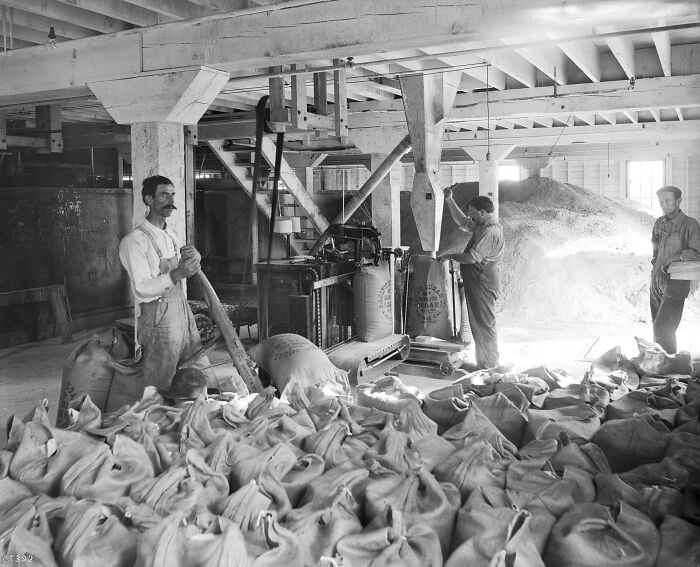
    Workers Weighing And Sacking Sugar At The Pacific Sugar Company, Visalia, Tulare County, California, 1900

    American working class men filling and handling large sacks in a vintage industrial warehouse setting.

    USC Digital Library Report

    Kabuki Kitsune
    Community Member
    5 months ago Created by potrace 1.15, written by Peter Selinger 2001-2017

    See the dust in the sunlight? If you want to shudder, look up "Sugar dust explosion" on google, and you'll feel real sorry for these fellows.

    TiNaBoNiNa
    Community Member
    5 months ago Created by potrace 1.15, written by Peter Selinger 2001-2017

    Building History US Senate Documents of 1906 said this of the Pacific Sugar Company Beet-Sugar Factory being built in 1905: "A company known as the Los Angeles Sugar Company for some time exploited conditions in the Antelope Valley with a view to establishing one or more sugar factories. This company changed its name to the Pacific Sugar Company, contracted for 3,000 acres of beets, and is constructing a plant at Visalia with 350 tons' dailey capacity. A part of the machinery composing the equipment of this plant comes from St. Louis Park, Minn. The company owns a site of 40 acres near the town, which is reached by the Southern Pacific Railroad. The 1st day of January, 1905, the factory was about half completed and 90 per cent of the machinery on the ground. The plant will be in readiness for the campaign which begins about August, 1906." https://pcad.lib.washington.edu/building/25260/

    Michael None
    Community Member
    5 months ago Created by potrace 1.15, written by Peter Selinger 2001-2017

    Bartholomew was always more fond of savory foods but "a jobs a job" he would say.

    #24

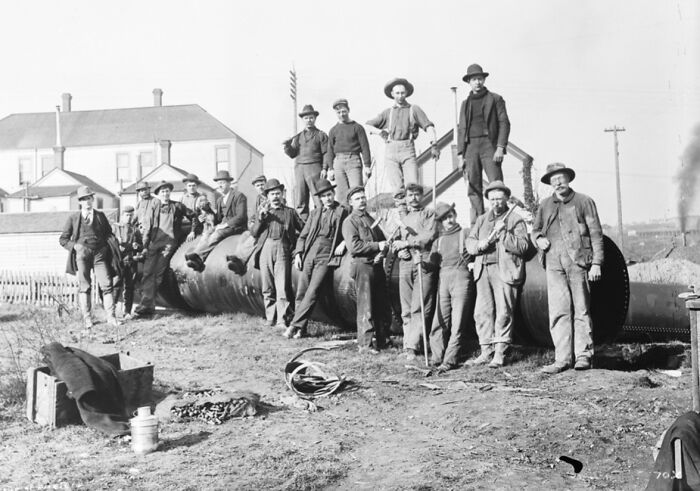
    Cedar River Pipeline Riveting Gang, Laying Pipe To Bring Water To Seattle, Washington, 1899

    Group of American working class men in vintage clothing posing at an industrial worksite in a black and white photo.

    Seattle Municipal Archives Report

    O. Puntia
    Community Member
    5 months ago

    This comment is hidden. Click here to view.

    Need a pipeline from Cairo, IL to Mojave, AZ

    ADVERTISEMENT

    Moving on to construction, the industry employed 8.3 million Americans in March 2025. The transportation and warehousing industry had nearly 6.8 million workers, finance and insurance employed over 6.7 million, and wholesale trade had nearly 6.2 million employees.

    #25

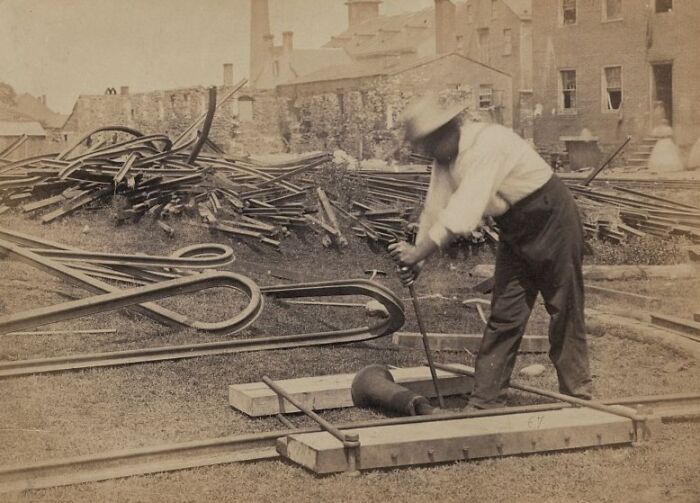
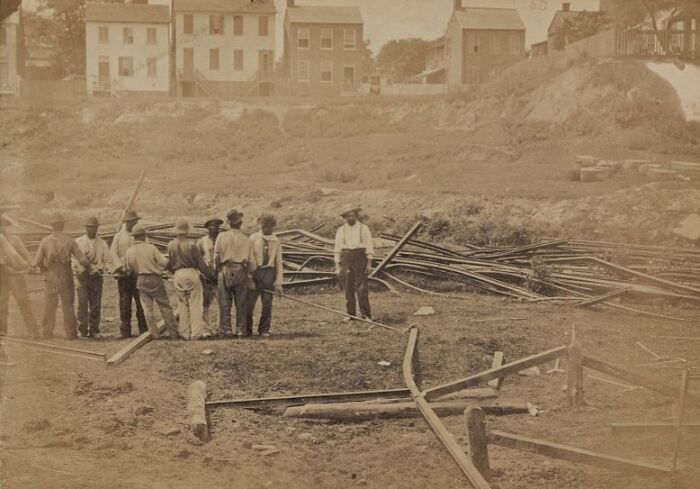
    Railroad Construction Worker Straightening Track, Pile Of Twisted Rails In Background, 1862 Or 1863

    Vintage photo of an American working class man in the middle of his job with industrial tools and metal parts outdoors.

    Russell, Andrew J. Report

    Hippopotamuses
    Community Member
    5 months ago Created by potrace 1.15, written by Peter Selinger 2001-2017

    I can't image a more physically tiring job.

    Brian Droste
    Community Member
    5 months ago Created by potrace 1.15, written by Peter Selinger 2001-2017

    Just think the muscles you would have built up doing this.

    Load More Replies...
    O. Puntia
    Community Member
    5 months ago Created by potrace 1.15, written by Peter Selinger 2001-2017

    burned rails after the Civil War (?)

    Kabuki Kitsune
    Community Member
    5 months ago Created by potrace 1.15, written by Peter Selinger 2001-2017

    Yep. which makes this more likely as being after the war has ended, as opposed to during it.

    Load More Replies...
    BSellen
    Community Member
    5 months ago Created by potrace 1.15, written by Peter Selinger 2001-2017

    Why are all the tracks bent?

    M O'Connell
    Community Member
    5 months ago Created by potrace 1.15, written by Peter Selinger 2001-2017

    The photo comes from the US military railway department. Given the context of the US civil war, I would guess the rails came from a bridge or trestle which was destroyed.

    Load More Replies...
    Timbob
    Community Member
    5 months ago Created by potrace 1.15, written by Peter Selinger 2001-2017

    Why didn’t they make them straight in the first place ?

    Forrest Hobbs
    Community Member
    5 months ago Created by potrace 1.15, written by Peter Selinger 2001-2017

    They did. It's war damage: https://en.wikipedia.org/wiki/Sherman%27s_neckties

    Load More Replies...
    Anonymouse
    Community Member
    5 months ago Created by potrace 1.15, written by Peter Selinger 2001-2017

    wow, that is a lot of screwing!

    View more comments
    ADVERTISEMENT
    #26

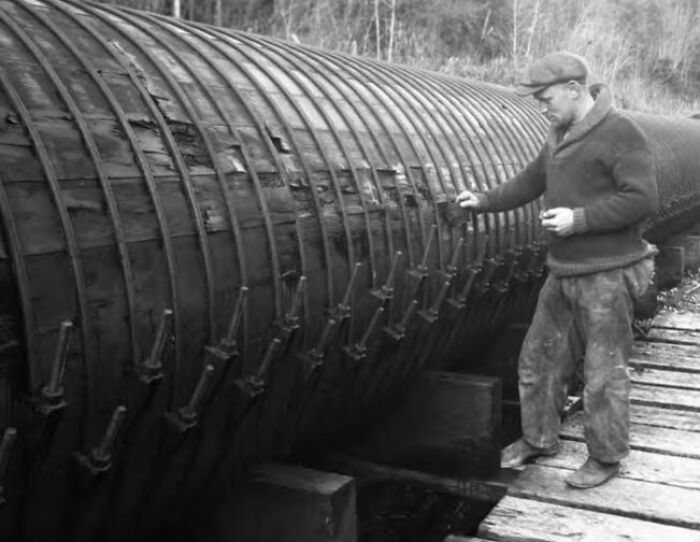
    Seattle's Water Pipeline Worker, 1926

    Vintage photo of an American working class man inspecting large industrial equipment outdoors on a wooden platform.

    Webster & Stevens Report

    ƒιѕн
    Community Member
    5 months ago Created by potrace 1.15, written by Peter Selinger 2001-2017

    Love those old wooden pipes. Lot of work getting everything bolted together.

    Forrest Hobbs
    Community Member
    5 months ago Created by potrace 1.15, written by Peter Selinger 2001-2017

    Wooden pipes? Oh boy - it wasn't until I read your comment that I noticed. 1926! We had wooden water supply pipes here in the UK back in the 18th century, but as far as I know they'd all been replaced with cast iron long before the 20th century began. Then there was the Stone Pipe Company scandal which afflicted Manchester... https://uwlhs.uk/prj_spc.html

    Load More Replies...
    TiNaBoNiNa
    Community Member
    5 months ago Created by potrace 1.15, written by Peter Selinger 2001-2017

    My little town still had hollowed-out logs for pipes the original sections until just recently.

    Devin Schmitt
    Community Member
    5 months ago Created by potrace 1.15, written by Peter Selinger 2001-2017

    Some of the wood pipes are still being used.

    martymcmatrix
    Community Member
    5 months ago Created by potrace 1.15, written by Peter Selinger 2001-2017

    I hope there were more than just one guy in charge...🤔

    #27

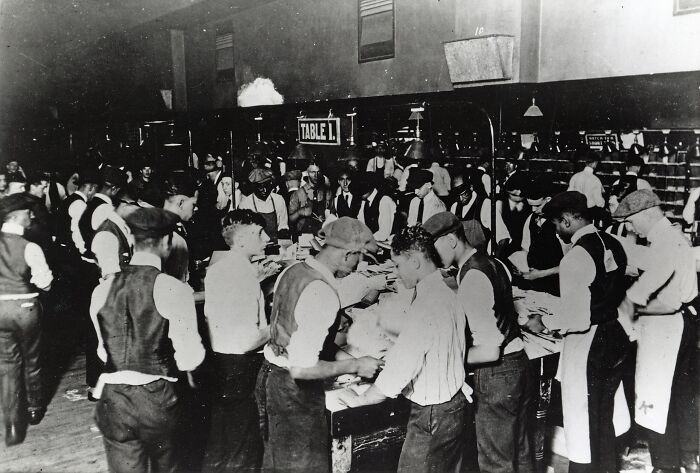
    U.S. Postal Employees Sorting Mail, 1890

    Group of American working class men in vintage factory setting sorting materials at a workstation labeled table 1.

    Smithsonian Institution Report

    MK-C PHD
    Community Member
    Premium
    5 months ago Created by potrace 1.15, written by Peter Selinger 2001-2017

    Hmmm how many were recent immigrants I wonder!????

    Vicki Thompson
    Community Member
    5 months ago (edited) Created by potrace 1.15, written by Peter Selinger 2001-2017

    My dad done that in the early sixties. He said that sometimes there would be shipments of live ducklings and baby alligators come in at the same time and one worker would always tease the alligators with the ducks.Dad hated that !Glad that doesn't happen anymore !No ducklings were harmed but it was a mean cruel thing to do.Dad stood for hours sorting mail, and he ended up having varicose vein surgery because of having to stand for so long. Good sized post office in good sized town.

    Linda Tisue
    Community Member
    5 months ago Created by potrace 1.15, written by Peter Selinger 2001-2017

    Nail jobs were pretty well paid

    In the meantime, state governments employed 5.5 million people, private educational services had 4 million workers, and the federal government boasted 3 million employees.

    ADVERTISEMENT

    Nearly 3 million Americans work in the information industry, 2.5 million are in the real estate, rental, and leasing business, 600k are in mining and logging, and nearly the same number of workers are in the utilities industry.

    #28

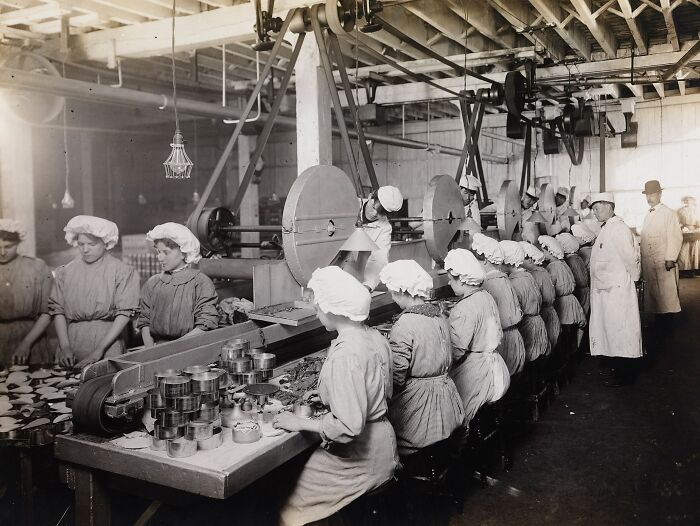
    Workers Packing Chipped Beef, 1910

    Vintage photo of American working class women in a factory assembly line performing manual tasks during their jobs.

    National Archives and Records Administration Report

    Bill Swallow
    Community Member
    5 months ago Created by potrace 1.15, written by Peter Selinger 2001-2017

    Hey! I think I see Lucy and Ethel there!

    Ravenkbh
    Community Member
    5 months ago Created by potrace 1.15, written by Peter Selinger 2001-2017

    "Can't you chip that beef any faster??"

    MK-C PHD
    Community Member
    Premium
    5 months ago Created by potrace 1.15, written by Peter Selinger 2001-2017

    Most would be unmarried women.

    Austzn
    Community Member
    5 months ago Created by potrace 1.15, written by Peter Selinger 2001-2017

    Some of them are likely still children.

    #29

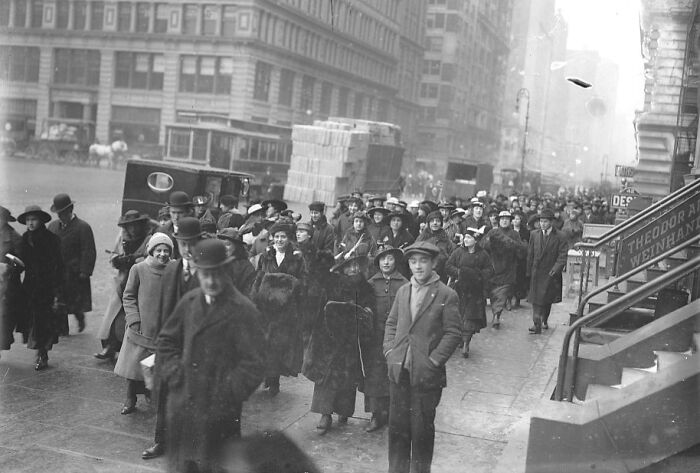
    Garment Workers, Union Sq., Striking, Between 1915 And 1920

    Crowded vintage street scene showing American working class people in early 20th-century clothing going about their jobs.

    Library of Congress Report

    Gerry Higgins
    Community Member
    5 months ago Created by potrace 1.15, written by Peter Selinger 2001-2017

    Remember Look For The Union Label

    Tom Hutcherson
    Community Member
    4 months ago Created by potrace 1.15, written by Peter Selinger 2001-2017

    That's one we'll probably never hear the likes of again.

    Load More Replies...
    ADVERTISEMENT
    #30

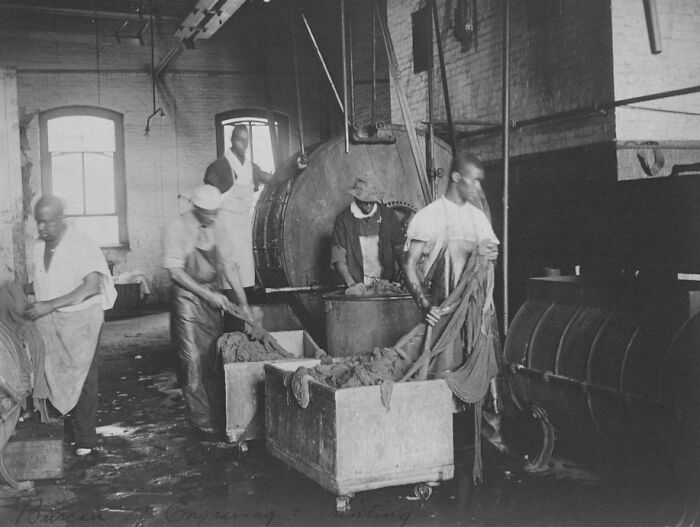
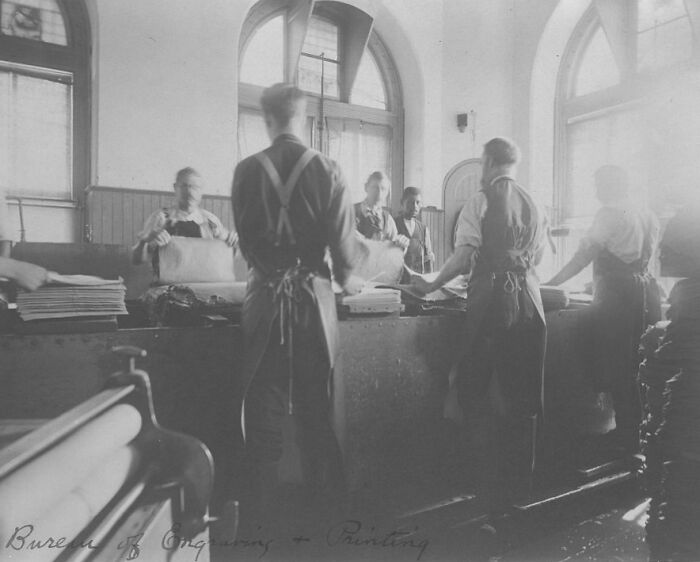
    Workers Doing Laundry At The Bureau Of Engraving & Printing, 1895

    Group of American working class people in a vintage factory setting handling materials during their jobs.

    Johnston, Frances Benjamin Report

    Kabuki Kitsune
    Community Member
    5 months ago Created by potrace 1.15, written by Peter Selinger 2001-2017

    This was the first step in printing currency. The "paper" currency... isn't made out of paper. It's cloth. This 'laundry' was taking rags and scrap fabric and washing it to clean it, before it would be shredded, mixed in large pots with some other fabrics, and then made into sheets which were used to print the bills on.

    Forrest Hobbs
    Community Member
    5 months ago (edited) Created by potrace 1.15, written by Peter Selinger 2001-2017

    Kabuki Kitsune: it really is made out of paper. Paper made from rags was once the usual type of paper in Europe.; modern industrially produced wood pulp paper is also paper but typically lower quality (in part down to shorter fibre length and acid content - the latter leading to the paper yellowing and turning brittle in time; both problems can be mitigated - at a price). More here: https://en.wikipedia.org/wiki/Paper#Early_sources_of_fibre and here: https://en.wikipedia.org/wiki/History_of_paper

    Load More Replies...
    Anonymouse
    Community Member
    5 months ago Created by potrace 1.15, written by Peter Selinger 2001-2017

    is that for the "rag" paper?

    Kabuki Kitsune
    Community Member
    5 months ago Created by potrace 1.15, written by Peter Selinger 2001-2017

    Yep. It's the first stage of the process, washing the fabric to make certain it was clean and free of dyes or oils, before it was further processed into rag paper.

    Load More Replies...
    Brian Droste
    Community Member
    5 months ago Created by potrace 1.15, written by Peter Selinger 2001-2017

    So are they laundering money then? I am surprised someone already didn't make this comment.

    Gabby M
    Community Member
    5 months ago Created by potrace 1.15, written by Peter Selinger 2001-2017

    US currency paper is made in a single facility in Massachusetts and only the Bureau of Engraving & Printing is authorized to use it.

    Hippopotamuses
    Community Member
    5 months ago Created by potrace 1.15, written by Peter Selinger 2001-2017

    Now, there's a strange combination.

    ADVERTISEMENT
    See Also on Bored Panda

    We’d like to hear what you think, dear Pandas. Which of these photos impressed you the most and why? Which pictures do you feel truly embody the spirit of working-class America? What period of history are you the most interested in?

    Feel free to share your opinions in the comments at the bottom of this post. Oh, and if you haven’t already, upvote your favorite pics.

    #31

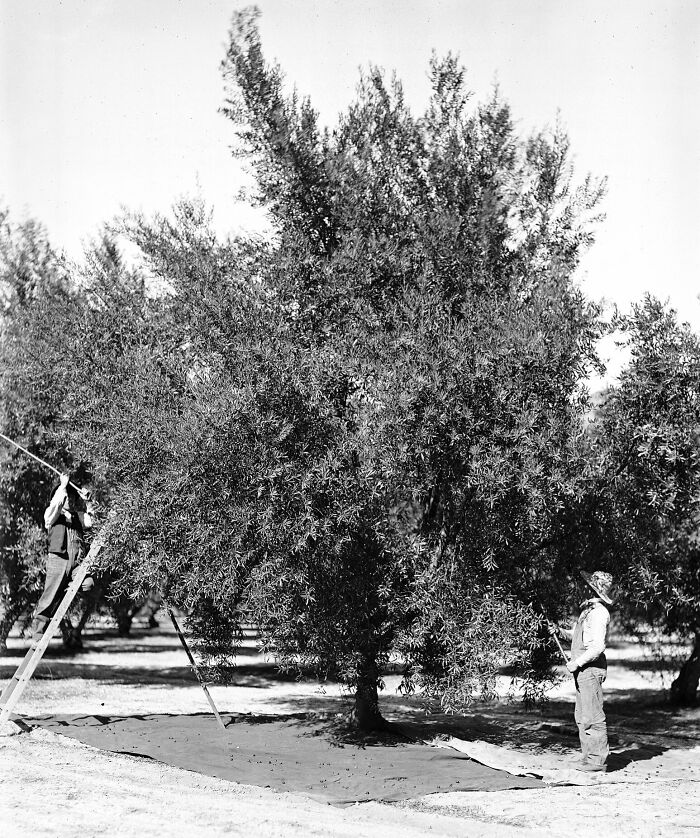
    Workers In An Olive Grove, Los Angeles, 1900

    Vintage photo of American working class people harvesting olives from a tree using ladders and nets in an orchard.

    USC Digital Library Report

    Barbara Wilcock
    Community Member
    5 months ago Created by potrace 1.15, written by Peter Selinger 2001-2017

    Ok. Never had olive oil from America. Interested what it tastes like

    John Lange
    Community Member
    5 months ago Created by potrace 1.15, written by Peter Selinger 2001-2017

    Barbara, it's my understanding that most olives grown in the USA are table olives and not used for oil production. 🙂

    Load More Replies...
    #32

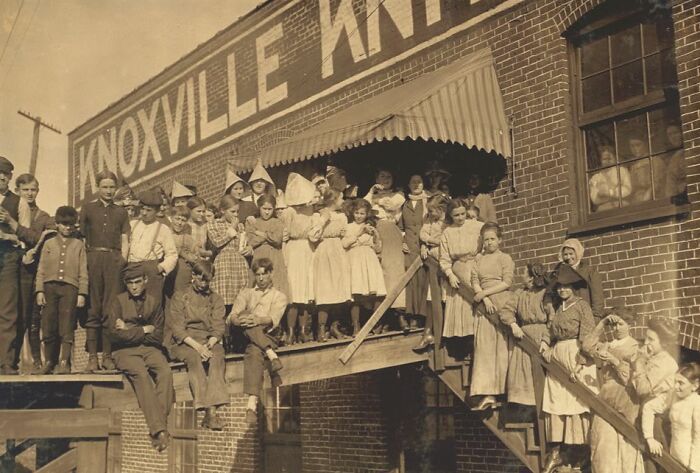
    Workers At The Knoxville Knitting Works In Knoxville, Tennessee, USA, 1910

    Group of American working class people posing outside Knoxville factory in a vintage black and white photo from early 20th century.

    Lewis Wickes Hine Report

    Geoffrey Scott
    Community Member
    5 months ago Created by potrace 1.15, written by Peter Selinger 2001-2017

    The line of very young girls (center). Apparently, I've recently read, Fla wants to bring this back.

    Michael Starace
    Community Member
    5 months ago Created by potrace 1.15, written by Peter Selinger 2001-2017

    Iowa, Indiana, Florida, Arkansas, Missouri, and Minnesota have passed laws weakening child labor laws. Shame.

    MK-C PHD
    Community Member
    Premium
    5 months ago Created by potrace 1.15, written by Peter Selinger 2001-2017

    Mills routinely employed children who were small enough to get under the looms and remove snags, oil machines and other jobs that required small fingers and bodies. Families often had multiple members, adults and children, employed at one mill. It was dangerous work, paid little but was preferred over other lines of work.

    Lara Verne
    Community Member
    5 months ago Created by potrace 1.15, written by Peter Selinger 2001-2017

    Looks like most of them were teenagers

    O. Puntia
    Community Member
    5 months ago

    This comment is hidden. Click here to view.

    "How much for the [ittle girl?"

    TiNaBoNiNa
    Community Member
    5 months ago Created by potrace 1.15, written by Peter Selinger 2001-2017

    I hope English is your 2nd language and you meant that differently.

    Load More Replies...
    #33

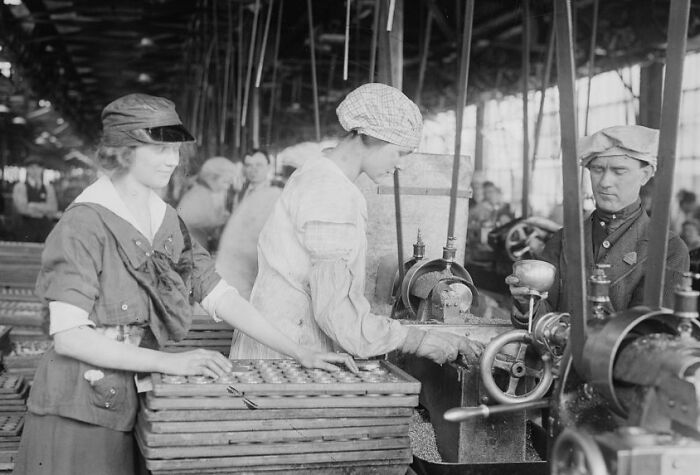
    Ring Facing, Between 1915 And 1920

    Vintage photo showing American working class people operating industrial machinery in a factory setting during their jobs.

    Library of Congress Report

    Hippopotamuses
    Community Member
    5 months ago Created by potrace 1.15, written by Peter Selinger 2001-2017

    What is ring facing? I searched the term, but all the results referred to the position of the ring on the finger.

    ƒιѕн
    Community Member
    5 months ago Created by potrace 1.15, written by Peter Selinger 2001-2017

    WWI Munitions factory. https://historyinphotos.blogspot.com/2017/02/munitions-factory.html

    Load More Replies...
    ADVERTISEMENT
    ADVERTISEMENT
    See Also on Bored Panda
    #34

    Workers Wetting Sheets Prior To Printing Paper Money At The Bureau Of Engraving & Printing, 1895

    Vintage photo of American working class people handling paper and printing materials in a factory setting.

    Johnston, Frances Benjamin Report

    Kabuki Kitsune
    Community Member
    5 months ago Created by potrace 1.15, written by Peter Selinger 2001-2017

    It's not paper. It's fabric. It's a rather closely protected mix or blend, but it's made out of cotton, linen, and a few other fabrics.

    Forrest Hobbs
    Community Member
    5 months ago (edited) Created by potrace 1.15, written by Peter Selinger 2001-2017

    Yes, it's paper. Paper can be made out of many different plant fibres. Recycled cloth used to be the conventional source of fibre for paper making in Europe. The original Chinese paper also used cloth fibres. https://en.wikipedia.org/wiki/History_of_paper#Paper_in_China

    Load More Replies...
    #35

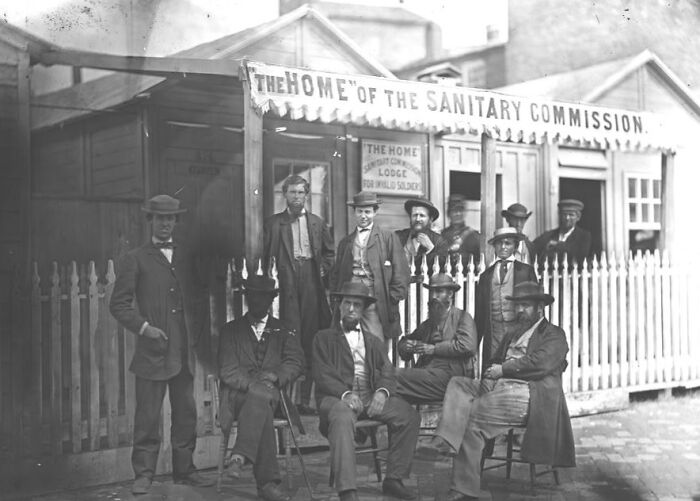
    Washington, D.C. Group Of Sanitary Commission Workers At The Entrance Of The Home Lodge, 1863

    Group of vintage American working class men posing outside a wooden building during their jobs in historical attire

    Library of Congress Report

    David
    Community Member
    5 months ago Created by potrace 1.15, written by Peter Selinger 2001-2017

    The Sanitary Commission held 2 jobs during the civil war. 1) To make sure Army camps met sanitary standards (like outhouses a certain distance from living areas, no vermin in camp kitchens, etc). And 2) Make sure the Contraband Camps (nickname for the camps that the army build for run-away slaves and their families bc before the emancipation proclamation, the legal grounds the US Army used was that the law allowed them confiscate "contraband for the war effort" so they would confiscate the run-aways as "war materials", and then free them right away. Made it all legal in the courts at the time) met sanitary standards for health and safety

    martymcmatrix
    Community Member
    5 months ago Created by potrace 1.15, written by Peter Selinger 2001-2017

    Where else, but(t) Wash-ington??? 🤭

    #36

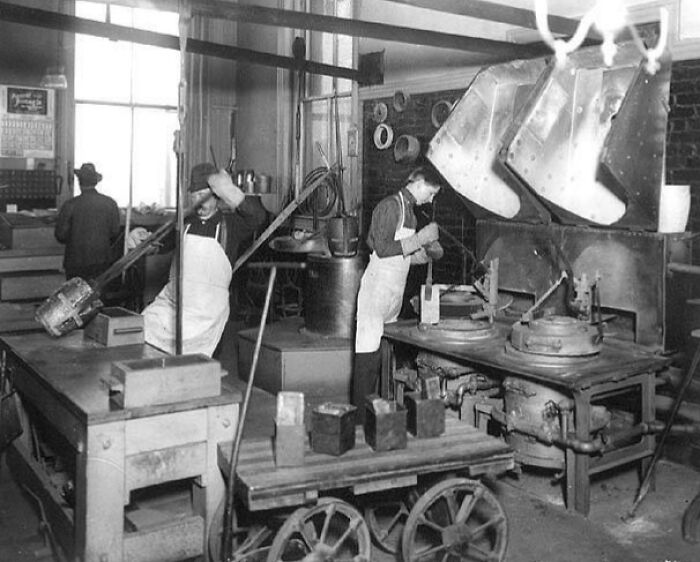
    US Assay Office, Showing Workers In Lab, Seattle, 1905

    Vintage photo of American working class people in factory setting, wearing aprons and handling machinery and tools.

    Asahel Curtis Report

    Kabuki Kitsune
    Community Member
    5 months ago Created by potrace 1.15, written by Peter Selinger 2001-2017

    Gold and Silver assay... though they would also assay for other metals. Basically, they take samples of ore from mines, process it, and then use some rather complex math to figure out how much precious metals is present in various ores, and whether or not a mine was going to be profitable, or not. Some other metals they looked for were lead, copper, iron, and even mercury at some assay offices.

    #37

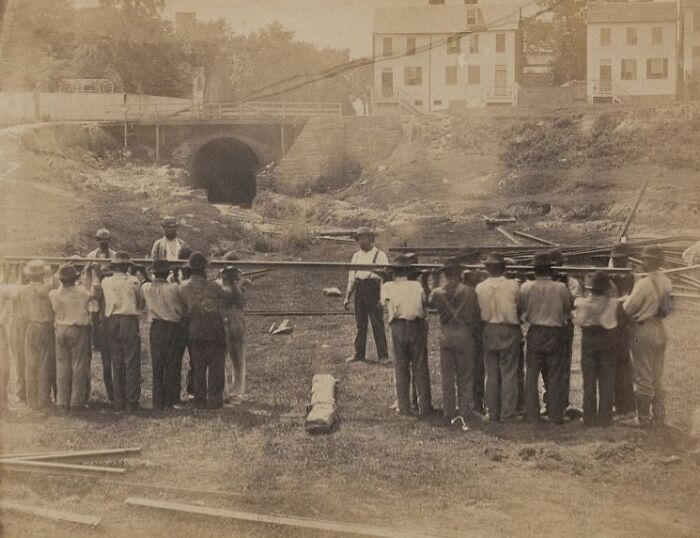
    Railroad Construction Workers Holding Track, 1862 Or 1863

    Group of American working class men carrying wooden beams at a construction site in a vintage black and white photo.

    Russell, Andrew J. Report

    Kabuki Kitsune
    Community Member
    5 months ago Created by potrace 1.15, written by Peter Selinger 2001-2017

    Black work gang, and no photo of a white foreman would put this after the civil war. More likely sometime in the 1890's, into the early 1900's.

    Ravenkbh
    Community Member
    5 months ago Created by potrace 1.15, written by Peter Selinger 2001-2017

    "Now hold still. The train's coming."

    MK-C PHD
    Community Member
    Premium
    5 months ago Created by potrace 1.15, written by Peter Selinger 2001-2017

    Immigrants all!

    TiNaBoNiNa
    Community Member
    5 months ago Created by potrace 1.15, written by Peter Selinger 2001-2017

    Try again. The workers are black. Very few black people arrived in the US as immigrants prior to and during the time period of this photo. Clicking on the link shows the photographer was part of the US Army, so these men were freemen. However, they are almost guaranteed to either have been slaves who escaped North, or they were the descendants of slaves. It's important to know history so that the context of events are not skewed and accepted as fact.

    Load More Replies...
    ADVERTISEMENT
    ADVERTISEMENT
    See Also on Bored Panda
    #39

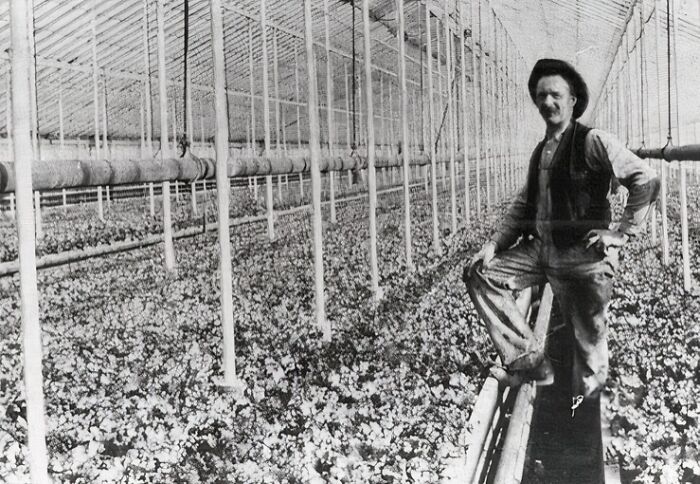
    Amos W. Crane Greenhouses, Toledo, Ohio, 1890

    Vintage photo of an American working class man standing in a greenhouse amidst crops during his job.

    Toledo-Lucas County Public Library Report

    #40

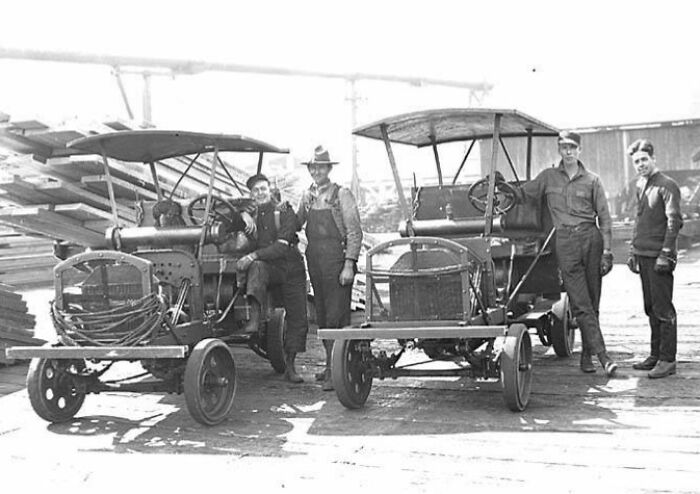
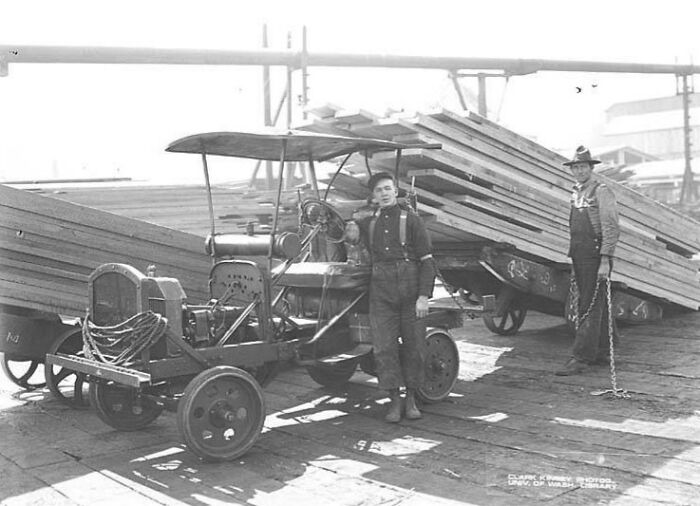
    Mill Jitneys And Workers, Bordeaux Lumber Company, 1919

    Four American working class men posing with vintage motor vehicles at a job site in a black and white photo.

    Clark Kinsey Report

    #41

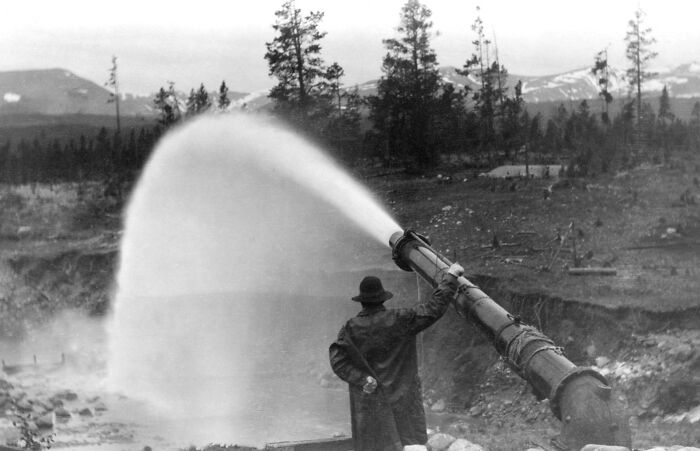
    Placer Mines, Worker Steaming Water To Assist With Mining Operations, Early 1900s

    Vintage photo of an American working class man operating a large water hose at an outdoor job site with trees and mountains in background

    Park County Local History Archive Report

    ADVERTISEMENT
    ADVERTISEMENT
    See Also on Bored Panda
    #43

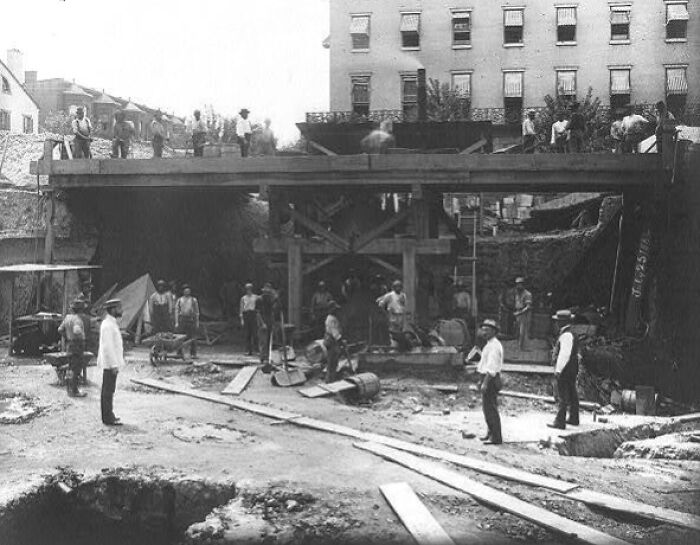
    Construction Of Lower Level Of The State, War & Navy Dept., Close-Up View Of Workers In And Above Pit, 1884

    Vintage photo of American working class people laboring at a construction site beneath a bridge in an urban setting.

    Library of Congress Report

    TiNaBoNiNa
    Community Member
    5 months ago Created by potrace 1.15, written by Peter Selinger 2001-2017

    19 years post-Civil War. It was the hard work (for little pay) of these men who built these government buildings.

    #44

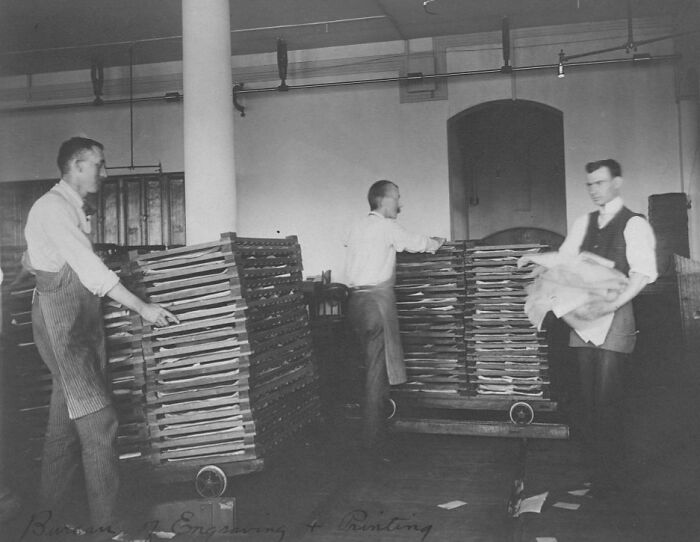
    Workers Moving Newly Printed Currency Into A Drying Box Where Sheets Will Dry Before The Next Wetting And Printing At The Bureau Of Engraving & Printing, 1890

    Three American working class men handling stacks of trays in a vintage industrial setting during their jobs.

    Johnston, Frances Benjamin Report

    #45

    Workers Taking Mucilaged Sheets Of Postage Stamps From The Drying Box In The Gumming And Drying Room Of The Stamp Division At The Bureau Of Engraving & Printing, 1895

    Vintage photo of American working class women in a printing office, focused on their jobs and tasks.

    Johnston, Frances Benjamin Report

    TiNaBoNiNa
    Community Member
    5 months ago Created by potrace 1.15, written by Peter Selinger 2001-2017

    I had to look that word up. "mucilage - a viscous secretion or bodily fluid. a polysaccharide substance extracted as a viscous or gelatinous solution from plant roots, seeds, etc., and used in medicines and adhesives. North American: an adhesive solution; gum or glue. From Latin "mucus."

    ADVERTISEMENT
    ADVERTISEMENT
    See Also on Bored Panda
    #46

    Sanitation Worker, Toledo, Ohio, Around 1890

    Vintage photo of American working class people on a cobblestone street with horse-drawn carriages and historic buildings.

    Toledo-Lucas County Public Library Report

    #47

    Interior View Of Northville Hatchery, Clark Boxes In Foreground, 1897

    Vintage photo of American working class people focused on their jobs inside a factory with wooden machinery.

    University of Washington Report

    MK-C PHD
    Community Member
    Premium
    5 months ago Created by potrace 1.15, written by Peter Selinger 2001-2017

    Apparently fish! https://patch.com/michigan/northville/fish-hatchery-gave-northville-national-prominence

    #48

    Workers With A Mill Jitney Hauling Lumber, Bordeaux Lumber Company, 1919

    Two vintage American working class men with old truck and large stacks of wooden planks at a job site.

    University of Washington Report

    TiNaBoNiNa
    Community Member
    5 months ago Created by potrace 1.15, written by Peter Selinger 2001-2017

    Thomas Bordeaux ran a logging & milling operation in Thurston County, WA, which is where Olympia is. You can see his house here: https://www.millionairesrow.net/80614thE.html#:~:text=Having%20mediocre%20luck%20with%20mining,in%20the%20Lumber%20Mercantile%20Company.

    #49

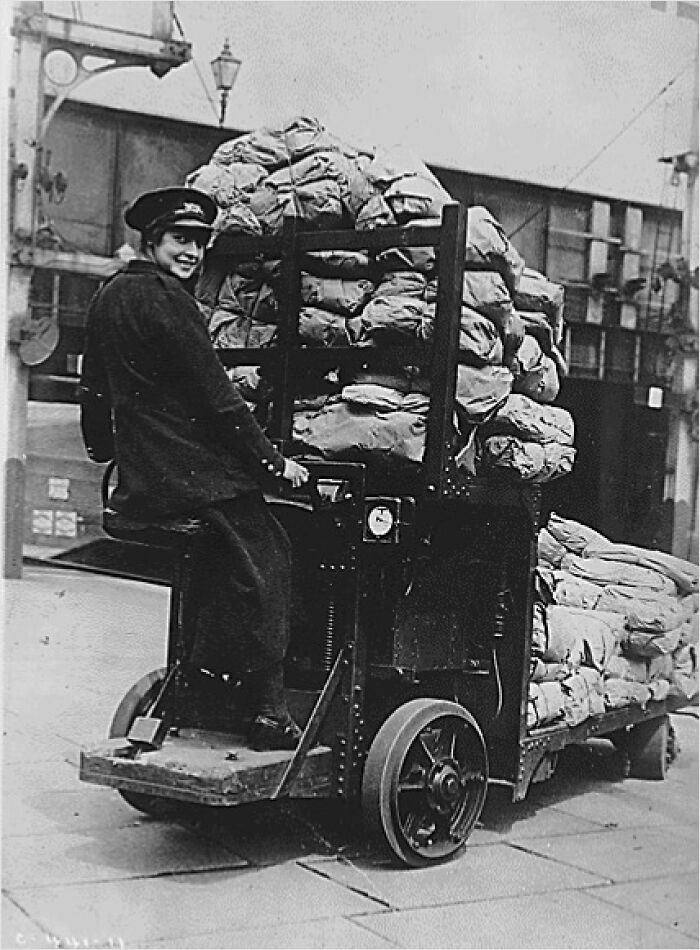
    Girl Driver On A Motor Mail Truck, Between 1893 - 1945

    Vintage photo of American working class man transporting bundled sacks on industrial cart during job.

    National Archives and Records Administration Report

    Hippopotamuses
    Community Member
    5 months ago (edited) Created by potrace 1.15, written by Peter Selinger 2001-2017

    Reverse image search reveals that this was taken in England between 1914 - 1918 https://www.iwm.org.uk/collections/item/object/205288472

    Kabuki Kitsune
    Community Member
    5 months ago Created by potrace 1.15, written by Peter Selinger 2001-2017

    WW1. Sadly, the women who entered the workforce during WW1 have been grossly overshadowed by the women who did the same during WW2. You'd be surprised how many people don't realize that WW2 wasn't the first time that happened.

    Load More Replies...
    MK-C PHD
    Community Member
    Premium
    5 months ago Created by potrace 1.15, written by Peter Selinger 2001-2017

    During WWI women were first called on to do “men’s work” to keep things going.

    Forrest Hobbs
    Community Member
    5 months ago Created by potrace 1.15, written by Peter Selinger 2001-2017

    Some women have been doing so-called "men's work" since prehistory. 🤨 For example: how do you think the farms belonging to Vikings carried on working when the men were off raiding?

    Load More Replies...
    ADVERTISEMENT
    ADVERTISEMENT
    See Also on Bored Panda
    #50

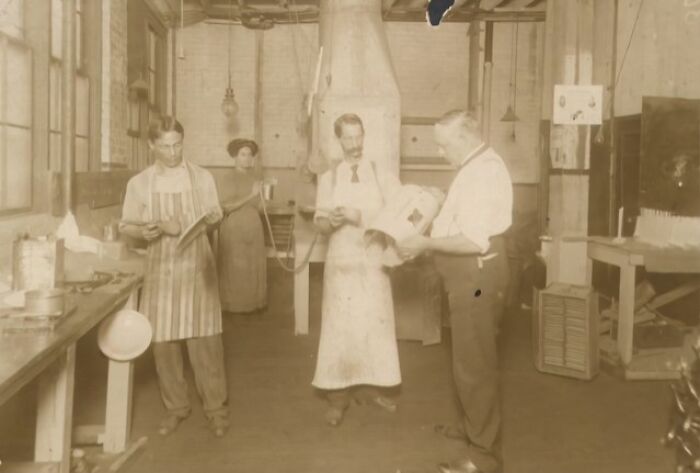
    Toledo Computing Scale Company, Toledo, Ohio, 1905

    Vintage photo of American working class people in a workshop, wearing aprons and engaged in their jobs.

    Toledo-Lucas County Public Library Report

    Bill Swallow
    Community Member
    5 months ago Created by potrace 1.15, written by Peter Selinger 2001-2017

    " 'No Springs! Honest Weight!' is the claim that we make..."

    Grace Sssssss
    Community Member
    5 months ago Created by potrace 1.15, written by Peter Selinger 2001-2017

    Those were everywhere when I was young! The pharmacy, the supermarket checkout...

    #51

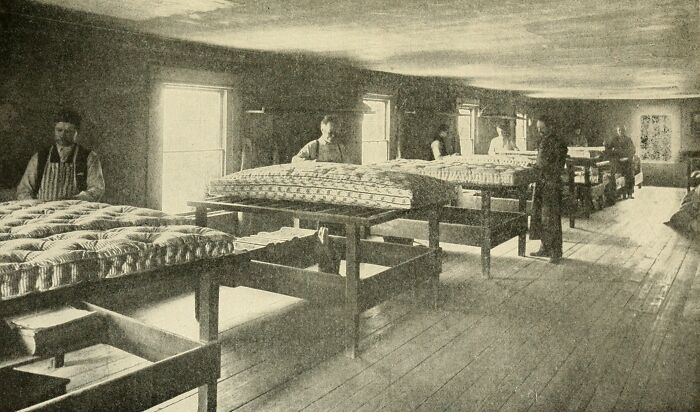
    Report Of The Commission Of 1906 To Investigate The Condition Of The Blind In The State Of New York, 1907

    Vintage photo of American working class people assembling mattresses in a workshop during the early 20th century.

    Internet Archive Book Images Report

    M O'Connell
    Community Member
    5 months ago Created by potrace 1.15, written by Peter Selinger 2001-2017

    If anybody wants to page through that report, its 700 pages. https://babel.hathitrust.org/cgi/pt?id=hvd.32044096987557&seq=7

    Timbob
    Community Member
    5 months ago Created by potrace 1.15, written by Peter Selinger 2001-2017

    And this photo relates, how ?

    #52

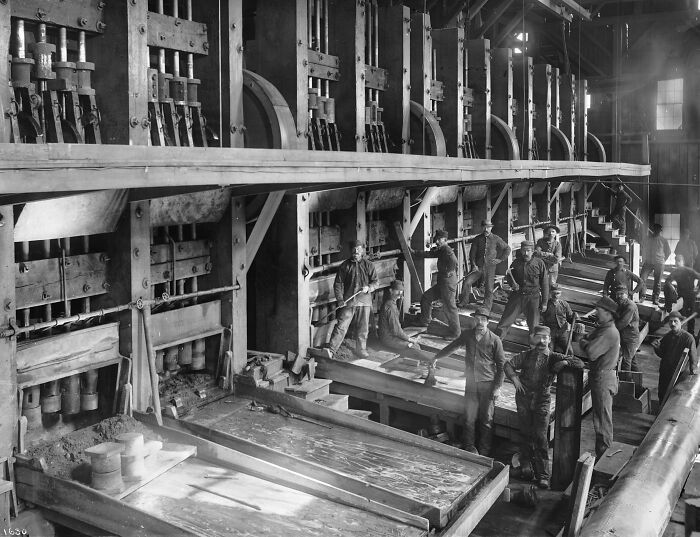
    Workers In A 100-Stamp Mill, California, 1900

    Vintage black and white photo of American working class men operating heavy machinery inside an industrial factory setting.

    Pierce, C.C. (Charles C.) Report

    Susan Reid Smith
    Community Member
    5 months ago Created by potrace 1.15, written by Peter Selinger 2001-2017

    Rock is being pulverized so gold can be extracted. That was hard deafening work.

    O. Puntia
    Community Member
    5 months ago Created by potrace 1.15, written by Peter Selinger 2001-2017

    plus the mercury and cyanide

    Kabuki Kitsune
    Community Member
    5 months ago (edited) Created by potrace 1.15, written by Peter Selinger 2001-2017

    1910 would be more mercury being used than cyanide. Cyanide didn't really become popular in gold processing until around 1920. Some operations were using it in 1910, sure, but it wasn't common.

    Load More Replies...
    Mike F
    Community Member
    5 months ago Created by potrace 1.15, written by Peter Selinger 2001-2017

    There is a small one in Dahlonega GA that you can look over. Don't know if they fire it up though.

    #53

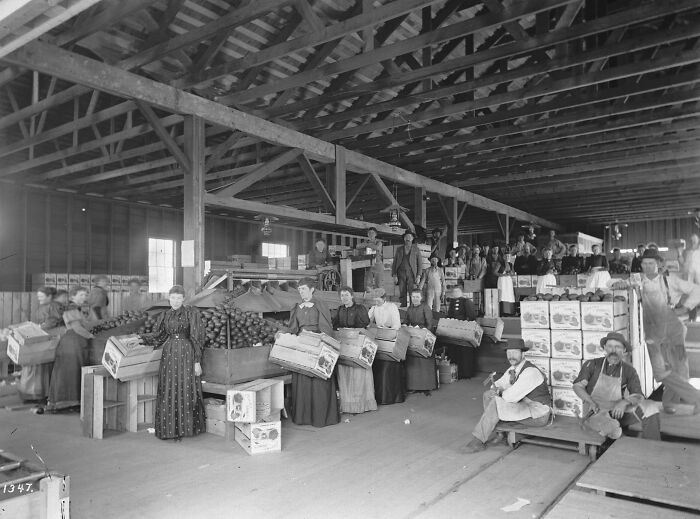
    Interior Of Packing House, Probably Covina, California, 1900

    Vintage photo of American working class people packing and handling produce inside a large warehouse during their jobs.

    USC Digital Library Report

    Brittania Kelli
    Community Member
    5 months ago Created by potrace 1.15, written by Peter Selinger 2001-2017

    Imagine doing such physical labour while wearing all the layers of clothing they had to wear back then? Bloomers, petticoats, corsets or other boned shapewear, tight belt and all buttoned up to your chin and stockings down to your toes. How did they not faint constantly?

    Bryn
    Community Member
    5 months ago Created by potrace 1.15, written by Peter Selinger 2001-2017

    Because, believe it or not, Cotton is cooler than our synthetic fabrics of today. There's a great historian who also does a lot of wearing of historical pieces and she got asked this on tiktok and explains it well. It was hot but having pure cotton clothing helps a great deal.

    Load More Replies...

    ADVERTISEMENT
    ADVERTISEMENT
    See Also on Bored Panda
    #54

    A Group Of Sweatshop Workers, New York, 1908

    Vintage photo of American working class people sewing and tailoring clothes in a workshop setting.

    Lewis W. Hine Report

    Geoffrey Scott
    Community Member
    5 months ago Created by potrace 1.15, written by Peter Selinger 2001-2017

    Where immigrants start before being accepted into society.

    Bill Swallow
    Community Member
    5 months ago Created by potrace 1.15, written by Peter Selinger 2001-2017

    And over 100 years later, they're still waiting for that acceptance.

    Load More Replies...

    MK-C PHD
    Community Member
    Premium
    5 months ago Created by potrace 1.15, written by Peter Selinger 2001-2017

    Where Triangle Shirtwaist Factory changed history and delivered some very important worker protections!! Most of the workers were recently arrived immigrants.

    #55

    Railroad Construction Workers Straightening Track, 1862 Or 1863

    Group of vintage American working class men gathered at a construction site, engaged in their jobs outdoors.

    Russell, Andrew J. Report

    Kabuki Kitsune
    Community Member
    5 months ago Created by potrace 1.15, written by Peter Selinger 2001-2017

    Post war, somewhere in the south. During reconstruction, where rails that were pulled up and destroyed by Union forces, need to be straightened.

    Michael None
    Community Member
    5 months ago Created by potrace 1.15, written by Peter Selinger 2001-2017

    They should have burned down every building in the south and erased every trace of the confederacy. Maybe then we wouldn't have to keep tearing down statues of loser generals.

    Load More Replies...

    #56

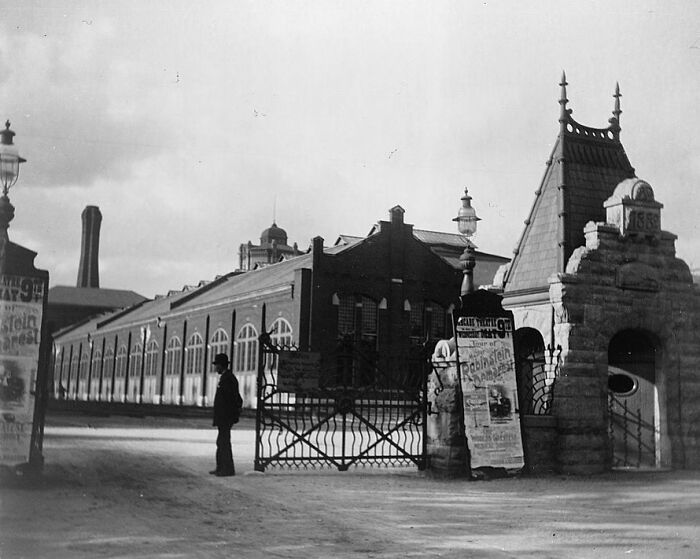
    Workers' Gate At Pullman Company Railroad Yard During Strike, 1893 Or 1894

    Vintage photo of American working class man standing outside an industrial building near gated entrance in early 20th century.

    Library of Congress Report

    #57

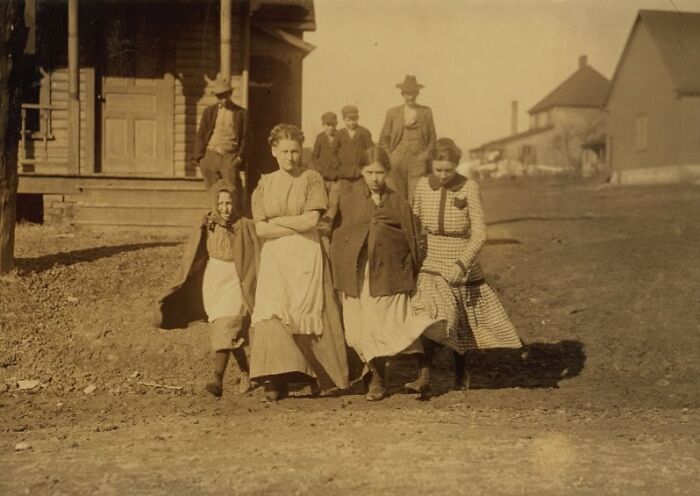
    Workers Of The Knoxville Cotton Mill In Knoxville, Tennessee, USA, 1910
    Vintage photo of American working class people standing outside homes, dressed in early 20th century work attire.

    Lewis Hine Report

    ADVERTISEMENT
    ADVERTISEMENT