Get Premium
Dark mode theme is available exclusively for premium users. Learn more about the benefits of subscribing.
No fees, cancel anytime.

 Dark Mode Ad-Free Browsing Unlimited Content
 Ad-Free Browsing Unlimited Content Dark Mode
Join 1.2 million Panda readers who get the best art, memes, and fun stories every week!
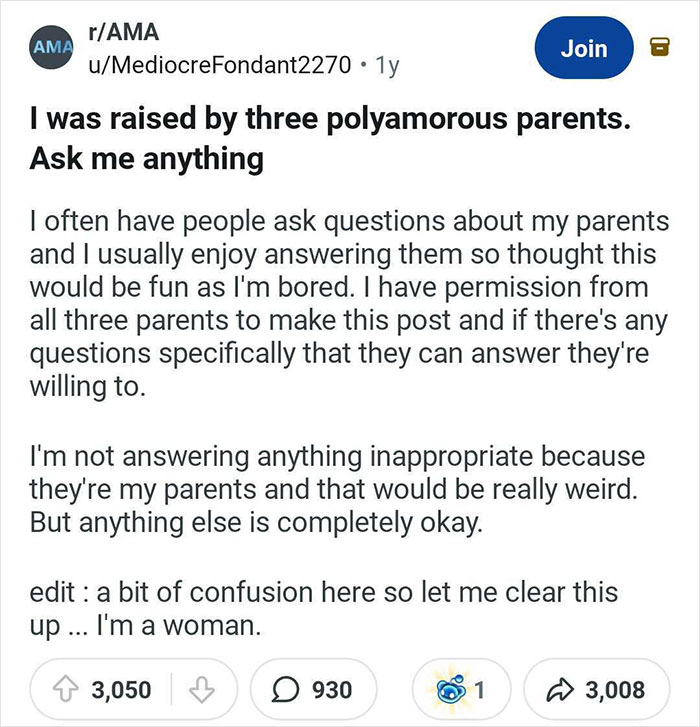
Love, commitment and parents don't always come in pairs. That's the message from one woman who grew up with a trio of polyamorous parents: Mom, Dad and Mama... What might seem strange, unique or awkward to others is ordinary life to her.
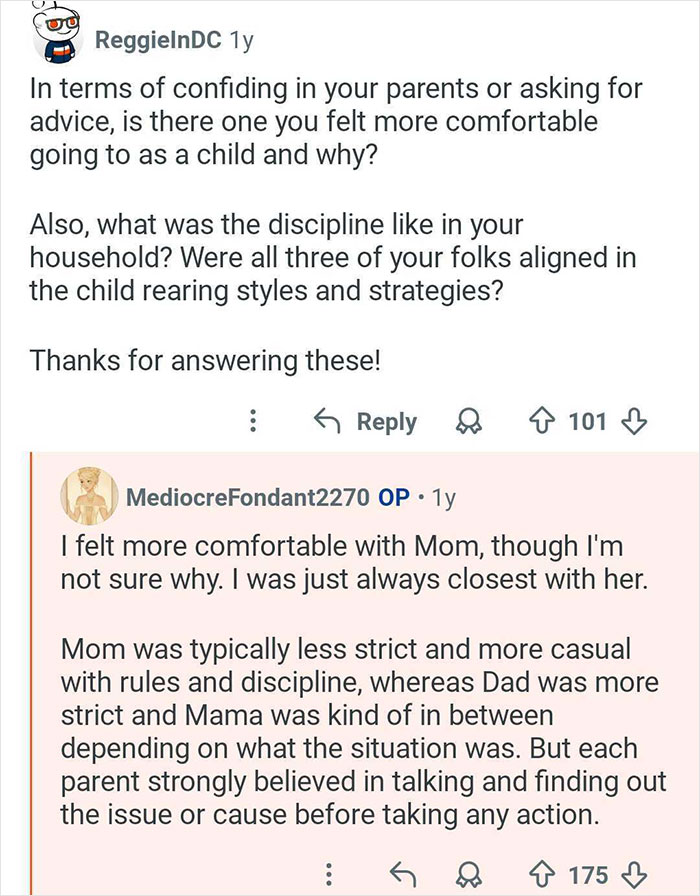
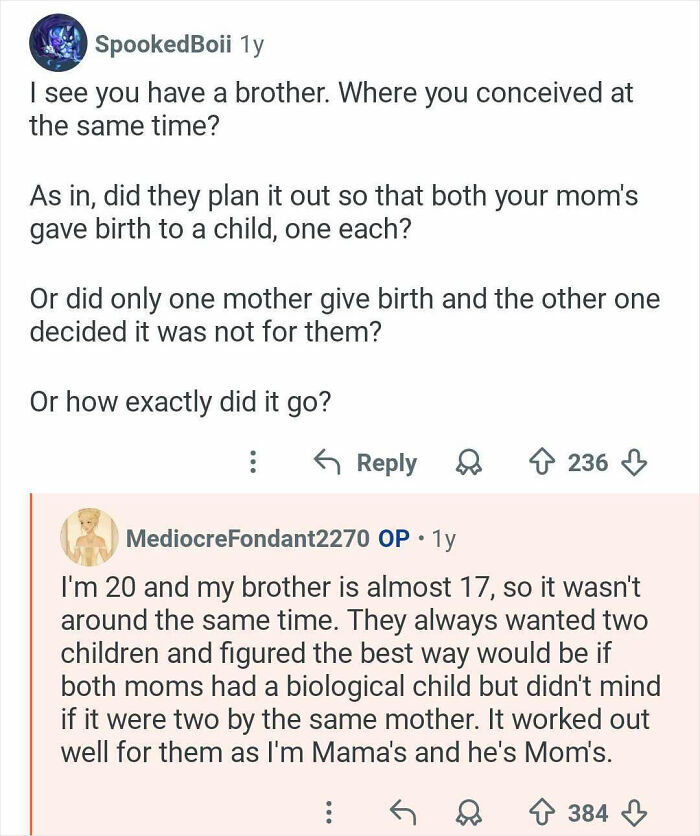
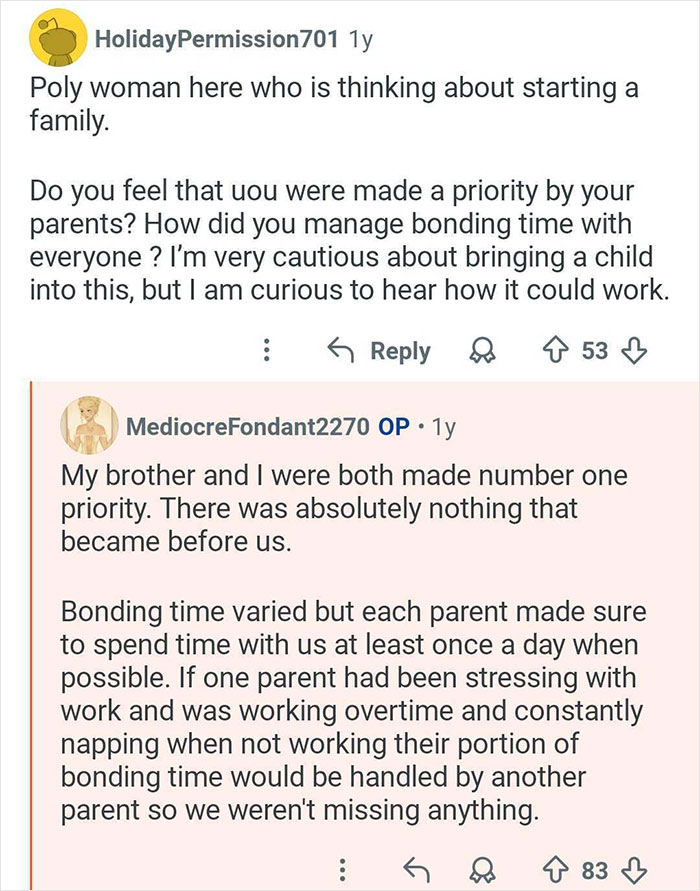
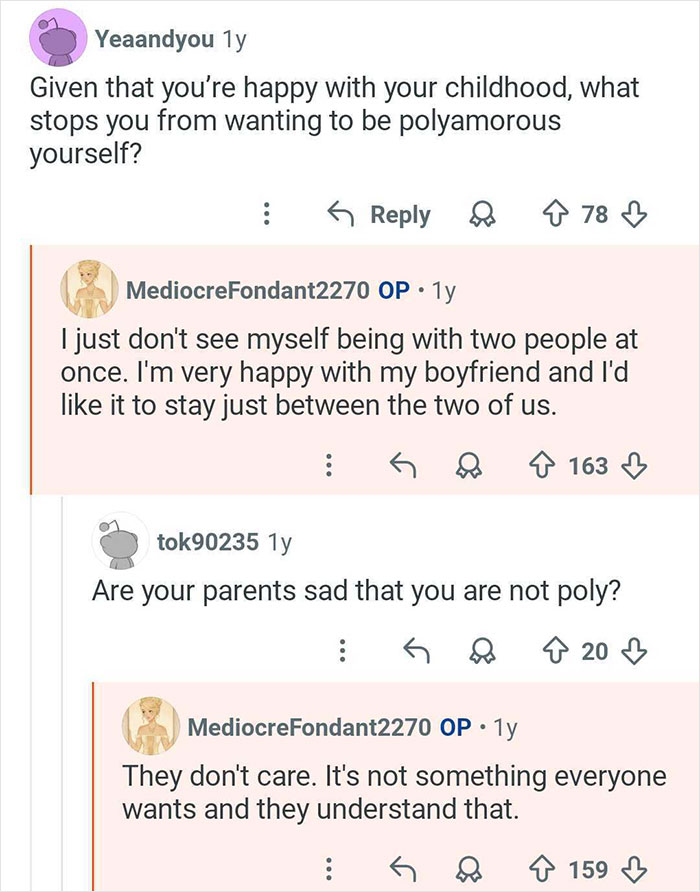
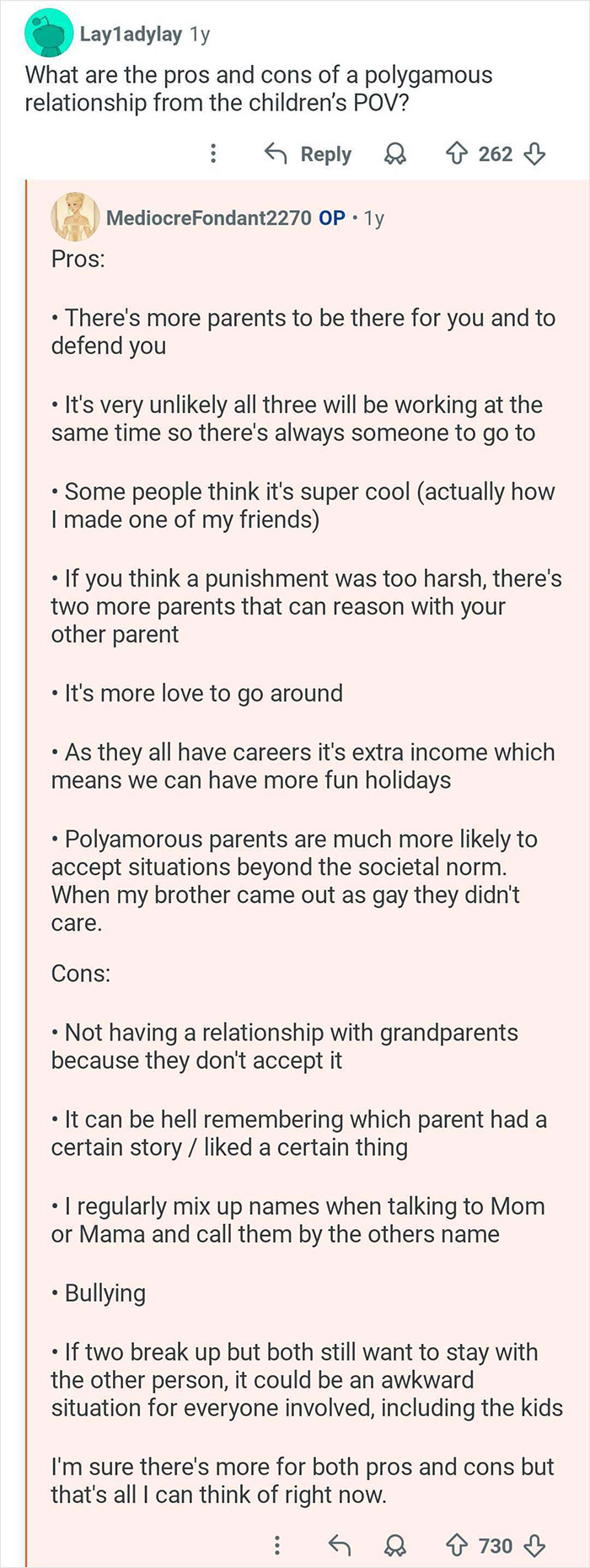
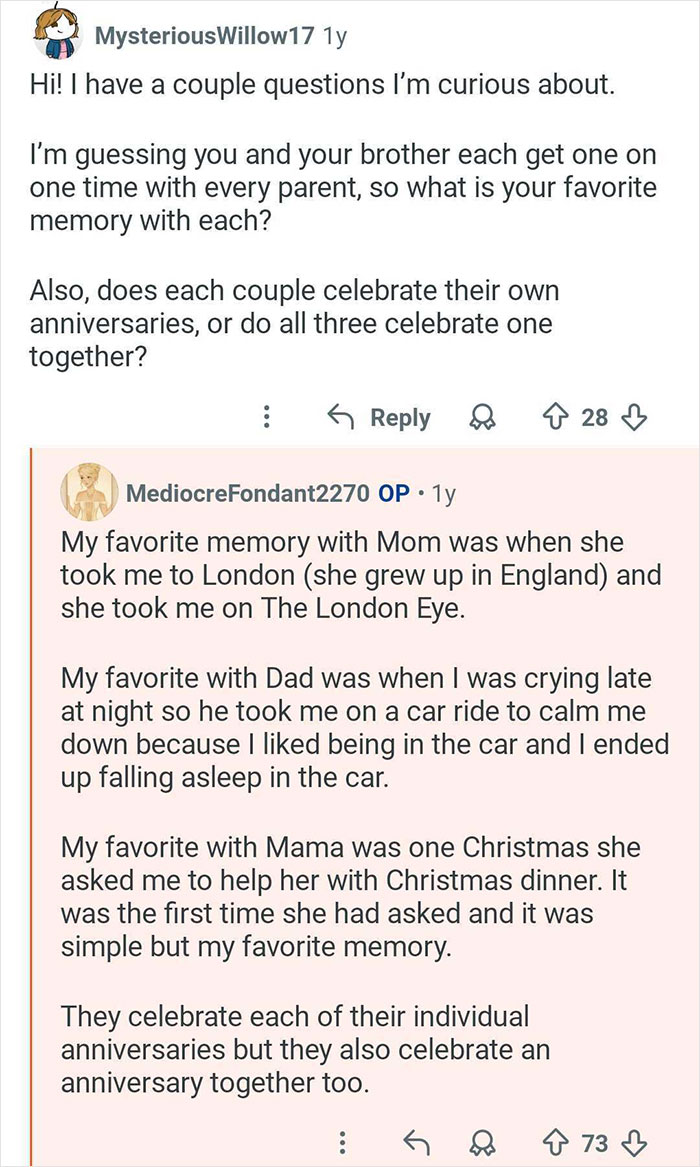
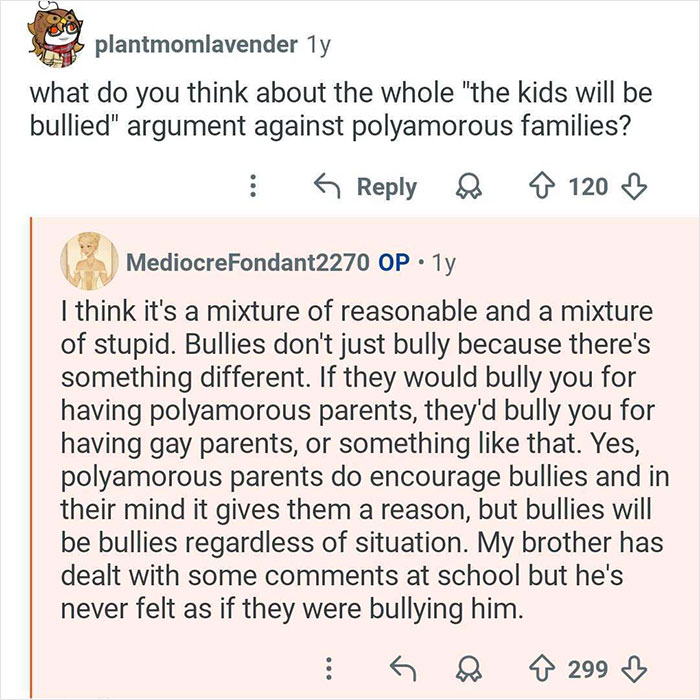
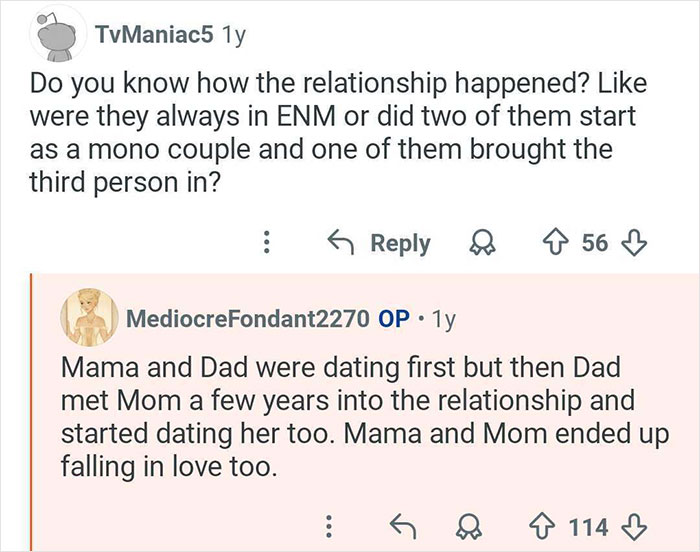
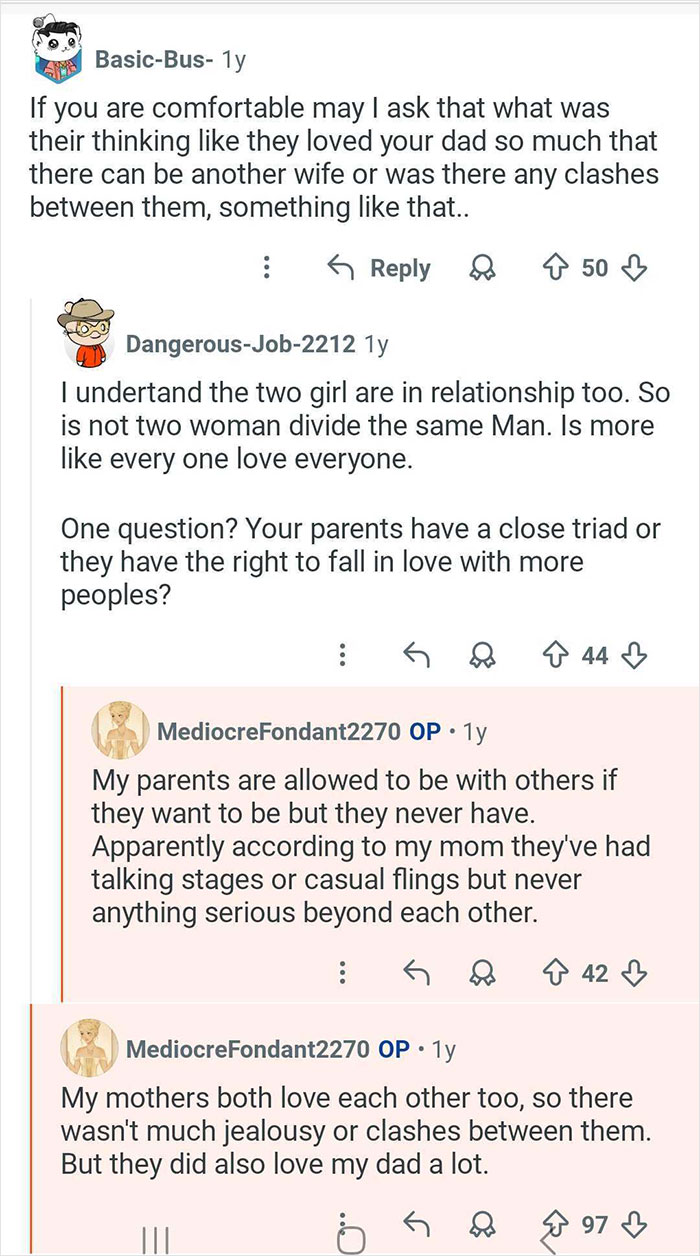
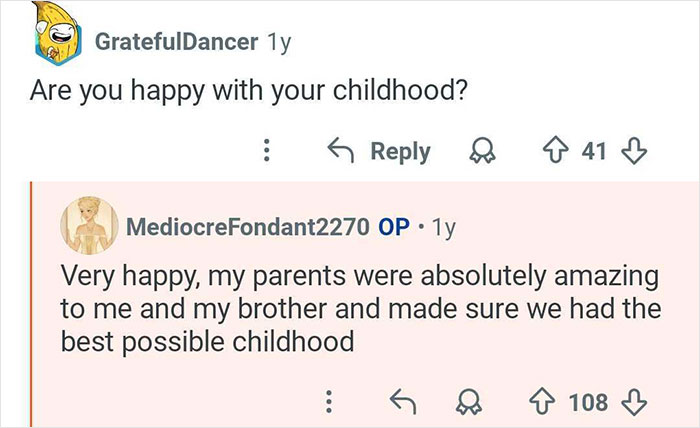
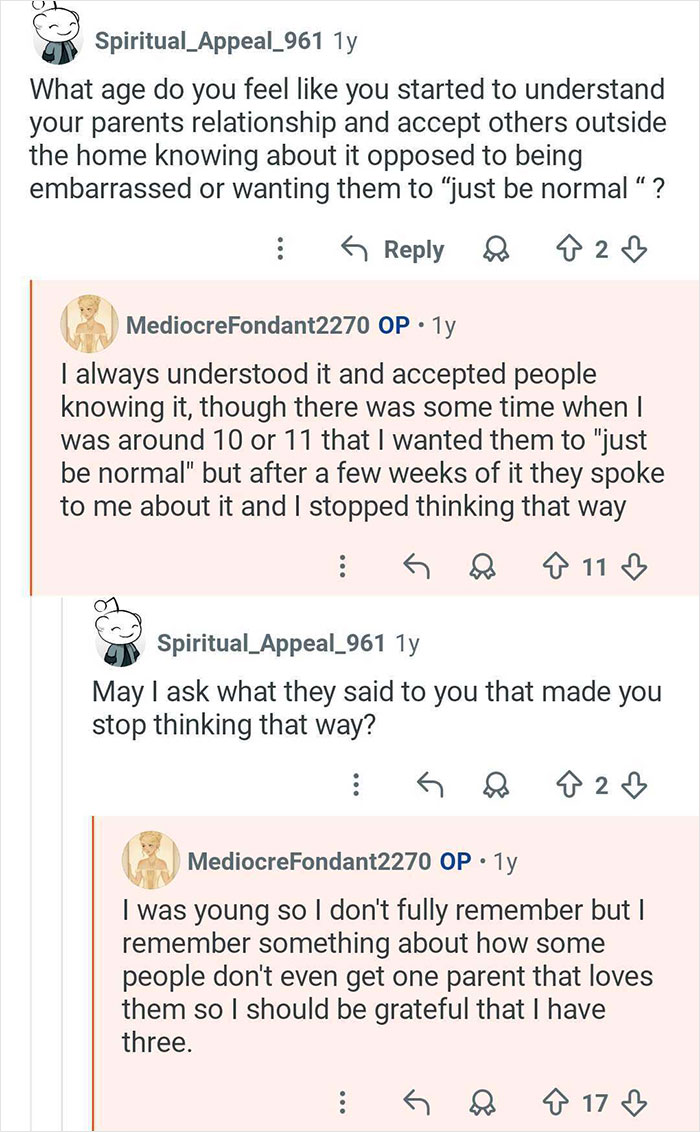
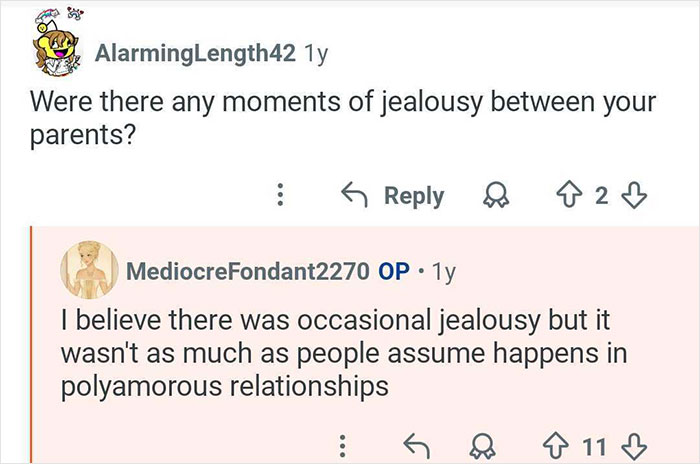
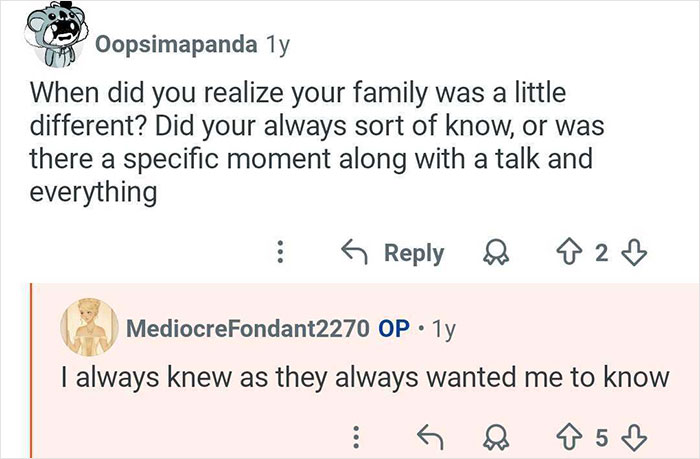
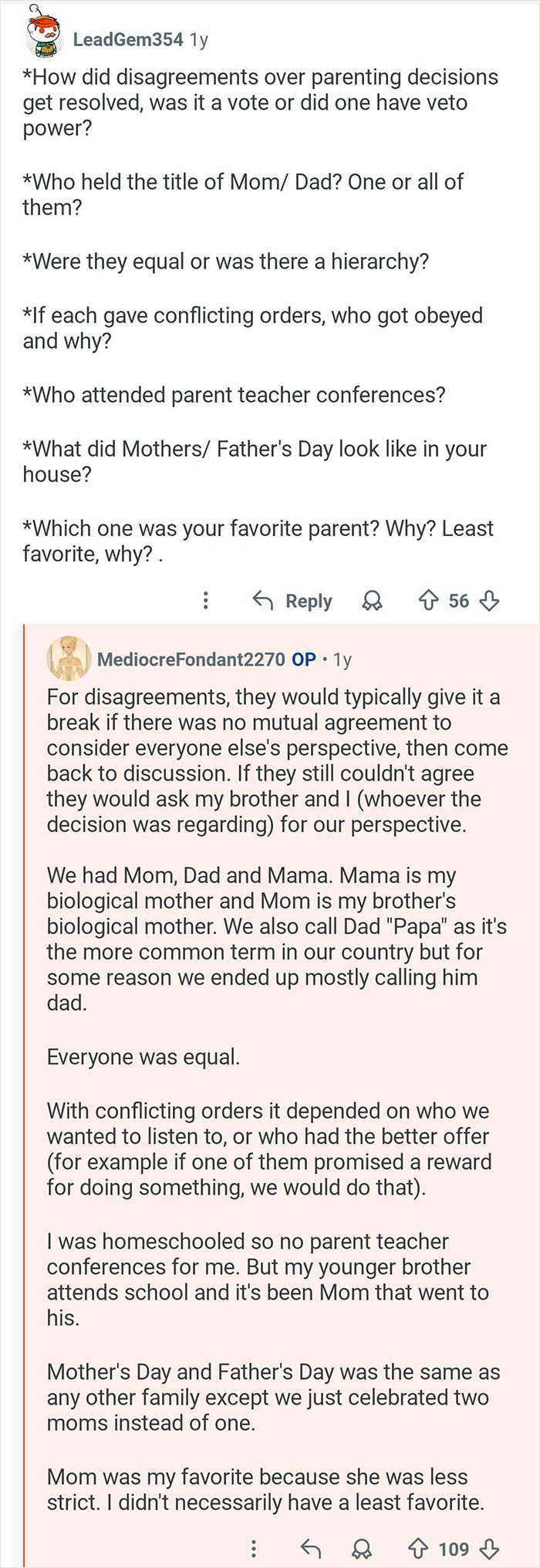
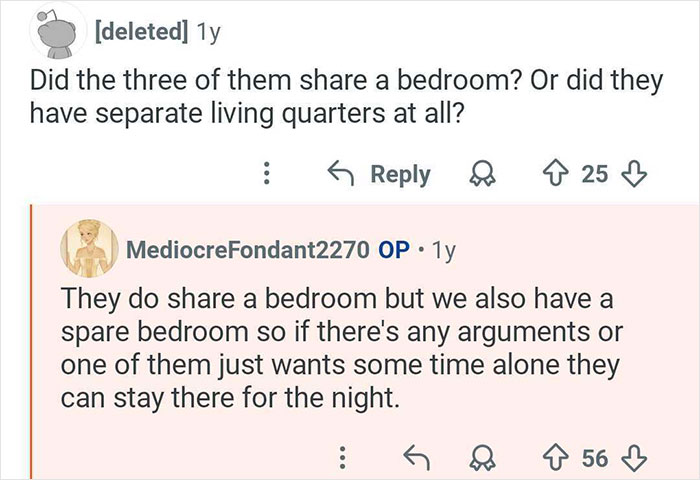
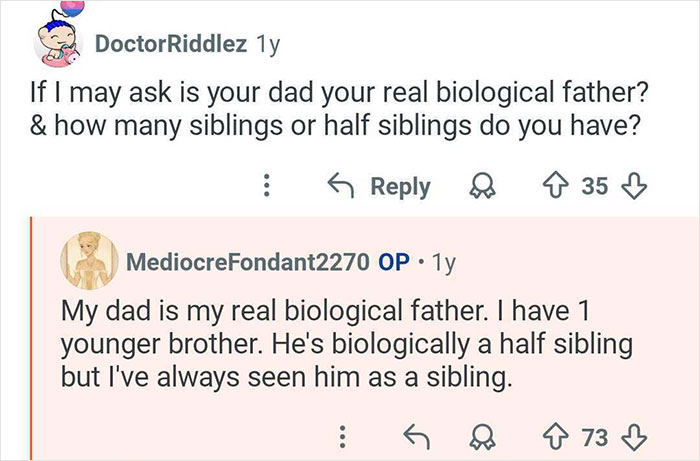
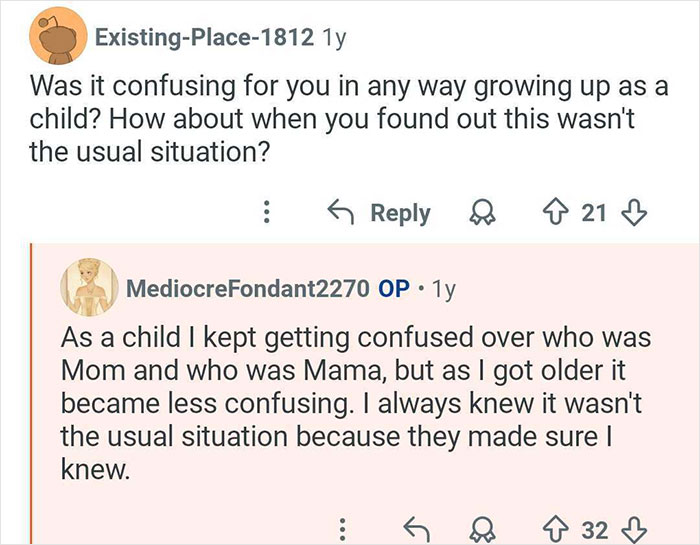
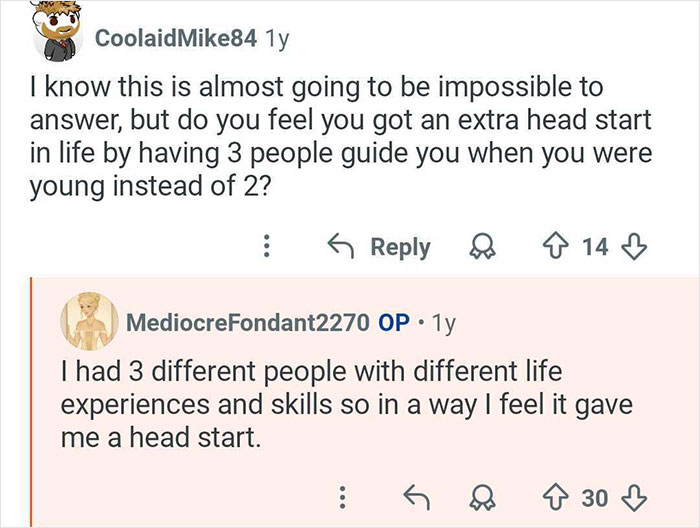
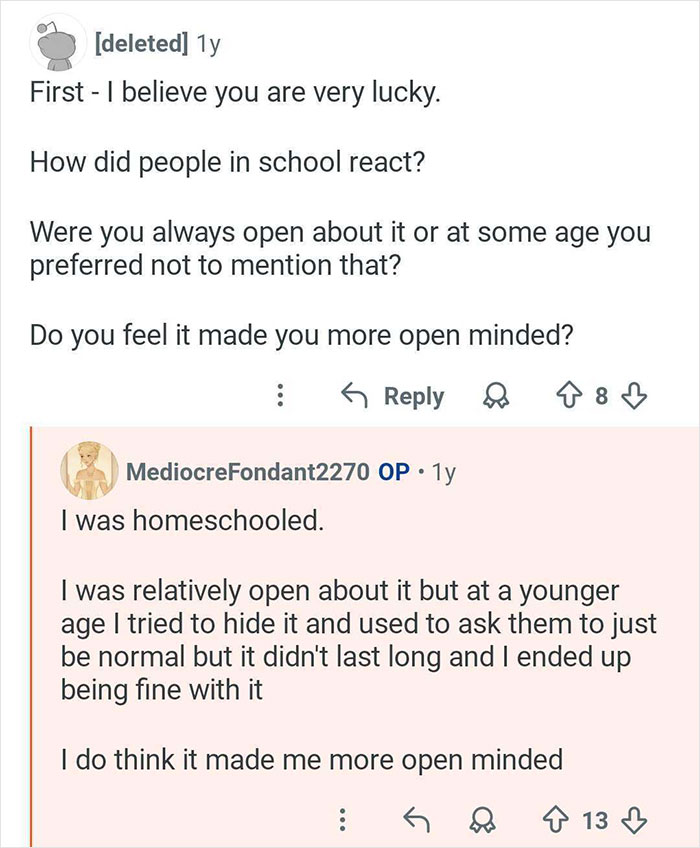
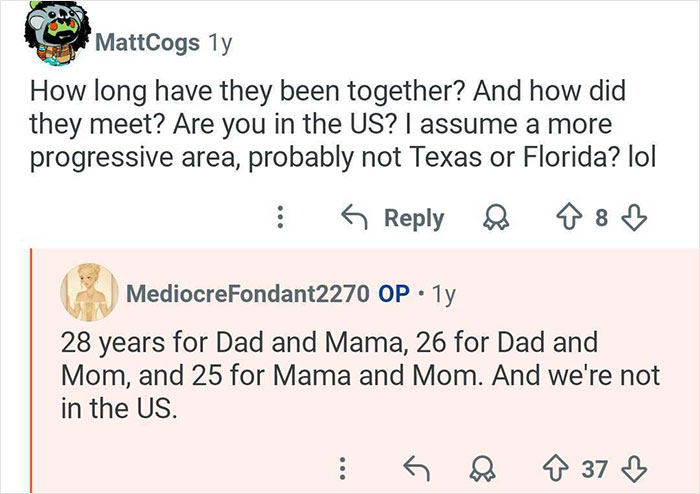
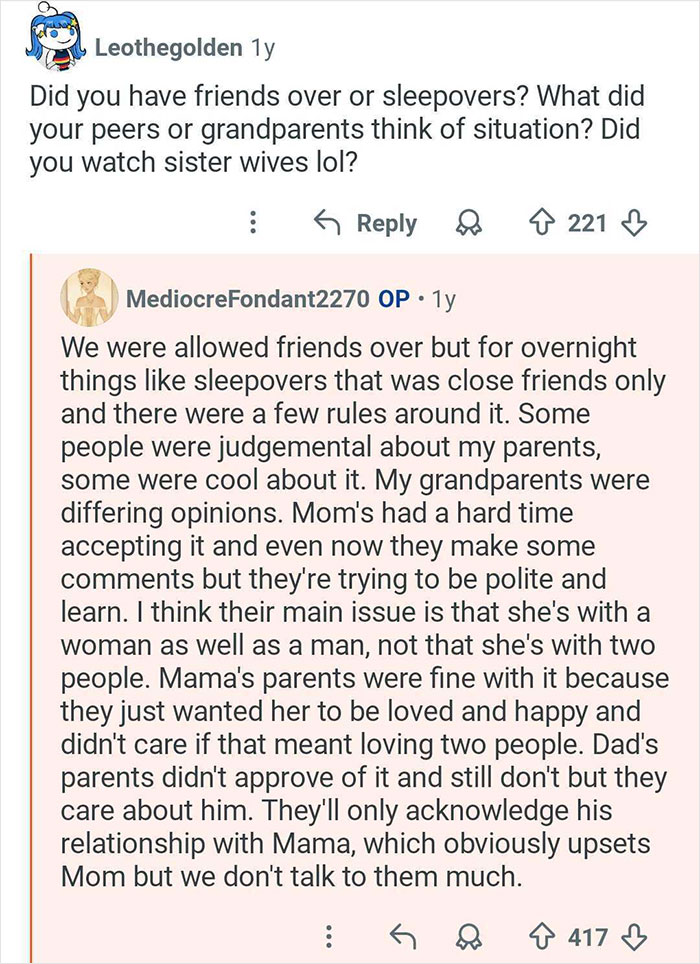
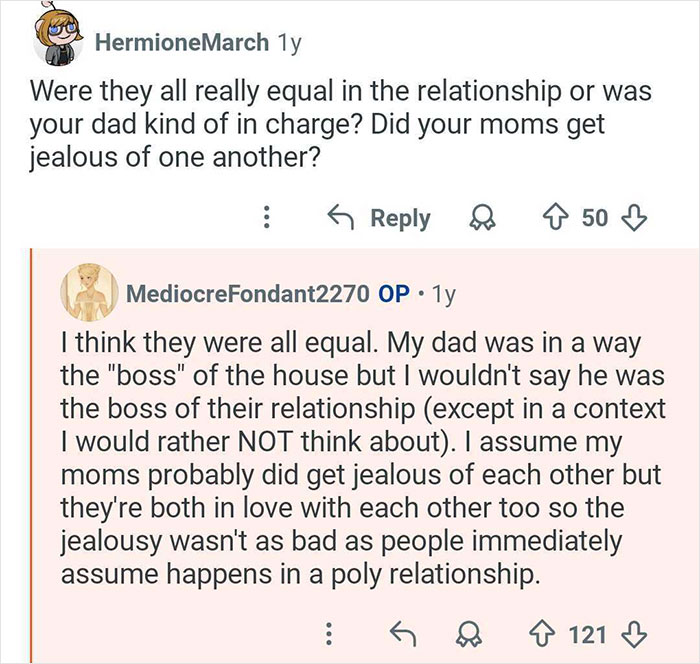
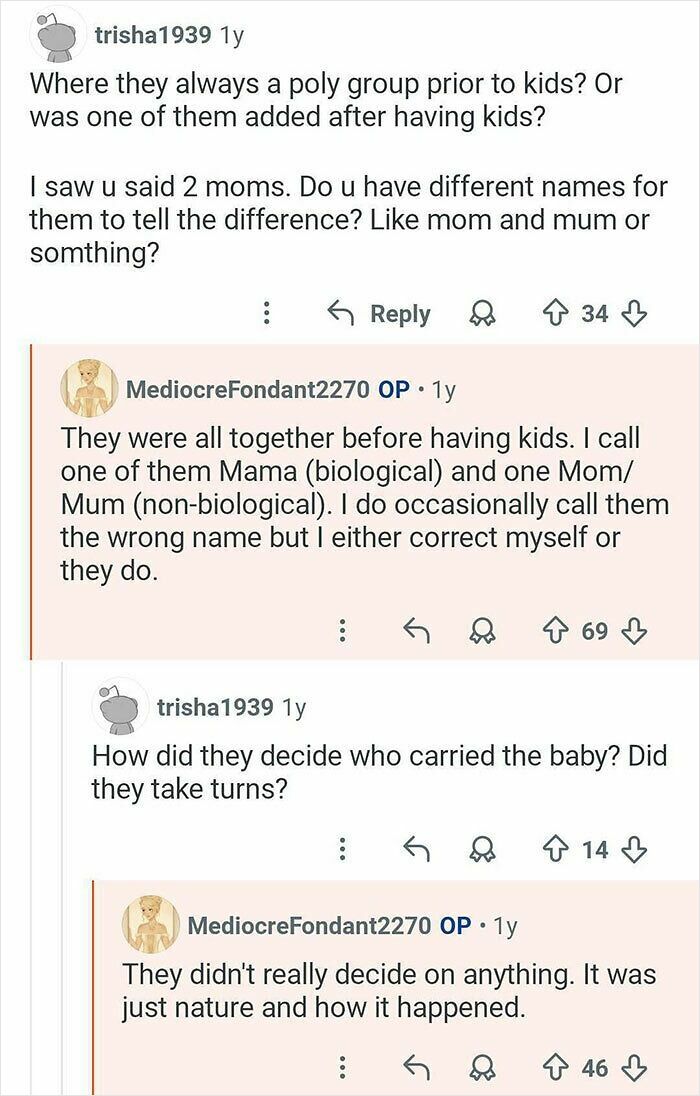
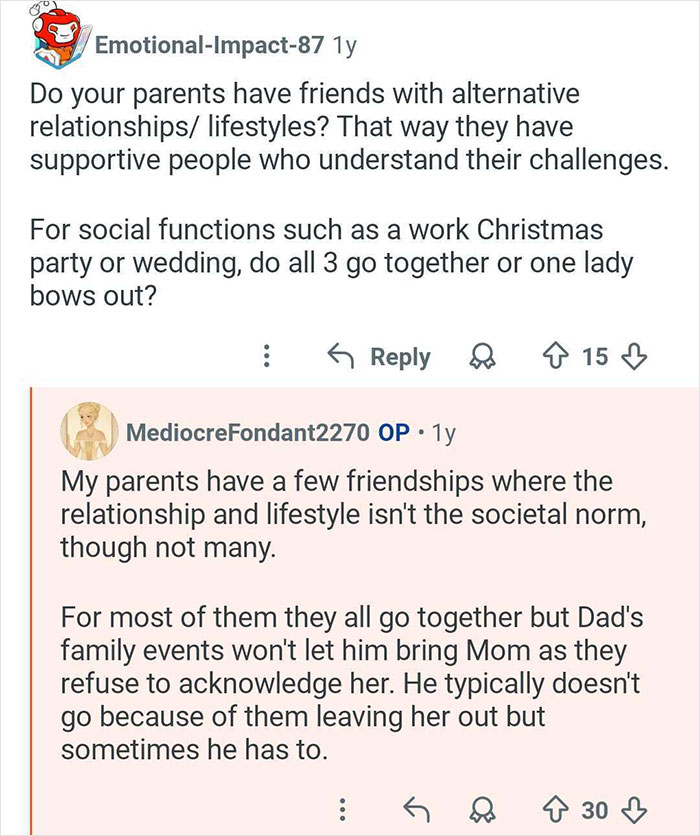
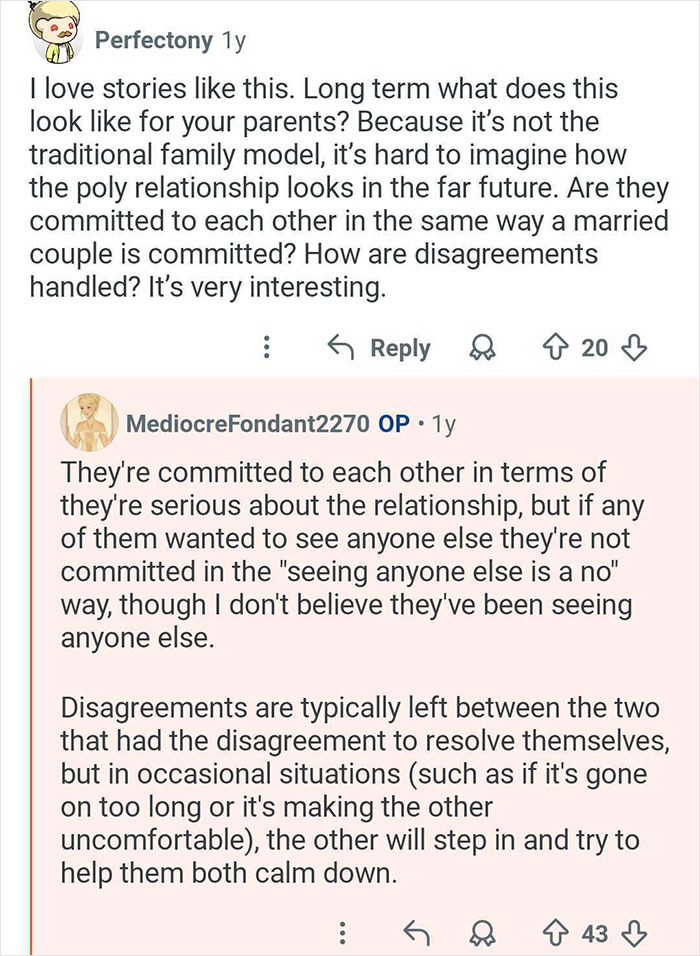
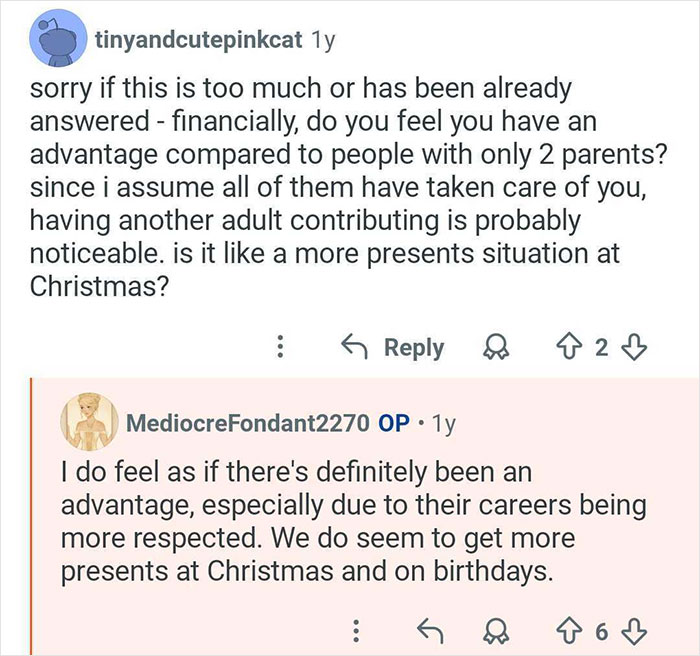
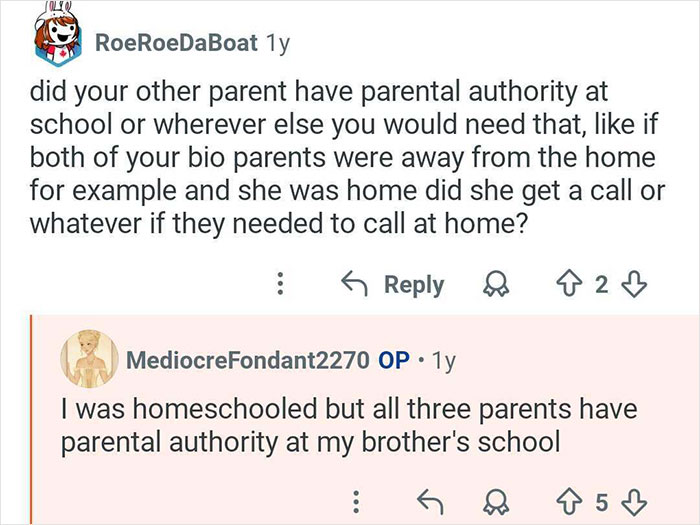
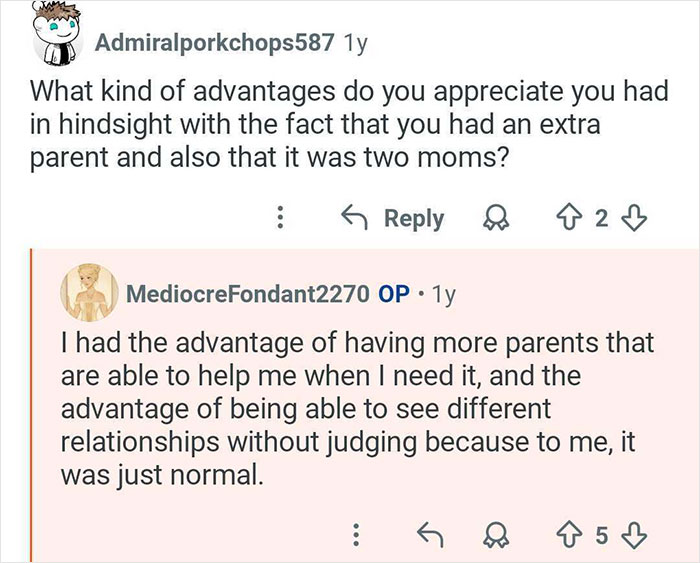
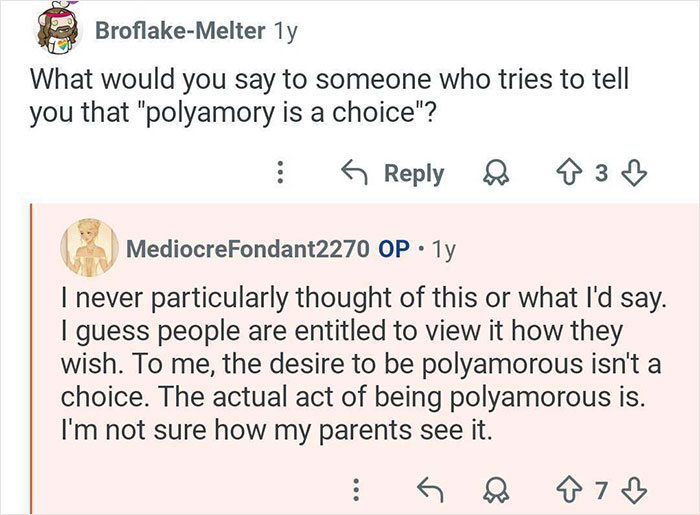
In a fascinating Q&A, the woman has revealed what it was really like living in a house where three was not a crowd. She invited strangers to ask her anything except the inappropriate questions, and they didn't hold back. From the pros and cons, to the practicalities, and the original love story, the woman shared a candid look into her upbringing.
Bored Panda has rounded up the best questions and answers for you to delve into while you appreciate the diversity of families nowadays. We also put together some expert opinions on parenting in a polyamorous relationship. You'll find that between the images.
This post may include affiliate links.

This is just a personal opinion, not about this family because she seems happy BUT after watching too many documentaries , YouTube shows and reading Q&As of some kids from families like this, it’s —not always— fair on the kids. SOME of the kids have said they hated growing up like that, their parent/s were extremely abúsive and it messed with their heads thinking they HAD to grow up and live the same way. Those are the wrong kinds of families. *JUST MY OPINION.*
Polyamory is a relationship style that allows individuals to develop multiple romantic relationships simultaneously.
"Some people practicing polyamory have a 'primary partner' and 'secondary partners,' while others prefer non-hierarchical relationship structures," explains a 2024 research paper, which looked into children's views on their polyamorous parents.
Polyamory falls under the consensual non-monogamy (CNM) umbrella and while many CNM-practicing parents are openly out to their children, others prefer keeping their intimate life separate from family life and haven't informed their children.
An earlier study, conducted over a 15-year period with 22 American children of polyamorous parents looked into the pros and cons of this unique family dynamic.
"The presence of more than two adults in the family environment provides several advantages for the children, such as getting more attention, care and time from significant adults, receiving more gifts at special events and being exposed to a greater number of positive role models to draw inspiration from," the researchers found. "It also allows them to create family ties with other children beyond biogenetic kinship and have more siblings."
Elisabeth Sheff, the author of The Polyamorists Next Door: Inside Multiple-Partner Relationships and Families, revealed that in cases where parents and their romantic partners all lived under the same roof, there were some negative aspects.
For example, some children—especially teenagers—felt they didn't have enough privacy in the home, there was jealousy between children in the household, and there were struggles adapting to different parenting styles.
A few of the kids also reported feeling at risk of stigmatization because of their parents’ relationship style. This led to resentment towards their parents.
When it comes to adult kids of openly polyamorous parents, Sheff's article in Psychology Today reveals that many are happy or neutral about their parents' relationships, especially if the kids are socially liberal and non-religious.
However, those who are religious, personally conservative, have been cheated on or have cheated on someone themselves, or feel that CNM played some negative role in their parents’ divorce are less likely to celebrate their parent's or parents' polyamory.
"For those adult children, the perceived benefits that polyamorous folks report for aging with multiple partners are either invisible or inadequate compensation for the damage the kids see as resulting from CNM," explains Sheff.

Don’t live the life you want or don’t call your child want you want because they’ll be bullied are such dreadful arguments. Children aren’t born to be bullies. Have you seen children from cultures where they still all play together, all the different ages etc, and there’s no bullying? Children bully because they are under stress from the system and the environment they find themselves in.
So what advice does the expert have for children who are on the fence about their parent/s' polyamorous relationship?
"Some adults will really click with you, and you will enjoy each other’s company. Other adults, not so much, and you might not want to connect with them at all," says Sheff, adding that it is up to the child how much emotional connection they wish to develop with the adults they meet through their parents, whether via dating or not.

I hope this was only a problem if someone felt it just *had to become* a problem - and also, I hope nobody felt that needed to happen.
Sheff says the real challenge comes when a parent really likes someone who the child would prefer not to hang out with. "Like any kid interacting with a parent’s date or step-parent, you might come to like that adult more over time," the author notes. "You can also choose to spend less time around them when you grow up."
Sheff adds that while you don’t have to pretend to love a parent's partner, you can help make family life a little more pleasant by treating them politely.
"If the adult is treating you in a way that you do not like, be sure to talk to your parents about it right away," advises the expert.


I love that this was kind of boring. Poly isn't for me, and maybe it's my prejudice but I feel like the relationships like the one depicted above is very rare, but I love that this is such a loving, boring, normal family in every other sense of the word. May all kids feel this much love from their parents. <3

I can't think of a legitimate reason why this would be a bad upbringing except for society and religious people treating you worse for no good reason.

It's not different from any other "normal"or "alternative" family. The society (including the religious aspect of society) has always been judgemental of families that aren't the classic "Mother, father, kids". There's still stigma around single parents and parents not heterosexual and monogamous. You are right, it's a good upbringing because this is a tight-knit family where there's love and support.
Load More Replies... I love that this was kind of boring. Poly isn't for me, and maybe it's my prejudice but I feel like the relationships like the one depicted above is very rare, but I love that this is such a loving, boring, normal family in every other sense of the word. May all kids feel this much love from their parents. <3
I can't think of a legitimate reason why this would be a bad upbringing except for society and religious people treating you worse for no good reason.
It's not different from any other "normal"or "alternative" family. The society (including the religious aspect of society) has always been judgemental of families that aren't the classic "Mother, father, kids". There's still stigma around single parents and parents not heterosexual and monogamous. You are right, it's a good upbringing because this is a tight-knit family where there's love and support.
Load More Replies...





























 No fees, cancel anytime