Get Premium
Dark mode theme is available exclusively for premium users. Learn more about the benefits of subscribing.
No fees, cancel anytime.

 Dark Mode Ad-Free Browsing Unlimited Content
 Ad-Free Browsing Unlimited Content Dark Mode
Join 1.2 million Panda readers who get the best art, memes, and fun stories every week!
What’s the best way to soak up knowledge? Some may argue that this requires spending your days in the library, reading countless books on a wide range of topics. Others might say that it’s best to get out and see the world. Traveling and talking to interesting people will widen your horizons more than a book ever could.
But most of us don’t have the time or resources to choose either of those paths. So the easiest way to acquire more knowledge might just be learning fun facts! That's why we took a trip to Weird Facts on Instagram and gathered some of their most fascinating posts below. Enjoy scrolling through this list full of unexpected information, and be sure to upvote the posts that teach you something new!
This post may include affiliate links.

One of the biggest complaints I remember my classmates making in school was that we were always forced to memorize endless facts. Rather than getting hands-on lessons with real-world applications, we were expected to remember dates, names and places without enough context to understand their significance. To this day, I can tell you that the mitochondria is the powerhouse of the cell. But can I explain what that actually means? Absolutely not.
Nowadays, however, it’s easy for adults to go months without learning anything new. Sure, you’ll read what’s going on in the news. But you might not be learning any new skills or information that’s actually useful. In this case, fun facts can be a wonderful way to get some new knowledge into your routine. They’re digestible, don’t take much time, and they can be used as wonderful conversation starters!
Learning facts may not be as engaging as learning a new skill, such as how to play an instrument or how to speak another language. But it still has benefits! According to Kaplan, we must remember that knowledge really is power. The more you know, the better your problem solving and reasoning skills will become.
Knowledge is also cumulative. So once you get that snowball of learning rolling, it’ll become even easier to pick up more information. Plus, when you have more context for the information you learn, you’ll be able to make connections more easily. For example, if you know what was going on in one part of the world during the 1850s, finding out what was happening in another country might make even more sense.
Acquiring more knowledge is also a great way to keep your brain active. Americans currently spend an average of five hours and 16 minutes on their phones every single day. And unfortunately, most of that time probably isn’t spent learning new skills and improving cognitive function. So it’s great to break the routine and make an effort to spend some time each day learning fun facts. This information will actually make you think, and it’s a much better way to spend your time than scrolling through brain rot content.
You’re never too old to learn something new. In fact, it’s best if you continue learning something new every single day, even when you’re old and gray! So if you need some tips on how to be a lifelong learner, Vox has got you covered. First, they recommend constantly going out of your way to challenge yourself. Obviously, this won’t be easy. But when you put yourself in new situations, you’re forced to learn new things, often rather quickly.
As it should be. In many ways the ancients were more advanced than us. This was particularly true before the dominance of Abrahamic religions

I had a crush on Beethoven when I was a little girl and this anecdote used to bring tears to my eyes
Another tip Vox shared is capitalizing on the skills you already have. You don’t have to start from scratch just to prove to yourself that you can. If you already know how to play one instrument, it might be easier to pick up another than learning a foreign language from square one. In the same vein, if you grew up playing tennis, it might be easier to learn how to play padel than basketball. You’ll still be learning something new, but you might find the experience more enjoyable than starting at 0.

I have always thought that if any politician is caught lying, stealing or cheating in any way, they should be prevented from standing. I mean, we do the same for lawyers, so why not politicians?
Now, if you really want to retain the information that you’ve acquired, you’re going to have to use it. Vox suggests practicing retrieval exercises, which allow you to recall and reflect on information that you’ve learned. “Sometimes we focus on getting information into our heads, like watching videos, going to lectures,” cognitive scientist Pooja Agarwal told Vox. “Where the magic happens with learning is getting information out of our heads."

Er, well. It's honestly more of a situation like "REALLY, Maxwell? YOU picked C sharp to howl on? You KNOW that's my favorite note! How DARE you! I shall howl louder than you on a G flat note to drown out your foul THEFT of C sharp!" and then a wolf like me is off to the side thinking "Okay, if I howl on an F sharp, it's going to clash horribly with Uncle Max AND Cousin Flouncy, so I'll do that..." XD
If you are interested in learning a new skill but aren’t sure where to start, One Education has some suggestions. If you’ve been putting off getting your driver’s license for years, it might be time to finally get behind the wheel. And if you have a yard that could use some work, why not take up gardening? If you’re looking to become more physically active, you might want to learn a new sport. And if you want to spend less on takeout, it’s the perfect time to hone your culinary skills.
Well, it's not polite to aim at the piper or drummer. Even the flag-bearer usually gets a pass.

Are you enjoying this list of fun and random facts, pandas? We hope that it has taught you at least one new thing. And feel free to share even more weird facts in the comments below. Then, if you’re looking for another article from Bored Panda featuring information that you can use as conversation starters at a dinner party, look no further than right here!
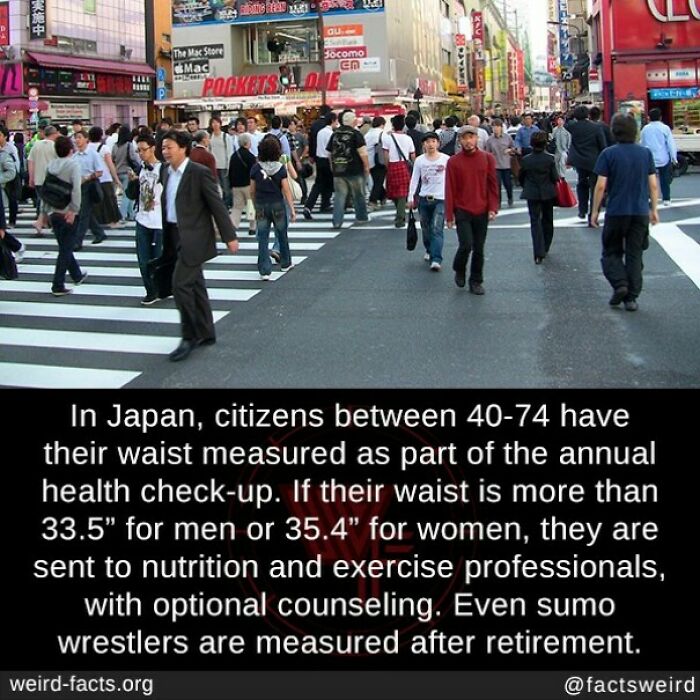
Having gone through this annually, people aren’t ‘sent,’ but rather, given the opportunity to attend these for free.
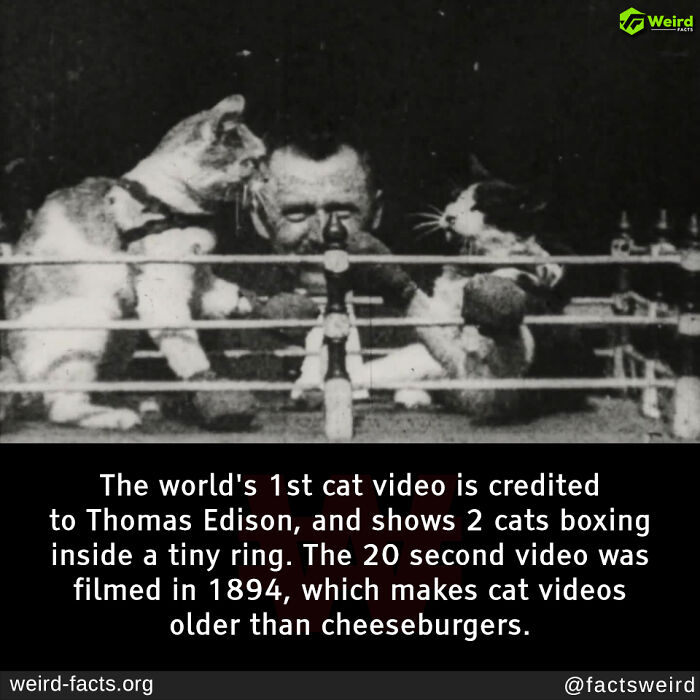
I have just watched the video. Having decades of experience putting costumes, clothing, and hats onto cats, I can confirm that the two cats don't really look all that disturbed/upset/traumatized by wearing tiny boxing gloves XD The tuxedo's ears aren't even flattened. I think the tabby and white (on the left) was more disturbed that some random human kept lifting it up by its harness to "stand" on its hind legs XD

The air in salt mines is totally dry, since the salt absorbs most of the dampness. Asthma is exacerbated by humidity.
A bit misleading. It was ONE particular beluga whale, named Noc, who lived at a marine research facility, who did this. There are no documented cases of it happening in wild belugas or in any other beluga besides Noc. Noc also wasn't really "mimicking" in the way we would consider a parrot would - it just sounded like a voice/words and wasn't actually words at all.
The sound was 317 decibels according to physicists who used measurements to calculate the sound wave. It was the loudest sound ever "recorded" on earth. It reverberated around the globe 7 times during 5 days, which means it was detected on sismographs all around the world multiple times. The eruption caused tens of thousands of casualties. Edit: I made a mistake in my description. Even though seismographs existed yet, the thing that was measured all over the world was the atmospheric pressure that increased dramatically, then dropped.

I have kids. Two night getaway with the wife while MIL watched the young kids. Did not experience this AT ALL. (over 20 years on, and still never...)
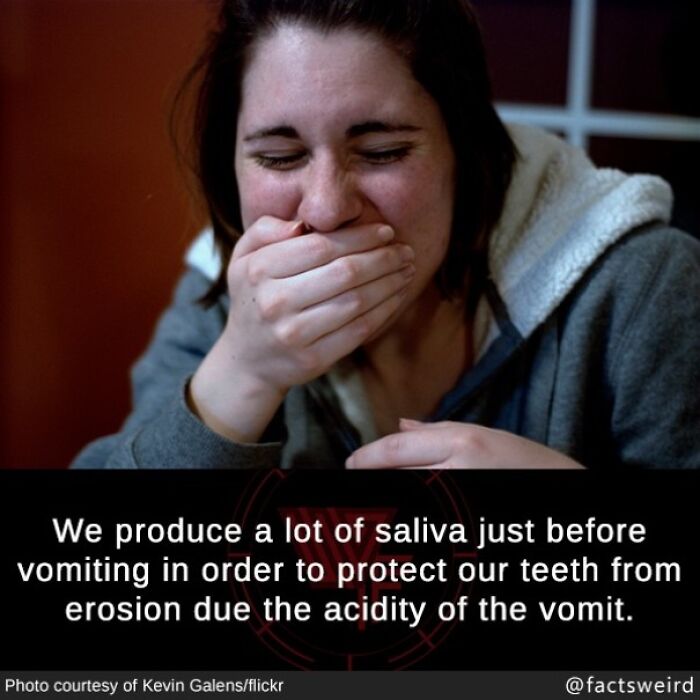
I was always told it was to ease the vomit through the oesophagus and prevent that from getting hurt (as it is when you get reflux). That makes much more sense.
They usually didn't grind grains (or anything else) the point of treadmills was that the work was dull, repetitive, and ultimately pointless.
They were an experiment. The cars were not "launched", there were 5 prototypes and 50 public test cars. They were hideously expensive to produce, were difficult to start, accelrated slowly, had terrible fuel economy, were horribly noisy, and failed every emissions check the government had. They were destroyed because that was a condition of the failure of the experiment, ad a failure it was.
The wording makes it sound like they can change color as rapidly as a chameleon can, which isn't true XD It IS true that a Siamese cat's (and any cat with the "pointed" coat pattern) coat is affected by temperature. When they are born, Siamese kittens are usually nearly pure white/light cream. They do NOT have dark "points" at birth. These develop as they age - the eumelanin deposits in the "coldest" parts of their bodies: legs/feet, tail, ears, and face. Sometimes Siamese cats will get darker on their entire bodies as they age, because their circulation is not as good, their blood is "thinner", and their entire body is slightly cooler than when it was a younger cat. Similarly, Siamese cats who live in very warm climates, like the desert/Arizona in the US, can lighten in color and their "color points" may shrink. These things will not happen to EVERY Siamese cat, however :)
Because it's a business where you just need to be consistently there, often for most of a day. Most common Indian businesses are like this, like convenience stores. If you saw how people typically work in India (outside of office work) it would make a lot more sense to you.


































 No fees, cancel anytime
 then open in external browser


 and click "Open in External Browser"