Get Premium
Dark mode theme is available exclusively for premium users. Learn more about the benefits of subscribing.
No fees, cancel anytime.

 Dark Mode Ad-Free Browsing Unlimited Content
 Ad-Free Browsing Unlimited Content Dark Mode
Join 1.2 million Panda readers who get the best art, memes, and fun stories every week!
Everyone has to eat, so it probably makes sense, at some point, to learn how to actually cook. In the age of the internet, it’s never been easier, there are literally thousands of recipes, often with videos of how to do things. But, in all that noise, it can be good to pick out what actually works.
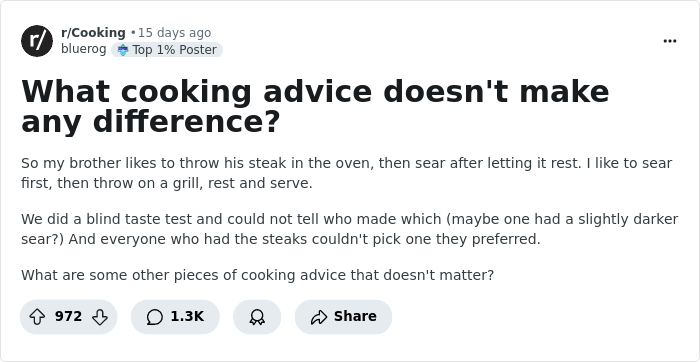
Someone asked “What cooking advice doesn't make any difference?” and people detailed their tips, tricks and observations. We also got in touch with the person who posted the question in the first place. So get comfortable as you scroll through, upvote your favorites and be sure to share your thoughts and experiences in the comments below.
This post may include affiliate links.
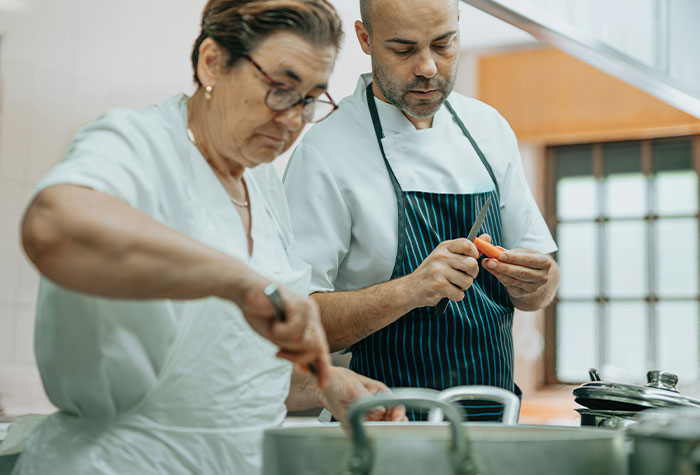 My grandmother insisted and would get angry for people not following her sacred advice...you must always stir clockwise. Tried it counterclockwise and I get the same result Her spirit did reach through the void and smack me though.

I think that's probably due to superstition. If you stir anticlockwise it brings bad luck.
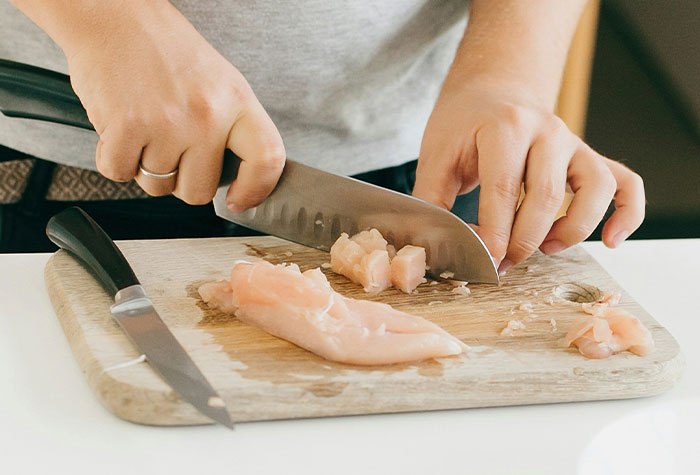 YOU DON'T NEED TO WASH YOUR CHICKEN. I will literally fight anyone who says you do. I've been cooking for 18 years, cook raw chicken weekly and have NEVER gotten sick. If anything washing chicken creates possible contamination.

Guessing this is from an American. Elsewhere no one would think of needing to wash their chicken....
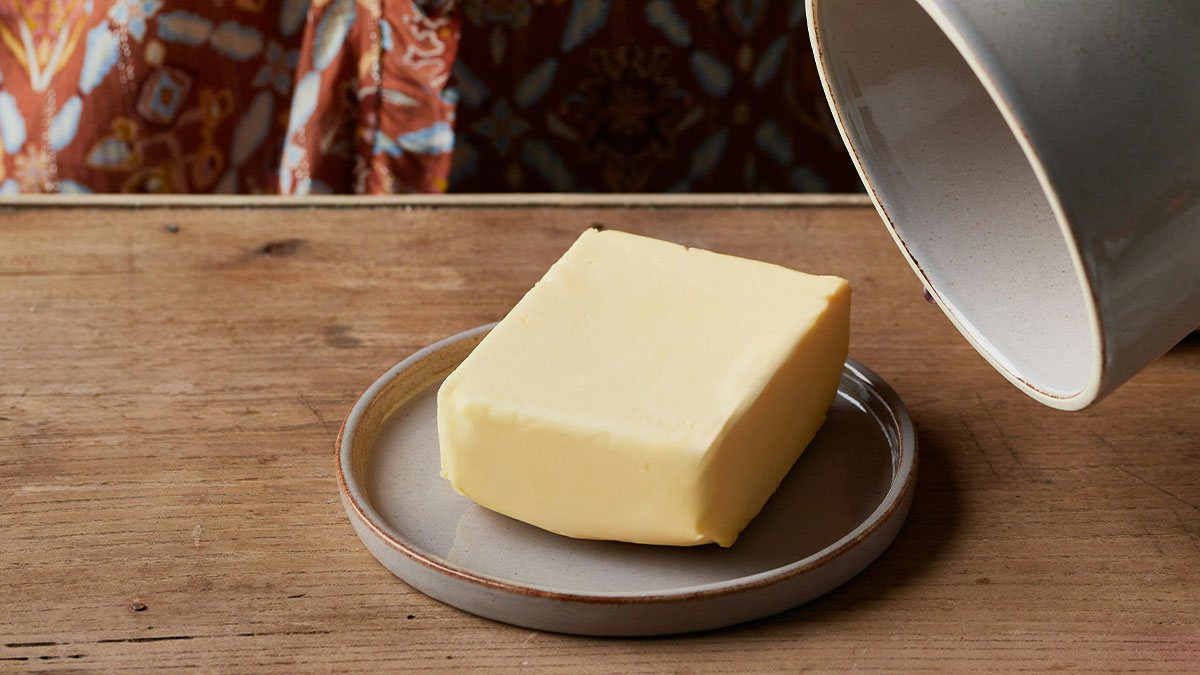
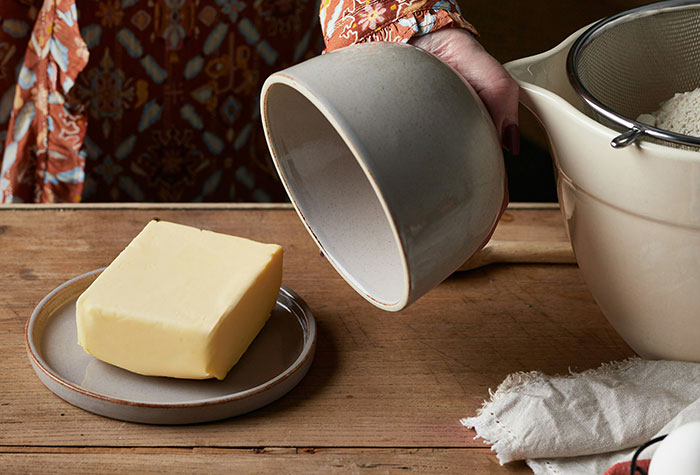 I use salted butter even when it calls for unsalted.
It's fine, provided you add less salt to compensate for the salt in the butter.
Bored Panda got in touch with the netizen who posted this question online and they were kind enough to share some more details. Naturally, we were curious to hear why they asked this to the internet in the first place. “I'm simply an impatient cook. I don't want to marinade for 20+ hours,” they shared.
“I don't want to wash rice or eat cold steak because “I need to rest it 10 minutes." I use the microwave for steaming vegetables — and it's better than a pan and faster than a pan and fewer dishes than a pan. I'm cheap too. Salt is salt (people really buy fancy salt; it's NaCl — only 2 elements).”
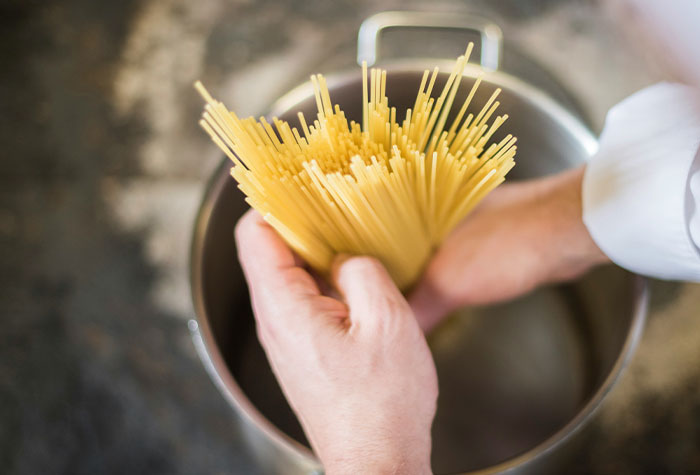 Using large amounts of water to cook pasta. You can use a much smaller amount AND it's actually better for having more concentrated starchy water for dishes like cacio e pepe.

When I'm in a hurry and I'm just cooking for myself, I cook pasta in a frying pan. At the end, I add oil and, for example, pesto to the remaining thick starch water. Good, easy and fast, but I'm afraid that the ghost of an Italian nonna will hit me with a wooden spoon and call me easy and fast.
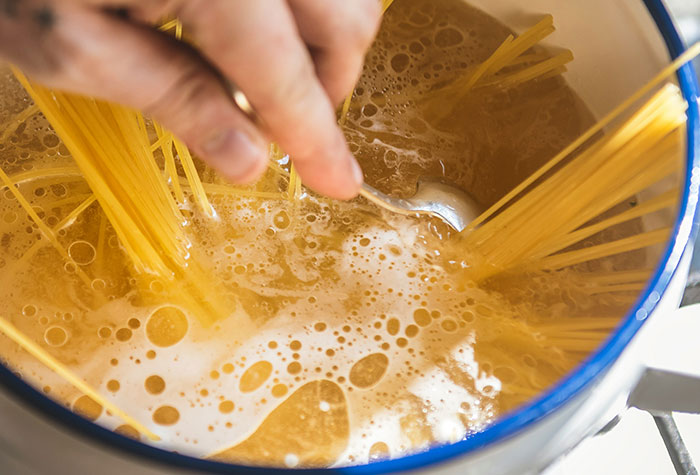 Throwing oil in pasta cooking water. Those two don't mix. All you're doing is wasting the oil. It will achieve absolutely nothing. If you're concerned about them sticking and need to use it, use it *after* they're cooking. Stop it.
Edit:if you're concerned about your pots boiling over you could always try paying attention.
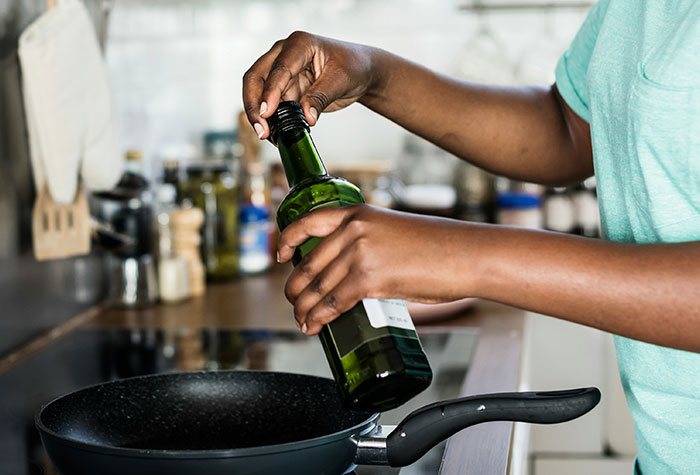 Only adding oil to a hot skillet.
i've added oil to a cold skillet and it was fine.
“How many butters do you need in your refrigerator? I watched a cooking show where they insisted on $300 and $500+ pans and Dutch ovens and... And no. A knife should cut food. I'm not spending $150+ on a single knife; a knife I can't even throw in the dishwasher even,” they added.
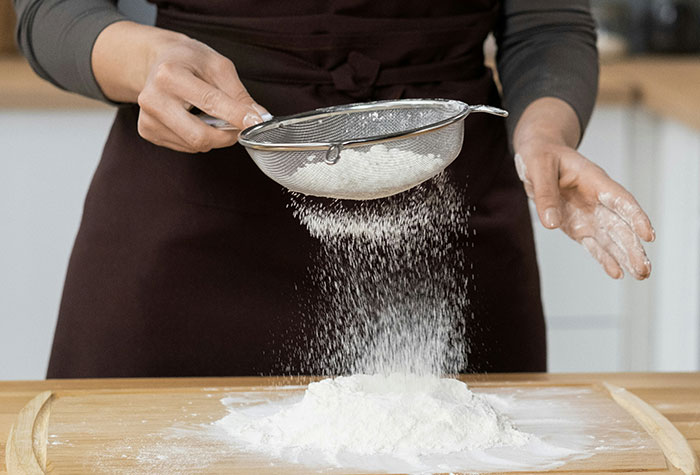 It depends a *lot* on specific recipes. But a couple that jump out at me:
Garlic presses are perfectly acceptable alternatives to mincing garlic with a knife in many applications. Jarred garlic is perfectly acceptable in many applications.
Sifting flour doesn't matter in most recipes (but matters a lot in a few).

Sifting flour is primarily done to break up lumps, aerate the flour, and ensure an even distribution of dry ingredients, especially in recipes that call for a light and fluffy texture. ifting also helps in the accurate measurement of flour, as sifted flour is less dense than unsifted flour.
 Salt before the water is boiling or after. It changes f**k all, do whatever you want.
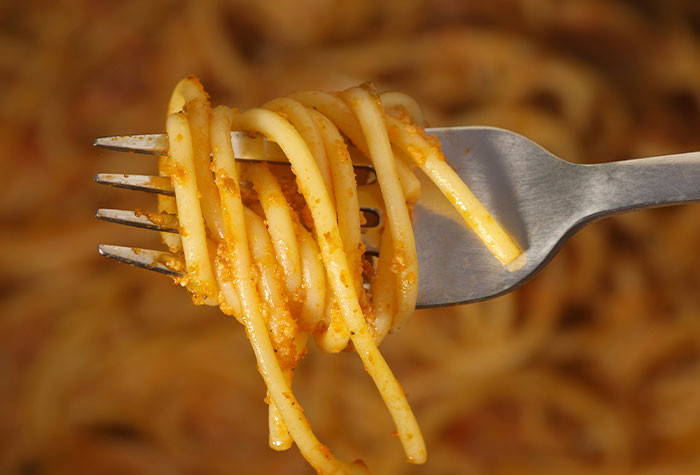 I’m going to continue breaking my spaghetti noodles into pieces that are more convenient to boil AND eat and nobody can convince me this is not a superior way of going about things!
We also wanted to hear their opinion on why the thread ended up with thousands of comments and examples from across the internet. “It's popular because cooking is filled with old wives tales. It's popular because we're all a little lazy and tired of pretentious cooking.”
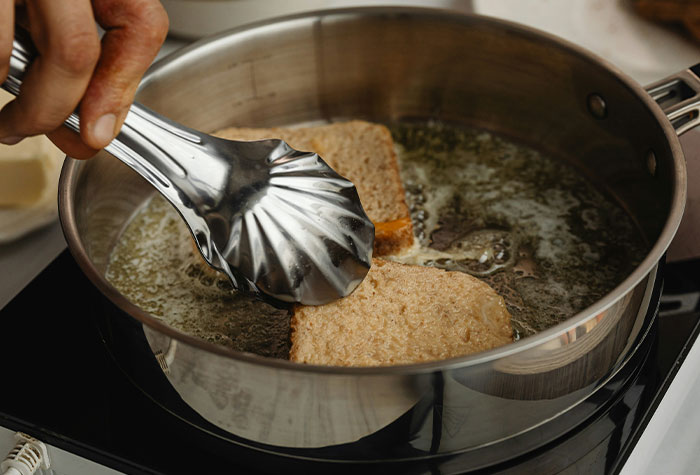 Using a screaming hot pan for searing. You can't cook higher than the smoke point of your oil. All you're doing is tripping your home's smoke detectors, creating acrid oxidized fats that's terrible for you and tastes bad.
Maillard reaction only needs around 300-330F. Plenty of room below the smoke point to get a nice sear without breaking down your oil to acrid flavors.
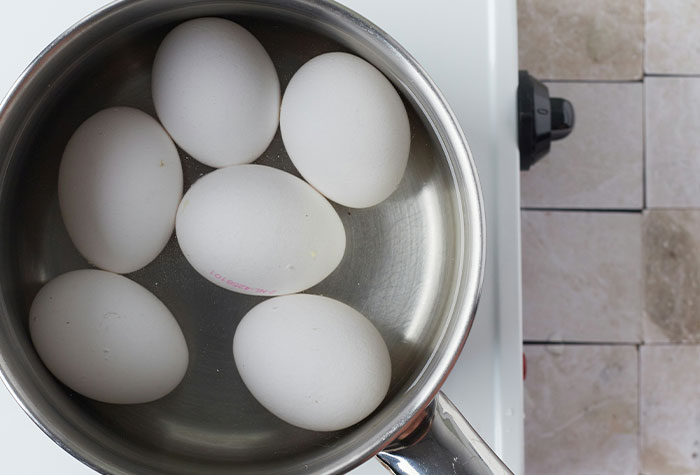 Boiling eggs in water with a splash of vinegar does *not* make it easier to peel them when they're cooked.
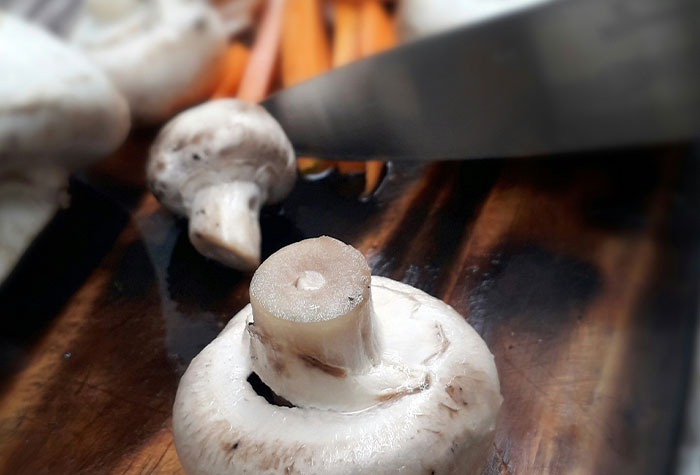 I grew up hearing that you're not supposed to wash mushrooms but I always do and it turns out fine.

I spent years using a damp paper towel to wipe the dirt off of mushrooms. Never again! I got enlightened via an Insta Reel that explained that 'shrooms are mostly water anyway. Toss'em in a colander, rinse briskly with cold water. Shake'em dry and tumble them out of the colander into a pile of paper towels and pat dry. Works a treat!
They left us with some parting thoughts. “I'm not a very good cook. I can't seem to get the hang of a meat thermometer for example and to see if a steak is done, I'll cut a small slice into it to check if it hit medium. Then I'll eat my hot steak 3 minutes after I pull it off the grill. And I love my steaks (hence why my brother challenged me to a "who can make the best steak" contest. I'm still bitter that we "tied").”
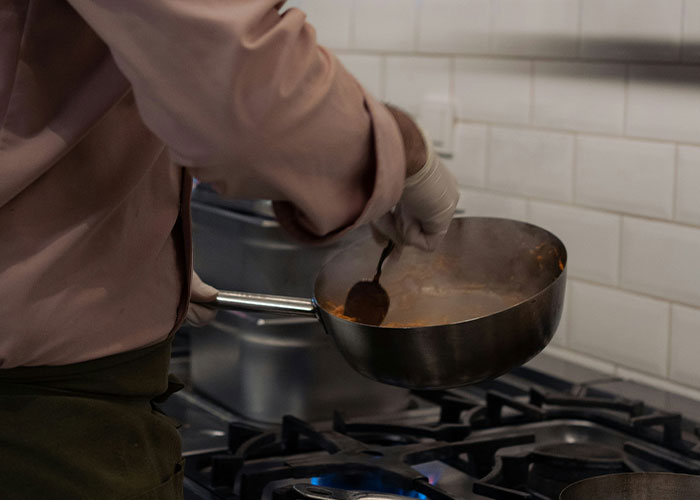 I don't heat milk up before adding it to roux.

Exaclty. In fact the classic recipe for bechamel adds COLD milk specifically to prevent lumps in the roux. Pierre de La Varenne, who first wrote in a cookbook the recipe for the century-old Tuscan Balsamella sauce that he learned from the Italian cooks following Caterina De Medici, specifically calls for cold or lukewarm milk.
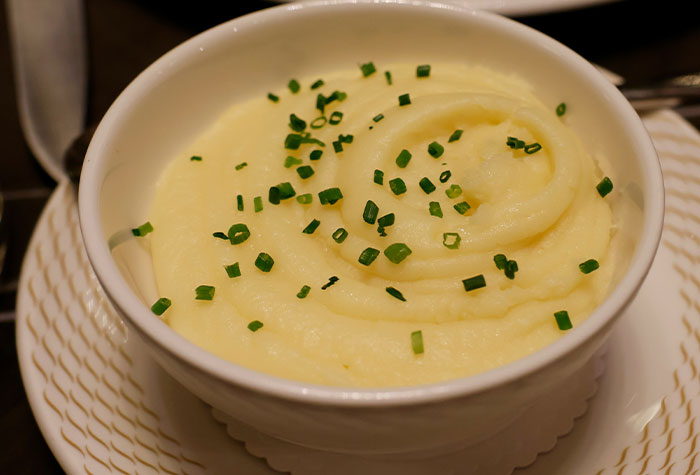 You don't need a ricer to make amazing mashed potatoes.
If you're a broke college student, you can make them with a g*****n *fork*. I wouldn't recommend it, but it can be done.

This baby, that jams every drawer known to mankind, is all you need! (And I even leave the skins on. SOOO yum!) 71YwrJPqCu..._QL80_.jpg 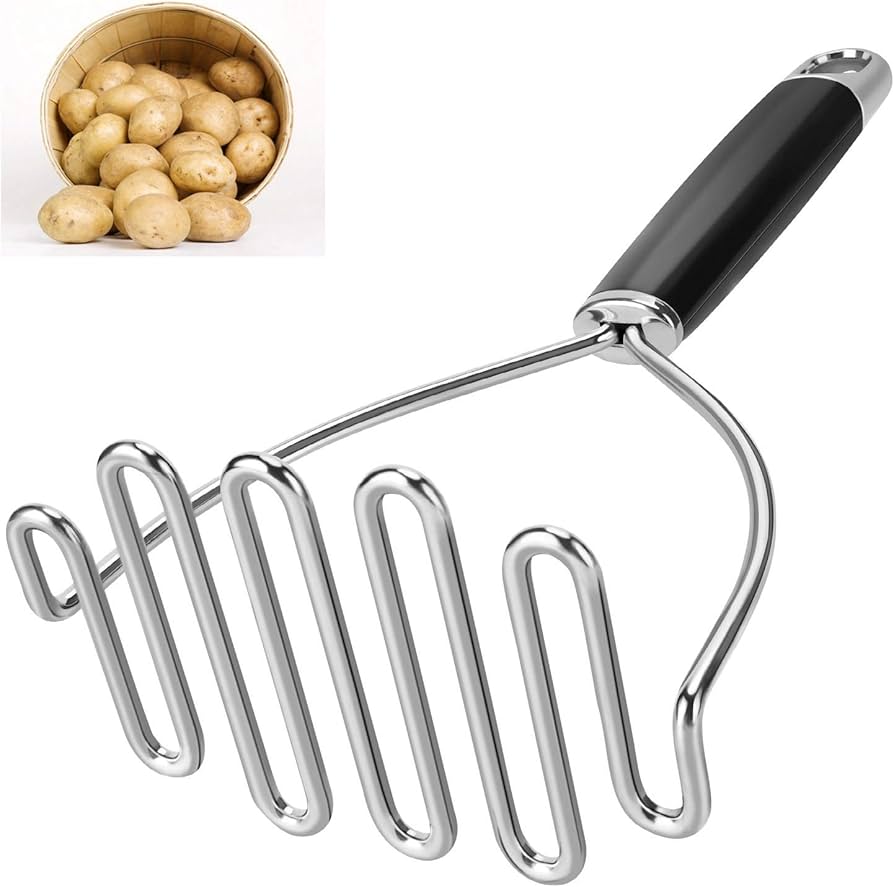
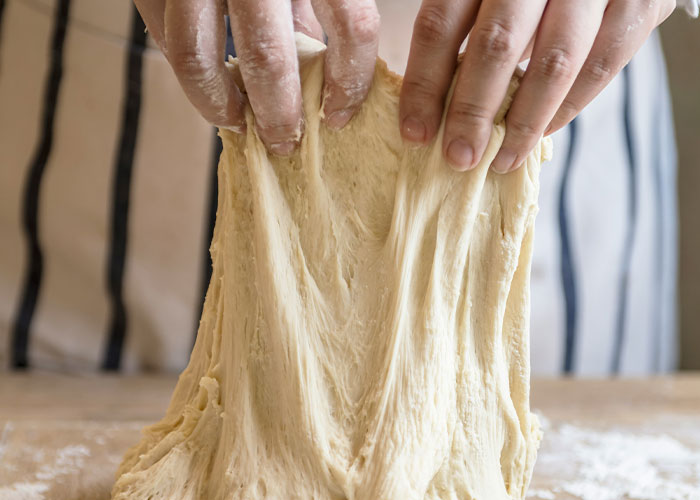 Active dry versus instant yeast.
Most bakers and recipe writers say to just chuck the yeast in with the dries. The whole step of putting active dry yeast and warm water to bloom it is just checking the yeast is alive.
If you know you bought it relatively recently don’t bother with that step.
pre-mixing the yeast with water (and a bit of sugar) is required for any mix where there is salt in the dries. Bread, pizza, focaccia etc, all need to have the salt mixed into the flour first, to avoid spots of excessive concentration that will k**l the yeast; then the yeast that was added to water to start "reviving" it is put in the dries in liquid form to help with even distribution.
“But I do stand by a quote from Anthony Bourdain, "Garlic is Devine. Anyone too lazy to peel and chop it fresh doesn't deserve to eat it." But I'll agree the garlic press people are probably right in that it doesn't make a difference.”
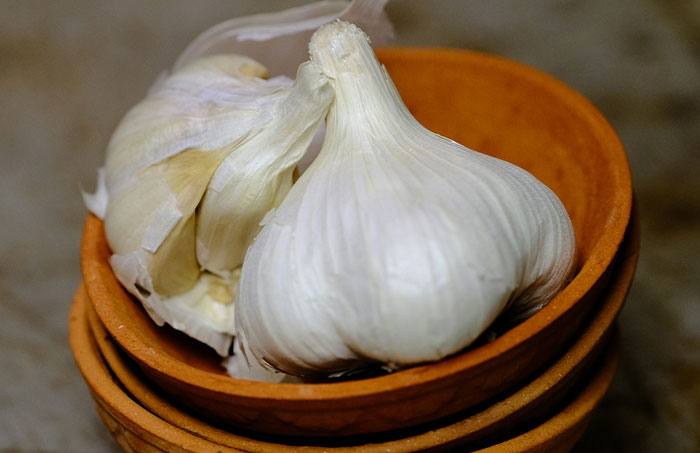 The whole “always use fresh garlic” thing. Sometimes the jarred stuff hits just fine.
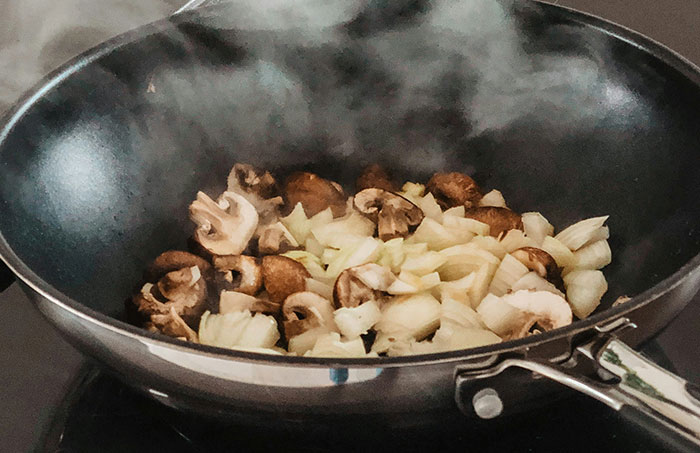 It’s okay if your mushrooms are steaming at first (due to pan overcrowding). Just let them cook down and they’ll get that nice brown color.

The trick is to NOT add salt during the cooking process; you can add salt after they're browned. (Adding salt early in the process brings out moisture, which steams them and prevents browning).
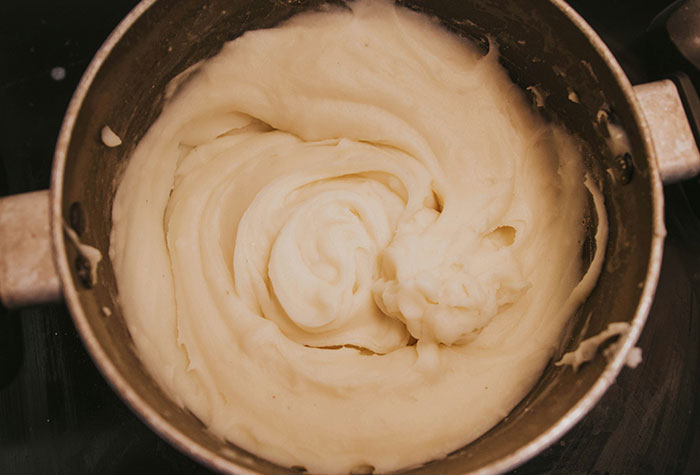 I made mascarpone and cream cheese from scratch the other day. All the recipes on line say to avoid using ultrapasteurized cream but it's very hard to find cream that has not been UP these days. They say it could have the proteins already broken down. Considering that UT brings the cream to 185F for TWO SECONDS and when you make mascarpone or cream cheese you bring the cream to 185 for several minutes i reasoned that someone must have said this once for no good reason and now it's in every recipe. It's wrong! Made great mascarpone and cream cheese.
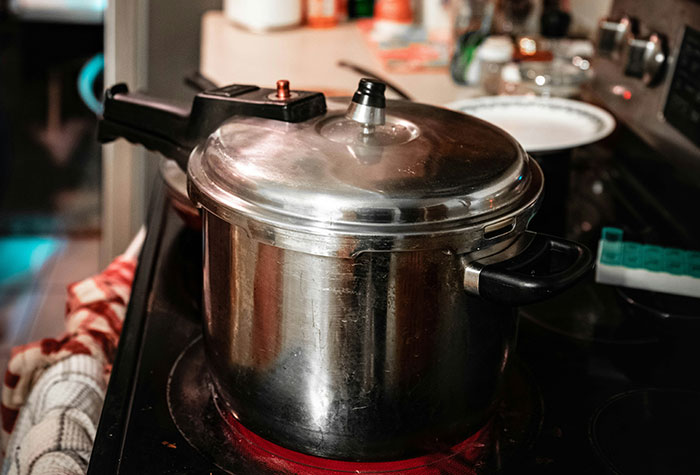 My husband's British mother used to- get this- PRESSURE COOK the steak first- like, on a steam rack in the pot. Then she'd take it out and sear it. He swears, up down and sideways, that method makes scrumptious steak. I'm nearly 60, and I'm still too scared to try it 😂😂😂.

That's great for braised steak, but not for steak that you might want to eat medium or rare. In the old days in Brutish cookery all meat was expected to be cooked right through so this method made it quicker and easier to make it tender (depending on the cut of meat). Edit: just noticed my typo, decided to leave it, quite apt.
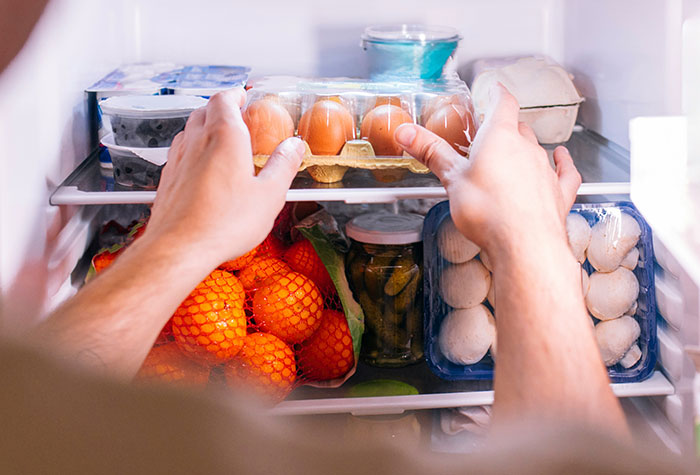 My eggs are never room temperature when I bake. I’ve done it. Don’t notice any difference.
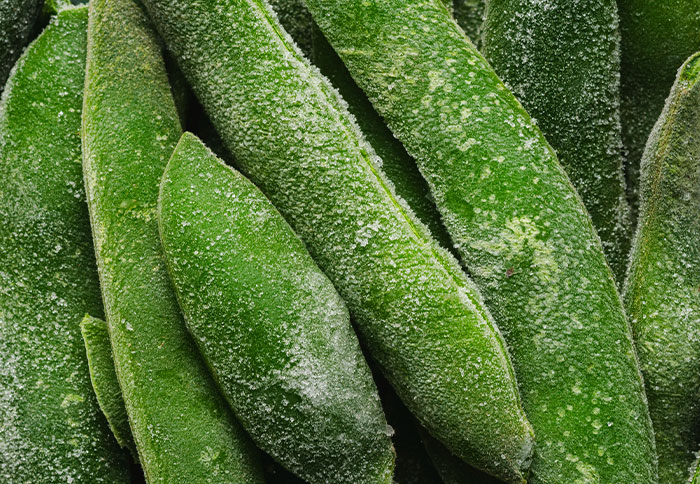 You don’t have to thaw veggies before cooking them (I also dont thaw seafood).
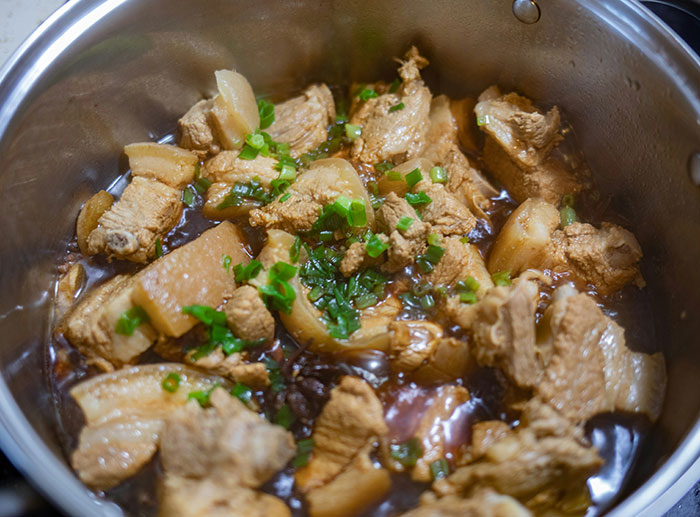 You don't need to cook pork till it is as tough as shoe leather. Mom always believed that unless you cook pork till its was truly dead, you would die a horrible death within 24 hours.
Pork chops, roasts, or ribs MUST reach a minimum internal temperature of 145°F (63°C) for two to three minutes, while ground pork MUST reach a minimum internal temperature of 160°F (71°C) to render it safe to eat. The issue here is, Trichinosis. Basically, Trichinosis is a parasitic worm which is found primarily in pork. The worm is near microscopic, so you can't see it with the naked eye. https://www.mayoclinic.org/diseases-conditions/trichinosis/symptoms-causes/syc-20378583
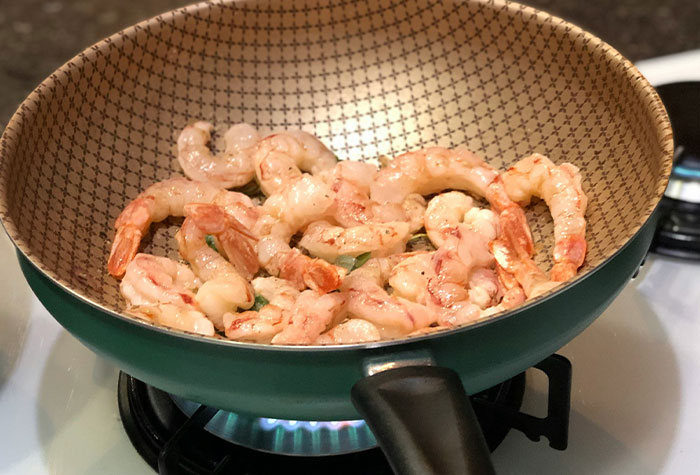 Frozen prawns (for Americans shrimp) will be soft and squishy when cooked.
No they won't, prawns and most fish are snap frozen at sea when they are straight out of the water, this process does not result in mushy prawns.

And most 'fresh' supermarket prawns have been defrosted, so in a way the frozen ones are fresher.
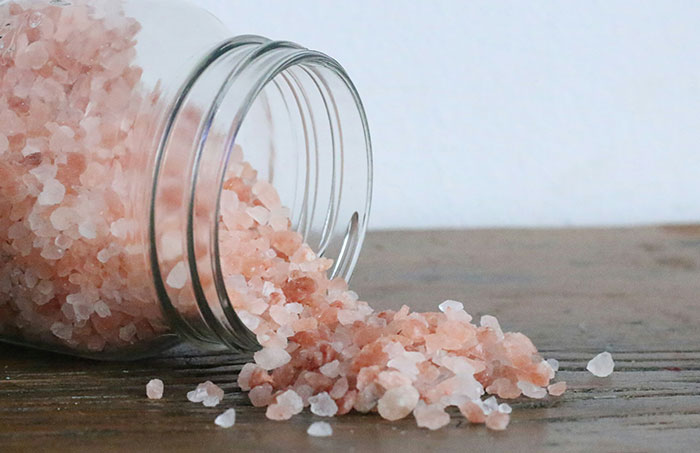 Fancy salt vs cheap salt.
I only use those fancy oh la laa salt flakes etc. as a finishing touch on top of focaccia or saltine crackers, for example.
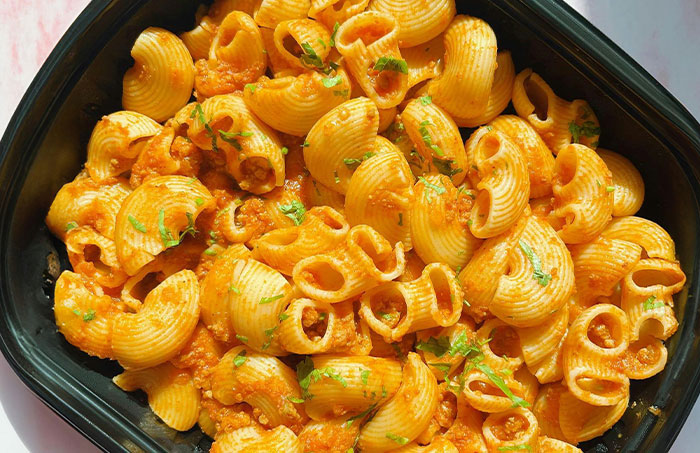 If you didn’t save any pasta water, it’s like totally fine. The hot pasta will give off tons more starch when you add it to sauce.

That is if you don't rise it like a crazy person. Pasta should go from water to sauce ASAP.
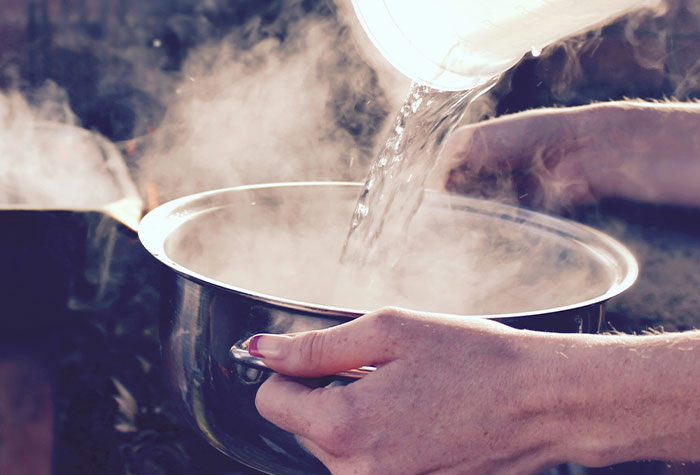 "Add hot liquid to roux and you don't get lumps"
I have never heated the liquid I'm adding to a roux beyond maybe room temperature and have never had a lumpy or grainy end product.
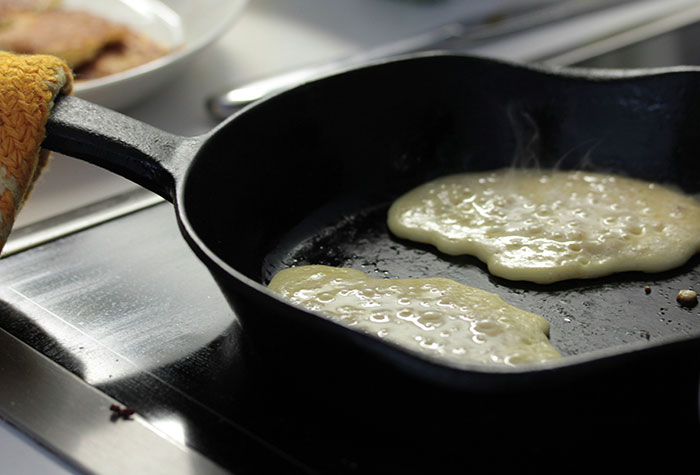 Most advice about how to care for cast iron.
Please don't soak them. It will make the bottom rust, and will create holes in the surface where food will get stuck and will burn. I have seen pans ruined by being left overnight under water. And don't use concentrated soap directly on the surface.
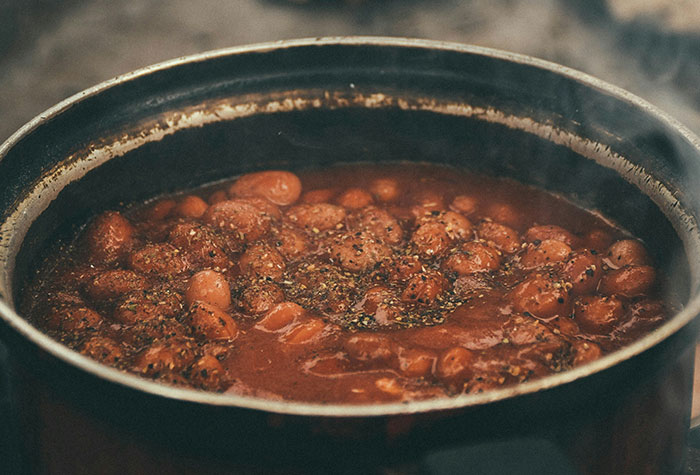 Skimming the bean foam off.
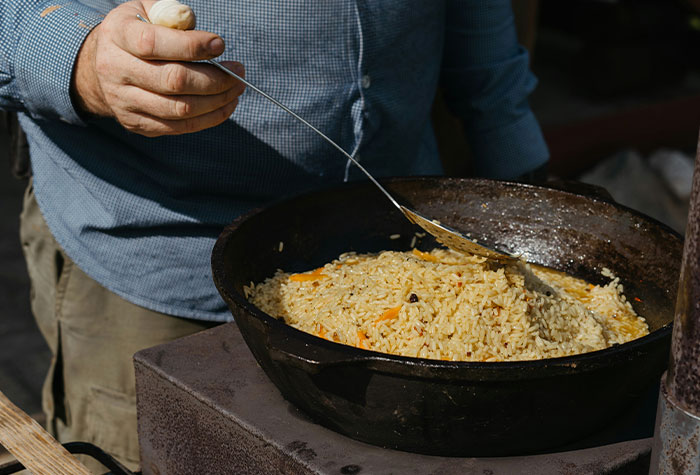 Adding all stock to risotto in one go vs in small ladlefuls.

That just makes a soggy mess, Rice can only handle all the water, you have to put it in a bit at a time.
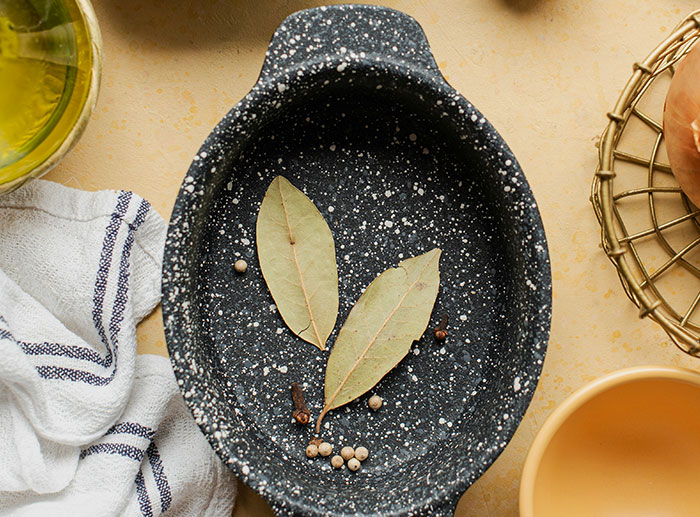 Personally, bay leaves in most stews that feature a lot of other herbs and spices. It definitely has a flavor, but if you've got a ton of basil and oregano in your Bolognese, I cannot taste the difference that a few bay leaves make.
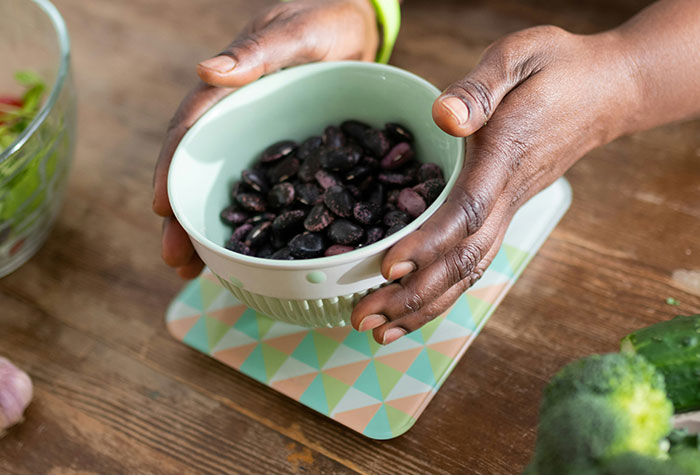 For home cooks weighted ingredients vs volumetric. If you find one easier than the other (or just prefer one) that’s fine but I guarantee you’ll never notice the difference in the final product.
I lived in France and every housewares store sells a verre doseur which is a way to approximate weights by volume (most homes just use an empty mustard jar with a 100g line marked on the side lol).
Washing rice. Fight me.
I somehow manage to make sourdough bread without pre-heating the oven and the pot. Also the pot is not cast iron, but jena glass. I very much like that I can see the bread at any time.
Glass conducts heat differently and I have learned that a glass pan can explode in the oven with bad luck. (I make mine in a large metal pot with a lid). No-fuss sourdough breads are pretty low maintenance. You have to be more careful when baking the pie crust because metal, porcelain or glass pans mean different baking times due to heat conductivity. Nothing ruins a delicious pie like a soggy raw crust.
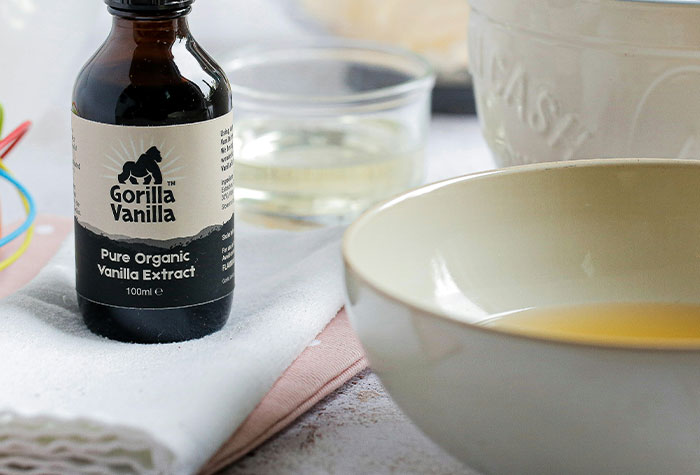 Vanilla Extract vs Bourbon in cookies. I can barely tell the difference, and if anything, the ones w/ Bourbon taste better.
I can definitely tell the difference between bourbon and real vanilla extract.
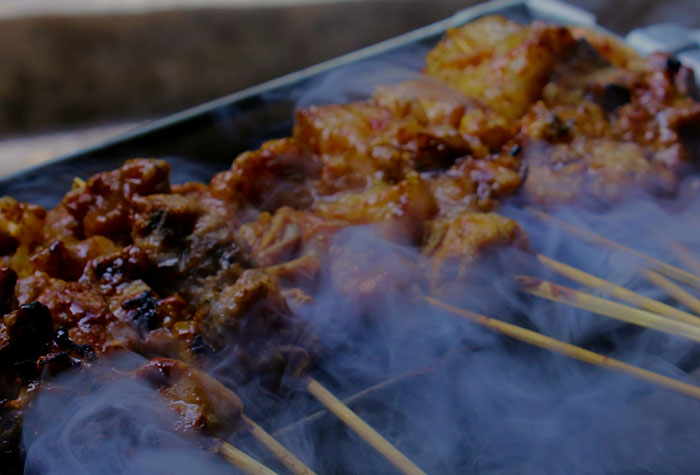 When I'm smoking meat that takes 8-24 hours to finish (ribs, pork shoulder, brisket, etc), I go for 2 hours in the smoker, then wrap it and stick it in the oven. So much less hassle that way.

I've been starting in the smoker and finishing in the InstatPot. It's wonderfully moist BBQ.
Keeping the fire on when cooking pasta (after you brought the water to a boil, added the salt and pasta and brought it back to boil).
Everyone in Italy does it, my parents and friends included, if you don't they'll say that your pasta will get soggy and gluey due to the lower temperature.
In reality you can switch off the fire and the pasta will cook without any trouble, if you are paranoid you can at least lower the fire to the minimum.
From what I gathered leaving the fire on was something that started from restaurant chefs, when you have 100 pasta dishes coming out in 2 hours you can't afford to let the water lose heat, so you keep it boiling all the time, chefs brought this custom to television and we adopted it as if it was a god mandate.
I'm using Parisi's method (Nobel prize laureate in physics): put pasta in boiling water, cover, turn off stove, keep for 1 minute more than written on the package (2 minuter more, if the original time is above 10 minutes). Works perfectly well, checked many times for "al dente" texture.
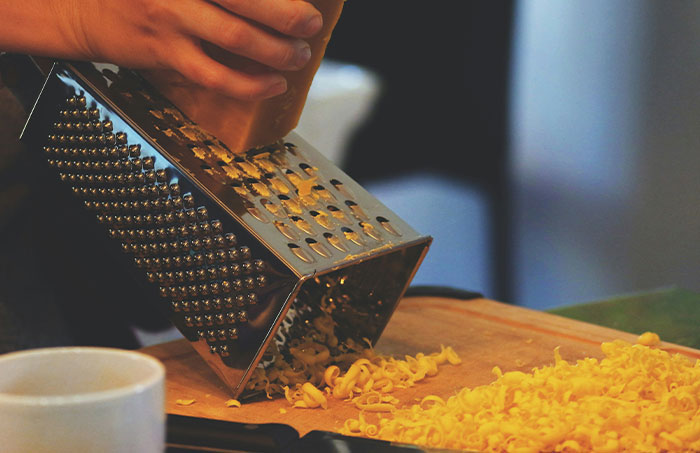
That the anticaking agents in pre-shredded cheese will affect the texture of whatever you're making... After many many experiments, I still can't see any difference. I suspect this one to be a legend.
Black pepper. Yes, I only use freshly ground. I just don’t taste any difference in things like stews or sauces. .
Blanching rabe. it helps but isn’t with the steps if you’re serving w lots of garlic and oil as a supporting dish. like it’s served.
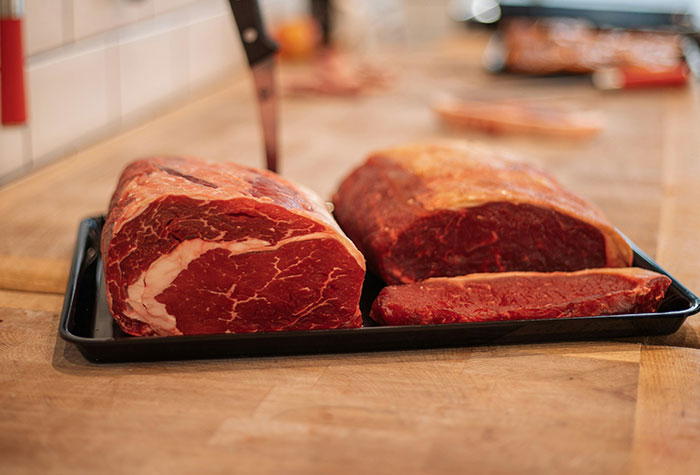 Bringing meat "to room temp" before cooking it. You can cook meat straight from the fridge and you will never notice a difference. I can't remember which YouTube channel did the experiments, but they showed their work and the final outcome is that letting meat sit out for an hour or two before cooking makes no difference in the outcome. Yet you still hear big-name chefs telling you to do this.
On slow-cooked meats (think crock pot or a loooooong braise), I have not found searing the meat first to result in any better flavor development. All it does it take extra time and leave me with an extra dish to wash.
But something that's not cooking all day, it's worth the extra step.

It just looks better with some casseroles/recipes and taste wise - especially if you’re gonna deglaze before building a sauce back up
If cooking beans in a pressure cooker you can soak them in water overnight. But you don't need to. So WTF does the recipe say its optional? How about I don't bother with remembering to soak them overnight because it doesn't matter and is an entirely unnecessary step.
Adding ingredients by (smaller) portions and not all at once. I always just pour/mix stuff together and never had any problem.
This is all well and good, until your potatoes or celery over cooks and turns to mush. Fun fact: Different vegetables, cook at different rates. Some cook far faster than others, and will turn into goop if introduced too early.
Seasoning the chopping board.
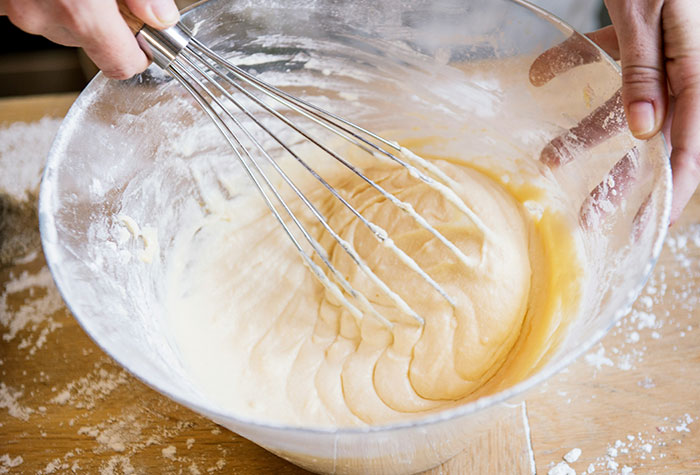 If you're not infusing the milk when making pastry cream, **there's no need for tempering the eggs.** Whisk it all together ( or use a blender if it's a huge batch) and cook it over medium heat until it bubbles, cook for one minute more, take off heat, add butter and flavoring, DONE.
This is a s****y pastry cream. OG cream is made by mixing sugar, yolk and starch in a bowl, then adding the hot milk with vanilla extract. You add the milk slowly (what OP here calls "tempering") because it start the denaturation of the egg proteins, stretching them and making it easier for the proteins to combine in a smooth texture. Adding all the hot milk at the same time would cook the proteins and create lumps. Heating the mixed eggs would just burn the eggs at the bottom, and create burnt lumps.
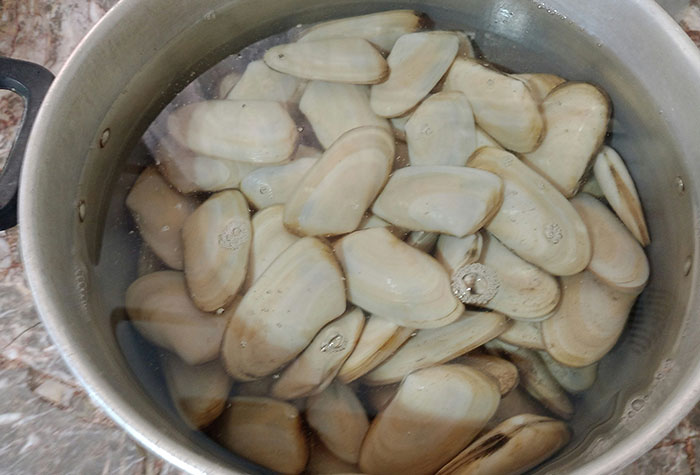 Not really advice but I hate the old rumor that a mollusk that doesn’t open after cooking is “bad.”
A lot of people don’t know that a mollusks neutral, or relaxed state, is in fact open and that they have to engage their muscle to close. Sometimes they never relax during cooking and they just stay closed. That’s literally it. Lol.
How to cut an onion. Onions are already pre-sliced. You don’t need to slice them horizontally first.
Baking is full of pretentious snobs. It's not that hard, but people act like you'll absolutely ruin a batch of buns by putting in slightly more flour than you need.

Cooking is art. Baking is chemistry. A pinch extra or less of any ingredient won't be the end of the world but anything more than that and yes those pretentious snobs are correct
Apparently, folding things into egg whites doesn't matter that much.

It does if you want your cake to be light and airy. Why spend all the time to whisk if you are just going to deflate the batter?
Marinading pan-cooked meat for any length of time. Unless the marinade contains ingredients that actively soften the meat (like pineapple), nothing is happening that won't happen at speed in the cooking process.
Marinating meat is almost entirely pointless, and people refuse to accept that regardless of how easy it is to demonstrate. Watch, I'll get downvoted just for bringing it up.
The idea that you can't boil steak. A nice boiled steak is the same as some fancy seared thing. Boil it till well done, pour on ketchup or vinegar, or boil in vinegar (all methods I have actually witnessed). What's not to love?
I've cooked professionally off and on for years. I also teach basic cookery. My advice: follow the recipe the first time BEFORE changing it to fit your taste. Don't critique the recipe if you change everything. Beyond that...stop making cooking your supper (etc.) such a big deal. You don't have to follow every rule. If the dish you are cooking works for you, then that is what works for you. Stop telling people they MUST cook the way you cook. Sure. there are some firm rules you need to follow to get the results you want, but an awful lot of cooking advice is pure BS.
There are some "rules" that are there for a reason. You -as a teacher above all- should understand that not everyone can get a grasp of the advanced chemistry involved in cooking, and some of it must be dumbed down to some easy to understand tenets. Your average Nana doesn't need to know how 16g NaHCO3 reacts with 16g KHC4H4O6 to produce 1,9 liters of CO2 ; she is fine with knowing that adding 1 bag of cream of tartar to a spoon of baking powder will rise 500 grams of dough. That doesn't mean that Nana can improve the results by twisting the "rule", like adding twice the soda or replacing baking soda with sugar.
Load More Replies... 
Some of these folks who can't tell the difference in flavor, smell, or texture of some foods might want to see a doctor. You might have a neurological issue or something...


Even English public schools are not that stupid about cooking!
Load More Replies...
I've cooked professionally off and on for years. I also teach basic cookery. My advice: follow the recipe the first time BEFORE changing it to fit your taste. Don't critique the recipe if you change everything. Beyond that...stop making cooking your supper (etc.) such a big deal. You don't have to follow every rule. If the dish you are cooking works for you, then that is what works for you. Stop telling people they MUST cook the way you cook. Sure. there are some firm rules you need to follow to get the results you want, but an awful lot of cooking advice is pure BS.
There are some "rules" that are there for a reason. You -as a teacher above all- should understand that not everyone can get a grasp of the advanced chemistry involved in cooking, and some of it must be dumbed down to some easy to understand tenets. Your average Nana doesn't need to know how 16g NaHCO3 reacts with 16g KHC4H4O6 to produce 1,9 liters of CO2 ; she is fine with knowing that adding 1 bag of cream of tartar to a spoon of baking powder will rise 500 grams of dough. That doesn't mean that Nana can improve the results by twisting the "rule", like adding twice the soda or replacing baking soda with sugar.
Load More Replies... Some of these folks who can't tell the difference in flavor, smell, or texture of some foods might want to see a doctor. You might have a neurological issue or something...
Even English public schools are not that stupid about cooking!
Load More Replies... 




























 No fees, cancel anytime