Get Premium
Dark mode theme is available exclusively for premium users. Learn more about the benefits of subscribing.
No fees, cancel anytime.

 Dark Mode Ad-Free Browsing Unlimited Content
 Ad-Free Browsing Unlimited Content Dark Mode
Join 1.2 million Panda readers who get the best art, memes, and fun stories every week!
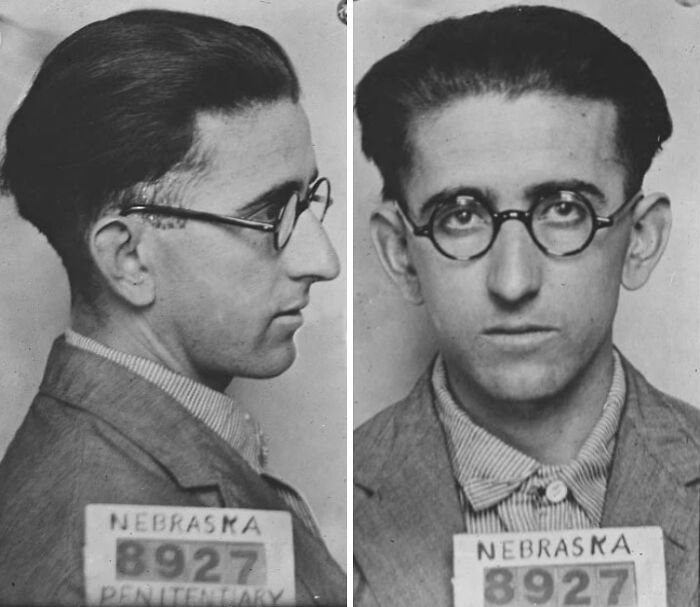
Today, mugshots often appear in news reports or feature in crime documentaries. But did you know they date back to the 1840s, just a few years after the invention of photography? It wasn’t until 1888 that mugshots gained widespread use. And we have French police officer Alphonse Bertillon to thank. He pioneered mugshots as key records for identifying and tracking arrested individuals. His system is also why mugshots are taken in two parts, facing the camera and then in profile. From a minor offense to a darker, more sinister crime, there’s a story behind every mugshot. For this list, we’ve gathered 30 interesting and sometimes chilling stories behind historical mugshots.
This post may include affiliate links.
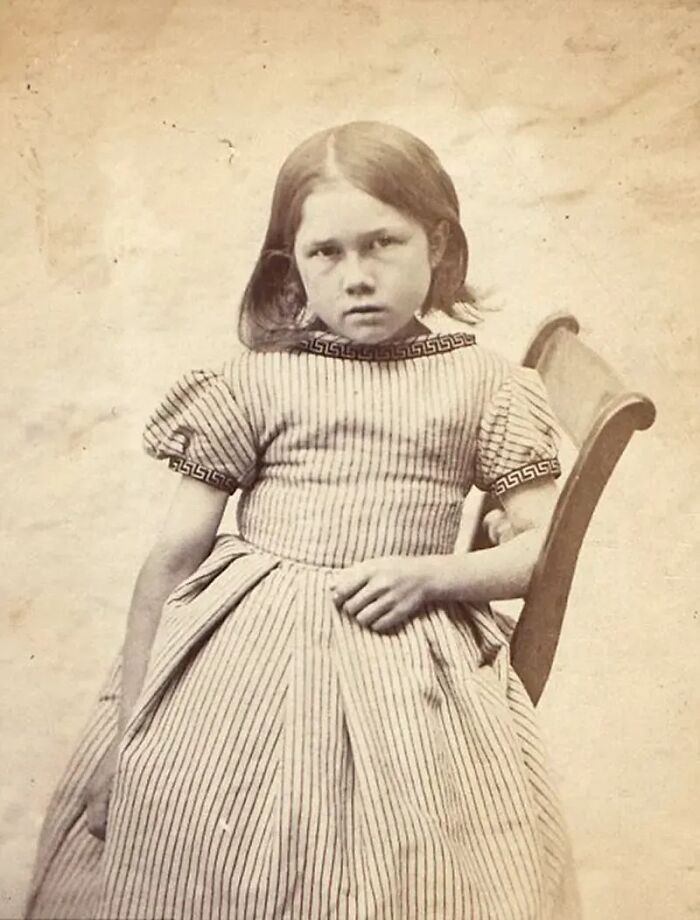
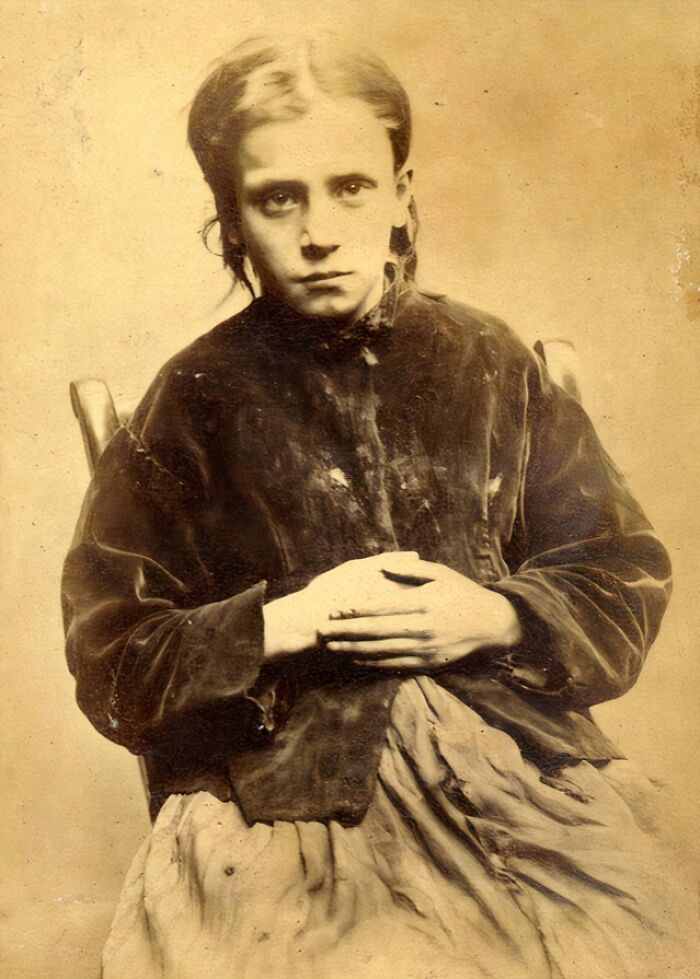
At the tender age of 7 years old, Julia Ann Crumpling was the youngest prisoner on record at Oxford Castle and Prison in 1870. In addition to that, she was the youngest convicted criminal in history. After being charged with the theft of a pram, she was sentenced to seven days’ worth of hard labor. Crumpling’s mugshot truly highlights the great lengths law enforcement was willing to go at the time to combat juvenile petty theft.
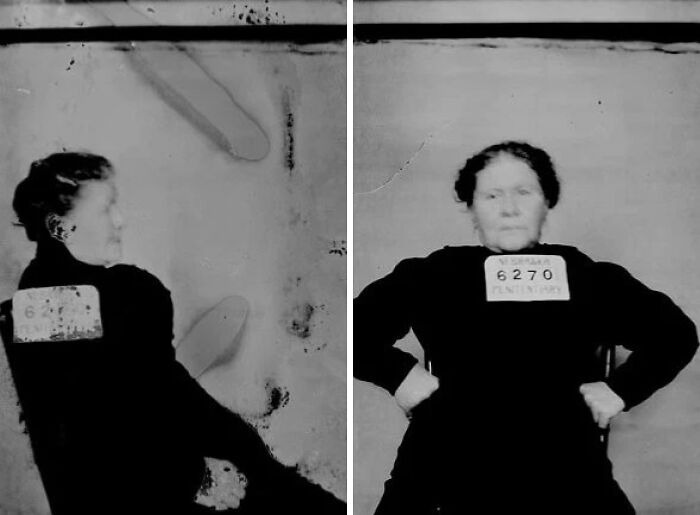
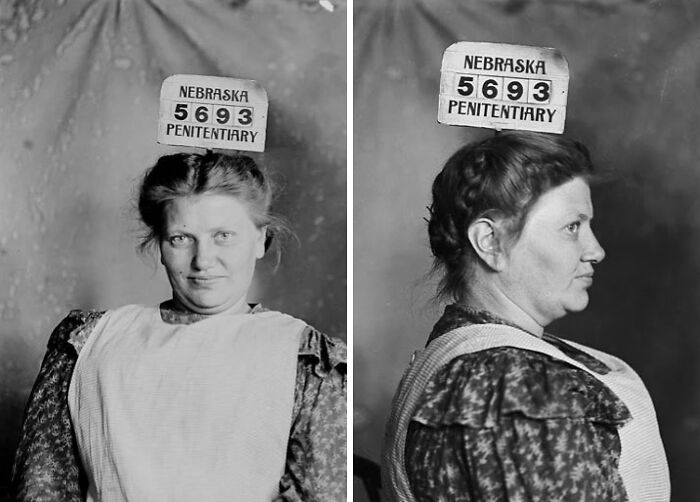
In March 1914, Jennie Lester was arrested in Phelps County and sentenced to one to three years in the Nebraska State Prison for enticing to illicit intercourse. It is said that Lester strongly resisted arrest and later refused to be photographed. Police eventually succeeded in their efforts, and in her mugshot, Lester was pictured striking a bold, defiant pose.

I guess wanting to have s3x with someone was illegal then if you were unmarried
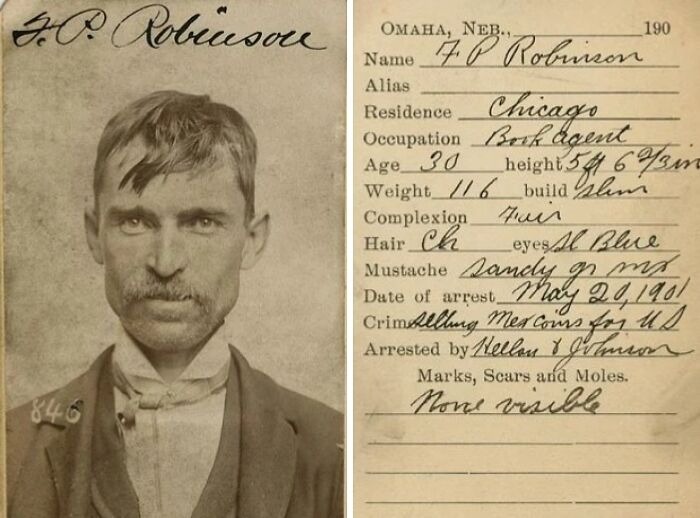
In 1901, F.P. Robinson used a Mexican dollar to pay for a glass of beer in a Douglas Street saloon in Omaha. Then, the Mexican dollar was very similar in appearance to the American dollar and was only worth about 45 cents. As the beer only cost a nickel, Robinson received 95 cents of American money in change. This left him 50 cents richer and enjoying a glass of lager, at least until he was arrested.
Like Jane Farrell, Henry Leonard Stephenson was arrested at the age of 12, and his mugshot also became part of the collection of juvenile offender photos. Charged with breaking and entering in 1873, he received a severe sentence of two months in prison. This sentence highlighted the harsh response to petty theft in Britain in the 1800s.
Bert Martin, who worked as a cowboy, was arrested for stealing a horse. While in prison, Bert’s cellmate of 11 months revealed a stunning secret: Bert was actually a woman called Lena Martin. In her small and sparsely populated town, Leha’s masculine appearance had helped her find work. According to prison records, Lena was transferred to the women's division on September 22, 1901.
Sentenced to 12 to 15 years at the Nebraska State Prison for bank robbery in Kearney County, Alv Lytle turned out to be an innocent man. Lytle had served 2 years and 7 days when someone else came forward and confessed to the crime. For being falsely imprisoned and charged with a crime he didn’t commit, Lytle was compensated $2500 by the state.
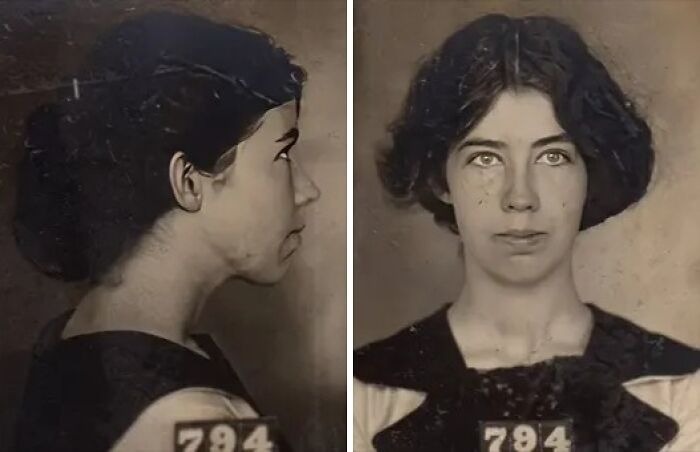
Dubbed the “modern Joan of Arc,” 20-year-old Juanita McKamey was arrested multiple times for organizing and speaking at free speech protests in San Diego in 1912. McKamey was charged with criminal conspiracy and initially sent to a juvenile detention home. Following a failed escape attempt, she was moved to the city jail. Like many fellow protesters, McKamey eventually pleaded guilty and paid a fine.
Bertha Liebbeke, also known as “Fainting Bertha,” was one of the most notorious pickpockets in the Midwest. Liebbeke sought out well-off male victims, pretending to faint and stumbling into them. While they attempted to help her, she would steal their wallets or valuables. She went by several aliases, including Bertha Siegel, the name on her Omaha Police Court mugshot.
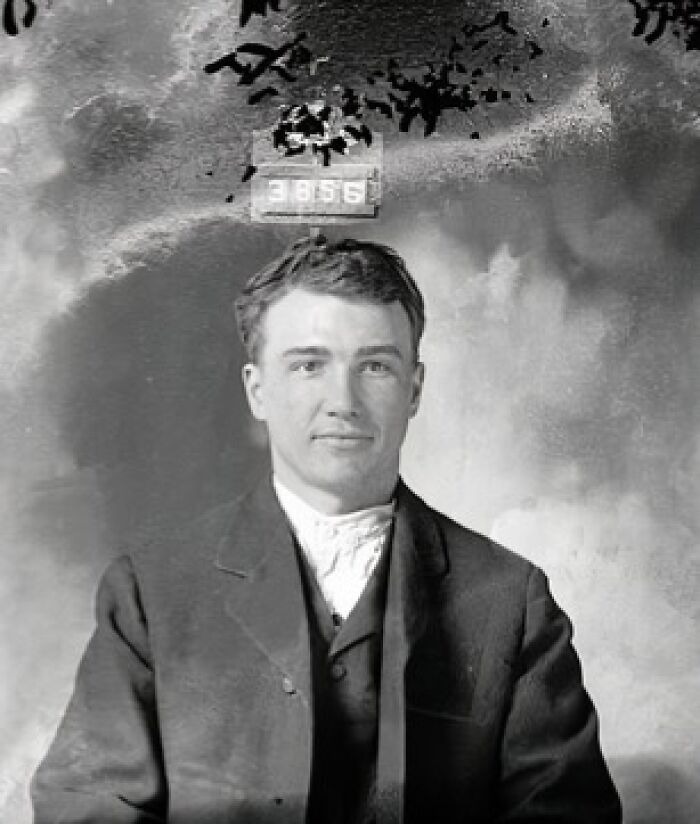
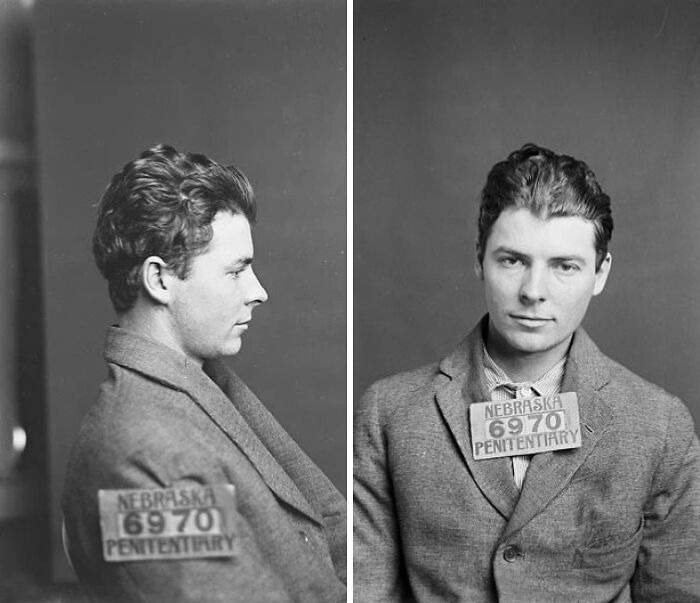
Stephen Shock was convicted of grand larceny (which nowadays would be divided into burglary, theft, fraud, and similar related crimes) in Douglas County and sentenced to 2 years at the Nebraska State Prison in November 1916. Prison records show that he was released in February 1918, having completed only 15 months of his sentence. Following his early release, Shock joined the United States Army to serve in World War I.
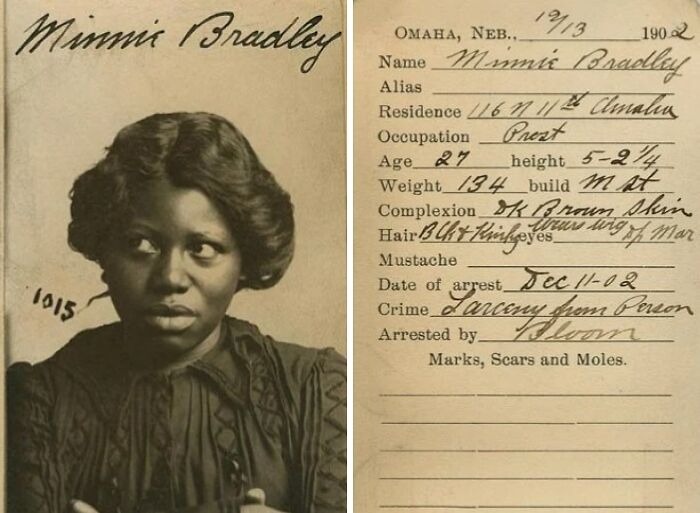
27-year-old Minnie Bradley was arrested on December 11, 1902, for larceny. During the booking process, Bradley gave her home address as North 11th Street in Omaha and listed that she worked as a lady of the night. It was recorded that Bradley was 5 feet 2 inches tall and wore a wig. The description also noted that she refused to look at the camera in her mugshot.
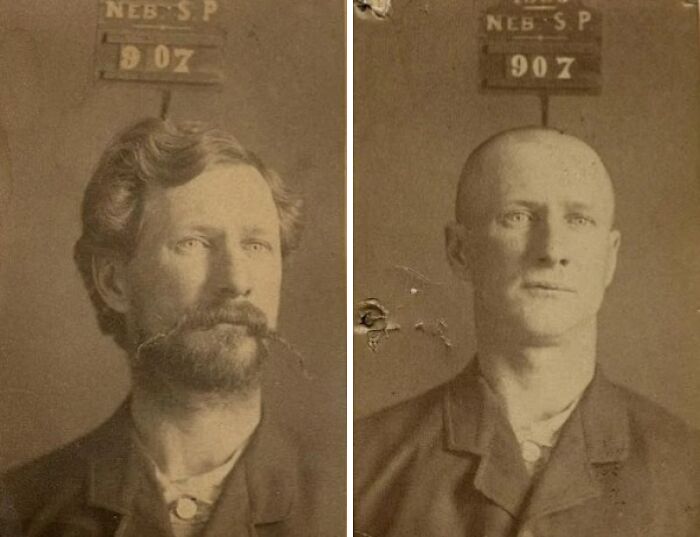
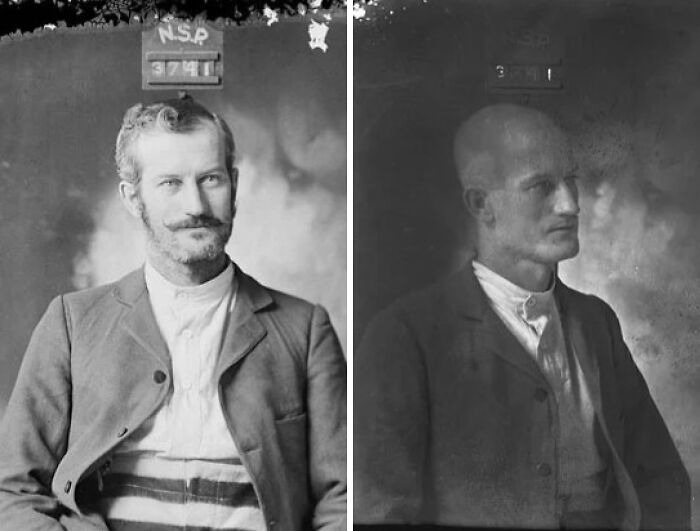
In March 1885, Albert Johnson was sentenced to a year and a half in prison for grand larceny. When Johnson arrived at the Nebraska State Prison, he had an impressive handlebar mustache. However, authorities shaved Johnson’s head and facial hair due to prison policies aimed at reducing lice. Plus, as criminals often changed their names and created multiple identities, detailed descriptions and mugshots were essential. For men, this meant three mugshots each: one before their heads were shaved, followed by a full-face and profile shot afterwards.
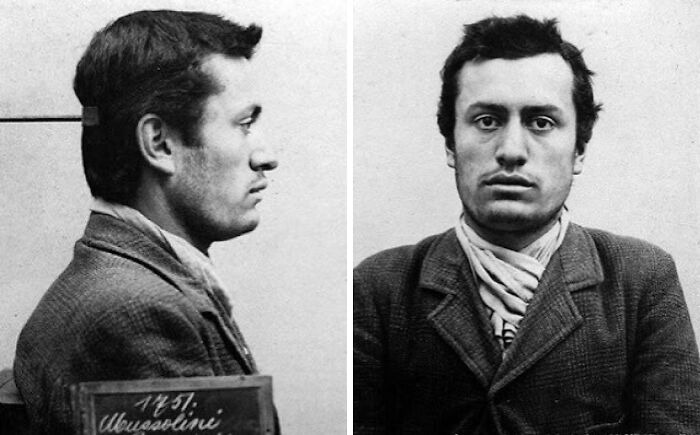
In 1903, a young Benito Mussolini was arrested in Bern and deported back to Italy for reportedly inciting a violent strike. However, official records list the cause of his arrest as a lack of identification papers. Mussolini had fled Italy in June of the previous year to avoid military conscription and soon became involved with a group of Italian socialists in Switzerland.

The role model these days of some particular individual in the American continent who wants to be like him,, but it has this uncanny orange skin, tiny hands and tends to wear a dead albino rat for hair. Oh, and his anencephalic followers idolise him
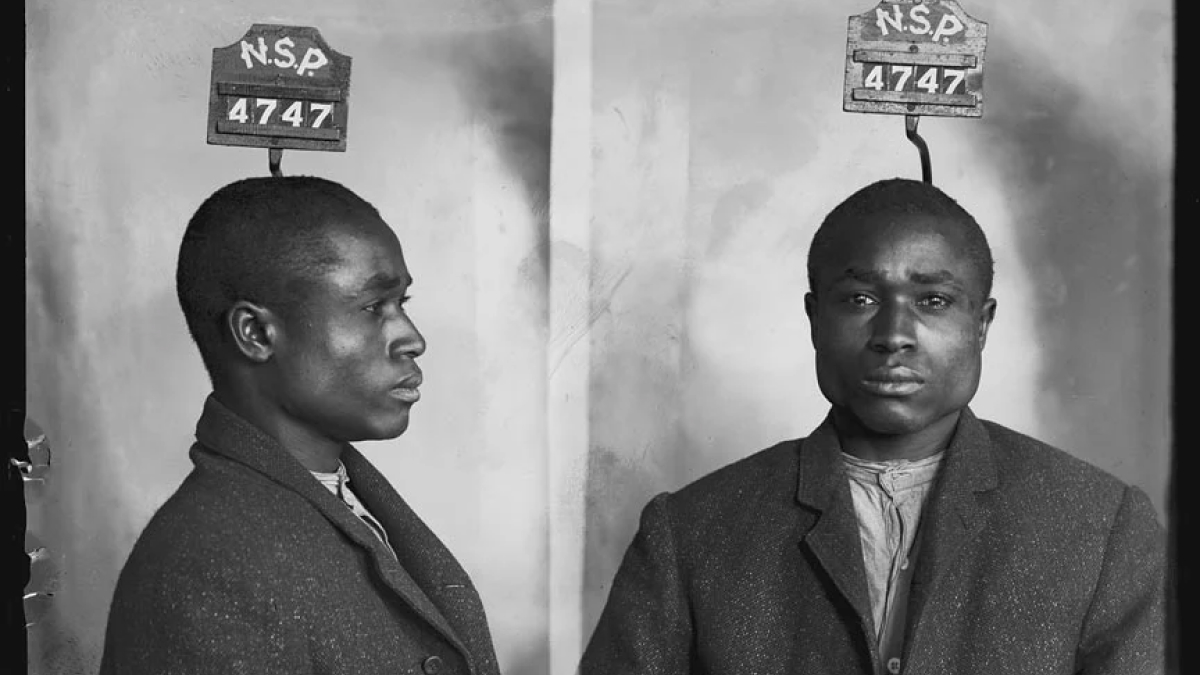
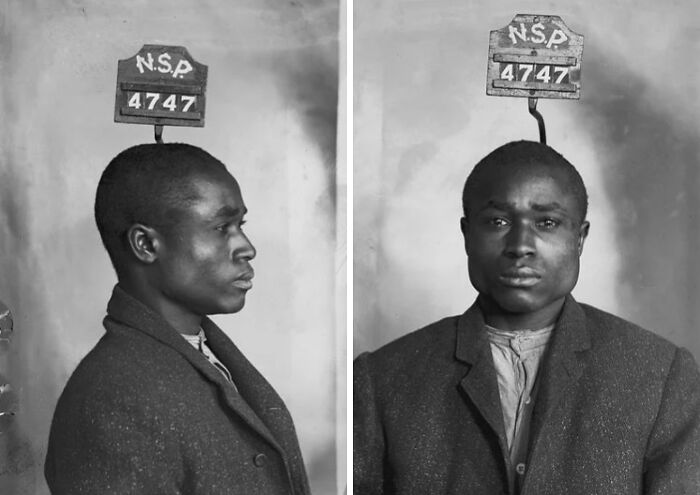
In 1906, Sergeant John Reid of Troop B, Tenth United States Cavalry Regiment, shot and fatally wounded Crawford town marshal Arthur Moss during a heated altercation. Reid fled the scene but was soon captured and taken to the city jail. He eventually stood trial, where he was convicted of manslaughter and sentenced to 7 years at the Nebraska State Prison.
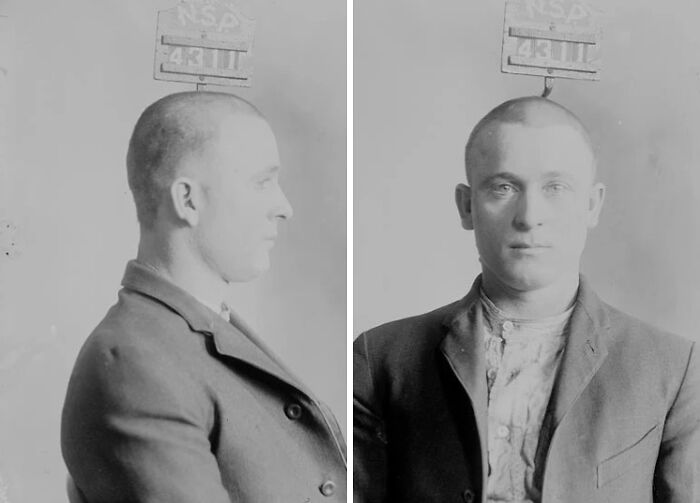
Didn't it hurt when the Nebraska jailors poked those little signs into their heads?
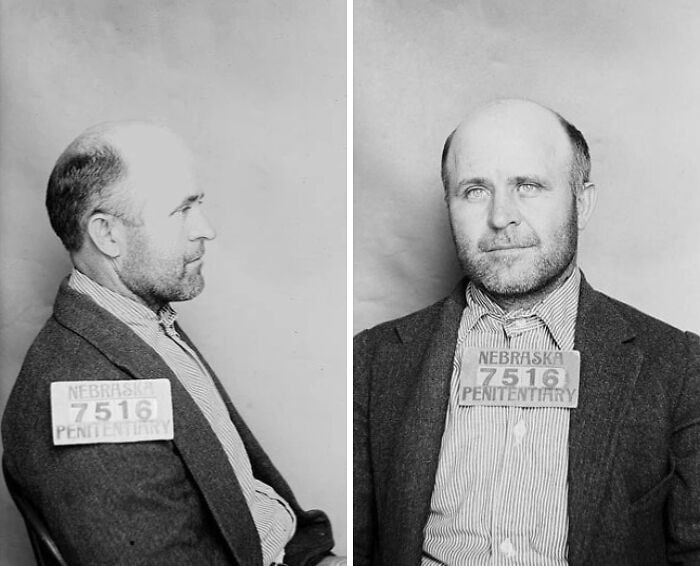
William H. Lee was sentenced to 6 months to 2 years in the Nebraska State Prison for bootlegging in Hitchcock County in December 1919. This was just 2 years after Nebraska’s prohibition law went into effect, outlawing the manufacture and sale of liquor. According to his prison records, Lee was granted a temporary release to visit his terminally ill wife. He returned to prison and was released on July 4, 1921.
One thing to consider is that individual states gave women the right to vote before it became a federal law. And prohibition was pushed by the new voters as a way to reduce child & wife @bus3 and marital abandonment due to drunkenness. It was a desperate action. At the time, it was common to take a pledge to not drink alcohol. So the anti-liquor laws were well-intentioned
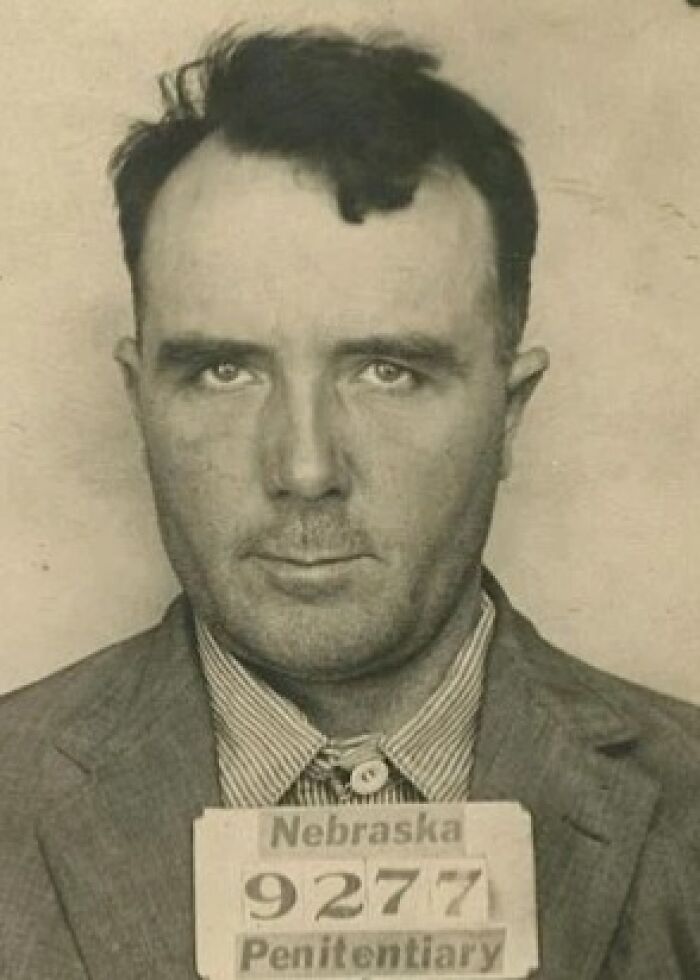
In February 1926, Frank Carter, dubbed the “Omaha Sniper,” terrorized the city of Omaha. He fatally shot 2 people, fired through more than a dozen windows, and shot indiscriminately into a downtown drugstore. Businesses in Omaha ground to a halt, streets were deserted, and the city's entertainment venues remained closed for over a week. Arrested and convicted, Carter confessed to 45 more attacks. He was executed by electrocution in July 1927, declaring, "Let the juice flow."
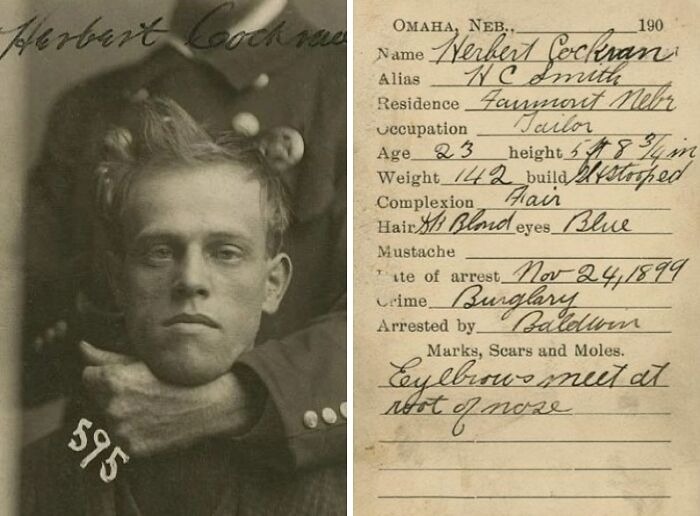
Herbert Cockran, a tailor from Fairmont, Nebraska, was arrested on November 24, 1899, for burglary. For reasons unknown, an unidentified member of the Omaha police force is pictured holding Cockran in a headlock during his mugshot. According to police records, Cockran had a slightly stooped build, a fair complexion, and eyebrows that met at the bridge of his nose.
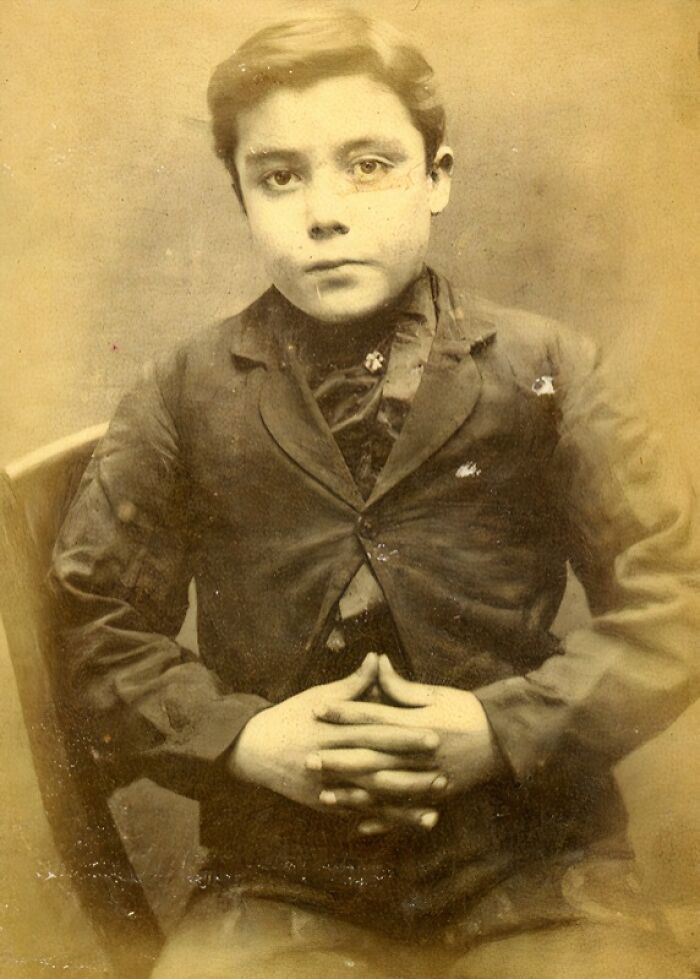
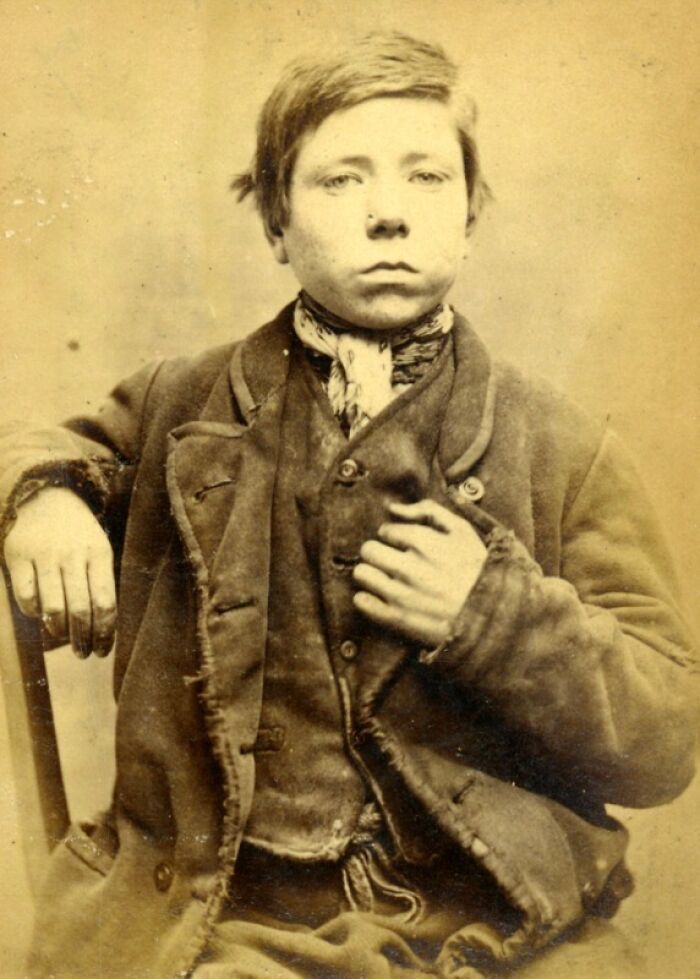
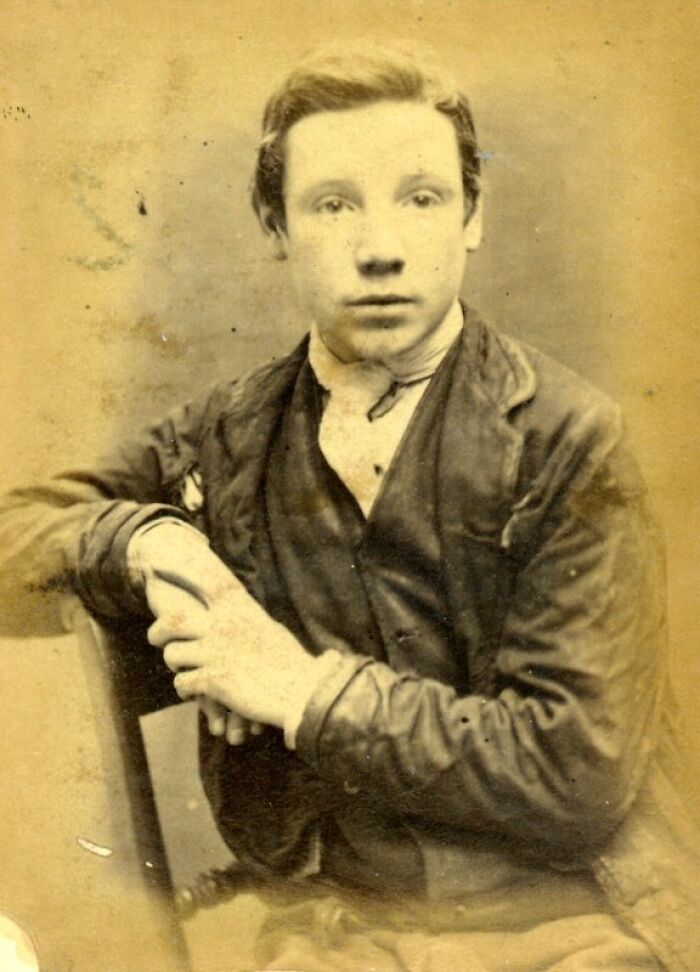
James Donneley, also known as James Darley, was a child laborer born in Shotley Bridge. He was arrested at 16 years old for stealing some shirts and sentenced to two months behind bars for the crime. Unfortunately, this wasn’t his first run-in with the law, since he was in and out of prison prior to this arrest.
On December 4, 1899, Frank Dinsmore shot his wife, Lillian, and their landlord, Fred Laue. Dinsmore was allegedly obsessed with Fred Laue’s wife and planned the double homicide. He was also accused of using hypnotic powers on both women, turning the case into a newspaper sensation. Found guilty and sentenced to execution by hanging, Dinsmore appealed, and the sentence was reduced to life in prison.
Jane Farrell was a juvenile criminal from Newcastle who faced harsh penalties for petty theft in the late 1800s. She was sentenced to ten days of hard labor at the local House of Correction after getting caught stealing two boots. Farrell's mugshot was taken as part of an effort to keep track of young offenders.
The caption is wrong. Newcastle Upon Tyne has never had a "house of correction". Jane Farrel was locked up in gaol. https://www.chroniclelive.co.uk/news/history/gallery/victorian-criminal-mugshots-tyneside-1871-24036750
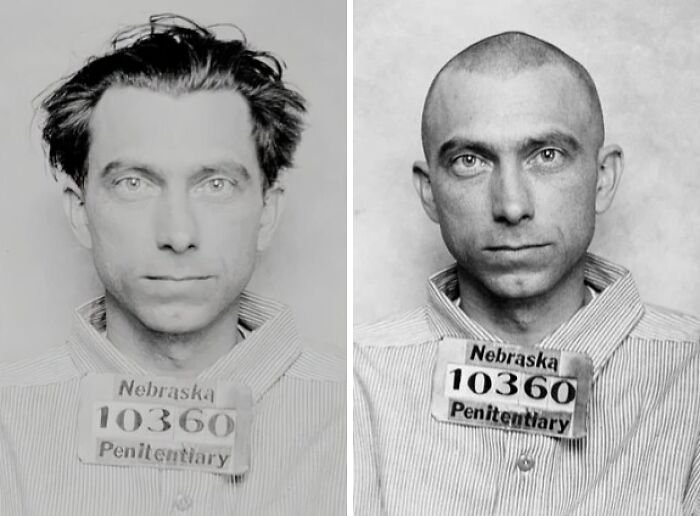
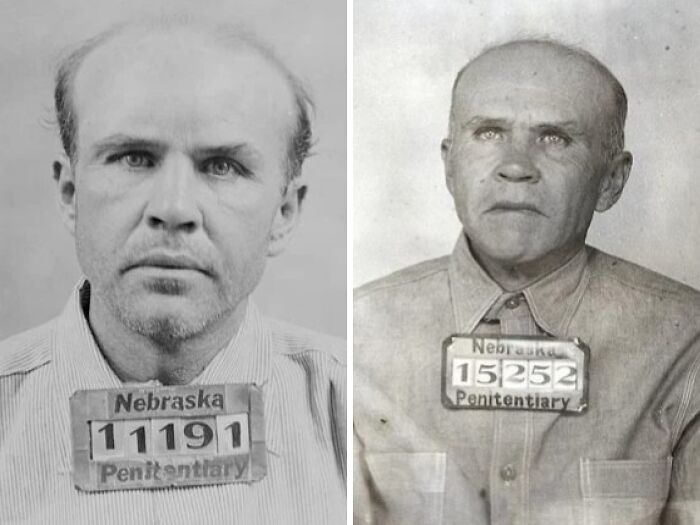
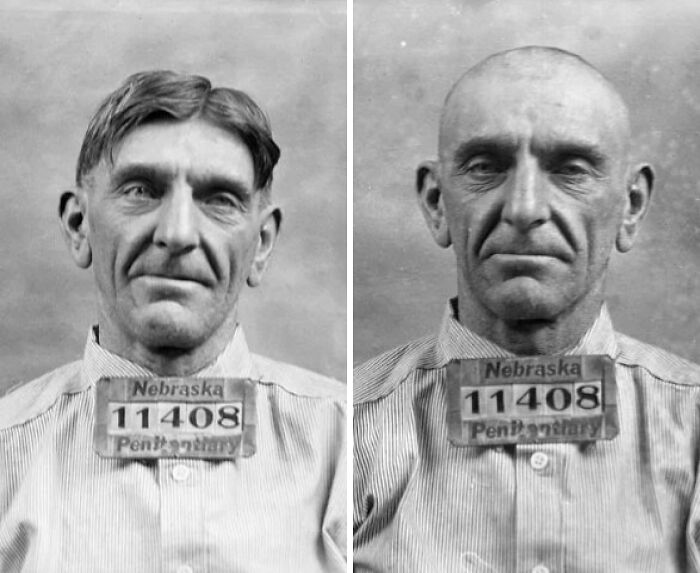
Amos Holloman was a man who spent most of his life in and out of Nebraska State Prison. According to prison records, Holloman served 5 terms spanning a total of 34 years for repeated offenses as a career robber. Every time he entered the prison system, Holloman received a new prison ID number. The mugshots presented above show how he aged between terms.
John Duffy was a 16-year-old laborer born in Newcastle. He was arrested for assault and theft along with his brother Peter and friend George. After being convicted of the crime, Duffy spent six months in prison.
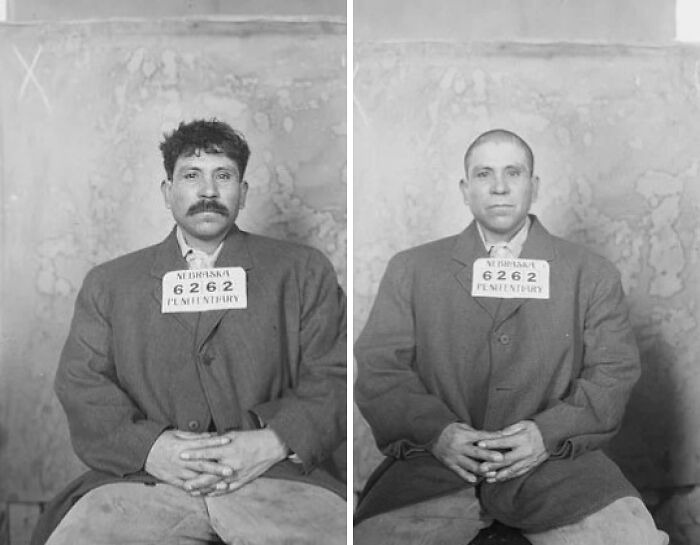
In 1914, Alberto Interciago was sentenced to serve 1 to 20 years at the Nebraska State Prison for “assault to wound”. As was the norm at the time, multiple mugshots were taken. In the first one, Interciago sported a thick, “Mexican” style mustache made popular by rebel leaders Emiliano Zapata and Pancho Villa during the Mexican Revolution of 1910 to 1920. The second set captured Interciago with his hair and mustache shaved.
In 1931, Jake Vohland attempted to steal chickens from a large chicken farm in Gibbon. Scared off by the farm owner, Vohland fled the scene on foot instead of in his getaway car, escaping with only ten chickens worth $5. At the scene of the botched robbery, the sheriff quickly determined the car belonged to Vohland and proceeded to his home. Despite claiming his car had been stolen by someone else for the robbery, Volhand was found guilty of theft and sentenced to 1 year in the Nebraska State Prison.
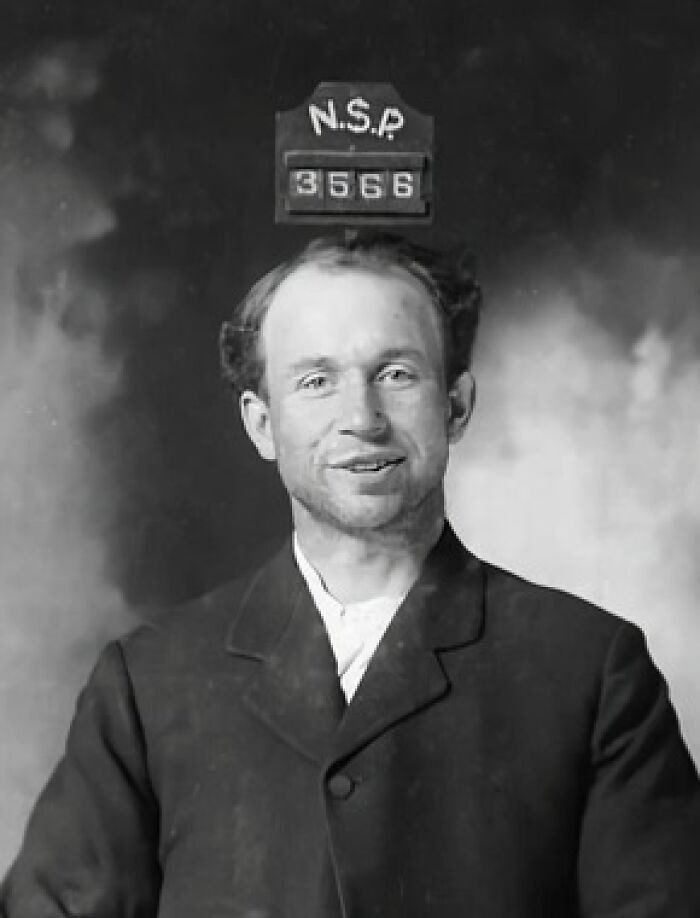
Sentenced to 10 years for manslaughter in the late 1890s, George H. Ray was captured grinning in a prison mugshot. Due to long exposure times, people rarely smiled in 19th-century photographs, so his mugshot was truly unusual. Even after exposure times were reduced to seconds towards the end of the 19th century, having one’s photograph taken was still considered a serious, often solemn occasion.

Most people seem to know about the original long exposeure time as reason for not smiling, but few realise how soon that changed. It wasn't so much the photos that were considered a solemn occasion (except when they included deceased persons) but that their only other reference to portraiture was paintings, which (as well as being long sittings) were considered serious occasions, because of the cost. There are photos of smiling people earlier than people expect, but these are usually cheaper 'photobooth' style ones and often 'lower class' people than would have ever had their portraits painted.
On October 24, 1924, James Pappas was arrested and sentenced to 5 years for arson. His mugshot card read, “This man operated a General Store in Deweese, Nebraska, upon which he carried heavy insurance. He had a young man working for him and incited him to set fire to the store with the intention of collecting the insurance.”
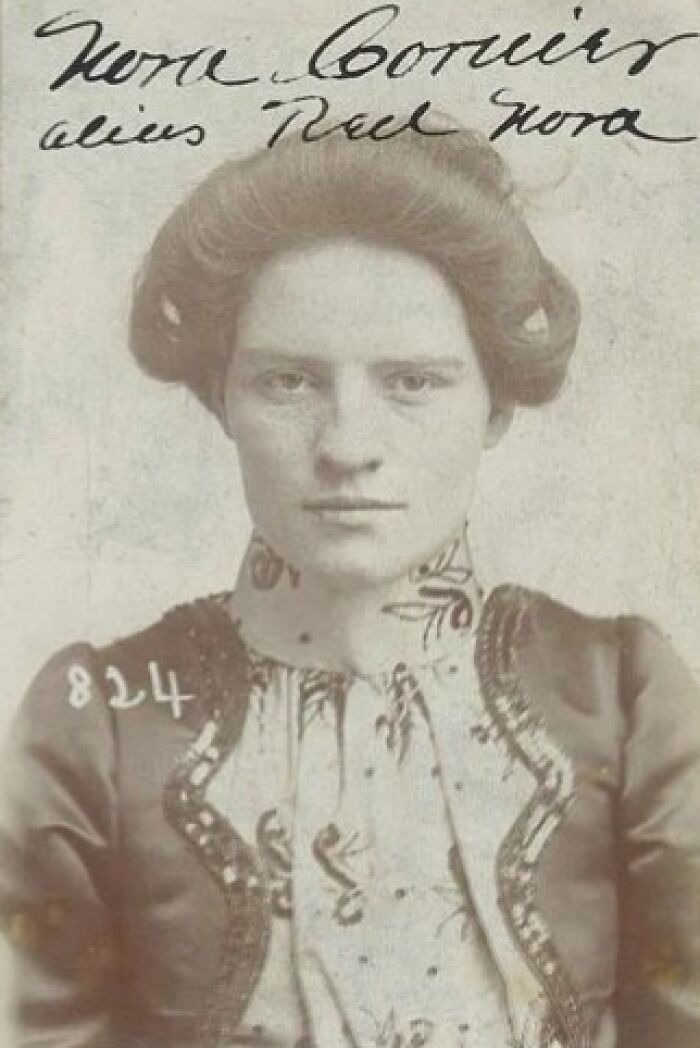
On March 31, 1901, Nora Courier, also known as “Red Nora,” was arrested by Omaha police for stealing a horse. Police court records described the 22-year-old as standing at a height of around 5 feet 3 inches. Courier was said to have slate blue eyes and a scar in the center of her forehead, contributing to her striking appearance.

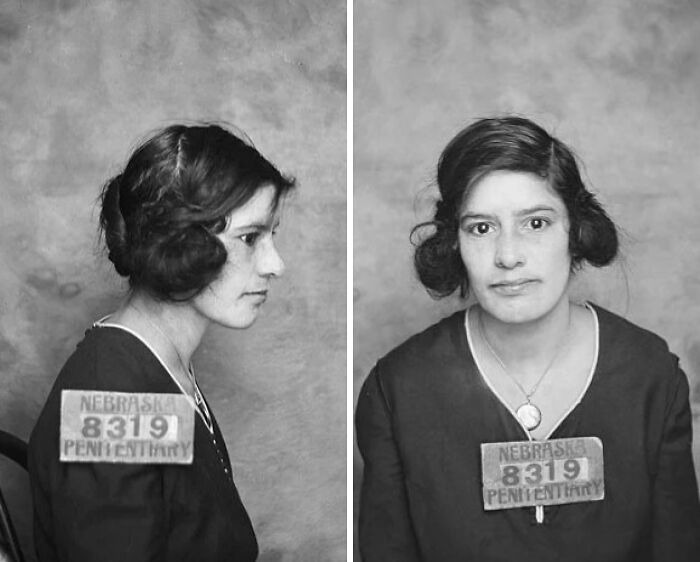
Mexican-born Lola Lopez and her companion Cicerio Estrada clubbed, strangled, and robbed Stephen Pann in the Null Rooming House in Sidney, Nebraska, on January 9, 1922. They fled before Pann’s body was discovered and were eventually captured in Greeley, Colorado. Through an interpreter, Lopez pleaded not guilty, but admitted to knowing about the homicide. She served 2 years, 2 months, and 22 days.
When Eli Feasel disappeared from his farm south-west of Bostwick, Nebraska, the investigation led to the arrest of his housekeeper, Nannie Hutchinson, and her 21-year-old son Charles. With little evidence that a crime had been committed, they were released after their hearing. The following spring, suspicious behavior and new clues, including a foul smell from a buggy Charles rented and footprints matching the Hutchinsons' footprints near an open grave, led to their rearrest. Both Charles and his mother were found guilty of second-degree murder.
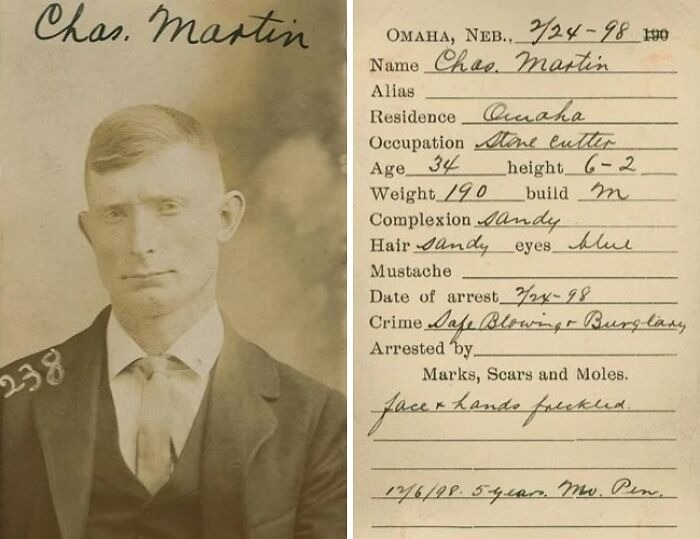
On the night of February 15, 1898, three burglars blew a bank vault open in Sheridan, Missouri, escaping with $2,400. With the help of the police, a private detective apprehended one of the wanted men at the Sheridan Hotel in Omaha. He gave his name as Charles Martin, but had several letters addressed to Charles Davis. Martin was taken to the police court, where he was photographed and detained awaiting transfer to Missouri.
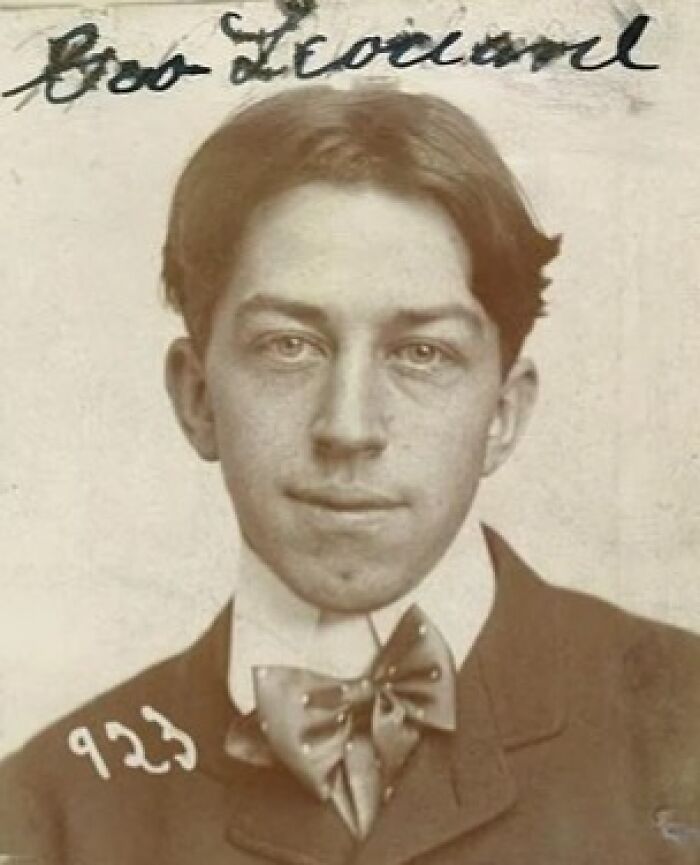
George Leonard, with his boyish looks and freckles, hardly looked like a criminal when he was taken into Omaha police custody for burglary on December 23, 1901. Leonard was a bookkeeper by profession, a role often associated with trustworthiness. His large silk bowtie sat slightly askew against a stiffly collared shirt, and he wore a slight, unusual smile despite the charges.


In the US in the 70s-80s, there was this big movement to attempt to instill 'self-esteem' in kids as a preventative for delinquency. It failed because they were using a correlation-as-causation model but also because someone pointed out that the prisons were full of people with great self-esteem.
Load More Replies... In the US in the 70s-80s, there was this big movement to attempt to instill 'self-esteem' in kids as a preventative for delinquency. It failed because they were using a correlation-as-causation model but also because someone pointed out that the prisons were full of people with great self-esteem.
Load More Replies...

















 No fees, cancel anytime