Get Premium
Dark mode theme is available exclusively for premium users. Learn more about the benefits of subscribing.
No fees, cancel anytime.

 Dark Mode Ad-Free Browsing Unlimited Content
 Ad-Free Browsing Unlimited Content Dark Mode
Join 1.2 million Panda readers who get the best art, memes, and fun stories every week!


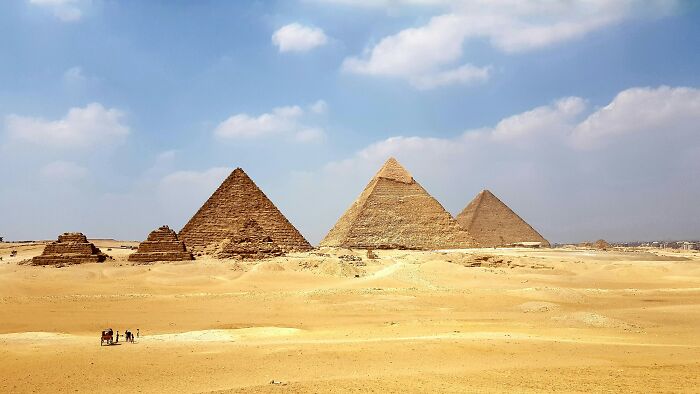
The old World history textbook I used in school specifically stated something like, “Some people, looking at the Pyramids of Egypt, believe that it was impossible to build something like this with ancient technology and that they were the work of aliens.” This was followed by a detailed description of how the ancient Egyptians actually built the pyramids themselves.
But textbooks are textbooks, and when I first saw these pyramids myself, it was hard not to succumb to the alien myth… Well, in fact, many historic landmarks around the world actually have their own widespread myths, which are sometimes very difficult to debunk. And it is precisely these stories that this selection of ours is dedicated to.
More info: Reddit
This post may include affiliate links.

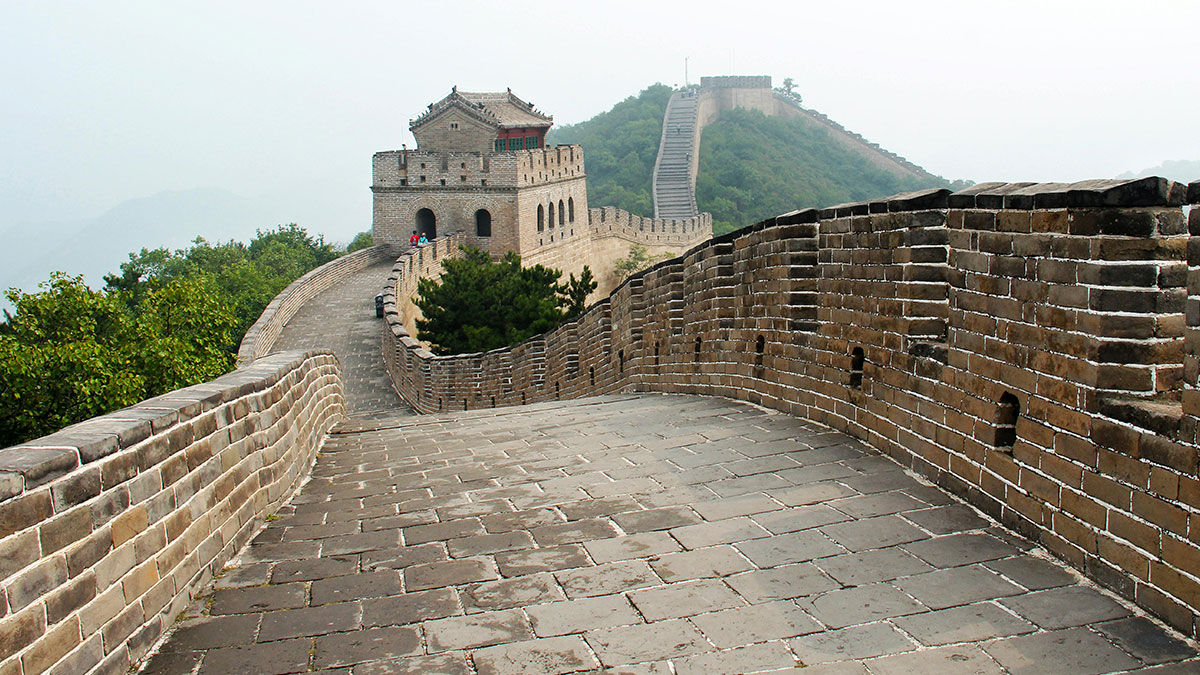
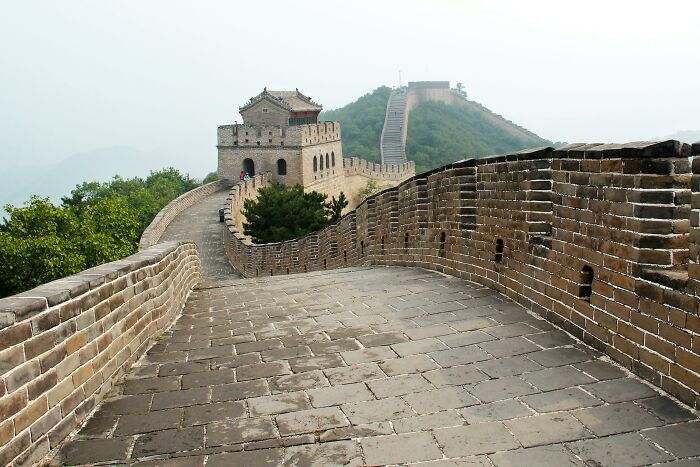 That you can see the Great Wall from the space. I don’t know which idiot started this. It’s long but it’s not wide enough.

Can you see all the people who are allegedly buried in it from space?
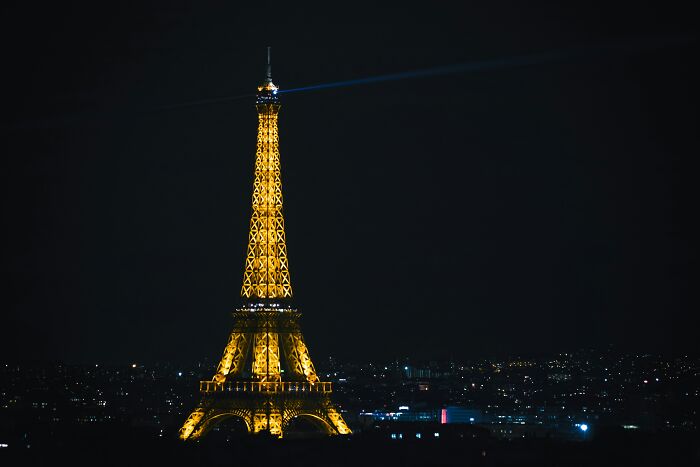 There is a very common myth that it's illegal to take pictures of the Eiffel Tower at night. While it is true that the Eiffel Tower lightshow is under copyright, it's not illegal at all to take pictures. It's only if you want to use these pictures in a professional way that you need to obtain an authorization or pay a fee. But no French police officer will catch you if they see you take a picture of the tower during the night!
Plenty of anecdotes about the tower are true however:
- Eiffel was a very conscientious employer and there was not a single accident on the construction site during working hours? True ✅
- The tower was set to be taken down after the exposition and survived because it was turned into an antenna? True ✅
- A crazy inventor jumped from the tower to demonstrate a flying machine, but it didn't work and the man fell and died? True ✅.

There's video of the last one. You see the man pause briefly, and then leap into history.
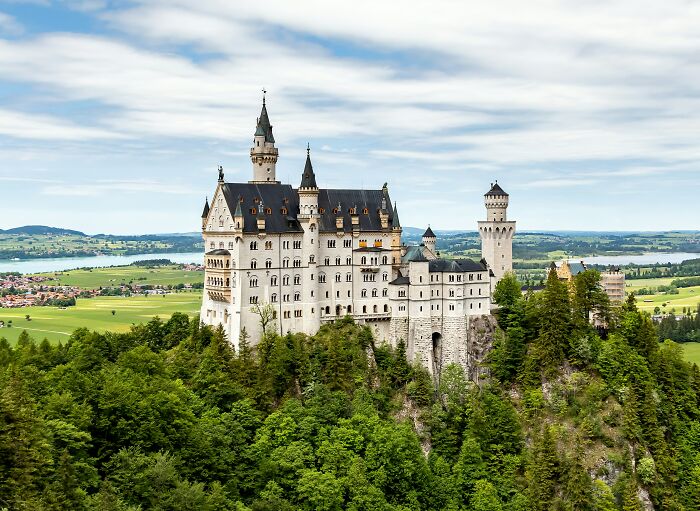 There are people who believe Neuschwanstein is a medieval castle.
It's the same age as the Eiffel Tower.

And Hoeschwangau is only six years older. Both built by Ludwig of Bavaria.
A couple of weeks ago, a thread appeared in the r/AskTheWorld community. The author, the user u/Familiar-Arrival-470, asked netizens: “What’s a widely believed historical myth about a famous landmark in your country that isn’t actually true?” The topic starter originates from India, so it’s not surprising that the story they proposed concerned perhaps the country’s most famous landmark - the Taj Mahal.
According to one legend about this place, Emperor Shah Jahan, after builders erected a magnificent mausoleum for his late wife, Mumtaz Mahal, ordered their hands cut off - so that none of them would ever build anything more beautiful.
Of course, this is nothing more than a legend. Firstly, there is historical evidence that the architects who built the Taj Mahal subsequently erected other buildings. Secondly, similar legends are associated with almost every remarkable ancient building. So there’s no need to worry about the architects’ health - they were all right.
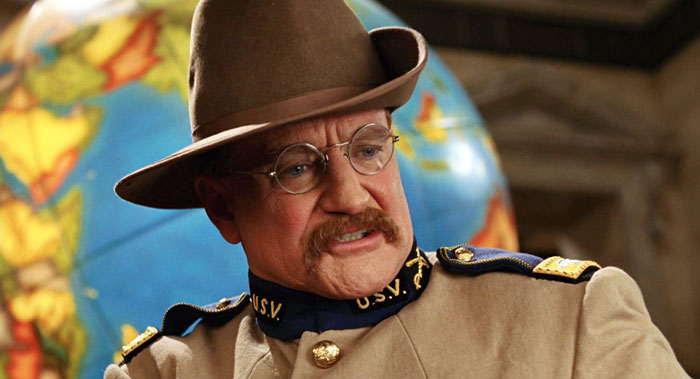 That the exhibits in the smithsonian come to life at night! I don't care how compelling Robin Williams is, if Teddy Roosevelt was coming to life every night he would have fixed this country by now!
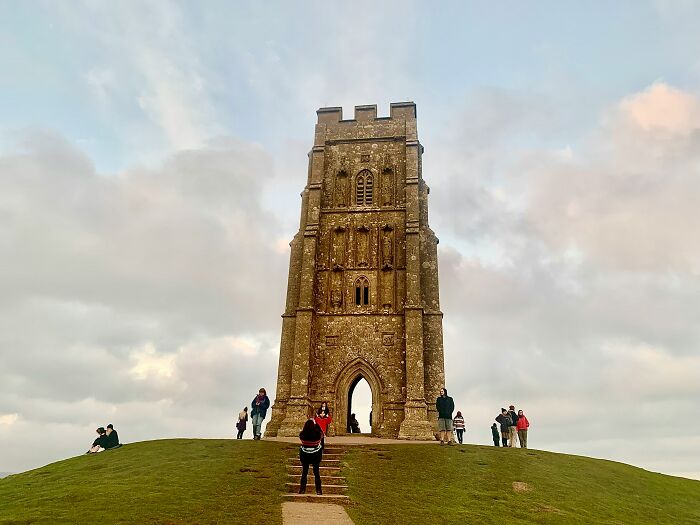 That King Arthur sleeps (or less supernaturally, is buried) under Glastonbury Tor.
The prevailing theory nowadays is that monks in the 12th century cooked up the whole notion as a kind of medieval tourist trap!
Another popular story concerns Neuschwanstein Castle in Germany. Even if you haven’t seen a photo of it, well, it served as the inspiration for the castle on the Disney intro. So, for some reason, many people are convinced that Neuschwanstein is a medieval castle. In fact, of course, this is not true.
Firstly, medieval castles weren’t built like that. A typical medieval castle is a stone colossus with tiny windows, designed to protect the owner and garrison from attackers, not to impress their aesthetic senses.
Secondly, and most importantly, Neuschwanstein was built less than 200 years ago by the Bavarian King Ludwig II. Interestingly, this guy was incredibly romantic and extravagant, building a dozen more equally beautiful palaces across the country.
Eventually, his confidants, realizing there was no money left in the treasury for another lavish project, simply declared the monarch insane and removed him from power. Ironically, all the palaces built by Ludwig II now generate no less insane amounts of money for the budget from tourism, so the “mad king” gave the country a considerable financial boost.
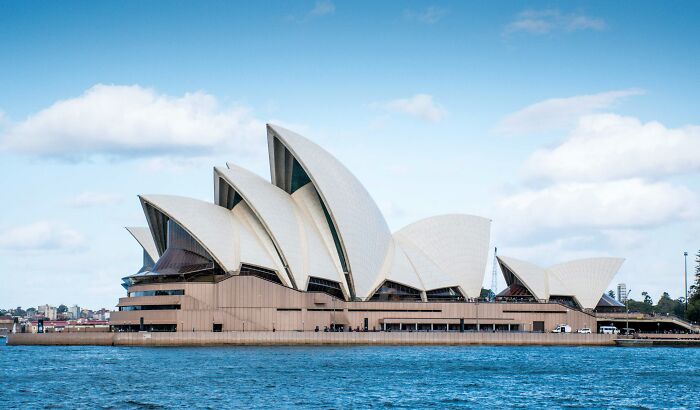 That the Sydney Opera House is a world class opera centre with the perfect acoustics for the orchestra and opera in general.
Infact it is quite dingy, and has absolutely terrible acoustics.
It was built with the roof meant to represent sails on a ship, which in turn made the interior difficult for performances.
Maybe the Sydney Opera House was built to resemble sails so you could imagine yourself sailing away from the Opera music.
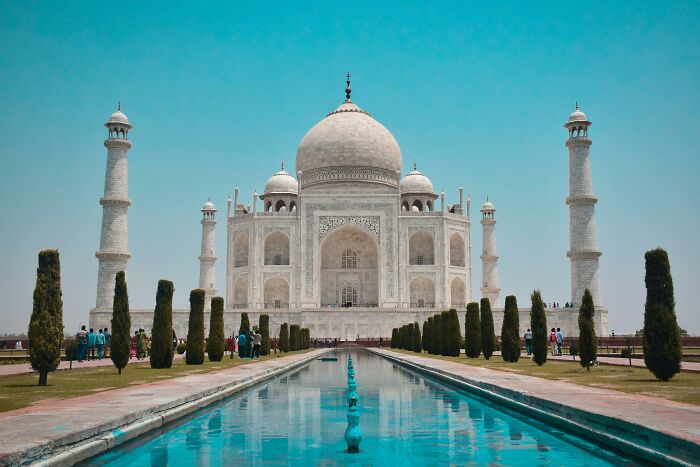 There's also a story that Shah Jahan was going to build a second, black Taj Mahal across the river for himself. Apparently most historians say that it's a myth.
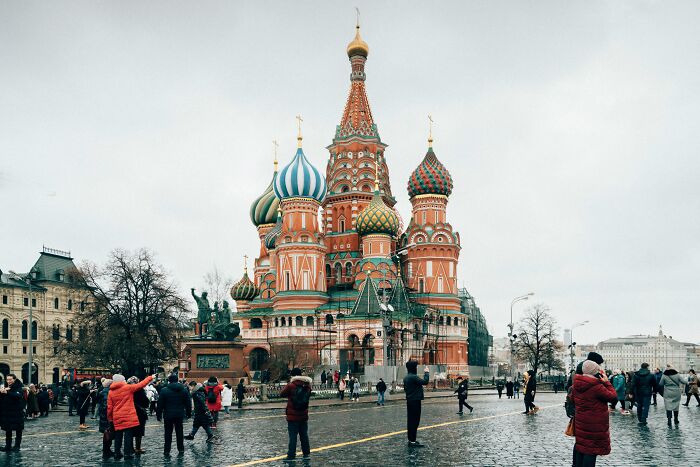 That seems to be a popular motif in legends as the same is said about St. Basil's Cathedral - the architects were either blinded or imprisoned to prevent them from built something surpassing it, while there's no corroborating evidence, and one of the proposed architects (it's not clear who headed the project) being recorded working at a later time.
The popular stories in the Middle Ages about a particular building (usually a monastery) housing the tomb of an iconic historical figure (like King Arthur) were also legends created by enterprising monks.
Many monasteries in the old days were quite profitable commercial enterprises, and competition for parishioners and new monks was as fierce as the NCAA’s race for five-star athletic prospects. In fact, when the offspring of a wealthy noble family entered a monastery, their relatives would usually make a hefty contribution on their behalf or bequeath a plot of land to the monastery.
And what determines a monastery’s prestige? A beautiful legend, of course! So it’s no surprise that the wealthier and more famous the monastery, the more spectacular and convoluted its legend. And today, many folks simply believe these legends…
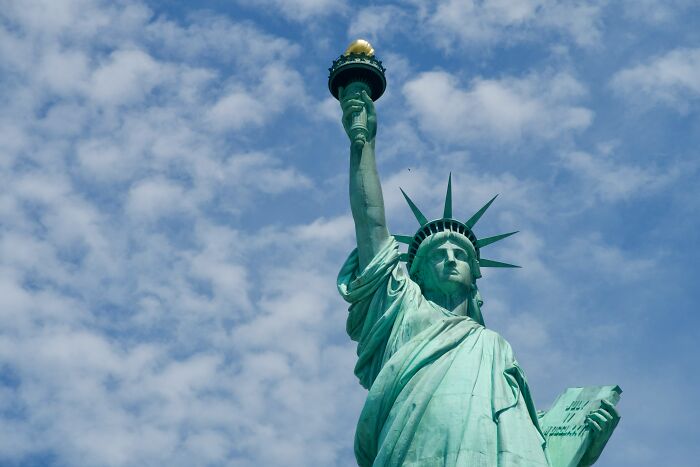 Not sure if this counts, but people think the torch of the Statue of Liberty has a balcony tourists can go onto, but in reality it's much too small for that and is only accessibly by ladder for people to service the lamp inside. (Tourists were permitted to go one at a time way back when it opened, but they closed it to the public in 1916). It's such a popular myth that it's one of the more well-known examples of the Mandela effect; people insist they have memories of standing on it, or pictures of them on it. But it's only about 8 feet wide. The crown is the part that's open to tourists, but of course the torch is visible from the crown, so I think people go up there and that's the image they remember.
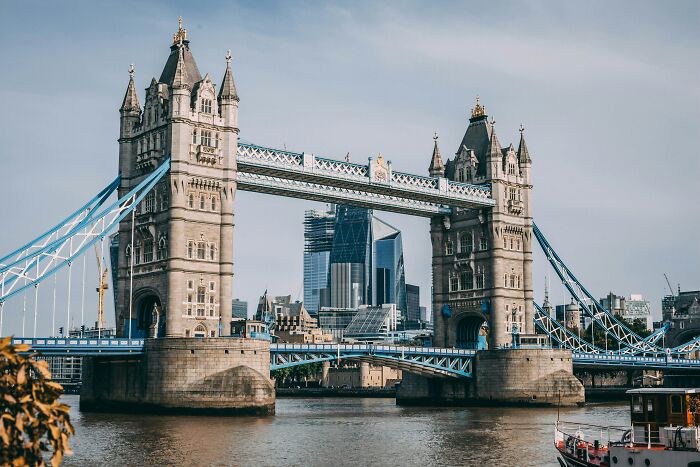 Myth: This is London Bridge
Truth: This is Tower Bridge.

It is rumoured that any pilot who flies through the bridge will automatically lose his licence for life.
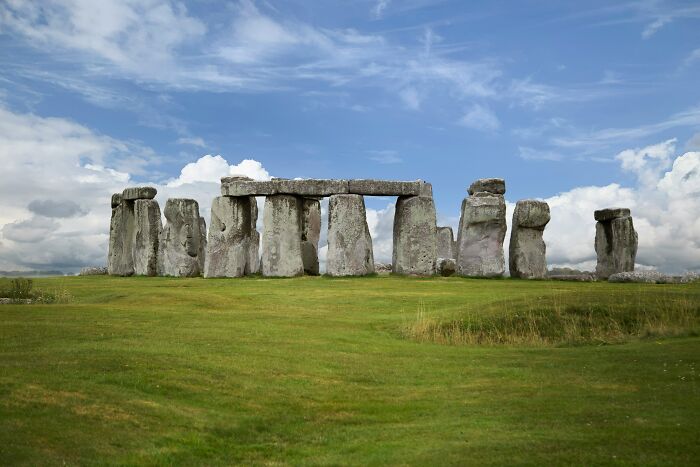 That Stonehenge was built by the Druids.
It wasn’t.
It was over 1000 years old before the Druids - who were Celts - even laid eyes on it.

Be sure to visit Stonehenge in the spring or fall to see them rotate the stones for Daylight Savings time.
By and large, many of these stories and myths are based on simple misunderstandings. For example, the myth that the Great Wall of China is visible from space. Apparently, the source of this myth lived in Great Britain in the 18th century and never saw the wall with his eyes.
In one of his letters, the English scientist William Stukeley, describing Hadrian’s Wall, noted that it was second in size only to the Great Wall of China - though the latter was supposedly visible even from the Moon. Later, in the late 19th century, many popularizers of science picked up on this “fact,” and even numerous statements by astronauts couldn’t completely refute it.
The fact that the Great Wall of China is invisible to the naked eye has been asserted by many, including Neil Armstrong, William Pogue, Leroy Chiao, and even the Chinese astronaut Yang Liwei. Moreover, when the European Space Agency published an article claiming that the wall could indeed be seen from space, it turned out that the authors had confused the wall with a river. Period.
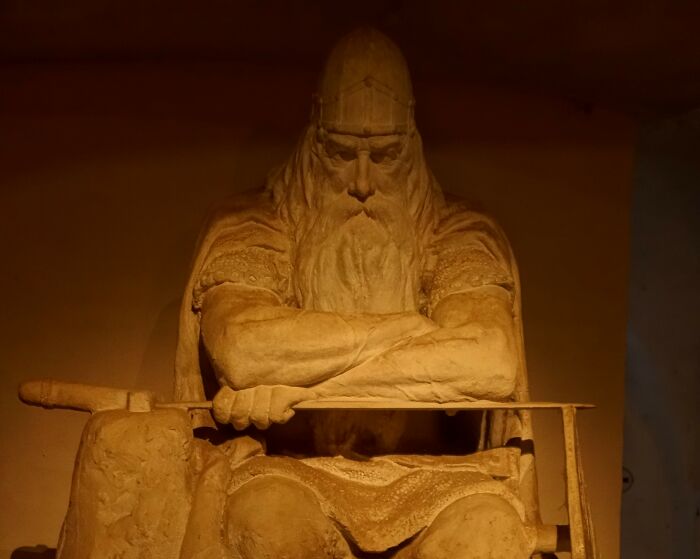 In Denmark, we have a statue of a warrior, Holger Danske, who sits in the tunnels beneath Kronborg Castle (the one from Shakespeares Hamlet). Legend says that he is sleeping, waiting for when the country needs him, at which point he will wake up to defend Denmark from the Threat. In fact, the statue under the castle is only a casting of the original bronze statue, and was placed there because H.C.Andersen (the author of fairy tales like The Ugly Duckling, The Little Mermaid and The Emperor's New Clothes) wrote a fairy tale about him in 1846, where Andersen portrayed Holger Danske as 'The Protector of the Father Land', resting under the castle as he waits for the country to need him.
https://preview.redd.it/9vb1he8n9ojg1.png?width=864&format=png&auto=webp&s=57ecadd82146bb248f09d01cf2069a884edafac9
Image source - Screenshot of Google image search results using keywords 'Holger Danske'.

There was a lovely science fiction novel by Poul Anderson called Three Hearts and Three Lions, which is where I learned of Holger Danske in my childhood.
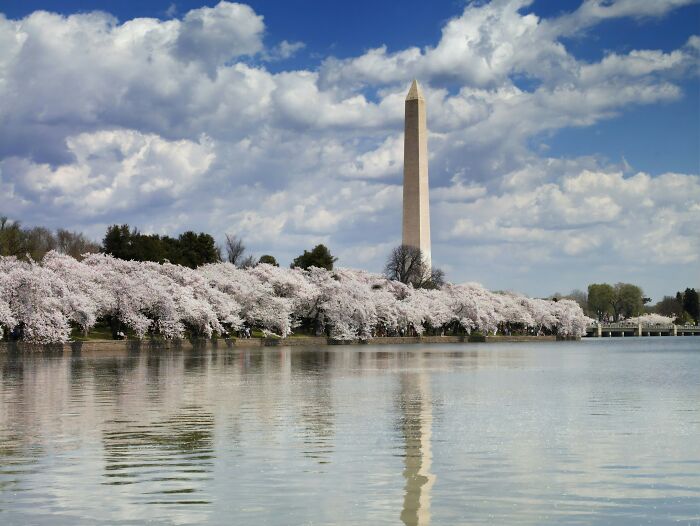 Hard to say there was a real mystique about it but some people assume that the Washington Monument which is named after George Washington was made purposefully to be simple looking. Supposedly this was to represent how George Washington and the country a straightforward and virtuous nature and the simplicity of the American republic. The truth is the government had envisioned a more opulent monument but ran out of money. In fact for 23 years it was left only half built as an eye sore in Washington DC before getting funding to finish a portion of it. No one ever finished the rest of the original intended design.

Speaking of myths about tall things in Washington, DC , the height restriction on buildings has nothing to do with the height of the Capitol building. The first laws passed by Congress in 1899 came about due to fears of tall buildings being unsafe and the limitations of firefighting ladders at the time. The fact that the restriction preserved the sight lines of the monuments and other historical structures was just a byproduct. However, that is probably why the rule is still around today.
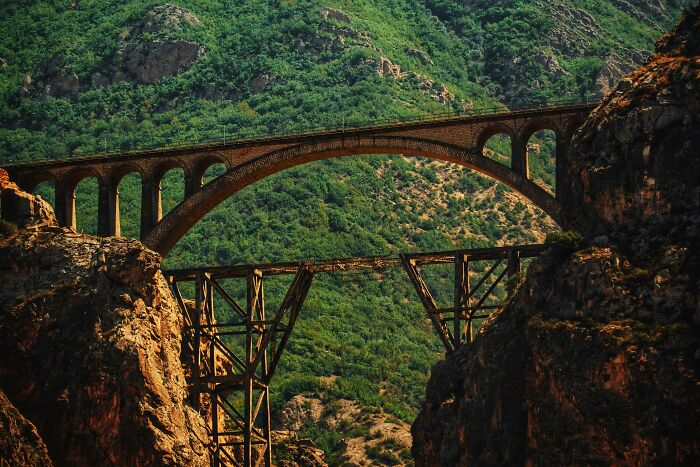 There is a railroad bridge called Veresk in the north of Iran built during the 1930s. There is a myth that King Reza Pahlavi forced some family members of the builders to live under the bridge, to ensure its strength and durability.
In any case, all these myths, misconceptions, legends, and fairy tales only add a certain charm to iconic landmarks, increasing people’s interest in them (and also filling the coffers of local businesses serving tourists). So now, please feel free to read this selection to the very end, and if your country also has a landmark myth not mentioned here, maybe add the story in the comments below.
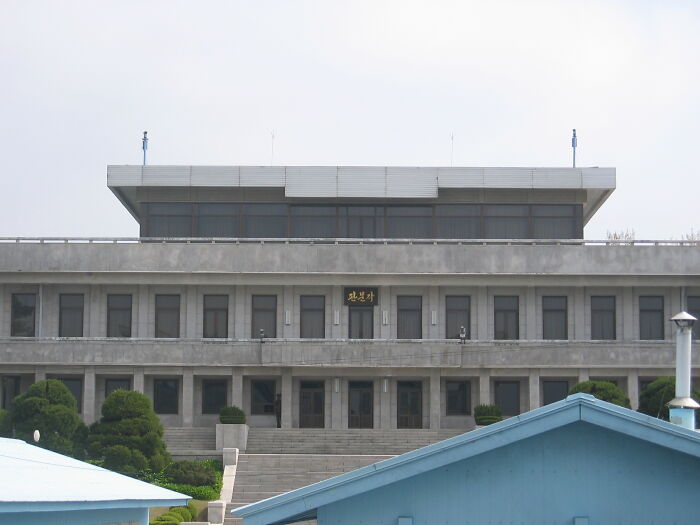 The origin of the place name Panmun (판문), that place where North and South Korean border guards stand guard facing each other, with mere metres between them.
The story is that the name, which means door plank, comes from in 1592 when the Joseon king fled North during the Japanese invasion. The locals saw the king's entourage passing through, and not wanting their king to have to step on mud, ripped off the doors from their houses and laid it down on the ground as a bridge. It's a popular story about a hated king, about how the people were still willing to sacrifice to protect the prestige of the state while the king fled.
It's absolutely and very provably not true, but it gets brought up every now and then.
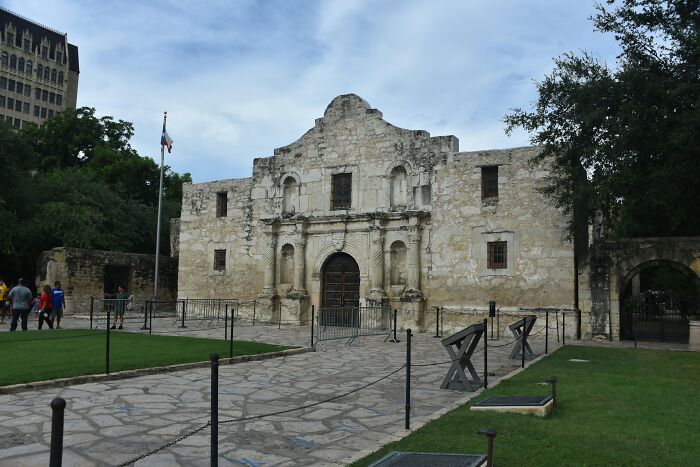 Thanks to Pee Wee Herman there are people who believe that the Alamo has a basement.
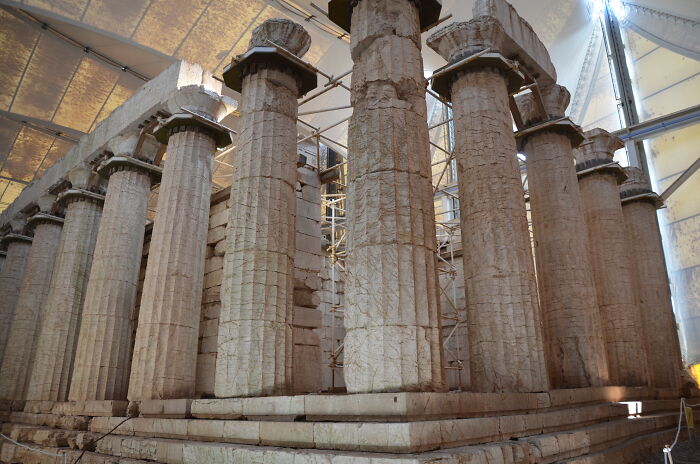 The Temple of Apollo Epikourios at Bassae, Greece has this “mystery” myth that it rotates on its axis to follow Earth’s magnetic field. Like it’s some 5th-century BC giant compass on a turntable.
Well it doesn’t and there’s no evidence it was built as a moving mechanism. the only kinda interesting fact is that it has an unusual for a classical Greek temple north–south orientation (UNESCO even calls that out), most probably due to the brutal mountain terrain / limited building space forcing a weird layout.
Still an incredible temple if thats your cup of tea, just not magnetic-levitation incredible.
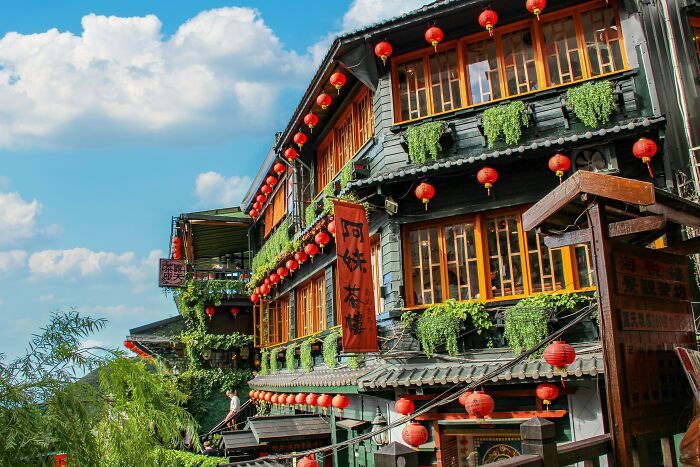 Ghibli movie Spirited Away was modeled after this building at Jiufen. no it's not
https://preview.redd.it/8nwmscsivnjg1.png?width=1200&format=png&auto=webp&s=5a22c7d112310b3ff794fe66dc56472aa6a12582.
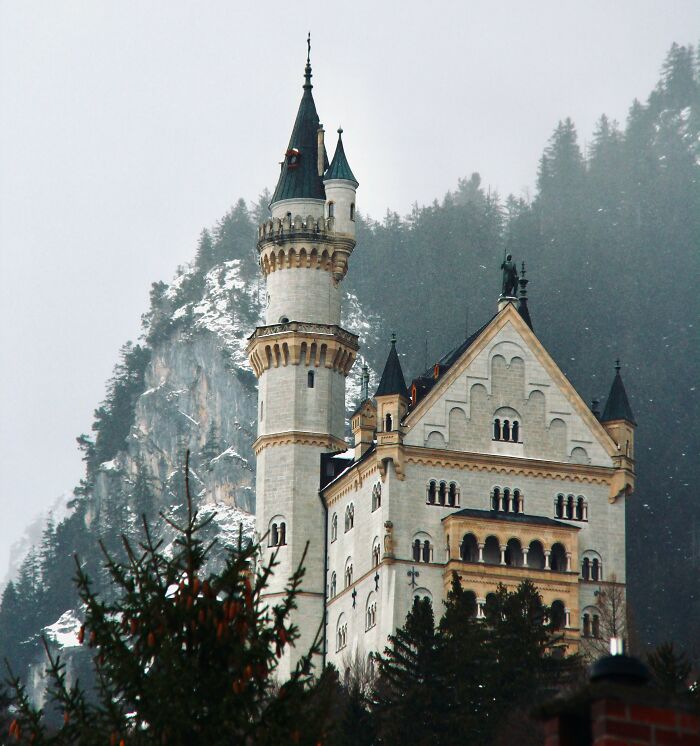 Neuschwanstein Castle was not built in medieval times but is in fact a modern building from the 19th century also using steel reinforced concrete. So it is not too far removed from the Disney castle it inspired.
It also was the first fully electrified building in Bavaria.
 This sort of stuff about cutting hands/executing workers so that they could never recreate something as good, is fairly common across many cultures. As a myth, I mean.
It's very much the result of idiotic minds trying to hype up a particular project well after the fact.
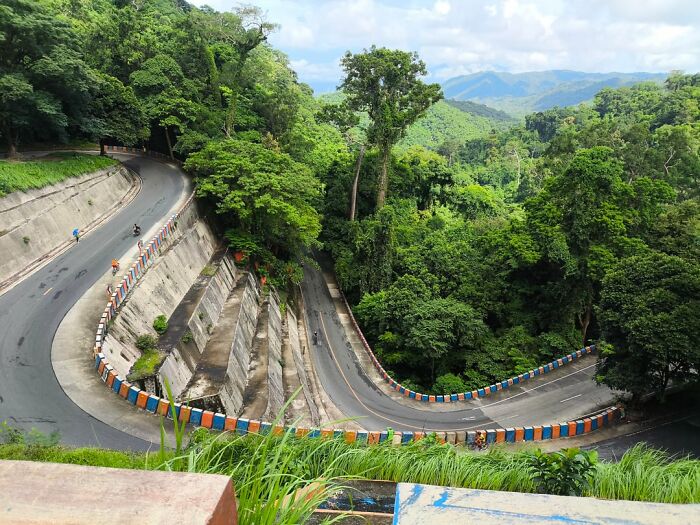 That this road was "Bitukang Manok" and it was constructed like because of a heartbroken engineer who wanted to get back at his ex for leaving him for a soldier.
https://preview.redd.it/3qrj7kl9nnjg1.jpeg?width=556&format=pjpg&auto=webp&s=2df1f71572b0e5bb8080982068f217a728dcac71
This is not even the "Bitukang Manok" (Chicken Intestine) road, the real one is located in Camarines Norte province. That one is Eme Road in Atimonan, Quezon Province.
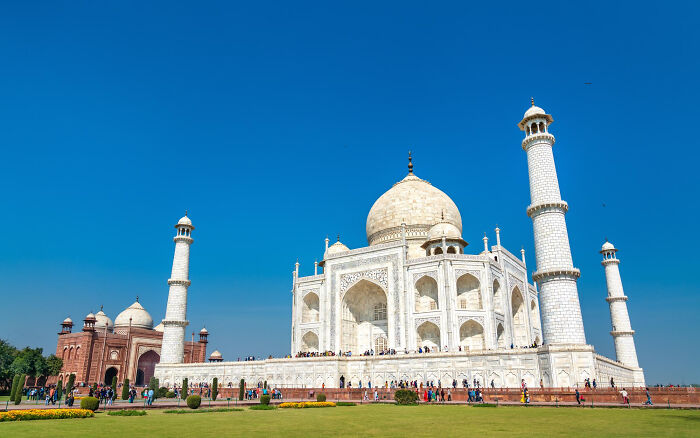 Yes it was spread by tourist guides to create an aura around Taj Mahal. In reality, most descendent of those artist still live around Taj Mahal and are still involved in artistry.
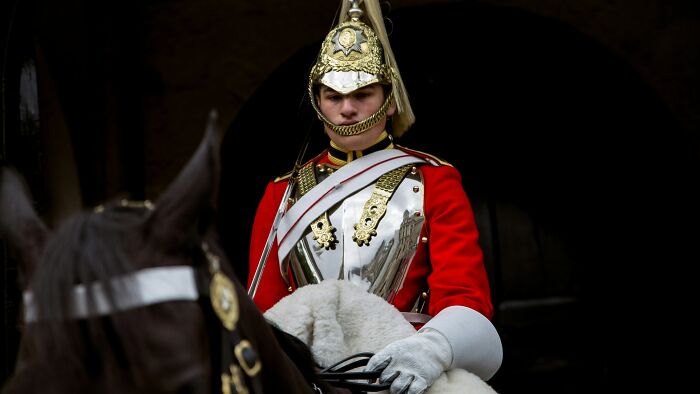 This was a rumour spread by the British to create hostility towards the Mughals and play divide and rule.
Ironically, descendants of Dhaka muslin weavers claim that their ancestors thumbs were cut off by the British. The same muslin was renowned across the world for being so fine that you could see right through ten layers of it. Now only available in a few select museums.
The British crushed the entire industry so that their factory made cotton would be sold and took their own tale of cruelty and rewrote history to make us forget our former prosperities.
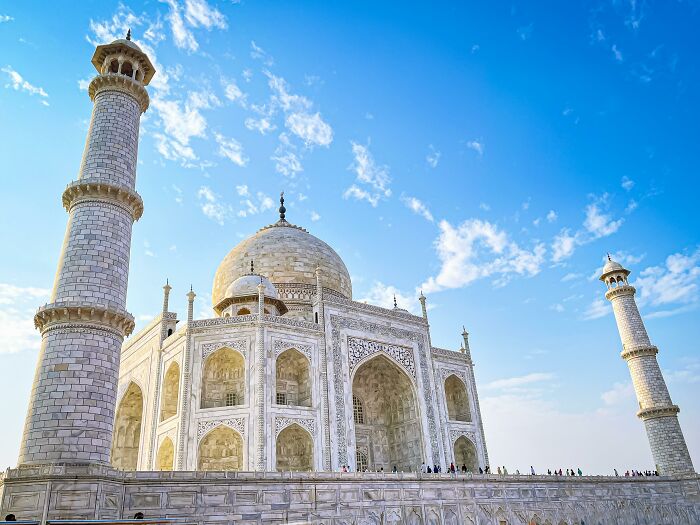 The Taj Mahal is a monument of the king’s 14th wife who was also one of his wife’s sister.
OK, I can't even with the grammar. Call me a grammar nazi on this one.






























 No fees, cancel anytime