Get Premium
Dark mode theme is available exclusively for premium users. Learn more about the benefits of subscribing.
No fees, cancel anytime.

 Dark Mode Ad-Free Browsing Unlimited Content
 Ad-Free Browsing Unlimited Content Dark Mode
Join 1.2 million Panda readers who get the best art, memes, and fun stories every week!



One thing that nearly every person in the world can appreciate is a beautiful building. Whether it’s a skyscraper that’s 100 stories tall or a stunning house of worship surrounded by nature, we all love to marvel at these impressive structures.
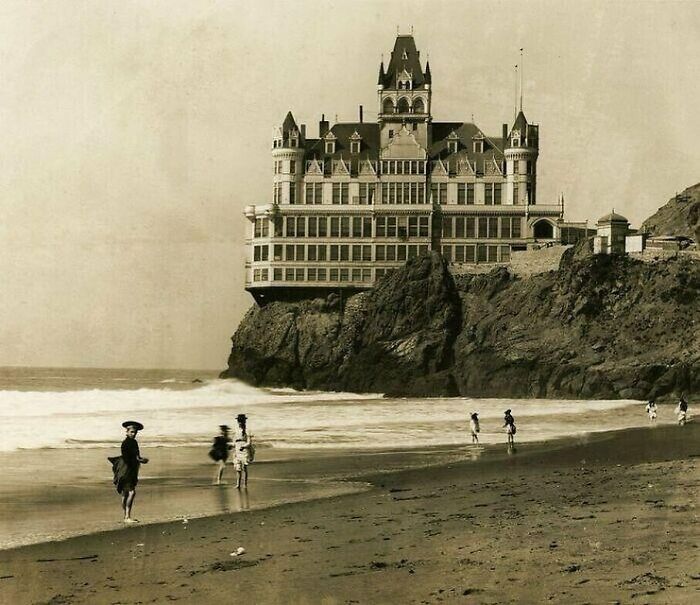
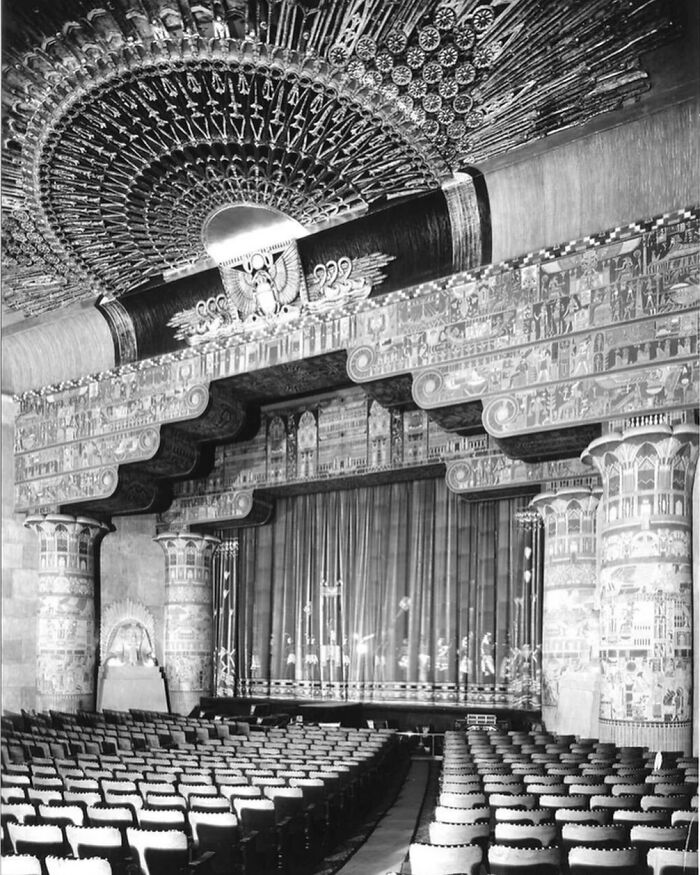
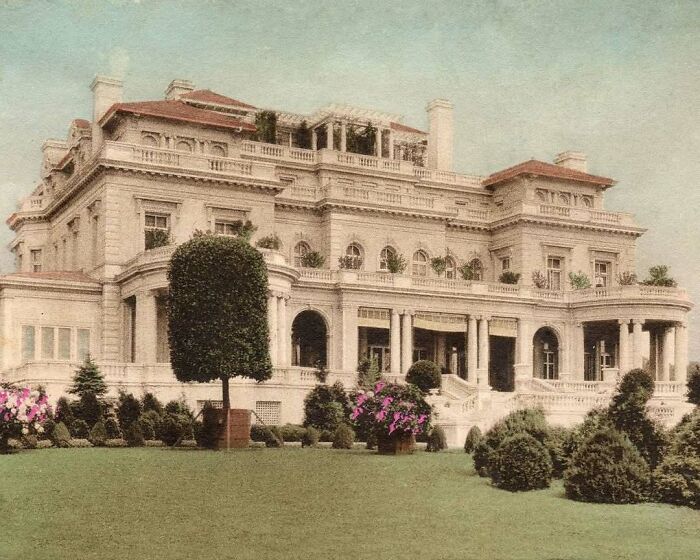
And while you probably don’t consider the United States to be the nation with the most interesting architecture in the world, it still has some gorgeous buildings to offer. We took a trip to the Old American Architecture Instagram page and gathered some of their best pics down below. So enjoy scrolling through these breathtaking structures, and be sure to upvote the ones that give you a new appreciation for American architecture!
This post may include affiliate links.

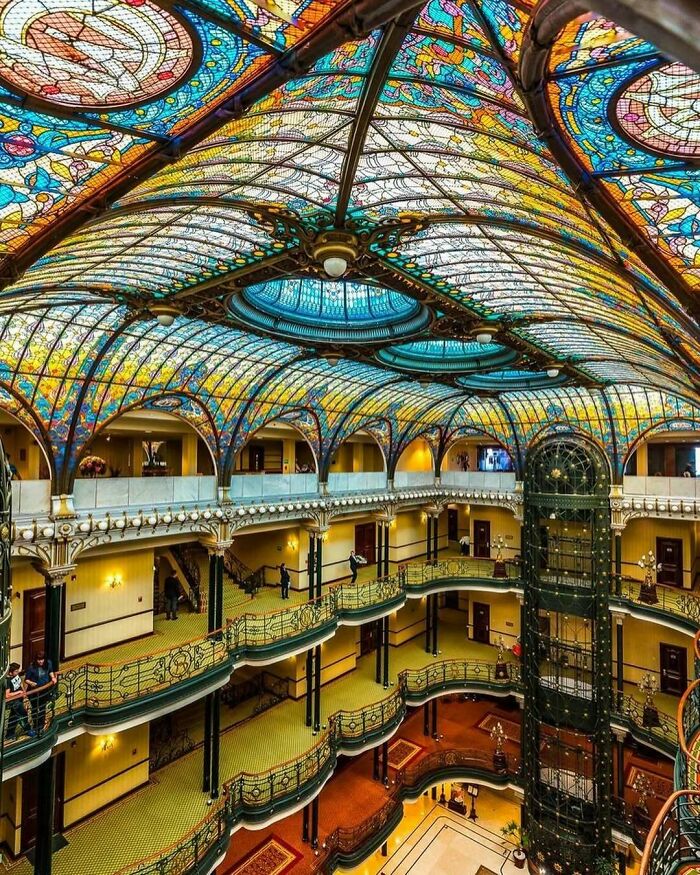
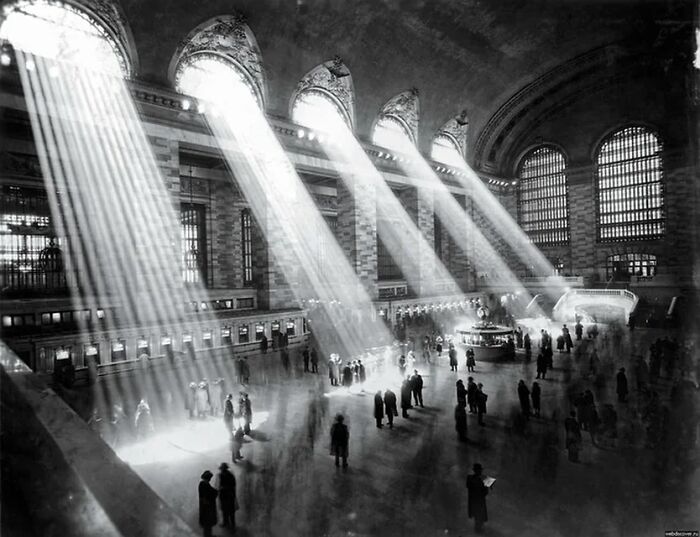
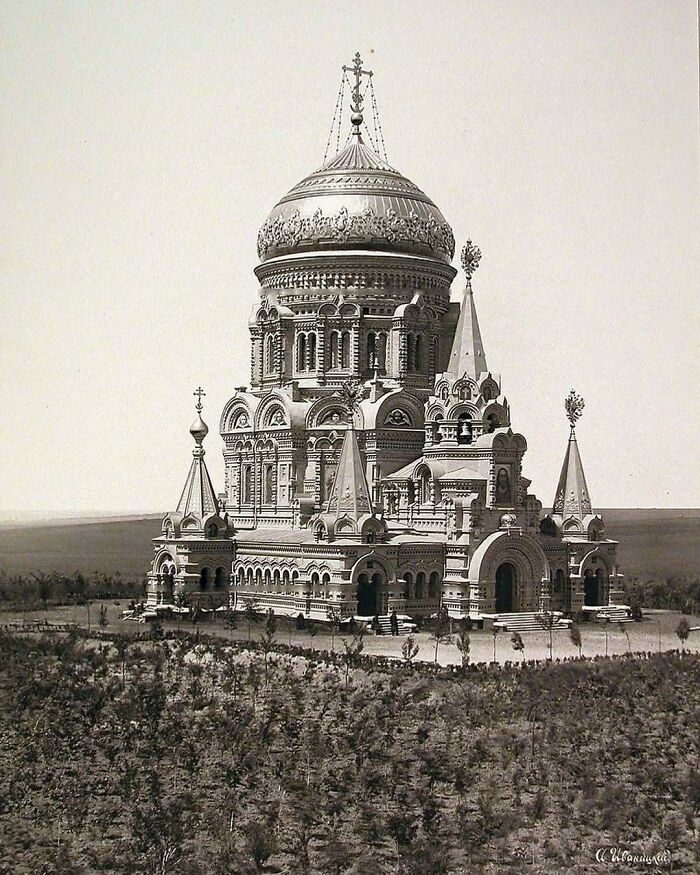
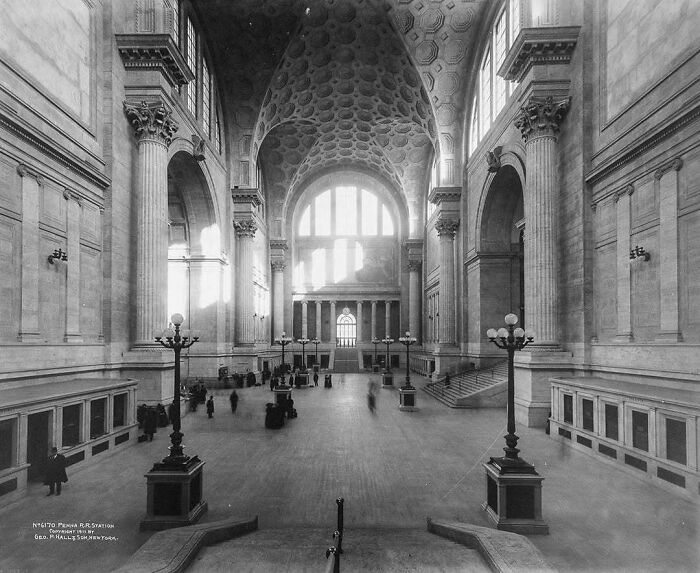
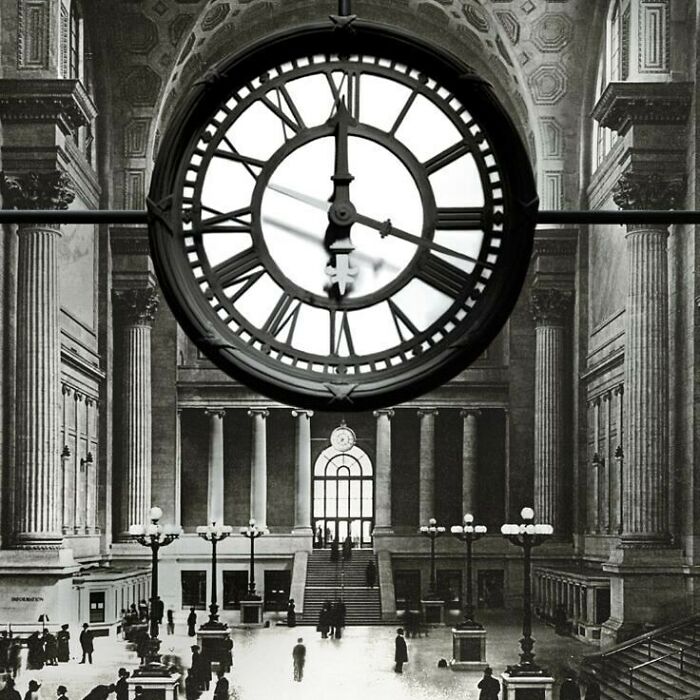
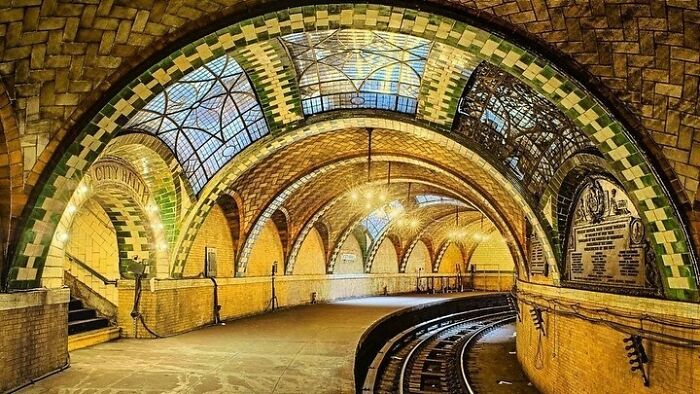
It is stunning. Fun fact: this is the inspiration of the Dead's train station in the movie Coco.
What comes to mind when you think of American architecture? Are you imagining modern buildings that have been built in the past 30 years? Or some of the most iconic structures in the country, such as the Empire State Building and the Flatiron Building. To be honest, I don’t really consider any buildings in the US to be old, and I definitely don’t imagine them to be as captivating as the structures you can find in other countries that have been around for thousands of years.
But the Old American Architecture page has made me realize that I shouldn’t discount buildings in the States completely. Because apparently, there are (or at least were at some point) some stunning ones. This Instagram account has shared nearly a thousand photos of buildings and amassed an impressive 100K followers. So clearly, lots of people are fans of these beautiful structures!
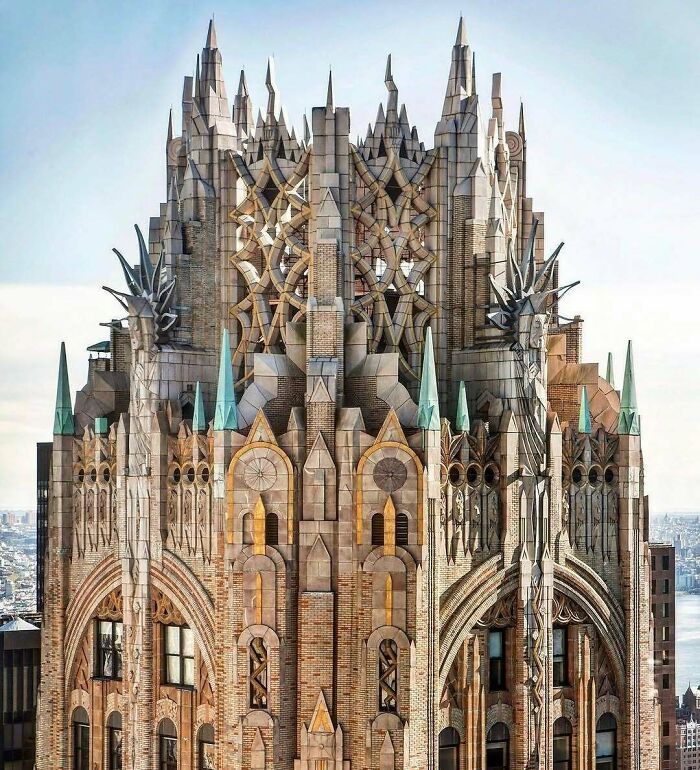
The building, also know as the General Electric Building, is a skyscraper at the southwestern corner of Lexington Avenue and 51st Street in Midtown Manhattan, New York City. The building, designed by Cross & Cross and completed in 1931, was known as the RCA Victor Building during its construction.
It was designed by John Walter Cross of Cross & Cross in the Art Deco style with Gothic Revival ornamentation.
The building is still in use today
“It’s not possible to take such a photograph anymore, as the buildings outside block the sun rays.”
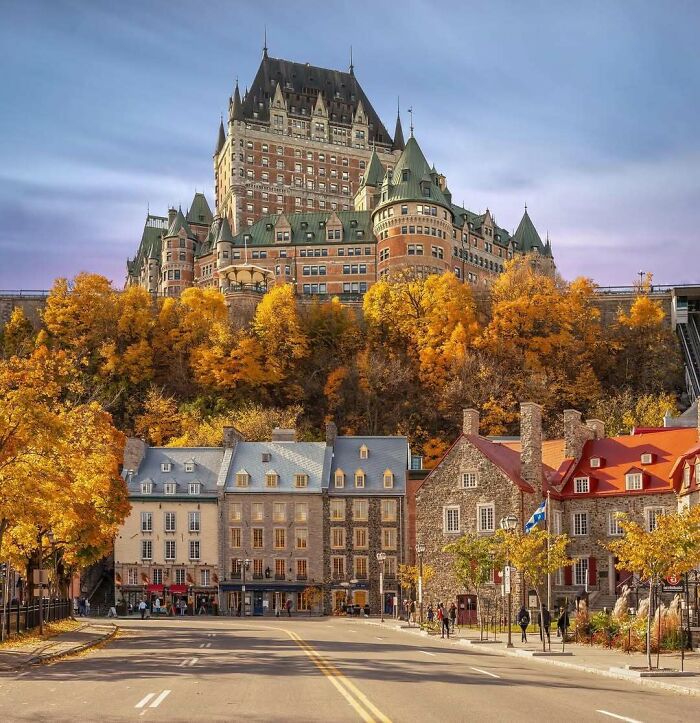
The hotel is situated in Old Quebec, within the historic district's Upper Town, on the southern side of Place d'Armes. The Château Frontenac was designed by Bruce Price, and was built by the Canadian Pacific Railway company. It opened in 1893 and is still in use today
If you’re not particularly familiar with architecture in the United States, have no fear. We’ll have a brief history lesson. First, let’s talk about the man, the myth, the legend: Frank Lloyd Wright. Many people consider him to be the greatest American architect of all time thanks to the buildings he designed during the first half of the 20th century.
Wright is known for his “Prairie Style,” as well as the Usonian house, and he viewed architecture as “the great mother art.” He believed that every person has the right to live in a beautiful environment, and he aimed to make stunning architecture accessible to all. Some of his most famous buildings include Taliesin in Wisconsin, Fallingwater in Pennsylvania and King Kamehameha Golf Course Clubhouse in Hawaii.

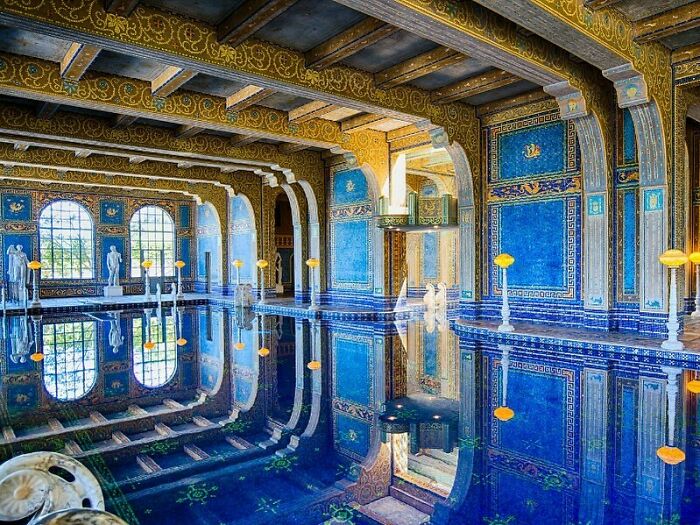
This pool is one of most magical things I have ever seen. There is gold inlay all through out, and at night the lamps burn like candles lighting up all the gold details. I visited back in the 80's. I would give anything to swim in the pool at night!
Despite the fact that the United States has been an established nation for less than 250 years, there have been plenty of architectural styles that have come and gone during that time. According to the US General Services Administration, the country has already seen the Federal style, Greek Revival, Italianate, Romanesque Revival, Renaissance Revival, Second Empire, Beaux Arts Classicism, Neoclassicism, Colonial Revival, Spanish Colonial Revival, Art Deco and Moderne and Mid-Century Modernism.
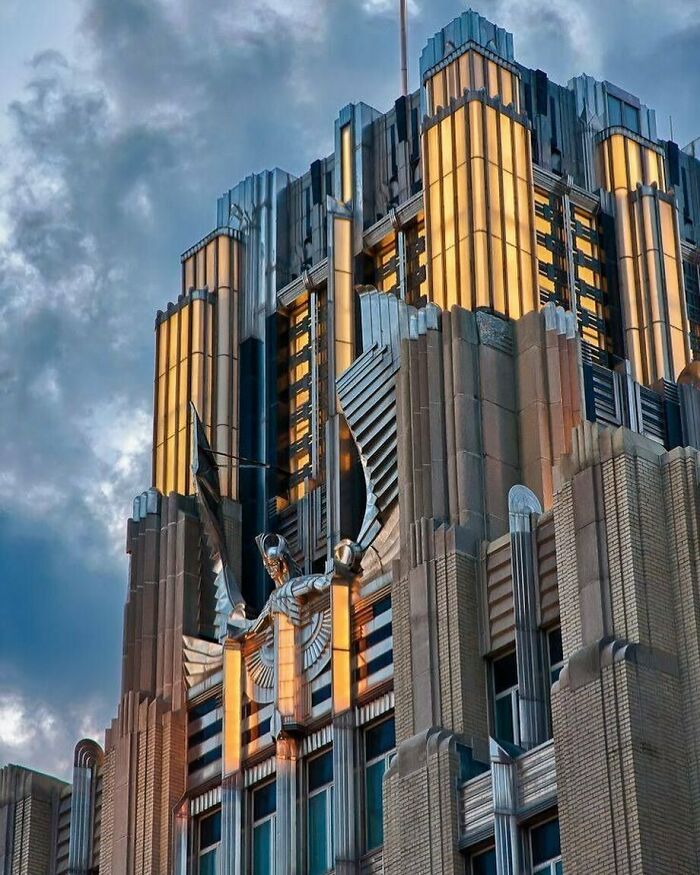
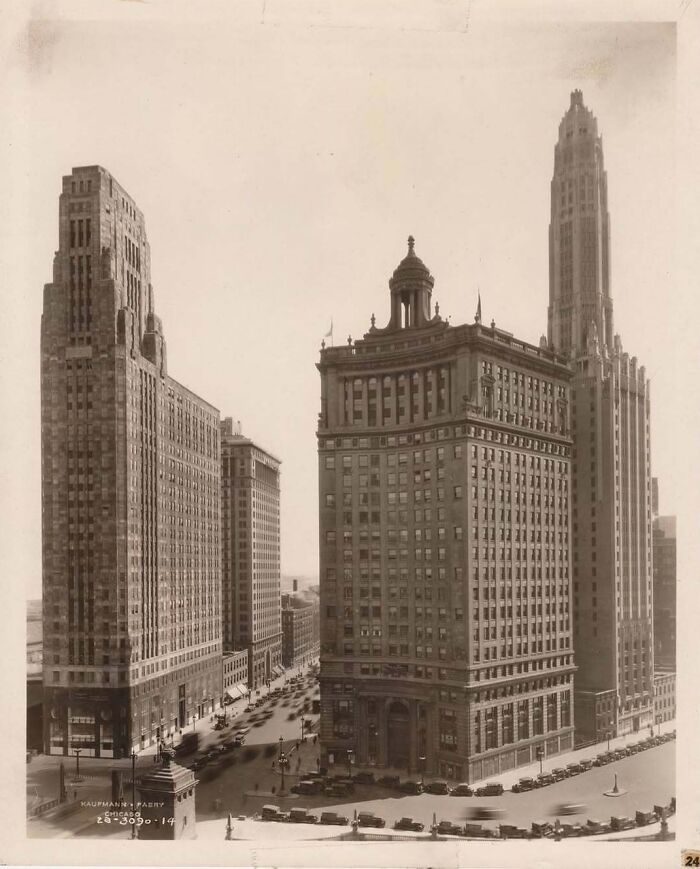
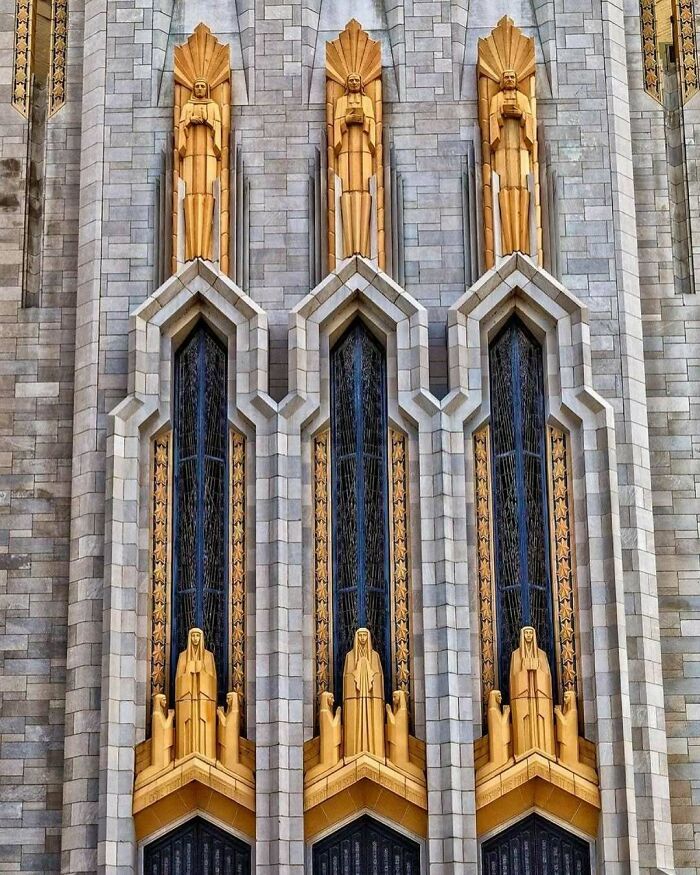
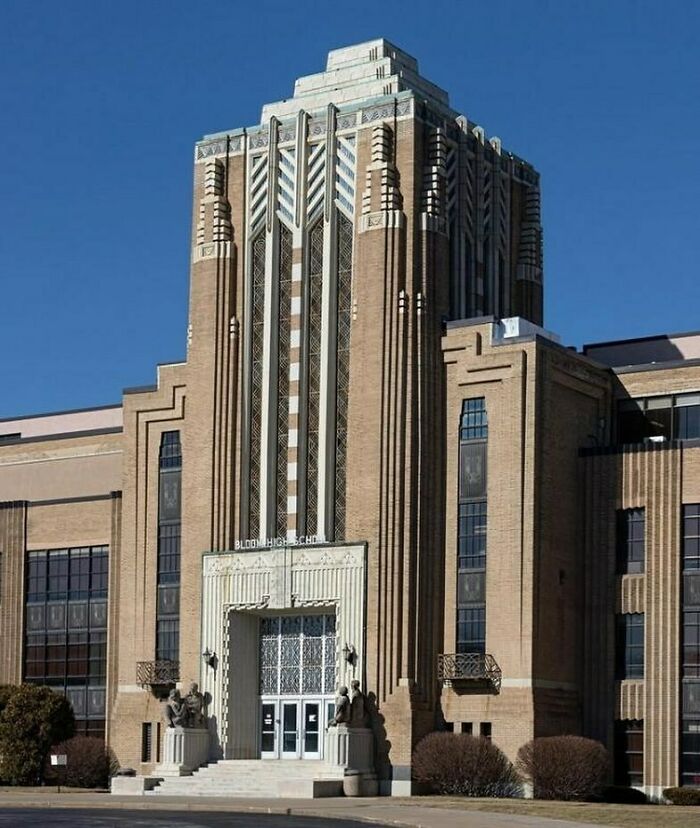
The building was built in 1932 and was headquarters for the Niagara Mohawk Power Corporation, what was "then the nation's largest electric utility company"

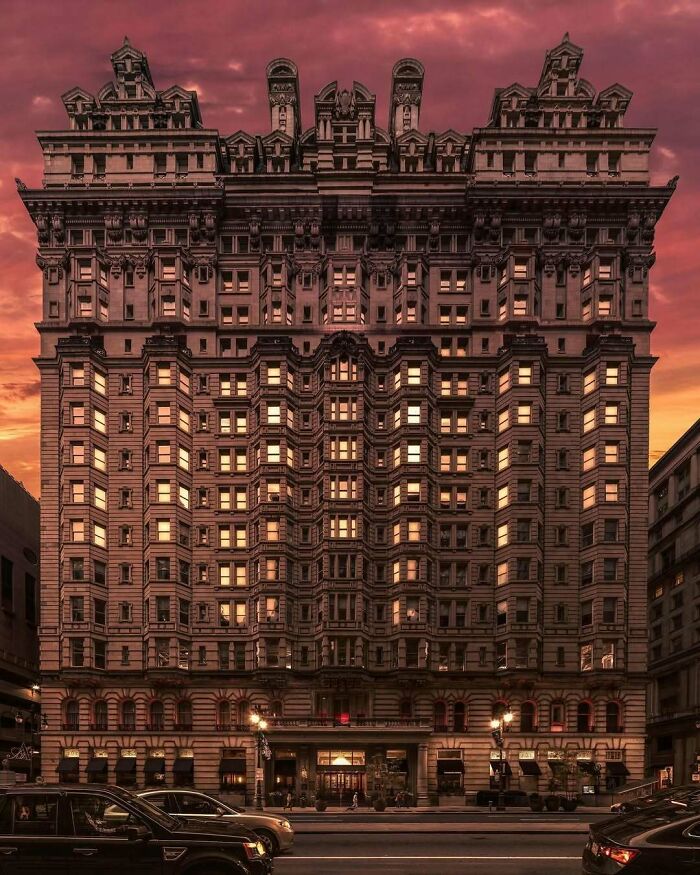
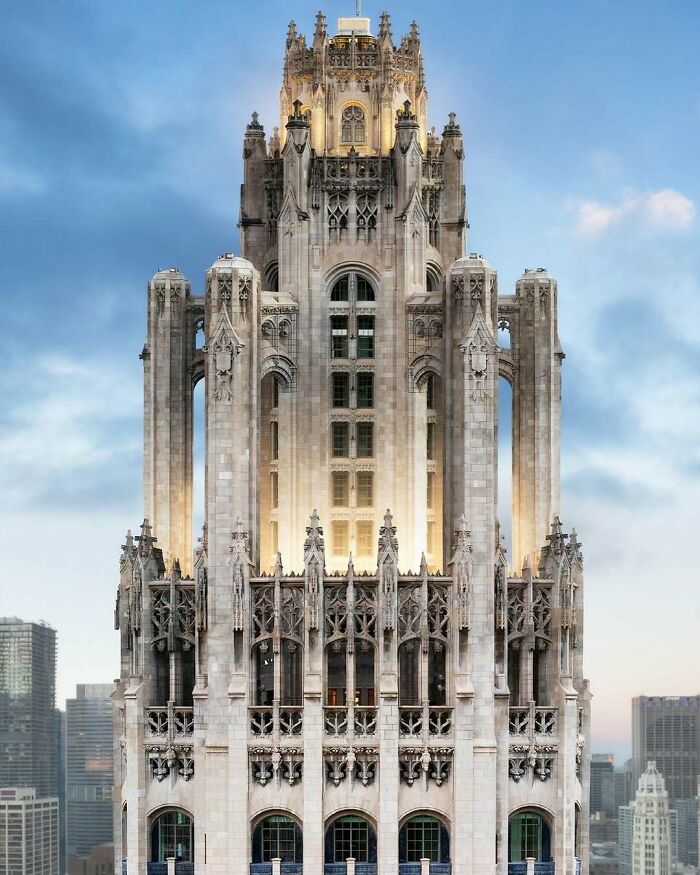
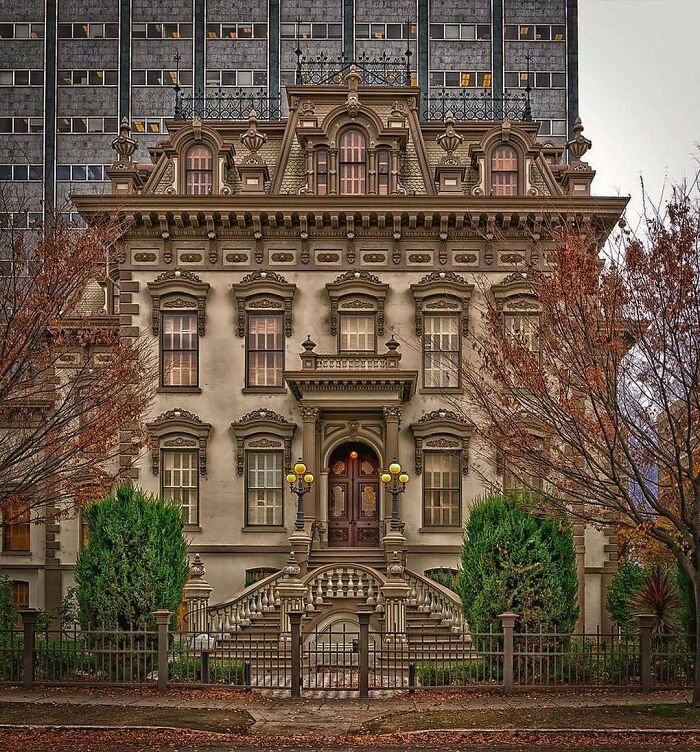
It's a bit 'busy'. But I'd be more than happy to have it in my city.

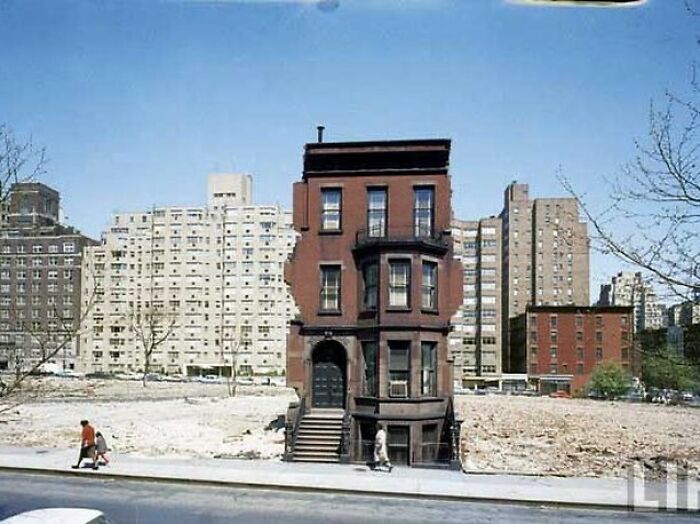
Someone has raised stubbornness to an artform. I'm in awe of how many meetings they had to go through and prevail.
If you’re visiting the United States and you’re interested in seeing some fascinating architecture, there are a few cities that you won’t want to miss. On the East Coast, you'll obviously need to visit New York City. You can see the Empire State Building, the Statue of Liberty, the Flatiron Building, the Chrysler Building, the Whitney Museum of Art, the Guggenheim, MoMA and more.
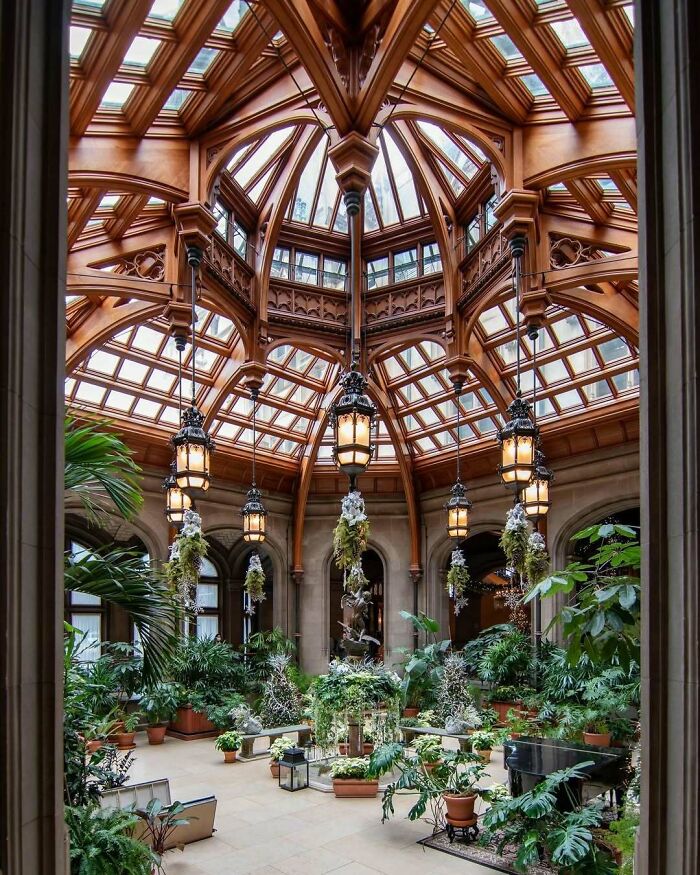
The mansion was built for Captain Joseph DeLemar. It had a palm court, cave, 70 ft water tower with an elevator leading to a tea house, indoor tennis court, and stained glass windows designed by Louis Comfort Tiffany.
The 60,000 square foot home included 12 bedrooms, 12 baths, a billiard room, den, dining room, mirrored breakfast room, long party rooms to entertain hundreds of guests. De Lamar enjoyed playing an intricate pipe organ at the base of his stairway. Large windows overlooked exquisite gardens, the private bathing casino and boat landing on the Long Island Sound.
Sadly demolished

Like many mansions from the Gilded Age, Pembroke was razed in 1968. The collector, Walter Chrysler, Jr. bought the window at auction in the 1970s. Today, this stunning window is an icon in The Chrysler Museum of Art's glass collection and is on permanent display in the museum in Norfolk, Virginia. Additional windows and a skylight from Pembroke remain in private collections.
After visiting the Big Apple, architecture enthusiasts can easily take a train to Boston. There, you can marvel at the Massachusetts Institute of Technology, Faneuil Hall, Symphony Hall, Museum of Fine Arts Boston, Christian Science Plaza and the Boston Public Library.
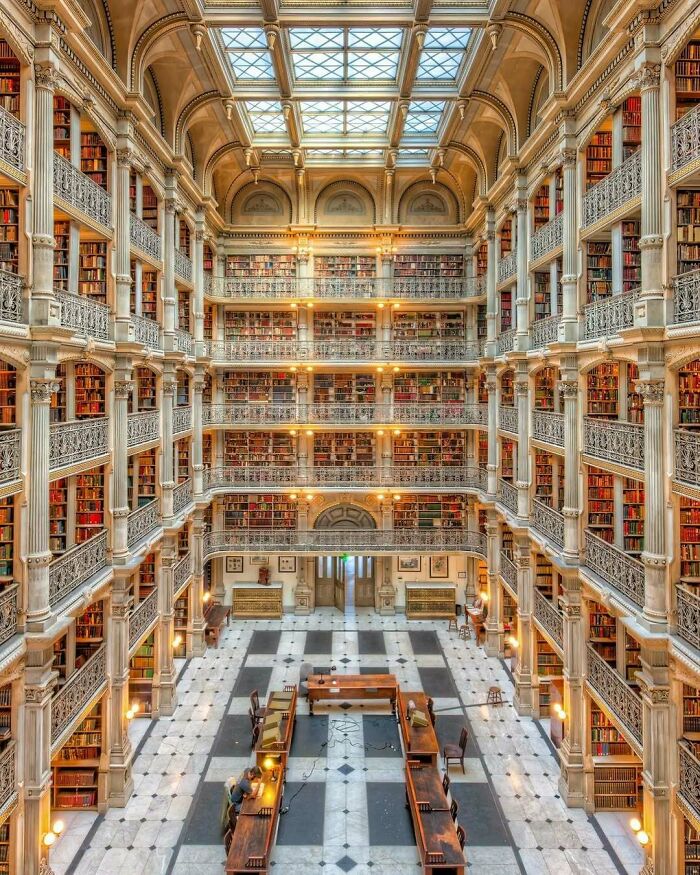
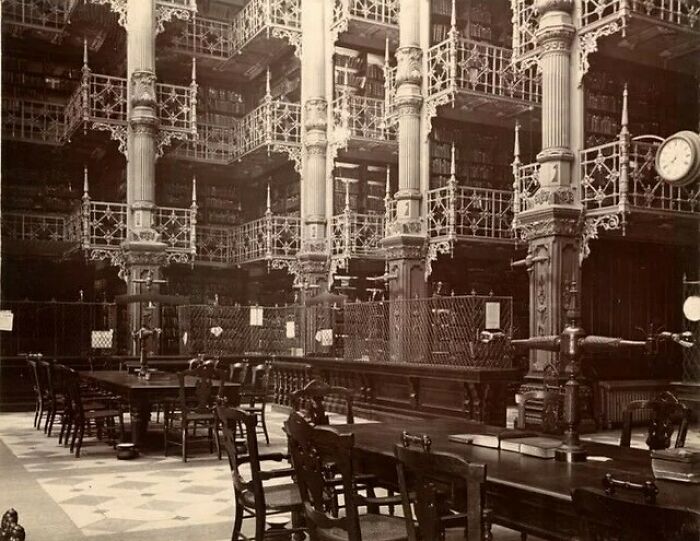
The George Peabody Library was funded by George Peabody (1795–1869). Peabody, having become a wealthy man in Baltimore through commerce during the 1810s and 1820s, following his brief service in the state militia defending the city against the famous British attack during the War of 1812, "gave $300,000 as a beginning sum for the Peabody Institute" in February 1857.
The library interior is often regarded as one of the most beautiful libraries in the world. Completed in 1878, it was designed by Baltimore architect Edmund G. Lind in collaboration with the first Peabody provost, Nathaniel H. Morison, that described it as a "cathedral of books". The visually stunning, monumental neo-Greco interior features an atrium that, over an alternating black and white slab marble floor, soars 61 feet high to a latticed skylight of frosted heavy glass, surrounded by five tiers of ornamental black cast-iron balconies (produced locally by the Bartlett-Hayward Company) and gold-scalloped columns containing closely packed book stacks. Between July 2002 and May 2004, the now historic library underwent a $1 million renovation and refurbishment
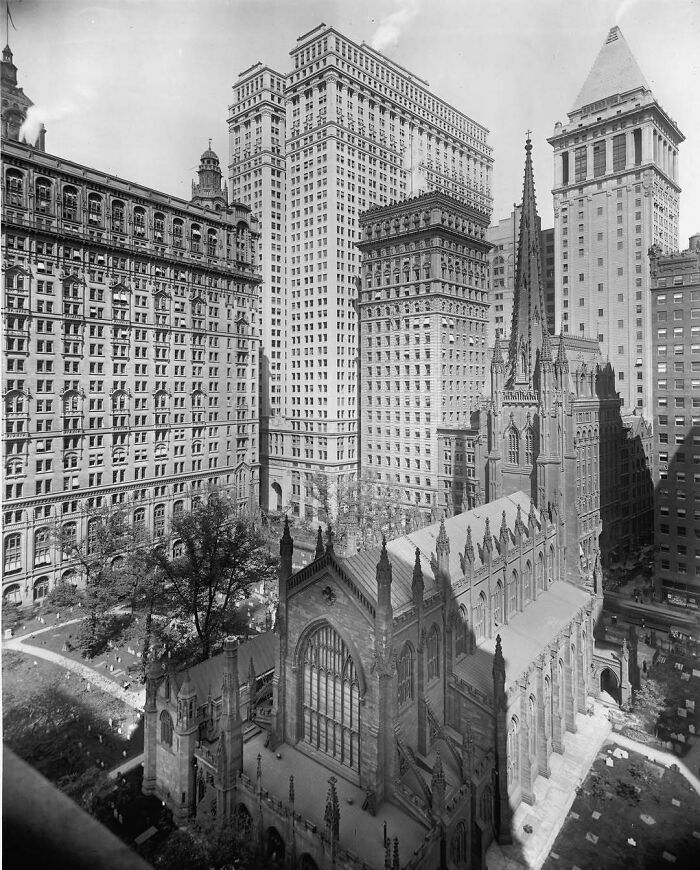
I love the flying buttresses. Totally unnecessary, but they do look good.
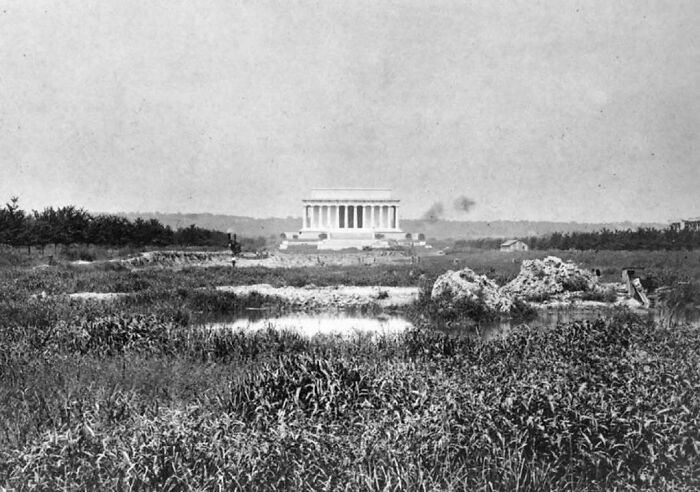
From Boston, you might want to keep heading South and stop in Washington, DC. Some of the most fascinating architecture that the capital has to offer include the National Gallery of Art, Washington National Cathedral, the National Museum of African American History and Culture, the National Museum of the American Indian, the Smithsonian Institution Building and the Lincoln Memorial.
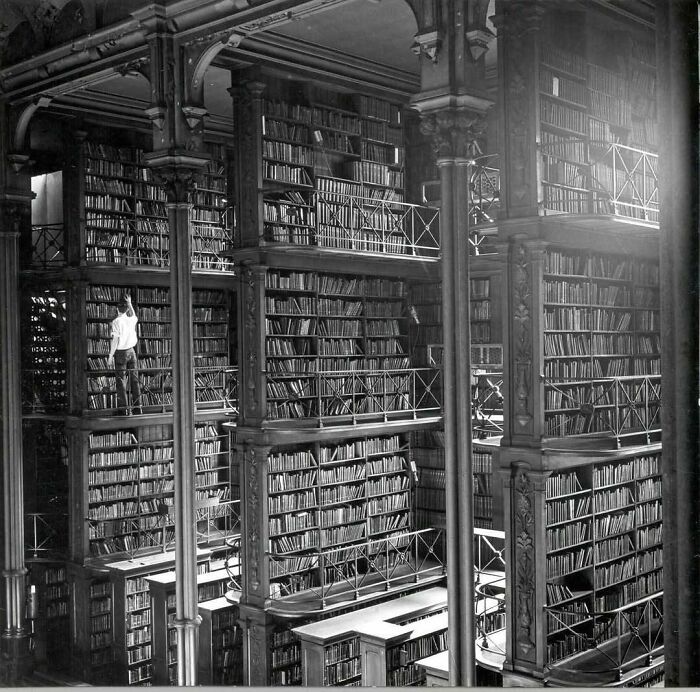
Beautiful, but it was a safety nightmare: fire hazards, people falling from the upper bookcases and health risk by musky books.
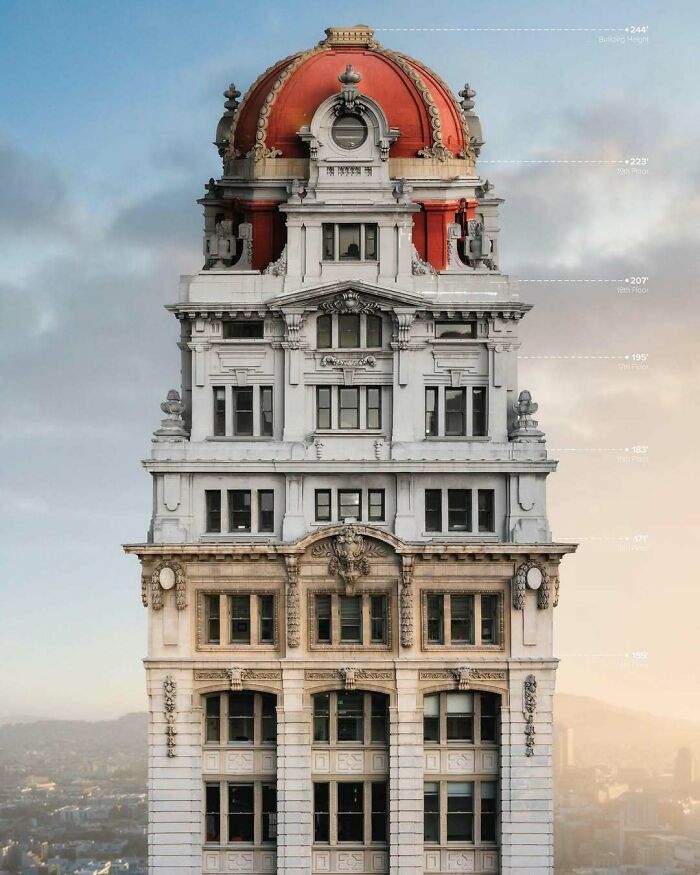
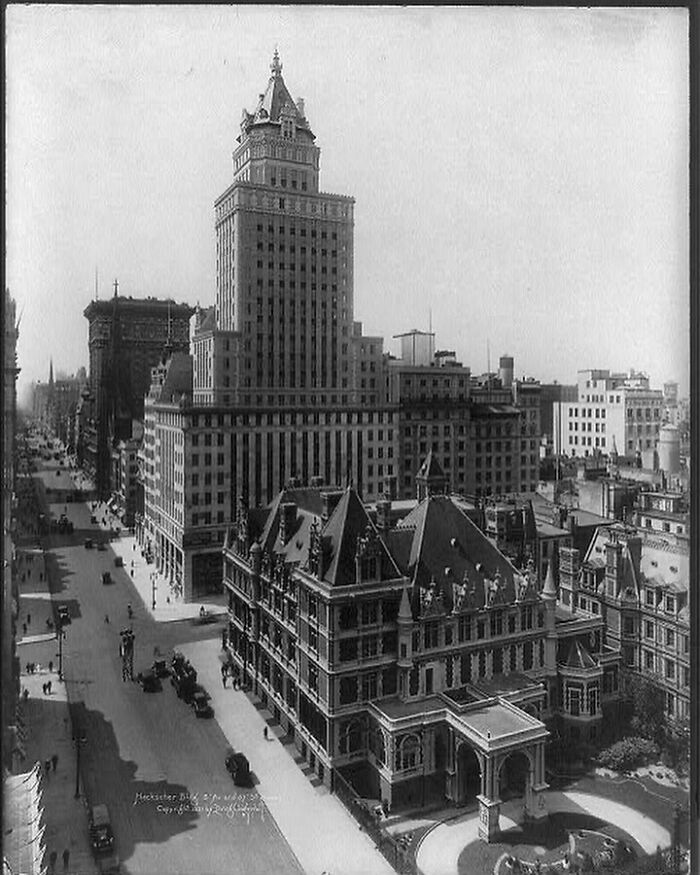
It was created by the Humboldt Savings Bank, with construction beginning in 1905. However, the 1906 San Francisco earthquake destroyed its initial construction phase. A new building was completed in 1908. The building consists granite, marble, and terra cotta tile facing over reinforced concrete and steel
If you can make it all the way to the West Coast when visiting the US, you won’t want to miss the stunning architecture that Los Angeles and San Francisco have to offer. If you’re in the Bay Area, be sure to check out The Palace Hotel, Salesforce Park, San Francisco City Hall, Golden Gate Park and Legion of Honor. In LA, you’ll need to visit Union Station, the Griffith Observatory, Eastern Columbia Building, Los Angeles Central Library, the Hale House and Walt Disney Concert Hall.
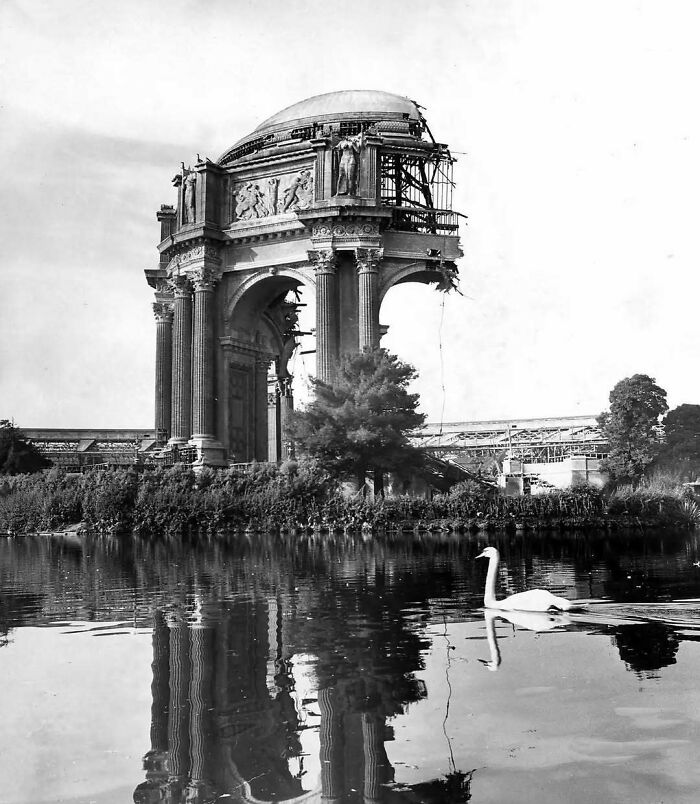
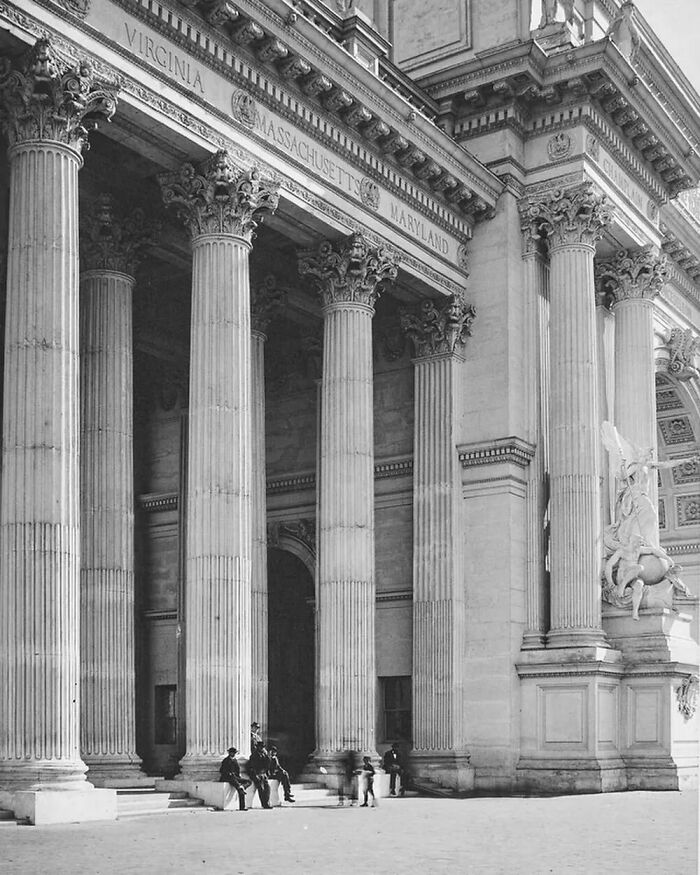
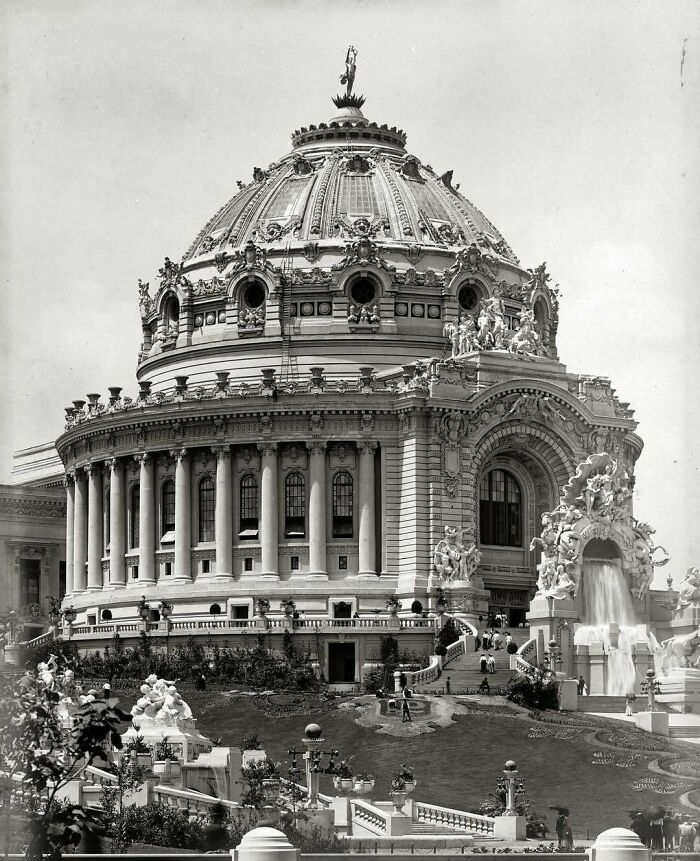
Ruins is misleading. Here, BP, let me help you: Originally built for the 1915 Panama–Pacific International Exposition to exhibit works of art, the Palace of Fine Arts was constructed of plaster and wood and later replicated and replaced with a concrete and steel version we see today; the building was claimed to be fireproof. According to a metal plate at the rotunda, it was rebuilt under B.F. Modglin, local manager of MacDonald & Kahn, between 1964 and 1967. In the years 1973 and 1974, the columniated pylons were added. It is one of only 3 remaining structures from the exposition that survives
We hope you’re enjoying your scroll through all of these iconic buildings, pandas. Keep upvoting the ones you wish you could see in person, and let us know in the comments below where your favorite building in the whole world is. Then, you can find another Bored Panda article discussing fascinating buildings right here!
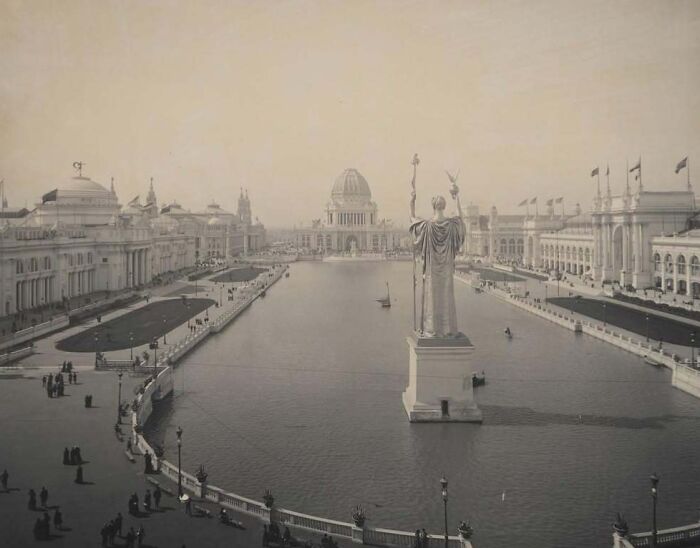
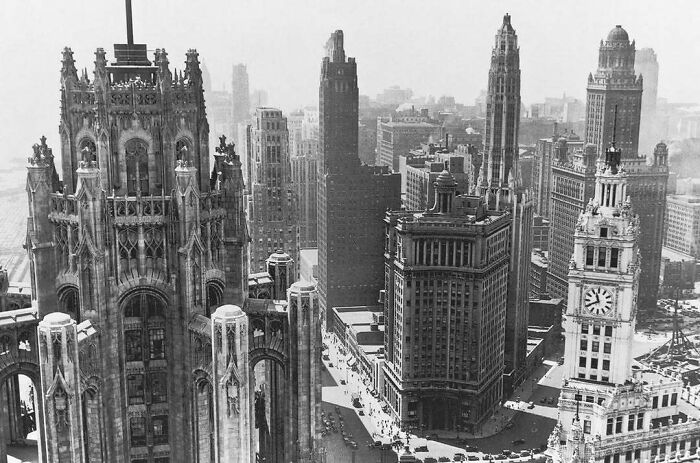
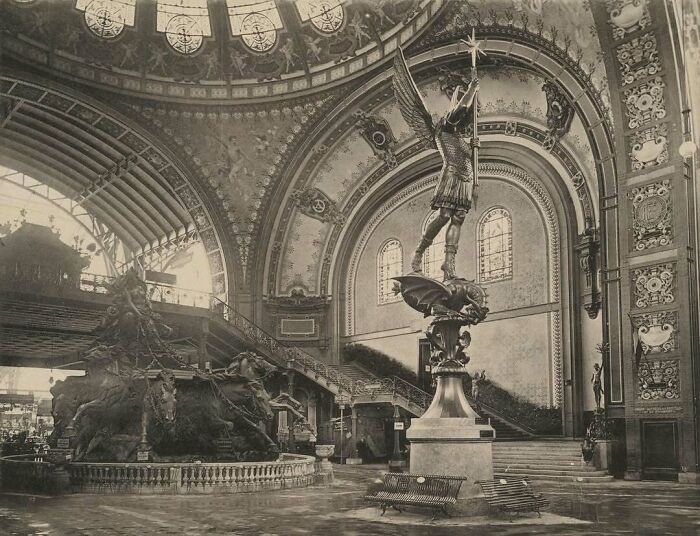
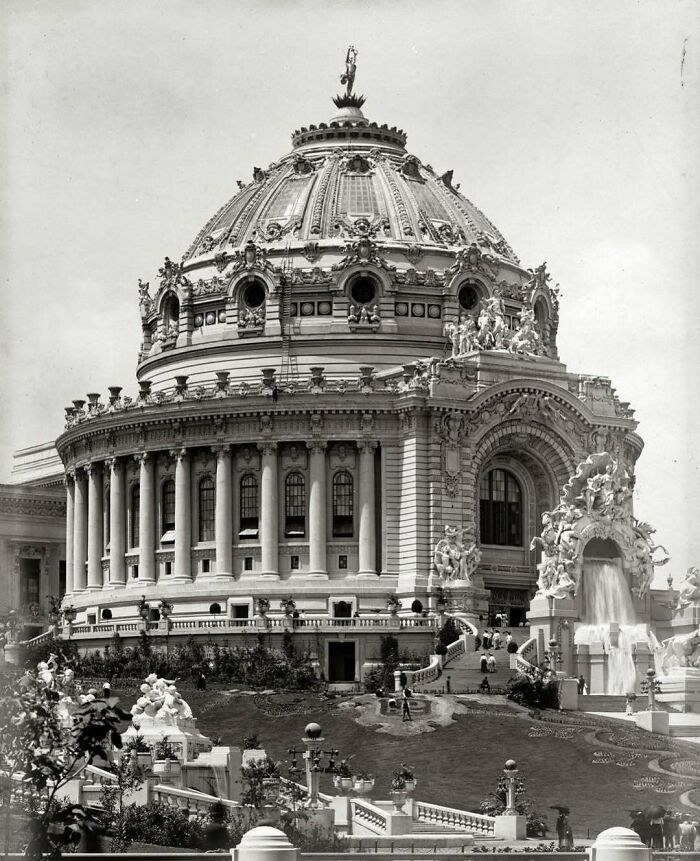
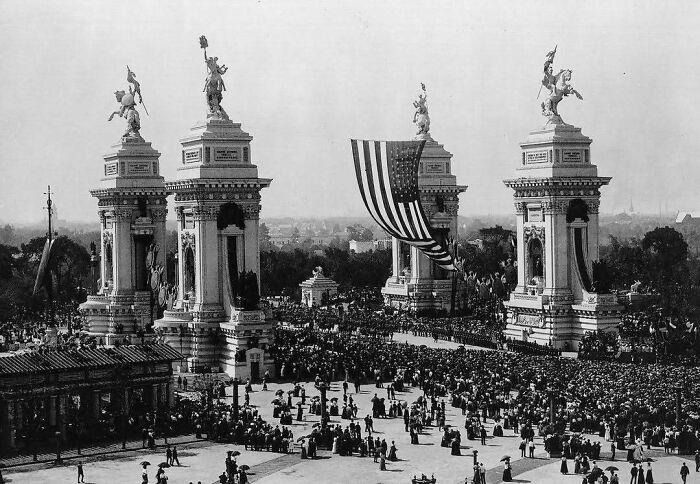
The exposition was an influential social and cultural event and had a profound effect on American architecture, the arts, American industrial optimism, and Chicago's image

Back when Columbus was considered a hero instead of a murdering, cruel, nasty scumbucket.
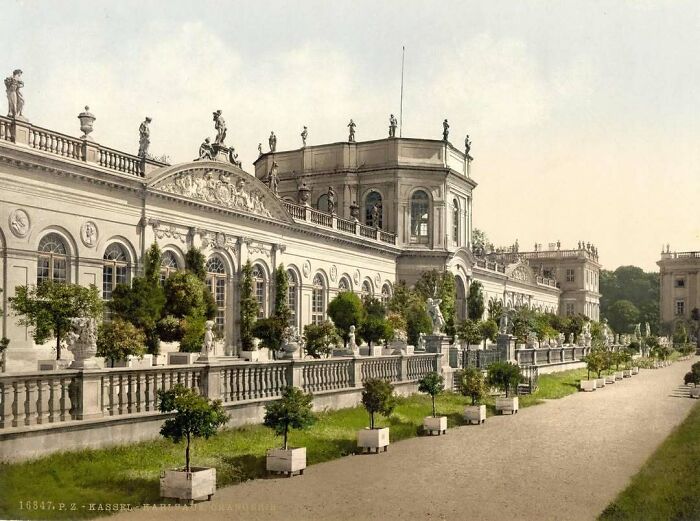
The main palace Orangerie was built by Landgrave Charles between 1654 and 1730 as an “exotic winter garden” until the beginning of the Second World War. It serves as an astronomy and physical cabinet today and the marble bath

American? Or is this foreshadowing that the US is planning to invade Ukraine?
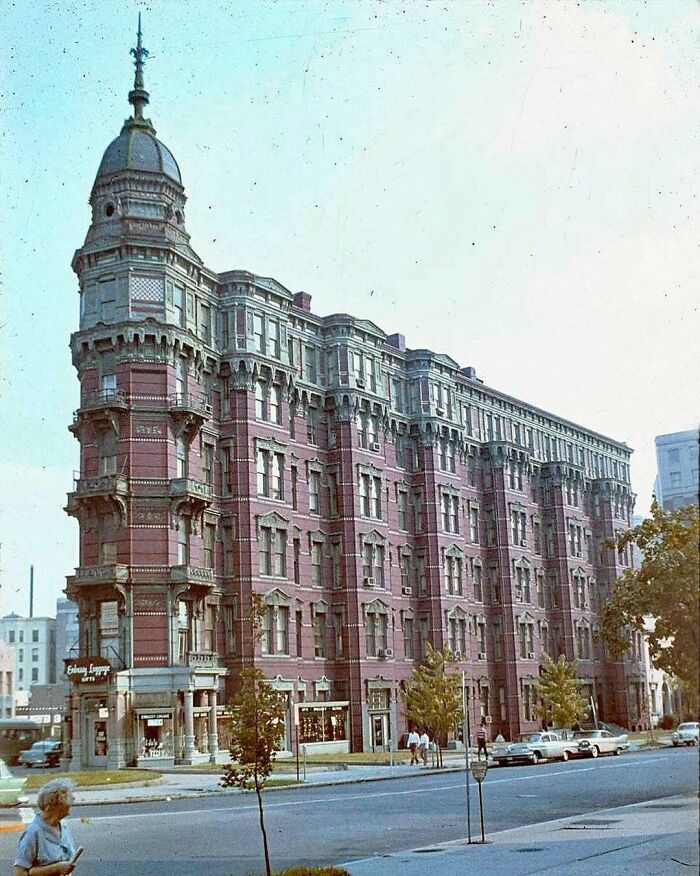
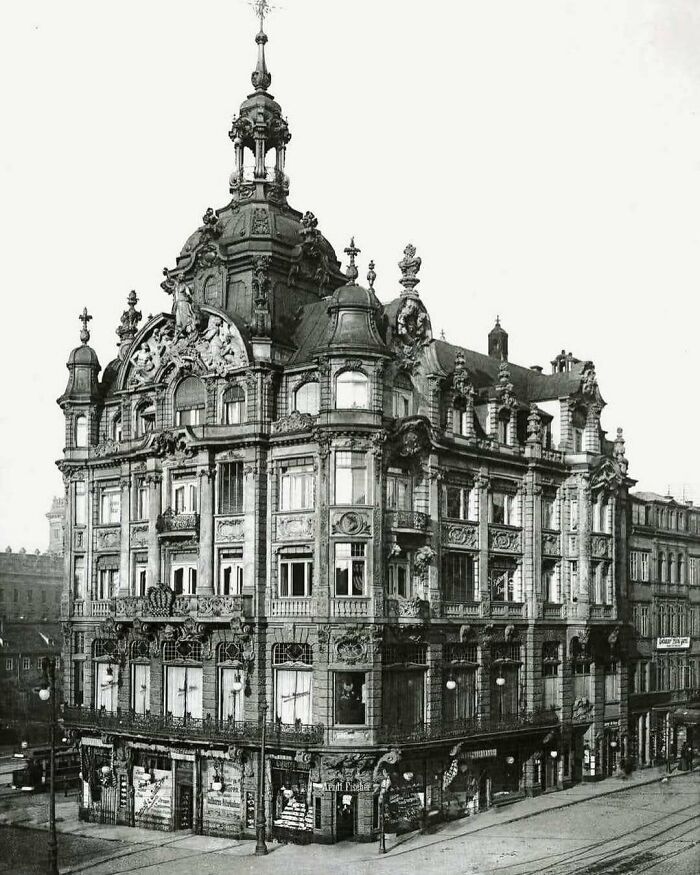
It was built between 1895 and 1897 as the Geschäftshaus Ilgen by the architects Schilling und Graebner for the businessman Hermann Ilgen.
It was destroyed in bombing raids during WWII

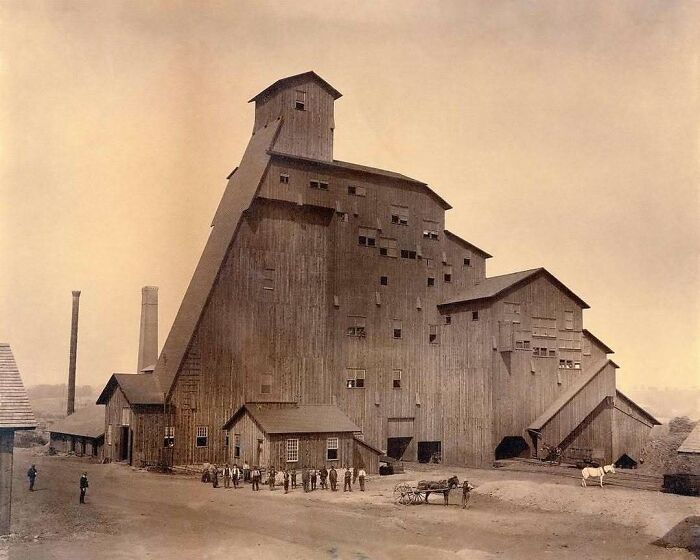
From the web for those interested: The structure in this photograph replaced an earlier structure that was also destroyed by fire. Breakers were used to break up chunks of coal into smaller pieces, sorting them using screens as the coal moved through the breaker on conveyors. A steam powered exhaust fan was used to ventilate the structure
Constructed in 1904 and expanded to its present size in 1912. The hotel is still in use today

St Louis’ World Fair was the reason they were able to get the IOC to give them the 1904 Olympics. Not that many people knew they were competing in the Olympics, as it lasted almost the whole year. The original host city was meant to be Chicago.
William A. Clark, a wealthy entrepreneur and politician from Montana, commissioned the New York City firm of Lord, Hewlett & Hull to build the mansion in 1897. It was completed in 1911, after numerous legal disputes, at a cost of $7 million (equivalent to $203,575,000 in 2021). The mansion contained 121 rooms, 31 baths, four art galleries, a swimming pool, a concealed garage, and a private underground rail line to bring in coal for heat.
In 1925, upon Clark's death, his widow and his daughter, Huguette Clark, moved to 907 Fifth Avenue, where the annual rental for a full-floor apartment was about $30,000. Shortly thereafter, the mansion was sold to Anthony Campagna for $3 million (equivalent to $46,355,000 in 2021). He had the home torn down in 1927, less than 20 years after it was built
It's a bit too busy for my liking. But only 20 years. What a waste.
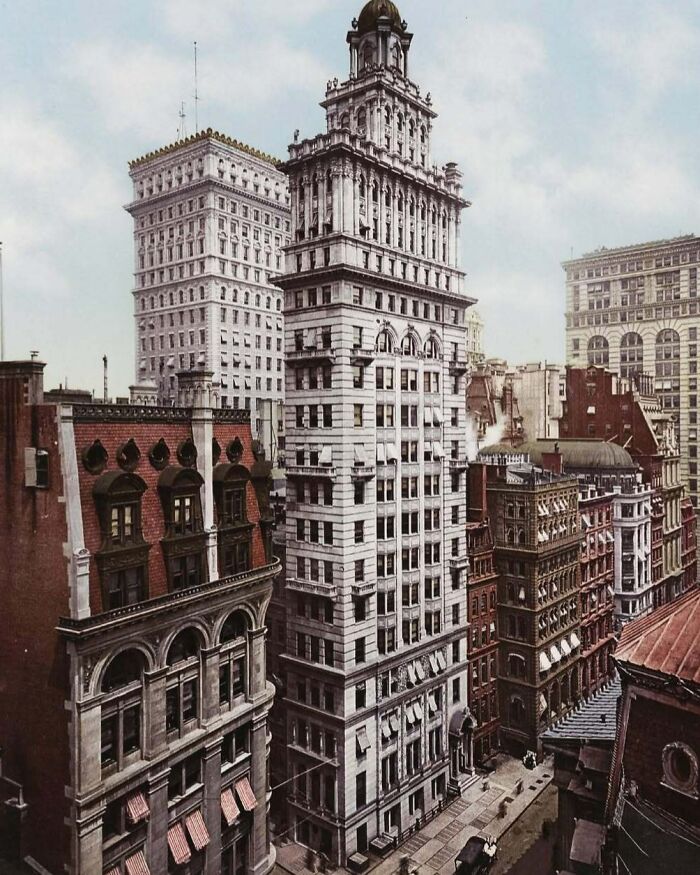
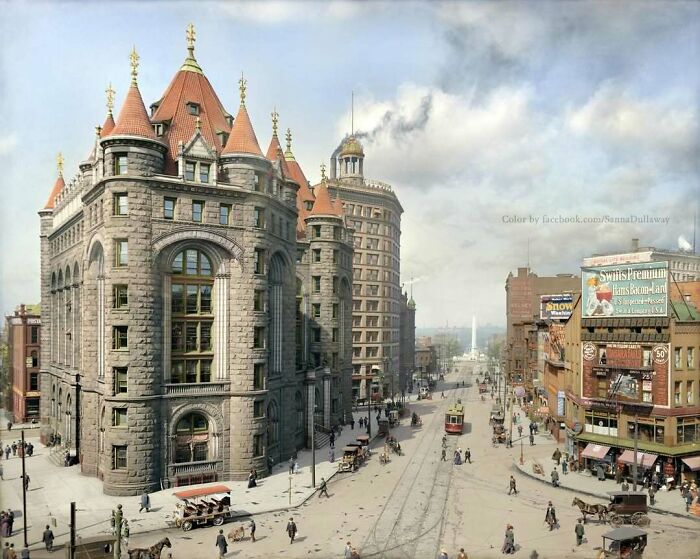
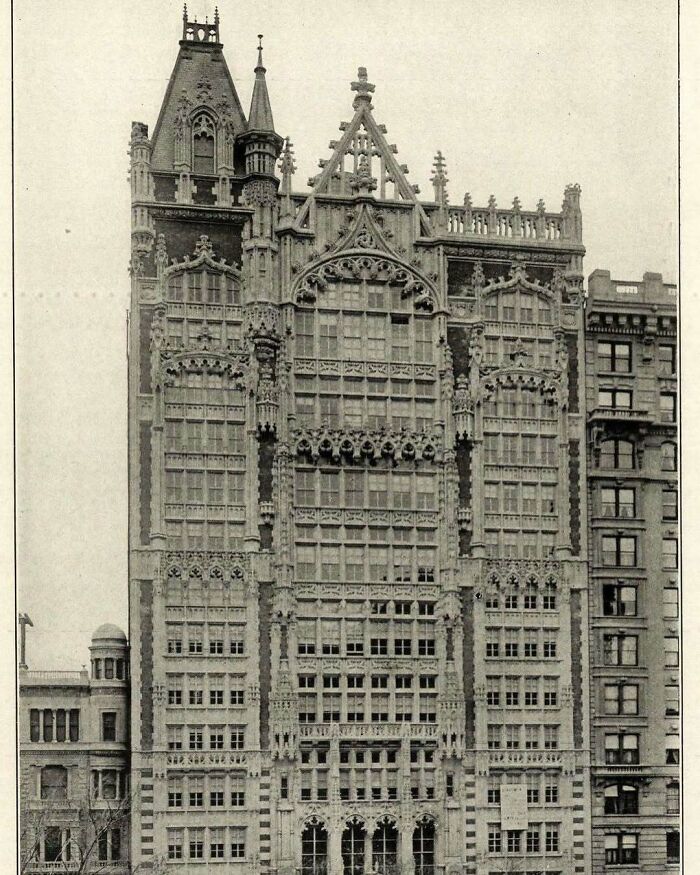
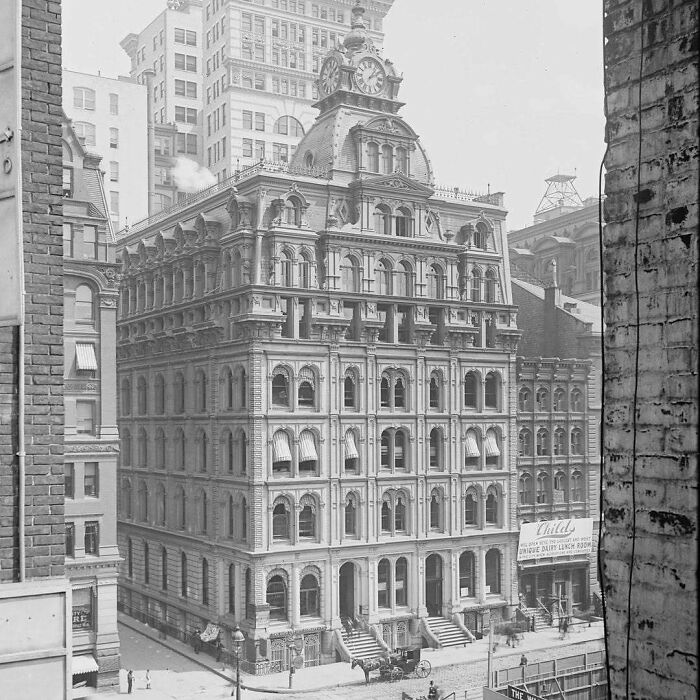
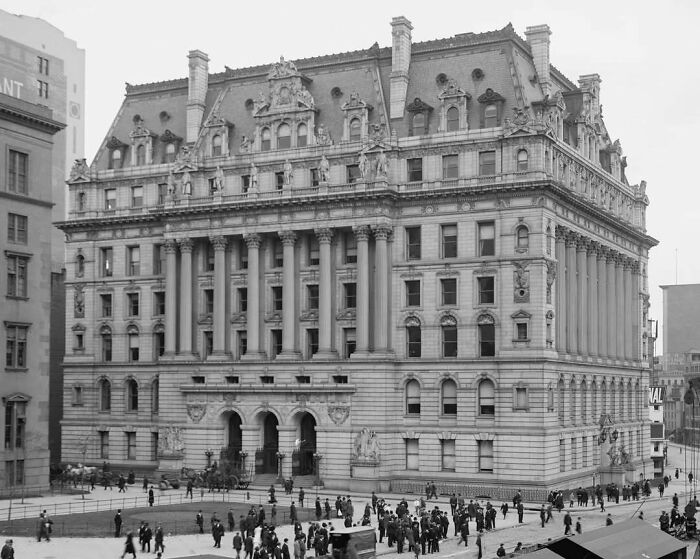
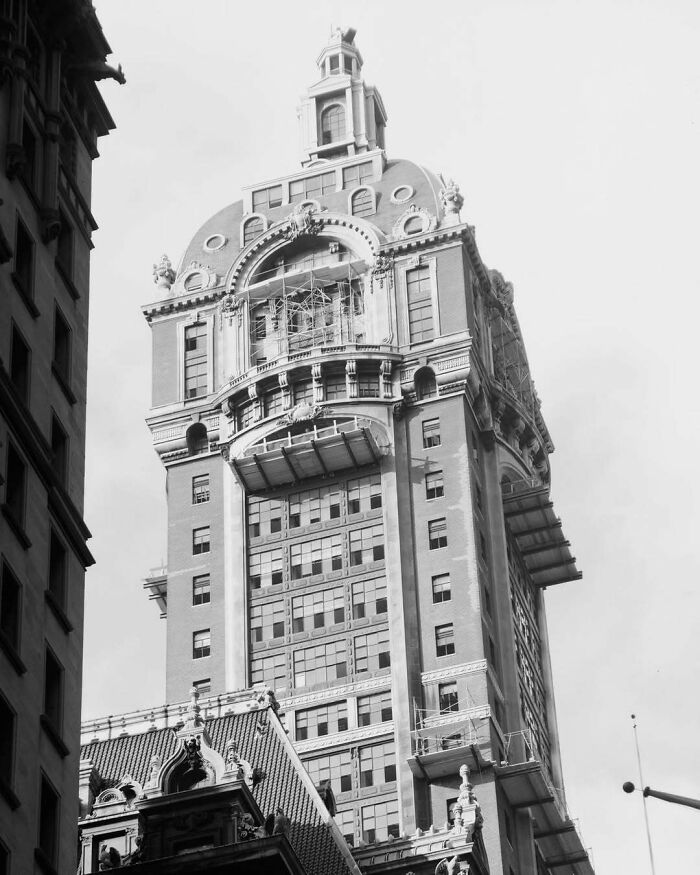
It stood on the northwest corner of Wall Street and Nassau Street, on a narrow strip of land measuring 26 by 73 feet (7.9 m × 22.3 m). At the time of its completion in 1897, the Gillender Building was, depending on ranking methods, the fourth- or eighth-tallest structure in New York City.
Demolished in 1910
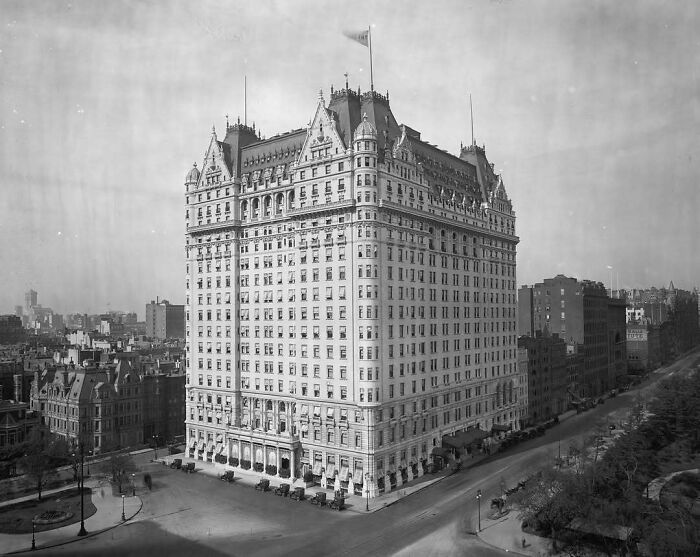
It was built between 1905 and 1907 and was designed by Henry Janeway Hardenbergh in the French Renaissance style
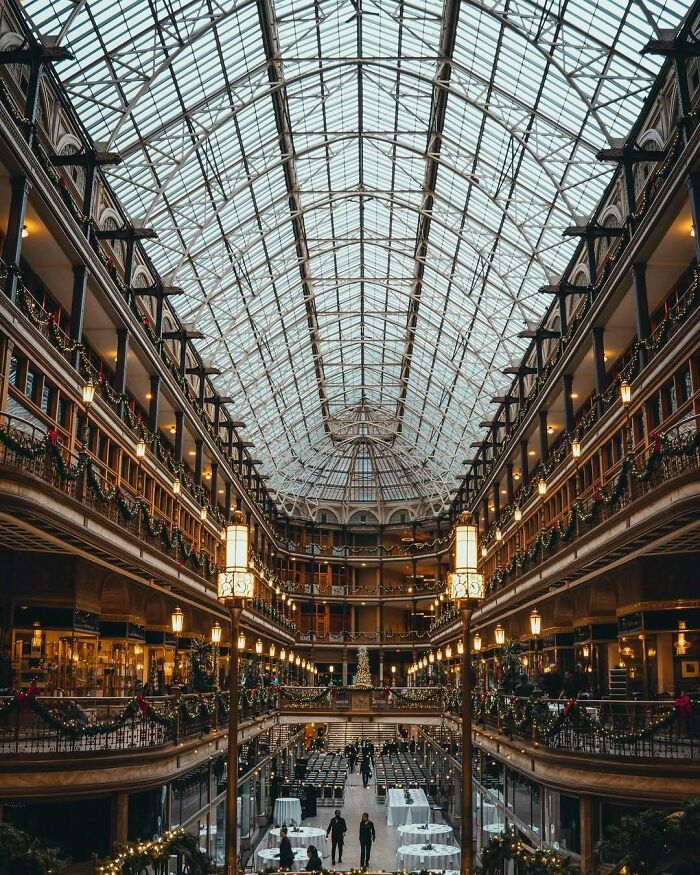
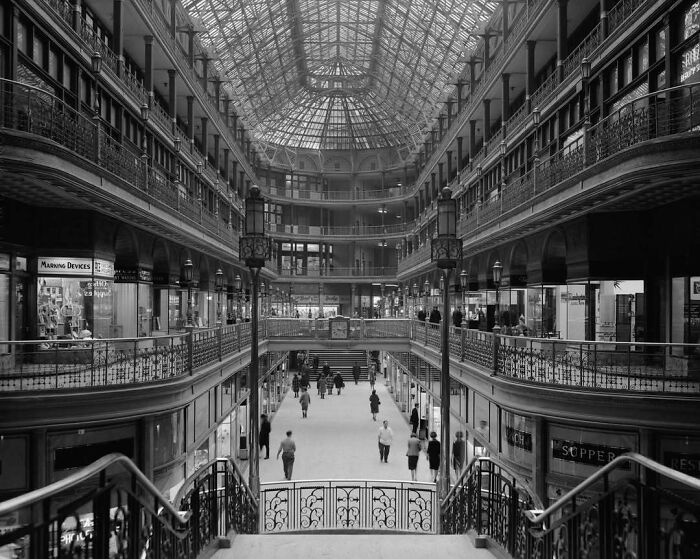
It is a Victorian-era structure of two nine-story buildings, joined by a five-story arcade with a glass skylight spanning over 300 feet (91 m), along the four balconies. Erected in 1890, at a cost of $867,000 ($26,100,000 in 2021 dollars), the Arcade opened on Memorial Day (May 30, 1890), and is identified as one of the earliest indoor shopping arcades in the United States.
The building is still in use today
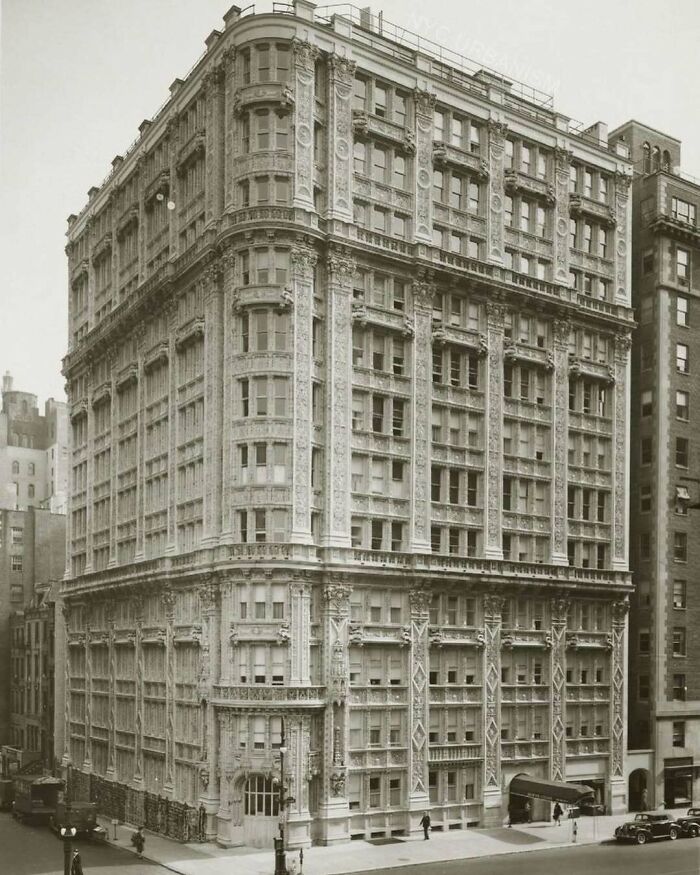
The Alwyn Court was built between 1907 and 1909 and was designed by Harde & Short in the French Renaissance style.
The building is thirteen stories tall. Its facade is clad with elaborate terracotta ornamentation in the Francis I style, with a main entrance on Seventh Avenue and 58th Street. Inside is an octagonal courtyard with a painted facade by artist Richard Haas, as well as a location of the Petrossian caviar bar. The Alwyn Court was originally built with twenty-two elaborately decorated apartments, two on every floor, which typically had fourteen rooms and five bathrooms. The interior was subdivided into 75 apartments in 1938.
The Alwyn Court was named after Alwyn Ball Jr., one of the building's developers. Despite a fire shortly after its opening, the Alwyn Court quickly became one of New York City's most expensive apartment buildings. During the early 20th century, ownership changed several times. By the 1930s, the last luxury tenant had moved out, and the building's interior was completely rebuilt. The Alwyn Court was made a New York City designated landmark in 1966, and added to the National Register of Historic Places in 1979. The building was renovated and converted to cooperative apartments in 1980, and the facade was restored in the late 1990s and early 2000s
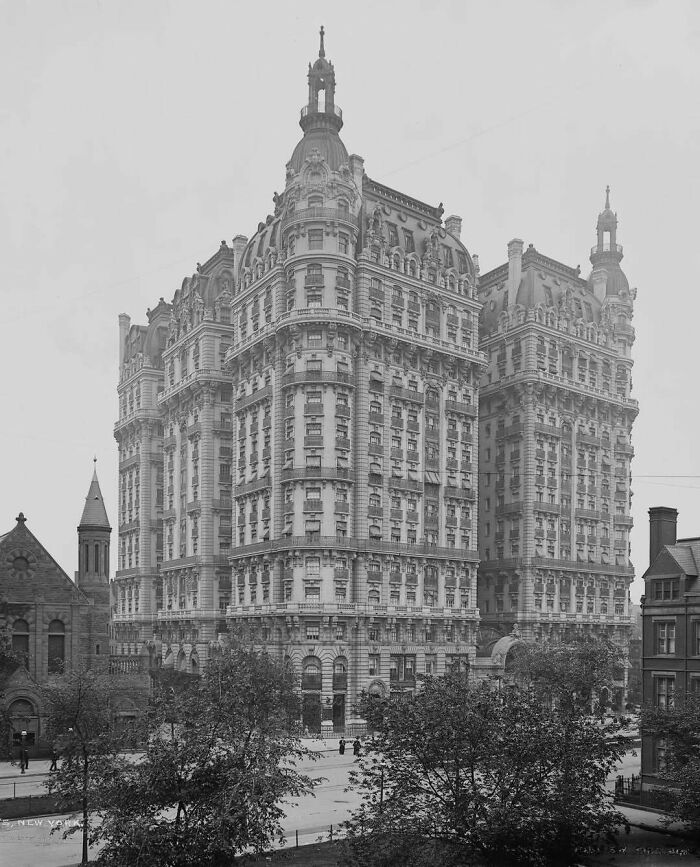
It was originally built as a residential hotel by William Earle Dodge Stokes, the Phelps-Dodge copper heir and shareholder in the Ansonia Clock Company, and it was named after his grandfather, the industrialist Anson Greene Phelps. In 1897, Stokes commissioned French architect Paul Emile Duboy to design the grandest hotel in Manhattan.
Erected between 1899 and 1904, it was the largest residential hotel of its day and the first air-conditioned hotel in New York. The building has an eighteen-story steel-frame structure. The exterior is decorated in the Beaux-Art style with a Parisian style mansard roof. The Ansonia features round corner-towers or turrets and an open stairwell that sweeps up to a domed skylight.
The Ansonia has had many celebrated residents, including baseball player Babe Ruth; writer Theodore Dreiser, in 1912; the leader of the Bahá'í Faith `Abdu'l-Bahá; Nobel prize winner in literature Isaac Bashevitz Singer; conductor Arturo Toscanini; composer Igor Stravinsky; fashion designer Koos van den Akker; and Italian tenor Enrico Caruso.
In 1992, the Ansonia was converted to a condominium apartment building with 430 apartments. By 2007, most of the rent-controlled apartment tenants had moved out, and the small apartments were sold to buyers who purchased clusters of small apartments and combined them to recreate grand apartments.
The Ansonia is home to part of the New York campus of the American Musical and Dramatic Academy
It looks very grand for a Methodist church. Where I live, Methodist churches are known for their modesty and restraint.
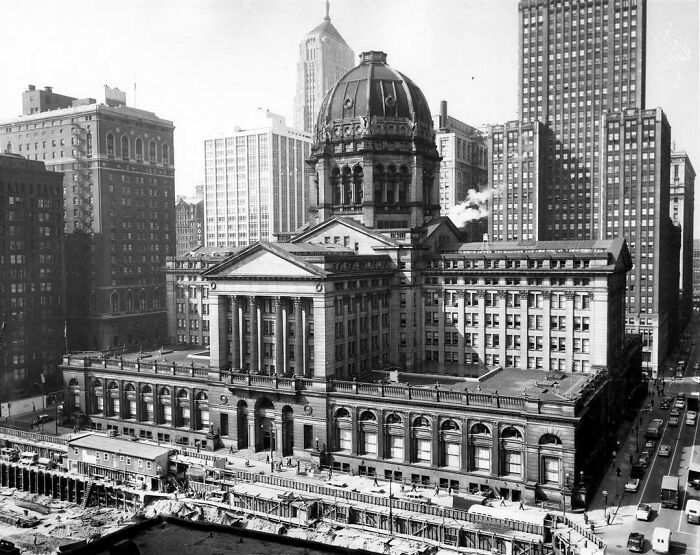
The building was designed in the Beaux-Arts style by architect Henry Ives Cobb. The floorplan was a six-story Greek cross atop a two-story base with a raised basement.
After construction was complete, more than $2,000,000 remained for interior decoration of the Chicago Federal Building. The four wings met under the dome to form an octagonal rotunda, inspired by Imperial Roman architecture, that was open to the ninth floor. The rotunda's 100 ft (30 m) diameter made it larger than that of the United States Capitol in Washington, D.C.
The building was demolished in 1965 and replaced with the Kluczynski Federal Building
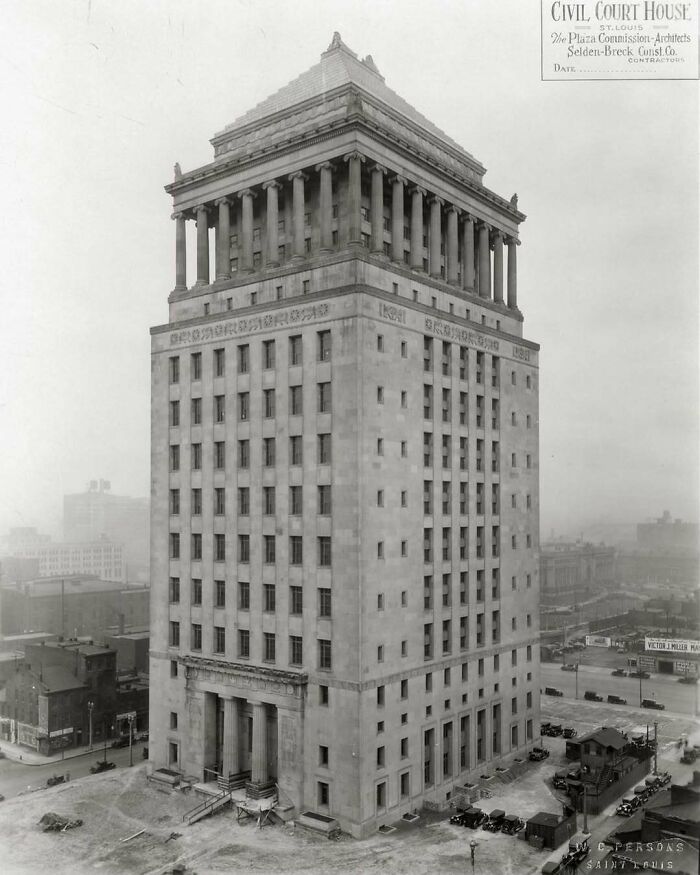
The building with its pyramid shaped roof is prominently featured in the center of photos of the Gateway Arch from the Illinois side as its location on the Memorial Plaza is lined up in the middle directly behind the Old Courthouse.
The building was part of an $87 million bond issue ratified by voters in 1923 to build monumental buildings along the Memorial Plaza which also included Kiel Auditorium and the Municipal Services Building. The Plaza and the buildings were part of St. Louis's City Beautiful plan.
It replaced the Old Courthouse as the city's court building and its construction prompted the descendants of the founding father Auguste Chouteau to unsuccessfully sue the city to get the Old Courthouse back since the stipulation was that it was to always be the courthouse.
The pyramid roof on the top was designed to resemble the Mausoleum at Halicarnassus which was one of the Seven Wonders of the Ancient World. It features 32 Ionic columns. Each of the columns have 6 fluted drums, and a cap, and are about 42 feet (13 m) high, 5+1⁄2 feet in diameter. They are made of Indiana limestone.
The roof is made of cast aluminum and is topped by two 12-foot (3.7 m) high sphinx-like structures with the fleur-de-lis of St. Louis adorned on the chests. These sphinx-like creatures were sculpted by Cleveland sculptor, Steven A. Rebeck
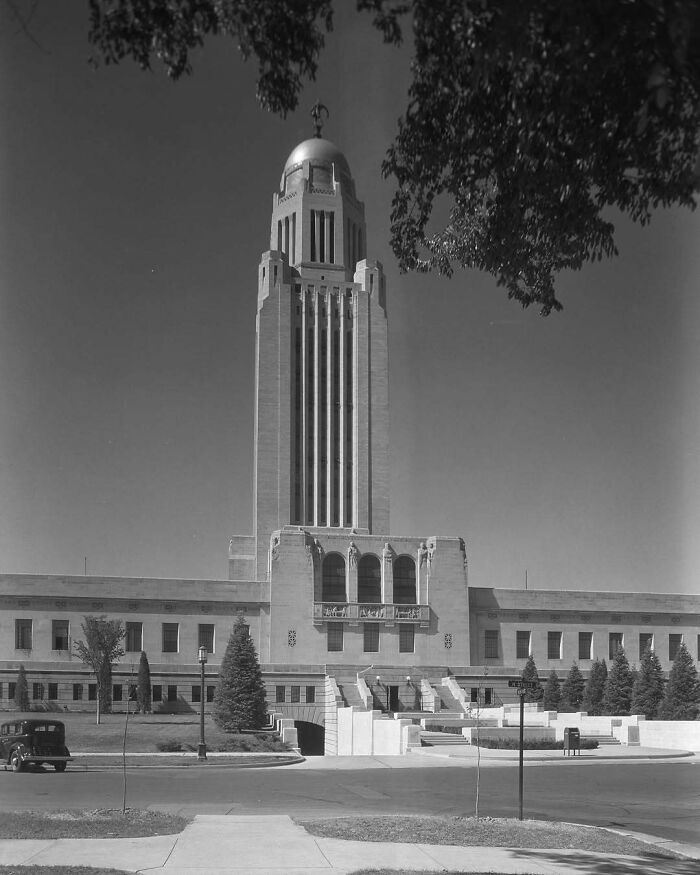
Designed by New York architect Bertram Grosvenor Goodhue in 1920, it was constructed of Indiana limestone from 1922 to 1932

Know as the p***s of the plains. No buildings in Lincoln are allowed to be as tall so you can see it from miles away.
Once the tallest building in the world, its Beaux-Arts style, crafted by architect Ernest Flagg, was a testament to the grandeur of the Gilded Age. The building’s red brick and bluestone exterior, adorned with ornate sculptures and capped by a French-inspired mansard roof, made it an iconic part of Manhattan’s skyline. It was demolished in 1968
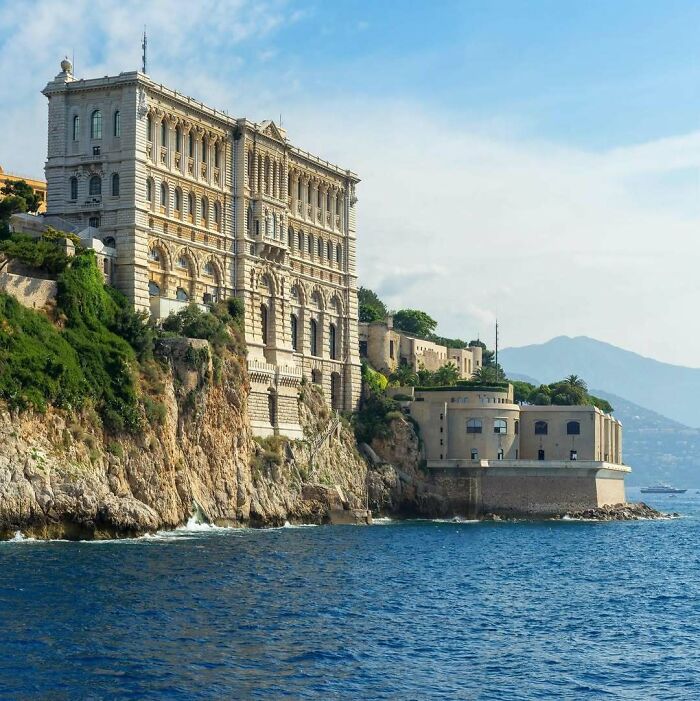
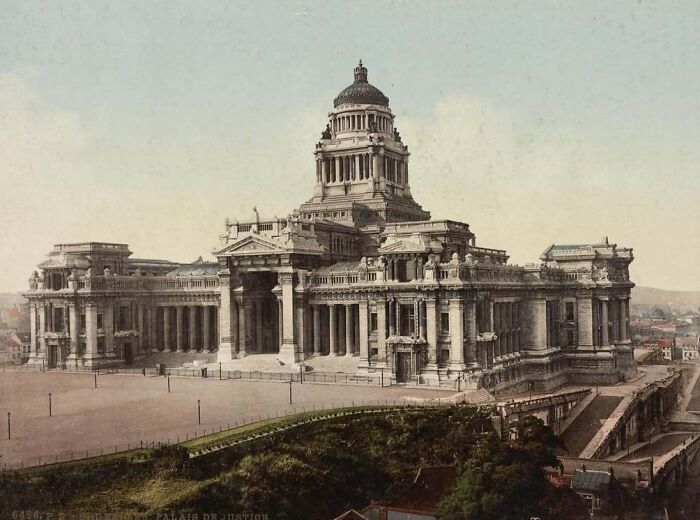
The building was completed in 1910. This monumental example of highly charged Baroque Revival architecture has an impressive façade above the sea, towering over the sheer cliff face to a height of 279 feet (85.04 m).
It took eleven years to build, using 100,000 tons of stone from La Turbie. During construction, the names of twenty well-known oceanographic research vessels personally selected by Prince Albert I were inscribed into the frieze of the museum's façade

Exquisite! Doesn’t match the title of this article, but who cares?
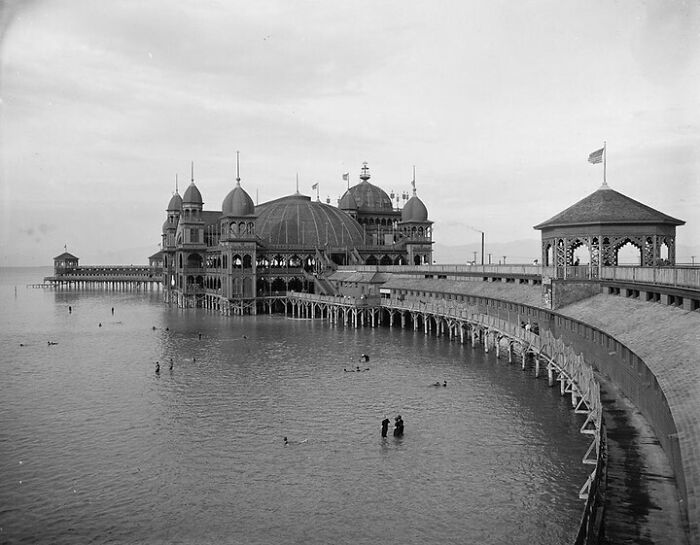
The first Saltair, completed in 1893, was jointly owned by a corporation associated with The Church of Jesus Christ of Latter-day Saints and the Salt Lake & Los Angeles Railway, which was constructed for the express purpose of serving the resort. Saltair was not the first resort built on the shores of the Great Salt Lake, but was the most successful ever built. It was designed by well-known Utah architect Richard K.A. Kletting and rested on over 2,000 posts and pilings, many of which remain and still are visible over 110 years later.
Burned in 1925
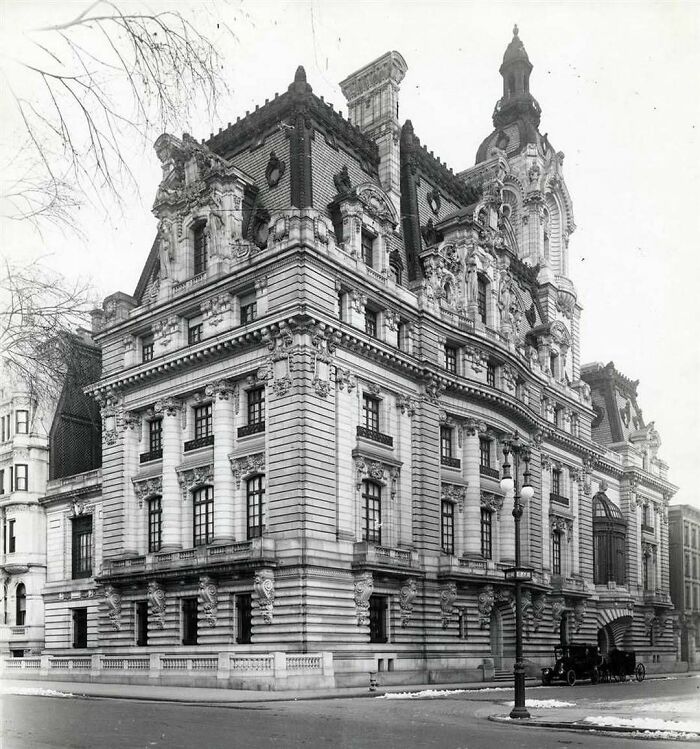
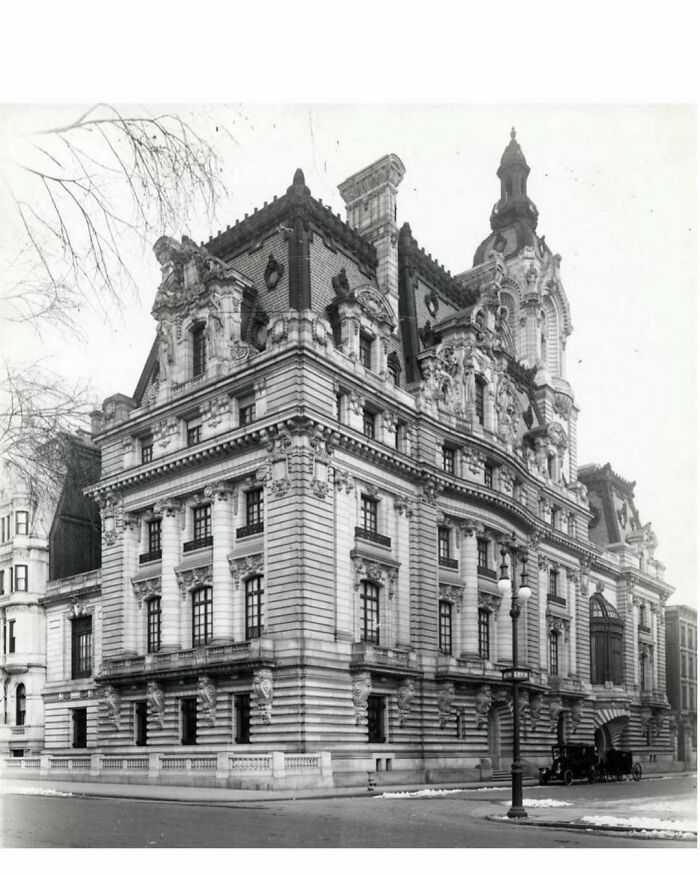
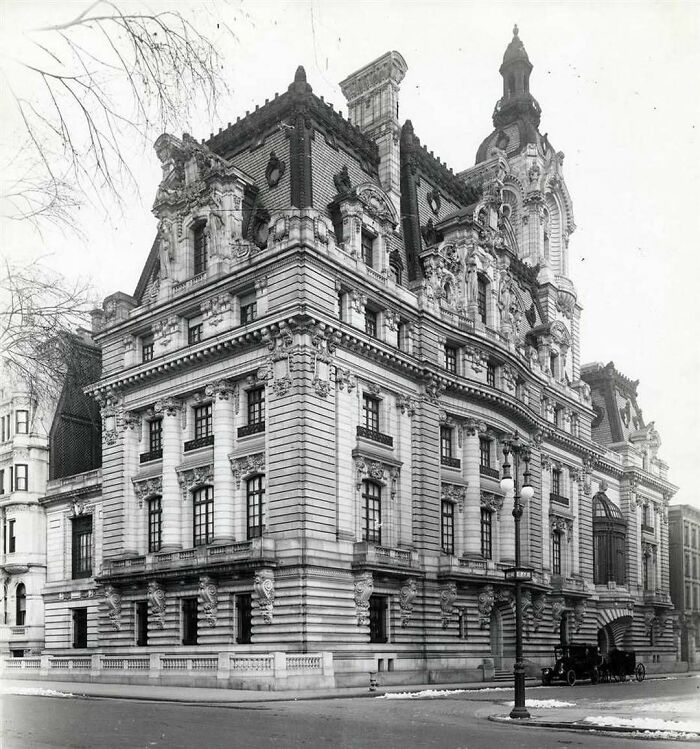
It was demolished in 1927 and replaced with a luxury apartment building (960 Fifth Avenue).
The house took up 250 feet on 77th Street and 77 feet on Fifth Avenue, more than any other rich man's mansion on Fifth opposite the park, with the exception of Andrew Carnegie's. The Fifth Avenue frontage was large for a New York house, with three bays of granite.
On 77th Street, the house featured a long facade rising to a steep mansard roof. The mansion featured a spectacular four-sided tower with a three-story-high inward-curving arch topped by an open pergola that was said to have been visible from almost anywhere in Central Park
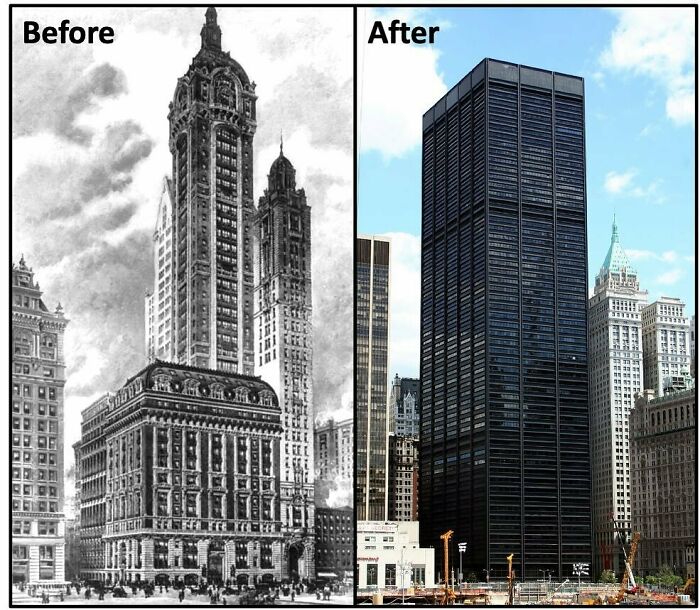
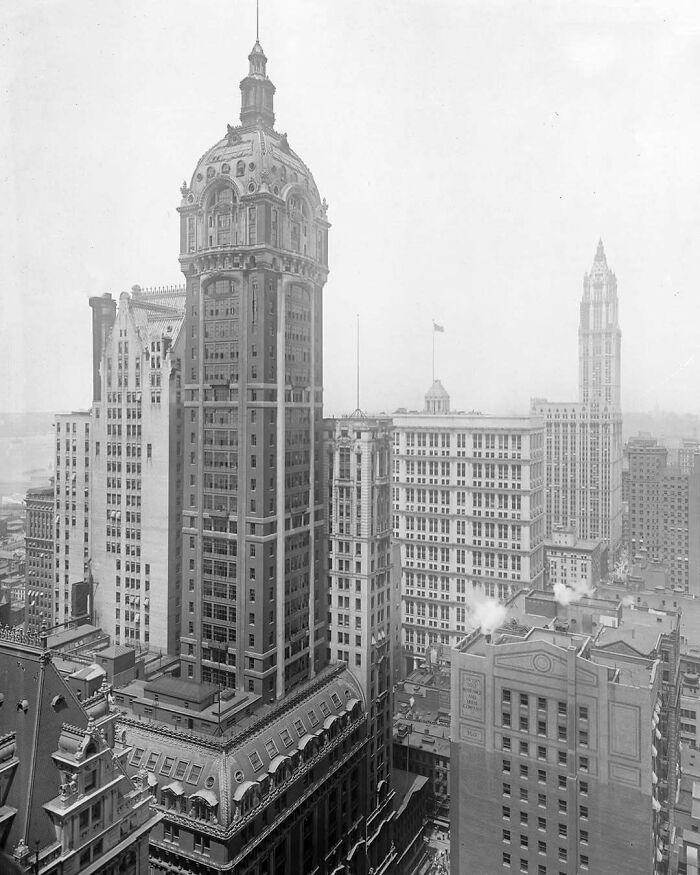
From this list, I'm beginning to wonder how many Singer Buildings there were in New York.
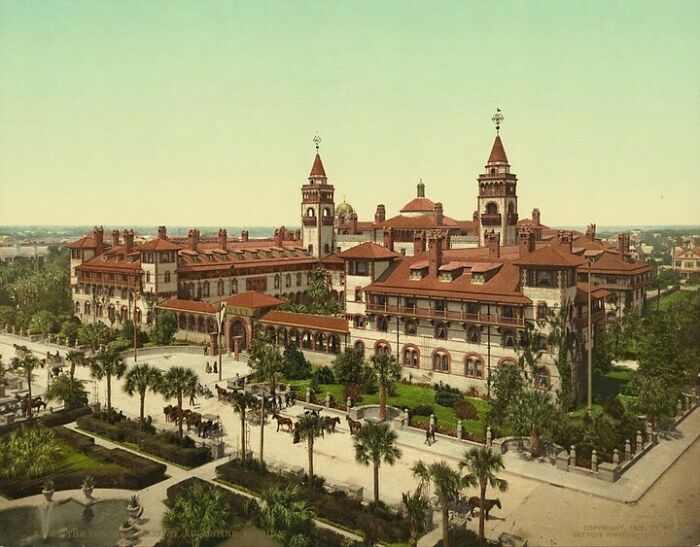
Built by millionaire developer and Standard Oil co-founder Henry M. Flagler and completed in 1888. The hotel was designed in the Spanish Renaissance style as the first major project of the New York architecture firm Carrère & Hastings, which would go on to gain world renown.
The hotel was the first of its kind constructed entirely of poured concrete, using the local coquina stone as aggregate. The hotel was also one of the first buildings in the country wired for electricity from the onset, with the power being supplied by DC generators installed by Flagler's friend, Thomas Edison.
Interior design of the hotel was headed by Louis Comfort Tiffany, and his company, Tiffany & Co, which provided the stained glass windows in the hotel's dining room. The hotel's furnishings were provided by Pottier & Stymus, a prominent New York City furniture and design firm at the time. Bernard Maybeck, whose later designs include the Palace of Fine Arts in San Francisco, served as a draftsman on the project and designed its 540 guest rooms.
The original building and grounds of the hotel are today a part of Flagler College
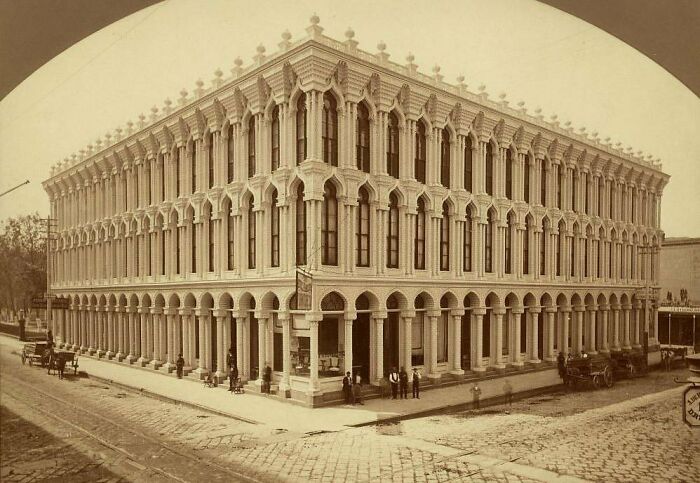
Construction started in 1859, but the project was not completed until after the Civil War. Destroyed by a fire in 1897
Oops. Something's missing. I think they forgot to put cherubs on the facade.
Completed in 1909 and still in use today, it is considered to be one of the most beautiful and important theaters in the country
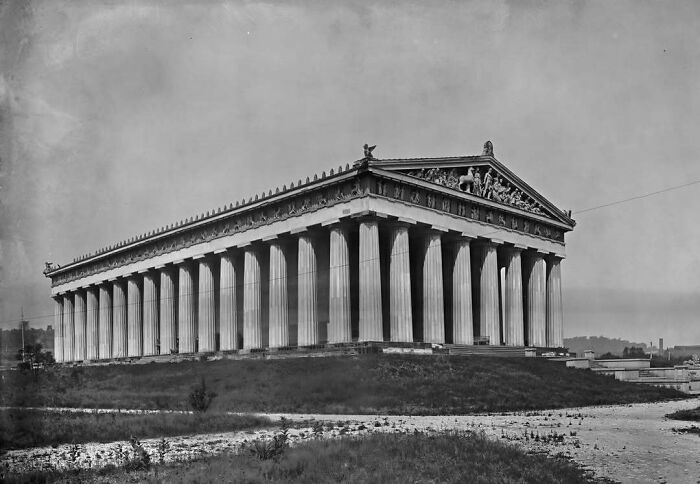
It was designed by architect William Crawford Smith and built in 1897 as part of the Tennessee Centennial Exposition
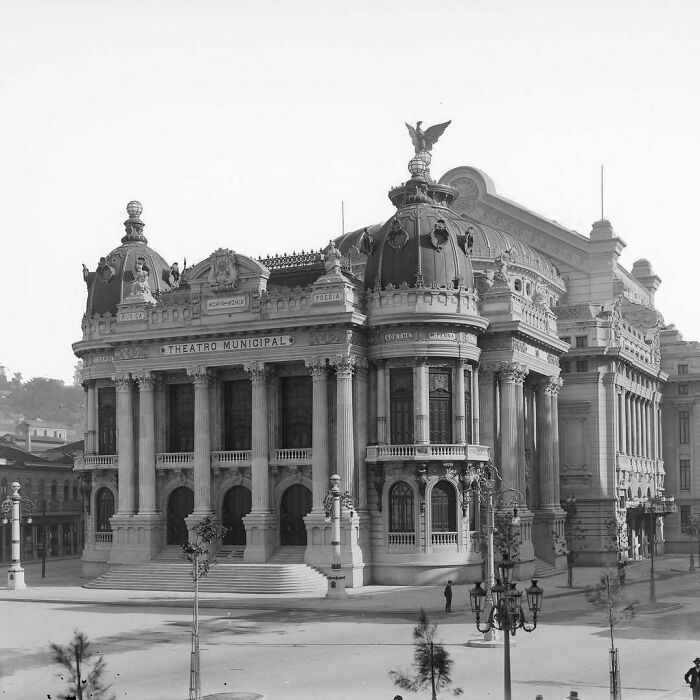
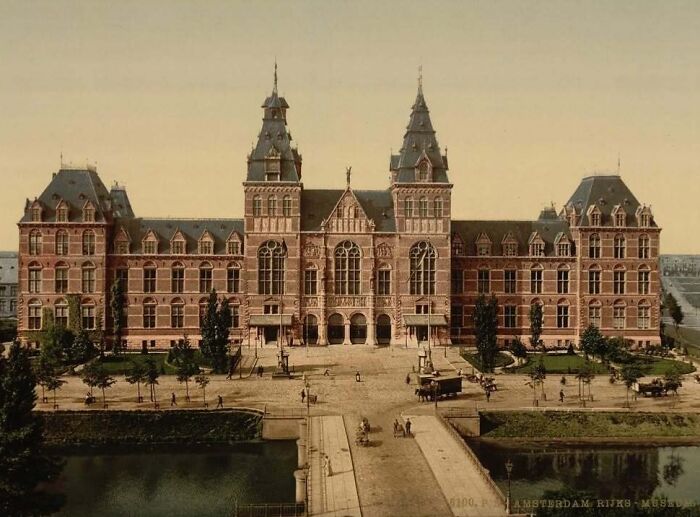
Am I confused about the title of this article that currently says something about American architecture? Or were the architects actually Americans that went abroad to do their work? Or has the title of the article been changed when I wasn't looking from "Historic American Architecture Pics" to something that doesn't imply that these pix are American? The one from Mexico and the one from Canada make sense as they are American, but the European ones?
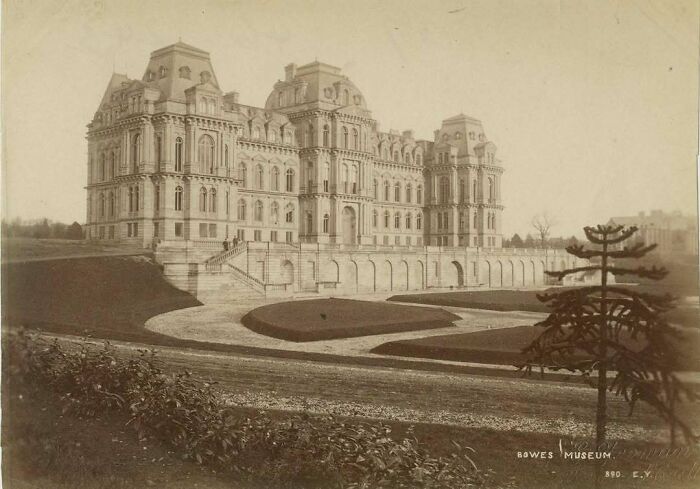
It was built to designs by Jules Pellechet and John Edward Watson to house the art collection of John Bowes and his wife Joséphine Benoîte Coffin-Chevallier, and opened in 1892.
It was designed with the collaboration of two architects, the French architect Jules Pellechet and John Edward Watson of Newcastle. The building is richly modelled, with large windows, engaged columns, projecting bays, and mansard roofs typical of the French Second Empire, set within landscaped gardens. An account in 1901 described it as "... some 500 feet in length by 50 feet high, and is designed in the French style of the First Empire. Its contents are priceless, consisting of unique Napoleon relics, splendid picture galleries, a collection of old china, not to be matched anywhere else in the world, jewels of incredible beauty and value; and, indeed, a wonderful and rare collection of art objects of every kind."
The building is still in use today
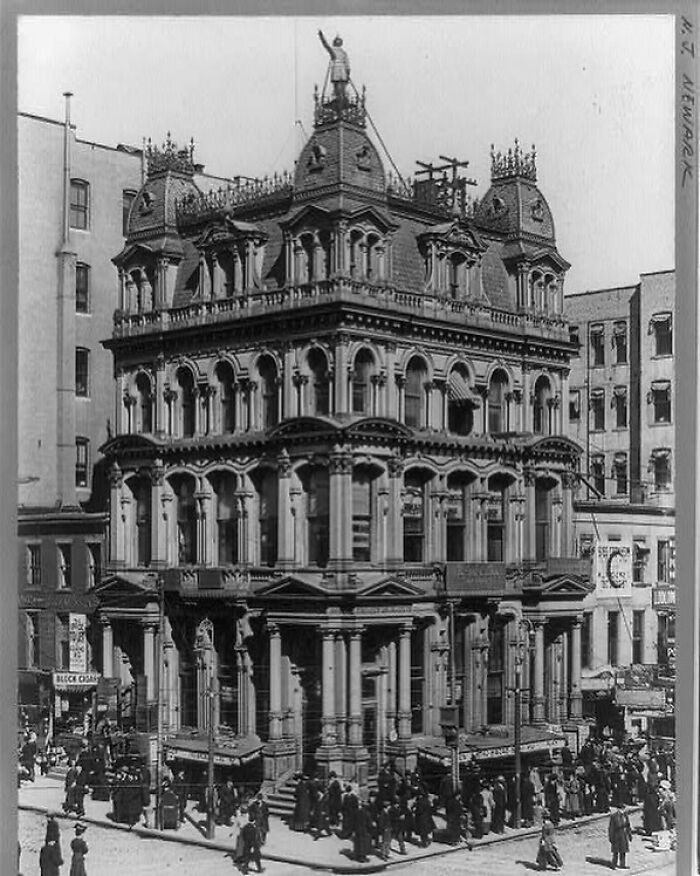
Built in 1872 and demolished in 1911.
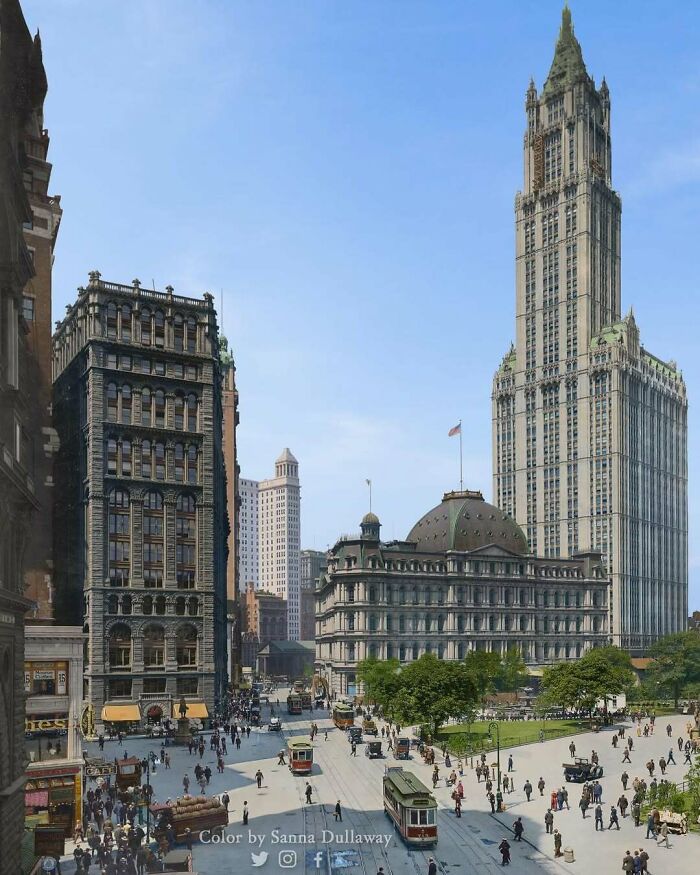
The Old Mutual Life Building was an early skyscraper in the City of New York, located on the corner of Broadway and Liberty Street. The site is now occupied by the 140 Broadway, a 51 story tower, completed in 1968
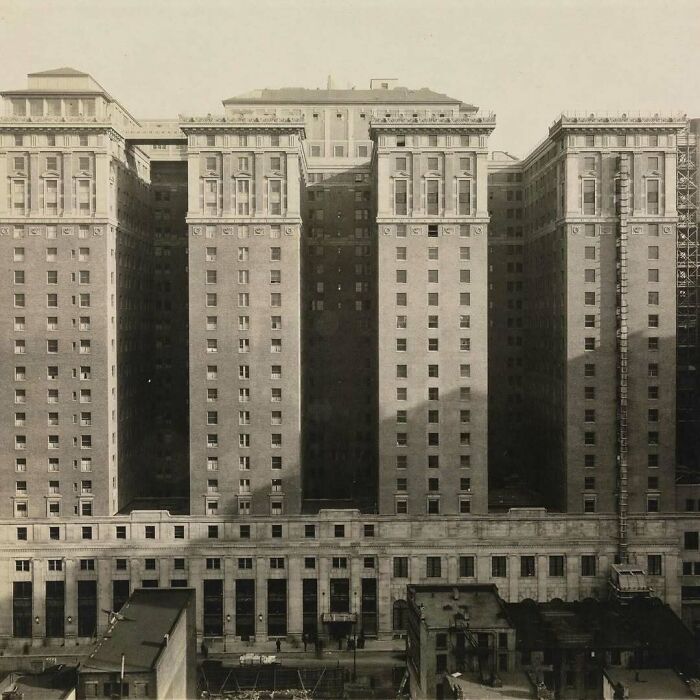
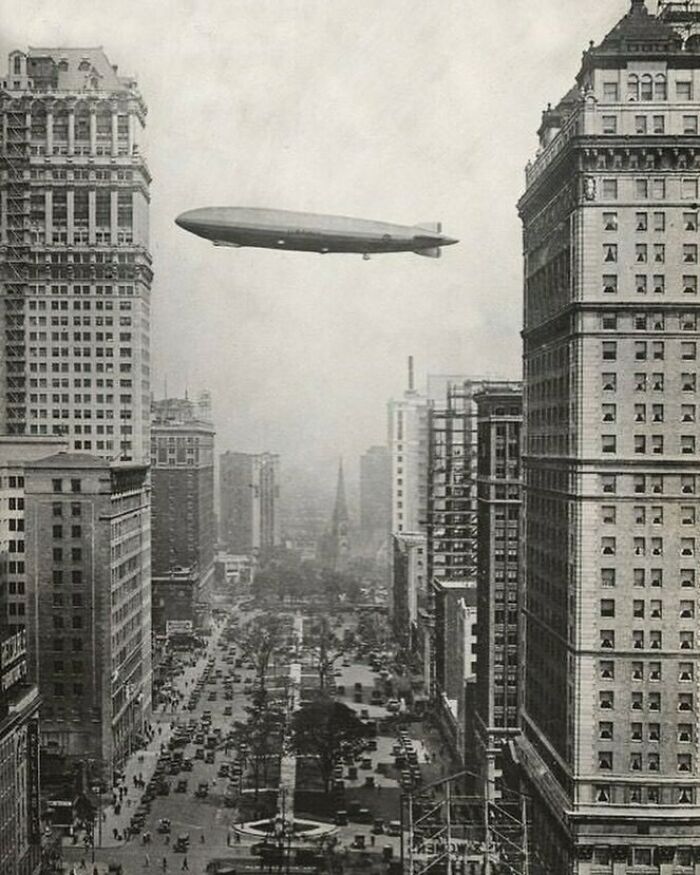
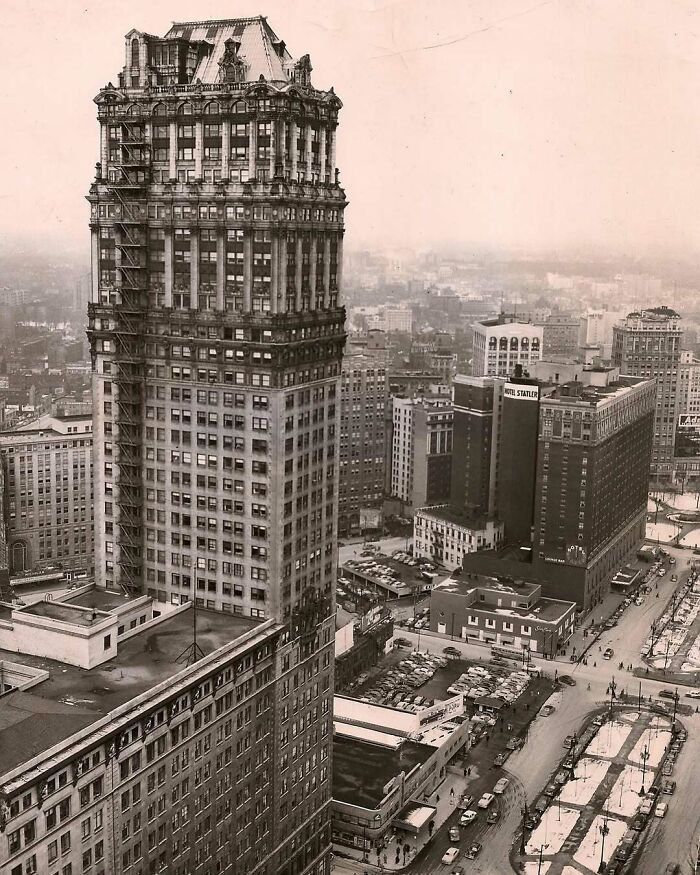
Construction began on the Italian Renaissance-style building in 1916, as an addition to the original Book Building, and finished a decade later. Designed in the Academic Classicism style, it has 38 rentable floors, two basement levels and two mechanical floors.
It has a green copper roof, a roofing style shared by the nearby Westin Book Cadillac Hotel. Retail and gallery floors used to reside on the first and second floors, with businesses previously occupying the rest. The building is currently unoccupied but is under renovation by Bedrock Real Estate Services and is planned to open again
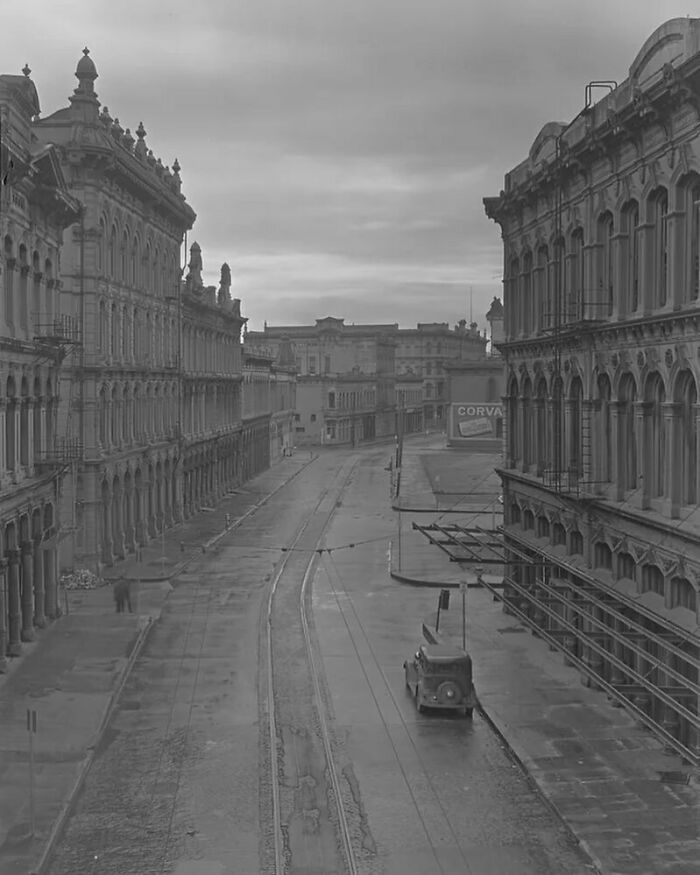
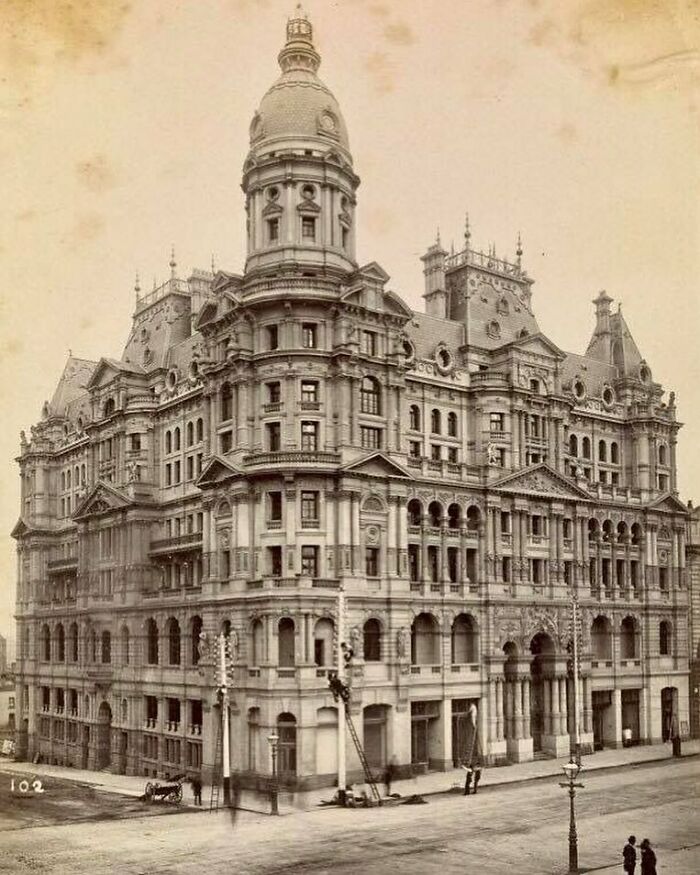
The building was a large elaborate Second Empire style temperance hotel in the city centre, built in 1888 at the height of Melbourne's Boom era, and controversially demolished in 1973
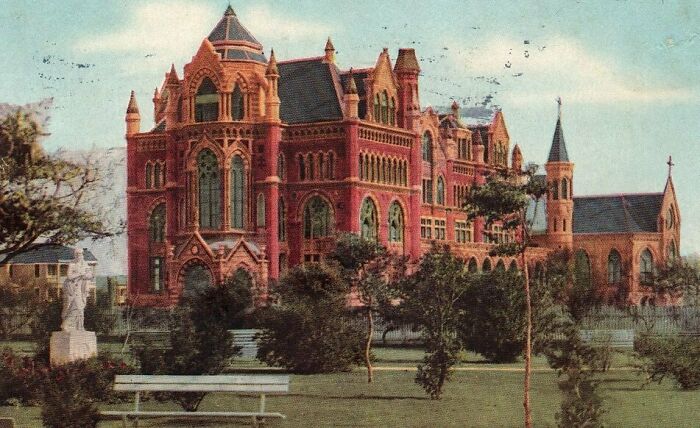
Completed in 1895 and razed in 1962. The campus chapel stood from 1871-1961 & the convent stood from 1854-1971
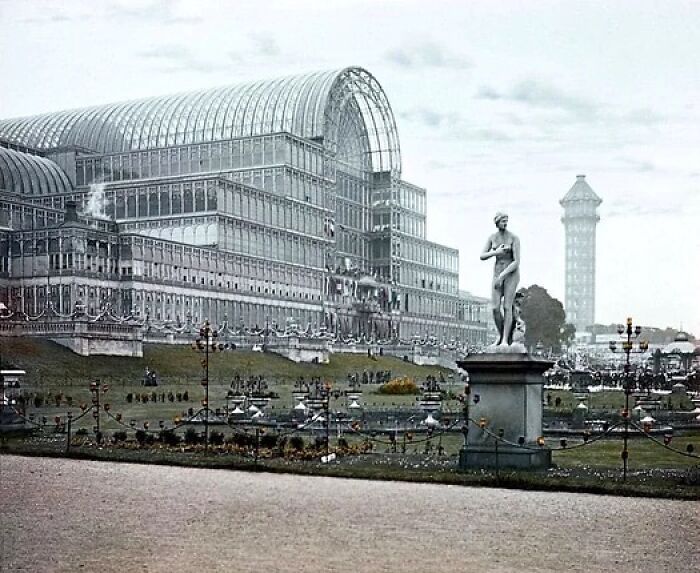
The building was made of cast iron and plate glass, originally built to house the Great Exhibition of 1851. It was destroyed by fire in 1936
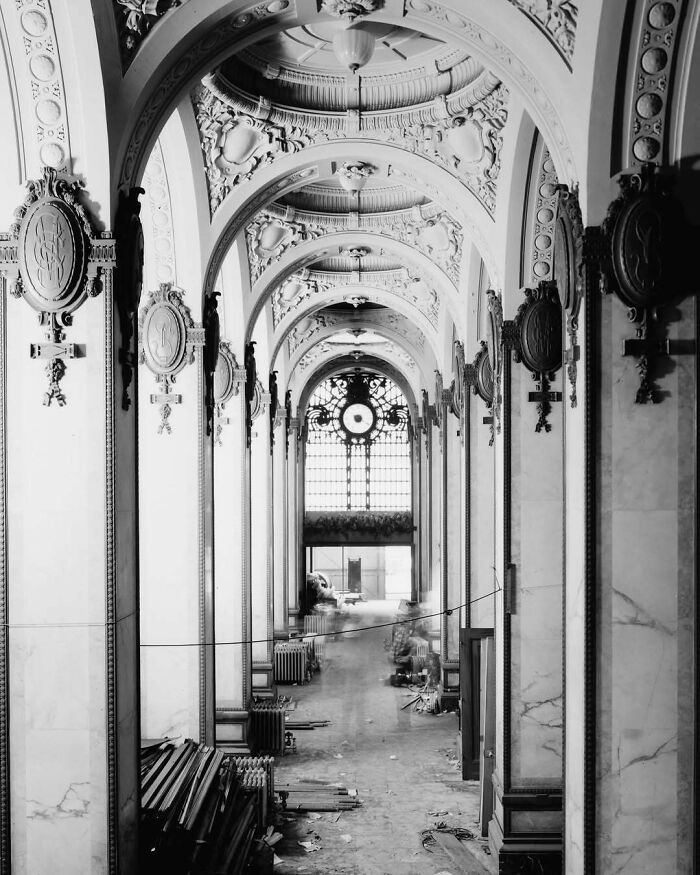
In 1901, the firm of Heins & LaFarge was hired to design the underground station. The City Hall station opened on October 27, 1904 and was closed after World War II.
The station is currently open for tours
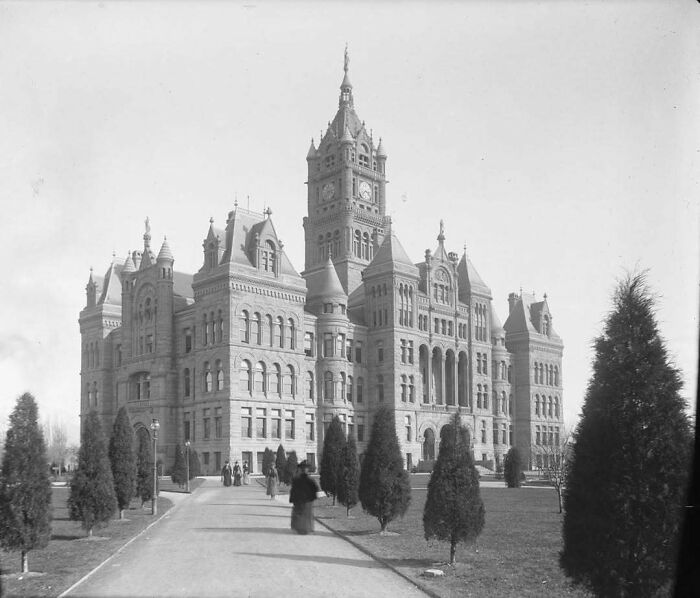
The building was originally constructed by free masons between 1891 and 1894 to house offices for the city and county of Salt Lake and replace the Salt Lake City Council Hall and Salt Lake County Courthouse, both erected in the 1860s.
Construction of the building was riddled with controversy. During the late 19th and early 20th centuries the City and County Building was the symbol of non-Mormon citizens' open defiance of The Church of Jesus Christ of Latter-day Saints. It was designed to rival the Salt Lake Temple as the city's architectural centerpiece. It is even thought that the building's clock tower and statues were designed to mimic the temple's spires and statue of the angel Moroni.
The building was monstrously over budget. Estimated by the firm at $350,000, the winning contractor bid $377,978, but by the building's dedication on December 28, 1894, it had cost nearly $900,000. Complicating matters was the Panic of 1893 which cut Salt Lake City and County revenues nearly in half. As a result of this, plans for large stained glass windows for the building were discarded.
Although now used exclusively by Salt Lake City government, the building originally served many functions. Salt Lake County offices called the structure home until the 1980s when the County elected to build a new complex at 2100 South and State Street.
The building served as Utah's Capitol from when statehood was granted in 1896 until the present Utah State Capitol was completed in 1915. The Salt Lake City and County building also housed Salt Lake's first public library and contained courtrooms, including one that condemned organizer Joe Hill to death amid international attention in 1914
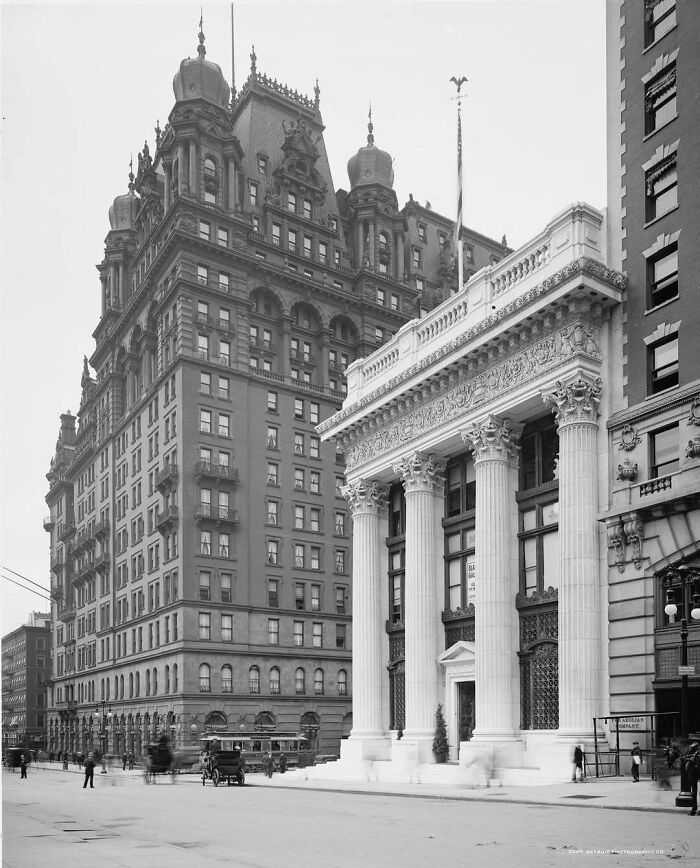
The headquarters of the Singer Manufacturing Company, it was at the northwestern corner of Liberty Street and Broadway in the Financial District of Lower Manhattan. Frederick Gilbert Bourne, leader of the Singer Company, commissioned the building, which architect Ernest Flagg designed in multiple phases from 1897 to 1908. The building's architecture contained elements of the Beaux-Arts and French Second Empire styles
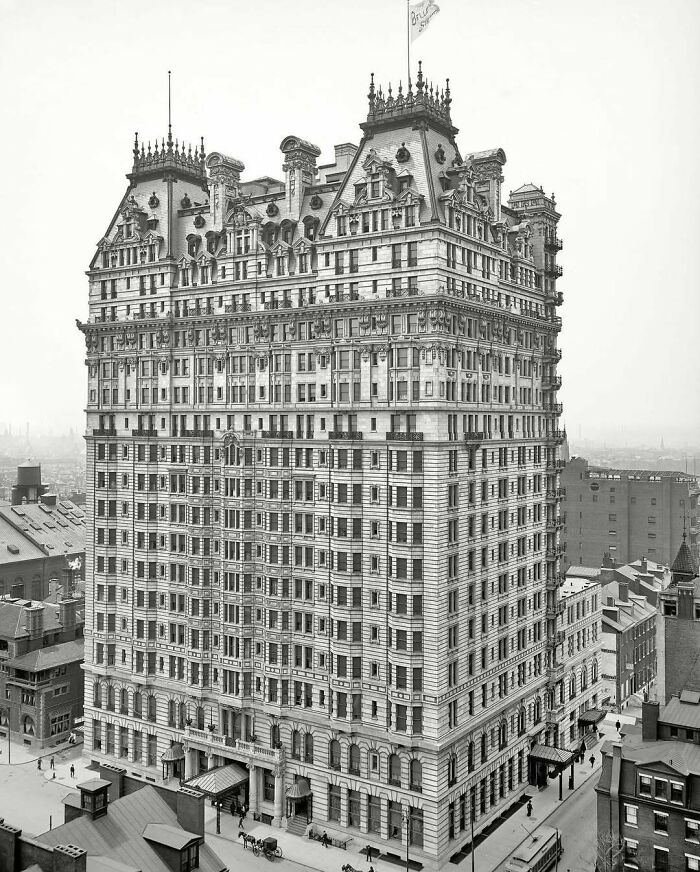
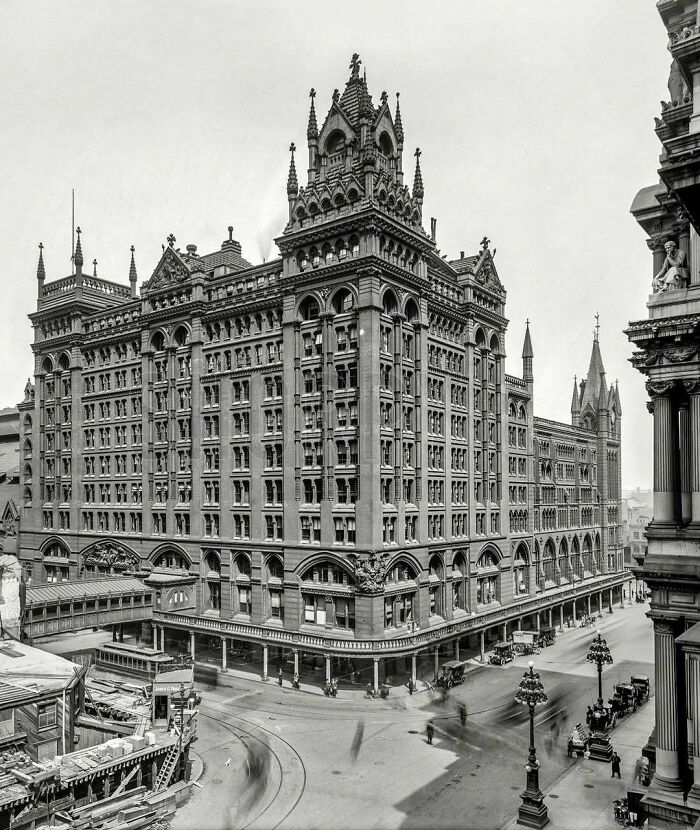
Completed in 1893 and sadly demolished in 1953.
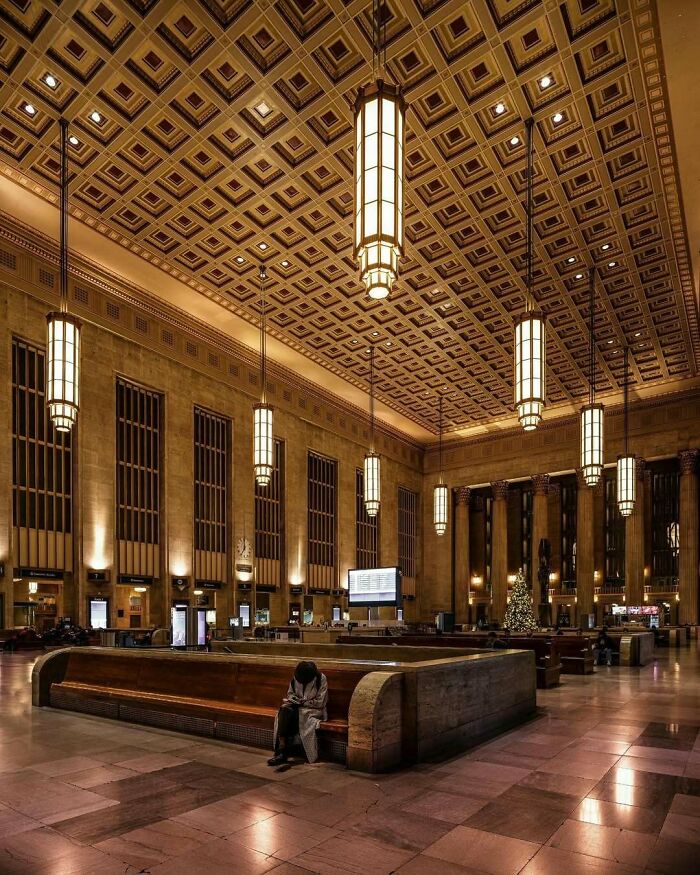
The architecture of Broad Street Station was typical of Furness's buildings in central Philadelphia in the last quarter of the nineteenth century. Furness's structure looked much like a web of Gothic spires and arched windows, with considerable modification from their medieval sources. His work expanded on a similar structure originally constructed by the Wilson Brothers & Company a mere decade before. Furness's windows were often rounded and did not use pointed chancels.
The lower levels of the structure were heavy and rusticated, recalling the work of H. H. Richardson from the previous decade, while the spandrels of the upper stories emphasized the building's verticality. The frame for the stone structure was largely made of iron and steel, and on the interior the structural techniques were often displayed by balustrades and columns that in places revealed the rivets that held them together. The formal style of the building was altogether not unlike that of Furness's building for the Pennsylvania Academy of the Fine Arts, which he completed in 1876, or his University of Pennsylvania Library, designed in 1888
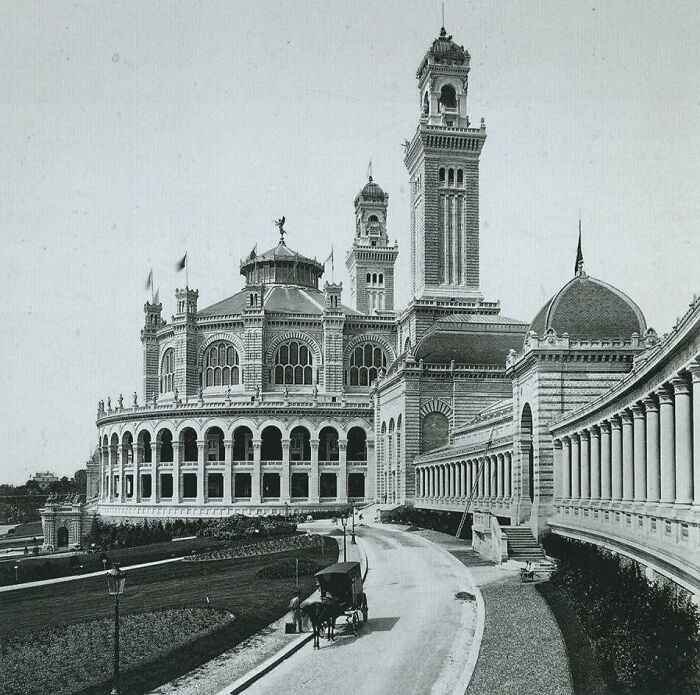
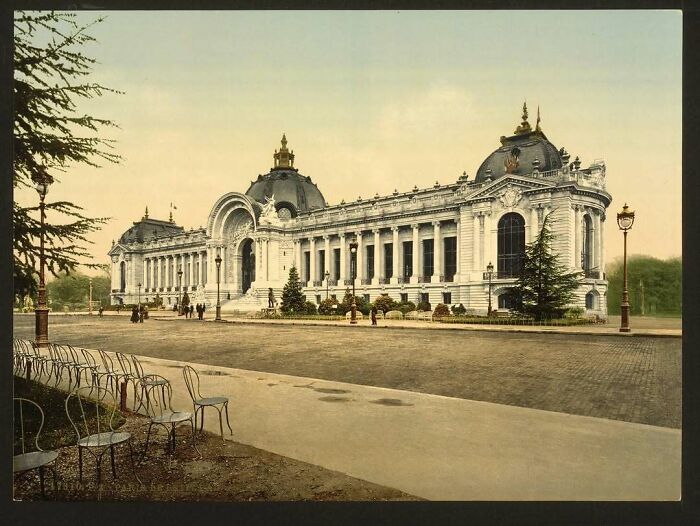
Built for the 1900 Exposition Universelle ("universal exhibition"), it now houses the City of Paris Museum of Fine Arts (Musée des beaux-arts de la ville de Paris). The Petit Palais is located across from the Grand Palais on Avenue Nicolas II, today Avenue Winston-Churchill
The mansion was completed in 1911 at a cost of $7 million (equivalent to over $200,000,000 today). It was reported that Clark bought a quarry in New Hampshire, at a cost of $50,000 (equivalent to $1,454,000 in 2021), and built a railroad to transport the stone for the building. He also bought a bronze foundry employing 200 men to manufacture the bronze fittings. In addition, he imported marble from Italy, oak from Sherwood Forest in England, and parts of old French châteaux for the interior.
The mansion was demolished in 1927 and replaced with a luxury apartment building
Article title: "Old American architecture". Article contents: At least a dozen photos from places in Europe

And most of the US buildings has been torn down to make way for roads or hideous skyscrapers.
Load More Replies... This is one of the poorest 'lists' I've seen recently. There are way too many doubled up entries, and the intro is ambigious. Is this supposed to be a list of US buildings? The intro implies that it is, but the title doesn't.

Check out the Koppers building and old Pennsylvania Station in Pittsburgh. The old County jail is also pretty cool.

Of similar interest: A 1910 catalog of 100s of floor plans for "the principle high-end apartment buildings" in NYC: https://commons.m.wikimedia.org/ https://commons.m.wikimedia.org/wiki/Category:World%27s_loose_leaf_album_of_apartment_houses For instance, the Ansonia, picture #72 above w/index.php?search=new+york+apartment+floor+plans+ansonia&title=Special:MediaSearch&type=image

Article title: "Old American architecture". Article contents: At least a dozen photos from places in Europe
And most of the US buildings has been torn down to make way for roads or hideous skyscrapers.
Load More Replies... This is one of the poorest 'lists' I've seen recently. There are way too many doubled up entries, and the intro is ambigious. Is this supposed to be a list of US buildings? The intro implies that it is, but the title doesn't.
Check out the Koppers building and old Pennsylvania Station in Pittsburgh. The old County jail is also pretty cool.
Of similar interest: A 1910 catalog of 100s of floor plans for "the principle high-end apartment buildings" in NYC: https://commons.m.wikimedia.org/ https://commons.m.wikimedia.org/wiki/Category:World%27s_loose_leaf_album_of_apartment_houses For instance, the Ansonia, picture #72 above w/index.php?search=new+york+apartment+floor+plans+ansonia&title=Special:MediaSearch&type=image







































 No fees, cancel anytime