Get Premium
Dark mode theme is available exclusively for premium users. Learn more about the benefits of subscribing.
No fees, cancel anytime.

 Dark Mode Ad-Free Browsing Unlimited Content
 Ad-Free Browsing Unlimited Content Dark Mode
Join 1.2 million Panda readers who get the best art, memes, and fun stories every week!
One of the joys of living in the digital age is that we have a wealth of information at our fingertips. Gone are the days of traipsing to the nearest library, or paging through an old encyclopedia, to discover the who, what, when, where and hows of the world.
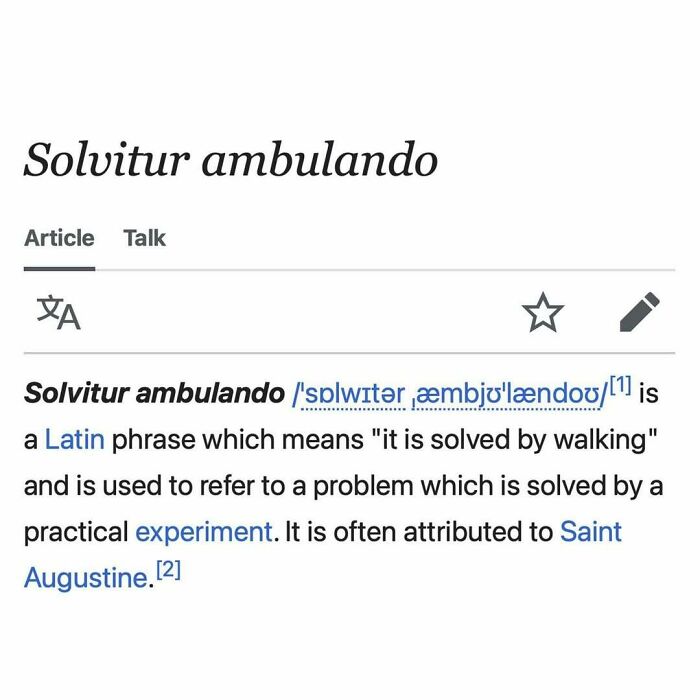
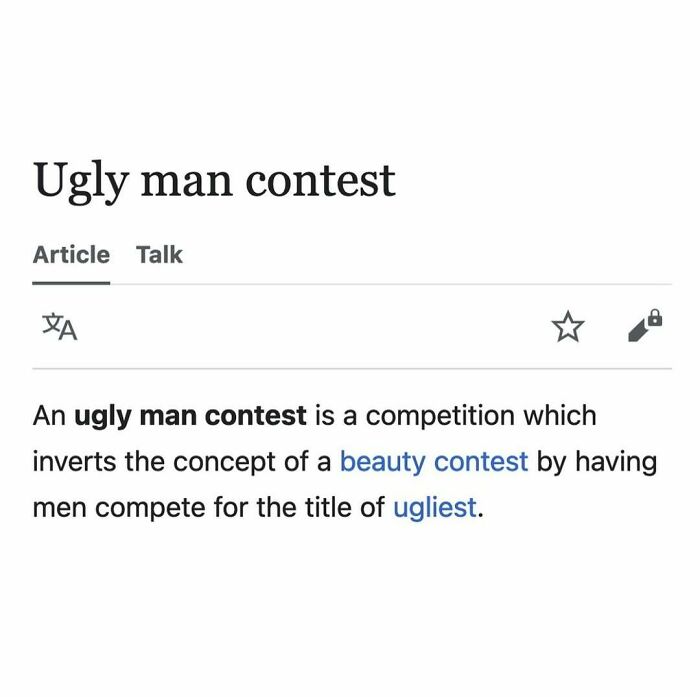
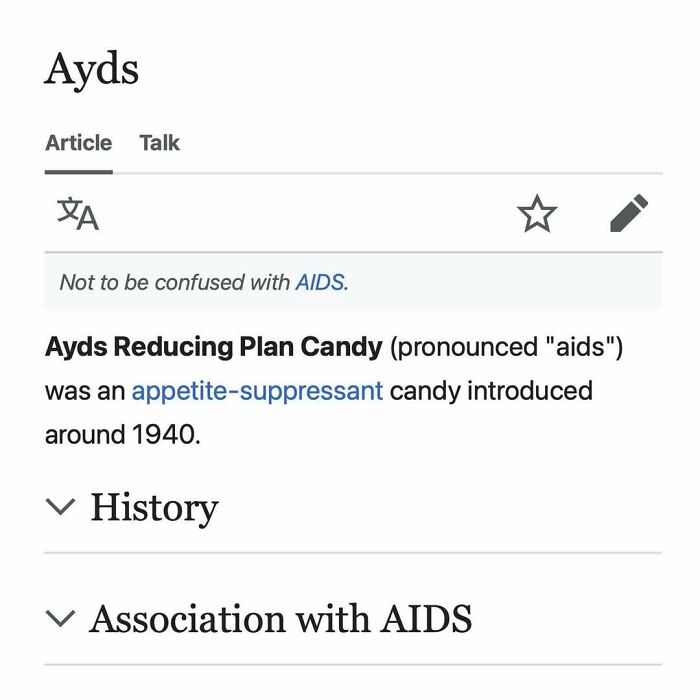
Wikipedia has become a favorite go-to for knowledge seekers. The page describes itself as “the free encyclopedia that anyone can edit,” and we just need to stress that *anyone* is the operative word. Among the more than 7 million articles, you’ll find some super interesting entries. But you might also come across a few ridiculously funny things that could easily have been crafted by comedians.
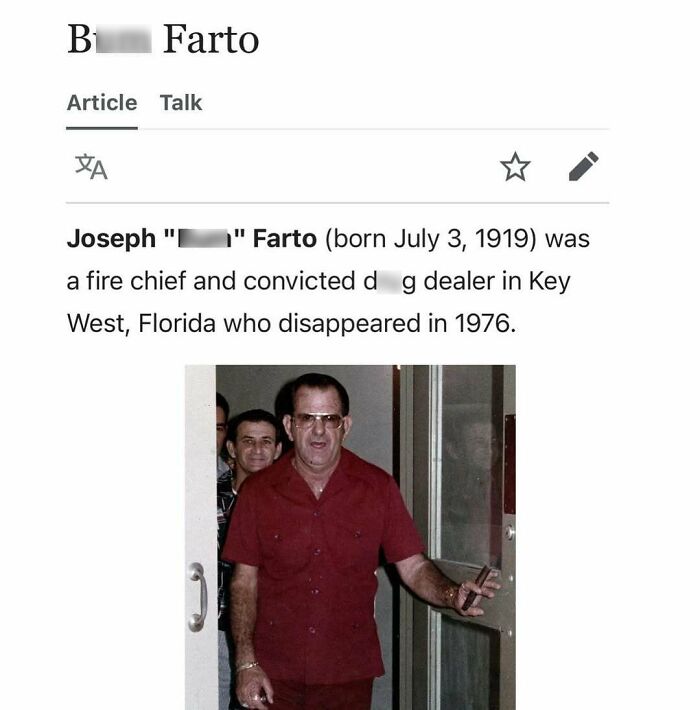
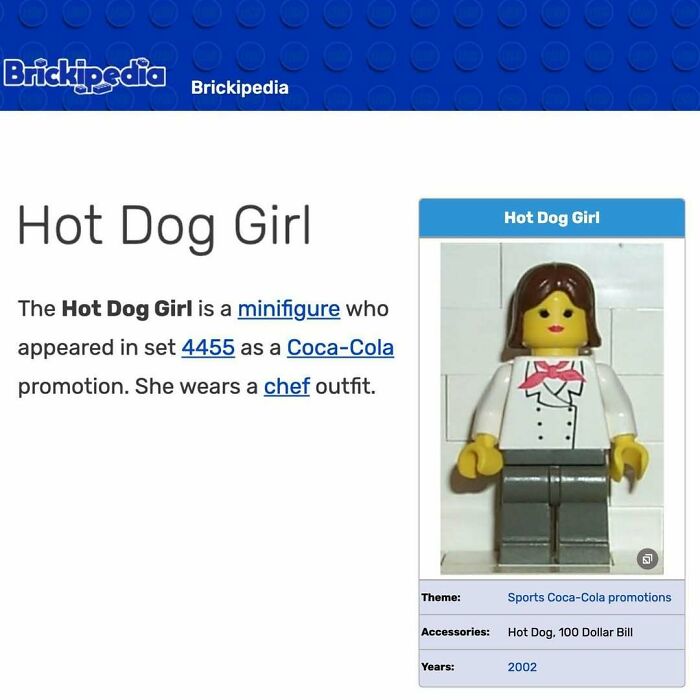
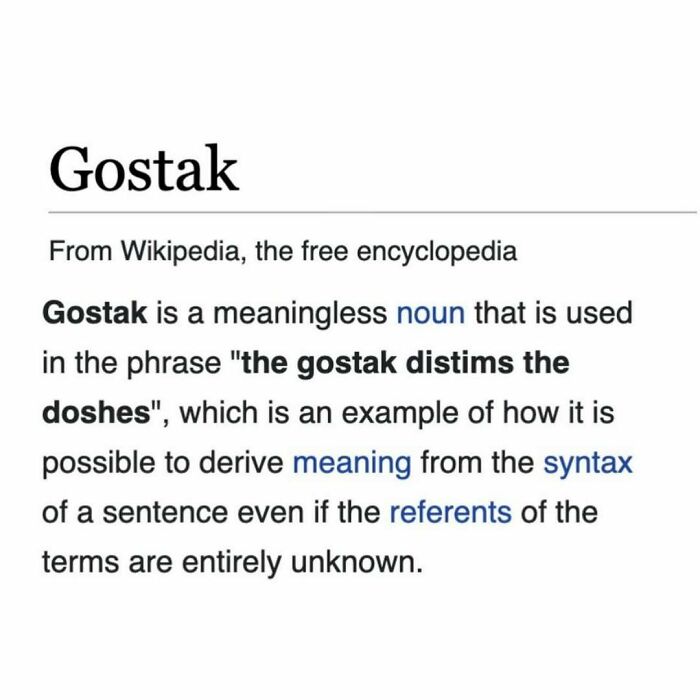
There's an Instagram account that highlights these hilarious Wiki entries. It's called Depths of Wikipedia and has more than 1.5 million followers. As the bio aptly states, "Wikipedia is weird!" and we would have to agree. Bored Panda has put together our favorite posts from the page. They're proof that learning something new doesn't always have to be serious, and sometimes facts can come with a side serving of funny.
This post may include affiliate links.

its like having the same name as the german mustache n4zi from 1939
More than 120 million people use Wikipedia as a way to find out more about the world we live in. Wikipedia describes itself as a "free online encyclopedia that is written and maintained by a community of volunteers, known as Wikipedians, through open collaboration and the wiki software MediaWiki."
While much of the site's information is reliable, some isn't. And Wikipedia has come under fire in the past for some of the stuff it has published. "Although Wikipedia's volunteer editors have written extensively on a wide variety of topics, the encyclopedia has been criticized for systemic bias, such as a gender bias against women and geographical bias against the Global South (Eurocentrism)," reads a Wikipedia entry.
The same article states that unlike traditional encyclopedias, Wikipedia follows the "procrastination principle" regarding the security of its content, meaning that it waits until a problem arises to fix it.
The Wikipedia community is based on a limited number of standard principles, notes Britannica.com. "One important principle is neutrality. Another is the faith that contributors are participating in a sincere and deliberate fashion," reads that site, adding that readers can correct what they perceive to be errors, and disputes over facts and over possible bias are conducted through contributor discussions.
Britannica adds that the other guiding principles are to keep within the defined parameters of an encyclopedia, to respect copyright laws, and to consider any other rules to be flexible. "The last principle reinforces the project’s belief that the open-source process will make Wikipedia the best product available, given its community of users," notes Britannica.
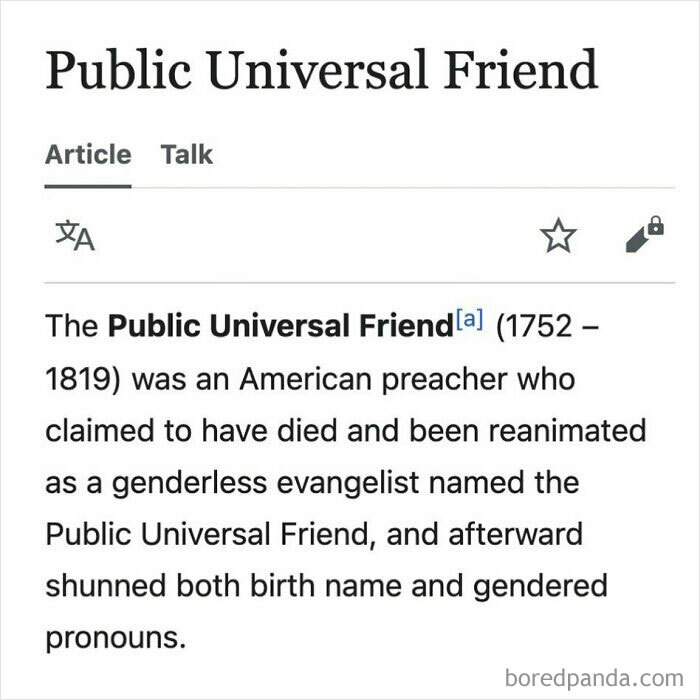
Ya know him claiming to have died and reanimated isn't helping me believe in his sanity. Being an evangelist is the icing on the I don't f*****g believe he's sane cake.

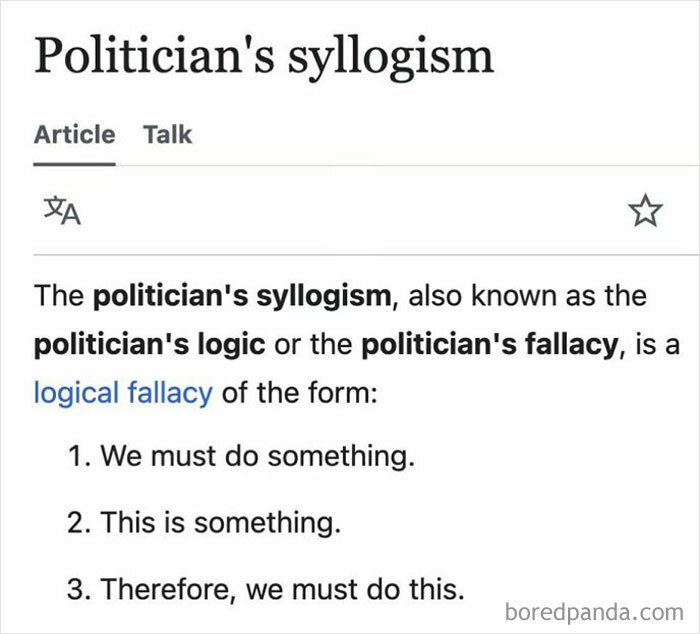
There is an old political saying that doing something is better than nothing even if that something is wrong, because people want to see action more than results. Sadly its true, so many problems would fix themselves with minimal or no action, because the system has failsafes in place, but the public panics, so politicians do things to keep the masses happy, while making things worse.
One of the issues Wikipedia faces is what it calls "vandalism." The site describes this as any change that deliberately compromises Wikipedia's integrity. "The most common and obvious types of vandalism include additions of obscenities and crude humor; it can also include advertising and other types of spam," reads a Wiki entry.
It adds that editors can sometimes commit vandalism by removing content or entirely blanking a given page. But less common types of vandalism, like the deliberate addition of "plausible but false information," can be more difficult to detect.
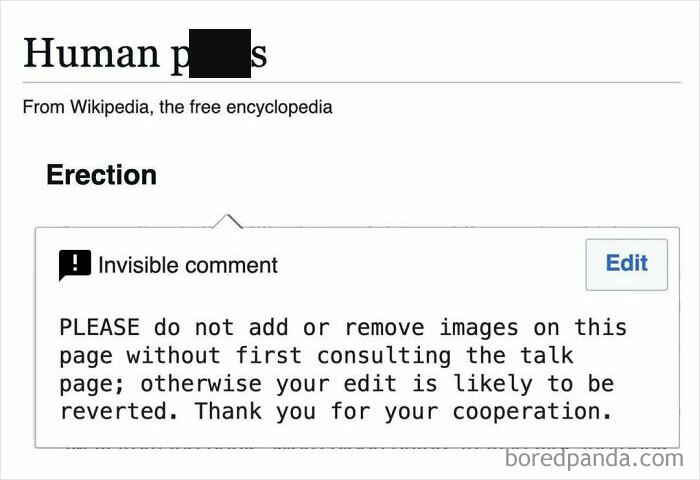
Vandals can also introduce irrelevant formatting, modify page semantics such as the page's title or categorization, manipulate the article's underlying code, or use images disruptively, notes Wikipedia.
As we mentioned earlier, Wikipedia encourages anyone to write or edit for them. As you might know, you do not have to log in to the site to read Wikipedia, nor do you have to log in to edit Wikipedia articles.
"Just about anyone can edit almost any article at any given time, even without logging in," reads the Contributing to Wikipedia page. But the admins encourage editors to create an account and log in, saying that you'll then have the ability to create pages, upload media and edit without your IP address being visible to the public.

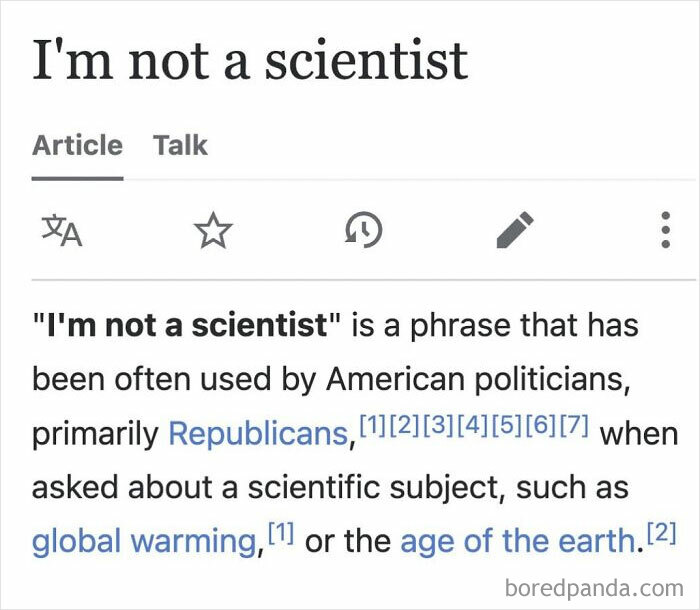
I'm not a scientist, but I remember skating on frozen lakes and ponds in the winter and you can't do that now. I'm not a scientist, but growing up we didn't have air advisory warnings due to forest fires for weeks at a time every summer. I'm not a scientist, but I can see that water levels have dropped significantly in every major reservoir and river system in Western North America. I'm not a scientist, but I have seen the year markers of the Columbia ice sheet and the way they keep getting further and further apart. I'm not a scientist, but the kids in Nunavut when I was up there back in 2006 were scared of bees because they had never seen them before. ...like how much more f*****g evidence do you need?!
According to Wikipedia, the goal of an article is to create a comprehensive and neutrally written summary of existing mainstream knowledge about a topic. "Editors are encouraged to be bold in editing in a fair and accurate manner with a straightforward, just-the-facts style," advises the site. "Articles should have an encyclopedic style with a formal tone instead of essay-like, argumentative, promotional, or opinionated writing."

No doubt submitted by the guy who submitted this one. untitled-6...0174f9.jpg 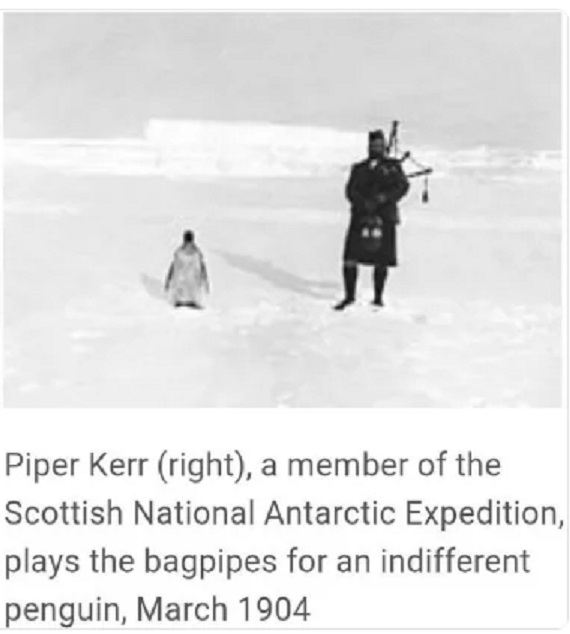
If you're considering contributing to Wikipedia, the topic of your article will need to be notable. "It must have in-depth coverage in reliable sources that are independent of the topic," explains the site. "Make sure there isn't already an article about the topic. The article you write must include citations to the sources you used."
They also advise that you use your own words to write the article and do not just copy from sources word-for-word.

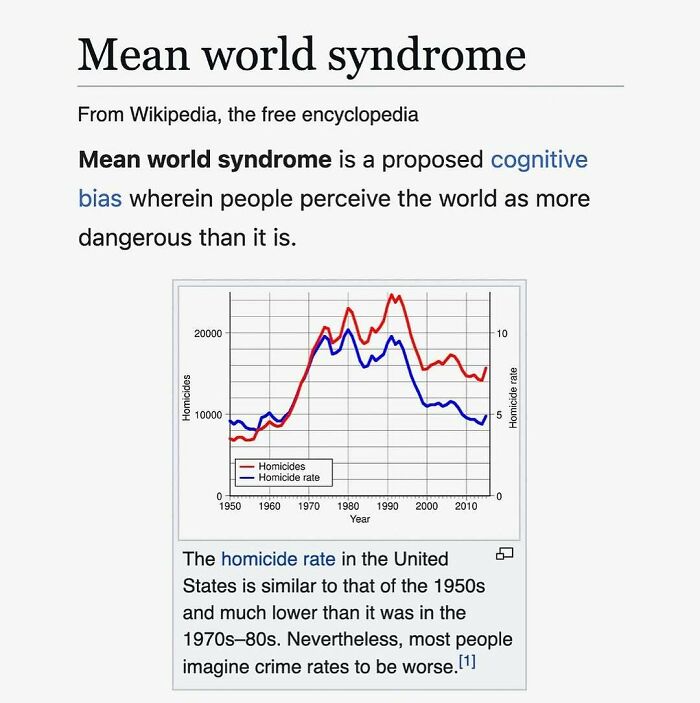
There is a specific reason for that, studied by multiple sociologists and with a rich bibliography. The "perception of danger" is a tool used by the populist far-right parties to increase support ("The Oxford Handbook of the Radical Right", prof. Jens Rydgren, Oxford University Press). Those parties actively skew the perception of the public exaggerating danger ("Cues that Matter: How Political Ads Prime Racial Attitudes During Campaigns, Nicholas A. Valentino et al, University of Michigan, 2002) and center their communication around those themes, pretending to offer (BS) solutions while actually acting in creating the "demand" ("Post-democracy, party politics and right-wing populist communication, B. Sauer et al, 2017, Univ. of Vienna). Unfortunately, this has been proven over and over to work ("Comparative analyses [...], Ceobanu, A. M., & Escandell, X., 2010; "Anxious Politics", Albertson & Gadarian, Cambridge press, 2015).


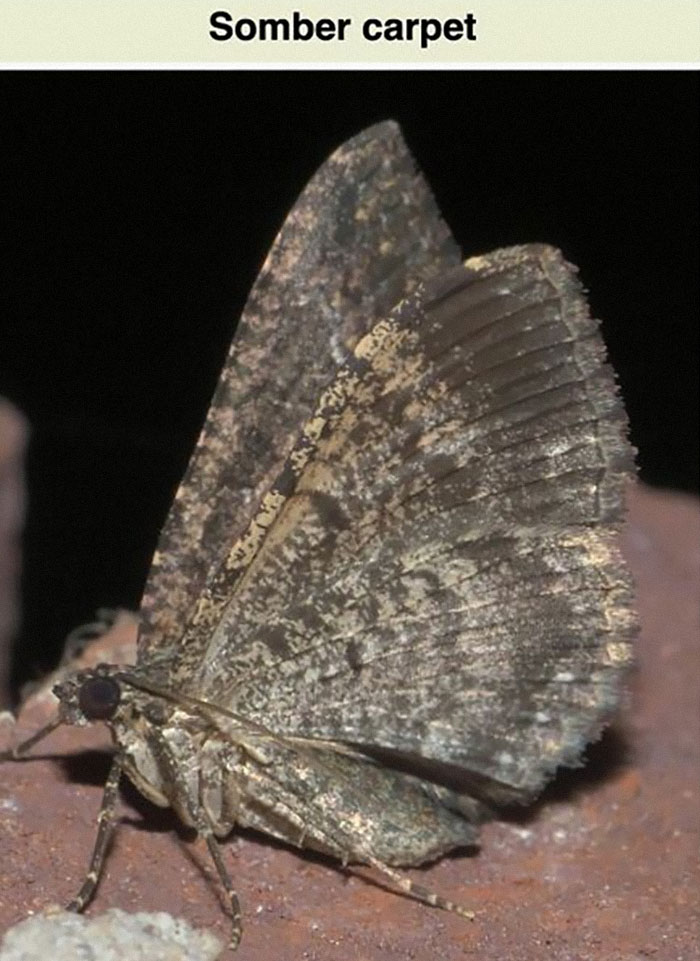
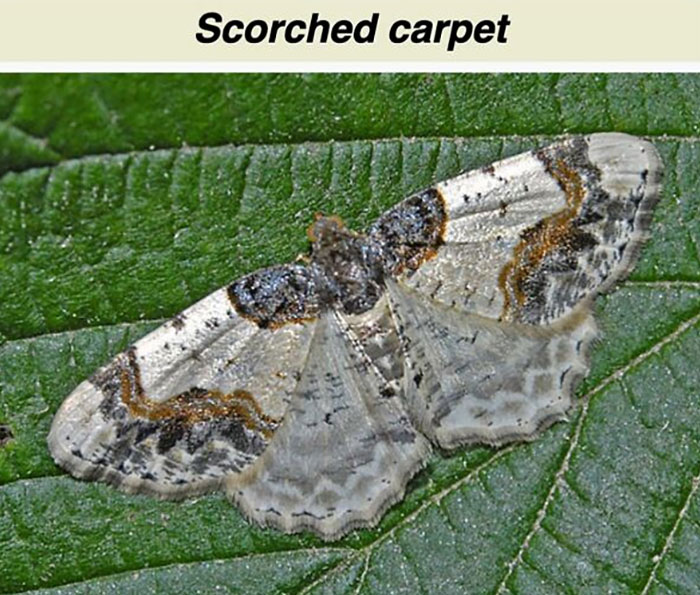
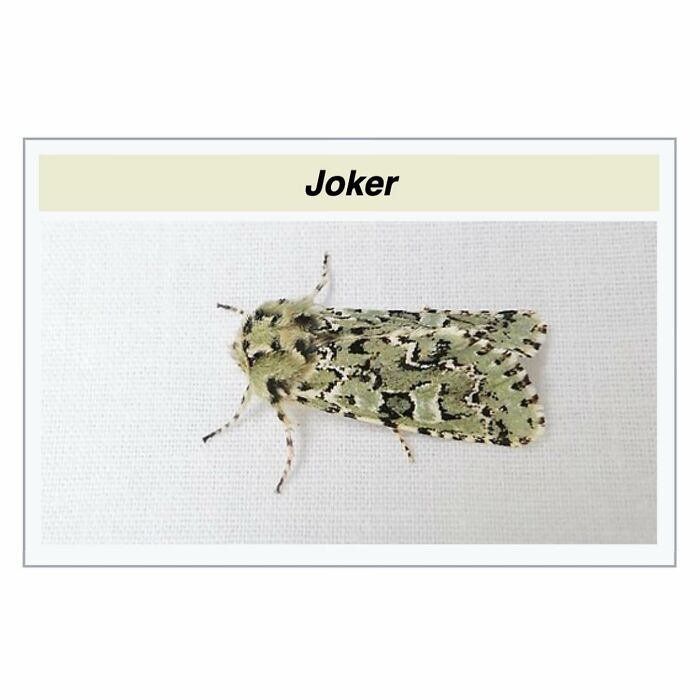
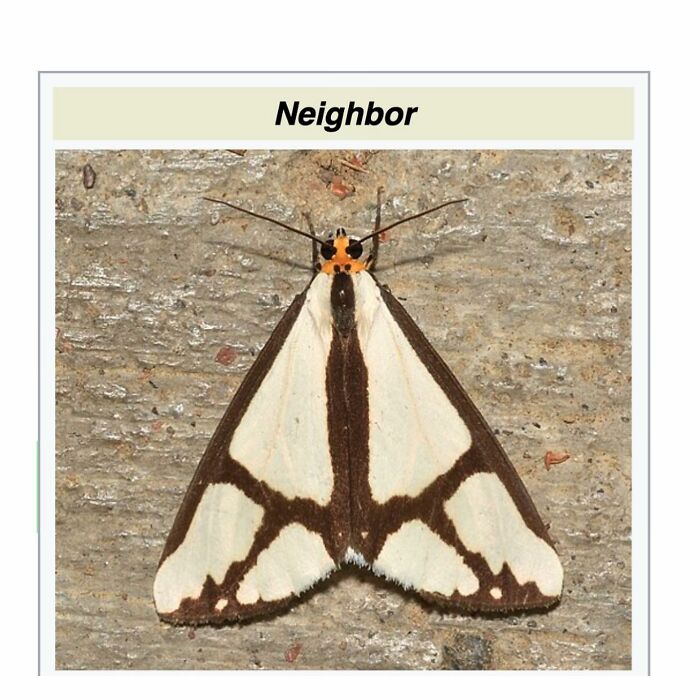
Pretty! The name fits, too. And on this topic, my favorite moth camouflage technique is the one where multiple species of moths have evolved to look like bird droppings. I'm 100% serious, give it a Google. It's so funny.

First one to make a listicle of insane censorship on BP gets my eternal upvote.


Oh heck, that would make someone talk for sure, but they'd be too out of it to make any sense
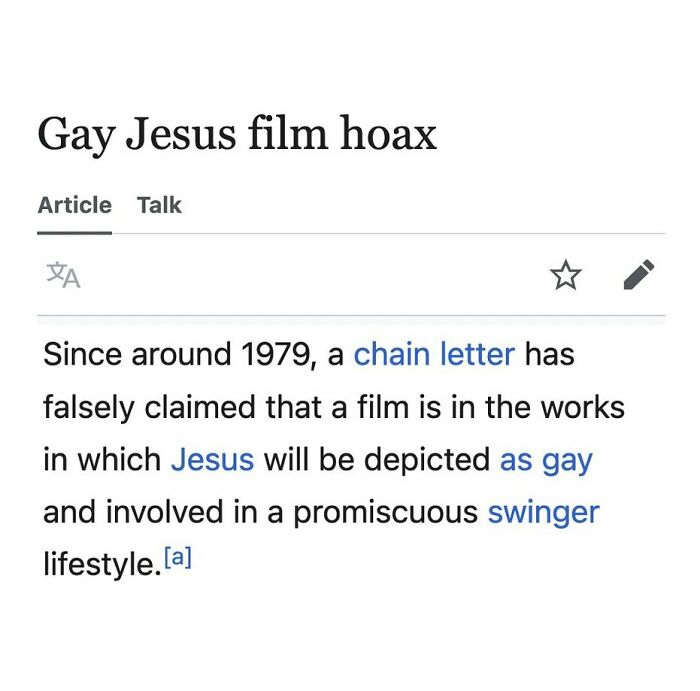
1. Chain letter? 2. Sounds like they're filming Stranger in a Strange Land?
Okay so the larvae feed on a species of pine, which is why they're green. I thought it was a bark texture and I was right!
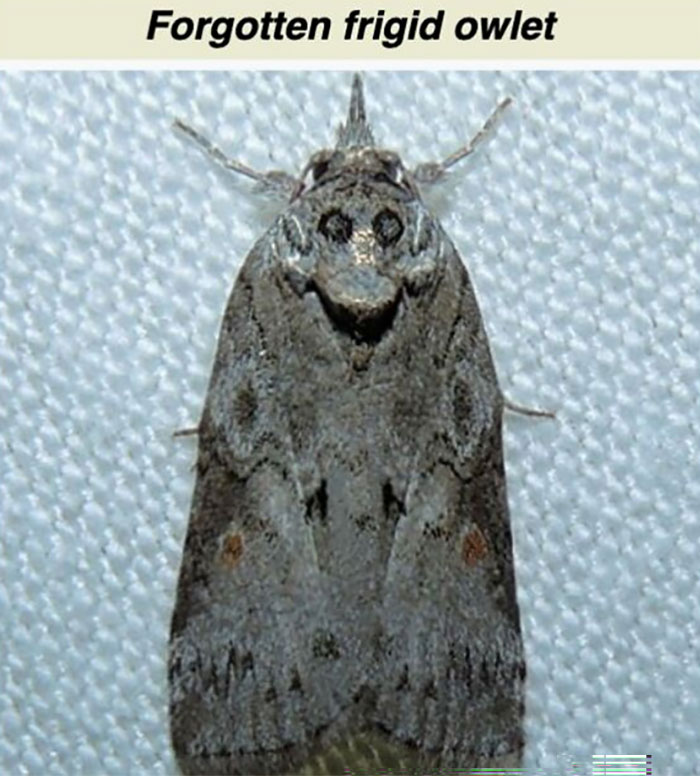
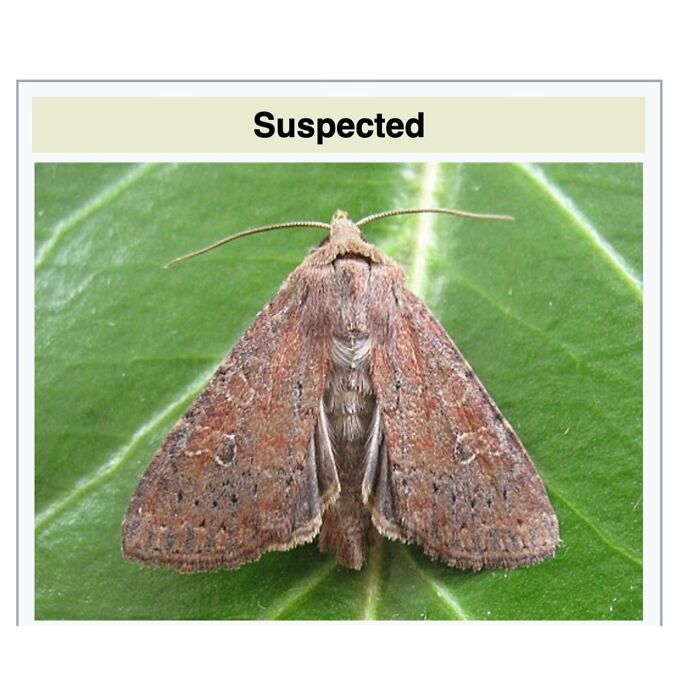
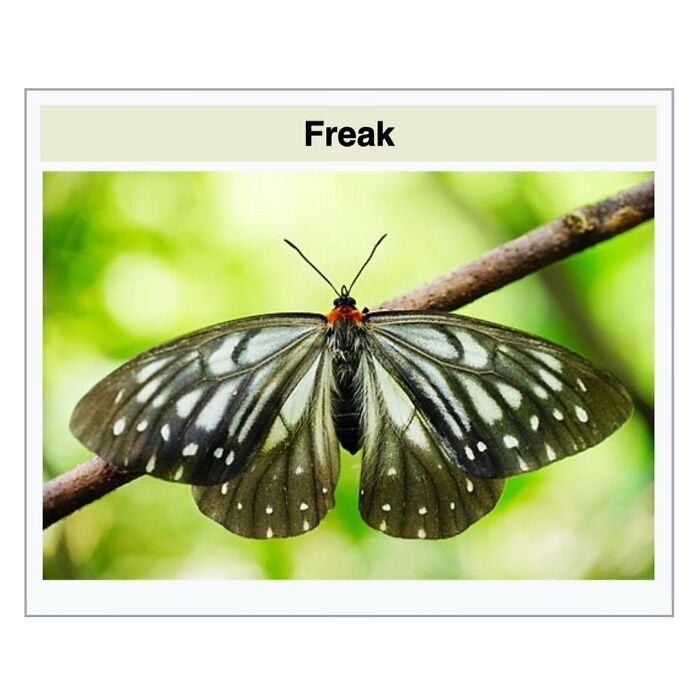
What's up with all the moths? Is it just because they have funny common names?

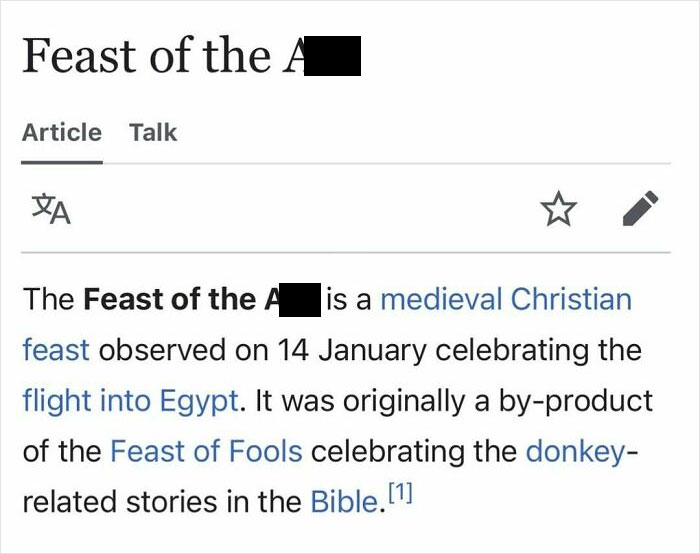
I think the censored word is "b*m" (b u m) eta: ....are you fooking kidding me?

Yeah, they're really nice moths, but I'm not sure either. Maybe it's the funny common names? Because there are way funnier ones, if that's the case.
Load More Replies...
Way too many lame ones. It would be nice if someone actually filtered them first.

We do that with our voting, then BP shortens the list.
Load More Replies... Yeah, they're really nice moths, but I'm not sure either. Maybe it's the funny common names? Because there are way funnier ones, if that's the case.
Load More Replies... Way too many lame ones. It would be nice if someone actually filtered them first.
We do that with our voting, then BP shortens the list.
Load More Replies...




















 No fees, cancel anytime