Get Premium
Dark mode theme is available exclusively for premium users. Learn more about the benefits of subscribing.
No fees, cancel anytime.

 Dark Mode Ad-Free Browsing Unlimited Content
 Ad-Free Browsing Unlimited Content Dark Mode
Join 1.2 million Panda readers who get the best art, memes, and fun stories every week!
27submissions
Finished

The first significant settlement in the current London area is dated to the first decades of our era, meaning that London is almost as old as Christianity. Having existed for so long, it has a rich and eventful history and we can still find its clues in the modern city.
Qualified London guide Katie shares the hidden history of the city under the username Look Up London on her TikTok account. She shows viewers around London, points out curious details that you wouldn’t even notice otherwise and tells you their stories.
More info: TikTok
This post may include affiliate links.
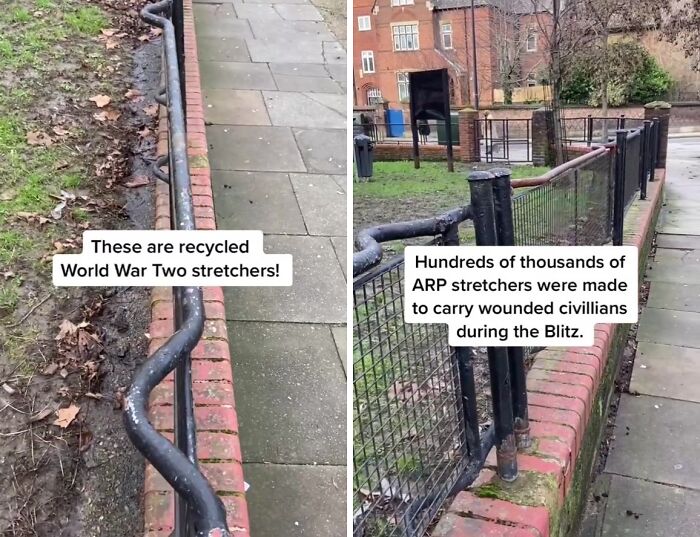
It's easy to overlook these railings on London housing estates. But look out for the weird curve. These are recycled World War II stretchers. Hundreds and thousands of ARP stretchers were made to carry wounded civilians during the Blitz. Have you ever seen them?
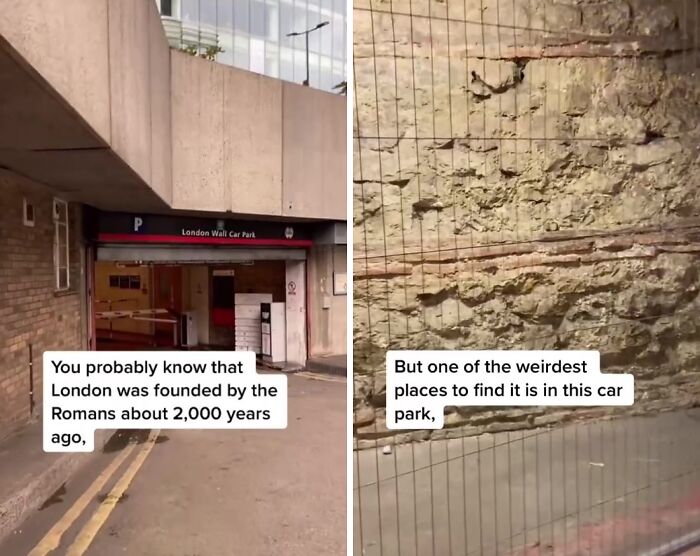
You probably know that London was founded by the Romans about 2,000 years ago and there's evidence all over the city but one of the weirdest places to find it is in this car park where there's a section of wall from around 200 AD.
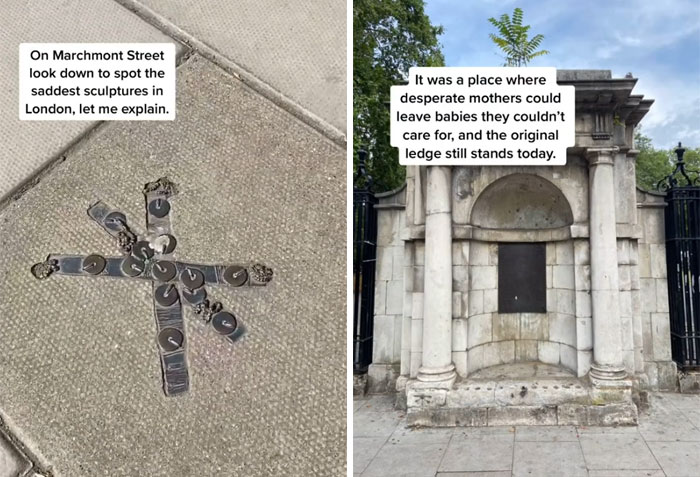
On Marchmont Street, look down to spot the saddest sculptures in London. Let me explain. The short walk from here is Coram Fields, site of the Foundling Hospital, opened in 1741 by Thomas Coram. It was a place where desperate mothers could leave babies that they just couldn't care for. And the original ledge still stands today. Often mothers left tokens so when their children were old enough, they could be reunited, but from over 18,000 babies admitted, only 154 were ever reclaimed. The sculptures are in our work by John Aldous in 2006. Although the Foundling Hospital closed in the 1950s, you can visit the brilliant family museum with some of the original rooms that tell a story of the hospital.
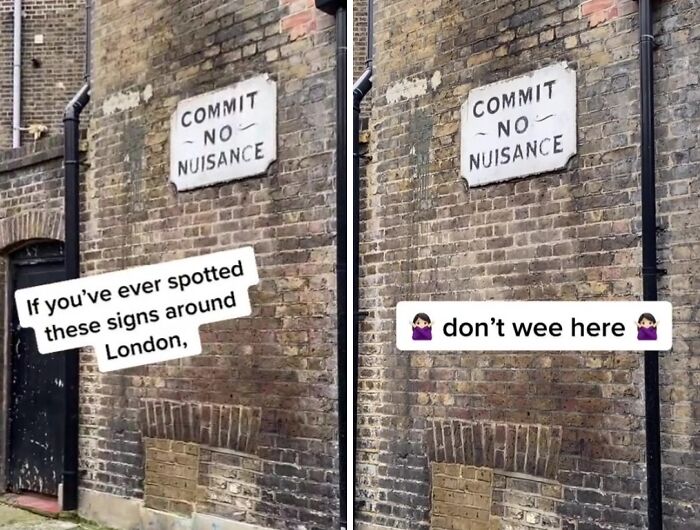
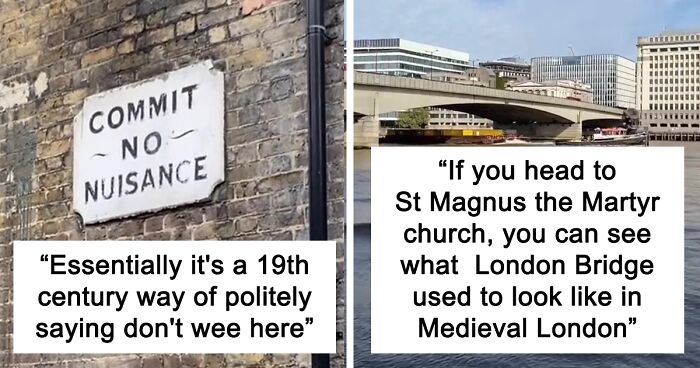
If you've ever spotted these signs around London you might have asked yourself what they actually mean. Essentially it's a 19th century way of politely saying don't wee here. So now you know.
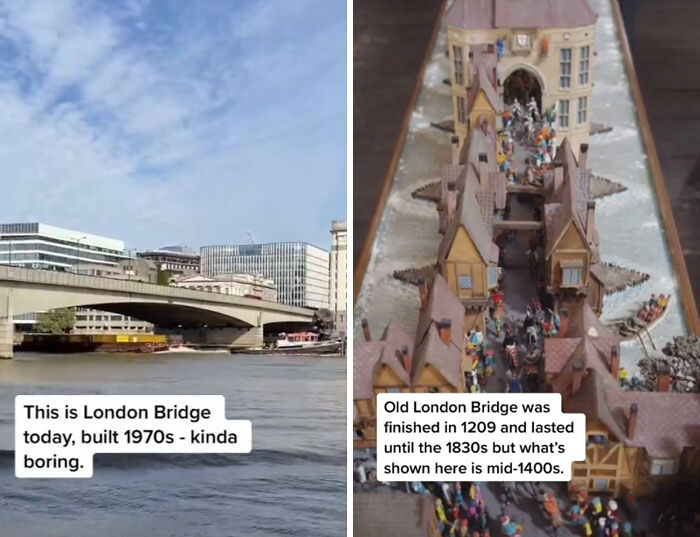
This is London Bridge today, built in the 1970s–kind of boring. But if you head to this church, St Magnus the Martyr, you can see what it used to look like in Medieval London. Old London Bridge was finished in 1209 and lasted until the 1830s. But what's shown here is mid 1400s. The model was built in the 1980s by David Ajit, who was a retired policeman.
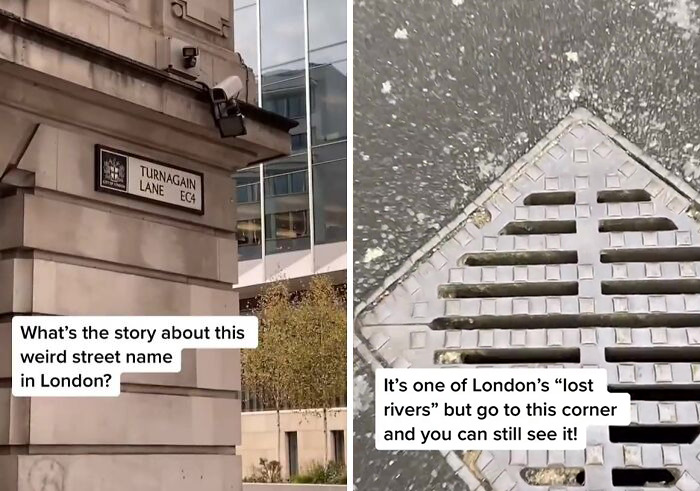
What's the story about this weird street name in London? Well, I'll tell you. This is Farringdon street and what you can't see today is actually there's a river underneath here. It's one of London's "lost rivers" but go to this corner, and you can still see it. It was covered in the 18th century, but still flows today, underground. The reason behind this strange street name is because the river blocked the way so you had to turn around again.
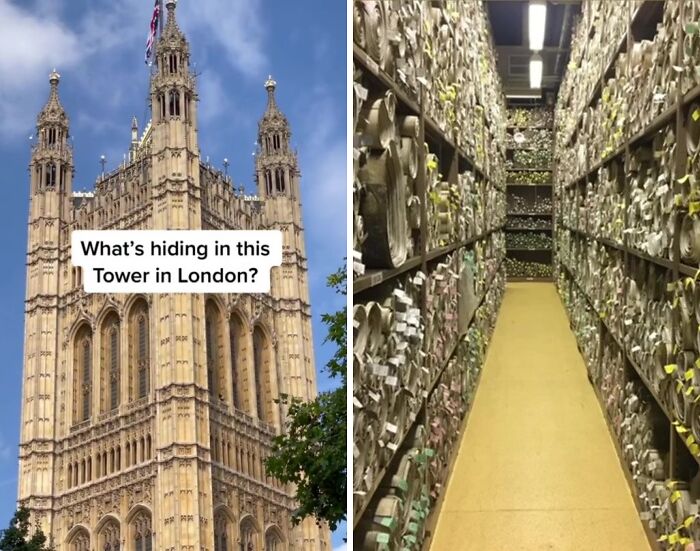
What's hiding in this tower in London? This is the Victoria Tower. It's part of the Houses of Parliament and everyone knows what's in this tower [Big Ben]. It's named Big Ben because of the bell inside it. But what about this tower [Victoria Tower]? Arguably, it's far more interesting. It houses the parliamentary archives and the best bet is the Act Room. This has 64,000 Acts of Parliament dating back to 1497. Each of these is a handwritten vellum scroll, which either creates a new law or amends an existing one. Still today, each act receives Royal Assent, the monarch signing off on the law. So going back to our history, you can find signatures of old kings and queens, like this one from Elizabeth I. Today modern Acts of Parliament look like this, printed on more animal-friendly paper.
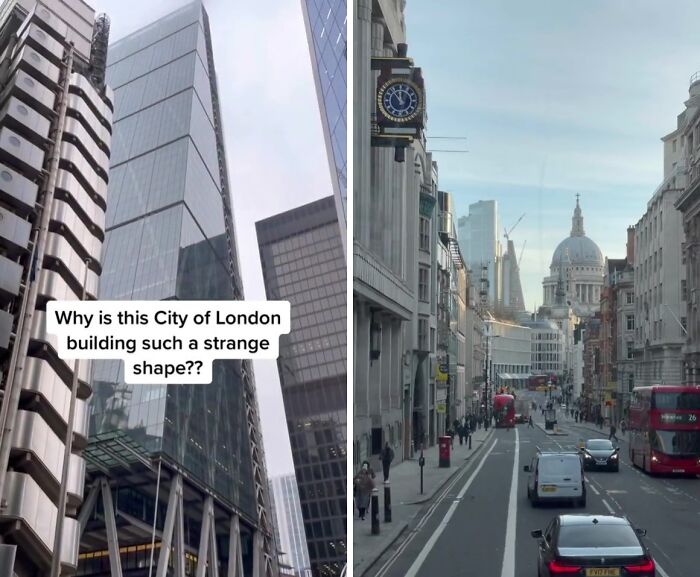
Why is this City of London building such a strange shape? This is known as the Cheesegrater and it's shaped like a triangle thanks to this building. This is the Faraday Building and when its tall extension was built in 1933 there was uproar because it was partially blocking the view of St. Paul's Cathedral from the River Thames. The City of London reacted with a policy known as St. Paul's Heights. So since 1938, the corporation has protected and enhanced important local views of the cathedral from Southbank, Thames bridges and certain points to the Northwest and East. One of the famous viewpoints is 10 miles away from King Henry's mound in Richmond Park. So back to the Cheesegrater. It's this shape because it's literally leaning out of the way of the dome of St. Paul's Cathedral, which means we have this amazing view along Fleet Street.
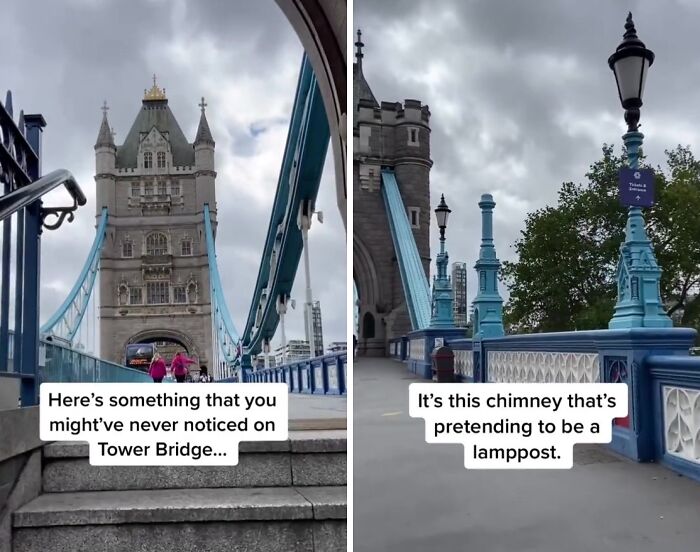
Here's something that you might have never noticed on Tower Bridge. It's this chimney that's pretending to be a lamppost. It used to burn coal fires until the Clean Air Act in 1956 stopped that and it was connected to a guards room under the bridge.
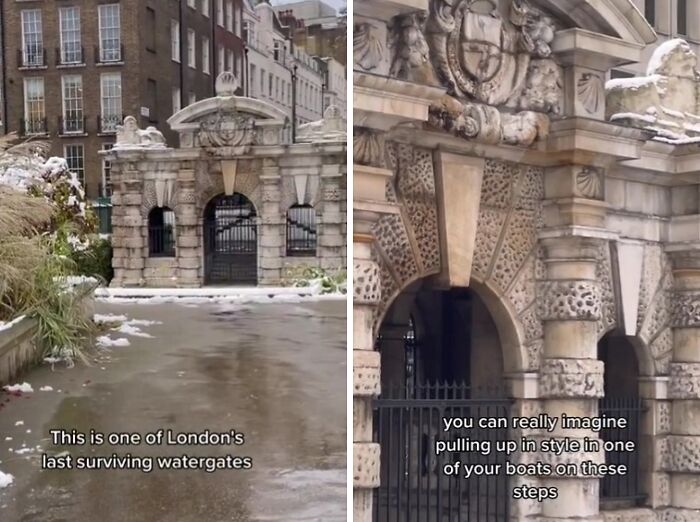
This is one of London's last surviving watergates. So hold on, why is the water all the way over there? That's because the River Thames has moved. But first up, look at this historic beauty built around 1626. This served as the river entrance to York House the grand townhouse for the Dukes of Buckingham. You can really imagine pulling up in style in one of your boats on these steps via the River Thames. York House was demolished in the 1670s but his was a lone survivor. Things got weirder in the 1860s with the construction of the embankment. This reclaimed huge areas of the river, creating the underground sewer system, the district and circle lines. Today on the site is Victoria embankment Gardens. So today the old Watergate is stranded. It's around 100 meters away from the Thames, a little reminder of when the river was much wider.
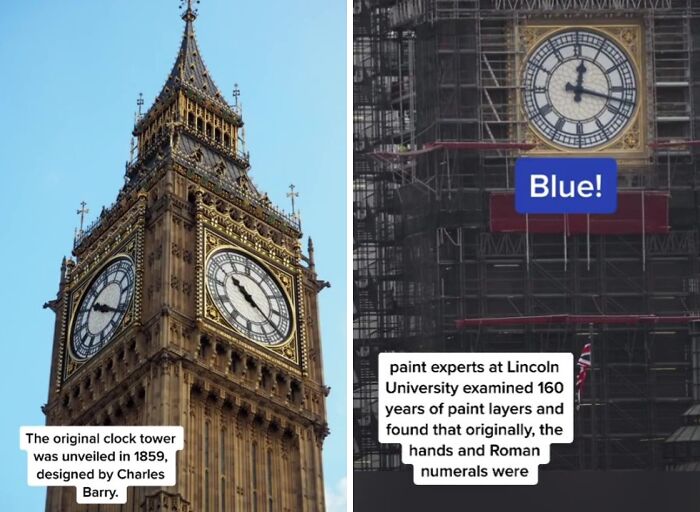
Guys, Big Ben is back! But can you spot this subtle difference? The original clock tower was unveiled in 1859, designed by Charles Barry. Now throughout the restoration (scaffolding started going up in 2017) paint experts at Lincoln University examined 160 years of paint layers and found that originally the hands in the Roman numerals were blue. Black was chosen in the 1930s to mask the effects of London's dirty air. So look up to admire the Prussian blue details next time you're nearby. Yes, Big Ben is the nickname for the bell inside the tower. And yes, we know that the clock towers name is actually the Elizabeth Tower.
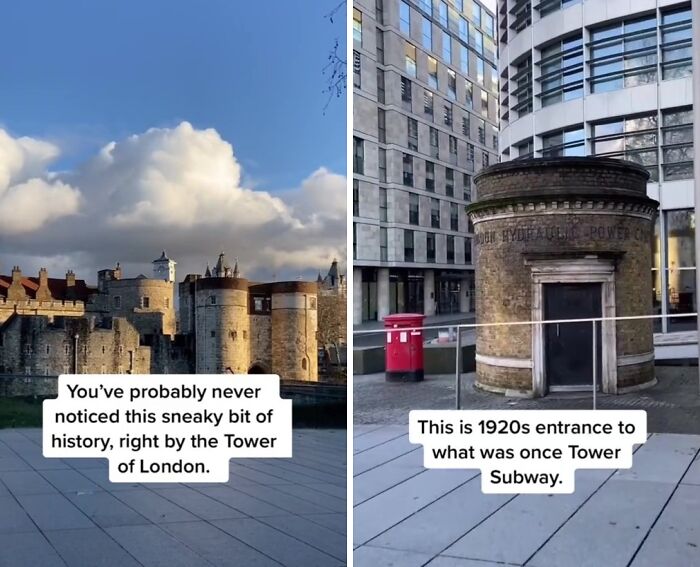
You've probably never noticed this sneaky bit of history right by the Tower of London. This is a 1920s entrance to what was once the Tower Subway. Built in 1868, for a small fee, you could sit in a carriage and be pulled by cables under the Thames. But following faulty lifts and one fatal accident, it became a pedestrian tunnel. Then when Tower Bridge opened and that was free, it closed for good. So now the tunnels are just used for water mains and communication cables.
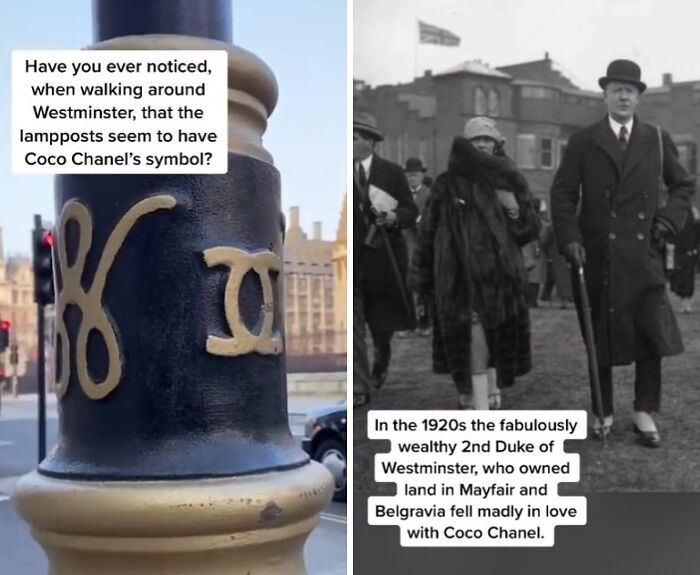
Have you ever noticed, when walking around Westminster, that the lamppost seem to have the Coco Chanel symbol? In the 1920s, the fabulously wealthy 2nd Duke of Westminster, who owned land in Mayfair and Belgravia, fell madly in love with Coco Chanel. And when they were in London, the pair lived in Bourdon House on Davies street. They were together for around a decade but never married. So is this just a lovely romantic gesture? Sadly not. Westminster Council confirmed the 'c's stand for 'City Council' and were only installed in the 1950s.
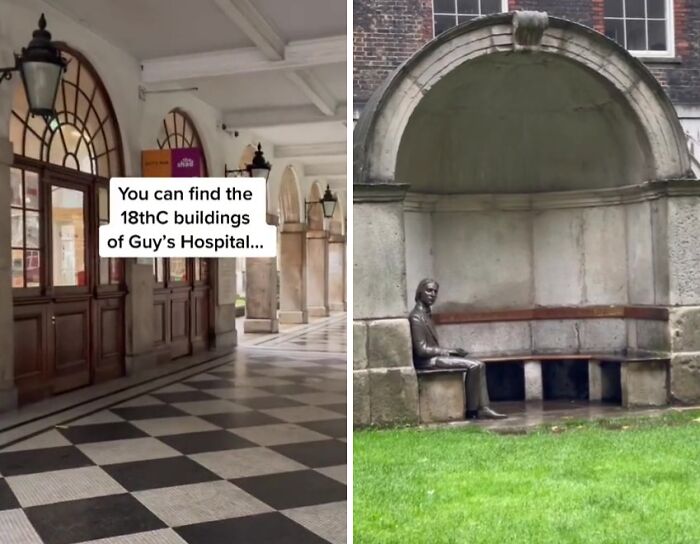
In the shadow of the Shard you can find the 18th century buildings of Guy's Hospital. It's still going today and was founded back in 1721. But even better, you can also find this bench and niche that was once part of the Old London Bridge. Yes, the London Bridge that spanned the Thames in the early 1200s until the 1830s. Now this stone alcove isn't Medieval. It dates to the 1700s when the houses on the bridge were pulled down to improve access, and these stone covered benches were added. Why is it here? No idea. But there's other ones you can find in London. 2 in Victoria Park and 1 in North Sheen. And the statue by the way, is romantic poet John Keats, who studied medicine here for two years.
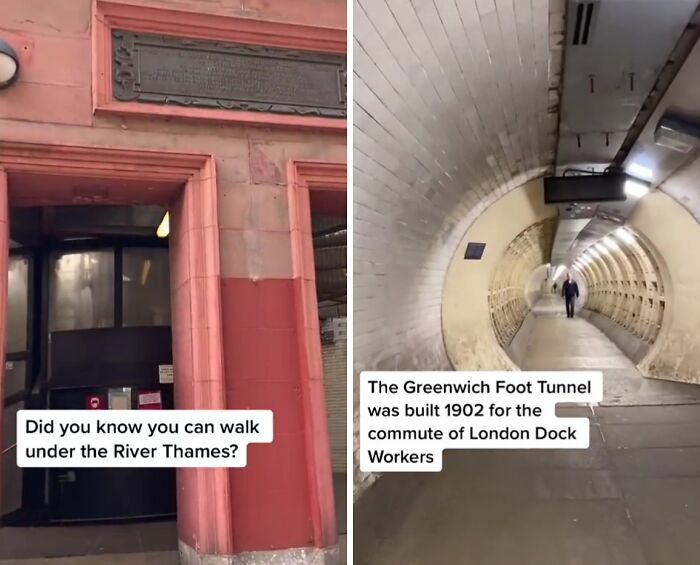
Did you know you can walk under the River Thames? The Greenwich Foot Tunnel was built in 1902 for the commute of London Dock workers. Today it's open for 24hrs a day and goes between Maritime Greenwich and Island Gardens.
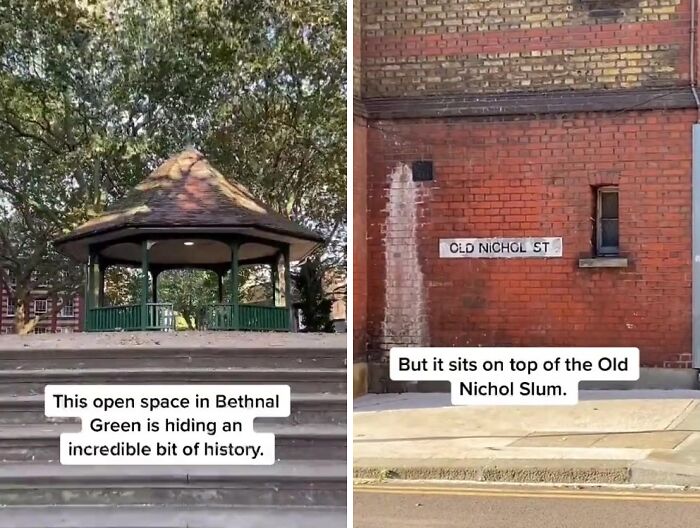
This open space in Bethnal Green is hiding an incredible bit of history. This is Arnold Circus, center of the Boundary Estate built in the late 1890s. But it sits on top of the Old Nichol Slum, one of the worst in Victorian London. Amazingly, it's actually the rubble of this demolished slum housing that created this raised area. And today it's open to everyone and is a popular film and TV location.
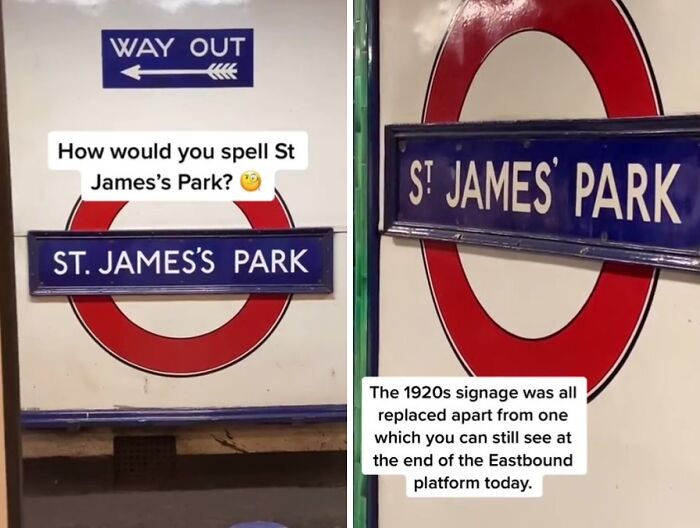
How would you spell St. James's Park? In 1869 when it opened, tube maps displayed the station as St. James' Park without the extra 's.' But when Harry Beck released his game-changing map in 1933, there was no apostrophe, just St. James' Park. From 1951, reflecting a change in punctuation styles, it became its current form–St. James's Park. The 1920s signage was all replaced apart from one which you can still see at the end of the Eastbound platform today.
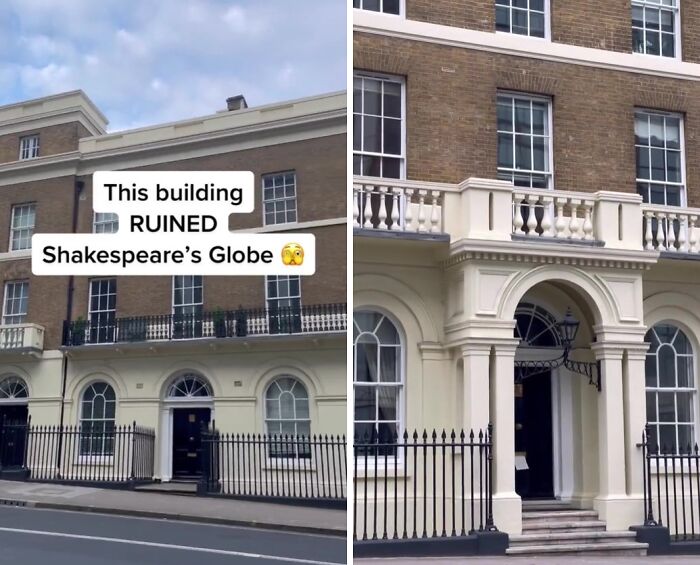
This building ruined Shakespeare's Globe. Over 1 million people visit Shakespeare's Globe every year. But this of course, is not the original. The theater space opened in 1997 and it's a recreation of the Globe built on Bankside in 1599. The project started in the 1970s when Sam Wanamaker and a dedicated team wanted to accurately recreate the Globe. It's made of English oak beams 12,000 hand-carved wooden pegs and is the only thatched roof in London. But it's not on the same site. The actual Globe's remains were discovered in 1989, after work had started and over 200 meters from the original site, but there was another problem. On top was Anchor Terrace built in 1834 and Grade II Listed, meaning it has historic protection and you can't demolish it and further investigate the ruins.
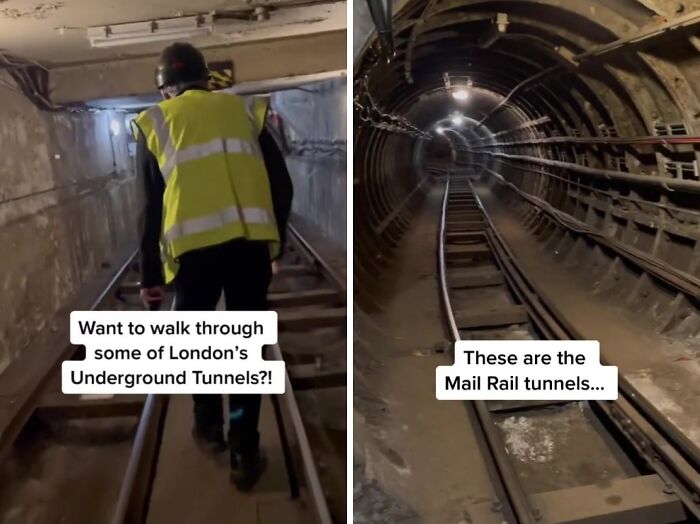
Want to walk through some of London's underground tunnels? Of course you do. These are the Mail Rail tunnels and from 1927 until 2003, tiny carriages packed with London's post whizzed 6 miles across London 70 feet below ground. And since 2017, when the Postal Museum opened, you've been able to ride the mail carriages. But you can now also walk the tunnels for yourself, getting a better appreciation of this amazing infrastructure and seeing details up close. Things like the sections of reinforced concrete and floodgates that protect against London's subterranean river fleet.
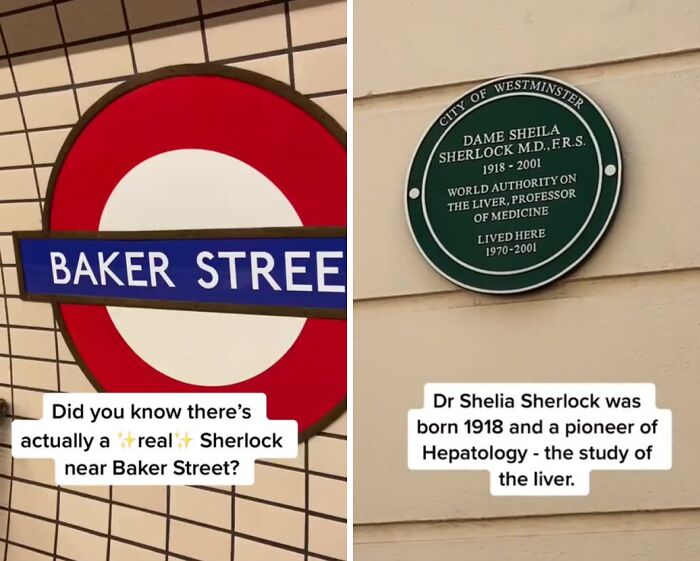
Did you know there's actually a real Sherlock near Baker Street? So everyone knows about the fictional Sherlock Holmes. There's a statue and even a museum. Funnily enough in 1990, the museum put up this blue plaque campaign to the post office to officially have the address 221B Baker Street, even though it's actually the site of 239. But anyway, there's a real-life Sherlock who lived nearby and it's a woman. Dr. Sheila Sherlock was born in 1918 and the pioneer of hepatology, the study of the liver. She published over 600 papers in scientific journals in her lifetime and aged 33 became the youngest woman elected as a fellow of the Royal College of Physicians. Her plaque is at 41 York Terrace East, a six-minute walk from Baker Street Station.
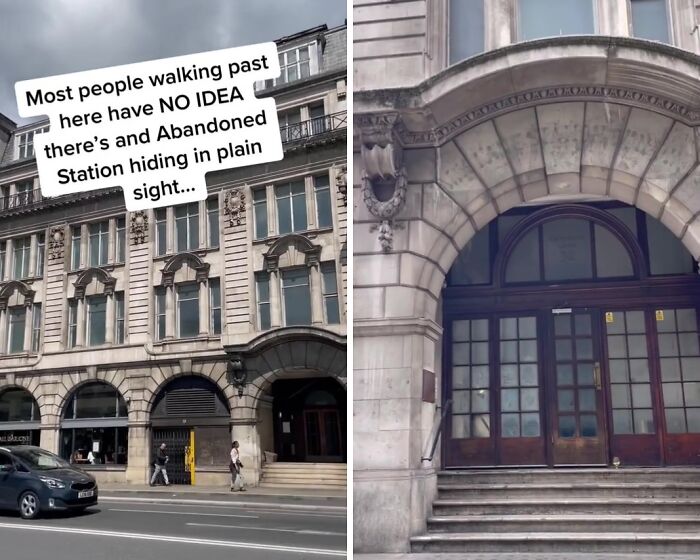
Most people walking past here have no idea there's an abandoned station hiding in plain sight. This is Mark Lane ghost station and if you look up on the corner, you can just about make out "Mark Lane Station Entrance" in faded writing. In 1882 a Tower of London Station opened on the site of today's Tower Hill. But after only 2 years another station was built on this site. The name comes from an important Medieval street that still survives today and can be seen on the Agas map in the 16th century. The station's buildings were rebuilt in the early 1900s but the station was too small for all the people wanting to visit the Tower of London. It closed in the 1960s when the new Tower Hill was built and today it's an All Bar One. However, you can still see a glimpse of the ghost station. Traveling between the monument and Tower Hill keep your eyes peeled for the abandoned platforms.
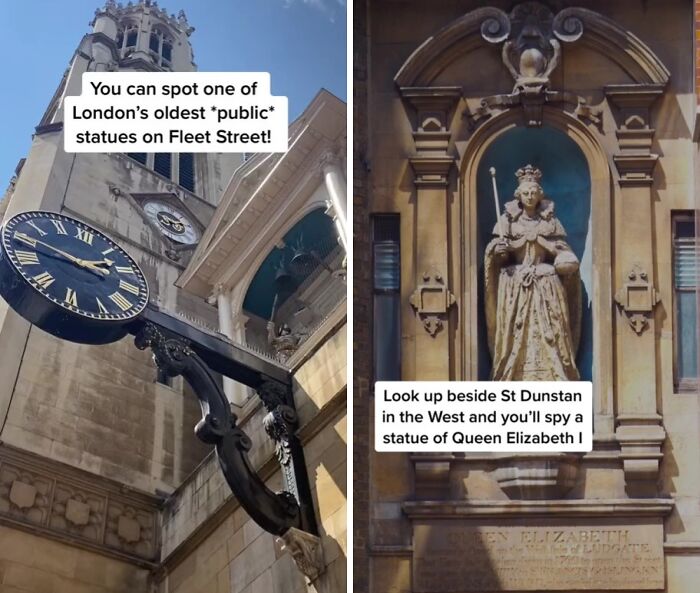
You can spot one of London's oldest statues on Fleet Street. Look up beside st Dunstan in the West and your spire statue of Queen Elizabeth I, carved in 1586. That's when she was still alive. But it wasn't always here. The sculpture originally stood a seven-minute walk away on Lud Gate, one of the Roman gateways into the City of London. Lud Gate was demolished in 1760. And today on Ludgate Hill, you can see a plaque where it once stood. And it's why this church is called St. Martin Within Ludgate as in "inside" the gate.
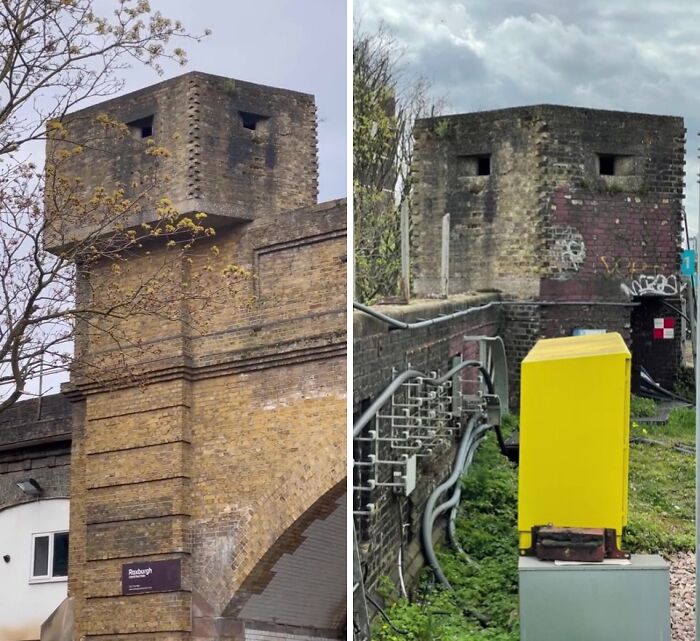
If you look up outside Putney Bridge Tube Station, you'll see this strange survivor from the Second World War. It's a pillbox. These were built in 1940 as part of a last line of defense, should Britain ever be invaded by Germany. Now although there are thousands of these structures that survive across Britain, very few are in London. You can find some along the Thames Park in Woolwich, have you ever spotted any others?
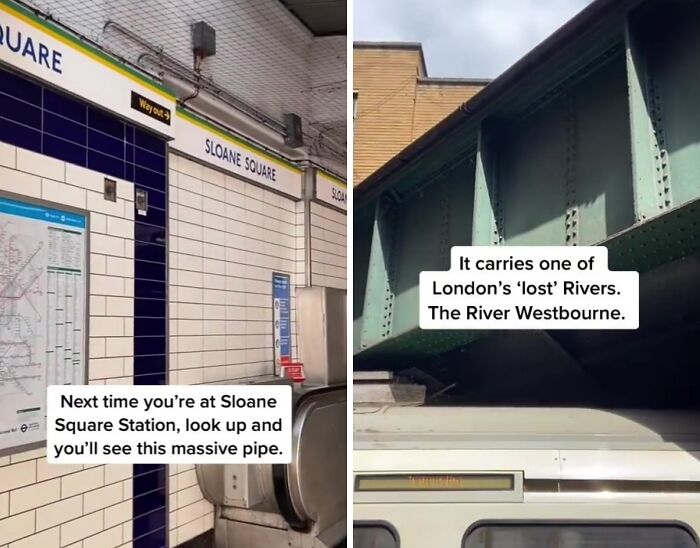
Next time you're at Sloane Square Station, look up and you'll see this massive pipe. It carries one of London's 'lost' rivers. The River Westbourne. It rises in Hampstead flowing through Paddington and Hyde Park. And if you zoom in on this 1790 map, you can see it passing through Sloane Square. It became a sewer in the 19th century but still empties into the Thames of the Royal Chelsea Hospital today and is being incorporated into London's new sewer upgrade works, Tideway. So look out for it.
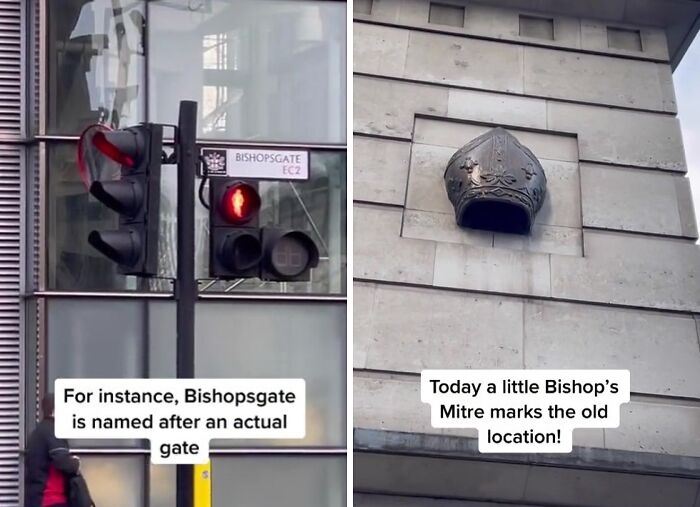
London's street names can tell us a lot about its history. For instance, Bishopsgate is named after an actual gate, various versions of which stood here from Roman times, until it was finally demolished in 1760. Today, a little Bishop's mitre marks the odd location and there's another clue in the church name. This is St Botolph-Without-Bishopsgate, i.e. St Botolph's Church outside the Bishop's gate.
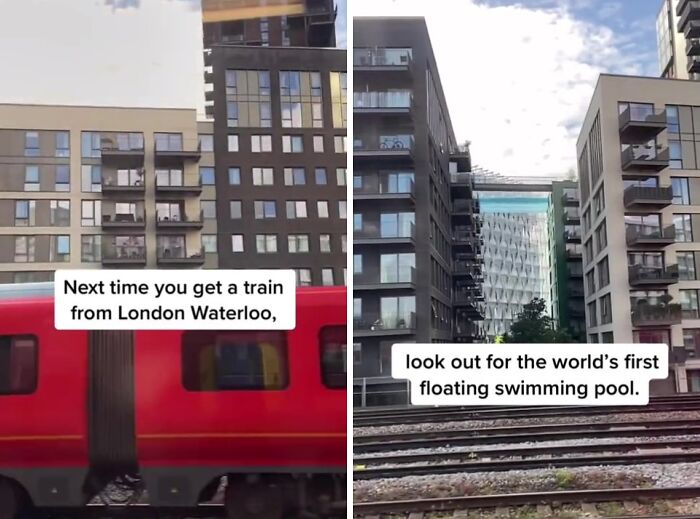
Next time you get on a train from London Waterloo, look out for the world's first floating swimming pool. It's suspended 10 storeys high and the Sky Pool is part of Embassy Gardens, a luxury development in Nine Elms, South London, where a 2 bedroom apartment will set you back about a million pounds. Unfortunately, if you'd like to visit, it's only open for residents and their guests, and I'm sure they don't actually recommend swimming in a ballgown.
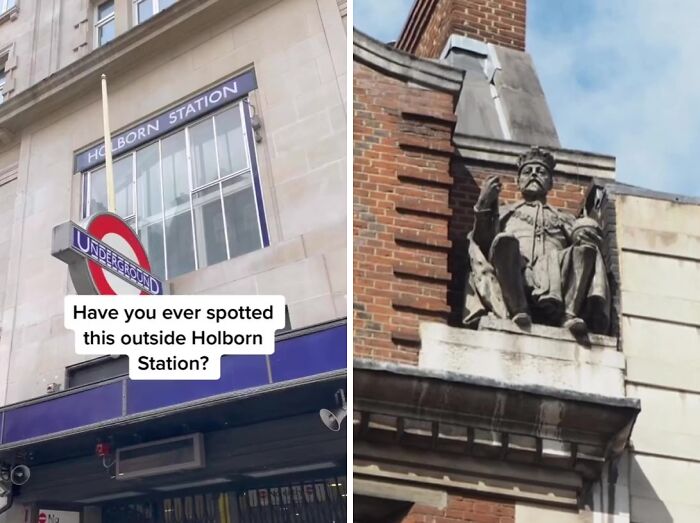
Have you ever spotted this outside Holborn Station? Look up and you'll see Kingsgate House built in 1904. And there were two statues of Kings staring down at you. Edward VII, who had come to the throne in 1901. And King Edward I, who reigned way back in 1272 to 1307. From their lovely viewpoint, they looked down on Kingsway, a purpose-built thoroughfare which ploughed through the slums of Holborn, in the early 1900s, and that's named after King Edward VII. So have you ever spotted them



















 No fees, cancel anytime