Get Premium
Dark mode theme is available exclusively for premium users. Learn more about the benefits of subscribing.
No fees, cancel anytime.

 Dark Mode Ad-Free Browsing Unlimited Content
 Ad-Free Browsing Unlimited Content Dark Mode
Join 1.2 million Panda readers who get the best art, memes, and fun stories every week!


Etymology is the term that refers to the study of the origins of words, including how they got their meanings and how words develop throughout history. Some of these words have lasted over a mind-blowing 15,000 years, like “thou” (the singular form you “you”), ”I” and “mother” and have been dubbed “ultraconserved words” by scientists.
But the English language is not finite; on the contrary, it keeps growing at quite an impressive pace. According to Global Language Monitor, around 5,400 new words are created every year; it’s only the 1,000 or so deemed to be in sufficiently widespread use that make it into print.
And while we use words every day without thinking, it’s incredible how little we really know about them. So in order to dive deep into some of them that we take for granted, we look at this illuminating Ask Reddit thread which shares some of the most interesting and surprising word origin stories.
This post may include affiliate links.
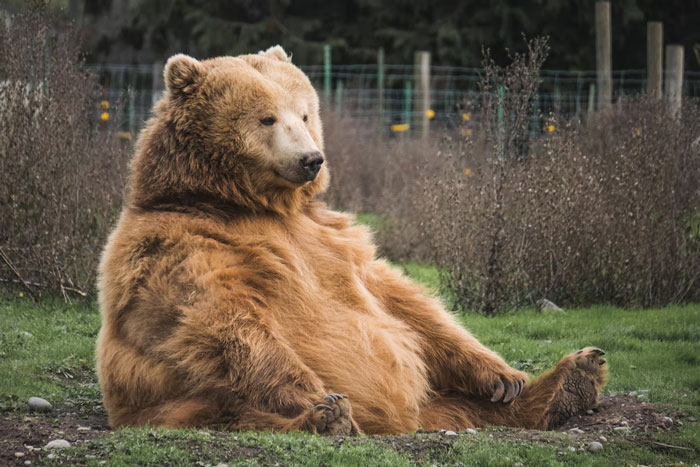 The word "bear" in many languages in europe (including English) just means "brown thing". There used to be a proper name for bear, but it was taboo because saying it was believed to summon a bear, who would then kill everyone. It was so taboo it was eventually forgotten and the euphamism (brown thing) became the name.
Ancient people were scared pissless by bears.
The Arctic draws its root from arctus, greek for bear. So its the "land of bears"
The Antarctic is thus, "the land without bears"
The word "bear" in many languages in europe (including English) just means "brown thing". There used to be a proper name for bear, but it was taboo because saying it was believed to summon a bear, who would then kill everyone. It was so taboo it was eventually forgotten and the euphamism (brown thing) became the name.
Ancient people were scared pissless by bears.
The Arctic draws its root from arctus, greek for bear. So its the "land of bears"
The Antarctic is thus, "the land without bears"
 The word "quintessential" has one of my favorite etymologies.
You can break it down into "quint" and "essential." Quint as in "five." "Essential" as in "essence," or "element." To be quintessential is to be the fifth element of something. To be the thing's *spirit*.
The word "quintessential" has one of my favorite etymologies.
You can break it down into "quint" and "essential." Quint as in "five." "Essential" as in "essence," or "element." To be quintessential is to be the fifth element of something. To be the thing's *spirit*.
 Wow, good timing. I just learned this one today.
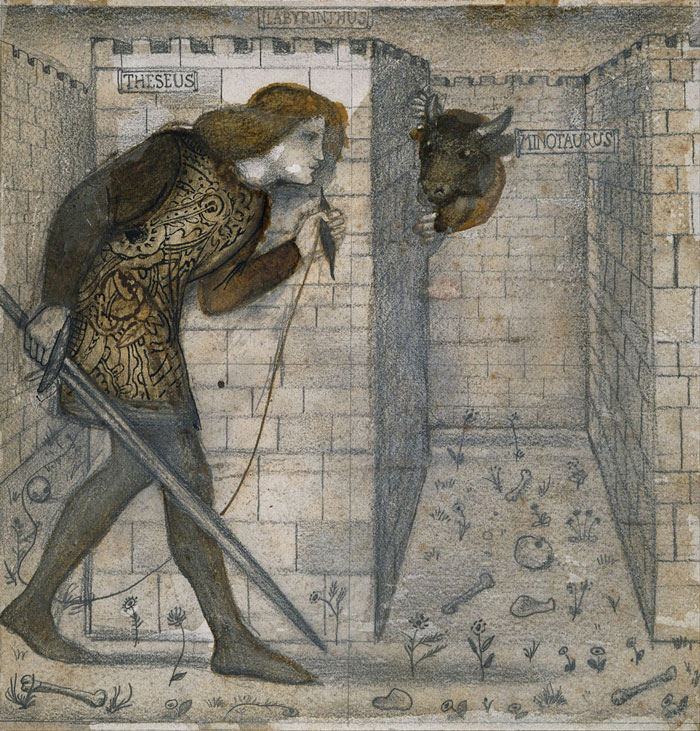
Etymology of the word **clue**: The word clue originates with the myth of Theseus, who used a ball of yarn to find his way back out of the minotaur's labyrinth. The middle English word for a ball of yarn was clew (or clewe); when the myth was popularized in England by Chaucer, people started using the word clew figuratively to mean a hint or guide to solving a problem.
Wow, good timing. I just learned this one today.
Etymology of the word **clue**: The word clue originates with the myth of Theseus, who used a ball of yarn to find his way back out of the minotaur's labyrinth. The middle English word for a ball of yarn was clew (or clewe); when the myth was popularized in England by Chaucer, people started using the word clew figuratively to mean a hint or guide to solving a problem.
In order to find out more about how etymologists study the origins of words, as well as how words are made, Bored Panda reached out to Dr. Andreea Calude, the associate dean postgraduate for ALPSS (Division of Arts, Law, Psychology and Social Sciences) and senior lecturer in linguistics at the University of Waikato, New Zealand. Dr. Calude researches various aspects of language, especially language on social media.
Dr. Calude explained that “language historians study language change by looking meticulously across many language vocabularies to track regular sound changes and sound correspondences and identify cognate classes, that is words and concepts which are inherited with (small or negligible or at least traceable) sound changes.”
English used to have a letter called “thorn” which kind of looked like the letter “y”. It made a buzzing “th” sound like in “the”. It’s why you see signs like “Ye Olde Shoppe”. It’s pronounced “The old shop”, not “Ye old shop”.
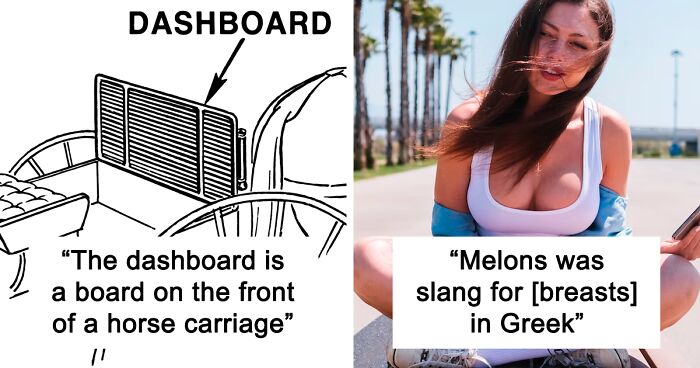
 Etymology: Dashboard
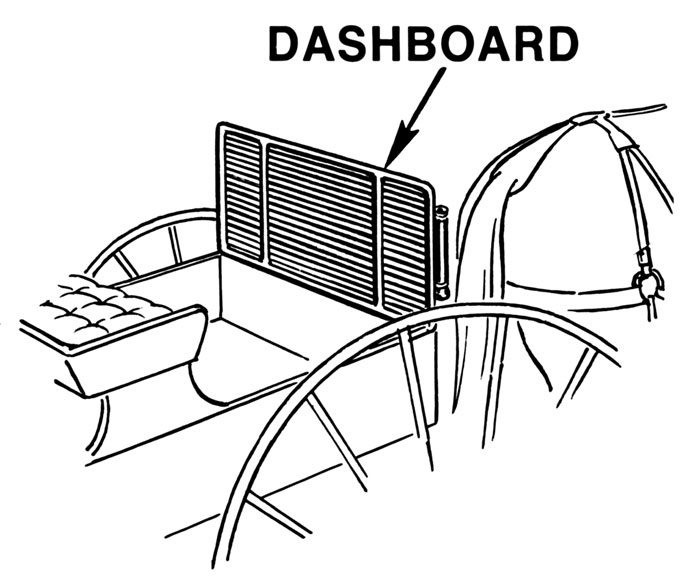
The dashboard is a board on the front of a horse carriage meant to keep mud from kicking up on the passengers when the horse dashes.
And over time it came to mean the front part of anything, even a computer interface is sometimes called a dashboard.
Etymology: Dashboard
The dashboard is a board on the front of a horse carriage meant to keep mud from kicking up on the passengers when the horse dashes.
And over time it came to mean the front part of anything, even a computer interface is sometimes called a dashboard.
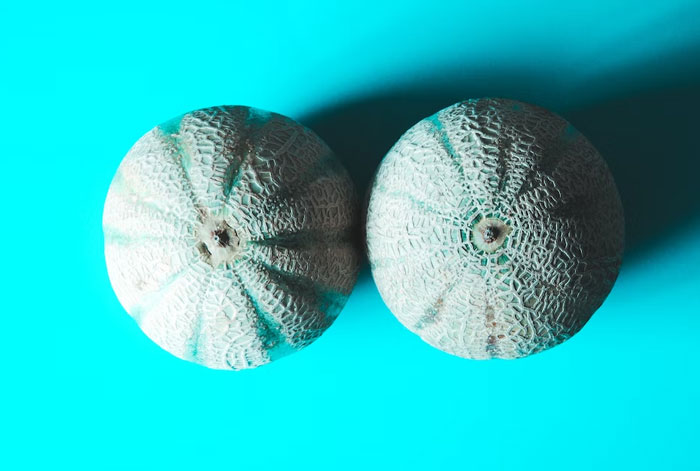 Etymology: melon- not particularly interesting in itself, it came from Ancient Greek, through Latin, to Old French, before finding its way to English. All along the way it referred to various gourds. However, and this is the interesting bit, melons was slang for boobs in Greek, and it retained this slang definition as well as its “real” definition all the way to English. Usually in etymology you keep one definition or the other, and never both, which makes it really interesting. Also boobies.

I like and dislike the thought that the male brain, for quite a few years, kept the secondary meaning alive.
“They compile databases to document these findings, and often share the data with open access so that anyone can look up such histories. Here is one compiled by my colleagues on the Austronesian language family,” Dr. Calude explained. She added that these databases are rich sources which combine meticulous linguistic expertise and document our linguistic past.
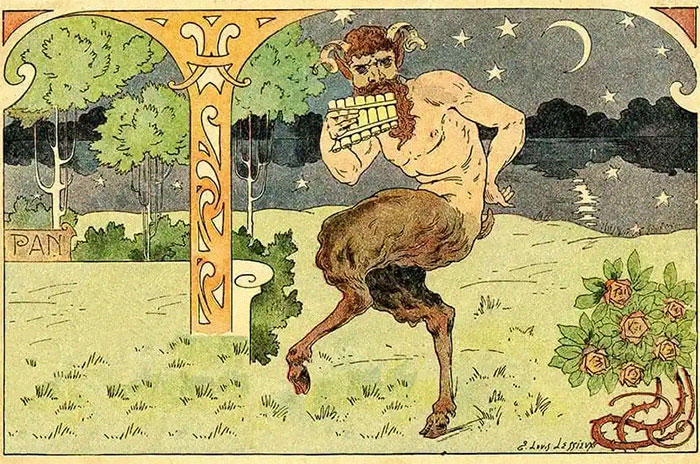 The word "panic" comes from the Greek god Pan who had a blood-curdling scream that induced panic in anyone who heard it.
The word oxymoron: the word oxymoron itself, appropriately enough, is an oxymoron. The oxy– part (the same as in words like oxygen, paroxysm and peroxide) comes from the Greek word for “sharp” or “acrid”, oxys. The –moron part (the same as in—well, moron) comes from the Greek word for “dull”, moros. So an oxymoron is literally a “sharp-dull” turn of phrase.
Etymology: the word helicopter is a compound word derived from "**helico**" meaning roughly "spiral thing" and "**pter**" meaning roughly "flying thing". As in pterodactyl. The compound word is helico-pter, not heli-copter like everyone thinks.

" 1861, from French hélicoptère "device for enabling airplanes to rise perpendicularly," thus "flying machine propelled by screws." From a Latinized combining form of Greek helix (genitive helikos) "spiral" (see helix) + pteron "wing" (from PIE root *pet- "to rush, to fly")."
When asked how words are born/made, Dr. Calude said that “old" words are essentially forms which are passed down, in a modified form, from one parent-language (we call these proto-languages or ancestor languages) to another (daughter-language).
“Imagine a language keeps the original form from its ancestor language, then this form may be modified slightly and then it might be replaced by a new form or modified and passed on to the next daughter language. If the form is retained, then we end up with 'fossilized' word forms which we call cognates.”
A little late to this thread but my favorite one isn't on here yet. **Mortgage** "Mort" - Death "Gage" - Pledge "Death Pledge", very fitting for a 30 year loan.
The phrase "hands down" comes from horseracing and refers to a jockey who is so far ahead that he can afford drop his hands and loosen the reins (usually kept tight to encourage a horse to run) and still easily win.
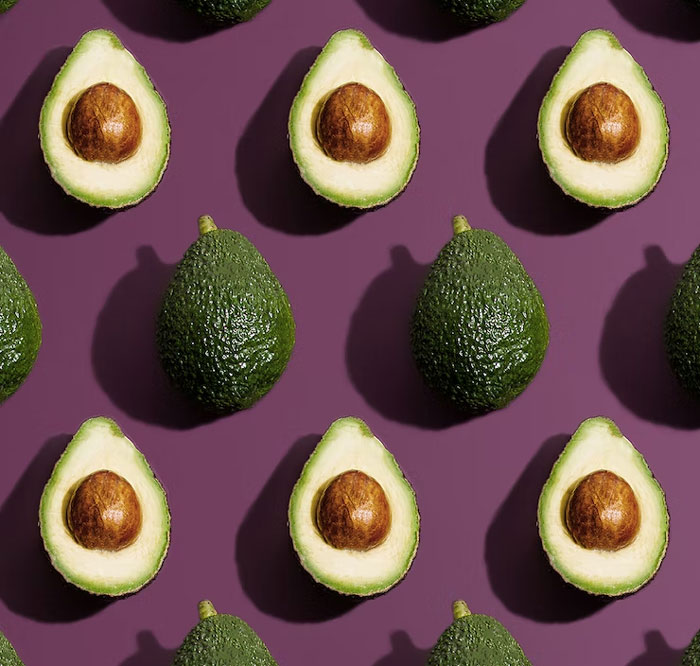 Etymology: The word “avocado” comes from the Aztec word for testicle. That’s literally the only one I can think of right now.

Well, there is a resemblance but if they really do look like that you should definitely get them checked lol.
Dr. Calude gave an example: “in the Proto-Central-Pacific, the word for five is ‘lima’, which in many daughter languages has stayed the same or been slightly modified. In Hawaiian, Fijian and Tokelauan it is the same: ‘lima’, in Māori, Raratongan and Tahitian it is ‘rima’. The sound change from [l] to [r] is well-documented and historical linguists use regular sound changes like that to track language genealogies for hundreds and thousands of years of evolution.”
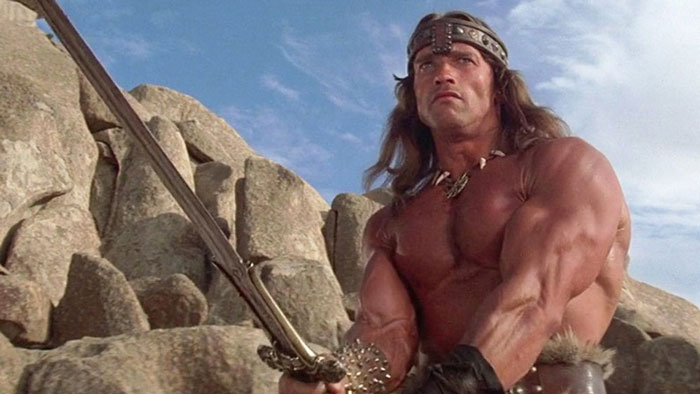 The word “barbarian” comes from an Ancient Greek word referring to all non-Greek speakers (including Egyptians, Phoenicians, etc.) This was because to the Greeks, all other languages sounded like people saying “bar bar bar”. This became the root for the word βάρβαρος (bárbaros), which roughly means “babble” or “gibberish”.
It was later adopted by the Romans to refer to any culture that did not practice Greek or Roman traditions (even though Latin-speakers were technically classified as barbarians because they didn’t speak Greek). Due to good old xenophobia, it eventually came to mean “uncivilized”, and from there it made its way through the centuries into Middle English.
The word “barbarian” comes from an Ancient Greek word referring to all non-Greek speakers (including Egyptians, Phoenicians, etc.) This was because to the Greeks, all other languages sounded like people saying “bar bar bar”. This became the root for the word βάρβαρος (bárbaros), which roughly means “babble” or “gibberish”.
It was later adopted by the Romans to refer to any culture that did not practice Greek or Roman traditions (even though Latin-speakers were technically classified as barbarians because they didn’t speak Greek). Due to good old xenophobia, it eventually came to mean “uncivilized”, and from there it made its way through the centuries into Middle English.

I had heard a folk etymology that it meant the bearded ones since mediterraneans shaved. It appears in "barber".
Utopia. I think there is a fairly common misconception that this word means 'good place', possibly because the first part of the word sounds similar to happy words like euphoria / eudaemonia etc. The word was in fact coined by Thomas Moore, and etymologically comes from the Greek 'ou' and 'topos', which literally translates to 'no place', or 'nowhere'. I just like that the unattainability of utopia is built into the word itself.
Sailing terminology is everywhere: "Taken aback" - This happens to a ship when the wind shifts and the sails are suddenly blown backward into the sailors' faces. The ship loses forward momentum. "Learning the ropes" - when a new sailor literally learns which rope is connected to which part of the ship. "Boarding" - Literally getting onto the boards of another ship. We still use this one to describe getting onto an airplane, when very few of them have any wooden parts. Keeping things on an "even keel" - The keel is the lowermost part of a ship's hull. It's the part that runs down the middle and cuts through the water. Sailors want an even keel so that the ship stays on a smooth and steady course. Nowadays the term is used for any situation where people want to keep things smooth and steady. "Limey" - Used as a semi-derogatory nickname for British sailors, who used limes and/or lime juice to prevent scurvy at sea. Nowadays it's a semi-derogatory nickname for all British people. "groggy" - Grog was a mixture of rum and water that sailors drank. If you were groggy, you were either drunk on grog or hung over from the grog the night before. Nowadays we use it to describe being tired and fuzzy-headed. "loose cannon" - Literally when a cannon wasn't secured in place and started crashing into things. Cannons were heavy pieces of solid iron with wheels, and if they weren't secured, they could roll/slide across a ship's deck whenever the ship leaned from side to side, and they could do some major damage to the ship and to the sailors. Nowadays this term describes a person who is unpredictable and likely to do damage wherever they go. Terminology from old horse carriages is everywhere too: "dashboard" - There was literally a board in front of the carriage driver to protect him from mud and gravel that "dashed" up against it from the horses' hooves. Now we use the word to describe any surface covered in controls, including on computer screens. "hold your horses" - Self-explanatory, you hold the reins of the horses to slow them down. Terminology from old machines: to be "keyed up" or "wound up" - Referring to old clocks and clockwork machines that you sometimes had to wind up with a key. "hanging up" a phone - Old phones, you had to hang up the earpiece when you were done. "fired up" - Referring to steam engines, now people use it to refer to people being full of energy or starting up a piece of technology (whether it uses fire or not). "upper case" and "lower case" - The individual metal letters used in a printing press were kept in cases - smaller letters in the lower case so they were in easy reach, larger letters in the upper case because they weren't used as much. "stereotype" - This was a word used for identical copies of the same document, from the same printing press. Now we use it when we describe characteristics that we think are identical across whole social groups.
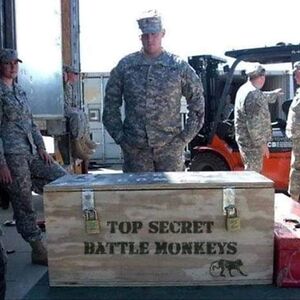
What about the sailing expression "(cold enough to) freeze the balls off a brass monkey?" The Brass Monkey was a trolley made if non-sparking brass to carry powder and ammunition (iron could spark and ignite the powder). Brass, however, contacts more in the cold, so if it was well below freezing the contraction of the cart would shift the cannon balls and they'd fall off. Thus, it was cold enough to freeze the balls off a brass monkey!
However, it is impossible to know which are THE oldest words, but we have some ideas where to look for them, Dr. Calude argues. “We suspect they might be everyday words, what we call basic vocabulary which languages have because it is important to discuss such concepts and which languages resist borrowing from other languages (because it is indeed so basic), for example words like mother, sun, mountain, number words like one, two and three, and color words like green and red, but also more grammatical words like that and pronouns like I and you,” she concluded.
 The etymology of "tawdry" is a real ride.
There was a 7th century Anglo-Saxon saint named Æthelthryth. Now, nobody, not even 7th century Anglo-Saxons, wants to go around trying to pronounce that dense forest of th's, so she was commonly known as St. Etheldreda, and later, linguistically lazier people called her St. Audrey.
St. Audrey was the patron saint of a town called Ely, and the folks of Ely held a fair every year in her name. One of the primary products on offer at these fairs was lace. "St. Audrey's lace" was said a few too many times, and got slurred down to "tawdry lace."
Over time, the lace fell out of favor. It was mainly made by peasant women, and thus viewed as cheap, and the Puritans looked down on lace garments of any kind as ostentatious. "Tawdry" then began to be used to describe other things that were cheap and ostentatious, and the modern definition of the word was born.
tl;dr: "Tawdry" comes from the fact that Æthelthryth is really hard to pronounce.
The etymology of "tawdry" is a real ride.
There was a 7th century Anglo-Saxon saint named Æthelthryth. Now, nobody, not even 7th century Anglo-Saxons, wants to go around trying to pronounce that dense forest of th's, so she was commonly known as St. Etheldreda, and later, linguistically lazier people called her St. Audrey.
St. Audrey was the patron saint of a town called Ely, and the folks of Ely held a fair every year in her name. One of the primary products on offer at these fairs was lace. "St. Audrey's lace" was said a few too many times, and got slurred down to "tawdry lace."
Over time, the lace fell out of favor. It was mainly made by peasant women, and thus viewed as cheap, and the Puritans looked down on lace garments of any kind as ostentatious. "Tawdry" then began to be used to describe other things that were cheap and ostentatious, and the modern definition of the word was born.
tl;dr: "Tawdry" comes from the fact that Æthelthryth is really hard to pronounce.
Æthelred Redeless has been taken to mean Æthelred unready but it really means Æthelred no counsel.
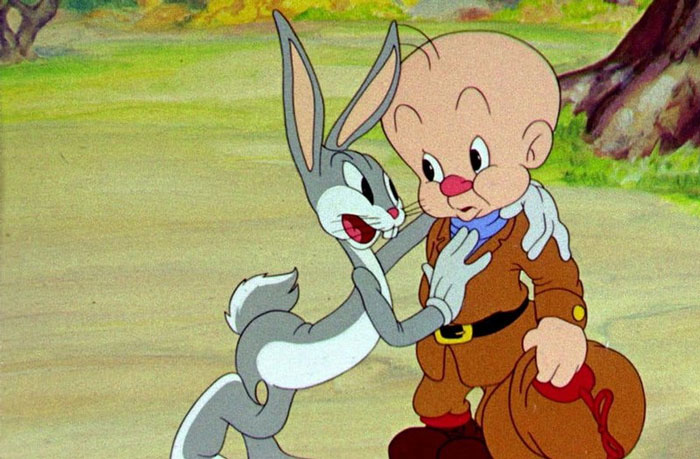 Etymology: Nimrod was originally a compliment referring to one's hunting skills (Nimrod being a biblical figure known for his ability to hunt), but the definition changed because people didnt understand Bugs Bunny was calling Elmer Fudd a Nimrod *sarcastically*
There are a lot of people on bored Panda that don't understand sarcasm, as well.
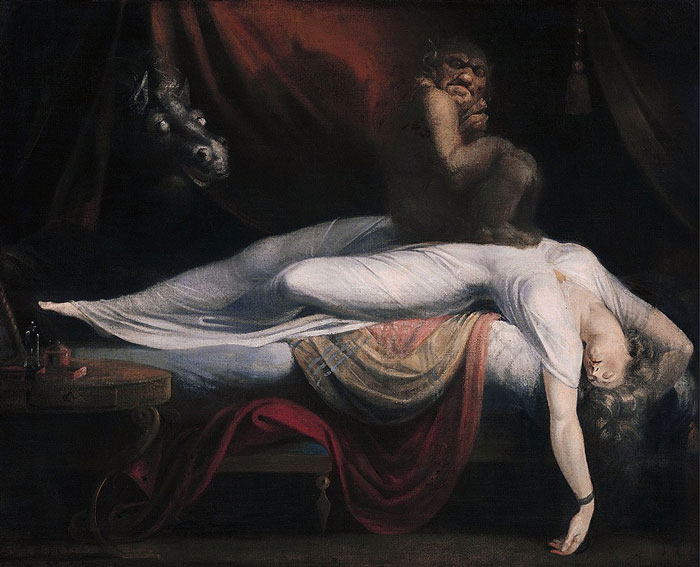 Etymology: Nightmare. The “mare” part of the word “nightmare” comes from Germanic folklore, in which a “mare” is an evil female spirit or goblin that sits upon a sleeper’s chest, suffocating them and/or giving them bad dreams. So basically the word comes from a description of sleep paralysis.
In French the phrase “lion teeth” is “dent de lion”. A long time ago someone saw a flower and thought its petals looked like lion’s teeth, so they called it the dent de lion. Dent de lion = Dandelion.
Etymology: Why do we raise chickens (animal) to eat chicken (meat) but raise cows (animal) to eat... beef (meat)? Because in England, French used to be the preferred language of the court, whereas Welsh was commonly used by the, well, commoners. The Welsh word for cow, cwe, was pronounced "coo", and the French word for the meat from said animal was boeuf, pronounced "buf". Poor people raised "coos" so rich people could eat "buf". (Chickens weren't widely eaten by the upper classes until much later.)
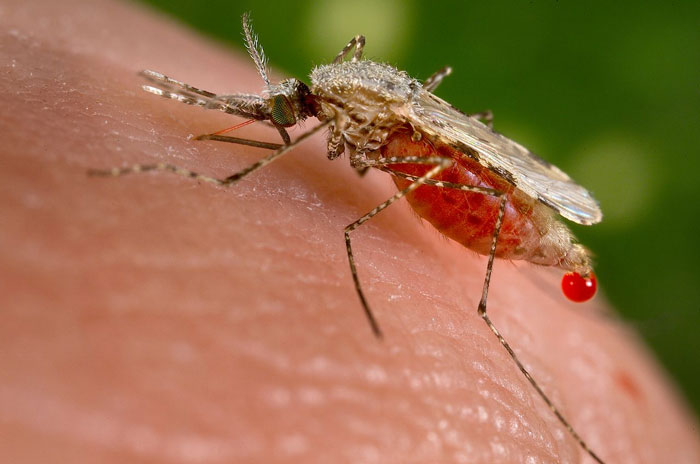 Malaria
 is an infectious disease characterized by chills and fever and caused by the bite of an infected anopheles mosquito.
This word comes from the medieval Italian *mal* (bad) and *aria* (air), describing the miasma from the swamps around Rome.
This "bad air" was believed to be the cause of the fever that often developed in those who spent time around the swamps. In fact the illness, now known as malaria, was due to certain protozoans present in the mosquitos that bred around these swamps, and which caused recurring feverish symptoms in those they bit.
Malaria
Malaria is an infectious disease characterized by chills and fever and caused by the bite of an infected anopheles mosquito.
This word comes from the medieval Italian *mal* (bad) and *aria* (air), describing the miasma from the swamps around Rome.
This "bad air" was believed to be the cause of the fever that often developed in those who spent time around the swamps. In fact the illness, now known as malaria, was due to certain protozoans present in the mosquitos that bred around these swamps, and which caused recurring feverish symptoms in those they bit.

My family learned that 'mal' meant bad in Italian after the fact. We adopted a rescue dog named Maly who had some serious behavioral issues. Took us a while, but that 'bad' dog ended up being a very good boy. Just needed some loving.
In my language that is Bengali, the word for honey is "*Madhu*" and wine is "*Madh*". They both sound the same, because they came from the Sanskrit word *Madhu* which means honey or alcoholic drinks. And that comes from Proto-Indo-Iranian word *Madu* which means the same thing. From that, the Persian word *May* comes, meaning wine. If we trace even further, the Proto-Indo-Iranian *Madu* comes frm the reconstructed Proto-Indo-European word *medu* or *medhu*, which means honey, intoxicating drink or sweet drink. From that PIE word *medu*, comes: - Greek: *methi* (drunkenness) - Germanic: *meduz*, from where the English word "*mead*": an alcoholic beverage that comes from fermentation of.....you guessed it....honey. In Dutch, it's still *medu*. In German its *met* meaning mead. - Celtic: in Cornish its *medh*, in Irish its mid, and Gaulish its *medu*, all meaning mead. - Balto-Slavic: *medus*, from where *medus* (Latvian) and *medus* (Lithuanian) in the Baltic branch, and miod (Polish), med (Czech, Bulgarian, Serbo-Croatian and Macedonian), and Mjod (Russian) in Slavic branch, all meaning Honey. now here's the most interesting part: - Tocharian: *mit*, from where it got burrowed into Chinese. Thus in Chinese, *mit* means honey, since it got from the Tocharians.
I love the origin of the word "Company." It's roots are latin--"cum" (with) and "panis" (bread), because your company are those **with** whom you break **bread.**
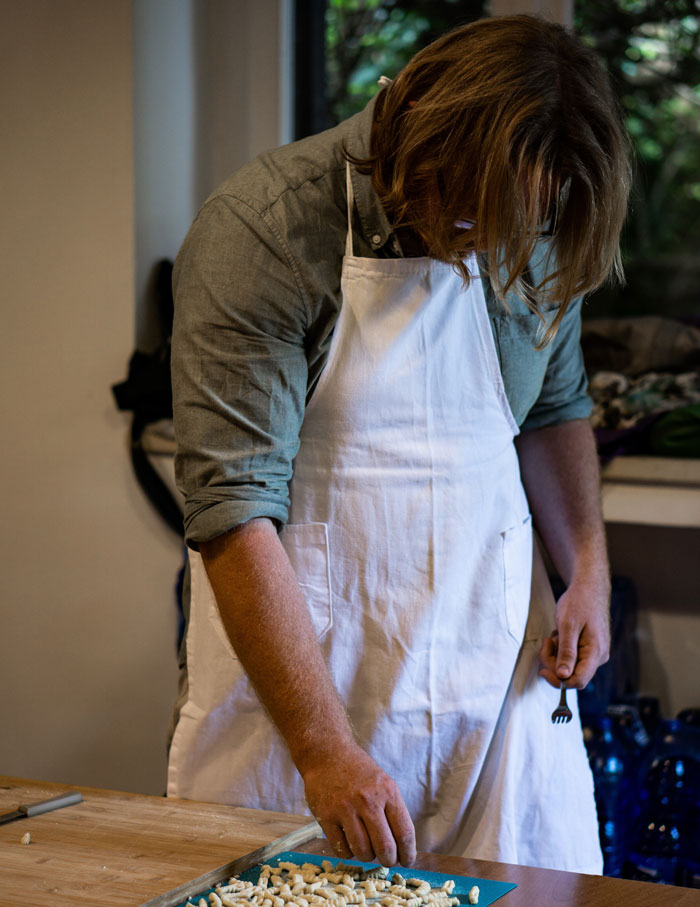 The word *apron* was originally *napron*.
But when people said "a napron" it got gradually transformed into "an apron".
The word *apron* was originally *napron*.
But when people said "a napron" it got gradually transformed into "an apron".
 Roger is just the modern English equivalent of the Old English and Old Norse name Hrothgar.
Additionally, Hrothgar means "famous spear", and is the name of the Danish King in the medieval epic poem Beowulf.
Roger is just the modern English equivalent of the Old English and Old Norse name Hrothgar.
Additionally, Hrothgar means "famous spear", and is the name of the Danish King in the medieval epic poem Beowulf.
The word ‘vaccine’ comes from the Latin word ‘vaccinus’, which means “of the cow”. This is because the guy that first popularized the treatment and term prevented smallpox in children by exposing them to material from a cowpox blister, a milder form of smallpox.

Jenner first used matter from cowpox, a complaint of cows which transferred to milkmaids. Previously Turkish women would use matter from smallpox sores to innoculate their children with Geraldton positive results. This form of innoculation was introduced to England , called variolation (variola-smallpox) was introduced to England by Lady Mary Wortley Montague , the wife of a diplomat posted in Constantinople , now Istanbul. Previous to the use in Turkey, it was used in China and Africa.
So the origin of the seemingly mundane word "thing" makes for a surprisingly interesting story! It dates back to 930 AD with the founding of the *Alþingi* (anglicized as *Althing*), which is the national parliament of Iceland. In Icelandic/Old Norse, it's *al-* (“universal, general”) + *thing* (“assembly, meeting”). Fun fact: The Althing is the oldest active parliament in the world! Icelandic being a fairly literal language, the Althing met at *Lögberg* ("Law Rock") in the middle of *Þingvellir* (anglicized as *Thingvellir* and meaning "Thing Field" or "assembly field"). Then, in Old English (Middle Ages), *althing* was borrowed as the word for parliament but was shortened to just *thing*. Over time, the meaning of *thing* was broadened to any place where people got together and decided on laws. Then, *thing* became the issue you brought to the parliament. For example, "my neighbor is stealing my goats." Finally, *thing* simply came to mean any object, hence the meaning we have for it today!

I have visited Thingvellir -- a nice place, not just for the historical meaning but also because two continental plates meet there. There's literally a plain, then a tall rock face, and when you get on it, there's another plain.
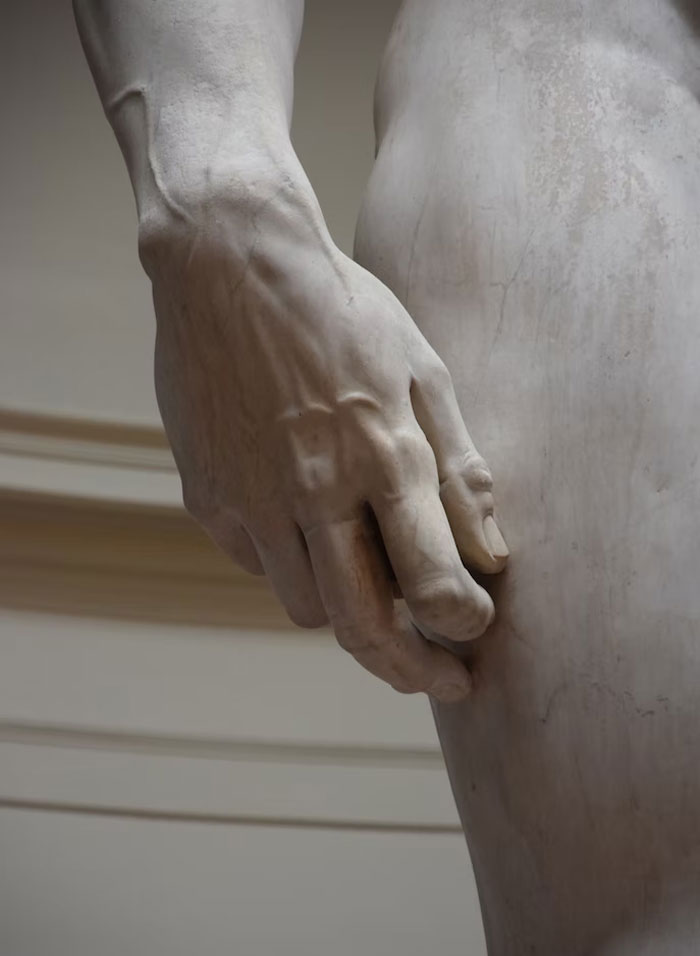 While making stone sculptures, it was highly likely that the carver will make a mistake which cannot be undone. Especially if he was not very skilled. To hide their mistakes, they used to apply wax and shape it accordingly. The sculpture with wax was seen as impure and with flaws representing dishonesty of the carver. The Spanish for wax is cera, hence the sculptures without wax were called "sin cera" in Spanish. From there came the word sincere i.e. without any flaw or pure as archaic meaning and now meanimg honest.
The Egyptians had a really big temple in Memphis, which they called _Chawitkurpitach_. When Egypt got big, the Akkadians assumed the word was the name of the country, but they gave up on trying to say it, so they just called the country _Khiku'upta'akh_. When the ancient Greeks started learning about Egypt, they found the Akkadian word. They _also_ gave up on trying to say the name so they started calling the country _Aikupitio_. A few centuries later the Greeks decided _again_ that this was too hard to pronounce so they changed it to _Eguptos_. A few hundred years later the Romans decided _Eguptos_ was too hard to pronounce so they started calling the country _Ægyptus_. This continued for centuries until the French decided it too was too complicated and just called the place _Egypte_, which the English then borrowed without the second 'e' to form _Egypt_. So basically "Egypt" came from "Egypte" which came from "Ægyptus" which came from "Eguptos" which came from "Aikuptio" which came from "Khiku'upta'akh" which came from "Chawitkurpitach" _which was never the name of the country in the first place_
also; coptic. The script and christian egyptian group, comes from eguptos.
The first computer "bug" was an actual bug, and that's where the computer-program sense of the word comes from. A moth got into the electro-mechanical Mark I computer at Harvard (built in the 1940s, and considered in some sense to be the first real computer) and gummed up the works. So there's a twofer.

Bingo comes pretty directly from the "I counquered" part of "veno vidi vici". Vici is "I conquered", but vinco is "I conquer". Going from Latin on to other languages, v often turned to b and c often turned to g, so Bingo literally means "I conquer" (or "I win", the more relevant translation) Colonel is pronounced like kernel because we use the Italian spelling (colonello) and French pronunciation (coronel) The Latin word for giraffe was cameloparus, literally "camel leopard" Roman men could add nicknames onto their legal names. Caesar means "curly" and Caligula means "little boots". I don't know that it was anything to do with a nickname, but Cicero means chickpea, and he would draw a chickpea next to his name Sinister is literally "left handed". Dexter is "right handed". A peninsula is an "almost island" (paene insula) Circumference means "carry around" Lesbian comes from the Greek island Lesbos, home of Sappho, but Lesbia was an actual name in ancient times. Ridiculous comes from ridere, "smile, laugh", so ridiculous means laughable Ululate means to howl or wail, but it comes from ululu, meaning "owl" Best of all: Latin didn't have any real words for yes or no. One of the most common ways to say yes was "sic" which basically meant "it is so" or "thusly". This is the origin of the Spanish word si.
My favorite has to do with the similarities between Portuguese “obrigado” (thanks) and Japanese “arigatō” (thanks). While it's true that Japan had a lot of Portugese influence, arigatō has been found in written records dating well before Portugese contact. In other words, it’s a coincidence!
Shenanigans! It is derived from the Irish expression, “I play the fox” or “sionnachuighim”. Eventually, the word became anglicized to become shenanigans, but had carried the same connotation in Ireland previous to its propagation in the English-speaking world.
"Disaster" Comes from 'dis' meaning bad, and "aster" or "astron" meaning star. It comes from the days of astrology and such where scientists believes events were foretold in the sky and stars.
"anything that befalls of ruinous or distressing nature; any unfortunate event," especially a sudden or great misfortune, 1590s, from French désastre (1560s), from Italian disastro, literally "ill-starred
The word *cue* (meaning a long stick used in billiards) comes from the French word *queue*, meaning 'tail'. The English word *queue* also comes from the French word. The Latin word *cauda*, from which *queue* ultimately derives, also brought us English *coda*, but that comes via Italian instead of French. The word *cue* (meaning an indication that it's time for something to happen, or as a verb, to give such an indication) comes from the letter Q. It was written as an abbreviation for *quando* (Latin, 'when') on actors' partial copies of play scripts. To save on paper, your copy of the script wouldn't include every line—just the ones right before your lines, marked with Q. So you'd have to learn your *cues* to know when your line was coming.
I love the origin of "Berzerk." It comes from old Norse for "bear-shirt", where vikings would put on shirts made of the hide of skinned bears and I guess get possessed by the spirit of the bear and just go absolutely apes**t on whatever

Sort of the same as Amok - as in 'run amok' - In Malay or Tagalog. Basically going nuts and going on a killing spree, although Berserkers would, according to myth, wind themselves up with a concoction of psychadellic mushrooms, beer and strong spirits before launching into battle - scary s**t.
Soccer! Started off as "Association Football" then became "Assoc Football" or "assoc" for short. "Then it got the nickname "assoccer" (they called rugby "rugger") and eventually just "soccer."
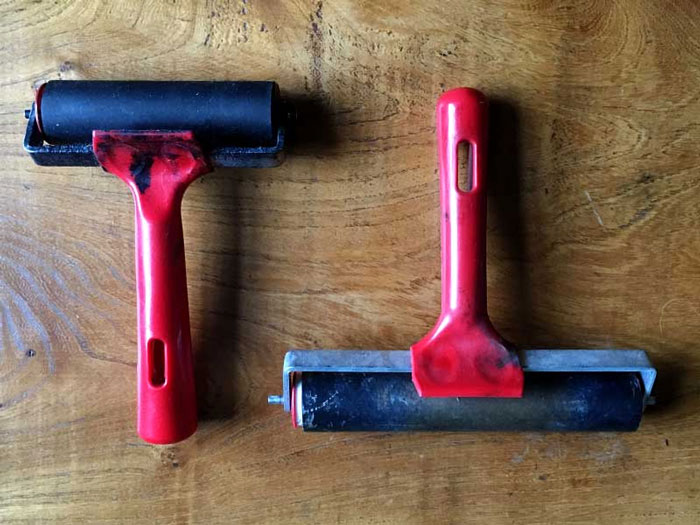 Etymology : Cliche, is derived from the sound of dapping ink on typeface - anyone who has used an ink roller will undertsand the sound of sticky ink - so its the repeated sound of regularly and therefore overused piece of type ...
 Etymology: calcium, calculator, calculate, calculus, abacus all share an origin in the word 'calx', Latin for stone.
 'bad' in English apparently comes from an old word for 'hermaphrodite', but what is also interesting is that Persian has the word 'بد' (bad) which means the exact same thing but developed independently, despite the fact that the languages are related. And funnily enough, 'بهتر' (behter) looks a lot like 'better', and it means 'better' too.
 **Orange**
The word for the fruit came long before the word for the colour. We just called things which were the colour *orange*, yellow-red.
Additionally, William of Orange (William III of England) has nothing to do with either the colour or the fruit.
**Orange**
The word for the fruit came long before the word for the colour. We just called things which were the colour *orange*, yellow-red.
Additionally, William of Orange (William III of England) has nothing to do with either the colour or the fruit.
late 14c., in reference to the fruit of the orange tree (late 13c. as a surname), from Old French orange, orenge (12c., Modern French orange), from Medieval Latin pomum de orenge, from Italian arancia, originally narancia (Venetian naranza), an alteration of Arabic naranj, from Persian narang, from Sanskrit naranga-s "orange tree," a word of uncertain origin.
Here are some of my favorite recent ones, summed up very basically. I can expand on any of these as well! First of all, etymology facts: **"Scuttlebutt"** was first a nautical term for a cask (butt) of drinking water with a hole (scuttle) for drawing it out. The term came to mean "rumor" or "gossip" because sailors would gather to idly chat around the cask. It is the predecessor of the term "watercooler talk" for workplace gossip. Before 1860, the word **"pollution"** commonly meant "semen," specifically semen released somewhere other than during conjugal activities, or "defilement" or "desecration." Also, the words "seminal," "disseminate," and "seminary" derive from the Latin "semen." **"Meteor"** comes from the Greek metéōron, literally meaning "thing high up." In 15th c. English, "meteor" could refer to any atmospheric phenomena, which were differentiated by various classifications of meteors. Hence "meteorology" as the study of atmospheric conditions, rather than just meteors. Classifications included: - aerial meteors – notable winds and tornadoes and such - aqueous meteors – water-based atmospheric phenomena such as rain, snow, hail, dew, frost, and clouds - luminous meteors – auroras, rainbows, and other light-based phenomena - igneous meteors – fiery-looking phenomena such as lightning and shooting stars Around 1590, the English word began to take on the more specific, fiery extraterrestrial meaning we use today. **"Ambivalence"** was first a psychological term, literally meaning "strength on both sides." Paul Eugen Bleuler, the psychologist who coined it in 1910, also coined the terms schizophrenia ("a splitting of the mind") and autism (from Greek autos, "self"). **"Feisty"** ("spirited, lively") arose in 1896. Before, feist meant "small dog," a shortening of "fysting curre" ("stinking cur"), wherein fyst meant "to break wind," supposedly conflated because ladies would blame their gas on their lapdogs. In sum, "feisty" = "farty dog." **"Alchemy"** is from the Greek khemeioa, which was either from Khemia, a name for Egypt meaning "land of black earth," or the Greek khymatos "that which is poured out." It was often used as a scientific term until the 1600s when "chemistry" arose from it, leaving "alchemy" with its more mystical sense. The word **"tabby"** came to refer to cats in the 1690s due to their fur pattern, which resembles a striped silk taffeta also called tabby, originally (via French) from the name of the Baghdad neighborhood Attabiy, where rich silks were made. The area was named after the Umayyad prince Attab. **"Clone"** as a term for the production of genetically identical individuals was coined in 1963 by J.B.S. Haldane. It was predated by the horticultural sense of "clon" or "clone," the process whereby a new plant is created using cuttings from another. Both are from the Ancient Greek klōn, "twig." **"Jargon,"** adopted from French in the 14th century, originally meant "unintelligible talk, gibberish; chattering, jabbering." It wryly took on its current meaning, "phraseology peculiar to a sect or profession," in the 1650s due to the fact that such speech was unintelligible to outsiders. **"Moxie,"** (general use from the 1930s) comes from the brand name of a bitter syrup first marketed as the medicine "Moxie Nerve Food" in 1876, then sold as a soft drink starting in 1884. The brand may be from a Native American Abenaki word for "dark water," from Maine lake and river names.
Ampersand (&) used to be a letter in the English alphabet. It came after Z in the in alphabet. In the alphabet song, after you finished with Z, kids would sing: “and per se and” which is where the name ampersand comes from. “And per se and” basically means “also and as itself”.
Etymology: Shibboleth was a Hebrew word for a part of a plant. But at one point it was used to determine whether someone belonged to one cultural group or another because the groups pronounced the word differently. Now, it refers to words and phrases like those that "out" someone as part of a particular group whether it's by pronunciation or understanding. For example, get a native German speaker to say "squirrel" and they almost definitely won't be able to.
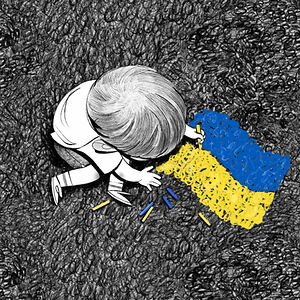
An Ucrainian tried to teach me (German, speaking basic Russian and a little bit of Polish) the Ucrainian word for bread, "pal'yanitza". We ended up laughing on the floor. It's the one word no Russian is able to articulate correctly, she said, and by this some Russian invaders trying to mimick Ucrainians (to avoid POW) were captured.
Sophomore! It means "wise fool" in Ancient Greek I also like: • "hazard", which meant "the die" in Arabic, because gambling was considered risky • "trivia", which meant "three roads" in Latin, because patricians looked down upon such intersections with disdain, as being insignificant and full of commoners • "candidate", which means "white robed" • "avocado", which in Nahuatl shared a definition with "testicle" • "orchid", which in Greek meant "testicle" • "testify", which is a cognate of "testicle" • "porcelain", which means "pig's vagina" • "vanilla", which means "vagina" • "girl", which could once refer to either gender • "toilet", which used to mean "closet" in French, and many, many more!
As someone who grew up in Mexico, I've never laughed harder than the day I realized when Americans say "buckaroo" (cowboy) it was just the very gringo pronunciation of the Spanish word "vaquero."

I originally read the title as "entomologists" and was expecting a much different post.
BUT... one of them was about the ten bug in computer parlance. So... you got bugs anyway.
Load More Replies...

Bored Panda, you have beaten your own record of repetitions in this segment. It was interesting, but not so much to read everything twice!

I didn't see it on here, but the etymology of the term Jay Walking (walking outside of a cross walk or when not allowed, technically a crime in the US) is fascinating. Back in the late 1910's when cars were starting to become really popular in the US, the roads were shared equally between pedestrians, horse & buggies, and automobiles. Henry Ford saw this as a real detriment to the market share of the car, so he paid newspapers at the time to write fake news stories about pedestrians causing accidents with cars. Even though the cars were at fault. In the articles, reporters were told to use the term Jay walker to refer to the pedestrian, because calling someone a "Jay" back then was really insulting (akin to calling them an a$$hole). Henry Ford literally made up an insulting name, paid for fake news stories, and eventually paid his way into having roads designated for automobiles only and making walking on them a crime. And that is why roads are dominated by cars today.

My favourite is the origins of the word individual. It originally meant a member of a group, someone who couldn't be divided from the rest of the group. And then it became the smallest part of the group and therefore a single, undivided entity, one person among many.
Brian: "You are all individuals!" Member of crowd: "I'm not!"
Load More Replies...

I'm 70 and used to read the dictionary when I was a kid for fun and only only this year learned that "aloud" is a contraction of the Arabic 'al-oud' or "of the oud" a traditional musical instrument know for its voluminous sound. oud-mirfak...b7affe.jpg 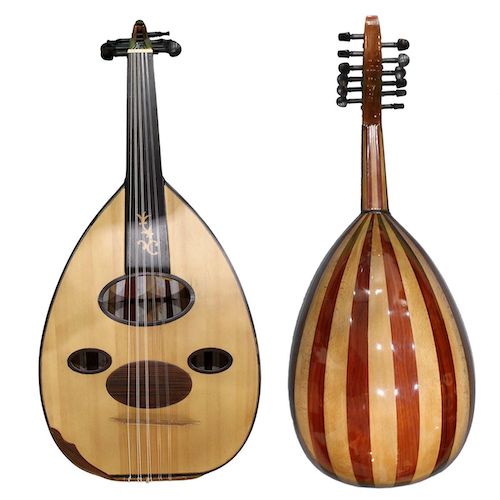
Balls out is not having one’s privates in the breeze but rather refers to the mechanical governed on steam engines. They had two metal balls on them and when at full steam they would be out from the center.

i never like the feeling of balls out i like wearing briefs to keep things compressed down and snug daniel
Load More Replies...
Lightning bugs glow because of a substance called luciferin that oxidizes by the enzyme luciferase. Named from the Latin term lucifer which means light bearing. This is my favorite tidbit of useless info I learned in college biology 20 years ago 😊

The English word ' juggernaut' ,i.e., ' A Huge,Poweful, and Overwhelming Force' is derivedfrom the name of the Hindu Deity ' Jagannath'. He is said to be an incarnation of the God Krishna, who in turnis an incarnation of the Divine preserver Vishnu. Jagannath is a Sanskrit word, compounded of jagat meaning "universe" and nātha meaning "Master" or "Lord". Thus, Jagannath means "lord of the universe".[
As someone who grew up in Mexico, I've never laughed harder than the day I realized when Americans say "buckaroo" (cowboy) it was just the very gringo pronunciation of the Spanish word "vaquero."
I originally read the title as "entomologists" and was expecting a much different post.
BUT... one of them was about the ten bug in computer parlance. So... you got bugs anyway.
Load More Replies... Bored Panda, you have beaten your own record of repetitions in this segment. It was interesting, but not so much to read everything twice!
I didn't see it on here, but the etymology of the term Jay Walking (walking outside of a cross walk or when not allowed, technically a crime in the US) is fascinating. Back in the late 1910's when cars were starting to become really popular in the US, the roads were shared equally between pedestrians, horse & buggies, and automobiles. Henry Ford saw this as a real detriment to the market share of the car, so he paid newspapers at the time to write fake news stories about pedestrians causing accidents with cars. Even though the cars were at fault. In the articles, reporters were told to use the term Jay walker to refer to the pedestrian, because calling someone a "Jay" back then was really insulting (akin to calling them an a$$hole). Henry Ford literally made up an insulting name, paid for fake news stories, and eventually paid his way into having roads designated for automobiles only and making walking on them a crime. And that is why roads are dominated by cars today.
My favourite is the origins of the word individual. It originally meant a member of a group, someone who couldn't be divided from the rest of the group. And then it became the smallest part of the group and therefore a single, undivided entity, one person among many.
Brian: "You are all individuals!" Member of crowd: "I'm not!"
Load More Replies... I'm 70 and used to read the dictionary when I was a kid for fun and only only this year learned that "aloud" is a contraction of the Arabic 'al-oud' or "of the oud" a traditional musical instrument know for its voluminous sound. oud-mirfak...b7affe.jpg
Balls out is not having one’s privates in the breeze but rather refers to the mechanical governed on steam engines. They had two metal balls on them and when at full steam they would be out from the center.
i never like the feeling of balls out i like wearing briefs to keep things compressed down and snug daniel
Load More Replies... Lightning bugs glow because of a substance called luciferin that oxidizes by the enzyme luciferase. Named from the Latin term lucifer which means light bearing. This is my favorite tidbit of useless info I learned in college biology 20 years ago 😊
The English word ' juggernaut' ,i.e., ' A Huge,Poweful, and Overwhelming Force' is derivedfrom the name of the Hindu Deity ' Jagannath'. He is said to be an incarnation of the God Krishna, who in turnis an incarnation of the Divine preserver Vishnu. Jagannath is a Sanskrit word, compounded of jagat meaning "universe" and nātha meaning "Master" or "Lord". Thus, Jagannath means "lord of the universe".[

























 No fees, cancel anytime
 then open in external browser


 and click "Open in External Browser"