Get Premium
Dark mode theme is available exclusively for premium users. Learn more about the benefits of subscribing.
No fees, cancel anytime.

 Dark Mode Ad-Free Browsing Unlimited Content
 Ad-Free Browsing Unlimited Content Dark Mode
Join 1.2 million Panda readers who get the best art, memes, and fun stories every week!
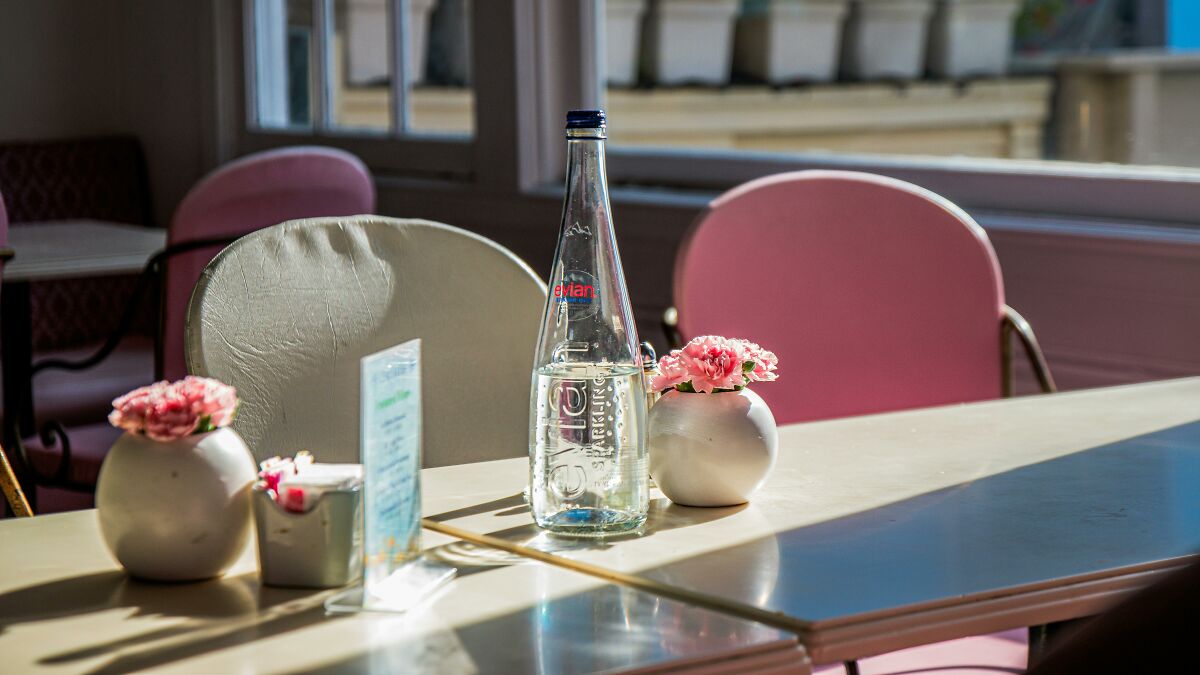
A woman lost a seven-year legal battle after a luxury hotel in Italy repeatedly refused to serve her tap water during a holiday stay.
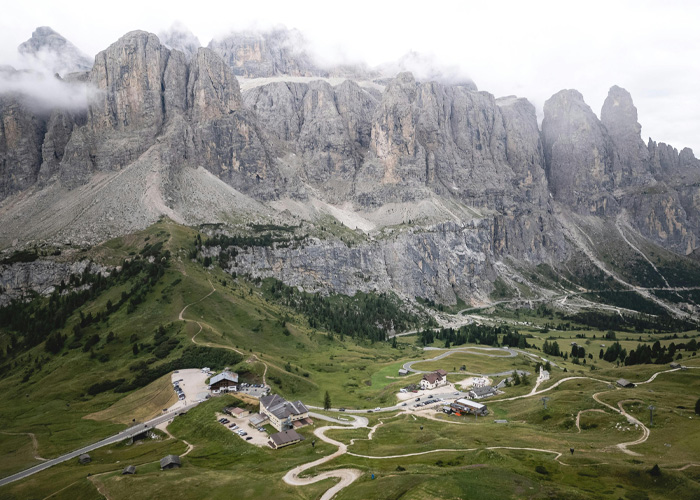
The case dates back to 2019, when she stayed at a five-star hotel in the Dolomites and claimed she was forced to pay for bottled water during meals instead of being given tap water.
The woman argued tap water should be seen as a basic amenity, akin to soap in the bathroom and clean sheets in hotel beds. However on April 29, after years of court proceedings and appeals, Italy’s highest court gave its final verdict.
“Restaurants have coerced people into thinking asking for free tap water is a breach of etiquette,” a netizen wrote.
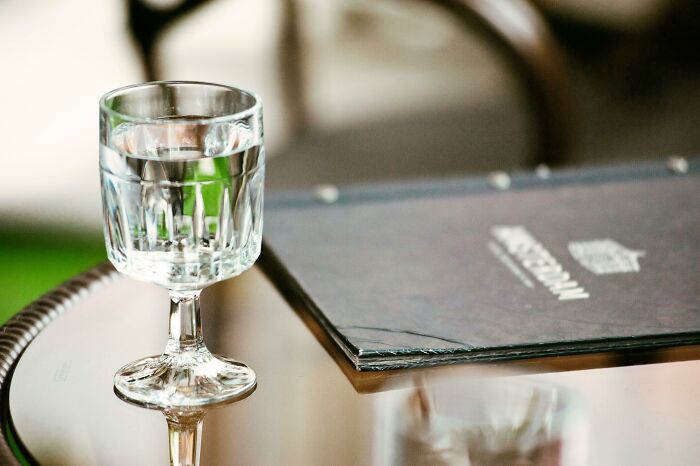
Image credits: Tomáš Malík/Pexels (Not the actual image)
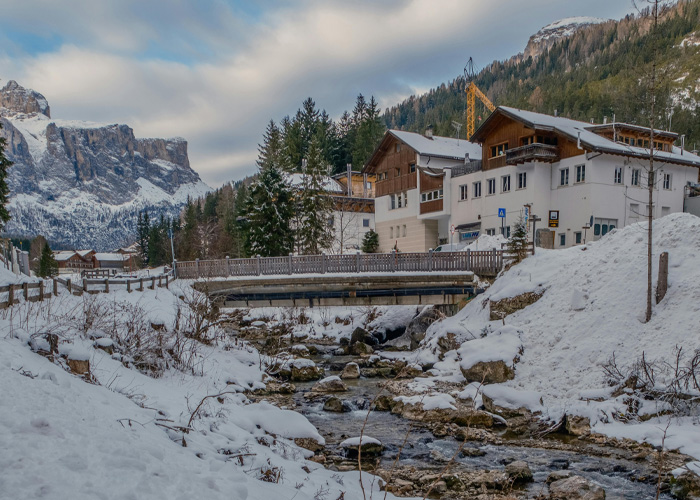
The legal dispute reportedly began after the woman spent Christmas and New Year’s at the five-star Hotel Sassongher in Corvara, a ski resort town in the Dolomites.
She had booked a half-board package that included dinner, though drinks were not included.
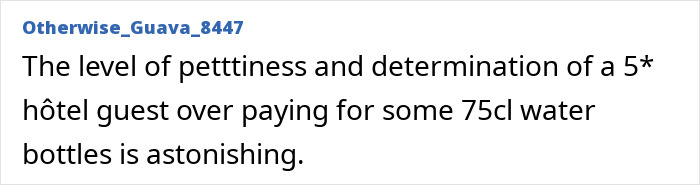
According to reports, she repeatedly asked staff for tap water during meals. Instead, a 0.75-liter bottle of mineral water costing €7 was placed at her table.
Court documents cited by local newspaper Corriere Alto Adige indicated that she felt she had been “constantly denied” tap water and forced to pay for bottled water throughout her stay.
Image credits: Roberto Rosi/Pexels (Not the actual image)
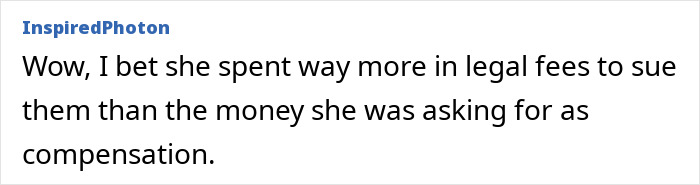
After returning home, she decided to take legal action and sought €2,700 in compensation for what she described as economic damage and emotional distress.
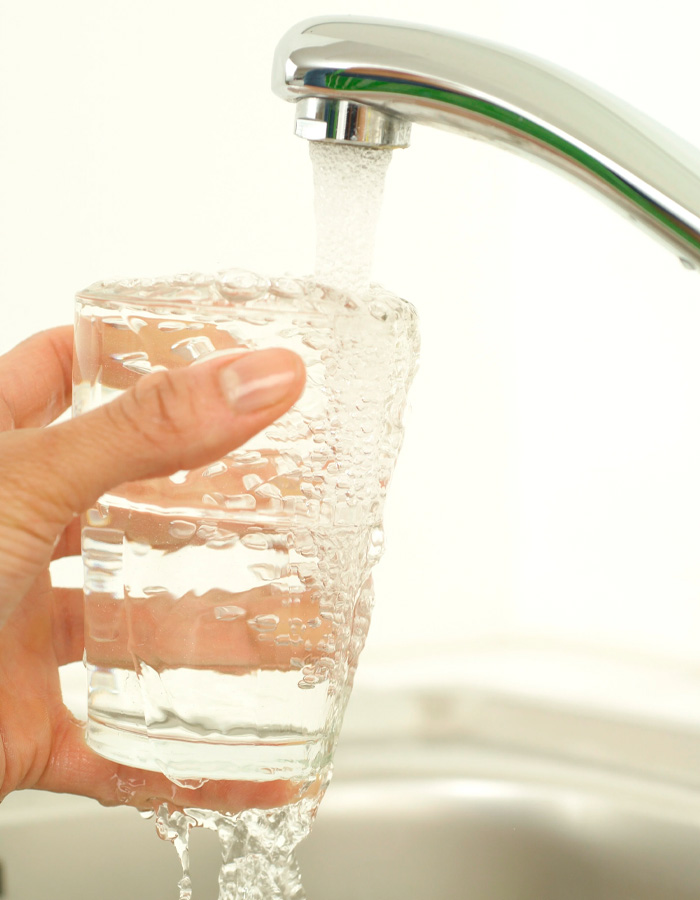
In court documents, she argued that “water is a natural resource and a universal human right,” and claimed, “the free provision of a minimum vital quantity is necessary to meet essential needs and must be guaranteed.”
She also compared access to water to basic hotel expectations, alleging it should be no different than “finding a bed with sheets,” “a warm room,” or “soap in the bathroom.”
While the case was first dismissed in a lower court before eventually reaching Italy’s Supreme Court, Judges ruled there were no Italian laws requiring hotels or restaurants to provide tap water.
Silvio Belardi, the lawyer representing the hotel, summarized the ruling: “There is no obligation to supply tap water.”
Image credits: BOOM Photography/Pexels (Not the actual image)
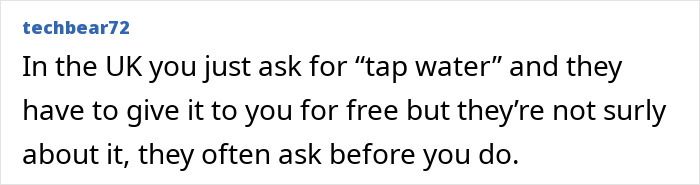
Under the Licensing Act 2003, in England and Wales, licensed venues that serve drinks are legally required to provide customers with free drinking water upon request.
Scotland has similar rules, while Northern Ireland does not currently have an equivalent requirement.
Research has suggested that many people are still unaware of those rights.
A survey by Keep Britain Tidy and Brita UK found that only 25% of people knew when they could ask for free drinking water, while 71% said they felt awkward asking for water if they were not customers.
Image credits: Yan Krukau/Pexels (Not the actual image)
Allison Ogden-Newton, the chief executive of Keep Britain Tidy, an environmental charity,said, “This report demonstrates that the British public want greater access to tap water when out and about.”
Rules also vary across Europe.
In France, tap water is often free if diners ask for “une carafe d’eau.”
Meanwhile, Spain introduced legislation in 2022 requiring restaurants and bars to offer free unpackaged drinking water. Germany, on the other hand, does not have a similar nationwide rule, and some venues may still charge customers.
Image credits: Dreamscolor Media/Pexels (Not the actual image)
In many American restaurants, a large glass of water with ice is often brought to the table shortly after customers sit down.
Diners usually receive tap water automatically, while bottled water is requested specifically.
That experience felt very different for Americans traveling abroad.
American traveler Helene Sula recalled her surprise during a 2024 visit to Germany while speaking with CNN Travel.
“In the US, you sit down at the table, and you’re given a huge glass of water with ice, and it’s not even a question,” she said.
“It’s just plopped on the table.”
Image credits: SAAD EMRIS/Pexels (Not the actual image)
Instead, she was served bottled sparkling water and later realized restaurant customs worked differently.
Years after moving to Germany, Sula said she also noticed differences in everyday habits.
While she and her husband regularly carried large water bottles while hiking and traveling, many of their local friends did not.
Stavros A. Kavouras, a professor at Arizona State University and director of the university’s Hydration Science Lab, explained that habits vary from country to country.
“For instance, if you go to Germany and you ask for water, you get sparkling water. That’s the default.”
He also suggested American dining habits may play a role.
“I think it might be a little bit of that,” he said while discussing Americans’ preference for larger portions, including drinks.
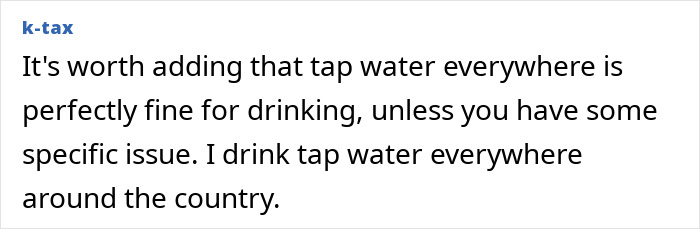
Kavouras added that, despite restaurant customs, drinking tap water in Europe is generally safe.
“Tap water in most European cities is potable, it’s safe, and you can drink it.”
Image credits: Farhad Ibrahimzade/Pexels (Not the actual image)
Italy generally has safe drinking water and follows strict European Union water quality standards.
Tap water in cities including Rome, Milan, Florence, and Naples is regularly tested and monitored, and Rome is also known for its public drinking fountains, where locals and tourists refill bottles.
Professor Patrizia Calella, a lecturer in General and Applied Hygiene at UniCamillus University, explained, “When water is safe to drink, it means it is suitable for human consumption and can be drunk and used for food preparation without any health risks.”
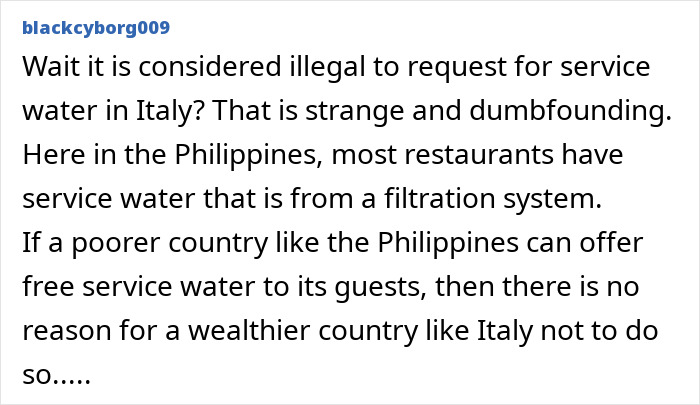
Despite that, Italy remains one of the world’s largest consumers of bottled water.
Image credits: Atlantic Ambience/Pexels (Not the actual image)
Research director Andrea Minutolo at the environmental foundation AGMA estimated that Italians consume around 194 litres of bottled water per person each year.
Unlike some parts of Europe where groundwater pollution remains a concern, Italy’s preference for bottled water appears more connected to tradition and taste.
“Around 80% of all wastewater worldwide enters water bodies without undergoing treatment”, said researchers at the Water Atlas, a groundwater purity index created by German think tank Heinrich Böll Foundation.
Countries including Belgium, Germany, Luxembourg, and the Czech Republic have reported some of Europe’s most polluted groundwater sources.

By entering your email and clicking Subscribe, you're agreeing to let us send you customized marketing messages about us and our advertising partners. You are also agreeing to our Privacy Policy.
Thank you! You've successfully subscribed to newsletters!


Lady legit woke up one morning and said, “I’m going to díe on this hill, even if it takes me seven years to do it!”

I wouldn't sue them, but I didn't know about the UK law (where I live!). And apparently it's law in Spain too - I went 2 years ago and asked for tap water for my son. They quite aggressively slammed the glass on the table and said after that I had to buy drinks. Problem was, my son was 5, they only served fizzy drinks (ie Coca Cola) which I didn't want him having that young. And we were eating meals too so not like I was just getting free drinks.
Yeah, check the country you visit, Karen. Hospitality staff in Europe is not your well-known, modern-slaves, who will make anything for your tip to pay their bill, back in Idaho.
It's actually the law in a number of European countries (such as UK, Spain, France), that restaurants have to provide customers with the option of free tap water
Load More Replies... Lady legit woke up one morning and said, “I’m going to díe on this hill, even if it takes me seven years to do it!”
I wouldn't sue them, but I didn't know about the UK law (where I live!). And apparently it's law in Spain too - I went 2 years ago and asked for tap water for my son. They quite aggressively slammed the glass on the table and said after that I had to buy drinks. Problem was, my son was 5, they only served fizzy drinks (ie Coca Cola) which I didn't want him having that young. And we were eating meals too so not like I was just getting free drinks.
Yeah, check the country you visit, Karen. Hospitality staff in Europe is not your well-known, modern-slaves, who will make anything for your tip to pay their bill, back in Idaho.
It's actually the law in a number of European countries (such as UK, Spain, France), that restaurants have to provide customers with the option of free tap water
Load More Replies...










 No fees, cancel anytime







25
13