ADVERTISEMENT

Do thoughts about an endless sky above start bothering you minutes before you should fall asleep? Black holes make you unexplainably anxious? Are extraterrestrials real? As vast and unexplored as space is, there sure are plenty of cool scientific facts to put your mind at rest. And, to save you (and ourselves) from another sleepless night spent wondering about the miracles (or science) of the universe, we've rounded up some of the most important space facts in this fun little article. 

From the length of the day on various planets in our solar system to diamond showers and the actual size of heavenly bodies compared to a unit of measurement we all understand - football stadiums - all the basics are covered in our facts about space. After the groundwork comes the more complex questions about gaseous compositions, thermodynamics, and such - no stone unturned in these cool facts about space! And, the further we dig into the core topics of our universe, the more at ease you'll probably start to feel. At least we do desperately hope that these fun facts about space will soothe you and calm you instead of scrambling your thoughts on black holes even further.

Now, jump into your moon boots, and let's explore the universe of cool space facts together! Although presumably, they should be somewhere higher up, the interesting facts are instead a bit further down. Once you are there, rank the bits of info by their unexpectedness and share this article with your friends!

#1

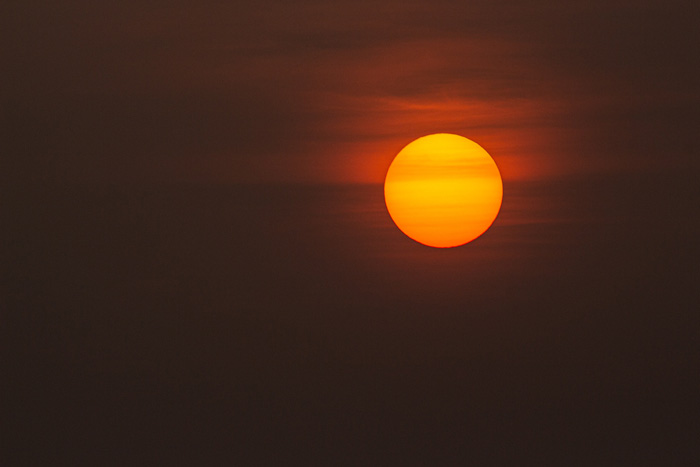
152 Space Facts About Planets, Black Holes, And Everything In Between The sun's mass takes up 99.86% of our Solar System.

nhm.ac.uk , Lenstravelier Report

RELATED:
    #2

    When you look at a star, what you actually see is how it was in the past.

    wtamu.edu Report

    Robert T
    Community Member
    3 years ago Created by potrace 1.15, written by Peter Selinger 2001-2017

    The further away it is, the further into the past you are looking.

    Virgil Blue
    Community Member
    3 years ago Created by potrace 1.15, written by Peter Selinger 2001-2017

    This is why light years feel kind of confusing. It's both a measurement of time and distance depending how you look at it.

    #3

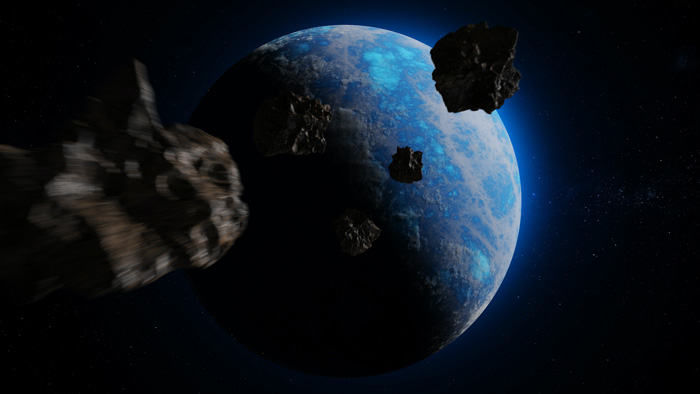
    Any free-moving liquid in outer space will form itself into a sphere.
    usgs.gov Report

    third molar
    Community Member
    3 years ago Created by potrace 1.15, written by Peter Selinger 2001-2017

    Except Earth. Earth is flat. (Sic)

    love u
    Community Member
    3 years ago Created by potrace 1.15, written by Peter Selinger 2001-2017

    isnt this true on earth too..?

    Virgil Blue
    Community Member
    3 years ago Created by potrace 1.15, written by Peter Selinger 2001-2017

    Free moving as in not being (majorly) attracted to other objects in this case. For earth and all the other rocky planets that was when they were still hot, liquid and condensing out of the material shroud the sun once had.

    Load More Replies...
    #4

    The sunset on Mars appears blue.

    solarsystem.nasa.gov Report

    harpling
    Community Member
    3 years ago Created by potrace 1.15, written by Peter Selinger 2001-2017

    The Rover got some really cool pictures! https://solarsystem.nasa.gov/news/925/what-does-a-sunrise-sunset-look-like-on-mars/

    K W
    Community Member
    3 years ago Created by potrace 1.15, written by Peter Selinger 2001-2017

    Thanks for sharing this! Very cool.

    Load More Replies...
    ADVERTISEMENT
    #5

    Saturn would float in water.

    solarsystem.nasa.gov Report

    harpling
    Community Member
    3 years ago Created by potrace 1.15, written by Peter Selinger 2001-2017

    I remember seeing an illustration of this in The Magic School Bus when I was a kid, Saturn floating in a huge bathtub, scrubbing itself with a loofah.

    setsuriseikou
    Community Member
    3 years ago Created by potrace 1.15, written by Peter Selinger 2001-2017

    Were the rings on or did it take them off before bathing?

    Load More Replies...
    ADVERTISEMENT
    #6

    152 Space Facts About Planets, Black Holes, And Everything In Between A large percentage of asteroids are pulled in by Jupiter’s gravity and it protects us from cosmic impacts.

    sciencefocus.com , Javier Miranda Report

    #7

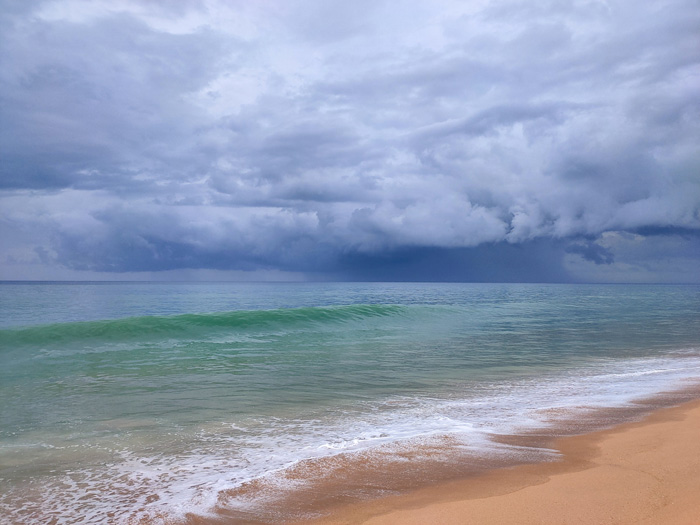
    There are more stars in the universe than grains of sand on all the beaches on Earth. That’s at least a billion trillion!
    npr.org Report

    #8

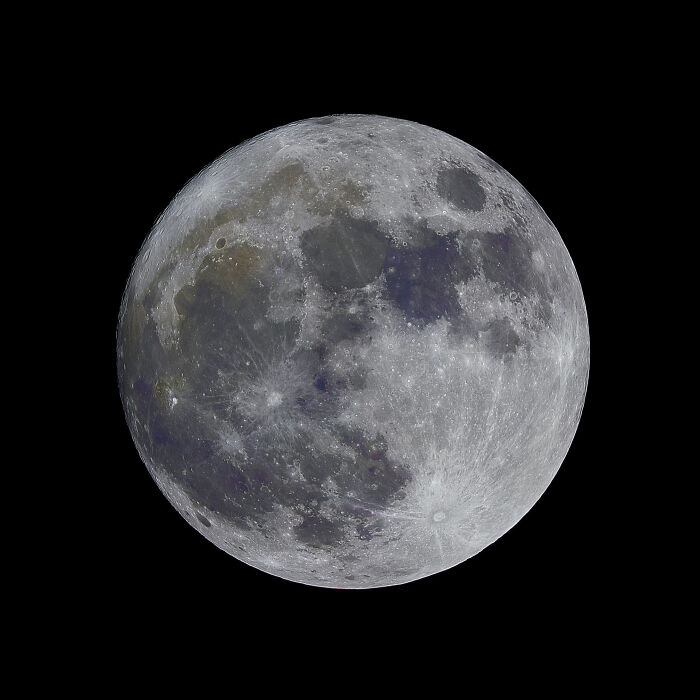
    Earth’s Moon is the fifth largest moon in the solar system.

    solarsystem.nasa.gov Report

    ADVERTISEMENT
    #9

    152 Space Facts About Planets, Black Holes, And Everything In Between We know more about Mars and our Moon than we do about our oceans.

    saildrone.com , Govind H Report

    Thegoodboi
    Community Member
    Premium
    3 years ago Created by potrace 1.15, written by Peter Selinger 2001-2017

    Do we though? O.o...Do we...?

    Virgil Blue
    Community Member
    3 years ago Created by potrace 1.15, written by Peter Selinger 2001-2017

    "Nasa knows. Nasa fears. Nasa's urge to get as far away from the ocean gets ever stronger."

    ADVERTISEMENT
    #10

    Scientists have found a void in space 1 billion miles wide that could be a parallel universe.

    newscientist.com Report

    MedusaWasBeautiful
    Community Member
    3 years ago Created by potrace 1.15, written by Peter Selinger 2001-2017

    A billion mies in space is incredibly small.

    Diana Cannava
    Community Member
    3 years ago Created by potrace 1.15, written by Peter Selinger 2001-2017

    that is true but this is noted to be one of the largest voids - (to date, discovered)

    Load More Replies...
    Headless Roach
    Community Member
    3 years ago Created by potrace 1.15, written by Peter Selinger 2001-2017

    Sounds like description of my head. Big void with a parrallel universe.

    Thegoodboi
    Community Member
    Premium
    3 years ago Created by potrace 1.15, written by Peter Selinger 2001-2017

    Hold on just adding to my anxiety list..

    Virgil Blue
    Community Member
    3 years ago Created by potrace 1.15, written by Peter Selinger 2001-2017

    Boothes void? It's scary looking. It feels as if something is snuffing out stars, maybe encasing them in Dyson spheres? I hope its not expanding.

    Marek Čtrnáct
    Community Member
    3 years ago Created by potrace 1.15, written by Peter Selinger 2001-2017

    We'd probably notice that. Gravity and thermal radiation would still be there.

    Load More Replies...
    #11

    Saturn has a huge extra ring that was only discovered in 2009.

    science.nasa.gov Report

    third molar
    Community Member
    3 years ago Created by potrace 1.15, written by Peter Selinger 2001-2017

    What do you mean "extra" !!!

    Virgil Blue
    Community Member
    3 years ago Created by potrace 1.15, written by Peter Selinger 2001-2017

    Nasal liked ot so they put another ring on it. 😄

    Load More Replies...
    #12

    An asteroid about the size of a car enters Earth’s atmosphere roughly once a year – but it burns up before it reaches us.

    nasa.gov Report

    ADVERTISEMENT
    #13

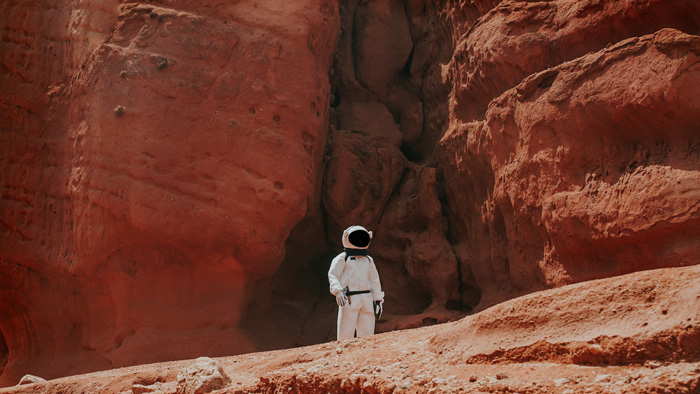
    Space is not completely empty, but there are only about ten atoms per cubic meter of space.
    physicsoftheuniverse.com Report

    Lee Macro
    Community Member
    3 years ago Created by potrace 1.15, written by Peter Selinger 2001-2017

    Interstellar space only contains approx. 0.25 atoms per cubic meter

    ADVERTISEMENT
    #14

    152 Space Facts About Planets, Black Holes, And Everything In Between If you were to stand on the surface of Mars on the equator at noon, it would feel like spring at your feet (75°F or 24°C) and winter at your head (32°F or 0 °C).

    solarsystem.nasa.gov , Nicolas Lobos Report

    setsuriseikou
    Community Member
    3 years ago Created by potrace 1.15, written by Peter Selinger 2001-2017

    Ok, so the shoes and the hat are sorted out, but is it a T-shirt or a jacket in between?

    Thegoodboi
    Community Member
    Premium
    3 years ago Created by potrace 1.15, written by Peter Selinger 2001-2017

    If you're cold, lay down. If you're hot, jump in the air. Seems bearable let's go

    Yeah, okay.
    Community Member
    3 years ago Created by potrace 1.15, written by Peter Selinger 2001-2017

    Except for that pesky "breathing" problem. What the hell, we'll figure it out.

    Load More Replies...
    #15

    On Venus, it snows metal and rains sulfuric acid.

    source.wustl.edu Report

    ADVERTISEMENT
    #16

    Dung beetles can use the Milky Way for orientation.

    cell.com Report

    Got Banned But Now I'm Back
    Community Member
    3 years ago Created by potrace 1.15, written by Peter Selinger 2001-2017

    This made no sense to me, so I looked it up. What the heck, dung beetles? Amazing stuff.

    #17

    One million Earths could fit inside the Sun – and the Sun is considered an average-size star.

    solarsystem.nasa.gov Report

    ADVERTISEMENT
    #18

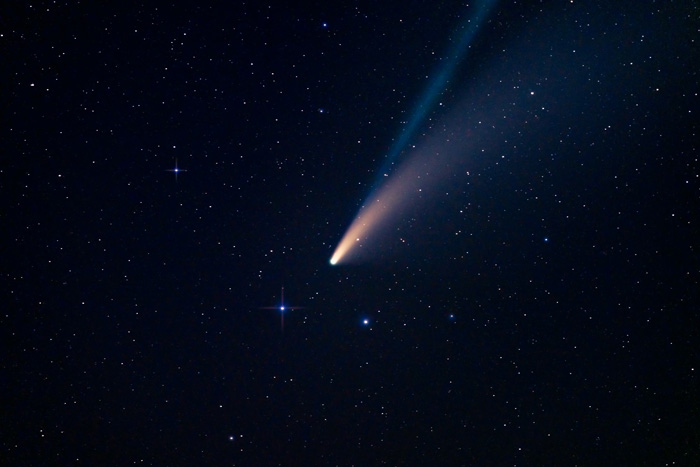
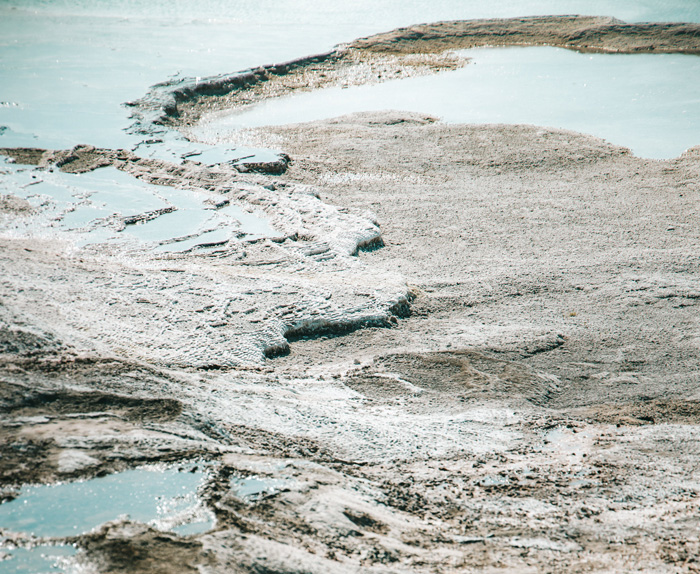
    152 Space Facts About Planets, Black Holes, And Everything In Between Comets are leftovers from the creation of our solar system about 4.5 billion years ago – they consist of sand, ice and carbon dioxide.
    solarsystem.nasa.gov , Justin Wolff Report

    #19

    There is a planet made of diamonds.

    space.com Report

    Beck
    Community Member
    3 years ago Created by potrace 1.15, written by Peter Selinger 2001-2017

    I thought it rained diamonds. On neptune or somewhere like that?

    Virgil Blue
    Community Member
    3 years ago Created by potrace 1.15, written by Peter Selinger 2001-2017

    But it's gravity and pressure needed to be so high for that to happen there is no way to get at any without being destroyed.

    ADVERTISEMENT
    #20

    About 1.4 billion years ago, a day on Earth was just 18 hours 41 minutes long.

    science.org Report

    #21

    The Apollo astronauts' footprints on the Moon could last up to 100 million years.

    nasa.gov Report

    Thegoodboi
    Community Member
    Premium
    3 years ago

    This comment is hidden. Click here to view.

    "Thegoodboi was here 😊"

    ADVERTISEMENT
    #22

    The moons of Uranus were named after characters created by Alexander Pope and William Shakespeare.

    space-facts.com Report

    Robert T
    Community Member
    3 years ago Created by potrace 1.15, written by Peter Selinger 2001-2017

    Is Uranus not named after the Shakespeare character, Bottom?

    Joe Russo
    Community Member
    3 years ago Created by potrace 1.15, written by Peter Selinger 2001-2017

    ουρανός (ooh rah NOHS) is the Greek word for sky. Not at all pronounced like many of us pronounced it elementary/primary school (and still do...).

    #23

    152 Space Facts About Planets, Black Holes, And Everything In Between Mercury is still shrinking.

    nasa.gov , Neven Krcmarek Report

    Robert T
    Community Member
    3 years ago Created by potrace 1.15, written by Peter Selinger 2001-2017

    I thought it was rising. Well that's what Bruce Willis said.

    Nenyone_yay
    Community Member
    3 years ago Created by potrace 1.15, written by Peter Selinger 2001-2017

    If it's cold, the mercury falls to the bottom of the thermometer 😆

    Load More Replies...
    ADVERTISEMENT
    #24

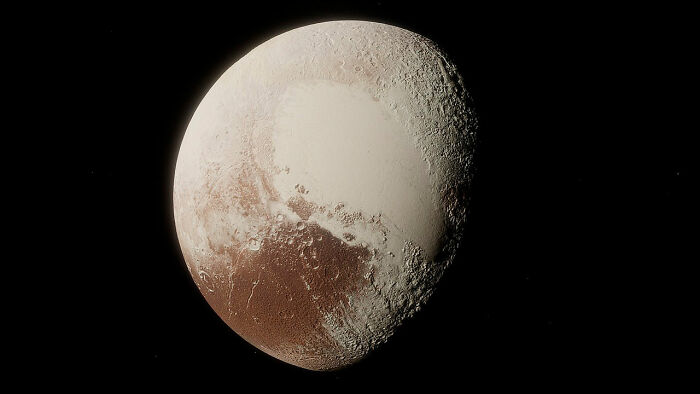
    152 Space Facts About Planets, Black Holes, And Everything In Between Pluto is smaller than the United States.

    nasa.gov , TheSpaceway Report

    DennyS (denzoren)
    Community Member
    3 years ago Created by potrace 1.15, written by Peter Selinger 2001-2017

    Pluto is a planet and I'll die on this hill.

    Swingstoon
    Community Member
    3 years ago Created by potrace 1.15, written by Peter Selinger 2001-2017

    Now that's a good thing to compare

    #25

    152 Space Facts About Planets, Black Holes, And Everything In Between For years it was believed that Earth was the only planet in our solar system with liquid water. More recently, NASA revealed its strongest evidence yet that there is intermittent running water on Mars, too!

    nasa.gov , ROMAN ODINTSOV Report

    David Phillips
    Community Member
    3 years ago Created by potrace 1.15, written by Peter Selinger 2001-2017

    "Intermittent running water"? So Mars is in fact a cheap apartment in a run-down neighbourhood.

    Lisa H
    Community Member
    3 years ago Created by potrace 1.15, written by Peter Selinger 2001-2017

    Hey, if Jeff Bezos and Elon Musk want to move to the Martian Projects, who are we to stop them?

    Load More Replies...
    ADVERTISEMENT
    #26

    A day on Venus lasts 243 Earth days. A year on Venus lasts 225 Earth days.

    spaceplace.nasa.gov Report

    Jillian Harris
    Community Member
    3 years ago Created by potrace 1.15, written by Peter Selinger 2001-2017

    So it takes Venus 243 earth days to rotate one time. But it takes Venus 225 earth days to rotate once around the sun. Not gonna lie. I was confused at first lol

    Alexandria Z
    Community Member
    3 years ago Created by potrace 1.15, written by Peter Selinger 2001-2017

    Glad I don't live on those planets. My work day is to long as it is *sigh.

    Oerff On Tour
    Community Member
    3 years ago Created by potrace 1.15, written by Peter Selinger 2001-2017

    Now try to come up with a calendar

    Lisa H
    Community Member
    3 years ago Created by potrace 1.15, written by Peter Selinger 2001-2017

    I asked my brother how this works (he has a bachelor's degree in astrophysics) and I STILL don't get it.

    ADVERTISEMENT
    #27

    The International Space Station (ISS) is the size of a football field.

    nasa.gov Report

    Ace
    Community Member
    Premium
    3 years ago Created by potrace 1.15, written by Peter Selinger 2001-2017

    What's that in bananas?

    Thegoodboi
    Community Member
    Premium
    3 years ago Created by potrace 1.15, written by Peter Selinger 2001-2017

    Bahaha now now, which football field? American football? Or rest of the world football?

    Beck
    Community Member
    3 years ago Created by potrace 1.15, written by Peter Selinger 2001-2017

    American. Because the rest if the world use actual measurements.

    Load More Replies...
    Jaaawn
    Community Member
    3 years ago Created by potrace 1.15, written by Peter Selinger 2001-2017

    And now a measurment for the rest of the world?

    Robert T
    Community Member
    3 years ago Created by potrace 1.15, written by Peter Selinger 2001-2017

    Most of which is taken up by solar panels. The actual living accomodation is quite small.

    #28

    It is possible to see the International Space Station from your backyard.

    nasa.gov Report

    setsuriseikou
    Community Member
    3 years ago Created by potrace 1.15, written by Peter Selinger 2001-2017

    Hey, how do you know that? I'm pretty sure I've never invited you to my backyard!

    Mad McQueen
    Community Member
    3 years ago Created by potrace 1.15, written by Peter Selinger 2001-2017

    I can see it from my house. It's more of a triangle than a dot like a star. In Florida it's even clearer.

    Thegoodboi
    Community Member
    Premium
    3 years ago Created by potrace 1.15, written by Peter Selinger 2001-2017

    I live in the country, I've been fortunate to see it. Pretty cool!

    Robert T
    Community Member
    3 years ago Created by potrace 1.15, written by Peter Selinger 2001-2017

    That would be difficult, as I don't have one. Barring light pollution I might be able to see it from my window.

    #29

    There are more than 4,000 known exoplanets, and counting.

    exoplanets.nasa.gov Report

    ADVERTISEMENT
    #30

    There may be a huge planet at the edge of the Solar System nicknamed "Planet Nine".

    solarsystem.nasa.gov Report

    ADVERTISEMENT
    #31

    Gamma-ray bursts can release more energy in 10 seconds than our Sun will in its entire 10 billion-year lifetime.

    starchild.gsfc.nasa.gov Report

    #32

    The radio signal that a spacecraft uses to contact Earth has no more power than a refrigerator light bulb.

    nasa.gov Report

    #33

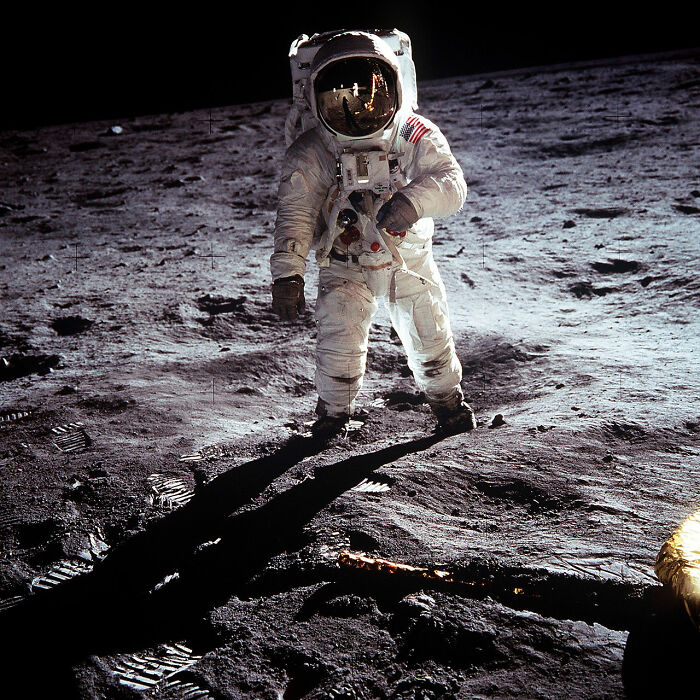
    The first-ever black hole photographed is 3 million times the size of Earth.
    bbc.com Report

    Thegoodboi
    Community Member
    Premium
    3 years ago Created by potrace 1.15, written by Peter Selinger 2001-2017

    Spaghetti noodle maker

    ADVERTISEMENT
    #34

    Coca-Cola was the first commercial soft drink that was ever consumed in space.

    coca-colacompany.com Report

    ADVERTISEMENT
    #35

    Soviet cosmonaut Valentina Tereshkova becomes the first woman in space in 1963.

    history.com Report

    #36

    The first living mammal to go into space was a dog named “Laika” from Russia.

    rmg.co.uk Report

    setsuriseikou
    Community Member
    3 years ago Created by potrace 1.15, written by Peter Selinger 2001-2017

    Alas, she didn't make it back alive, dying from overheating some hours into the flight.

    #37

    152 Space Facts About Planets, Black Holes, And Everything In Between The word “astronaut” means “star sailor” in its origins.

    bbc.co.uk , WikiImages Report

    Swingstoon
    Community Member
    3 years ago Created by potrace 1.15, written by Peter Selinger 2001-2017

    And also the word cosmonaut means " Universe sailor" I read that fact in a book

    Marek Čtrnáct
    Community Member
    3 years ago Created by potrace 1.15, written by Peter Selinger 2001-2017

    Well, they fly on space "ships", so...

    ADVERTISEMENT
    #38

    If you drilled a tunnel through Earth and jumped in, you would reach the other side in 42 minutes and 12 seconds.

    livescience.com Report

    Thegoodboi
    Community Member
    Premium
    3 years ago (edited) Created by potrace 1.15, written by Peter Selinger 2001-2017

    One more for the anxiety list...So would you pop out the other side and land safely on the edge? Or would gravity pull you back through and your stuck in a theoretical free fall forever? Asking for a friend..

    Marek Čtrnáct
    Community Member
    3 years ago Created by potrace 1.15, written by Peter Selinger 2001-2017

    Well, you would reach the other side as a crisp, so it wouldn't really matter.

    Load More Replies...
    Oerff On Tour
    Community Member
    3 years ago Created by potrace 1.15, written by Peter Selinger 2001-2017

    Strange enough, that works under every angle you dig. London to Sidney takes just as long as London to New York

    ADVERTISEMENT
    #39

    The center of the Milky Way galaxy has tens of thousands of black holes.

    npr.org , nature.com Report

    David Phillips
    Community Member
    3 years ago Created by potrace 1.15, written by Peter Selinger 2001-2017

    ...which will eventually consume the entire galaxy. Just something to look forward to.

    #40

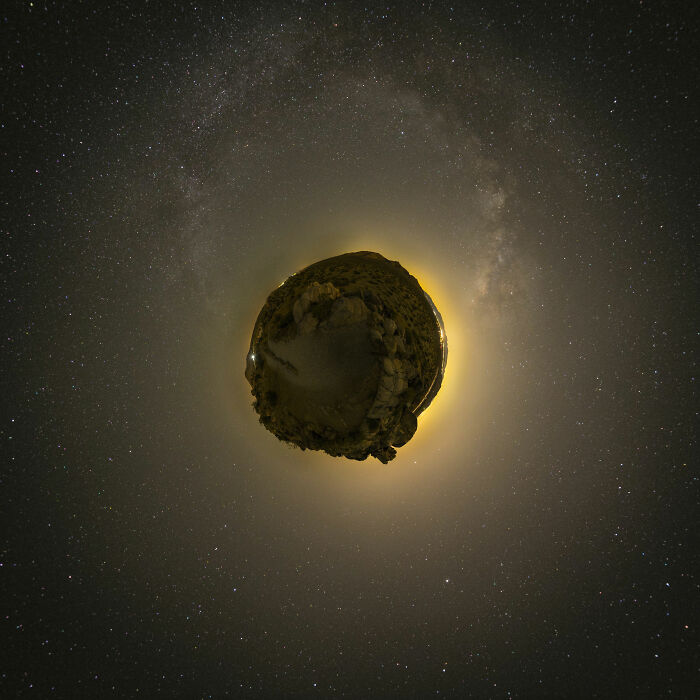
    152 Space Facts About Planets, Black Holes, And Everything In Between The largest known asteroid is 940 km wide.

    spacereference.org , Bryan Goff Report

    #41

    Saturn has 83 known moons and counting.

    solarsystem.nasa.gov Report

    ADVERTISEMENT
    #42

    There are 2,000,000,000,000 galaxies in the observable universe.

    nasa.gov Report

    ADVERTISEMENT
    #43

    Voyager 1 and 2 have been operating for more than 40 years.

    voyager.jpl.nasa.gov Report

    Thegoodboi
    Community Member
    Premium
    3 years ago Created by potrace 1.15, written by Peter Selinger 2001-2017

    Here's to 40 more 🍺

    #44

    There is a planet in our galaxy where the daytime temperature is nearly 2,000 degrees Fahrenheit, and it possibly rains glass horizontally.

    nasa.gov Report

    Thegoodboi
    Community Member
    Premium
    3 years ago Created by potrace 1.15, written by Peter Selinger 2001-2017

    My house when I eat my wife's last ice cream..

    XenoMurph
    Community Member
    3 years ago (edited) Created by potrace 1.15, written by Peter Selinger 2001-2017

    We don't do fahrenheit here

    #45

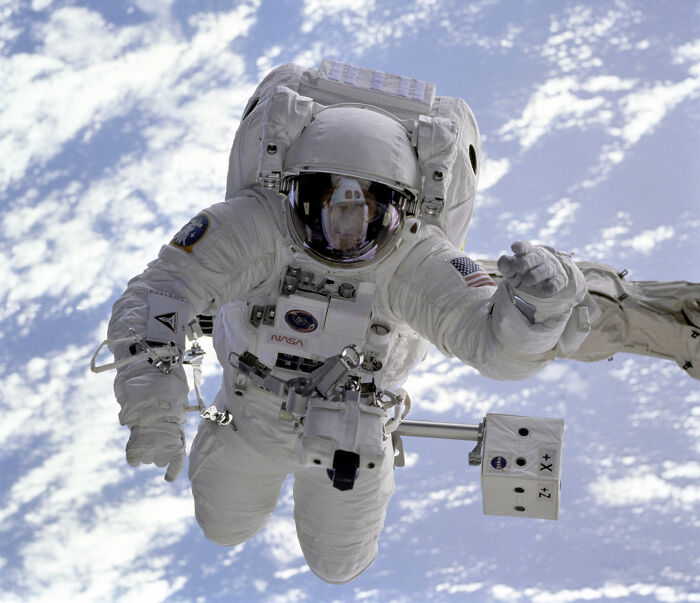
    152 Space Facts About Planets, Black Holes, And Everything In Between An estimated price of the spacesuit made in 1974 is between $15 and $22 million per unit.

    slashgear.com , Pixabay Report

    Thegoodboi
    Community Member
    Premium
    3 years ago Created by potrace 1.15, written by Peter Selinger 2001-2017

    That's roughly 29 million bananas! Sheesh

    ADVERTISEMENT
    #46

    Halley's Comet won’t orbit past Earth again until 2061.

    solarsystem.nasa.gov Report

    ADVERTISEMENT
    #47

    If two pieces of the same type of metal touch in space they will permanently bond.

    scientificliteracymatters.com Report

    Virgil Blue
    Community Member
    3 years ago Created by potrace 1.15, written by Peter Selinger 2001-2017

    Vacuum welding is quote a headache when designing satellites and space stations/ships. Gotta be careful not to make moving bits out of the same stuff.

    #48

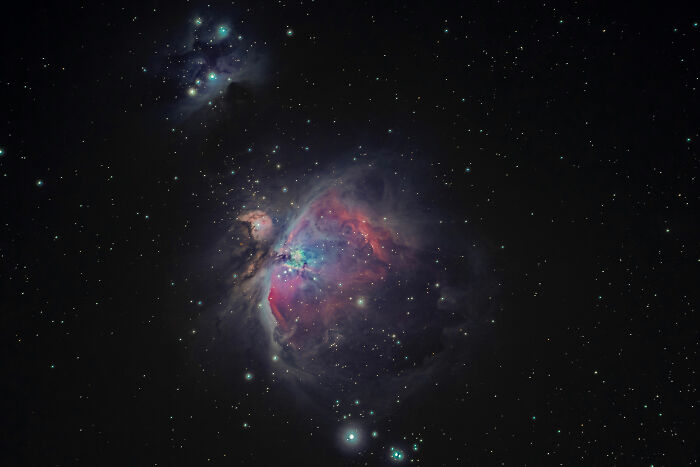
    Saturn's moon Titan has lakes, too. The liquid in Titan's lakes isn't water - it's a substance called methane.
    snexplores.org Report

    Robert T
    Community Member
    3 years ago Created by potrace 1.15, written by Peter Selinger 2001-2017

    Liquid methane. Methane boils at -162C. Don't expect to go for a swim.

    #49

    152 Space Facts About Planets, Black Holes, And Everything In Between The Moon is lemon-shaped.

    space.com , samer daboul Report

    Robert T
    Community Member
    3 years ago Created by potrace 1.15, written by Peter Selinger 2001-2017

    Or are lemons moon-shaped?

    Thegoodboi
    Community Member
    Premium
    3 years ago Created by potrace 1.15, written by Peter Selinger 2001-2017

    I supposed the moon was there first sooo. I would say yes to your question.

    Load More Replies...
    Alexandria Z
    Community Member
    3 years ago Created by potrace 1.15, written by Peter Selinger 2001-2017

    Soooo, I can make lemonade with the moon and sell it to space travelers ?

    ADVERTISEMENT
    #50

    The Sun loses a billion kilos per second.

    slate.com Report

    harpling
    Community Member
    3 years ago Created by potrace 1.15, written by Peter Selinger 2001-2017

    I bet it's doing keto, maybe some intermittent fasting.

    ADVERTISEMENT
    #51

    The Sun makes a full rotation once every 25 – 35 days.

    soho.nascom.nasa.gov Report

    setsuriseikou
    Community Member
    3 years ago Created by potrace 1.15, written by Peter Selinger 2001-2017

    Oh, so it rotates, just like the planets? Have never thought about it.

    #52

    We always see the same side of the Moon, no matter where we stand on Earth.

    discovermagazine.com Report

    ADVERTISEMENT
    #54

    All planets in the solar system have been visited by uncrewed spacecraft.

    solarsystem.nasa.gov Report

    Virgil Blue
    Community Member
    3 years ago Created by potrace 1.15, written by Peter Selinger 2001-2017

    Kind of depends on how you define visited, but we did fly relatively close to them at least.

    ADVERTISEMENT
    #55

    152 Space Facts About Planets, Black Holes, And Everything In Between Planets can wander through space without a parent star.

    earthsky.org , Bryan Goff Report

    Virgil Blue
    Community Member
    3 years ago Created by potrace 1.15, written by Peter Selinger 2001-2017

    Rogue planets. Theories go that at least one of our orbitals is a captured rogue one and maybe another crashed into early earth with part of it and earth eventually becoming the moon.

    #56

    Because of its unique tilt, a season on Uranus is equivalent to 21 Earth years.

    nasa.gov Report

    Headless Roach
    Community Member
    3 years ago Created by potrace 1.15, written by Peter Selinger 2001-2017

    So winter lasting 21 years straight? Thank you but no.

    #57

    In 2016, scientists detected a radio signal from a source 5 billion light-years away.

    sciencealert.com Report

    Steve Robert
    Community Member
    3 years ago Created by potrace 1.15, written by Peter Selinger 2001-2017

    It was a Kids For Cars commercial

    ADVERTISEMENT
    #58

    Astronauts can’t burp in space.

    qz.com Report

    Aww but Eww
    Community Member
    3 years ago Created by potrace 1.15, written by Peter Selinger 2001-2017

    What? How? Why? What happens if they do? Do they explode? I need more info!

    ADVERTISEMENT
    #59

    152 Space Facts About Planets, Black Holes, And Everything In Between There’s a gas cloud in the constellation of Aquila that holds enough alcohol to make 400 trillion trillion pints of beer.

    nrao.edu , WikiImages Report

    Thegoodboi
    Community Member
    Premium
    3 years ago Created by potrace 1.15, written by Peter Selinger 2001-2017

    Just sprinkle us alcoholics in there please.

    Robert T
    Community Member
    3 years ago Created by potrace 1.15, written by Peter Selinger 2001-2017

    Except that that is not how beer is made.

    #60

    You have to travel at least 11.2 km per second to escape the Earth's gravity.

    letstalkscience.ca Report

    #61

    You wouldn’t be able to walk on Jupiter, Saturn, Uranus or Neptune because they have no solid surface!

    jpl.nasa.gov Report

    Robert T
    Community Member
    3 years ago Created by potrace 1.15, written by Peter Selinger 2001-2017

    Hence why they are called The Gas Giants.

    der sebbl
    Community Member
    3 years ago Created by potrace 1.15, written by Peter Selinger 2001-2017

    Isn't this common knowledge?

    Maik
    Community Member
    3 years ago Created by potrace 1.15, written by Peter Selinger 2001-2017

    Nope. Most people believe all planets are solid bodies. Knowledge is still a privilege.

    Load More Replies...
    ADVERTISEMENT
    ADVERTISEMENT
    #62

    If you could fly a plane to Pluto, the trip would take more than 800 years.

    natgeokids.com Report

    Jaaawn
    Community Member
    3 years ago Created by potrace 1.15, written by Peter Selinger 2001-2017

    800 years of a child crying and kicking the back of your seat too.

    #63

    152 Space Facts About Planets, Black Holes, And Everything In Between Uranus orbits the Sun on its side.

    solarsystem.nasa.gov , Planet Volumes Report

    Ploploplop
    Community Member
    3 years ago

    This comment is hidden. Click here to view.

    My what does what now?

    #64

    Enceladus, Saturn’s Moon, is the most reflective body in the solar system.

    solarsystem.nasa.gov Report

    XenoMurph
    Community Member
    3 years ago Created by potrace 1.15, written by Peter Selinger 2001-2017

    You've never been to an Irish beach then.

    #65

    Jupiter's moon Io has towering volcanic eruptions.

    nasa.gov Report

    ADVERTISEMENT
    ADVERTISEMENT
    #66

    There are mountains on Pluto.

    nasa.gov Report

    #67

    152 Space Facts About Planets, Black Holes, And Everything In Between Saturn has a hexagonal-shaped storm.

    pnas.org , 18796645 Report

    Virgil Blue
    Community Member
    3 years ago Created by potrace 1.15, written by Peter Selinger 2001-2017

    With little hexagonal storms at each of its points. Looks like an alien array from a movie.

    #68

    One teaspoonful of neutron star would weigh the same as the Mount Everest.

    astronomy.com Report

    XenoMurph
    Community Member
    3 years ago Created by potrace 1.15, written by Peter Selinger 2001-2017

    I always wondered about the attraction of Donald Trump, turns out it's gravity.

    Load More Replies...
    #69

    The Moon is getting farther away every year.

    solarsystem.nasa.gov Report

    setsuriseikou
    Community Member
    3 years ago Created by potrace 1.15, written by Peter Selinger 2001-2017

    So loving to the Moon and back also means that the feeling is only getting deeper?

    ADVERTISEMENT
    ADVERTISEMENT
    #70

    Outer Space is only 62 vertical miles (100 km) away.

    jpl.nasa.gov Report

    #71

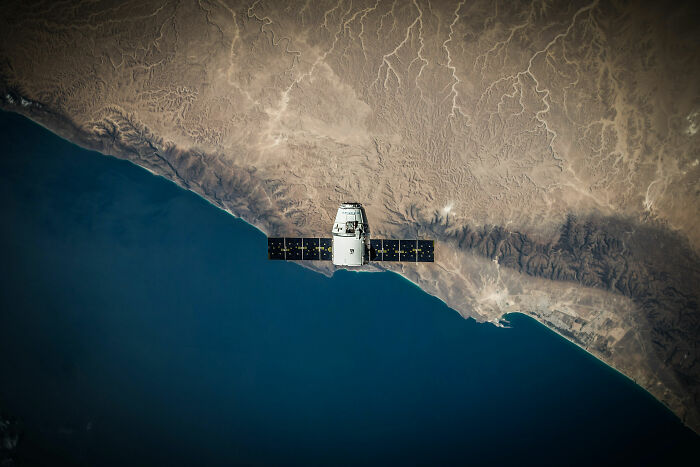
    152 Space Facts About Planets, Black Holes, And Everything In Between The International Space Station circles Earth every 90 minutes.

    nasa.gov , SpaceX Report

    #72

    Stars twinkle because of the way light is disrupted as it passes through Earth’s atmosphere.

    earthsky.org Report

    #73

    Asteroids are the byproducts of formations in the solar system, more than 4 billion years ago.

    solarsystem.nasa.gov Report

    ADVERTISEMENT
    ADVERTISEMENT
    #74

    Gennady Padalka has spent more time in space than anyone else - 879 days.

    nationalgeographic.com Report

    #75

    Mercury has no atmosphere, which means there is no wind or weather.

    weather.gov Report

    Stevo
    Community Member
    3 years ago Created by potrace 1.15, written by Peter Selinger 2001-2017

    That is not technically true. Mercury has a thin atmosphere composed of 42% oxygen, 29% sodium, 22% hydrogen, 6% helium, and 0.5% potassium at 1 nPa of pressure.

    #76

    152 Space Facts About Planets, Black Holes, And Everything In Between Red Dwarf stars that are low in mass can burn continually for up to 10 trillion years.

    space.com , Daniel Cid Report

    #77

    Buzz Lightyear from Toy Story has actually been to outer space!

    space.com Report

    Pedantic Panda
    Community Member
    3 years ago Created by potrace 1.15, written by Peter Selinger 2001-2017

    And Sean the sheep is going to go as well!

    ADVERTISEMENT
    ADVERTISEMENT
    See Also on Bored Panda
    #78

    There are rogue planets that have been knocked out of orbit just chilling out in the universe, and they could do the same to another planet.

    discovermagazine.com Report

    Virgil Blue
    Community Member
    3 years ago Created by potrace 1.15, written by Peter Selinger 2001-2017

    Giants like Jupiter can swallow them or even brake and bend their trajectory so much they can settle as a moon or planet.
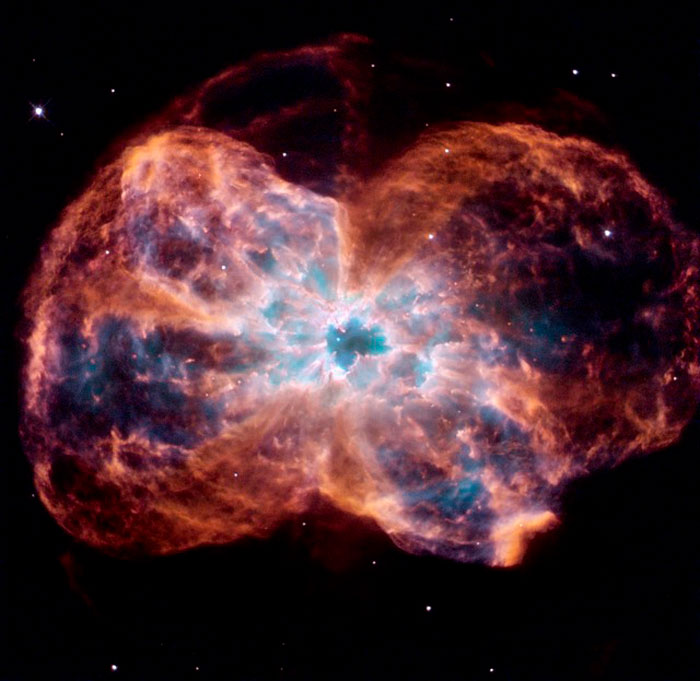
    #79

    Saturn's rings sort of vanish every now and then.

    science.nasa.gov Report

    K W
    Community Member
    3 years ago Created by potrace 1.15, written by Peter Selinger 2001-2017

    Probably takes them off while doing dishes

    #80

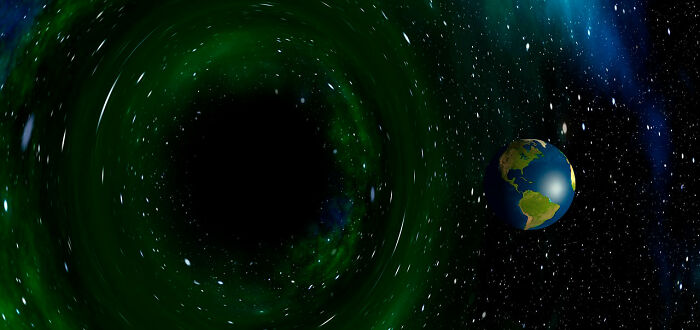
    152 Space Facts About Planets, Black Holes, And Everything In Between If you fell into a black hole, you'd get stretched out like spaghetti.

    newsweek.com , geralt Report

    ADVERTISEMENT
    See Also on Bored Panda
    #81

    The dead skin of your feet peels off in Space.

    theatlantic.com Report

    Thegoodboi
    Community Member
    Premium
    3 years ago Created by potrace 1.15, written by Peter Selinger 2001-2017

    Oooo don't have to pay the nice lady to power sand my feet!

    ADVERTISEMENT
    See Also on Bored Panda
    #82

    VY Canis Majoris is the biggest star in the universe - about 2000 times the diameter of our Sun.

    herscheltelescope.org.uk Report

    #83

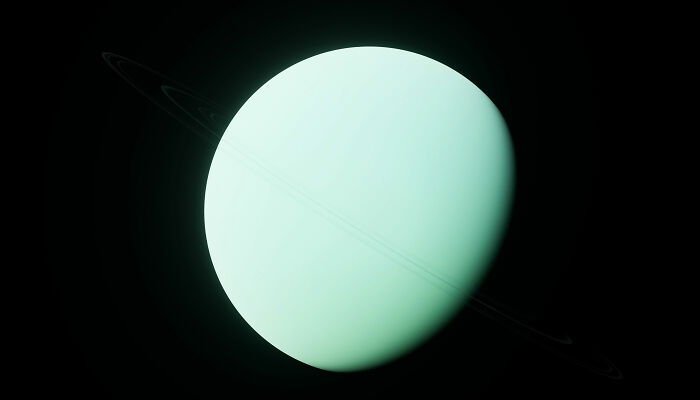
    Space junk is any human-made object orbiting Earth that no longer serves a useful purpose. Scientists estimate there are about 500,000 pieces of space junk today, including fragments from rockets and satellites, and everyday items like spanners dropped during construction of the International Space Station.
    nationalgeographic.com Report

    ADVERTISEMENT
    See Also on Bored Panda
    #84

    The hottest planet is our Solar System is Venus reaching 867°F (464°C).

    solarsystem.nasa.gov Report

    #85

    152 Space Facts About Planets, Black Holes, And Everything In Between NASA has recorded eerie space "sounds."

    nasa.gov , Katie Lyke Report

    ADVERTISEMENT
    See Also on Bored Panda
    #86

    You would last about 15 seconds in space without a spacesuit.

    livescience.com Report

    harpling
    Community Member
    3 years ago Created by potrace 1.15, written by Peter Selinger 2001-2017

    Better hope there's spaceship with an Infinite Improbability Drive somewhere in the vicinity.

    Thegoodboi
    Community Member
    Premium
    3 years ago Created by potrace 1.15, written by Peter Selinger 2001-2017

    It'd probably a painful as hell 15 seconds. Water gets ripped out of your body, blood boils..I think there's more..

    setsuriseikou
    Community Member
    3 years ago Created by potrace 1.15, written by Peter Selinger 2001-2017

    That's okay with me. Not like I'd really enjoy the experience anyway.

    ADVERTISEMENT
    See Also on Bored Panda
    #87

    Neutron stars can spin 600 times per second.

    astronomy.swin.edu.au Report

    #88

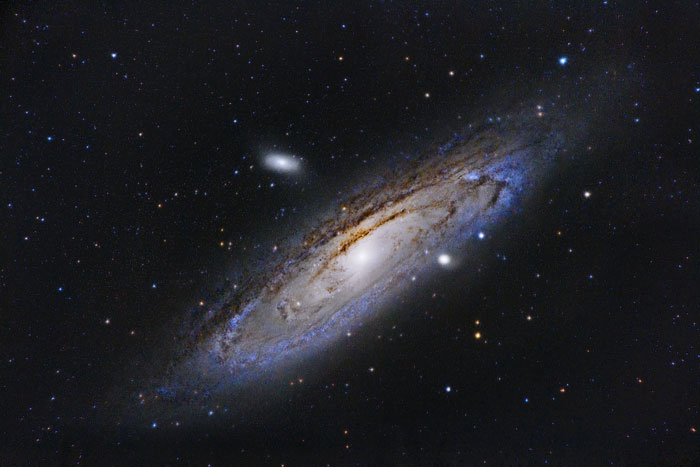
    In 3.75 billion years the Milky Way and Andromeda galaxies will collide.

    nationalgeographic.com Report

    ADVERTISEMENT
    See Also on Bored Panda
    #90

    The gas giant Jupiter is a failed star.

    scientificamerican.com Report

    ADVERTISEMENT
    #91

    Pluto and Charon could be a double dwarf planet system.

    solarsystem.nasa.gov Report

    #92

    More than 600 human beings have now been to space.

    nytimes.com Report

    #93

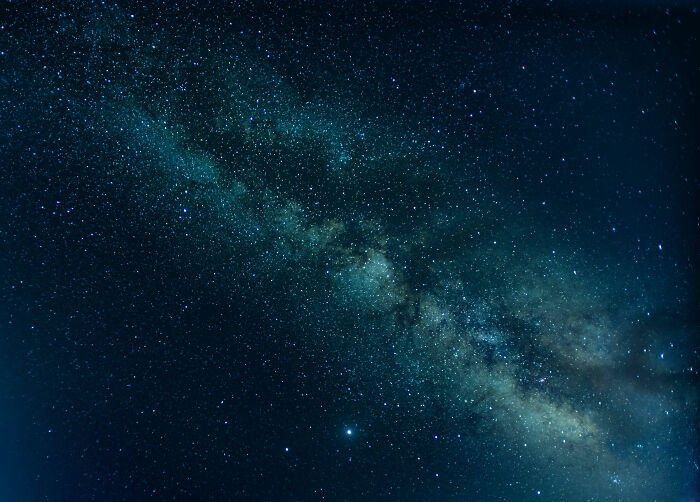
    The solar atmosphere is 300 times hotter than the Sun's surface - up to more than a million degrees.
    nasa.gov Report

    ADVERTISEMENT
    #94

    152 Space Facts About Planets, Black Holes, And Everything In Between Clouds at the center of the Milky Way smell of rum, taste of raspberries and are packed with booze.

    iflscience.com , iopscience.iop.org Report

    harpling
    Community Member
    3 years ago Created by potrace 1.15, written by Peter Selinger 2001-2017

    I thought the Milky Way tastes of caramel and nougat

    K W
    Community Member
    3 years ago Created by potrace 1.15, written by Peter Selinger 2001-2017

    Rum raspberry actually sounds better

    Load More Replies...
    ADVERTISEMENT
    #95

    There is gravity on the ISS.

    nasa.gov Report

    #96

    Mercury is the fastest planet in our solar system.

    solarsystem.nasa.gov Report

    #97

    If a star passes too close to a black hole, it can be torn apart.

    slashgear.com Report

    ADVERTISEMENT
    #98

    152 Space Facts About Planets, Black Holes, And Everything In Between A day in Mars is only 40 minutes longer than a day on Earth.

    rmg.co.uk , WikiImages Report

    Headless Roach
    Community Member
    3 years ago Created by potrace 1.15, written by Peter Selinger 2001-2017

    You say “only”, I say “an amazing 40 minutes of extra sleep”. We are not the same.

    Oerff On Tour
    Community Member
    3 years ago Created by potrace 1.15, written by Peter Selinger 2001-2017

    But it's gonna screw up the biological clock of the first people on Mars. Permanent jetlag

    ADVERTISEMENT
    #99

    In our solar system that are 4 planets known as gas giants: Jupiter, Saturn, Uranus and Neptune.

    lpi.usra.edu Report

    Maik
    Community Member
    3 years ago Created by potrace 1.15, written by Peter Selinger 2001-2017

    Uranus is very gassy, indeed

    #100

    Neptune’s moon, Triton, orbits the planet backwards.

    solarsystem.nasa.gov Report

    Virgil Blue
    Community Member
    3 years ago Created by potrace 1.15, written by Peter Selinger 2001-2017

    There are suggestions thst because its orbit is inverted it may have been lost by its original planet (maybe Jupiter) and was captured by Neptune's gravity iirc.

    #101

    Light travels from the Sun to the Earth in less than 10 minutes.

    image.gsfc.nasa.gov Report

    ADVERTISEMENT
    #102

    Spacesuit helmets have a Velcro patch, to help astronauts itch.

    cosi.org Report

    ADVERTISEMENT
    #103

    Usain Bolt's speed would actually allow him to fly like a bird on one of Saturn’s moons while wearing a wingsuit.

    sciencedaily.com Report

    #104

    152 Space Facts About Planets, Black Holes, And Everything In Between There's an asteroid called Chariklo in our solar system that has rings, like Saturn.

    eso.org , Paris_Saliveros Report

    #105

    The closest known black hole is just 1500 light years away from Earth.

    newscientist.com Report

    ADVERTISEMENT
    #106

    The highest mountain known to man is on an asteroid called Vesta. Measuring a whopping 22km in height, it is three times as tall as Mount Everest!

    space.com Report

    ADVERTISEMENT
    #107

    Space is completely silent, because there is no air in space – it is a vacuum.

    esa.int Report

    Mystery Kitteh
    Community Member
    1 year ago Created by potrace 1.15, written by Peter Selinger 2001-2017

    Aren't there recordings of planets sounds?

    #108

    In the darkest parts of space, temperatures can reach -454°F. But if you're orbiting near Earth in the sunlight, space is a toasty 250°F.

    science.nasa.gov Report

    #109

    152 Space Facts About Planets, Black Holes, And Everything In Between Space is vacuum but it's an imperfect vacuum because it contains a low density of particles like clouds of interstellar dust, space plasma, and cosmic rays.

    qrg.northwestern.edu , Luminas_Art Report

    ADVERTISEMENT
    ADVERTISEMENT
    #110

    There are probably more than 1,000,000,000,000,000,000,000,000 (1 septillion) stars in the universe.

    esa.int Report

    #111

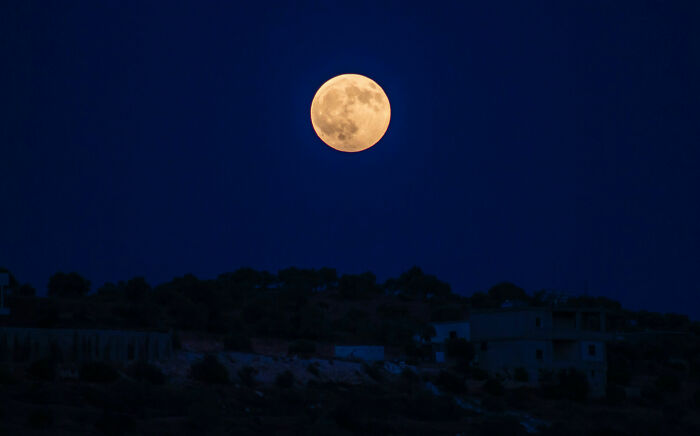
    The Moon was once a piece of the Earth.

    nhm.ac.uk Report

    Got Banned But Now I'm Back
    Community Member
    3 years ago (edited) Created by potrace 1.15, written by Peter Selinger 2001-2017

    THEORIES: The Fission Theory: This theory proposes that the Moon was once part of the Earth and somehow separated from the Earth early in the history of the solar system. The present Pacific Ocean basin is the most popular site for the part of the Earth from which the Moon came. This theory was thought possible since the Moon's composition resembles that of the Earth's mantle and a rapidly spinning Earth could have cast off the Moon from its outer layers. However, the present-day Earth-Moon system should contain "fossil evidence" of this rapid spin and it does not. Also, this hypothesis does not have a natural explanation for the extra baking the lunar material has received. The Capture Theory: This theory proposes that the Moon was formed somewhere else in the solar system, and was later captured by the gravitational field of the Earth. The Moon's different chemical composition could be explained if it formed elsewhere in the solar system, however, capture into the Moon's present orbit is very improbable. Something would have to slow it down by just the right amount at just the right time, and scientists are reluctant to believe in such "fine tuning". Also, this hypothesis does not have a natural explanation for the extra baking the lunar material has received. The Condensation Theory: This theory proposes that the Moon and the Earth condensed individually from the nebula that formed the solar system, with the Moon formed in orbit around the Earth. However, if the Moon formed in the vicinity of the Earth it should have nearly the same composition. Specifically, it should possess a significant iron core, and it does not. Also, this hypothesis does not have a natural explanation for the extra baking the lunar material has received.

    Got Banned But Now I'm Back
    Community Member
    3 years ago Created by potrace 1.15, written by Peter Selinger 2001-2017

    But this is the most accepted theory: The Giant Impactor Theory (sometimes called The Ejected Ring Theory): This theory proposes that a planetesimal (or small planet) the size of Mars struck the Earth just after the formation of the solar system, ejecting large volumes of heated material from the outer layers of both objects. A disk of orbiting material was formed, and this matter eventually stuck together to form the Moon in orbit around the Earth. This theory can explain why the Moon is made mostly of rock and how the rock was excessively heated. Furthermore, we see evidence in many places in the solar system that such collisions were common late in the formative stages of the solar system. This theory is discussed further below.

    Load More Replies...
    Kathryn Burnett
    Community Member
    3 years ago Created by potrace 1.15, written by Peter Selinger 2001-2017

    Holy s**t we just got hit with another ball of flaming rocks. And it kind of made a mess, which is now the moon.

    #112

    Mercury and Venus are the only planets with no moons.

    image.gsfc.nasa.gov Report

    #113

    Pluto is now classified as a dwarf planet, not a planet.

    solarsystem.nasa.gov Report

    ADVERTISEMENT
    ADVERTISEMENT
    #114

    The Sun will engulf Earth 5 billion years from now.

    scientificamerican.com Report

    Steve Robert
    Community Member
    3 years ago Created by potrace 1.15, written by Peter Selinger 2001-2017

    By then, your car warranty will have expired

    #115

    152 Space Facts About Planets, Black Holes, And Everything In Between Galaxies are either elliptical, spiral, or irregular.

    nasa.gov , Arnaud Mariat Report

    #116

    Most galaxies have a central black hole.

    nasa.gov Report

    #117

    A rose was brought to space in 1998.

    nasa.gov Report

    ADVERTISEMENT
    ADVERTISEMENT
    #118

    Shooting stars are space debris that burn up when they enter Earth’s atmosphere.

    solarsystem.nasa.gov Report

    #119

    152 Space Facts About Planets, Black Holes, And Everything In Between We often see astronauts in white spacesuits, but there are orange spacesuits too - it stands out against the ocean or the sky.

    livescience.com , Cash Macanaya Report

    #120

    One Mercury day lasts exactly two Mercury years.

    eso.org Report

    #121

    If your spacesuit started leaking, you could survive for a couple of minutes.

    scientificamerican.com Report

    ADVERTISEMENT
    ADVERTISEMENT
    #122

    Black holes have theoretical opposites known as white holes.

    space.com Report

    Linus Bourque
    Community Member
    3 years ago Created by potrace 1.15, written by Peter Selinger 2001-2017

    This one intrigued me enough to look: https://en.wikipedia.org/wiki/White_hole
    Himiko
    Community Member
    3 years ago Created by potrace 1.15, written by Peter Selinger 2001-2017

    What if a white hole is the other side of a black hole?

    #123

    Most Sun-like stars in our galaxy are in multiple star systems.

    spaceplace.nasa.gov Report

    #124

    152 Space Facts About Planets, Black Holes, And Everything In Between Our days are getting longer - but scientists don't know why.

    sciencealert.com , jonathan emili Report

    #125

    More than 1,300 Earths would fit into Jupiter’s vast sphere.

    nasa.gov Report

    ADVERTISEMENT
    ADVERTISEMENT
    #126

    Mars has about one-third the gravity of Earth.

    nasa.gov Report

    #127

    Valles Marineris is not just the largest canyon on Mars, but at 4000 km long, 200 km wide and 10 km deep it is the largest in the entire Solar System.

    science.nasa.gov Report

    #128

    The Whirlpool Galaxy (M51) was the first celestial object identified as being spiral.

    nasa.gov Report

    #129

    152 Space Facts About Planets, Black Holes, And Everything In Between The Milky Way galaxy is 105,700 light-years wide.

    starwalk.space , Denis Degioanni Report

    ADVERTISEMENT
    ADVERTISEMENT
    #130

    Earth is the only planet not named after a God.

    universetoday.com Report

    #131

    Only 5% of the universe is visible from Earth.

    nationalgeographic.com Report

    #132

    Uranus was originally called "Georgium Sidus" or “George’s Star”.

    starchild.gsfc.nasa.gov Report

    Steve Robert
    Community Member
    3 years ago Created by potrace 1.15, written by Peter Selinger 2001-2017

    Because of students snickering at its name, scientists have changed the name Uranus to Urectum

    #133

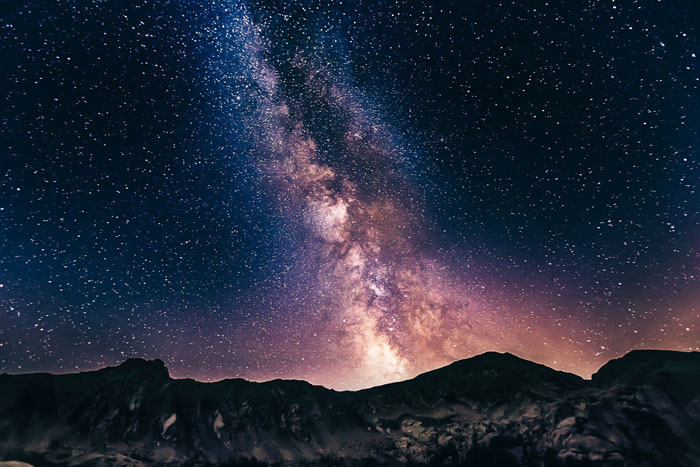
    152 Space Facts About Planets, Black Holes, And Everything In Between In China, the Milky Way is known as the “Silver River”

    amnh.org , Christian Lue Report

    ADVERTISEMENT
    ADVERTISEMENT
    #134

    There are 88 recognized star constellations in our night sky.

    starchild.gsfc.nasa.gov Report

    #135

    Falling space junk has a 10% chance of killing someone in the next decade.

    universetoday.com Report

    #136

    The biggest black hole is Monster Black Hole.

    space.com Report

    MedusaWasBeautiful
    Community Member
    3 years ago Created by potrace 1.15, written by Peter Selinger 2001-2017

    .....Not so. Ton 618 is the is the most massive black hole yet to be found.

    #137

    152 Space Facts About Planets, Black Holes, And Everything In Between Launching things into space is wildly expensive.

    secretsofuniverse.in , Leonel Fernandez Report

    ADVERTISEMENT
    ADVERTISEMENT
    #138

    There are five officially recognized dwarf planets in the solar system.

    turito.com Report

    Steve Robert
    Community Member
    3 years ago Created by potrace 1.15, written by Peter Selinger 2001-2017

    Is Snow White hiding the other two?

    #139

    Massive stars end their lives through supernova explosions.

    astronomy.ohio-state.edu Report

    #140

    The boundary of the solar system ends in a spherical cloud known as the Oort cloud.

    solarsystem.nasa.gov Report

    #141

    152 Space Facts About Planets, Black Holes, And Everything In Between Astronauts grow taller in space.

    spacecentre.co.uk , Brian McGowan Report

    ADVERTISEMENT
    ADVERTISEMENT
    #142

    The closest star system to us, Proxima Centauri, is 4.25 light-years away.
    imagine.gsfc.nasa.gov Report

    #143

    Other planets, and even a moon, have auroras too.

    spaceplace.nasa.gov Report

    #144

    Super-hurricane-force winds on Venus are getting stronger.

    sci.esa.int Report

    #145

    152 Space Facts About Planets, Black Holes, And Everything In Between Rings are a lot more common in the Solar System than we thought.

    iflscience.com , Yong Chuan Tan Report

    ADVERTISEMENT
    ADVERTISEMENT
    #146

    The universe is observed to be 13.8 billion years old and has been expanding since its formation in the Big Bang.

    starchild.gsfc.nasa.gov Report

    #147

    If Jupiter’s magnetic field were visible, it would appear bigger than the Moon.

    solarsystem.nasa.gov Report

    #148

    Neptune has only completed one orbit around the Sun since its discovery in 1846.

    solarsystem.nasa.gov Report

    #149

    152 Space Facts About Planets, Black Holes, And Everything In Between Heat from the Big Bang is still around today.

    space.com , eli007 Report

    ADVERTISEMENT
    ADVERTISEMENT
    #150

    Pluto’s largest moon, Charon, is half the size of Pluto.

    solarsystem.nasa.gov Report

    #151

    Mercury, Venus, Earth and Mars are known as the “Inner Planets”.

    starchild.gsfc.nasa.gov Report

    #152

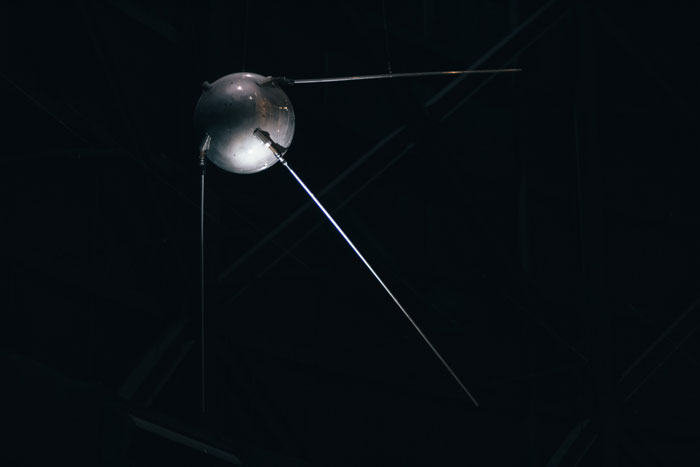
    152 Space Facts About Planets, Black Holes, And Everything In Between The first artificial satellite in space was called “Sputnik".

    education.nationalgeographic.org , Sean Foster Report

    setsuriseikou
    Community Member
    3 years ago Created by potrace 1.15, written by Peter Selinger 2001-2017

    A Russian word that means.... wait for it... "satellite"!


    ADVERTISEMENT