Get Premium
Dark mode theme is available exclusively for premium users. Learn more about the benefits of subscribing.
No fees, cancel anytime.

 Dark Mode Ad-Free Browsing Unlimited Content
 Ad-Free Browsing Unlimited Content Dark Mode
Join 1.2 million Panda readers who get the best art, memes, and fun stories every week!
Some abilities take years to master, but others can be picked up in just a few hours and still prove useful for the rest of your life.
So, Reddit user Michaelis999 asked people to share which ones made the biggest difference for them, and the answers range from practical know-how, like basic household repairs, to social abilities such as active listening.
It’s better to have a skill and not need it than to need it and not have it.
This post may include affiliate links.
 Learning where your water main shutoff valve is for your house.

When I lived in California we had ceiling sprinkler system, I worked ~2hrs away and pretty unreachable. Direct TV was installing their equipment and when running the lines the tech slipped and broken a fire main. Neither him or my ex knew how to shut off the water at the main or the fire valves inthe garage on the wall fully visible. Lucked out the first guy to show up ripped all the carpet out because if insurance showed up first they would try and dry it. So DTV got me all new floors and repainted walls that needed to be cut open to dry out.
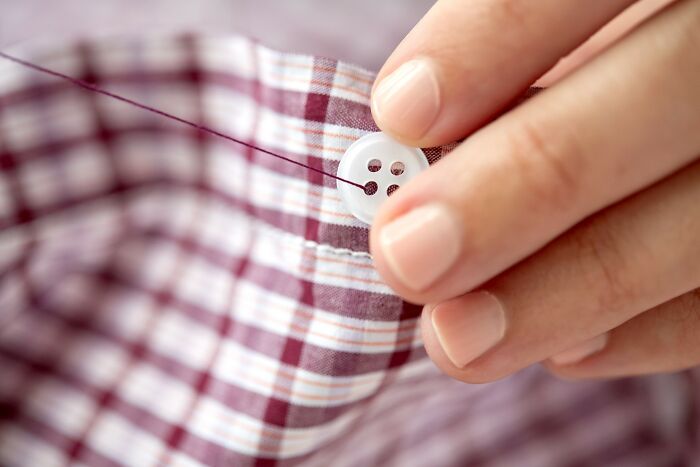 Learning how to sew on a button, and basic mending stitches.

You'll be a hero at University, nobody else will know how this magic is conjured ;-)
 Learning the shortcuts for software you use daily. I basically force the juniors to start using shortcuts it always pays off in the end (software engineer). But this goes for everyone, designers in Photoshop, people using spreadsheets, if you use it daily, put in a bit of time to learn how to be efficient.
 Cooking basic stuff like broiled chicken, meatballs, pasta, etc
so easy to save a lot of money but people are lazy af.
 Microsoft Excel. If you know basic math and calculating then you can do amazing things.
 Learn how to swim. It can save your life.
It shocks me how many people accidentally fall into water and drown because they don't know how to swim. You can easily learn the basics and enough to keep yourself alive in 10 hours.
Crazy as it might sound we had small boat crews that could only do their job while deployed because they never passed basic swimming and the qualification could be waived while deployed as a class two rescue swimmer when in port doing security patrols I had to lead the boat teams.
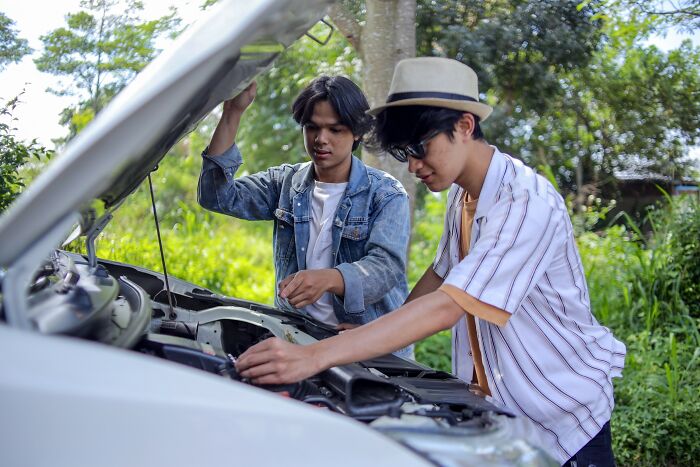 Probably simple car stuff. Changing a tire, battery cables, jump starting etc etc... You would be surprised how many people can't do those things and how often those are your most common problems!

Buying a jump pack is 10 times better than cables. They run $50 or less and you can jump start your car when no one else is there.
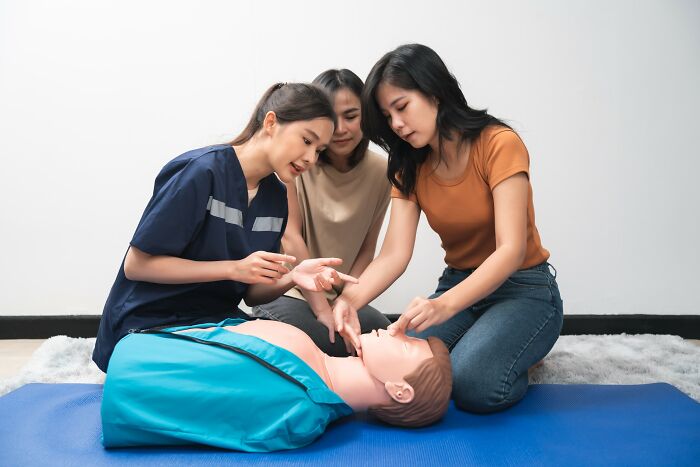 1. CPR training 2. Fire extinguisher training 3. Swimming/floating.

P.A.S.S. Everyone know what that stands for? Point. Aim. Squeeze. Sweep.
 Some basic civics. Understanding how your government actually works and is structured will save you alot of frustration and anger. It might even save you from going down dangerous roads with your ideas.
There are usually pretty good reasons why things work the way they do, even though things might seem slow and inefficient at times.
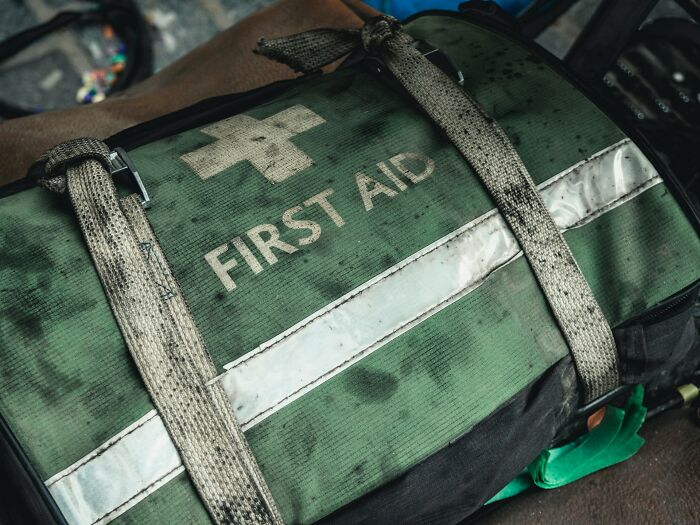 First Aid. There are plenty of options to learn and imo should be refreshed once a year if possible because some stuff changes.
 I'd say spending 10 hours learning how your computer works will pay off forever. So many people are unaware how their machines work.

Whan I was doing PC support, after telling someone to turn off their computer - and realizing they turned off the monitor. So many people have no clue about how the pieces that make up a computer interact with each other.
 Questioning EVERYTHING
Whenever you need to make a decision, spend a few minutes playing "Devils Advocate" with yourself. Especially if it's something trivial or a "no brainer"
Make it a fun yet challenging game of Who/What/When/Where/How/Why against your alter ego.
You'll learn an absolute ton about your good and bad qualities, your habits, thought processes, etc. You'll also naturally learn how to phrase questions/opposing views as inquisitive, instead of abbrasive or combative.
That kind of honest and earnest self reflection will eventually affect absolutely everything in your life.
Most of my greatest lifestyle changes came from questioning things that I otherwise would've never given a second thought.
On the other side of things: Constantly questioning how/why everyday objects work, will give you an extremely well rounded foundation of transferrable/relatable knowledge. If you can't work it out on your own, google it.
If you ever find yourself in a conversation about something you haven't explored, use the opportunity to apply the same line of questions you debate yourself with. People love it when someone is open and curious about something they're passionate about.
Eventually you'll be able to relate to anyone or anything, at any time. Conversations become deeper and meaningful, your connection to people becomes stronger, and sometimes you come across hidden passions.
 Basic finance literacy stuff such as budgeting, mortgages, negotiations, taxes, investing etc.
I'd argue that just by knowing and understanding these, one can improve his/her quality of life significantly.
Investing I'm scared about. I learned about it in Consumer Math in HS. The biggest take I got from it is there are low, mid, to high risk ways to invest money. The stock market is high risk. If investing in something that has a risk there's a chance to lose your money, only invest what you can sleep on. Meaning, what you can afford to lose without dire consequences. But the alluring part of high risk investments is there's a chance for a higher return (I hope I'm using the right term.). So people tend to go with the higher risk investment strategy rather than the low risk, with lower profit margins. From stories I've heard, you need to find someone very knowledgeable and trustworthy, which is a gamble no matter what. To invest in other places, like shareholders, there's still risk. There's perks. But there's also the hit to your ethical values when the all the shareholders agree to cut a company's expenditures on labour just to make more of a profit.
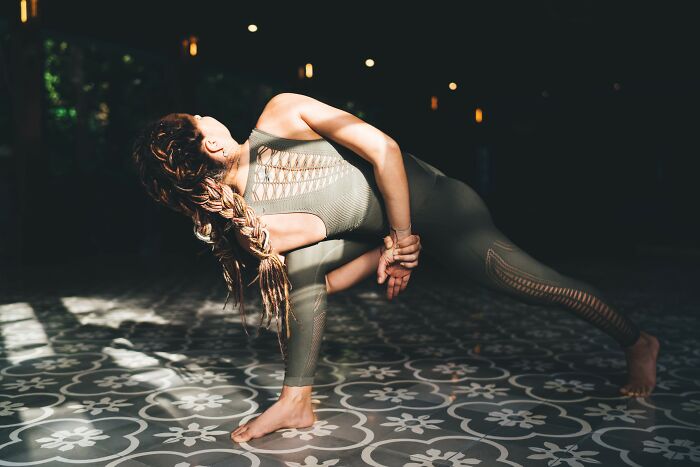 How to stretch your body specifically.
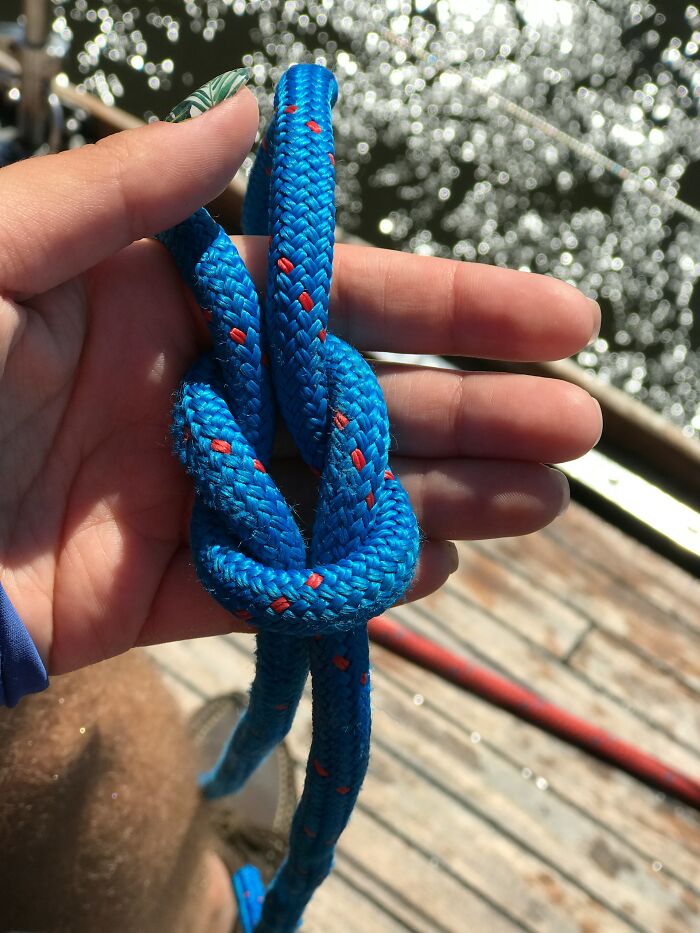 Tying proper knots depending on the application.
At lest learn the bowline - it's the second-best knot for anything! You can tie two ropes together with two bowlines, for instance
 I’d say learning how to communicate clearly - especially writing short, structured emails/messages. It doesn’t take long to practice, but clear communication makes you stand out at work, saves endless misunderstandings, and builds respect. It’s underrated because it feels obvious, but it really pays dividends for life.
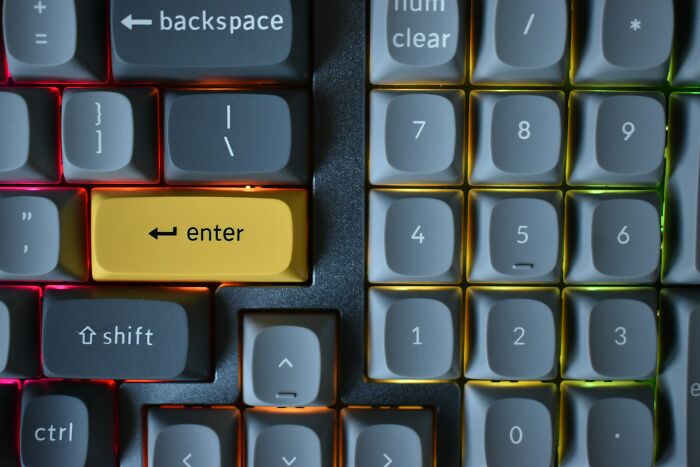 Learn to type numbers without looking. I got twice as fast in about an hour. Plenty of online tutorials. .
It's weird knowing where all the letters and numbers are without even thinking about it. It becomes muscle memory, I guess.
 Basic sign language.
Whenever I meet a deaf customer they're always so happy that I know it. Especially because I wear a mask most of the time.

here is a missed opportunity: sign language could be the same in every country
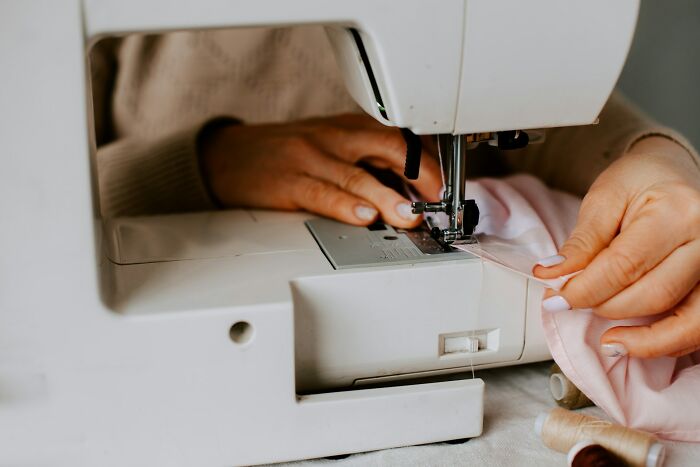 Learning a sewing machine, it takes a while to figure out proper tension. However, once you’re over that hump, you’ll be able to fix your own clothes, make gifts, curtains, blankets, clothes, costumes, the world is your oyster.
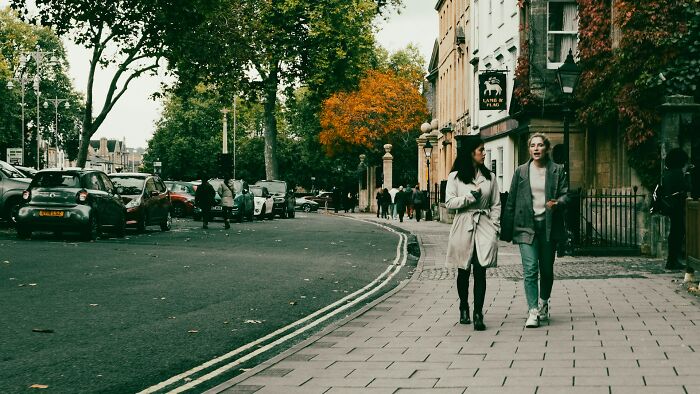 Small talk. It’s not everyone’s cup of tea but you never know who you’ll meet or what they know. When I first moved overseas i had a small talk w some dude and he told me all the roads to avoid at night, how to use contactless payments, bus routes and which shop has the cheapest and best kebabs.

Alternatively, small talks can be used for dating. Something to fill the gaps and avoid awkward silence.
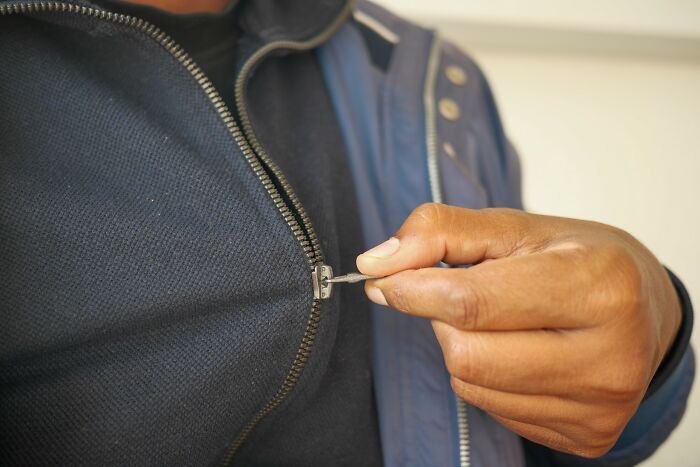 Zipper repair:
Most tents and sleeping bags at festivals only are discarded because of slightly buggy zips.
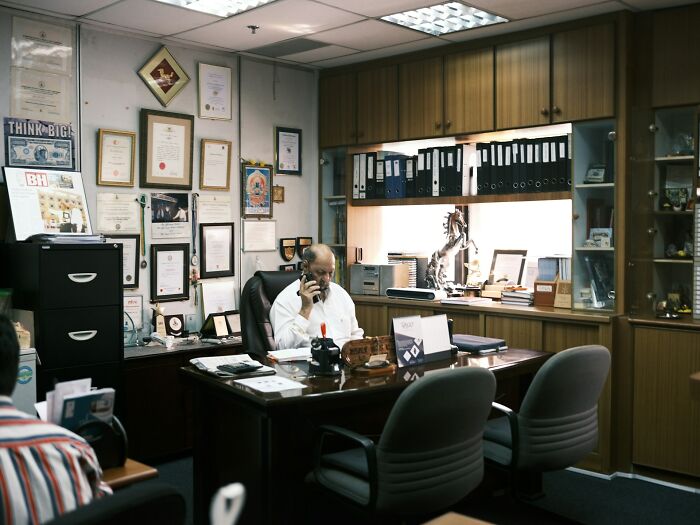 If you run a business I’d say calling people back.
I live in a province where the one who calls me back gets the contract
 Touch typing is a crucial skill that you can master in under 10 hours, delivering lifelong benefits. It boosts productivity, reduces strain, and sharpens focus across all professions. By typing faster, you’ll save valuable time every day, adding up to thousands of hours over the years. Invest in this skill now for lasting advantages!
True touch typing isn't something you're going to master in 10 hours.
 Learning to speak without saying um, uh and so on. It will make you sound way more confident and well spoken, even if the content of what you're saying has not improved.
 Basic hygiene and fashion
Maybe sounds unnecessary (primarily the fashion part) but looking nice can help out a lot in surprising ways. It doesn't have to be anything crazy either, but learning basic fashion and color matching can help you look more appealing with near any level of budget. Even if it's just subconscious, nice matching colors and good hygiene helps how others see you. Plus the mental boost of looking nice and feeling clean is good.
Hygiene because being clean helps cover some mental and physical health issues before they even come up (I.E. healthy body and better self esteem).

A wardrobe that works together in style and color saves time and looks like you have your marbles together even if you don't. Dressing stylishly with your own personal touch is quite affordable with used clothes, which means you can get really high-quality pieces. I have conducted a few social experiments as a writer on how dressing affects the treatment and service you receive. The most infuriating thing was when the doctor claimed that I couldn't possibly be depressed because I was neatly dressed and had clean hair, even though that is the absolute minimum for me to cope. I also said that and also how a professional can form such an opinion in ten minutes.
 Biking.
Best learn while you're young, with less distance to fall and bendier bones, I agree
 How to lift heavy s**t safely. Don't lift with your back! Use your arms and legs, they're stronger, a lot less susceptible to injury, and easier to fix.
 Tying a tie
Learning the NATO alphabet.
The NATO alphabet? Like, Alpha, Bravo, Charlie, Delta, Echo, etc? We called it the International Phonetic Alphabet.
 Bodyweight Exercises and Stretching
If able, with 30 minutes every other day at least, a consistent bodyweight workout will make later life much easier, promote better body health habits all around, and it’s free fitness.

To play chess, dominoes or mahjong, and a few card games like poker, rummy, bridge, etc.
You won’t play very well, but you can then join a game without being totally lost. There are a lot of games people never play just because they’ve never played them.
Manual transmission (if you want to drive in europe).

Here in Japan you have to test for a MT license. I got mine, but now I can't find a MT vehicle that doesn't cost an arm and leg XD
Filing your taxes.

Learn from Sweden, they will [tell] you how much (if you have no changes).
 For western folks, learning to use chopsticks well.

I can use chopsticks with either hand, which makes everybody mad for some reason.
How to floss.
Never used to, until the dentist provided me with a 5 pack of floss picks. Those things are great, buy them by the 100 ct now.!
 Learning how to properly filet a chicken/fish. It takes a few attempts to "nail" it, but once you learn the trick, and it really takes less than 10 hours, it becomes a massive money saver in the long run when preparing food at home.
Chicken especially, as most of the cost revolving around it has to do with the "service" of cutting and filleting. Once you learn that yourself, you spare a hefty amount of money, and get yourself a nice amount of food for a lot more days than just buying pre-cut stuff.
Also, not that time consuming. Takes about 10 mins for chicken, even less so for a fish.
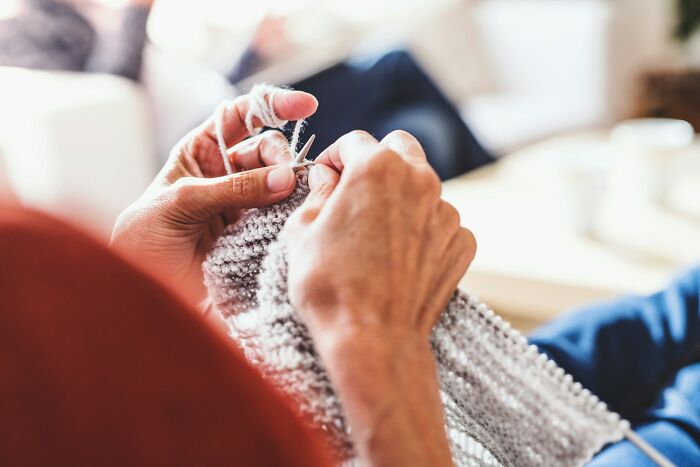 Knitting. Not only do you get to make your own clothing and accessories, it’s a de-stressor as well!
10 sec version of your question.
Ctrl+backspace deletes the entire previous word.
Percentages are reversible, 8% of 25 is the same as 25% of 8, but one is much easier.

In Windows: Ctrl+Backspace deletes to the left from the cursor to the beginning of the word. Ctrl+Del deletes to the right from the cursor to the beginning of the next word.
Use your mouse left handed. It takes maybe 30 minutes and will save you from wrist pain for your entire life if you use the computer a lot.
This is one of the few things where a left-hander wins. Many mice are designed for right-handed people, so the side buttons force me to use the mouse with my right hand. At the same time, I can type with my left hand, either on the keyboard, on post-it notes or on my phone, at the best of times my left was left free for an attention-seeking cat. I keep scrolling and answering the phone. I am unstoppable, adaptable.
Learning the alphabet backwards. Helps when sorting things, and also in sobriety tests.
 Finger whistle, without using your fingers.
How to build a PC. It's really easy and will save you money if you ever need to change anything.

Used to be true, nowadays I have some doubts. Proliferation of standards, really expensive components with unclear limitations of compatibility, miniaturization making installation of CPUs much more delicate, cards with high power requirements that are prone to failures if not connected perfectly... Factor in that prices to customers are much higher than wholesale prices to professionals. I stopped building my PCs myself when I realized that I was doing the work, taking the risks, and in the end the price would be about the same. Small jobs like memory and disk upgrades, no problems, but setting up case, CPU and MoBo, not worth the hassle.
It took me a couple of hours to learn how to whistle with my tongue.
This method is by far the loudest noise I can make without much effort.
So loud in fact that I can give myself tinnitus.
Sudoku. The logic you use in it can be translated to real life.
Playing the ukulele.
Grab one online, and get one of those little clippy tuning thingys for cheap and my personal recommendation grab some felt picks too. They won't catch on the strings as much as plastic picks or your nails.
In 30 mins, you'll know at least 3 chords. A couple of hours practise and the 'island strum' becomes second nature.
Once you know C, G, F and Am (the hardest one is G, but still not hard), there are loads of songs you can play. Learn E7, and then you can play the classic 'Somewhere over the Rainbow'. I'm still struggling with the straight E chord though, but thats universally know as a bigger to learn
I tried to learn guitar years ago, but the metal strings were too painful (Uke strings are plastic). I can't sing, learned a tiny bit of keyboard when I was in school - Enough to play 'Mary had a little lamb' with one hand and not much more - point is, I'm generally not a very musical person, but within a week of trying to learn for an hour or so per day, I could bumble through 'I'm yours - Jason Mraz' and 'Riptide - Vance Joy'.

What exactly is the "maximum result" of playing a ukulele?
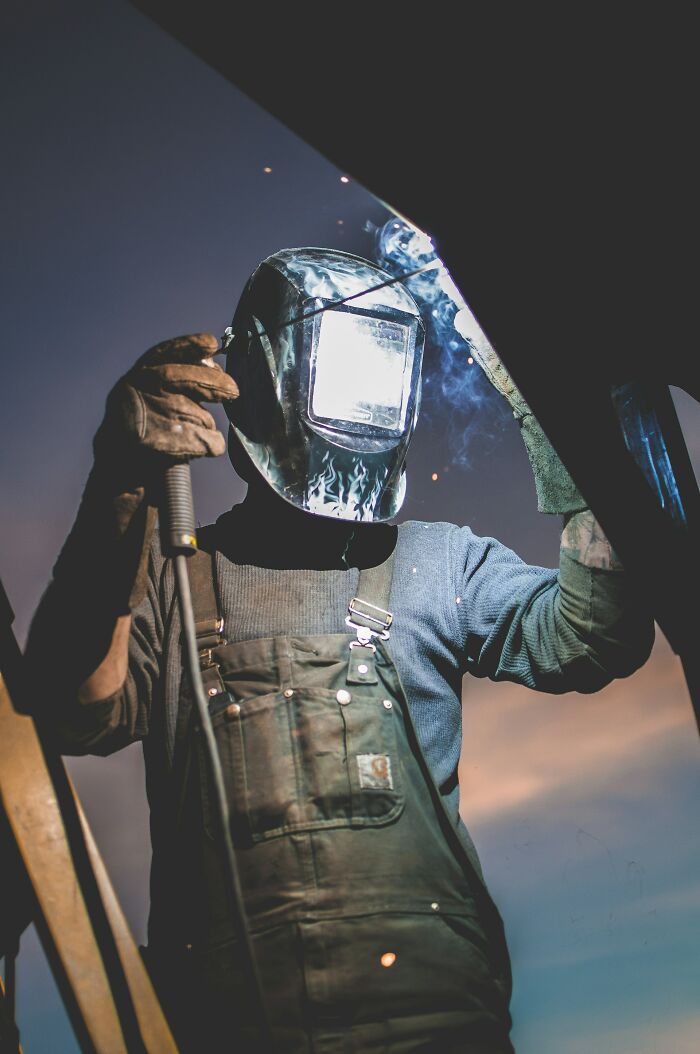 Welding. Not a certified awesome welder, but 10 hours of instruction and practice would make you good enough to weld most things.
also purchase equipment and some special clothing... this is exactly an activity of "beter hire a pro" type
Changing your own brakes. Will save you a ton of money and you can make a ton of money on the side.
Once you get good at it, with the correct tools, you can do em in 15-30 minutes.
Learn rotors while you’re at it and make even more.
sorry, 40-years of wrenching here. Yes, do it for yourself, but not for others.
Juggling. Not really important in life but absolutely fun to do whenever you have a bunch of similar objects laying around.

When I audited taxes, I met many jugglers, but few successful ones. (That's why I met them, in fact.)
Learning to read Korean.
The caveat is that you need to understand Korean in order for it to be useful.
If you live in Canada, these are the languages to learn to open many opportunities: English, French (Specifically, Canadian French), Ukrainian, Tagalog, Hindi, Mandarin, Cantonese, Spanish, Punjabi, Polish, Hebrew, American sign language. There are probably others I can't of at the top of my head. But these are the languages I come across a majority of the time and see job listings looking for people who are fluent.
I once listened to a 6 hour podcast about etfs, learned all that I needed to know about it.
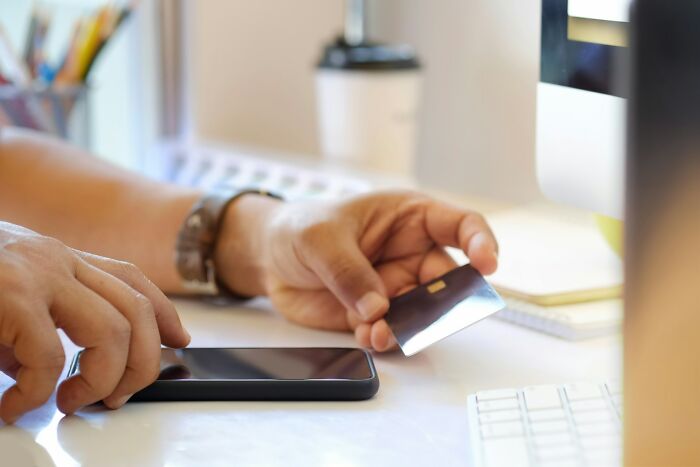 Getting in the credit card game. Having a simple set up of cards covering groceries, dining and everything else even for something simple like cash back will pay you thousands without changing any of your spend habits + makes your credit score go up nicely as long as you pay off. Maybe a little longer for the travel game but not that crazy as long as you’re not trying to balance a bunch of different card providers (only use 2).
NO! HORRIBLE ADVICE. If you're like me, have credit gives the illusion you have more money than you do. It's easy to go over budget. Groceries are costing so much these days that any spare money I can muster will keep me from having to put anything back. Unless you're really diligent and financially disciplined, and you know you're not going to run into any sticky financial setbacks. stick with the money you earn. Not borrowed.

Pet first aid is also extremely useful, and most courses are done over a weekend (so maybe a bit more than 10 hours, but definitely useful if you have pets!).

Pet first aid is also extremely useful, and most courses are done over a weekend (so maybe a bit more than 10 hours, but definitely useful if you have pets!).

















 No fees, cancel anytime