Get Premium
Dark mode theme is available exclusively for premium users. Learn more about the benefits of subscribing.
No fees, cancel anytime.

 Dark Mode Ad-Free Browsing Unlimited Content
 Ad-Free Browsing Unlimited Content Dark Mode
Join 1.2 million Panda readers who get the best art, memes, and fun stories every week!



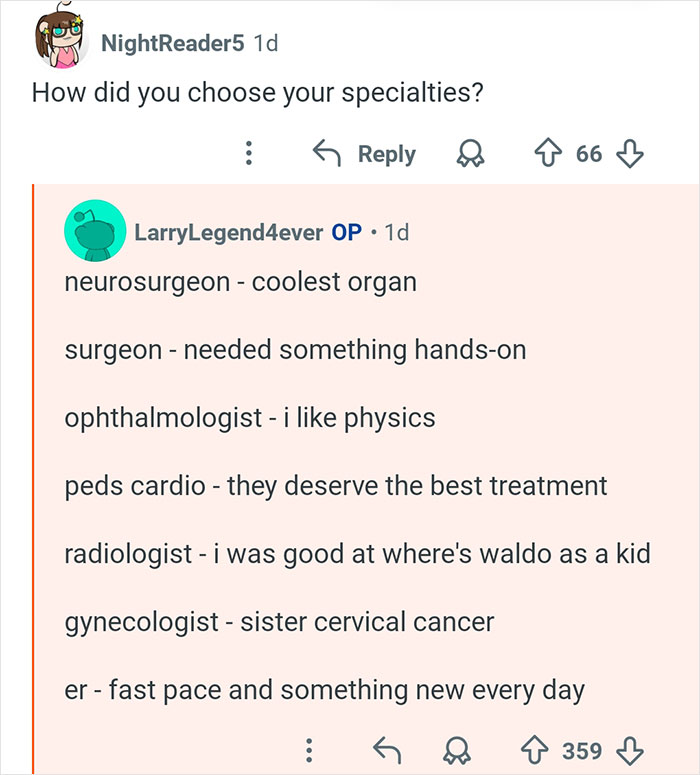
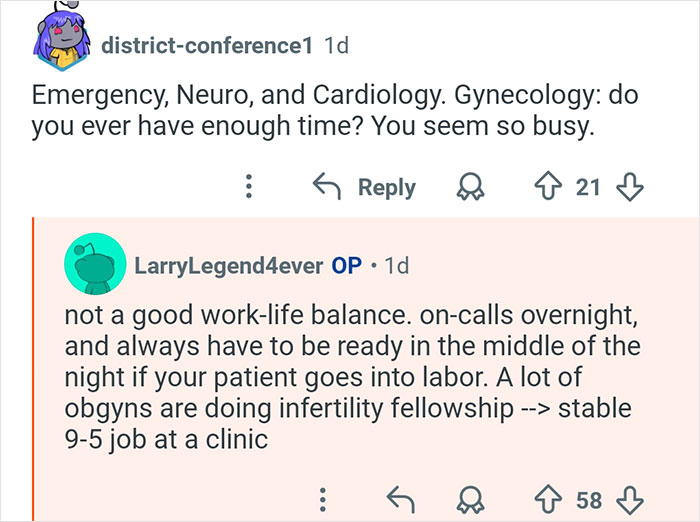
A pediatric heart-transplant cardiologist, ophthalmologist, radiologist, emergency doctor, surgeon, neurosurgeon and gynecologist walk into a hotel suite.
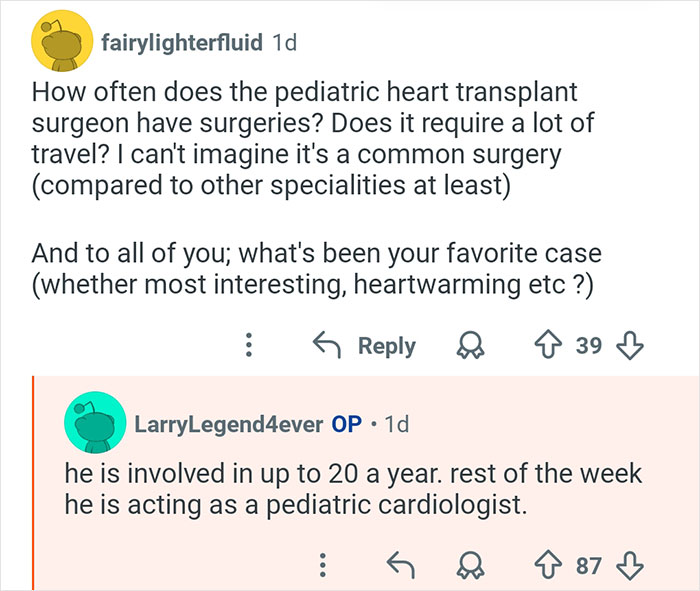
It sounds like the setup for a joke, but despite how perfect it reads, it’s just a group of seven doctors who agreed to host an AMA on Reddit. Though calling them “just” doctors hardly does this lineup justice.
Naturally, Redditors didn’t waste a second and hit them with some truly interesting questions. Below are some of their most fascinating answers.
This post may include affiliate links.


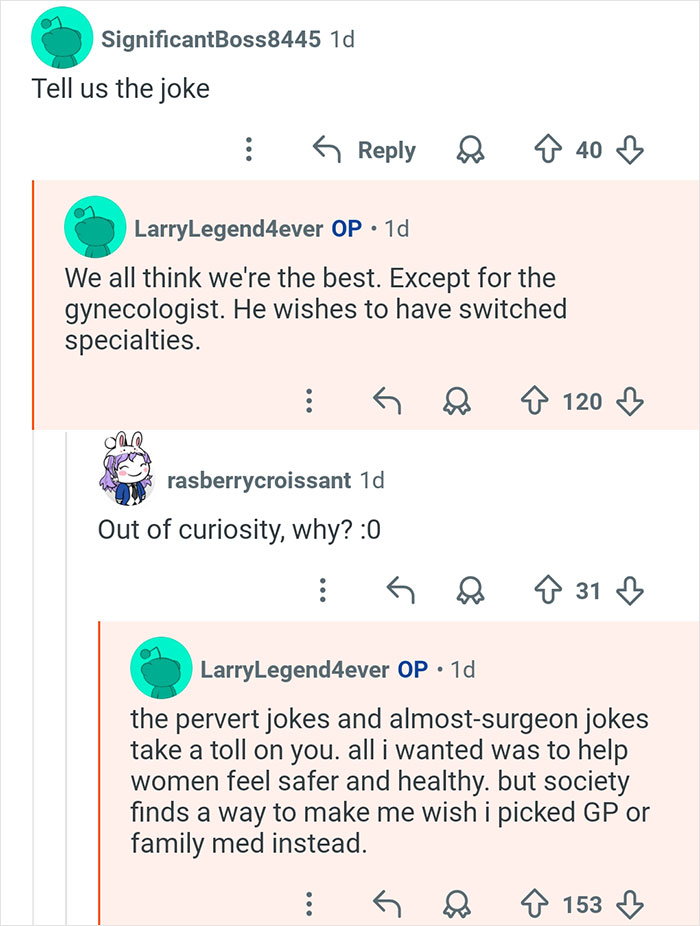
I seriously doubt that many (any) reproductive health professionals are in it because they 'get to look at genitals' as part of their job. Apart from professionalism, I'd imagine that it very quickly gets to the point of 'oh, it's just another set', especially as you'll often be seeing people with damaged or diseased genitals. Not much scope for thrills.
If you’ve spent any time around the medical world or understand it even a little, some of what these doctors have shared may not surprise you. But if you’re not, you might find this a fascinating read.
It’s not every day you get so many different specialists in one room offering their insights, and even less often that they spell things out in simple, candid language.

A lot of what most of us think we know about healthcare comes from googling symptoms, personal experiences with medical professionals and, inevitably, pop culture.
TV shows especially have shaped how people imagine hospitals, emergencies and even how doctors behave. They’re dramatic and addictive, but they’ve also planted a lot of misconceptions in our minds without us realizing it.
And clearly, this has an effect. According to the Pew Research Center, while most Americans believe that medical shows and movies prioritize entertainment (66%) over accuracy, about a third think the opposite.
That’s a significant number of people absorbing fictional medicine as if it were real. So here are some of the more interesting myths that real doctors say TV continues to get wrong.
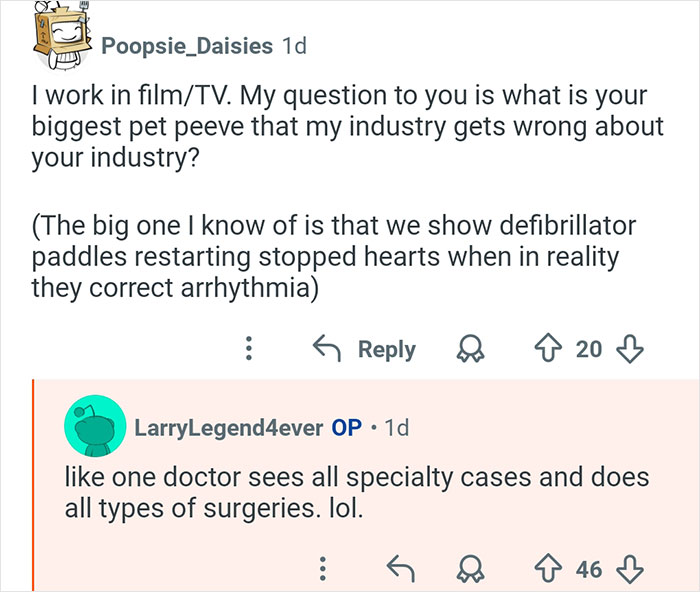
One of the biggest misconceptions is the belief that every doctor is a jack of all trades who can handle any type of work. That’s just not realistic, even though healthcare workers do have a lot on their hands.
As anesthesiologist Dr. Richard Beddingfield told St George’s University, “Medical dramas often portray a single physician first seeing a patient in the emergency room, admitting him to the hospital, reading his CT scan images and then donning sterile gloves in the operating room.”
He explained that in reality, a patient like that would interact with several specialists, nurses and physician assistants.
Another thing TV insists on is that hospitals operate like high school cafeterias, full of emotional breakdowns and shocking plot twists every ten minutes. Dr. Dana Rice, a practicing urologist, told St George’s that “many of the medical situations presented on TV shows are not accurate.”
She said she enjoys watching Grey’s Anatomy but laughs at how every major disaster seems to hit the same fictional hospital. In her words, “Usually doctors spend a large portion of the day doing paperwork and making phone calls.”
Medical hierarchy tends to get distorted on screen as well. According to Dr. Beddingfield, TV scripts often show medical students correcting residents or residents yelling at attending physicians in front of patients.
He said these situations “would simply never happen in real life,” adding that someone behaving like that would likely be out of their residency program quickly. It may make gripping television, but hospitals rely on structure for a reason.

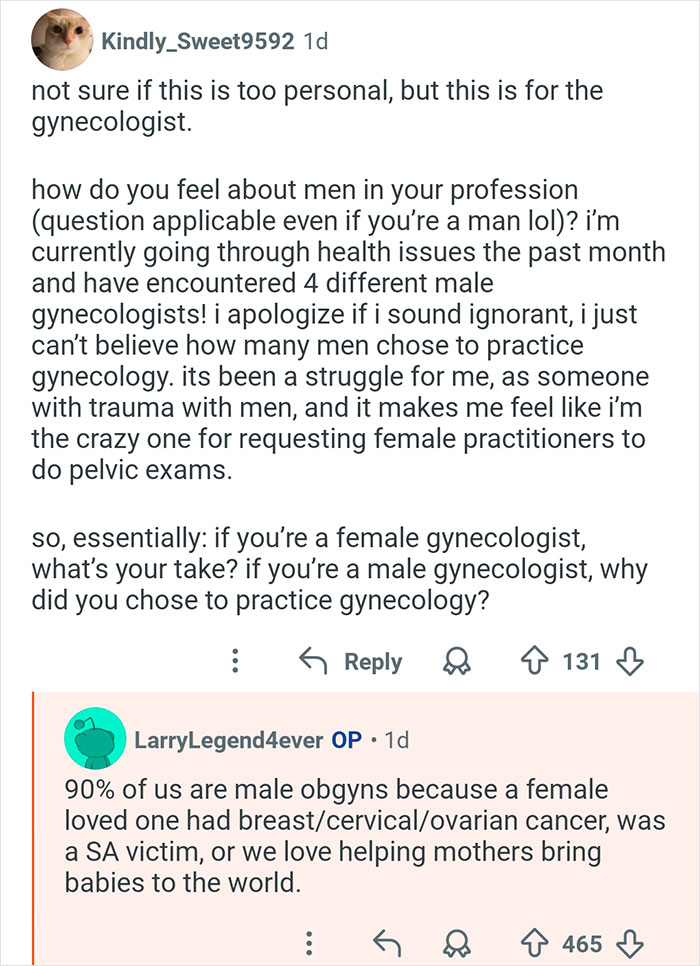
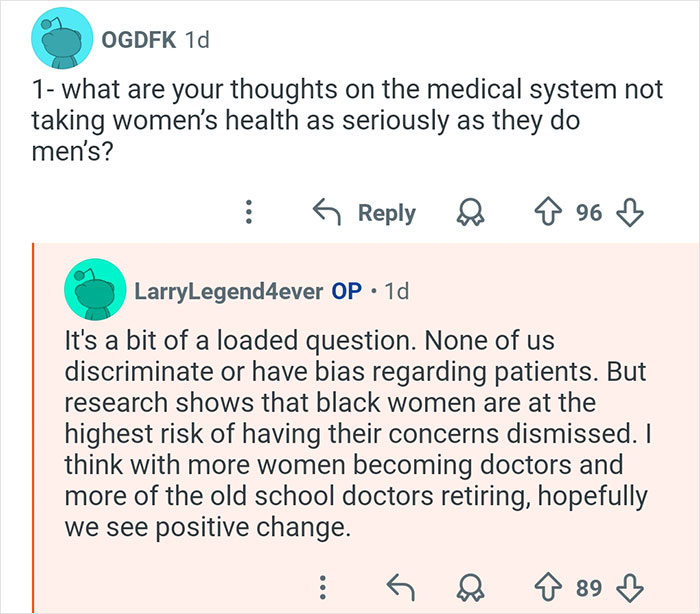
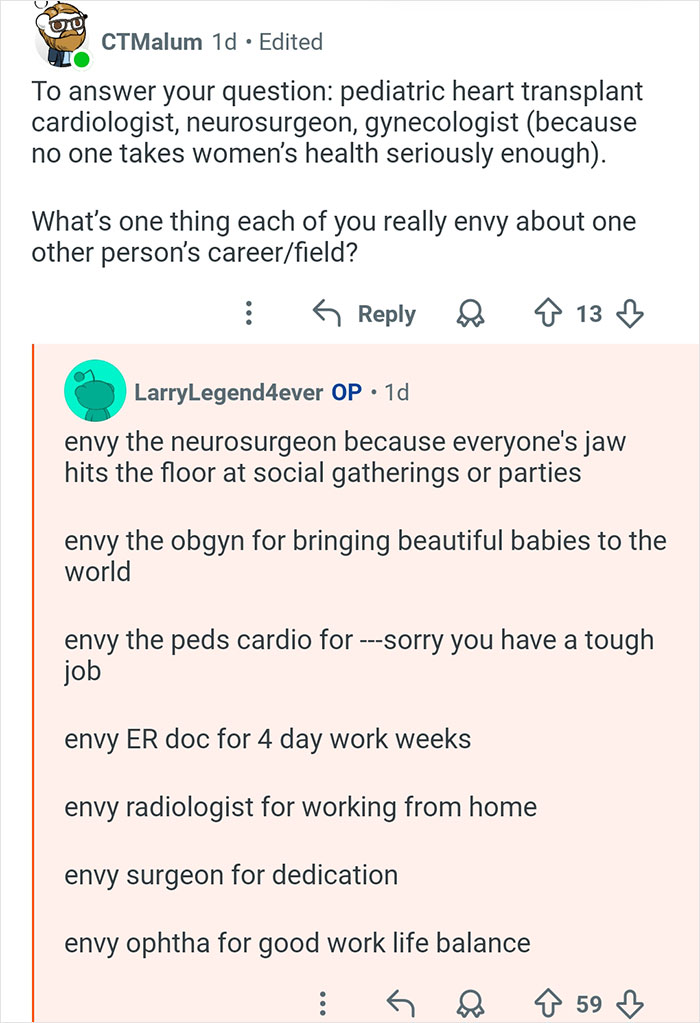
"If you want female patients treated like real patients, you need more female doctors" nice way of admitting that a man dismissing women is kinda normal in Larry's mind.

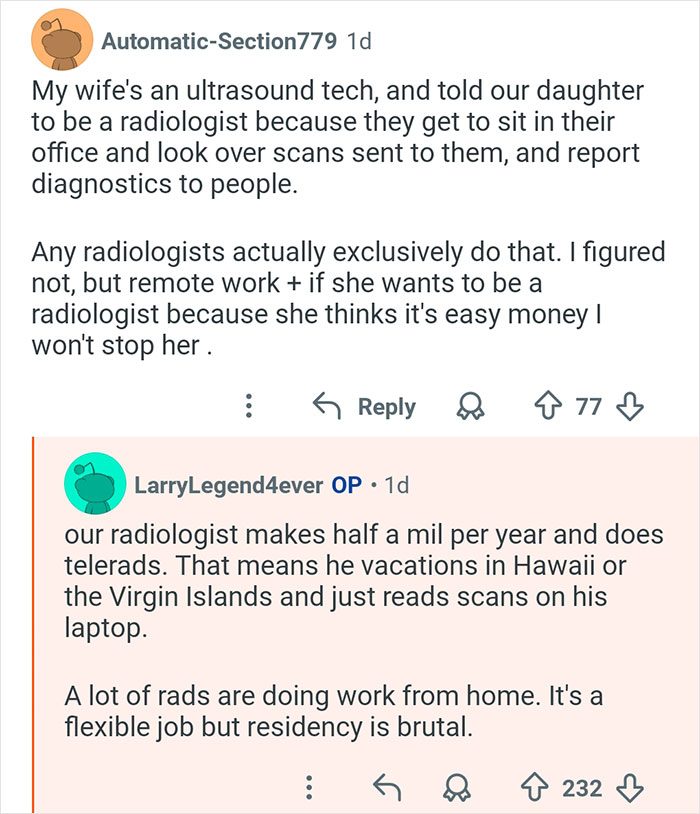
I'm currently in school trying to earn my bachelor's to become a radiographer and I wouldn't mind being a radiologist. The work/life balance actually seems balanced but I really don't want to be in school for that long. I just turned 40, the first day of the fall semester, and would like the opportunity to enjoy retirement. I'm hoping to get a job at a VA (Veterans Affairs) hospital, which will add to my time that I was active duty military and I should be able to retire with a pension around the average retirement age.

The biggest one I see is how much time doctors spend with patients on tv shows. In real life if you get to meet your surgeon at all that’s some special attention.
Choosing a specialty is another trope that gets romanticized for convenience. Dr. Beddingfield recalled watching a character on Chicago Med decide on psychiatry and immediately start functioning as a resident.
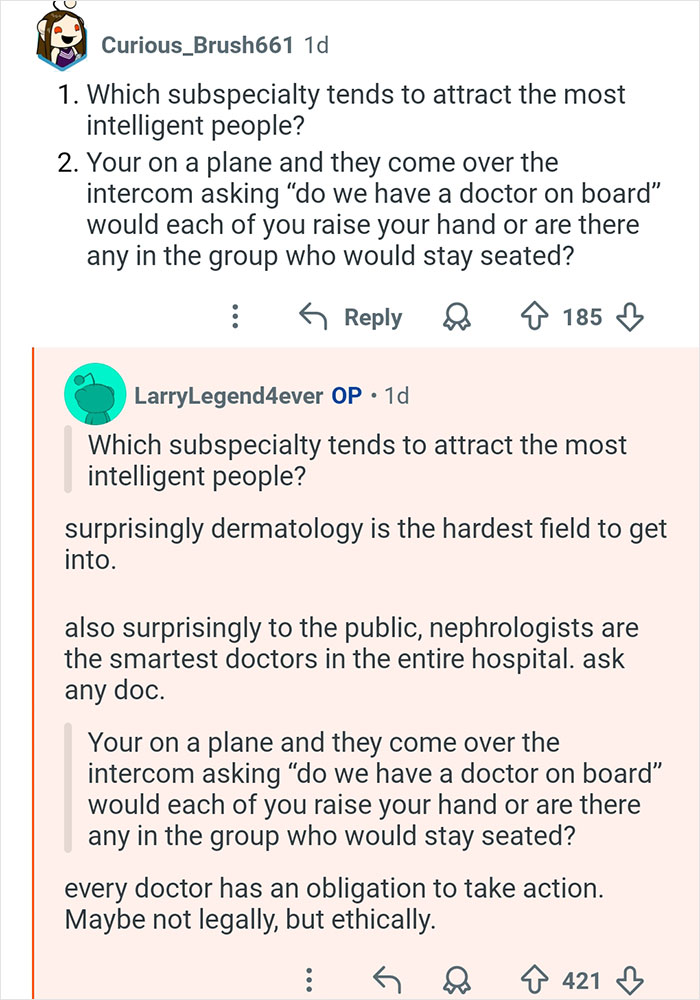
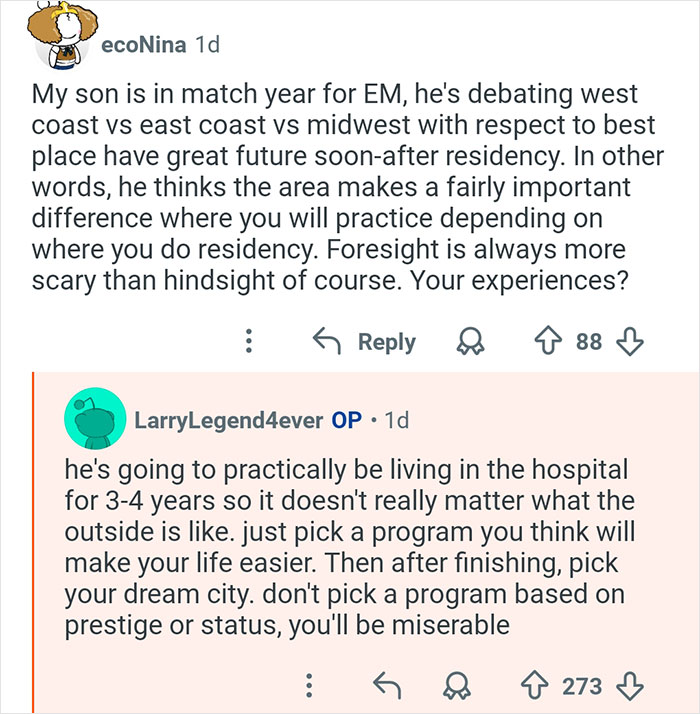
But he explained that in reality, “Choosing a specialty is a lengthy, complex, and sometimes competitive process,” involving interviews, matching systems and extensive evaluation. It’s not comparable to picking a college major.

Handmade stuff is usually welcome. I knitted a scarf of the MD who took care of my Mom during her latest surgery
Even medical equipment in shows often fails the accuracy test. Patient monitors, for example, rarely reflect what is happening to the character on-screen.
Dr. Beddingfield noted that modern shows use looping graphics that don’t match a patient’s condition. He described a scene where nurses shouted, “She’s flatlining!” while the monitor displayed stable vitals. Details like these may seem small, but to professionals they’re glaring.
Breathing support is also commonly misrepresented. “I’ve lost track of how many times I’ve seen TV patients completely unresponsive on ventilators, but with nothing more than a nasal cannula,” Dr. Beddingfield said. Sometimes the breathing tube is visible, but positioned in a way that makes oxygen delivery impossible.


Had a lady come in to my ER today with a tablet bungie-cord strapped to her infant's carseat, playing some loud colorful nonsense. Baby literally could not look away.

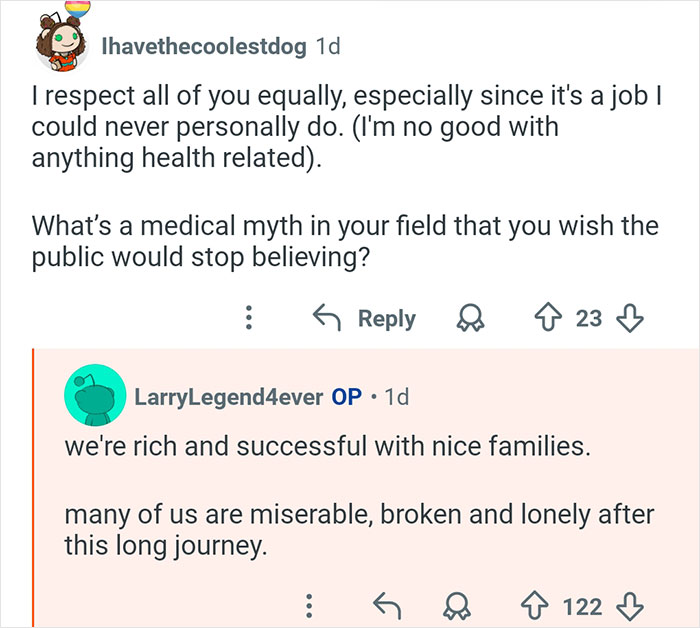
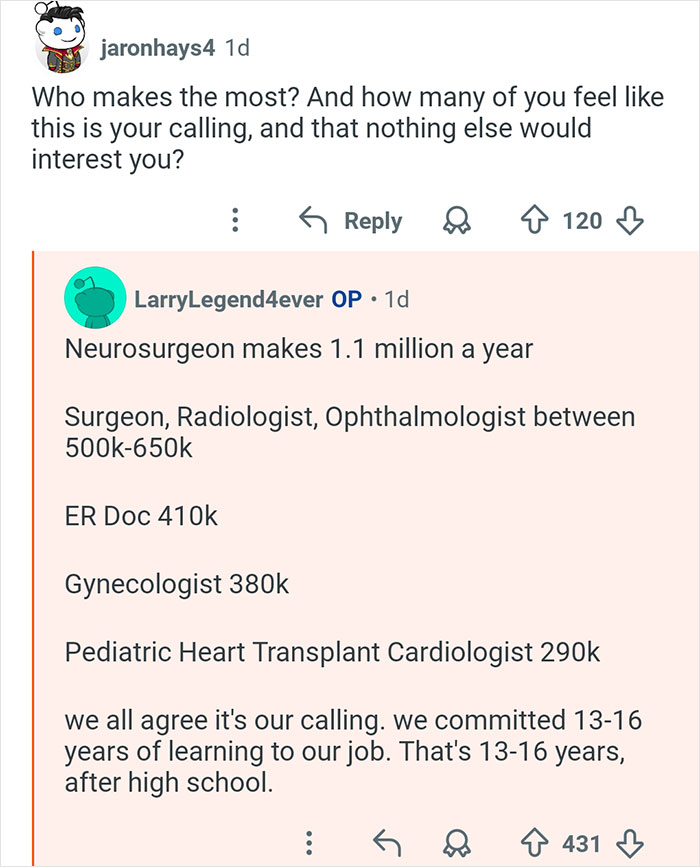
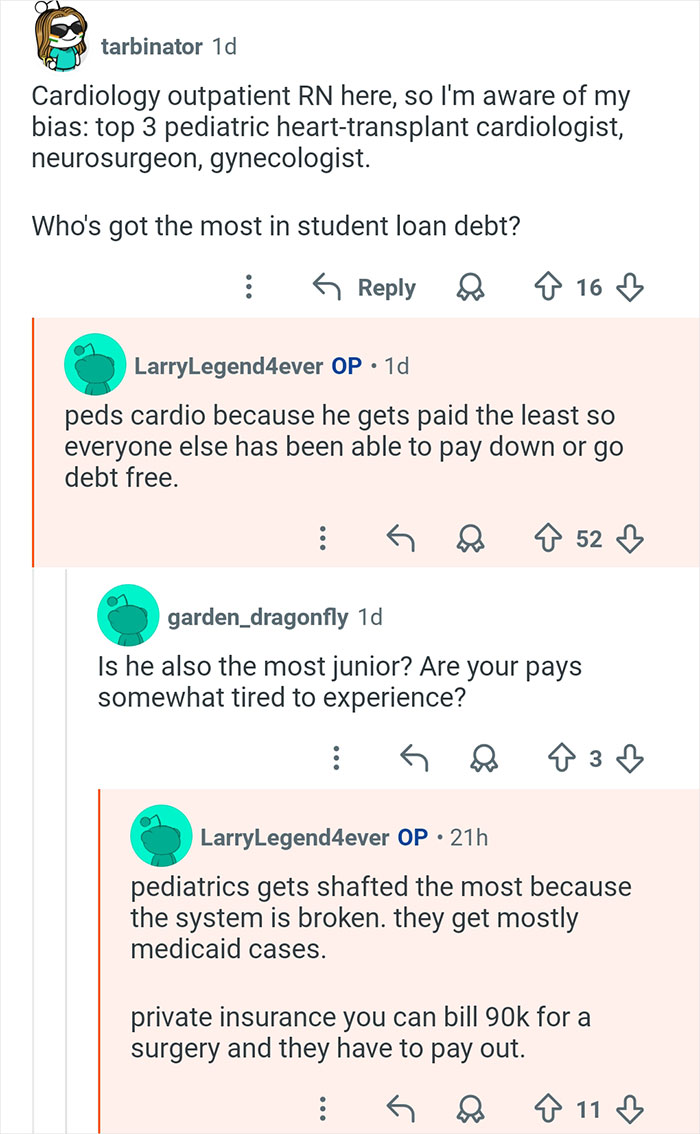
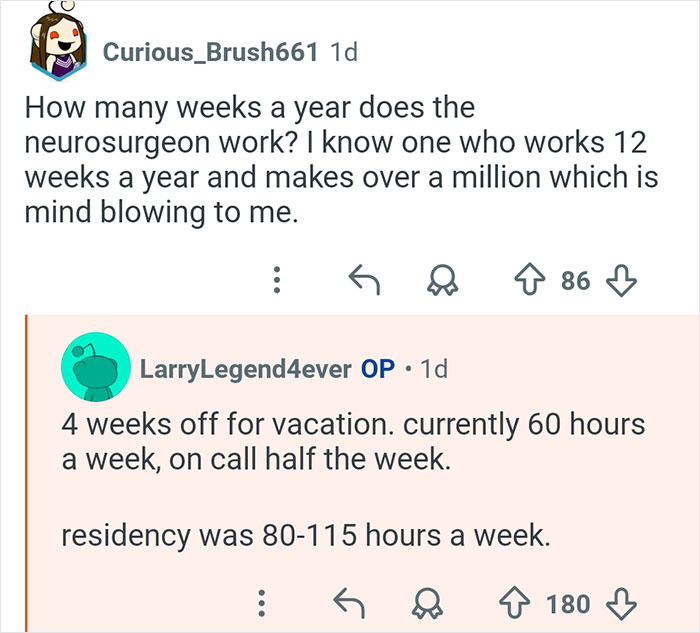
That's very sad - those doctors are saving children that will have a chance to grow up but the doctors aren't being adequately compensated for it.
CPR scenes are perhaps the most misleading of all. As Dr. Beddingfield told St George’s, shows often make it look like a few chest compressions magically restore a patient instantly.
“This is absolutely not the way real CPR works,” he stated. Real-life attempts often result in cracked ribs, repeated shocks, breathing tube placement, and even then, most attempts are unsuccessful. It’s one of the rare cases where reality is actually harsher than television.
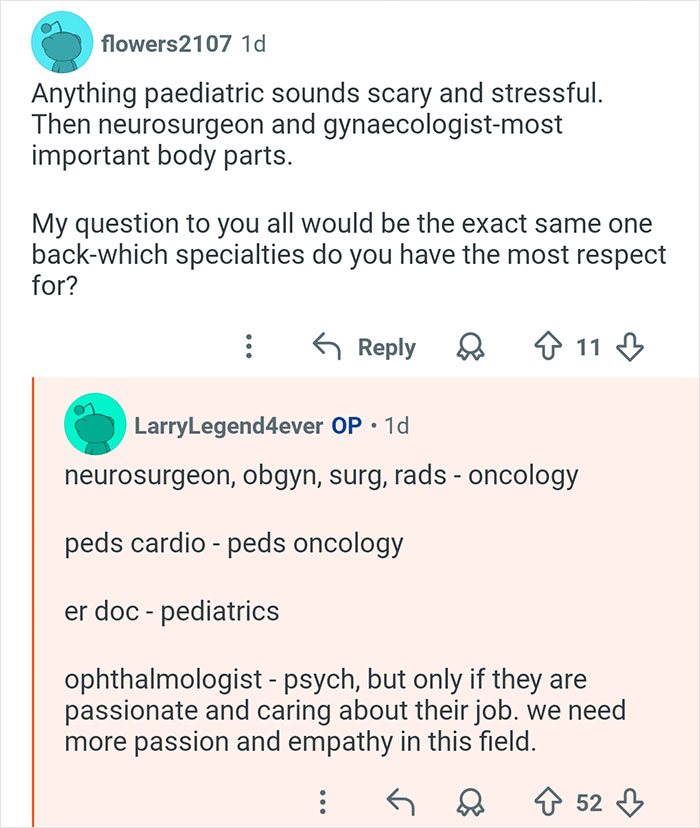
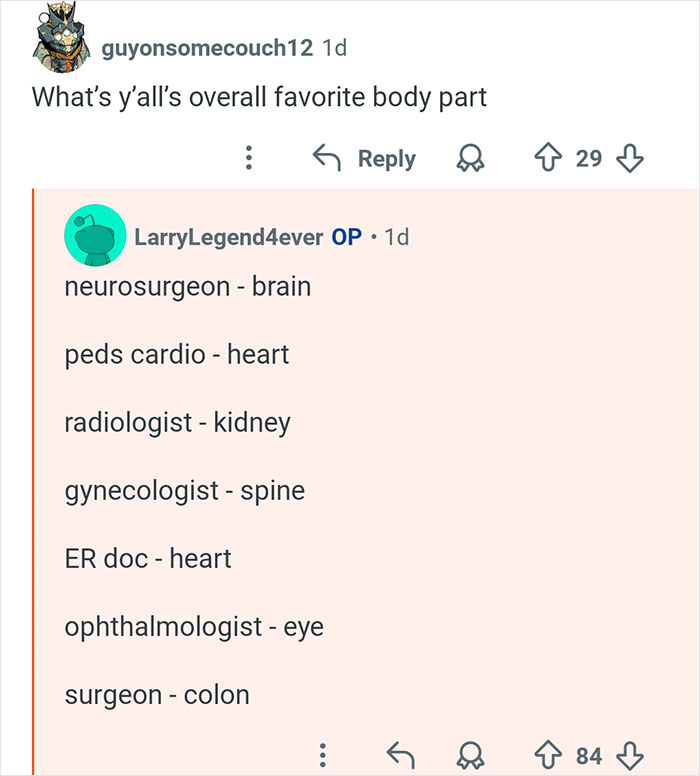
Interesting that almost half of them would want to be a teacher, if not a doctor.

The first answer reminds me of a comedy sketch by Mitchell and Webb, at a party; the last few lines of which go So Jeff, how do you EARN A CRUST? I'm a scientist. I work mainly with rockets. It's pretty tough work. What do you do? Well I don't mean to BOAST, but I'm a brain surgeon. Brain surgery? Not exactly rocket science.
Last, but definitely not least, is a misconception that might change how you perceive your own hospital experience. It has to do with the near absence of nurses on TV.
Leah Binder, CEO of the Leapfrog Group, told The Wall Street Journal that hospital dramas often show ten doctors for every nurse, while “the reality is roughly the opposite.” She explained that many viewers are shocked to discover how knowledgeable nurses are and how rarely they see a doctor during an actual hospital stay.
Binder also pointed out that these portrayals can affect career choices, noting that media depictions may discourage talented young people from entering nursing, even though society needs more of them, not fewer.
So while medical shows may be fun and emotional, they’re not educational material. And it’s probably for the best. Because if our health depended on the accuracy of fictional scripts and dramatic music cues, we’d all be in trouble.
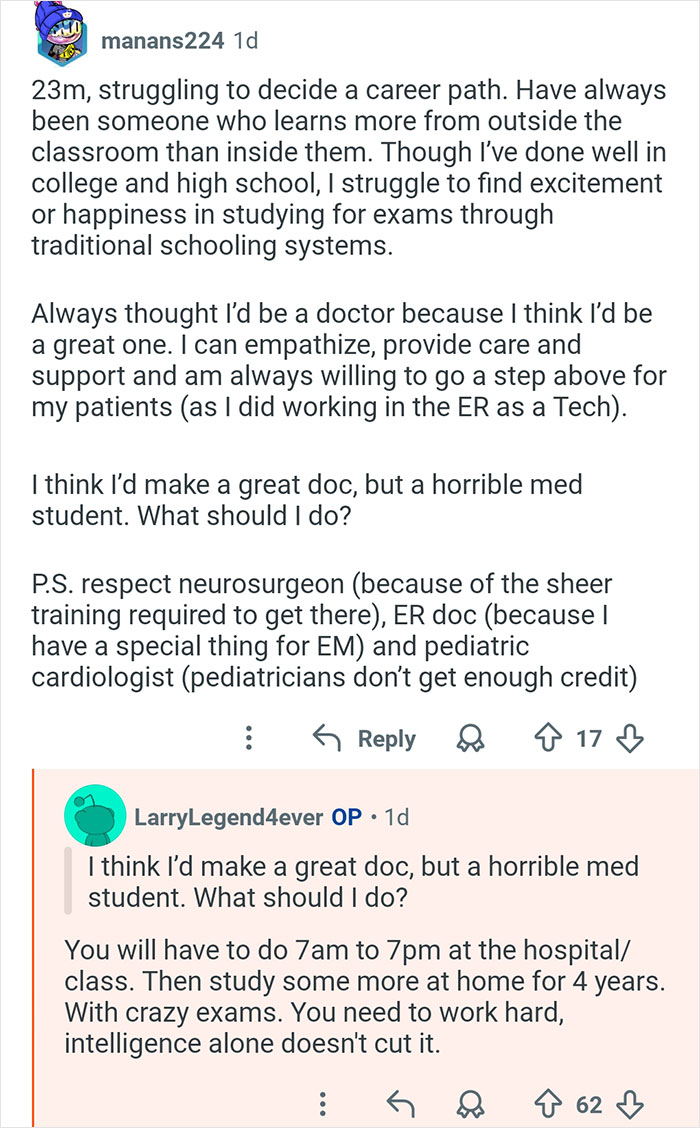
This just screams: I want the fun without the work. I'd rather a doctor who is willing to put in the work.

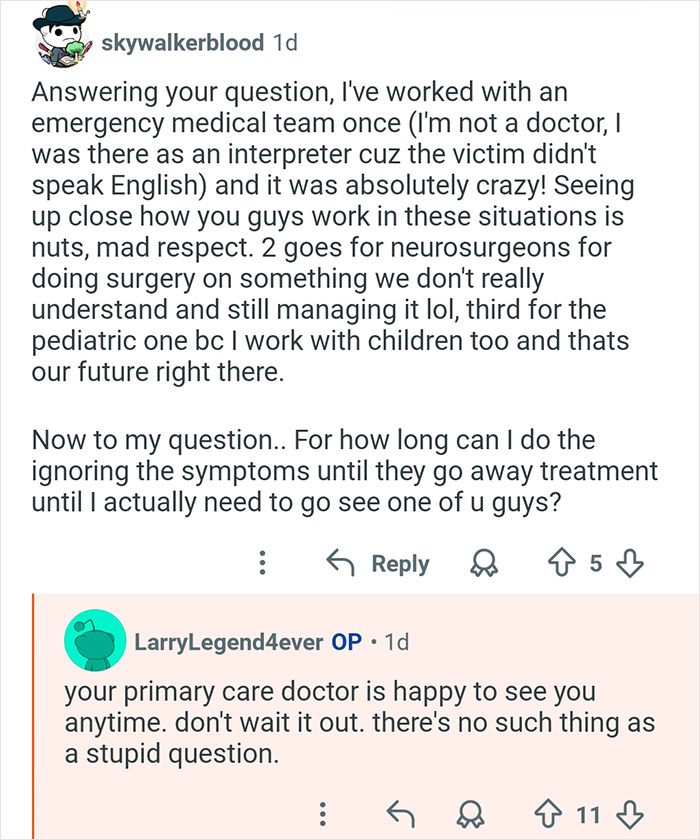
This one depends wildly on what the symptoms are. Stuffy nose without other problems? A day or a week is probably fine? Severe bleeding or breathing problems? The golden hour may be almost an hour too long.
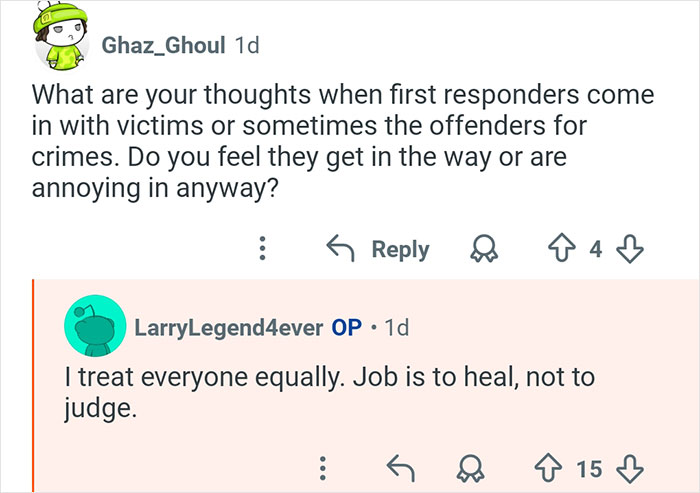
I think it was Dr. Mike that said when we start playing judge, jury, and executioner, we start dabbling into responsibilities we don't want nor have the qualifications for. Do the healing, leave the rest for those who are are qualified.

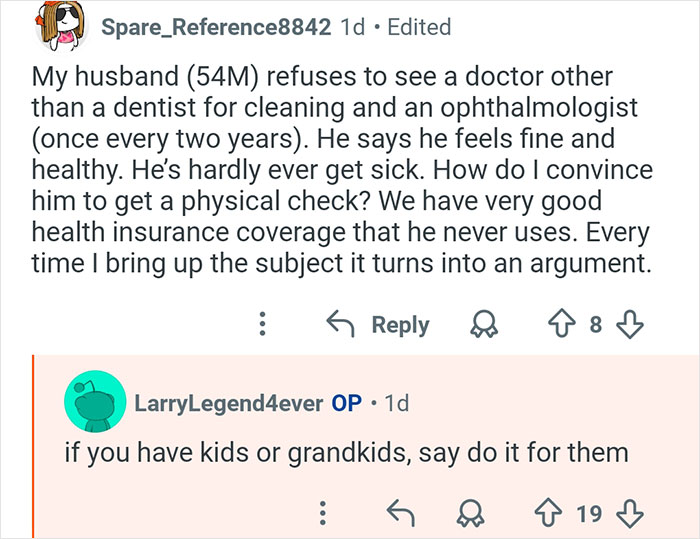
Has a doctor he's ever been to ever shown any concerns? I do go for a wellness check once a year but the only thing doc wants me to do is only due to age, not because of any tell tale signs or family history. In fact the one thing that should be of concern from history, he sees no reason for concern simply because I'm healthier than my predecessors. Put simply, not everyone needs that barrage of tests they try to ram down everyone's throat. Look at mammograms. They've had better ways of checking women for decades, but because they have all that expensive equipment and because that's the way it's always been done, most facilities refuse to put the woman first and adopt the new and better methods.

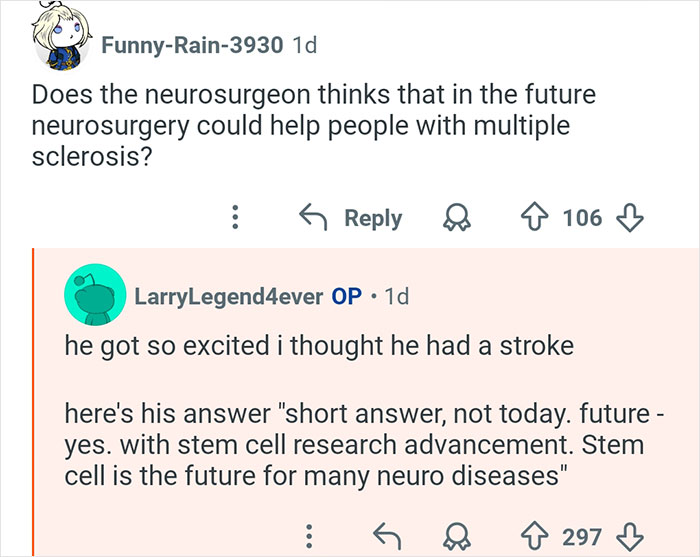
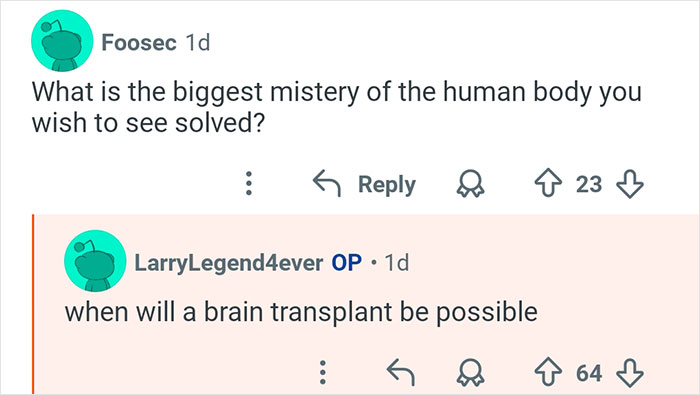
That raises the ethical question of who they are legally - the brain, or the body? If the body commits a crime, but the brain is transplanted, should they still go to prison?

That's one heck of a "The Ship of Theseus" problem right there.
Load More Replies...
In the case of some people, the brain was removed, but not replaced.
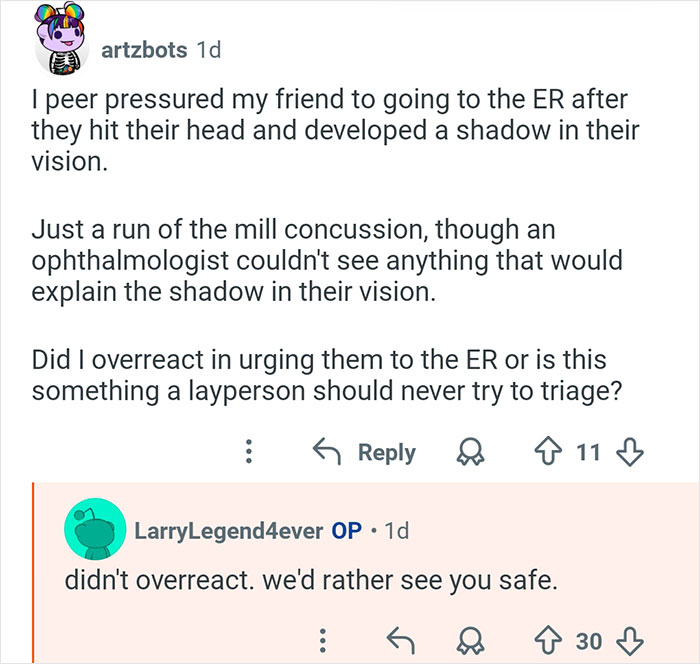
Load More Replies... I rather object to the phrase "run of the mill concussion." I don't think there is such a thing. Speaking from experience. Two years after my last concussion - which I hope will be the last! - and I still have trouble recognizing faces and putting the right name to them. Among other things.
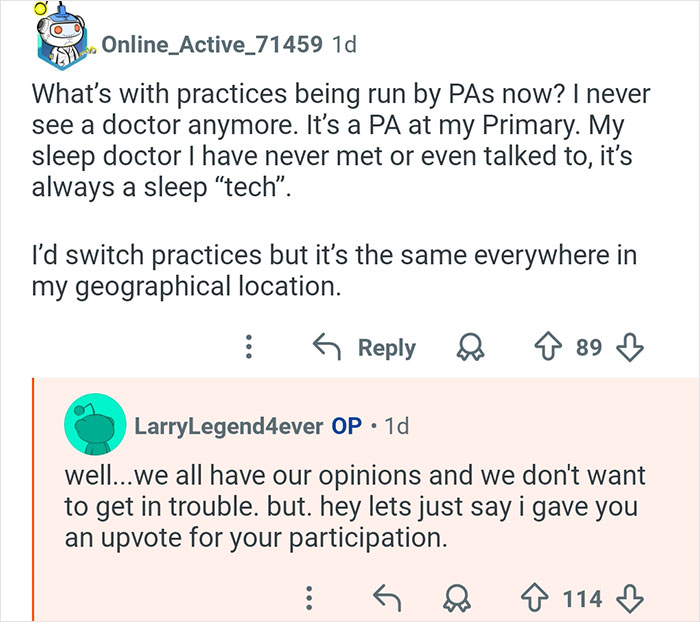
Cowards. I got a survey about a doctor from a hospital where I had two appointments. I had to say honestly that I’d never met the man. I hope somebody read that survey.
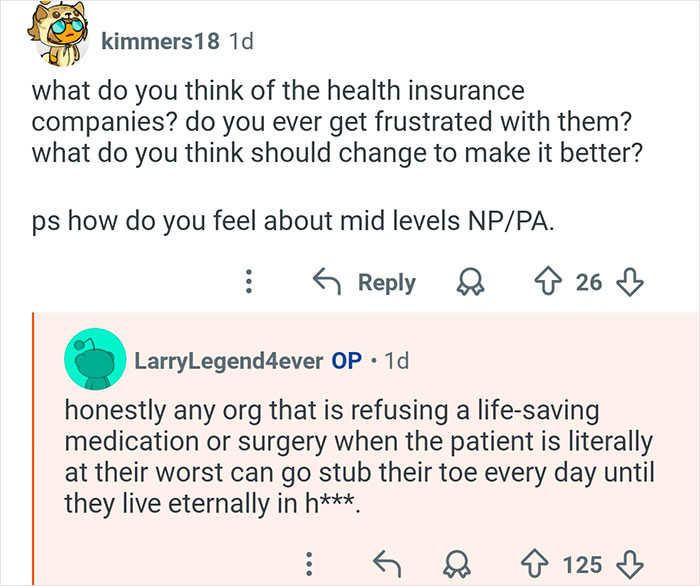
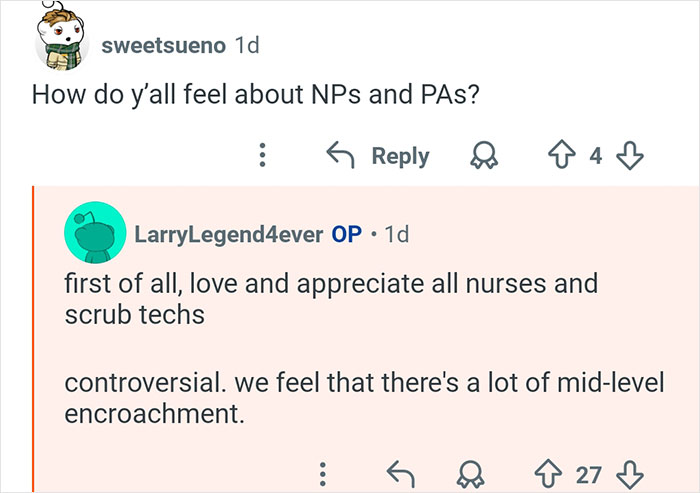
I live the PA's and NP's that I've ever seen except 1. He told me that a sinus infection is nothing but a bad cold. The next 1 of our smartasz residents asked me if I was sick. The PA that scheduled for was PO'D that I wasn't given any meds. called my ENT office and saw him the next day. The infection was so bad that it took 3 different meds to kick it & I was sick for a month. When the resident said that I gave him a smartasz answer, then went to my boss to tell on myself. She was OK with it because she knew how he was. I've never said anything like that to a Nurse, PA or MD before or after that day.
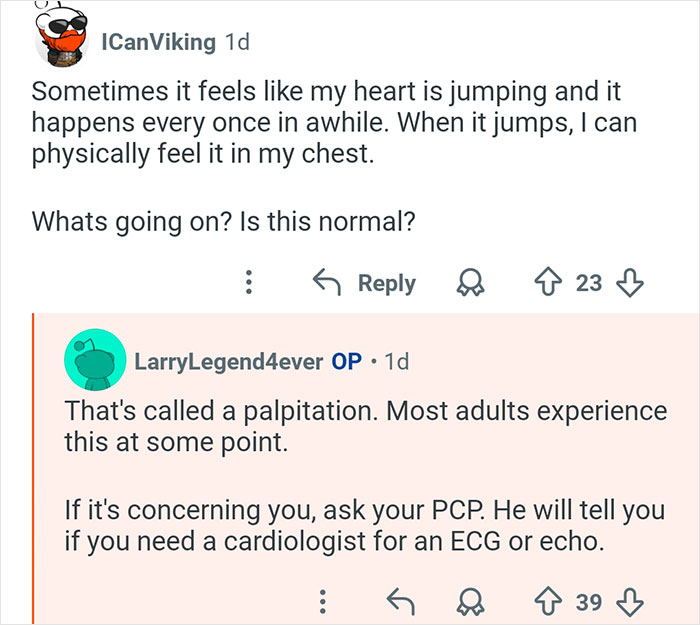
Every time someone says/write PCP meaning primary care physician, the first thing that comes to my mind is the d**g PCP, which was the "big thing" a long time ago. Yes I'm that old. No I've never used illegal d***s.

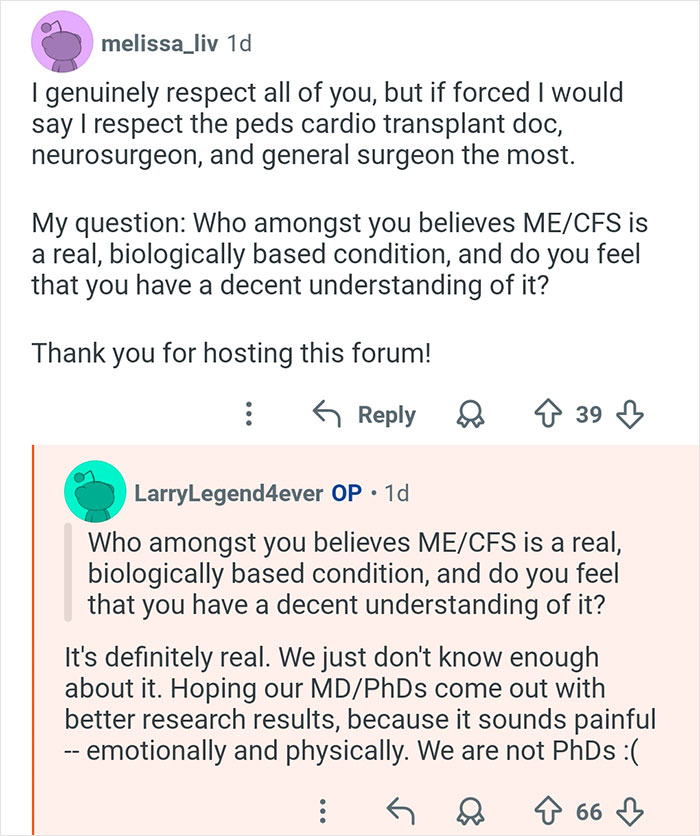
I had a roommate who got CFS in his mid twenties. Definitely wasn't faking it. He had to move back home to his parents. I wonder how he is now.

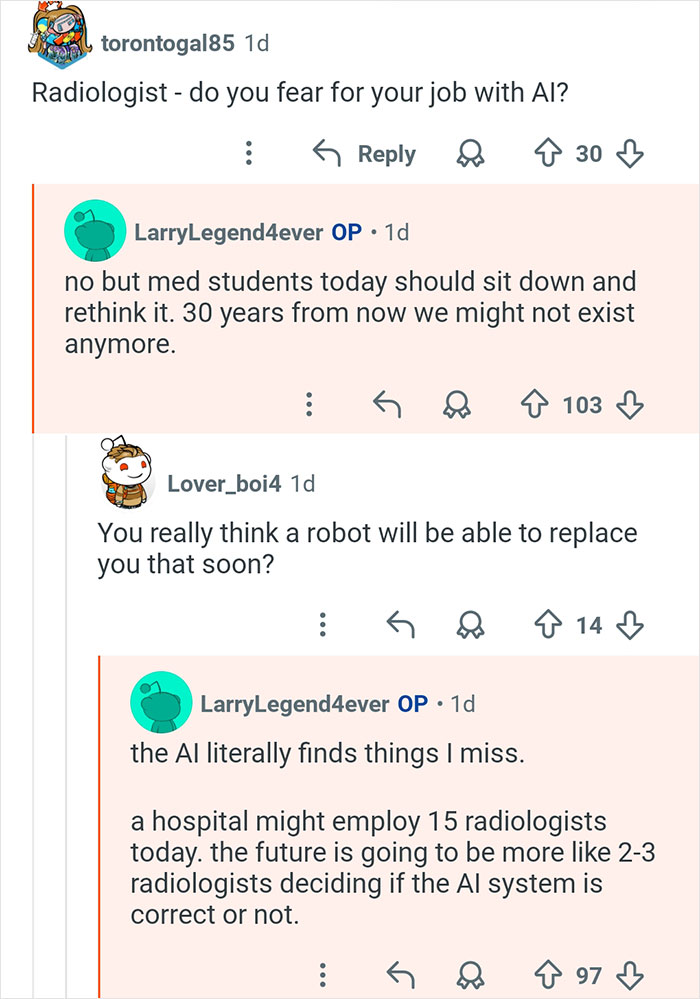
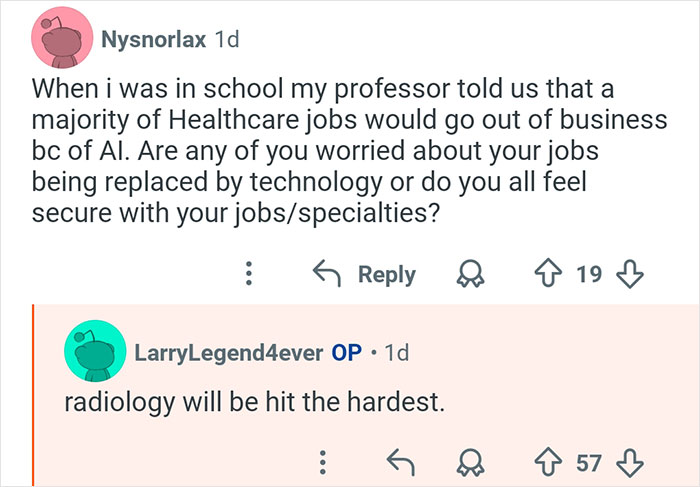
I suspect AI is coming for all of us, eventually - apart from the billionaires. They have no particular use so will never be replaced.
If you're talking Canada goose, my money is on the goose even one on one.

Likely benign ectopic (premature) beats. Almost everyone has them but not everyone is aware or can feel them.
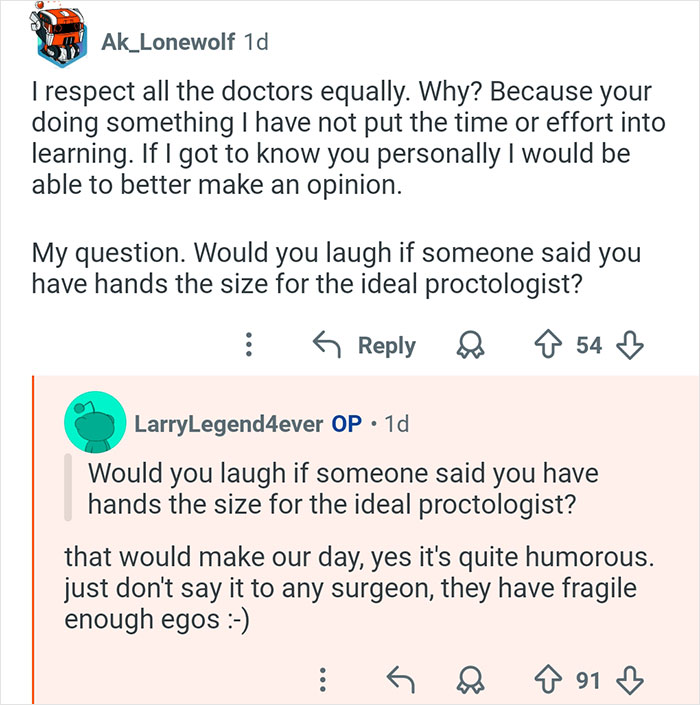
I remember a new urologist starting his practice in the same building as the cardiology office I worked at. He came by to drop off his business card and introduce himself to all of us. He actually said I’m Asian and have small hands ladies tell your husbands to come see me for their prostate care! :D
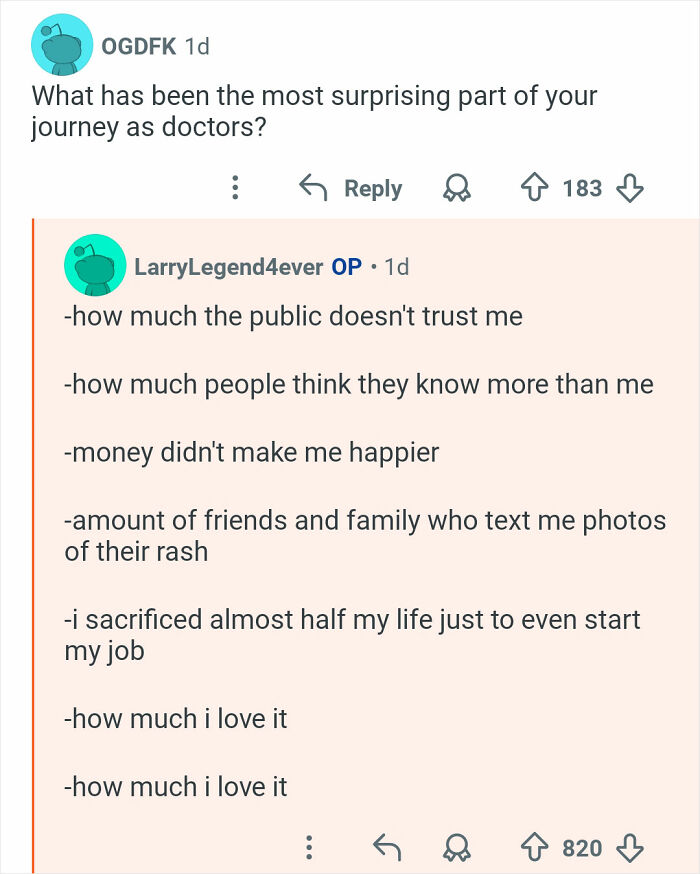
This was a good read! Nice to see some doctors still maintain a passion for what the do!
Very interesting. Better to have several of them on hand at once.

Absolutely! I'm thankful they do what I couldn't. (Barf or pass out when I see blood, esp. if it's mine!)
Load More Replies...
This was a good read! Nice to see some doctors still maintain a passion for what the do!
Very interesting. Better to have several of them on hand at once.
Absolutely! I'm thankful they do what I couldn't. (Barf or pass out when I see blood, esp. if it's mine!)
Load More Replies... 
























 No fees, cancel anytime
 then open in external browser


 and click "Open in External Browser"