What distinguishes idioms from other common phrases and old-time sayings is that their meanings typically can't be understood through literal interpretation. For example, imagine you’re learning a new language and hear someone saying, “It’s raining cats or dogs,” or telling you to “break a leg,” this would be very confusing! And on top of it all, even if you ask a native speaker what that phrase means, they might not be able to explain it to you. That’s because rarely does somebody know the origin story of a popular saying.
Here at Bored Panda, we went the extra mile to find out the origins of the most popular idioms. From the most common idiom examples, such as “kick the bucket” and “bite the bullet,” to more obscure ones, we’ve gathered the English expressions with known roots, though sometimes the origin story comes from different sources, thus making it harder to determine which one’s the right one. Nevertheless, the stories behind these funny idioms are highly entertaining.
Didn’t think learning a new language could be fun? Buckle up because we’re about to dive deep into the history of languages to find out the incredible origins of commonly used phrases all around the world!
Top Old Sayings and Their Meanings
Some old sayings and their meanings got more attention than others. Below, users voted and selected the top 10 sayings they liked the most. Disagree with the placement? Cast your vote for the old, often weird sayings that you want to appear in a higher position.
This post may include affiliate links.
Cat Got Your Tongue
Meaning: Said to someone who remains silent when they are expected to speak.
Origin: There are two stories on how this saying came into being. The first one says that it could have come from a whip called “Cat-o’-nine-tails” that was used by the English Navy for flogging and often left the victims speechless. The second one may be from ancient Egypt, where liars’ tongues were cut out as punishment and fed to the cats.
Don't know about version 2 but version 1 is poppycock. Do not repeat.
The Egyptian one seems to be the former on the timeline so I choose to believe it originated from there :-)
People in Egypt say this idiom also, and the Arabic countries used it after that by using the Egyptian dialect.
Load More Replies...We say the same in Croatia, and I never understood, "why cats?" Now I know. Thanks for the information.
The same in Spain, too. Didn't know either. Thanks.
Load More Replies...I don't believe the Egyptian one. Simply because it should then be also a saying in Egypt which somehow made its way over to the UK.
There was a law enacted by the King Henry 8th?? 16th-17th?? Century,Through The English Parliament Making It 'Illegal To Pretend To Be Of Egyptian Descent'. Its Decree Was In Some Way Due Overall The Huge Issue Of Migrants From Egypt Who Its Been Stated To Not Staying Put In The One Place. 'GYP-sies'...Hence The Etymology Of The Word Comes From 'E-GYP-T'...I Just Blazed A Nyse Joint and Aint Up To The Task Of Embellishing It Too Much Further, Nonetheless, Theres My "Two Cents Worth"
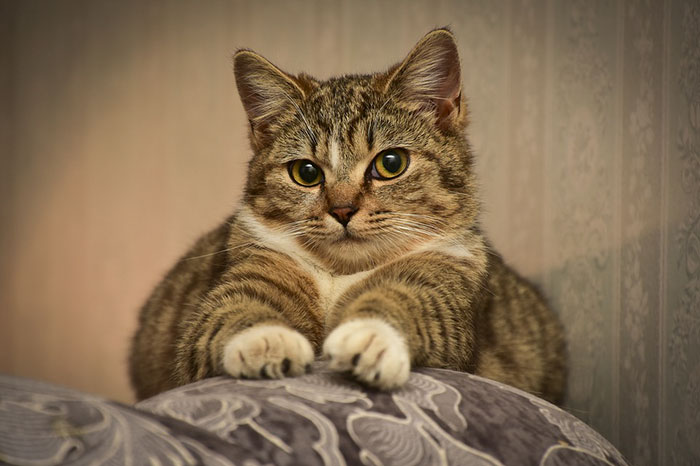
Load More Replies...This cat looks so gorgeous!!!! And we don't even have this saying in Germany
This is Google's suggestion, I like it best - One explanation is that a long time ago, a witches cat would steal the tongue of a person to prevent them from telling others.
Do you have a source for this explanation or are these just guesses?
The liars thing is a great idea! We should bring it back!.. But wait, there is still Twitter. Never mind, it won't work.
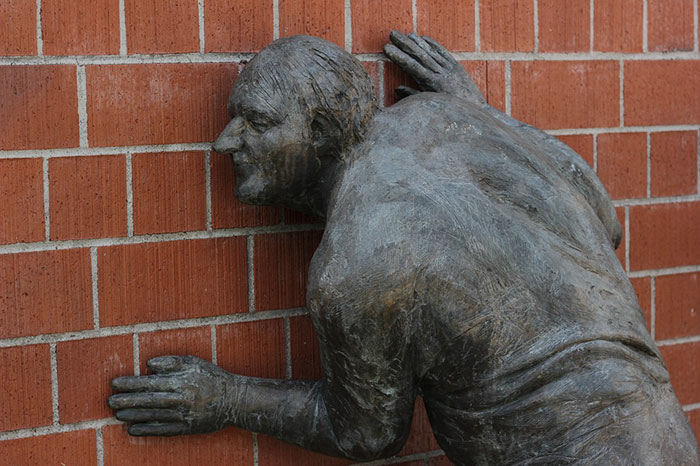
The Walls Have Ears
Meaning: Be careful what you say as people may be eavesdropping.
Origin: The face Louvre Palace in France was believed to have a network of listening tubes so that it would be possible to hear everything that was said in different rooms. People say that this is how the Queen Catherine de’Medici discovered political secrets and plots.
Lot of quick down votes kicking around this one. Wasn't me guv!
Load More Replies...I note that there's a comment here that claims that the term eavesdropping originates from people hanging from the eaves to listen at windows. This is incorrect, and as of the time of posting it's actually the 'explanation' given by Wikipedia which goes to show that one should take its pronouncements with a grain of salt*. WIkipedia even goes into some detail about eve carvings being used by Henry VII to prevent this: whilst Henry might have done this for Hampton Court, it doesn't reflect hte original etymology of the word. In fact, an 'eavesdrop' was originally the water than fell from eaves, and later it was used to describe the area within a few feet of the house that was demarked by eavesdropping water. The second meaning of the term - the eavesdrop being the area of land delineating from the wall to the limit of where rain fell, was later used as a guide to to prohibit neighbours from building too close to adjacent building. (Contd...)
(Contd from previous) From this second definition the verb 'to eavesdrop' referred to the practice of standing within the eavesdrop of a house, and usually to stand near a window to listen to a conversation. It doesn't refer to hanging from eaves... *And finally, 'to take with a grain of salt' has several possible etymologies - the first refers to the perception that salt makes food taste better, and the second suggests that as salt was thought to be an antidote to poison, taking some before a suspect mouthful might render any poison safe. I tilt toward the second version, but the truth is probably lost in the mists of time...
Load More Replies...The Louvre DOES have a network of stairs and doorways behind the walls so that servants could service the rooms without disturbing anyone. If you look at the way the building is put together, there are no hallways. Each room opens into the next. For the maids to clean one room, they would have been forced to walk through other, occupied rooms and disturb the inhabitants.
Soviet East Germany. The Walls have Ears. You couldn't trust your own grandmother to not rat you out to the authorities. Also, the secret state police utilized an extensive network of listening devices in walls.
It may also refer to the architectural design known as a Laird's Lug that allowed the owner of the house to eavesdrop on any of his guests in the living room, dining room, or any other room he though would allow him to see if his friends were actually plotting against him. It involves specially designed ceilings and shafts that lead to a particular room.
Ha ha, in 1983 I went to Hasting, its old part, There, there weren't any man-made communication system. Simply, the walls had the propriety to conduct sounds. As such prisoners in a cave talking freely could be heard from another cave by their gaolers. (thinking of 'The Louvre' I'll say I'm a Frenchman who never heard this...Perhaps I had the wrong walls? But I have been living in Australia since 1969 :)
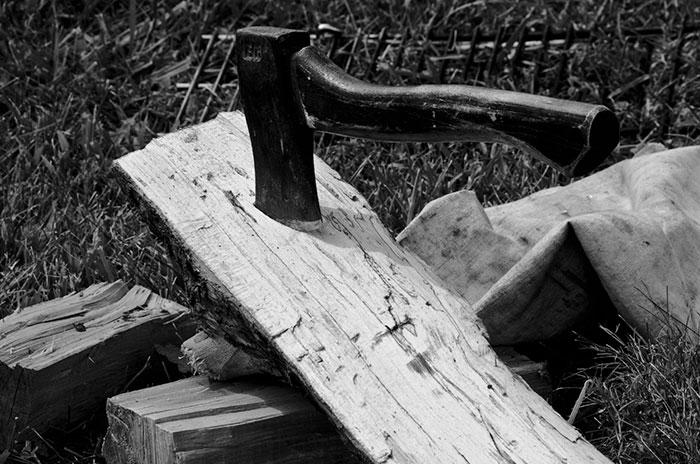
Bury The Hatchet
Meaning: End a quarrel or conflict and become friendly.
Origin: During negotiations between Puritans and Native Americans men would bury all of their weapons, making them inaccessible.
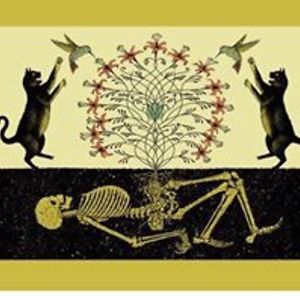
This phrase predates the Puritans. Several Native American tribes joined together as one nation so they could better defend themselves against a warrior tribe. They symbolically buried a stone hatchet under a cypress tree. No group would bury all of their weapons, because there are always other threats, the need to hunt, and the possibility of one side not holding up their end.
Bury the hatchet with a smile and a curse - The world is big enough for both of us ♬♪
So, the "Puritans" buried their hatchets, which were not a weapon for them, but a tool, and kept their muskets, which were weapons...as a sign of peace and trust?
Anne, you are completely right. It was the Haudenosaunee, aka Iroquois.
Cold Feet
Meaning: Loss of nerve or confidence.
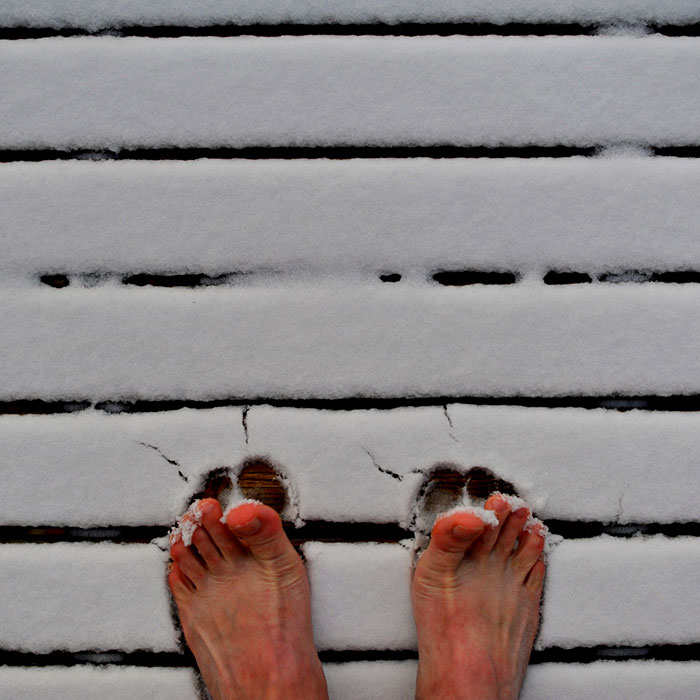
Origin: This idiom originates from a military term, warriors who had frozen feet were not able to rush into battle.
This is inaccurate. The actual origin comes from a Russian idiom related to gambling. Originally it meant to have no money, trade in your shoes as a final resort and now you need to back out of the game. This was then translated and applied to other situations like business or marriage where putting in a sum of money was required.
Usually cold feet specifically means doubting decision to marry
The arrow to the knee is a nordic expression for that they got married and could no longer wander like they could before
Big Wig
Meaning: An important person, especially in a particular sphere
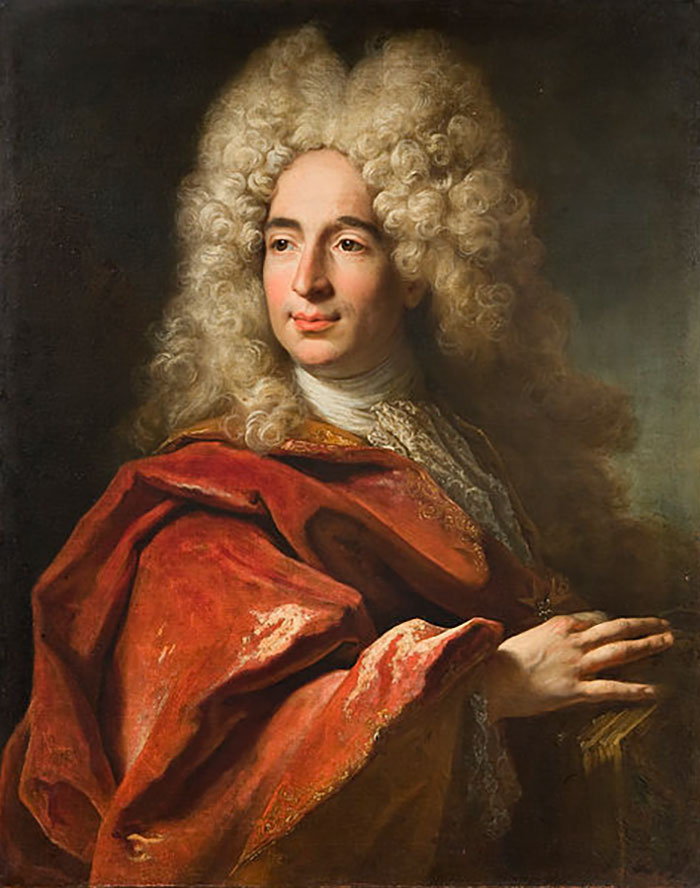
Origin: Back in the 18th century, the most important political figures would wear the biggest wigs, hence today influential people are called big wigs.
In the UK we still use the phrase bigwigs though fortunately don't tend to wear them. Not that type anyway!!
We use the term in the US all the time as well but also, do not wear the wigs.
Load More Replies...The reason for the wigs? A syphilis epidemic in the late 1500s in Europe left people with patchy hair loss.
I came up with a term for modern day hairstyles. Faffro, hair that looks like it takes an age to do and still looks a mess.
Sorry - I'm still not over the fact that we can edit our own comments now!!!
Load More Replies...Here (Australia) it is used to mean someone who *thinks* they are important, and keeps telling you so.
Yep, that definitely sounds like the political big wigs here in the US.. they think they are all that but can't rightfully fix any issue.but sure make lots of BS and money.
Load More Replies...England and France for definite, probably a lot of others. And we're talking like hundreds of years ago. Judges still wear wigs like this ( on a smaller scale) in a lot of places.
England mainly - as you can see from the pic the wigs did get quite ridiculous and weren't cheap so you needed to be wealthy.
Load More Replies...Caught Red-Handed
Meaning: Used to indicate that a person has been discovered in or just after the act of doing something wrong or illegal.
Origin: There was an old law stating that if someone butchered an animal that didn’t belong to him, he would only be punished if he was caught with blood on his hands. If one was caught with the meat but his hands were clean, he would not be punished.
There is probably some kind of context to it, maybe people would share the meat without informing the people eating it that it was stolen, so innocent people were getting accused of something to that nature.
Load More Replies...I'm inclined to doubt this... I'm fairly certain that that to be "caught red handed" just means exactly what it says: to be caught with blood on your hands. So, if there was a murder and you're the one caught with blood on your hands, then it's a good bet you're the one who did it. Simple explanation, need to invoke arcane (and dubious) butchering laws...
Not as intriguing as having your tongue cut out for whistling on a Tuesday!
I was on a jury once that convicted a bank robber. We deliberated for like 5 minutes before rendering our verdict. The reason we came back so quickly? The evidence was clear. The bank robber was caught red handed in the most literal sense. The die-pack exploded.
Arabic speakers say: “caught wearing the crime” like clothes. don’t know way.
Raining Cats And Dogs
Meaning: Rain very hard.
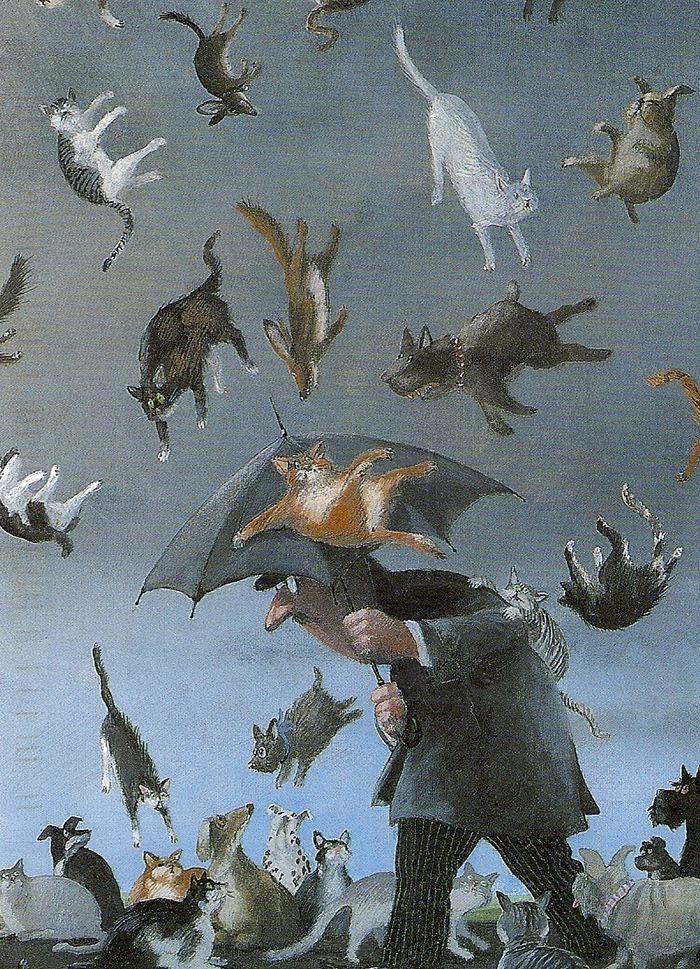
Origin: This idiom has two stories that try to explain its origin. The first explanation says that the origin of this phrase comes from Norse mythology, where cats would symbolise heavy rains and dogs were associated with the God of storms, Odin. The second version says that in 16th century England, houses had thatched roofs which were one of the few places where animals were able to get warm. Sometimes, when it would start to rain heavily, roofs would get slippery and cats and dogs would fall off, making it look like it’s raining cats and dogs!
Not entirely true Mathias. Freja, godess of love, heartache and birth, had cats. But none of them ever rained down from heaven!
norse mythologi doesnt speak of cats. and Odin is not the god of storms. Thor is. odin is the All Father. The god of gods. on the whole dogs were companions. Ravens on the other hand were special. As Odins ravens Hygin and Mygin would serve as eyes and ears of Odin. Leaving many viking and commonfolk wondering when they saw a raven. If it was Hygin or Mygin keeping an eye on them. I am now questioning everything in these "origins" when you cant even be bothered to read up on the difference between Thor and Odin.
Really? Yet Freya rides a charoit driven by two flying cats. They were given to her as kittens by Thor, often depicted as blue. Rarely depicted with wings & their size depends on the translation. But there are definitely at least 2 cats in Norse mythology.
Load More Replies...One theory is that in Medieval times, street cats and dogs often got caught up in the runoff after a storm and drown in the ditches next to streets. If cats were seeking refuge from the cold, they would be INSIDE the houses, not outside where they would get washed away! And how would dogs get up there? More possibilities are here: https://www.loc.gov/rr/scitech/mysteries/rainingcats.html
It was raining cats and dogs today - and I stepped in a poodle...
As it can rain frogs, I'd be tempted to say it could be an exageration, like "imagine how strong must be to make fly and drop animals with the size of cats and dogs". However, British culture is not exagerated so I don't think so. :S
British culture is not exaggerated? Curiouser and curiouser.
Load More Replies...The animals sliding off the roofs is the one I heard a long time ago
I thought it come from small twisters or dust devils picking up pets and throwing them through the air. The original meaning of raining cats and dogs is actually a translation of an ancient Egyptian text that referred to the end of days or really bad storms with lighting and it was the cat and dog gods duking it out.
It comes from Victorian times and possibly before. Where roofs were thatched. When it rained cats and dogs would hide in the roofs. When it rained hard they would fall out. Hence it's raining cats and dogs.
Blood Is Thicker Than Water
Meaning: Family relationships and loyalties are the strongest and most important ones.
Origin: Even though many might think this saying means that we should put family ahead of friends, it actually meant the complete opposite. The full phrase actually was “The blood of the covenant is thicker than the water of the womb,” and it referred to warriors who shared the blood they shed in battles together. These ‘blood brothers’ were said to have stronger bonds than biological brothers.
This is actually referring to how old covenants or contracts were made. An animal was cut in half and the two halves were laid on the ground a few feet apart from each other forming a path. The two making the covenant would walk down the path saying "may this be done to me should I break my oath"
But what does that have to do with blood being thicker than water ?
Load More Replies...blood is thicker then water, but maple syrup is thicker then blood, therefore pancakes are more important than family
That's kind of sad. How could someone betray. Their own family for the likes of a group you entered. And people wonder what's wrong with people. I think it started with that.
This has to be the most state the obvious idiom ever. Nice observation
The fool thing is, Blood of the covenant is thicker than water of the womb.
I've heard conflicting accounts on this, or rather that no evidence has been found suggesting that the meanings ever switched nor that it was initially about blood brothers. https://www.reddit.com/r/linguistics/comments/37a4lg/is_it_true_that_the_phrase_blood_is_thicker_than/
Don't Look A Gift Horse In The Mouth
Meaning: Find fault with something that has been received as a gift or favor.
Origin: While buying a horse, people would determine the horse’s age and condition based on its teeth, and then decide whether they want to buy it or not. This is the reason why people use this idiom to say it is rude to look for flaws in a thing that was given to you as a gift.

Well this is the first one I've come across on this article that I can unequivocally say is true. (Not saying the others are definitely lies, but rather that they may be missing some historical context or espousing some popular, but untrue theories on the origins.)
They only look to see the surface value of the gift. They not only fail to consider the thoughtfulness of the giver, they ignore and overlook the intrinsic value that the object can provide to the recipient. Many times the giver has a greater understanding of the recipients needs than the recipient themselves.
Load More Replies...Here's one I heard while living in the UK: One white sock, buy him. Two white socks, try him. Three white socks doubt him. Four white socks, do without him. Four white socks and a long white nose, hit him on the head and feed him to the crows. I have one with no white socks and a long white nose. Not sure how I made out in the deal.
True. The way to evaluate an horse age is to count the teeth crowns. Since horses chews always moving the upper and lower arc in the same directions, teeth crowns start fading diagonally, each couple every 2 years so counting them you can tell approximately an horse age, more than guessing the age, you can identify if his ID is true, based on its documents, if it says the horse is 5 years old but is left with one tooth in his mouth, that's not his ID, apart that in extreme situations the phisical shapes will tell the same as teeth. Another parameter is that teeth nowadays in ranch living horses, must be took care of on a regular basis, or the horse will not be in condition to chew properly soon, with visible phisical conseguences.
This is so cool I knew this could be done but never realised the full logic of why
Load More Replies...There is usually nothing more expensive than a "Free" Horse !...the feed the up keep etc.
Are you sure its meaning was intended of the gift and not the giver. As some tend to ask the giver why they presented them with such gift and then state the phrase.
Barking Up The Wrong Tree
Meaning: Be pursuing a mistaken or misguided line of thought or course of action.
Origin: This phrase refers to hunting dogs who chase their prey up a tree. Once it climbed the tree the dogs bark at them, yet sometimes the dogs would continue barking even if the prey was no longer there.
My tiny little dog barks at the tree in our garden as she saw a cat there once, ages ago.
Load More Replies...Is the top 10 not enough for you? Well, there are more common English sayings you can read up on. While they might not be at the top, you shouldn’t write off the rest. While they might be old and dated, the origins of common sayings are still relevant today. Let’s go ahead and explore them!
Turn A Blind Eye
Meaning: Pretend not to notice.
Origin: It is believed that this phrase originates with naval hero Horatio Nelson, who used his blind eye to look through his telescope. This way he was able to avoid signals from his superior, who wanted him to withdraw from battle. He attacked, nevertheless, and was victorious.
"I have a right to be blind sometimes. I really do not see the signal," -Horatio Nelson, Battle of Copenhagen
Bite The Bullet
Meaning: Decide to do something difficult or unpleasant that one has been putting off or hesitating over.
Origin: During battles there was no time to administer anesthesias while performing surgeries. Because of that, patients were made to bite down on bullets to distract themselves from the pain.
I don't believe it. Bullets are hard and round, difficult to be bitten without being rocketted or swallowed and hard enough to damage teeth... How a bad idea when you can just bite a piece of clothe, for example.
I think when you are getting your leg sawed off with a hacksaw, you aren't worried about your teeth.
Load More Replies...Recently a lot are saying that that didn't really happen that often, and that bullets with teeth marks in them are more likely from people who were dehydrated while marching and so they chewed on a bullet to keep their saliva glands active.
If soldiers did chew on bullets because of thirst I wonder how many died of lead poisoning. Lead in solution (saliva) going directly into the body? Bad news.
It's not that there was no time for anesthesia, it's that modern anesthetics had not been invented yet (alcohol was sometimes used but not that effective).
One For The Road
Meaning: A final drink before leaving a place.
Origin: During the middle ages, the condemned ones were taken through what today is known as Oxford Street to their execution. During this final trip, the cart would stop and they would be allowed to have one final drink before their death.
Said mostly to be myth regarding prisoners on their way to Tyburn. However, it's origins are said to be linked to provisions for a journey. If travellers wanted to eat on their journey they had to take their food with them. Whatever provision one made for one's journey was said to be 'for the road'. It isn't about a drink being quick at all but most likely the last. Taking 'one for the road' was when people were most likely to be travelling on foot. Different from the stirrup cup which is a cup of wine or other alcoholic drink offered to a person who are on horseback and about to depart on a journey.
Yeah, I think that explanation is simpler and more likely.
Load More Replies...Yeah I don't agree with this either. To me, one for the road means, a quick last drink as you're leaving, like, rather than just getting up and leaving, saying, I'll have one for the road also is kind of a respectful nod to others to say that they'll leave soon. Plus, it's a quick thing, as in, you're almost still drinking it as you're walking away down the road, if that makes sense. As it's a parting gesture.
Never quick! It's the last drink, or last drinks as you can have several 'for the road'. Think Dilly might be 'spot on' about travellers from ye olden days.
Load More Replies...You offered your guest Who was about to leave on horseback, a wee deoch an doris before they go away. There was a special cup for that- it was called a stirrup cup. Look them up they are very beautiful!
Unlike;y. More like;y: it's a version of the 'stirrup cup'--the parting drink before guests rode away.
Yeah, I'm finding the given explanation hard to swallow as well. I can understand giving a person an opportunity to say his last words, but I'm doubtful they're about to execute someone but want to get them a drink first.
Load More Replies...Honeymoon
Meaning: A holiday spent together by a newly married couple.
Origin: According to tradition, a newly wed couple would have to drink a beverage with honey for an entire month for fertility and good luck.

The Honeymoon was the whole month after a wedding rather than any kind of a holiday - which really is not a very old tradition. It was when the bride's father would give the groom all the mead he wanted. Mead is a honey beer. It was called the Honey Month by the Babylonians but then (due to it being a lunar calendar) became honey moon.
It's more accurate to say that mead is honey wine, not honey beer, although that in itself is not entirely accurate. But less so than refering to it as beer, where the fermented sugars are derived from malted grains, usually barley.
Load More Replies...That and it was the first time they got to see each other's sweet bottoms ;)
My husband bought a bottle of Mead for us on our wedding night, having read that honeymoon referred to the time it takes for honey to ferment injected with yeast. Right or wrong, I thought it was a romantic gesture.
Load More Replies...Honeymoon actually refers to the Moon, the full Moon, seen as symbol of love, made out of honey. Thus, honeymoon means, in simple terms, love as sweet as honey.
@bill marsano Actually it means literal honey. It's an old Norse tradition.
White Elephant
Meaning: A possession that is useless or troublesome, especially one that is expensive to maintain or difficult to dispose of.
Origin: White elephants were considered to be sacred creatures in Thailand, yet they were also very hard to take care of. It is believed that Siamese kinds (now Thailand) would gift white elephants as a subtle form of punishment, since taking care of this animal would drive the recipient into financial ruin.

And because it was a highly visible gift from the king, it was impossible to get rid of.
Though that would be true for any kind of elephant white or otherwise. Also, white elephants are actually pale\dusky pink or have pink splotches on them rather than being completely white.
Break A Leg
Meaning: Good luck!
Origin: It is believed that the phrase dates to World War I Germany and a saying used by German actors “Hals- und Beinbruch” which translates to “a broken neck and a broken leg.” Besides that, it still doesn’t make sense why would you wish someone to break a leg? Well, as it turns out, popular folklore down through the ages encouraged people to wish others bad luck since it was believed that wishing someone good luck would tempt evil spirits. So, you guessed it, people started wishing each other to break a leg in order for them not to break one!
Break a leg is actually in reference to the leg line. Venues would often have more acts than stage time, and acts would only get paid if they performed. If they went up, they passed the leg line, so they got paid. Thus, break a leg, was to go get paid.
I swear the comment section is more informative than the post 😃
Load More Replies...As a performer, I always understood this as a superstition of the theatre. Like if you wish someone a great show then it may jinx it or bring them bad luck.... kind of in a "pride comes before a fall way". It's seemed more polite for other performers to say to each other "break a leg" because that conversely means "I hope you do well" by not saying it, by actually saying the opposite. Kind of like not saying the name of the Scottish play in a theatre, etc
I think, sorry, you miss the point. Yes, that is the superstition that is enacted now. However, the post seeks to explain the history of the superstition. There are a number of theories but the absolute truth is NOT known. Some of the popular theories are listed here eg leg line, or dancers saying 'merde' ie s**t.
Load More Replies...Actually, the German "Hals- und Beinbruch" itself is derived from a jiddish saying ("hatslokhe u brokhe"), meaning "Success (Good Luck) and Blessings", which Germans have misheard as "Hals- und Beinbruch" because it sounds similar.
I've heard another explanation, it was said to actors as they step out to give a performance, if they did well they would be called out for so many encores it would great the handle (leg) of the manually operated curtains. Someone would turn the handle to open and close the heavy velvet curtains!
Break a leg is a punny way to wish someone good luck for acting. When someone breaks a leg they end up in a cast. You are telling the person, you hope they get cast from their audition.
The German version is a malapropism from the jiddish "hatslokhe u brokhe" which means something like "success and blessings".
My understanding of this phrase is that it comes from the time of Shakespeare & Marlowe. In those days, if an audience considered a performance to be a bad one, they would throw rotted food at the performer to show their displeasure. Equally, a good performance was rewarded with flowers, coins, etc, to show appreciation. During a curtain call, a performer would have to bend down (leg bends or breaks at the knee), i.e. 'break a leg', to pick up the coins and/or flowers. Therefore to say 'Break a leg' meant 'good luck' or 'may you give a good performance', etc. It is also true that performers can be a superstitious lot and that it is now considered bad luck to say 'good luck' before a performance. Much like Shakespeare's Macbeth is never called that within the confines of a theatre but is instead referred to as 'the Scottish play'...
Yall are so wrong.. the phrase break a leg was told to people before an audition in hopes they get CAST ... break a leg CAST get it...
Give The Cold Shoulder
Meaning: Reject or be deliberately unfriendly to.
Origin: This saying, that is currently considered to describe someone rude, was actually considered an act of politeness. During medieval times in England, after everyone was done feasting, the host would give his guests a cold piece of meat from the shoulder of beef or pork as a way of showing that it was time for everyone to leave.
I also read that when a not so desirable person arrived at the hosts "castle", to show the visitor was not over welcome the host would not hold through the trouble of preparing a hot meal and five the left overs, a cold shoulder
Sorry: not go through the trouble of preparing a hot meal and would provide leftovers, a cold shoulder
Load More Replies...Riding Shotgun
Meaning: Used to claim the right to sit in the front passenger seat of a vehicle on a particular journey.
Origin: This expression refers to the passenger of an old fashioned stagecoach, who sat next to the driver with a shotgun to protect from attackers and robbers along the way. There is no evidence to suggest the expression was actually used in times of the ‘Wild West,’ but most likely came about much later on, when media and films began to romanticize the period.
Surely the person was unlikely to have been some random passenger? Who'd actually WANT to volunteer for that seat anyway? Make more sense in those days to call 'you've got shotgun' and dive inside the coach for safety!! I've also read that the person riding shotgun was a guard of some kind.
Why the downvote for QUESTIONS ??? Questions that make sense? Come on - why would anyone seriously want to volunteer to be in more danger? Moron downvoters. Go on! Downvote away! If you don't agree - why not say why? Share your reason rather than hide behind anonymous downvoting.
Load More Replies...The shotgun rider worked for the stagecoach company. They would never just choose a passenger. What if there were no able bodied men riding in that coach?
There is no mention of the shotgun seat being something people volunteered for .what a pointless argument
Stop police brutality. The cop threw me in the back of his squad car, even after I yelled "Shotgun" !
Huh. I always thought it was more like, I have a shotgun, so I'm sitting in the front, and you have to do what I say because I have a gun?!
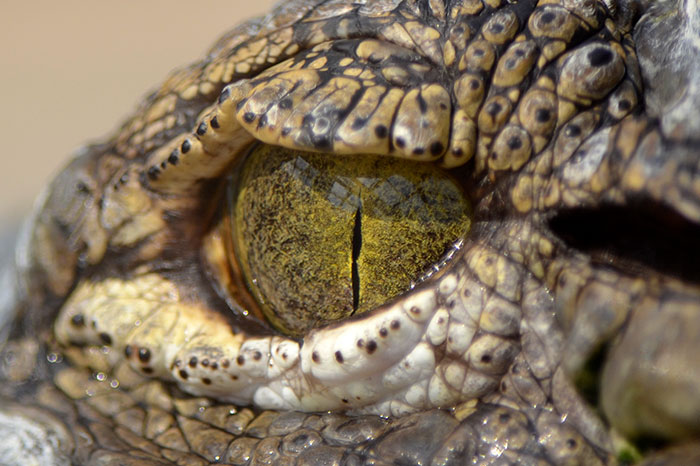
Crocodile Tears
Meaning: Tears or expressions of sorrow that are insincere.
Origin: Written in the 14th century, a book called “The Travels of Sir John Mandeville” recounts a knight’s adventures through Asia. In the book it says that crocodiles shed tears while eating a man they captured. Even though it is factually inaccurate, the phrase ‘crocodile tears’ found its way into Shakespeare’s work and became an idiom in the 16th century, symbolizing insincere grief.
There is a story about crocodile tears in the Panchatantra which is much older, but I think this phrase came up independently in many different cultures.
Kick The Bucket
Meaning: To die.
Origin: When killing a cow at slaughterhouses, people would place a bucket under the animal while it was positioned on a pulley. While trying to adjust the animal, the cow would kick out its legs and therefore kick the bucket before being killed.
Eh? Don't understand how that works. I also thought it was from where the person with their head in a slip noose would kick the bucket so as to commit suicide.
The bucket was probably placed to collect the blood after the throat was slit.
Load More Replies...I believe that this originated from another famous saying ‘sent to Coventry’ in which prisoners that were sent to Coventry prison would not be spoken to for the entirety of their stay. Hence nobody speaks to you when today we say sent to Coventry. Within the cells of the prisoners were a noose and a bucket. Those that could not stand the silence and only the thoughts of their own minds would stand on the bucket attach the noose and then kick the bucket to end their lives.
Always heard it was the bucket you stand on while they put on the noose..
In Poland we say "to kick the calendar" but unfortunately I don't know the origin of that saying.
Don't know the origin either and just guessing that it's meaning could it be connected to calendars showing days and dates and if it was kicked away out of sight the days/dates shown on it wouldn't be there anymore. A metaphor for the days of one's life not being there anymore i.e. ending?
Load More Replies...Show Your True Colors
Meaning: Reveal one's real character or intentions, especially when these are disreputable or dishonorable.
Origin: To confuse their enemies, warships would use multiple flags. However warfare rules dictated that the ships must show its actual flag before firing and hence, the ships would then display its true colors.
Rats - you realise you have ruined my night with THAT song.
Load More Replies...ok, but if the point is to confuse enemy ships, why would a true enemy bother showing their true colors? why would a boat with ill intentions feel obligated to observe this rule?
Agree with the explanation. Wonder how many ignored the rules of war when the consequences of complying might involve being blown out of the water if while you were changing your colours the enemy didn't bother and just fired first?
He showed his true metal. That what People say in Arabic countries.
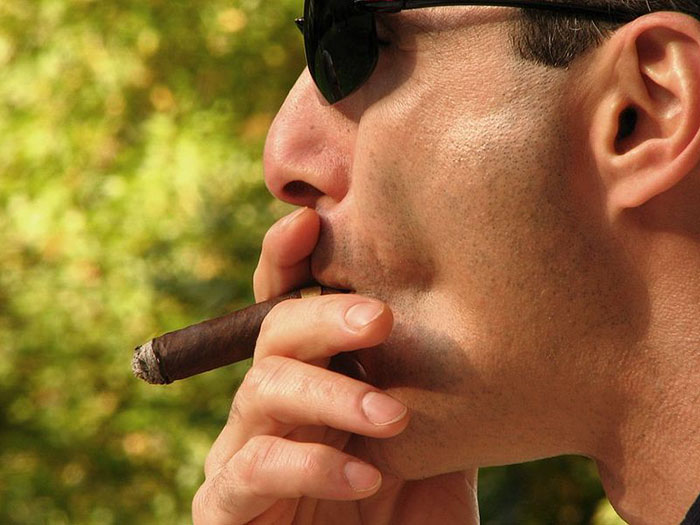
Close But No Cigar
Meaning: Almost but not quite successful.
Origin: In the late 19th century carnival games were targeted to adults and not children, so the winners would get a cigar as a prize instead of stuffed animals. If the person was close to winning but did not succeed they’d say it was ‘close but no cigar’.
I have. And I use it when I see people, especially women wearing outfits with colors that don't match or come close but don't quite make it.
Load More Replies..."Sometimes a cigar is only a cigar." -Sigmund Freud
Load More Replies...Waking Up On The Wrong Side Of The Bed
Meaning: Start the day in a bad temper.
Origin: Throughout history the left side of basically anything was considered to be ‘the evil side,’ so waking up on the left side was also considered a sign of bad luck. To ward off evil, house owners would push the left sides of the beds to the corner, so their guests would have no other option than to get up on the right side.
In catalan we say the same but it depens on the first foot that touches the floor, if you wake up "with your left foot" you'll have bad temper (or sometimes bad luck) for at least all the morning!
Same in German.. But here its more like a question you ask a grumpy person: " Bist Du heute mit dem falschen Fuß aufgestanden?" --> "Did you get up on the wrong foot this morning?"
Load More Replies...we say getting out of the wrong side of the bed, not waking up on the wrong side.
Yes, but next to the wall. I imagine that both get up together or that the early bird gets the right side : D
Load More Replies...A subjective point of view, what the assassin is looking at this moment....
Load More Replies...How unfair for married couples…or one of them, if only one side is good
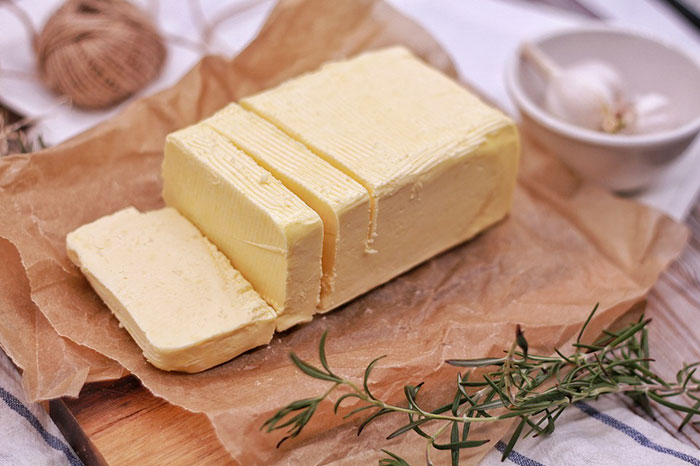
Load More Replies...Butter Someone Up
Meaning: Flatter or otherwise ingratiate oneself with someone.
Origin: The people ancient India used to throw balls of clarified butter at the statues of gods in order to seek a favor.
"... throw balls of clarified butter at the statues of gods..." am I alone in thinking this sounds like a hellva fun time?
"Hey humans, Brahma here.... do me a solid and throw some grease balls at me. Thanks, peeps, you're the best!"
I’m not sure this is right. Never heard of this tradition and I’m Indian! It would be considered extremely rude to throw food at a statue of a god. They do offer butter to certain deities and other such “bribes” in order to gain favour. Likely it came from legends of lord Krishna who loved butter and who, as a child, had to be bribed with butter to behave.
I am Indian and this sounds a little strange to me(and is definitely not prevalent now) though clarified butter is still used in various Hindu religious activities.
Ghee I don’t know about this . . !?? I’m not a believer of false gods and don’t like messes
WTF? That is NOT accurate. One does not throw things at a deity. One offers butter, ghee, and other offerings.
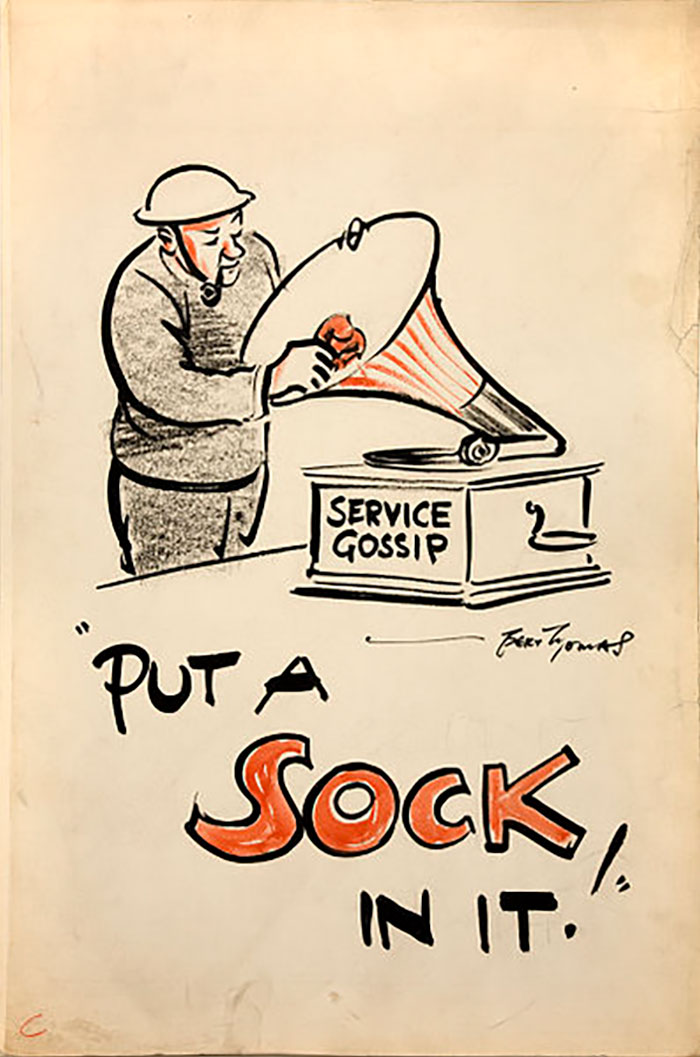
Put A Sock In It
Meaning: Stop talking.
Origin: In the late 19th century people would use woollen socks to stuff the horns of their gramophones or record players to lower the sound, since these machines had no volume controllers.
Sun Of A Gun
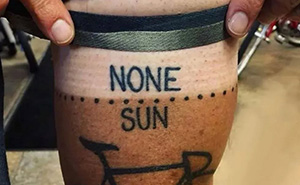
Meaning: A jocular or affectionate way of addressing or referring to someone.
Origin: Back in the day, sailors would sometimes take their wives on long ocean voyages. It is believed that if the woman gave birth on a ship, it should take place between the cannons on the ship’s gun deck, since it was the most secluded place. Because of this reason, a child that was born on a ship would be called ‘a son of a gun’.
I've heard that it came from the fact that an unmarried woman (such as the captain's daughter) might get knocked up by one of the sailors, who didn't want to get killed, so they'd say the gun did it, hence "son of a gun"
wives maybe but ladies of negotiable affection yes so the child had an unknown father and the captain wrote the birth into the log as son of the gun
The "Son-of-a-Gun" title was given to infants born of prostitutes onboard ships. In the past, prostitutes were sometimes taken aboard vessels to offer their services to sailors, while underway. There were occasions when a prostitute would give birth to a child, while onboard ship. Being the ship's prostitute, having multiple sexual encounters with multiple men, made determining the father difficult or impossible. It was also unlikely that any of the ship's company would claim parentage. Upon the child's birth, supposedly in a makeshift sickbay, on the gundeck, when the event was entered in the ship's deck log, the child would be described as a "Son-of-a-Gun," as the only father to standby for the birth was a cannon. This is what was taught to me at United States Navy Recruit Training Command Orlando, Florida; Company C078; August - October 1993.
You used the wrong son. Sun is the orb that lights up the day. Son is the male offspring.
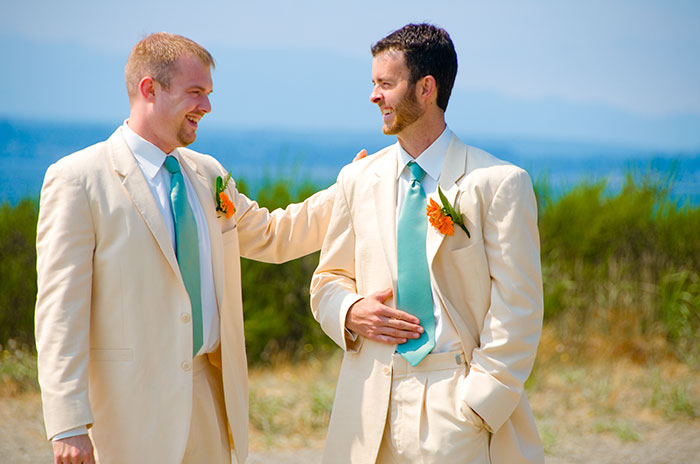
Best Man
Meaning: A male friend or relative chosen by a bridegroom to assist him at his wedding.
Origin: It is said that during feudal days it was possible that a rival Lord would try to break up a wedding ceremony and steal the bride for political reasons. To avoid any trouble, grooms would ask their best friends to stand next to them during the ceremony so they would help during the possible battle. The man, standing next to the groom was named ‘Best Man’.
also in old days if the bridegroom did a runner the bride had to marry or it would be bad luck so she married the next best man
What I heard from several sources was if a village was low on women someone intent on marrying would sneak into another village and literally steal their bride. Because of the risk they would enlist the "best man" in his village to come with and provide protection.
Born With A Silver Spoon In Your Mouth
Meaning: Be born into a wealthy family of high social standing.
Origin: It is an old tradition for godparents to gift a silver spoon to a christened child. However, not everyone was able to afford this type of luxury gift so those who did receive the spoon as a gift were considered to be wealthy, sometimes even spoiled.
We still give our godchildren a silver (or silver plated) spoon for their christening in my country.
This lady I use to work with who I wasn't very fond of and clearly not fond of me told me I was born with a silver spoon because I had never heard of government cheese. I grew up in the 90s and government cheese was mostly from the 80s so even if my family was poor it was when I was too young to remember. My parents also both worked and provided for my brother and I, they hid us from things like poverty so even if we did get government cheese, I didn't know about it. This was years ago and I still remember it. As you can understand it really bothered me.
Government cheese sitting in my fridge right now so,
Load More Replies...Steal One's Thunder
Meaning: Win praise for oneself by pre-empting someone else's attempt to impress.
Origin: You think that you’ve done something awesome and unique, but someone got in there first and took your credit! Spare a thought for playwright John Dennis who, back in the 18th Century, made a machine that could nicely mimic the sound of thunder for his play. Sadly, his play wasn’t a success, but somebody had taken note of his clever invention. When, later on in another theatre, Dennis found somebody had copied his thunder machine and was using it without credit, he got mad. Really mad. Somebody had stolen his thunder!
See also: "He seized the lightning from Heaven and the scepter from the Tyrants." -Turgot on Benjamin Franklin, 1778. Or in original latin: "Eripuit Coelo fulmen, mox Sceptra Tyrannis"
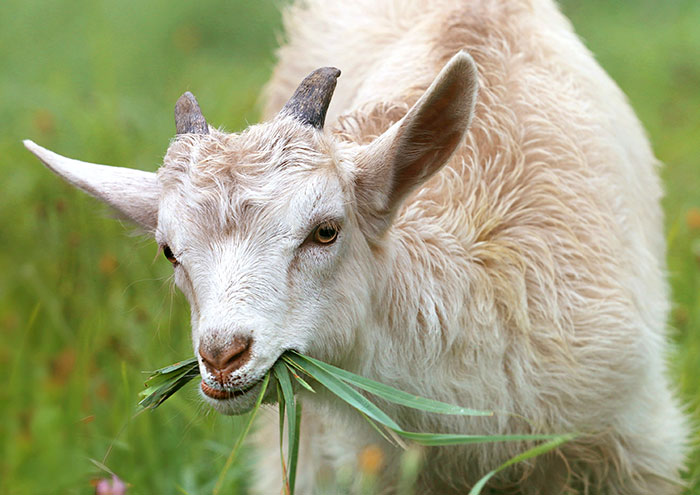
Get One's Goat
Meaning: Irritate someone.
Origin: During horse racing some horses would get anxious, so owners would places goats in the stalls with them to calm them down. Rival horse owners would sometimes steal these goats therefore upsetting the horse and making it more likely to lose.
With all my anxiety, I'd have a service goat lol
Load More Replies...A lot of farmers still use goats when transporting animals long distance. They'll put a goat in the horse trailer to keep them calm. Like an emotional support animal....for an animal.
sort of on topic...if the horses "love racing" so much, why do the jockeys use whips?
Some horses slow down or get distracted when they've pulled away, and the whip is used as a "Hey, pay attention" aid. Some horses lug in or out, and giving them a few taps usually straightens them out before they cut another horse off. Whips are riding aids, not beat-sticks, and in many countries jockeys are fined/suspended for over-use of the whip, or improper use.
Load More Replies...What Are Old People’s Sayings?
Funny or not, old sayings and their meanings can feel slightly dated. However, they were once fashionable and trendy, just like slang from the 20th century. Hip then, today, it’s nothing more than hits of nostalgia. So, don't get too angry the next time your parents or grandparents spew some old sayings about life. They are just trying to enjoy the good old days.
Achilles Heel
Meaning: A weakness or vulnerable point.
Origin: This phrase comes from Greek mythology, where Thetis dipped her son Achilles in the Styx, a river that was believed to be a source of incredible power and invulnerability. However, this was holding her son by his heel, meaning it was the only part of his body that was not touched by water, making his heel vulnerable. Eventually, Achilles was killed by the shot of an arrow in his heel.
I would find it strange if everybody did. Most, sure. All, no. We don't all have access to the same level of education. People come from such vastly different circumstances. Different countries, different backgrounds. What if a person is now doing well but came from a country where war caused evacuation and schooling was the last thing on anyone's mind? They may have been able to get the basics but an education including mythology? Hardly an essential if you are trying to catch up. Even in the UK there are situations that prevent children going to school. Period poverty and being a carer for parents for example. To assume we all have had the same privilege with education is excluding. We should encourage and be pleased to help others if they ask questions. Not condemn then and downvote them to bits ensuring their comment is buried at the end of the thread and maybe missed by someone more thoughtful.
Load More Replies...Comedian Louis C.K. 2017 Special has a very funny 5 min bite on this!
I’m from Atlanta Georgia, if you go out to rural surrounding areas & use the reference many ppl wouldn’t “get it” 😔
My Ears Are Burning
Meaning: One is subconsciously aware of being talked about or criticized.
Origin: The idiom dates back to ancient Romans who believed that burning sensations in various organs had different meanings. In fact, it was believed that if your left ear is burning it signaled an evil intent, and if your right ear was burning you were actually being praised.
In Catalan ears are whistling, not burning. We use this expression a lot 8O
I actually grew up in England in the 90'a with my mother telling me similar to this! And it has only now come back to my memory!!
left hand itches you're coming into money, right hand itches you're about to lose it
I've heard this one but the other way round. Left for the money to leave and right hand to receive money.
Load More Replies...Let The Cat Out Of The Bag
Meaning: Reveal a secret carelessly or by mistake.
Origin: Some time ago farmers who sold pigs would bring them to the market wrapped up in a bag. Unscrupulous ones would replace the pig with a cat and if someone would accidentally let the cat out, their fraud would be uncovered.

Unlikely: https://www.snopes.com/fact-check/let-the-cat-out-of-the-bag/ More likely, it has more to do with the fact that once a cat has gotten out of a bag, there is no putting it back in.
haha yes, "some time ago" isn't very convincing in this story.
Load More Replies...Hear that cats? Apparently you have low to no value. Don't scratch the messenger please.
More likely to relate to cat o' nine tails and the fact once the cat was brought out, the punishment(flogging) could not be avoided.
Let the cat out of the bag is strictly to do with the cat o nine tails. If you did something wrong on a ship, they would remark "don't let the cat out the bag".
In Sweden we say that you buy the pig in a bag, meaning you're taking a chance om getting the right thing without making sure.
We in England say buy a pig in a poke to mean the same thing.
Load More Replies...Completely rong! The expression comes from the Peter Blakely song Who Let My Secret Out?
Very unlikely- far more likely to be one of many phrases referring to 'the cat 'o 9 tails' the whip used to flog miscreant sailors on ships. IE a secret comes out let's the 'cat out of the bag'as the sailor will be flogged
Blue Blood
Meaning: Noble birth.
Origin: Saying that some has blue blood comes from the Middle Ages, where it was believed that those who had pale skin (meaning their ancestor have not inter-married with darker skin partners) were noble or aristocrat. The main reasoning behind it is that when your skin is really pale, the veins are more visible and they usually look quite blue.
Rather that not having inter-married with darker skin partners, it meant that these people did not have to work outside (like the farmers) and thus would not get their skin tanned by the sun.
I heard somewhere that it is because being privileged aristocrats didn't have to work or move about much as they had servants to do everything for them. This lack of activity did not help their heart much or their health. As one sign of an impaired heart can be a blue tinge to lips and veins etc they therefore appeared to have blue blood.
Load More Replies...The term blue blood is taken from the Spanish term Sangre Azul, which literally translates as blue blood. Old, Castilian families boasted that they had no Moorish antecedents in their bloodlines, and pointed to the blue veins in their arms as proof. Obviously, their veins appeared very blue against their pale white skin. This term migrated into English in the early 1800s and THEN became about being pale from not working outside.
I was taught that as well Dilly. It changed to the slightly better not working under the sun but the expression Sangre Azul was as you say. Sorry Miss Cris. You can dislike it but your own argument actually supports it. That you couldn't easily tell made them very keen to find a way to do so. We are talking centuries ago and the Moorish peoples were not considered, well, words fail me. They were not wanted in the blood line. Then. Not now.
Load More Replies...Sure. No reason why not. But very white people often have extra super blue-ish veins. The contrast with the pale skin make them even look more blue. That's all. It doesn't mean a tanned or darker skin can't show blue veins at all...
Load More Replies...Totally wrong! Blue blood refers to weak bastards who have no stomach for a fight!
they make a bath and had cleaner skin and the veins looked blye.the common people the bath not very ....actualy never and the skin look dark
It's about working or not, being or not exposed to sun and so become tanned.
Load More Replies...This is wrong, nothing to do with race, all to do with protecting the skin from the sun. The rich prided themselves on pale skin showing they didnt labour in the sun year round and get weather worn like the working classes. Thus their veins showed blue.
Sorry, but this is complete nonsense. First of all: in the Medieval period common people usually married just their next door/village partners. Only Nobles married people from "far away". So much about the darker skin people... Second: common people (especially farmers) worked the whole day outside in the sun, their skin tanned extremly. While Noble people stayed inside or under parasols, they stayed very pale, so their veins often appeared blue. That's the whole story.
In Europe and other countries, during the middle ages there was no problems of racism but of classism (as now, by the way). There wasn't a problem to marry a king or a queen of another country and it didn't matter their race. However, the class did matter a lot. Royalties and rich people didn't work and protected well their skin from the sun to show the others their richness. It was also seen as beautiful. On the other side, other people worked mostly in the country and got suntanned.
It changed in the XX century, when suntanned was linked to go on holiday and spend the day skying or on the beach. So getting tanned was seen a higher status thing.
Load More Replies...Every Cloud Has A Silver Lining
Meaning: Negative occurrence may have a positive aspect to it.
Origin: This expression can be traced directly from a piece written in 1634 by English poet John Milton called Comus: A Mask Presented at Ludlow Castle. He spoke of a silver lining of brightness behind a gloomy cloud, and soon afterward ‘Milton’s clouds’ became a staple of English Literature. The proverb ‘every cloud has a silver lining’ eventually came into being in the 1800’s, a time of optimism and positivity in the upper-classes of Victorian England.
The Whole 9 Yards
Meaning: To do everything that is possible or available.
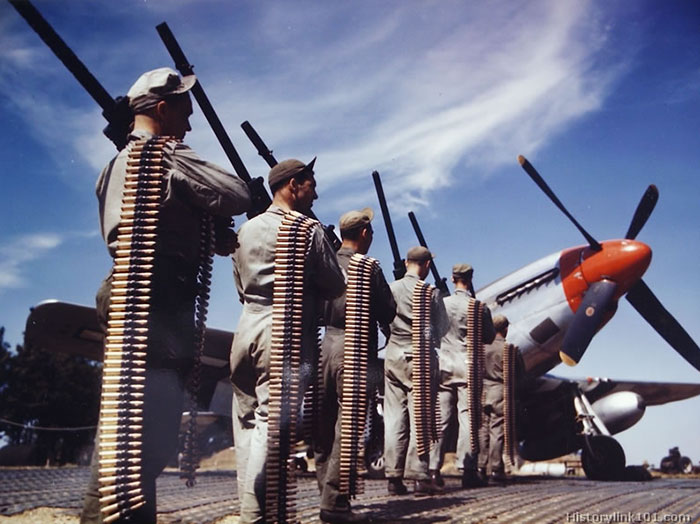
Origin: During World War II, pilots would have a 9-yard chain of ammunition. When a fighter pilot used all of their ammunition on one target, they would give ‘The whole 9 yards.”
There is no consensus on the origin. Bridal veils, saris, burial shrouds, ships sails, kilts - all are offered as explanation older than the american ammunition theory.
This one is very, very wrong. The origin is a LOT older than that - think 17th century. Nine yards of fabric was required to make a proper kilt and plaid. Many people couldn't afford that amount of fabric, so going "the whole nine yards" meant putting on a show of wealth and power. /// I've heard the myth about the guns before - and they may have appropriated the phrase, but they didn't originate it.
@Aunt Messy: When I studied Apparel Design in College, that is exactly what we were taught. Witness some of those dresses in the post about fashion thru the ages. Lol
Load More Replies...Guys, with all respect, 9 yards is pretty close to p 51 mustang payload. Or some aircraft with machine gun weapons. There were other fighters with cannons, with much shorter ammo belts
Yards was also a measure of volume and referred to the most the coal trucks could deliver to homes when coal heated houses. To get a full truck load you took "the whole 9 yards."
Sleep Tight
Meaning: Sleep well (said to someone when parting from them at night).
Origin: It is believed that the saying comes from Shakespeare's time when mattresses were secured by ropes. During that time, sleeping tight meant sleeping with the ropes pulled tight, making a well-sprung bed.
Someone messed this up, as they put "sleep well" instead of "sleep tight".
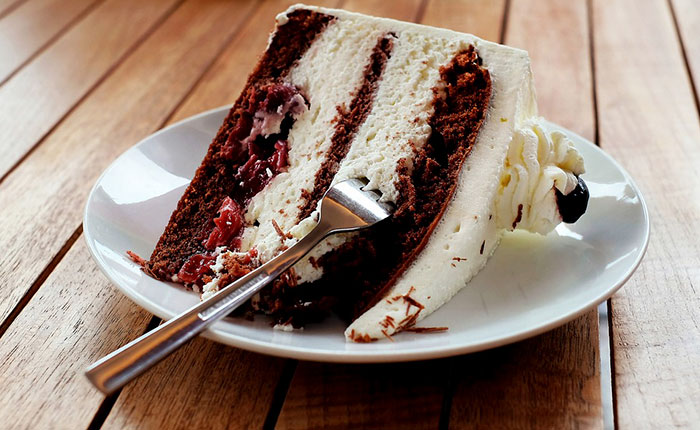
Piece Of Cake
Meaning: Something easily achieved.
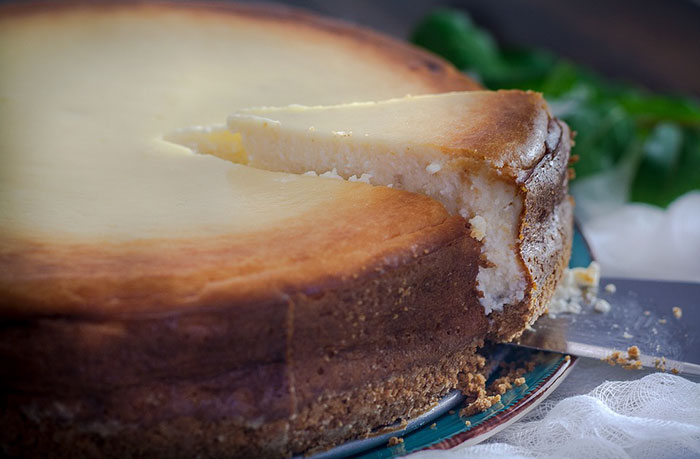
Origin: The saying ‘Piece of Cake’ comes from American poet Ogden Nash who, in 1930, was quoted saying ‘Life’s a piece of cake’.
But now we know... the cake is a lie! (Portal game reference, for you oldsters)
Judging by the picture, I'd have guessed it originated in the Schwarzwald
For those of us who occasionally eat when we’re stressed, we could say “peace of cake” :-D
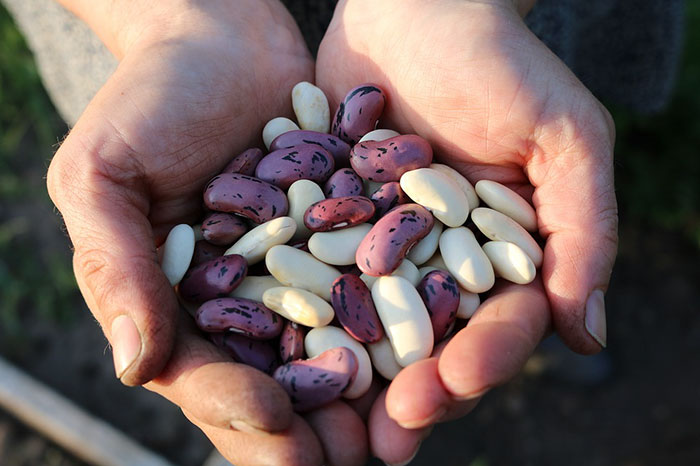
Spill The Beans
Meaning: Reveal secret information unintentionally or indiscreetly.
Origin: This saying comes from Ancient Greece, where voting was done using beans. Citizens would put a white bean into the jar of a candidate they support, and a black one for a candidate that they do not approve of. However, on a few occasions clumsy people would spill the jars, revealing classified information.
There's a Texas legend called "'Bigfoot' Wallace and the Black Bean," about a similar system, but Wikipedia doesn't mention it. It does say that in later years he liked to embellish stories of his life, so that might be the answer.
Pull Out All The Stops
Meaning: Make a very great effort to achieve something.
Origin: Organ consoles have knobs that are called ‘stops’. Without them the organist can play at a much higher volume, so ‘pulling out all the stops’ would let the organist squeeze the maximum volume out of the instrument.
This isn't quite a complete explanation. Classic pipe organs have many sets of pipes, with the stops controlling airflow to each set. With all of the stops pushed in, there is no air movement at all, so there's no sound. Strategically pulling out stops allows the organist to greatly influence the quality of the sound. Pulling out all of the stops activates all of the pipe sets, so it results in a very full sound, and yes, maximum volume.
Run Amok
Meaning: Behave uncontrollably and disruptively.
Origin: The saying comes from the Malaysian word amoq, which describes the bizarre behaviour of tribesmen who, under the influence of opium, would become wild and attack people.

I can't really conceive the idea of someone becoming violent due to opium consumption, but ok.
I was thinking the same thing. Opium is a sedative.
Load More Replies...Malaysian here..amok just literally means bursting out with anger..and people who are 'amok'ing usually will do something out of his mind like attacking people with sharp objects..it can be under any influence like mental disorder..drug abuse..etc
Berserkers were frontline viking units ( And the origin for the expression "To go berserk" ) who were known for their cruelty and savagery. They were believed to consume the infamous Amanita Muscaria to reach these states. It is even speculated that, for fear of the noxious effects, one of them would consume the mushroom while others would then drink his urine. This was because the kidneys would filter it, largely reducing the side effects.
My first thought was that this guy in the pic needs to exfoliate. Just took another look and noticed that he has interesting ears...quite a bit of lobe.
Resting On Laurels
Meaning: Be so satisfied with what one has already achieved that one makes no further effort.
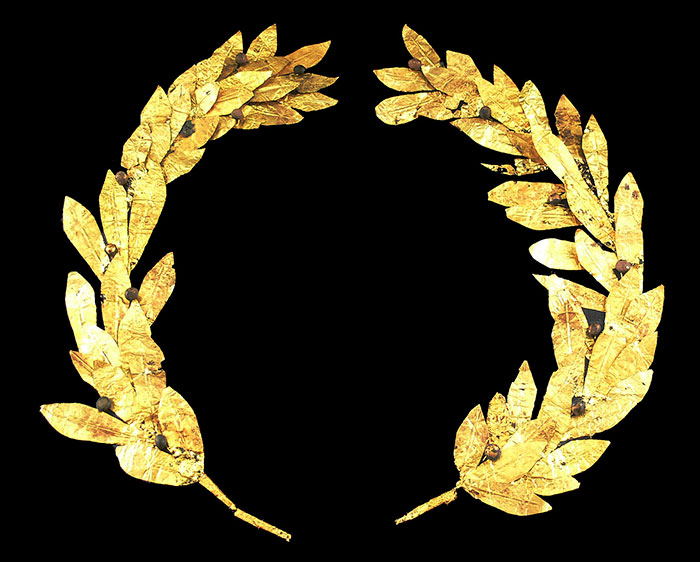
Origin: Since ancient Greece laurel branches symbolized victory and success. This plan was closely tied to Apollo, the god of music, prophecy and poetry. Laurel branches were given to victorious athletes in ancient Greece and later to generals who won important battles, thus the term ‘laureates’ and the phrase ‘resting on laurels’. In the 19th century, the term received a negative connotation to describe those who are overly satisfied with their achievements.

Is it not "resting on ones laurels"? As in the things YOU have achieved, rather than someone else?
Eat Humble Pie
Meaning: Make a humble apology and accept humiliation.
Origin: In the Middle Ages there would be a huge feast after a hunt. The lord of the manor would receive the finest piece of meat, and the ones with a lower status would eat a pie filled with entrails and innards, which were also known as “umbles”. Those who would eat the “umble pie” were considered to be humiliated, since it symbolized their lower status.
Hands Down
Meaning: Easily and decisively; without question.
Origin: Hands down is an idiom born from the world of horse racing. Think about it. You are so far ahead of the chasing pack that you, as the jockey, can sit back, relax, and still win the race even without your hands on the reins. Winning ‘at a canter’ is a similar expression also from the track, but this one is better, hands down.
I remember when Jim Halpert was asked, in the Office Series, who would you do? He answered: Keven, hands down!—avoiding saying: Pam. I love this show.
Take The Piss
Meaning: Mock someone or something.
Origin: Back in the day, when clothes were dyed with natural dye, stale urine was used as a mordant, which stops the natural dye from leaching out of the cloth. The textile industry needed all the urine it could get, so workers would go around and collect specially designated chamber pots full of urine from people’s houses. It was probably the least desirable job at the time, so people who did it would often lie about their profession. And so the question was born from those in doubt: “Really? Are taking the piss?
Sorry, it is true. Taking the mickey or mick also came from micturation which is another word for urination or taking a p**s.
Yes. I agree. Have also heard that the expression taking the micturation was often used by medical students as a polite term for the more widely used one.
Load More Replies...This is an interesting article, but without any historical notes, or references I cannot accept the accuracy of some of these conclusions. For instance the NY times presented an article on the term "the whole nine yards" and conclude that its origins are a mystery.
Pot to piss in, related to poverty. As in ‘ I don’t have a pot to piss in’. You couldn’t take your piss to the tannery without a pot. “I can’t even afford the pot for my piss, I’m so poor.”
It is true that urine was used, and that peope sold it for income. The saying not having a pot to p**s in comes from that fact. Couldnt even sell their urine because no pot to collect it.
Load More Replies...Wolf In Sheep’s Clothing
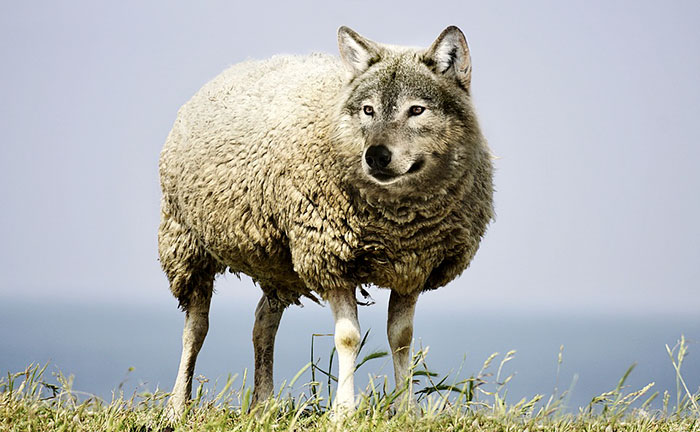
Meaning: A person or thing that appears friendly or harmless but is really hostile.
Origin: The warning that you can’t necessarily trust someone who appears kind and friendly on the outside is centuries old, dating back to the bible. In the English language, The King James Version of the Bible, from 1611, has this passage in Matthew 7:15: Beware of false prophets, which come to you in sheep's clothing, but inwardly they are ravening wolves.

That is in all languages from the Bible, Gospel of Matthew (Matthaeus/Ματθαῖος/Matthieu/Matthäus/Matteo/Mateo etc...) 7:15. That means it goes back at least to the second century.
Pulling Someone’s Leg
Meaning: Deceive someone playfully; tease someone.
Origin: While there is no evidence to back up these claims, there are two popular theories for the origins of this playful expression, neither of them particularly playful. The first relates to thieves in medieval times, who apparently pulled on the legs of their victims to trip them, and swiftly make off with their booty. The second theory comes from the Tyburn, the principal place of execution in Ye Olde England. It referred to the so-called ‘hangers-on’ who tugged at the legs of people being hanged to give them a mercifully swift death. Neither of these theories are really plausible however, so the search for the true origin continues.

Truth is, having your leg pulled relates to the days of swashbucklers. A young sailor on watch had to go down below and quietly wake the other sailors whose turn it was to take the next watch. They would do this by pulling their leg. As part of their initiation, new, young sailors would sometimes get their leg pulled, even though it was not their turn on watch. Once topside, the boy would show up ready for a watch he did not have. "But someone pulled my leg", he would complain, to the joy of the others on watch. The officer of the watch would often join in the laughter and then chastise the boy for not having known the watch schedule the night before. Usually, he was forced to stand the watch anyway as a means of teaching him to know the duty schedule. It usually worked too.
In Catalonia it's "hair". Typical dad pun when someone goes to the hairdresser by the way *sight*
Load More Replies...In British detective stories, people often say, "Pull the other, it's got bells on," when they doubt someone's word. I have always assumed this was a reference to the bells Morris dancers wear around their knees, but I'm not sure. It seems to have the same meaning, anyway.
Did they "swiftly make off with their "booty"' or is it a typo for bounty? Or does Booty mean treasure?? Hmm..Pirates? Lol
no typo, before bounty "booty" was used as most kept there money in there boots.valuable stolen goods, especially those seized in war. "the militias supply themselves with booty from the raided civilian populations" Similar: loot plunder pillage haul prize trophy spoils stolen goods gains ill-gotten gains profits pickings takings winnings swag boodle the goods where as "bounty" was more of an offer of reward for something or someone. boun·ty /ˈboun(t)ē/ noun 1. a sum paid for killing or capturing a person or animal. "there was an increased bounty on his head" Similar: reward prize award recompense remuneration commission consideration premium dividend bonus endowment gratuity tip favor donation handout incentive inducement purse winnings money perk sweetener perquisite guerdon meed lagniappe 2. HISTORICAL a sum paid to encourage trade. "bounties were paid to colonial producers of indigo dye"
Load More Replies...Let Your Hair Down
Meaning: Behave uninhibitedly.
Origin: It was an important rule between Parisian nobles to wear elaborate hairdos while in public, and some of the looks required hours of long work. Clearly, a moment of taking your hair down after a long day became associated with a relaxing ritual.

French Parisian speaking here. Never heard that saying in French. Maybe in originated in a "noble" environment but I don't think it was a French one since we don't have that saying.
It's English and originated from the 17th century for the reason given - so that bit is right!! Bored Panda haven't research all of these very well.
When my daughter was little she would pull on her hair really hard and frantically, when we asked her what she was doing she replied "I'm getting my hair off"!!
To Sell Someone Down The River
Meaning: Betray someone, especially so as to benefit oneself.
Origin: This idiom comes from 19th century, in the Southern states of America. During this period it was already illegal to import slaves, so there would be internal trades where people would ship slaves down the Mississippi river and sell them at the market. For this reason, ‘selling someone down the river’ symbolizes betraying someone and using them for your own good.
This specifically refers to kidnapping free black people in the north and taking them down the river to sell them into slavery.
Also a punishment to a slave in an area that tended to treat slaves better....to sell down the river to an area where they were NOT well treated.
Load More Replies...Didn’t Mark Twain use this phrase as an indictment by a mother to her son who was in debt? She was free but allowed him to sell her, stipulating he would sell her only as a house slave, but he sold her down the river as a field slave, betraying her. Pudd’nhead Wilson maybe?
It was Pudd'nhead Wilson. Two boys are born at the same time, one to the wife of the attorney and one to his house slave. They looked alike and when his wife died, he lost interest in being a father. The house slave switched the two infants so that her son was presented as being the son of the lawyer. Her boy, the one with the privileges now, grew up cold and harsh and angry. Only she knew the truth when the attorney died years later. Her son was left most of the attorney's possessions, including her and what everyone thought was her son. The attorney left instructions to free the slaves on his death, but when she found out that he intended to keep all the slaves she threatened to reveal the truth, they fought. The next morning she and his brother were gone, as well as the steamship headed down the river to the slave auctions in the south, where slaves were literally worked to death. I don't recall whether he coined the prrase there or just used it as illustration.
Load More Replies...Read The Riot Act
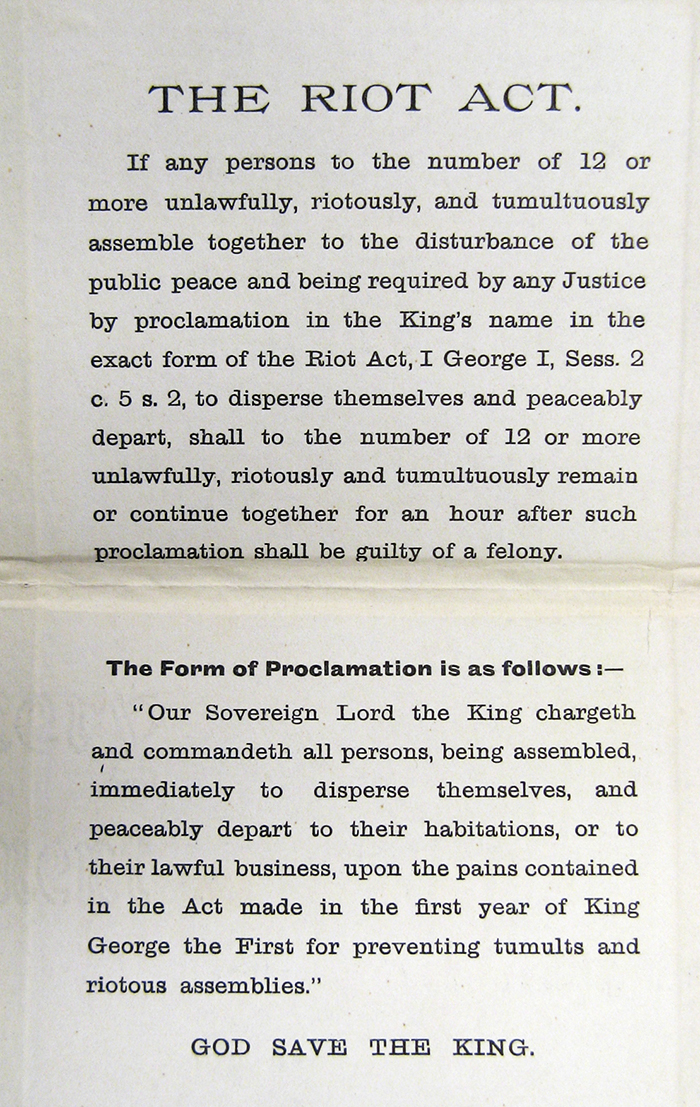
Meaning: Give someone a strong warning that they must improve their behavior.
Origin: In 18th century England the Riot Act was a legal document, that was read aloud in front of a crowd bigger than 12 people that were considered a threat to the peace. A public official would read a small part of the Act and order people to leave peacefully within an hour, anyone that remained after one hour was subject to arrest or removal by force.
We have all just been read the riot act again in 2020 with the Corona Virus and Isolation Orders.
Now there is another saying needing explanation....refers to pints and quarts of beer
Load More Replies...Rule Of Thumb
Meaning: A broadly accurate guide or principle, based on experience or practice rather than theory.
Origin: It is believed that the rule of thumb comes from 17th century England, where Judge Sir Francis Buller ruled that husbands can beat their wives with a stick if it is no wider than his thumb.
This is most likely untrue. Buller was known to be notoriously harsh in his punishments but there's no evidence that he ever made the ruling that he is infamous for. Or that the Rule Of Thumb existed in English Law. Edward Foss, in his authoritative work The Judges of England, 1870, wrote that, despite a searching investigation, "no substantial evidence has been found that he ever expressed so ungallant an opinion". The origin of the phrase remains unknown. Thumbs have often been used to estimate things - the temperature of brews of beer, measurement of an inch etc.
I was always led to believe that the rule of thumb came from the idea that the thumb has the perfect proportions of scale, ie height vs width. 🤔
I know it's probably just stock art, but why the turtle in the back.....?
Actually, this is an urban legend, and is completely imaccurate. The actual origin of the phrase comes from milling grain in windmills. You would set the grind stones, and run a little grain through. You'd then test the resulting flour by rubbing it between your thumb and forefinger to check the texture of the flour, and then adjust accordingly - hence 'the rule of thumb'
That’s from the Old Testament. Book of Deuteronomy. Little older than 17th century England.
The only reference to thumbs I can find in the Bible is in relation to some of the sacrifices where some of the blood was to be placed on the tip of the right ear, the right thumb and the right big toe as part of the consecration of the priests. You find it in Exodus and Leviticus, but the word does not appear anywhere in Deuteronomy.
Load More Replies...I think this really comes from using one’s thumb to measure. There is a technique, or “rule” to doing this, where you use your thumb to measure something from a distance, by selecting something whose height and width you know to measure something you don’t know. Artists often used this method, and probably still do. When I was a kid, an artist was always depicted as sitting in front of their canvas, holding their thumb up toward the canvas.
Paint The Town Red
Meaning: Go out and enjoy oneself flamboyantly.
Origin: There are two versions on how this idiom came to use. First, it is believed that back in 1837 a famous mischief maker known as the ‘Marquis of Waterford’ had a wild night out with his group of friends, during which they knocked over flower pots, pulled knockers off of doors and even broke windows. One of their biggest acts of vandalism was painting the doors of several homes with red paint. The other version of the story says that the origin of this idiom might have originated from the brothels of the American West, where they referred to drunk men behaving as if the whole town was a red-light district.
Beat About The Bush
Meaning: Discuss a matter without coming to the point.
Origin: Beating about the bush is actually an action performed while hunting, driving birds and other animals out into the open. After this was done others would than catch the animals.
Break The Ice
Meaning: Do or say something to relieve tension or get conversation going in a strained situation or when strangers meet.
Origin: In the old days, commercial ships would often get stuck in frozen rivers during winter time, so smaller ships called “icebreakers” would come to clear a path to shore by breaking the ice. In the 17th century, people began to use the phrase to mean "to reduce tension in a social situation."
More Than You Can Shake A Stick At
Meaning: A large amount or quantity of something.
Origin: This idiom was born when farmers, who waved sticks to herd sheep, would have more sheep than they could control.
Relates to cat o' nine tails, a naval flogging implement.
Load More Replies...Minding Your Ps And Qs
Meaning: Be careful to behave well and avoid giving offence.
Origin: This expression has quite a few theories as to its origin, but our favorite refers to the practice of chalking up a ‘tab’ of drinks for later payment. The P refers to pints, and the Q is quarts. You would do well to correctly tally up the right amount as not to cause offense, especially a customer with a few beers under their belt! Again, there is little to support this theory other than the correct lettering, but we like it nonetheless.
Another one where no-one is exactly sure of the origin. An early rhyme by Charles Churchill, published in 1700s: “On all occasions next the chair / He stands for service of the Mayor, / And to instruct him how to use / His A’s and B’s, and P’s and Q’s. Doesn't mean that is the origin of the expression to 'mind them'. Others explain as 'Please and Thank-You' as latter sounds like ThanQ and these words are vital for manners - so mind your Ps and Qs = mind your manners.
Ps and qs are mirror images when written. One must mind their ps and qs so the letter written is not mistaken for the other.
Also, when using a printing press when each letter was set by hand. Letters were backwards to they’d stamp correctly. Setters had to remember not to swap these two by mistake.
Load More Replies...Leaden type for printing was created backwards and upside down for creating printed documents. The type boxes were arranged alphabetically so the p's and q's were hard to distinguish and stored right next to each other. Since typesets were typically broken up by apprentices who might not be as careful, master typesetters had to really mind their p's and q's even when taking type from the correct box.
In letterpress printing, words are composed metal type letter by metal type letter, left-to-right, with each letter inserted upside down. For beginning typesetters, backward-facing letters are confusing, especially the mirrored lower-case letter pairs p and q, and b and d. And thus the advice to be alert and watch the details (“mind the ps and qs”).
I thought this was about printing with type where a p looked like a q and vice versa. ??
The term ' mind your p's and q's 'actually comes from the printing profession, where typesetters had to be careful not to confuse the two letters while setting type for a press, since they were 'mirror image' of each other and easily mixed up !
I think it means the same as ps and qs, or peace and quiet. It might sound odd to us now, but to mind your own peace and quiet means to focus on your own efforts to keep the peace rather than another’s.
This is actually from type setters in the early printing industry where individual letters were set in lines to print words but backwards so you had to mind your ps and qs
I think this saying is more to do with the printing industry when the letters were set individually but the other way round so you had to mind your ps and qs so you didn't mix them up
Go Bananas
Meaning: Insane or extremely silly.
Origin: The word ‘banana’ is an inherently funny word. The expression to ‘go bananas’ has no conclusive origin, but it may be linked to ‘go ape’ which became popular in the 1950’s when monkeys were being launched on rockets and were a popular subject in films and TV. The link between monkeys, bananas and crazy behaviour may have been the catalyst for the popularization of the expression. Bananas have often been central to slapstick comedy in general, with somebody slipping on a banana peel a timeless classic. Early in the 20th century people used to say ‘that’s banana oil’ when referring to a nonsense, and the expression ‘banana republic’ was pejoratively used to refer to a chaotic, backward little country that wasn’t to be taken seriously. Bananas!
Some say the original "banana republic" was Zimbabwe (formerly Rhodesia) shortly after independence, when the President was (seriously!) Rev. Canaan Banana. A law was passed prohibiting jokes about it.
In old vaudeville the bananas were the comedians called the top banana, second banana.
The expression “going ape-s**t” brings this full circle. What do apes eat? Bananas. So that’s what apes poop.
Banana republic refers to Central American countries essentially run by United Fruit (now known as Dole); the company monopolized the growing of bananas and had so much power that the countries were called “banana republics” as United Fruit dictated and the governments acquiesced.
Pleased As Punch
Meaning: Feeling great delight or pride.
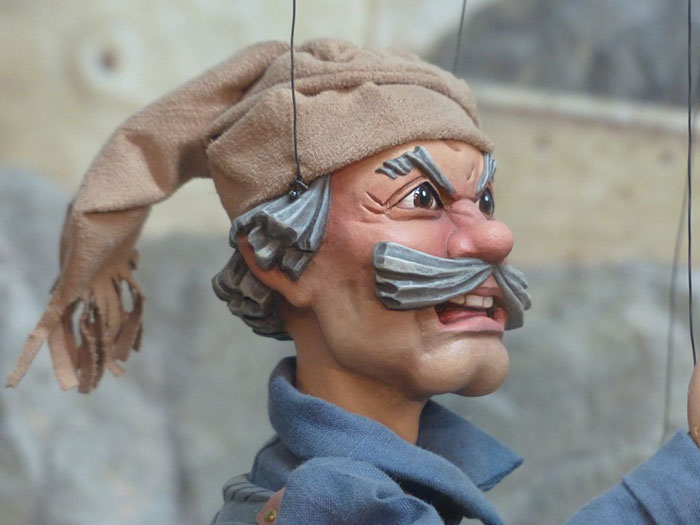
Origin: A puppet show in the 17th century called ‘Punch and Judy’ featured a puppet named Punch, who killed people and took great joy in doing so. He would feel pleased with himself afterwards, from which the saying ‘pleased as Punch’ was born.
Called On The Carpet
Meaning: Being severely reprimanded by someone in authority.
Origin: Like many idioms, the precise origin of this one is not entirely certain. While nowadays the expression is used to refer to a reprimand, originating from the days when a servant was called from their bare-floored quarters to get an ear-bashing from the boss in carpeted opulence, there is an alternative theory to its true origins. The word ‘carpet’ used to refer to a thick cloth that could be placed anywhere, often on a table. Therefore ‘on the carpet’ used to mean that an issue was on the table, or up for discussion.
Show A Leg
Meaning: Get out of bed; get up.
Origin: Just before the ships were about to leave port, sailors would try to sneak in a lady and hide them in their hammock. Before leaving, officers would ask anyone in a hammock to ‘show a leg.’ If a hairless leg appeared, the woman was asked to leave the ship quickly.
This is b******t. Women didn’t shave their legs until the mid 20th century.
Not so! Women were removing body hair as far back as ancient Egypt! Back then body hair on women was considered quite barbaric! Everything went! The Romans also removed hair from legs, under arms, and pubic regions. By the 1700's, some women used their husbands straight razors to remove hair. However you are correct about razors specifically for women not being made until the 20th century- but your timeline was still off. Gillette created the first razors targeted at women in 1915! However, women had been using depilatory creams and powders for many years before shaving really hit the market!
Load More Replies...The use of 'show a leg' as Royal Navy wake up call was documented in1800s as being - Heave out, heave out, heave out, heave out! Away! Come all you sleepers, Hey! Show a leg and put a stocking in it.
I've literally never heard this and totally agree Maia, women wouldn't have shaved their legs then. I'd only heard of the expression "show a bit of leg", meaning, don't dress or act so conservatively, let lose a bit.
I served time in the Royal Navy, we were told it related to when women and men were recruited into the navy, the women would be given an extra 30 minutes in bed, so when the bosun came around and check those that hadn't got up, they would say "show a leg" to determine if they were male or female.
Maia is correct (though needlessly vulgar). The correct term is "shake a leg". Women did not have to sneak aboard ships. Voyages were long and women were often allowed to travel with they husbands (allowed but not always welcome by either shipmates or husbands). Still, young wives would accompany their young husbands and share a bed. Women did not have the duties of their husbands and were free to sleep in a bit longer than husbands. To distinguish the men from their wives, the latter would be called out to "shake a leg", which they did. If your leg was less shapely, you had to get up and get going. Thus the term "shake a leg".
Don’t Throw The Baby Out With The Bathwater
Meaning: Discard something valuable along with other things that are undesirable.
Origin: In the 16th century most people would bathe only once a year. And even when they did that, the entire family would bathe in the same water. Usually, it was men of the house that bathed first, followed by other males, females and finally babies. At the end of this yearly routine the water would be so dirty and cloudy that mothers would have to be careful not to throw their infants out with the water.
No wonder infant mortality was so high, if they bathed babies in the filth from their entire families...
Birth mortality went drastrically down when people began to wash their hands before helping the baby to come out during the labour.
Load More Replies...No Spring Chicken
Meaning: Someone who is no longer young, past his prime.
Origin: In New England farmers would sell their chickens in the spring, and so the young chickens that were born in springtime would sell better than those who survived during the winter. Some farmers would try to sell their older chickens for the same price as spring chickens, which is why the saying ‘no spring chicken’ came into use to describe someone past their prime.
By And Large
Meaning: On the whole; everything considered.
Origin: A phrase that is usually used as a synonym for ‘all things considered’ originates from the 16th century, where the word ‘large’ meant that a ship was sailing with the wind at its back. Meanwhile the word ‘by’ meant the opposite, that the ship was sailing into the wind. The mariners used the phrase ‘by and large’ to refer to sailing in any and all directions, relative to the wind.
Go Cold Turkey
Meaning: To quit something abruptly.
Origin: It is believed that during drug withdrawal the skin of addicts turns hard to the touch, covered with goosebumps and even translucent, similar to the skin of a plucked turkey.

They get goosebumps from fever and chills as they shiver while sweating profusely and projectile barfing . Their muscles cramp up and they scream like someone possessed . Then they have some breakfast and go looking to score some more drugs .
what a sanctimonious, judgemental & narrow minded person you are
Load More Replies...Once In A Blue Moon
Meaning: Very rarely.
Origin: This one is rather obvious since a ‘blue moon’ is an astronomical phenomenon that is visible once every 2.7 years. Even though the moon actually looks more gray than blue, according to NASA, it might appear to be blue when it’s affected by volcanic eruptions or forest fires due to the oils in smoke.
a blue moon is just when the moon is full twice in one month; it has nothing to do with the color
One true and one credible association, though unconnected with each other. But BP has got them mixed up. The point is, the astrnomical Blue Moon wasn't very often, about once in 2.7 years, and (one would hope) neither were volcanic eruptions
Load More Replies...ALthough not well explained in the original post, I'm neverthless pleased that the original definiton of a blue moon was use - which is the third full moon in a season that has four full moons. In modern times people use the term to refer to the second full moon in a calendar month, but this is not from where the term was derived.
Jaywalker
Meaning: One who crosses or walks in the street or road unlawfully or without regard for approaching traffic.
Origin: Jay birds would often become disorientated in urban areas after flying in from the forest. Dangers in the city, like traffic for example, would leave them confused and cause erratic behaviour. Due to this, people started using the term “jaywalker” to describe someone walking the streets irresponsibly.
Not true, I read a different origin where, during the days when cars were first becoming more popular, people and even children were being killed by the cars driving too fast down populated areas. Instead of raising awareness in the drivers, auto industries started advertising that people who walked in the road (previously perfectly normal) were just a bunch of Jays, in that era a derogatory slur. Parents wouldn't want their kids to be considered a filthy Jay Walker, so they began to use sidewalks and footpaths instead.

Before long, we can add "hang up" the phone to this list (origin: once upon a time, you had to hang the receiver portion of the phone to the phone body in order to end the call).
I like that both the modern meanings and the origins of the phrases are listed.
Some are rather inaccurate unfortunately but it's a really interesting post.
Load More Replies...Very interesting - I had never heard of the origins of quite a few of these expressions
Not sure how many have their facts right.
Load More Replies...I actually read this post top to bottom. After hitting the "see 56 more" button I thought - oh - maybe hidden in here is something good and relevant to make us rethink some of the things we have learned to say without learning the meaning - and are actually pretty terrible. Like, "drink the Kool-Aide" referring to the Jonestown murders. I purposefully read about these things to educate myself, broaden my thinking to question why I say the things I say, and choose my words with accuracy. Would have liked to see more socially relevant sayings pulled from many languages, to broaden my perspective, in context of historical documentation. Good start though. Moving on to the next Bored Panda post about socially relevant things: Top 10 most hilarious mom hairstyles that will have you laughing for weeks!
Actually, drinking the kool-ade predates the Jones-juice variant. It was a reference to the "electric kool-ade acid test" involving punch spiked with LSD.
Load More Replies...Liquid Courage. I couldn't find an origin story, but it means getting drunk to the point of fearlessness. Sometimes called Irish Courage because of the stereotype of drunken brawls .
I've always heard Dutch Courage. Comes from the British casting dispersions on the Dutch for being their rivals, possibly from the reign of William and Mary. William was a Dutchman and encouraged the drinking of gin and an influx of the Dutch, who drank lots of gin as it was what they were used to back home.
Load More Replies...There is a very nuce saying I was exoecting and hoping to see in the list of 66, but is not there. You used ir right at the start of the article too "Here at Bored Panda, we went the extra mile ...."
The meaning and origin of,"two birds in bush is better than one in hand"?
Before long, we can add "hang up" the phone to this list (origin: once upon a time, you had to hang the receiver portion of the phone to the phone body in order to end the call).
I like that both the modern meanings and the origins of the phrases are listed.
Some are rather inaccurate unfortunately but it's a really interesting post.
Load More Replies...Very interesting - I had never heard of the origins of quite a few of these expressions

Not sure how many have their facts right.
Load More Replies...I actually read this post top to bottom. After hitting the "see 56 more" button I thought - oh - maybe hidden in here is something good and relevant to make us rethink some of the things we have learned to say without learning the meaning - and are actually pretty terrible. Like, "drink the Kool-Aide" referring to the Jonestown murders. I purposefully read about these things to educate myself, broaden my thinking to question why I say the things I say, and choose my words with accuracy. Would have liked to see more socially relevant sayings pulled from many languages, to broaden my perspective, in context of historical documentation. Good start though. Moving on to the next Bored Panda post about socially relevant things: Top 10 most hilarious mom hairstyles that will have you laughing for weeks!


Actually, drinking the kool-ade predates the Jones-juice variant. It was a reference to the "electric kool-ade acid test" involving punch spiked with LSD.
Load More Replies...Liquid Courage. I couldn't find an origin story, but it means getting drunk to the point of fearlessness. Sometimes called Irish Courage because of the stereotype of drunken brawls .
I've always heard Dutch Courage. Comes from the British casting dispersions on the Dutch for being their rivals, possibly from the reign of William and Mary. William was a Dutchman and encouraged the drinking of gin and an influx of the Dutch, who drank lots of gin as it was what they were used to back home.
Load More Replies...There is a very nuce saying I was exoecting and hoping to see in the list of 66, but is not there. You used ir right at the start of the article too "Here at Bored Panda, we went the extra mile ...."
The meaning and origin of,"two birds in bush is better than one in hand"?