Get Premium
Dark mode theme is available exclusively for premium users. Learn more about the benefits of subscribing.
No fees, cancel anytime.

 Dark Mode Ad-Free Browsing Unlimited Content
 Ad-Free Browsing Unlimited Content Dark Mode
Join 1.2 million Panda readers who get the best art, memes, and fun stories every week!

87submissions
1week left

If someone asked you about your favorite subject in school, chances are you’d name math, English, science, or something practical. History, on the other hand, rarely makes the list. Yet once you look past memorized dates and dusty textbooks, human history reveals itself to be far more fascinating than we were ever taught.
That’s why today we’re diving into the “Museum of Artifacts” page, where people share rare, intriguing objects from the past. Each item tells a story, offering a glimpse into lives once lived and worlds long gone. These artifacts are strange, beautiful, and endlessly captivating. So, Pandas, keep scrolling to uncover pieces of history that still amaze today.
Click here & follow us for more lists, facts, and stories.
This post may include affiliate links.
We often admire historical artifacts on display at museums or exhibitions, glimpsing fragments of a world long gone. There’s something magical about seeing the past come alive through a carefully preserved object—an ornate vase, an intricately carved throne, or a centuries-old manuscript. These items connect us to human creativity, resilience, and imagination across time. Yet the experience we enjoy today often masks the complicated journeys these artifacts took to reach display cases around the world.
But here’s the catch: for centuries, legendary artifacts haven’t always reached museums through fair means. Many were looted, traded under duress, or forcibly taken from their original homes. Business Insider points out that countless items in cultural institutions like London’s British Museum or New York’s Metropolitan Museum of Art were taken from colonized peoples, often without consent. These artifacts were rarely brought to museums purely for education or admiration; they were often plundered as symbols of conquest, wealth, or political control. The world’s treasures, it seems, are as entangled in power struggles as they are in artistry.
National Geographic explains how colonialism transformed collecting into a mania. Objects didn’t simply arrive in museums on their own; colonial powers didn’t map the globe out of pure curiosity. Anthropologists, missionaries, merchants, and military officers all collaborated to bring wonders back to Europe. Museums often sent wish lists to colonial expeditions, requesting rare items to display or sell. What began as exploration quickly turned into a systematic extraction of cultural wealth. The treasures we admire today often carry hidden histories of coercion, manipulation, and power.
Consider the case of the Mandu Yenu, a beaded throne from Cameroon’s Bamum people. In 1907, German officials suggested that Sultan Ibrahim Njoya gift a replica or ideally the original throne to Kaiser Wilhelm II for his 50th birthday. Njoya had resisted many prior requests, but this time he agreed to have a copy made. When it became clear the replica wouldn’t be ready in time, he was persuaded to hand over the original. The throne, adorned with protective figures and inherited from Njoya’s father, was removed from Cameroon and has remained in Berlin’s Ethnological Museum ever since.
The looting of cultural treasures didn’t end with colonialism. Artifacts continue to be smuggled and traded illegally across borders. The United Nations reported in November 2025 that over 37,000 cultural objects: including coins, musical instruments, works of art, and archaeological artifacts, were seized during an international operation conducted by Interpol and law enforcement agencies from 23 countries. Smugglers exploit gaps in international law, turning priceless cultural objects into commodities for profit. The global fight to protect history is ongoing, and these stolen treasures often vanish into private collections, far from the communities they originated from.
Interpol has highlighted numerous recent cases showing the scope of the issue. For example, Ukrainian customs authorities intercepted 87 historically valuable items, including icons of Saint Seraphim of Sarov and ancient coins, which smugglers tried to export illegally to Poland, Moldova, and Romania. Each recovered piece tells a story of attempted theft, cultural erasure, and the ongoing struggle to protect heritage. The sheer volume of stolen or trafficked artifacts reveals how much history is at risk and how vulnerable cultural treasures remain in an increasingly globalized world.
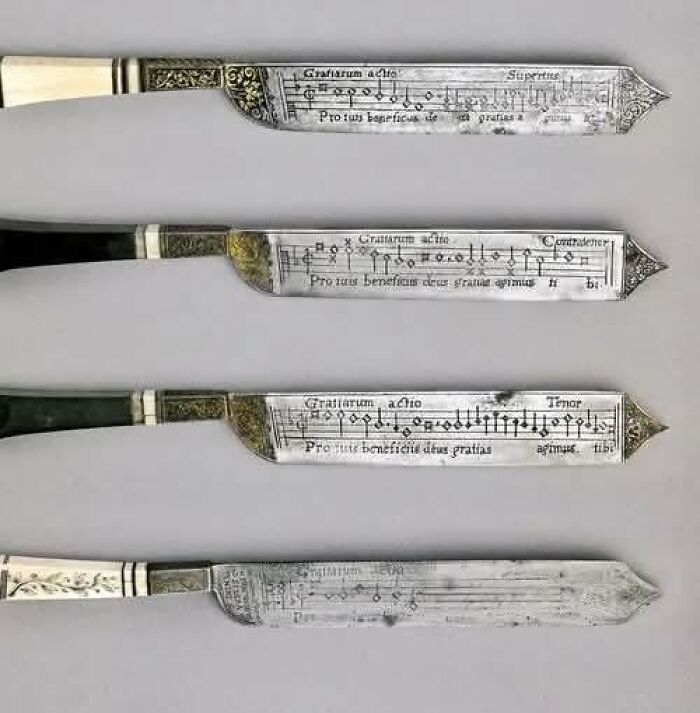
These knives, likely produced in Italy around 1550, were part of sets where each knife represented one voice part in a multi-voiced choral piece. One side of the blade carries the "Benedictio mensae" (blessing of the table), sung before the meal: "Quae sumpturi sumus bene dicat trinus et unus" ("May the three-in-one bless that which we are about to eat"). The other side features the "Gratiarum actio" (saying of grace), sung after: "Pro tuis deus beneficiis gratias agimus tibi" ("We give thanks to you, God, for your generosity"). The musical notation on the knives is polyphonic, with two known sets: Group A (six voice parts) and Group B (four voice parts). Despite their name, the knives are not a single artifact but a set of specialized cutlery designed to serve as partbooks—musical instruments in a social and spiritual context. They are extremely rare, with only 20 known examples.
The problem is widespread. In Spain, investigators uncovered a group that looted archaeological sites in Cáceres, using metal detectors to steal thousands of Roman coins and sell them on social media. In Greece, three people were arrested for attempting to sell five Byzantine icons for $80,000.
Fortunately, there’s a shift happening. Museums are beginning to return artifacts to their countries of origin. Deutsche Welle reports that in December, the Metropolitan Museum of Art in New York announced it would return 14 sculptures to Cambodia and two to Thailand, all procured through the now-convicted British art dealer Douglas Latchford. Institutions are increasingly recognizing the moral and cultural responsibility to restore looted treasures, acknowledging that the artifacts were acquired through coercion, exploitation, or outright theft.
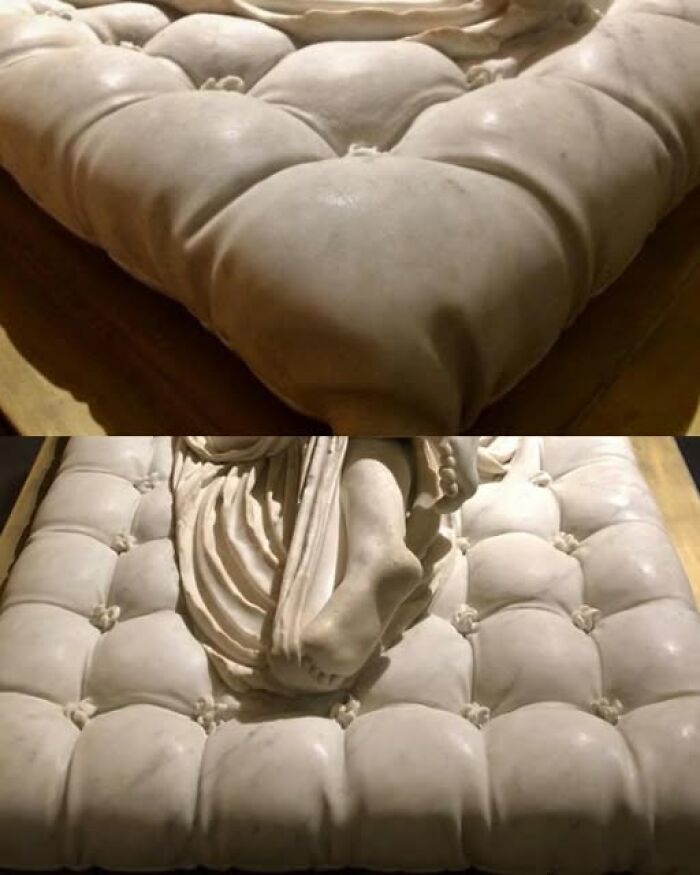
"Sleeping Hermaphroditus" by Gian Lorenzo Bernini, Rome.
In July 2023, two Dutch museums, including the Rijksmuseum, returned hundreds of artifacts to Indonesia and Sri Lanka, former colonies. “The objects were wrongfully brought to the Netherlands during the colonial period, acquired under duress or by looting,” the Dutch government said. These returns signal a growing awareness that history cannot simply be admired from afar; it belongs to the people and cultures that created it. While restitution cannot undo the past, it restores dignity and recognizes the deep, often painful, histories behind these treasures.
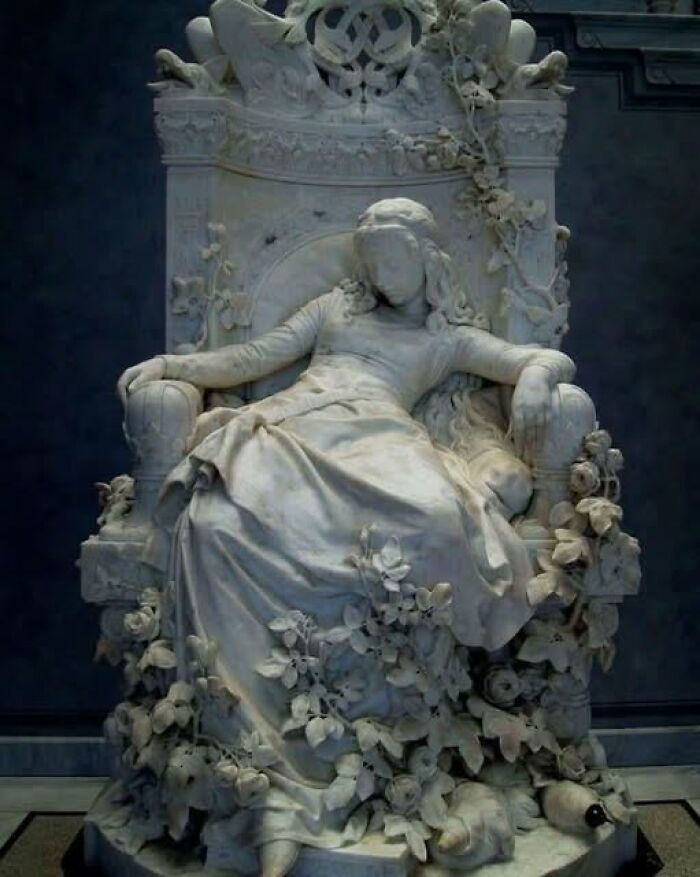
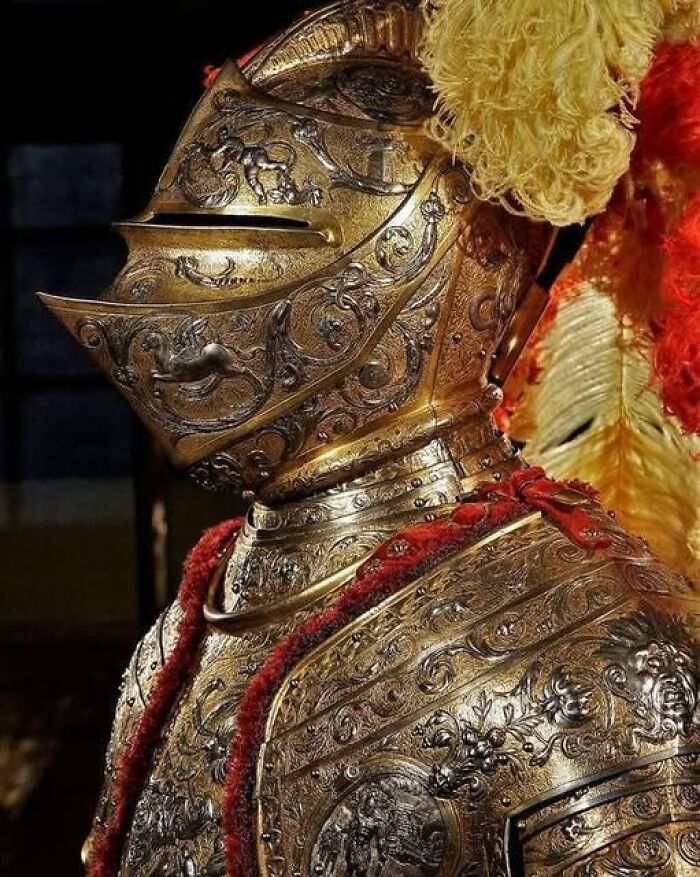
Farnese later gifted it to his uncle, Ferdinand II of Tyrol It is now housed in the Kunsthistorisches Museum, Vienna, Austria
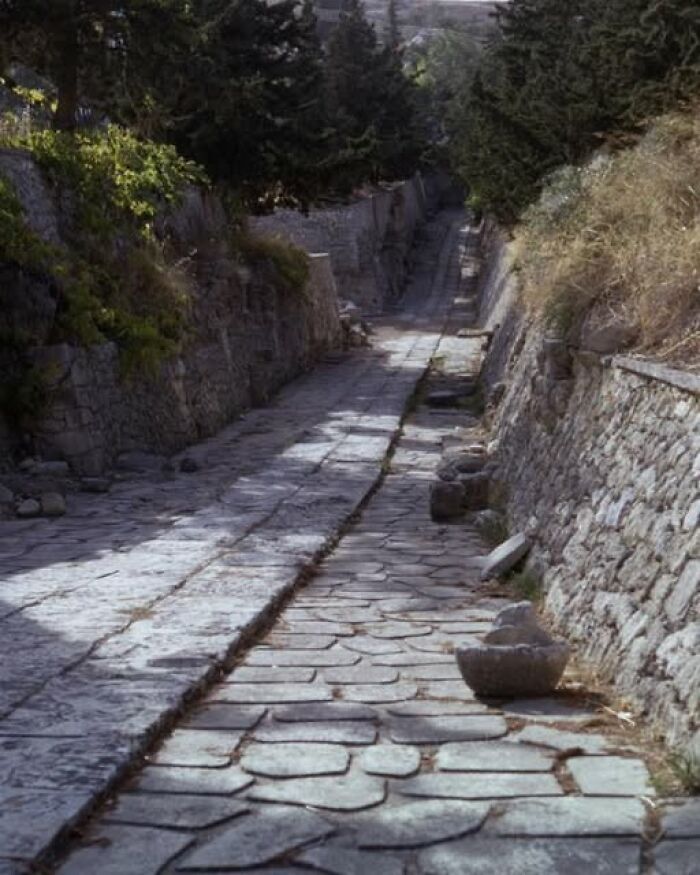
A 50km roadway connecting the ancient sites of Knossos, Gortyn & Lebena. If you go to Knossos, you will step exactly where the Minoans walked 4.000 years ago.
From centuries-old royal thrones to modern archaeological finds, artifacts carry more than beauty—they carry the weight of human history, power, and conflict. Many objects we admire today were looted, coerced, or smuggled, and only recently are institutions beginning to confront these truths. Protecting cultural heritage requires vigilance, ethical stewardship, and restitution where possible. These treasures remind us that history is not just a story in textbooks; it’s living, messy, and deeply intertwined with human ambition, greed, and creativity.
Well, these posts clearly show how artifacts are a vibrant part of our shared history, and, of course, they belong in the places where they were created, preserving their cultural and historical context. Pandas, which one of these artifacts caught your eye the most?
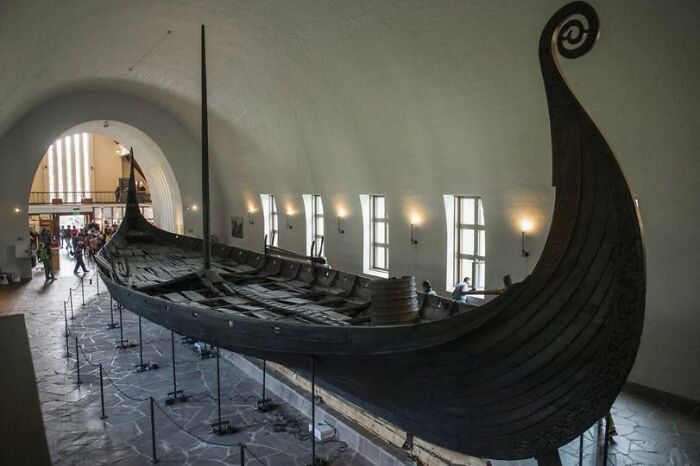
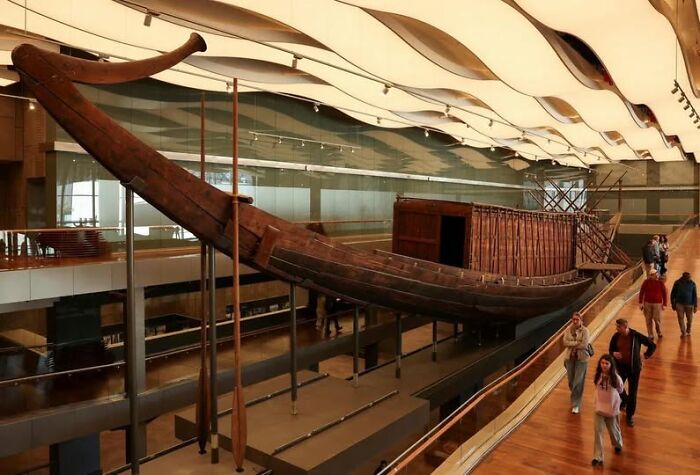
The ship is 43.4 m long and 5.9 m wide and was identified as the world's oldest intact ship.
She lies surrounded by roses, with a spindle resting at her feet.
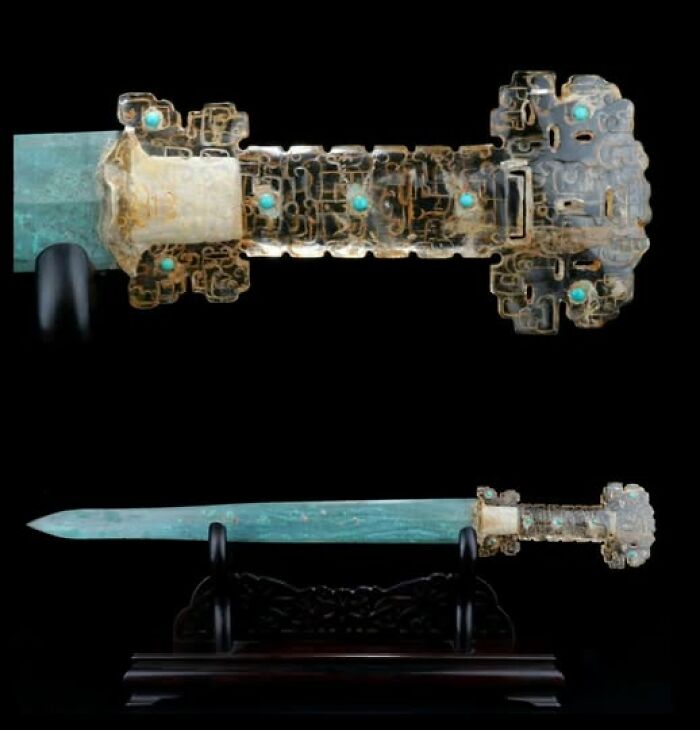
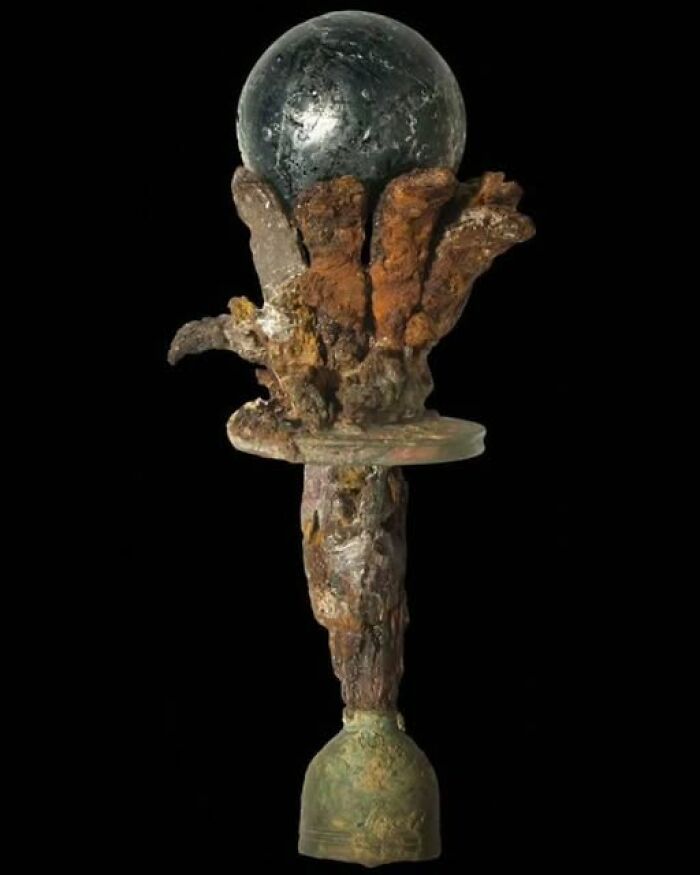
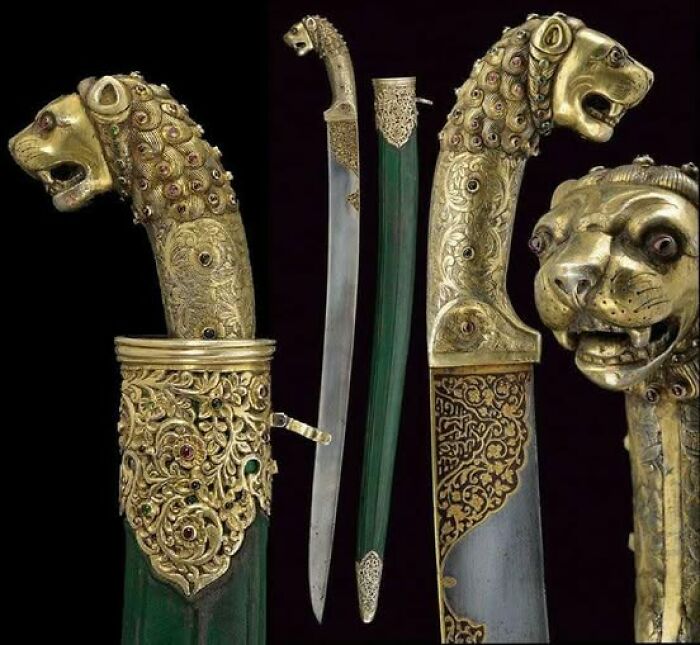
The hilt of this sword was crafted from rock crystal, turquoise, and gold, and the blade is covered in a greenish-blue patina that was naturally produced over time.
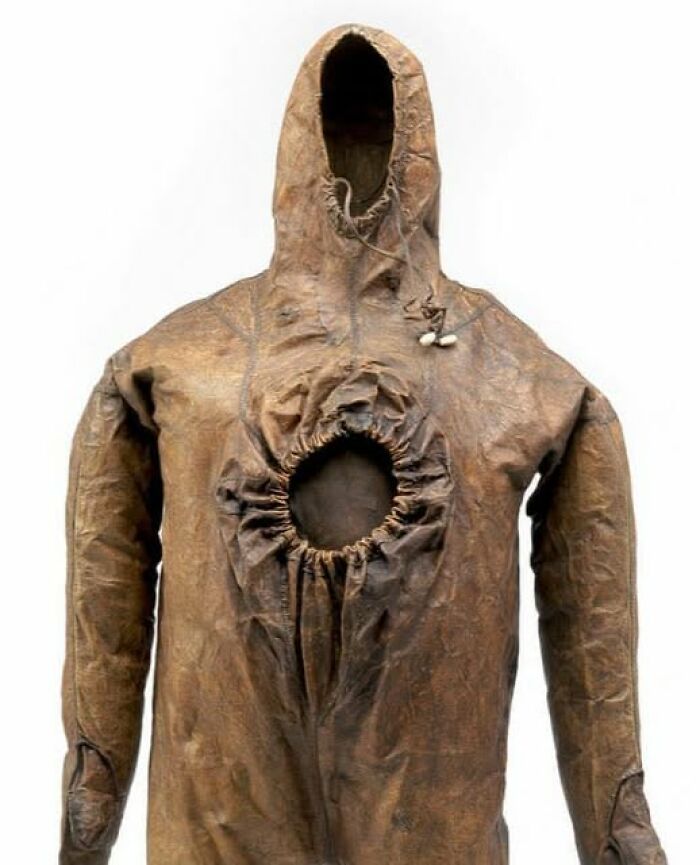
It’s made entirely from sealskin, stitched with sinew, and that big hole in the chest...that’s the entrance. You’d step in feet first, pull it up like the world’s most [intense] wetsuit, then cinch the drawstring super tight so no water could get in when you’re out in a kayak hunting whales or seals. Basically an OG drysuit invented by people who had to survive −40 °C oceans without Gore tex. Had to share, as I had no idea.
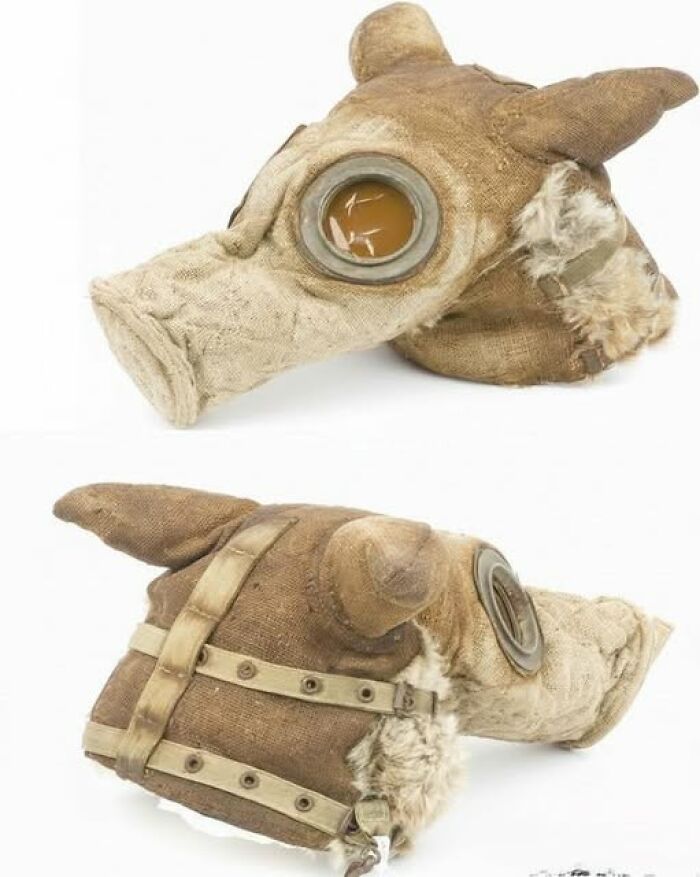
As chemical weapons emerged as a serious danger, dogs serving on the front lines required protection akin to that of soldiers. This mask covered the face and ears, utilizing fabric specially treated to mitigate toxic gases. In contrast to human gas masks, it lacked a filter canister and depended on chemical impregnation instead. A specific mask, formerly worn by a German war dog, was seized by Australian troops near Bray in 1918. It is currently housed in the Australian War Memorial, serving as a rare reminder of the involvement of animals in warfare.
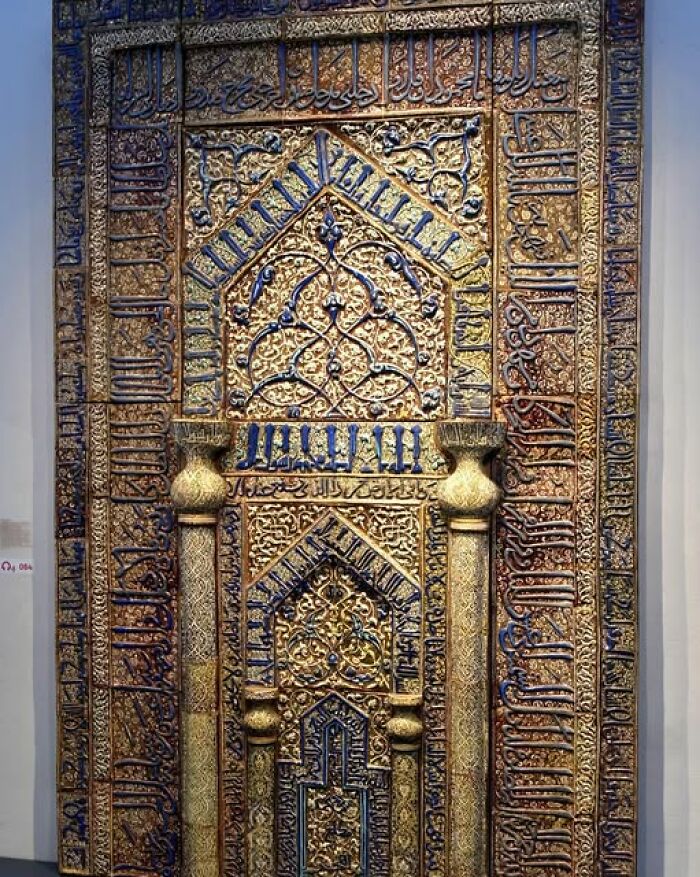
Created around 1333 AD in Kashan, Iran, it features intricate polychrome glazed tiles inscribed with Quranic verses
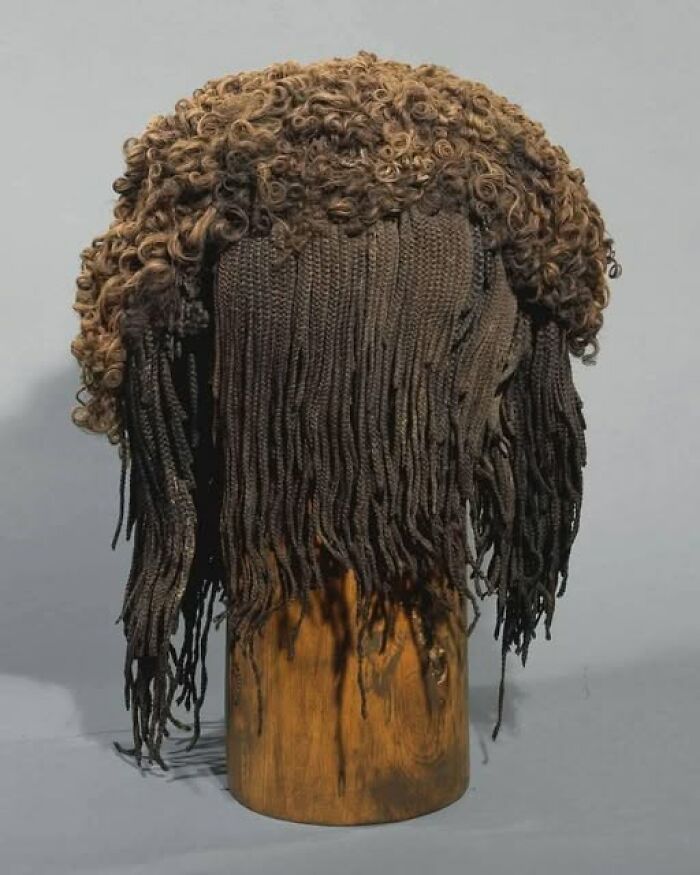
The wig was discovered in the tomb of an Egyptian woman named Merit in Luxor, who shared the tomb with her husband Kha. It features a duplex style with tightly set curls on top and several hundred thin braids hanging below. Beeswax and resin were used to secure the hairstyle and preserve the wig. The wig was found in a dedicated acacia wood box, which helped maintain its excellent condition for over 3,000 years.
This practical Roman military frying pan, complete with a folding handle, likely belonged to a soldier of the Legio II Augusta, stationed at Isca (modern Caerleon, Wales).
Designed for portability and durability, the pan was part of a legionary’s personal kit, used to prepare simple meals while on campaign or in barracks. Its clever folding handle made it easy to pack—showing how Roman military life balanced efficiency with everyday necessity.
What’s striking is how familiar the design feels. The form and function are not far removed from cookware found in modern military mess kits, underscoring a timeless truth: soldiers across history share the same basic needs, regardless of era.
Designed for portability and durability, the pan was part of a legionary’s personal kit, used to prepare simple meals while on campaign or in barracks. Its clever folding handle made it easy to pack—showing how Roman military life balanced efficiency with everyday necessity. What’s striking is how familiar the design feels. The form and function are not far removed from cookware found in modern military mess kits, underscoring a timeless truth: soldiers across history share the same basic needs, regardless of era.
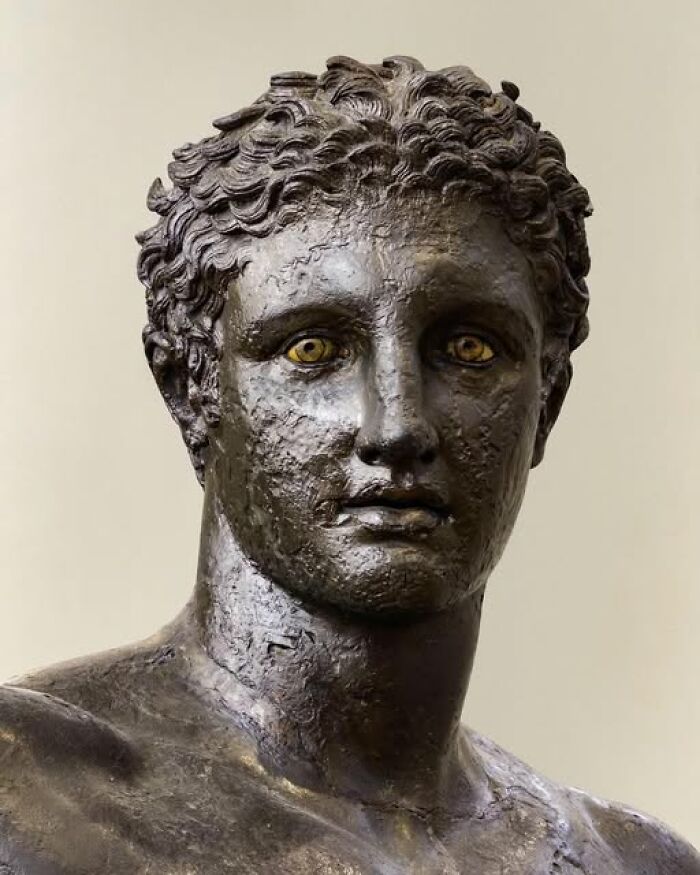
The Antikythera Ephebe, created in the fourth century BC, is a Greek bronze statue that was discovered in the Antikythera shipwreck in the 1900s. It is believed to depict a young athlete or mythological figure, being one of the few surviving original Greek bronze statues (as most others were melted down in antiquity). It was found alongside the Antikythera mechanism, an artefact regarded as the first analog computer.
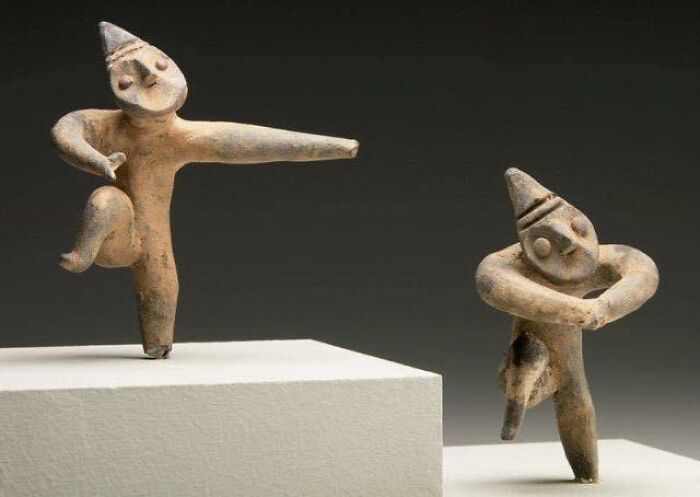
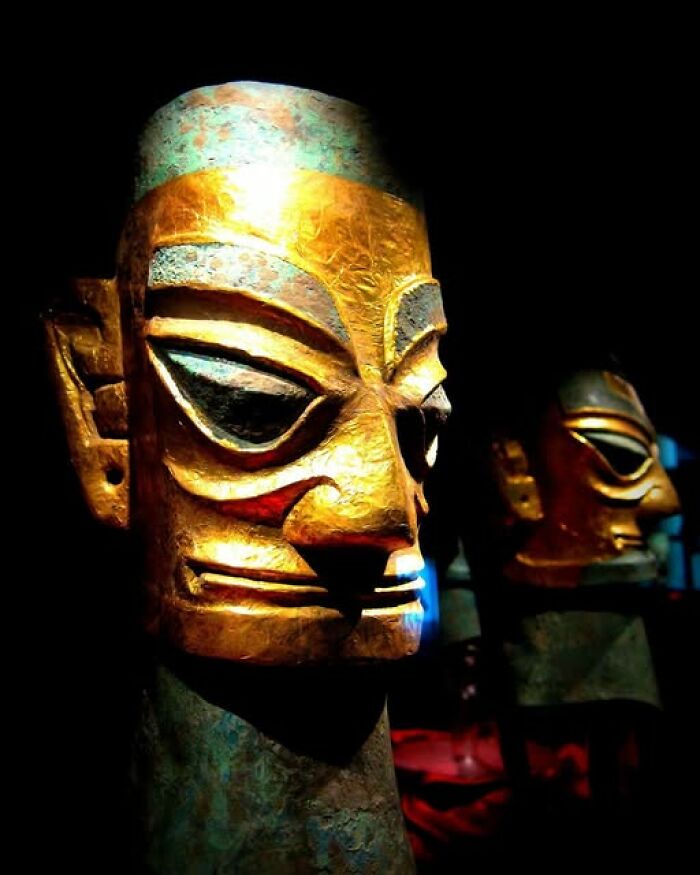
They're known for their very distinctive and "un-Chinese" art style.
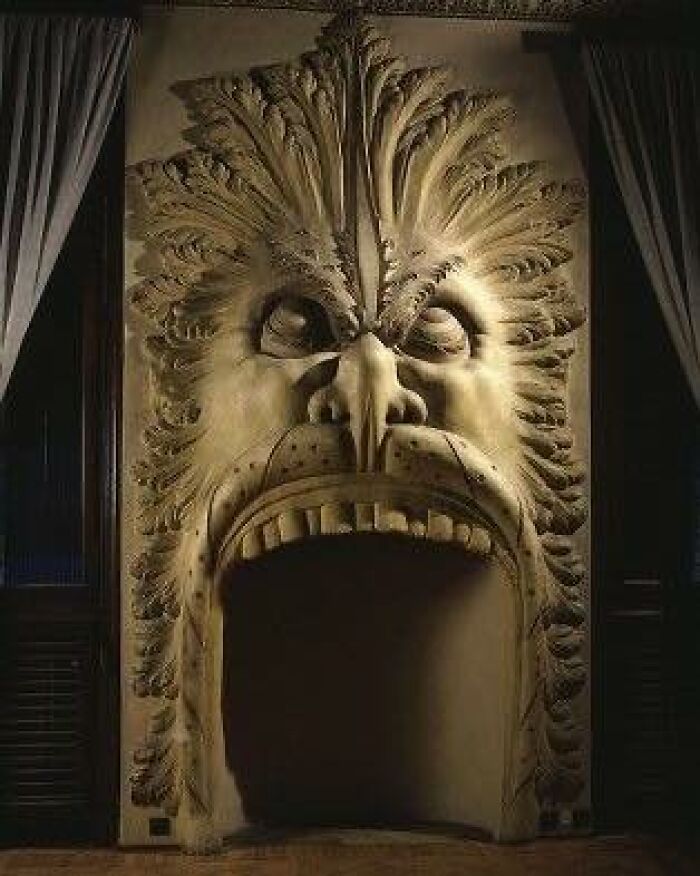
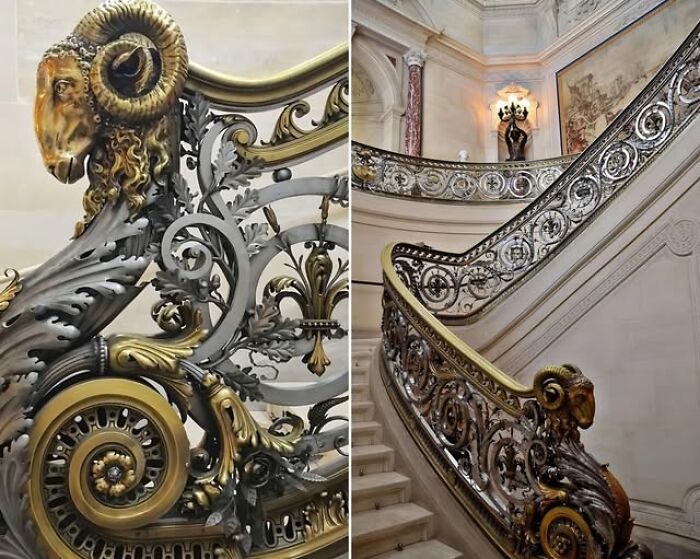
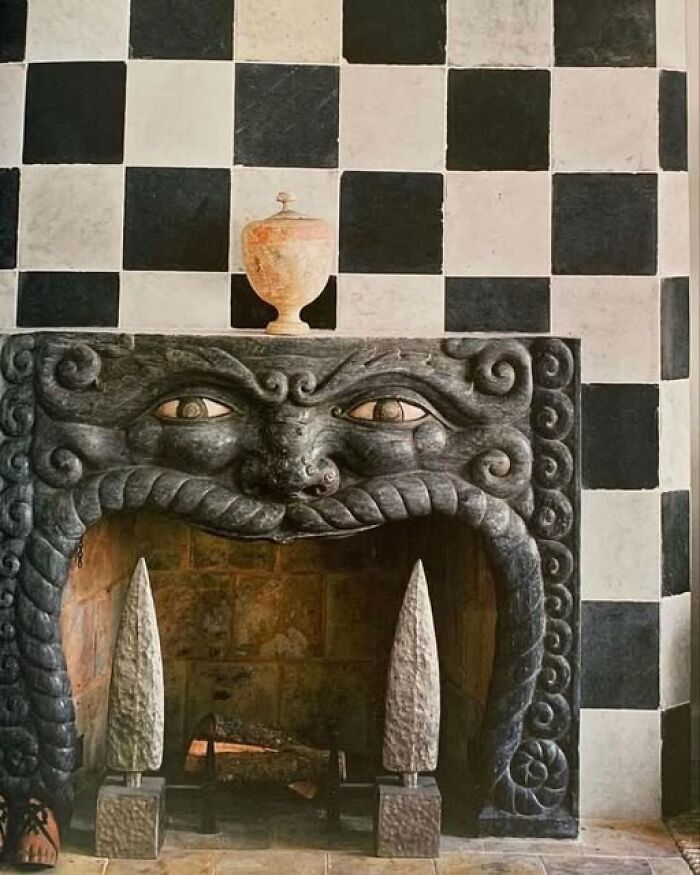
The interior was conceived by his life partner and in-house decorator, Jacques Grange. A striking dialogue between centuries: sculptural stone, watchful eyes, and bold geometry meeting timeless craftsmanship. Not just a fireplace — a theatrical architectural statement where history becomes part of everyday life.
Henry VIII began his reign in 1509 at just 17 years old, charismatic, handsome, and exceptionally athletic, with a passion for jousting, hunting, and real tennis (predecessor to modern tennis). He would end it grotesquely obese, largely immobile, and often carried from place to place.
The familiar caricature of Henry did not fully emerge until January 24, 1536, when the 44-year-old king suffered a jousting accident. Thrown from his horse and knocked unconscious, possibly sustaining a traumatic brain injury, Henry also had his leg crushed beneath the animal. From that point on, his personality noticeably changed for the worse. Always a man of appetites, his reduced mobility accelerated his weight gain: his waist expanded from roughly 32 inches to over 50, and he eventually had to be hoisted onto his horse.
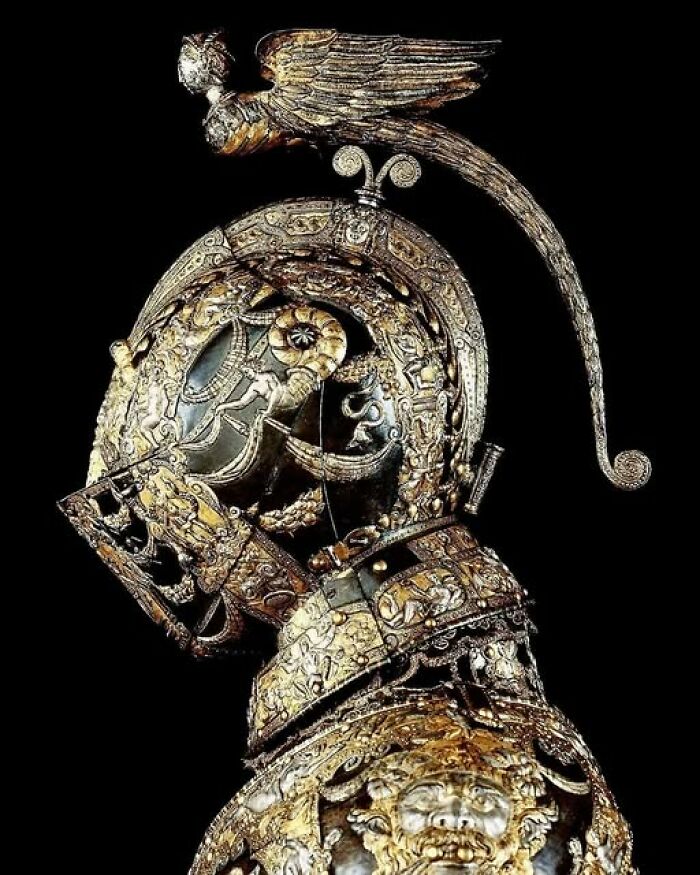
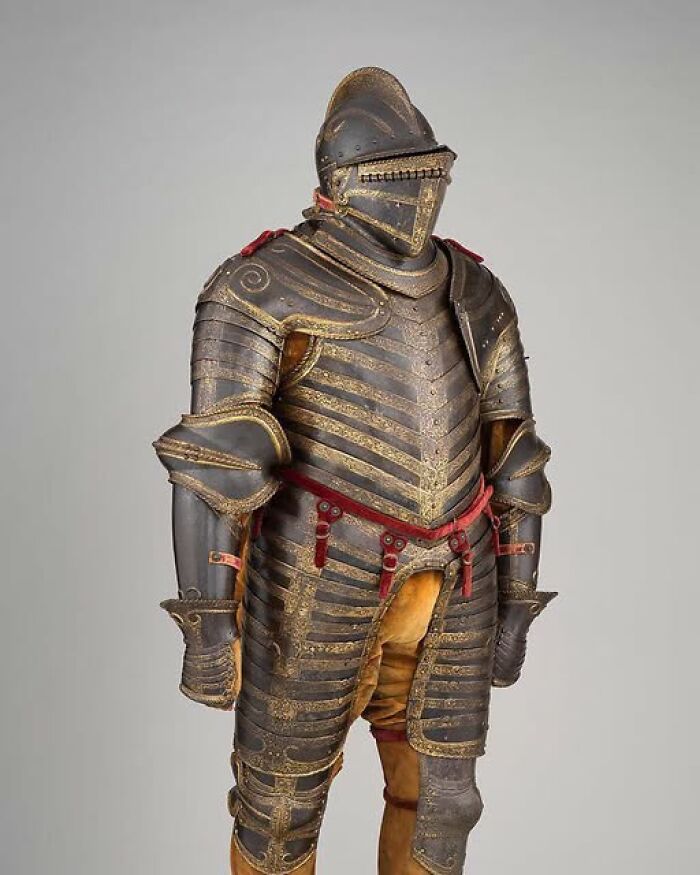
Despite later legends, Henry was reportedly a neat eater, but his appetite was real and immense. Fourteen-course meals prepared by two hundred kitchen staff featured spit-roasted meats, sparrow pies, whale, peacock, beaver tail, offal, swan, black pudding, and boar’s head, followed by marzipan and spiced fruitcake, all washed down with ale, wine, and gin. Fruits and vegetables were largely absent from elite diets of the period, less a personal failing than standard practice, though it did Henry no favors. His injured right leg never healed properly. It ulcerated and festered, leaking through his garters and into his bedding. Yet even in decline, Henry remained desperate for martial glory. In 1544, he embarked on his final military campaign wearing this suit of armor, made in the “anime” style (a real historical thing and not something I am making up). In this construction, the breastplate and backplate are formed from horizontal overlapping plates, made flexible by rivets and internal leather straps.
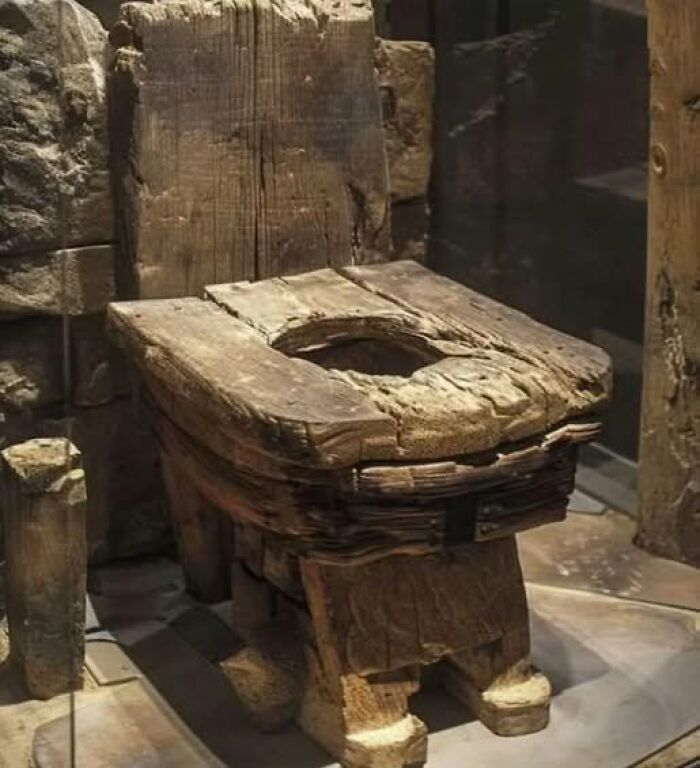
One of the world’s earliest flushing toilets.






































 No fees, cancel anytime