45 Things From The Past That Survived For Future Generations To See, As Shared On “The Archeologist”
Since our school days, we were taught that god is in the details and that everything depends on the perspective. This is especially true if we look at the study of the ancient human past through material remains.
So, all the history and archeology aficionados, pull your seats closer, because we have a real treat for y'all. Welcome to “The Archaeologist,” an educational project that stretches through Facebook and Instagram, racking up 300K between the two channels.
The project is dedicated to updating people like you and me with a bunch of daily archeological news that ranges from anything from human prehistory and history to incredible artifacts, pictures of architecture, and landmarks from all around the world. Below we wrapped up some of the most interesting posts shared by “The Archaeologist.”
More info: The Archaeologist.org
This post may include affiliate links.

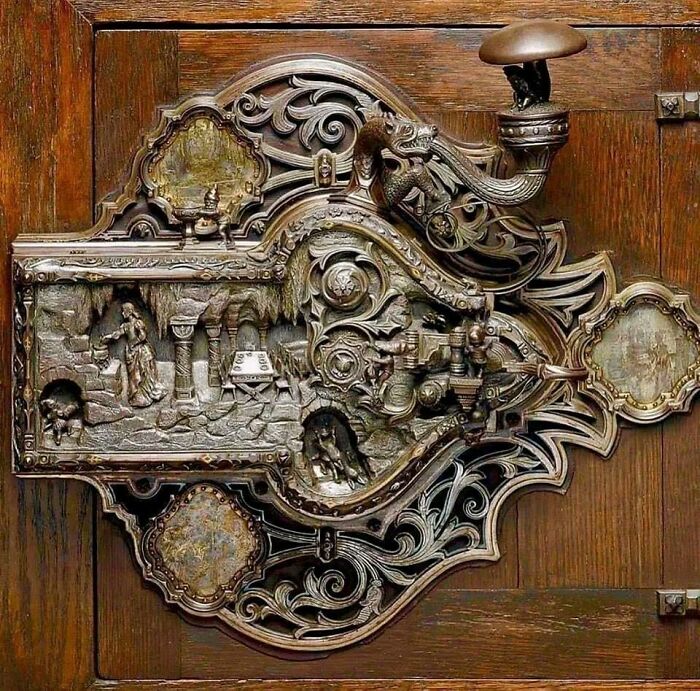
Magnificent Hand-Made Door Lock Crafted By Frank Koralewski In 1911, Using Gold, Silver And Bronze
I'm always amazed at how people can be so detail-oriented. Like, they can create small sculptures with such tiny, little lines!
Look up Willard Wigan, he makes tiny sculptures out of grains of sugar and places them in the eyes of needles. He has learnt to slow his heart rate and sculpt inbetween beats and breaths so he keeps a steady hand. It's amazing, you need a microscope to see them.
Load More Replies...This is just gorgeous!! I could stare at this for a long time. I have now stared at it for 3 minutes!! Scroll away!! Scroll AWAY!! SCROLL AWAY!!! Scrolling....
There had better be a heckin' nice room on the other side of that door, because otherwise, you're managing expectation pretty badly. Imagine if you went in and it was all feng shui minimalist. I'd feel betrayed. By a door lock.
Incredible! But let's figure out what's going on with the poor upside-down donkey being dragged by a man in the center subterranean room?!?
Agreed. Like is the dead donkey on his lap and why????
Load More Replies...Archeology is the study of the human past using material remains. These remains can be any objects that people created, modified, or used. Portable remains are usually called artifacts. Artifacts include tools, clothing, and decorations. Non-portable remains, such as pyramids or post-holes, are called features.
Archeologists use artifacts and features to learn how people lived in specific times and places. They want to know what these people’s daily lives were like, how they were governed, how they interacted with each other, and what they believed and valued.
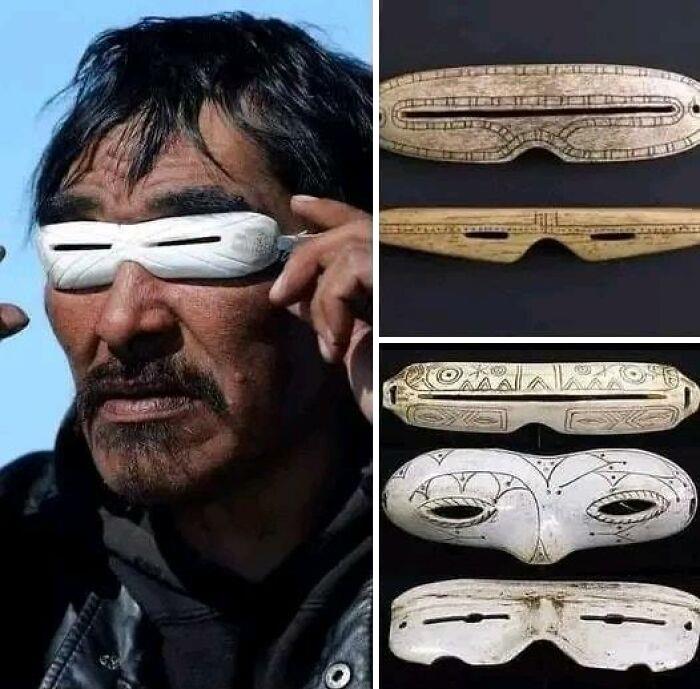
This Is How Inhabitants Of The Arctic Circle Protected Their Eyes From Snow Blindness For Over 4,000 Years
Looks like they would have been big in the 80s. . On a synth pop musician who plays one of those keyboard guitar s.
Load More Replies...I believe this is also one of the possible reasons for Asian people (China,,Mongolia, Japan etc) to have squinted eyes. Much like the eskimos, the developed this to protect their eyes from the glare of the snow.
IDK why you got downvoted for saying this. It's a fairly valid theory for why people of Northeastern global regions evolved an additional layer of adipose tissue in their eyelids. Maybe not because of these protective goggles but naturally as a way to prevent snow blindness. (I undid the downvote BTW)
Load More Replies...Isn’t this where the idea for our current sunglasses came from? I thought that I had read that somewhere…
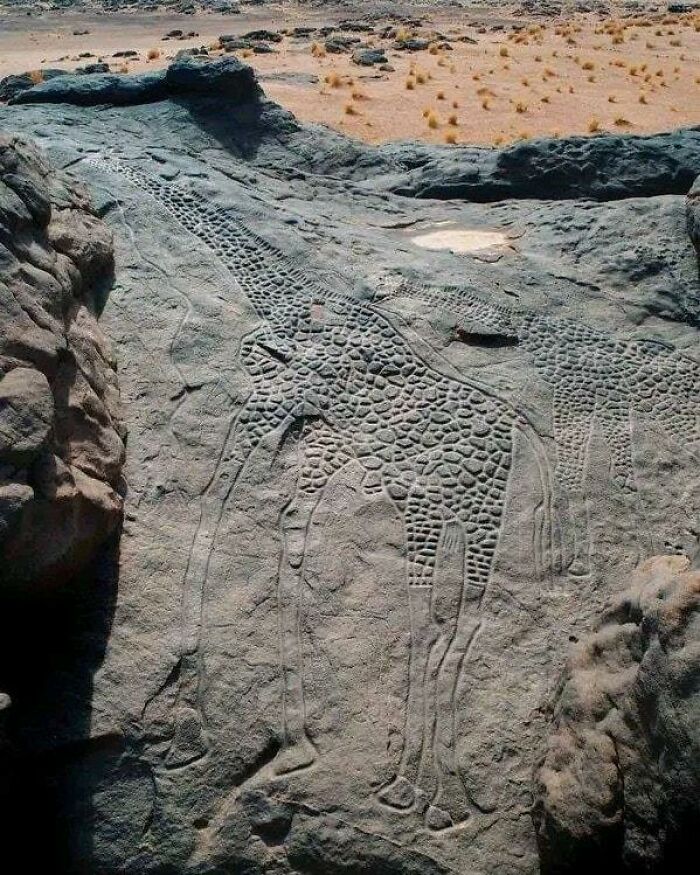
Located In Air Massif, Niger Are Two Of The Biggest Animal Rock Petroglyphs In The World, Called The Dabous Giraffes, Dated 8000 BC
Ha ha, I was just going to ask where the banana is for scale! But I think there should be something so we can appreciate the work that went into this!
Load More Replies...For all the uninitiated (like me): A petroglyph is an image created by removing part of a rock surface by incising, picking, carving, or abrading, as a form of rock art.
This is one of the few times where I really did want a banana for scale.
Someone 10,000 years ago thought that giraffes were beautiful. I feel it.
Bored Panda reached out to the creator of The Archeologist page, who said that the idea to create the project came from “the international group of 'archeolovers,' humanities students and travelers who interacted in a Facebook group.”
It turns out that there’s an impressive team working behind this project: “The team consists of three Moroccans, two Greeks, two Italians, two Americans, one Indian, one Pakistani, one Turkish, one Norwegian, and one English man,” the creator told us.

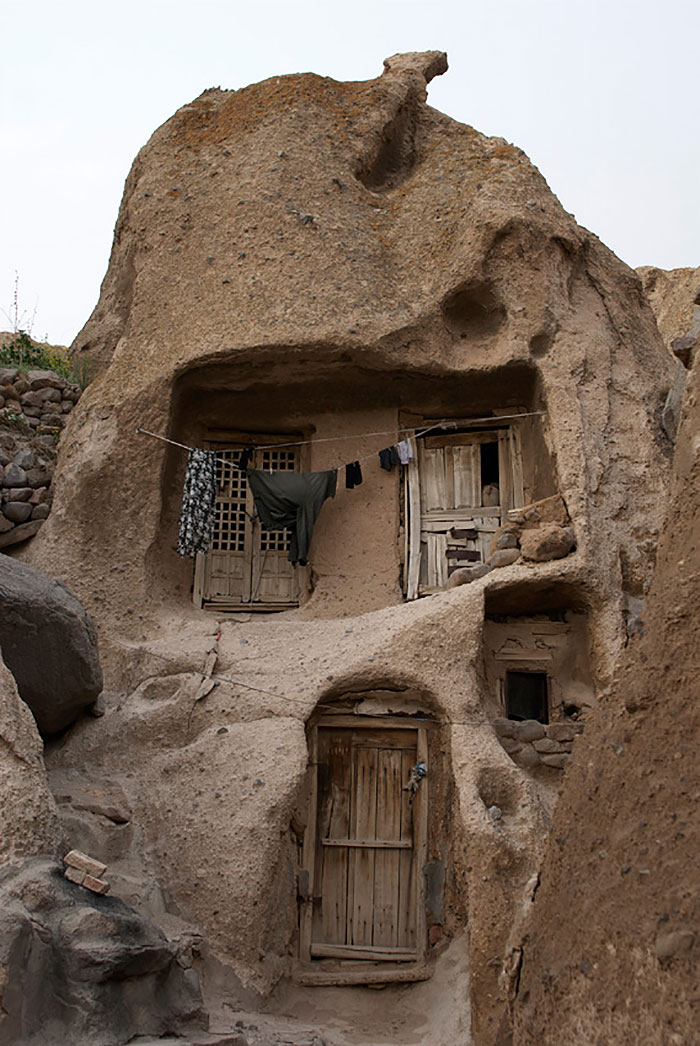
700 Year Old House In Iran
These kinda things make me love this world. Its so fascinating in its diverse ways of living.
Same! I'm so in love with history I would marry it if I could.
Load More Replies...Me: I have 500k to spend on a house. Realtor: I can get you into this for $550k, but you will have to waive the inspection. And its cash only.
Forget that house- buy 10 acres in a nearby county and move a doublewide trailer there. You get the certified plumbers, construction contractors, and electricians to build everything you need. Especially if you don't need close neighbors, but do need peace of mind.
Load More Replies...I’m pretty sure people still live in these sort of houses, obviously not exactly same and probably a bit more modernised, but probably the same concept
in some areas they still do. and they have tv and wifi for the little ones so as far as I'm concerned it's perfect!
Load More Replies...Consistently inhabited for nearly 1,000 years. That is pretty amazing.
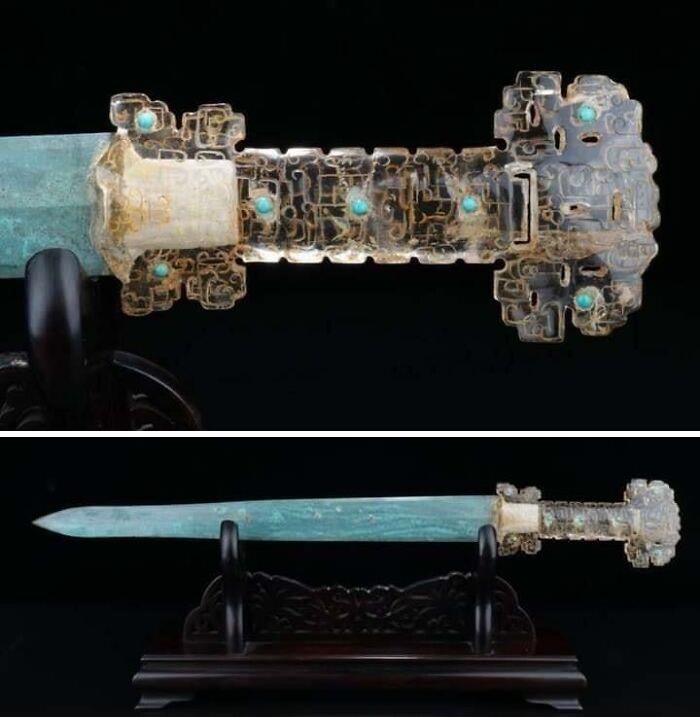
Chinese Bronze Sword With Turquoise Studded, Gold Inlaid Rock Crystal Hilt. Warring States Period, 4th-2nd Century BC
This looks like a weapon out of a fantasy game...seriously beautiful and unreal...
The patina on the blade makes it seem like it's made out of stone. Very nice. 😍💕
That is so hard to make trust me I know like it is so hard to forge metal let alone rock
The Crystal was probably ground down sliced or something ect
Load More Replies...Is that bronze with a patina? Coz I knew it was supposd to be reddish brown.
Yes, the copper in the bronze has thoroughly oxidized on the surface over the 2300 or so years since it was made. It's probably actually protected what is underneath though.
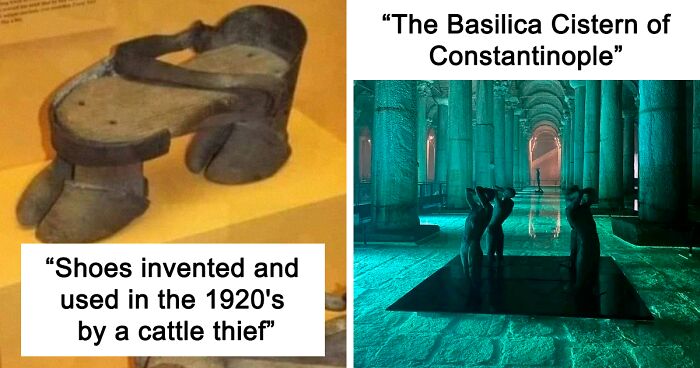
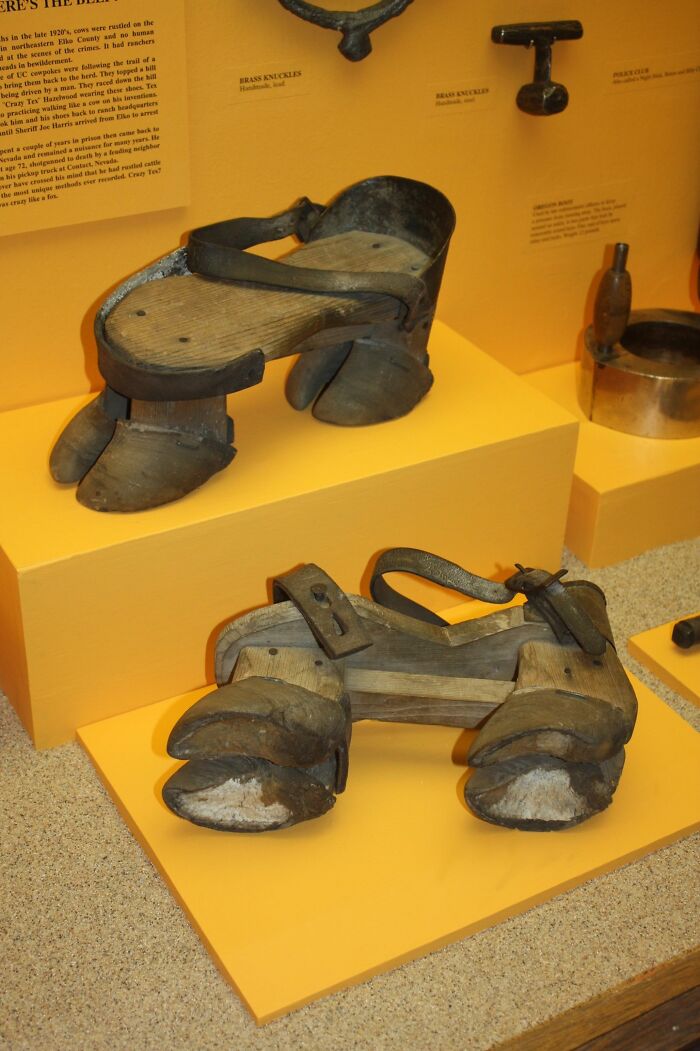
Load More Replies...Shoes Invented And Used In The 1920's By A Cattle Thief Named ′′crazy Tex Hazel′′ To Hide Footprints While Stealing Cows
This is so clever that I will do this the next time I steal cows -
Load More Replies...They were also used by bootleggers during Prohibition to disguise their footprints.
I'm going to tell you guys a secret: being a trained dancer means you can get away with ALLLLLL sorts of shït. Need to get up a flight of stairs in the middle of the night without making a sound? No problem. Just step on the outside of each step on the bålls of your feet. Don't want to leave human footprints? Stand on relevè and squeeze your toes together. Nobody will have a clue. I've got lots of other espionage tricks and yes, I accept inquiries.
I tend to walk very quietly due to childhood trauma does thst count 😂
Load More Replies...I’ve read about this and similar set ups in several different times in history for different reasons all over the country. Some were just backward shoe soles that made it look like you had went the opposite direction than you did.
Any shoes that will show me getting on Hedgie's spaceship?
Load More Replies...Except the thief put human shoes on the cows. Until he tried it with a bull left out as bait.
Load More Replies...These were used by bootleggers during the prohibition. That way if the cops were trying to find them and they stumbled upon cow prints they wouldn't think anything of it.
According to the creator of The Archaeologist, their website and Facebook page works freely, interactively, and democratically. “The page has many administrators and each of them uploads their material, which consists of photos, texts, studies, and personal research so that there is always variety, renewal, and flow in the information we offer to our global followers.”
The audience of The Archaeologist consists of people of different nationalities, ages, and religious and political views. “Most of them are simply enthusiasts of archaeology, cultures, folklore, ethnology, and history.”
Moreover, the creator explained that “Many of them are a little more qualified, studying in humanities schools around the world. There are also a number of even more specialized people who are the minority following us, who are even university professors, whose advice helps us a lot to improve our content.”
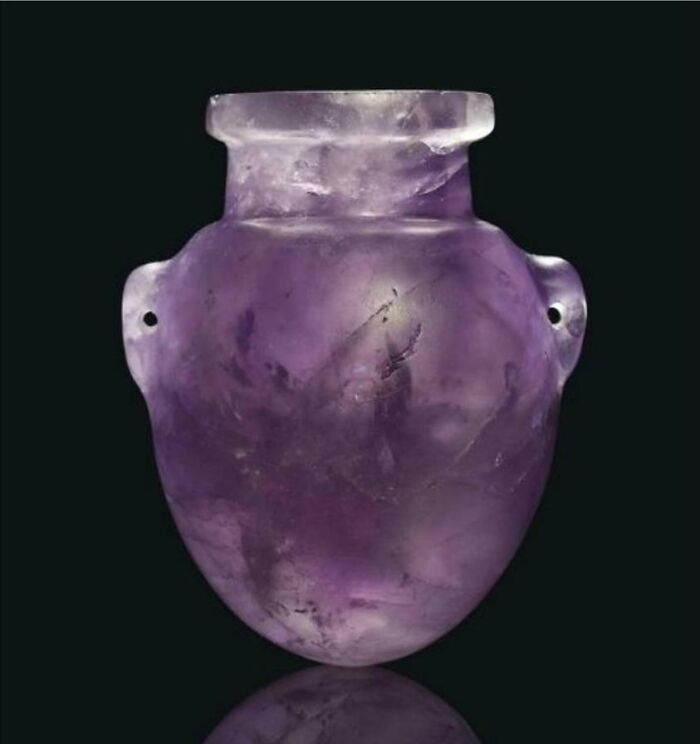
A Beautiful Neo-Assyrian Amethyst Vase, C. 8th Century BC, Private Collection
Every archaeological find tugs my heartstrings... and this makes 'em flutter.
Load More Replies...i think it should be given to the first person born in february to call dibs….so…DIBS!
Haha! Same! Being an Aquarius, definitely had an instant attraction
Load More Replies...My thought, too. It could be as small as a golf ball . . .
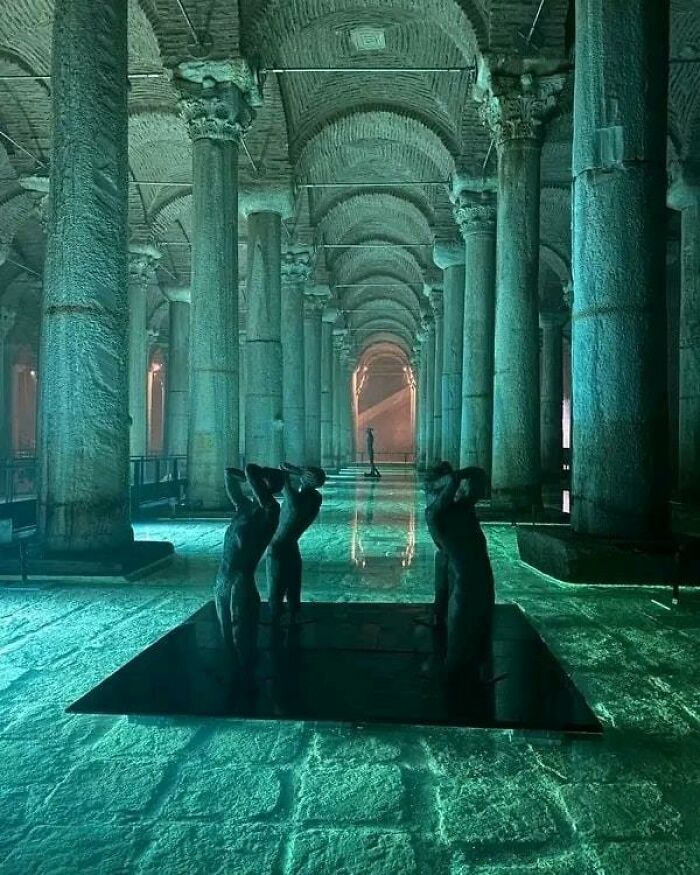
Load More Replies...The Basilica Cistern Of Constantinople
The Basilica Cistern, or Cisterna Basilica, is the largest of several hundred ancient cisterns that lie beneath the city of Constantinople (Istanbul), Turkey. The cistern, located 150 metres (490 ft) southwest of the Hagia Sophia on the historical peninsula of Sarayburnu, was built in the 6th century during the reign of Byzantine Emperor Justinian I. Today it is kept with little water, for public access inside the space.
I've seen it a few years ago. It was much darker and eerie inside. There is an inscription at the entrance, in the memory of the hundreds of slaves who died while building it.
It has been renovated this year and this photo is a recent one, it looks much cooler now. Hope you can come and visit again one day!
Load More Replies...Looks like Moria in description before it fell (LOTR).... yes, I'm a nerd!
looks like the statues in the foreground are covering their ear because the one in the back ground is yelling something annoying to hear it echo.
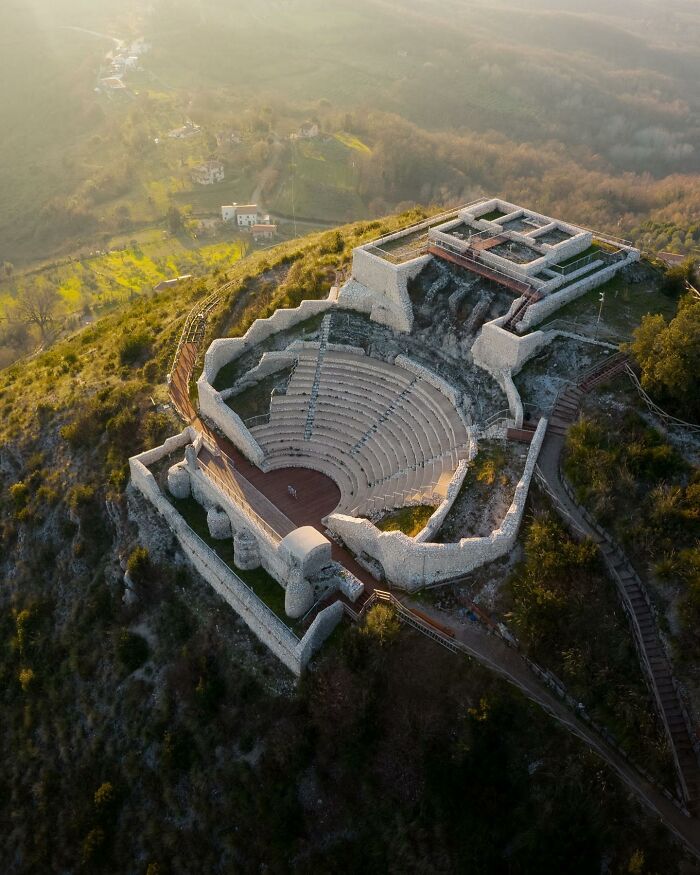
It Is One Of The Most Evocative Archaeological Sites In Italy
a Temple-theater complex discovered only at the beginning of the 2000s in Monte San Nicola, in Pietravairano of Caserta province. Lying at 410 meters high in the Sannio area, dates back to the late Roman Republican period, 2nd-1st century BC.
This is my favorite on this list(others came close). I’d give my left hand to go here for a day.
Imagine when it was being used. It must have been awe inspiring. Well, still is.
Load More Replies...You'd better start climbing the stairs about 3 hours before the performance ...
Why the f***k did you get a downvote? Here!. Oh, and Pink Floyd did Live at Pompei, which is close enough...
Load More Replies...Just looking at that makes my knees hurt. I pity the poor slaves who had to haul all that marble up the mountain.
Amazing. Not discovered until the 21st century. Not sure our generation has anything quite as lovely that will last 2000 years. Well maybe that Swedish seed vault, but I’m not sure of anything else.
When asked about the plans for the future of The Archeologist, the creator explained that the team wants to attract more people to work for them and to grow their page further.
“We would like to be published in print, to become known worldwide, and to be a landmark of how different people, of different nationalities, who love culture can cooperate, can work together, and jointly contribute to the elevation of world peace, consciousness, and energy.”

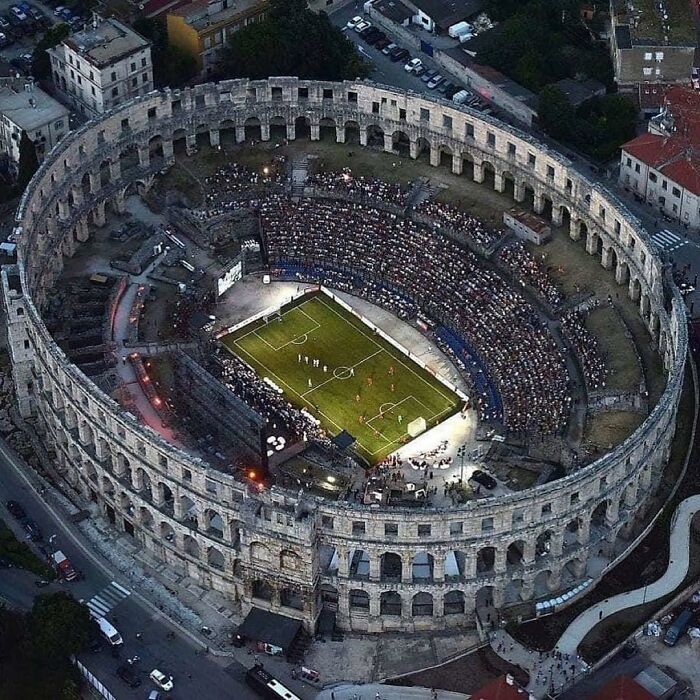
Football Match Played In 2000-Year-Old Roman Arena In Pula, Croatia
A great blend of old/modern, wonderful to see these buildings repurposed tastefull and respectfully.
Honestly, it's pretty close to the original purpose.
Load More Replies...There are concerts as well in Arena. It's great when it's hot in summer to be outside.
Saw an Elton. John concert at the Roman theater in Verona, Italy ....in the middle of a thunderstorm. Pretty amazing to experience sitting in such an ancient venue
Wow! Didn't realize it was being used for modern sports. This is wonderful. Sadly, probably couldn't do this in my country with the culture of thuggery. Some places, maybe. Not California.
We don't have structures this old in the United States.
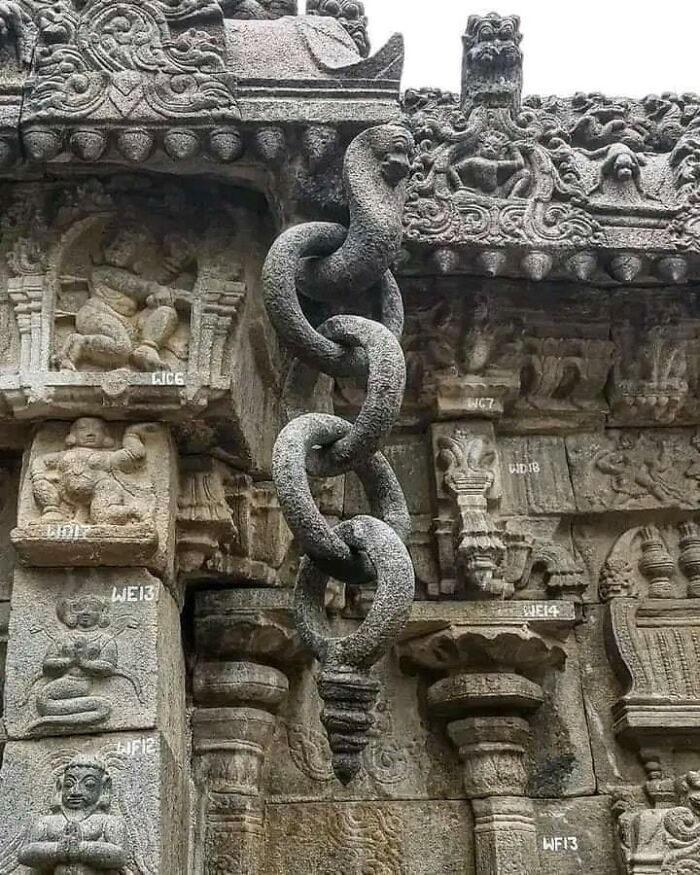
Load More Replies...An Architectural Marvel! Interconnected Chain Rings Made Out From Single Piece Of Rock
The Gaurishvara Temple is located in the town of Yelandur, Chamarajanagar district of Karnataka. Built in the 16th century.
"marvels" is the right word to use here. Must have taken carvers a lifetime to create these reliefs.
Load More Replies...Thank you! Four place names were given and I still didn’t know where it was.
Load More Replies...Praveen Mohan is an archaeologist in India that makes videos on the unique, seemingly impossible objects like this found in and around India's magnificent temples. India's master craftsmen produced works unlike any in the world.
Praveen Mohan is NOT an archeologist. In fact, after more an hour of looking for any records of his education in ANY relevant area l can find NONE. What I did find is many videos of his that show him to be one of the worst CRANKS out there. In fact, I am SHOCKED to see an Indian who should be very proud of his own country's contributions to history denying them, and instead pushing lies about aliens building ancient civilizations. He should be very deeply ashamed, and so should anybody else who believes that kind of garbage. Only the MOST gullible of idiots believes this kind of c**p. None of the people pushing it have any education at all. They are just crooks who want to make money off of others who are stupid enough to believe their lies. It's so easy to make videos that are full of any kind of lies you feel like making up. That's why so many people are doing it now. But why on earth do people stoop so low as to actually believe that garbage? SMARTEN UP PEOPLE!
Load More Replies...Look at all the individual carvings around it though! They each represent something different. Does anyone know what they all mean?
Check out Praveen Mohan on YT... he gives insight to the sculptures, the deities, the construction oddities like revolving columns.
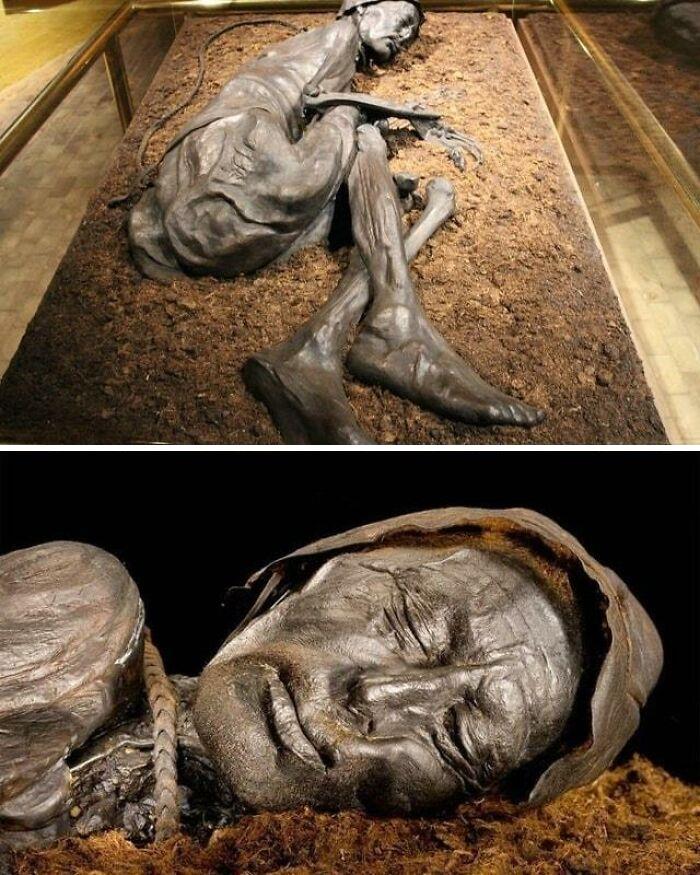
Load More Replies...The "Tollund Man" Is A 2400-Year-Old Bog Body And Victim Of Human Sacrifice From The Iron Age, Found In Bjældskovdal In Denmark
His body was so well-preserved that even after 2400 years scientists were still able to take his fingerprints and determine what he had eaten last.
If I remember correctly, it was oatmeal. Edit: it was barley porridge, and some fish https://www.livescience.com/bog-body-tollund-man-last-meal.html
I have seen him at the museum several times and I'm always amazed by how well preserved he is. I'm pretty sure it wasn't peaceful. He had his neck cut and then thrown into a bog.
Either execution, murder or human sacrifice, none of those are very nice. :( poor tollund man
Load More Replies...There's something very distasteful about real people being displayed in museums.
Better the truth be seen by everyone, so that this kind of history doesn't repeat itself.
Load More Replies...Wow, didn't know you could tell what you ate last by your fingerprints, teehee.
For those who don't know; bog bodies were (obviously found in bogs otherwise they would not be called bog bodies), were either thrown into the bogs (already dead) or pinned down into the mud with a wooden stake if I remember correctly. This was used to help with vampirism, (The body being pinned down would make it impossible for the soul to come take vengeance on his/her family). In this case, it was human sacrifice. Might have been to a god, or a different entity. (Plz don't down vote this I was just wanting to give some info)
When found the police was called because it looked like a recent murder.
“We are also planning very soon to open an online store, which will offer very special souvenirs and t-shirts of cultural content, even with the writing of a name (of a customer) in various ancient scripts such as Mycenaean Linear B, Egyptian hieroglyphs, and cuneiform,” the person behind The Archeologist told us.
They’re also planning to organize archaeological excursions to all the places of archaeological interest on Earth such as Egypt, Mesopotamia, Greece, Italy, South America, Africa, and South-East Asia. So we wish them all the best of luck!
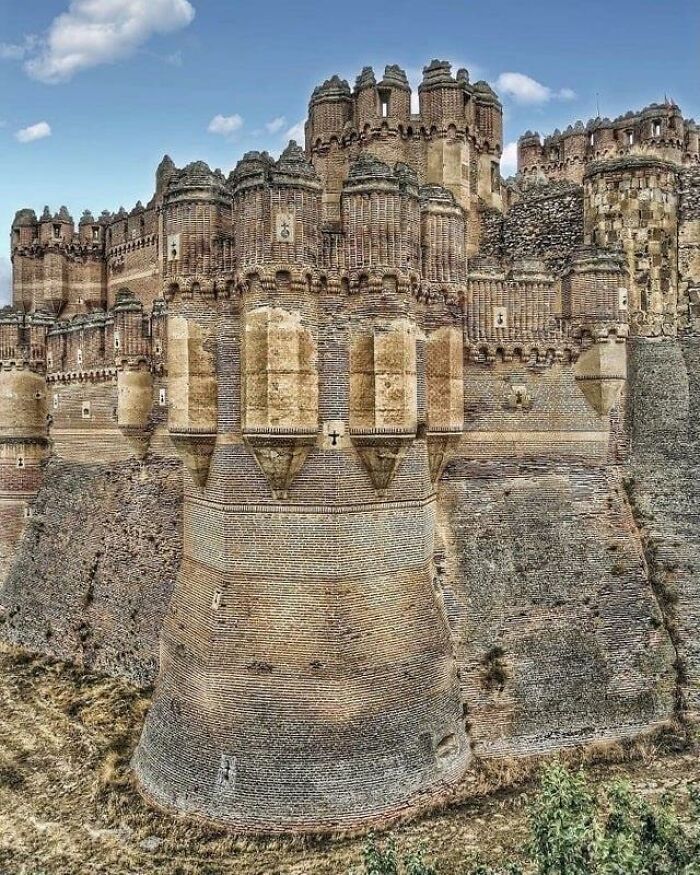
The Castle Of Coca Is A Castle Located In The Coca Municipality, Central Spain
It was constructed in the 15th century and has been considered to be one of the best examples of Spanish Mudejar brickwork which incorporates Moorish Muslim design and construction with Gothic architecture.
That's a stunning effect, emphasizing rows of brick as well as mortar. True craftsmanship and a labor of love.
Our ancestors were amazing architects and craftsman that would equal anything built today.
Imagine undertaking this feat of architecture without modern technology. How many men were involved and how long did it take ? This simply is stunning.
I'm staring at this and just wondering how many bricks it took to make just one side. It's incredible.
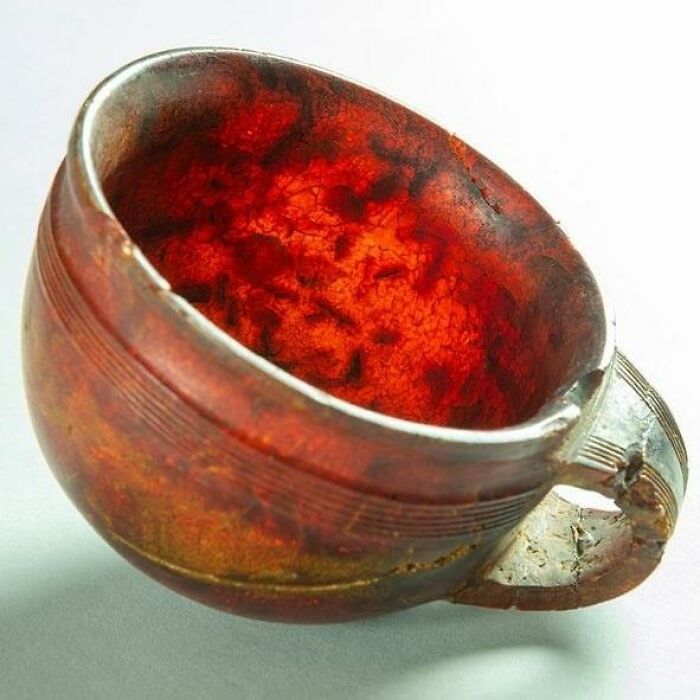
The 3270-Year-Old Amber Cup Discovered In A Great Round Barrow Mound That Was Crudely Excavated In 1856 In Hove, England
See those tiny insects immortalized in this amber tens of millions of years ago?
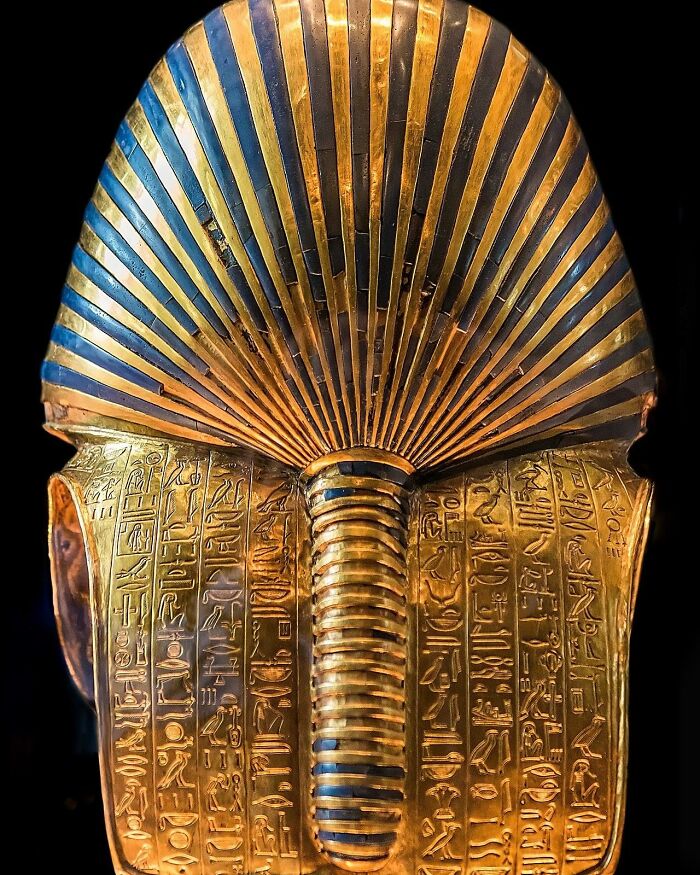
The Back Of The Golden Mask Of Tutankhamun
Undisputedly, most valuable artifact on the planet. Mask of the young Egyptian King Tutankhamun (r. 1332-1323 BC), from New Kingdom (18th Dynasty).
Egyptian Museum, Cairo
Same. I also never realized the blue stripes were separate pieces. I always thought they were just painted on.
Load More Replies...Nice to see the back, the only time I've seen it before was when I saw the original in Cairo
I saw this as a kid--nearly 5 decades later I am still impressed. If you ever have a chance to see this in person, do so.
I was so excited to see the mask at the King Tut exhibit when it was at the museum in Chicago. They didn't bring the mask or the Mummy (I get the Mummy), despite the mask being on ALL the advertisements. I was extremely bummed
Load More Replies...I was there only a few weeks ago for the 100 year anniversary of the rediscovery of his tomb. It (the mask) is still at the old museum, but many things are/have been moved to the new one - which has been “about to open” since 2002. Hopefully not too long to wait now as the G.E.M. looks spectacular🤞
I am DYING to know what story the hieroglyphics tell! Was that part of the exhibit?
Load More Replies...I've seen it in person but never realized he was sporting a pony tail. Only saw from the front
It's not really a pony tail. It's the gathering of the Nemes scarf in the back. Traditional Pharaonic headwear.
Load More Replies..."Undisputedly, ..." You wish. Nothing (or as good as) is undisputed in science, and "value" is a highly ambiguous term at best. I doubt even egyptologisis or archeologists agree on that one, let alone geologists, astronomers, paleontologists and all the other scientists.
You are right about that Nicole. I'm sure there never can be agreement. Nor would I really want there to be. Students and professionals in the feilds of history and archeology will forever be examining what different types of values the different artifacts hold, and what they mean to us. There are many different types of value, in addition to merely the monetary kind.
Load More Replies...Fantastic 😻 I always think of the irony of him being buried quickly in what some historians believe was a tomb meant for a woman, possibly his mother, by a pharoh who wanted him to be forgotten and to be himself to be remembered. And yet no one really knows very much about Tutankhamen's successor but everyone, everywhere knows about King Tut.
Great. Now I have Steve Martin's King Tut song 🎶 and dance in my head. 😂
Load More Replies...Archeology can provide invaluable insights into our ancestors’ lives, from the way they lived and worked to the beliefs they held and the societies they created. By studying material remains, archeologists can learn about ancient technology, trade, religion, warfare and even environmental changes. Archeology can also shed light on the development of agriculture, urbanization, literacy and other aspects of human societies.
For thousands of years, people have been digging up and collecting artifacts. Interestingly, back in the past, these people were usually not scholars, but looters and robbers who’d rob graves in a bid to sell the findings for money or even build their personal collections.
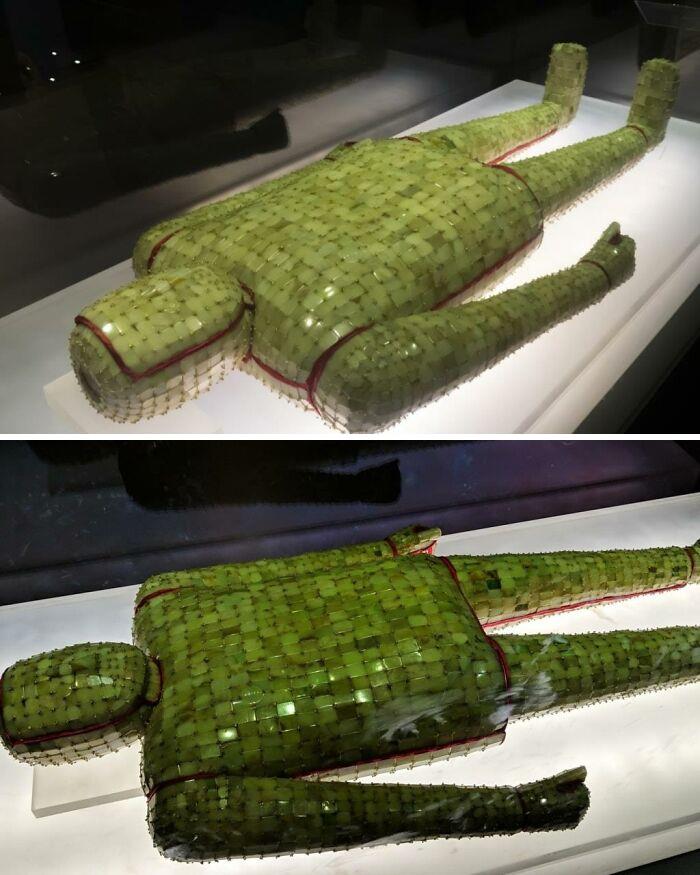
Jade Burial Suit, Han Dynasty 202 BC
Wow!!😳 I didn't even think of the amount of work to build the suit or the amount of material. 🤩
Load More Replies.....I was just thinking 'Klaatu Barada Nikto!|
Load More Replies...Why? Was it just to honor someone important or did they believe it had some magical properties?
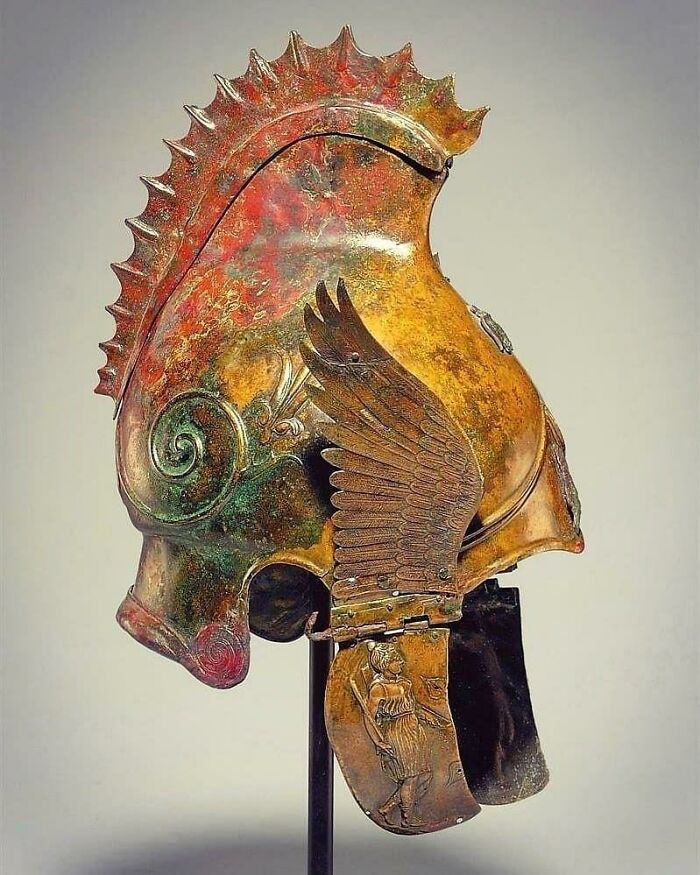
A Brilliantly Preserved Bronze Phrygian Winged Helmet, Dated To The 4th Century Bc. It Recently Sold At Auction For £160,000
it's way too much for my budget, but 160K seems low for this. i know nothing of "market value" of such things but i have seem really s****y paintings that sold for millions...
I wish this could be on public display, in a museum. It sounds more like this is now in private hands.
Bronze is an alloy of metals, copper and tin! Copper oxidizes (rusts) and turns different colors, often greenish or brownish. Tin often rusts into a reddish color. After so many years, the bronze helmet probably returned in parts to its original ore, and the copper and tin were exposed to oxygen long enough to turn into these colors. Hope that helped! :)
Load More Replies...I can see some trust fund fund baby running around naked, wearing this at a party at daddy's house! Gawdammit!
Armor Of An Officer Of The Imperial Palace Guard, Chinese, 18th Century
This is amazing! Please don't let the Kartrashians know about this.
More efficient to grab, swing back and down on the enemy or intruder... One fluid motion in counter-clockwise.
Ancient China! Never ceases to amaze me! Seriously.. truly wondrous age.. brutal too..
Whoever's behind this display needs to go back to school the scabbard is backwards. Anyone trying to pull a sword out backwards is going to be missing a few body parts and you dont get into the imperial guard by being a moron.
This was not a mistake. A quick search on Google with the keyword "Qing dynasty guard" confirms it. As for the reason, I'm unsure, but I see this reverse sword position started in Qing Dynasty, which was lead by Manchurians. Before that, swords face the "usual" way, or carried in front of you. See, Manchurians tend to do things the opposite way than Han China. Han tied their clothing right on top, Manchu tied it left on top. About the effectiveness, I have no idea. Do correct me if I'm wrong, though.
Load More Replies...Perhaps your sword is not yours, it’s meant to be drawn by the guard behind you, while you draw that of the guard ahead of you. Pity the guy in front. 😀
Regardless of sword placement, the front is not generally an auspicious place to be in an active army.
Load More Replies...Maybe where it is attached to the suit it is on a swivel? Grab the hilt and pull it forward and out of scabbard?
One of the most well-known archeological finds is the tomb of Pharaoh Tutankhamun, also known as King Tut. Unlike many other Egyptian tombs, grave robbers had never discovered King Tut. His resting place lay undisturbed for thousands of years, until it was discovered in 1922. In addition to mummies of Tutankhamun and his family, the tomb contained some 5,000 artifacts.
Archeology has played an important role in our understanding of history, and it continues to be an essential field of study for exploring our past and its relation to the present. Through archeological research, we can gain insight into the lives of our ancestors and learn more about the development of our modern world.

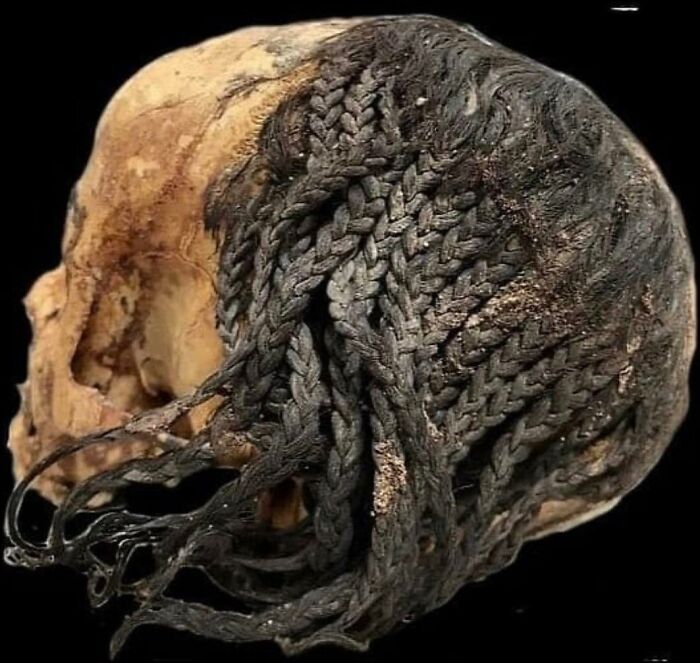
Hairstyle From About 3,300 Years Ago Noted On This Preserved Ancient Egyptian Head
Wow. I'm having trouble getting my head around the fact that somebody braided that hair over 3000 years ago. It just feels so 'present'. I guess what I mean is that it's one thing looking at the bones of the long deceased, but to think this person took the time to make their hair nice, just seems so, for want of a better word, 'real'.
I studied archaeology and it was always these small things that made the past so real for me: preserved hair, sewing needles, a shoe.
Load More Replies...Whenever I see hair still on a skull it really drives home to me that this was once more than bones. A person was once here, and they were much more like us than we'll ever really know.
They were from Egypt they don't have kinky hair like others Africa's they have fine straight hair they in North Africa very different
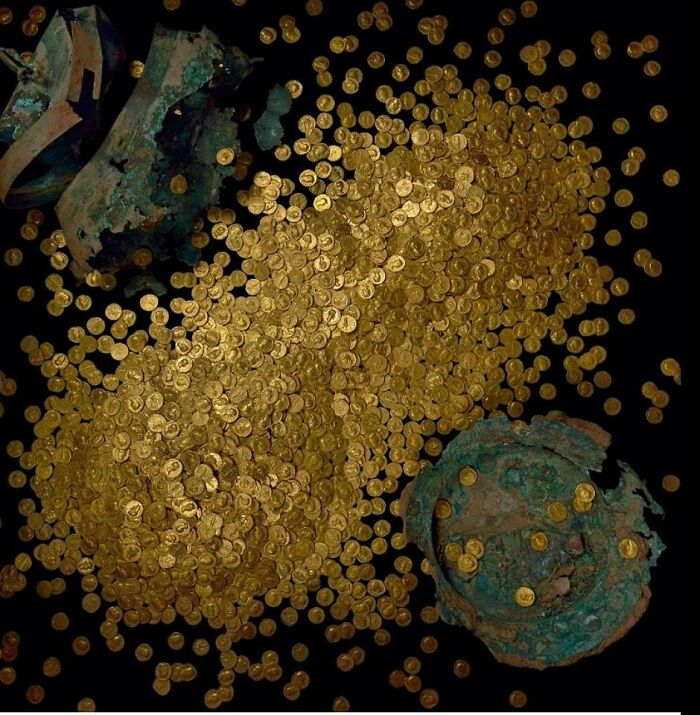
Load More Replies...The Trier Gold Hoard
About 1800 years ago this hoard of 2516 gold coins was hidden.
At a weight of 18.5kg it was found in September 1993 during construction work in Trier, Germany.
It is largest known preserved Roman gold hoard discovered.

What a find! This is why I love archaeology ...treasures beneath our feet, and every one holds a story.
Having lived in Trier I know for a fact that you could not dig up your back garden to plant a flower bed without finding some Roman artefact or ruin.
Bet there is a story behind how it got his and forgotten. Whoever hid it must have been killed without telling anyone.
They probably got a few months of unpaid vacation while a team was brought in to figure out what to do with it.
Load More Replies...Its weird to me. For some reason this gold looks more golden than pics of todays gold.. Probably cause its so old. It just looks nice to see it this way
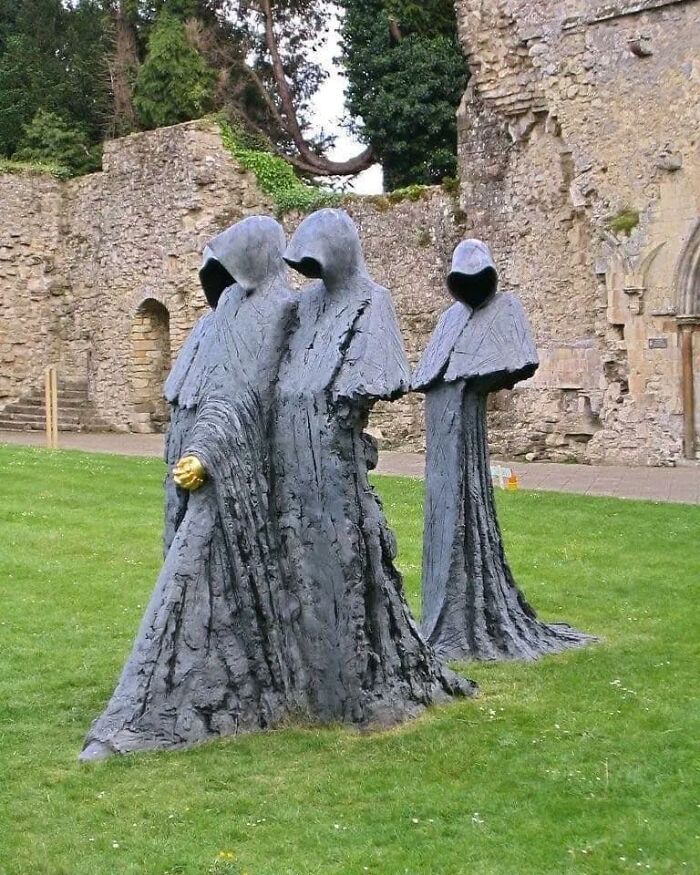
Sculptures At An Abandoned Abbey In England
This sculpture is at Beaulieu Abbey in Hampshire. The abbey wasn't actually abandoned, it was forcibly dissolved and then mostly demolished on the orders of Henry VIII in 1538 during his dissolution of the monasteries.
The one looking right at us just might be the creepiest thing I have seen in a while.
Peeya yazu dominay. Donna ayees requiem *Smacks self in the head with board* (I definitely didn’t spell any of that right. I don’t speak Latin)
Do you mean "pie Jesu domine, dona eis requiem"? (Merciful Jesus, grant them rest)
Load More Replies...Amazing how the craftsman depicted both movement and deep reflection of the monks.
Most importantly, modern archeology has revolutionized the way we study the past. With advancements in technology, archeologists have been able to unearth sites that would previously have been hidden. With the help of satellite imagery, high-tech tools and sophisticated methods, archeologists are now able to uncover secrets that were lost for centuries.
The use of advanced methods such as ground-penetrating radar and geophysical surveys has enabled archeologists to map out large areas, allowing them to discover ancient cities and other ruins. With the help of computer simulations, they can also recreate what these sites may have looked like in the past.

Abandoned Indigenous Tree House In Papua New Guinea
The various tribes of Papua New Guinea build these insane treehouses so high up for a reason: to escape rival tribes. Some can reach heights up to 100+ feet in some cases. And these treehouses are still being inhabited today. An amazing work of architecture, in the middle of the jungle, where most will never see it.
Thanks, I was wondering just what could be on the ground that is dangerous enough to make this the better option...now that you mention it, I probably should have guessed "other humans."
Load More Replies...Drew Binsky has just done a video on the tribes there and explained about these houses in his YouTube channel, very interesting and I recommend a watch! The house on stilts is to watch out for attacking rival tribes and cannibalism was involved by some tribes too!
Imagine having to climb down to get more food & water, then hauling it all the way back up.
I was just thinking how winded I used to get when I was pregnant and climbing the stairs to our house...I could NOT imagine having to haul my very pregnant self up and down that treehouse ladder!! Or, with a baby on my back once the kid is born. OMG.
Load More Replies...The Tree People!! I loved learning about them when I was young. Absolutely crazy watching them climb a piece of wood with notches, used as a ladder, and carry a dog with one hand! There are pictures if you search for Tree People of Papua New Guinea. There's so much out there about them.
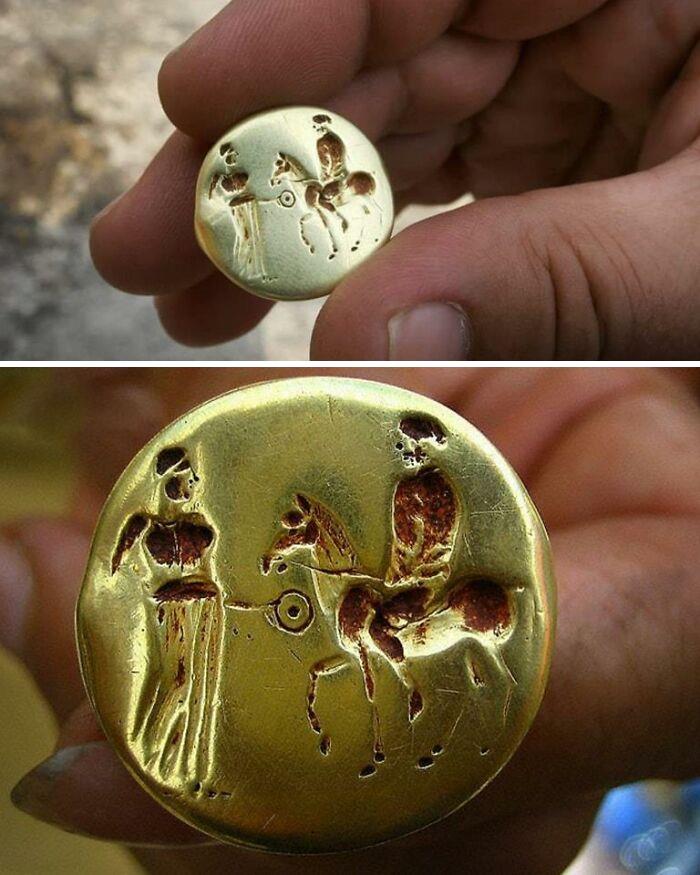
4th Century Bc Golden Ring Found In The Tomb Of A Thracian King In Yambol Region, Bulgaria
These small, beautiful details, this incredible effort. The time it must have taken to create this masterpiece. So fascinating.
I'm guessing that this is also a seal because of the debossed details. It would create a nice wax seal, and would have been a common (convenient) way to carry around your seal whenever this Thracian king needed it.
Artist had to find just the right horse, so it would fit on the ring.
Load More Replies...I know Bulgarians had stirrups, when they moved to the Balkans, but the Huns might've had them too. I believe they were invented by the tribes that came from Asia. That's why they were great horseback archers.
Load More Replies...Burnished to a fine sheen by age and touch. It must have felt good to wear.
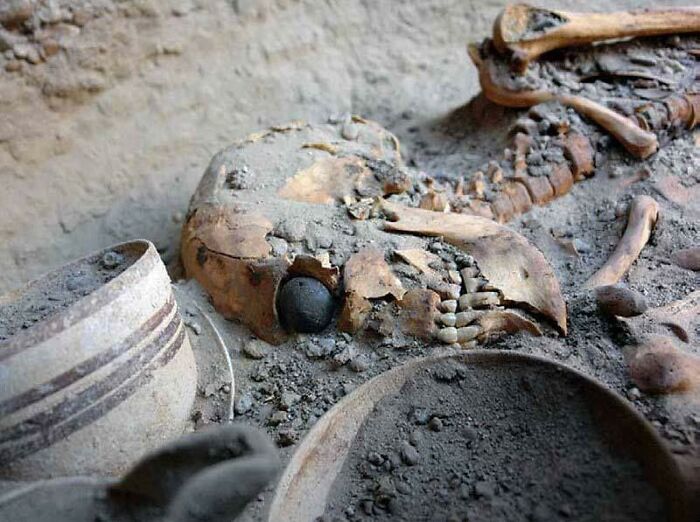
The Oldest Artificial Eye In The World
More than 4,800 years ago, in Burnt City (Shahr-e Sukhteh) in the desert of Sistan (Iran), a woman with an eye prosthesis was buried. It is a hemisphere made of a light material (derived from bitumen paste) and covered with gold with incisions, imitating the pupil. To keep the eyeball in place, they drilled two small holes. In this way, the prosthesis was held by a rope (like a patch). The owner of it wore it during the day, to hide its empty orbit, and at night she kept it in a leather pouch, also found in the burial.
In the tomb of this woman (surprisingly tall) several vessels, various ornaments and a bronze mirror were also found. It is believed that she may have been an important person in society or perhaps a priestess.
I'll say the same thing another person did under the first time I saw this image: DO NOT REMOVE THE GOLDEN EYEBALL FROM THE GRAVE OF THE UNUSUALLY LARGE HOLY WOMAN.
I find that incredibly fascinating. According to the description, it was not medically necessary, but had purely aesthetic reasons. I am pleased that this has been made possible. Artificial eyes, unlike artificial arms or legs, mostly have no physical use, but psychologically they are so incredibly important for people.
Sometime, somewhere, an artificial head will be discovered, and the numberless hoards of your family will skitter to your side and rejoice with you.
Load More Replies...As an "unusually large" woman myself I can appreciate my ancient sister's artificial eyeball game.
"That's one big woman." Seamus Finnigan, Harry Potter and the Goblet of Fire
Load More Replies...DNA analysis has also had a major impact on modern archeology. By studying the DNA of ancient bones and artifacts, archeologists can learn more about the history of a site and its inhabitants. This type of research is especially useful when it comes to tracing the origins of human populations.
Modern archeology is also making use of new technologies to protect sites from looting and destruction. By using drones, infrared cameras, and other tools, archeologists can monitor sites in real time and collect data that can be used to preserve the sites.
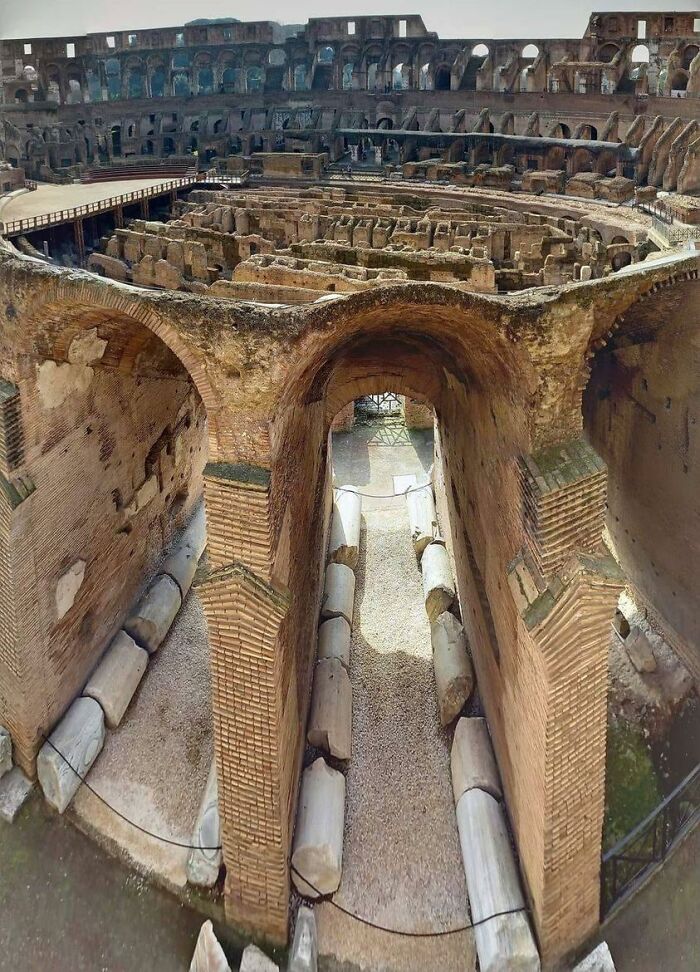
Colosseum's Basement, Rome
And cheap. I think that 'cheap' is the driving force these days. Some new buildings have a shelf life of less than fifteen years, which I find appalling considering the ecological price of knocking down and rebuilding every ten years or so. But don't mind me, I'm just sorting my cardboard from my tin cans, doing my bit for the planet. smh
Load More Replies...Saw this for the first time this summer. It’s where the gladiators waited and the floor would hoist up sections to let in combatants and wild animals. A lot of blood flowed through those walls.
There was a whole system of lifts and platforms under there as well as a lot of animals and people.
Load More Replies...The Alamo was built on caliche (gravel, sand and limestone) which was extremely difficult to dig into. It was built as a fort & mission complex to minister to and educate the indigenous people. Cellars and basements are not typical in this area.
Load More Replies...Uhm, how do you define a basement and how is that not a basement?
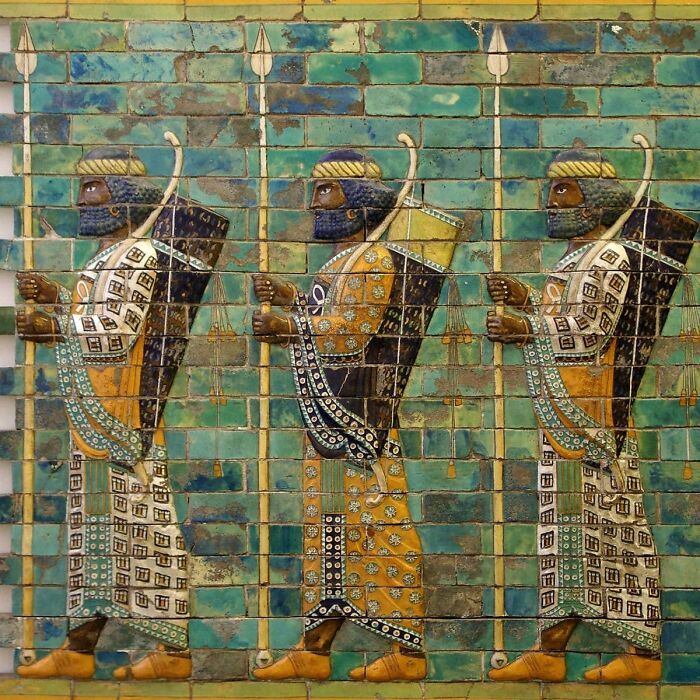
Load More Replies...A Frieze Made Of Glazed Brick Tiles Depicting Persian Warriors, From The Palace Of Darius L In Susa, Iran
Achaemenid Empire, 6th century BC, now on display at the Pergamon Museum in Berlin.
I was there. These bricks were salvaged and restored by hand, and these figures alone were life-sized.
Those bows were pieces of art: layers of wood and horn laminated with animal resin. The strings were also treated with resin for strength and durability. Formidable weapons.
Everybody was darker color from the sun except Caucasians they from the Caucasus Mountains thats why they don't have skin color any more it's true
Load More Replies...gorgeous. These colours. I would like to have it in my living room as wall decor
Is this the Darius of the Old Testament when the Israelites were in exile in Babylon.
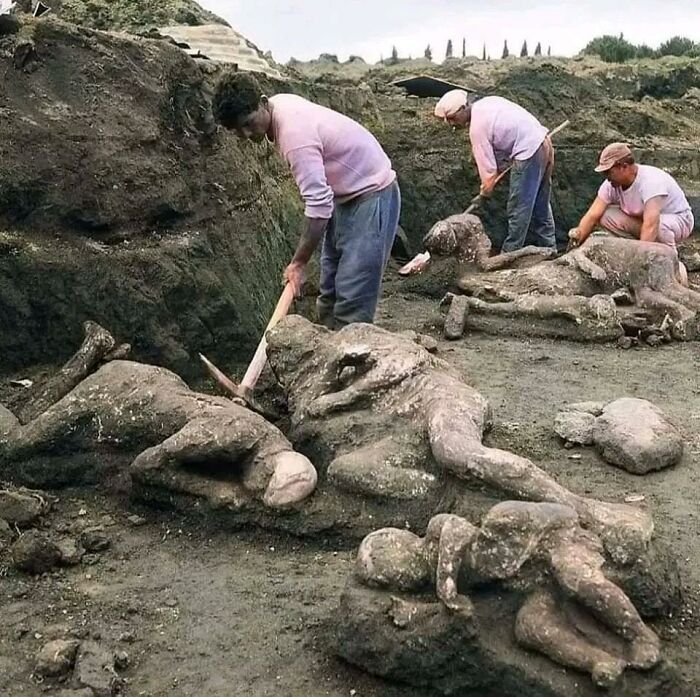
A Picture Of The Pompeii Excavation
The only things left of the bodies was bones and a void left in the ground. What you see here is plaster that's been poured into that void left by the body after the bones were removed.
Load More Replies...I wonder what these people who uncovered these were feeling? Happiness at finding something like this or sadness when they found it like this?
I was wondering the same thing. Might do some googling to see if I can find any direct words from these people.
Load More Replies...Those poor, poor people. The small child in the foreground just makes it even sadder. :(
This is so heartbre... does the excavation team have matching outfits???
I think they all wear white shirts, the pinkish colour is because the photo is clearly older. Interestingly many Archaeologists wear white shirts, as you won't get cooked by the sun too fast.
Load More Replies...I'm sure they are being careful but picture made me laugh. Most dig pictures you see they are carefully removing material with little clay sculpting tools and a paint brush. This person has - Pickaxe. LOL I visited Pompeii in the 80s Interesting site. Saw a mosaic that still looked good after all those years.
As an Archaeologist I have to say, that I use the pickaxe more often then the paint brush. Most things aren't that fragile that yoo need fine tools. In a situation like above you basically know, that you won't find anything until you reach the 2000 year old surface and as long as you don't directly hit the bodies you are good. Of course we sometimes discover an artifact with the pickaxe or shovel...
Load More Replies...It was only after the eruption of Mt St Helens in 1980 that they understood how this preservation came about - pyroclastic flow had never been observed before.
Read about these as a child, and when we would drive by the Amboy Crater lava fields I'd imagine what was buried there. Same when we lived on Shasta.
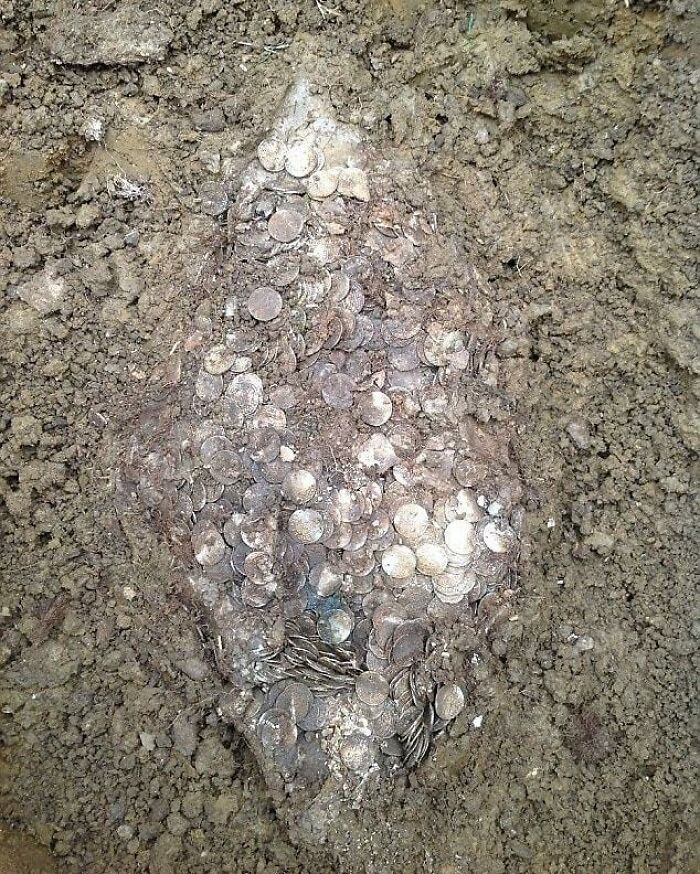
A Hoard Of 5,248 Silver Anglo-Saxon Coins Discovered By A Metal Detector Near Lenborough, Buckinghamshire
985 date from the reign of Ethelred the Unready in the 990s and 4,263 were minted during the reign of his successor, Canute. Source: London Daily Mail.
this is what i imagined when i unearthed a nickel yesterday
Load More Replies...I love the titles given to the lords of the land in these eras: "Ethelred the Unready". It evokes so many questions.
He was the Saxon King who created the first restrictions on the Monarchy and the rights of the people, served as a prototype document for the later Magna Carta, and modern law and rights
Load More Replies...*Metal detectorist. Detector is a device, that you can detect *with*.
Imagine people in thousand years remembering you with the nickname Unready. Gotta go check for what he was so unready
Ok, so looks like he wasn't unready at all. The nickname means more like folly and is a friggin pun that doesn't work anymore because of linguistic sift! Æþelræd Unræd is the original joke, lol
Load More Replies...I read that this hoard is valued at 1.35 million Euros!! I wonder how much it was worth in their time?
You got silver, Britain? Well I've got stabby rocks from 300 BC.
Ummm....me too. I just have to go get them from the temperature and humidity controlled safe I keep out in the back yard.
Load More Replies...Lololol I saw Ethelred the Unready in a Hagar the horrible comic. Now I'm definitely going to look him up.
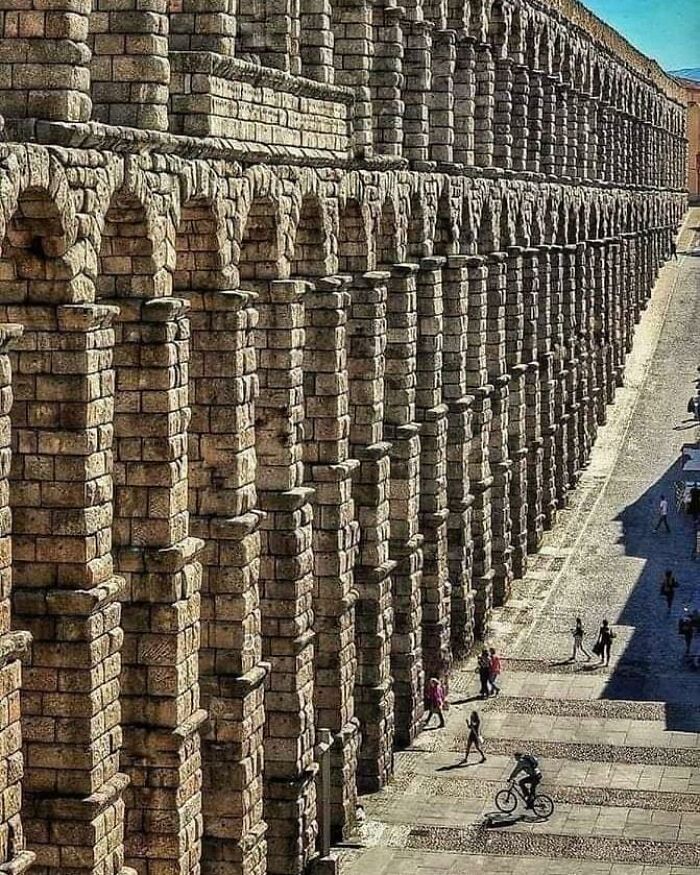
The Huge Roman Aqueduct Built In Segovia, Spain, By The Roman Emperor Trajan (AD 98-117)
One of the best preserved Roman engineering works, the structure was constructed from approximately 24,000 dark colored Guadarrama granite blocks without the use of mortar. The above ground part is 2,388 feet long. And it consists of approximately 165 arches that are more than 30 feet in height.
Construction without mortar. That's skill so far above my paygrade I'd need a flight suit to reach that lofty level.
Traditional pasture boundary walls in the UK don't use mortar either, though that's admittedly not as challenging of an engineering feat.
Load More Replies...I spent 5 days in Segovia. It's much more amazing to me than anything in Rome, especially with far fewer tourists. Segovia is also famous for free tapis and the drinks are cheap.
It must take your breath away!! What a feat of engineering.
Load More Replies...The Romans really did lots of construction. Are their architectural methods preserved to this day? Do we have access to that knowledge?
I suspect Trajan didn't touch a single stone during its construction. Of greater interest would be who designed it? who was the foreman?
It’s amazing just how far the Roman Empire reached. It sprawled all over Europe and even the UK. Romans were so incredibly advanced. Gotta wonder how the F did the Dark ages occur ?
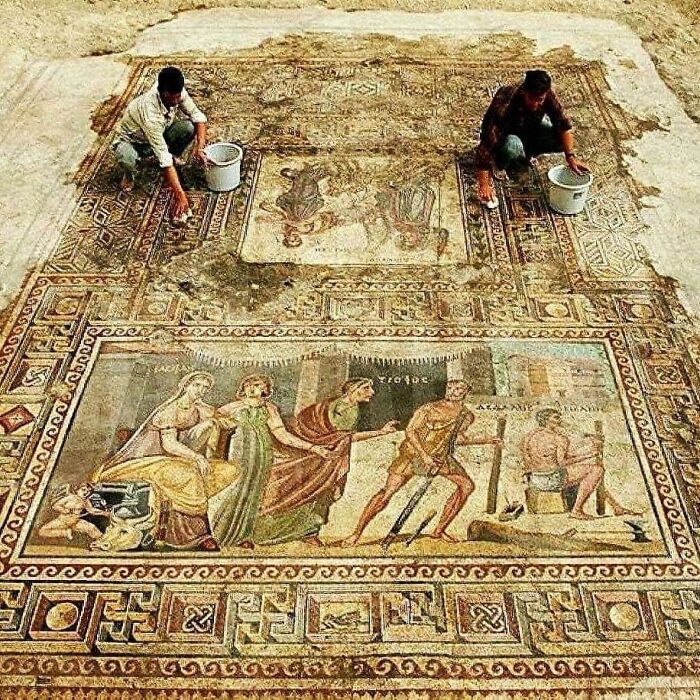
Zeugma Mosaic Of Icarus And Daedalus, Roman Period, Museum In Gaziantep Zeugma, Turkey
Zeugma was a town along the Euphrates River, founded by Seleucus Nicator, a general and successor to Alexander the Great. In 64 BC, the Romans controlled the city. Zeugma was of great importance to the Romans as it was located at a strategically important place.
Zeugma Mosaic Museum contains mosaics from the site, and is one of the largest mosaic museums in the world.

As an art museum fan, who has seen several contemporary Roman mosaics, this is phenomenal, even by the standards of other phenomenal pieces of the time.
Load More Replies...You know the builders had crazy skills to craft mosaics that last millennia. Still beautiful.
How come all this beautiful ancient tile work can still hold up throughout time, yet my kitchen tile can’t even make it 30 years?!
The answer to that is still under study but so far it's pretty interesting. Self healing concrete, construction that relied more on flexible strength than rigidity, and the technique of using small pieces for large mosaics instead of larger pieces that would get more stress and be more prone to cracking all helped make roman art and structures that are much more resilient than common modern materials. That said, I have personally seen Egyptian paint from more than a milenia before this was made and it's still bright and vivid (admittedly it was sun protected).
Load More Replies...I love it so much, these wonderful colors. It's amazing how much effort people put into it. I am happy that it has been preserved and is being restored.
Maybe he collaborates with Minos for something that a-maze-ing.
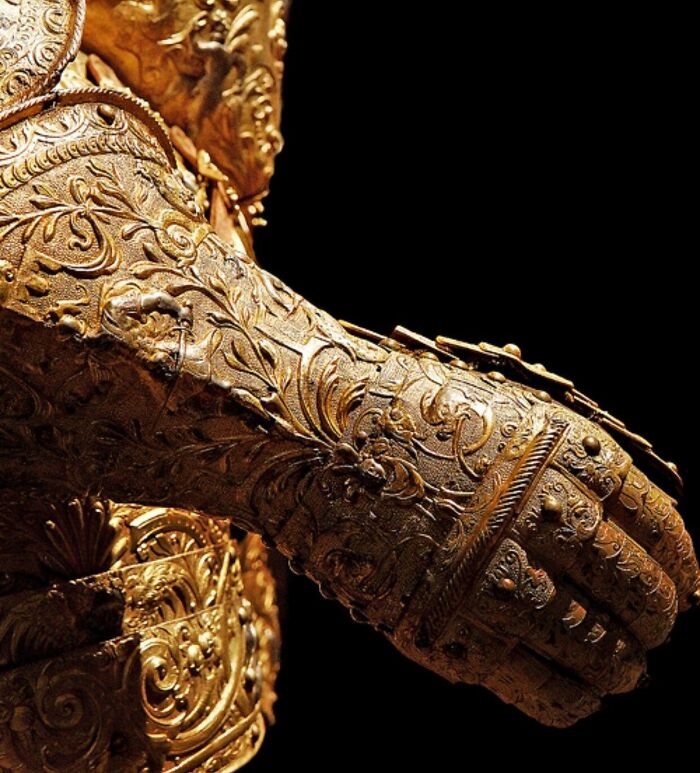
Load More Replies...The Golden Gauntlet, Henri III Of France’s Armour (Detail), C.1550
That scream "look what I can afford" pretty loud. And also "if you take me down, don't kill me, my family will pay a huge ransom".
That is actually kind of how it worked back then. Knights and kings were taken prisoner instead of killed, exactly because they could use them for leverage or ransom.
Load More Replies...It's beautiful. Was it strong? Not sure how much gold is there but of course gold is both heavy and soft. Doesn't rust but otherwise not really a go to metal for armor. Maybe just plated??
Just decorative bits on otherwise functional and protective armor. You ain't sending a king out in just ornamental stuff.
Load More Replies...If it's pure gold, the armor was definitely not worn in combat. Other metals are much stronger... Parade or celebratory armor more likely.
IF being the key word. But you are correct in that pure gold wouldn't be for battle. 24k is too soft for most things, that's why a lot of jewelry isn't that high, it can't stand up to much pressure.
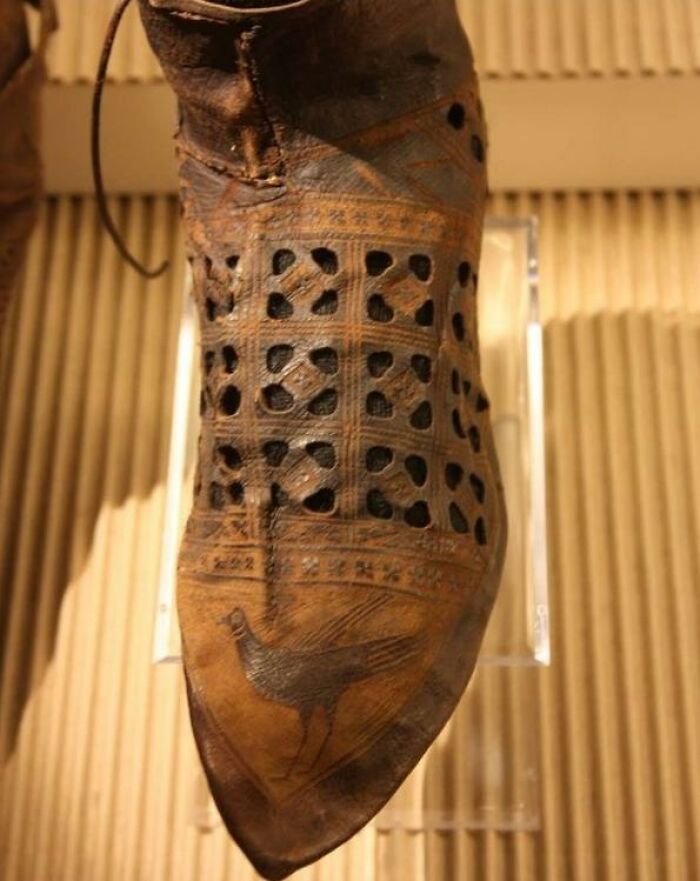
Load More Replies...This Shoe With Bird On Front Was Found In Haarlem, Holland And Is Dated Ca. 1300-1350 A.d., Archeological Museum Of Haarlem, Netherlands
Again, the attention to detail for beauty and function... so much better than mass production.
Mass production was never meant to deliver hand made craft to everyone. These shoes are not an equivalent to mass produced shoes. Back when those were made, most people wore simple wooden clogs or nothing at all.
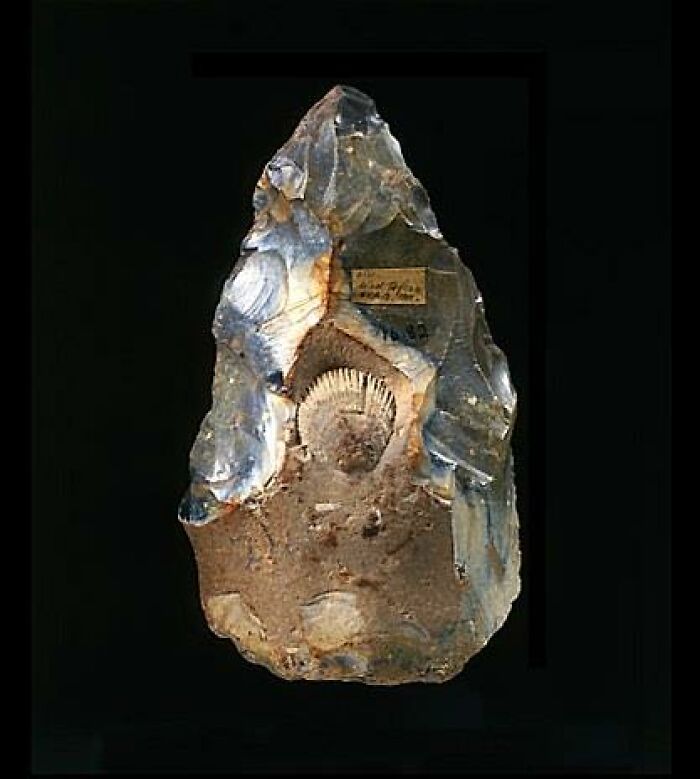
Load More Replies...A Flint Handaxe Knapped Around A Fossil Shell Made By An Archaic Hominin, West Tofts, Norfolk, England, CA. 500,000-300,000 Before Present
I like the idea that some tough warrior/hunter., made this but made sure to keep the shell in the centre because "style!"
If anyone is interested it would be flint from here, which is very close by https://www.english-heritage.org.uk/visit/places/grimes-graves-prehistoric-flint-mine/history/
Truly epic... this was made so long ago with a purpose and survived to 2023!
From what I gather from googling, archaic humans are the ones before modern humans. Best known example being the Neanderthals. So I think they are saying a predecessor to modern humans made this a really, REALLY long time ago, about 300,000 to half a million years ago.
Load More Replies...The shell is millions of years old, and the flint is much older still!
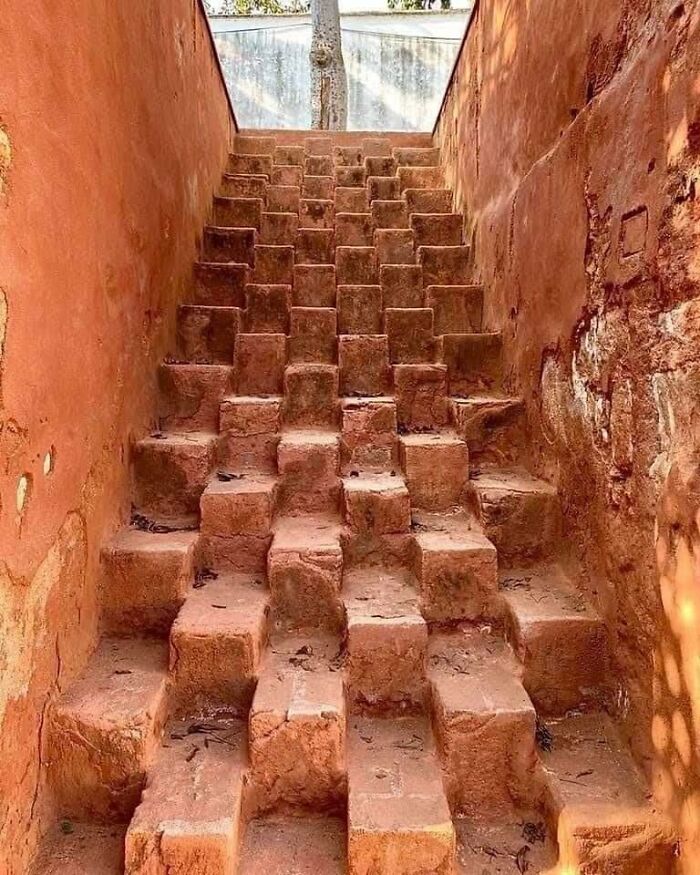
An Unusual Cuboidal Stairway In The Small Village Of San Augustin Etla, Oaxaca, Mexico
Look closely. They mimic a normal stair climbing stride. Walking in a straight line should not pose a problem.
Load More Replies...I believe they were designed to handle the runoff frim the heavy rains with less erosion of the steps, while still allowing people to use them.
Is it weird that I want to see a slinky go down these death stairs?
Were these made to thwart people who might be fleeing from something? Because all I see is a running death trap.
Apparently they were designed to slow erosion to the steps due to water runoff, but I can see it working for both. Either way as a person with an awkward gait they terrify me.
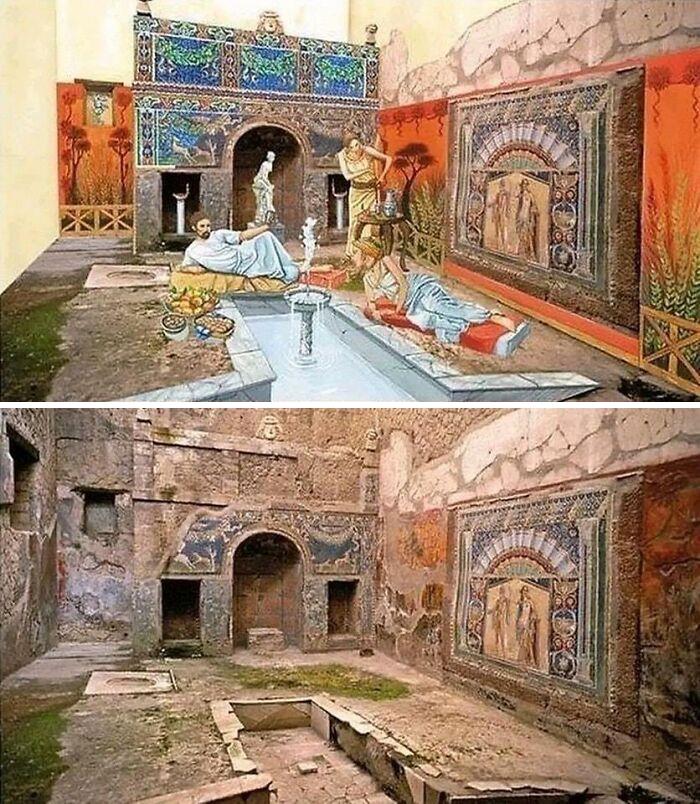
Load More Replies...House Of Neptun And Amphitrite Herculaneum, Italy
When Vesuvius erupted in AD 79, it buried not only the city of Pompeii, but a number of other nearby towns as well. One of them was Herculaneum. Among the many houses in Herculaneum is a relatively small, but richly decorated town house, called the House of the Neptune Mosaic, which must have belonged to a wealthy family.
Unfortunately I repeat myself. But I'm amazed and fascinated by how much effort these people put into the design of their homes. Not with interchangeable things, but as a total work of art. A question of money, of course, and it's certainly been boasted about, but it's lovely to look at. Those bright colors, that cheerful design. I love it.
I also love how almost all the architectural elements serve a functional purpose. Oh this masterfully handcrafted floor? We recline on it. The pool in the middle of the room? We enjoy this water feature that we added whilst reclining on our masterfully handcrafted floor. Those recesses in the wall, you ask? For displaying our sculptures, of course. Whyever would one build recesses into one's walls?.And that tiled mosaic to the right is purely for fun, dear.
Load More Replies...Having been to both Pompeii and Herculaneum they are amazing places. So interesting. Paestum is another amazing place with the temples of the gods. Humbling
That these oh-so-tiny pieces remained in place, their colors still vibrant, is a testament to the craftsmen's skill.
That's incredible. I wonder how fountains worked before electricity, from a high water tank perhaps?
The water was brought from far away via aqueducts. They were "downhill" all the way and came with so much force the cities were forced to build huge fountains (to bleed off some of the pressure) as the water came into town.
Load More Replies...I love when they show before and present day pics. Gives us a good view into the past.
When I look at TV, magazines, social media, I never see houses I'd want to live in. They're all very plush and glossy and impressive blah blah blah... But none of them really calls out to me. But this place really does. I'd really love a house covered in mosaics and pictures and rich tapestries!
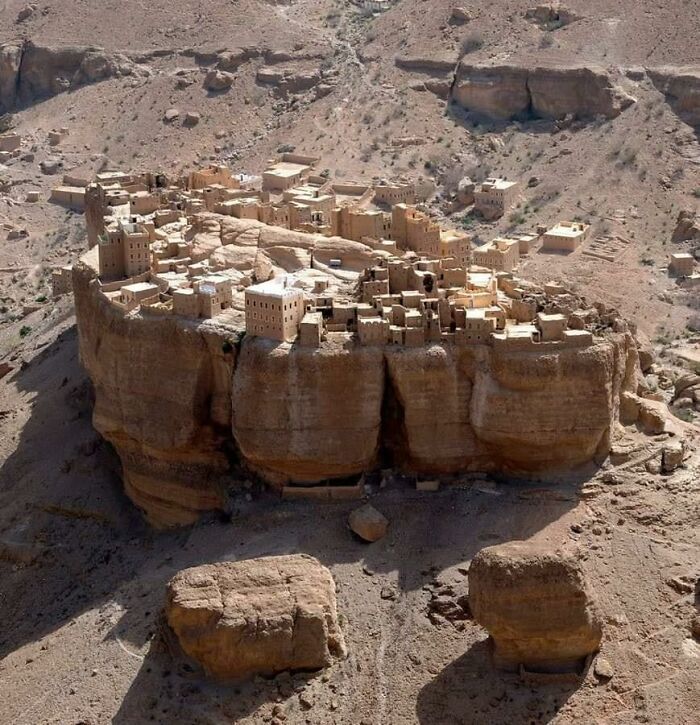
Haid Al-Jazil Is A 500-Year-Old Mud-Brick Village On Top Of A Massive Boulder. Wadi Dawan, Yemen
Yemen is one of the poorest countries. War has been going on for years. Called the Houthi conflict. The government fled to the neighboring country. Terrorist groups fight for power. Unfortunately, this war is hardly noticed, the misery of the people is not seen. https://www.unhcr.org/yemen.html The village Haid Al-Jazil is still inhabited, a handful of people live in this village. Yemen also has fantastic skyscrapers made of clay: Shibam.
Chandler: I'm going to Yemen Janice: Ah-ha-ha-ha-ha-ha-ha. I'll wait.
I find stuff like this soooo cool, and always think it must be amazing to live there, but for residents it's probably just Norma and boring!
Kind of like Acoma Pueblo's Sky City in New Mexico in the USA. Almost a 1,000 years old and some people still live there. https://en.wikipedia.org/wiki/Acoma_Pueblo
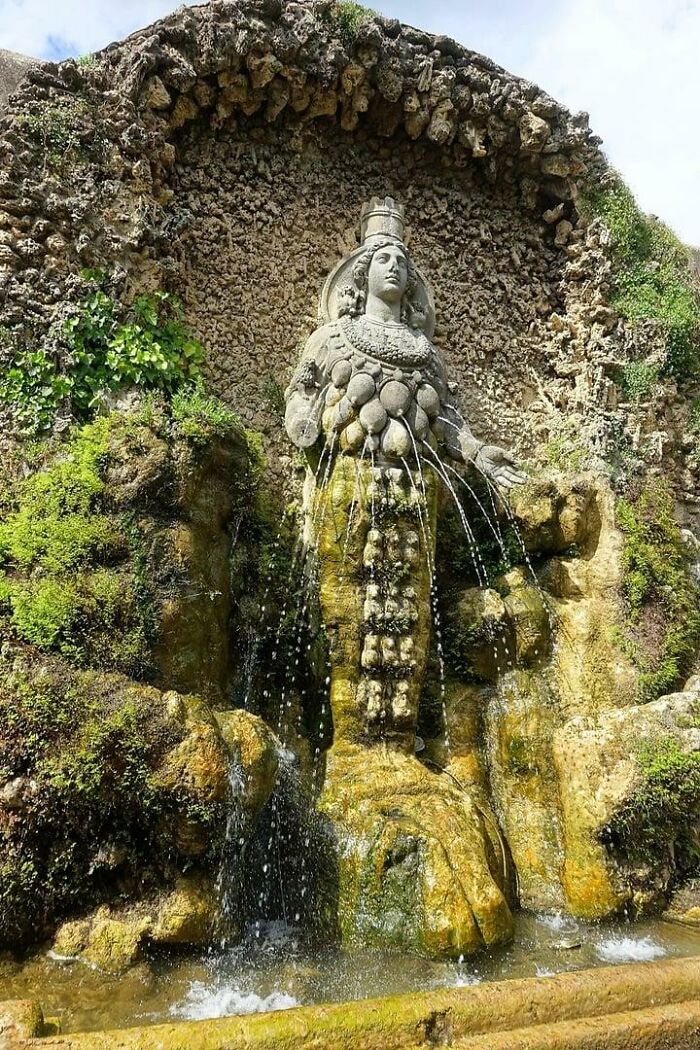
Fountain Of Artemis (Diana) Of Ephesus At The Gardens Of The Villa D'este, Tivoli, Near Rome, Italy
It was built in 1568. Symbolizing the unstoppable flow of life, this statue by Giglio della Vellita, is not your standard nymph in the garden. This Diana is the universal mother, supplying substance to all, and evidence of her influence occurs in the 7th century BC. Her sacred temple at Ephesus, a Greek city built in the 10th century BC and now in modern Turkey, was rebuilt many times. Under the Greeks, it was the Temple of Artemis (Greek name for the goddess the Romans named Diana), one of the Seven Wonders of the Ancient World. A fascination with Greek and Roman roots inspired Renaissance sculptors and we can thank Giglio for this link between our world, the Renaissance and the ancients
I visited this when I was 6. Today I learned where exactly I was. Because I was a kid, I remember being somewhere in Italy, there was a nice garden and this many-breasted lady. I remember HER very well, because I was fascinated. But only today I learned I was in Tivoli.
Reyna and Thalia would be fuming rn, artemis would just curse every man that saw this to turn into a girl. in the riordanverse, of course. not in real life. i hope
I think my favorite aspect of this fountain statue is the fact that none of these tiddies are where they *should* be. 🤭
After nursing, they're never where they're supposed to be...
Load More Replies...I'm over here with a spoon showing kids how to make rivers to their mud forts ...and over there someone's carved rock to nurture mankind.
OP meant to say that the Diana image was portraying her supplying sustenance to all, not substance (creation). Two very different things.
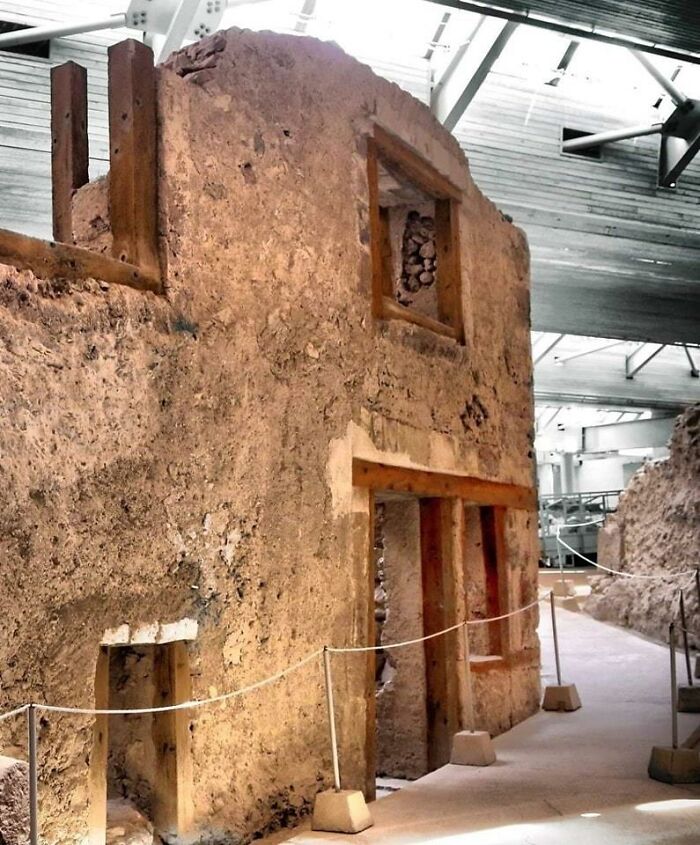
The Remains Of A Prehistoric House From The Bronze Age Settlement Of Akrotiri In Santorini
The settlement was destroyed in the Theran eruption sometime in the 16th century BC and buried in volcanic ash.

Complete with doorposts and lintels, and still standing after 3,600 years.
It's well built two story house. I would like to see how it looked back then.
The bronze age was NOT prehistoric. Prehistoric is the time of the dinosaurs, not the time of Alexander the Great or the Spartans!
Prehistoric simply means the time before written records. Yes, dinosaurs are indeed prehistoric as there were nonhumans present to document them as they lived. There were prehistoric people as they weren't concerned with documenting their existence beyond cave paintings and such. The bronze age, stone age and iron age are considered to be prehistoric: human life before documented human records.
Load More Replies...It just amazes me, what is unearthed. The height and size of some buildings is mind blowing.
Blows my mind how they can move these structures so we'll n still preserve them incredible
Or maybe the built around them to preserve them. Just a thought.
Load More Replies...Essentially folks have been making houses like this forever. Not a weird dome but something you could find in cities and villages that are still lived in.
In 37 centuries is not change many things , houses in Mediterranean looks so similar to this.
For 'prehistoric', the design and architecture is nothing short of spectacular.
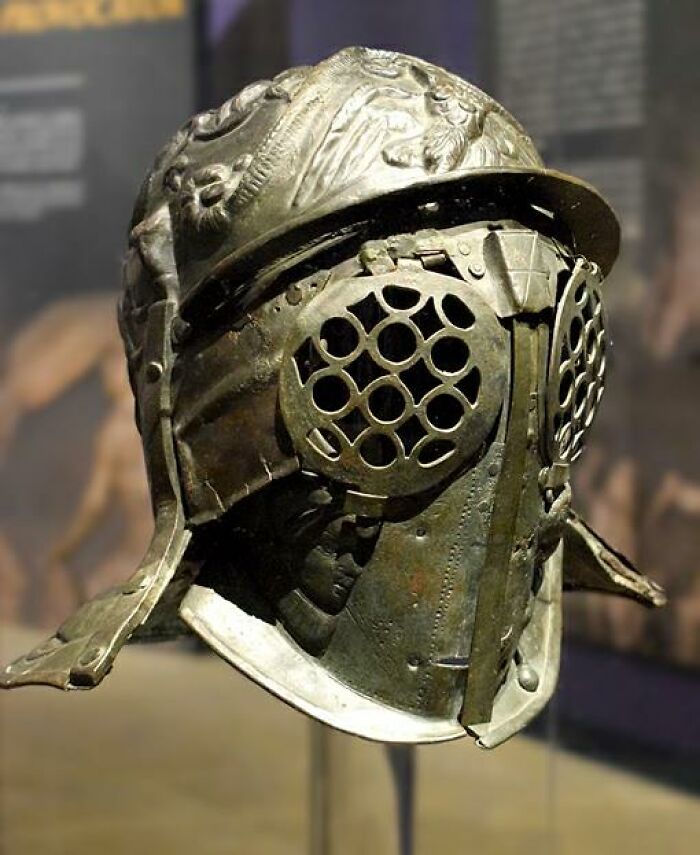
Gladiator Helmet In Remarkable Condition From Pompeii, Fernbank Museum Of Natural History
I look at this and can't help but feel the terror of being in a space where I must kill or be killed. I'm looking through an ornamental grille with my peripheral vision limited by my helmet. I can only see what is in front of me. My hearing is compromised by the sound of my laboured breathing being deafening inside the helmet. Oh God, is that someone begind me or a lion about to pounce?... Terrifying.
Oh shoot, I grew up going to Fernbank, it's in Atlanta. Husband and I might have to make a weekend trip out to see this!
But I hope you enjoy your trip anyway, PunnyBunny!
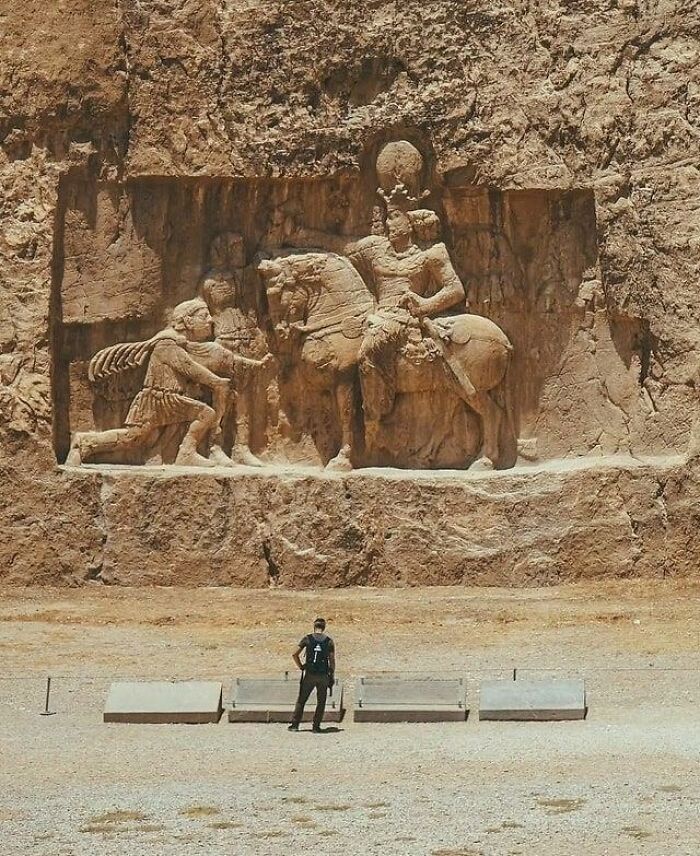
Load More Replies...Roman Emperor Philippus The Arab Kneeling In Front Of Persian King Shapur I, Begging For Peace, And The Standing Emperor Represents Valerian Who Was Taken Captive By The Persian Army In 260 AD, The Triumph Of Shapur I, Naqshe Rostam, Iran
We definitely needed that man for scale, a banana would've been best, but the man will do. This thing is ginormous! Wow!
>xactly! Didn't realize it was massive until I scrolled down
Load More Replies...The story of Emperor Valerion and Shapur is pretty interesting too. Shapur would apparently use Valerion as a stool to get on to his horse, and he might have died by being forced to swallow melted gold.
Security for scale, to prevent the destruction of history that has happened to other carvings in the area.
Load More Replies......and at the bottom we see Brad, Brad is a nice guy who likes to crochet
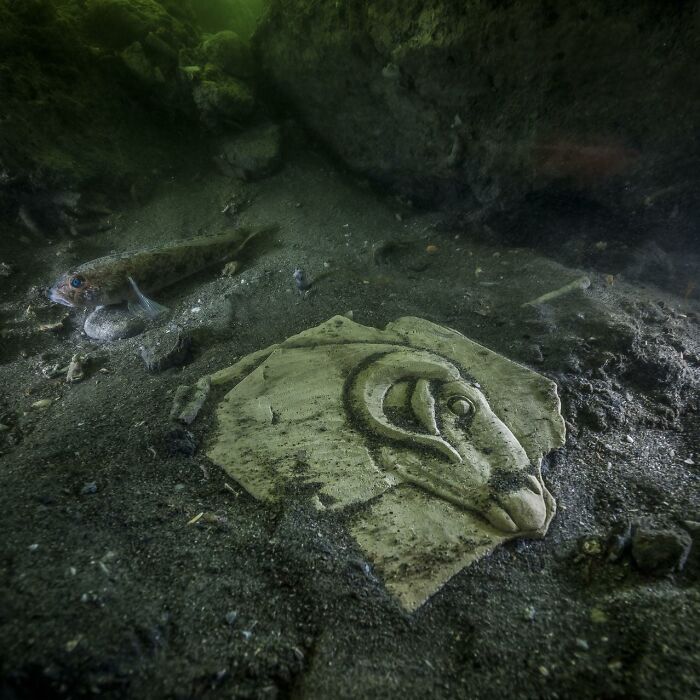
A Slab Engraved With The Ram-Headed God Amun-Re Under The, From The Ancient 'Lost City' Of Thonis-Heracleion, Which Lies 6.5 Kilometres Off Today’s Coastline About 150 Feet Underwater In The Mediterranean. 6th Century Bc. Now In The Maritime Museum, Alexandria
Oh, to be an underwater archaeologist. Imagine happening upon a site like this and being able to uncover its secrets.
I expect there are lots of sites like this, where previously coastal towns were swallowed by rising sea levels
Load More Replies...A thousand years from now they'll be saying the same thing about beach houses in Malibu
I can't imagine much from a moder Malibu house resisting 1000 years under water, other than plastic junk and the occasional cup. And most of those are pretty unadorned.
Load More Replies...Is this the same ram-headed Egyptian god that is an incarnation of Ra in a Rick Riordan book?
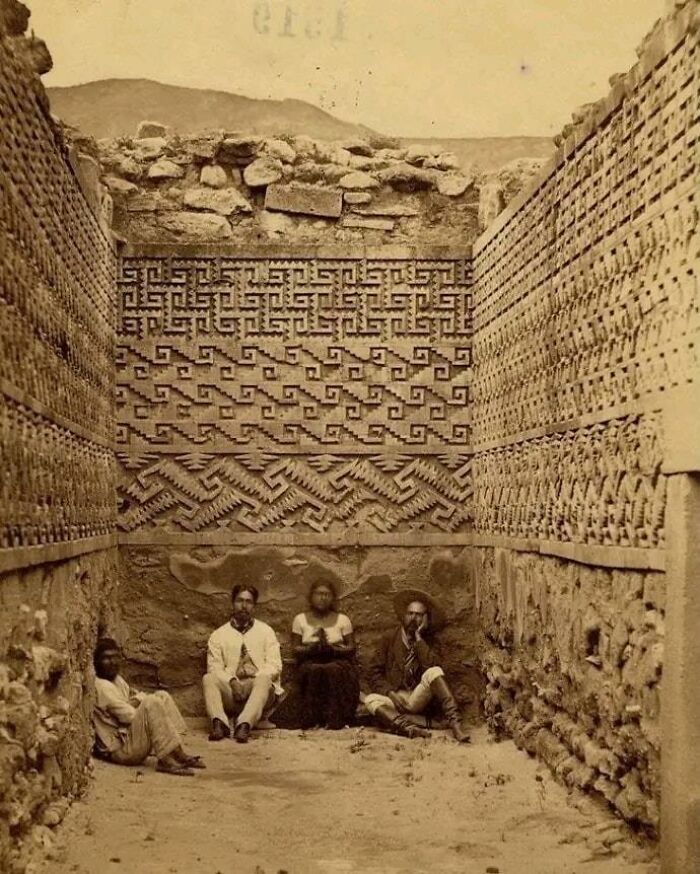
Ruins At Mitla, Oaxaca, México, Circa 1875. Photographer: Teobert Maler
Mitla is the second most important archaeological site in the state of Oaxaca in Mexico and the most important of the Zapotec culture. The name Mitla is derived from the Nahuati name Mictlán, which was the place of the dead or underworld. Its Zapotec name is Lyobaa, which means “place of rest.” The name Mictlán was Hispanicized to Mitla by the Spanish.
10,000 years old yet those carvings retained their design. Amazing. EDIT: Mitla itself is old, but original buildings mostly destroyed by Spanish invaders.
Some sites are up to 10,000 years old, but the oldest group of buildings has been dated to between 450 and 700 CE.
Load More Replies...OK, so I'm not being funny. I'm actually quite irritated that we didn't learn about this place when learning about the precolonial history of Mexico and the rest of the America's in my Midwestern school. Especially since we have a lot of migration from Oaxaca locally. This looks amazing
Invaders , you always destroy everything. When human start to be HUMAN .
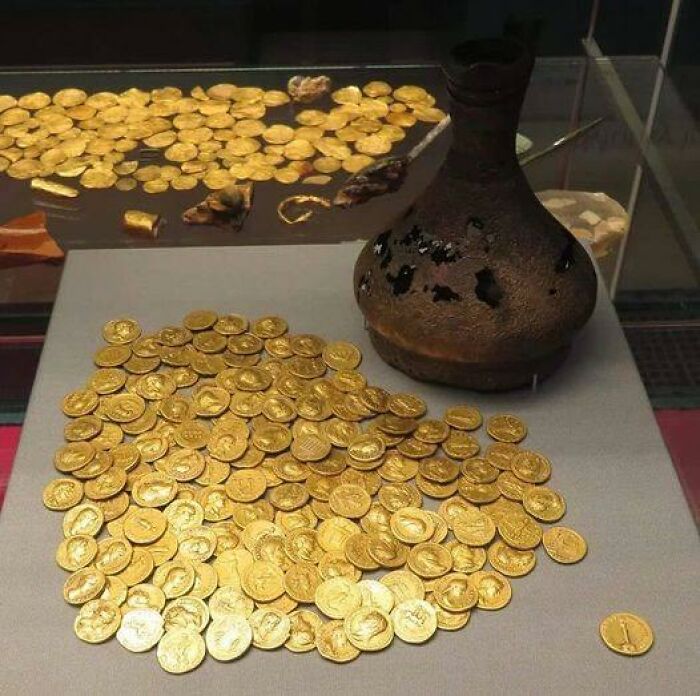
These 160 Aureus Coins Were Found Below The Floor Of A Roman House In Corbridge In 1911
Always curious about the story that led to such hoards being stashed, never reclaimed.
Usually because the owners died, probably violently. Money and valuables were buried to protect them being looted in raids.
Load More Replies...My question is, if you find something like this do you get to sell it and get rich or do you have to hand it over to a museum because it belongs to the state or something? Should I go looking for pirate booty or not I guess?
I believe in the UK the finder has to report it for professional archeological excavation, but the finder and/or property owner get a finders fee that is a percentage of the value of the find.
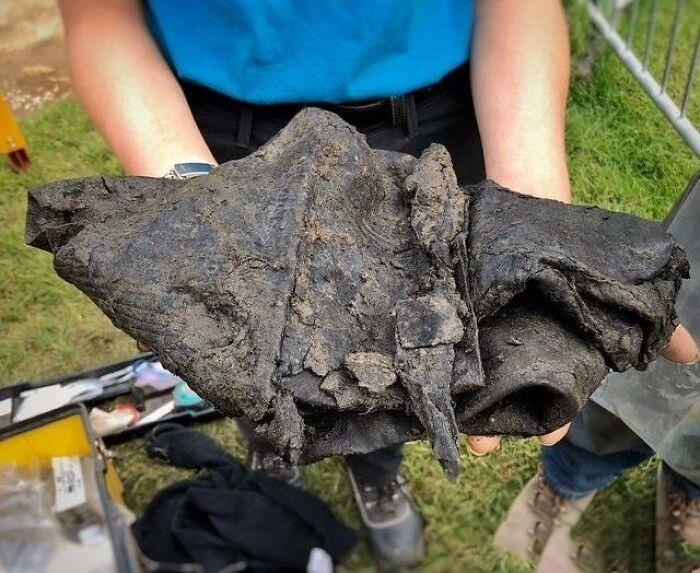
Load More Replies...Fragment Of The Roman Tent, Still Packed, Excavated In The Area Of Vindolanda – A Roman Camp In The North Of Britain
WOW! This is an extraordinary find. It's so well preserved you can see stitching.
Wait'll you hear about the letters they found there!
Load More Replies...at least get the location right, its north of england, not north of britain. i live in the north of britain and the romans didn't get this far cos just like the vikings, scottish folk scared them
That's why Hadrian built his wall, after all! Scared of the pitts and the scots
Load More Replies...Ancient textiles like these blown my mind, if only because of the sheer labour that went into them. This tent was probably made of linen or hemp as its hard-wearing. You've got to dampen the plant stems and rot the outer layer off (called retting), then scrape out the fibres. The thread for weaving would have been all hand spun as there weren't spinning wheels untjl they were invented in India around 500AD. Woven on wooden looms. Hand sewn. Amazing.
Thank you! That's really interesting information and provides a better perspective on this discovery.
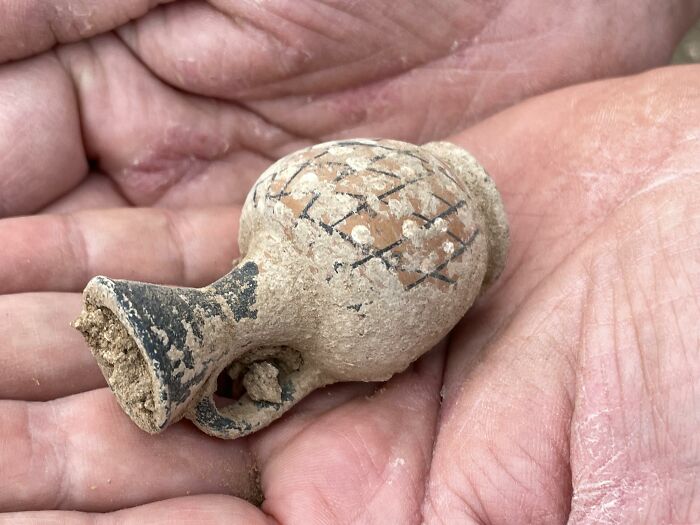
Load More Replies...A Lekythos (Perfume Vessel) Found In A Tomb Of The Phoenician And Punic Necropolis In Nora, Sardinia, During The Ongoing Archaeological Campaign By The University Of Padua
So would I-but it has probably spoiled by now, and if anything is left for scent, it is most likely RANK!
Load More Replies...This reminds me of Song of India cream perfumes. Exotic hand carved soapstone with about 5 grams of solid cream perfume. This is adorable.
A Chachapoya Mummy
Dating between the 9th and 15th Century AD, found in the Laguna de los Cóndores, currently in the Museum of Leymebamba, Peru.
Unsure if that expression is from natural processes or horror in the midst of sacrifice...
Tying of the limbs with rope appears to have been typical funerary practice at the time. The pose was probably significant and ensuring that the body remained in that pose long after death was important. Archaeological evidence exists that the Peruvian mummies were venerated long after death, with radiocarbon dating suggesting that offerings of food were made to them for decades after they were buried.
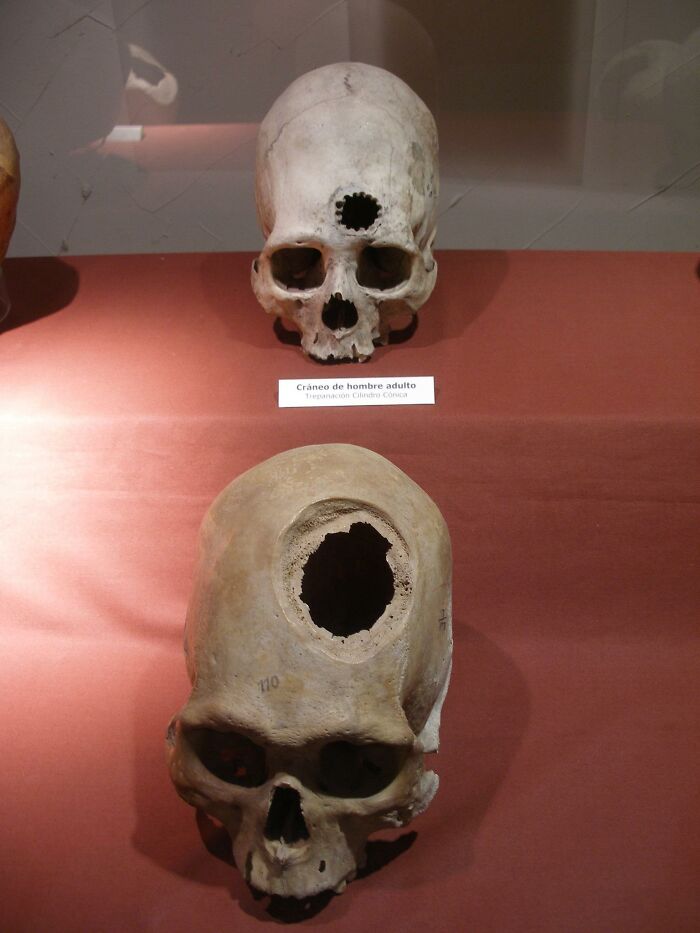
Load More Replies...Archeological Remains Of Patients Of Brain Surgery Performed By Ancient Doctors Of The Inca Empire In The 15th Century
The Incan people practiced brain surgery, in which a piece was chipped out of the skull, part of the brain removed, and the hole covered by metal beaten flat.

most people actually survived this! there’s evidence of healing on most of the skulls found.
They knew their way around herbs, roots and drugs 🙂
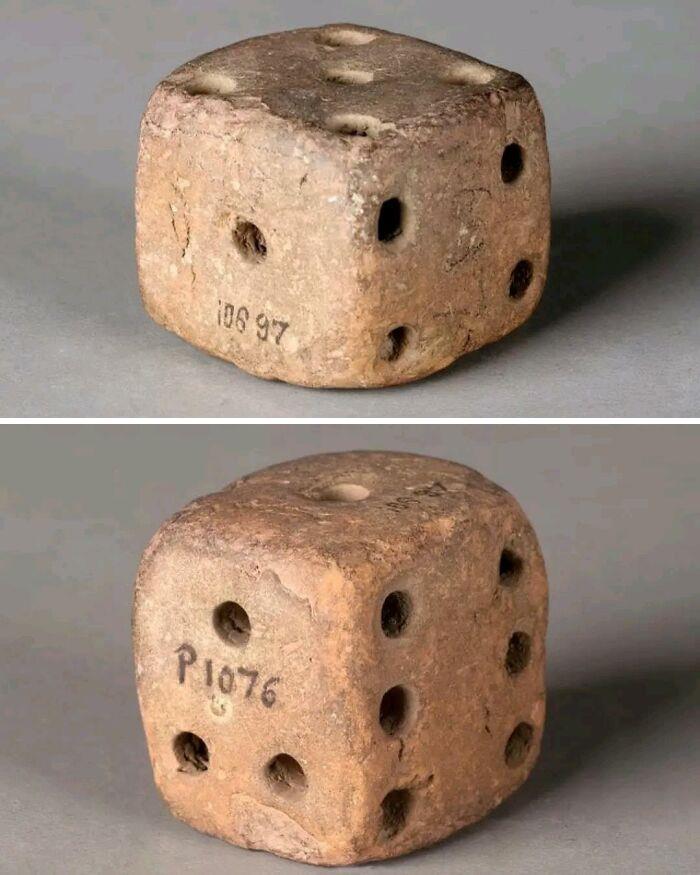
Load More Replies...Dice Made Of Terracotta From Indus Valley Civilization. Harappa, Pakistan. 2600-1900 Bc
More like this, please! I really appreciate your thoughtful efforts in compiling this list. Well done.
Ιt's amazing how things were made to last back in the day, and now they break when you just look at them!

In York, there is a place called the Jorvik Centre (and the Jorvik dig). I managed to see a viking shoe there. It was so well preserved and a big deal considering most of all the viking stuff rotted away hundreds of years ago. There was also a sock and a wooden wall. The moisture in the soil and absense of oxygen meant that the stuff survived. Bonkers.
Sitting here thinking of all my favorites that missed out… this might be what finally makes me submit an article to Bored Panda to be published, though I’d be using my textbooks and the dozens of PDFs and ebooks I’ve hoarded rather than any pop media site for my citations, anybody interested? Any requests? (P.s. recent archaeology grad who can’t yet work on her field due to chronic illness causing me to not yet have completed field training, so plenty of interest and background )
Romans knew how to enslave masses and have them work for free. Anything is possible if you abuse enough people and have unlimited resources.
Load More Replies...Have a good look people. And be proud we are the worst generation in history. We will leave rubbish and landfill for future archaeologists. No treasure. Our collective shame. Yes we stand here crowing about what other people and countries did a hundred years ago. How about we fix now instead?
a very remarkable collection, surprising, enlightening. An unexpected past
Why is it ok the dig up Ancent people? Should be illegal world wide.. so disrespectful! Wouldn't be digging up your grandma*
More like this, please! I really appreciate your thoughtful efforts in compiling this list. Well done.
Ιt's amazing how things were made to last back in the day, and now they break when you just look at them!

In York, there is a place called the Jorvik Centre (and the Jorvik dig). I managed to see a viking shoe there. It was so well preserved and a big deal considering most of all the viking stuff rotted away hundreds of years ago. There was also a sock and a wooden wall. The moisture in the soil and absense of oxygen meant that the stuff survived. Bonkers.
Sitting here thinking of all my favorites that missed out… this might be what finally makes me submit an article to Bored Panda to be published, though I’d be using my textbooks and the dozens of PDFs and ebooks I’ve hoarded rather than any pop media site for my citations, anybody interested? Any requests? (P.s. recent archaeology grad who can’t yet work on her field due to chronic illness causing me to not yet have completed field training, so plenty of interest and background )
Romans knew how to enslave masses and have them work for free. Anything is possible if you abuse enough people and have unlimited resources.
Load More Replies...Have a good look people. And be proud we are the worst generation in history. We will leave rubbish and landfill for future archaeologists. No treasure. Our collective shame. Yes we stand here crowing about what other people and countries did a hundred years ago. How about we fix now instead?
a very remarkable collection, surprising, enlightening. An unexpected past
Why is it ok the dig up Ancent people? Should be illegal world wide.. so disrespectful! Wouldn't be digging up your grandma*