Get Premium
Dark mode theme is available exclusively for premium users. Learn more about the benefits of subscribing.
No fees, cancel anytime.

 Dark Mode Ad-Free Browsing Unlimited Content
 Ad-Free Browsing Unlimited Content Dark Mode
Join 1.2 million Panda readers who get the best art, memes, and fun stories every week!
The past holds many secrets. We just need to know where to dig. The Facebook page 'Archaeology World' is an excellent source for everyone interested in what the ancient Greek architects, 18th-century Inuits, and other fascinating peoples have left behind.
There's no particular order to its posts, but that's a good thing. You can never predict what place or period the next featured discovery will come from. Like a course on global heritage, but without any lectures or exams. Only brief "presentations" on what shaped our history. So, join us and let's scroll through the page's most intriguing entries.
More info: Facebook
This post may include affiliate links.
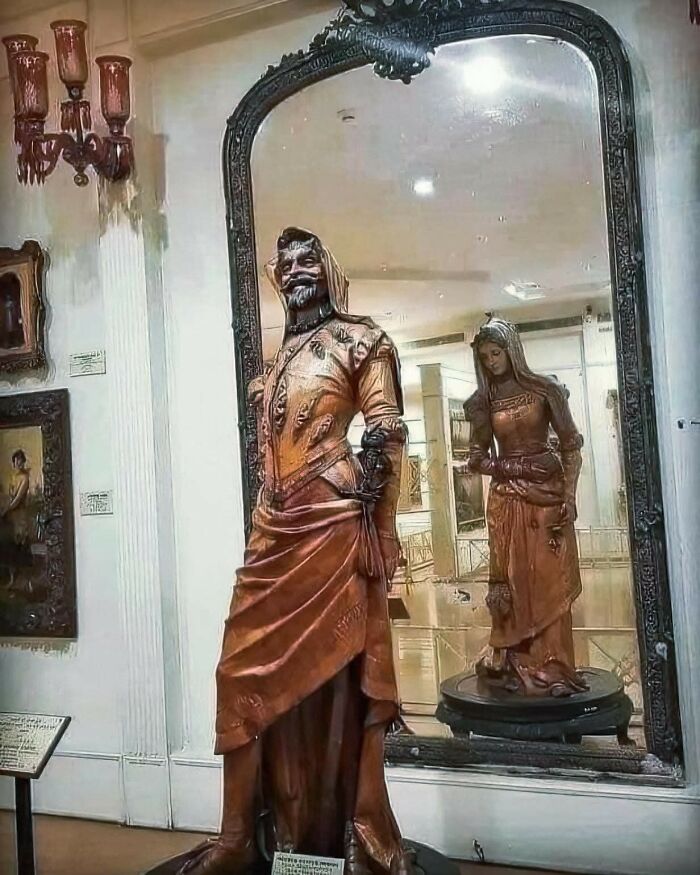
Perhaps one of the most incredible sculptures in the world. There is a well-known sculpture called "The Double Statue of Mephistopheles and Margarita". The fact is that on one side of the statue there is a male figure, and on the other - a female one. The sculpture is created from a single piece of the oldest sycamore tree.


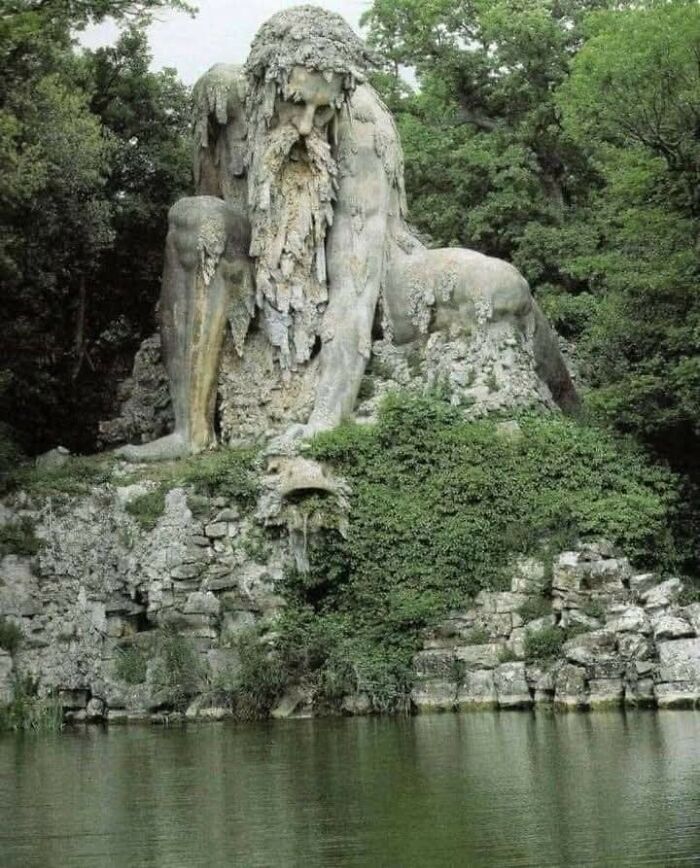
Built over 420 years ago in Florence, Italy, the Appennine Colossus is half man and half mountain. It was created with a brick core encased by a carved stone exterior that rises 35 feet above the water below. There's even a secret room behind his head with a fireplace that blows smoke through his mighty nostrils.

imagine thousands of years later from now, there will be identical documentaries about Disenyland!
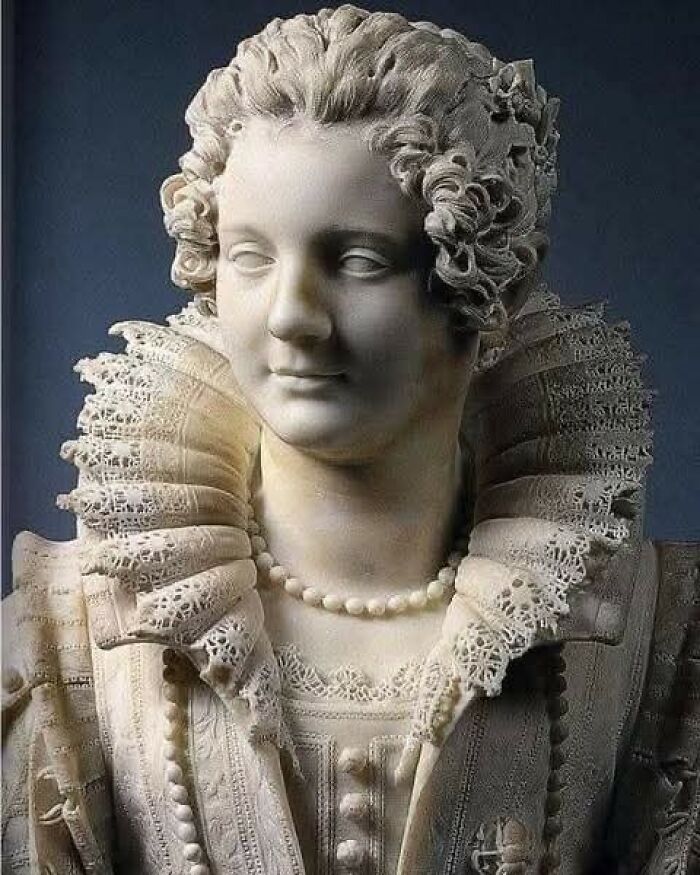
Bust of Maria Duglioli Barberini, sculpted by the renowned Italian artist Giuliano Finelli in 1626. Finelli, celebrated for his skillful marble carvings, created a lifelike and dynamic representation of Maria Duglioli Barberini, a member of the influential Barberini family.
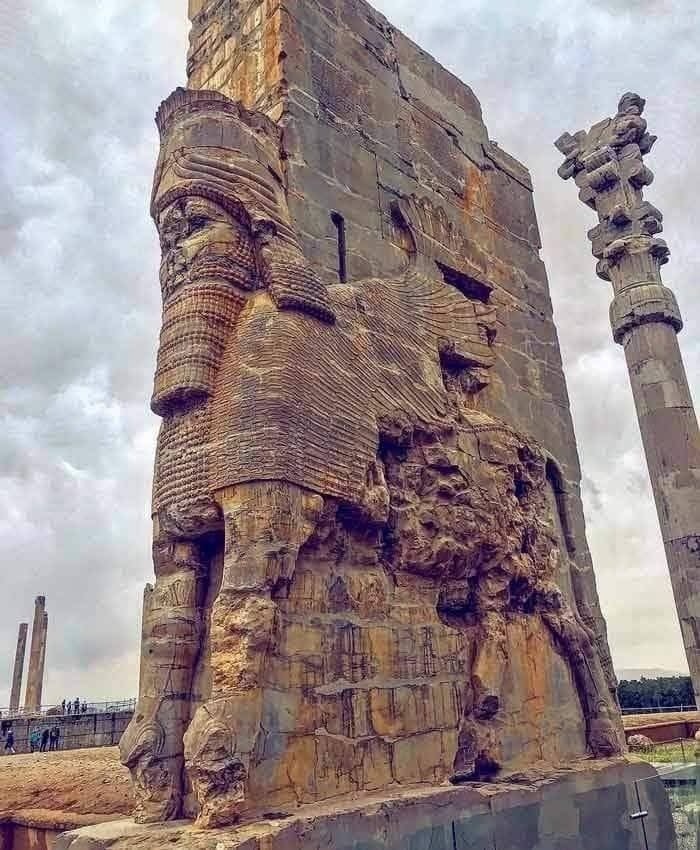
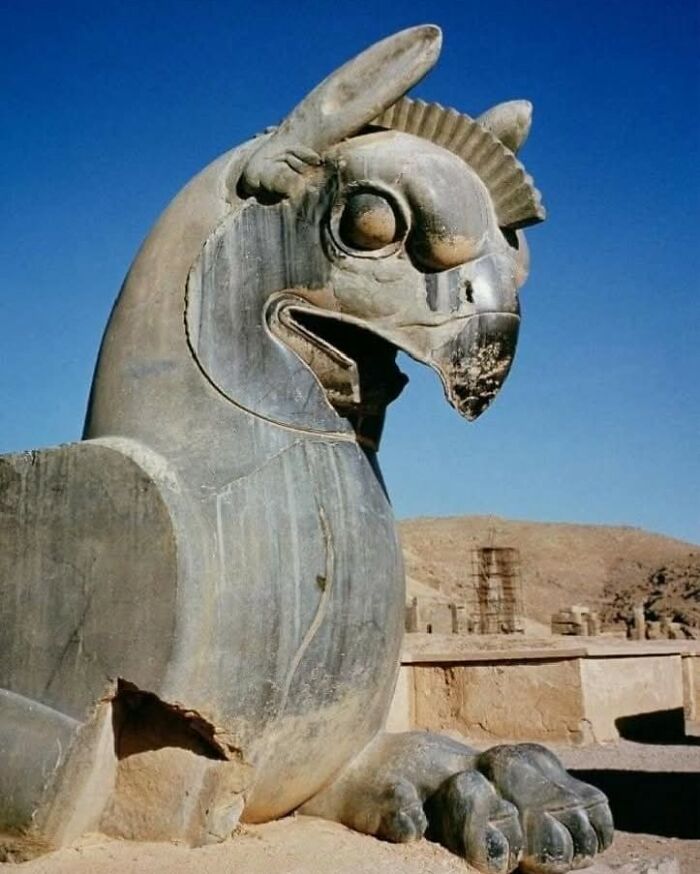
A massive guardian statue stands at the Gate of All Nations in Persepolis, the ceremonial heart of the Achaemenid Empire, located in present-day Iran. Commissioned by King Xerxes I in the 5th century BCE, this gate once received envoys from across the empire during New Year festivities. Carved from limestone, the figure features a bull’s body, eagle’s wings, and a human head—symbolizing power, guardianship, and royal dignity. Drawing inspiration from the Assyrian lamassu yet showcasing Persian elements, it exemplifies the empire’s majesty. Although weathered by time, the sculpture still powerfully conveys the artistry and authority of ancient Persia

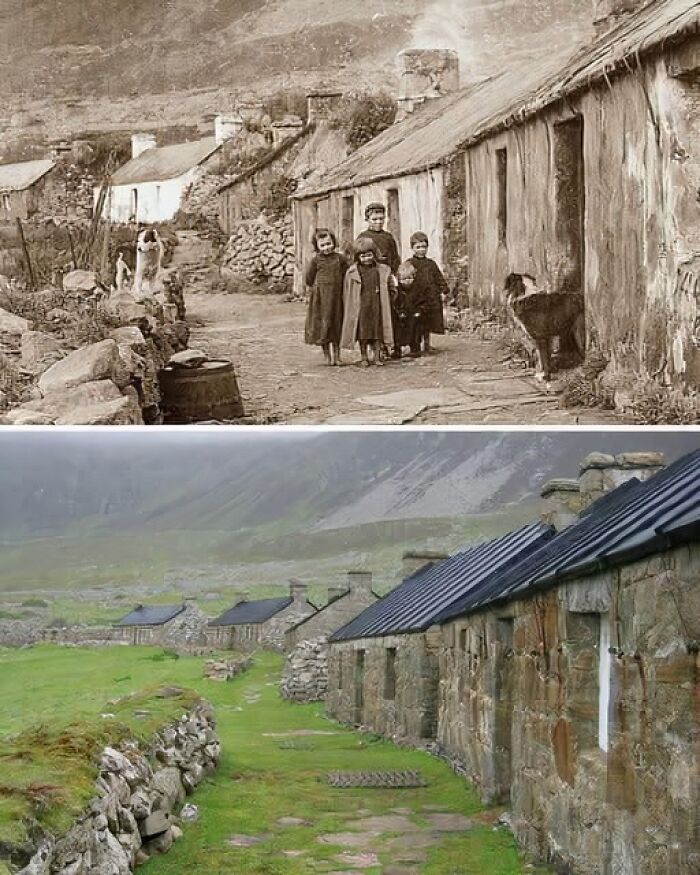
St Kilda is an archipelago of a few small islands beyond the Outer Hebrides. In the final chapter of a long story, the 36 remaining inhabitants left on 29th August 1930: "The last of the native St Kildans, Rachel Johnson, died in 2016 at the age of 93, having been evacuated at the age of eight." https://en.wikipedia.org/wiki/St_Kilda%2C_Scotland#Evacuation_and_aftermath
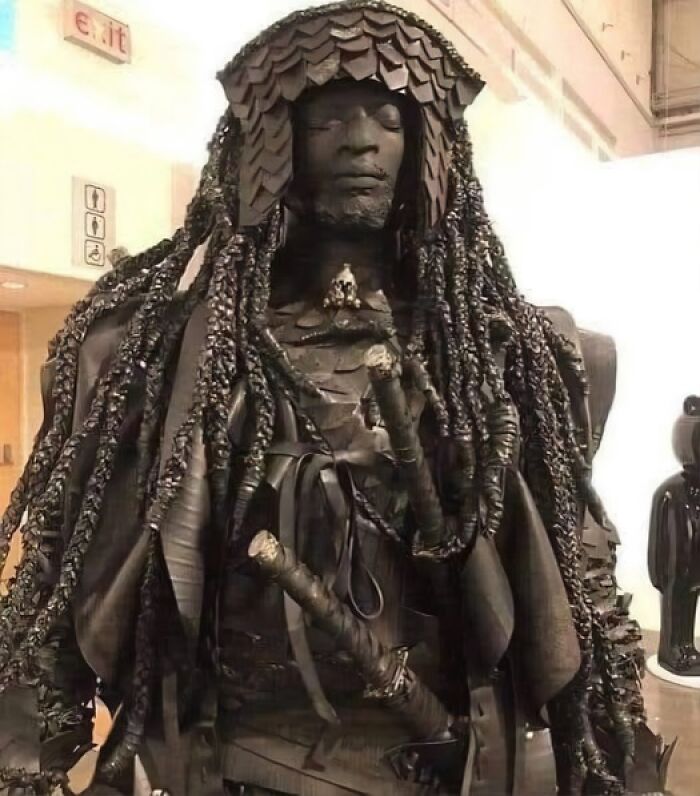
Yasuke a tall African man, arrived in Japan in 1579 and made history as the first foreign-born man to become a samurai warrior. Yasuke was originally a s***e from Mozambique and was brought to Japan by Portuguese traders. The powerful Japanese warlord Oda Nobunaga was fascinated by Yasuke's tall stature and dark skin, and upon seeing him, ordered his servants to try and rub the "black ink" off his skin. Despite this strange encounter, Nobunaga took Yasuke into his service, granting him a sum of money, a house, and a katana. From then on, Yasuke loyally served Nobunaga as an honored samurai, fighting alongside him in fierce battles. He went from being a piece of Portuguese property to a member of the Japanese elite.

Not a Samurai, but rather their version of a Squire, some modern western writers not understanding the Japanese ranking system misinterpreted him as a Samurai, but he the level below that, the equivalent of what a Squire was in Medieval Europe. His story is interesting, and a fascinating piece of history, but keep details correct
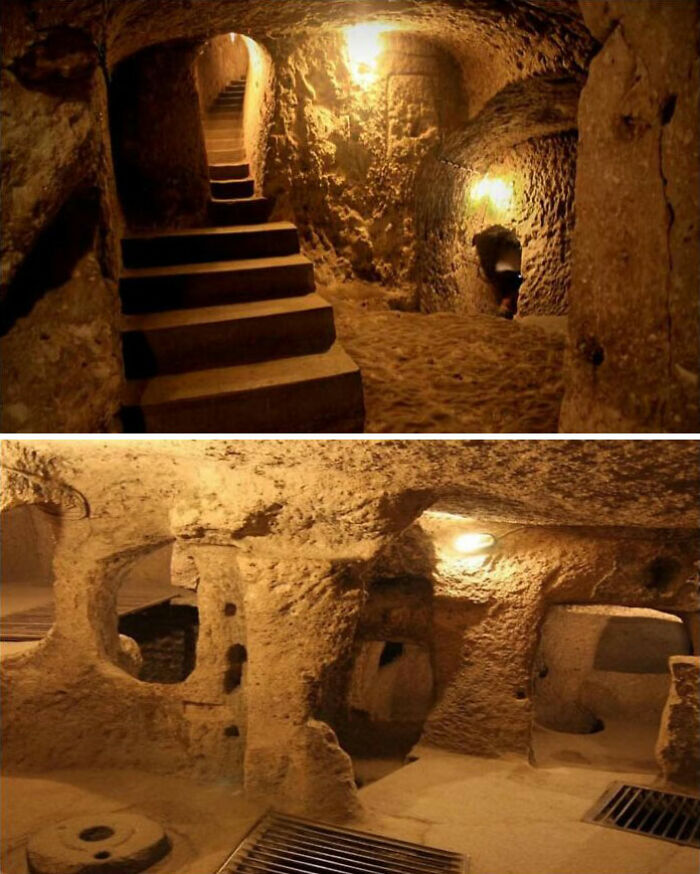
The Nushabad Underground City near Kashan, Iran, stands as a 1,500-year-old marvel from the Sassanian era. Carved an impressive 4 to 18 meters deep across three levels, this labyrinth stretches over 4 square kilometers. Its intricate network of tunnels, rooms, and air ducts provided refuge for locals seeking shelter from invaders like the Mongols and Arabs. With hidden entrances tucked beneath homes and forts, plus cunning traps like narrow curving passages, it safely housed thousands for days, complete with wells and storage.
This incredible city was utilized into the Qajar era (1789-1925) but was gradually abandoned as external threats diminished. Its secrets lay buried under desert sands, forgotten by time, until 2005. That year, a Nushabad resident, while digging a drainage ditch, stumbled into a tunnel and unveiled this lost world.
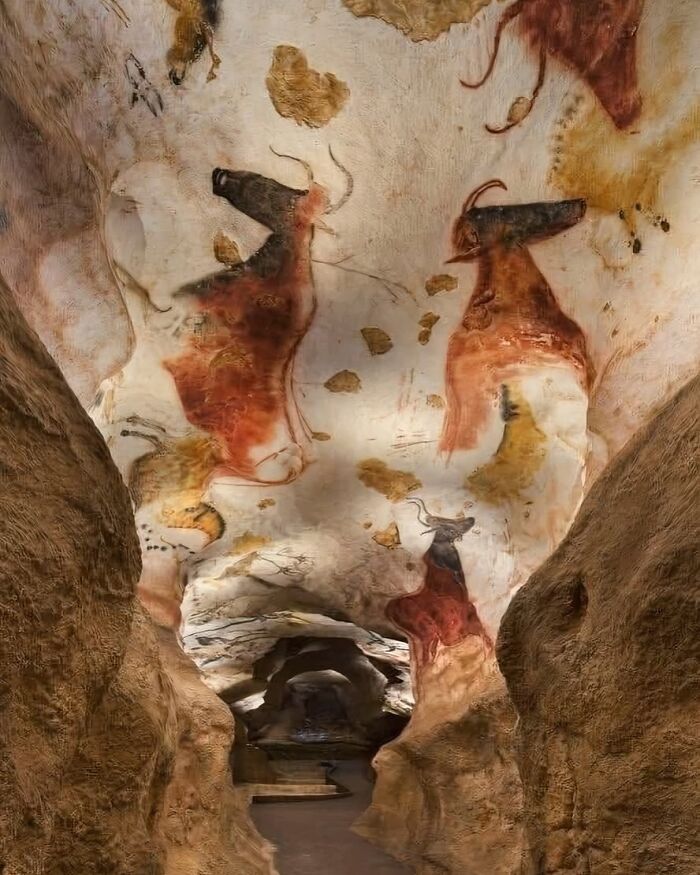
Lascaux Cave in France’s Dordogne region is renowned for its stunning Palaeolithic wall paintings. These artworks, mostly depictions of animals, date to around 17,000 years ago—placing them in the Upper Paleolithic era, likely in the late Solutrean or early Magdalenian periods. Scholars have estimated their age using a combination of radiocarbon dating and associated finds, such as a carved reindeer antler, offering insight into the artistic traditions of early humans.

The real cave can't be visited by the public. To visit the real cave you have to be a scientist and to pass the facial recognition camera, the eye recognition, the print recognition and put on a passcode, and the door is always under video surveillance. I know that because I went in front of the armored door years ago with my mother and a friend and we took a selfie.
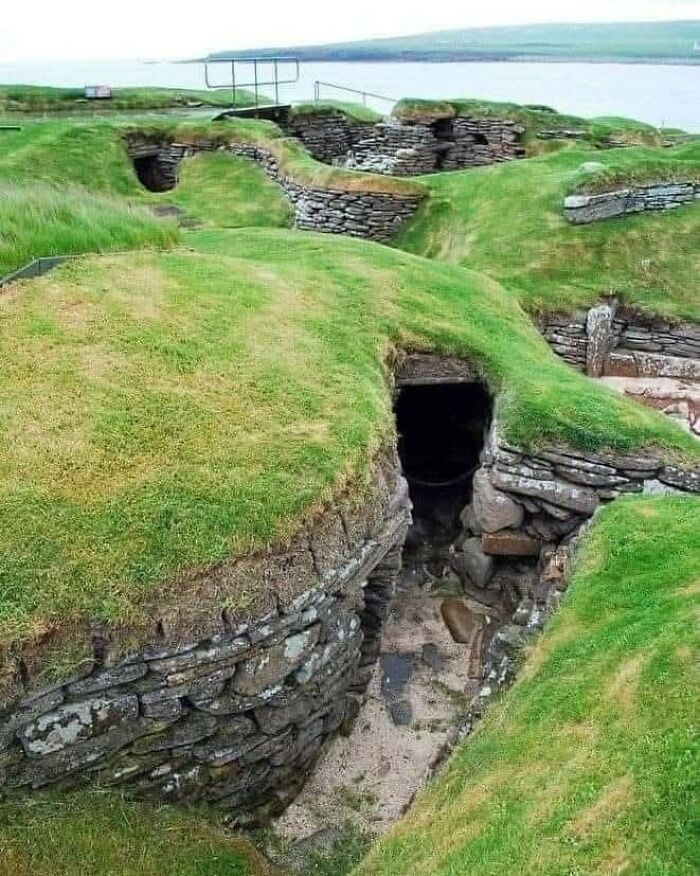
In 1850, a farmer found a secret village. It was later determined to be older than the Great Pyramids of Egypt. Archeologists estimated that 100 people lived in this village named Skara Brae, the "Scottish Pompeii."
The houses were connected to each other by tunnels, and each house could be closed off with a stone door.
If you watch Raiders of the Lost Ark, this is the lesson Dr. Jones is teaching at the beginning of the movie.
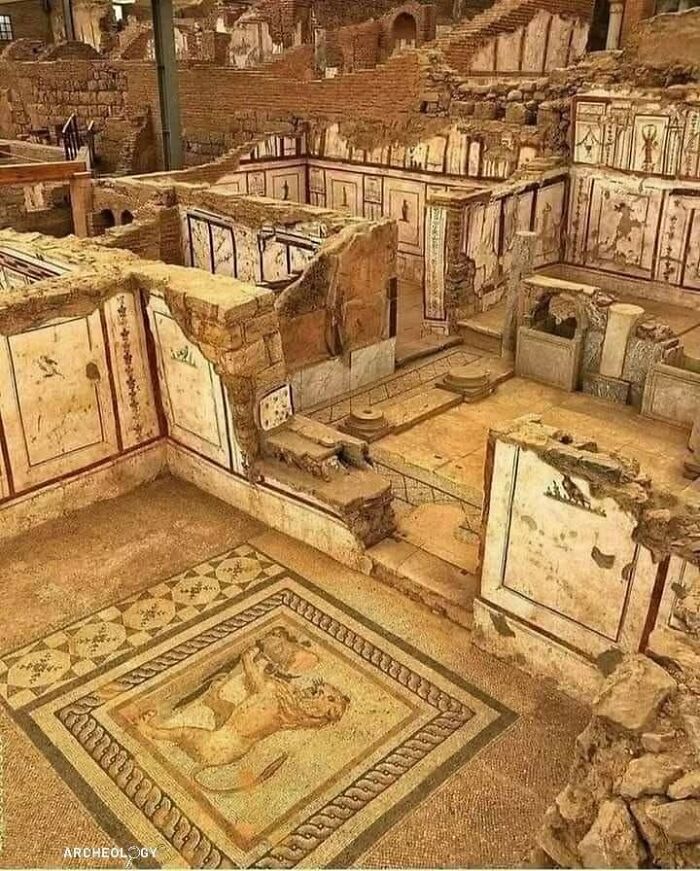
This is one of the terraced Roman houses (*Domus*) on the slopes of Mount Coelius in Ephesus, present-day Turkey, dating back to the 1st century BCE to 3rd century CE. Known as the "Terrace Houses" or "Houses of the Rich," these dwellings were home to Ephesus’ wealthiest citizens during the Roman Imperial period.
The interiors reveal stunning mosaic floors, vividly painted frescoes, and a sophisticated urban layout with private courtyards, water systems, and underfloor heating. The image shows mythological motifs and geometric mosaics—such as a lion grappling its prey—preserved in astonishing detail. The layout reflects both Roman domestic luxury and the influence of Greek artistic traditions.
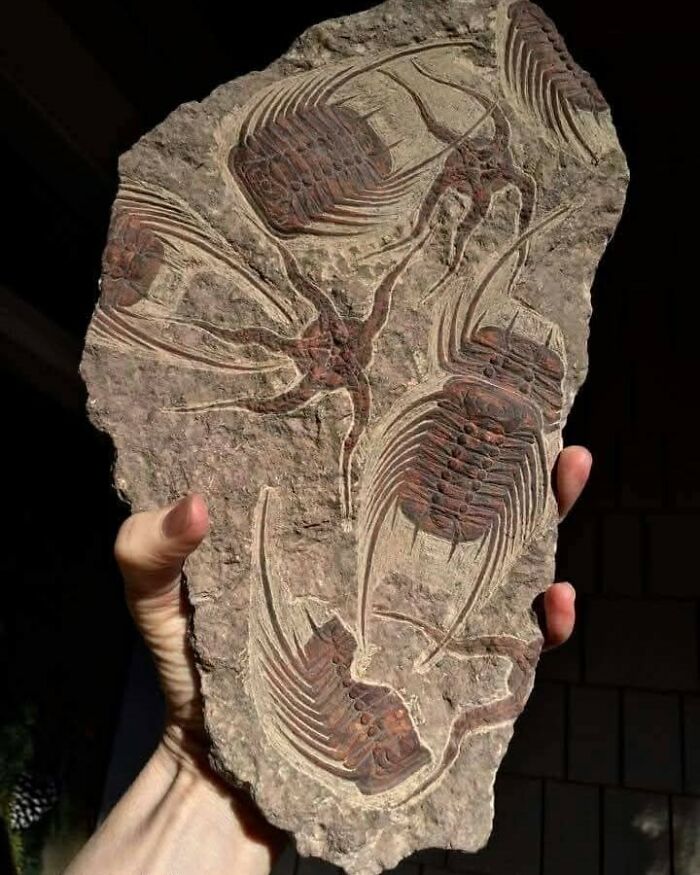
Trilobite fossil slab, likely from Morocco — these marine arthropods thrived during the Paleozoic Era, roughly 520 to 250 million years ago. The slab shown here preserves several individuals, possibly from the Devonian period, beautifully detailed with segmented exoskeletons and sweeping spines.
Trilobites lived on ancient sea floors, and their fossilized remains are often found in limestone and shale formed from compacted seabed sediments. The preservation quality seen here suggests rapid burial in an anoxic environment, halting decay and allowing mineralization to retain even delicate appendages.
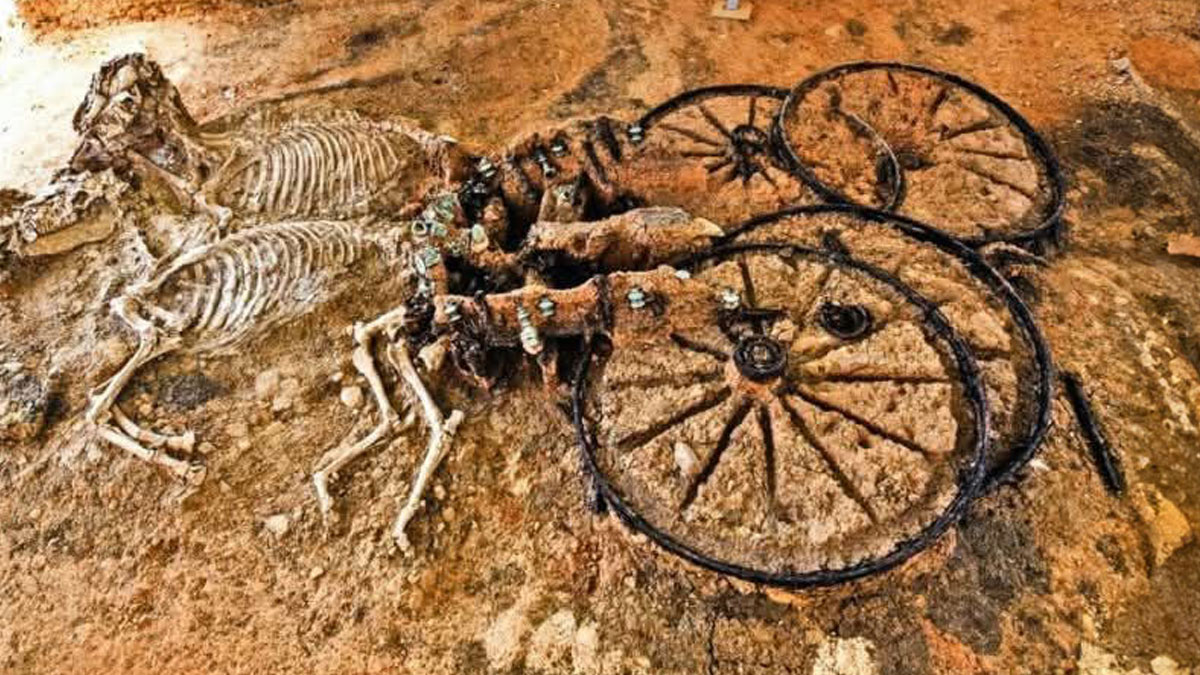
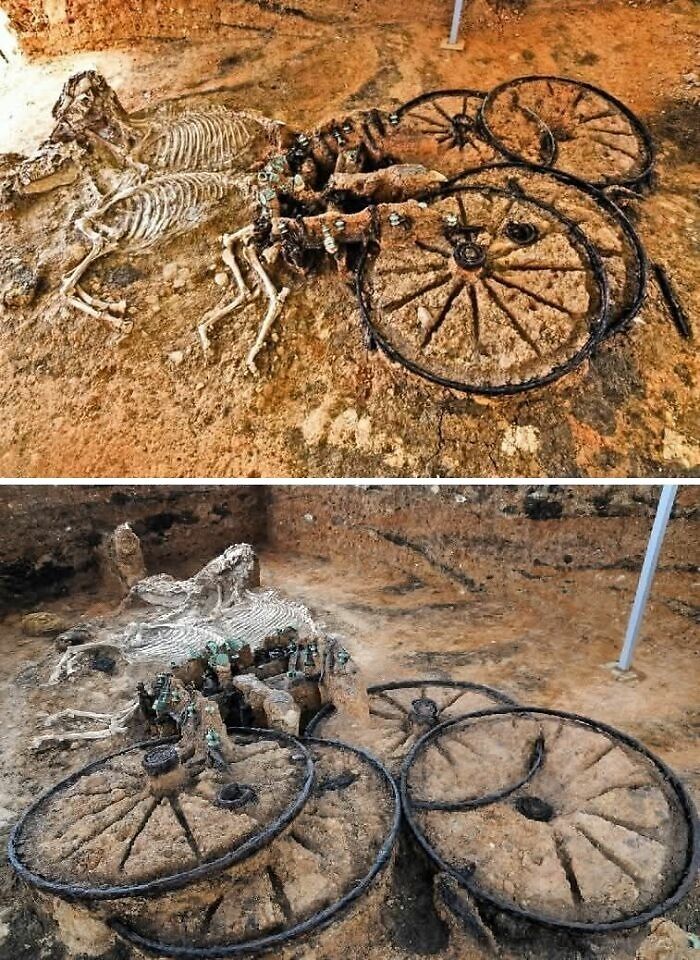
Nestled in the tranquil landscapes of Bulgaria, archaeologists have made a startling find: a beautifully crafted wooden chariot dating back two millennia, adorned with vivid imagery from Thracian mythology. This incredible artifact provides a fascinating insight into the burial practices and spiritual beliefs of the ancient Thracian civilization that once flourished in this area.
Discovered in the grave of a significant Thracian noble from the 1st century AD, the chariot exemplifies the exceptional craftsmanship of its time. It features four robust wheels, each measuring around 4 feet in diameter, decorated with intricately crafted, silver-plated figures of the god Eros and mythical, panther-like beasts.
In addition to the chariot, the remains of two horses and a dog were found, believed to have been interred to assist the deceased in their journey to the afterlife. This tradition was a crucial element of Thracian burial rituals, underscoring their deep conviction in existence beyond death.
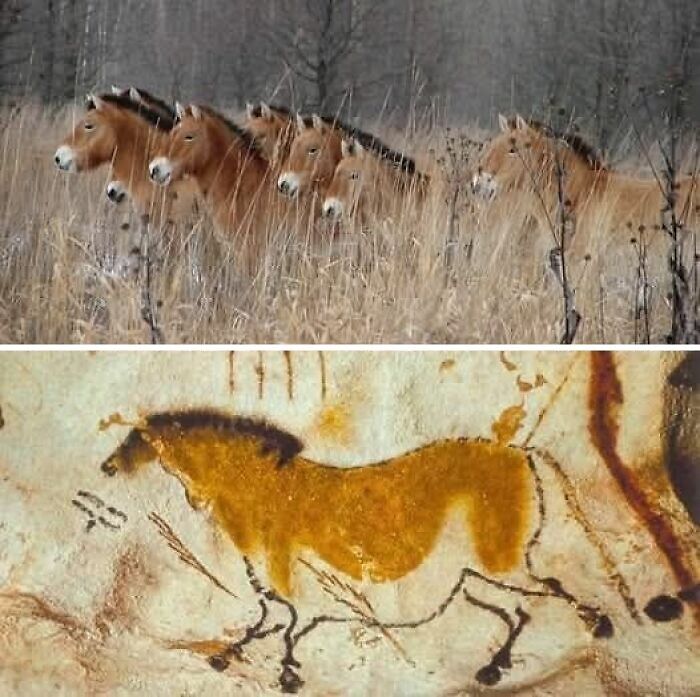
Photograph: Tatyana Deryabina/University of Porthmouth. & a 17,000-year-old horse painting at the Lascaux cave in France
Wildlife is actually doing great in the exclusion zone, it's weird.
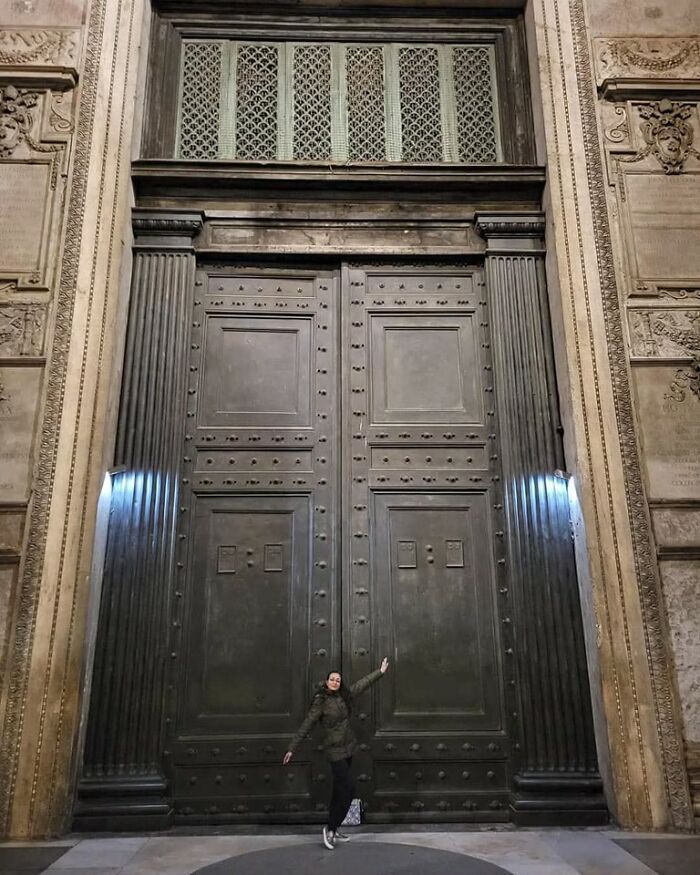
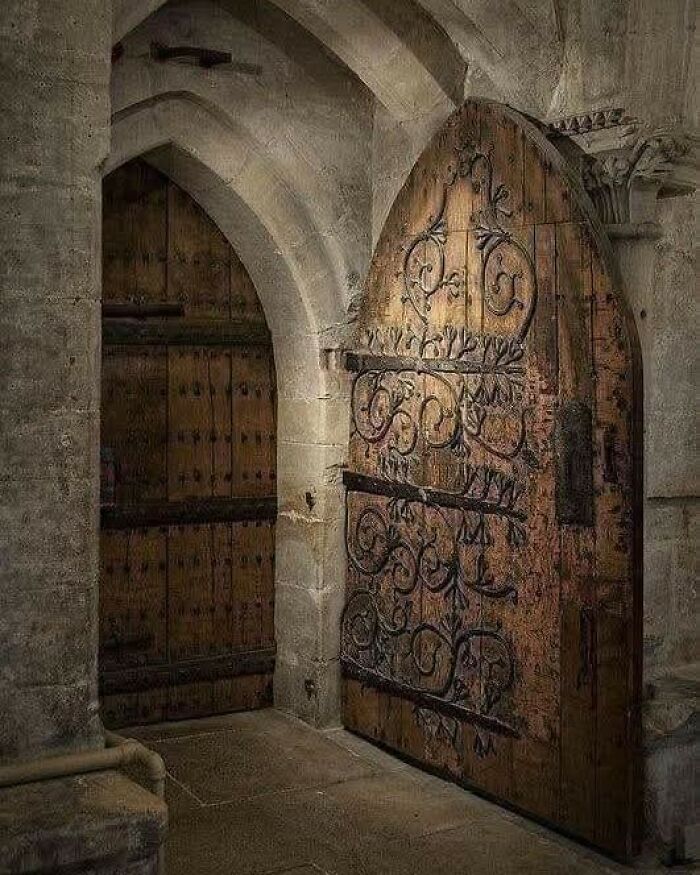
Roman Bronze Door (115 AD); at Pantheon, Rome, Italy. It is considered as the oldest door still used in Rome.
This large bronze doors to cella, measuring 4.45m wide by 7.53m high, yet so well balanced they can be pushed or pulled open easily by one person. Each half of double door weighs 8.5 tonnes, and rotates on pins set into floor and architrave above.
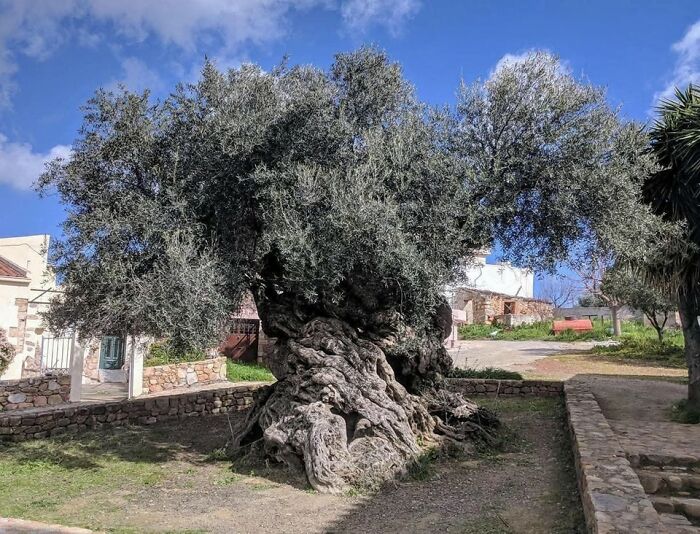
The Olive Tree of Vouves is a remarkable ancient olive tree located in the village of Ano Vouves on the Greek island of Crete. Believed to be one of the oldest olive trees in the world, this majestic tree is estimated to be over 3,000 years old, with some experts suggesting it could be even older. The Olive Tree of Vouves stands as a symbol of resilience, endurance, and the deep-rooted connection between humanity and nature. Its gnarled trunk and twisted branches tell a story of centuries past, bearing witness to the passage of time and the changing landscapes of Crete. Revered by locals and visitors alike, this ancient olive tree continues to produce olives, contributing to the rich agricultural heritage of the region

They should be planting new "oldest trees" every century or so. That way, when the oldest dies, they have a new legacy to cherish.
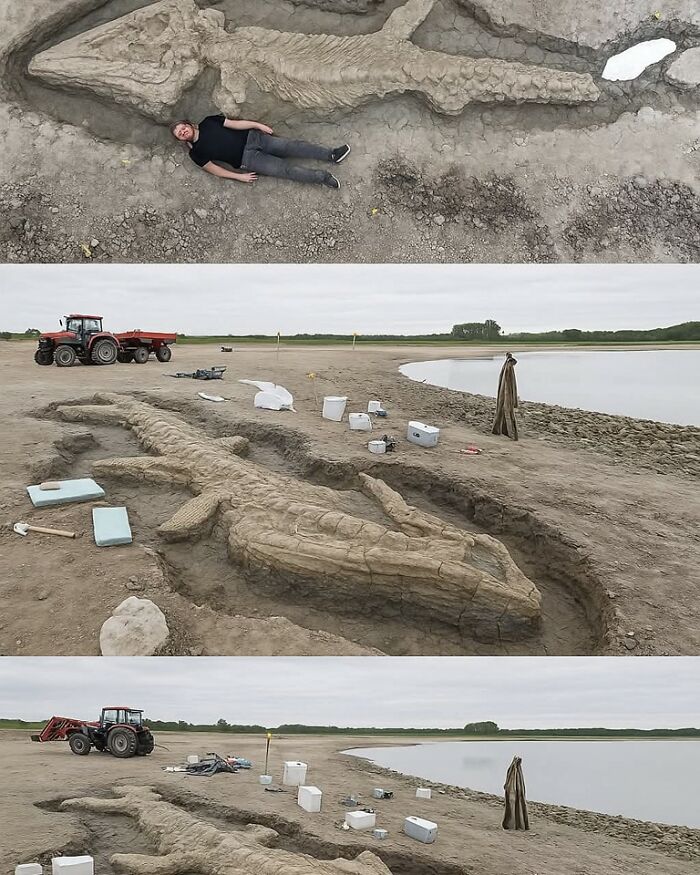
In February 2021, paleontologists in Rutland, England, uncovered an extraordinary find: a 10-meter-long skeleton of an Ichthyosaur, now hailed as the largest specimen of its kind ever recorded in the U.K. This intriguing fossil was discovered by Joe Davis during landscaping activities at the Rutland Water Nature Reserve, right when a lagoon was being drained for maintenance. This ancient marine reptile roamed the seas between 250 and 90 million years ago, with the potential to reach lengths of up to 13 meters.
The term "Griffin" has linguistic roots in Old French griffon, derived from the Late Latin gryphus, a misrendering of the ancient Greek grū́ps, meaning "curved beak"—a reference to the creature’s hooked nose.
Persian griffins are typically depicted with four legs, eagle talons on the front, a lion's body, a feathered tail, wings like an eagle, and horse-like ears. This hybrid beast often appears massive, powerful, and majestic. In medieval texts such as The Travels of Sir John Mandeville, griffins were said to have claws as large as bull horns and feathers big enough to be used as arrow shafts. Greek geographer Pausanias noted they sometimes had leopard-like markings.
Artistic portrayals of griffins date back to the 7th century BC, though their origins likely predate even that.
The Persians really led the world in art, culture and technology. Kinda shines a light that "white supremacy" is just exploitation supremacy.
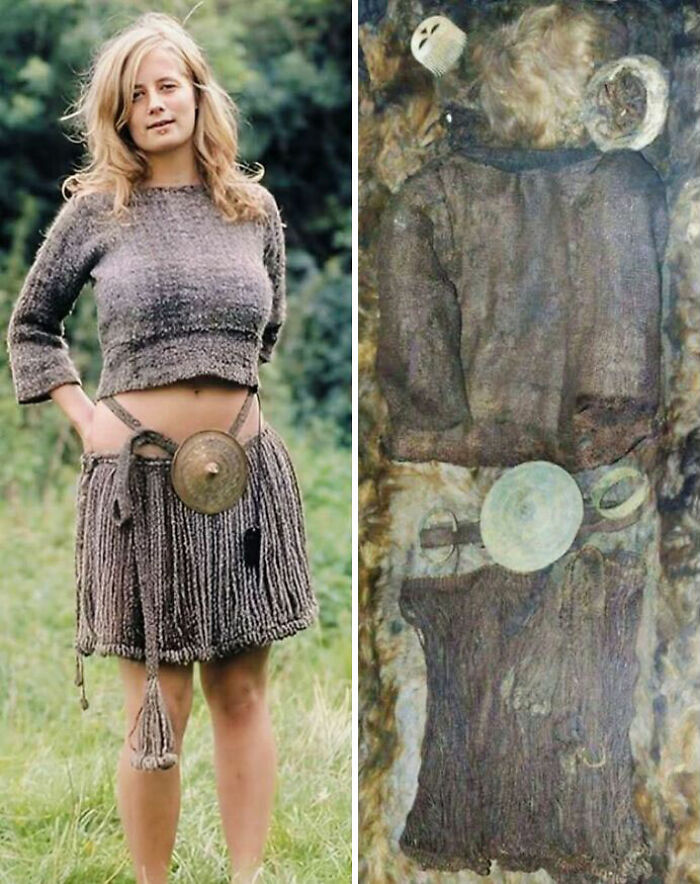
In 1921, archaeologists made a remarkable discovery in Egtved, Denmark—the grave of a Bronze Age teenage girl, now known as the Egtved Girl. Radiocarbon dating suggests she lived sometime between 1390 and 1370 BCE and was likely between 16 and 18 years old when she died.
She was buried in a hollowed-out oak coffin, wrapped in a bull hide, and incredibly well-preserved, thanks to the acidic soil of the region. Her burial outfit—a midriff-baring wool blouse, a corded skirt, and bronze jewelry—has given us one of the clearest glimpses into prehistoric fashion in Northern Europe.
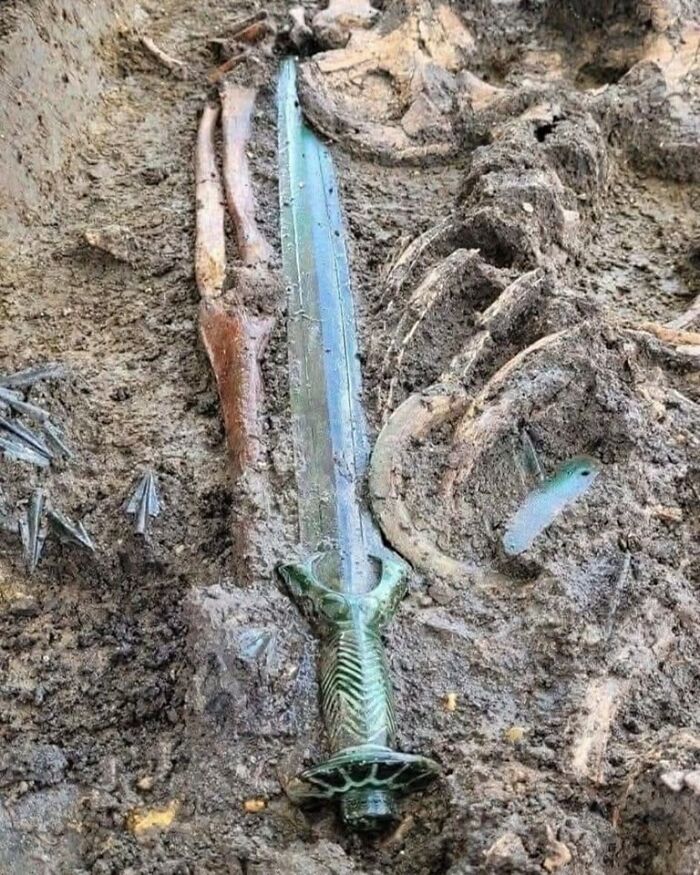
A very well-preserved 3000-year-old sword was found inside a grave in the town of Nördlingen, Bavaria, Germany. It is reported that this 3000-year-old sword is in such good condition and extremely rare to be found in this location, except for a few scratches.

Definitely a burial object, as it's so neatly resting next to the humerus...🗡️ 🤷🏽 🦴
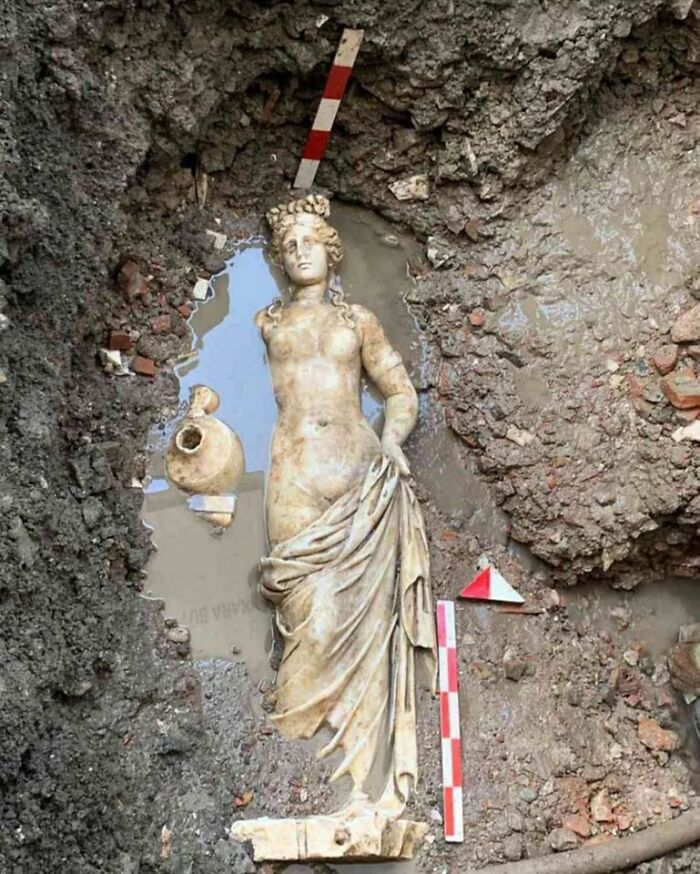
In September 2023, archaeologists at the ancient gymnasium of Amastris (now Amasra, on Türkiye’s Black Sea coast) uncovered a remarkably intact marble statue dating to the 2nd century AD. Found three meters underground, the statue was initially thought to represent a water nymph, but experts now believe it may be an image of Aphrodite.
She just wanted to get some water (and cigarettes), but she never came back...🤷🏽
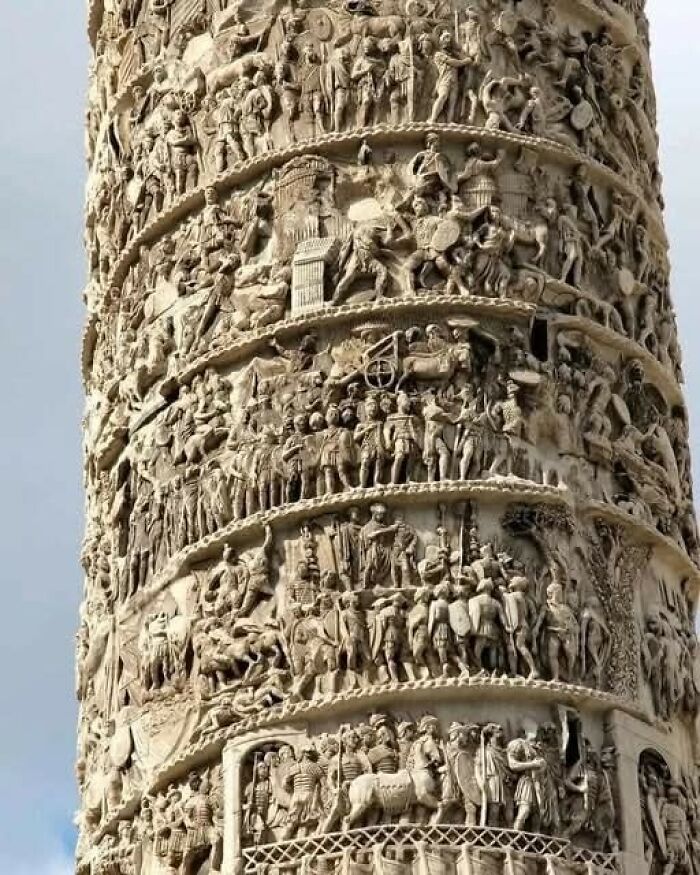
The Column of Marcus Aurelius is a monumental Roman victory column located in Rome’s Piazza Colonna. Erected around 180–193 AD, it commemorates Emperor Marcus Aurelius’ military campaigns against Germanic and Sarmatian tribes. Standing approximately 30 meters tall, the column is adorned with a spiral relief depicting dramatic battle scenes, offering a vivid glimpse into Roman warfare and propaganda.
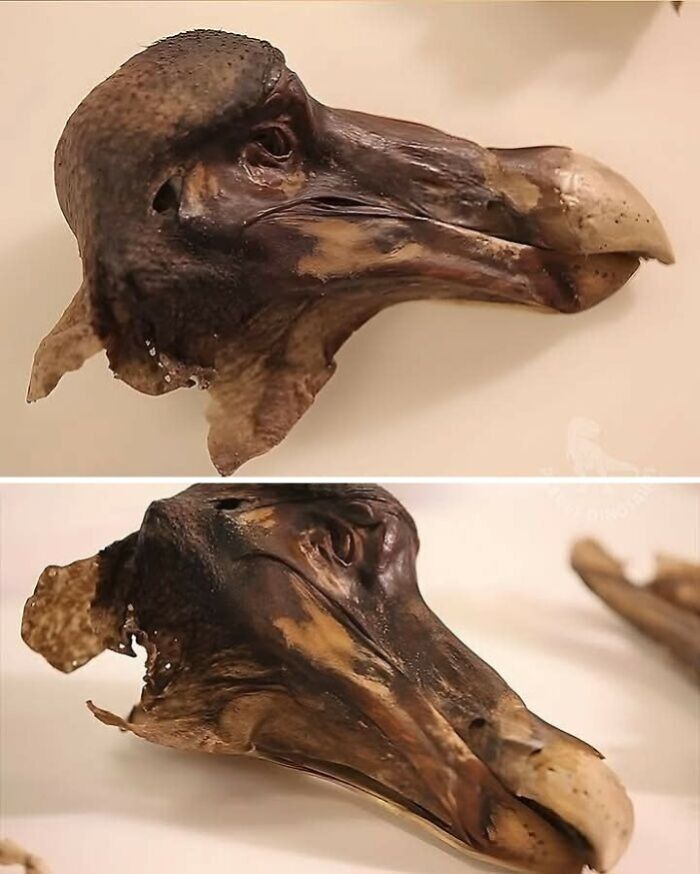
The only surviving head of the dodo, which went extinct 344 years ago- kept at the Natural History Museum in London, where it is considered an invaluable piece of natural history. This specimen offers a unique perspective on the wildlife of its original habitat, the island of Mauritius.
Discovered by Europeans in 1598, the dodo disappeared in the late 17th century due to intensive hunting and the introduction of invasive species. At around one metre tall and weighing between 10 and 17 kilograms, the dodo has become a symbol of extinction and a powerful reminder of the impact of humans on ecosystems.
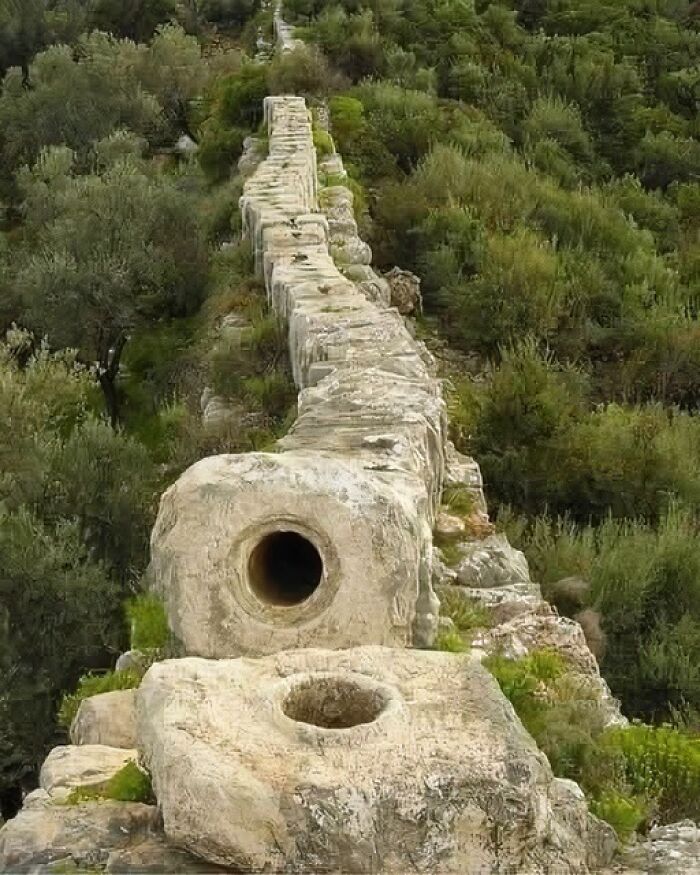
The Roman aqueduct in Patara, Turkey, stands as a stunning testament to ancient engineering brilliance. Once a thriving city in Lycia, near modern-day Turkey's southwestern coast, Patara flourished under Roman rule. As its population expanded, so did the demand for a dependable water source. The aqueduct, built to meet this need, showcases the Romans' mastery of hydraulic systems and urban planning. Its enduring remains highlight the ingenuity of a civilization that prioritized both functionality and grandeur. Today, it serves as a fascinating glimpse into the past
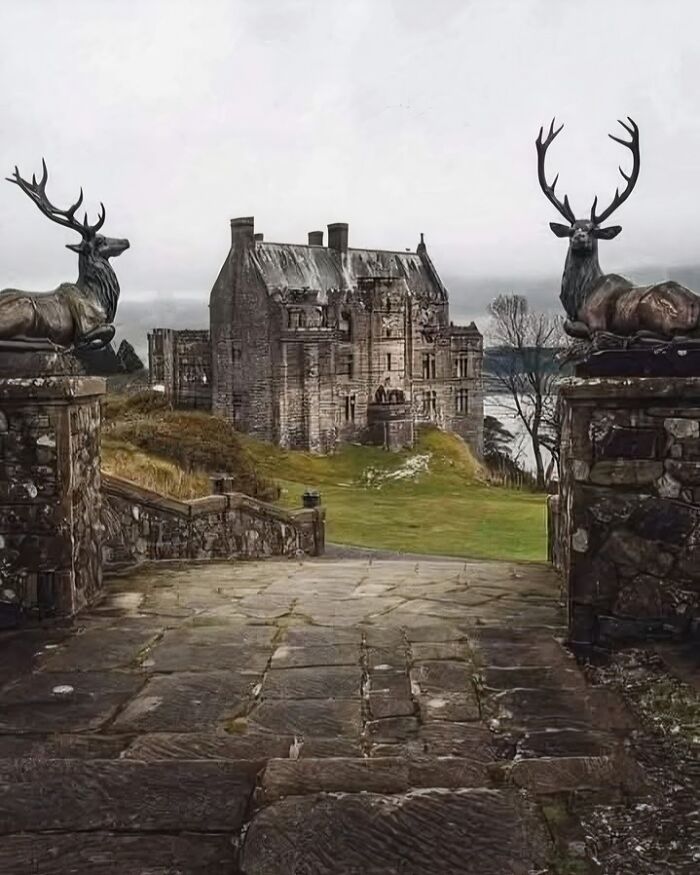
Duntrune Castle, located on the north side of Loch Crinan in Argyll, Scotland, is believed to be one of the oldest continuously inhabited castles in Scotland, with origins dating back to the 12th century.
The castle has historically been associated with Clan MacDougall and later came under the control of the powerful Clan Campbell, who retained ownership for centuries.
It gained a reputation for its role in Scotland’s turbulent clan conflicts, including a famous legend involving a MacDonald piper, who, while held captive, warned his clan of an ambush by playing a haunting tune.
Over the centuries, the castle underwent several phases of restoration, with the Campbells transforming it from a defensive structure into a family residence.
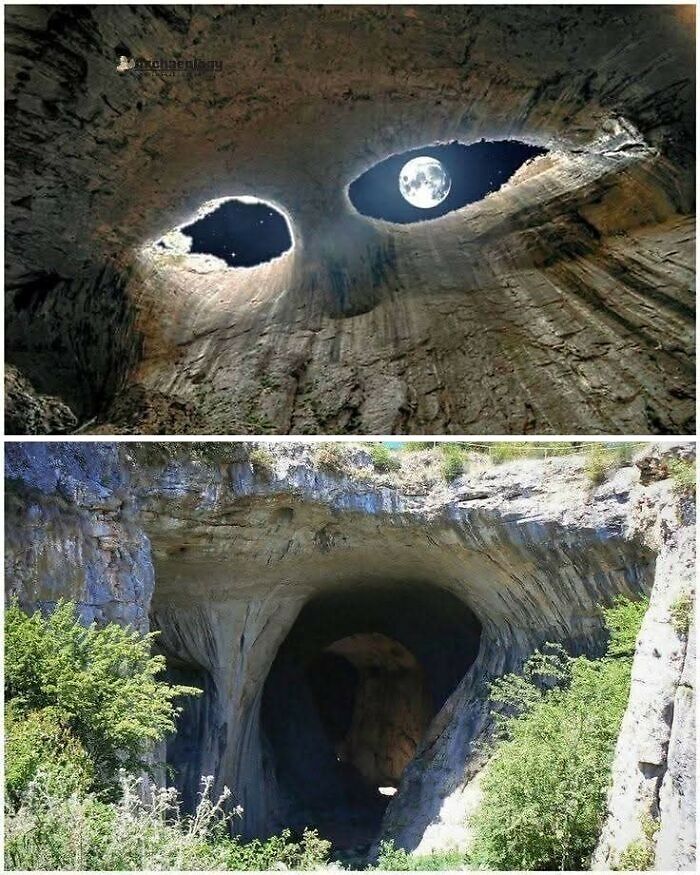
Over thousands of years, water and wind carved out this dramatic cave in Bulgaria known as Prohodna — the “Eyes of God.” The upper opening in the cave’s ceiling forms two symmetrical ovals, eerily resembling eyes gazing toward the sky. By day, sunlight streams through like divine light; by night, the moon or stars can align perfectly, heightening the illusion of a sentient gaze from the heavens.
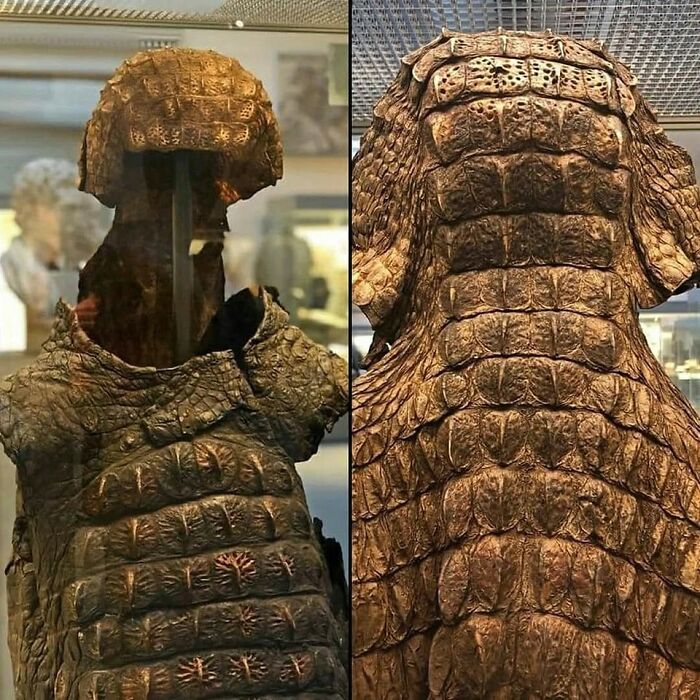
Ancient armor made from crocodile hide, discovered in Egypt in the 19th century. Believed to date back to the Roman period, it was probably created more for ceremonial display than for actual warfare.
Radiocarbon dating confirms that this armor hails from the 3rd century AD, marking it as a significant piece within the timeline of Roman rule in Egypt.
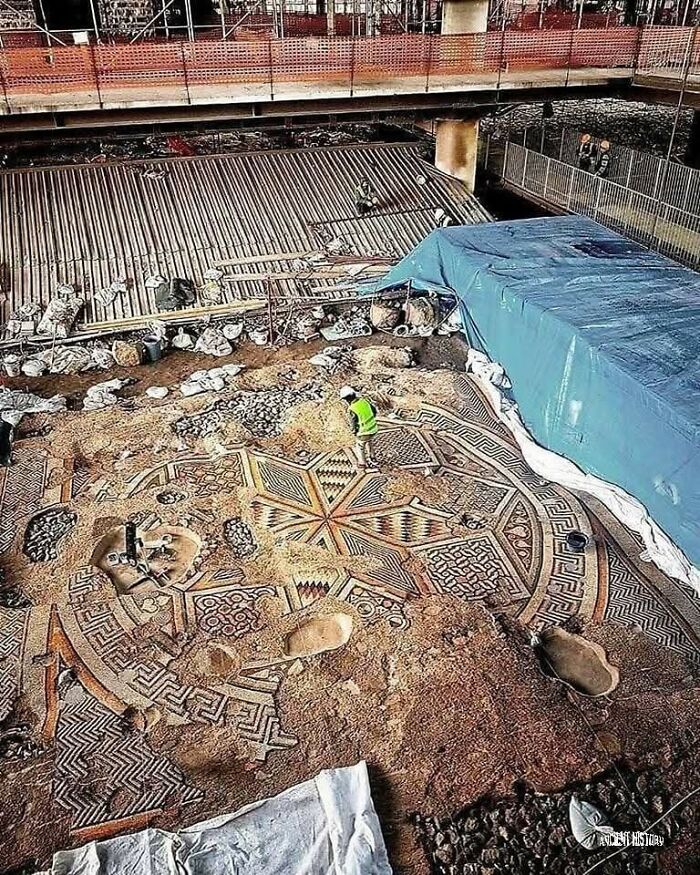
Beneath the bustling modern construction site in London, England, archaeologists uncovered a magnificent Roman mosaic floor believed to date back to the 2nd or 3rd century CE. Once part of a grand dining room in a Roman villa or mansio (travel inn), this intricate geometric design lay hidden for over 1,800 years beneath layers of earth and modern infrastructure.
The mosaic features a vibrant star-shaped centerpiece flanked by interlocking patterns, wave motifs, and medallions—executed in red, black, and white tesserae. The craftsmanship reveals not only aesthetic sophistication but also the Roman emphasis on symmetry, symbolism, and spatial harmony. Its preservation amid surrounding development highlights the delicate balance between urban growth and historical legacy.
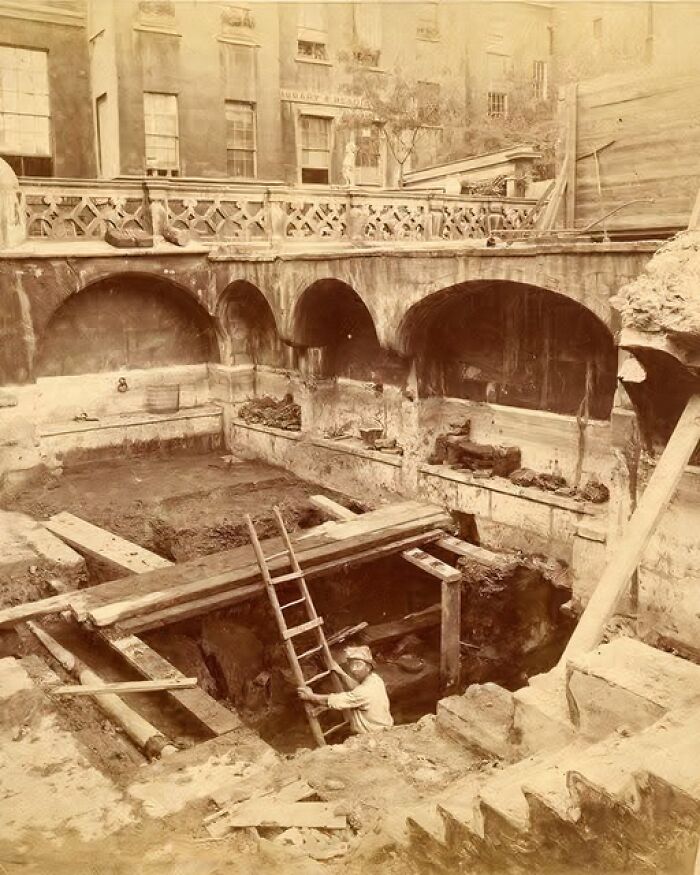
The Roman Baths is one of the finest historic sites in Northern Europe, in the city of Bath, Somerset, England. Major Charles Davis, a pivotal figure in uncovering the Roman remains in Bath, served as the city's surveyor and architect.
In 1878, concerned about a leak in the King’s Bath, he decided to investigate the surrounding area. This led to his initial discovery of Roman tiles, lead, and pottery.
In the following years, much of the Great Bath was gradually uncovered. However, the excavation was complicated by the presence of buildings above it.
After significant challenges, the city authorities acquired these buildings and had them demolished to complete the excavation. By 1883, the Great Bath had been cleared of buildings and made ready for visitors.

When I was a kid, locals were actually able to swim in the baths, occasionally and by invitation. That stopped (1978) when they found a 'brain eating bacterium' and a young girl died. However, they looked for a new and uncontaminated source of the hot spring, and there's now a hotel nearby with a pool and spa using the new source. So, we now have our own 'version' of the Roman baths, used for leisure and 'medicinal benefit'.
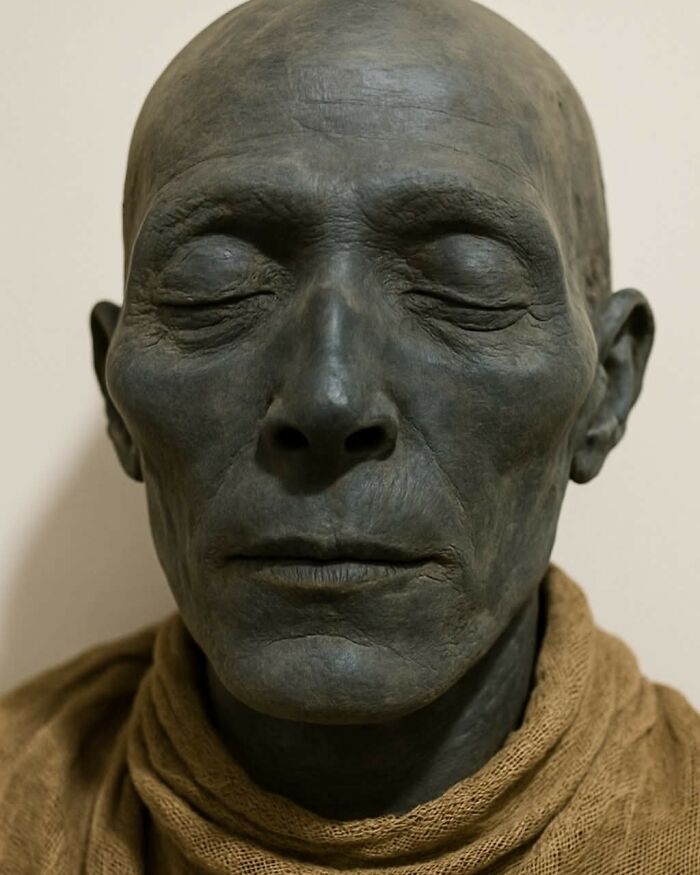
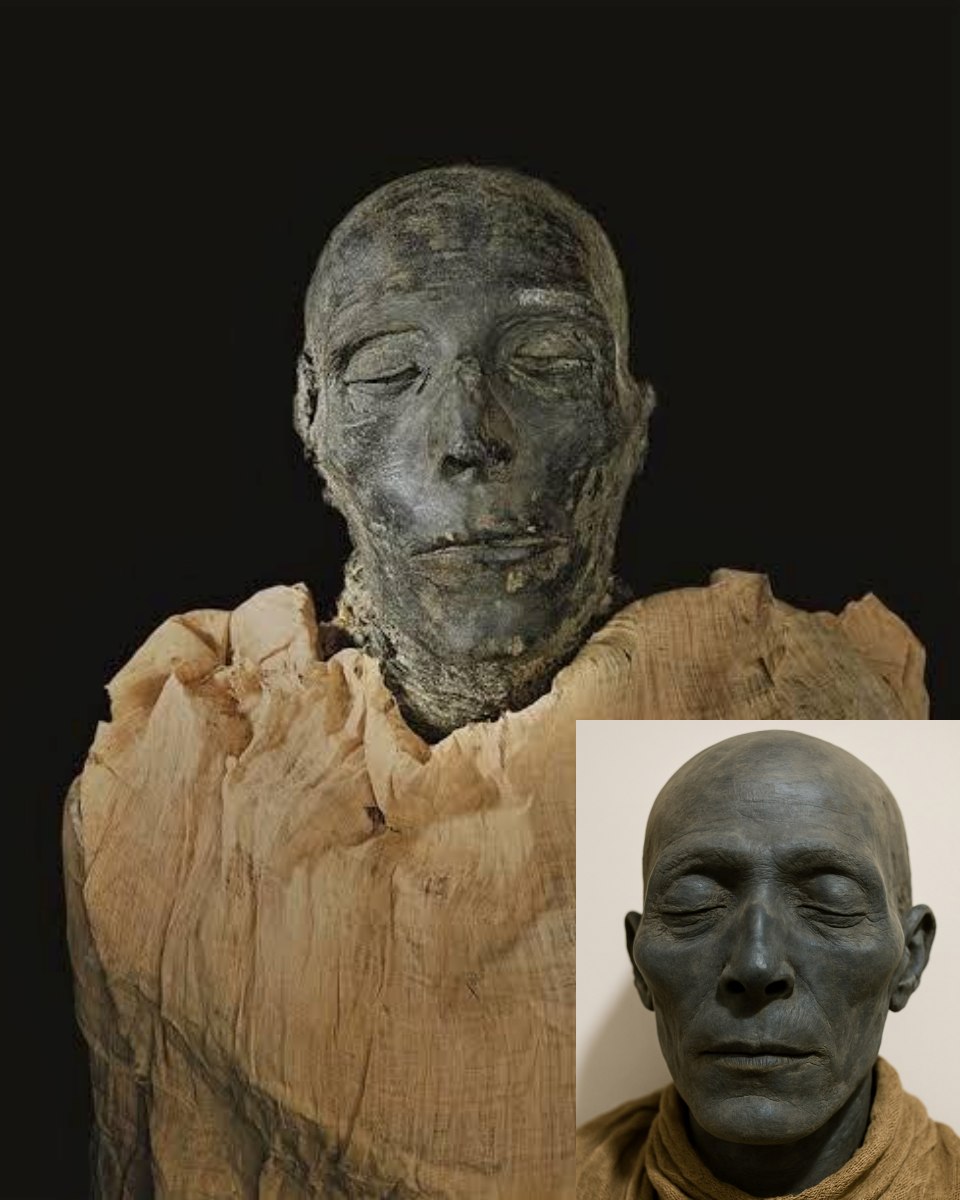
King Seti I, whose mummy stands as one of the most remarkably intact human remains in Egyptian history. His very name, "Seti," meaning "Belonging to the god Set," hints at the profound religious and cultural context of his reign.
Seti I ruled Egypt at the zenith of its power, a period of grandeur and prosperity that saw significant military campaigns and monumental building projects. He passed away approximately 3,298 years ago, leaving behind a monumental legacy, most notably as the father of one of ancient Egypt's most celebrated pharaohs, Ramses II, often referred to as Ramses the Great.
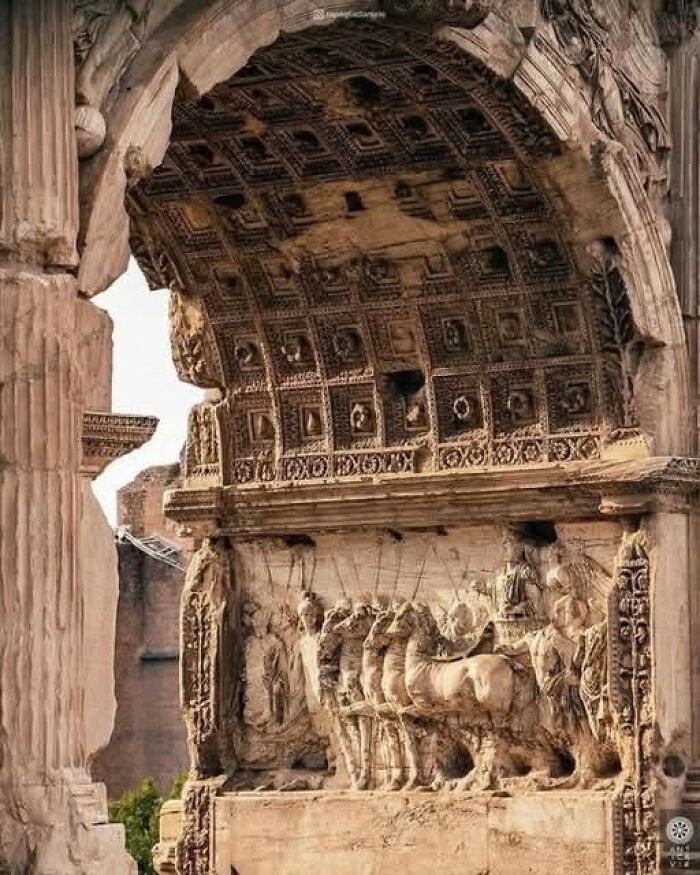
The Arch of Titus is a remarkable yet frequently overlooked historical landmark in Rome. Nestled near the Roman Forum, this triumphal arch has silently witnessed nearly two millennia of history, commemorating a pivotal moment in the story of Roman civilization.
Constructed around 81 CE, it honors Emperor Titus's victory over Jerusalem after the siege of 70 CE. The arch features intricate reliefs that depict Roman soldiers carrying treasures from the Jewish temple, including the iconic Menorah—one of the earliest representations of this sacred symbol.

Trippy. The opposite side of an event from The Wailing Wall, which is the remaining part of the temple. People roll up prayers they've written and insert the notes into cracks in the wall, and then they pray. Used to be restricted to men only.

Once you reach 200 metres, you enter the twilight zone – where light is almost gone, plants cannot photosynthesize. This zone extends from 200 to 1,000 metres.
Further down is the midnight zone (1,000 – 4,000 metres), which is completely dark, cold and under enormous pressure.
Below that is the abyss (4,000 – 6,000 metres), then the hadal zone – deep trenches on the ocean floor, starting at 6,000 metres.
The deepest known point is the Mariana Trench, reaching a depth of 10,935 metres, deeper than Mount Everest is tall.
The deepest humans have ever dived in a scuba diving device is 332 metres, and in a submersible it is 10,935 metres, reaching the bottom of the Mariana Trench
Here’s a cool website that you can take the trip yourself on! https://neal.fun/deep-sea/
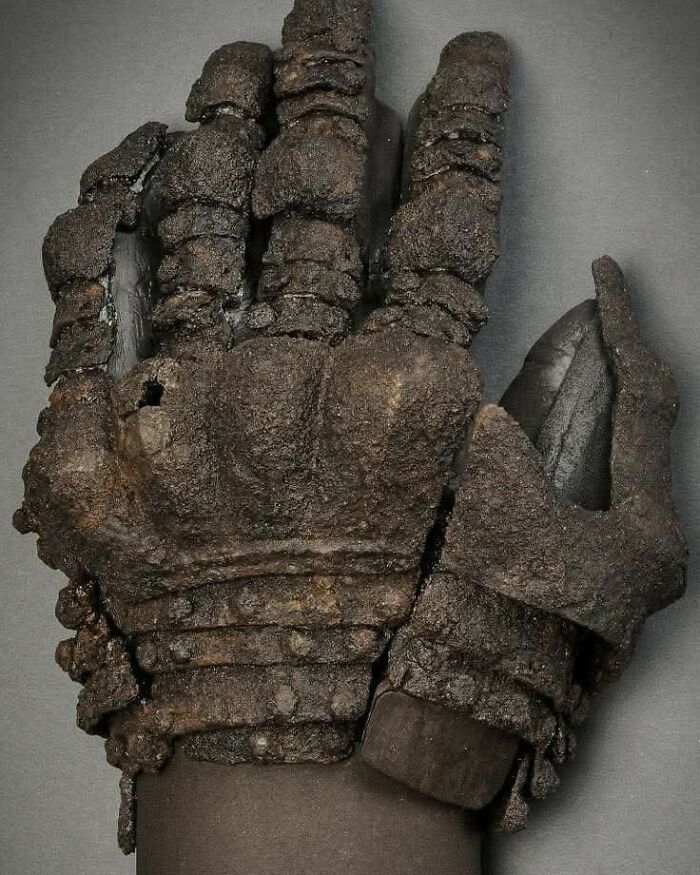
The Swedish History Museum, Stockholm has a very impressive exhibit. Gauntlets are the least part of it.
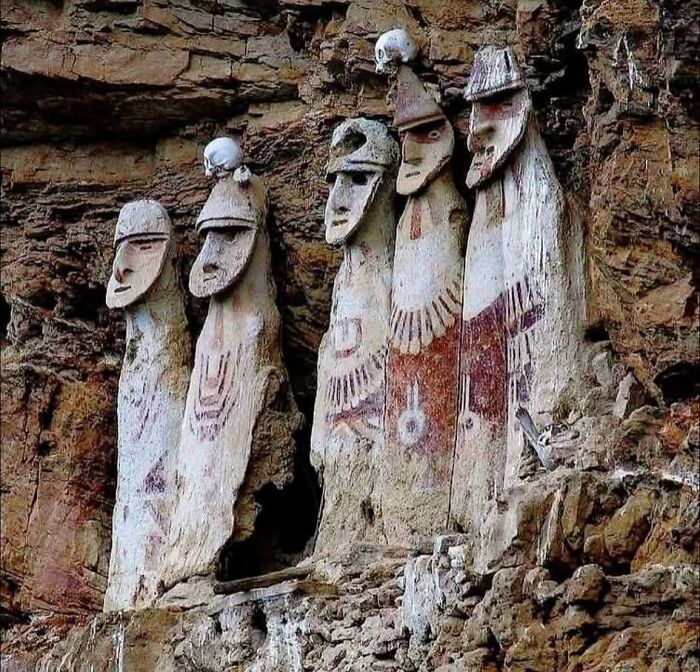
Perched high on a remote cliff in the Utcubamba Valley, the Sarcophagi of Carajía stand as imposing sentinels of a forgotten era. These towering pre-Inca sarcophagi, crafted by the enigmatic Chachapoyas culture between the 9th and 15th centuries, reach up to 2.5 meters in height. Located 48 kilometers northwest of the city of Chachapoyas, Peru, in Luya Province, Amazonas Region, each one, intricately designed and nearly untouched by time, guards the mummified remains of ancient individuals, revered as wise men by local lore.
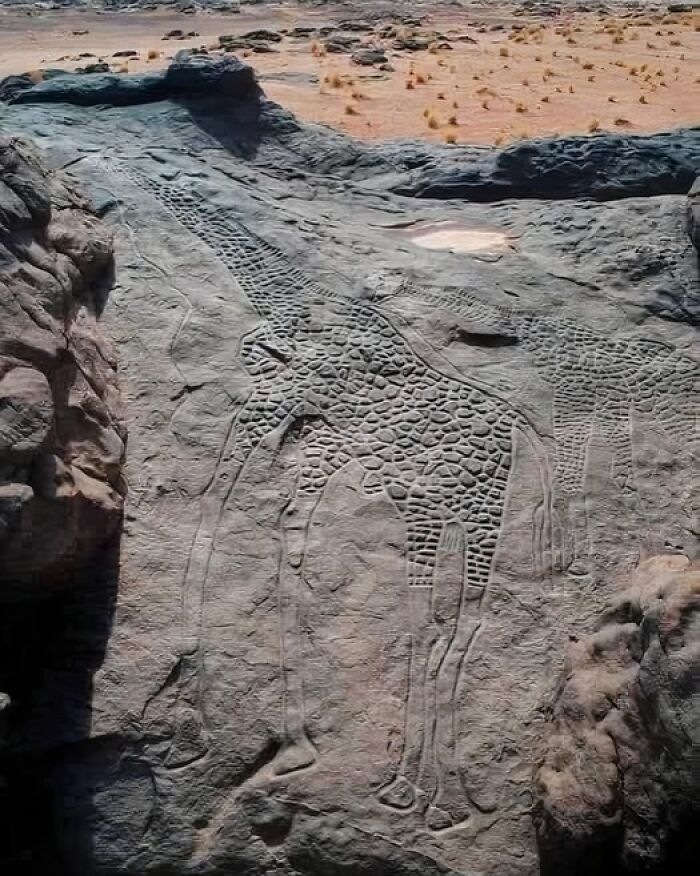
The Dabous Giraffes are iconic prehistoric rock carvings found in the Ennedi Plateau of northeastern Chad. These intricate and detailed carvings depict two giraffes facing each other, with their necks intertwined in a graceful and symbolic manner. The Dabous Giraffes are considered masterpieces of ancient rock art, showcasing the artistic skill and cultural significance of the people who inhabited the region thousands of years ago.
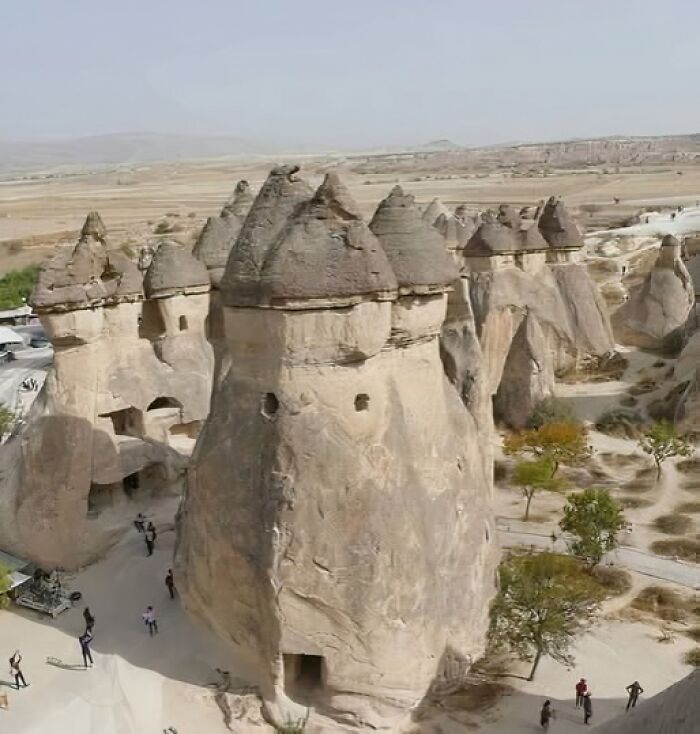
The fairy fireplaces of Cappadocia, Turkey, are a sight that seems to have been carved by magical hands. These rock formations, formed by volcanic eruptions and erosion over centuries, transform the terrain into a surreal landscape that combines natural art and geology. These stone towers, some as high as 40 feet, are crowned by layers of harder rock that make them look like giant mushrooms or magical fireplaces. In addition to their beauty, the ancient caves carved into these formations served as shelters for past civilizations
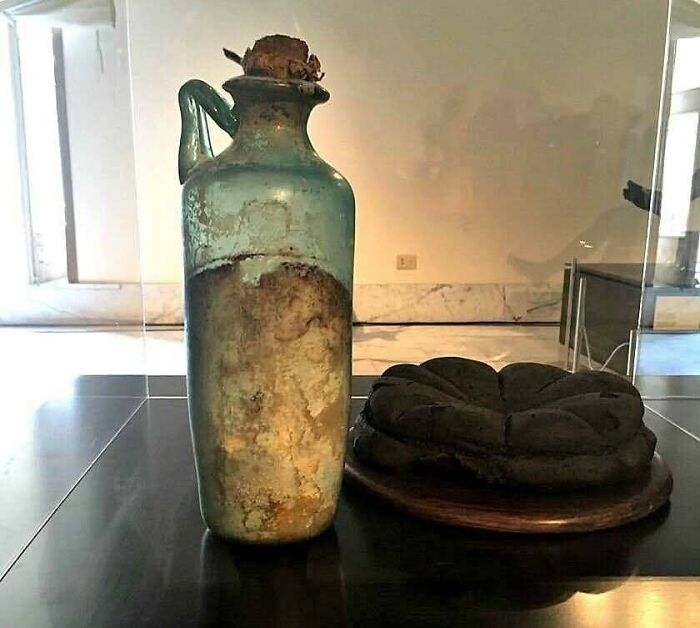
They have found the remains of a load of food that was preserved by the ash in Pompei. It’s been tested for ingredients and experts in old cooking methods have recreated recipes from them. It’s an interesting glimpse into the everyday ordinary life of an everyday ordinary Pompeian. Granted, most of the history that’s taught is about big events and people. But the history I find the most fascinating is that of the ordinary person. Details of their life, down to how they got dressed and what they typically ate, from the time they got up in the morning to the time they went to sleep at night. That can help people identify with history a lot more than the other stuff—-not that we shouldn’t teach about important events and people, but that some of the everyday ordinary should be sprinkled in to help humanize it all.
In a remarkable find, Shlomi Katzin, an amateur diver from Atlit, Israel, stumbled upon a fascinating historical artifact during a routine dive in the Mediterranean Sea. While exploring the waters near the Carmel coast, Katzin noticed an unusual glimmer beneath the sand. Upon closer inspection, he discovered an extraordinary sword measuring over 39 inches in length, believed to date back to the time of the Crusades.

And now he is the king of Israel because some moist bint was lobbing a sword at him.
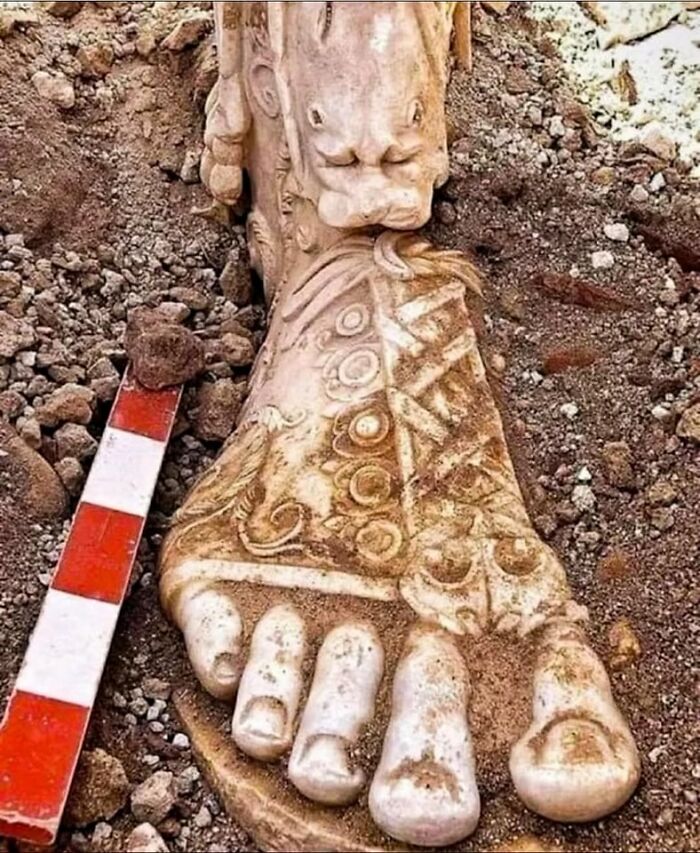
In May 2023, archaeologists in Southern Turkey made an extraordinary find in the ancient city of Syedra—a marble foot, approximately 1.6 feet long, from a statue of Marcus Aurelius. This fragment, likely part of a life-sized or larger depiction, highlights the remarkable craftsmanship of Roman sculptors and the importance of imperial figures.

Just a hunch, here: I'm gonna go with larger depiction rather than life-sized. A nearly 49cm long foot is my only clue, though, so I could be wrong. Maybe Marcus Aurelius was ½ giant
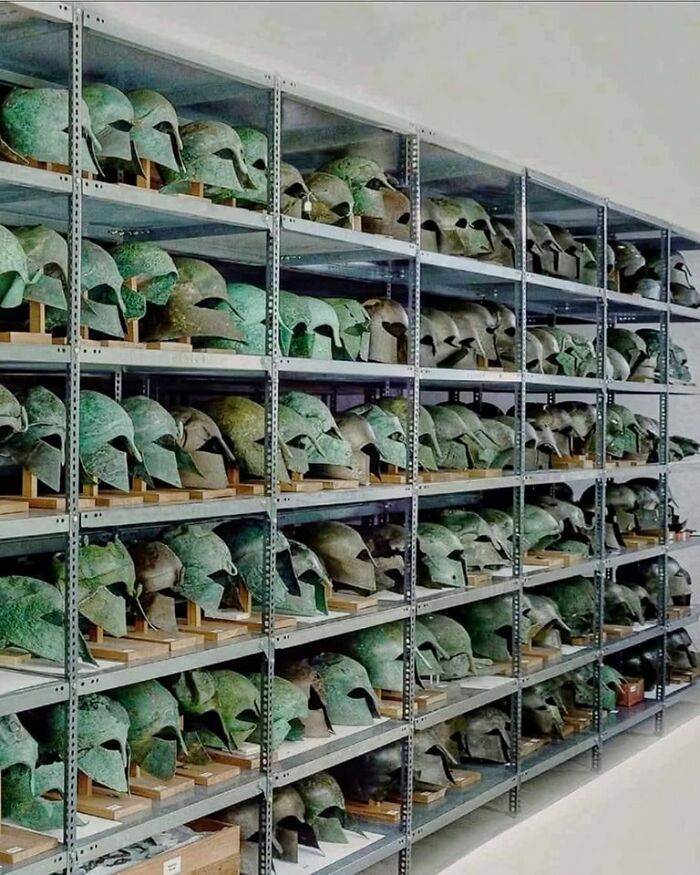
Legend says that when you enter that room alone, all the helmets turn to face you.
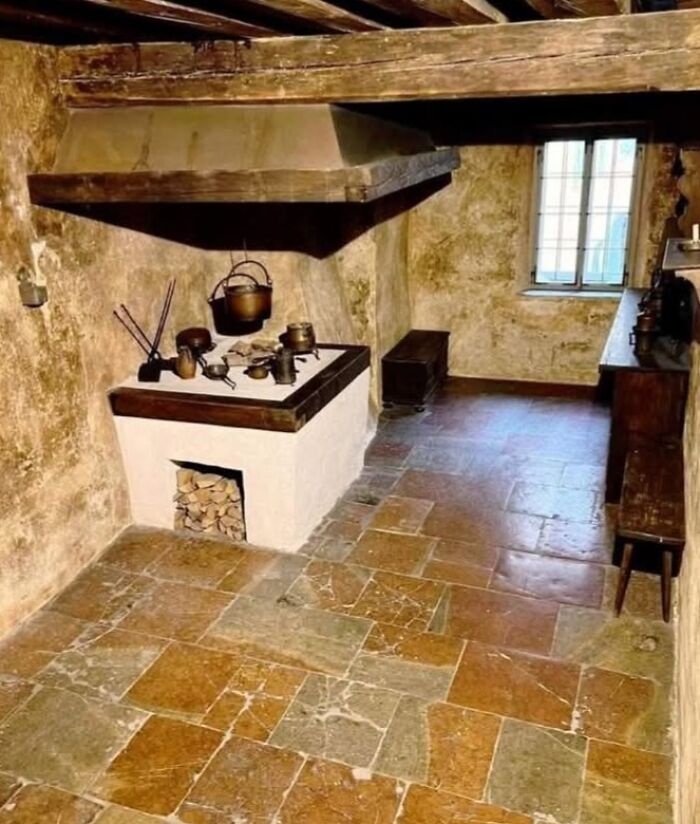
Mozart's kitchen is situated at No. 9 Getreidegasse in Salzburg, Austria, within the house where Wolfgang Amadeus Mozart, one of the most renowned composers in history, was born on 27 January 1756.
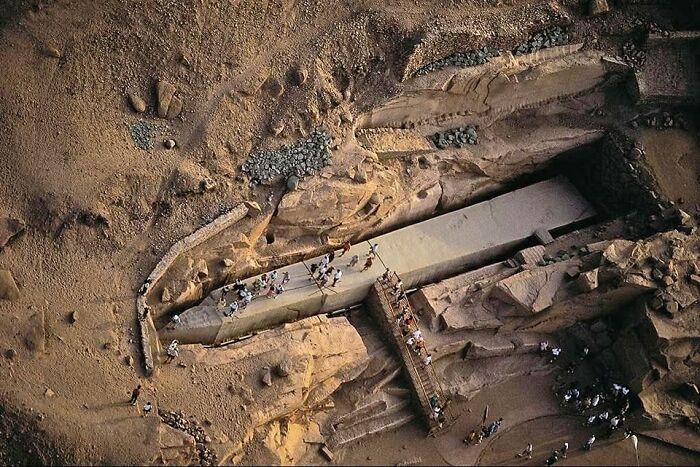
The Unfinished Obelisk of Hatshepsut, is carved directly out of bedrock in a granite quarry, and was intended to stand at an estimated 42 metres (137 feet).It is believed to weigh around 1,200 tons.
"Hatshepsut was Egypt's second confirmed woman who ruled in her own right. In order to establish herself in the Egyptian patriarchy, she took on traditionally male roles and was depicted as a male pharaoh, with physically masculine traits and traditionally male garb. She emphasized both the qualities of men and women to convey the idea that she was both a mother and father to the realm. Hatshepsut's reign was a period of great prosperity and general peace. One of the most prolific builders in Ancient Egypt, she oversaw large-scale construction projects. Hatshepsut probably died in Year 22 of the reign of Thutmose III. Towards the end of the reign of Thutmose III and into the reign of his son Amenhotep II, an attempt was made to remove her from official accounts of Egyptian historiography: her statues were destroyed, her monuments were defaced, and many of her achievements were ascribed to other pharaohs."
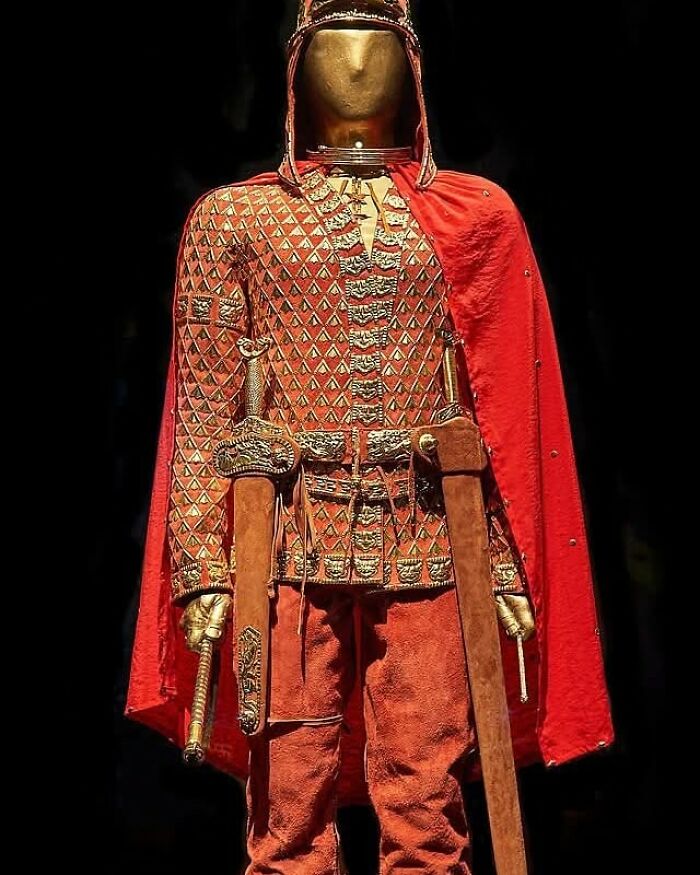
The Issyk Burial: Kazakhstan’s “Golden Man” Mystery
Unearthed in 1969 near Issyk, close to modern-day Almaty, Kazakhstan, a richly adorned burial from the 3rd or 2nd century BC revealed a treasure trove of artifacts. Among them were a silver bowl inscribed with enigmatic runes, a sword, and hundreds of gold ornaments sewn onto ceremonial clothing.
The figure was topped with a towering conical headdress, similar to ceremonial headwear worn by Central Asian women. While the individual's gender remains uncertain, the presence of sewing needles led some scholars to suggest the burial may have belonged to a noblewoman or a Scythian princess. Others believe it could be a warrior interred to guard her in the afterlife.
Thought the headline said Kardashian's 'Golden Man' and was a tad confused for a moment.....
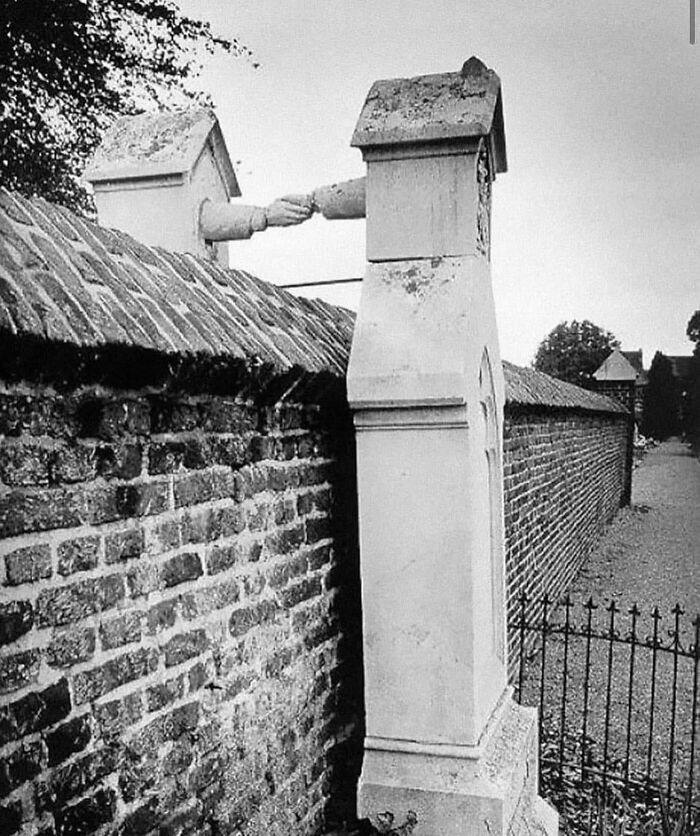
In Roermond, Netherlands, two graves divided by a cemetery wall tell the story of a love that defied 19th-century religious boundaries. Jacob van Gorcum, a Protestant, and Josephina van Aefferden, a Catholic, married in 1842 despite societal norms. Their union lasted 38 years.
When Jacob died in 1880, he was buried in the Protestant cemetery. Eight years later, Josephina chose not to be buried in her family’s Catholic plot but as close as possible to her husband. Their graves, separated by the wall but facing each other, symbolize a bond that transcended religious divides
This picture was used in a textbook on Northern Ireland. Now I find out it is not in Northern Ireland at all. I feel cheated.
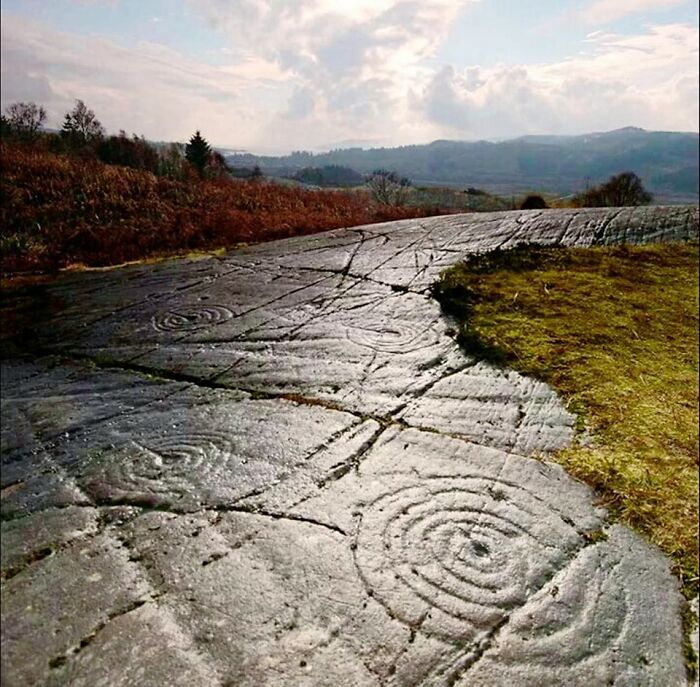
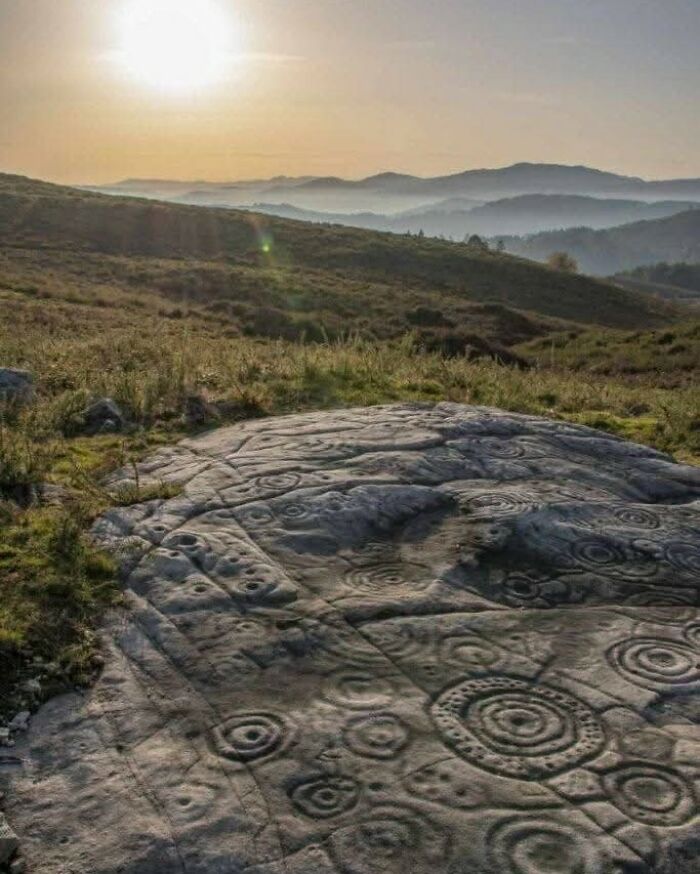
The Achnabreck cup and ring marks are a fascinating set of ancient rock carvings located in Kilmartin Glen, Scotland, one of the richest prehistoric landscapes in Europe. These carvings date back to the Neolithic or early Bronze Age, around 4,000 to 6,000 years ago. The Achnabreck site is particularly notable for its extensive panels of cup and ring marks, which consist of circular depressions (cups) surrounded by one or more concentric circles (rings), connected by grooves.
Achnabreck is one of the largest and most complex examples of this type of rock art in the UK. The carvings cover a broad expanse of rock surface, with some motifs reaching up to 1 meter in diameter, making them among the largest in Scotland. The purpose of these carvings remains a mystery; theories range from their use in rituals, marking territory, or serving as maps or astronomical markers.
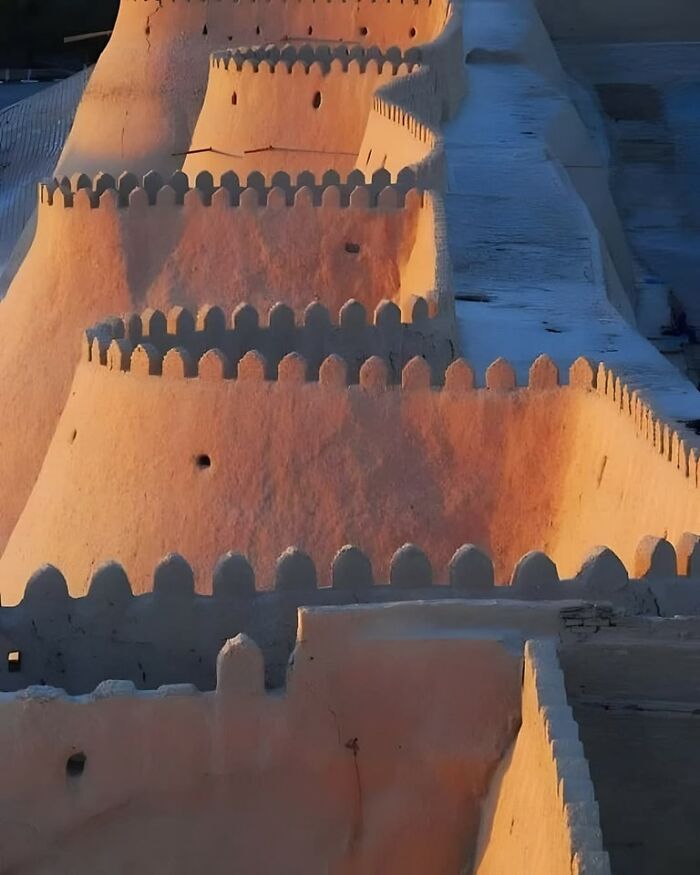
Khiva's City Wall in Uzbekistan is a UNESCO World Heritage site celebrated for its ancient mud-brick ramparts that enclose the historic city.
Primarily constructed in the 17th century, these impressive walls reflect Khiva's rich history and craftsmanship.
Originally built for defense, they showcase the artistry of traditional builders and stand as a testament to the city's significance in the region's past
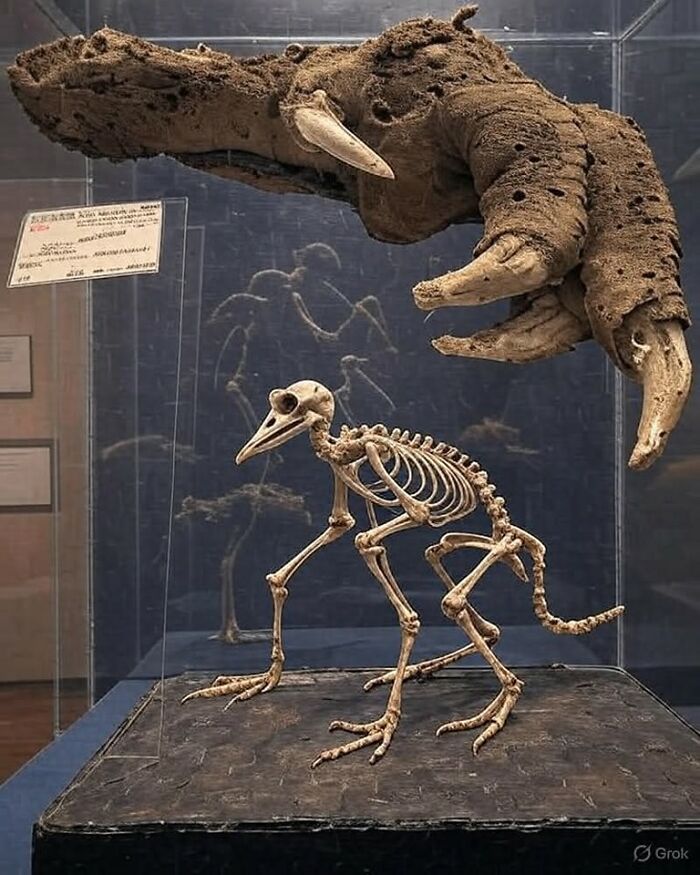
In a New Zealand cave in 1987, explorers made a remarkable discovery: the mummified claw of an upland moa. The claw retained remnants of muscle, skin, and sinew and came from a bird species thought to have vanished 600 years prior due to human settlement and extensive hunting. The exceptional preservation of this claw has sparked discussions about the possibility that these flightless birds may have lived unnoticed in isolated regions for a longer period than previously believed by researchers.
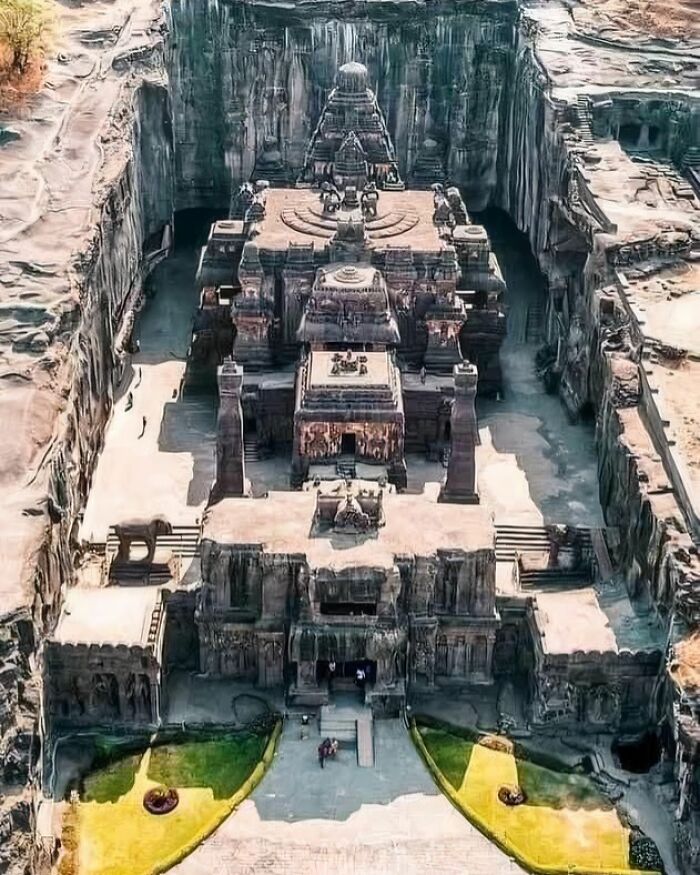
Kailasa Temple, a magnificent rock-cut temple in the Ellora Caves, Maharashtra, India. The Kailasa Temple is the largest Hindu temple carved from a single megalith in the world, making it an ancient architectural wonder. It is part of the Ellora Caves complex, which consists of 34 Buddhist, Jain, and Hindu cave temples and monasteries. Its construction is generally attributed to the Rashtrakuta King Krishna I in the 8th century CE. The temple is carved vertically from top to bottom, with dimensions of about 50 metres (164 ft) deep, 33 metres (109 ft) wide, and 30 metres (98 ft) high. The temple is dedicated to Lord Shiva and contains numerous large-scale reliefs and sculptures.
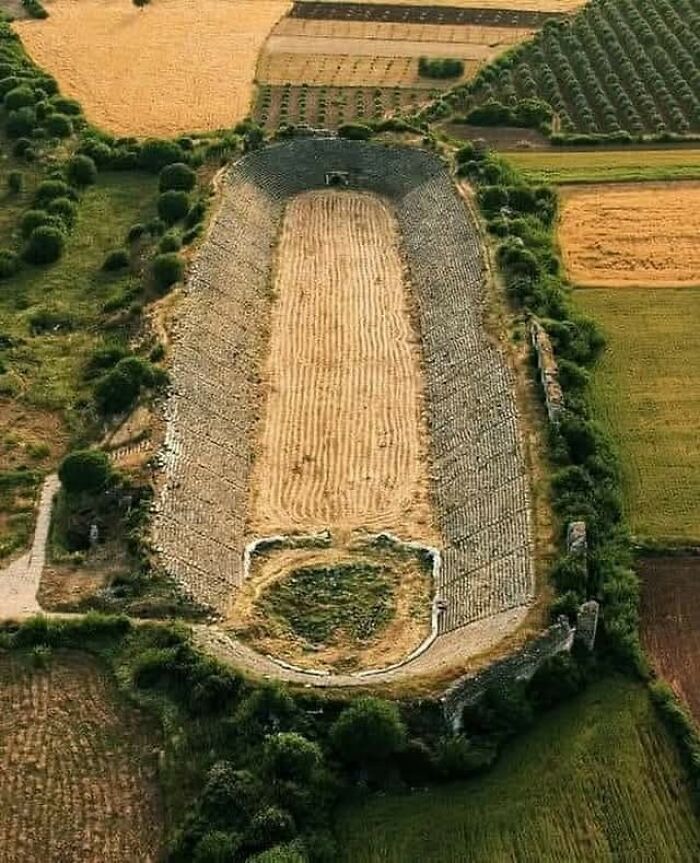
The stadium at Aphrodisias in modern Turkey, built during the 1st century AD, is among the best-preserved examples of ancient Greek stadiums. It could accommodate up to 30,000 spectators and measured approximately 270 meters long by 60 meters wide.
Originally hosting traditional Greek athletic events—like races, wrestling, and javelin—its role later expanded under Roman influence to include gladiatorial contests and animal fights. Inscriptions carved into the seating reveal that seats were allocated to specific groups and elite individuals.

Why the different shape? Most ancient Greek stadiums are round was this designed for specific events that needed the extra length?
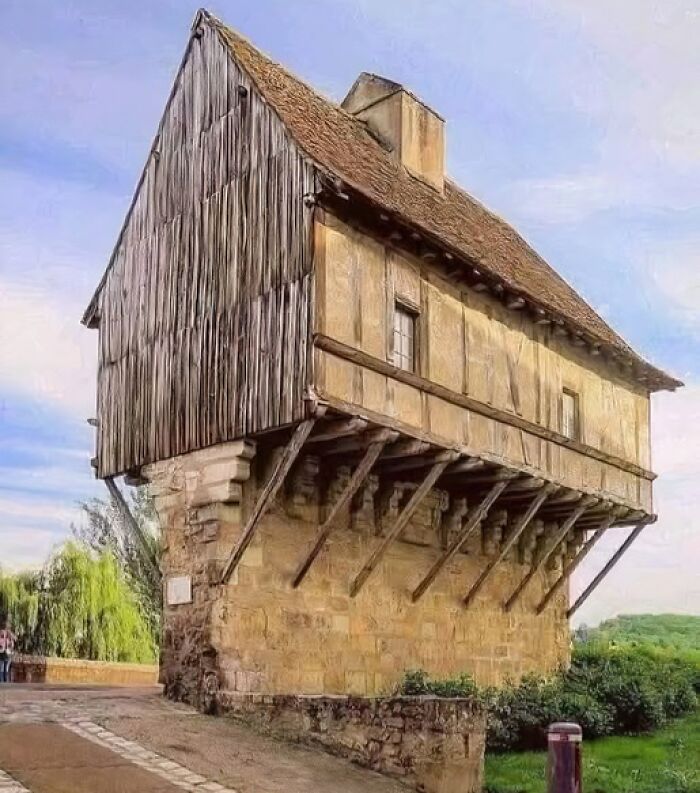
The Eschif in Périgueux in France, was a lookout for a toll bridge.
It's an oak timber frame building with wattle & daub infill, built in 1347.
The building is balanced on the narrow ramparts of Puy-Saint-Front (the medieval centre of Périgueux) supported on oak struts along its length
Woof - that is only an hour and 15 minutes from here. I might suggest a visit to the spousal unit as soon as tourist season is over.
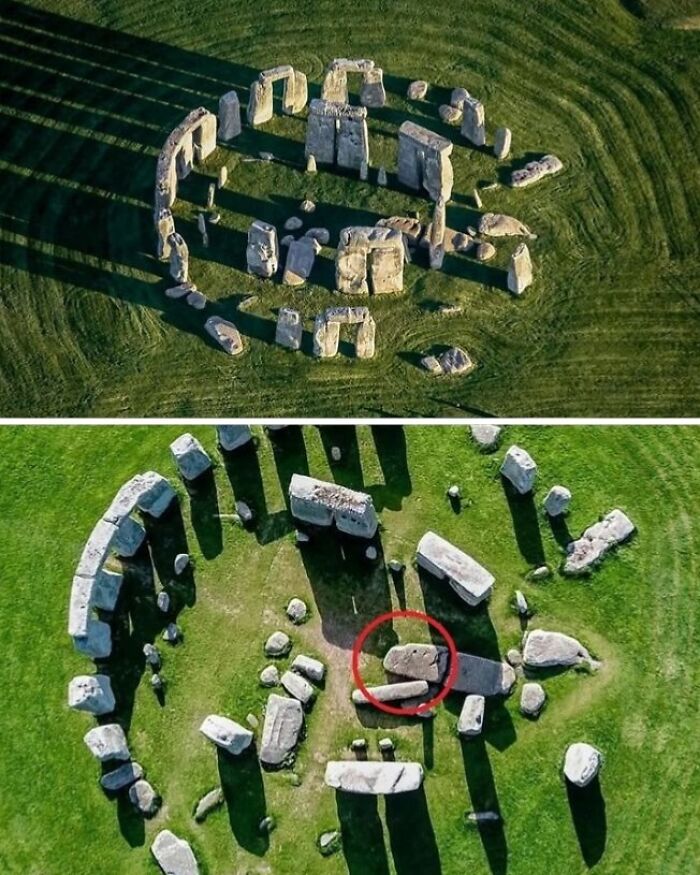
A new study has changed what we know about Stonehenge’s origins, showing that the Altar Stone, a six-ton sandstone at the monument’s center, likely came from northeast Scotland, not Wales as once thought. The stone has a unique chemical makeup, with high barium levels, matching rocks possibly from the Orkney Islands, over 500 miles away.
Published in 2025, this suggests that around 2600 B.C., ancient Britons moved huge stones across long distances, probably by boat, revealing advanced planning and trade networks. This finding disputes the idea that Stonehenge’s stones were from nearby quarries, pointing to a broader web of connections in ancient Britain.
Scientists used precise chemical tests to compare the Altar Stone’s composition with rock samples, ruling out Wales and linking it to Scotland’s unique geology. This long-distance transport shows Stonehenge’s importance and the teamwork between far-off communities.
Stonehenge's origins long predate any of the standing stones. "The first monument consisted of a circular bank and ditch enclosure made of Late Cretaceous (Santonian Age) Seaford chalk, measuring about 360 feet (110 m) in diameter, with a large entrance to the north east and a smaller one to the south" https://en.wikipedia.org/wiki/Stonehenge#Stonehenge_1_(c._3100_BC)
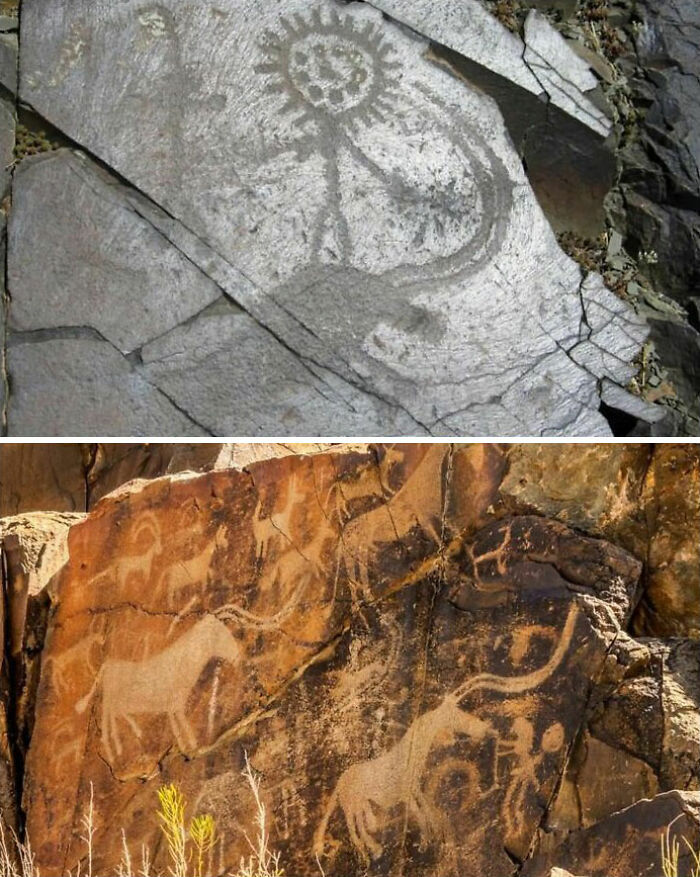
The Tamgaly petroglyphs, located in southeastern Kazakhstan, are an ancient site dating back more than 3,500 years to the Bronze Age (around 1500 BC). This UNESCO World Heritage site contains over 5,000 intricate carvings etched into rock faces, providing a glimpse into the spiritual and cultural practices of early nomadic societies.
The petroglyphs depict scenes of hunting, ritual ceremonies, and animals, including striking images of sun-headed deities believed to symbolize solar worship or divine beings. Among the most intriguing figures are horned horse-like creatures, which may represent mythical animals tied to shamanistic beliefs or spiritual symbolism.
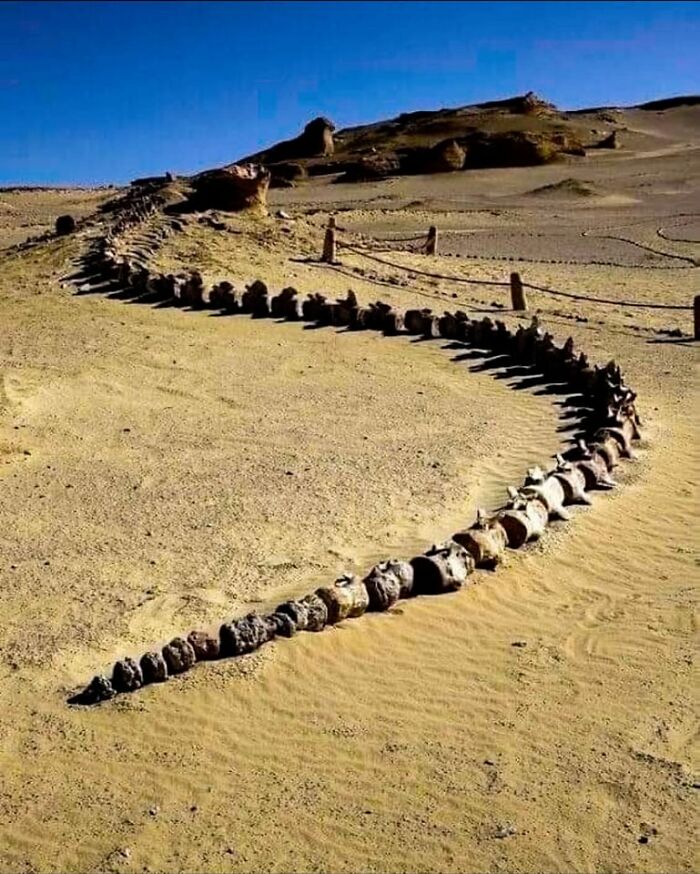
In the arid expanse of Wadi Al Hitan, an Egyptian desert region, a 37-million-year-old whale skeleton has been uncovered, adding to a significant collection of ancient marine fossils. This site, known as the Valley of the Whales, has revealed dozens of rare fossilized whale skeletons, offering invaluable insights into prehistoric marine life.
To safeguard these remarkable discoveries and promote their study, a dedicated museum has been established at the site.
Hard to imagine whales in Egypt how things have changed over the ages.
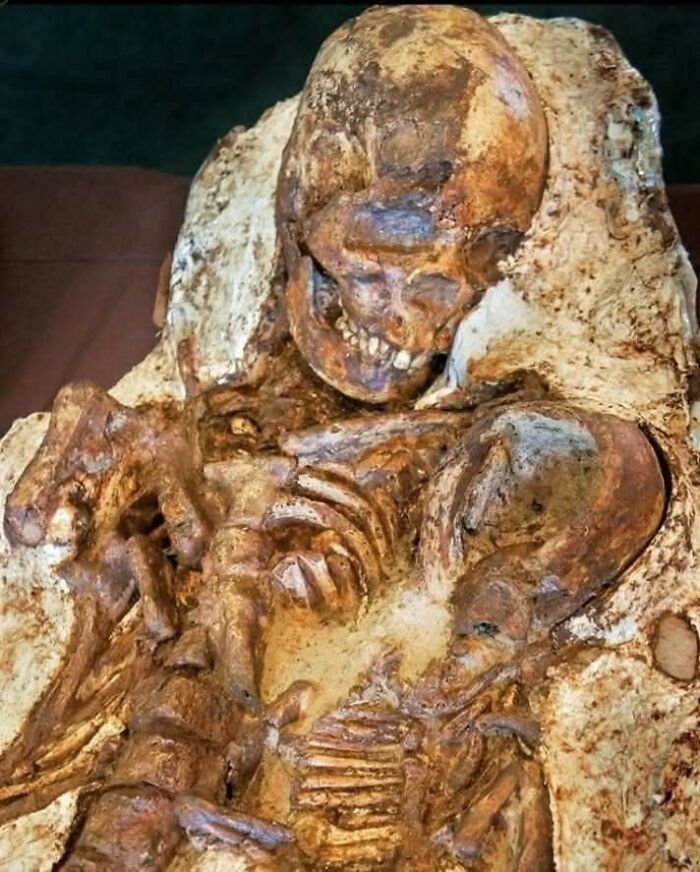
She is believed to be an ancestor of the Austronesian people who later spread across the Pacific.
This discovery, associated with the Dapenkeng culture, was made in Taichung, Taiwan, and dates back to around 2800 BCE.
Carved over 4,000 years ago. Known as petroglyphs, their true meaning remains unknown - some say they map the stars, others believe they mark sacred rituals
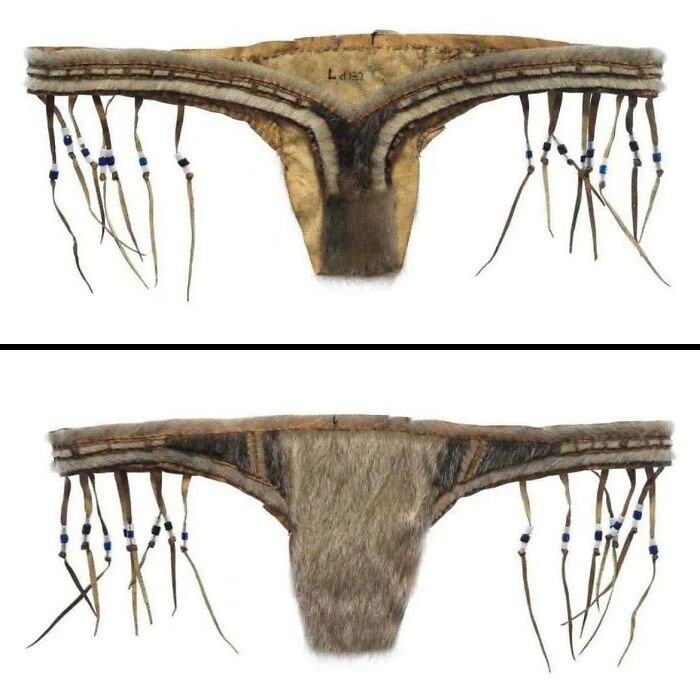
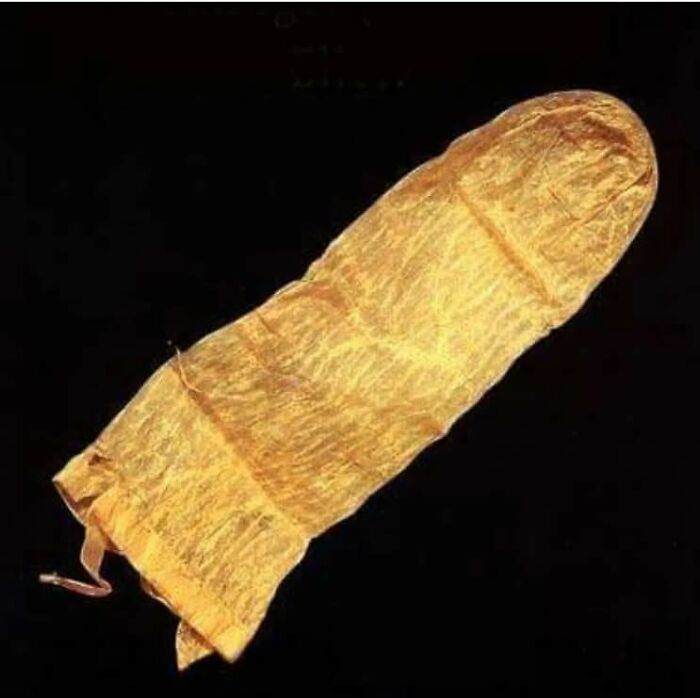
One of the oldest intact [rubbers] ever found dates back to 1640 AD and was discovered in Lund, Sweden. It was made from pig intestines, a common material used before modern latex was invented.
What makes this find even more interesting is the user manual written in Latin that came with it. The instructions advised men to dip it in unboiled milk before use to help prevent diseases. The [rubber] was reusable: after use, it was washed and soaked again in unboiled milk for 6 to 8 hours before being used another time.
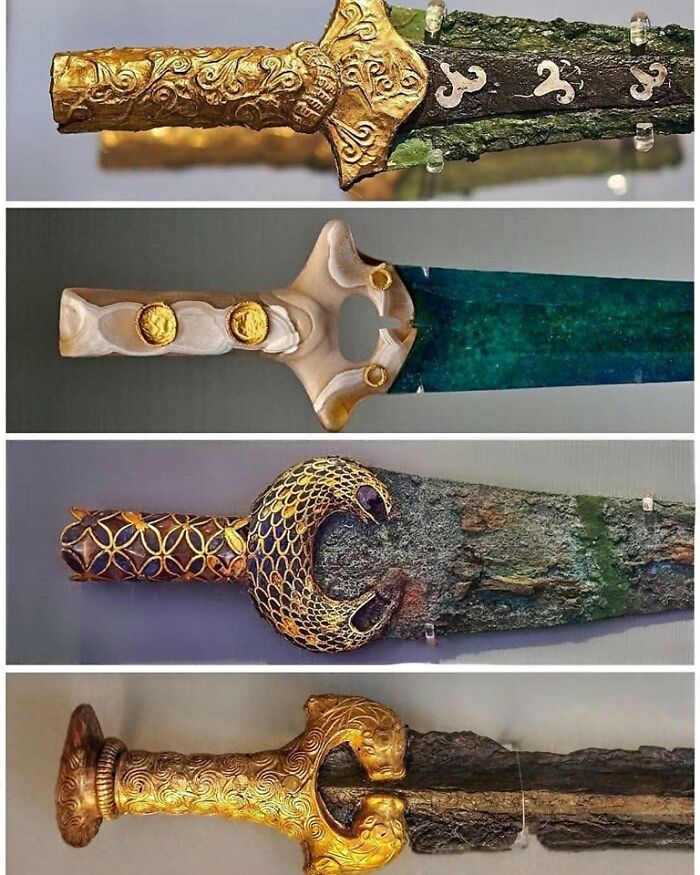
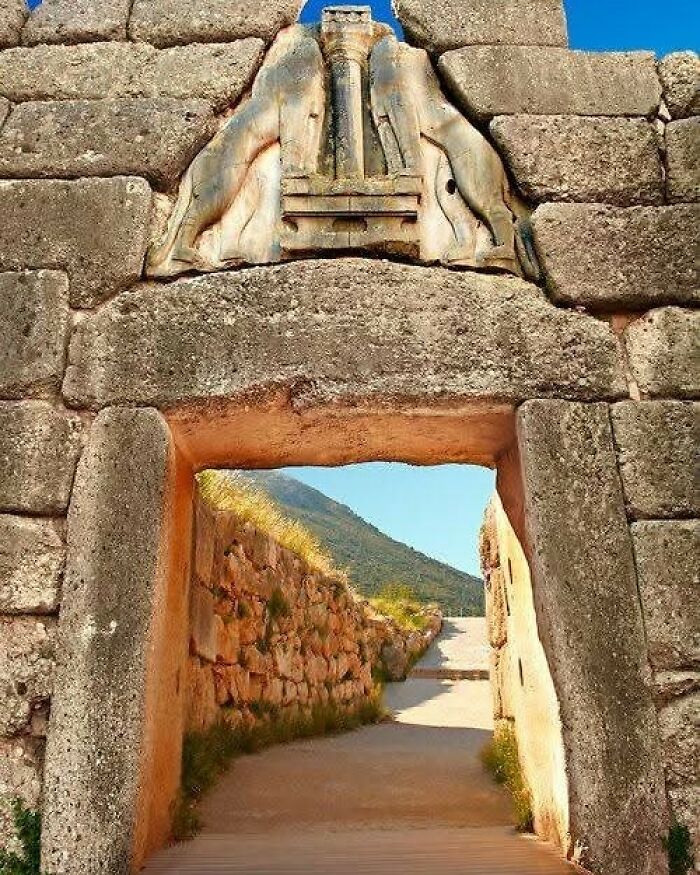
Mycenae is the site that I found most impressive during my trip to Greece.
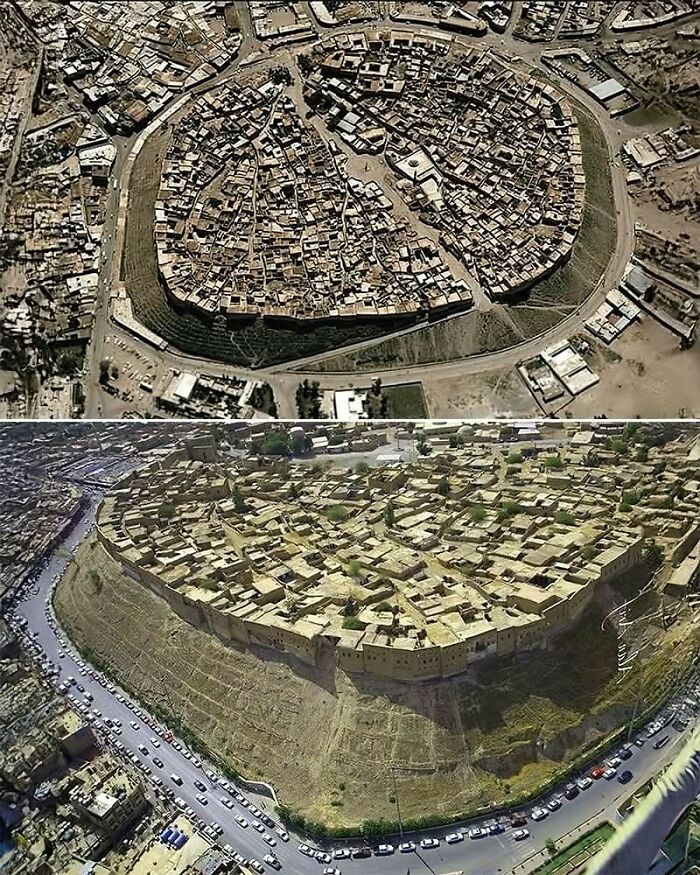
"Erbil is the capital and most populated city in the Kurdistan Region of Iraq. The city is the capital of the Erbil Governorate. Human settlement at Erbil may be dated back to the 5th millennium BC. At the heart of the city is the ancient Citadel of Erbil and Mudhafaria Minaret. The earliest historical reference to the region dates to the Third Dynasty of Ur of Sumer, when King Shulgi mentioned the city of Urbilum. The city was later conquered by the Assyrians."
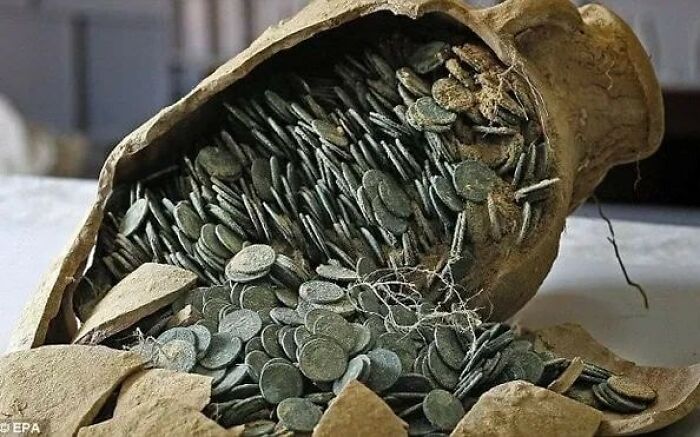
Archaeologists in Spain have uncovered 600 kilograms of Roman coins, hidden for over 1,500 years! This incredible hoard was carefully buried inside 20 amphoras beneath the soil of Seville. Unlike the typical large vessels used for grain or wine, these smaller amphoras were stored in a sealed underground chamber. Some were perfectly preserved, while others lay broken beneath layers of bricks and ceramic fragments.
There is a ancient bank somewhere that has been looking for those coins.
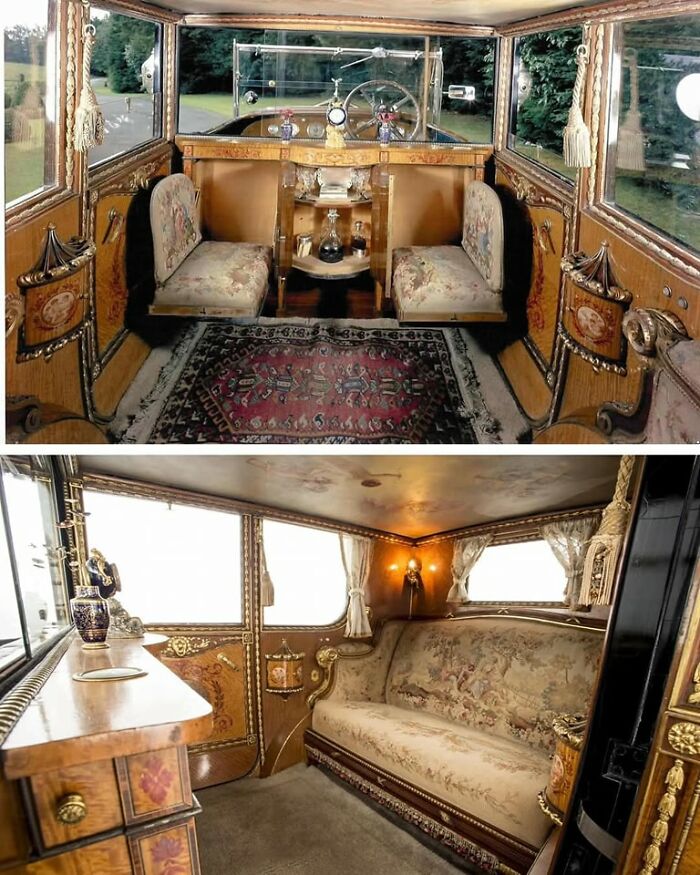
The car was commissioned by business baron Clarence Gasque for his wife Maude, a devotee of 18th Century CE, French design, and it remains one of the most inspired examples of bespoke coachbuilding to this day.
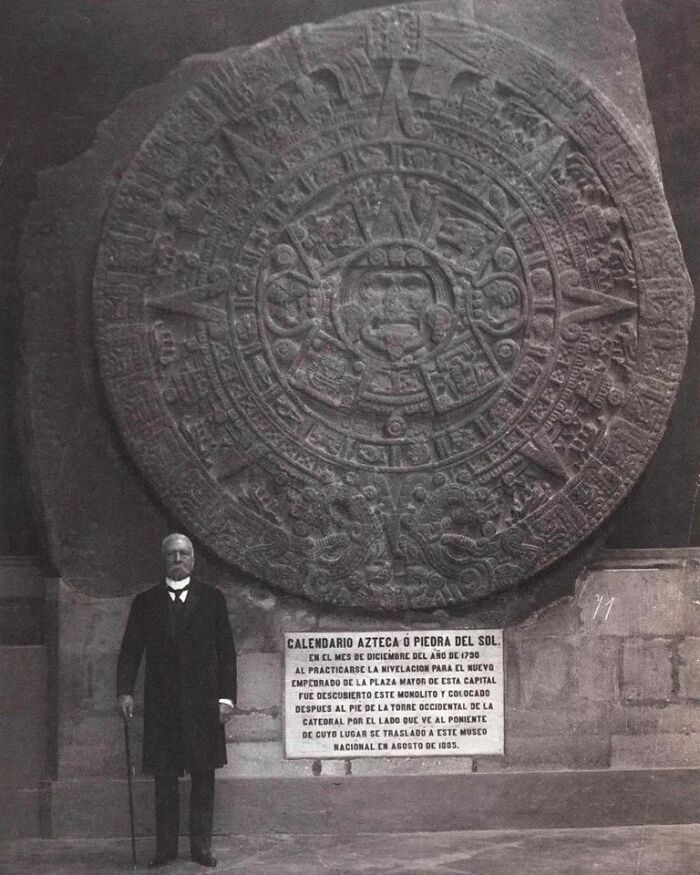
The National Museum of Anthropology where? I have seen one of these in New York, at the Natural History Museum, and perhaps in a few other places too. All looted art.
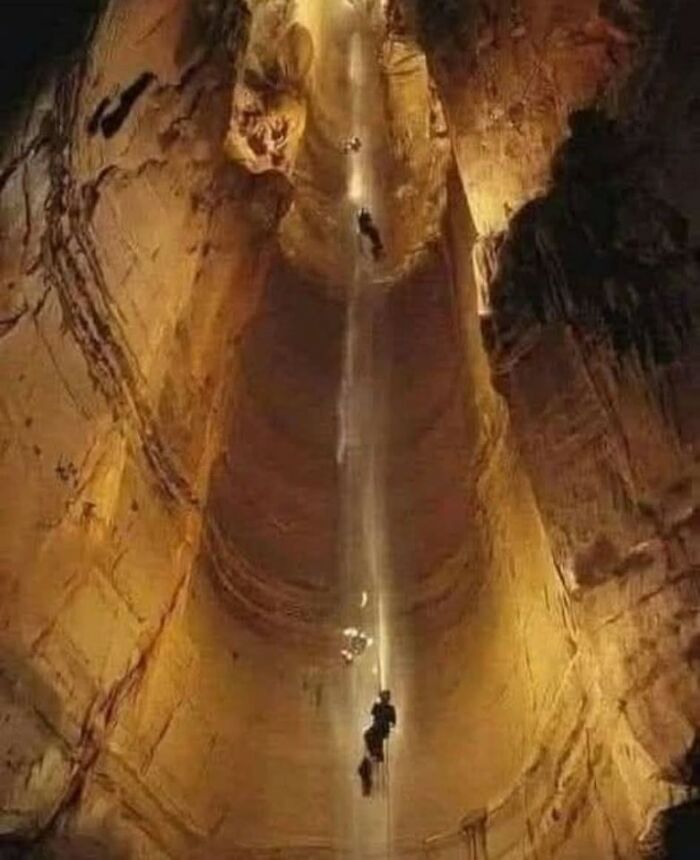
The Voronya Cave, the closest point to the center of the Earth, embodies one of Jules Verne’s most cherished dreams as envisioned in his 1864 novel, Journey to the Center of the Earth—the idea of venturing into the Earth’s interior. While Veryovkina Cave may not take us that far, it does get us pretty darn close to the planet’s core. At 2,212 meters deep, Veryovkina Cave holds the title of the world’s deepest cave.
Located at the junction of Mount Krrepost and Mount Zont in the territory of Abkhazia, a self-declared independent state that is officially recognized as part of Georgia, the cave was discovered in 1968 by speleologists from the city of Krasnoyarsk, who managed to reach a depth of 115 meters. In 1986 a new team from Moscow, led by Oleg Parfenov, reached a depth of 440 meters.
Since 2015, a series of expeditions by the Perovo-Speleo group have continued to push the boundaries of exploration, reaching deeper levels repeatedly until reaching a record-breaking depth of 2,212 meters in March 2018. The cave system is now known to include more than 6,000 meters of underground tunnels.

Firstly, not the closest point to the centre of the earth. Maybe the closest humans have been, but nowhere near the centre. Secondly, it doesn't bring us "pretty darn close to the earth's core". The crust alone can be up to 100km deep (50 × as deep as this cave). The outer core isn't reached until 2900km down, and there's the mantle to go through before you reach it, which is molten rock, so too hot to get through. Whoever wrote this has no understanding of the inner layers of the earth.

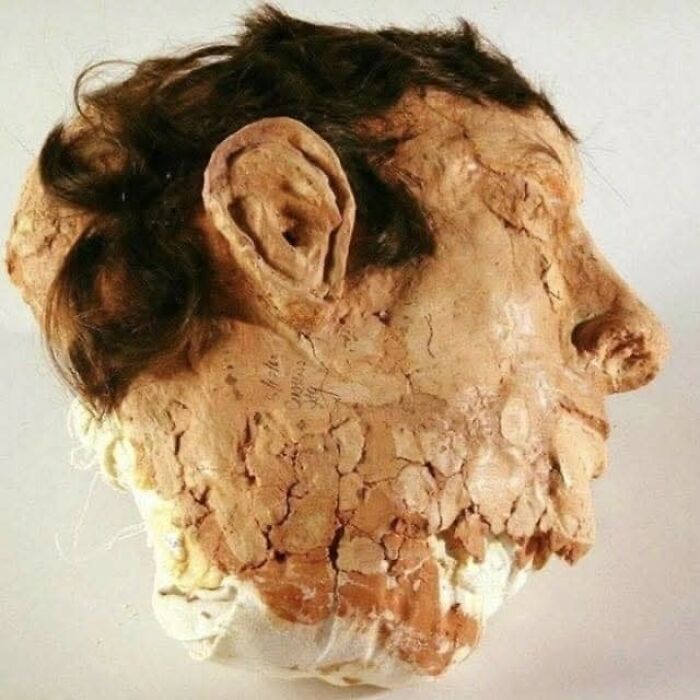
These have degraded greatly from when they were used, but reportedly, at the time the escape took place, they were close enough replicas that even a casual observer would have a hard time differentiating them from an actual person.
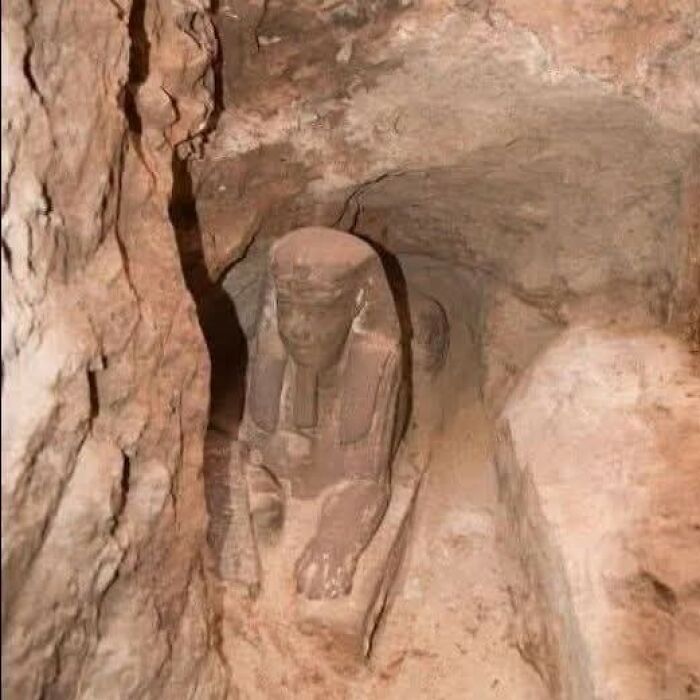
Archaeologists working at the Kom Ombo Temple in Egypt have uncovered a remarkable sphinx statue while managing groundwater levels.
This sandstone masterpiece is believed to date back to the Ptolemaic era, which lasted from 305-30 BC.
The Kom Ombo Temple, dedicated to the crocodile god Sobek and the falcon-headed god Horus, has long been a rich site for historical finds. This newly discovered sphinx adds to the wealth of artifacts uncovered there, offering fresh insight into the art and symbolism of the time. The statue’s craftsmanship reflects the unique fusion of Greek and Egyptian styles that characterized the Ptolemaic period
Intriguing - the rifle might be a "Rifle, Magazine, Lee–Enfield" - making this British; that rifle design was superseded by the "Rifle, Short, Magazine, Lee–Enfield" in 1904 (although the older design remained in use for some time after). Presumably the spring wheel arrangement was to give some of the benefit of a pneumatic tyre with no risk of punctures. https://en.wikipedia.org/wiki/Lee%E2%80%93Enfield#Magazine_Lee%E2%80%93Enfield
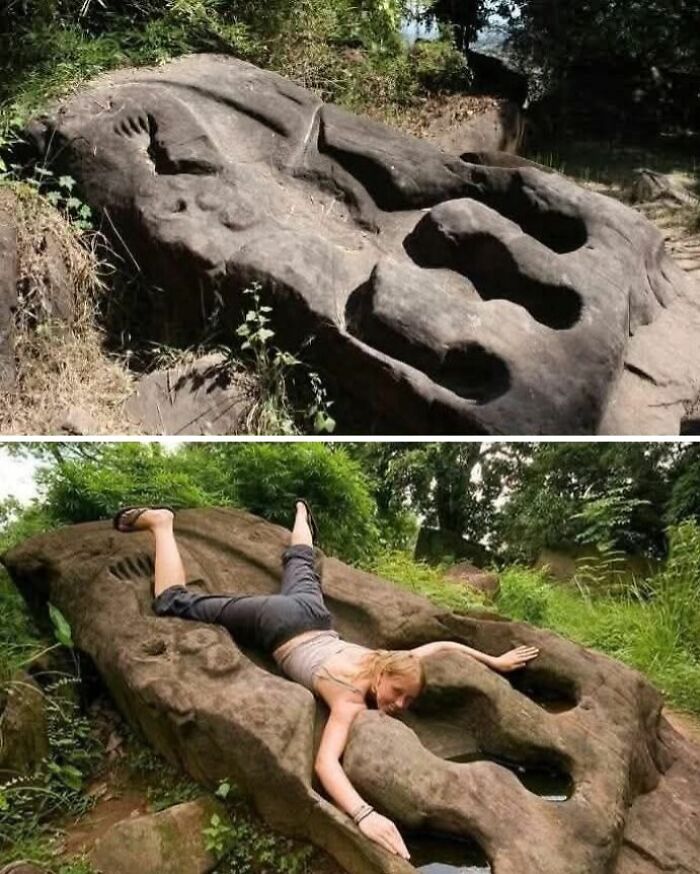
The Crocodile Stone at Laos' Vat Phou temple complex is a carved boulder resembling a crocodile, dating back to pre-Angkorian times. While some speculate it was used for human sacrifices, there's no concrete evidence to support this theory. Vat Phou, a UNESCO World Heritage Site, showcases the evolution of Khmer architecture from the 11th to 13th centuries.
If it is a world heritage site, I am sure it is not to be abused as a playground or a photo op by tourists.
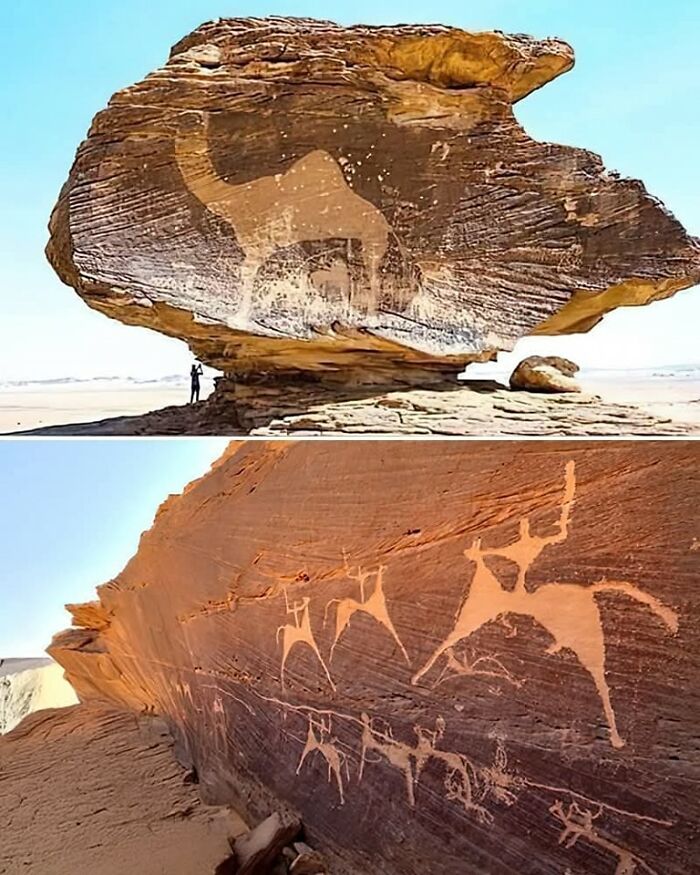
Bi’r Hima is a remarkable archaeological site in Saudi Arabia, dating back about 7,000 years. This ancient location showcases rock art and inscriptions depicting camels, lions, ibexes, and hunting scenes, reflecting a time when the region was greener and more fertile. These engravings serve not only as artistic creations but also as important historical records revealing details about the people who once lived in this desert environment.
Situated along key trade routes, Bi’r Hima was a vital caravan stop where goods like incense and spices were exchanged. The inscriptions here, written in early scripts including Musnad and Aramaic-Nabatean, highlight a cultural crossroads influenced by South Arabian and Nabatean traditions.

The writing has become less flowery than in the last few similar posts. That's good.

I absolutely hate AI descriptions. But yes, it seems many of these have been "deflowered."
Load More Replies... Fascinating - but I suspect there's rather too much AI going on here for my liking. The descriptions mostly don't read like they were written by a real person.
Thank goodness for knowledgeable and, dare I say it, pedantic Pandas.
Load More Replies... The writing has become less flowery than in the last few similar posts. That's good.
I absolutely hate AI descriptions. But yes, it seems many of these have been "deflowered."
Load More Replies... Fascinating - but I suspect there's rather too much AI going on here for my liking. The descriptions mostly don't read like they were written by a real person.
Thank goodness for knowledgeable and, dare I say it, pedantic Pandas.
Load More Replies... 



































 No fees, cancel anytime