30 ’90s Predictions About The Future We Can Laugh At Since None Of Them Were Correct
Ah, the 90's. As with any decade in the past, the 1990's can be an extremely nostalgic time for many to reminisce on. From the classic sitcoms of Friends and Seinfeld to the catchy bops of the Spice Girls and Backstreet Boys, the 90's gave us so many gifts. But aside from being an excellent era for pop culture, not everything from this decade could withstand the test of time. Along with the piles of ginormous JNCO jeans sent off to local thrift stores as they faded out of style, some predictions made in the 90's can be funny to look back on as well.
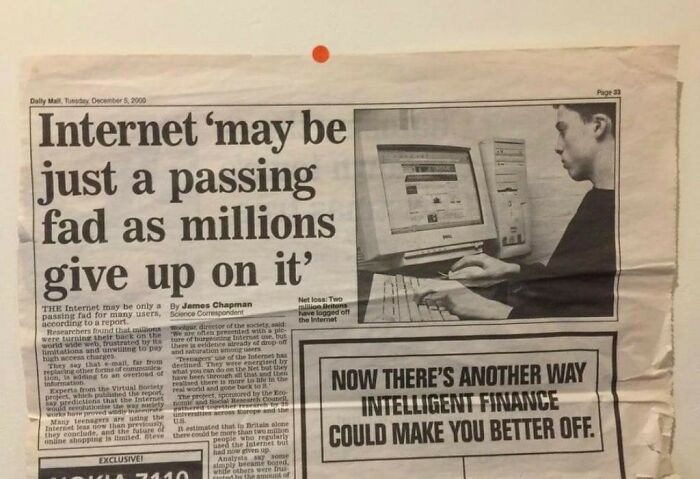
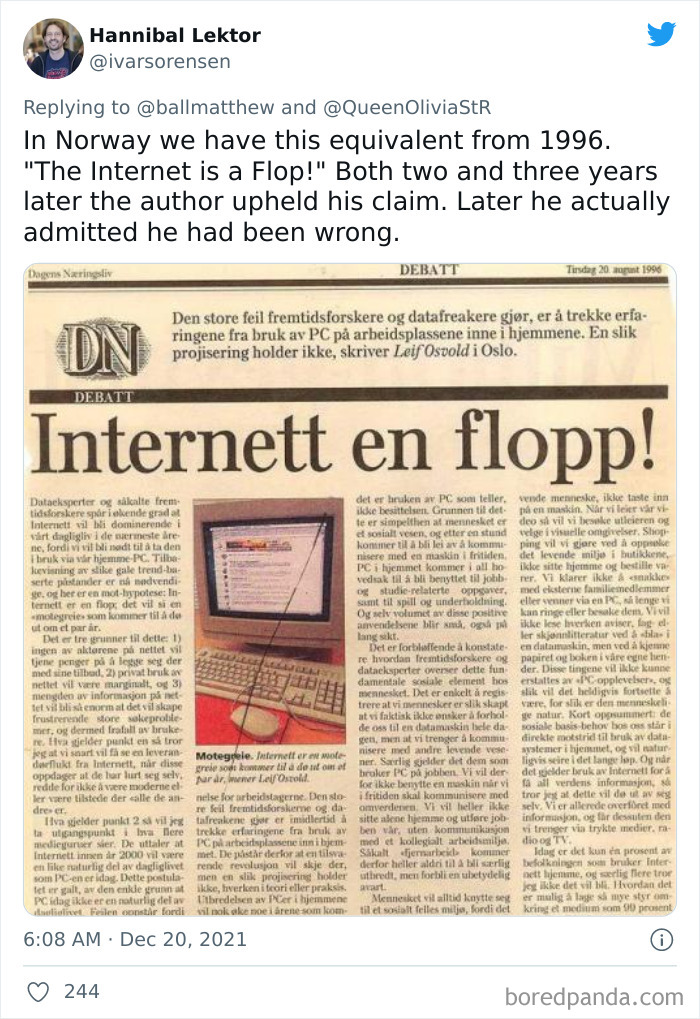
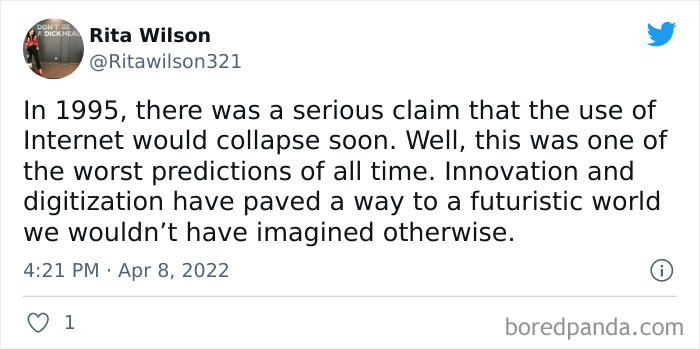
Inspired by a newspaper article from 2000 titled "Internet May Be Just A Passing Fad As Millions Give Up On It" going viral on Twitter, we began digging up other hilariously inaccurate predictions from the past. Although these claims about the future did not ring true, they certainly are amusing to read today. Below you'll also find an exclusive interview featuring Dan Gardner, author of "Future Babble : Why Expert Predictions Fail - and Why We Believe Them Anyway" and "Superforecasting - The Art and Science of Prediction".
Enjoy this comical list we've compiled at Bored Panda, and keep in mind what Forrest Gump so wisely told us in 1994, "Life is like a box of chocolates, you never know what you're going to get."
This post may include affiliate links.
"Two years from now, spam will be solved" - Bill Gates, 2004
But we have a whole folder for it now, see, solved. Lol
Load More Replies...The car warranty police, and 20 spam calls I get everyday beg to differ .
Load More Replies...Hello Dear, my name is Jeremiah. I am a prince from the glorious Nigeria. I am dying of an unknown disease and have no heirs. I wanted to reach out to you kind person to share my inheritance for you are pure of heart. Please kindly forward me your bank account number and social security number so I can send you the money. May God bless you.
I'm still waiting for Jeremiah's inheritance :(
Load More Replies...We've all heard the phrase "history repeats itself". Often uttered by middle school teachers trying to convince their students of the value of their education, this saying does bear some truth. There are clear similarities between Napoleon and Hitler's attempted invasions of Russia, greatly hyped ships sinking such as the Titanic and the Vasa, and The Great Depression compared to 2008's Great Recession. Even much smaller cultural aspects, such as fashion and beauty trends, recycle over time. It makes sense for people to use their understanding of history to make predictions about the future.
However, no matter how well informed our predictions are, they are still merely guesses. Remember the group of people warning that the world was supposed to end in 2012? Thankfully, they were misinformed. But why do we feel the need to make proclamations rather than simply living in the moment and waiting to see what will come? As naturally curious creatures, people are often searching for some semblance of control. "We have a strong psychological aversion to uncertainty," author Dan Gardner told us in our interview with him. "We really hate being unsure! That aversion is so strong that even being told that something bad definitely will happen can feel better than being told that something bad may possibly happen," he explained. If believing we know something about the future can provide a bit of comfort, the temptation to lean into this hope is understandable. Many people love to read their horoscopes and have tarot readings for the same reason.
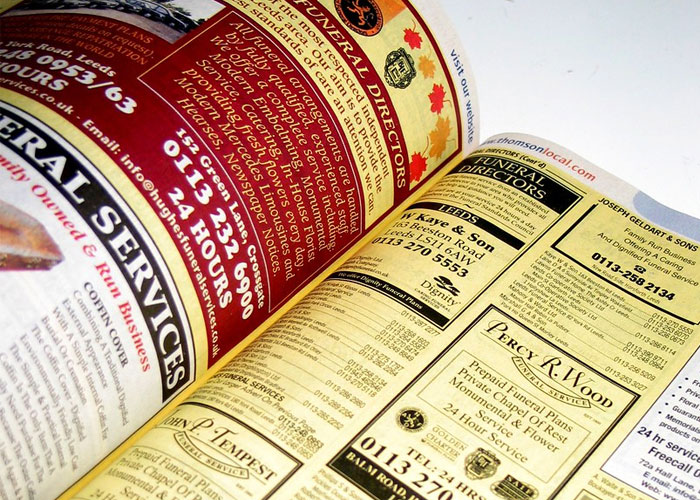
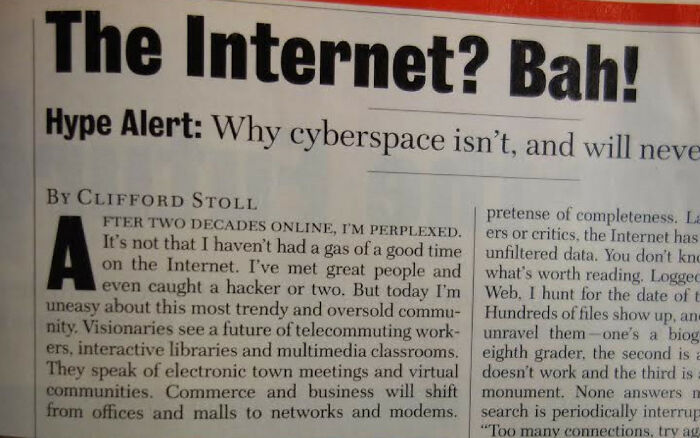
“I don’t believe that phone books, newspapers, magazines, or corner video stores will disappear as computer networks spread. Nor do I think that my telephone will merge with my computer, to become some sort of information appliance.” “Video-on-demand, that killer application of communications, will remain a dream.” - Clifford Stoll
I do miss video stores. Streaming is convenient but the stores were special to me.
Yes I loved them! They always seemed kind of stuffy and sometimes smelled of dust, but browsing all the movies and deciding what to watch was sweet
Load More Replies...How can one person be so wrong about so many things consecutively? Was he being ironic lol 😂
When talking about technological advances you should never say never. This guy is still alive.
I actually miss phone books. It's actually quicker to look up a person or business in a phone book than it is on a computer. Plus you get what you want in your area. I once tried to look up a business in my area, used the zip code and everything. The top 5 responses were for businesses that were in other states.
Wish I could up vote this more. Searching for phone numbers of area businesses online is a near useless endeavor. Even now, not everyone has a website and (believe it or not) not all those that do have basic essential info like location, hours, or even phone numbers listed. "Contact Us" is often nothing more than a script that opens your email app with their email address in place. I've nothing online that beats the ease of use and functionality of an old fashioned directory.
Load More Replies...It does make me sad to think Redbox and a lot of brick and mortar stores are not going to exist in the future do to the internet.
I'd use the yellow pages as a stack of paper to collect my dog's business...
Tbh, I miss flipping through the yellow pages and the smell of the paper. We would look up all the businesses to apply to. We didn't always know if they were hiring. The hidden job market was huge. There were coupons for food places. Every year you would find a new book on your door step. The last time I recall getting one was in 2012, and I kept it until I finally got my own computer.
I worked at a video store during college. It was a chain in the Northeast and most, if not all, went belly up during the pandemic. After I left working there they started selling burner phones and then CBD and shifted away from video rentals and that contributed from them going out of business, as well. When I worked there I loved the people, but hated my manager. He only cared about making money.
When we asked Gardner for his expert opinion on what makes us so susceptible to believing false predictions, he told us to first "be careful about what is and isn't possible about prediction". "We can forecast on smaller scales and shorter time frames," he explained. "But we cannot forecast the really big stuff, over the longer time frames, that we most want to forecast!" A tip he gave to remember this is to "think of weather forecasts". "They're actually quite reliable looking a day or two or three ahead. But looking weeks ahead, they're useless. How far ahead we can forecast varies greatly by subject matter but the bottom line is this: Our ability to foresee the future is quite limited -- and it is only a tiny fraction of our desire to foresee the future!"
He went on to say that there is a clear root cause for people falling prey to predictions that they absolutely should not believe, predictions like "here's what the global economy will look like in 2050!". It goes back to psychology.
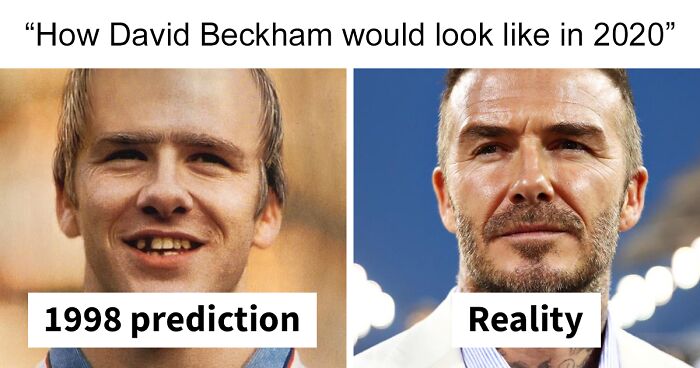
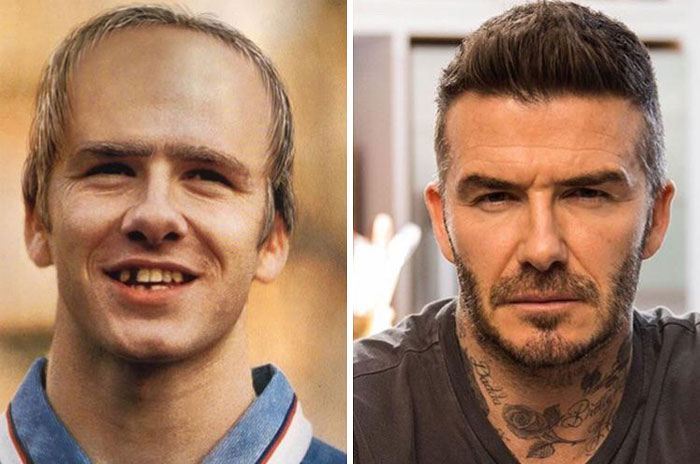
In 1998, FourFourTwo magazine predicted David Beckham would look like this (left) in 2020. This is how he actually looks like

What moron assumed that he wouldn't have access to good dental care, that he was guaranteed to go bald, and that in 2020, this very rich and very famous London-based superstar, would, for some reason, decide to style himself like a lower-middle class American dad in '89?
You can say; "This is how he actually looks" or "This is what he actually looks like".
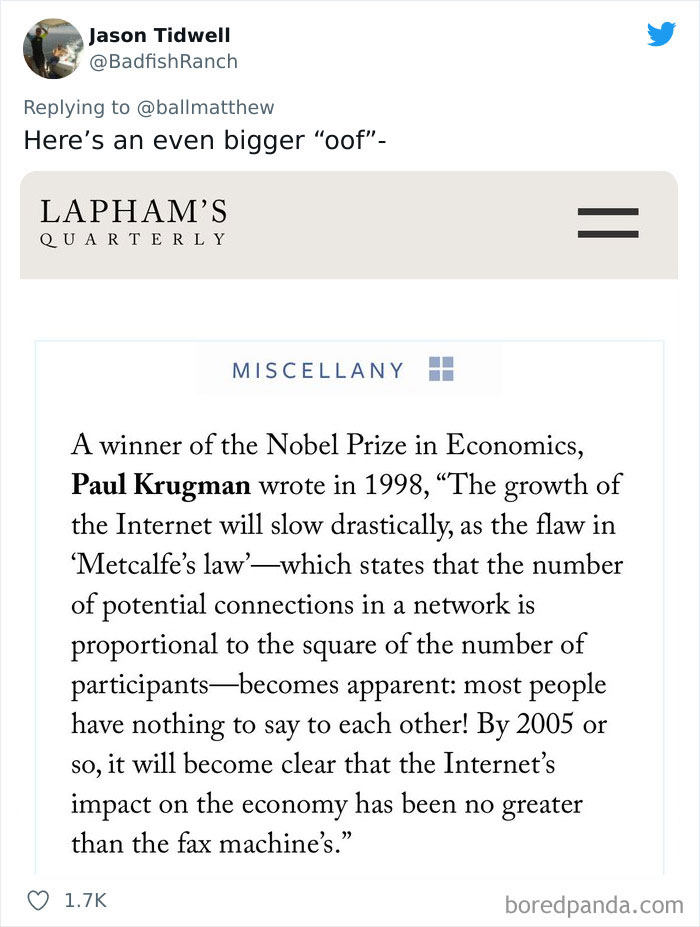
Well it's true that people don't have nothing to say but that is not stopping anyone from saying it.
That's what SHE said! :P Downvote if you want i guess, it only goes with Trillian's point.
Load More Replies...To be fair in the Econ field Krugman is known as a joke who is wrong more times than he is right. He won his nobel for work he did isn the 1980s and early 90's, has had only one serious academic paper of note since 2002 (his old grad school advisor is in his 80s and still publishing award winning work), and even more so, in his NY Times column he has written articles essentially disowning his work that won him the nobel.
Do you think that makes him a bad economist or do you think economy-related predictions are inherently difficult to make? I was surprised to see him being described as a joke, so I looked into it a bit and I found a lot more accomplishment (in addition to the 2008 Nobel) than your comment implied. I also found the criticisms of his having had wrong predictions, but I guess I don't know the significance of that. Do economists reject other economists when their predictions don't pan out? Just curious.
Load More Replies...Social media, popular comment sections, Reddit, and memes took the place of the anticipated civil communication Krugman was talking about. He just couldn’t have imagined where the internet would be today.
"When we are confronted with some major, frightening changes-- like when a crazy man takes office or a pandemic breaks out or a war erupts -- we look into the future and we see that there's a huge number of paths the course of history may take. There's so much uncertainty! That is profoundly unsettling so we go looking for something that will sweep away the uncertainty and replace it with the feeling of knowing." Gardner went on to explain the various coping mechanisms people are likely to take when overwhelmed with the unknown. The first example he notes is finding "a particularly dogmatic form of religion". "Another thing that can replace uncertainty is a conspiracy theory that claims to explain everything. And there's good evidence that interest in dogmatic religion and conspiracy theories goes up during heightened uncertainty."
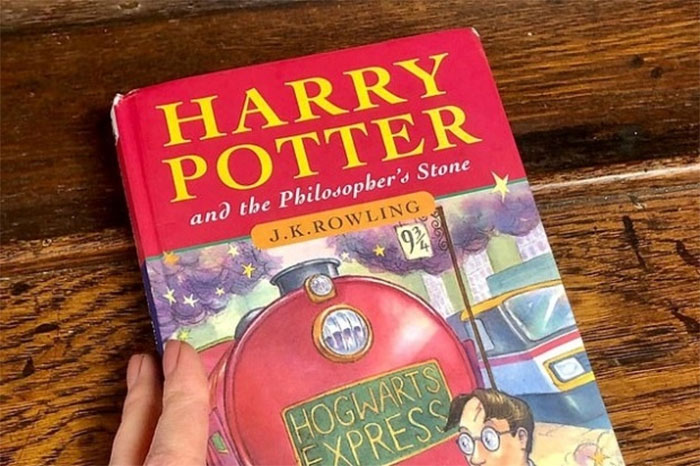
“You’ll never make any money out of children’s books” – Advice to JK Rowling from Barry Cunningham, editor at Bloomsbury Books, 1996.
They are just jealous that the Nigerian Prince is going to give me $2 million and not them.
Load More Replies...A lot of people who work in publishing are full of crap. I found that out firsthand.
He was mostly right though. It's incredibly hard making money with books and MUCH harder making money with children's books. Rowling lucked out, but 99.9% of children's auhors don't.
Load More Replies..."I don't know how to do anything new and different so instead of admitting that I tell people it can't be done" - Also Barry Cunningham, probably
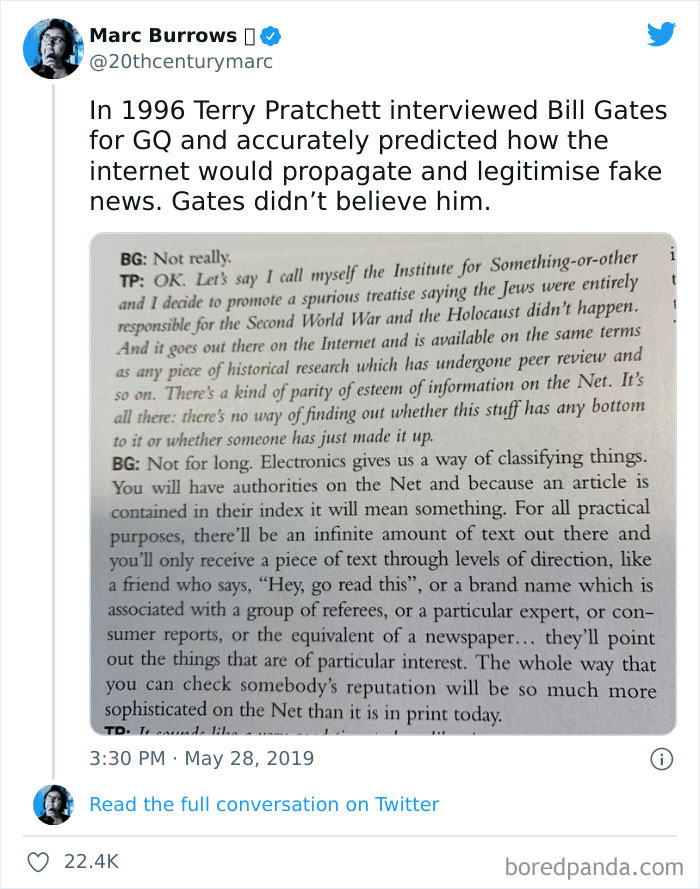
“The whole way that you can check somebody’s reputation will be so much more sophisticated on the Net than it is in print today” - Bill Gates

It's not that Bill is wrong, it's just that people don't want to prove themselves wrong. People have beliefs and actively seek information that confirms it and ignore when it says it's wrong. It's called confirmation bias and it pairs nastily with cognitive dissonance.
Yes any "authority" that is available is sneered at by the loonies who can't stand to hear any contrary information, and branded as a tool of the conspiracy. I mean I live in a country where we've had our previous president yelling that any information that doesn't come out of his mouth is fake and also that the things he literally was seen and heard saying the day before was completely fake. Also that doctors, teachers, scientists, librarians are all evil because they know how to do things like math. And people still worship that guy like the second coming of Jesus. There is literally no amount of "authority" that will stand up against such horrifying, barbaric stupidity.
Load More Replies...Sir Terry Pratchett's view on things and situations was always on point. The way he described complicated subjects was easy accessible. His intelligent and sophisticated humour is still missed by many people. What a great loss.
I freaking love him. Bored Pandas, if you want to know more about his view point on this subject read his “Going Postal” series. He’s a satirist and hugely entertaining. I will warn you that these books are high fantasy, which I love but maybe you won’t. It strikes some as too juvenile. Just put your skepticism aside for a few chapters and you will see that water is deeper than it may appear. The man was brilliant in every sense of the word.
Load More Replies...I mean Gates is right in that I can much more easier check if this piece of information have any legs to stand on by checking multiple sources on the internet.. if I find some passage on some book and needed to check it by not using internet I would have to launch full on investigation, go to libraries, call authorities on the subject matter etc. Sure maybe after all that work you can be pretty sure if the information was right but I rather google something in 5 minutes than use days to confirm something.
And Pratchett is right in assuming that nobody will bother to do it.
Load More Replies...Lastly, he told us, "A third thing that can sweep away uncertainty is experts who make predictions." But not just any expert will do, he elaborated. "The sort of expert who says 'maybe' or 'it's possible' a lot will not sweep away uncertainty." Only an extremely confident expert will put minds at ease. "They KNOW what's coming! And they have a simple, clear, conclusive story to explain it. That sort of expert gives us the certainty we psychologically crave." This confidence can be comforting initially, but Gardner is sure to note the facts. "Unfortunately, research also shows that the predictions of that sort of expert are especially likely to be wrong."
“I suspect Big Brother won’t have an easy time tracing us. … Our privacy will be protected, as it always has been, by simple obscurity and the high cost of uncovering information about us.” - Clifford Stoll, 1995
As far as FB knows, I am an 83 year old christian man from botswana so there.
Advertisement algorithms believe I'm a balding 40-something man with erectile dysfunction.
Load More Replies...To be fair, nobody could have imagined that we would be stupid enough to give away all our information, in exchange for a picture of how we would look like as a cat.
I did. I'm actually quite surprised more people haven't accidently killed themselves out of stupidity
Load More Replies...Cliff failed to consider how willingly people would give up all privacy and offer every bit of information about themselves.
If he said that in 1995 that was just the statement of someone who knew nothing about computers. Stick to your day job, Clifford!
I have had fake persona on the internet for about 30 years. In fact, I use multiple browsers for multiple people that are all me. And VPNs.
Stoll left a self-deprecating comment: "Of my many mistakes, flubs, and howlers, few have been as public as my 1995 howler ... Now, whenever I think I know what's happening, I temper my thoughts: Might be wrong, Cliff .. https://en.wikipedia.org/wiki/Clifford_Stoll
Hey! it's not total rubbish! use it to start fires!
Load More Replies..."Yes, everyone has given up on it," I say on one website alone carrying countless users
according to the "top users" section, there are a minimum of ..... huh, 299720 users. each of them has at minimum of 1 upvote. Probably a round 300000 actual users, and a TOOOOON of bots.
Load More Replies...Ewww, this is from the Daily Mail. The Daily Mail isn’t even worth enough to be used as toilet paper.
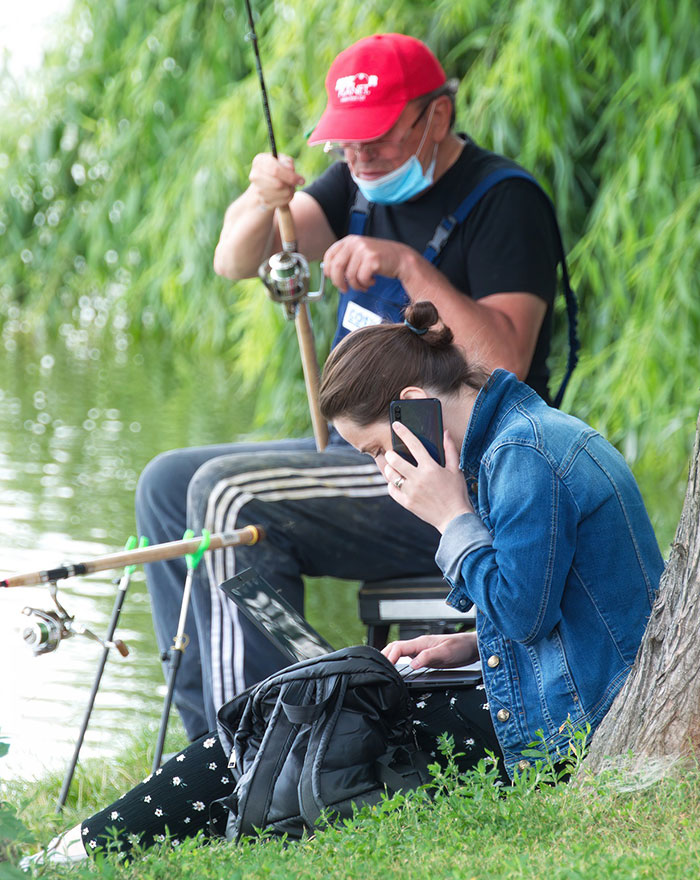
"No matter how inexpensive the machines become, I still can't imagine the average user taking one along when fishing." - Erik Sandberg-Diment
I interpret this to mean that you would not choose to take an item that may cause interruption to such a peaceful pastime as fishing. There are holidays available that take you completely away from technology and return to a more traditional style of living.
I understand that fishing is a relaxing recreation for many, but can we acknowledge that there is nothing "peaceful" about luring a fish out of water and suffocating the life out of it before you mutilate and possibly eat it?
Load More Replies...He had a point back then - why would you bring a 100-pounds plus of computer, monitor, mouse and keyboard with you on your fishing trip? And even considering the primitive laptops back then - there was no internet connectivity so why would you bring one?
Or to the restroom, out to eat, to the doctor, school, work, airplane, ect........
When asked if humans have become any better at making predictions in recent years, given the rapid advancements of science and technology, Gardner replied, "Yes, we have seen some improvements in forecasting thanks to science and technology. But they tend to be small, incremental improvements." "And every additional advance is harder to make than the improvements that preceded it," he added. He used weather forecasting over the past 100 years as an example. "The bottom line: We are somewhat better at forecasting than we were in the past but we are still pretty bad at it and the big things that we most want to forecast -- 'What will Russia look like in 10 years? Is the era of globalization over? Will our children be poorer than we are?' -- are all far beyond our power to predict."
"The idea of a personal communicator in every pocket is a 'pipe dream driven by greed'." - Andy Grove, then CEO if Intel (1992)
I know. And 10 years later everyone I knew had cell phones, and in 92 it wasn't a new concept.
Load More Replies...The anti-visionary ... wonder if Parkinson's had started and was already affecting his judgment, he did some pretty cool development work earlier in his career.
All you had to do was read some science fiction. Sci-Fi authors are pretty good at predicting future trends.
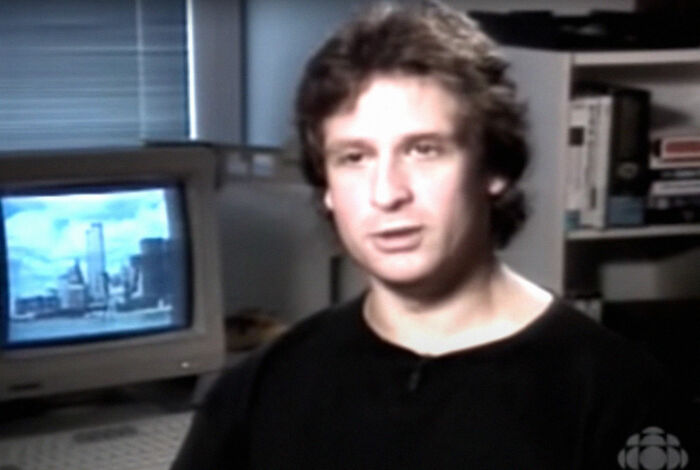
In 1993, internet expert John Allen told CBC that he believed that our own moral code and internal rules would stop people from doing horrible things online.
"There's not a lot of cursing, or swearing. One would think if you're anonymous you could do anything you want, but people in a group have their own sense of community and what we can do."
I love how quickly this particular phrase seems to have taken over in BP comments. ;)
Load More Replies...Yeah, when they made it accessible for the morons too this flew out the window
Did that man learn nothing about history? Humans have treated each other horrible in real life. Why wouldn't they do it in vr?
He was a bold faced liar... the internet was FULL of that, even then
You can go back even farther than the net, say your average serial killer documentary from the 70s or 80s, but we do not have, nor have we ever had a standardized "moral code," but rather personal moral codes that vary greatly. The codes are informed by our culture, but are never dictated outright by it. We have laws, but they are broken all the time. We have rules that are broken, social encounters that deviate from the basic expectation, etc. Simply trusting people to regulate themselves has proven mostly disasterous in the internet era.
Clifford Stoll being sceptical about online shopping, which is basically how everyone buys stuff now: "We’re promised instant catalogue shopping–just point and click for great deals. We’ll order airline tickets over the network, make restaurant reservations and negotiate sales contracts.
Stores will become obsolete. So how come my local mall does more business in an afternoon than the entire Internet handles in a month? Even if there were a trustworthy way to send money over the Internet—which there isn't—the network is missing a most essential ingredient of capitalism: salespeople."

He caught a cyber spy in the early days of the internet so that gave him a lot of clout. Clearly he lost track of the level of his expertise.
Load More Replies...Salespeople can be experts on selling or on the products. The former are advertisers and scammers, competently and adequately replaced by spam. No loss there. I do love and miss the latter. Stores have been losing expertise for decades (sales numbers becoming more important than satisfied customers), killing off the main argument for people to shop local instead of online and then complaining about disloyal customers
I do like internet shopping BECAUSE there are no sales people... (the latter you mention are a rare breed and sorely missed).
Load More Replies...It seems to me he was good at electronics but not canny about software. I've known many hardware guys like that - they really don't wrap their heads around the capabilities of software. I knew a guy who could build a whole circuit board by hand but couldn't figure out how to edit a notepad document. He kept shutting down the whole computer, starting it back up, and retyping every time he made a typo.
Boy Clinton Stoll racking up some points here! I think he should stop protecting things and retire to his cave!
Dude! Can you give the internet a couple years to develop! Stop shooting at down peoples ideas!!
NOT dealing with salespeople is the reason online shopping exist, sweetheart.
Well, they solved the problem of people not being able to try on clothes by letting them buy 3 sizes and then throwing two of them away while being refunded. ;(
Given his expertise on the topic, we asked Gardner if he finds it difficult to avoid making predictions in a society that seems perpetually obsessed with what is coming next. "The really frustrating thing is that it's impossible to NOT make predictions," he explained. "All of our decisions, explicitly or implicitly, are based on expectations of future conditions. That is, forecasts. There's no way around it. If you set a time and place to meet someone for a beer after work, your expectations of when work will end, how much traffic there will be, how busy the pub will be, etc, are all part of your decision. And they're all forecasts." His advice in a world consumed by prediction is to "recognize that we are making forecasts all the time and learn to distinguish between those that people can reasonably make (when traffic will be busy, for example) and those that we cannot possibly make with any accuracy (how strong the economy will be in a decade)." When it comes to making important decisions, Gardner says that we must "develop the habit of thinking that the future could unfold across a very wide range. So it's not one future you want to predict and prepare for. It's a great many futures. Or to put that more simply, for the big picture stuff, we have to stop thinking of 'one future' and think of, and prepare, for 'many futures'."
If you are interested in delving deeper into the elusive prediction after finishing this article, be sure to check out Dan Gardner's books or his newsletter "PastPresentFuture".
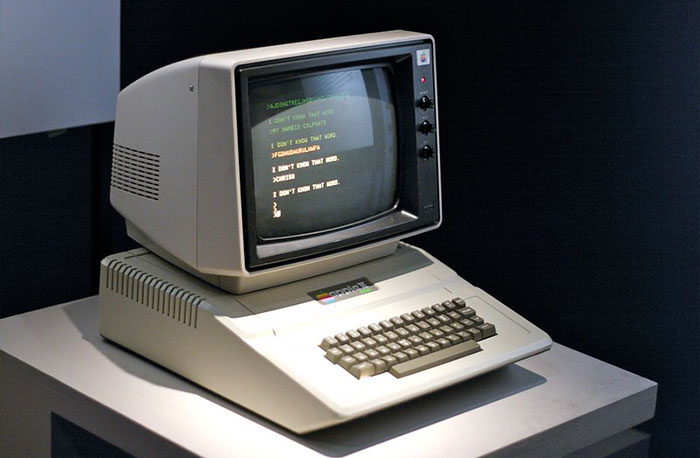
"...Apple [is] a chaotic mess without a strategic vision and certainly no future." (1996)
They did develop a strong strategic vision - selling over-designed products at ludicrous prices and ripping off their clueless customers at every step in every way imaginable. Has served them very well.
Load More Replies...Had Microsoft not bailed them out to maintain their market for Office for Mac, Apple would have gone bankrupt.
You do know why they did that right, wasn’t some kindness they wanted the competition because I’d the ongoing anti-trust suits at the time. Microsoft had no way to know that apple would turn around and be what it is
Load More Replies...And still mostly right. They just happened to create one good piece of tech after decades of failure
Truly, it almost failed until the board kicked out Steve Jobs, then grew and almost failed again and they brought back Jobs who took credit for the iPod that he had no hand in designing.
Steve Job came back to Apple in 1996 (he cleaned up the mess) and 1 years later, Bill gates invest millions
He did it to hedge against the anti-trust suits. That deal made MS look good
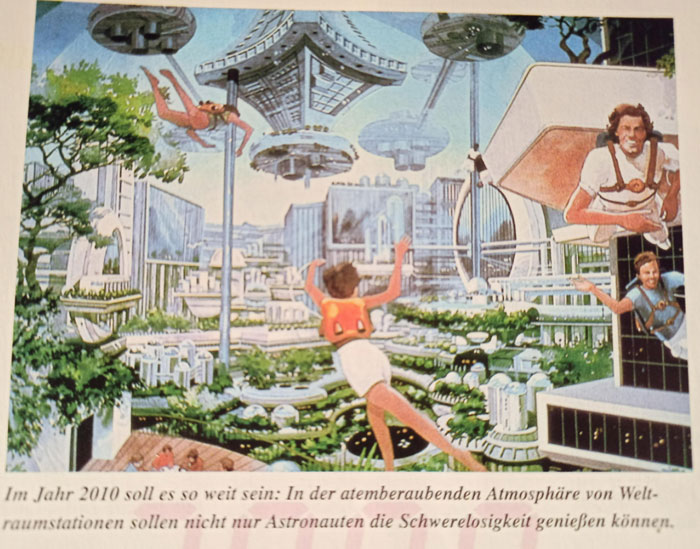
Load More Replies...This book from 1999 thought this was gonna be space in 2010. Needless to say, that didn't happen.
I was really hoping that by now we would be living like the Jetsons or at least like Back to the Future 2
George Jetson will be born this year. From "Den of Geek": " In the episode “Test Pilot,” which aired on Dec. 30, 1962, a physician named Dr. Lunar tells George to expect to “live to be 150,” which should give him another “110 good years.” The joke is an incidental one, remarking on the then-expected expanded life expectancy, but it concludes that the character is 40 years old when The Jetsons debuted. Now, if you carry the one and take out the commercial interruptions, the calculations find George Joseph Jetson was born on July 31 or August 1, 2022."
Load More Replies...This is a German illustration and from the art style, font and overall design this looks way older than 1999. More like the late 1980s. The time skip of only 10 years doesn't fit the outlandish ideas either.
This is more like retrofuturism which was popular a little earlier than the 90’s.
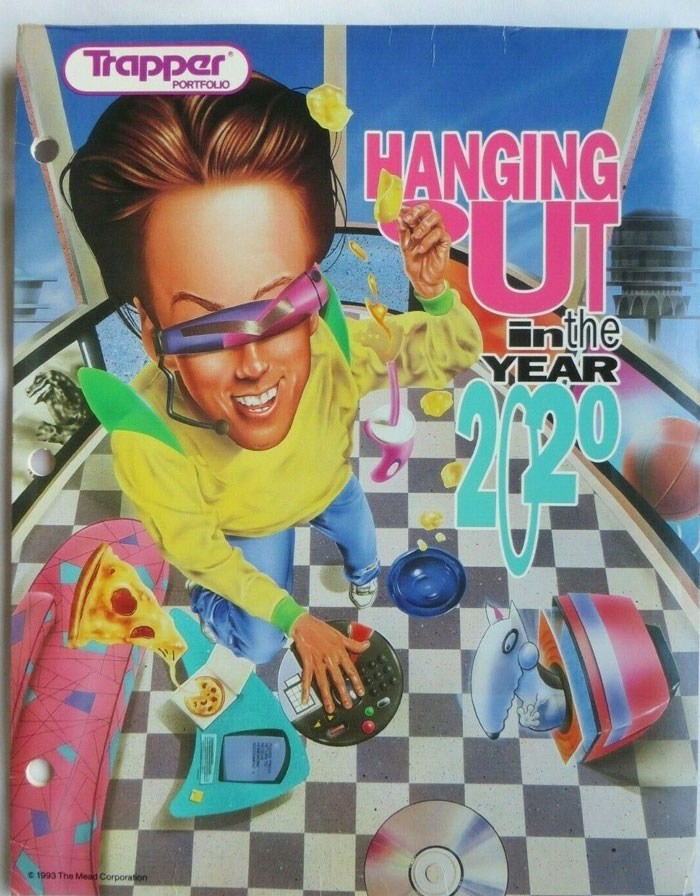
"HANGING OUT IN THE YEAR 2020" Trapper Keeper from 1993
And consuming all kinds of entertainment there at home (even if the devices obviously are not spot on)
Load More Replies...that picture literally could have been taken in my living room in 2020. Damned floating pizza was always a problem. So were dogs emanating from my TV
He's alone, inside, and clearly playing on a VR headset, so this is right. Shame about us not having such bodacious furniture, though.
Unfortunately, making false forecasts is still the norm rather than the exception. Our brains are full of biases that make it extremely hard to make predictions, even when adequate information is available. "For example, psychologists have shown that people very easily convince themselves that a random bit of good luck was, in fact, the result of skill," Gardner mentioned in a previous interview. "Even when the task at hand is guessing which side of a coin will turn up when it is flipped - the very symbol of randomness - people are easily convinced that their correct guesses were the result of skill, not luck."
No kidding can't live without it. Sans internet, I don't have access to my grades, some classes, syllabi, or even next semester registration.
Not all false. IP address protocol has been changed so much.. With the advent of IPV6
This was a fringe opinion, the popular opinion was always that internet will revolutionize everything.
This was likely about IPv4 running out of (external) addresses due to using four sets of numbers (192.168.1.1) where each was limited to 256 which equates to just over 4.1 billion values. That was solved a decade plus ago by creating IPv6. Though not widely used internally (at home, small businesses, etc), on the large scale, it will be pretty much impossible to run out with 3.4x10^38 possible values.
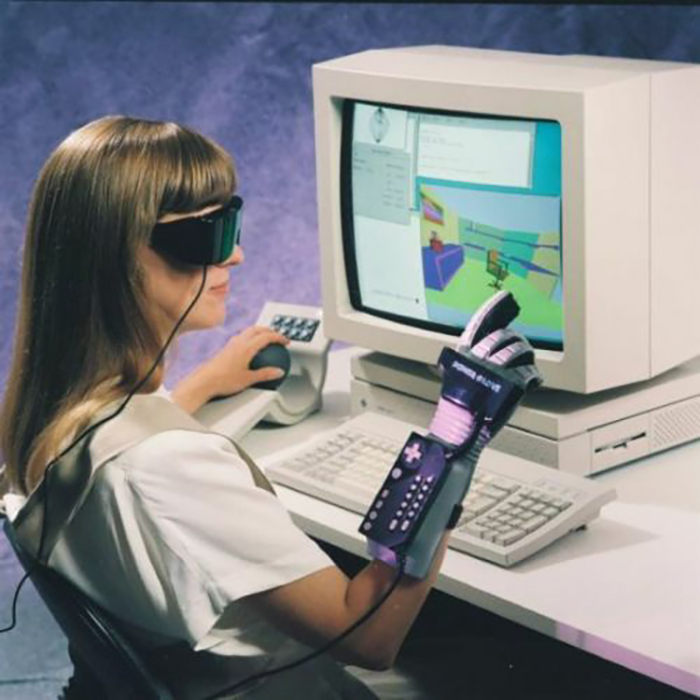
Virtual reality, 90's perspective
It was the Nintendo Power Glove for NES, released in 1989. You could control games by moving the hand and individual fingers. It was not used for virtual reality. https://en.wikipedia.org/wiki/Power_Glove
Load More Replies...but this is a power glove from 89 ... Plus we had VR since the 70s and prototypes before that.
Hm yes, sunglass-sized headsets while we still can't get computers to be less than two feet thick.
Not at all what my son looks like with his virtual reality gear hahahaha
“Admit it, you’re out of the hardware game.” - Wired Magazine challenges Apple to face up to the ‘fact’ that it can’t compete with other gadget makers, 1996

It only took 10 years after that to come up with their flagship and savior. Hooray!!!
In 1996 this was absolutely true, the Newton PDA failed spectacularly (which is what the Wired article was primarily about). It took another 10 years to create the iPod.
This one doesn't really belong here, because in the 1990s Apple WAS out of the hardware game. Their System 7 was inferior to Windows NT and Windows 95. During the 90s Microsoft was outselling Apple by 10 : 1. We all know that Apple is back to being a great success now, but in the 90s? No chance.
In her article "The Psychology of Prediction", Morgan Housel sheds light on many facets of our belief in predictions. One thing she notes is that "credibility is not impartial". "Your willingness to believe a prediction is influenced by how much you need that prediction to be true." For example, when we are in desperate situations, we are much more susceptible to believing grand predictions. A notable historical example of this is The Great Plague of London in 1665.
“When high-bandwidth links allow every home to access animated, talking, holographic computerized encyclopedias, I can’t help thinking that kids still won’t use ’em.” - Clifford Stoll
I commented in one of the other posts - he clearly was a hardware guy and an astronomer who didn't understand much outside of those two realms
Load More Replies...I've seen plenty of teenagers asking easily answered questions of random people on social media instead of taking ten seconds to look it up on Wikipedia or Google it, so... I guess he was right.
In a world awash with flat earthers and anti-vaxxers, who says he wasn't right?
Load More Replies...I fought for my 30 minutes of computer time just to draw pictures and scribbles.
Yeah right. I bought both my granddaughters iPads when they turned 2. They both took to the internet like it was built into their brain.
In the September 4, 1998, edition of the Amarillo Daily News in Texas, writer Amy Tao made a few predictions about what life may look like in 20 years—most importantly stating that human cloning will be commonplace. "Cloning will be a big thing. Despite moral activist protests, clones of animals and human beings walk the earth. Don't feel like going to school? Send your clone! What if your dog dies suddenly? Just take out the clone of him!" she writes.
Yeah and it’s takes hundreds of surrogate mothers to have a successful clone
Load More Replies...Why can't people understand that a clone can never be exactly the same as the original? The clone will be born, raised, fed, cared for and socialised differently. This would then cause them to have different values and attitudes.
You'd be blown away to see how similar twins are that were separated at birth. Lots and lots of stories about these people finding each other having the same favorite food, band, movie, clothing style (identical outfits in some cases!) etc. Real specific things too, like a farting in elevators and blaming it on other people as a joke. The last time I read something about this it said that it was 70/30 nature/nurture. Pretty cool stuff.
Load More Replies...Cloning yourself would be a terrible idea. Unless it comes out with your maturity, experiences and learning, you'd just be making a baby but with extra steps. And then you'd have to figure out how to age it faster then slow it down so it doesn't die from old age super fast.
Journalists trying to write about science topics is almost always extremely embarrassing. I worked in journalism and with journalists quite a bit and most were just abjectly horrible at any kind of scientific thinking. This was some clueless garbage even for a journalist though. Can't blame Amy for not knowing that cloning has problems, nor that governments would clamp down on human cloning so hard. But these ideas that humans would just use their clones like robots is staggeringly ignorant and stupid. For the love of god had she never heard of twins and triplets? Does she really think one twin gets to be the "real one" and order the other one around like a mindless robot?
I am not sure what Amy Tao's background is, but if you were able to clone yourself, you would end up with a newborn baby who would be similar to you. Nothing more. The environment, both in the womb and after birth have a huge impact on development. I think your math teacher would notice that a newborn wasn't you, even if it was standing on top of others newborns while wearing a trench coat.
It would still fool the kid selling tickets at the movie theater.
Load More Replies...Idk where i stand on the whole cloning thing, but i DO remember how the world almost came undone when Dolly the sheep was cloned in the 90's ( i think).
Why do I find this cloning concept to be extremely terrifying?? like bone-chilling.. good lord..
Futurist Ray Kurzweil predicted in 1999 that human life expectancy would rise to "over one hundred" by 2019

This could be closer to true if health care was available to more people.
Absolutely spot on. With fairness in nutrition and health we could be living happy lives until 120 or possibly older!
Load More Replies...He did very poor math on that, and clearly needed to brush up on how statistics work. Or, more likely, he was only interested creating a sensationalist statement to get attention. It is true that for some time, in most countries, the over-100 demographic has been the fastest growing one.
There is an article in one Student textbook we use. Well, the book is from 2008. Thankfully, we are switching to new ones.
Why do we want to live to 100? Most of us will be in a right state by then!
When writing about the Great Plague of London in 1722, Daniel Defoe wrote, "The people were more addicted to prophecies and astrological conjurations, dreams, and old wives’ tales than ever they were before or since … almanacs frighted them terribly … the posts of houses and corners of streets were plastered over with doctors’ bills and papers of ignorant fellows, quacking and inviting the people to come to them for remedies, which was generally set off with such flourishes as these: Infallible preventive pills against the plague. Neverfailing preservatives against the infection. Sovereign cordials against the corruption of the air." Over the course of 18 months, this plague wiped out a quarter of London. It was only natural for these people to grasp to any sliver of hope they could find.
"By the turn of the century, we will live in a paperless society." —Roger Smith, chairman of General Motors, 1986

This isn't that far off... Didn't some American schools stop teaching cursive?
Not only can my teens not read cursive, their handwriting is terrible because they barely have to write at all.
Load More Replies...I haven't even gone through a whole pad of post-its since I switched to working from home two years ago, so this one is spot on!
Reminds me of a quote I read years ago: “The paperless office will be as successful as the paperless toilet”
It was very frustrating that even up through 1999 people were saying "by the year 2000 this or that will happen" about things that would clearly take many more years to happen. Like they had been hearing that phrase all their lives and were so stupid they couldn't think of another way of stating what the future would look like. Conan O'Brien was making fun of this when he did "in the year 2000" sketches well into the 2000's where they'd wear "futuristic" outfits and make ridiculous claims about the future which somehow was still "the year 2000"
Never in offices where printers are available and you can print as much crap as you want on the company's dime.
There is a printer in my office but is rarely used. Usually when I see someone using it, they're printing up some paper form they need for something in their personal life. All our communications and documents are digital. I don't think I've printed a work-related document in well over a decade.
Load More Replies...Patient files, clinic notes, basically most healthcare documentation. In the mid 2000s it was "hospitals will be completely paperless by 2020". I was looking forward to not sifting through files to copy, scan, upload, file because it is so much easier to read typewritten patient notes than someone's chickenscrawl in a hurry. Yet in most places we are even further away from having everything electronic because of scared individuals in management and policy creation positions refusing to see that they do not need to keep us printing out everything, writing on file notes, scanning the paper then filing the physical AND electronic copies "just in case". Instead having programmes where you enter information directly means you can bypass a great deal of paper based record keeping. We have the downtime box for a reason but most places use them in the most inappropriate ways or have no idea where they are kept and just do not document at all if the net goes down
I'm seeing a lot of comments about being "paperless". Ig if I'm "un-cultured" or live in a hole but I didn't think that this had become a reality. I was in third grade around when almost every school still taught cursive, and I'm pretty proficient in it. It's kind of sad that nobody knows cursive anymore. You may not use paper much, but you can't use some computer fonts if you can't read them. Also, people need signatures. You gotta sign stuff.
It's so weird to realise just how boring and empty the internet was then. It was like a box of books no-one wanted to read. I mean there was a search engine (Explorer) but no content. None. You could type in MUSIC, I mean (what) and nothing would result. I can't even begin to describe how pointless it seemed.

Yeah but we had MSN chat rooms which was the most brilliant thing ever (I thought, as a child…looking back, I had NO business being on there. And there were a LOT of paedophiles online).
Load More Replies...that guy looks like he hosts those boring office parties that nobody likes but goes to for the free coffee. smh
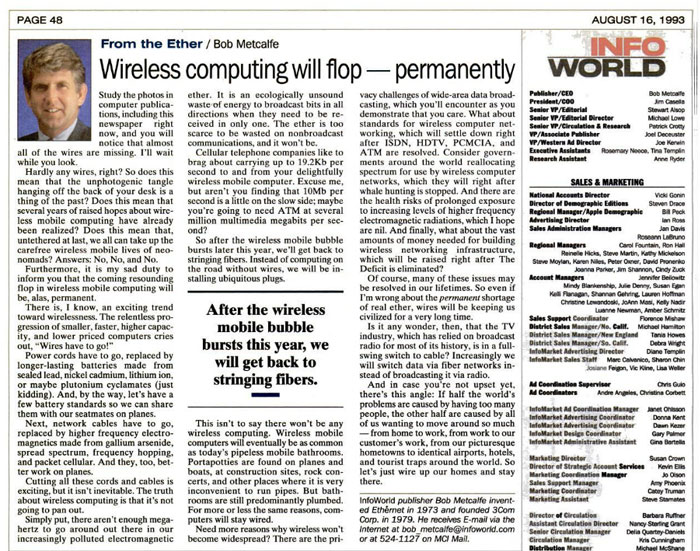
He invented Ethernet, so he had a "wired" bias.
Load More Replies...Another factor is "outcome-irrelevant learning". This is when people essentially cherry pick information from a historical event to confirm their own ideas and biases. It reinforces one's confidence in their predictions through the belief that evidence is on their side. History does repeat itself, but often we do not realize a historical event is recurring until it has already begun. Even our instincts create biases. One 2008 study investigating how "free" our decision making truly is found that "the outcome of a decision can be encoded in brain activity up to ten seconds before it enters awareness". It must be extremely difficult to predict the future with a range of subconscious biases clouding our judgement.
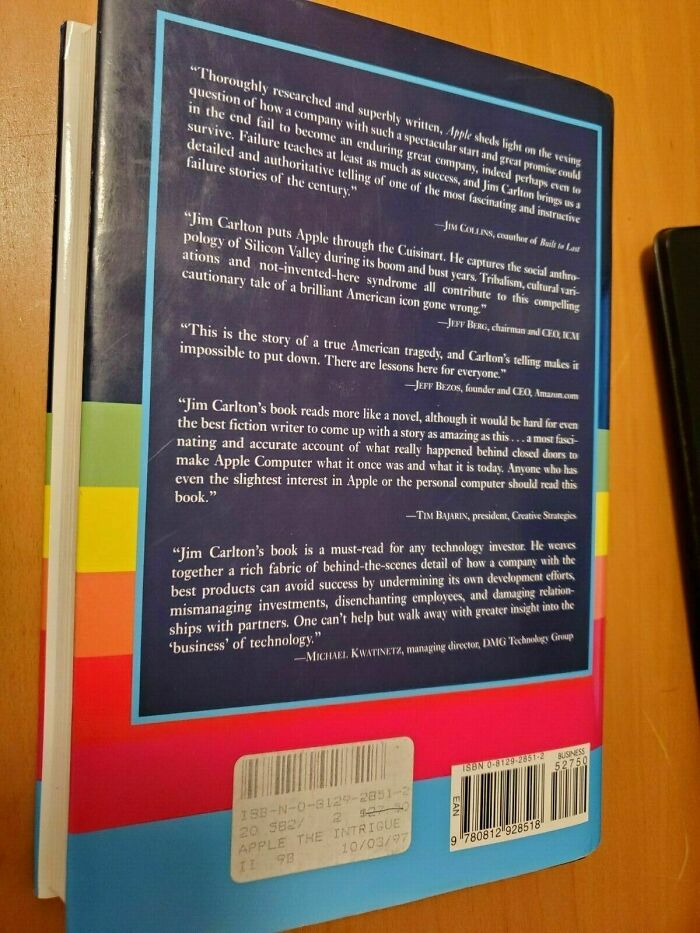
Jeff Bezos in the late 90s, describing Apple Computer as an "true American tragedy", among other choice quotes of what caused Apple to bite the dust
And here I just went to put flowers on Apple's marker the other day. Such a tragedy.
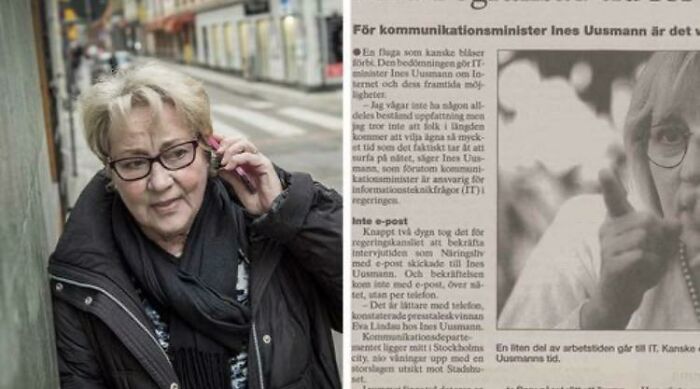
Ines Uusuman, the Swedish minister of communication said in 1996“Internet is just a temporary fly”

I had a friend telling me in 2002 that "digital pictures will never replace film". I had been using digital cameras since the early 90's and I told him it was a matter of a few years. It took even less time.
My sister’s ex laughed at me when I told him circa 2006 that soon our phones would be capable of photos, videos, internet access, and phones. Who’s laughing now Travis?
Load More Replies...Ah, hey, this statement was used by fat old men back in the early 1900's who confidently announced that the telephone was a passing fad - oh, and my computer tutor back in the 70's who confidently stated that the 50MB computer, the size of a room with 6 (slow) screens attached would be a fixture in every city within 20 years ........ idiot, never liked him.
I am sure there were people back in the respective day talking about how electricity, cars, television, radio, talking movies and even the wheel were just passing fancies and things would get back to normal once people realised how pointless were these new fangled fads
Load More Replies...Oh boo hoo! Sweden is using the latest technology to join a defence pact! We're ruined! *jumps off of stock exchange*
Load More Replies...Why call her an idiot? Literally some males on this post made similar statements but I don’t see any of you calling those males idiots.
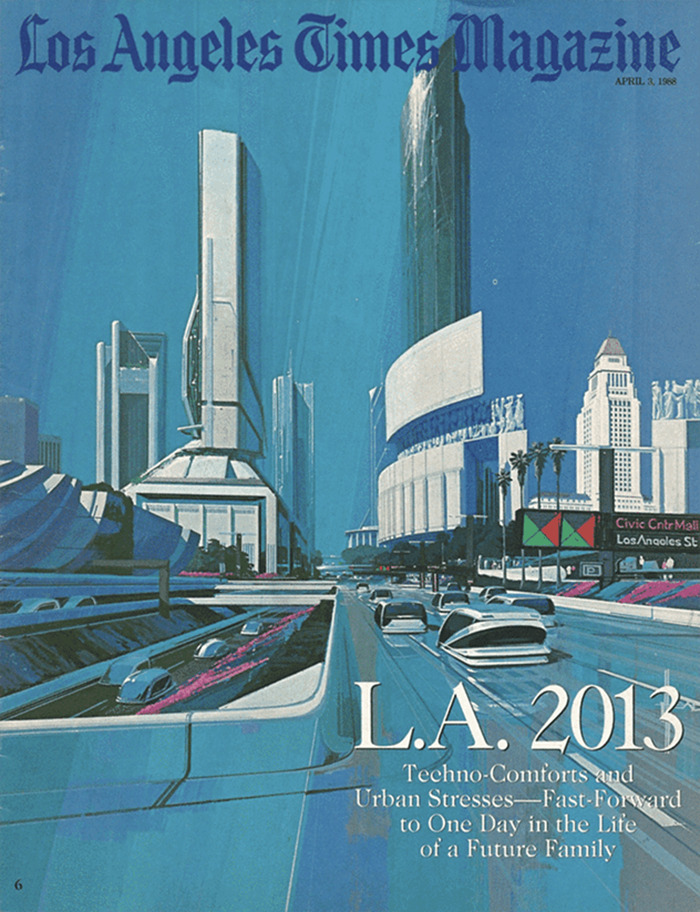
Load More Replies...In 1988, the Los Angeles Times magazine published a special issue predicting what life would be like in 25 years’ time. In some ways, they missed the mark completely:
Cities mandate that business stagger shifts, to ease the burden on commuting and city services.
Barcodes on our money to avoid corruption and crime and keep track of every dollar bill and who it belongs to.
Multiple families cram into single-home structures, because there's no housing. The opposite of the housing bubble that floods markets with too many empty homes.
Well the last parts tru multiple families pooling together to buy a house is becoming common here expecially in fl
Well they overestimated the growing corruption of government, who doesn't care to do any of those things a responsible government might do. Some cities and other governments have tried to encourage commuting shifts, but these are always toothless to keep from offending businesses.
Multiple families crammed into single family structures isn't too far off. Money is almost all digital now so the barcode idea is wrong, but the effect is still the same.
well the staggered shifts thing and the Multiple families (in the form of extended multiple-generation family) thing are happening. And some nations do put barcodes on their money.
I want to see what people’s predictions of the future would be now… barren wastelands?
Well, think 25 years BACK from where this was issued - yet, we should have known by then that, although the growth of knowledge is accelerating, we still find out more and more about less and less every day. If I'd be 10, 20 years older, I could have developed valvetrains for gasoline engines for passenger cars my entire career. As it is now, I won't ever get any of my ideas onto wheels, but eff it ... that industry is among the most toxic ones anyway, the few lucky ones who got their inventions past the greed-department usually have to suffer a great deal before, developing stuff for the drawers ... as did I, as a student intern - but made sure I wouldn't leave anything ... if they hired me, they'd have got it, but so, may it rest in the peace of MY drawer... Would they have bought it ... sure, they'd got it. Anyway, how was 1963 compared to 1988? Punk happened inbetween, the uncritical praise of one's own nation got questioned along Vietnam War, and is never seen with the same eyes again, and the eastern world was about to collaps, while 1963, it was thought to be about to overrun the west, some technological developments took place inbetween, those that enabled today's progress. Cars still having tires, still not flying ... well, everybody halfway into that field could have told you THAT...
As entertaining as it can be to poke fun at past generations for their expectations of the future, we can't really blame them for their now hilarious ideas. I'm sure many of us know the feeling of innocently opening Facebook and being smacked in the face by the "Memory" of a 10-year-old status that's now painfully cringey to read. My prediction for the future is that our current projections will be met with the same laughter we now direct towards the 90's. Times change rapidly, but we do know that the future is a mystery to us all.
And PS, we likely won't be too proud of our current fashion choices twenty years from now either.
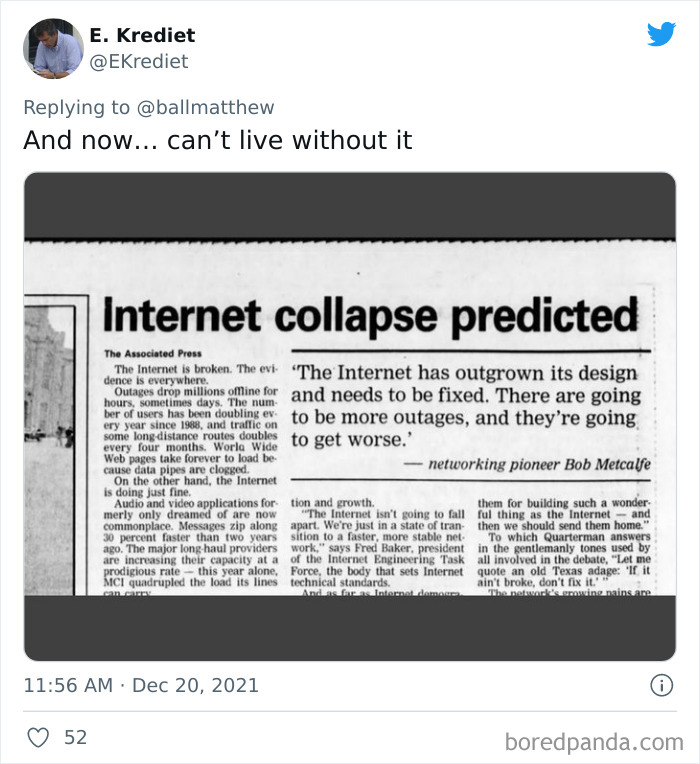
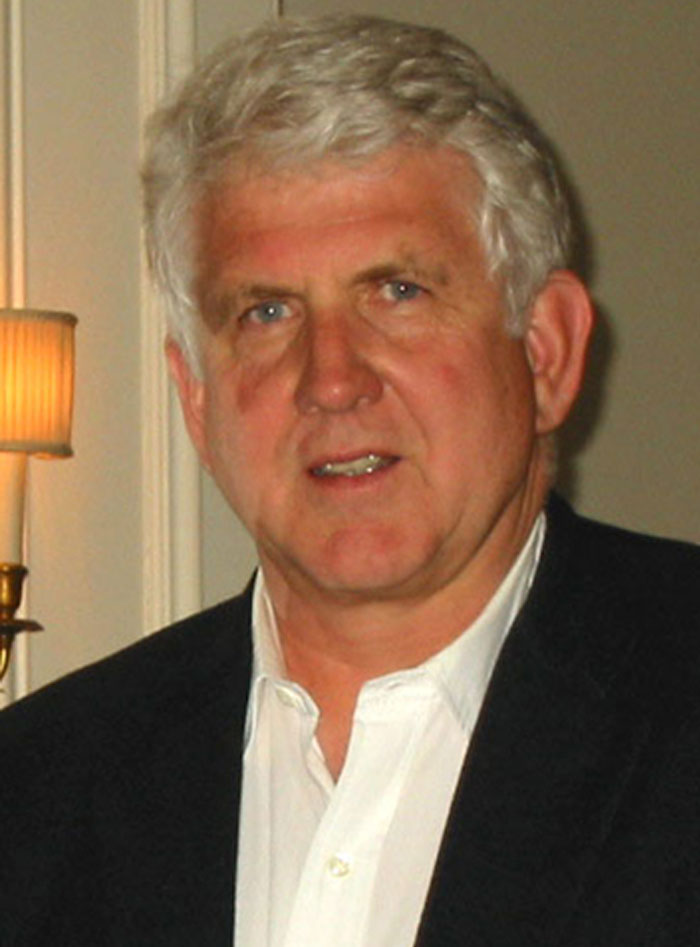
"Almost all of the many predictions now being made about 1996 hinge on the Internet’s continuing exponential growth. But I predict the Internet, which only just recently got this section here in InfoWorld, will soon go spectacularly supernova and in 1996 catastrophically collapse." - Robert Metcalfe

That ethernet cable that you at least used to have plugged into your computer to connect to a network? This guy invented that. Not quite so good at fortunetelling.
I believe you were trying to look like Ted Koppel. Looks like neither of them worked out
It was quite widely believed in the mid 1990s that the internet 'trend' could collapse because while the world wide web had been invented it was still limited in its application (and therefore its potential to transform society) because of the limitations of the supporting infrastructure that were needed to make things like e-commerce a serious proposition. And that's before people had even considered the possibility of the internet being mobile. I wouldn't condemn anyone in the mid 90s who thought that the internet had come about as far as it was going to go.
Such a reasonable comment! Nice to see in the sea of piling on. Not that these bad predictions aren't funny in retrospect, but clearly there were reasons that made even industry people make them at the time.
Load More Replies...... you still can opt-out of a lot. I still never had a smartphone, just because I don't want one. I have a Nokia that serves me well enough, at least the remainng time it will live. Had it so long, I might even bury the corpse in the garden, when it's time to finally pull the plug...
It was predicted by Internet pioneer Robert Metcalfe in a December 1995 article he wrote for InfoWorld. ”Almost all of the many predictions now being made about 1996 hinge on the Internet’s continuing exponential growth. But I predict the Internet, which only just recently got this section here in InfoWorld, will soon go spectacularly supernova and in 1996 catastrophically collapse.” Archived version: https://web.archive.org/web/19990913041024/https://www.infoworld.com/cgi-bin/displayNew.pl?/metcalfe/bm120495.htm
It's made some things better but a lot of other things much worse. It's a real mixed bag. I could take it or leave it.
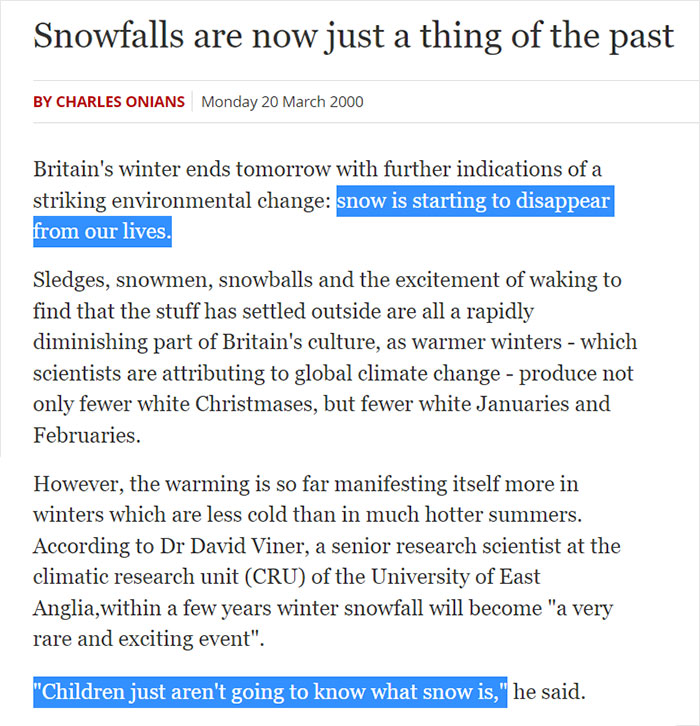
2000: ‘Children won’t know what snow is.’
As someone who grew up in England after 2000, I can confirm that I have only seen proper snow once in my life, and I do consider it "a very rare and exciting event". My little sister has never once seen snow, so from my perspective, it's really not far off.
Similar in northern Germany and ski resorts in the Alps have been complaining about too little snow for years. So: not yet, but apparently we're getting there.
Load More Replies...In England we’re definitely getting less snow and milder winters. I’m a gardener and expect to lose work over winter, not this year, weeds kept growing for most of it!
I've got a citrus tree outside, in Gloucestershire
Load More Replies...I agree it's almost true...I think just as freakish as never seeing snow, is the idea that most people grow up in such light-polluted areas they've never seen more than a handful of stars and have no idea what our night sky looks like without that pollution. I've met several people already who have no idea what the Milky Way was whereas when I was growing up of course everyone knew what it was because we saw it clearly every single night just like we'd see the moon. I think this is also adding to the flat earth movement, these morons think they live under a big bowl with a moon and a sun and a few holes poked in the bowl showing peeks of light from heaven. Where that's hard to sustain if you see the full glory of the galaxy every night.
As someone who lives in the UK, I can confirm this is actually pretty accurate. I've experienced snow in the UK less than 10 times in my 31 years here. Most of those times it wasn't even two inches deep.
This guy hit a dead on. Even though in the recent one or two years the winters have been rough, the last two decades left much to be desired for those that dream of winter wonderland. I grew up in upstate New york, and when I was a kid there was two foot of snow on the ground by Thanksgiving, 4 ft by Christmas and still 2 ft on the first day of spring. I think you can count on one hand the number of white Christmases there have been in the past 20 years.
I live in an area famous for our snow and I can confirm there is a lot less of it. Ski resorts are struggling, having to make their snow. Never was an issue before.
1995 quote from Clifford Stoll, of Newsweek: "The truth is no online database will replace your daily newspaper, no CD-ROM can take the place of a competent teacher and no computer network will change the way government works. Electronic publishing? Try reading a book on disc. At best, it's an unpleasant chore."
In 1994, the RAND Corporation, a global think tank that's contributed to the space program and the development of the internet, said they expected us to have animal employees by the year 2020
"The RAND panel mentioned that by the year 2020 it may be possible to breed intelligent species of animals, such as apes, that will be capable of performing manual labor," Glenn T. Seaborg wrote of the corporation's prediction in his book "Scientist Speaks Out"
Do you want planet of the apes? Because this is how you get planet of the apes.
Here's an orangutan driving a golf cart! https://www.youtube.com/watch?v=od_PmtmMDV0
I could see CRISPR making that possible, say, in the next 20 years: hybridizing an ape w/ the genomics to be smart like a human. Look up the 'Einstein mice' which biologists DID IN FACT create: mice genetically engineered to have partly human brains, which are, for that reason, super smart by mouse standards! The existence of Einstein mice proves the principle RAND was describing, suggesting that their theory of this as a biotech possibility is not unreasonable. Of course you'd also have to wonder who would want to pursue the creation of super smart monkeys. But, then again, if some scientists have already in fact created partially neuorologically-human 'Einstein mice'? Who knows?!
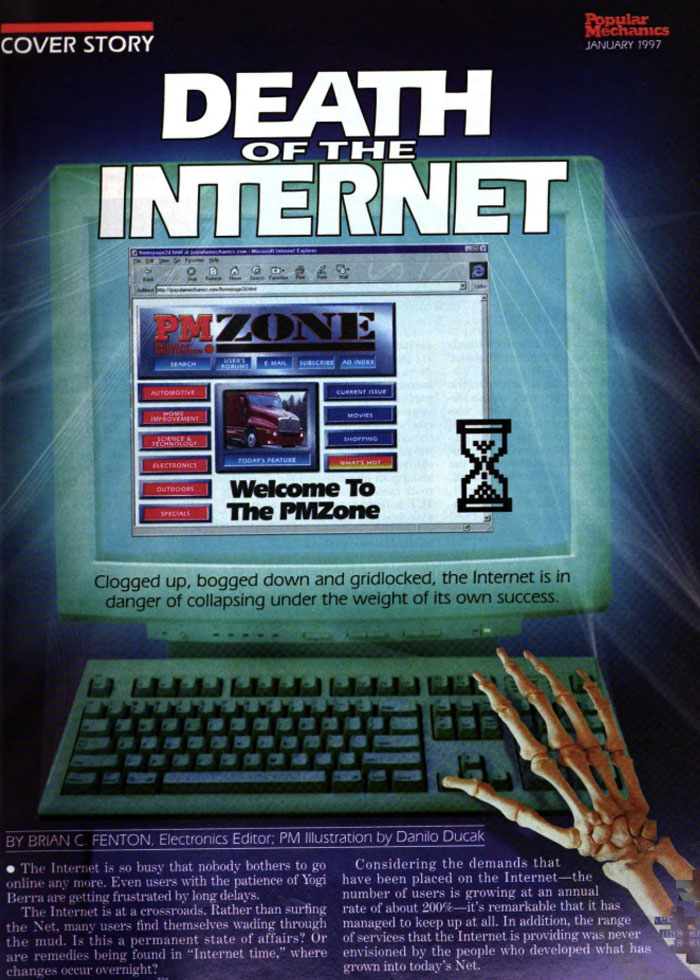
In the January 1997 issue of Popular Mechanics, the electronics editor wrote that the internet became so flooded with users at the time that "nobody bothers to go online anymore."
"We were afraid that if the internet's underlying infrastructure didn't improve, the volume of users would make the internet so slow that it would essentially become useless."

As for the infrastructure she or he was correct: had tech and telecom firms and govt. NOT invested some massive quantities of capital in the relevant web infrastructure (before, during and after this article) it seems very likely that the average performance of many web services would be so slow that it would cause far fewer people and organizations to use the web in general. The web DOES require tons of infrastructural investment and maintenance, and it's easy to forget that as an end user/customer, for whom it has all been done to make it easy to use for us.
I think it's easy now to make fun of these doomsday theories but back then the internet was not very useful, it was expensive, it had a lot of issues working and there really wasn't much to do with it especially for the average consumer. I really don't think these were potshots but actually people assessing what was happening and extrapolating that based on logic and supporting evidence. Clearly wrong, but at the time in no way we're they off base or tone deaf.
In 1998 there was already plenty to do on the internet and while it was expensive it was accessible to and used by normal people. So a lot of these predictions were already not very smart.
Load More Replies...This reminds me of the time I came across a newspaper from the early 80s which featured two noteworthy articles on the same page, one of which was about what an awesome guy/national treasure Rolf Harris is, and the other of which was announcing that Elton John was getting married to a woman.With the benefit of hindsight it was a very weird thing to encounter.


Wow this is definitely strange, weird, funny with hindsight
Load More Replies...Why did I have to base every one of my '97-2000 investment decisions on the advice of Bob Metcalfe and Clifford Stoll!!
'The internet is a passing fad' and the same prediction repeatedly from several different people.
This just sounds like a bunch of boomers not understanding new tech and dismissing them preemptively.
People of today are saying time travel is impossible, but now I'm started to doubt it...
I think it's easy now to make fun of these doomsday theories but back then the internet was not very useful, it was expensive, it had a lot of issues working and there really wasn't much to do with it especially for the average consumer. I really don't think these were potshots but actually people assessing what was happening and extrapolating that based on logic and supporting evidence. Clearly wrong, but at the time in no way we're they off base or tone deaf.
In 1998 there was already plenty to do on the internet and while it was expensive it was accessible to and used by normal people. So a lot of these predictions were already not very smart.
Load More Replies...This reminds me of the time I came across a newspaper from the early 80s which featured two noteworthy articles on the same page, one of which was about what an awesome guy/national treasure Rolf Harris is, and the other of which was announcing that Elton John was getting married to a woman.With the benefit of hindsight it was a very weird thing to encounter.
Wow this is definitely strange, weird, funny with hindsight
Load More Replies...Why did I have to base every one of my '97-2000 investment decisions on the advice of Bob Metcalfe and Clifford Stoll!!
'The internet is a passing fad' and the same prediction repeatedly from several different people.
This just sounds like a bunch of boomers not understanding new tech and dismissing them preemptively.
People of today are saying time travel is impossible, but now I'm started to doubt it...