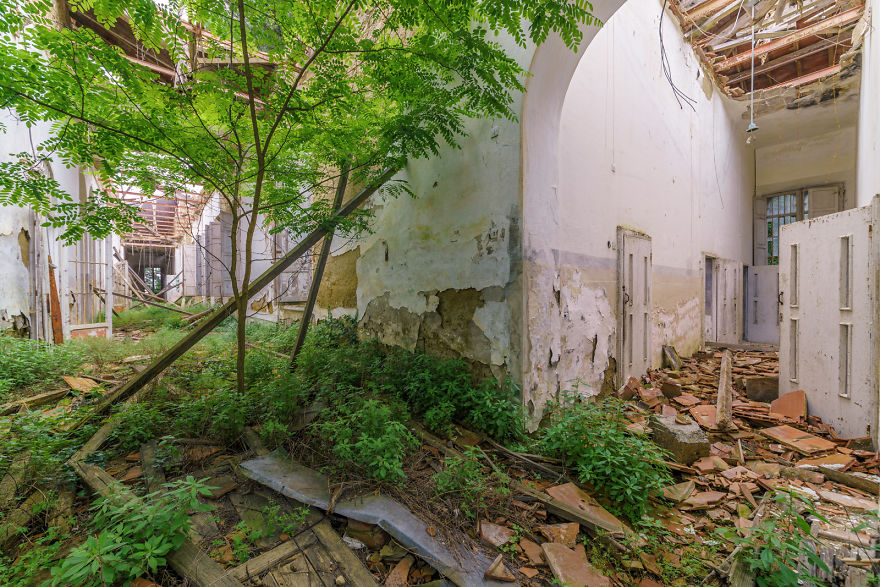
I’ve Captured The Dark And Mysterious History Of Madhouses In Italy (30 Photos)
"As soon as the patient passes the internment wall, he enters a new dimension of emotional emptiness ([...])" — Franco Basaglia (Italian psychiatrist, 1924-1980).
It seems strange to me to write that, but mental illness has been with me all my life. I grew up in Haar, a Munich suburb. A tranquil and beautiful place yet one that accommodates one of the largest psychiatric institutions in Germany. A beautiful area with old Art Nouveau buildings but also with a cruel dark past, because in World War II euthanasia was practiced here.
Having this in mind, my curiosity for the background of psychiatric institutions was awakened. When I visited one of these former institutions in Italy for the first time in 2013 and learned more about the sometimes cruel conditions, I realized that I wanted to photograph these places.
More info: andyschwetz.de | flickr.com | Instagram
This post may include affiliate links.

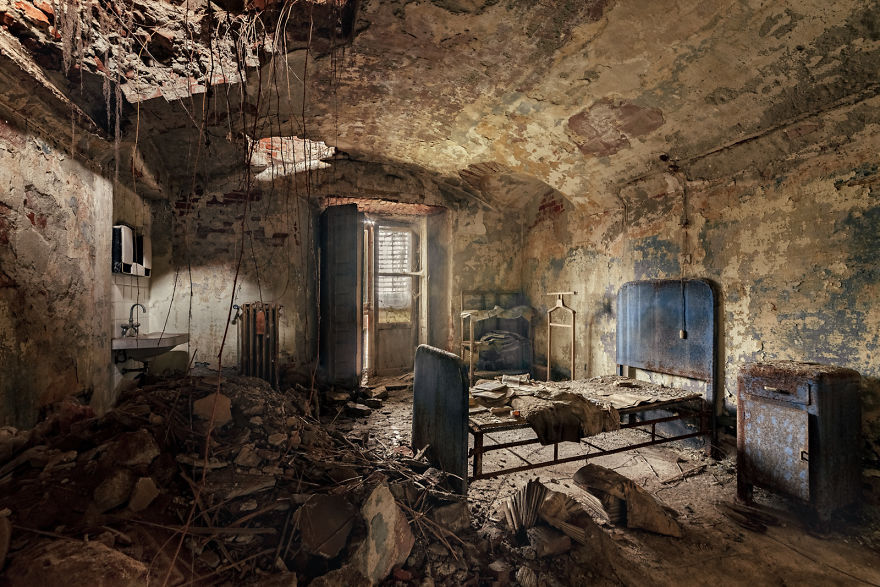
Dr. Rosetti
This is the former psychiatric Hospital in Racconigi, Piedmont. It was a very advanced hospital for its times, with lot of efforts to keep the scientific and operational aspect up to date and cutting edge. The building itself is much older -it has been an hospital since the late 1700s, and later a military boarding school- but the mental health insitution that was run inside its walls was everything but "old-style". Since the 1870s new therapies were tested and tried all the times, including some of the very first electrical treatments, and modern techniques such as radiology, neurosurgery and ergotherapy (helping the inmates to heal through work, a method that is still considered very effective) Of course the place was not dilapidated as in those photos. It has been abandoned since the early 1980s, without any upkeep and at the mercy of squatters and thieves. In my opinion it would be awesome to have it renovated and used as a museum for history of psychiatric care.

this is creepy! Like the patients room looks so nice, but at the same time scary
This was a doctors room. The normal Patient sleep in big sleepinghalls or if they was danger or special in small 2 or 3 bed rooms
Load More Replies...Mi fa strano vedere le immagini dei manicomi, sentire parlare di Basaglia, di Ada Merini: grazie, amico, per aver dato voce a chi la voce nessuno ha voluto ascoltare. Grazie. manicomio-...fad24e.jpg
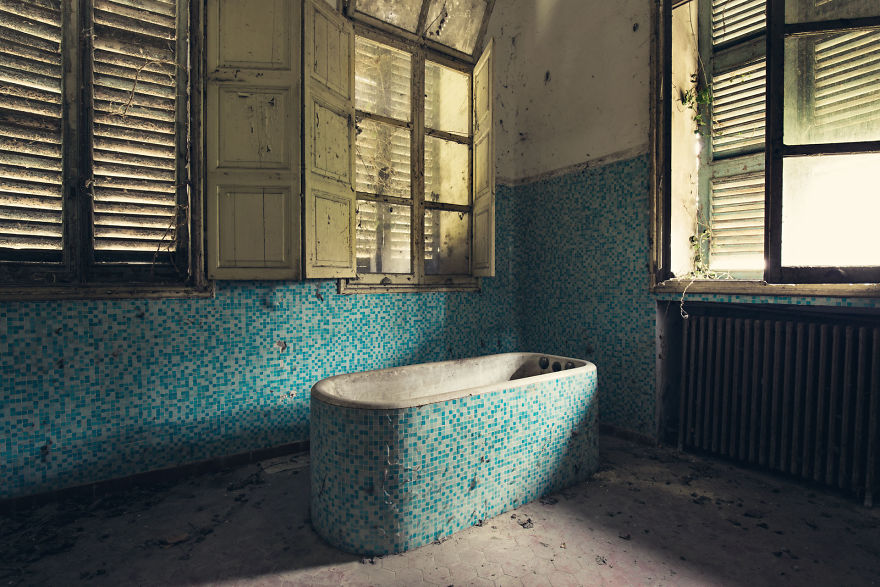
Hells Eden
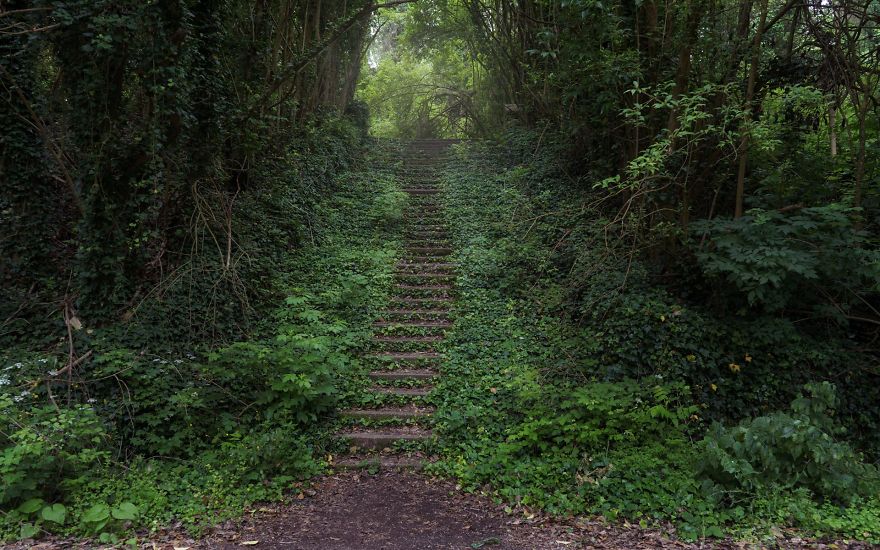
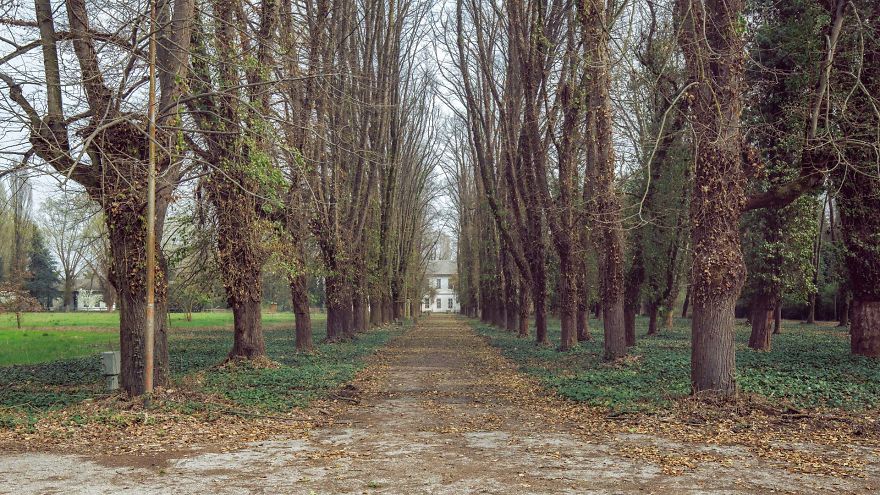
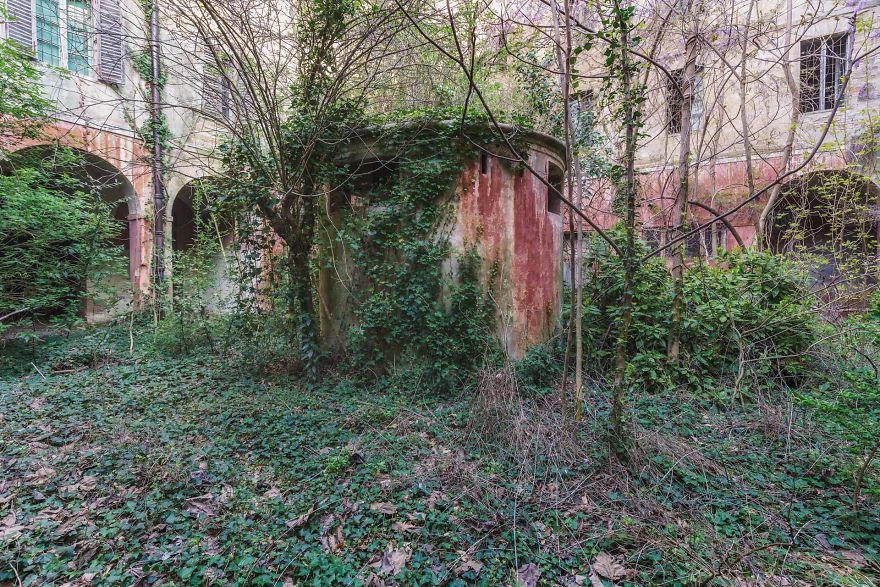
Mother Nature has a way of hiding sins from the past. Careful if the serenity you see
Can someone please explain to me how this is similar to the other photos? It doesn't look that bad to me, but maybe I'm wrong??
There are many stains on the white straitjacket in the history of psychiatry. Italy and its Manicomio was, unfortunately, a prime example here in the last century.
The law of 1904 allowed the police forces to obtain an urgent request for a briefing. So there were not only the mentally ill but also "unwanted" people such as the homeless, petty criminals, etc. who were instructed and denounced without a diagnosis. The church also had the power to determine who was mentally ill. The physicians and the respective other parties were in this under the same blanket, so the doctors often confirmed a disease even though there was no illness.
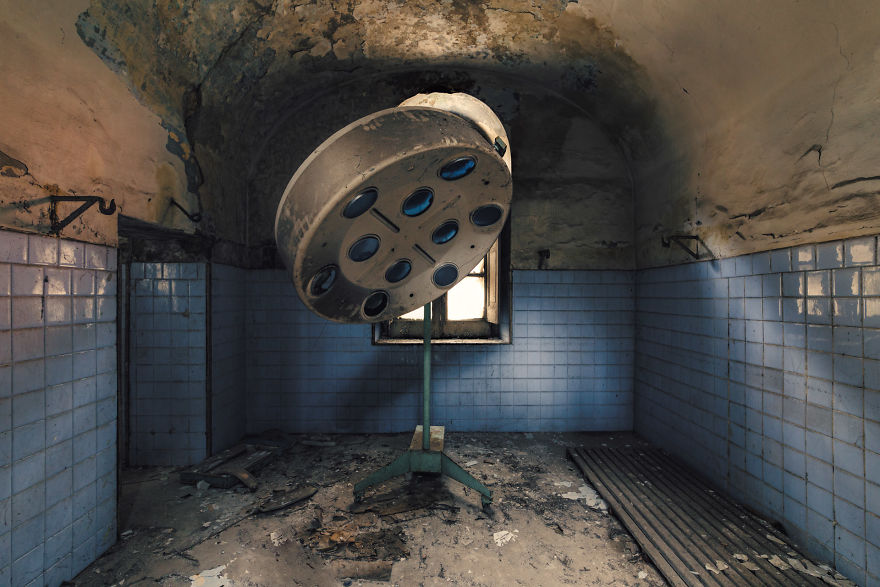
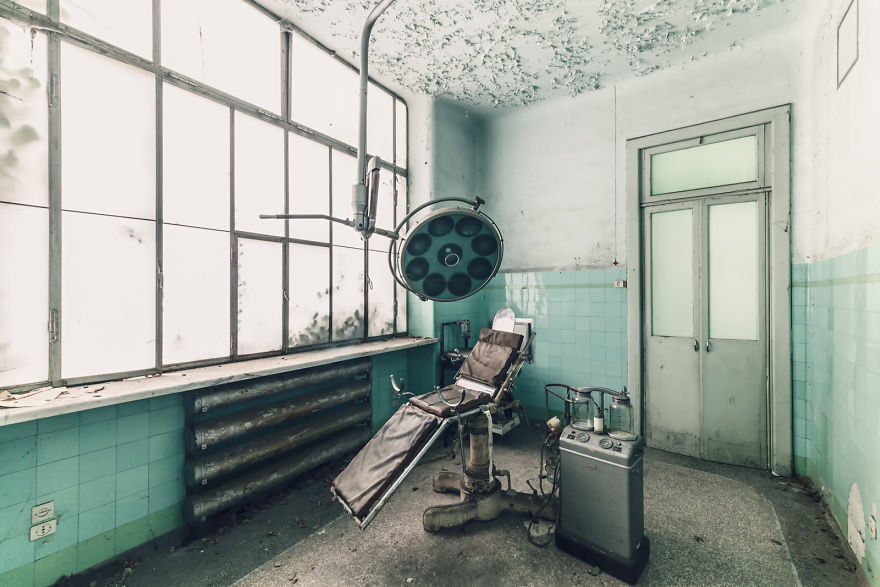
One More Light
Oversized
it just cast a focused and powerful light close to where the surgeon was operating. The ones in use today are slightly smaller but very similar in concept. That's not even particularly old, mid 1970s
Load More Replies...Later, at a time when fascism prevailed in Italy, political opponents, disabled persons, and other groups of people who did not fit into the regime's model of society were barred to prison on the pretext of "social danger." So it went from 1926 to 1941, and the number grew from 62,000 to almost 100,000 inmates. Often, people were incapacitated and simply locked up until their death.
The living conditions in the asylums were mostly unworthy of human beings and the treatment methods were questionable and cruel: insulin treatments, restraint systems, and especially the later introduced electroshock therapy had devastating effects. The worst-off inmates experienced nothing but the lack of care and the robbery of human identity.
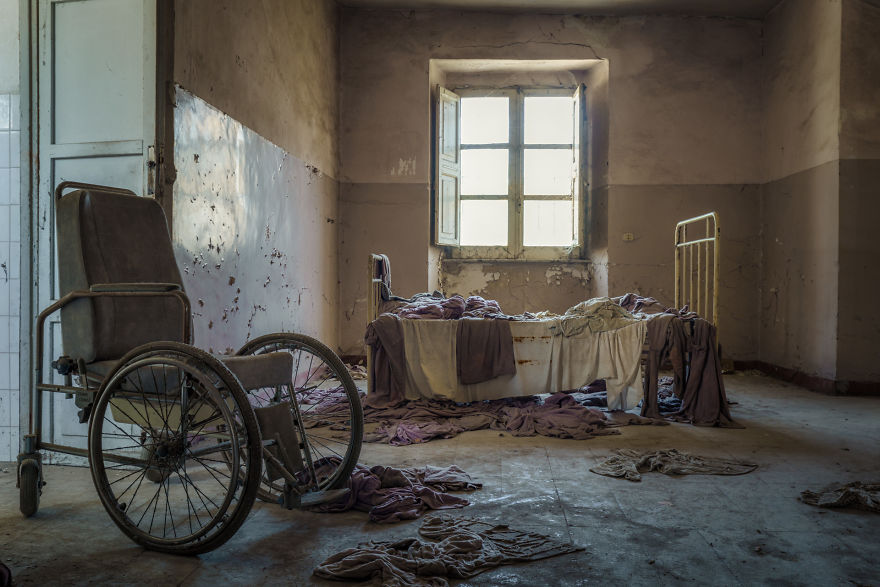
A New Dawn
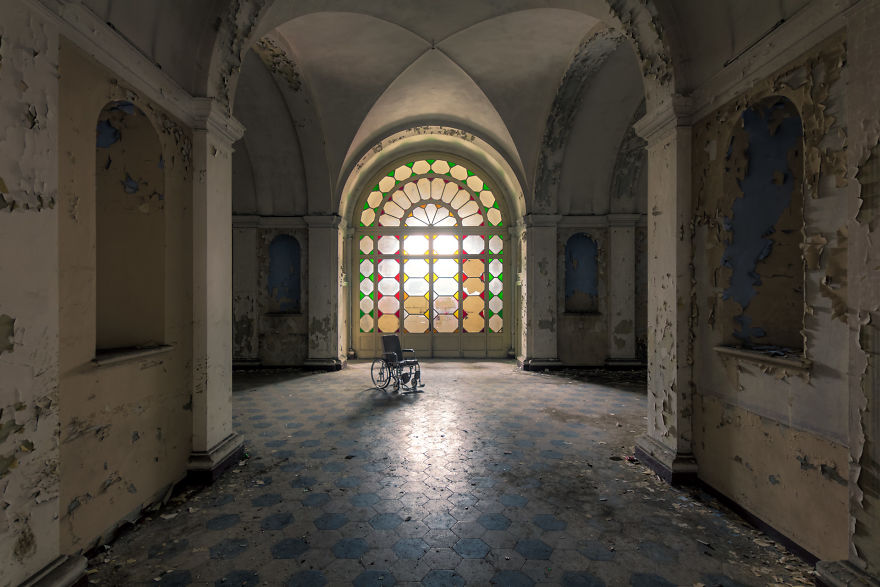
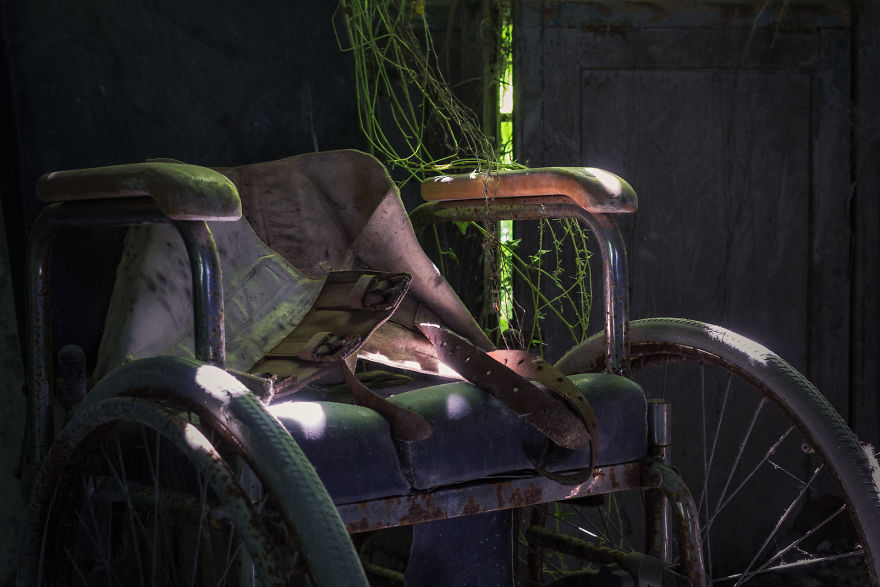
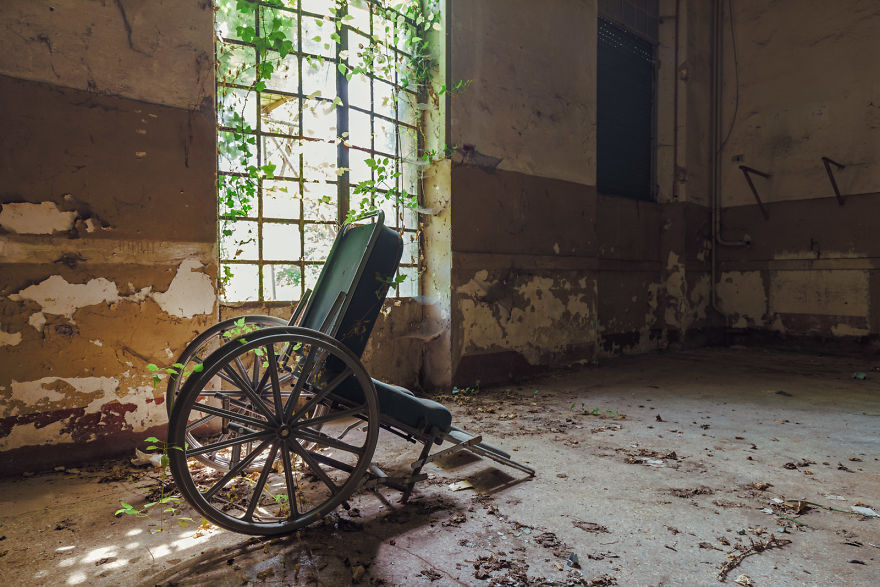
There has to be a random wheelchair in every abandoned hospital. That is the law.
After beeing a few mental hospitals, this one is at least beautiful. Nowadays are so so sad...
Thoughts Prison
If I had to live here i would die I doesn't even look like it was nicer than now 💙😱
Here is an excerpt from the medical file of Vicenzo M. who was admitted at the age of 17 and who was "held" for the following 27 years in the same ward:
"10.5.47: Electric shock
10.7.47: Feverishly occupied tongue
10.11.47: Nothing new
12.4.48: Always apathetic, stupid, deprived of all initiative. He expresses no wishes; smiles blandly, eats voluntarily, does not seem to hallucinate.
10.11.61: (After 13 years) severe mental confusion, apathetic, inactive, indifferent.
Quiet in 1964, not aggressive, idle
Unchanged in 1967
1970: Unresponsive, dirty, apathetic indifferent. " [Source]
The boy was only in the asylum for being a case of a "madman". Previously, he was a normal schoolboy.
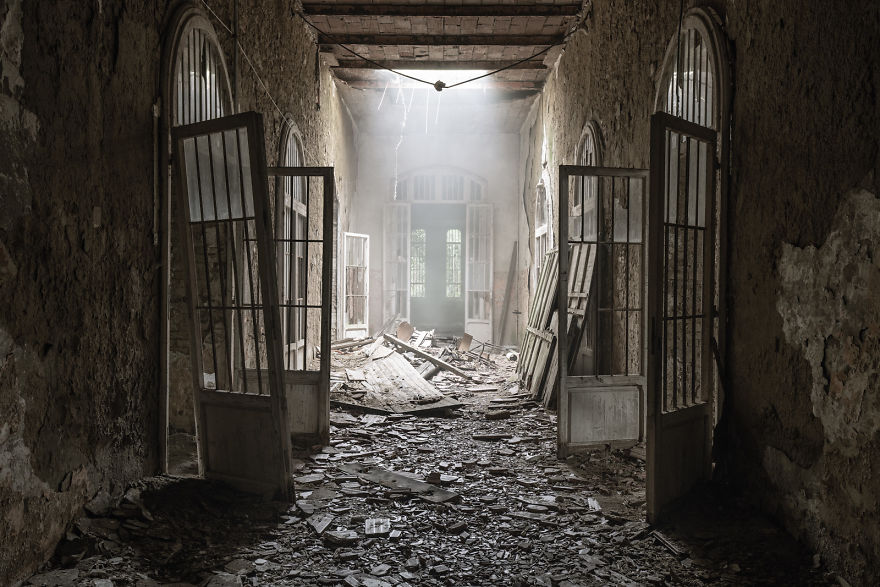
The Last Walk
too true, mother nature can be a dream come true or a wall to shield a monstrosity.
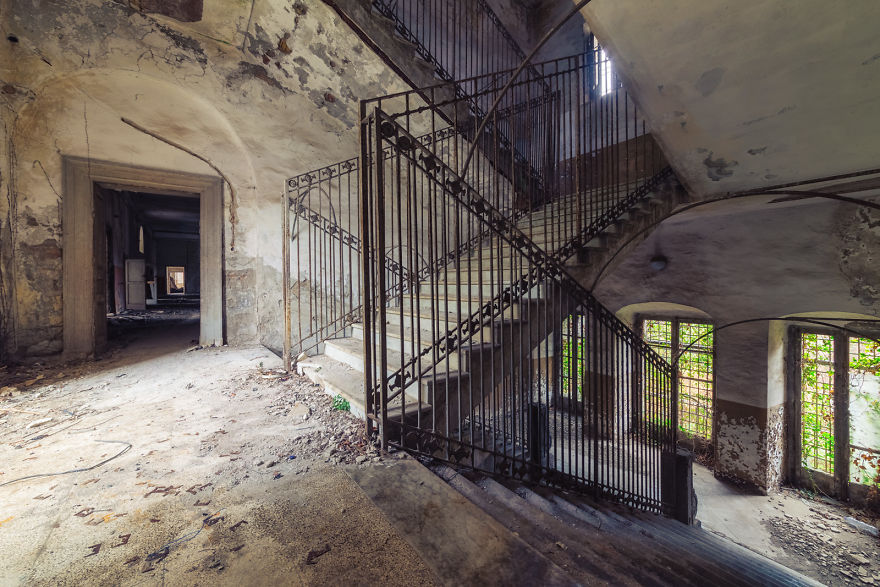
Like Kings (...)
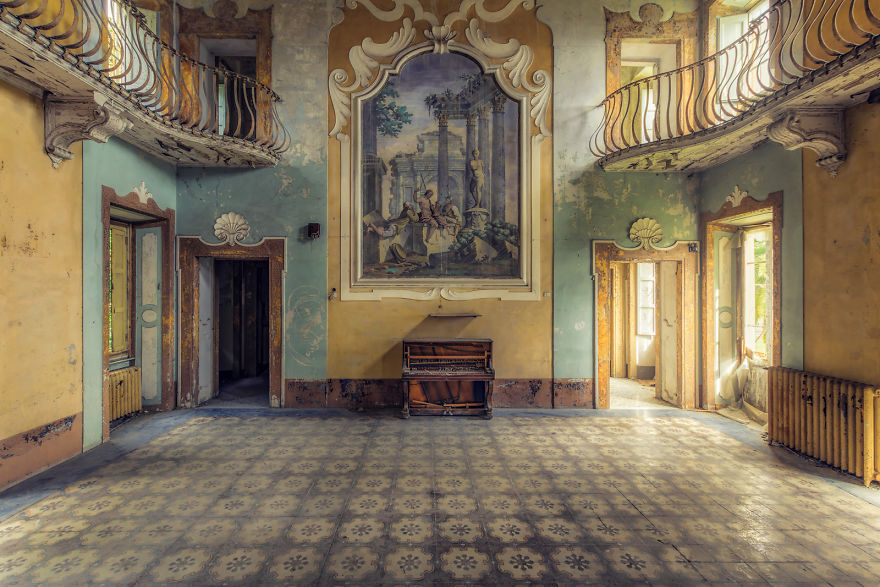
This looks like it was a private home (palace?) long before it became an institution. It could be worth restoring.
Yes excactly. I guess it was a villacof an landlord back in the days
Load More Replies...The end of this dark period came only 74 years later. when Legge 180, or otherwise known as the Basaglia Law, was issued on May 13, 1978. The Manicomi in their old form were closed. Franco Basaglia took over the management of the Psychiatric Clinic of Gorizia in 1961, having resigned as a psychiatry professor at the University of Padua since the theories taught there were wrong and had nothing to do with the condition of the persons in psychiatric hospitals. He was the first in the world to claim that one had to close and regulate psychiatric institutions because captivity, fixation, electroshock, and psychotropic drugs had no therapeutic value.
Deceptive
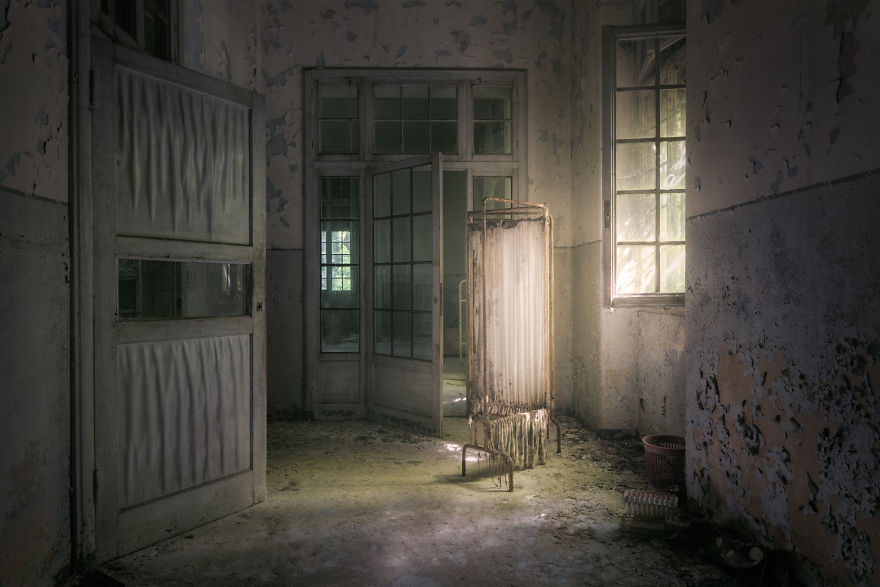
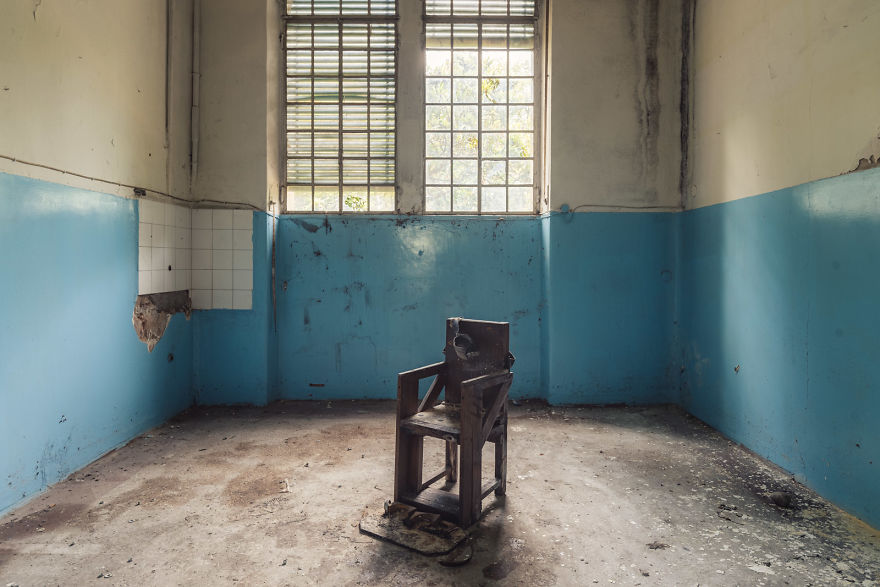
Not electric. But ice baths were often a treatment
Load More Replies...Bad Treatment
I. Can’t help but wonder what photos will be shown of the year 2020 as images or examples of how bad things were ‘then’. Makes one think in broader terms.
Photos of pigs and cows in slaughterhouses and battery farmed chickens
Load More Replies...The machine to the right is the scary thing giving out electro convulsive therapy and it's still practiced today in some hospitals :-(
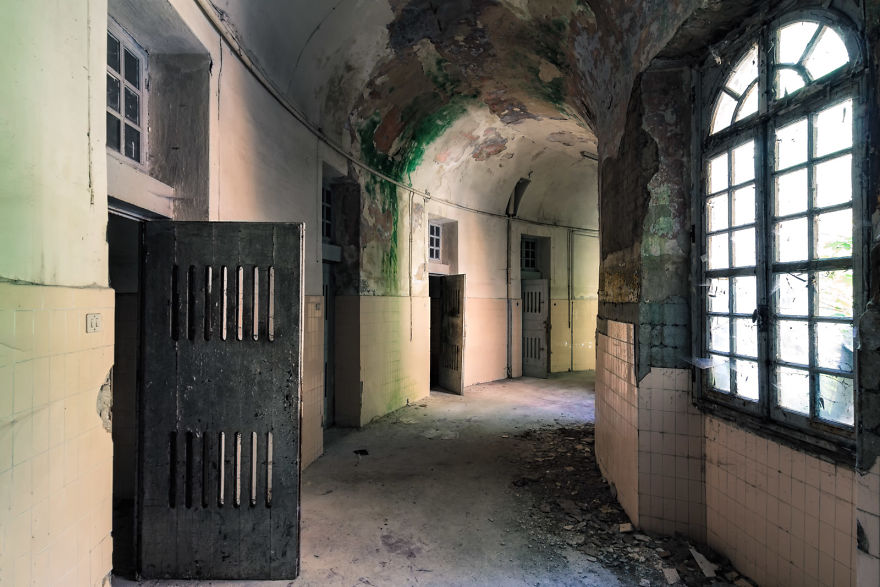
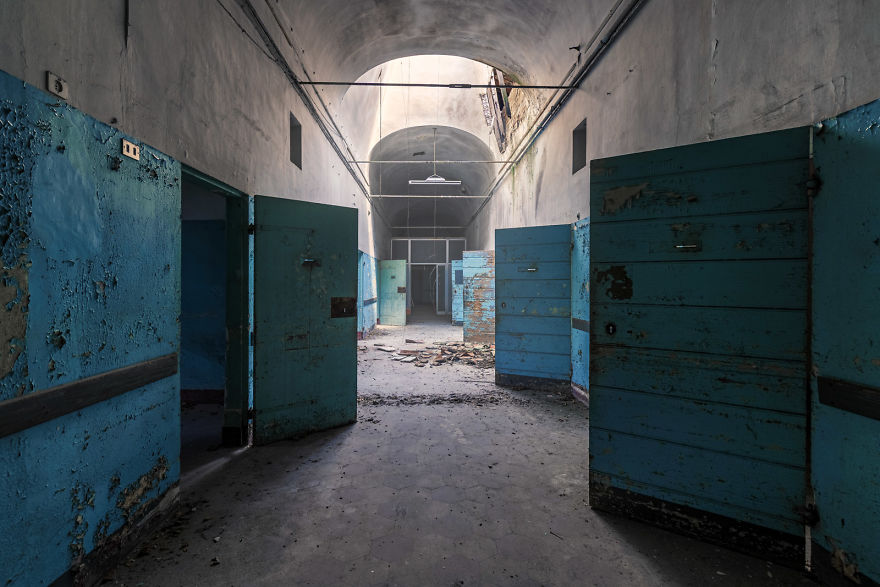
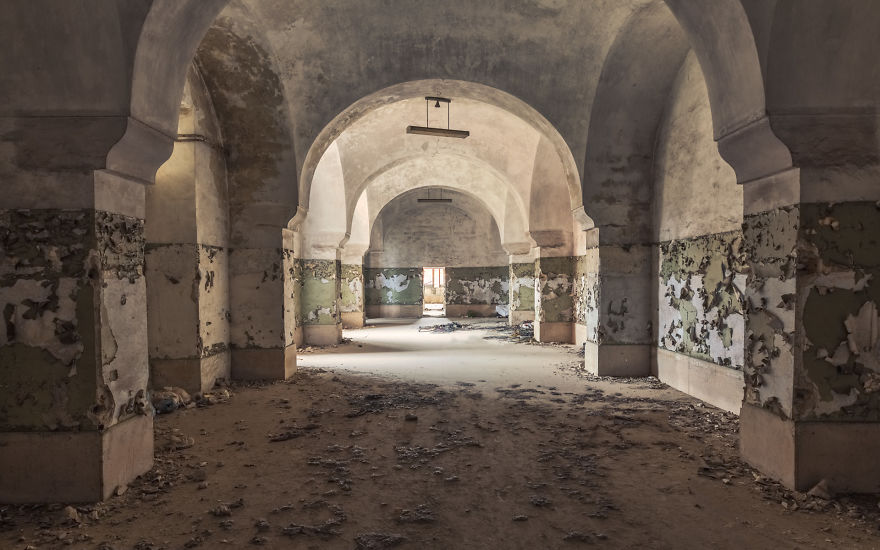
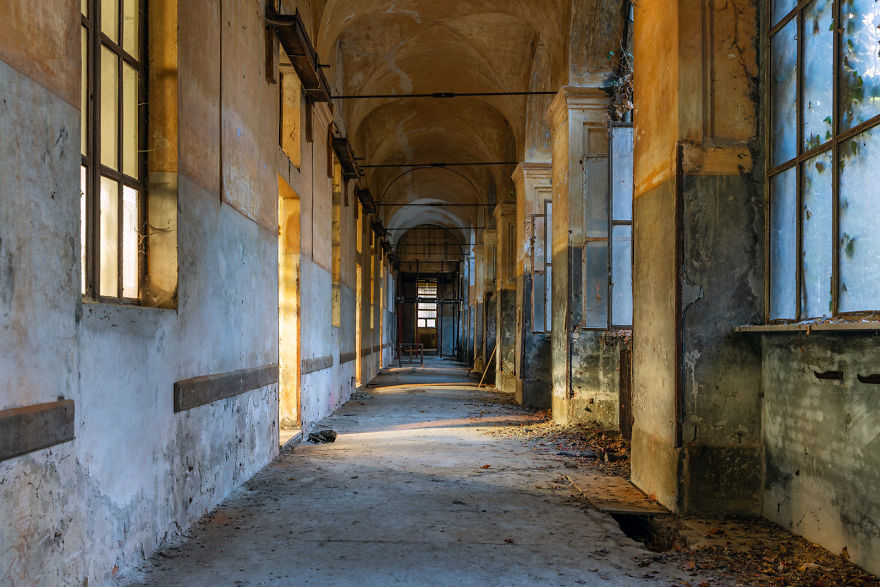
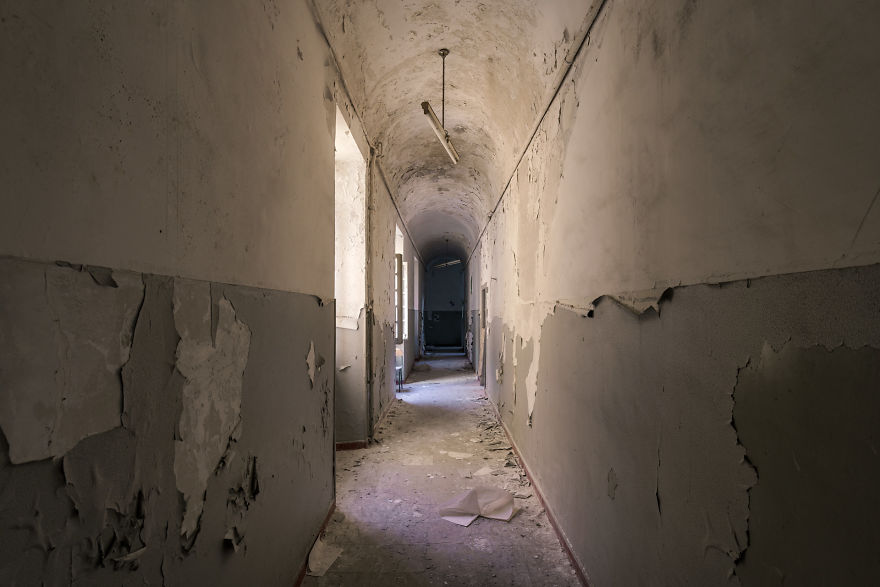
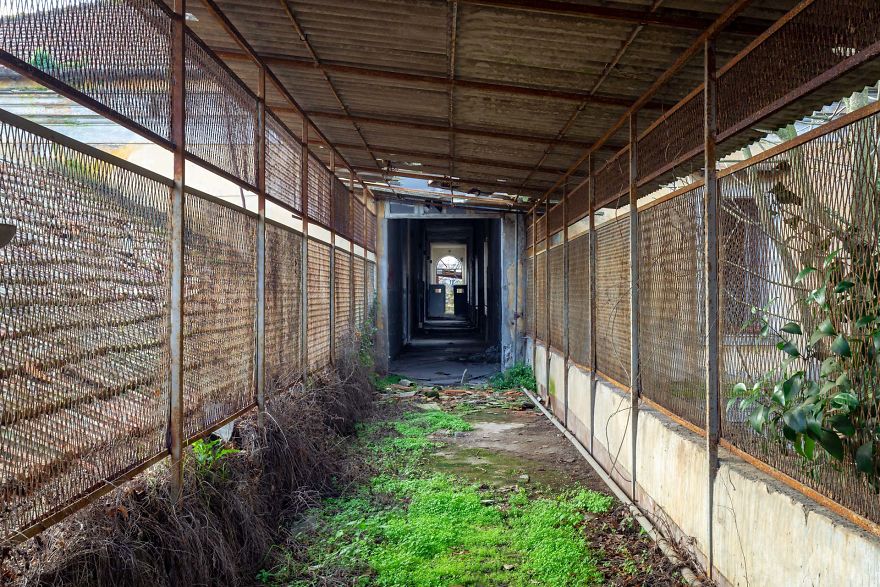
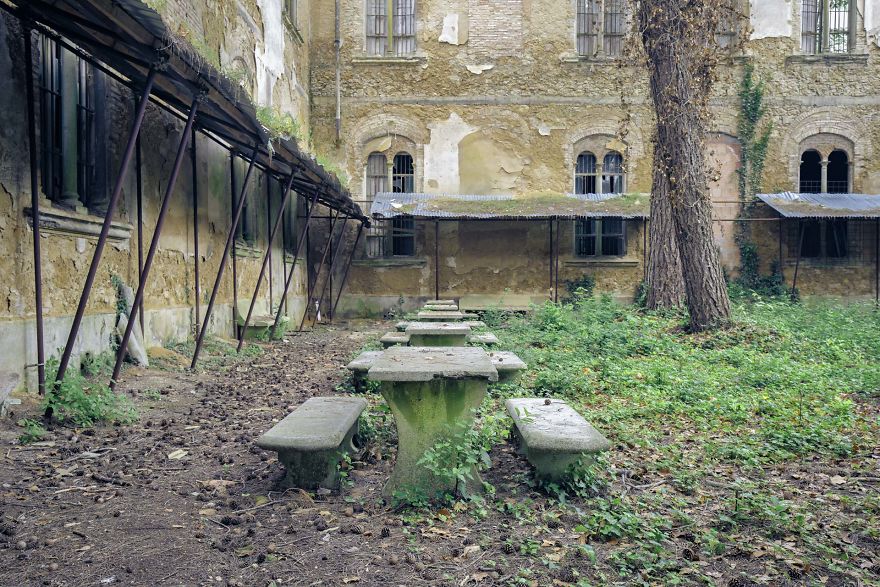
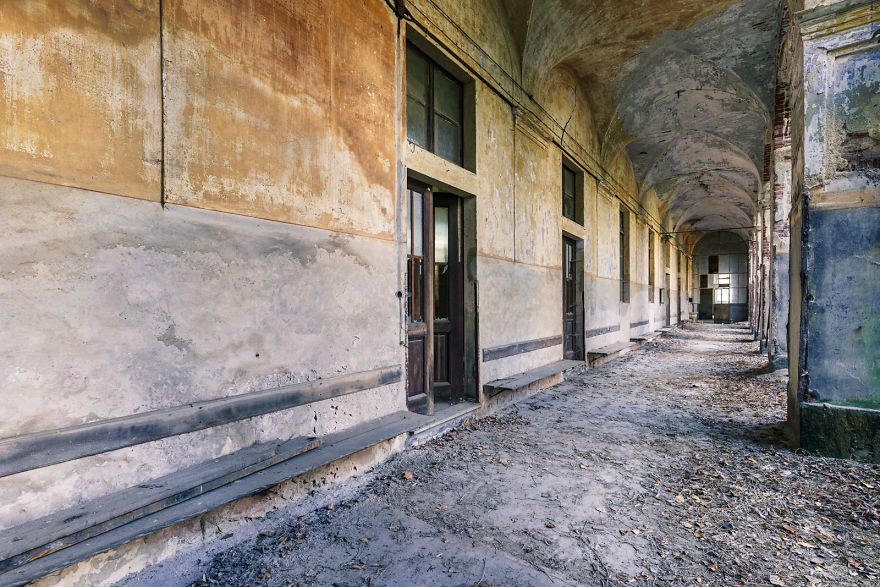
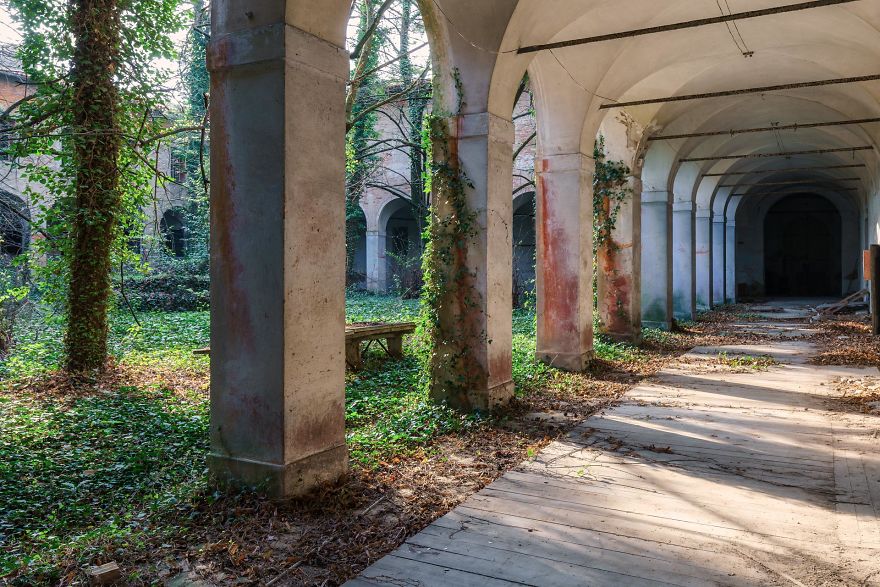
Today, many of these old, partly architecturally exciting buildings have been empty for many decades. They are memorials of ignorance and intolerance and they are monuments to thousands of terrible fates of innocent, sick and simply unfortunate people. Accordingly, I also felt an intense melancholy and oppressive mood when I visited these places. High, monastery-like corridors, high-security tracts, and dormitories that were often designed for 100 people or more.
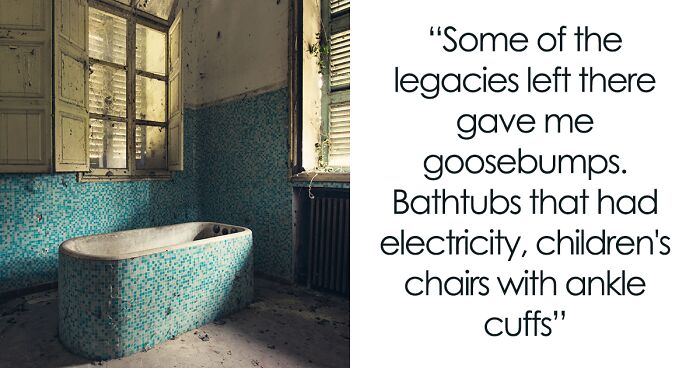
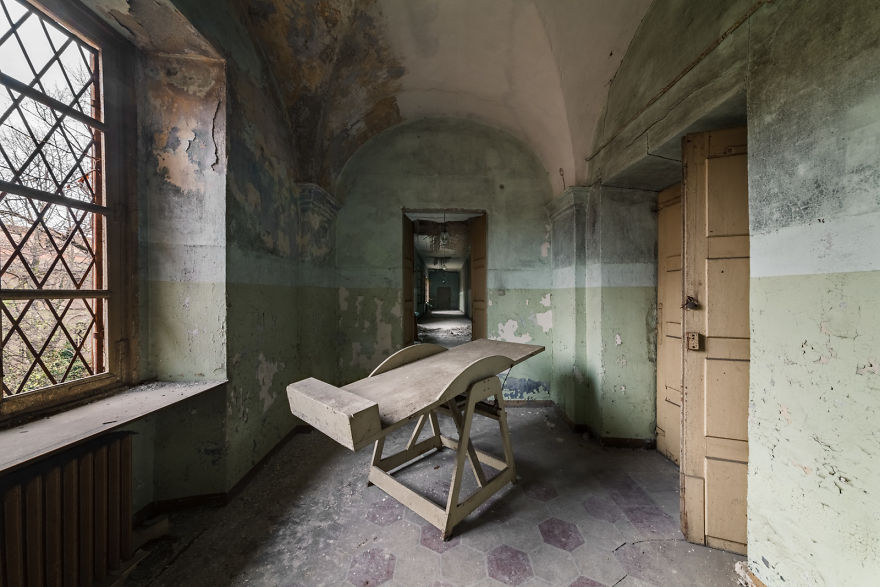
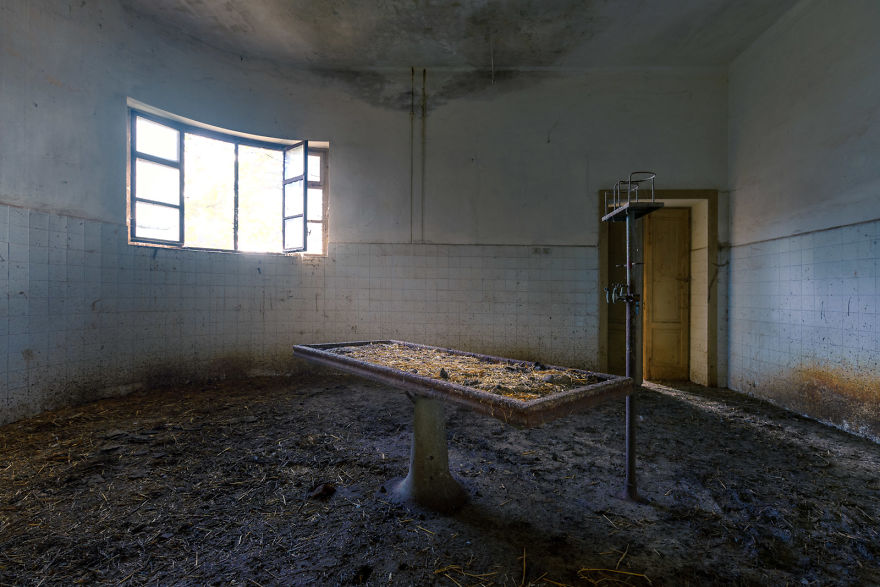
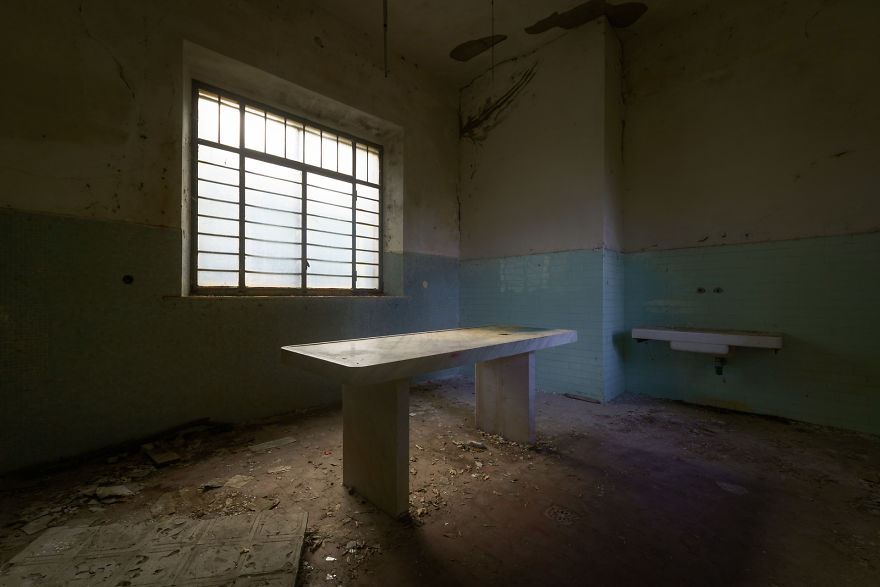
Also, some of the legacies left there gave me goosebumps. Bathtubs that had electricity, old surgical chairs, children's chairs with ankle cuffs, straitjackets and old morgue tables.
Next To You
Today, the old Manicomios disappear increasingly. Some were partially renovated or demolished because of the extreme danger of collapse. The vandalism has also increased in many of these places, helping it to become history.
Although our society has still not quite accepted that mental illness is a normal disease, it is shocking to see the dominant preconceptions until the mid-1970s. In any case, in comparison with conventional medicine, it was a scientific and moral Stone Age.
Silent Screams
The Holes
it makes you think doesn't it how far we've come and yet All we hear is how terrible we all are and her in less than 100 years we've come so extremely particularly in psychology mental health was seen to be insanity but we still have very far to go.weve come so far a species so far we realising that we did wrong so we're trying to fix our mistake everybody keeps going in about how bad we are all yes we are but please do not forget that human beings are a amazing generous intelligent species . sorry about this being so long. and for any inconvenience caused thank you
Hey sloth cat no inconvenience I chose to read your post & it was well written and best of all I understood it. Take care
Load More Replies...This is the building used for violent and agitated patients. The place was not all like this, what you see here is a specific wing designed to treat the worst, most dangerous patients. The hospital housed over 1500 patients, only an handful of them had to be restrained, mostly for theirs safety, while the vast majority was housed in separate male and female dormitories, with limited access to the park and in some cases with involvement on the job activities of the hospital, such as the kitchens, the bakery or the fieldwork.
Over the years, many photographs have been accumulated and I possibly have the opportunity to publish a book about it because the topic offers interesting content and so many facets. But for now, you can visit my website where I published also the first report about one of the asylums.
Straitjacket
Before they had drugs to sedate and treat patients, those who were suffering from psychosis and who in danger of serious self harm, needed physical restraints. Until the mid 19th century, they restrained patients who were trying to self harm by shackling them to a bed, a chair, or even the wall, where they developed weeping sores around the shackles where the metal rubbed the skin, torn ligaments, broken bones, and often self strangulation. Not to mention that patients shackled to beds and chairs spent hours in their own feces and urine. Straitjackets, if they fit and are used correctly, do not cause physical damage to a patient, and keep them from self harm. You can also take a patient to the toilet, or move them if you need to clean them. The problem was that they were often used to discipline or punish patients who were not a danger to themselves, committed some infraction.
Load More Replies...Vulnerable
They would tie you on there and let all you're blood rush to you're head.
Load More Replies...Basically, they strapped you to it n tilted it so all the blood rushes to your head
Load More Replies...Over the years, many photographs have been accumulated and I possibly have the opportunity to publish a book about it because the topic offers interesting content and so many facets.
But for now, you can visit my website where I published also the first report about one of the asylums.
Final Destination
At least there was a shepherd in one building. He used the morgue as chicken shelter...
Load More Replies...i feel like i'm gonna die right now by looking at this picture!!!!!!!!
The Way Into The Uncertain
Help Less
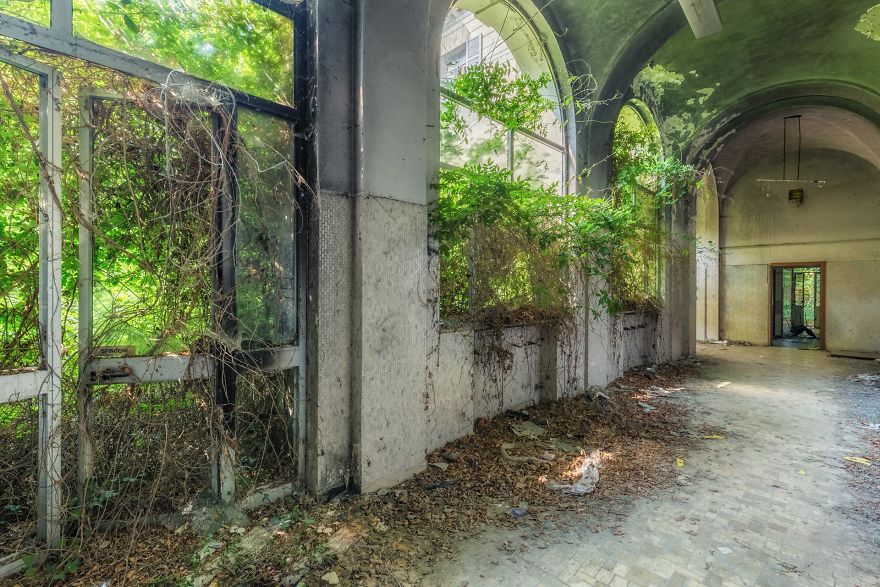
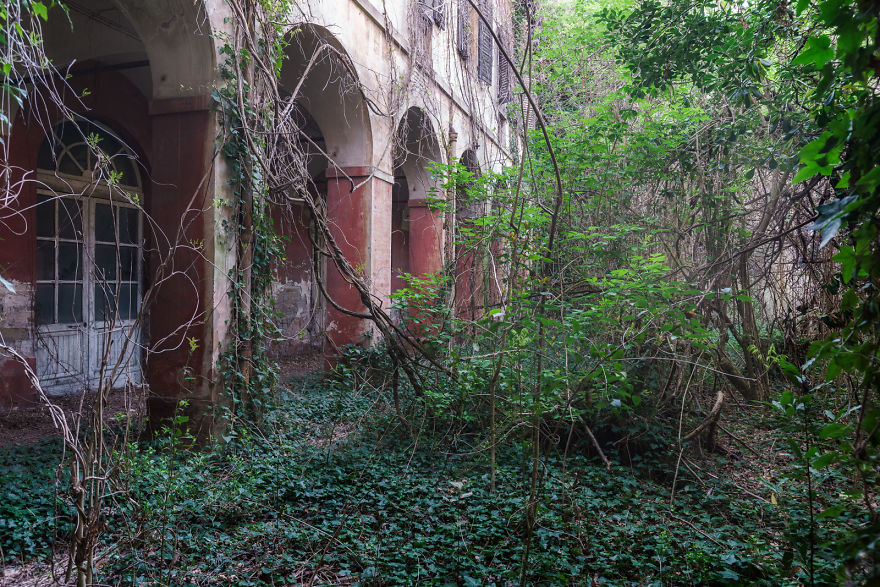
The green is such a contrast to the rest of the scenery, in a good way. It's nice to see that at some point, in the far future, nature will reclaim this sad place and turn it into a garden.
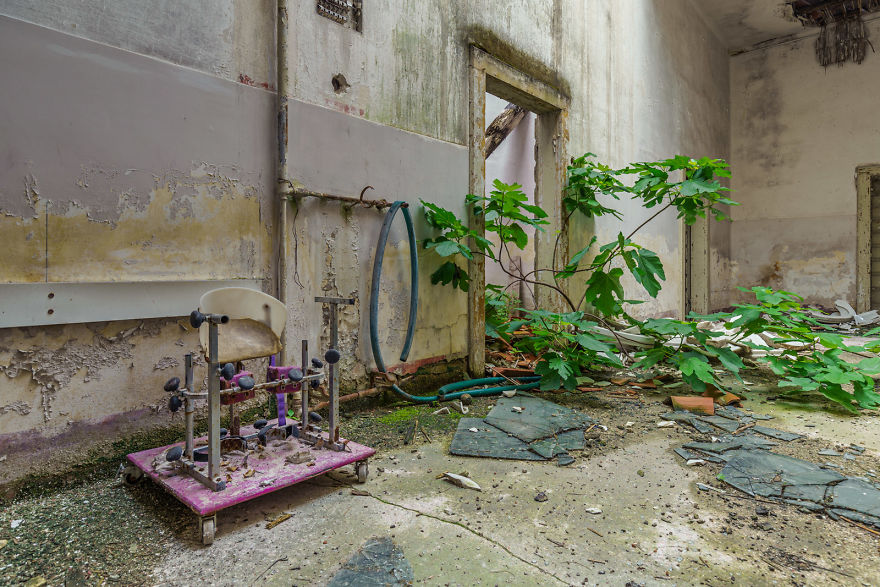
It is an adjuvant to help people stand on their feet, that can't stand alone. The pink pellets are for to hold the knees.
Load More Replies...Solitude
someone could brainwash people here.(and YES, brainwashing does exist)
Clockwork Orange
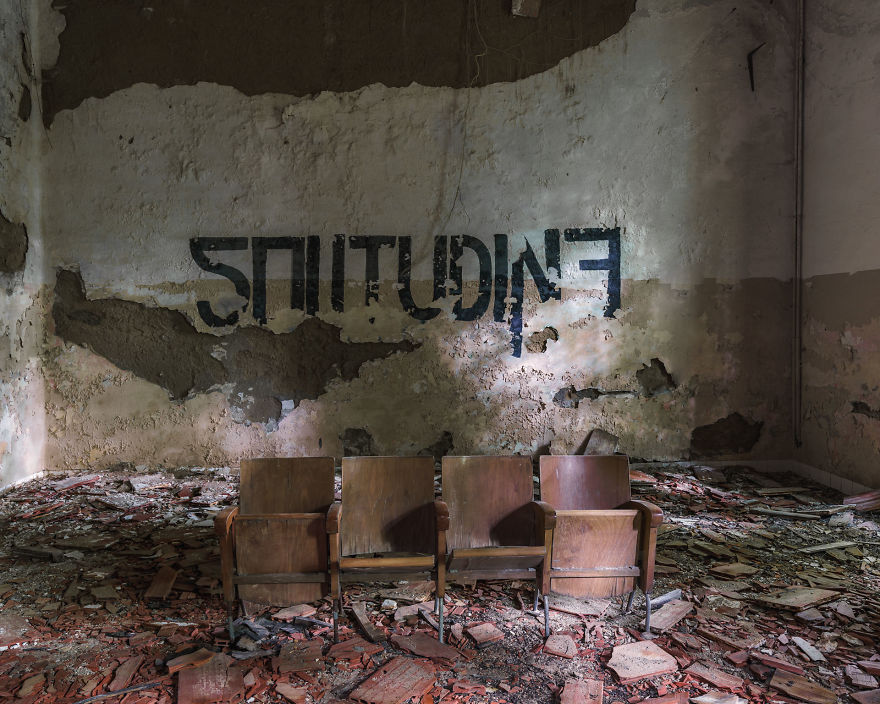
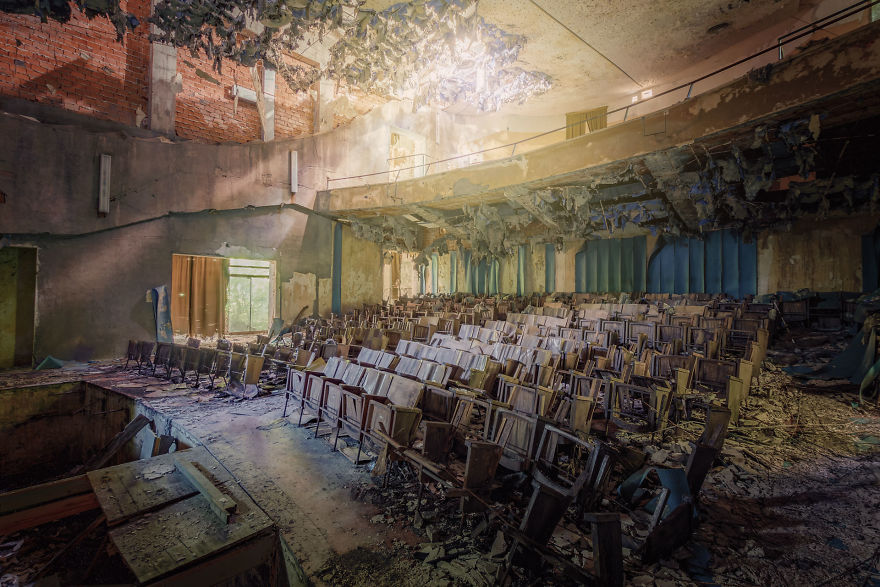
It was an auditorium. The hospital had a large medical community, some of whom working on research. These kind of rooms still exist in most hospitals, where there is the need to share the findings of studies or to provide training to other people. Often these rooms double as spaces for cultural events or for staff meetings.

Idyll....maybe
I feel like us humans are winning the war on nature, not losing
Load More Replies...Fixation (Kids Edition)
kids edition? KIDS EDITION! WTH WAS WRONG WITH PEOPLE BACK IN THE DAYS!!!
Invastigation
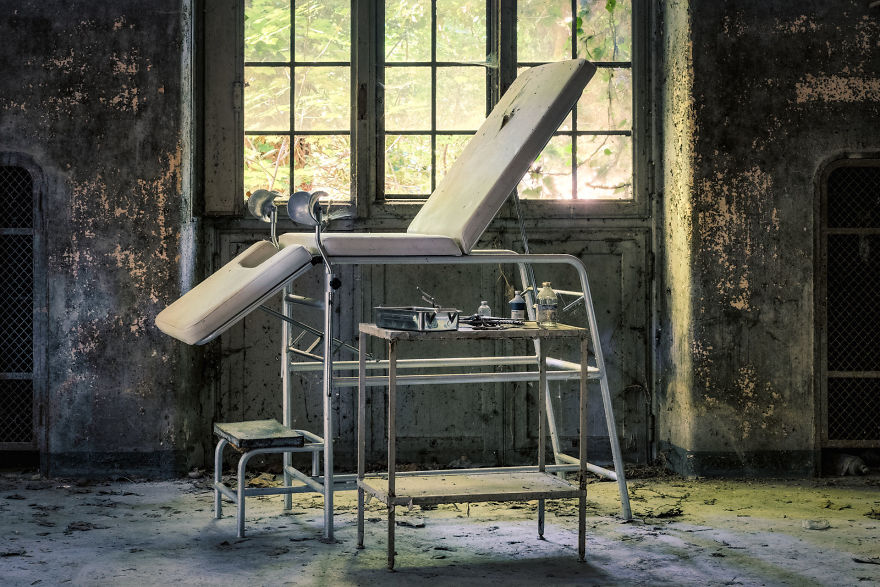
If it's a long term facility, gynecological exams would still be a necessity for some. For some, leaving to go to a dr.s office might be unnecessarily traumatic, if it could be taken care of on premises, better for the patient
I guess in this big asylums they had also some doctors for other type of necassary treatments.
Load More Replies...Contrary of what many of you think, forced sterilization for disabled and mental patients has always been strongly opposed in Italy as an hospital practice and never saw official employ in the treatment and management of the so called "lunatics". While in Germany the Nazi regime exterminated 400.000 disabled and mentally impaired persons through a plan called AKTION T4, in Italy this practice was effectively stopped by the firm opposition of the Italian Psychiatric Society, led by the renowned psychiatrist Arturo Donaggio (despite him embracing fully the principles of the Racial Laws of 1938). United States, Switzerland, Sweden and many other countries practiced it too, though on a smaller scale. That said, gynecology was of course an important part of the medical practice in these hospitals, housing hundred of female patients, who had to undergo checks and procedures not necessarily linked to their mental troubles.
On the dark side, though, there are reports of coerced sex happening in these institutions. Inmates, mostly female ones, were not immune from abuse by the people working around them, many of whom were clergy, particularly when their illness was prejudicial to the ability of consenting.
Load More Replies...Gynecologic bed setup. Used for a wide range of gynecological treatments, including giving birth. Consider several STDs lead to psychiatric problems, and some cures for those were in the early stage of introduction at the time. The hospital had several hundred female patients, some of them interned for life, some only temporarily. The hospital had to provide a basic level of care for common illnesses, not only psychiatric care. The most serious cases may be transferred to separate hospitals, but routine checks, STD cures and even giving birth was dealt with in-house.
Load More Replies...Silence Is Golden
Claustrophobia
The End Of The End
the door should be an 80s door. also, some buildings was still in use till the mid of the 90s but in other circumstances
Load More Replies...One Way
Nof4
1981, though part of it was repurposed and used for a few years more. in 1978 a national law changed the way healthcare was provided to chronic mental patients, and these kind of institutions closed for good in a few years.
Load More Replies...At least they could be outside. When I went to a mental hospital, we were allowed to go into a tiny concrete fenced in area outside for like 5 minutes. And in most of the rooms, their were no windows or tiny windows.
Many of the manicomis had different kinds of areas. the ordinary patients had the possibility to go in the outside area of the building. What you couldn't see at the picture, there was a fence on the right side. so they are were still locked
Load More Replies...Lonely End
The history of psychiatry is steeped in both fascination and darkness. This intriguing dichotomy, much like the provocative humor in children's literature for adults, can challenge societal norms and provoke a wide range of emotions.
For those interested in exploring the interplay between controversial content and human reactions, you might find the exploration of dark humor in unconventional storytelling especially intriguing.
Ad Infinitum
As a 73 year old white American male, and having lived through the end of one World War and several intermediate military events, one during which I served with initial pride and ultimate embarrassment, and watching the charade in which we now reside, I can only say that these photographs and the accompanying comments leave me approaching insanity just at the thought of how we have adversely evolved in the past single generation. Sure, we reached the end of not knowing how to treat the less fortunate and less educated, but now we subject them to ideology that is ultimately more profound than the forces that led those before us into these walls of horror. Much the same as trying to raise our children by reading a brilliant author publication from the last generation is ludicrous, I would submit that, like much of our history that repeats itself, the halls of the perceived insane will again be full at some point. S**t. One Flew Over the Cuckoos Nest. The answer, my friend, ........
And to think, here in America, Staten Island N.Y to be exact, we did the same thing.. only worse. Willowbrook State School. If anyone wants to be horrified by the way our developmentally disabled was treated, look that place up. Let's pray that history never gets repeated :(
Load More Replies...wait, you lived through ww1 or ww2.... well, anyways, i want to say that you are well respected by me and....just thanks for the comment you made.
The Takeover
Full Service
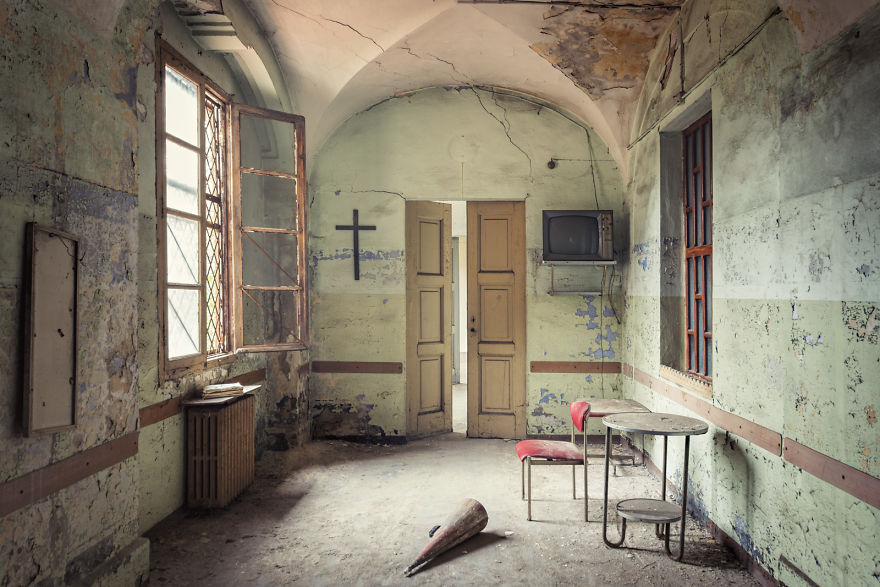
Looks too big to be a dunce's cap. To me it looks more like the old style of fire extinguisher which were cone-shaped. You can just see the handle on the other side of it.
...that is most likely a camera...so that the staff could see them, how sad that a dunce cap be shown
Bloody Walls , Dark Hearts
If that's blood, that's a lot of blood (idk, maybe discoloration of some kind? People who know this stuff, help)
Thats just color. Bloody Walls is just the title a way of expression here
Load More Replies...blood.....*shivers* blood..... a lot of it......yeah, i'm scared of that so, next picture!
It is the residue from iron hardware. pipes and rain gutters that have perished over time.
Creepers
Junglecamp
What, exactly, is this area? Is it indoors or outside? Can't tell a think from this. Except derelict. This is creepy and fascinating all at the same time, this series of photos.
That was an indoor area. You can see the ceiling remains on the right. When a building is abandoned, it can stand for a long time, until the ceiling collapses. Once the ceiling and roof go, the rest quickly follows. Building interiors are not made to deal with humidity and ice, so they decay quickly. Water stagnating eats away the concrete. Plants start to grow and their roots push apart the masonry.
Load More Replies...The madhouse is a giant Soundbox,
and the delirium: echo,
the namelessness: measure
The madhouse is the enchanted one
Mount Zion on which you
the tablets of a law receive
that people do not know.
(Alda Merini, poet, over 20 years inmate at the Manicomio)
I really think that these kind of buildings could have been very beautiful in their time. It is just very sad to think about how bad they treated the patients in those times. How many of them died there and how many of them had a declining mental health after they went to a place like that is just horrible to think about.
This would never exist in the USA. First the antique dealers large and small would have stripped it down to the walls then scrappers would tear out any bit of metal leaving a rotting bare ruin. I am looking at thousands of dollars worth of things there.

Despicable and tragic. To make it worse, "The church also had the power to determine who was mentally ill."
Where I used to live, in a city of more than a million people, there was a homeless population that mostly wandered around aimlessly downtown. I'm not sure that turning people with severe mental illness loose to fend for themselves is kinder than putting them in a hospital. At least they'd be fed, clothed, and sleeping in a bed instead of under a stairwell in a parking garage. I'm not sure what the answer is, but there must be something between the two extremes that would be better for them.
In many places in Italy, like Trieste, the transition between closed wards and community care was carefully managed. In many places it was not. People who like my uncle had been in a locked ward all their life were simply turned out on the streets. That was its own tragedy although it makes for less striking photography. The saddest part for me was to reflect on how a progressive law like Basaglia’s would never be passed today in Italy.
One of my uncles was In an insane asylum from when he was 18 to his death. First in Udine, then during the war he was moved to Volterra, then back in Udine. After Basaglia not all hospitals were closed, because there were people like my uncle who could not (and would not) live outside after a lifetime of institutionalisation. The old manicomio was turned into a therapeutic community and he lived there, happily working as a gardener, until his death. To be fair these don’t look like prisons, they look like Italian hospitals which have become derelict. I have been inside modern, functioning hospitals that looked a lot more depressing. I have also been in a psychiatric ward, post-Basaglia, and it was a far more positive experience than the time I spent in a private luxury clinic. Mental illness is not pleasant but the psychiatric ward felt safe and restful. This was in Padua, Basaglia’s own old ward.
This is so sad. I have spent my share of time in psych wards and it is so traumatic I can't imagine spending years and years in one. I can now be trusted with sharp objects as of yesterday though.
I really think that these kind of buildings could have been very beautiful in their time. It is just very sad to think about how bad they treated the patients in those times. How many of them died there and how many of them had a declining mental health after they went to a place like that is just horrible to think about.
This would never exist in the USA. First the antique dealers large and small would have stripped it down to the walls then scrappers would tear out any bit of metal leaving a rotting bare ruin. I am looking at thousands of dollars worth of things there.
Despicable and tragic. To make it worse, "The church also had the power to determine who was mentally ill."

Where I used to live, in a city of more than a million people, there was a homeless population that mostly wandered around aimlessly downtown. I'm not sure that turning people with severe mental illness loose to fend for themselves is kinder than putting them in a hospital. At least they'd be fed, clothed, and sleeping in a bed instead of under a stairwell in a parking garage. I'm not sure what the answer is, but there must be something between the two extremes that would be better for them.
In many places in Italy, like Trieste, the transition between closed wards and community care was carefully managed. In many places it was not. People who like my uncle had been in a locked ward all their life were simply turned out on the streets. That was its own tragedy although it makes for less striking photography. The saddest part for me was to reflect on how a progressive law like Basaglia’s would never be passed today in Italy.
One of my uncles was In an insane asylum from when he was 18 to his death. First in Udine, then during the war he was moved to Volterra, then back in Udine. After Basaglia not all hospitals were closed, because there were people like my uncle who could not (and would not) live outside after a lifetime of institutionalisation. The old manicomio was turned into a therapeutic community and he lived there, happily working as a gardener, until his death. To be fair these don’t look like prisons, they look like Italian hospitals which have become derelict. I have been inside modern, functioning hospitals that looked a lot more depressing. I have also been in a psychiatric ward, post-Basaglia, and it was a far more positive experience than the time I spent in a private luxury clinic. Mental illness is not pleasant but the psychiatric ward felt safe and restful. This was in Padua, Basaglia’s own old ward.

This is so sad. I have spent my share of time in psych wards and it is so traumatic I can't imagine spending years and years in one. I can now be trusted with sharp objects as of yesterday though.