“My Native Language Doesn’t Have The Word For It”: 35 People Share What Words In Foreign Languages They Absolutely Love Using
Every language boasts words that are one of a kind. While certain ones are easier to pronounce, others might make a foreigner sound like Pink Panther trying to buy a dam-burrr-gheur. Some, though, are charming because they are oddly specific. For instance, the Japanese word for a lonely mouth (kuchisabishii) or the Finnish one describing a person drinking in his underwear in just several syllables (kalsarikännit).
Here at Bored Panda, we have gathered some of these fascinating linguistic gems for you to read. Shared by the r/AskReddit community members, they might be something you want to add to your vocabulary.
If you enjoy learning about unique terminology, don’t miss the chance to browse the list of times people were confused by the English language for some more entertaining content about languages.
This post may include affiliate links.

Komorebi (木漏れ日)
Japanese for sunlight that shines through trees. I like the sound of the word but also the fact that a word for such a concept exists in the first place.
Yes, I love Dappled. So poetic. You can also have a dappled horse. 😊
Load More Replies...As a gamer I call them godrays. As an atheist I call them spaghetti monster rays
I might want to beg to differ: "Zwielicht" address this unique play of light (mostly in summer) when the sun has (almost) set but the sky still shines in a unique orange/pink/violet tones... making you kind of nostalgic and longing. Another use for ""Zwielicht" is a more dark one: like those 'film noir' movies or that 80s esthetic where light shines though big fans slowly moving in the background. Anyway, "Zwielicht" is not really a word when describing a walk through the forrest in spring time and seeing the light peeking trough trees when entering a clearing.
Load More Replies...According to Ethnologue, there are currently over seven thousand languages, however, more than half of the world’s population only use 23 of them. Sadly, as much as 40% of the languages are spoken by less than a thousand people, which puts them on the endangered list.
Data from 2022 shows that out of the 23 languages, the most popular one is English, followed by Mandarin Chinese. The third on the list is Hindi, then Spanish, and French taking fifth place by a thread, as Standard Arabic is left a close sixth.

Saudade - Portuguese for 'a nostalgic longing for something that no longer exists and knowing that it may never return'. What a lovely word.

Not quite correct the explanation. Saudade can also mean (and this is the most common definitionvactually) missing someone or something you haven't seen/had for a long time, but still exists. For example, you haven't seen you best friend for months, so you miss them, you have saudade. Or even have saudade (ter saudade) of eating your favourite apple pie, for example.

Nostálgica is in Portuguese too, but it's different than saudade. I describe saudade as a longing so deep that the pain of loss is etched in your bones. The thing or person you miss is with you but forever just out of reach. Saudade is the homeland you'll not see again but you can still smell the salt in the air, or the brother that passed away but you see him in the mirror and it hurts every time, or the lover that you will never stop wanting and everything is ash without her. It's not merely nostalgia, saudade is suffering. This is why Fado songs are so sad. There is something at the heart of Portuguese language that is tied to loss. I think it is a culture of sea folk, and the sea is beautiful but cruel.
Load More Replies...This sounds similar to the word "hiraeth," which is a longing for a home that never was, or one was and never will be again
Ironicaly in the Land of " saudade " ( Portugal ), " dor " means pain, with tende to go hand on hand with saudade.
Load More Replies...My recomendation for any One wanting to fell what " saudade means " listen to a song normaly you just have to listen to Fado, but this song, though in essence its a fado, it hás a more modern sound ( vinte vinte pranto )
Chega de Saudade. although that song is old too. There's the Eurovision song Saudade, it was pretty good, and the other Fado song that won Eurovision Amor Pelos Dois. That one is super pretty. Saudade is a very important concept in Brazilian music as well.
Load More Replies...
Verschlimmbesserung - German noun for an attempted improvement that only makes things worse
verschlimmern = to make something worse / verbessern =to make something better. -ung just makes it a noun.
Fun fact: if you look this word up in the dictionary, you'll find a picture of me
Lisa: Dad, do you know what schadenfreude is? Homer: No, I do not know what shaden-frawde is. Please tell me, because I’m dying to know. Lisa: It’s a German term for “shameful joy,” taking pleasure in the suffering of others. Homer: Oh, come on, Lisa. I’m just glad to see him fall flat on his butt. He’s usually all happy and comfortable, and surrounded by loved ones, and it makes me feel. … What’s the opposite of that shameful joy thing of yours? Lisa: Sour grapes. Homer: Boy, those Germans have a word for everything.
I don’t watch The Simpsons anymore but I always loved Lisa’s use of language- especially the words she invented. The one I always think of (and use myself) is “dumbening.” It’s from an episode where Grandpa tells her how smart Homer was as a kid (other relatives, too), and she starts to worry that something in the family’s genes makes them start out smart as kids, but become dumb as adults. She’s thinking out loud as she asks her journal ‘Do all Simpsons go through a process of dumbening? Wait. That’s not how you spell dumbening. Wait. Dumbening isn’t even a word.’
Load More Replies...The German language is full of course words that qualify for this list.
In some countries, citizens speak more than one language. This is true for some countries in Europe, such as Switzerland, Luxembourg, or Belgium, and beyond—South Africa and India, for instance. But one of them stands out from the rest. The country with the most languages is Papua New Guinea with an astonishing number of nearly 850.
Home to such a variety of speech, the country has a population of fewer than 9.5 million people. A large part of it comprises indigenous groups, some of which have less than a thousand people speaking their mother tongue. Unfortunately, that puts these exceptional languages in danger of disappearing.
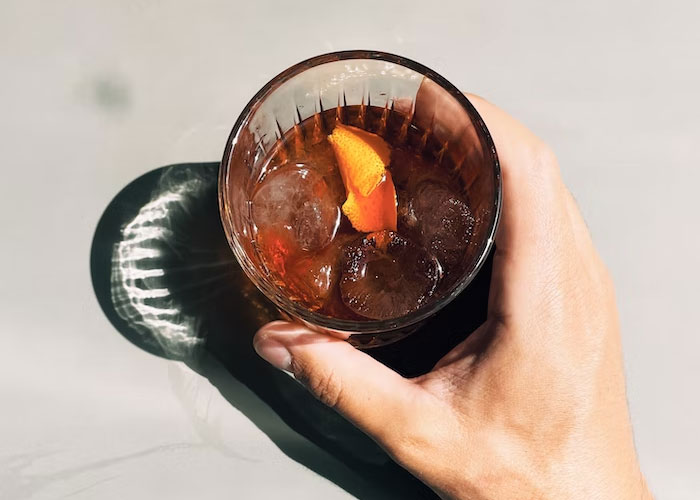
kalsarikännit - originating in Finland, in which the drinker consumes alcoholic drinks at home, dressed in as little clothing as possible, mainly in underwear with no intention of going out.

"Consumes alcoholic drinks" makes it sound much "prettier" than it is. 😂 More descriptive of the word would be "to get drunk at home ——" Kalsari=underwear, känni=drunkenness, so kalsarikänni is quote literally "underwear drunkenness"
My mom and mummi used to say rakka kannis ( I am sure spelling is off)
Load More Replies...Kalsariskank is where you drink alcohol in as little clothing as possible with every intention of going out.
The rarity of many languages just makes them more precious. Treasures not to be lost. We have allowed so much to slip through our careless grasp that it really behoves us to NOT belittle the languages of other peoples.
For people who make holes in the ice so they can go swimming, that could be considered over-dressed, no?
I think I've heard this one before from a Finnish ex-coworker. Does it translate directly as 'underpants-binge'?
It is a phrase not a word, but in Italian, to say "I love you", you usually say "ti voglio bene", which literally means "I want well for you". In english "love" means so many different things and I feel like this idea "I want well for you" encapsulates what love really means.
"Ti voglio bene" express "affection"; is something we Italians say to anyone that's not our spouse/partner, child, (pet 😁) etc for whom we feel deep love - "ti amo".
Italian is **THE** most beautiful language. Plus, Italian food and style are world-beating. Shame about the politics though 😂
God created a beautiful land, full of art, nature and all of delicious things. Then to be fair created italians.
Load More Replies...In Flamish (which is Dutch but with a twist), they say 'I am fond of seeing you (Ik zie u graag). Wich was very confusing to me and I didn't discover until years after I heard it for the first time (on TV), it does really mean' I love you'
In norway we have many words for loving someones. "Elske" which is a deep and profound love that comes with time, mor deep than a crush, but also the profound love one feels for ones children. "Forelsket", which is romantic love; to be enamoured, more related to crushes, indicating that it can pass and is flightful. "Gla i" which is to be fond of, but also means you love someone; you can tell your friends and even sometimes a close co-worker that you feel like that, but equally your family members and children or even your spouse on a daily basis, as a sign of affection or to show them they are important to you. We also have the Word "kjærlighet" (lovingness/caring/love) which is a general word that can encompass all forms of love. You could talk about it being important to foster kjærlighet i the world, and that would be a perfect use of the word. Norwegians can seem cold and distant but it's not really so. It always baffeled me english doesn't describe love like this, since learning.
Languages other than English seem to do so much better at describing matters of the heart
Tell that to Shakespeare 😉 We can express love beautifully, just not succinctly lol
Load More Replies...We can use "ti amo" when you fall in love with someone. Someone who will become your husband or wife or fiancee. Roughly speaking, we use such sentece for people we might have a sex intercorcourse. For parents, friends, nieces, grandparents, aunts, uncles, we say "ti voglio bene"
It can be confusing. Also in italian when you miss someone we say "mi sei mancato" (lit "you missed to me") so it is not easy to understand that in english the person who misses the other is the subject (I miss you)
That is reserved for people with whom you are in a fiance/marital relationship, sometimes parents or children, but mostly the former everyone else: ti voglio bene
Load More Replies...Papua New Guinea alone has 35 times more languages than there are official ones in the European Union. However, Europe has more than the 24 official ones that can be seen on the EU documents.
The continent is home to roughly 200 languages, ranging from well-known English, Spanish, and French, to the less widely-represented ones, such as Basque, Gaelic, or Flemish. Based on the number of native speakers, the most popular one in Europe is Russian, followed by German, French, and Italian. English takes fifth place for the number of native speakers, however, it is the golden prize winner when it comes to learning a second language.

Água-Viva (Brazil/Portuguese), it’s jellyfish but if you translate it word by word it means “alive-water”.

This comment is hidden. Click here to view.
Load More Replies...Please, how do I say that? What a lovely concept
Load More Replies...Agua Mala is how a Jellyfish is called in Spanish. It means "Bad Water"
Not sure where you are from, but we call it agua viva as well in Southern South America
Load More Replies...As opposed to water of life = whiskey and aquavit. Now I have visions of smashed jellyfish 😄
In Italian: Medusa. (Similar in French, Spanish, and other languages)
It's the same in Portuguese. We have both, medusa and água-viva. In Spanish you can say Medusa or agua mala (evil water)
Load More Replies...We do the same in Argentina and Uruguay, I think the use is related to our first conquerors coming mostly from Canarias and Sevilla
Load More Replies...This is where it begins… by the time I got to Post #10 in this article, I had to scroll back up to the top and re-check the title. It’s ‘there’s no word for this in my language, but there is in this language.’ The first post is perfect. There is no English word for the sunlight that shines through trees, but the Japanese have a word for it. There are also English words for “jellyfish,” “butterfly,” and “sometimes.” The fact that someone thinks a word is fun to say, or that the literal translation is cute or weird- they don’t count, and it’s disappointing that posts like this made it into this article. Make a new article based on those criteria.
How about "cafuné". In Portuguese, this is the act of sharing love by running your fingers through your lover's hair. It can also be with your pet, so you could say petting in English, but would you say you pet your husband? I think it would be off
Load More Replies...
Meerschweinchen, it’s German for Guinea Pigs, I like it because it literally means “little sea pigs”. Which makes no sense.

Fledermaus means flutter mouse, not sky puppy. That'd be Himmelswelpe
Load More Replies...It's the same in Hungarian, tengerimalac. (Sea piglet.)
Load More Replies...The 'sea pigs' name makes sense if you know the origin story of how Guinea Pigs came over on a boat from Africa, and the sailors found that people loved them to keep as pets, so they would sell them on the docks for a 'guinea' (British equivalent of five cents, I think) apiece. And the 'pig' part is because when they squeal they sound like little pigs.
"One debunked theory from the past is that the word guinea came from the English gold coin of the same name that was said to be the cost of a guinea pig. This theory is untrue because guinea pigs were mentioned by name in writings dating from the late 1500s, yet the guinea coin was not created until 1663." --- lafeber dot com
Load More Replies...Oh. We have a word in polish that sounds almost the same - "morświn", but it means "porpoise" (latin Phocoena)
Load More Replies...I’m going to start using this! Juuust as soon as I learn to pronounce it without sounding like I’m choking on a walnut
You can hear it here: https://de.forvo.com/search/Meerschweinchen/ 🙂
Load More Replies...
Tokidoki - “sometimes” in Japanese, just really fun to say lol
I call my horse "Basashi" - it means raw horse meat and is a dish eaten over in Japan.
No, how could you do that? So cruel but I'm laughing here!
Load More Replies...Isn't that the name of the line that has really freaking cute unicorns and mer-unicorns? I have a car freshener I got from Hot Topic and I wanna say it's Tokidoki
English is currently the lingua franca of the world, however, knowing other languages can open a lot of doors as well. You can get better acquainted with certain cultures as it enables you to communicate with the locals. It can also be useful at work or going through lists of funny foreign words, some of which might be familiar if you’re bilingual or multilingual. Recent data shows that around 43% of the world’s population is bilingual.

kuchisabishii (Japanese). Kuchi means mouth and sabishii means lonely. Kuchisabishii means you're longing to put something on your mouth - essentially the feeling you have when you eat something (or chew on your nails or pencil) because your mouth feels bored.
Interesting... I know one of the reasons I vape is because it's a self-stim, didn't know there was a word for it.
In Germany they have a word "Kummerspeck" which translates to "grief bacon" describing that exact sensation but in an emotional sense.
It's the same menknhg as amuse bouche...don't lnow if I spelled it correctly lol.
Krankenwagen
German for ambulance.
I know that a lot of people think that German sounds aggressive, but look. The word for bat is Fledermaus (thanks Zedrapazia!) Flutter-mouse. Tell me that's not kawaii as fu
Fledermaus actually, but it does translate to flutter mouse. And Schmetterling would be smashling.
Load More Replies...I used to love saying....das ist krank in der kopf.... they are sick in the head, ALOT. I'm not German but at least my secondary school German lessons left me with something.
Nippel is the german version as well for nipple, Brustwarze is trying to de-sexualise it, I think.
Load More Replies...If you want to be really correct (i.e. German!) you have to differentiate between "Rettungswagen" for the emergency transport of sick or injured people to the "Rettungsstelle" ER and "Krankentransport" for the non-emergency transport, e.g. bringing people who can't walk to the doctor.
My favorite German noun is Rathaus. It's perhaps the most appropriate name for a city hall I've ever heard.
Because the city council "Stadtrat" is meeting there.
Load More Replies...Another one is the German word for birth control pills… antibabypillen
"wihajster" (pronounced: vee-hay-ster) in Polish, which is a placeholder, when you don't know what some object is or what it does. It comes from German "wie heißt er?" (“what's it called?”).
Funny thing, in Germany we say Dingsda or Dingsbums in that situation
Load More Replies...You put the whatchamacallit into the thingamajig then put the whole shebang into the doohickey which then attaches to the doodad...
"Camptown ladies sing this song, "Doodad,doodad' ..."
Load More Replies...In Mexico, we often say "esa madre". That is literally "that mother".
JAJAJA. Mexican slang is so funny to me, for absolutey no reason
Load More Replies...In Finnish it's hilavitkutin or if it's a small (trinket) object it's tingeltangeli.
„Wie heißt er“ actually means „what‘s his name“ but close enough. I never heard this in my Polish family. Maybe it‘s a local thing.
Some languages are considered easier to learn than others. Among the most difficult ones, you might often see Mandarin, Arabic, or Korean. These tongue-twisting systems of words feature a distinctive set of rules or other subtleties that make grasping them quite a quest.
For instance, Mandarin is a tonal language, which means it relies heavily on intonation. The same sound usually has four different transcriptions and meanings, depending on how the voice is used. Arabic is no easier as it usually features four different ways of writing every letter and reads from right to left, unlike most of the other languages. Korean is a challenge on its own as it is an isolate, meaning it does not belong to any larger family of languages.

Papillon. Means butterfly in french and its fun to say
It sounds like the name of a butterfly crushed on a windshield of a car
Load More Replies...Italian is farfalla. Spanish is mariposa. All four languages say it beautifully! German: Schmetterling. Sounds like a tomato hitting the wall.
Borboleta in Portuguese, it comes from 12th century Latin word belbellita which just means beautiful. Papillon comes from ancient Latin papilio which meant butterfly.
Load More Replies...In Finnish pili=peepee and pala=a piece. A peepee piece would be pilipala, because it would be a compound word.
Load More Replies...Same in Norwegian. Literally posted it seconds ago :D
Load More Replies...Great movie from 1973 with this title. Stars Steve McQueen as Henri Charrière, whose nickname is Papillon.
This is also the name of a toy dog breed noted for its huge ears
Myötähäpeä That’s Finish for secondhand embarrassment. My native language doesn’t have the word for it so I use myotahapea instead.

Of course, that word has a more beautiful sister myötätunto which means compassion.

Surely we just use "Cringe". It's not specific to the situation but surely is what we feel.
"Vergüenza ajena" in Spanish. It even has the two dots on top
Yalla in Arabic means hurry up let's go or right now depending how you use it

That's something! My Grampa from my Mom's side always says "HALLA HALLA!" and for the very same reasons too! And we're Puerto Rican! 🤭
My time to shine, your time to guess the languages and add more: katcha palli palli (my favorite one!) ; john wah; on I va; Vamonos; Andale andale; Andiamo; Lets go; Dalli dalli; Alles vouz; halla halla
Load More Replies...My favorite thing in the middle east was walking down the street singing "la la la la" to all the vendors. La means no in Arabic. La shukran (no thank you).
Yalla means Go, either "Go now" or "Go go go go!!!" Also when they want you to order in the restaurant, they might say "Yalla" The more often Yalla is said the less it means "Lets go" and the more it means "GO GO GO HURRY UP!"
Like "Dai!" in Italian, which just sounds wrong in an English context.
Load More Replies...Growing up I’d hear SCHNELL a lot. Pretty sure a lot of folks are familiar with this German term.
I heard this word A LOT when I worked at a Mediterranean restaurant. Never knew what it meant. Makes so much sense
There are believed to be around 142 language families in the world. Some of the most popular ones include Niger-Congo (which has 1536 languages), Austronesian (with 1225), Trans New-Guinea (with 476), Sino-Tibetan (456), Indo-European (447 languages), and Afro-Asiatic (369).

Die!!!!
It means stop/ enough in Hebrew.
My kids yell it at anything/one that frustrates them.

In Bosnian it’s spelled daj but sounds like die, it means give. Sounded kinda weird when my kid was just starting to talk and kept repeating die die die to me in the restaurant one time because she wanted some water.
Same in Croatian, my step father is from Korčula. Daj me, give me.
Load More Replies...In Polish, the word "daj" (pronounced "die") means 'give me'. You can use it if someone's taken something that belongs to you, and you want it back, etc.
A few other commenters have said the same word with the same meaning and pronunciation in other languages! That’s really interesting =)
Load More Replies...Short for Dayenu (die-AYN-oo), which means "it would have been enough." Many people now use dayenu to simply mean "enough!"
Ilu ilu hotzianu hotzianu mi’mitzrayim hotzianu mi’mitzrayim dayenu…
Load More Replies...Also the german article for female nouns or for refering to nouns in their plural form
Often it’s transliterated as “Dai” - pronounced the same as die in English.
Load More Replies...
Ikigai - lit. The Fruit of Life (in Japanese).
It is the philosophy of how to live a good life, it's elements and how to exercise them.

"Kaizen" is a Japanese philosophy where each day is an opportunity to improve, even if it's just by a little
Then companies in the US steal the word and make it a dreadful thing
Load More Replies...In my opinion, Japanese is one of the most beautiful languages - it has so many obscure and pretty words! I like to dissect Japanese words to name characters sometimes, just because they sound so nice to say.
Like Finnish "Sisu" which is kind of concept/philosophy of the character of Finns as being strong and persevering, thus leading a good life. It's also somewhat to do with love of the natural world around you, too.
*Lebensmüde* - Lebensmüde is a compound noun made up of the words Leben (life) and müde (tired). It, therefore, translates to 'life tired' and describes the feeling of being tired or weary.

This is wrong. It describes a person showing risky behaviour that could cause them to get seriously harmed. It has nothing to do with being tired. For example a person balancing on a chair on top of a desk to change a lightbulb could cause someone to exclaim: are you lebensmüde? Come down there! It's used similarly to the exclamation: are you nuts? When witnessing risky and life threatening behaviour.
It indeed is used for risky, stupid or bold behaviour. Another use case would be a person tired of his/her "boring" life and seeking to do increasingly dangerous things like martial arts or base jumping to enrichen his or her life.
Load More Replies...Lebensmüde is meant for describing people who seem to be wanting to die (e.g. crossing a busy road at red light) I never heard it meaning being tired and I am pretty sure it is not the correct use.
In Afrikaans we have a similar word, "lewensmoeg". It's when you're just kind of tired of life. Like everything in your life is just getting you down right now.
The German word means nothing like this. This translation here from OP is wrong. Lebensmüde means behaving reckless and risky, risking your own health and life by behaving dangerous and stupid.
Load More Replies...Yes, one meaning is being suicidal and the other doing stupid dangerous (possibly life-threatening) things, as many others have already said. "Lebensmüde Gedanken" in a clinical/psychological context is used to mean thoughts of being weary of life or not wanting to continue to live, but not as strong as wanting to commit suicide.
Load More Replies...Nowadays mostly used for idiots doing dangerous stuff, like picknicking on train tracks, standing on an office chair to change a lightbulb, mountain climbing in flip flops or asking up your teenage kid to clean their room right after they returned from school and before eating anything.
No, it‘s not fatigue. The „müde“ = tired in combination with life means real 1,) suicidal or 2.) doing stupid things all the time, that coul kill you, even if you don’t want to die.
Load More Replies...Weltschmerz & lebensmüde are Not equal but often related. Lebensmüde has two Definitions . [1] having no joy in life, tired of life, longing for death (maybe because of the Weltschmerz/worldpain (Feeling powerless, tried, hopeless about the world and what Happens) [2] figuratively, ironically: downright reckless; unreasonably courageous so that one's life is at risk.
Load More Replies...I just call it ‘my (insert number) th existential crisis for the week.’
A smaller family of languages—known as Dravidian—boasts 24 of them, one of which is considered to be one of the oldest languages still spoken today. It is called Tamil and is used by over 85 million native speakers, mostly in India, Sri Lanka, and Singapore. Other ancient languages used to this day include but are not limited to Sanskrit, Hebrew, Egyptian, and Greek.
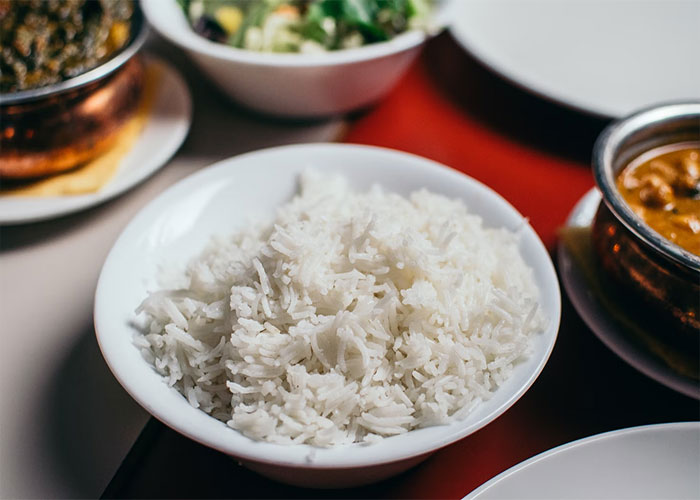
puto
sometimes it's rice
sometimes it's swear
you'll never know
Don't call someone a rice in Mexico. You will be punched... or shot...
In Portuguese it only means a swear word though 😅(usually meaning son of a bïtch)
No, puto means pissed off. Puta means whore. We may say filho da puta (son of a whore) Or a puta que pariu (the whore that birthed you). Or maybe you can say ela está puto (she is pissed off)
Load More Replies...I think this is Tagalog the language in the Philippines.
Load More Replies...I am Spanish native speaker and my first thought: Why calling something so delicious with a bad word?
My favorite word or phrase really, is "Oh la, la, c'est cher"–which means, "Oh my, it's expensive," in French. It was one of the first phrases I learned in middle school when I started taking French as an elective. When I went home and shared with my mom what I learned, she was so amused by how the alarming phrase sounded. She couldn't stop laughing.T his led to her constantly asking me to repeat it whenever we were in the presence of her friends, and I milked it. This is one of my treasured memories of my mother.

The "Oh la la la" is quite a stereotype, it's used but really not as much as people believe. People would rather say "Putain c'est cher"
but it would not be a good idea to teach kids the word putain in middle school...
Load More Replies...My grandmother used to say, "Bon marche est cher" (Cheap is expensive) meaning if you buy something cheap it will likely be low quality and need to be replaced a lot sooner so it's usually best to spend more if it's higher quality.
Like my observation that there's nothing more expensive than a cheap Mercedes
Load More Replies...Poisson (fish) in French sounds so weird. I can hear the chef in The Little Mermaid singing about it and I always smile
"Oh la la la" sounds more sarcastic really You would use it when you're making fun of somone
"Cher" in French means "dear," which is an obsolete English idiom for "expensive."
My mother was basically monolingual, too, even if she grew up in South Texas in the 50s and probably heard Spanish fairly often).
“Tabarnak!” I love how, instead of being bodily-function based like English swear words, French Canadian sacres are mostly related to Catholicism. This one is my favourite as it’s the rough equivalent of the versatile “f**k” swear in English, so many uses.

Well Pandas, use this instead of the ordinary english swear words? To stop the censoring? :)
Similar in Bavarian dialect (German) "Sagra" for Sacrament, or "Zefix" crucifix, so Tabernak would be "Tabernacle?"
We used to joke we were part of the Tabarnakal Choir
Used to play sports with a French Canadian team. All of the tabernacles and putains were hilarious
Me too. Doesn't she spell it with a c at the end, though?
Load More Replies...Being around small children and church groups, I've taught myself to "cuss" by saying: RABBITS! No one is offended.
Even though unique languages are something to be cherished, there is a way to connect with the rest of the world using only one foreign one. Created by a Polish doctor Ludwig L. Zamenhof back in 1887, Esperanto is a universal language, which is politically and socially neutral. It does not belong to any country or ethnicity, and is believed to be easy to learn due to its uncomplicated structure and straightforward phonetics. According to Esperanto.net, there are roughly two million speakers in the world.
Winkel. It means "shop" in Dutch.
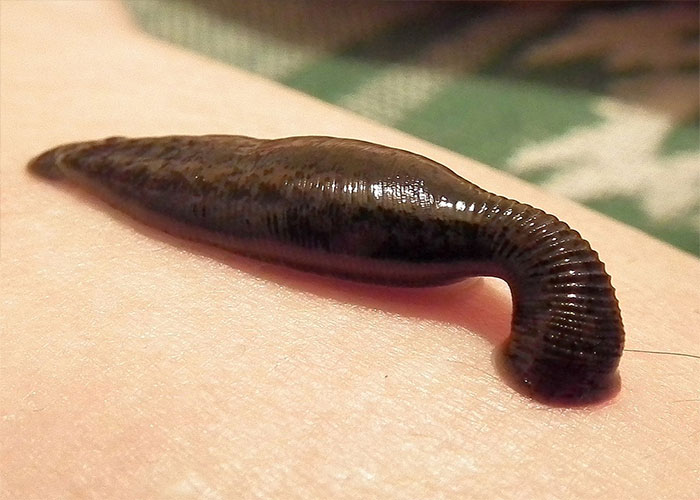
It sounds funny if an English speaking person says it, in Dutch it's pronounced "vin-kel"
Yep. Best is the little wire shopping carts are called winkelwagons.
sanguagsuga - “blood-sucker” leech or bed bug in italian. can be used to describe a person too.

In Spanish we say "sanguijuela". And it is used as a insult, too...
In indonesian "lintah darat" (literally translates to land leech) means someone who gives loan with very high interest rate.
Sucking your money without giving back would be a mooch in my world. Sucking energy/time I would call draining. I am no where near as cool as everyone else who’s multilingual. I bet you can guess what country I’m from… 😔 I’m doing my best…
Load More Replies...oiseaux its french for "birds" and none of it is pronounced the way it looks like it should
There’s a YouTuber called Loic Suberville who makes fun of languages like French, Spanish, and English. One of my favourite videos of him is when he made fun of “eau” for having 3 different vowels but sounding like “o” which isn’t in the word.
Thanks! I was trying to remember who this guy was. I've seen his videos before and thought they were hilarious!
Load More Replies...Believe it or not, the American English "wazoo" came from this word's pronunciation and the typical American ignorance and apathy toward learning the true meanings of words from other languages. While it means "birds" in French, it means "buttocks" in American
Not sure if I believe this, since the word came into play around the same time as gazoo and kazoo, according to the OED.
Load More Replies...Another unique language enabling more people to communicate is sign language. Based on physical movements, such as hand gestures, grimaces, and pointing, it allows people to carry out a conversation when it’s not possible to do so verbally. There are around 300 sign languages worldwide, as they differ depending on the country or region where they are used.
Susurra. Spanish for whisper!
And both are coming from Latin (susurrus = the whisper, whispering)
Load More Replies...We have two words in Portuguese for whisper. Sussurro (an extra s) and my favorite cochicho, pronounced coh-SHE-sho. There's an old Portuguese rhyme "Quem cochicha o rabo espicha" who whispers has their tails stretched. We have lots of these nonsense phrases, but it is an admonition against whispering.
In Germany (to deterr children from being disrespectful I think) it's "wer flüstert, der lügt" (the one who whispers, lies). Flüstern = whispering
Load More Replies...That's ironic cause the 's' sound is the loudest sound to have to whisper.
Susurro is a whisper, susurrar or susurra is the verb. It's a good word.
Cwtch - Welsh for a cuddle
I’m Welsh born and bred and my favourite word is for jellyfish- ‘pysgodyn wibli wobli’ wibbly wobbly fish
I Googled the pronunciation and still can't figure it out, something like crunch without the R?
The Welsh have evolved beyond the need for vowels. Either that, or the French took them all.
For those wondering how to say it, it rhymes exactly with the word butch. Just replace the b with the c and llongyfarchau pawb, ti'n siarad Cymraeg!
Is that why people go "cootchie-cootchie-cootchie" when tickling a baby?
I always think of this being an extra snuggly cuddle. One of my favourite words
It means more than a cuddle - it's creating a safe and supportive place. Like a cuddle for body and mind
Load More Replies...Kunst. To an English ear, it sounds distinctly uncultured but it means 'art' There's a heck of a lot of Deutsche in this list.

Try teaching a bunch of 12-year-olds the German words for 'school subjects'. Firstly 'school subject' is: Fach. We largely use the plural: "Fächer'. Usually entices less snorting laughter.
I could imagine that they're especially amused when they learn that a Fächer also is the word for a handheld fan
Load More Replies...I always liked the art term Gesamtkunstwerk. The total work of art.
Okay I don't get this one. I know English and German. I don't pick up any "uncultured" sound. Are we talking about when it is pronounced correctly in German or when an English speaker tries to pronounce it and becomes something like "const" or worse?
The word is short, sounds somewhat abrupt with the hard K and the dull/muffled U, I guess. Doesn't help, that the word "grunzen" (a pig's grunt) goes in a similar direction. On a more uplifting note a famous saying is " 'Kunst' kommt von 'können' ", meaning it originated in the word for skill/ability/proficiency
Load More Replies...We use the same word in Norwegian. We also have a word that uses the same letters just the 'n' and the 'u' switch places, so 'knust'. It means 'broken'. Our 'arts & crafts'(kunst og håndtverk (literally means 'handwork') classes in school got lovingly nicknamed 'knust og herverk' (breaking & vandalising) 😂 according to our skill levels at that time, it was more fitting really.
Because it seems that a lot of Germans read Bored Panda.
Well, words can only enter this list if English-speaking non-native-speakers with internet access learned them. That rather cuts down the language variety .
Load More Replies...As if learning certain languages wasn’t difficult enough, they often comprise dialects that vary depending on the region as well. And dealing with some of them might be quite a pickle. For example, you might think you know British English, but talking to someone with a Geordie dialect can throw you off guard nevertheless. Such instances might require a minute or two (or an hour, to be fair) to get accustomed to the slightly different version.
Defining the number of dialects is not an easy task to do as some of them might be considered languages on their own. However, Chinese, for instance, is believed to have eight different ones, while Arabic boasts over 25 dialects.
Jalan Tikus (Indonesian: Mouse streets) back streets.
When I was younger I remember people referring to them as sleeping policemen (UK). Sort of makes sense
Load More Replies...Not only in Indonesian, but that term is used in most Malay spoken countries eg Malaysia, Brunei and Singapore.
I like that phrase - I might use it in my town (old, with many, many 'mouse ' streets ) !!
Parapluie - French for “umbrella”
Parapluie = umbrella ("pluie" is "rain"). Parasol = parasol or sunshade ("solei" is "sun"). Parachute = parachute ("chute" is "fall"). My French dictionary, Le Robert, says "para-" has the meaning "protection from". So protection from rain, protection from sun, protection from fall. For once, French makes completely sense :)
It's paraply in Danish. For a while I wondered why it is called so. I have never looked it up, but my conclusion was: para can mean "against" or "opposite" something, I think. And I think I once heard that in French, rain is called pluie, right? So... paraply is "against the rain"? And parasol is "against the Sun"? I could very well be wrong here. Especially since I barely know any French. Lol
Lebensabschnittpartner = Lover or Partner *lit. The Person I am with Today* Estrella = Star 積ん読 = Acquiring books and letting them pile up unread
I would translate Lebensabschnittspartner with "The person I'm with for the next years" (a part of my life)
It's still wrong. You can't use this word for your current partner, it would be very callous. It's used to described past partners you had for a long time, a partner you were together with for a significant life period. Leben means life, Abschnitt means a time period, partner is clear what it means. Your current, ongoing partner is your Lebenspartner, they become your Lebensabschnittpartber if they were your partner, lets say during your whole adolescence, but you became incompatible in aduldhood. It means you didn't separate because someone cheated or something like that but because your lifes went separate ways
Load More Replies...Lebensabschnitt means "a period/part of life" +partner means "a person someone is or was together with for a certain time in his/her life "
Lebensabschnittspartner us german for boyfruend/girlfriend. It translates to "partner for a part of our lives"
Load More Replies...Lebensabschnittpartner= life period partner, pretty easy to interpret into "the partner for this period of my life"
Languages are fascinating in so many ways. What seems like a simple form of communication is actually so complex and intricate, it might take ages to learn one. Even then, can you ever really say you know a language? Whether it’s our mother tongue or a foreign concept we’re trying to grasp, both might feature certain words we are still unfamiliar with. And, without a shade of doubt, all languages have words that are worth adding to this list.

Kitanai, or dirty in Japanese. It’s amusing to say at any minor mess like a disappointed mom

And the word for "different"&"wrong" are the same.
Load More Replies...
chèri
which translates to “darling” in english. idk why i love that term so much it sounds so sexy omg
Don’t mean to be rude (it can come across this way due to lack of body language and facial expressions), but it’s je t’aime. Because usually it’s tu, but because you have two vowel back to back, you drop one. In the same way it’s j’aime (I like/love).
Load More Replies...Aaah yes...... my fiancé (m) and me (f) start every online conversation with chéri ou chérie, depending on who starts the conversation first. I think the word might be similar to the English "cherished". Not too sure about that, am not a linguist, OR native French or English speaker. Mais nous nous aimons beaucoup!
amigo (spanish) amico (italian) amigo (portuguese)
Load More Replies...Ma chérie et ma amie - both female. For male drop the e on both.
Load More Replies...Well, Austrian singer Udo Jürgens won the Eurovision Song Contest 1966 with „Merci Chérie“. Last win for Austria until Conchita Wurst with „Rise Like A Phoenix“ 2014.
When I was a kid, the first Xbox 360 game I ever got was a Spanish copy of Halo 3 (I don't speak Spanish). At the beginning of the campaign, the characters keep saying "careful" over and over again. Because of this, "cuidado" has become one of my favorite Spanish words, and the voice they used has become my default voice to say other Spanish words. My other favorite has to be "resbaloso". A large, exaggerated r roll and a boisterous tone just makes this one of the most fun words to say in any language.
Yeah, I get this. Eons ago, when movies came on VHS, my VCR got stuck in Spanish mode somehow, and while rewinding the tapes it proclaimed "Rebobinar" on screen, which I still find to be an oddly hilarious word for no reason
Rebobinar makes sense, seeing as a VHS is just a strip of film going from one bobbin to the other
Load More Replies...My wife loves the Spanish word tranquilo. Like chill out. We use it this way in Portuguese too.
As a kid i had a pirated version of full throttle, speak was in english, but text was in russian and i am danish. What a language mix. I never understood russian though, but i still completed the game
Max, nobody really understands Russian, they all just pretend.
Load More Replies...Physically impossible for me. I can do it slightly back of my tongue but my tongue can't do it properly.
Load More Replies...English *Serendipity* D'harawal (an Australian Aboriginal language) *Wurunin* (joy) Spanish *Cucaracha* (cockroack) - because of the song Italian *Dolcemente* (gently) German *Gemütlichkeit* (cosiness and contentment)* **Updated below* French *Soixante-dix* (seventy) Turkish *Kesinlikle!* (exactly!) Indonesian *Terima kasih* (thanks) Singlish *Can* (both a question and a statement) Arabic *Wallah Wallah* (I swear!) Russian *я машина!* 'Ya mashina!' [(I'm the Machine!)](https://www.youtube.com/watch?v=paG1-lPtIXA)
I just love the word in German for 555: fünfhundertfünfundfünfzig
Welsh for five can raise an eyebrow, it's pump (which is enough by itself) but pronounced pimp
Load More Replies...I love French numbers because you need to know some maths. Soixante-dis, literally sixty-ten. Or quatre-vingt (80) but literally four-twenty. Quatre vingt dix neuf, four twenty ten nine (99). Just too much fun.
" Twenty (tyve) is used as a base number in the Danish names of tens from 50 to 90. Twenty (ugent) is used as a base number in the Breton names of numbers from 40 to 49 and from 60 to 99. Twenty (ugain) is used as a base number in Welsh from numbers up to 50 (deg a deugain) and from 60 to 100 (cant). Twenty (fichead) is traditionally used as a base number in Scottish Gaelic. "
Load More Replies...Upvoting for the Bert Kreischer reference... Sad nobody else in the comments has got it yet bc he's flipping hilarious
Kesinlikle isn't exactly, it's more like definitely, depending on context aynen or tam olarak would be exactly:)
I have a Belgian friend whose husband is French. Apparently, in Belgium the term for 70 is septante, not soixante-dix, and my Belgian friend and his entire family think it's hilarious that the French say 70 in such a relatively awkward way. They make the French husband say it as often as possible so they can tease him about it.
Zou ba - let’s go in Chinese. It’s easy and fun to say.
More like TSo Pah, but you also need to know the tones to pronounce it correctly
Load More Replies...Don't confuse with "Gou hua lai" which means "let's go" as in "follow me we're leaving" saying zou ba has the same meaning as "go faster"
I have good neighbors who are a Chinese family (parents, three kids, and the mom's parents). The younger people all speak English. Grandpa understands a lot but Grandma doesn't know much. I've learned a few words and Grandma often forgets I don't speak Chinese! She talks to me anyway and we both pretend to understand.
Cacahuete means peanut in French. I like saying it;)
I bet that is like le sweatère for sweater and le train for train (instead of le chemin de fer) Typical Québecois.
Load More Replies...It is actually native Mexican: Cacahuatl is peanuts. Chocolatl is also native Mexican and I bet you know what it means.
赤く (akaku) Just red in Japanese lol
One time, when my niece was a toddler, and she and her father visited my family's home, she was eating some crackers, and called them "cwacku". Your comment reminded me of that.
Load More Replies...This would depend how you're using it. Just the color alone is あか or aka.
Poptiping (I think that's how it's spelled), it means microwave
No it’s popty ping and it’s a Welsh word (popty means oven so literally pinging oven)
OMG. Just said that in my head with a Rhonda Valley accent and I've never been happier.
Load More Replies...Technically, it's meicrodon. But again, popty ping is more recognised.
Gardanapos, tissue in Portuguese
Nope, it means napkin. And it has a u. And its plural here. Guardanapo = napkin. Guardanapos = napkins. Tissue = lenço

I know BP sometimes likes to stick a new title on old articles, but ... A lot of these aren't "my language doesn't have a word for that," they're just the term for a thing in another language.

Yes... The title should be changed to "words people find pretty in other languages" or something...
Load More Replies...„Fernweh“ - A longing for distant places. Which is why wherever you go you will find a German tourist.


How is schadenfreude not on this list? (pleasure derived by someone from another person's misfortune)

Yes! it translates into "shameful joy" (I was told)
Load More Replies...My favorite word of my own native language: Innerer Schweinehund. Literally "inner pig-dog". It means something like "the inner part of yourself that is lazy and prefers comfort". It's the part of you that doesn't want to go on errands in the rain and causes you to procrastinate on household chores. I love it that we turned this into a distinct animal.

Mine also growls menacingly at me when I think about doing some sports 🛋️
Load More Replies...Uk too. In fact, I hate to break it to you but most other countries call it aubergine!
Load More Replies...For some reason, I like the Polish phrase “zginiemy” which translates to “we will die”
Well, that is quite odd :) There is a phrase in Polish, used when everything goes really wrong: "Cześć, giniemy!" ("Bye, we are dying!"). That phrase were last words of pilot, of passanger plane that crashed near Warsaw ~40 years ago.
Load More Replies...Many of these are something I’m going to write down, memorize, and start using. Also, German has some really long words!
I know BP sometimes likes to stick a new title on old articles, but ... A lot of these aren't "my language doesn't have a word for that," they're just the term for a thing in another language.
Yes... The title should be changed to "words people find pretty in other languages" or something...


Load More Replies...„Fernweh“ - A longing for distant places. Which is why wherever you go you will find a German tourist.
How is schadenfreude not on this list? (pleasure derived by someone from another person's misfortune)
Yes! it translates into "shameful joy" (I was told)
Load More Replies...My favorite word of my own native language: Innerer Schweinehund. Literally "inner pig-dog". It means something like "the inner part of yourself that is lazy and prefers comfort". It's the part of you that doesn't want to go on errands in the rain and causes you to procrastinate on household chores. I love it that we turned this into a distinct animal.
Mine also growls menacingly at me when I think about doing some sports 🛋️
Load More Replies...Uk too. In fact, I hate to break it to you but most other countries call it aubergine!
Load More Replies...For some reason, I like the Polish phrase “zginiemy” which translates to “we will die”
Well, that is quite odd :) There is a phrase in Polish, used when everything goes really wrong: "Cześć, giniemy!" ("Bye, we are dying!"). That phrase were last words of pilot, of passanger plane that crashed near Warsaw ~40 years ago.
Load More Replies...Many of these are something I’m going to write down, memorize, and start using. Also, German has some really long words!