Get Premium
Dark mode theme is available exclusively for premium users. Learn more about the benefits of subscribing.
No fees, cancel anytime.

 Dark Mode Ad-Free Browsing Unlimited Content
 Ad-Free Browsing Unlimited Content Dark Mode
Join 1.2 million Panda readers who get the best art, memes, and fun stories every week!
Many of us are victims of pseudohistory and might not even realize it. Pseudohistory is false history—historical facts that are presented as cold truth, even though they’re based on distorted or ignored evidence. A very popular example of this is the phrase “Let them eat cake,” which is attributed to Marie Antoinette, when in reality, the saying originated way before she was born. After having learned this, you may start wondering what else we have been lied to about for the entirety of our lives. To find out, all you have to do is scroll down.
This post may include affiliate links.
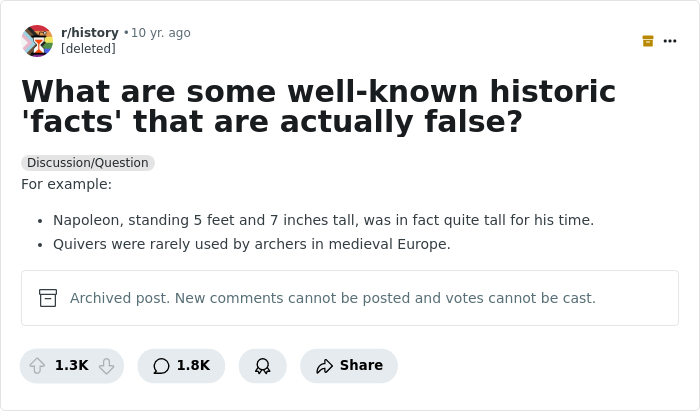
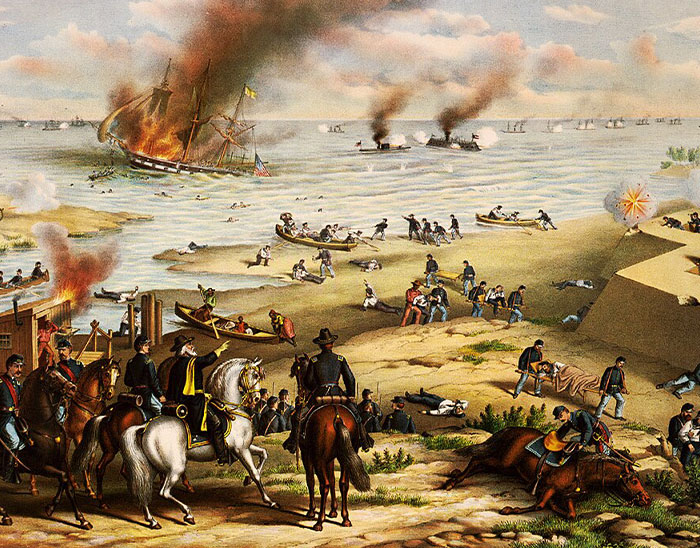 Thought I'd add another reply to this thread because Neo-confederate apologia always gets me and I jsut wrote up this whole reply to a comment that got deleted.
No matter how you slice it the American civil War was fought first and foremost by the south to preserve the institution of slavery. It was fought over states rights you say? States rights to do what? Own slaves. That argument is bubkiss anyway because the southern states weren't concerned at all with the northern State's rights when they passed the [Fugitive S***e act] in 1850 which basically allowed southern runaway hunters to capture any black person in the North that they though might be a runaway.
What's that, it was a war caused by economic differences? Hmm, what led to these economic differences? I'll tell you what, it was the south's dependance on s***e labor which prevented it from investing in infrastructure and incentivized industrialization leading to vastly different economies to form in the North and South. This also allowed for a s***e holding class to rise to the cultural and political elite of the south and to dominate it in every way. In the few places this wasn't the case secession did not take place (i.e. West Virginia).
Still don't believe me? Well then maybe the words of the southern states themselves will convince you because they explicitly state that they are going to war to preserve slavery!
From the Confederate constitution (Article 1 Section IX):
>No bill of attainder, ex post facto law, or law denying or impairing the right of property in negro slaves shall be passed.
It was illegal to make slavery illegal.
Or Article 4, Section 3 (New States):
>The Confederate States may acquire new territory; and Congress shall have power to legislate and provide governments for the inhabitants of all territory belonging to the Confederate States, lying without the limits of the several Sates; and may permit them, at such times, and in such manner as it may by law provide, to form States to be admitted into the Confederacy. In all such territory the institution of negro slavery, as it now exists in the Confederate States, shall be recognized and protected by Congress and by the Territorial government; and the inhabitants of the several Confederate States and Territories shall have the right to take to such Territory any slaves lawfully held by them in any of the States or Territories of the Confederate States.
The were also committed to *spreading* slavery.
From the Mississippi Declaration of Secession:
>Our position is thoroughly identified with the institution of slavery - the greatest material interest of the world.
Georgia Declaration of Secession:
>For the last ten years we have had numerous and serious causes of complaint against our non-s***e-holding confederate States with reference to the subject of African slavery.
Need I go on? Just google any Declaration of Secession and CTRL+F "S***e" and you'll see they were obsessed with the topic.
My last piece of evidence is the [*Battle Hymn of the Republic*] which was popular among federal troops and demonstrates that they believed themselves to be fighting a holy war to end slavery:
>In the beauty of the lilies Christ was born across the sea,
With a glory in His bosom that transfigures you and me.
As He died to make men holy, let us die to make men free,
While God is marching on.

Especially bad since there were so many other nations at that time also invested with slavery (British Empire, Brazil, Russia, etc.) that simply said “yea… let’s not do that anymore,” without tearing themselves apart
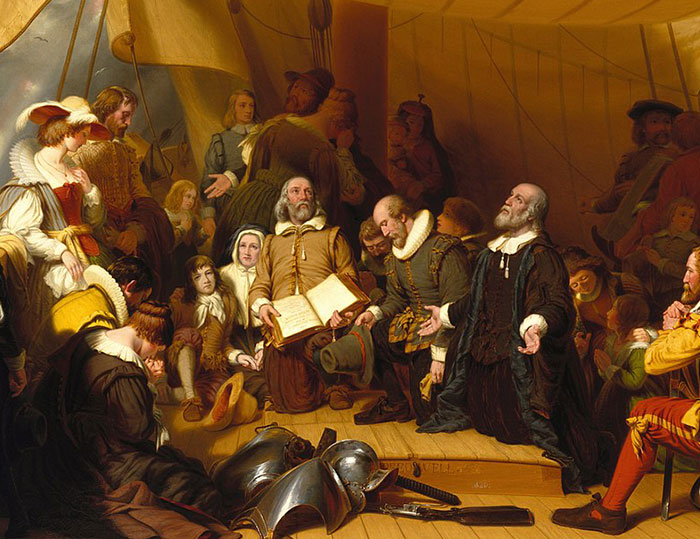 The pilgrims didn't leave England to escape religious prosecution. They left England because they disagreed with the religious freedom that was offered in England. So they went to a land where there would be no straying from the doctrine of Puritanism. Basically they went to the New World so that they could be the prosecutors. Also they didn't land at Plymouth rock or arrive on the Mayflower.
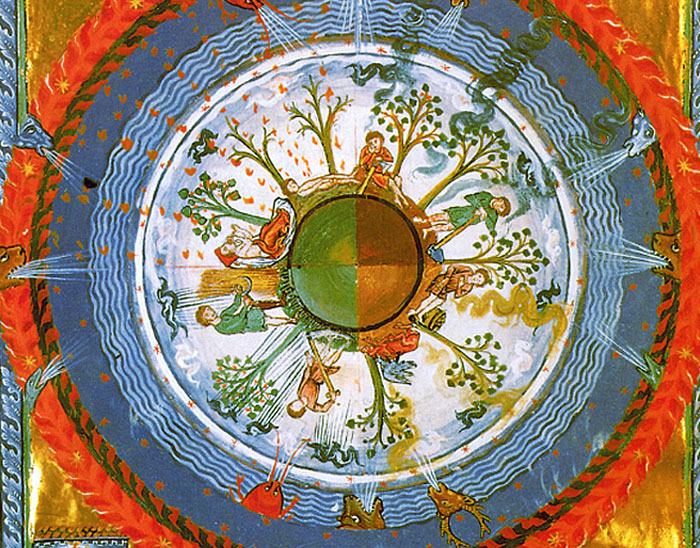 That people during the middle ages thought the earth was flat, it was known since the ancient Greeks that it was round and people didn't just forget about it.
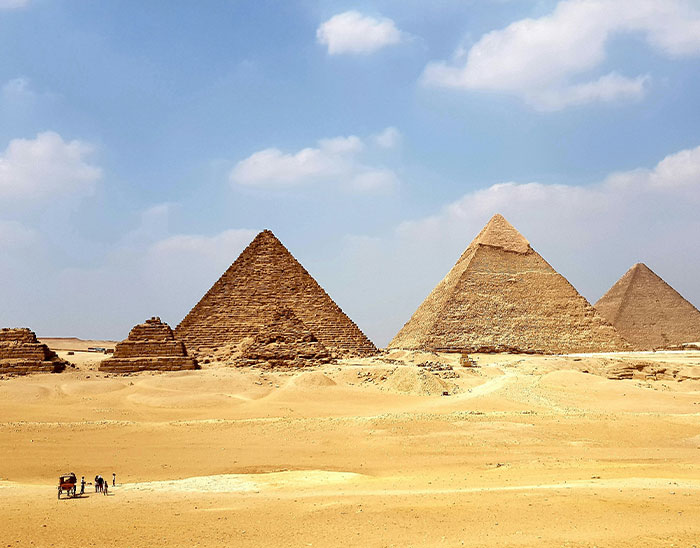 That the ancient pyramids were built by slaves.
The latest evidence points to them being paid labourers.

So… the aliens that built the pyramids were being paid for their labor?
 This may be more a prehistoric misconception but the idea that individuals in hunter-gatherer or "caveman" societies were/are stupid. Imagine how difficult that life is and all of the things every individual has to know in order to survive. There is no infrastructure or existing structural supports, everything has to be done by hand. These societies have to know which plants are edible, what animals will be where during which times of year, how to treat injuries without any sort of medical equipment. imagine any aspect of your life and now imagine it without any modern comforts at all. Relationships and hierarchies are maintained without use of record keeping. Food is gathered and prepared without any means of long term storage. Now remember that the entire planet was settled this way. From the African veldt to the Scandinavian fjords, and from the the Atacama desert to the Islands of the pacific, and these people utilized some pretty ingenious discoveries and inventions to do these things.
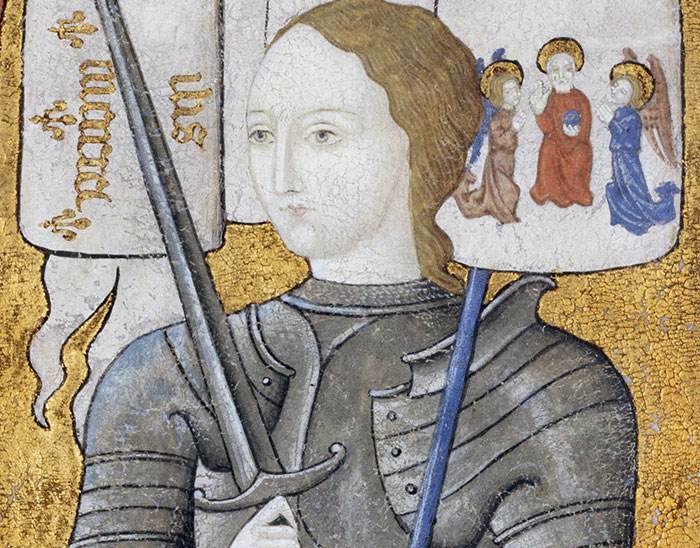 Joan of Arc was not condemned to death on charges of Witchcraft but for Heresy, a totally different crime.

She signed an abjuration, so was classified as a repentant heretic, which absolved the capital punishment so long as she was transferred to an ecclesiastical prison and didn't repeat the heresy. The secular court (French, though I don't remember whether or not the English may have had a hand, been a long time) refused to release her to the ecclesiastical prison and forced her to break the abjuration, so that she could be executed. She was set up to be killed.
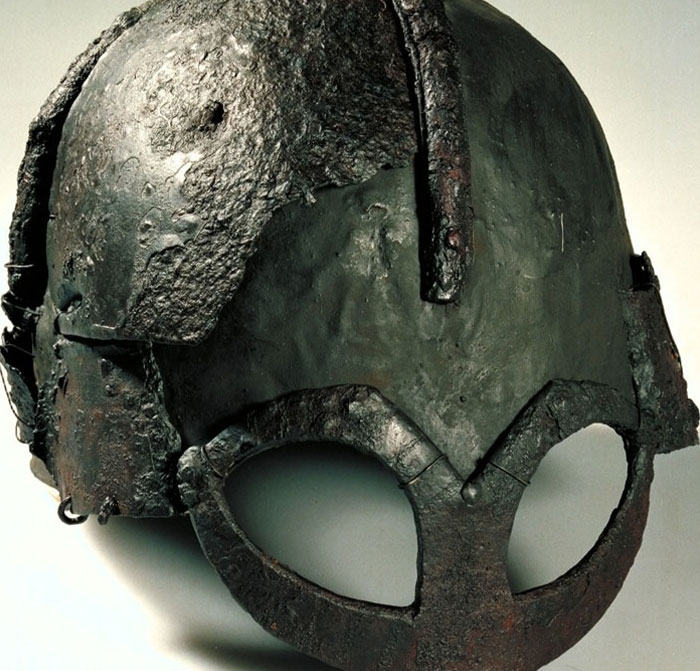 Vikings didn't have horns on their helmet.
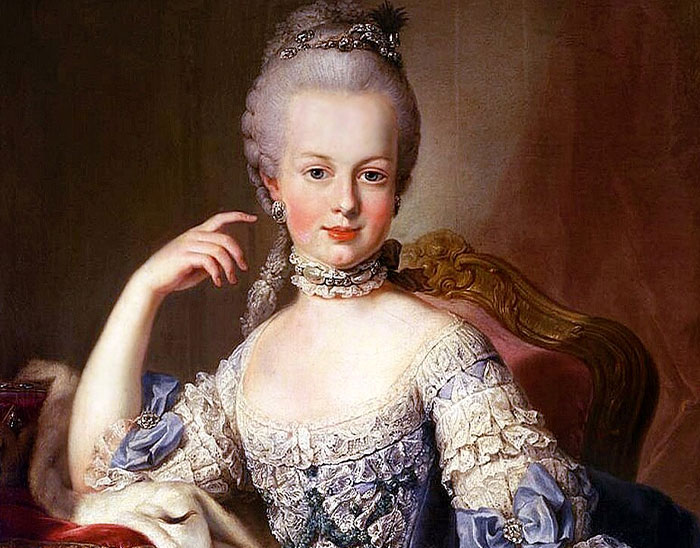 It's my pet peeve that most people still believe that Marie Antoinette said "let them eat cake." Not only did she never say it, but "cake" is a crummy translation for "brioche." Literally.
"The phrase can actually be traced back to Jean-Jacques Rousseau's Confessions in 1765, 24 years prior to the French Revolution, and when Antoinette was nine years old and had never been to France."
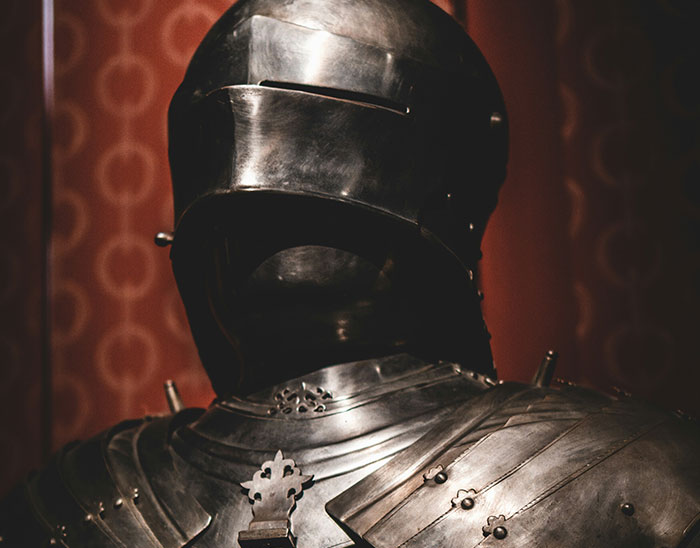 That knights going into battle in a full suit of plate needed to be winched onto their horses, and if they fell off would be basically immobile and helpless. They could actually move quite well, some could even walk on their hands when they wanted to show off. The misconception came from Mark Twain's novel "A Connecticut Yankee in King Arthur's Court", where he references a specific type of jousting plate.
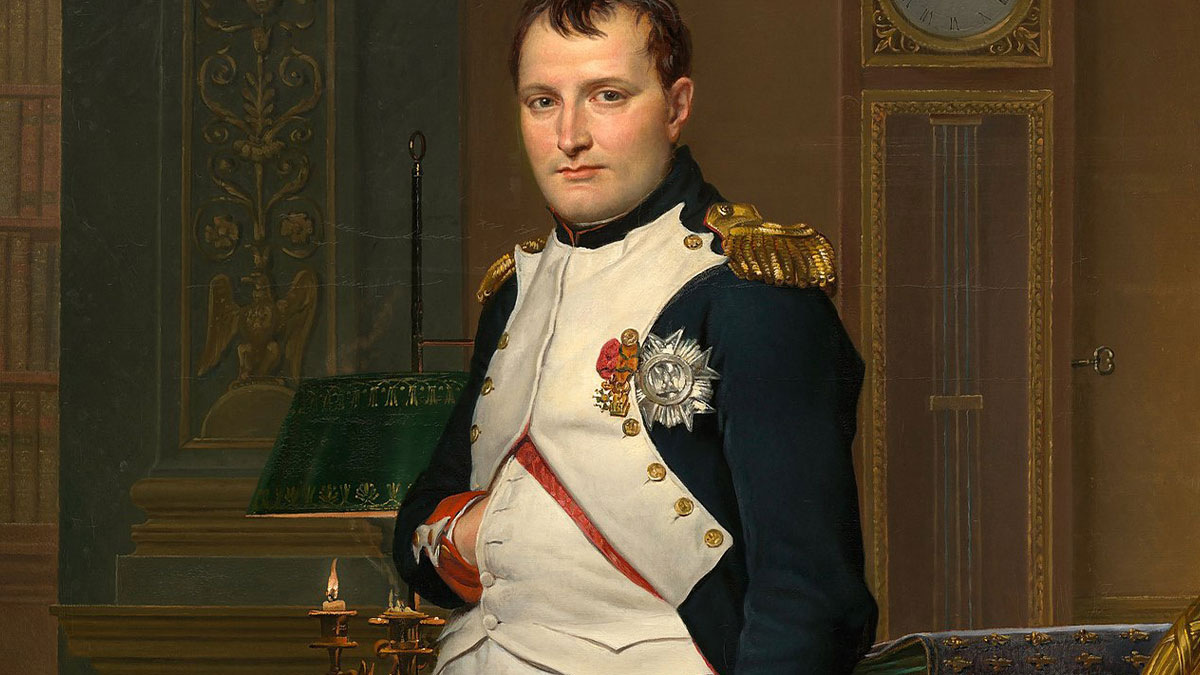
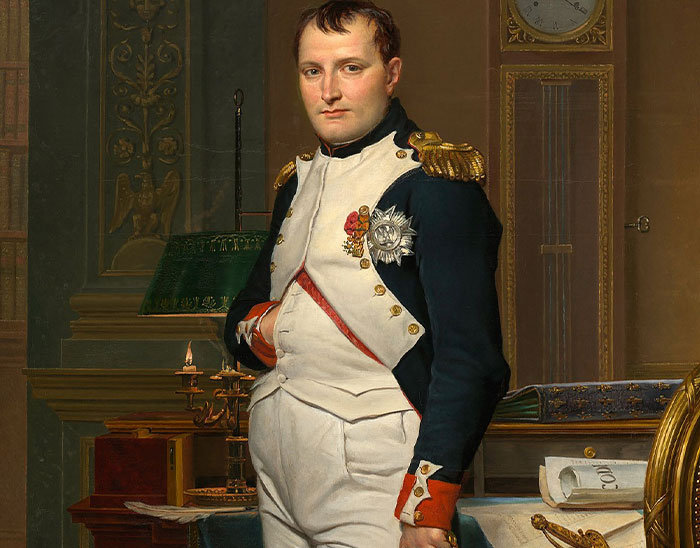 That Napolean was short (he was of average height for a Western European of that era... cartoonists in London newspapers and pamphlets just like to caricature him as a small figure).

Napoleon was 5'7" in British imperial units but was 5'2" in French imperial units. Of course, the British used the French measurements without converting them for propaganda purposes.
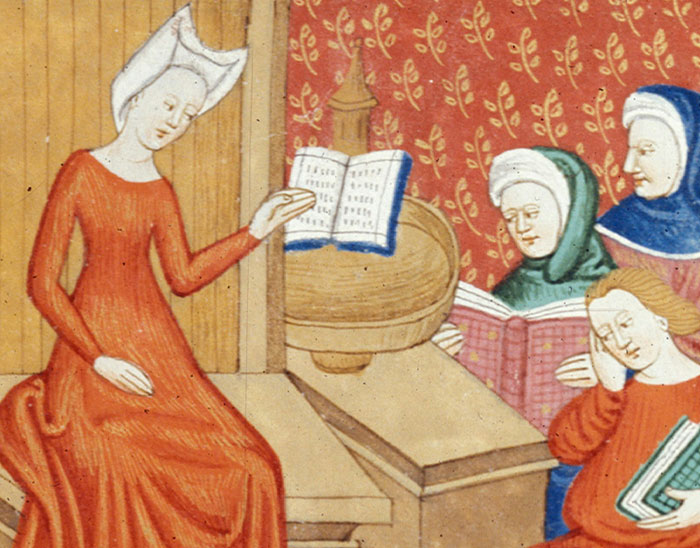 That the Dark Ages refers to a period of ignorance and superstition in Medieval Europe.
It actually refers to a lack of written sources during that time period.
 Mostly everything in The Bible?

I am not trying to upset believers, but I am not sure what part of the modern Bible can be considered "historic fact", per se. Even the real, documented events that are mentioned in it (the Crucifixion, the apostles, the tribes of Israel, the Exodus, etc.) were so heavily redacted, edited and interpreted over time that they bear little to no resemblance to the actual thing.
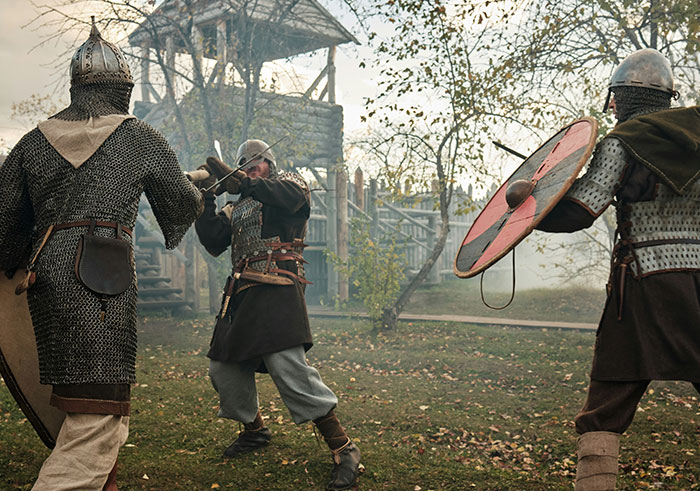 The one that drives me the craziest is any time you see a medieval fight scene in a movie, and they cut straight through metal armor like it isn't even there.
No! You can't cut through a car hood with a sword! It's called "armor" for a reason! You have to find a weak point between the plates, or you can hammer at it literally all day without getting through!

Yeah, if it didn't work, no one would be so stupid as to go to the expense of having armour made, and the effort of wearing it and maintaining it.
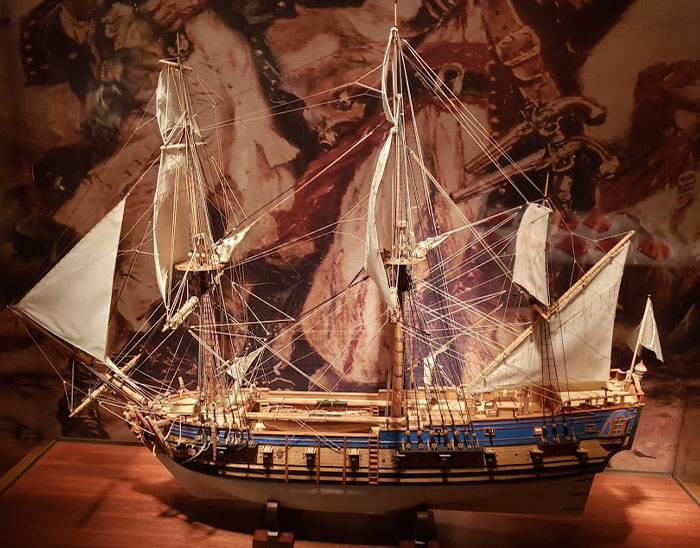 Blackbeard's pirate ship, Queen Anne's Revenge, wasn't a spectacularly huge Galleon, but actually a light and nimble frigate.
The Queen Anne's Revenge was really maneuverable and fast. Just like how Somalian pirates use dinghies against cargo ships.
Props for BP to illustrate this with the real thing instead of a random stock image. This is the actual model of the Queen Anne's Revenge at the North Carolina Museum of History.
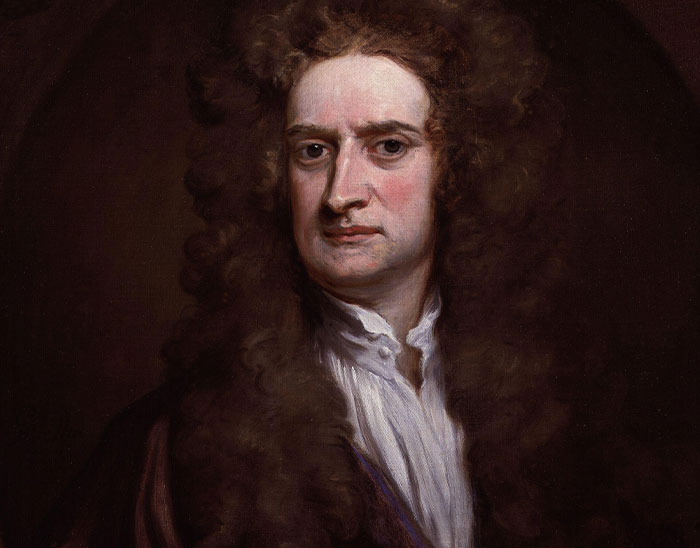 The apple never hit Isaac Newton on the head. (He saw it fall and hit the ground.)
Galileo never dropped balls off the Leaning Tower of Pisa. (He rolled balls down ramps.).
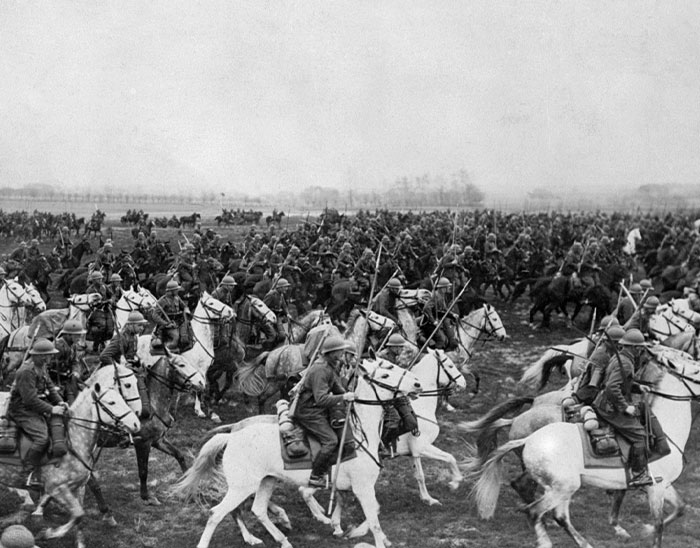 Polish Cavalry charged at German tanks with lances and sabres in 1939.
The Polish Cavalry was a very high-prestige part of Polish armed forces, and had a lot of history behind them - Napoleon's lancers, Winged Hussars and so on. By 1939, the Polish cavalry were highly mobile infantry units really, but were used in the same way as NATO planned to use jeep squads in the event of a Soviet invasion - set up an ambush with anti-tank weapons, knock out a couple of tanks, retire to the next position quickly and set up another ambush etc.
There were even examples of the Polish cavalry divisions bringing the Panzers to a dead stop, for example the Battle of Mokra.
The "charging tanks with cavalry" myth seems to have originated in a specific incident on the first day of the invasion, the Skirmish at Krojanty.
Although trained as mobile anti-tank/dragoon units, Polish cavalry retained the sabre, just in case. On 1 September, the 18th Pomeranian Uhlans were covering a retreat when they spotted a unit of German infantry resting in a clearing. Colonel Mastelarz decided to take them by surprise and ordered a sabre charge of about 250 cavalry. The charge was successful and the German infantry - who can't have been expecting cavalry with sabres charging them - dispersed into the trees with heavy casualties.
At that point, some German armoured cars appeared and laid into the cavalry, causing some casualties (including Col. Mastelarz) and driving the rest off.
In the aftermath, the German casualties were cleared away and the Poles left, and some neutral war correspondents were invited to come and see, and told that the cavalrymen had been k****d while charging at tanks with sabres.
The story circulated rapidly, not only among the German and sympathetic presses (to whom the moral of the story was supposed to be "Look how stupid and backward the Poles are - we're doing them a favour by bringing German civilisation"), but also in the British and French presses, who swallowed the story whole, but there the moral was "Look how suicidally brave the romantic Poles are - isn't this just the sort of people we should be supporting?"
Then, after the war, the Communist Polish government, eager to seize on anything that would make the pre-war government look bad, perpetuated the myth, with the moral now being "Look what the old capitalist government did for you - forcing soldiers to face Panzers with sword and lance!"
In other words the same, fake, story has been repeated by f*****t, democratic and communist sources each to serve their own narrative of the invasion if 1939.

It's apparently OK to use the labels communist or democratic, but not f*****t... showing a bias there BP. What's your problem with the identification of fascism? Edit: Huh! Fascism is OK even though făscıst isn't...
How about that Treaty of Versailles? There are a whole bunch of ideas surrounding it that don't really match up to the facts:
1. **The war was basically no one's fault so trying to assign blame after the fact was "victor's justice"**. You can *kind of* make this arguement when it comes to Russia vs. Germany but Germany vs. France was a little more one sided. Germany declared war on France after they wouldn't immediately renounce their alliance with the Russians and agree not to call up their military. Saying they're both equally at fault is a bit like saying that a guy who gets mugged is at fault when he gets shot because he should have handed over his wallet quicker.
2. **Reparations were unreasonable "revenge" against a defeated foe.** France was on the winning side in WWI but had lost a huge number of men, run up a giant foreign debt, and had one of the most economically important parts of the country turned into a giant wasteland by the fighting. Germany had lost a bunch of guys, but its national debt was almost entirely owned by Germans (and so could be repudiated), and it had suffered almost no economic destruction as a result of the war. Without reparations the French would have been in the position of having won the war but lost the peace, and it's hardly unreasonable for them to want to avoid this situation.
3. **Reparations were some new thing.** All of the crying about how harsh and unreasonable Versailles was is kind of funny in light of the fact that the Germans had just signed the vastly more harsh treaty of Brest-Litovsk with the Russians. Additionally, one of the reasons that the Germans had such a huge internal debt was that they didn't raise taxes during the war, expecting a repeat of the Franco Prussian war where they quickly won and then paid the costs of the war with French reparation money.
4. **The hyperinflation in Germany in the early 20s was caused by the treaty.** There's a bit of truth to this, but there was also a lot more going on. Germany's economy was in a shambles after the war but it was largely a shambles of its own making. When the hyperinflation really got off the ground the German government was sending money to miners in the Ruhr to support their efforts, and trying to pay off its wartime debts, and trying to pay the reparations all without raising taxes. Their policy of running the printing presses to manage their finances was very hard on the average German, but it had the effect of giving them a "free" source of money to pay these miners not to work and at the same time the resulting inflation made their wartime debts shrink tremendously in real terms. The terms of the reparations weren't denominated in paper money so the relationship of the hyperinflation to the reparations is somewhat more complex. ~~Economists like~~ Niall Ferguson argue that the whole hyperinflation episode was largely an intentional attempt to scare the s**t out of the internaitonal community and make them think Germany was on the verge of collapsing and being taken over by the reds. Of course he also seems to think that there was some kind of gay conspiricy between Keynes and the Germans so ????? on his ideas.
5. **The terms of the treaty were wild and unreasonable.** On paper they kind of were, but the actual terms of the treaty made this somewhat more complex. The civilian population on the winning side wanted the terms of the treaty to be as harsh as possible, but the people in charge kind of understood the problems with making the treaty too unreasonable and the treaty reflects this. The total amount "owed" in reparations was some huge figure but the actual repayments were broken down into 3 series of bonds. The A and B series actually had some kind of end date in mind while the C series (which was most of the total figure) was supposed to be negotiated after the A and B series were paid off. Since there wasn't any way to do binding arbitration in those negotiations this effectively meant that the C series was never going to be repaid. Also, since the whole issue of reparations was contingent on Germany being able to pay it created an incentive on the part of the winners to keep Germany's economy running. Germany recieved a tremendous amount of help with loans and economic aid and so on during the 1920s and some economists would even argue that Versailles was a net benefit to the German economy in the final analysis. In any event the actual amount repaid amounted to maybe 3% of their GDP which is significant but hardly ruinous.
6. **The victors write history.** This old saw gets trotted out a lot when it comes to WWI but the reality is almost the exact opposite. Once it became apparent that the war was lost the German state began a coordinated effort to both alter their own official records in order to remove embarassing material, and to spread this pro-German view of WWI and Versailles. The fact that their views are still so widely accepted, even in countries that were their enemies during WWI is proof of how good a job the losers did writing history in this case.
Welp, that's what I've got. This is a really complex topic and whole books can (and have) been written about it. My account involves signicant simplifiications (and more than likely a few outright mistakes). I've got to go to work now but if anyone wants sources or more information about specific points I'll probably be around later on.
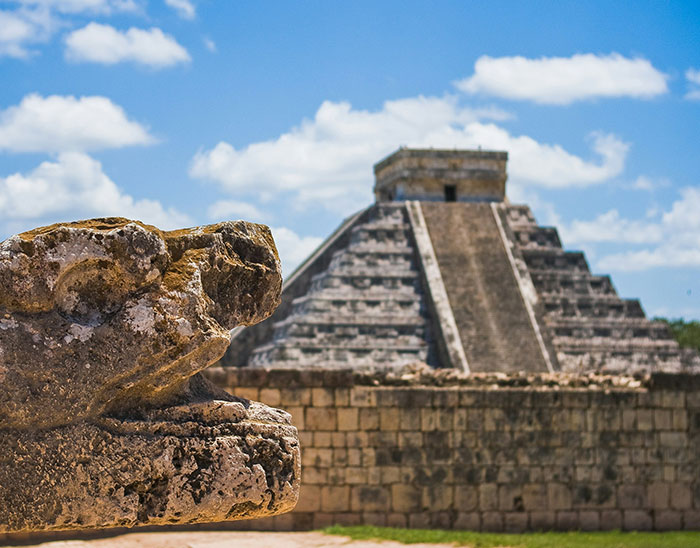 The Aztecs did not believe Cortes and his men were gods nor was Cortes the return of the Toltec king Quetzalcoatl.
The Maya did not die out or collapse.
Syphilis is firmly a New World disease. The question about it is whether or not it existed in the Old World prior to the Columbian Exchange.
Bronze was not unknown to the Americas. The Tarascans made use of arsenic bronze for creating a variety of objects including bells, needles, tweezers, and axes.
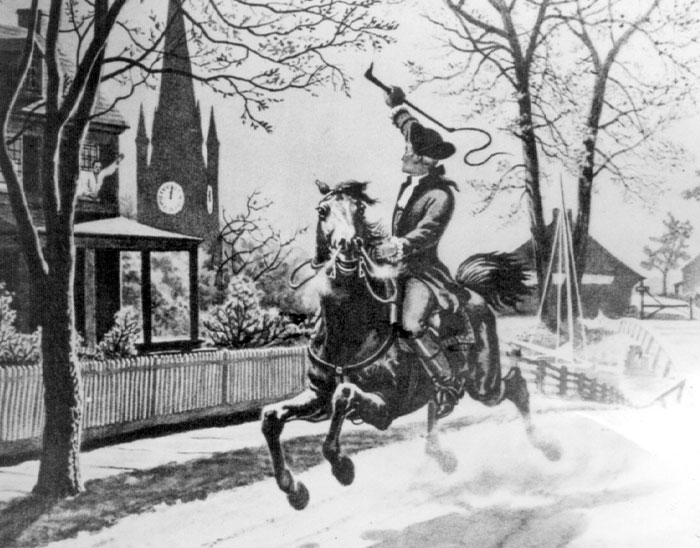 Paul Revere never said "The British are coming! The British are coming!" as he himself and the defectors were all still considered British. He actually said "The regulars are coming! The regulars are coming!"...not quite the same ring to it.
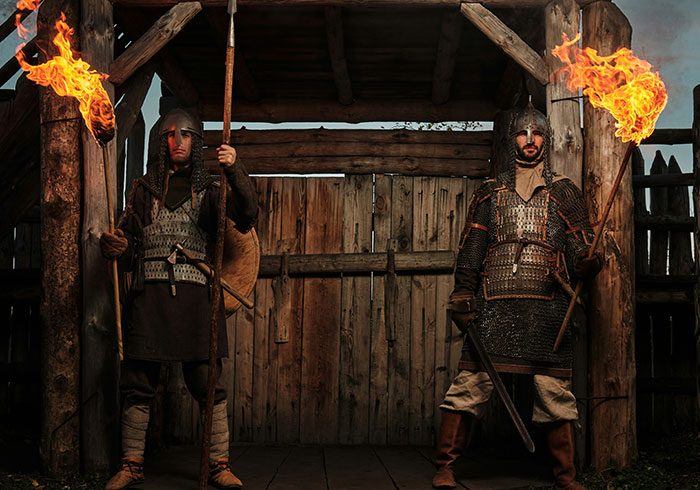 There wasn't any "Apocalypse expectation" approaching the year 1000. This was basically made up by 1800s historians which cared for a "Dark Ages" idea of Middle-age.
Actually nobody was scared of that particular year and, mostly, people didn't even know what the date was!
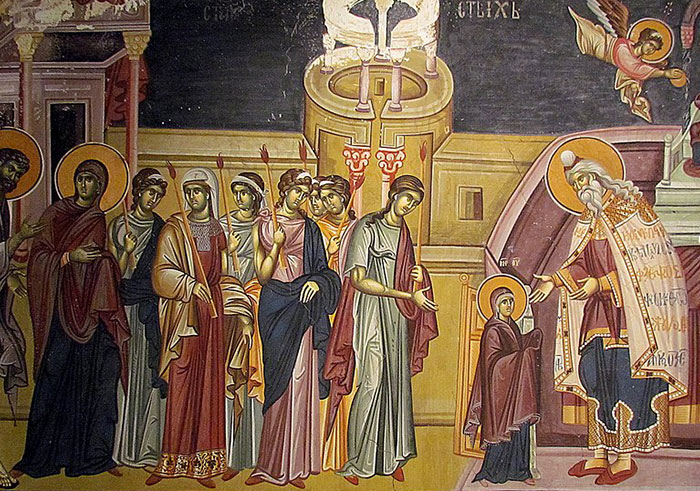 Invention of perspective in art during the Renaissance when ancient Chinese an Greeks used it way before. All the medieval paintings were done that way due to that particular art style being favored at the time.
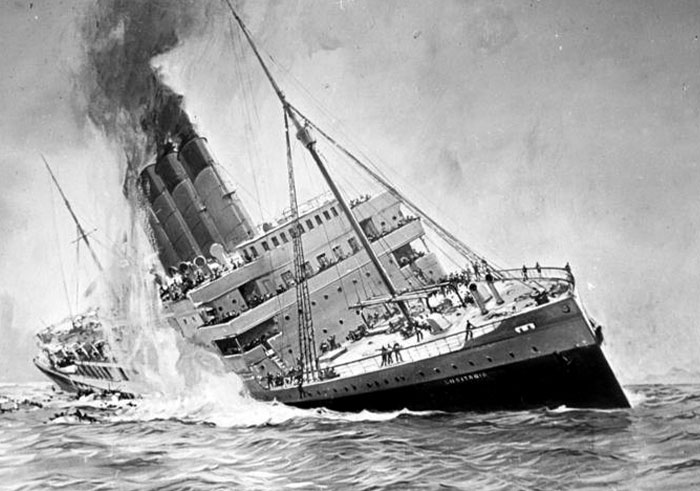 The sinking of the Lusitania garnered immediate US public support for WWI, and the US entered WWI shortly after.
In fact, the ship was sunk 7 May 1915, and Wilson didn't request a declaration of war until 2 April 1917 -- nearly two years later.
 That technology shortens work hours. From hunter gatherers to the industrial revolution the amount of time people spent working greatly increased. It is estimated that a hunter gatherer would work six hours a day, while I am not sure of the exact average, if you were working class during the industrial revolution it is very likely you would be working 12-14 hours a day. This has of course decreased in the developed world due to socialism and unionism creating legal and economic pressures to decrease working hours.
No ancient source exists that says the Romans, under Scipio Aemilianus Africanus, plowed over and sowed the city of Carthage with salt after sacking it.
The salting of the earth at Carthage was invented in later stories strongly suggesting it never happened. Also, given that salt was a precious commodity during the Roman Republic/Empire it seems very unlikely that it would be used in such a way.

I think it's more a metaphor for a "Scorched Earth" approach
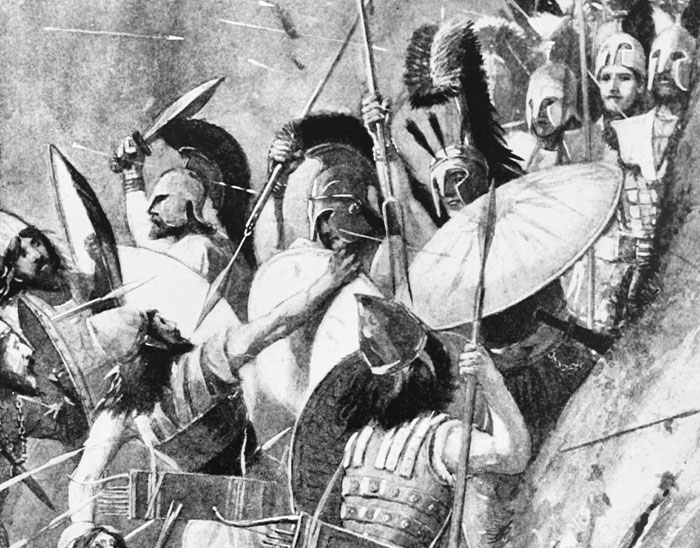 There were only 300 Spartans at the Thermopylae, for each Spartan warrior there was about 8 Helots (Slaves) accompanying them, providing maintenance on equipment and acting as axillary. Also with them were several hundred Thespians and Thebans, the former chose to stay voluntarily with the Spartans whilst the latter were forced to stay as they were assumed traitors. So in all there were actually around 4000 Greeks left to fight the Persians in the final stand at Thermopylae, after the main Greek Force retreated.
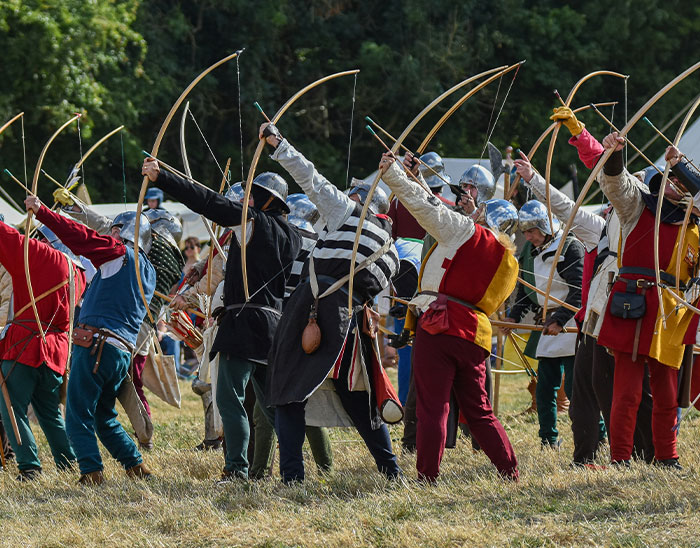 Actually, archers did use quivers, but they would stick the arrow in the ground during battle.
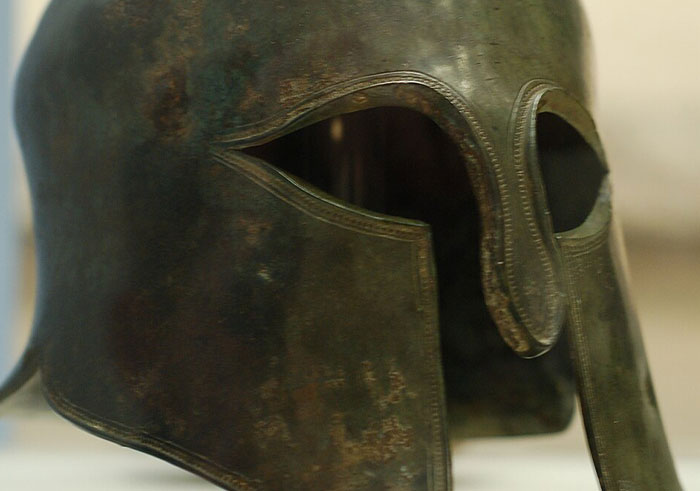 The Spartans didn't fight for freedom and equality. they had slaves and they often used them as target practice.
Edit: As an aside, Xerxes the 1st, who is depicted as the villain in the movie '300' and his Jewish wife queen Esther, provided sanction and equal rights to jewish minorities in Persia (which was a zoroastrian empire at that time). Hence, you could go argue that he was far more tolerant of cultural diversity and freedom than the spartans.
 George Washington Carver did not invent peanut butter. The Aztecs were roasting peanuts before the colonists arrived and a Canadian guy was the first man to patent peanut butter.
 European Settlers bought Manhattan NY for beads from the Indians.
Christopher Columbus Discovered America.
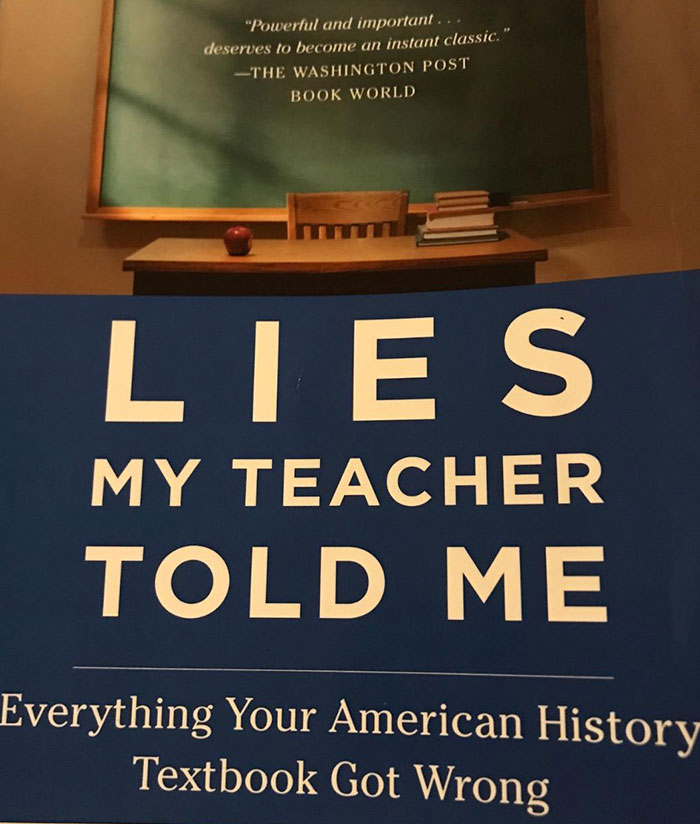
There is a good book called "Lies my Teacher told me", though it is USA Centric, It is still a good book.
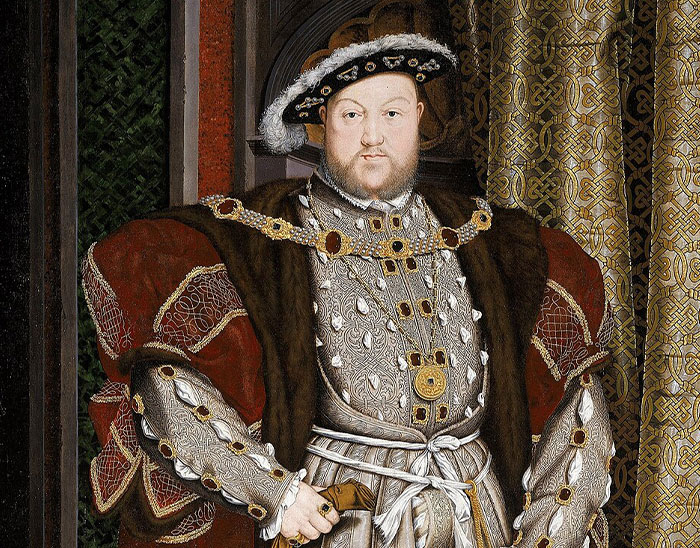 The circumstances under which the Church of England was founded during the English Reformation was much more complicated than and not as related to Henry VIII seeking divorce as people claim.
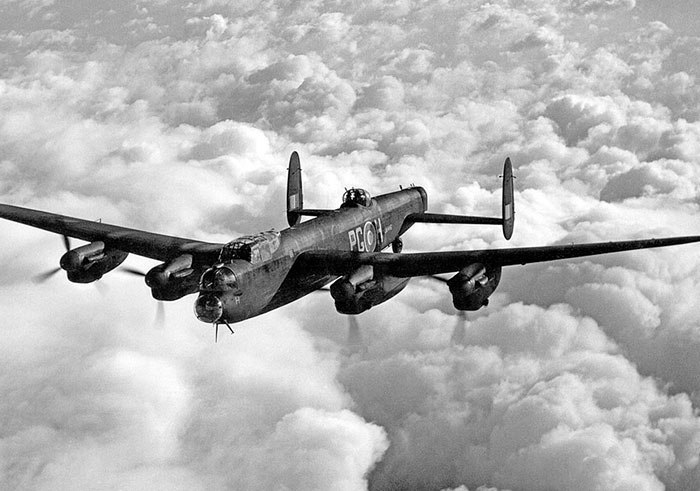 The Royal Air Force apparently made their incredible strides in destroying German planes at night because of all the carrots they ate...(methinks it was the radar, not the carrots)
Most people where I live are convinced this is true because 'it's historically proven to work' and so they eat a lot of carrots. Nothing wrong with eating veggies of course.
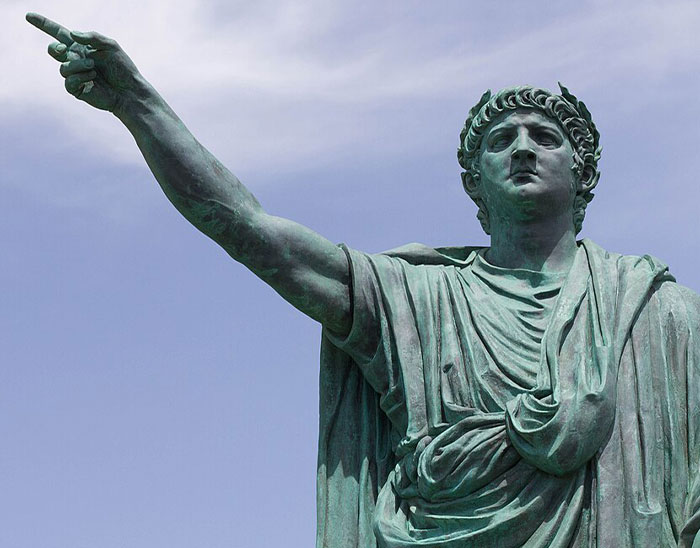 Rome burned while Nero fiddled. It's technically true so it doesn't fit the OPs question. However, most people seem to think Bero did that because he was crazy because ... Well Nero was cray-to-the-zee crazy. But the reality on this particular occasion is *much* more nuanced. Nero was already playing the fiddle when he heard the news of the fire in the tenements of Rome. This is important for a few reasons
*1. The tenements were housing the poor or the plebes as tge Romans referred to them. And like all powerful people in history Nero cared considerably less for the poor than the rich.
*2. The fire was in the tenements. Nero had been imploring people NOT to expand the tenements so much because the Romans had such a habit of expansion that it was fairly typical for the tops of buildings to be wider than the base because after all you can only expand so much at ground level before you run into the road. But three or four stories up its a different story and the owners of the tenements would often add more living quarters to the tops of the building to get more people in their buildings. As a result some tenements were sharing walls on the third and fourth floors with neighbors that were separated by N entire road. This led to more than a few collapses. That in turn prompted Nero to start trying to rally support from the other elite senators about town to outlaw such building practices. Right as that was going on the fire breaks out. In Neros mind the fire is yet another reason why the tenements are being built dangerously. And so he didn't react with shock because he'd been arguing for a little while that the tenements were dangerous.
Lastly. People say he fiddled while Romee burned implying that he did nothing. But the reality is that professional firefighting brigades didn't really come about until the early 20th century. Prior to that in say roman times fires got put out by volunteers who made ends meet by robbing the homes they were helping deal with fires. So even If Nero thought something needed to be done there was no force he could assign to combat the fire.
As a result Nero just kept on with his practice because there wasn't anything he could really do AND even if there was he wouldn't have wanted to because he felt the fire proved his point about the tenements being poorly constructed. NOT because he was crazy...for once.
Napoleon was a warmonger (he never started a war, the monarchies of Europe simply didn't like the idea of a Republic), the Sphinx's nose was shot off by Napoleon (it was pried off for not being muslimy enough in the 14th century). There are very few mysteries involving the pyramids of Egypt, and those that do exist surround Sneferu's not the famous pyramids at Giza. Swords weren't heavy, they were about 3 lbs on average (perhaps heavy for urbanite redditors). European martial arts were every bit as refined and advanced as Asian examples.
That the residents of people's temple committed s*****e by drinking poisoned Kool Aid. Whether or not they committed s*****e, it was flavor-aid.
That cinco de mayo is the Mexican independence day.
Mexican here. This is a myth in US. It is the celebration of the Battle of Puebla, a Mexican victory over the French Army in 1862. The French were not driven out, though: they retreated, attacked again and won the war, establishing the Second Mexican Empire under Maximilan I, that lasted until 1867. It is also not that widely celebrated in Mexico outside Puebla. It is a national holiday, for sure, but you are not going to find people partying in the streets. The celebration of Mexican Independence starts midnight, September 16th.
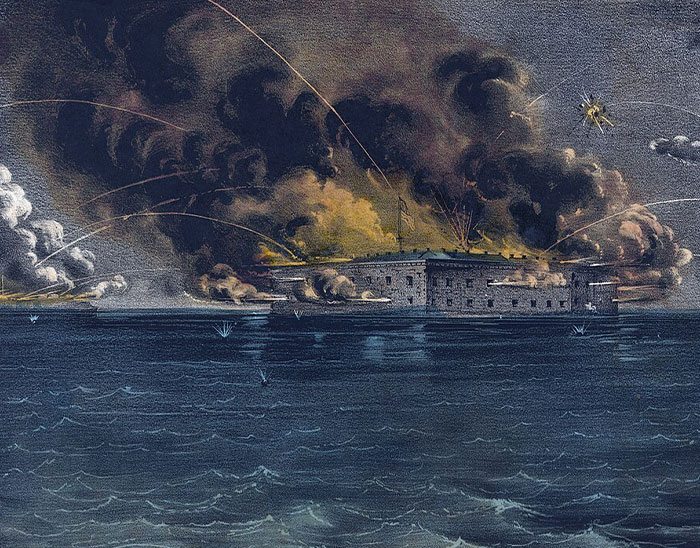 The first shots of the Civil War were not during the Siege of Fort Sumter, but rather many days before that when a battery along the shore approach to Charleston harbor, manned by Citadel cadets, opened fire on the Union steamer Star of the West, which had been dispatched to provide supplies and reinforcements to Fort Sumter. The cannonfire hit the ship but did no signicant damge, however the steamer turned and retreated. It's possible that if the ship had continued, it would have been fired on further, or if it had completed its mission, the Union soldiers in the Fort might have attempted to hold out for more time, which might have resulted in casualties on both sides. In reality, there were zero casualties during the fight and the fort was turned over to the South with a complete ceremony.
Contrary to popular belief, the US never imposed an oil embargo against Japan prior to Pearl Harbor.
FDR was under a lot of pressure to apply an embargo. In a July 1941 cabinet meeting, he worried about how to explain oil rationing in California while still supplying Japan with oil. He insisted on this course of action, because he foresaw that an oil embargo could only lead to war. (The League of Nations had ruled that an oil embargo was a valid *cassus belli* when several nations tried to apply one against Italy for her invasion of Abyssinia/Ethiopia.)
What the US did instead was insist that Japan pay for her oil with "new" money, rather than from Imperial accounts which had been frozen. This demand seemed to confuse Japan, but they sent a single ship to test this new arrangement. The *Tatuta Maru* had been promised that it could come to the US without fear of seizure.
Once the *Tatuta Maru* docked, private parties filed suit in US courts, claiming ownership of her cargo. They filed a lien against the ship, holding it in harbor.
Japan released the cargo, and the ship was allowed to sail. But Japan never attempted to purchase any further oil from the US.
JFK's "Ich bin ein Berliner" does not mean "I am a doughnut" any more than Angela Merkel saying "I am a New Yorker" would mean "I am a magazine".
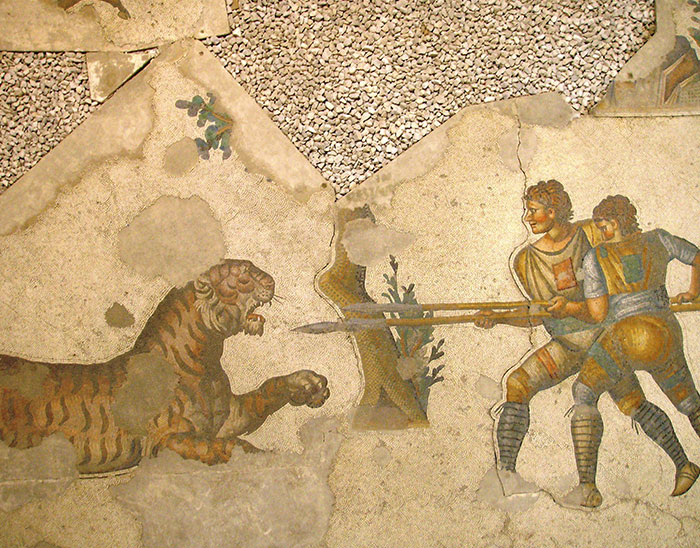 Gladiators didn't fight each other to death in the Colosseum.

It's a misunderstanding. The lion that ate the lady was gladiator. Seriously, gladiators didn't ALWAYS fight to the death, but they sure as hell did fight to the death. I don't know where BP got this from, but accounts of gladiators dying in battle in ancient Rome come from all sources, Roman or Barbarian, Christian or Pagan, Imperial or paeon, historical or legendary, pro or con.
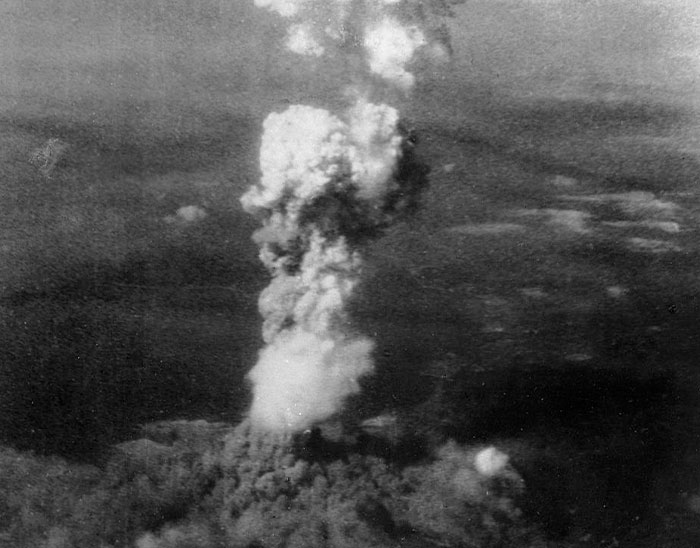 Truman didn't specifically approve the bombing of Nagasaki, and when he found out about it, he halted further bombings on Japan to allow the country time to process the damage and offer a surrender.
In other words, the second bombing came simply because the b**b was ready to go. It was an automatic decision made by the military.
Germany starting World War 1. This was caused by man factors. First being the assassination of the Austrian-Hungary empire. After this happened Austria demanded reparations from Serbia as it was believe it was government sponsored. When Serbia refused Austria declared war. After this point it was a domino effect of rapid militarization.

Part of the problem was entangling alliances. If country A goes to war with country B, then C must be at war with A, which requires D to be at war with C and E to be with B, etc...
How George Washington was our first president when in fact our first president was John Hanson. Washington was our first under our current constitution. Hanson was the first president of the Continental Congress following the ratification of the Articles of Confederation.
Moses was not found in the bullrushes.
Egyptian Kingship had most of the Pharaohs associated with being found in bullrushes.
The significance lies in the Nile association and the bringing of crop prosperity, water, fecundity etc.
That the 'Peace of Westphalia' was a period of long term peace and religious tolerance.
That DDay was the largest invasion in history.
That's actually Operation Barbarossa.

It was the largest seaborne invasion, folk forget the seaborne bit, that’s why people think it’s the largest invasion. Plus the victors like to big up their achievements so why would they correct the error? Barbarossa was those pesky Axis forces invading the Soviet Union, a move that ultimately failed (obviously).
I wouldn't say it's a fact but people believing in a real, long Atlantis, when it was actually part of a story by Platos.
The myth of a city lost at sea can be found in many different cultures around the globe - most likely reason is that there were a lot of cities lost to the sea at some point around the globe
The Crusades were not an unprovoked attack on peaceful Muslims by greedy and intolerant Christians, as some like to think. Rather they were, at least in part, a direct response to Muslim expansion and aggression over the immediately preceding centuries.
The weirdest one I've seen absolutely *everywhere* was that the Roman emperor's title is Caesar. It was Augustus; Caesar was the title for the prince, or the junior emperor.
And Caesar is always pronounced wrong, it should be more like "Kaisar"
Classical music.
The term classical was just tacked on because there was a revolution in architecture and visual art that took great influence from the 'classical' time period: Ancient Greece and Rome. We had absolutely no way of recreating what Ancient Greek or Roman music sounded like, and so the 'classical' part of classical music is quite a classic misnomer - classical composers took no influence from the classical period, unlike their architectural and visual art counterparts.
Classical music, as distinguished from baroque music, has its own markedly different revolution, having nothing to do with ancient Greece or Rome.
Antonio Meucci likely invented the first telephone, not Alexander Graham Bell.
Not only was it not the Canadians who fought the US in the war of 1812 (Almost all British troops), but there was no clear victor. A treaty was signed ending the conflict that gave fairly equal concessions to all parties involved.
I have been taught more than once in class rooms that Andrew Jackson said "Chief Justice Marshall has made his decision, now let him enforce it" in response to the decision of Worcester v. Georgia, which found that the Cherokee eviction was unlawful. This never happened.
Washington chopped down a cherry tree....WRONG!
He had one of his slaves do for him - like everything else.
That Rome was divided into 2 different empires and that the western part was the "real" empire. It was one empire with 2 or more emperors at the same time to make it easier to administrate. The Roman Empire didn't fall until it was conquered by the Ottoman turks at the end of the fifteenth century.
You are conflating two sets of events - Rome did indeed have two co-Emperors at certain times, and sometimes they were allied and sometimes bitter enemies. Much later on, the Empire did seperate into two 'halves', and the the Western half gradually morphed into the various kingdoms and countries of Western Europe. A LONG time later, the 'Eastern Roman Empire' (which was an empire, but Roman only in name) was defeated by the Turks as you said.


Love reading these and everyone's responses. Arguments in the recollection of history are far more interesting to me than much of the BP articles. Moreover, truly some knowledgeable people who contribute here. Upvote from me.

I really enjoyed this. Except for the last few entries, these responses were not only accurate, but well written (unusual for BP).


The Holy Roman Empire was neither holy, nor Roman, nor an empire. Talk amongst yourselves.
Native Americans were enslaving each other way before white peoples arrived.
Everyone was. The Southern US just held onto it after they should have known better.
Load More Replies... Love reading these and everyone's responses. Arguments in the recollection of history are far more interesting to me than much of the BP articles. Moreover, truly some knowledgeable people who contribute here. Upvote from me.
I really enjoyed this. Except for the last few entries, these responses were not only accurate, but well written (unusual for BP).
The Holy Roman Empire was neither holy, nor Roman, nor an empire. Talk amongst yourselves.
Native Americans were enslaving each other way before white peoples arrived.
Everyone was. The Southern US just held onto it after they should have known better.
Load More Replies...




























 No fees, cancel anytime