Get Premium
Dark mode theme is available exclusively for premium users. Learn more about the benefits of subscribing.
No fees, cancel anytime.

 Dark Mode Ad-Free Browsing Unlimited Content
 Ad-Free Browsing Unlimited Content Dark Mode
Join 1.2 million Panda readers who get the best art, memes, and fun stories every week!
Curiosity and learning new things are two of the highlights of life. There’s a lot of joy to be found in doing an activity you’re semi-interested in, starting off incredibly incompetent, and then struggling past failure after failure to get better, step by step. Not only does it build character and discipline, but it’s fun!
However, not everything that looks impressive is as difficult to get to grips with as it seems at first glance. In an enlightening AskReddit thread, internet users revealed the skills you can develop far quicker than you think. From origami and magic to lockpicking and more, scroll down to check out what’s “secretly super easy” to learn.
This post may include affiliate links.
 For all the Gen Z’s, I can both answer the phone as well as my front door when someone knocks without having a panic attack.
 While at my desk job, I wasn't allowed to have my phone, so I started learning origami instead. I got maybe 20 hours of origami practice a week and even used the work's computer paper for it.
I've had several girlfriends I've met just by casually turning a piece of scrap paper into a flower at meetings.

Becoming a grandmaster-level specialist at something is going to take years and decades of disciplined practice. And it’s well worth the effort. We all have some things we’re naturally good at, and it makes sense to develop our skills throughout our lives. However, learning new skills isn’t quite as difficult as you keep telling yourself, even if different skills require different amounts of effort.
Sure, it gets harder as you grow older, but if you stay curious about the world and keep mentally fit, you’re perfectly capable of learning new things at a quick pace. Luckily, it takes very little time to get pretty good at something.
Josh Kaufman, the author of ‘The First 20 Hours: How to Learn Anything… Fast!’, states that the 10,000 rule, which is a ballpark for how long you need to get really good at something, is misinterpreted by most people. The 10,000 hours is the average that it takes to become an expert in an ultra-competitive field.
On the other hand, if you want to simply get from knowing nothing to being pretty good, it takes just 20 hours. That comes out to roughly 45 minutes of focused practice every single day for a mere month. This is perfectly doable for the vast majority of you, even if you have a super busy schedule.
 Touch typing. Not the easiest of them all but very well pervieved by others. Being able to look at someone whilst typing is a good way to impress them. Also it makes your life much more efficient and writing something becomes a breeze. I could never tell how much of an improvement it would be until I learned it. (I am not even that good at it, 60 wpm in my native langague but the improvement is huge).

Can confirm, I type 120 wpm and people are often mystified that not only am I typing that quickly but I don't need to even glance at my keyboard to do it. Honestly, it's extremely useful in my job, and I don't know why more people don't learn it. It is very easy to learn.
 Speed reading. Everyone thinks you're some kind of superhuman when you can flip through pages quickly, but it's mostly just training your eyes to stop saying every word in your head. Took me about a month to get decent at it.

I'm trying this now and I'm not saying every word in my head but nothing is going in or staying in, I probably only have one brain cell
 Accepting your wrong, and then apologising.
“Most of us are deeply disturbed at the prospect of being horrible at something, even temporarily. When you try something new, you’re usually very bad, and you know it. The easiest way to eliminate that feeling of angst is to quit practicing and go do something else, so that’s what most of us do,” Kaufman told Forbes in an interview.
“The early hours of trying something new are always challenging, but a little persistence can result in huge increases in skill. The human brain is optimized to pick up new skills extremely quickly. If you persist and practice in an intelligent way, you’ll always experience dramatic improvements in a very short period of time.”
Kaufman points out that you don’t have to master every skill that you learn. “I believe that developing new skills in a way that allows you to perform well enough for your own purposes is—by far—the most common and valuable purpose of skill acquisition.”
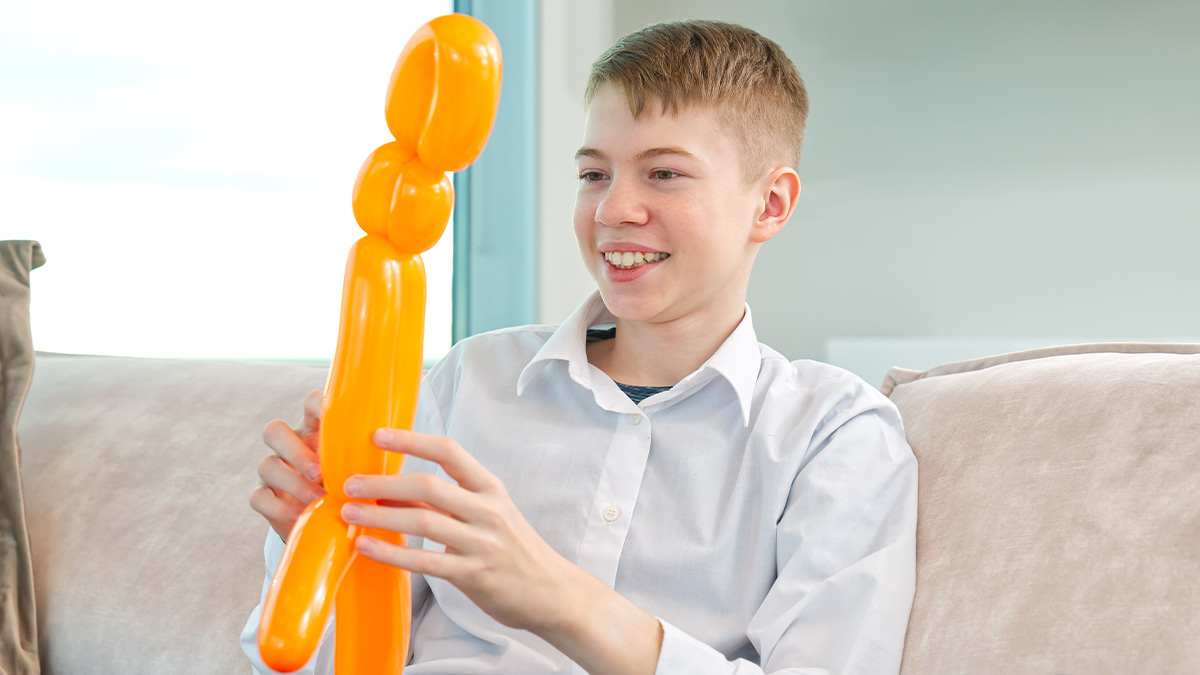
 I learned how to make basic balloon animals and swords in a few hours and now all the kids at family parties love me.
 I've met a surprising number of people who can't swim. It's a basic survival skill, plus it's fun and great exercise.

Living in a town known for its lakes for the most of my life. Can't swim. I can stay afloat for a while if not in panic, but I would not risk it for fun. Btw, usually, people who drown are the best swimmers who overestimate their abilities. And drunk people. Don't drink and swim, kids ^^
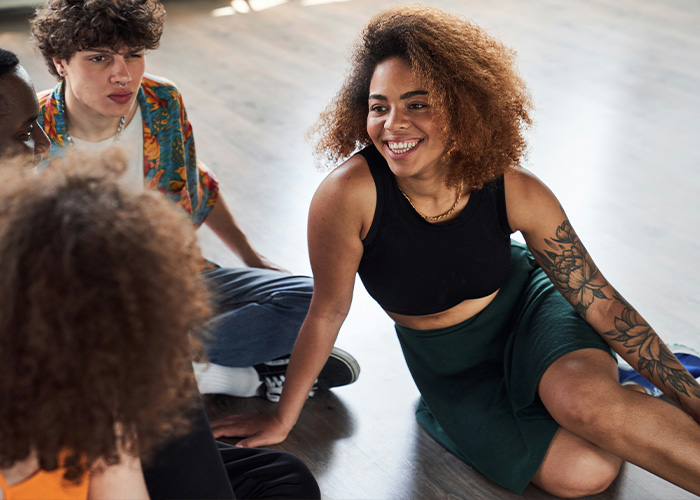 Listening in conversation.
Weird_Ad_2404:
Oh yeah, it surprises my friends sometimes when I do that. Like dude, I just showed you some basic respect and patience, why are you thanking me?

For some people, a conversation is just waiting for your turn to speak. And sometimes not even with the waiting part.
He stressed that it’s vital to focus on what you’re personally interested in learning right now, not what you think you should do instead. “When you’re naturally interested in a particular skill, you’ll learn extremely quickly, so follow your interests where they lead, and avoid forcing yourself to grind through topics you’re not really interested in exploring,” he told Forbes.
Even if you’re not interested in a particular skill, it may be useful for you in life, work, etc. So, what motivates you can be the result that the skill will bring about rather than the skill itself.
 Cooking fancy-looking meals. I used to think restaurant-quality dishes required culinary school, but nope. A decent knife, some garlic, and knowing when to add salt makes you look like a total chef. My boyfriend still thinks I'm this amazing cook because I can make risotto, but it's literally just stirring rice and adding stock slowly.
 Learning the sky. Both day and night. Anywhere on earth, day or night, using the sky, I know the cardinal directions. I know most constellations. I know what most of the fuzzy patches visible to the naked eye are in the night sky and can explain them to people. I can give a basic weather forecast by looking at cloud types as certain clouds are formed by certain effects. This is not a difficult skill.
 Basic clothes mending and altering. You don't even need a sewing machine for a lot of it. In the same vein, basic electronics repair-- very often it's just a wobbly solder joint.

Soldering and sewing seem to have quick learning curves but to actually do them well takes a while.
As per Kaufman, the top three pieces of advice for mastering a new skill are:
 The ability to scroll past things they don't vibe with rather than try to ruin someone's day.
 Almost anyone can rip a phonebook in half. The key is to bend it in a U so that you can separate the pages in the middle ever so slightly. This lets you essentially rip 5,000 individual pages instead of 1 solid brick. You can master it in about 15 minutes with 2-3 books. I used to do it at debate tournaments to assert dominance before the round (this was shockingly effective in a male-dominated nerd-centric activity).
In fact, the hardest part of the trick these days is acquiring and then explaining to your audience what a phone book even is.
 Shutting the eff up. When everyone learns to do that it's like, WOW!
It’s not enough to work hard. You also need to work smart. Targeted practice is going to yield better results than doing things randomly. Having a mentor, doing research, and getting feedback about your learning process are all huge boosts. That being said, you shouldn’t sacrifice getting ‘stuck in’ for the sake of ‘perfect’ preparation. Learning about a skill theoretically and actually learning a skill are two entirely different things.
You will never feel fully ‘ready’ to start learning something new. Failure is a core part of the learning process, so you need to reframe your mistakes as opportunities for growth instead of personal disappointments. The best course of action for analysis paralysis is, well, taking action. Start learning whatever skill you’ve been meaning to. You’ll be pretty terrible at first. You’ll fail over and over again. But you’ll quickly get better and better as things start to click.
Reading a map and basic cardinal directions. I'm blown away that so many people can't point East if I tell them which way North is.

Living in Fort Collins, CO. Just look at the mountains and that was “west”.
Huh, scrolled far and didn't see it, but basic first aid.
Basic first aid might be one of those things you will never need really, but even knowing to apply pressure to wounds and stuff a lot of people dont actually understand and they stand there dumbfounded or actually make things worse in an actual emergency.
ABCs and stop the bleeding can literally save people's lives very easily.
Used to work in EMS and you would be surprised by how much of it is really basic stuff that people can do before ems arrives, and actually be useful!!!!!
For example: someone just had their index and middle finger degloved by a press machine.
Guess what the coworker did to help a lot.
They grabbed a roll of duct tape and taped his entire hand up while it was still bleeding.
Always remember how dumb the average person is, and remember than 50% of people are dumber than that.
Where i live a first aid course is mandatory for getting your drivers licence
Reading Korean. Hangul, the writing system, is incredibly simple and learner-friendly - you'd think it was developed as one of those artificial languages designed to be easy to learn, except this is a real language with millennia-long history.
Basically each tiny sign is a sound, which represents roughly the position of your mouth and tongue to pronounce it. That makes it easy to memorize already, and then you form 2- to 3-sound characters by combining them.
The main difficulty is learning how to pronounce and distinguish their vowels (there are 10 of them). That is, aside from actually speaking and understanding the language.
The story is cool too, they basically used Chinese characters up until the 15th century or so, then their emperor at the time basically said "nah this s**t is wack" and had this super simple writing system devised.

Hangul is legitimately the best designed language on the planet. Not only does it basically diagram how you say each letter, which makes it really easy to learn, but each block of letters represents a syllable, so you also know the "beat" of everything you are reading and saying as well.
Hey, Pandas, what are some new skills that you’d love to learn the most, and why? What’s stopping you?
What are the easiest and most difficult things you’ve ever had to learn to do? What skills are you actually learning right now?
We genuinely want to hear your thoughts on this. If you have a moment, share your experiences with us and all the other readers in the comments at the bottom of this post!
For me it was lock picking.
Was always impressed by it, and then I learned it and realised how really insecure most padlocks are.
NSFW but eating p***y. Its not hard at all. I have always had issues with being a quick shooter so I was determined to learn how to eat p***y thinking it was gunna be this monumental thing.
Nope, keep it moist, firm but gentle pressure, use tongue and lips, dont be afraid to get that s**t all over your face. Pay attention to body language. If they seem to be cooling off switch it up, if they are tensing up or moaning keep doing exactly what you are doing unless they state otherwise. Try to mix it up a little bit, you know what works but dont fall into doing the same thing every single time.
That's it.
 Working on your car feels like its become a 'wow' skill but its super easy. I swear at this point any fix is on YouTube.
I bought a car with some minor issues just so I could learn my way around a car better and its surprisingly easy to perform the minor fixes / maintenance and surprisingly cheap relative to what mechanics quoted me for the same repair.

I've worked on cars for quite a long time. I don't know if I'd trust a first timer and a youtube tutorial for a brake job. I guess it depends on where you draw the line on "minor".
Reading time on an analog clock.
Word origin nerd post here: "Clock" is descended from the French word "cloche", which means "bell." The phrase, for example, "six o'clock" means "six bells" - usually rung from a church tower - as that was how time was measured before widespread analog clocks.
Moonwalking. I learned it when my kids were really young, just to make them laugh. Its all just a rhythm of the feet, you can get it down in an hour or so. I like to do it randomly when I leave a room.

 Microsoft Excel. In a few hours you should be able to learn the basics of Pivot tables and XLOOKUP(), which normally lands you the title of "Office Excel Guru".
Chemistry-Least:
Building excel workbooks. You can learn pretty impressive and useful workbook skills in an afternoon of YouTube videos.
I'm always surprised how many people just use Excel to make lists or tables but don't actually utilize basic features to do anything with those lists or tables.
 Dancing! Easy, fun, and you get to meet people while you're learning.
I'd recommend starting with swing, or salsa if that's your jam. And start with social dance, not ballroom -- ballroom is more precise, social is more relaxed.
PS If you're self-conscious (like me!), remember that everyone else is busy with their own self-consciousness.
Driving a manual/stick shift car. Learned everything from Youtube.
Driving a manual car is just second nature to most Europeans. I have never driven an automatic.
Learning to read other scripts like Greek or Cyrillic ("Russian"). You don't even need to speak a language that uses it, i don't, but just being able to read them a little bit is so useful. Suddenly you see these letters everywhere, and half the time you know what it says because it's so similar to a language you already speak. And people think it's super impressive when it actually takes very little time, just some occasional practice, to learn.
Also, runes. Super cool, super easy and quick to learn how to write and read.
In Cyrillic many letters are the same letters just with swapped sounds. Compared to an Asian language, learning Cyrillic for someone who knows the Latin alphabet is a piece of cake. Btw, it is not uncommon for Russians who live abroad to spell Russian words in Latin alphabet when writing messages. It is less common but even more fun to spell English words in Cyrillic.
Spinning yarn and crochet. The basics are pretty easy and you get better fast with practice; plus, stuff that looks really complex is usually just the basics in various fancy configurations.
I just learned to crochet about 4 months ago! Am so excited, it was always on my to do list and I finally got someone to show me the basics. Sitting here reading BP while crocheting a bolero.
Hand lettering. To do it for real takes a decent amount of skill and practice but you can fake it pretty well by writing the word out in cursive and then going back and thickening all your downstrokes. People are constantly telling me how beautiful my lettering is but little do they know how easy it really is.
Reading a tape measure. Had no idea how much people struggled with this. Seriously.
Worked with a guy once who would do everything in 16ths. A half inch was 8/16, for example. He counted the little lines every single time.
Mental math.
I’m not talking Einstein level formulas flying through your head like that meme
I mean if someone says something like “hey, what’s 11 x34? And you rattle off 374 without pulling out your calculator, they think you’re a demigod or something.
But there’s just lots of simple tricks and once you learn the tricks, it’s cake.
I couldn’t for the life of me do long division. My dad, taught me short division. A lot of my teachers didn’t know it and wanted to mark my answers wrong because they couldn't see how I came up with the answer, but when I demonstrated it, they would accept it. It’s easy to learn.
Circular breathing. I first heard about a saxophonist doing this and thought it must be the most advanced technique there is.
I later learned to do it on didgeridoo.
You train yourself to use your cheeks as a bellow to continue pushing air into your instrument while inhaling through the nose.
A common way to practice is to blow into a straw in a glass of water.
it's pretty simple once you understand what to do and it's fairly easy to apply to something like Dax or clarinet after that.
I have a friend who thinks “if it’s left over after bills are paid, that means I should spent it all”. He has zero concept of budgeting/saving. Then when his car breaks he cries and complains to his dad to pay for it. Bro, you’re 35 years old. You make more than enough to have an emergency fund.
Sounds like my sister! She paid for my petrol last wee because for the first time I couldn't afford it and she could. Then my mum told me that she paid it out of her rent! I paid her back as soon as I had money. She has never been good a budgeting or prioritising purchases.
Drawing.
It seriously only takes a couple of study days to be able to draw well enough to impress those who don't draw. That's why it is so confusing to me why people would instead ask a machine to do it. Unless you are physically disabled, drawing is super easy to learn. You don't even need to be creative to learn perspective or accuracy.
Uncreative, unskilled people used to draw because cameras didn't exist. It was a daily thing. That's why we see those old journals from the 1700s have great drawings in them. No cameras around, better draw what I see or people won't believe me.

I believe you still need some type of natural talent to draw. I don't have that talent. I am a terrible at drawing.
Hand sharpening knives. The Trick is buying Diamond sharpening blocks instead of the whetstones and just trying your best to keep the same angle. A set only costs 20 dollar and is great to learn the Basics. 5 Minutes After trying it for the first time in my life I was in the kitchen dicing every tomato I could find into little pieces because I just couldn’t believe it how sharp my old kitchen knives could be after a couple of minutes of sharpening.
Learning how to make a chocolate lava cake.
I wanted to impress my partner with a homemade anniversary dinner, so I looked up how to make chocolate lava cakes (their favorite) from scratch. Turns out it is surprisingly quick, simple (very few ingredients), and doesn’t require much cooking skill.
My partner was blown away, and now I have a fun dessert that I can whip up for our guests whenever I want to make an impression.
Here is the YT link for the recipe I used to learn.
How to build a fire properly. There’s are just a few things between, “I can’t get it going,” and “Wow, you’re a wizard.”
Parallel parking. I could teach you in ten minutes.
Speed typing on keyboard. Literally get compliments all the time. What they don't know is that my parents forced me to do a speed-typing course for a year as a kid. Very happy about it today.

I started typing one-handed as a toddler as soon as I could climb into my mom's typing chair. Then in high school I taught myself how to use two hands. Now I can type 60 wpm, which isn't that much, but still more than people who only learned to type on a keyboard out of necessity. And I don't need to look at the keys!
Spent 13 years as an electrician, basic electrical knowledge will save you a fortune on DIY. Literally 2-3 hours of learning.
Converting to PDF (sigh), basic Excel skills, and knowing how to format in Word and PP make some bosses go crazy. Not to mention fixing issues for your coworker that frantically asks you where their bookmarks went or why their screen is sideways because they have a habit of shortcut keying themselves into the weirdest commands.
Harp. If you're going to pick up a musical instrument, and you want to impress people quickly, go with harp. Unlike many instruments, it sounds good even from the very beginning - so you look better at it then you are.
Okay no hate.....
Piano... To play absolutely incredibly well like concert level is years and absolutely difficult
...but tbh enough to impress someone who has never actually played or no music experience you really just need to learn a few left hand chord progressions of some pop songs and your good to go.
I didn't start until my 50s, and I'll never be a concert pianist, but I'm learning more every year, and it feels good!
Magic. Especially card tricks. The hard part is entertaining people enough so they don’t look at the setup.
Whistling with your fingers. Looks like black magic until you try it for 10 minutes and suddenly you're summoning taxis like a wizard.
Retired hairstylist here. How to turn a bad hair day into an I-Own-The-Day hair day.
Wet it and I mean soak it so that you break down whatever wave patterns are going on in the hair. This is one reason hairstylists keep water spray bottles at their station. They can reset that hair anytime they need to. Add product and shape with a hairdryer. Easy.
How to I-Own-The-Day hair day: look at your hair, let the hair look at you. This is the hair you own today. Walk out the front door.
Juggling three balls. Looks impressive, but you can learn it in a weekend.
Meditation.
10 minutes a day for a few weeks/months and you will surely notice a lot of differences.
Throw in 10 more minutes for some theory to deepen your understanding and you will feel like you'e learned a superpower in no time.
When I had really bad anxiety I would start every day with a mindfulness session using an app called Smiling Mind and GOD it made all the difference in the world.
Talking to people over the phone. I work in an office full of 22-30 year olds. I’m in my early 50s. They marvel at my ability to make outbound calls and talk with clients and customers, cold calling, calling for basic info, etc. most have held a phone since they were infants but never learned to make outgoing calls.
Worked an IT call center for 9 years. The younger workers' main errors are 1) Rushing through a single sentence like it's all one word {male employees especially} and 2) speaking in a very quiet tone. Both these tendencies come from new-job nerves. Also when people have to repeat the same phrases many times a day, they tend to blurt it out fast because they know what they're saying, but the poor caller has no idea what they just babbled. Slow down on the phone and project, kids!
Rubik's cube.

Nope. When they were relatively new I learned a number of moves, so could solve them in two or three minutes, but I would never have described it as 'easy'. People that can just do them without those sort of set moves are the ones I find impressive. I just cannot begin to understand how they do it.
Ian’s knot for tying your shoe. I saw a YouTube video 10 years ago and have only used this knot since.
Being able to tell people what day of the week any given date falls on.
Learn breathholding. The average person can't hold their breath for 1 minute. Download a few apnea app and I guarantee anyone can hold their breath for 3 minutes within a few weeks of training.
The ability to research and problem solve on their own. I recently replaced my own transmission after reading a book at the library and watching a video. Now I understand a job like that requires tools and space that not everyone has access to, but it really isn't that hard taking something apart and putting it back together if you're paying attention, labeling items/documenting procedures and following instructions.
There was a time in my life I didn't feel I was handy, but then I built my first computer and after that everything clicked. As in, why can't I apply this process to a larger scale? Turns out I can.
Building a computer.
You can do it in a day with a YouTube video. Blows peoples minds who don’t know how simple it is.
Memorizing pi to a stupid extend.
My english teacher once told me people are much more impressed when he did this, than when people show that they have actual math knowledge that is in any way actually relevant.
Remembering people’s name and faces instantly.
I always try to say their name and look at them while talking. I try to do it 3x in a conversation. It works for me.
In social media, I try to look for distinguishing features of the face. Ex Crooked nose, high nose bridge, deep eyes, heavy eyebrows. Like that.
Havnt a clue what most my neighbours names are but I know what every single one of there dogs names are
Making crepes.

The waitress he was handsome / he wore a powder blue cape / I ordered up some Suzette /, I said, "Could you please make that crêpe"? - Bob Dylan
Making a behind-the-back shot in pool when it’s near the edge of the table on your non-dominant side. It’s legit way easier than trying to shoot with your non-dominant hand, but people look at you like you’re just showing off lol.
I'm great at pool, I was on a women's pool team years ago and I loved doing trick shots and showing off especially if we were playing the men's teams
Not sure if I'd count it as a skill, but binary is a lot simpler than it looks. In base 10 (normal/decimal numbers) you stay in the single digits until you hit 10, at which point the digit loops back to 0 and you add a 1 to the left. Binary (also known as base 2) is just like that, but 2 is the new 10. So it goes 0, 1, 10, 11, 100, 101, 110, 111... And so on and so forth.
If you want to convert a long binary number to decimal, it's as simple as adding up the place values. Each 1 or 0 corresponds to 2 raised to a certain power. The rightmost digit is 2 to the 0th power (1), to the left of that is 2 to the 1st power (2), to the left of that is 2 to the 2nd power (4), and so on and so forth. Keeping this in mind, if you add together all the power values for columns with 1 in them, you get the base 10 value. For example:
101 has ones in the places corresponding to 2 to the power of 0 (the rightmost 1 in the binary number) and 2 to the power of 2 (the leftmost 1 in the binary number). (We skip 2 to the power of 1 because there's a 0 in that place.) Since 2 to the power of 0 is 1, and 2 to the power of 2 is 4, we add 1 + 4 and get 5.
As for binary letters, those are just whatever the binary number corresponds to on an ASCII table, which you can just Google. For example, 1010010 in binary is 82. 82 on the ASCII table is a capital R. Therefore, 1010010 is a capital R.
Catching quarters off your elbow. S**t gets easy as f**k once you learn the motion.
Opening an egg one-handed.
I used to crack eggs by smacking the egg into my forehead, essentially head-butting it open. It was stupid and a bit painful but boy did it entertain the kids (who I found out they breathlessly told everyone about afterwards).
Splitting an apple in half with your bare hands.
Networking. Go to events look at name tags recognize company name go stand by that group of people wait for opportunity to join conversation or most likely they will invite you in. Ask questions about the people and go from there. Not hard.

Done that got the t-shirt don't forget the punctuation while you're at it.
Breaking concrete like the karate Masters in movies. Very easy to learn. Very easy to do. Hurts about as much as slapping water in the pool. Quick sting goes away fast.
Clutch flags. Sorta like a human flagpole where you hold yourself sideways on a pole. This one is all technique, though. I learned how to do it when I was a scrawny, weak 13 year old.

Some of these may be “easy” to learn if you have underlying natural talent. One person could learn an instrument and to them it’s easy, another person would struggle and never learn it. That’s why if you have a group of people start learning at the same time, they all progress at different levels. So generally a lot of these things posted are not “easy” for the majority.
What skills come naturally to one person will be difficult for someone else. My dad, for example, was hopeless with any kind of technology. However he was a carpenter/joiner and could make some exquisite, ornate and highly detailed things with wood. We all have our strengths and weaknesses.
Some of these may be “easy” to learn if you have underlying natural talent. One person could learn an instrument and to them it’s easy, another person would struggle and never learn it. That’s why if you have a group of people start learning at the same time, they all progress at different levels. So generally a lot of these things posted are not “easy” for the majority.
What skills come naturally to one person will be difficult for someone else. My dad, for example, was hopeless with any kind of technology. However he was a carpenter/joiner and could make some exquisite, ornate and highly detailed things with wood. We all have our strengths and weaknesses.























 No fees, cancel anytime