Get Premium
Dark mode theme is available exclusively for premium users. Learn more about the benefits of subscribing.
No fees, cancel anytime.

 Dark Mode Ad-Free Browsing Unlimited Content
 Ad-Free Browsing Unlimited Content Dark Mode
Join 1.2 million Panda readers who get the best art, memes, and fun stories every week!
Cooking is one of those essential adult skills everyone needs to some degree. But how much you actually enjoy it or how good you are at it can vary a lot from person to person. And unless you’re a pro, chances are that between daily responsibilities and busy schedules, you don’t always have the time to learn how to perfect every dish.
Luckily, in one Reddit thread, professional chefs shared the most common mistakes they see people make when cooking at home and offered plenty of helpful advice on how to avoid them. Scroll down to read their best tips and see how a few small changes can make your cooking so much better. Bon appétit!
This post may include affiliate links.
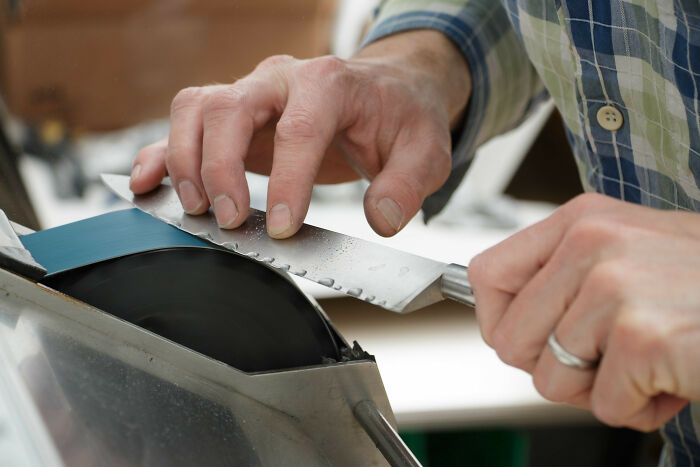 Sharpen your knives.

I've had the same knife sharpener for nearly 40 years, it's called Mr Auntriarch.
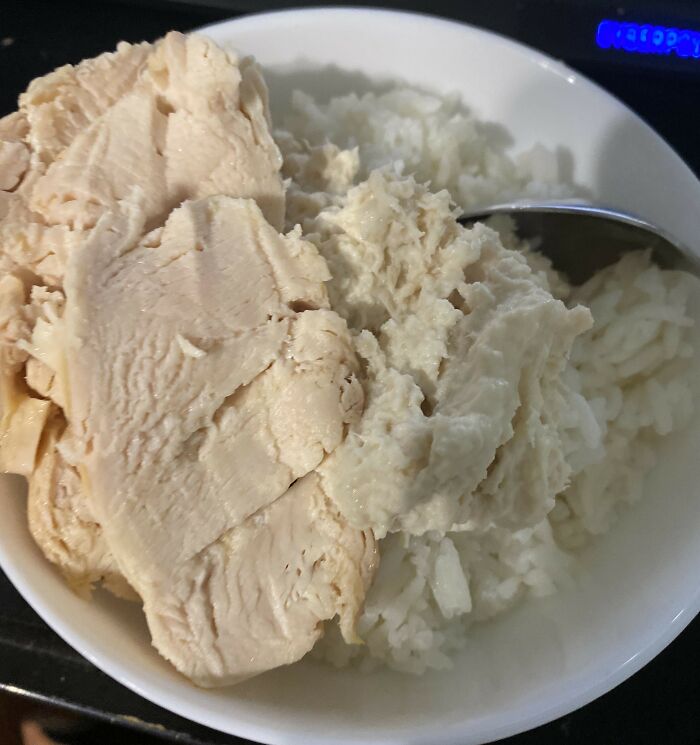 Most people are terrified of letting things get real color. Browning creates flavor. Pale chicken tastes like sadness.

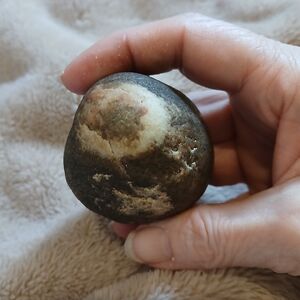
Pictured: "boiled chicken on boiled shredded chicken" OPs parent was out of town.
 1) Following a recipe religiously and not using common sense or adjusting to suit your taste. My chef released a book that called for too much salt for a sourdough, which destroyed the yeast.
2) Investing in dozens of single use gadgets. I think Alton Brown said the only single use kitchen item everyone should own is a fire extinguisher. Do as Marco and Gordon do and invest in a good pan and a few knives.
3) Trying a dish for the first time when entertaining. Practice, practice, practice! Trial it with your family or neighbours before you attempt to make souffles for the first time for 30 guests.

Also...by not following the recipe, AT ALL...substituting pretty much every ingredient, changing the cooking times, and then complaining that the "chef's recipe" tastes awful.
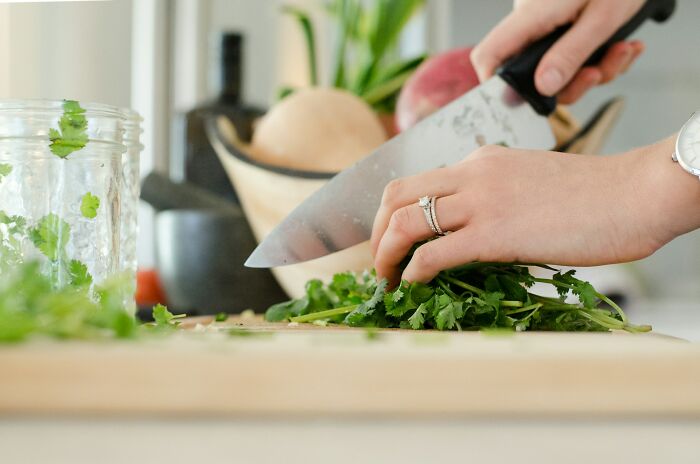 Sharpen your knives.
Learn how to hold your knives properly.
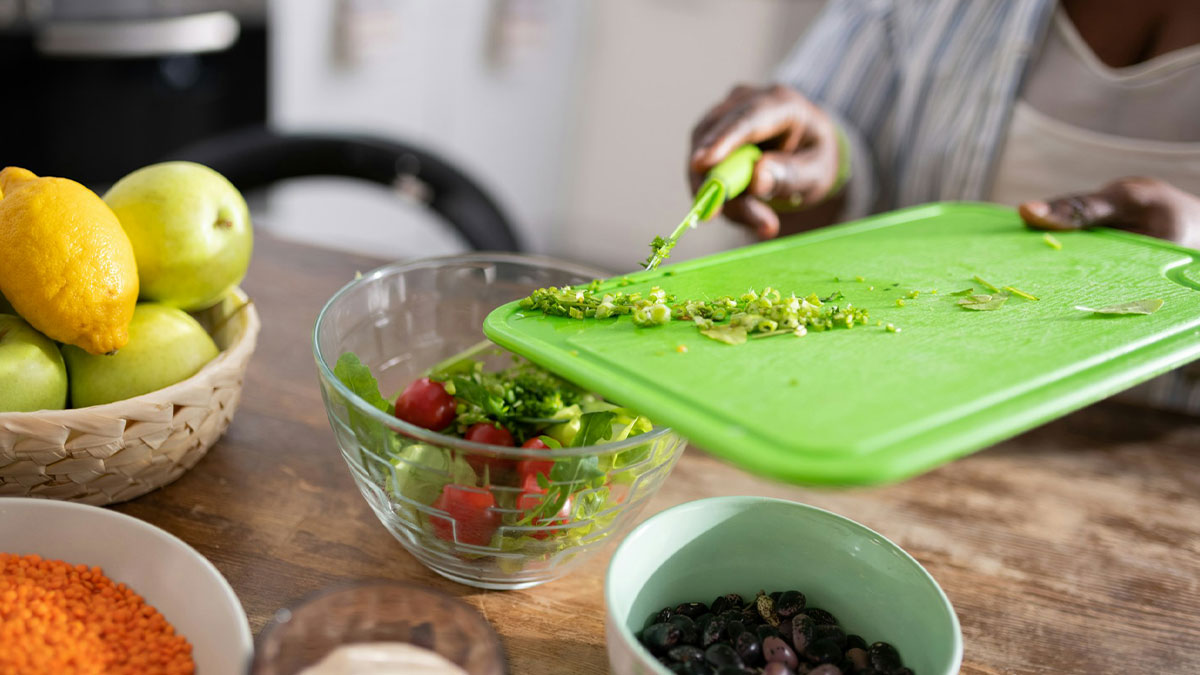
For the love of god, stop with glass "cutting boards" and enamel covered knives.
I could go on for hours, but those are the first three.

I use a wooden cutting board. I have had it forever. You can wash it just like dishes (not in the dishwasher), dry it off and use it. I have to oil it every so often to keep it ooking good.
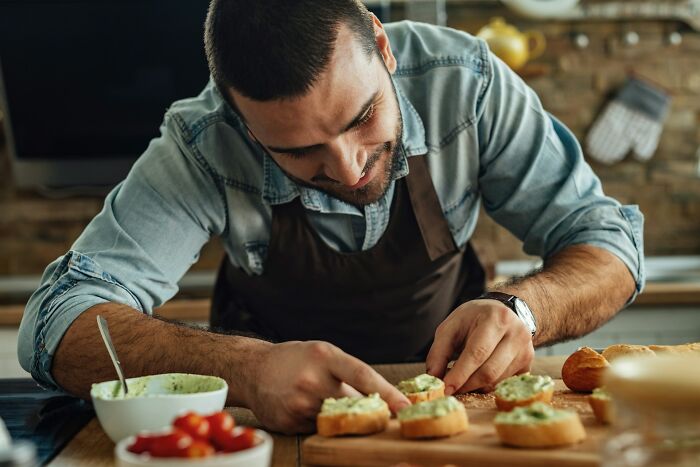 Owned a restaurant for 15 years: Mistake Number 1. Expensive ingredients are necessary. Start with the cheapest ingredients and work your way up. I used incredibly cheap cream cheese and expensive butter. Play around and find your brands.
Mistake Number 2: Getting discouraged when cooking / baking because it doesn't turn out right. Life happens, and food doesn't always listen to our expectations. Pick one recipe and do it a hundred times. I highly recommend starting with Molly's Adult Mac&Cheese with Bon Appétit. Watch the video and practice. We practice and explore with curiosity. Play and explore with one recipe.
Mistake Number 3: Complicated = Yummy. Simple recipes are ninjas. I have a four ingredient biscuit recipe that could carry a breakfast menu. My grilled cheese sandwiches can increase soup sales. Life is celebrated with big meals. However, life is lived between the day to day meals. Finding joy in these small task moments while cooking is simply bliss.
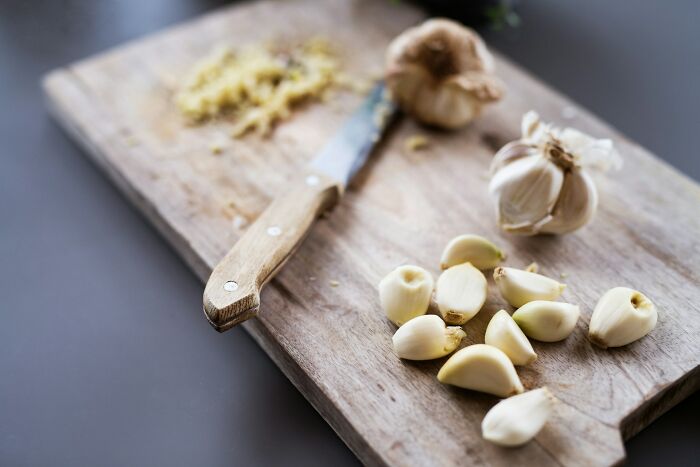 - Don’t throw garlic in the frying pan too soon, it will burn before seasoning the food.
- Olive oil, Onion, and then the garlic once the onion is soft.
- Bay leaves are not used enough. They make rice, stews and meat better.
- Low and slow always beats high and fast. .
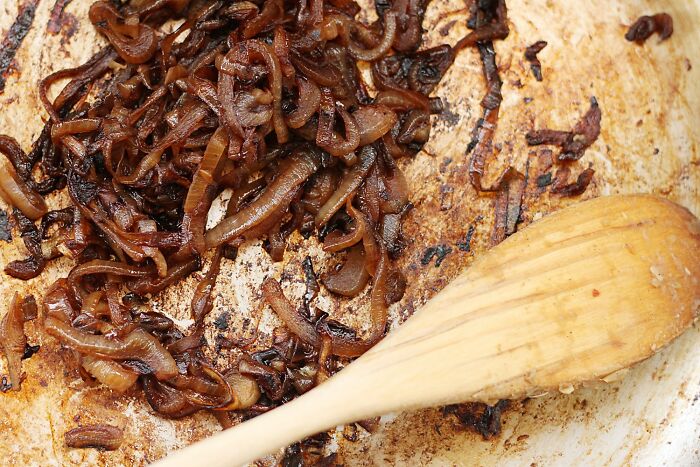 1. Thinking they can caramelize onions in 10 minutes
2. Thinking they can caramelize onions in 20 minutes
3. Thinking they can caramelize onions in 45 minutes.
Yo that stuff takes forever to do properly and if it doesn't, you didn't actually caramelize the onions.
Yup, that's my afternoon sorted. Medlar, bacon, onion and bourbon chutney.
 A lot of people dress up their dog in a chef costume and try to teach it to act as an assistant chef, walk on hind legs, etc. Rarely work. The dogs eat everything.

I've noticed since my assistant chef Melvin passed that he ate a lot of the food that dropped on the floor. Floor was cleaned by assistant chef!
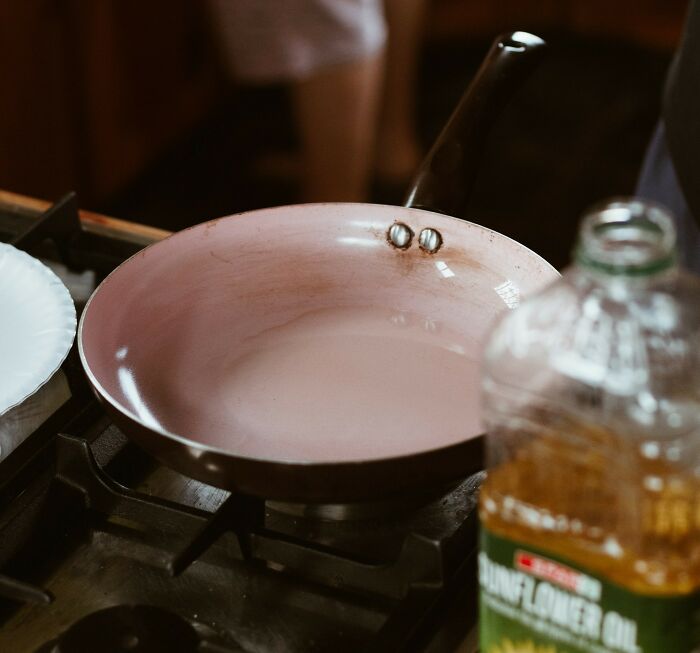 Either not preheating pans or going the other way and getting pans too hot, people seem to be obsessed with cranking the heat up to the max in the belief it will cook faster.

Overheating will end you with burned-and-raw-at-the-same-time dishes.
 Sharpen ya knives.
learn to season as your cooking and not just at the end.
Organise your area before doing anything else, if your area is cluttered your gonna have a hard time.
Clean as you go.
Most of the time you need a lot more herbs and spices than you think.
ALLLLLLL THE BUTTER!!!
Don't use olive oil to deep fry food, it's smoke point is very low.
Eh that's all I can be bothered thinking of off the top of my head. I did 20 years in the industry, it was enough. I wouldn't wish being a chef on anyone.
They do make an olive oil blend that takes high heat. I fry with it all the time.
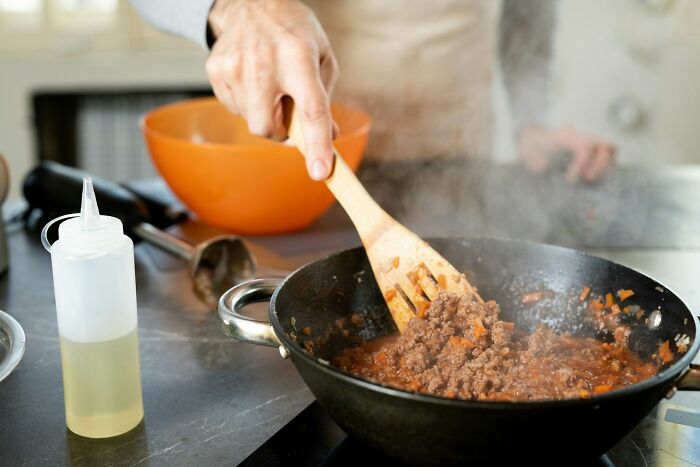 Keep it simple, keep it clean.
Don't muddle every dish with the same sauces and mixed spices.
Realize that cooking is subjective and not objective. Doesnt matter if its the worlds best recipe, sometimes grandmas meat balls is what hits right.
KEEP IT CLEAN! Like, really ... the most important thing. And using a factory mixed spices, is a big NO, but it's just me. The only exception is Herbes de Provence from a specific brand. But as OP said cooking is subjective ....
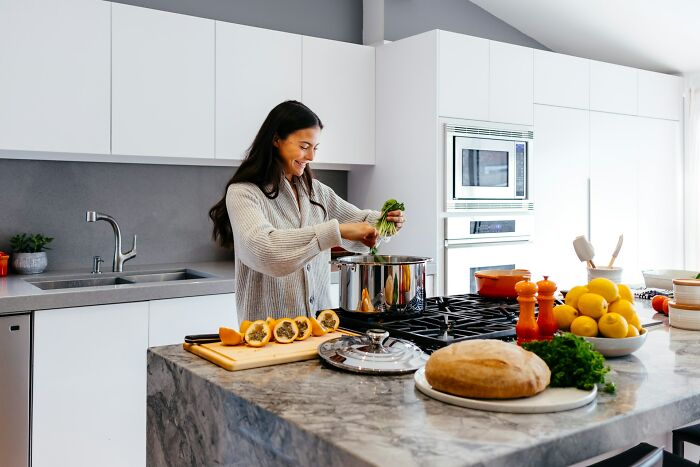 I'm NOT a professional, but I am pretty good.
1.) Not enough salt
2.) Not enough fats
3.) You're not cooking hot enough. Your pan is too cold and the food is too crowded in the pan. So instead of nice browning and searing, you're steaming your food and cooking it throughout too uniformly (think steak).
4.) Add an acid when you feel like the salt isn't helping. You are probably missing acidity. Citrus, vinegar, tomato sauce, etc.
5.) Try to mix textures. If your dish is soft, try to add something with a crunchy texture to give the whole dish a more pleasing composition.

Acid is so waaaay underrated. Usually it needs salt, sugar OR acid. People do NOT get that! 🤷🏼♂️
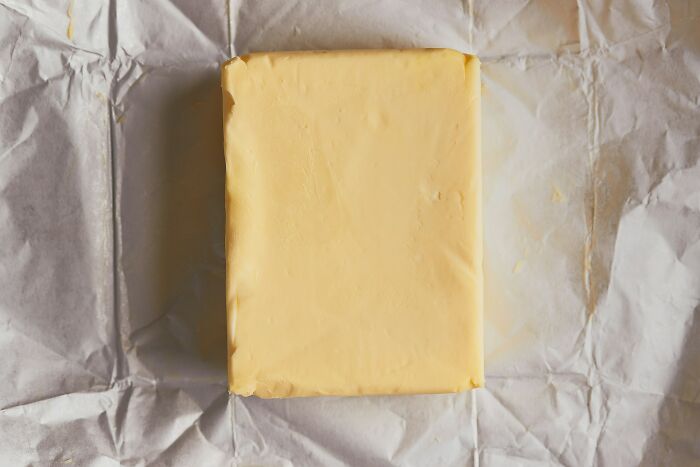 Professional cooking involves a lot of butter.
Others have said it but salt, acid, fat and heat.
I’m a pastry chef and I even salt and acid pastry dishes, a lot of people think you don’t need to but you do. Vinegar in a sorbet can help make the flavour shine.

This is why I love the philosophy of Thai cooking. Sweet, salty, sour, spicy, savory. If you elevate any one element in a Thai dish, you have to elevate the others too, so everything stays balanced.
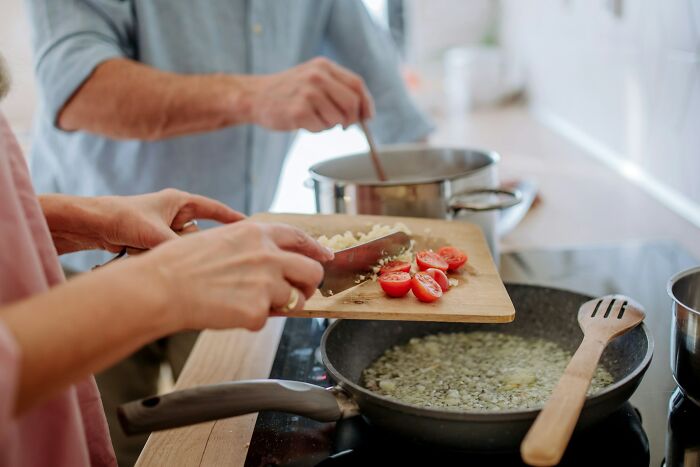 Scraping the chopping board with the sharp side of the knife. It INFURIATES me.

I flip the knife and use the top side of the knife to scrape off the cutting board.
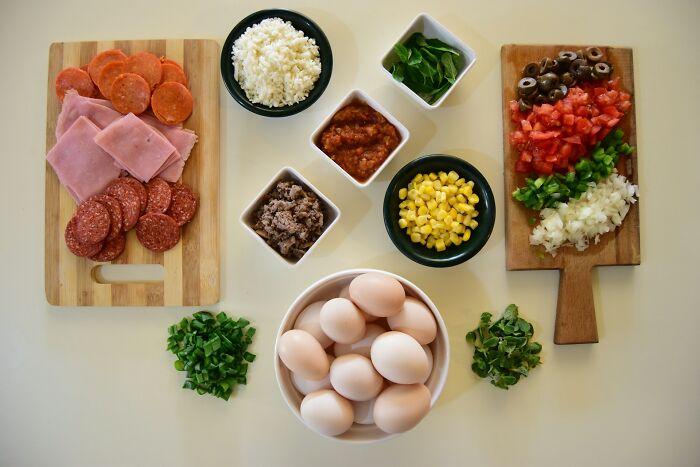 Mise n place!! You wont be frazzled and will have easier clean up.
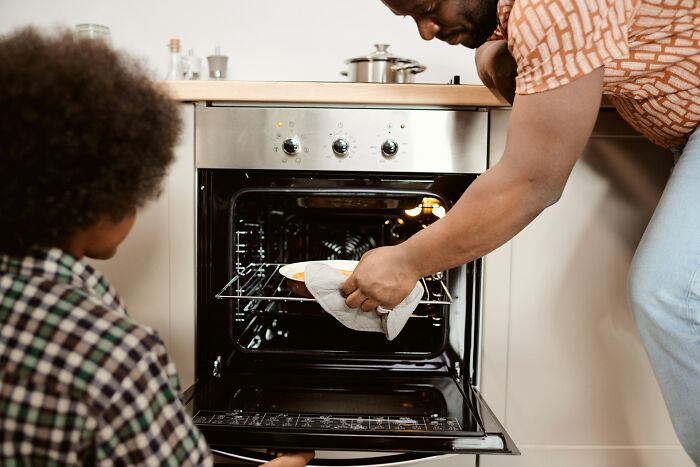 Professional baker here:
1a) believing the baking times on the recipe. Every oven is different, every time you use that oven is different, etc. Timers are useful for reminding you that you have something in the oven, but beyond that you have to know what done looks/feels like. Probe thermometers are your friend.
1b) believing your oven is the temperature it says it is. It probably isn't. It certainly isn't that temperature everywhere.
1c) Trusting the recipe. Sometimes recipes are wrong about things, even from otherwise solid bakers. Baking intuition takes time to develop, but if something seems wrong, it very well might be. It's okay to throw in an extra handful of flour or a couple tablespoons of water if it seems like you need it.
2) Underkneading and overworking. Can you overknead the bread dough? Probably not. You will melt your muscles or your mixer before that happens. But after the bulk ferment and now it's time to shape? People mess things up here all the time. Do not make it into a shape that you don't want it to stay. Don't make the dough into a ball and then try to roll it out into a pretzel or a baguette. Only touch the dough to make clear, specific progress towards the shape you want.
3) Underbaking things. Home bakers (and particularly Americans) are so terrified of overbaking things that they wildly, tragically underbake them. Some things (brownies, snicker doodles) are best if you just barely bake them, but a lot of things (particularly breads, viennoiserie, some cookies, etc) need to get properly, richly browned. Color is flavor! Raw flour doesn't taste good! Gelatinize your starches, caramelize some sugars, and crisp up that crust, people!
I disagree with oven temperature. Buy an oven thermometer and make sure your oven isn’t lying. My old oven does lie, but it’s consistent. e.g. If I want 400F, I set the dial to 350F—always. I’ve never found a recipe that didn’t cook according to the recipe.
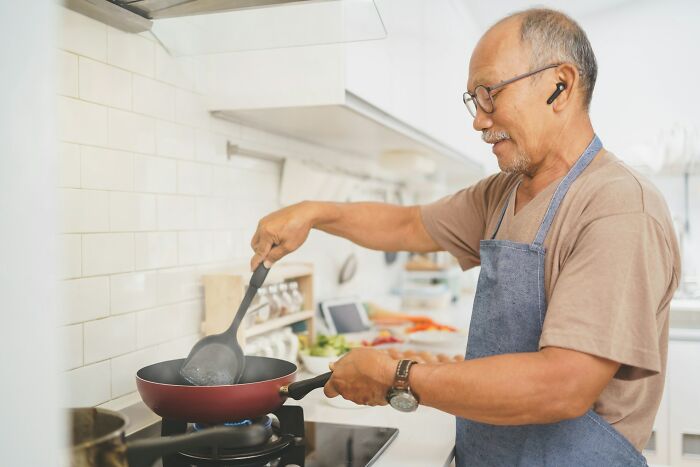 1. Too much reliance on and adherence to recipes. Recipes are your starting point as a home cook, but over time they should help you develop techniques and intuitions so that you're adaptable and no longer need a recipe to cook anymore or find ways to improve a recipe to your liking. Also just because you're missing an ingredient doesn't mean it's time to give up (less true in baking and pastry) but adapt.
2. Not tasting a dish as you go and developing a sense of taste to help drive your dishes and help build intuition for what's missing. Too many people want clean measurements for adding salt, spices, or peppers but everyone's taste is different and you need to get comfortable with your own sense of taste to know what and how much of a thing a dish is missing.
3. Not realizing failure is your teacher and not your enemy. You will mess up seasoning a dish, over or under cooking a dish, or some other technical matter but too many people let those experiences dissuade them from experimenting or getting outside their comfort zone in the future to try more difficult dishes and improve. When you fail still ask your what worked and what didn't work in the thing you made; those lessons will help improve your cooking going forward.
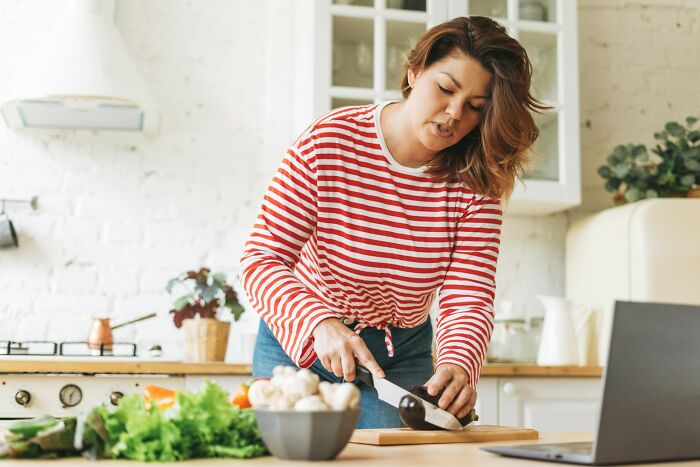 The number one thing I see the average home cook do is alter a recipe they are following because they “feel” like it’s too much or too little of an ingredient. I can’t tell you how many times I’ve heard “I only put half the salt in because it seemed like too much” or “I put twice as much butter into it because I like butter”. And then it doesn’t come out right and they don’t understand why.

I once gave someone my recipe for Key Lime pie. She told me she added cream cheese. That… is no longer a Key Lime pie
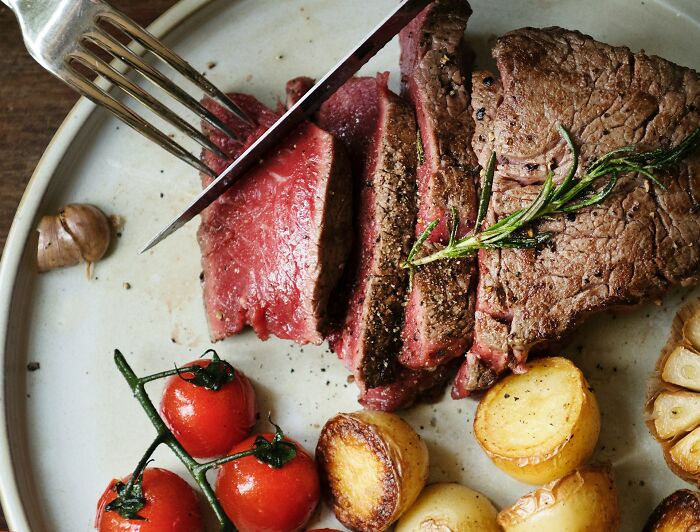 My husband fancies himself an amateur chef and there are a few dishes that he does well, but there are also things that drive me up the wall and I am not even a chef.
1) never rests the meat. Steak goes from the pan straight onto the plate and is cut. Bleeding merrily all over the sauce.
2) ignores the difference between oils. If I never see another pan with thick smoking extra vergine olive oil…
3) is mortally afraid of colour on onions. If the recipe says “brown the onions”, you can bet his will be barely translucent and mostly still raw.
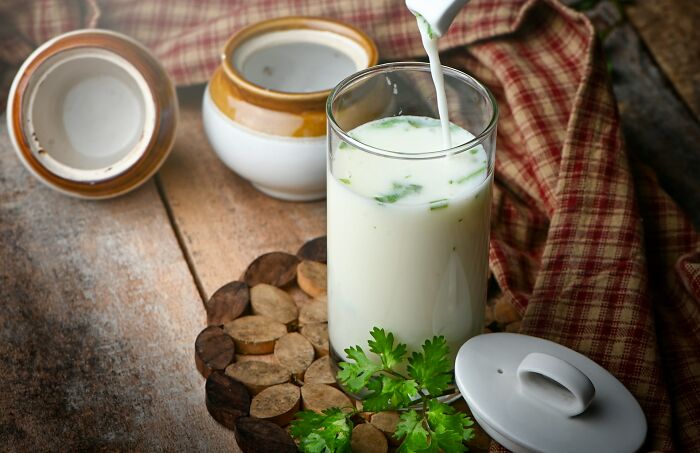 Use full fat dairy.
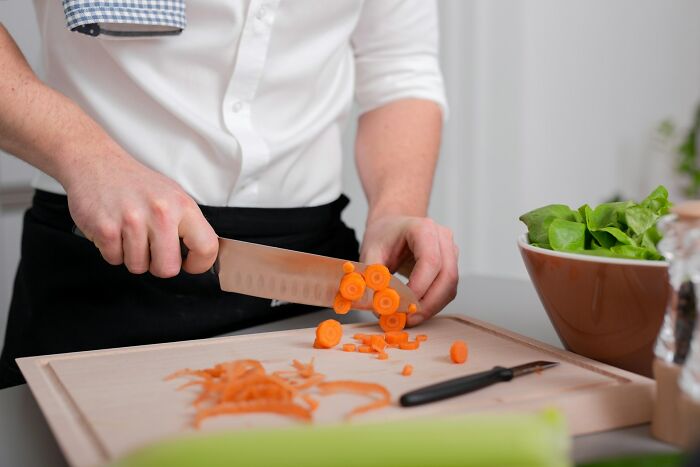 Knife skills, knife skills, and knife skills.
Know what knife to use for the right food. A good chef's knife will be your workhorse for almost everything but there are still a lot of different knives out there who have specific purposes. Don't use a paring knife to chop your onions; it'll take you *forever*.
Hold your chef's knife correctly. Three fingers are on the handle, while you're pinching the base of the blade between your pointer finger and thumb. This gives you SO much more control with what you're doing.
Stop just pressing straight down with your knife to cut things. Slice and glide, move the knife at an angle through what you're cutting. If you're chopping something small, use a rocking motion. It's cleaner, faster, and safer.
Knife skills are one of the first things you learn in culinary school. There's literally entire 101 classes based around it. I don't expect your average home chef to know the difference between a batonnet and a julienne, or carve out a flawless tournée, but some basic knife skills are a HUGE deal in the kitchen.

And it's not just about skill, it's also about safety. A well-sharpened knife held correctly is far less likely to slip and slice the tip of your finger off than a dull knife held carelessly.
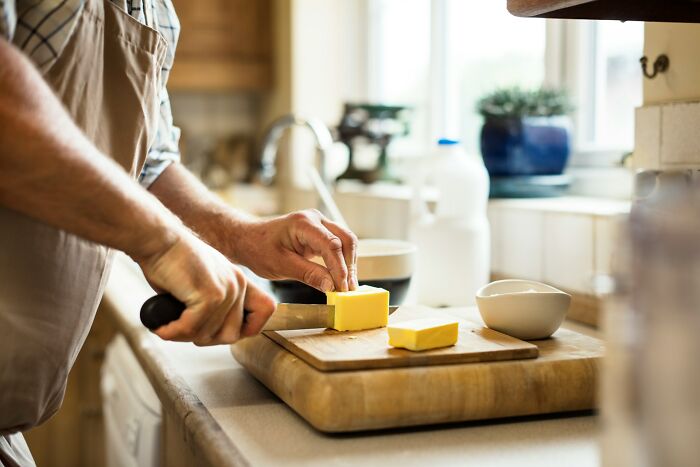 Not enough butter.
No, more.
Still, more.
Keep going.
Almost there….
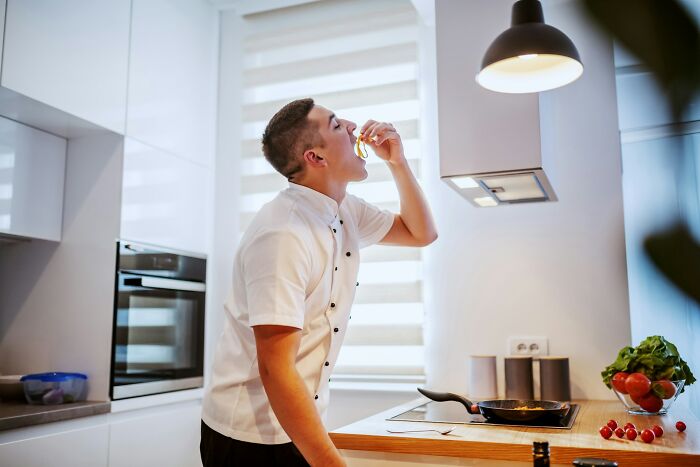 My dad was head chef in various places when I was growing up. He could bang out amazing food from the humblest of kitchens but put him behind a bbq and it’ll all be burnt.
The top 3 for home cooks is usually
Season more
More heat/less in the pan at any one time
Taste as you go
I got myself a meat thermometer and now never listen to the 40mins per kilo plus 40mins bollocks on the chicken. It’s spot on as soon as it hits 180
Using the correct oil seems to be something misunderstood too
Edit - Seems I’m incorrect and poultry isn’t 180F as my thermometer states. Thanks for the clarification.

The chicken heat thing is misleading. There's a 'safe' temperature, then there's a 'best flavour and texture' temperature. For chicken the latter may be down to personal preference, so please don't just automatically use the lower temperature, make sure it's cooked properly all the way through or however you like it.
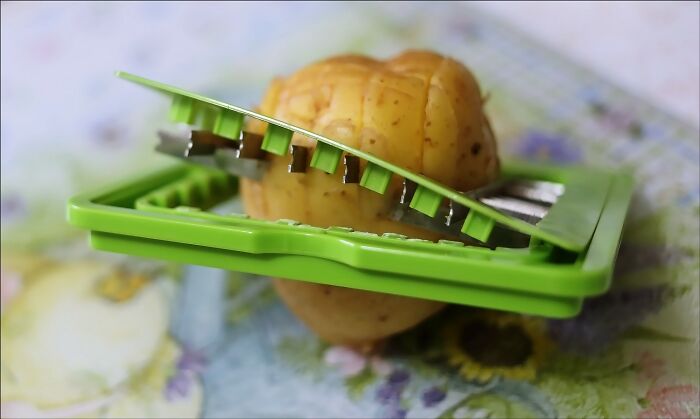 Buying kitchen gadgets instead of using a sharp knife.
Use the right size and type of pan, expensive may be a waste of money.
Use fat or oil but use the right one for the heat and purpose, burnt olive oil tastes really bad, extra virgin in salad dressing is overpowering.
Use salt, acid and fat!
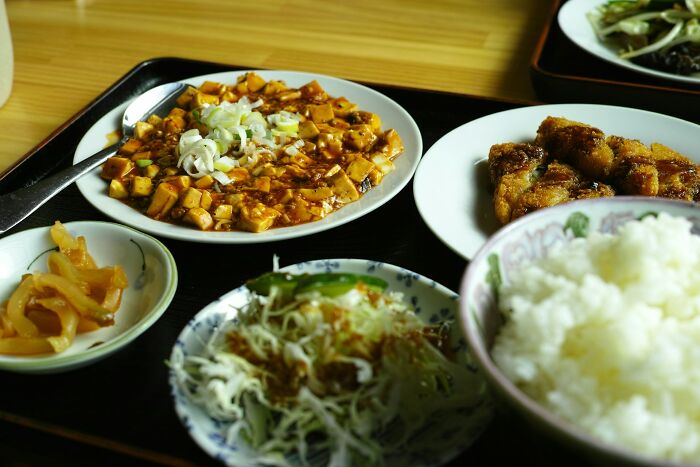 Not a chef, but food served on cold plates drives me insane. It sucks the heat out of the food straight away and spoils the whole dining experience.

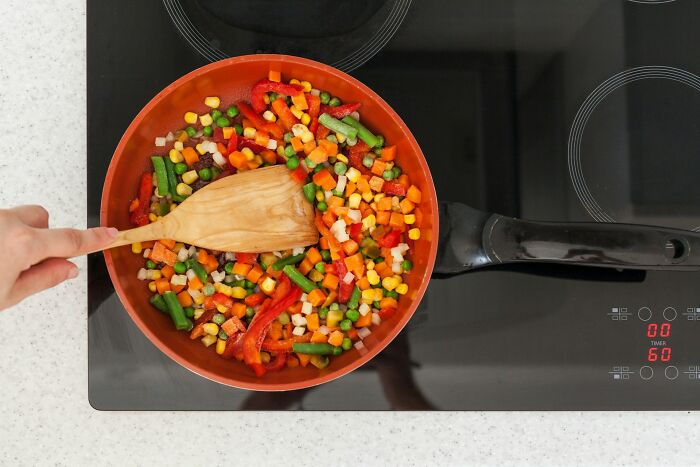 Not understanding the importance of preheating, pans or ovens. Not seasoning properly. Listening to whatever online recipe they’re reading and putting in 1/4 tsp of salt into some large quantity of food that could use a whole a*s tablespoon. Same goes for garlic. Not necessarily their fault. I’m not sure what is up with some of these people posting recipes and putting two grains of salt in a grain silo’s worth of food.
I don’t recall the last online recipe I read where I wouldn’t add a considerable amount extra of whatever spices or seasonings being used. The rule of garlic in whatever recipe, *at least* double it.
Not caring to learn to hold a knife properly (just a two second YouTube) and not using a sharp knife. Even using the honing steel in their home butchers block knife holder would help. Both of these things will make your experience safer, more efficient and more enjoyable.
Not checking on whatever is in the oven. Not tasting as you go.
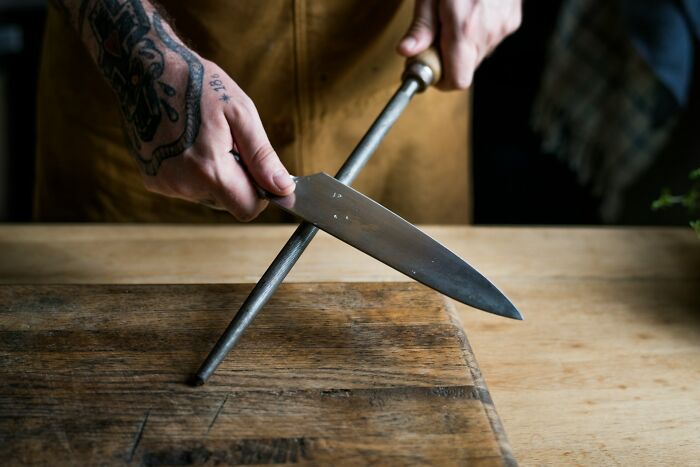 Blunt knives. (My heart is filled with hate).
Over cooked vegetables that have been boiled to oblivion. lumpy mashed potatoes.
These are the three things my mum excelled at and a large part of why I became a chef....
.... "Surely it could taste better than this" type of vibe.
Some things are a matter of personal preference. For instance I much prefer to have a feel of real potato. even if that means there may be small unmashed pieces in it, as long as they're cooked enough in the first place. But I'm not going to say you're doing it wrong if you want a soft puree with a pint of cream and a pound of butter in it, just not for me please.
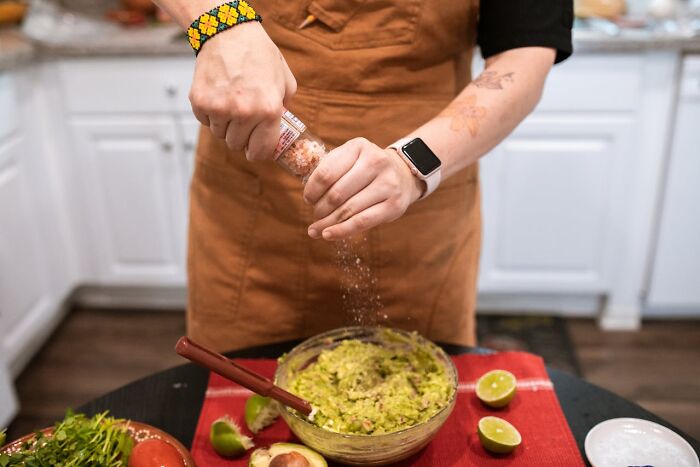 Not. Enough. Salt!!
All the time I hear my clients or friends or family say how their food is so bland. I try their food and it’s the first thing I notice. I’ve watched them cook and they use the tiniest pinch of salt for a meal that’s meant to feed a whole group. They follow a recipe meticulously adding herbs, onions and garlic, but not nearly enough salt. Recipes don’t do a good job leading you when it comes to correct salt level.
Adding to this advice, find a salt that you like. Some salts are saltier than others. I like kosher flake salt because it dissolved fast, but it can go from ok to very salty if you aren’t careful. But it’s most chefs favorite. Pink salt is one of the more milder salts, but a lot of people like it because of its nutrient content. You do you. But my top piece of advice is increase the salt content of your food and it will taste much better.
Buying ALL the super expensive and pretty looking knives and tools before they even know how to use them. Start out learning the basics with the basics. Then get the fancy stuff. As well, be careful of buying the "pretty" looking knives like "hand hammered Damascus steel". Don't fall into that trap.
Weigh your ingredients when baking! So much inaccurate measuring can happen when you’re scooping dry ingredients, for instance. The scale doesn’t lie.
Does "thinking they can succeed in a professional kitchen" count? .
Bonus: Not tasting as they cook.
The tongue is the best tool in the kitchen. A cook who doesn’t taste is cooking blind. Salt, acid, and heat shift with time. You can’t fix the end if you ignore the middle.

Taste, but only if it's safe. I remember watching an episode of Masterchef the Professionals (British show) and Michel Roux was asked how you know the flour is cooked properly for a roux. "You taste it," he said. Yeah, right, like I'm going to taste boiling hot butter with flour ... Nah, the timer goes on two minutes and I just watch the mixture change texture, but I'm not tasting that!
Not a chef necessarily, but I work in kitchens. I notice people holding a knife incorrectly for what they're trying to achieve. Pinch the base of the blade.
Dull knives, improper food handling/safety, throwing out “waste” that is useful for other things.
Not a chef, but a line cook. Mine are: using too much heat for stovetop cooking, not temping one’s oven, and being shy with seasonings/not seasoning all the way through the cooking process - if you want your dish to taste like restaurant food, you probably need a lot more fat and salt than you think.
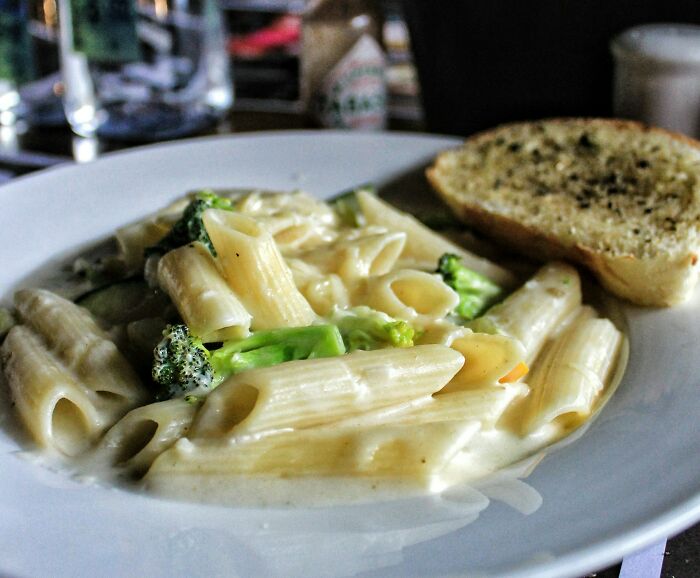 Cooking pasta way past al dente & Not seasoning food properly.
I like my pasta overcooked. Al dente is chewy. I don't care for chewy pasta.
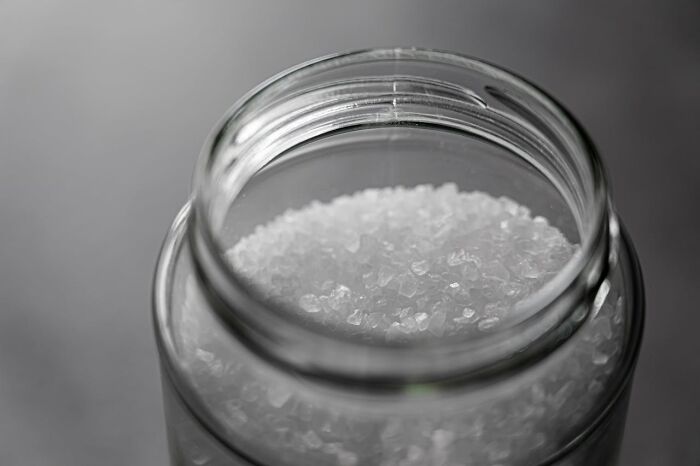 You need to salt a dish at every stage of its cooking, not just all at once at the end.
1. Moving the food too much, let it be.
2. Not enough salt or fat…
3. Learn to complement flavors, a spritz of acid on a rich dish does wonders…
4. Read the recipe start to finish before beginning. In fact print it out and highlight actionable stuff.
I used a recipe for flourless fried pork chops. Author said to leave the pork chop in the pan until it releases from the pan by itself, then you can turn it. It worked, it was a great pork chop, well flavored, cooked just right.
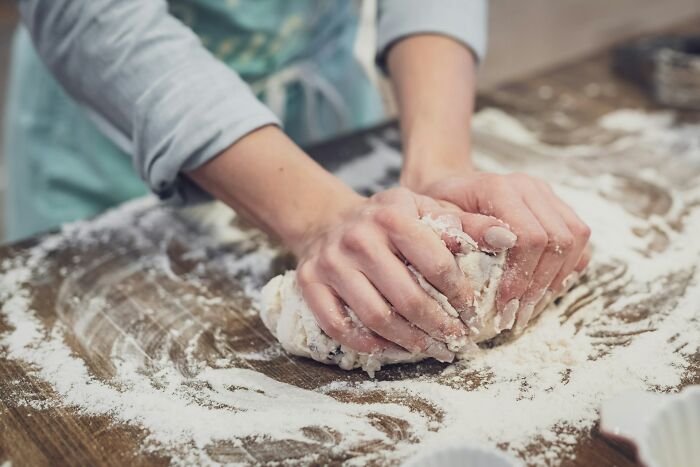 Ex-Pastry Chef here. :)
1) When it says beat your sugar and butter together, it means it. If you want the best results you can get BEAT IT. And I mean like, changing to a whole different colour. It should be white and fluffy. Don't be shy, don't be scared, keep going.
2) If a recipe says 350 for 20 minutes. Do 350 and start your timer at 10 minutes. You can always give the recipe more time, but you can't take it away.
3) FOLLOW THE RECIPE/INSTRUCTIONS. Baking is a science, if it asks for 250g of sugar, give it 250g sugar. Don't hold some back because you don't want it to "be too sweet" . You do that, the whole recipe is out of whack.
4) If a recipe asks for frozen berries, or frozen anything. Make sure they're still frozen when you add them to your recipe. If you let them defrost, you are adding extra liquid into your recipe and it likely won't turn out the way you hope.

Number 3 is not necessarily correct. I've made cakes from internet (predominantly US) recipes where I've decreased the sugar significantly and the cake has been fine, mostly because the recipe had too much sugar. Rule of thumb - the flour and sugar should be roughly equal in WEIGHT, not volume (think pound cake, where you use a pound of everything).
Get those pans hot before you put something in/on it. Same applies to outdoor grills.
A little oil in the pasta water will not prevent clumping/sticking but will help prevent boil overs.
For the love of God, don't be afraid to season your food! Shouldn't have to say it but I will for those in the back- if you have dietary restrictions then obviously follow them- but all those lovely fresh herbs and spices are a beautiful thing. You'd be amazed at how even simple S&P will elevate your dishes.
I keep adding to this because my mind is a perpetual prep list. If you have the time it is SO worth it to make your own stock for soups/sauces/etc.
Prepare ALL ingredients BEFORE you turn on the stove. Chop, measure, and arrange them in bowls. This transforms cooking from a stressful experience into a meditative and enjoyable one.


































 No fees, cancel anytime