Get Premium
Dark mode theme is available exclusively for premium users. Learn more about the benefits of subscribing.
No fees, cancel anytime.

 Dark Mode Ad-Free Browsing Unlimited Content
 Ad-Free Browsing Unlimited Content Dark Mode
Join 1.2 million Panda readers who get the best art, memes, and fun stories every week!
10submissions
Finished

Bob Dylan is considered one of the greatest songwriters in American history, having touched the hearts and minds of millions throughout his career.
Director James Mangold – of 2005’s Walk the Line and 2017 Logan fame – comes back seeking to portray the story of a poor kid with a guitar, a few dollars to his name, and a dream on his path to becoming a music legend.
A Complete Unknown released its first trailer on July 25, 2024, and it sees actor Timothée Chalamet in the role of a young Robert Zimmerman, singing some of his hits with remarkable accuracy.
The movie’s long-anticipated release date was finally revealed this Tuesday (August 6), and it’s expected to be in theaters during the holidays on December 25, 2024.
Prepare yourself for the highly anticipated biopic with this list of the most iconic moments from the songwriter’s life.
This post may include affiliate links.
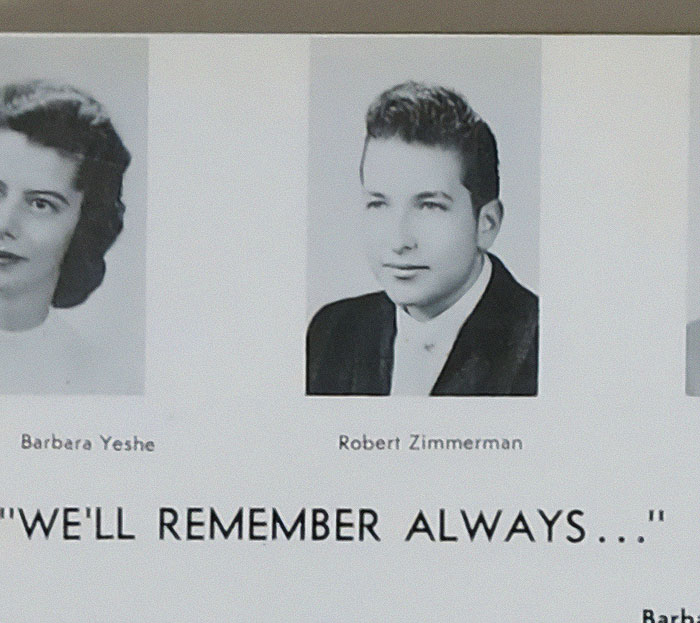
He grew up in Hibbing, Minnesota. Named Robert Zimmerman and called “Zimbo” by his classmates, he started playing the piano as an 11-year-old before shifting to a cheap acoustic guitar after being influenced by the likes of Elvis Presley, Hank Williams, and Little Richard.
Young Dylan was a fan of the actor James Dean, whose portrayal in Rebel with a Cause would influence his looks in the coming years. He soon formed a band, the Shadow Blasters, and performed live in high school talent shows like the Hibbing High Talent Show on April 5, 1957.
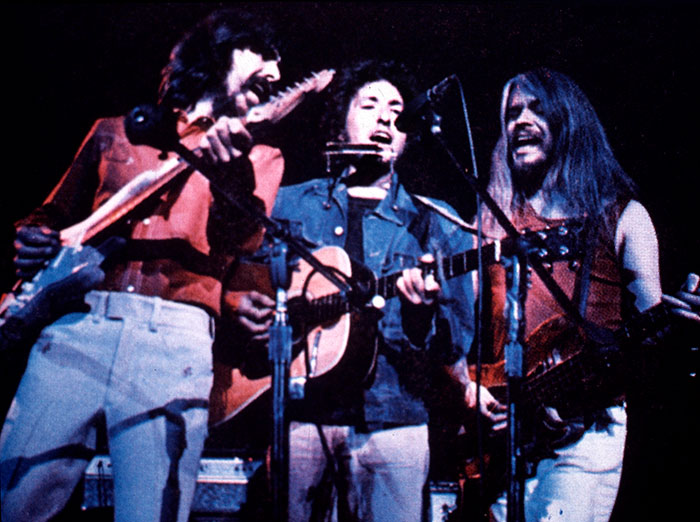
Following advice from sitarist Ravi Shankar, The Beatles’ George Harrison decided to put on the Concert For Bangladesh in 1971 in a bid to aid those struggling in the nation following years of turmoil, war, and famine. Harrison invited a host of incredible musicians to perform, but the world was waiting for Dylan.
His first performance since his 1969 appearance at the Isle of Wight Festival saw Harrison and Dylan join for renditions of classics such as Just Like a Woman, Blowin’ In the Wind, and Mr. Tambourine Man, drawing more than 40,000 attendees and raising more than $250,000 in aid funds.
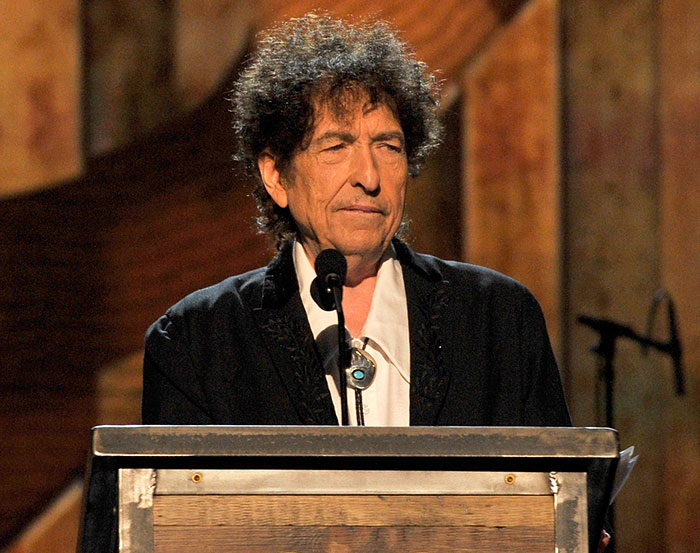
In 2016, Bob Dylan achieved a milestone no other musician had ever reached: he was awarded the Nobel Prize in Literature. The Swedish Academy honored Dylan “for having created new poetic expressions within the great American song tradition.”
The award cemented his songs as not just music but also historical narratives and poetic expressions of the American experience during the turbulent 60s and 70s.
Despite the acclaim, the decision to award Dylan with the Nobel Prize sparked debate. Critics questioned how a musician, known for his twangy voice and unconventional style, could be honored with a prize traditionally reserved for novelists and poets.
The start of the 60s was a turbulent time. Nuclear annihilation was a very real possibility for many around the world, especially for Americans, who were dealing with the Cuban missile crisis.
For Dylan’s generation, it was an oppressive atmosphere, but it was also one that led to creativity and the search for meaning.
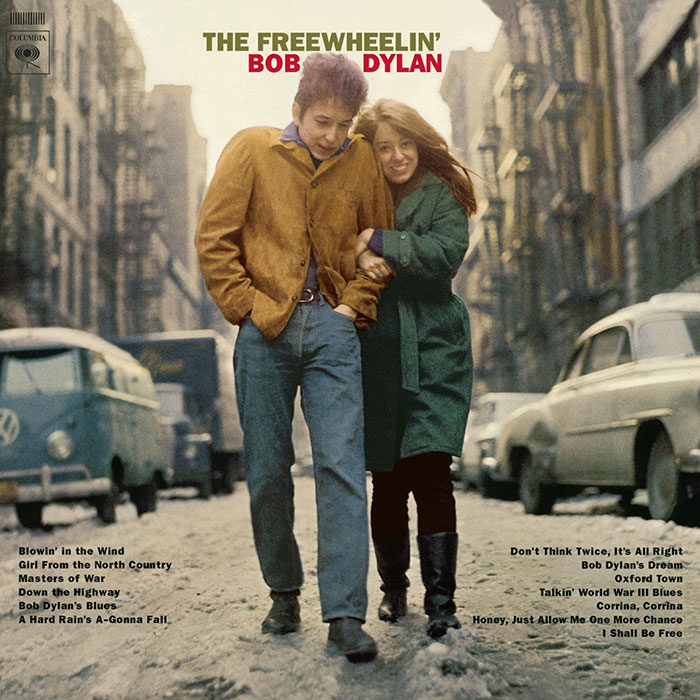
With these thoughts, he sat down at an old Remington typewriter and pounded out an apocalyptic poem titled A Hard Rain’s A-Gonna Fall, set to the melody of Lord Randall, a folk ballad.
“People sat around wondering if it was the end, and so did I. It was a song of desperation. What could we do? Could we control the men on the verge of wiping us out? The words came fast – very fast. It was a song of terror,” Dylan said in his 1965 recollections.
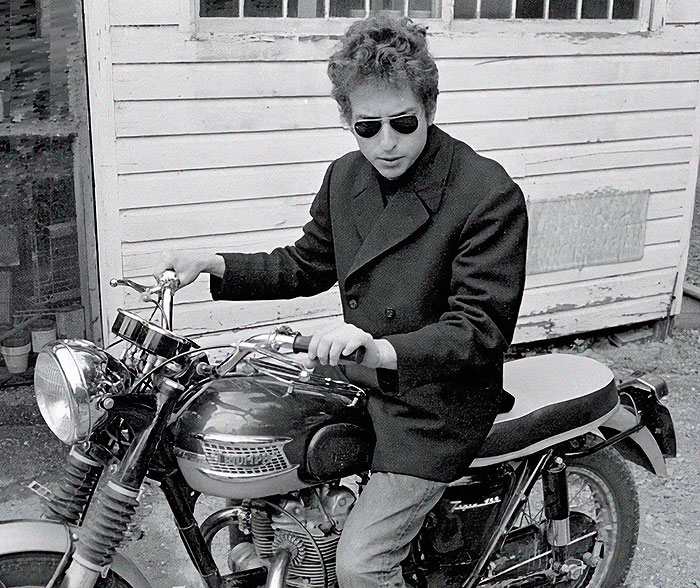
In 1966, while returning to his home near Woodstock, New York, a physically and mentally exhausted Dylan got into an accident on his motorbike, breaking several bones and fracturing his spine. The artist would later reveal in his autobiography that it wasn’t so much an accident as it was an attempt at getting “out of the rat race,” as he put it.
His band members moved in close by to a house known as “The Pink,” which led to one of the more creatively productive periods in the songwriter’s career, with him producing more than 100 tracks, including covers and original works in the folk, gospel, and blues genres. These tracks would later become known as the Basement Tapes, released in 1975.
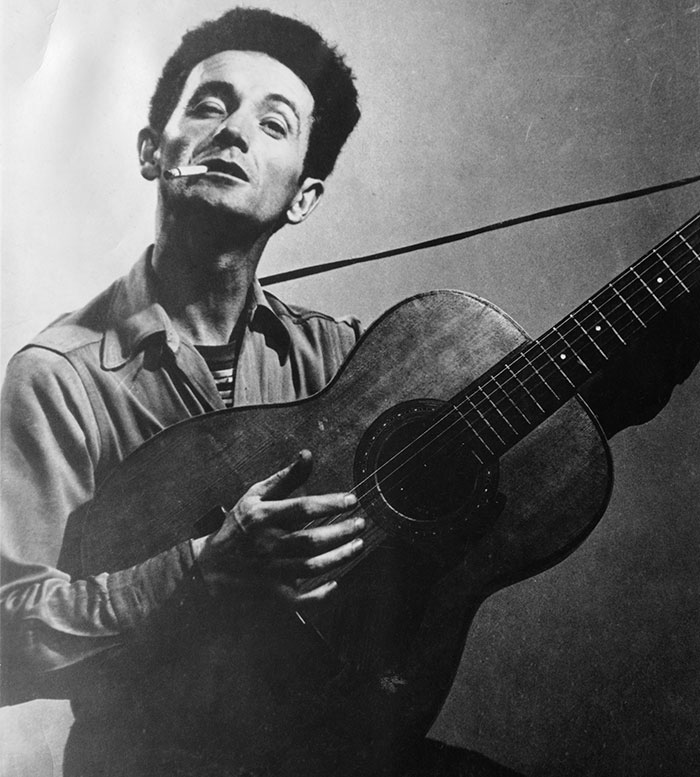
The artist arrived in New York on January 24, 1961. After a meandering cross-country journey, he headed out to meet Woody Guthrie, whom he described as “the true voice of the American spirit.”
Guthrie was, at the time, confined to Greystone Park Hospital, fading away with Huntington’s Disease. They struck up a friendship, and their conversations would become the seed from which Dylan’s style would grow.
Dylan would later translate his love for the folk legend in the piece Song to Woody.
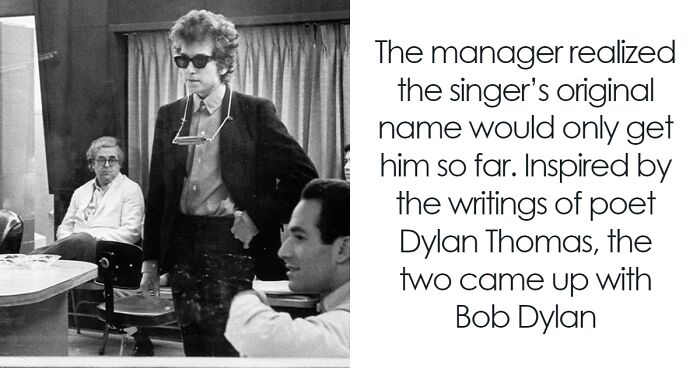
In 1962, Dylan would meet another key figure in manager Albert Grossman, who was instrumental in his career, helping him all the way until 1970.
Grossman, who was largely credited with kick-starting Elvis Presley’s career, had the contacts, the business acumen, and the personality needed to sell the young Robert Zimmerman as the new promise of the folk music scene.
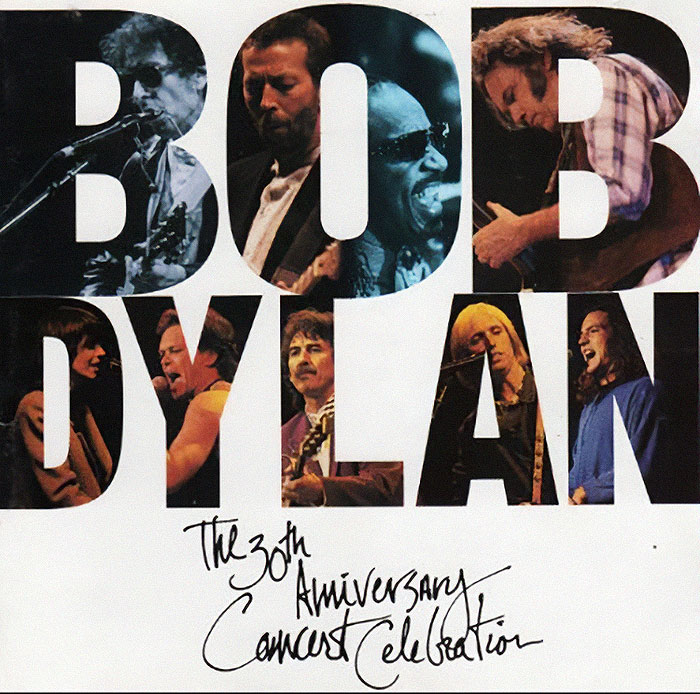
1992 saw the 30th anniversary of Dylan’s first iconic album, which was celebrated by a tribute concert at Madison Square Garden.
The show featured some of Dylan’s closest friends, including Eric Clapton, George Harrison, Neil Young, Stevie Wonder, and Tom Petty.
The 90s also saw Dylan return to his folk roots with the 1993 album World Gone Wrong.
The concert was then made into an album titled The 30th Anniversary Concert Celebration, and it was released in August of that same year.
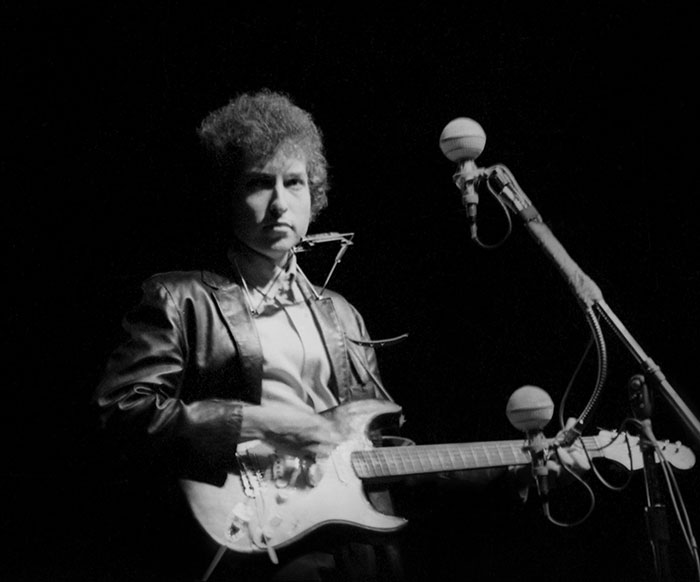
March 1965 saw the musician release his fifth album, Bringing It All Back Home, with side one featuring songs performed by a rock band. He cemented his decision later that year on July 20 with the release of the single Like a Rolling Stone, performed entirely with an electric guitar.
Just five days later, on July 25, 1965, a concerned audience attended what would become the first fully electric concert by the artist. Half of the audience of the Newport Folk Festival booed his performance, with one person yelling, “Judas!”
The new decade saw the artist struggle with the changes in culture and the music industry. The rise of music videos, more fast-paced music, and genres like hip-hop and modern rock spoke to a society that had moved past the reflective dread of the 60s and early 70s and into a more light-hearted and hedonistic way of life.
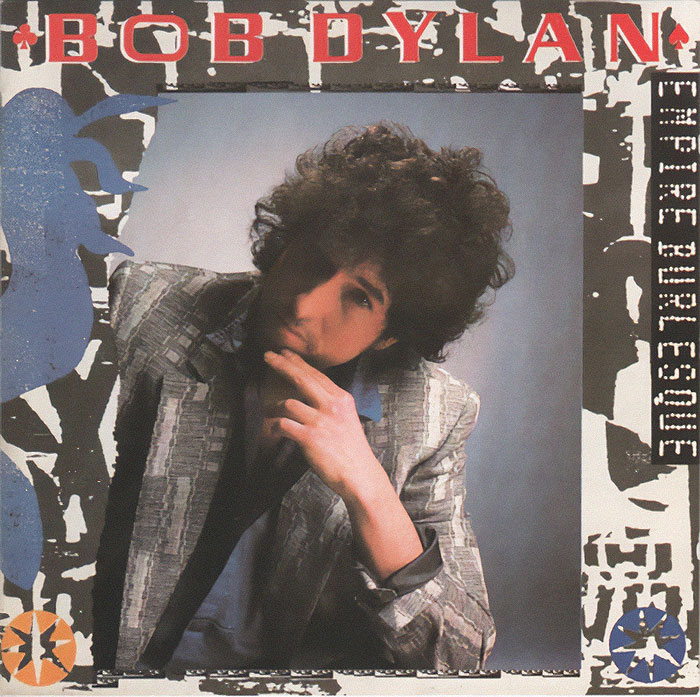
In retrospect, this period is one of the more interesting in the artist’s history, and it saw him exploring a more experimental sound in albums such as Infidels and Empire Burlesque.
















 No fees, cancel anytime
 then open in external browser


 and click "Open in External Browser"