Get Premium
Dark mode theme is available exclusively for premium users. Learn more about the benefits of subscribing.
No fees, cancel anytime.

 Dark Mode Ad-Free Browsing Unlimited Content
 Ad-Free Browsing Unlimited Content Dark Mode
Join 1.2 million Panda readers who get the best art, memes, and fun stories every week!

When the California Academy of Sciences announced their 2020 BigPicture Natural World Photography contest, they asked professional photographers to send their work that "will both celebrate and illustrate the rich diversity of life on Earth and inspire action to protect and conserve it through the power of imagery." Now that the photo contest is over and the results have been announced, it's safe to say that the call was answered.
These best photos originally appeared on bioGraphic, an online magazine about science and sustainability, and the official media sponsor for the competition, with captions written by the bioGraphic staff.
More info: bigpicturecompetition.org | Facebook | Instagram | Twitter
This post may include affiliate links.
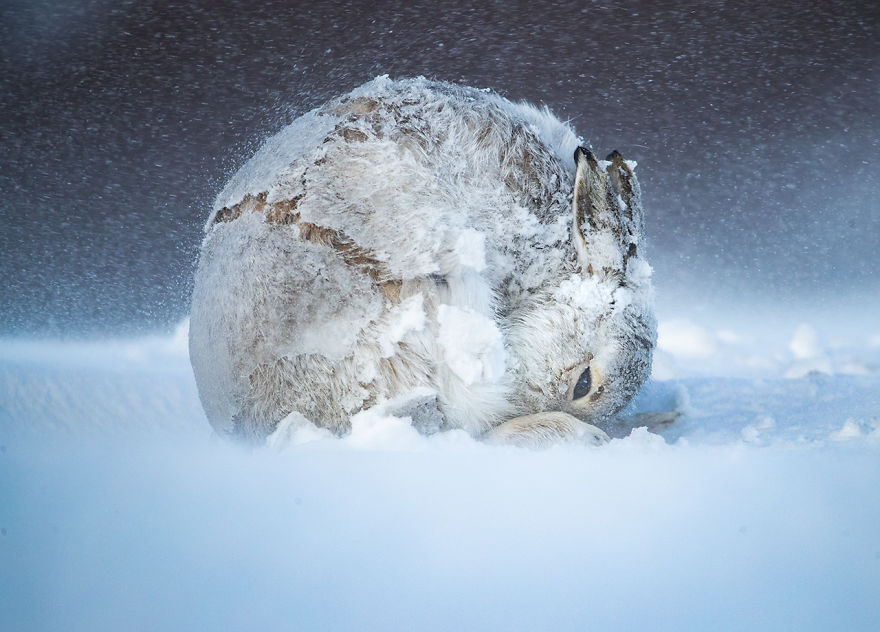
"To get this intimate shot of a mountain hare (Lepus timidus) curled up against a Scottish winter storm, Andy Parkinson endured weeks of ferocious cold and wind that drove shards of ice into his face. Britain’s only native rabbit species, on the other hand, is utterly at home in these inhospitable conditions. Groups of twenty or more hares gather each winter to nibble heather on leeward slopes, where the snow tends to be shallower. Before resting, they jump away from their tracks to confuse predators. And while some ride out storms in burrows or depressions, this female created her own shelter, tucking herself into a ball to conserve heat and minimize exposure to the elements. It’s a nifty strategy for surviving the kind of weather that drives most creatures indoors or underground.
Despite their fortitude, mountain hares are Britain’s fastest-declining mammal, due to unregulated hunting and habitat loss. Parkinson hopes that calling attention to these remarkable rabbits will convince legislators to protect them."

Beautiful picture depicting the tenacity of the hare through the hardship of winter. It is nice to know the background story of Andy, I am sure it was extremely difficult through that bitter coldness.
The photographers' efforts were greatly rewarded as well. The Grand Prize winner received $5,000 for the best overall image and will be featured in the annual exhibit at the California Academy of Sciences. The first-place winners of the seven official categories each received $1,000 in cash and will also have their stunning pictures featured in the annual exhibit. Up to 6 additional finalists were awarded a certificate of recognition for each category, with the exception of the Photo Series category, which awarded just first place.
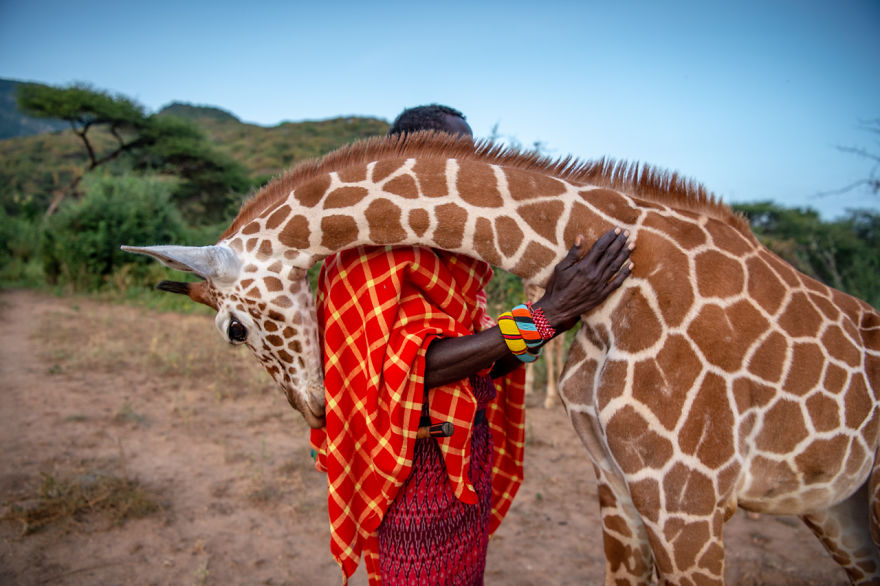
"Too often, says Ami Vitale, nature photography excludes the humans whose lives are intertwined with the natural world. Her decade-long project documenting the bonds between Samburu people and wildlife in northern Kenya reverses this oversight, telling the story of how Samburu people became advocates for wild animals and their habitat.
For as long as Samburu people have grazed livestock, their livelihood has been seemingly at odds with the elephants, rhinos, giraffes, and other large mammals with whom they share their homeland. But as poachers decimated elephant (Mammalia proboscidea) populations in recent decades, Samburu herders realized their cattle were also suffering. Elephants promote grass growth by clearing brush and small trees, so as their numbers shrink, there’s less grass for cows to graze on. In response, the Samburu launched a sanctuary to rehabilitate orphaned elephants, along with other conservation programs that benefit threatened species like the reticulated giraffe (Giraffa camelopardalis reticulata), shown here. These efforts are changing long-standing Samburu attitudes toward wildlife, and show how the health of human and animal communities are connected. “Indigenous communities hold the key to saving Africa’s great animals,” says Vitale. “Where these communities are intact, poaching has dramatically decreased.”"
"As usual, we received amazing wildlife photography submissions depicting all realms of the natural world," Rhonda Rubinstein, the co-founder of BigPicture and Creative Director at the California Academy of Sciences, told Bored Panda. "But this year we seemed to have an influx of quirky wild animal behaviors! Carnivorous plants, hitchhiking rays and toad sex. Who knew how many bizarre ways there are to ensure the survival of the species?"
In fact, the 2020 wildlife photography competition had one of the highest number of submissions ever — almost 6,500 images from photographers representing 65 countries.
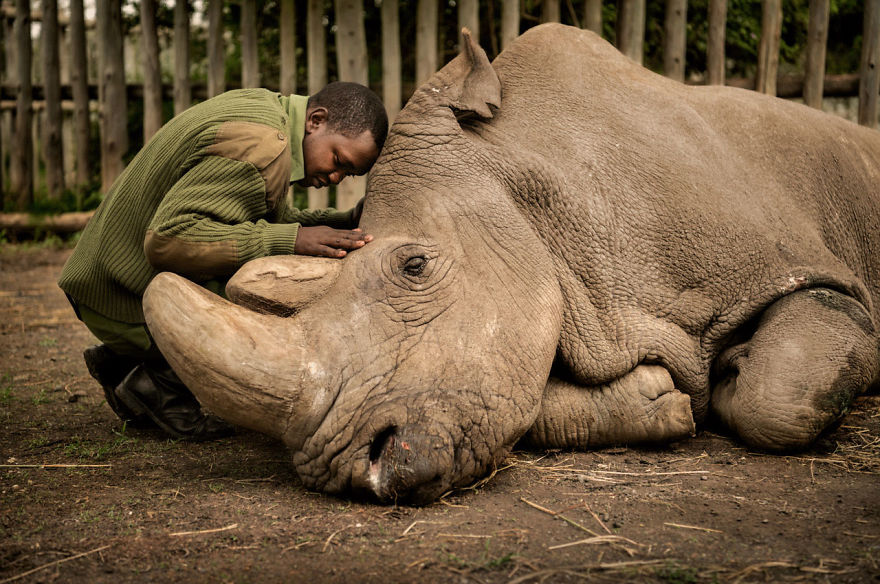
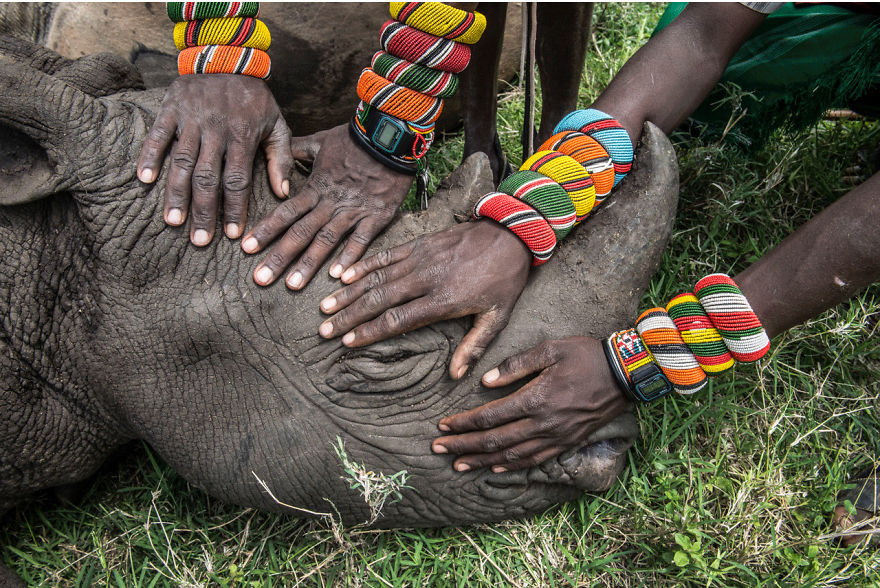
"Joseph Wachira comforts Sudan, a northern white rhino, moments before the animal died at the Ol Pejeta Conservancy in Kenya in March 2018. Sudan was 45 years old and in poor health"
And people say Unicorns are made believe, sure they are if they keep killing all of them!
With a few exceptions, BigPicture is open to all photographers worldwide, however, not everyone makes it to the final stages. Rubinstein said it takes patience, persistence and a fresh perspective to get there. "The Grand Prize winner, Andy Parkinson, spent hours in the sub-arctic cold lying next to his fur-covered subject. And that was really just the tip of the iceberg. He'd spent three years getting to know that individual hare!"
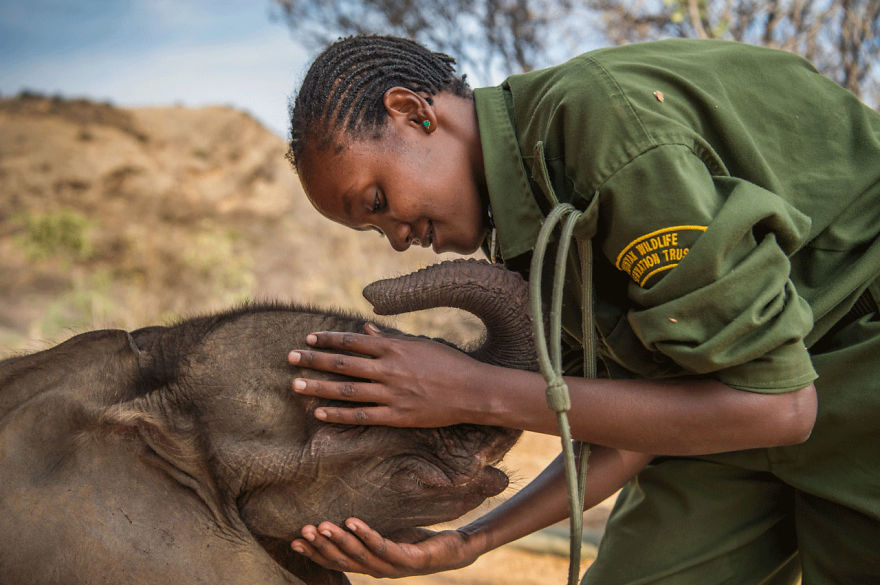
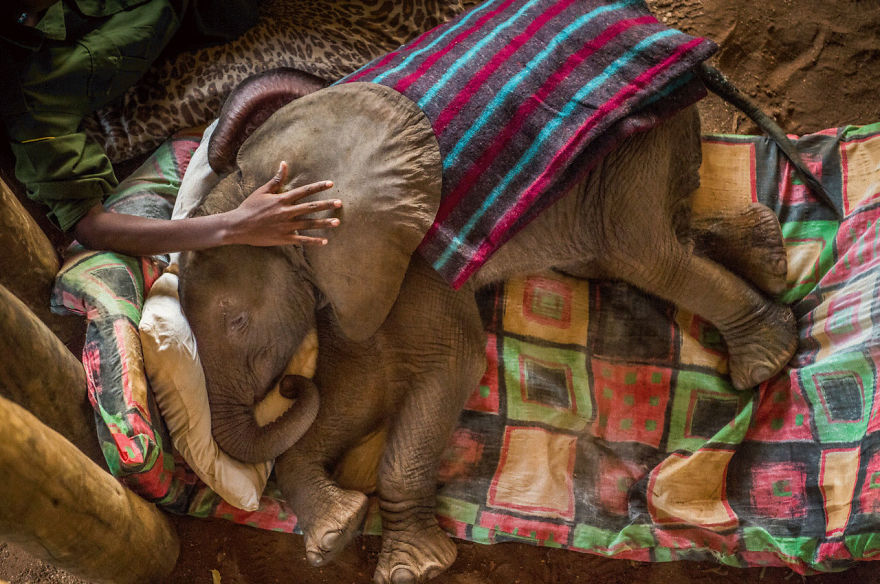
"Traditionally, the Samburu women of northern Kenya are married off at a young age without an education, let alone a chance to work. But as the first female head keeper of the Reteti Elephant Sanctuary in the remote Mathews mountain range, Sasha Dorothy Lowuekuduk is breaking new ground. Though she and the women who work for her encounter resistance, the team at Reteti is united in its mission to rescue abandoned elephant calves, nurse them back to health, and reintroduce them to the wild. It requires vigilance and round-the-clock care, but Lowuekuduk’s passion for saving these 200-plus-pound babies knows no bounds. In a world where we focus only on the challenges and things that divide us, it's important also to talk about the solutions."

A truly touching photograph and an amazing group of women- would love to read more about their work.
But this shouldn't discourage up-and-coming photographers. While many winners are professional s at the height of their careers, this year BigPicture also had a winner who is an amateur and who happened to be in the right place at the right time with a camera held at the right angle.
"Also, in mid-March, we launched the BigPicture Emerging Photographer Grant to encourage young photographers working on sustainability projects."
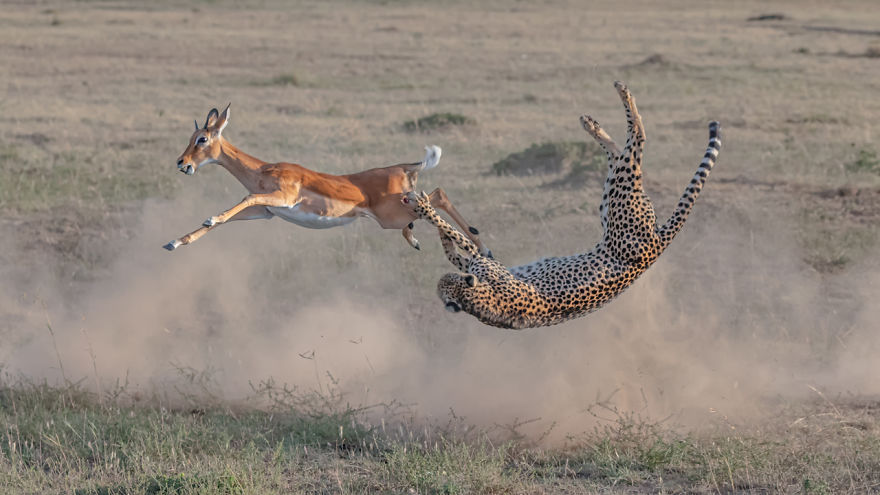
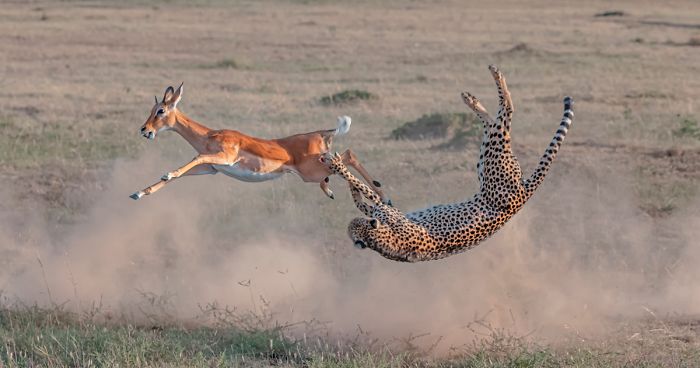
"Although they’re the fastest land animals in the world, catching prey is no easy feat for a cheetah (Acinonyx jubatus). The mostly treeless terrain of the African savanna gives antelopes, impalas, and other ungulates ample time to spot approaching predators, and even a slight head start can be the difference between life and death. To avoid alerting their prey, cheetahs start out hunting low to the ground, where their spotted coat helps them blend into the terrain. When they get within 60 meters (200 feet) of their target, cheetahs accelerate at a blistering pace, reaching 95 kilometers (60 miles) per hour in a matter of seconds. But the feline predators still have to account for the speed of their prey—in this case an impala (Aepyceros melampus), which can zig-zag at upwards of 80 kilometers (50 miles) per hour. To close the gap, this cheetah tripped its quarry as it attempted to escape, proving that sometimes, strategy is just as important as speed."

Cheetahs are very fast but also run out of stamina quickly, once there body reaches a certain temperature they are pretty much physically forced to stop.
No, cats always land on their feet. ;) i would like to see him work his way out of this one
Load More Replies...
That is a powerful picture. One animal running for their dinner, the other for their life.
They’re actually both running for their lives if you think about it.
Load More Replies...










You have that wrong. It's in the description; the impala did not survive.
Load More Replies...


Such a sad moment; nature is extremely cruel.... what a holy ingenious cruelty, "Creator" !
Load More Replies... 

With the meat packing plants all closing down....that's me next month trying to get dinner.
Luckily, the outbreak of the coronavirus didn't disrupt the contest too much. "The competition closed March 1, so it was just the beginning of the pandemic," Rubinstein explained. "But the judging took place March 15-31 with a panel of internationally renowned photographers and photo editors."
"Typically, judges commit to BigPicture in the fall, and the two-week judging period may coincide with them being on assignment in a remote part of the wild where WiFi is non-existent. But this year all the judges were sheltered in place, at home with plenty of time on their hands. So the images received a higher degree of scrutiny than previous years!"
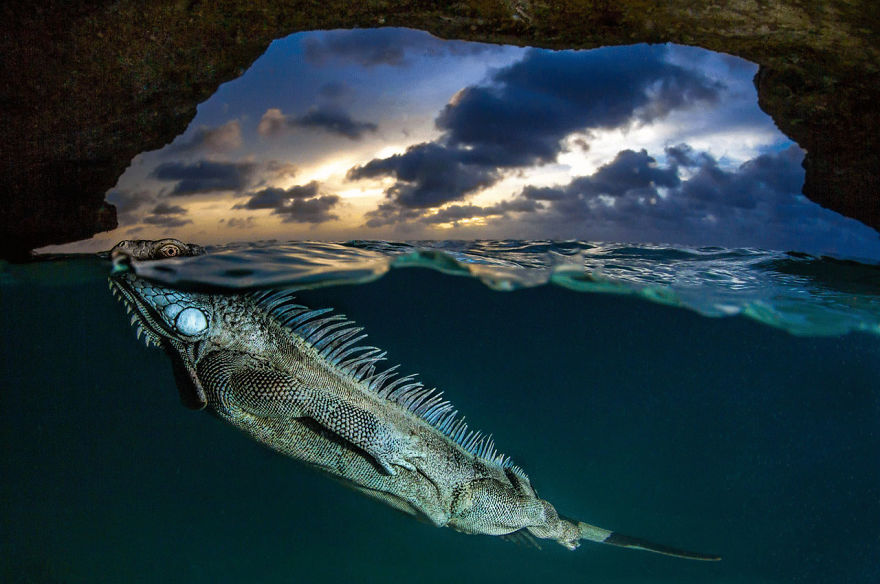
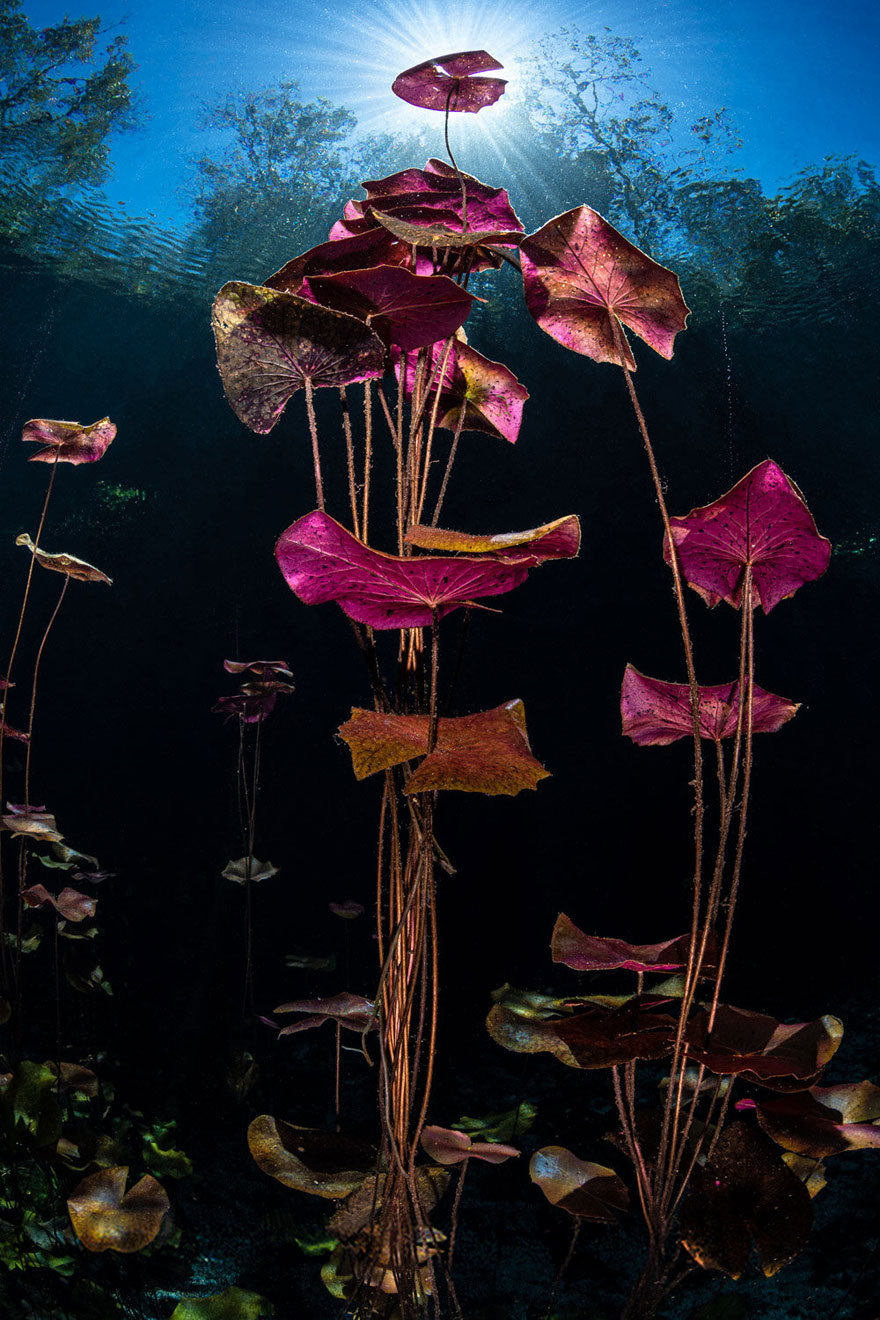
"There I was, fully equipped with my camera, its underwater housing, and a wide-angle lens, preparing for the final setting of the sun, when a friend interrupted my solitude," writes Mittiga, a member of our Your Shot community. “He had dived into the water above my head and was swimming around the entrance of the cave, as if to say 'hello' to me.”
At first I thought this was some weird fish, then I read the title and saw the top of the head out of the water.
The innocence and sadness in this photo, Ami Vitale is one of the best magical photographers I have ever seen who is able to capture raw emotions in an artistic form, for the rest of us to share and feel in that special moment in time. Thank you Ami!
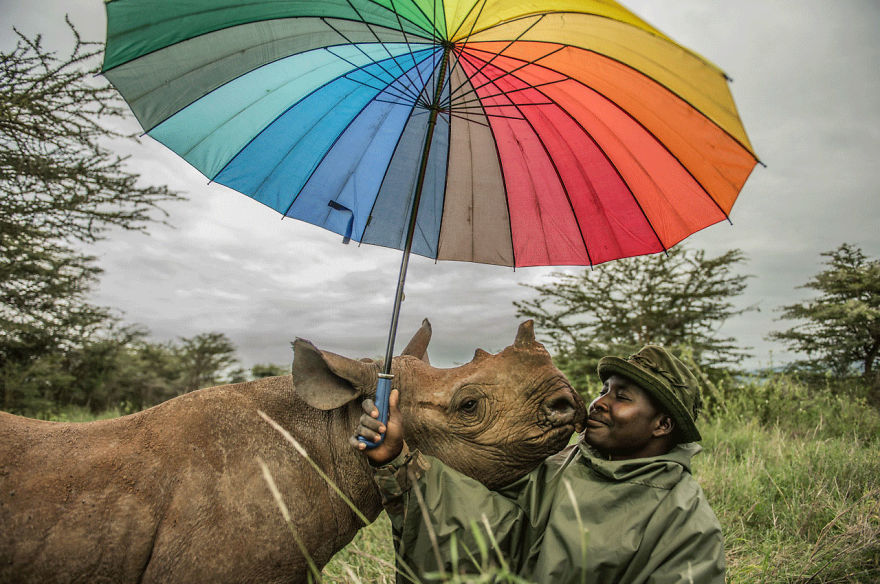
"A park ranger at Lewa Wildlife Conservancy in Kenya is nuzzled by an 18-month-old black rhino named Kilifi who was hand-raised with two other baby rhinos"
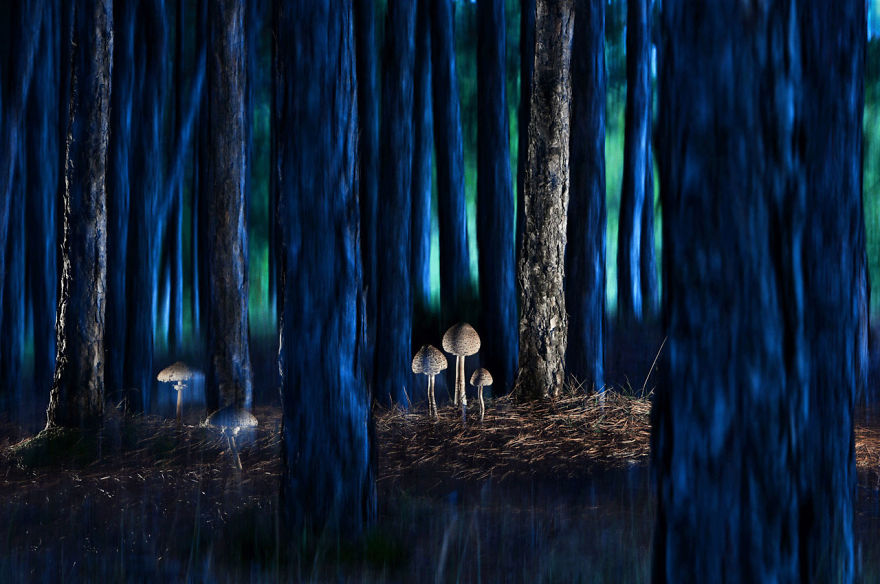
"Despite the ethereal appearance of this photo, these edible mushrooms (Macrolepiota procera) won’t induce any hallucinations. But that doesn’t mean they aren’t magical. Indeed, the more we learn about mushrooms, the more magic they seem to harbor. From helping trees communicate to producing cancer-fighting metabolites, scientists have only begun to uncover the fantastic features of fungi.
At the root of many of these capabilities is the unique role that mushrooms play in the environment. As primary decomposers, mushrooms break down the organic matter of dead plants and animals. In return, the fungi become flush with essential nutrients and minerals, a number of which can confer antioxidant, antimicrobial, and anticancer benefits to humans. This same ability also makes mushrooms exceptional environmental remediators, ingesting the toxins and heavy metals that various industrial practices have leached into the soil."
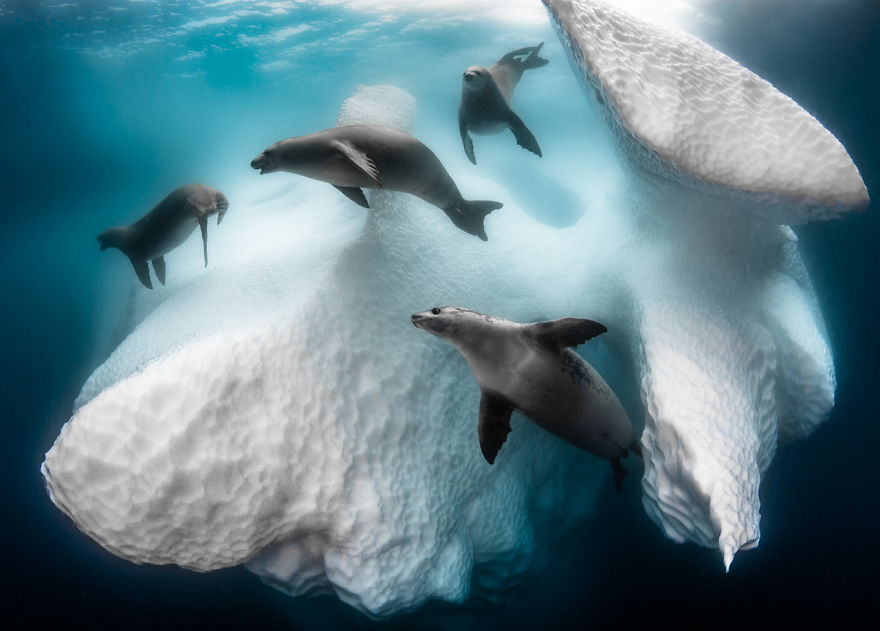
"French photographer Greg Lecouer braved frigid waters to catch this rare glimpse of life below Antarctic ice, where he encountered a crew of crabeater seals (Lobodon carcinophaga). Clumsy and laborious on land, crabeater seals are elegant and agile swimmers that spend their entire lives in the pack ice zone surrounding the frozen continent. Buoyed by polar currents, icebergs calve off mainland glaciers, carrying minerals and nutrients from land into the ocean. Once sea bound, the icebergs slowly melt, releasing critical nutrients in their wake and providing seals with both food and shelter. The fertilized waters prompt a bloom of phytoplankton that attracts krill—which, despite the crabeaters’ name, is a favorite meal of the seals."
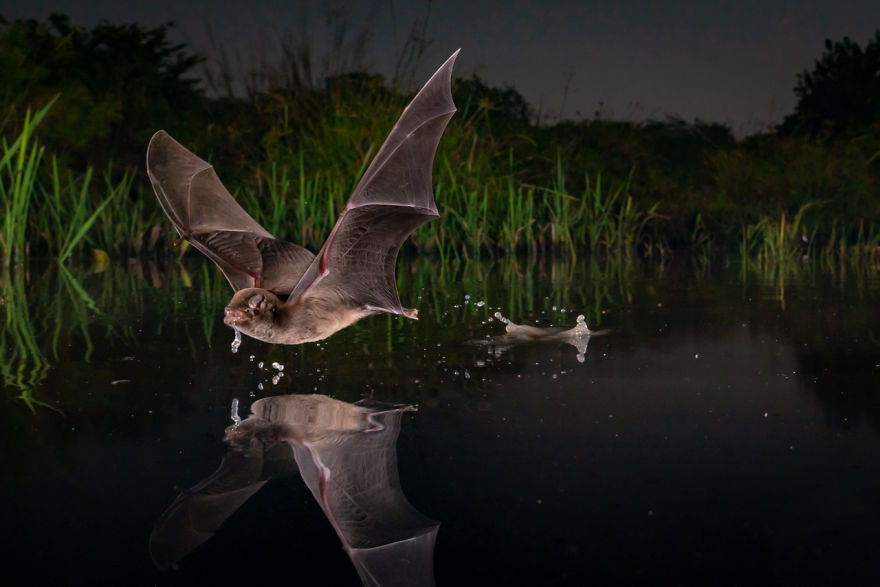
"In Gorongosa National Park, at the southern tip of Africa’s Great Rift Valley, water breathes with the seasons. Lakes and rivers that overflow during the winter months are reduced to puddles and trickles come summer. For many species—including the Mozambique long-fingered bat (Miniopterus mossambicus)—the dry season means longer journeys for a much-needed sip of water.
As our planet warms and droughts increase in both frequency and intensity, the seasonal oases that bats depend on are drying up. Without adequate water, healthy bats begin to weaken, making them more susceptible to diseases that are already devastating populations around the world. Those that survive are sometimes forced to drink from human-made bodies of water—a boon for bats, but a potential risk for people who drink from those same water sources, since bats carry a host of zoonotic diseases. It’s often at these interspecies interfaces that killers like Ebola and the novel coronavirus emerge."
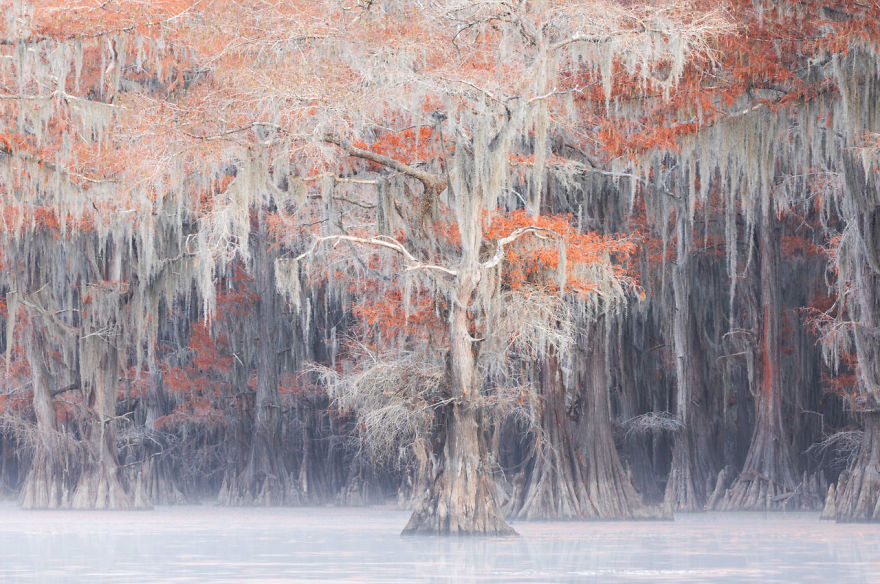
Wow, this is a very magical photograph, to think such trees exist in the world! Belissimo!
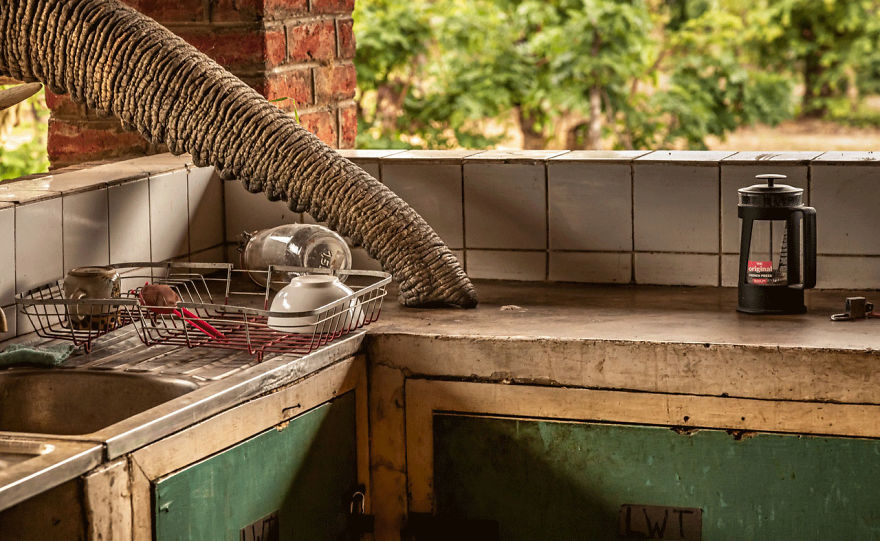
"After an unsuccessful attempt at grabbing a snack, this African savanna elephant (Loxodonta africana) took out its frustrations on the roof of an open-air kitchen in Malawi’s Kasungu National Park. Photographer and biologist Gunther De Bruyne says such destruction was common during his stay at a research station there. But, De Bruyne adds, there’s a reason why Kasungu’s elephants are unusually dangerous: He and other scientists have found that elephants from heavily poached regions tend to be more aggressive.
In 1977, more than 1,000 elephants roamed Kasungu. By 2015 poaching had reduced the population to just 50. While recent ivory bans might be turning the tide—there are now over 80 elephants in the park—recovery takes time, especially among animals as intelligent and long-lived as elephants. Maybe on De Bruyne’s next visit, the kitchen roof will remain standing."
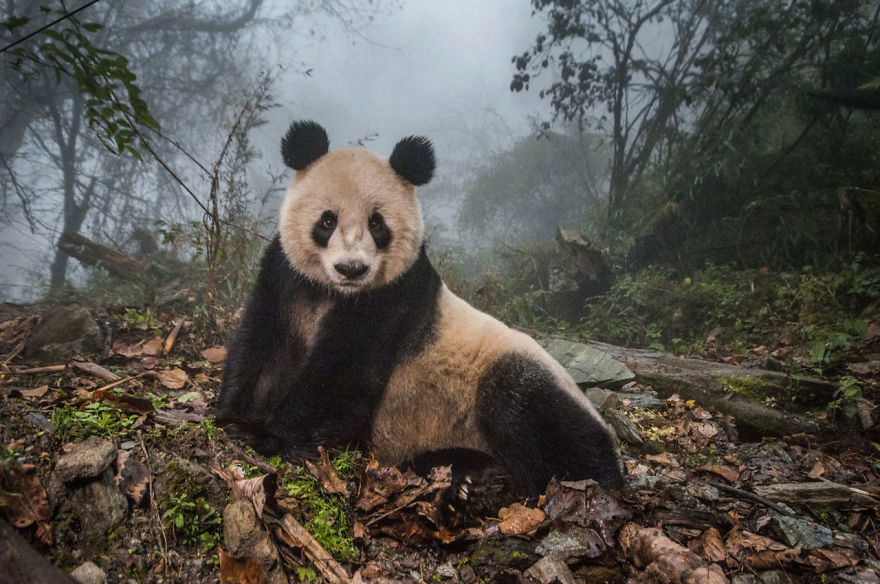
"A 16-year-old bear called Ye Ye - named to celebrate the friendship between China and Japan - lumbered out of the mist. Gingerly, Vitale stuck her camera through the fence as Poon lofted the LEDs.
Vitale says the large black-and-white creature posed "like a supermodel."
"She just came up for a moment," Vitale said, "like a magician. And just showed up and disappeared, as pandas do. They're very good at disappearing."
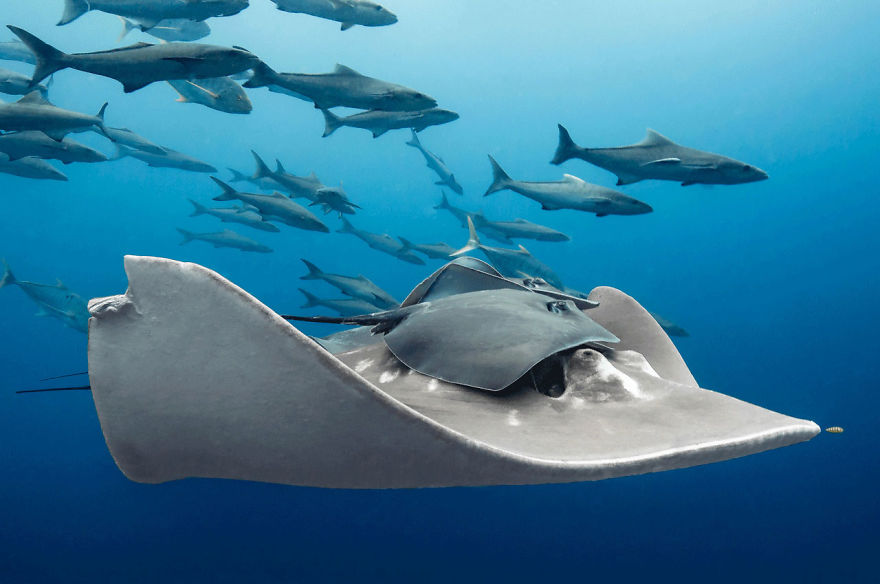
"Pink whip rays catching a ride on a small-eyed ray. The theory is that by doing this they seek protection from predators, save energy and also get leftovers from the big ray.This rare behavior was captured on the SS Yongala shipwreck, on the Great Barrier Reef off Ayr, in Queensland, Australia, and has been registered on the same dive site for around a decade, with different individual small-eyed rays… Could this be passing on through generations?"
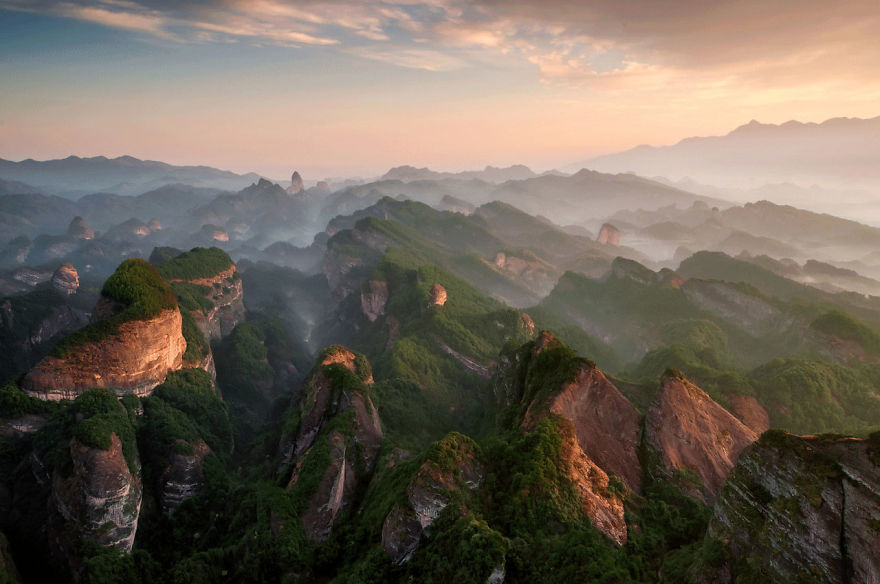
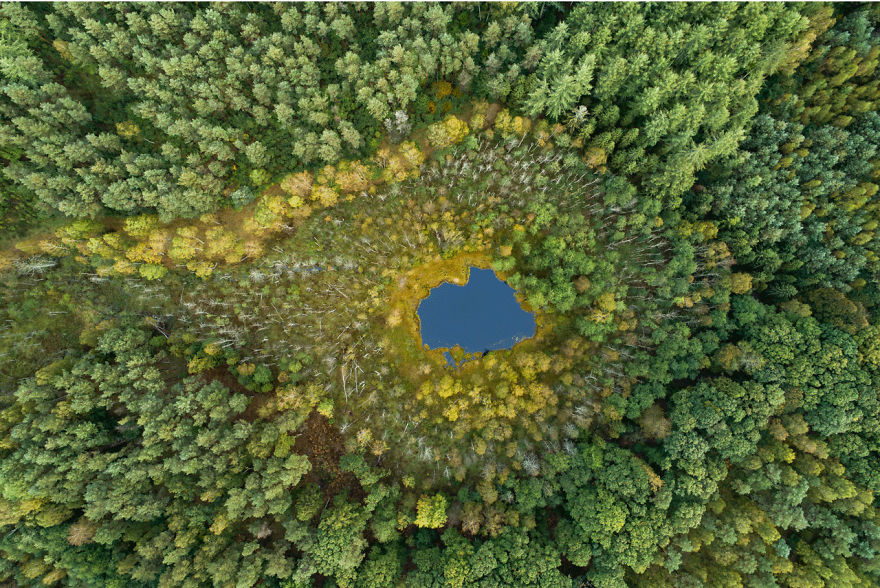
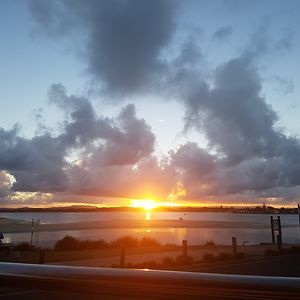
" The Bajiaozhai National Forest Park is located in the resource county of Guangxi, China. It has a high terrain and complex terrain, so it has obvious mountain climate characteristics and typical Danxia landform. On that day, before dawn, we set off and climbed for more than an hour on the mountain roads to reach the top of the mountain until sunrise to take pictures"
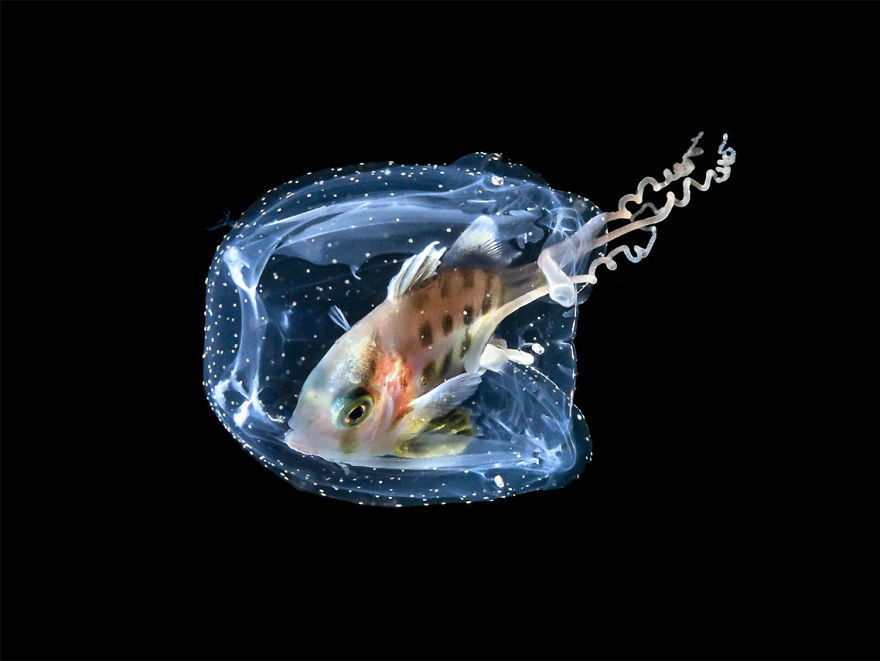
Well that’s interesting. Does the jellyfish actually eat the fish, something I have never pondered before. Google here I come.
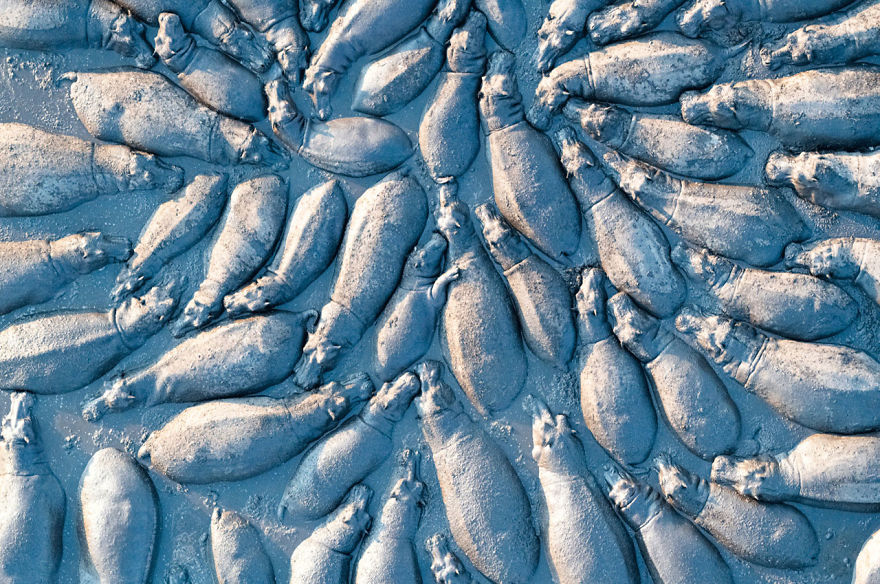
"Each winter, as the waters of Botswana’s Okavango River spread across its vast delta, an array of African wildlife congregates to eat, drink, splash, and soak. This seasonal wetland was especially important in 2019, when severe drought left human and animal populations alike desperate for water. Cattle, elephants, crocodiles, and other creatures were left to vie for any water they could find in the delta’s shrinking pools.
Among those seeking refuge were herds of hippopotamuses (Hippopotamus amphibious). These semi-aquatic herbivores are well-equipped for spending hours each day in the water—their nostrils and eyes located so high on their head that they can breathe and see while mostly submerged. They’re also graceful swimmers, and can hold their breath for up to five minutes. But even their aquatic abilities and impressive heft were no match for last year’s muddy, drought-stricken delta. At least 200 hippos became trapped in the mud, and managed to survive only because Botswana wildlife officials pumped in water to help them escape. As the climate warms, such droughts may become more frequent across much of Africa."
In the fascinating realm of wildlife photography, the behavior of animals often captures the heart and imagination of audiences. Just as Sasha Dorothy Lowuekuduk is breaking new ground in Kenya by nurturing abandoned elephants, those interested in animal behavior can also delight in the quirks of giraffes as they navigate the challenges of feeding on grass.
To explore how giraffes tackle their unique dining obstacles, check out this interesting perspective on giraffe feeding habits.
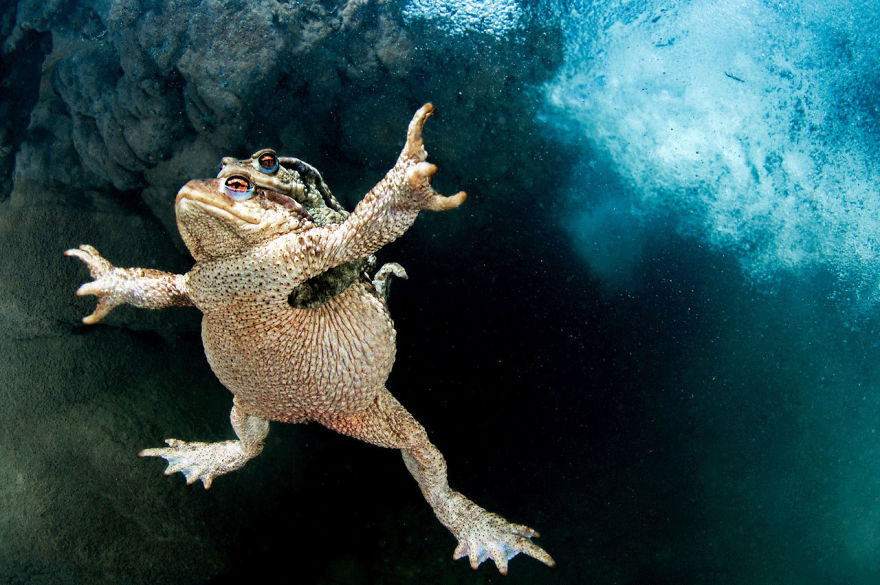
"Beneath the turbulence of a small waterfall in France’s Lez River, a male common toad (Bufo bufo) holds on for dear life. Not his own life, though—the male is helping to ensure his species’ survival by fertilizing his female companion’s eggs as she lays them. Known as amplexus—Latin for ‘embrace’—this mating behavior is common among amphibians and other animals whose eggs must be fertilized externally. Males temporarily develop glands on their toes, known as nuptial pads, to help them grip the swollen abdomens of the females. Then, as the female releases thousands of eggs in pearly, gelatinous strands, the male coats them with sperm.
Scores of toads seeking partners for this ancient dance of procreation are killed each spring by motor vehicles. Fortunately, some European communities have built canals and even enlisted toad-shuttling volunteers to help them cross roads and reach their mates."
Don't these toads look like they just jumped out of a plane and are skydiving? The male is surely holding on for dear life it seems! Awesome photo!
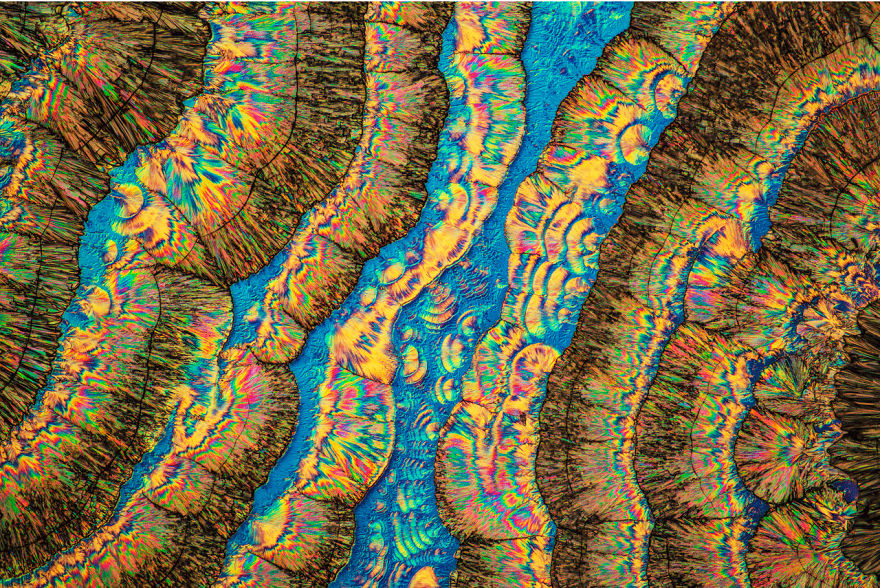
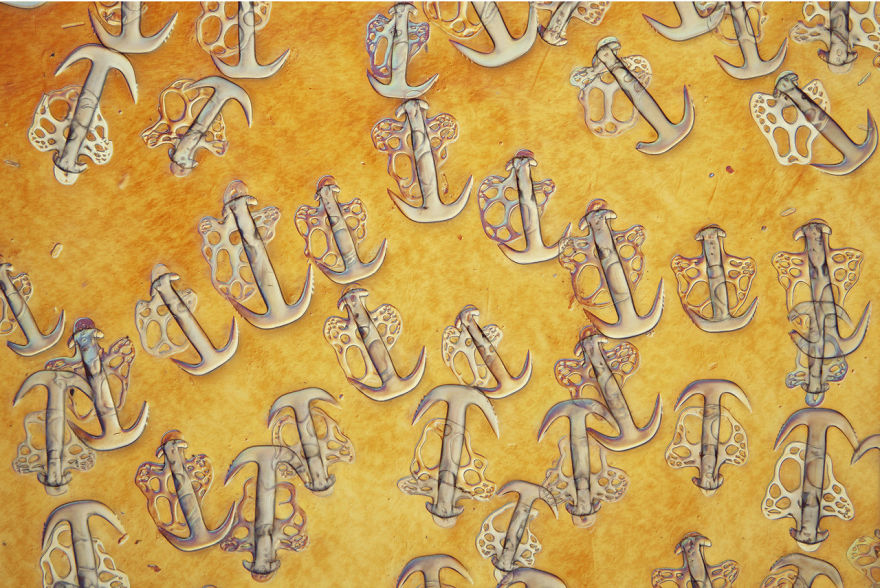
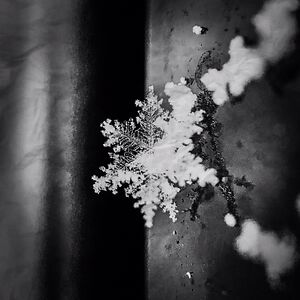
Crystallization of Vitamin C = ascorbic acid; from collection of amazing food photography images by Nathan Myhrvold in Modernist Cuisine Gallery
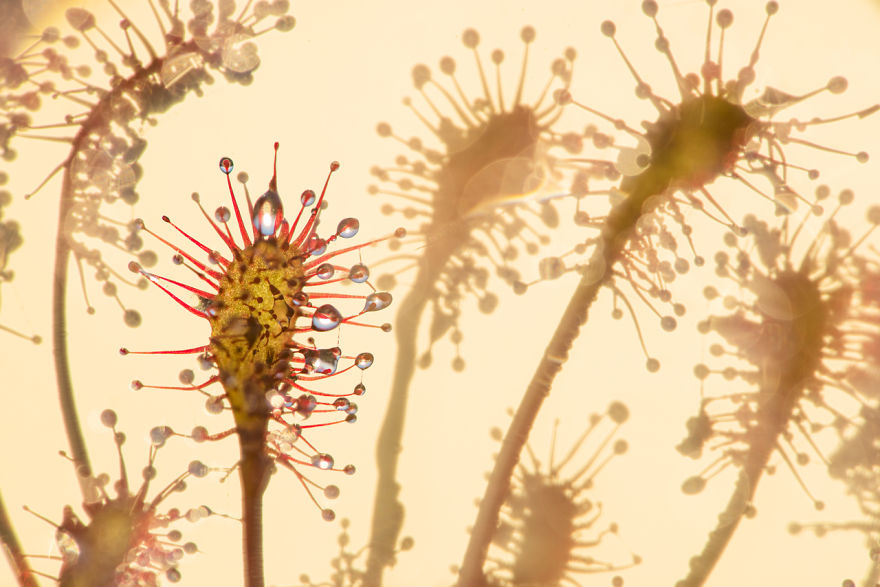
"Innocently poised on the thin red spines of an oblong-leaved sundew (Drosera intermedia), beads of nectar beckon insects like sweet garnishes on a lethal cocktail. When an insect lands to sip the nectar, the carnivorous sundew slowly curls its leaves around it, releasing digestive enzymes that liquify its unsuspecting prey into a digestible meal. If a sundew ensnares something inedible, it promptly releases the non-nutritious offender from its grasp.
Nitrogen and phosphorus from eating insects allows sundews to thrive in places where most plants can’t survive, like the acidic, nutrient-poor soil of swamps and bogs. These adaptations fascinated Charles Darwin, who wrote in 1860 that he cared “more about Drosera than the origin of all the species.” Nonetheless, Darwin would wait 15 years before publishing his controversial suspicions that, indeed, some plants eat animals."

Jeez, when I first scrolled down I thought they were coronaviruses
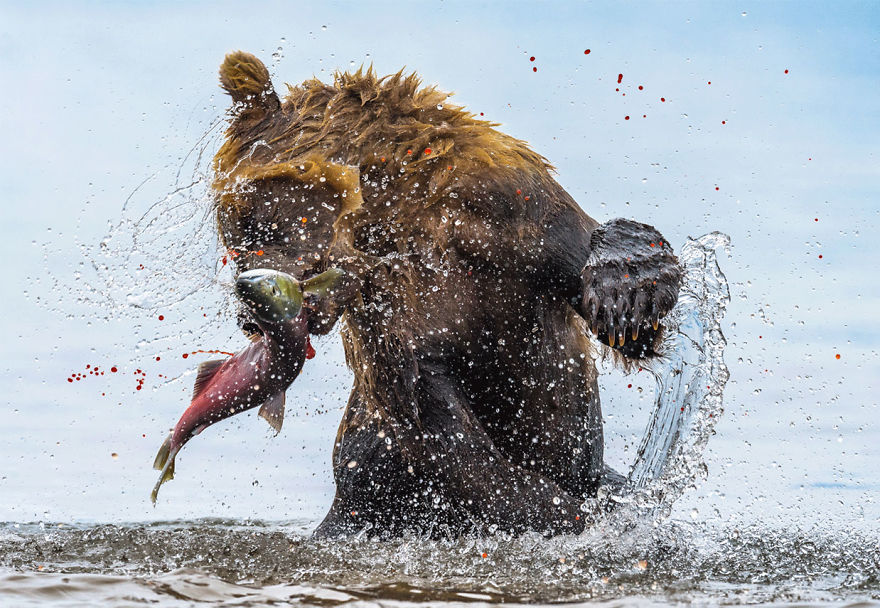
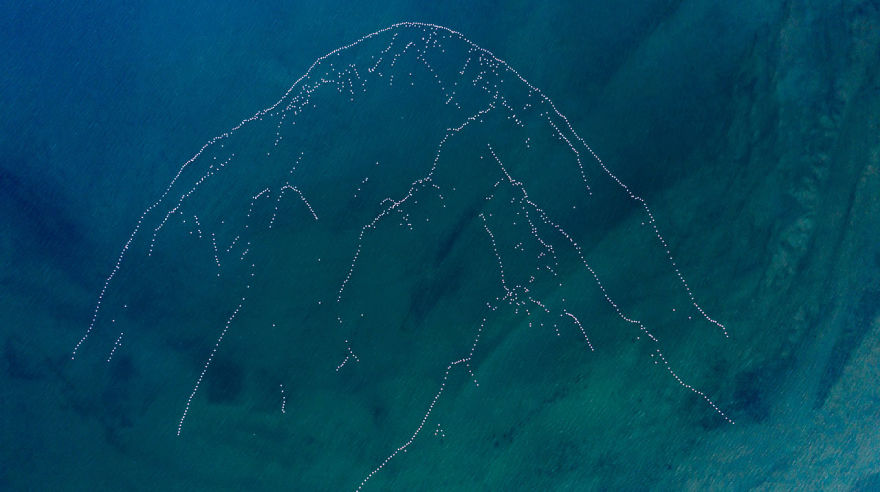
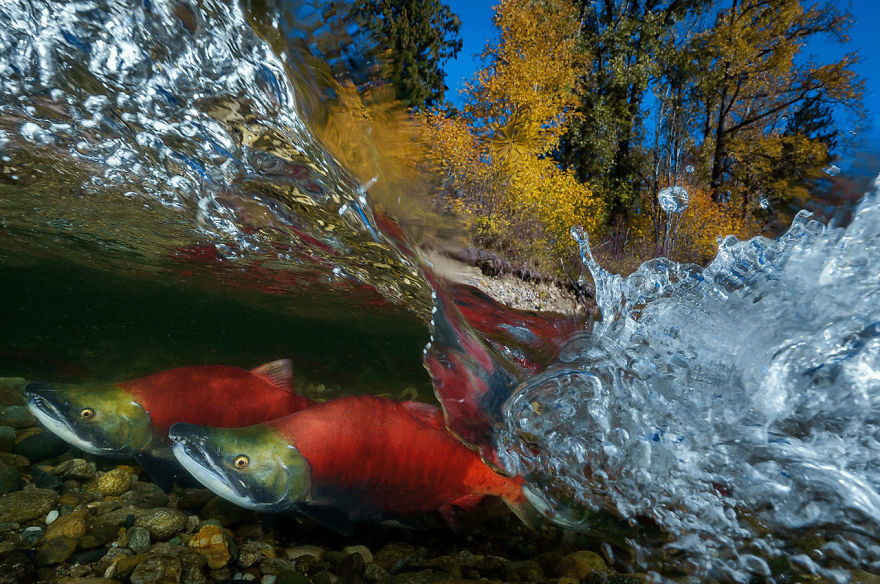
These Pacific species of salmon will come to the west coast of Canada from the distant sea every autumn. They return to their birthplace by looking for the right salinity of the estuary, the temperature of the river, and the environment of their natal stream. After entering the inland river, salmon have a long journey up the river. In addition to the Sockeye, you can also see other Coho, Chum, and Chinook salmon from the Pacific Ocean. Salmon don’t eat or drink water for 800 kilometers in three months. They arrive ruined and dying. Exhausting the only force they have left, the salmon parents died after spawning and fertilization, with the most important mission of this life finally completed
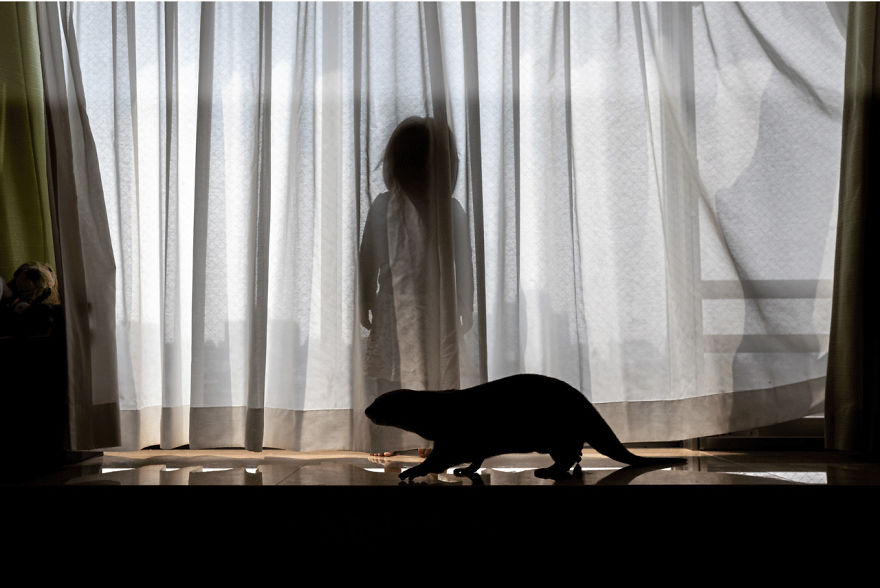
Sometimes I wonder if people take the time to think about on Youtube where did that person get that otter and if the sad story of it being an orphan is true or made up...We don't question enough...Great photo! Too little people are seeing this magnificence!
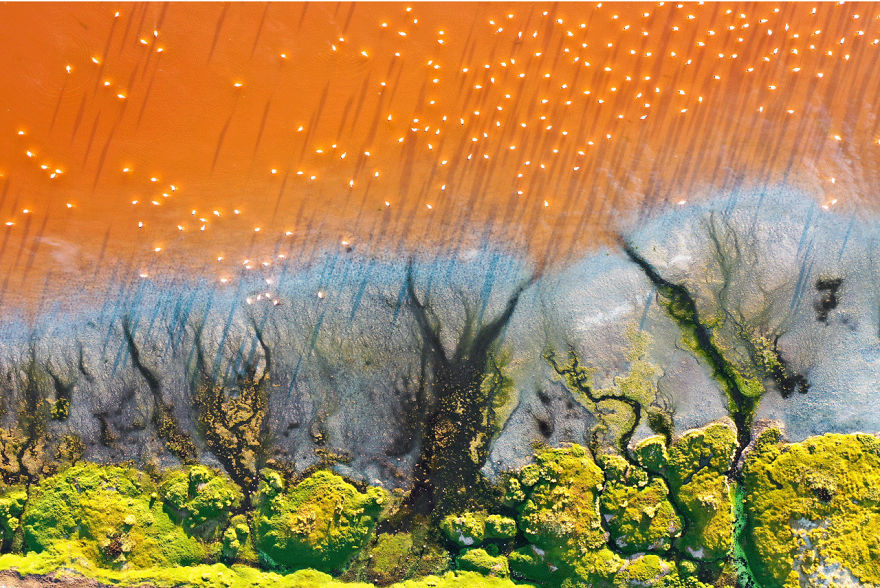
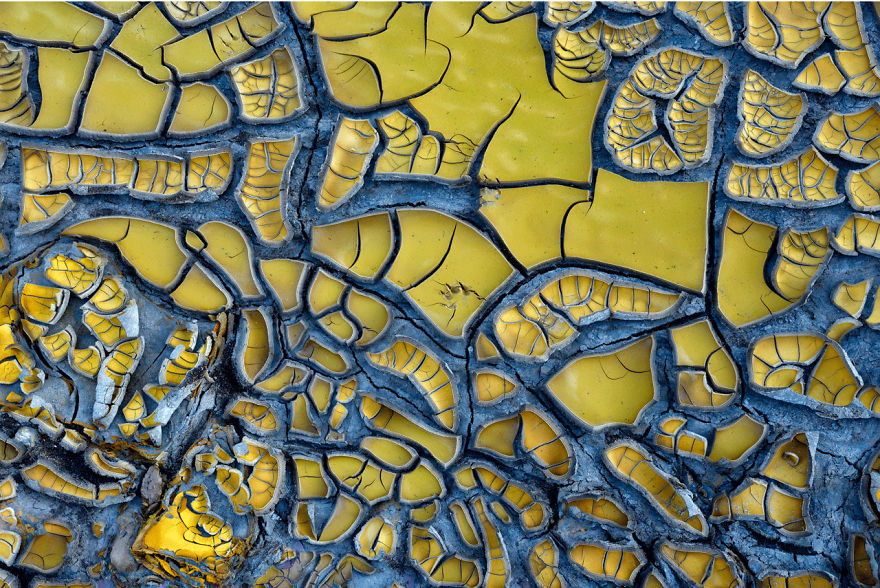
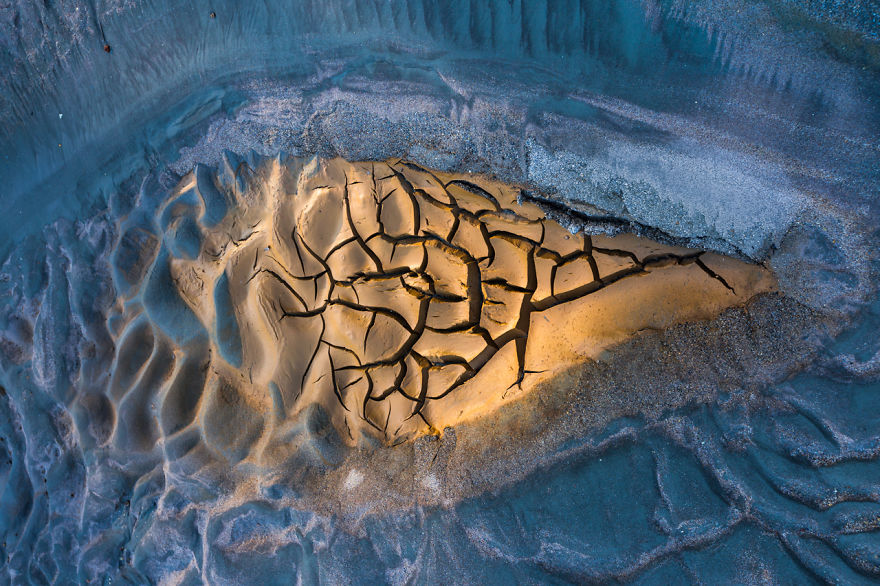
"Along the Río Tinto in western Spain, layers of multicolored sediment combine with blood red water to produce an otherworldly effect. But the strange coloration—shown here in a photo of cracked mud at the river’s edge—has familiar origins: Runoff from millennia of mining in the surrounding Sierra Morena has caused rampant acidification and toxic levels of dissolved metals. The pollution is so extreme that NASA has used the river and the resilient microbes that call it home as a proxy for the conditions for life on Mars.
Unsurprisingly, the water is unusable for the communities that live near it—at least for now. In 2016, a collaboration between a team of Spanish researchers looking into the mineralogy of the river and a group of French researchers seeking to decontaminate it made an important discovery. When the water was purified, the leftover solids contained a high concentration of microscopic aluminum particles, a valuable commodity which can be sold to offset the cost of decontamination."
I wonder if they used mushroom spores and trees to do phytoremediation to help with the decontamination process that would be a more natural and cost effective method, with the water being resuable in the near future. Info on phytoremediation could be found in this link:-https://www.usda.gov/media/blog/2019/08/30/trees-can-do-dirty-work-waste-cleanup
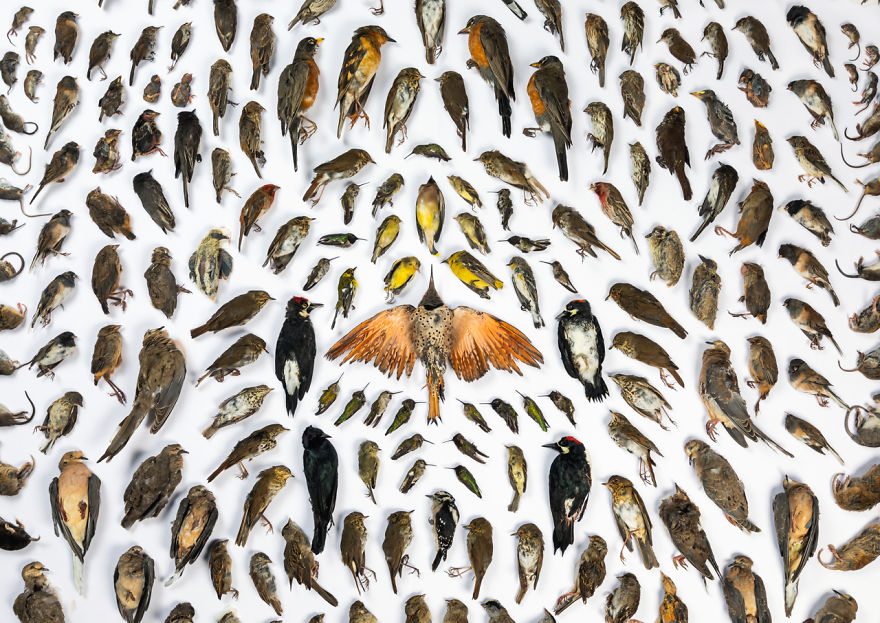
"Every year, the staff at WildCare, a California animal rescue organization, is tasked with rehabilitating hundreds of birds and other wild animals mauled by outdoor house cats. The 200 pictured here did not survive. “I wanted to create an image to show some of the impacts our pets have on the wildlife around our homes,” says Jak Wonderly.
One of those impacts is a world with less birdsong. In the United States alone, more than 2 billion birds are killed by cats annually. Other nations, including Australia and New Zealand, have tried to protect native wildlife by imposing restrictions on cat owners, such as “cat curfews” that require cats to be indoors after dark. But because such measures are unlikely to gain traction in North America, Wonderly took this devastating photo. By illustrating the suffering that free-roaming house cats cause, he hopes to spark discussion about alternative solutions for reducing the death toll caused by our pets."

And if they had a display of birds destroyed by humans, well, they'd be taking pictures for years. We kill more than cats do.
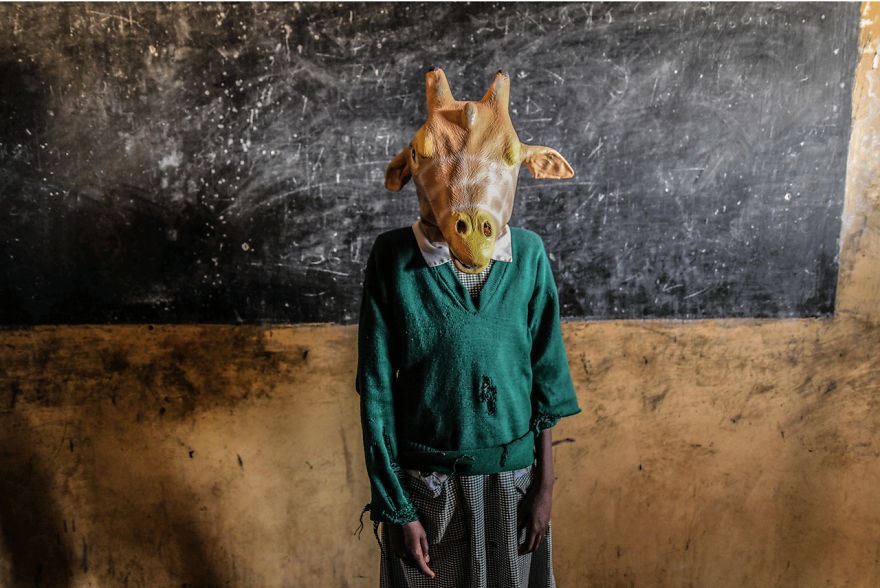
"A student wears a giraffe mask during a visit from Twiga Walinzi wildlife club at Ntepes Primary School near Wamba, Kenya. The club teaches conservation of the local reticulated giraffe"
Well done for all the conservation work! These people need to be supported in their work from which the animals (and we too, indirectly) benefit.
These are so beautiful and powerful- Such talented photographers and such amazing stories!
Maybe these photos can be used for a greater purpose than just for likes, we cannot just stand by and take photos, we cannot just stand by and post things for likes, what is the purpose of anything anymore.

there's nothing wrong with art for art's sake, but it's revolutionary too.
Load More Replies... Amazing photography- I really enjoy posts like these. It was also really fascinating to read some of the comments behind the shots.
Amazing pictures; when it comes to nature it always involve not only wonder and beauty but also hardships and cruelty.


Tell us how you really feel john, in every post please.
Load More Replies... That’s so impressive! Does your money come from annoying the heck out of all of us honest bored panda users? Please take your business elsewhere. Thank you
Load More Replies... These are so beautiful and powerful- Such talented photographers and such amazing stories!
Maybe these photos can be used for a greater purpose than just for likes, we cannot just stand by and take photos, we cannot just stand by and post things for likes, what is the purpose of anything anymore.
there's nothing wrong with art for art's sake, but it's revolutionary too.
Load More Replies... Amazing photography- I really enjoy posts like these. It was also really fascinating to read some of the comments behind the shots.
Amazing pictures; when it comes to nature it always involve not only wonder and beauty but also hardships and cruelty.
Tell us how you really feel john, in every post please.
Load More Replies... That’s so impressive! Does your money come from annoying the heck out of all of us honest bored panda users? Please take your business elsewhere. Thank you
Load More Replies...


















 No fees, cancel anytime