50 Fascinating Archeological Finds We Are Lucky Enough To Witness, As Shared On This FB Group
Archeology is a fascinating subject. It has helped us understand the history of many cultures around the globe. It’s the reason why we know our origins and have a good understanding of how our world has progressed.
On top of all that, it also helps us to connect to people from the past. When we look at the work they’ve done, the craftsmanship of the objects, the beauty of portraits and statues, we feel kinship and understanding. It allows us to relate to them on a new level. The pictures of artifacts and features in the list below do this perfectly. Scroll down to admire these wonderful findings.
This post may include affiliate links.
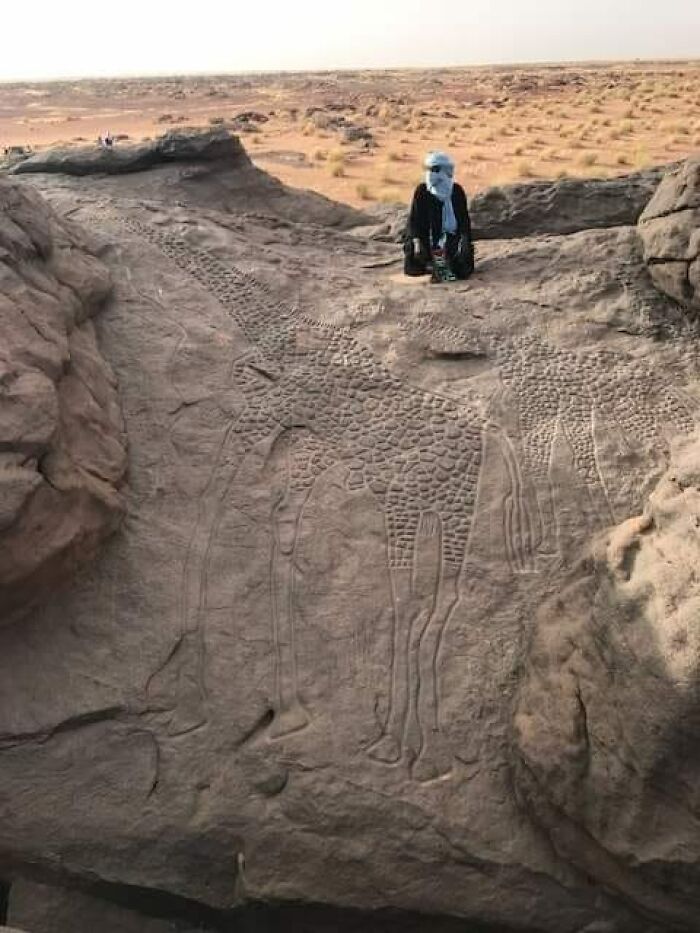
10,000 Year-Old Giraffe Engravings In The Sahara Desert
This comment is hidden. Click here to view.
Load More Replies...This engraving was obviously made by another giraffe, this one was posing.
Load More Replies...I love that 10,000 years ago some bloke saw some giraffes and went "Damn these things are amazing I gotta spend the next three weeks engraving them into that rock over there"
As an american, I can barely wrap my head around a building that is 100 years old and has not been demolished. Ten thousand years. Wow.
Ironically, this is something that the British often make fun of when discussing Americans!
Load More Replies...Didn't scroll down at first, only saw the neck and was like "okay that's a tyre track, what the eff?" 😅
Archeology itself involves a lot of very intentional work. It’s planned, meticulous, and organized. However, there have been quite a few significant findings in history that were made completely by accident.
One such lucky accident was the discovery of the Terracotta Army in Lintong county, China. It was discovered by a group of farmers in 1974 when the area was facing an extended drought and the crops were suffering.
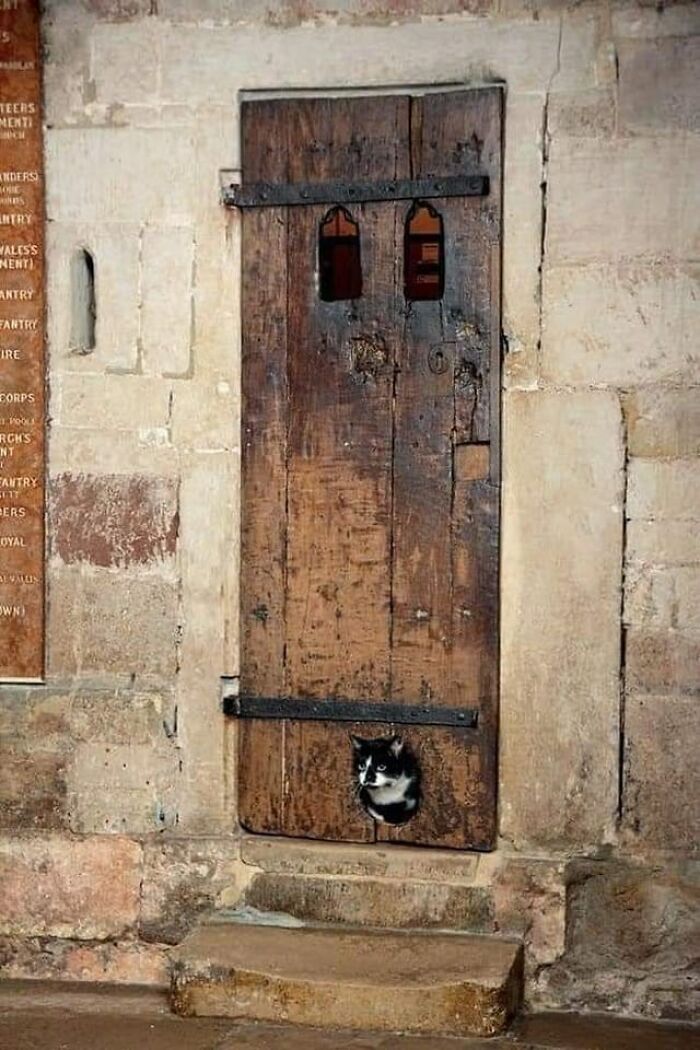
This 14th Century Door At Exeter Cathedral, UK, Is Thought To Be The Oldest Existing Cat Flap
A cat was paid a penny each week, to keep down the rats and mice in the north tower, and a cat flap was cut into the door below the astronomical clock to allow the cat to carry out its duties.
Records of payments were entered in the Cathedral archives from 1305 to 1467, the penny a week being enough to buy food to supplement a heavy diet of rodents.

I thought the cat flap was invented by sir Isaac Newton because of his cat that kept bothering him to go in and out of the house (like a normal cat!) while he wanted to work.
I thought it was Schrödinger who started to feel guilty?
Load More Replies...The cat was elected to the Diocese, but they refused to wear the hat.
Yet in 1665 they had a plague which has been partially attributed to the peoples fear of cats.
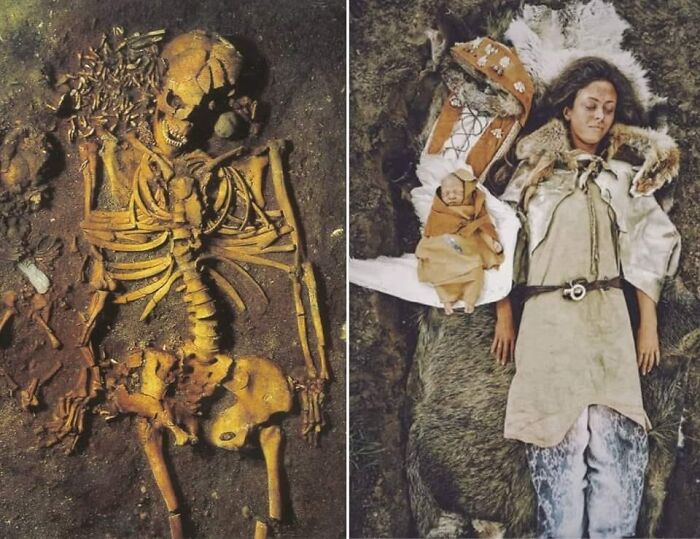
A 7000-6000 Year Old Burial Of A Young Woman (Aged Around 20 At The Time Of Her Death) And Her Newborn Baby From Vedbaek, Denmark
By her head, 200 red deer teeth and a bone hairpin, as well as red deer hooves which came from a skin that was wrapped around her. The child is cradled in the wing of a swan with 2 flint knives at its hip, suggesting the baby was a boy. It’s thought the pair died together in childbirth.
Shoutout to any medical doctors reading this: Doesn’t it look like she may have had a spinal issue? A curvature? That spinal column does look like she may have had scoliosis or something. Could that have been a factor in her death and her baby’s death during delivery? Please correct me if I’m way off base here.
You do understand about 33% of women died in childbirth. Childbirth WAS the cause of death, most likely.
Load More Replies...Imagine the amount of work that went in to identifying all the different bones!
"suggesting the baby was a boy" has been proven a misconception and willful ignorance by the authors of "Man the Hunter". this child could have been either sex based on evidence showing that both men and woman hunted throughout history.
One of the farmers, Yang Zhifa, together with his five brothers Yang Wenhai, Yang Yanxin, Yang Quanyi, Yang Peiyan and Yang Xinam and the neighbor Wang Puzhi decided that they had to do something about it. So, they decided to dig a well. After all, the area was known for its underground springs.
They chose a small wooded area in the south of their village and started digging. Five days and 164 feet later, Zhifa was surprised to find a terracotta head staring at him from the bottom of the well. He immediately contacted the authorities who rushed archeologists to the site.

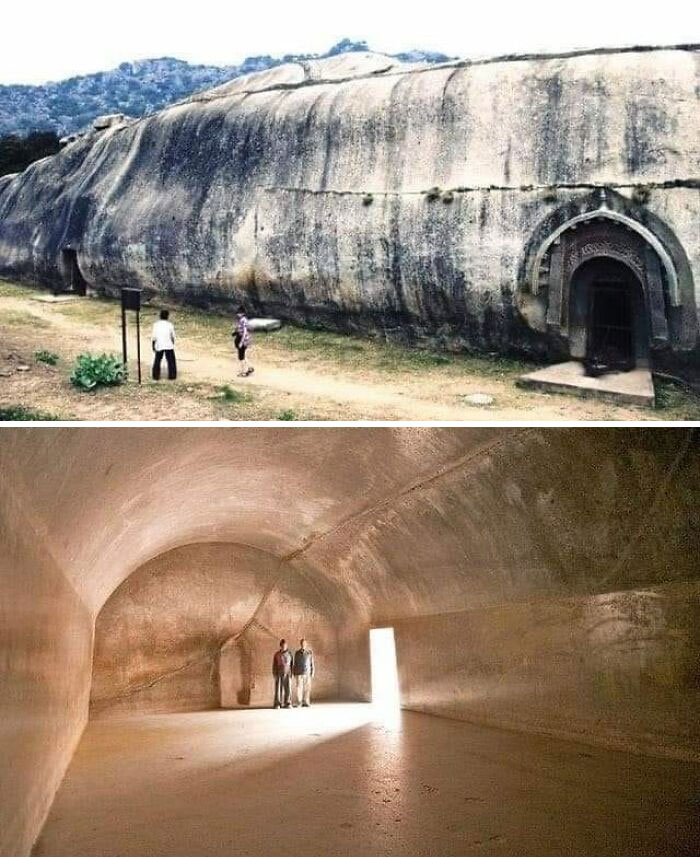
This 1500-Year-Old Cave In India Was Carved Out Of A Giant Rock
It is, but if you want to be really impressed, look up Ajanta and Ellora
Load More Replies...I believe they took measurements in there and both curves are within millimeters and how hard that would be and why would they bother
In terms of the original builders, it's amazing how accurate you can make measurements with a piece of string that's a fixed length. Even modern builders still use string lines in a lot of construction. The effort though, would definitely be mindblowing.
Load More Replies...the architect: yup, and the cave goes over there... the builders: the WHAT?
Eggs? We didn't eat-- see any eggs. Nope, not us. Some other cats, maybe.
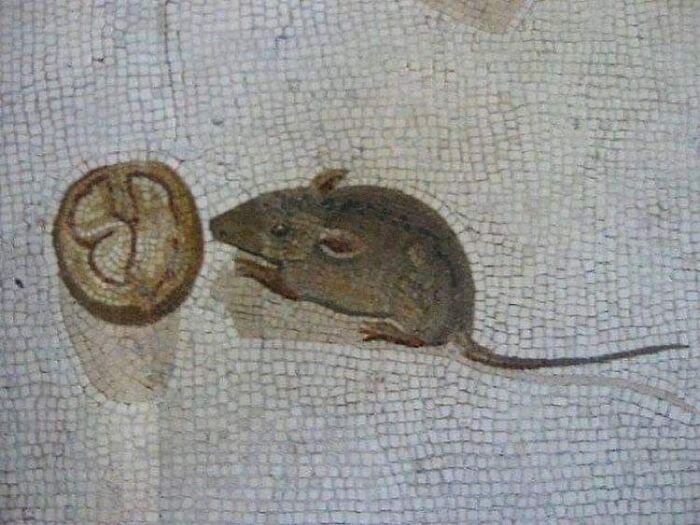
Load More Replies...Mouse Eating A Nut. Roman Mosaic (200 Bc). Vatican Museums, Vatican City, Rome
It's amazing they even used slightly darker tiles to create shadows!
This unknown artist has captured linear perspective 600 years before it was officially created.
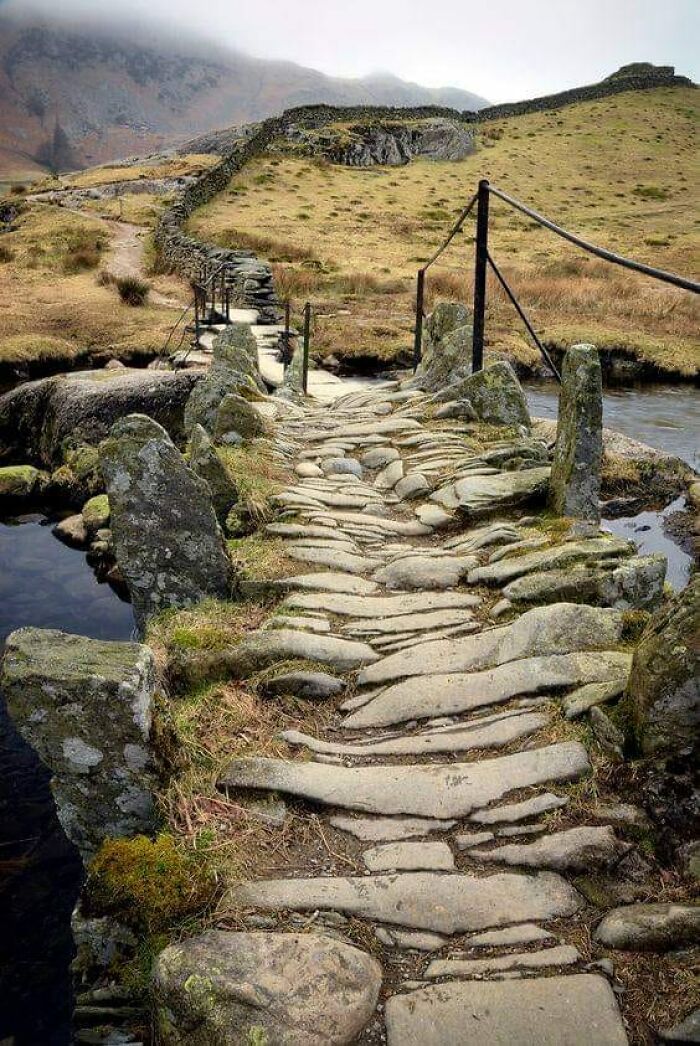
Ancient Bridge
As I was wondering about the "bridge" not having any lift above the ground and water on the right-hand side - here's a pic from another angle I found. Slater_Bri...34f604.jpg
Dankeschoen! But, can you clear one thing up for me please, is it indeed Slaters bridge in the Lakes or is it Tarr in Exmoor (I’m more than likely to Google it myself but I might forget going through the list 😂)?
Load More Replies...There is a beautiful ancient bridge called Tarr Steps on Exmoor (Somerset/Devon border UK), either do an image search or check it out at: https://www.exmoor-nationalpark.gov.uk/enjoying/tarr-steps
Load More Replies...I love it and would walk across it slowly to be safe and memorize the feeling
The discovery changed Zhifa’s life. He was offered a reward for finding the site that equaled his annual income, 300 yuan. But that wasn’t all. Zhifa continued to bask in the glory of this finding for years, signing books at the Terracotta Army souvenir shop for 300 yuan per month. In other words, while he was looking for water, he found gold.
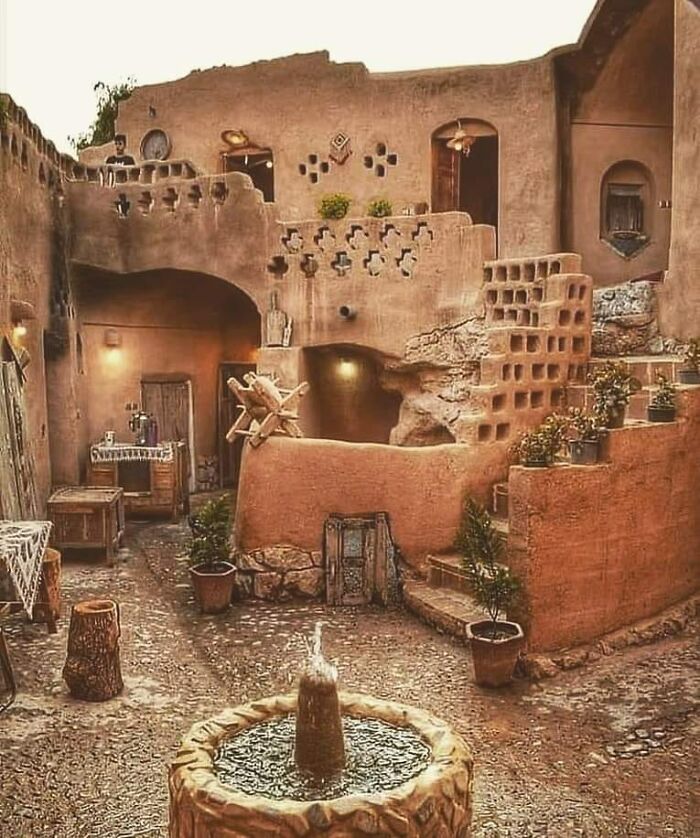
10th Century House In Iran
I love this. So pretty! The stories the walls could tell if they were able to talk!
... you wouldn't want to hear, I'm pretty sure 🙊😅
Load More Replies...I wonder what the little door at the bottom of the stairs was used for 🤔
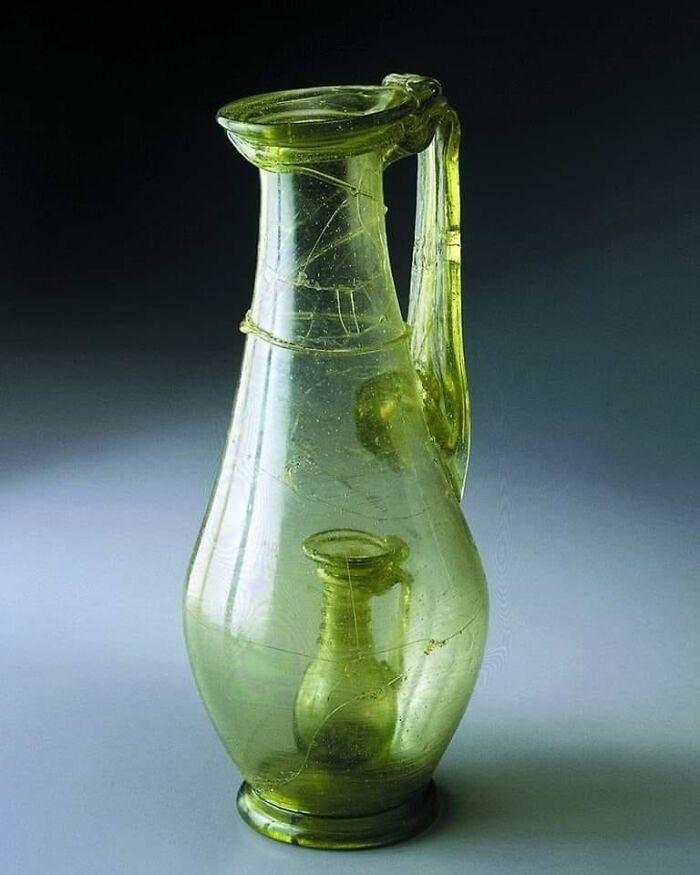
Roman Glass Jug With A Smaller Glass Jug Inside . A So Called Joke Jar That Shows The Skill Of The Glassmaker
Probably made in workshop in Cologne, found in burial in Stein am Rhein, #Switzerland, 4th c. AD.
The glassblower in me can't figure out how this was done! (Maybe because it's been 25 years since I've blown glass...?)
Make the small jug first, then attach that to what will become the inside of the base of the big jug, and fold the big jug outside of the small one, then shape it right and add the handle last.
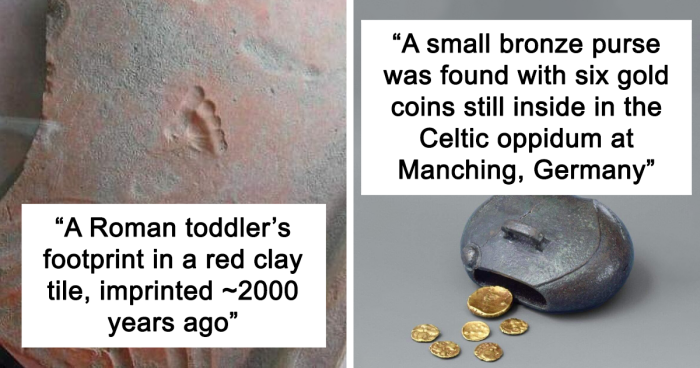
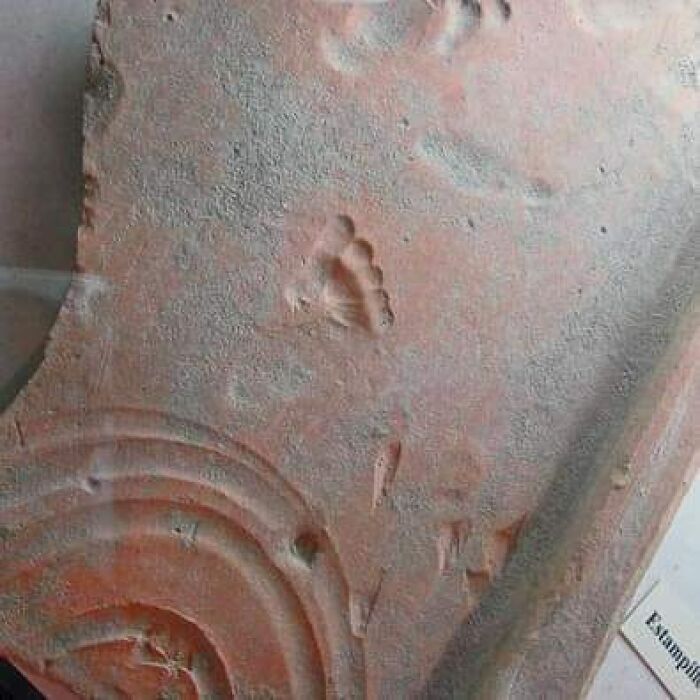
Load More Replies...A Roman Toddler's Footprint In A Red Clay Tile, Imprinted As It Was Drying ~2000 Years Ago. Vaison-La-Romaine (Ancient Vasio Vocontiorum)
This was a fun common practice and most often people did roof tiles with their dog prints
My garage has a couple of dozen of these - my kids and the neighbours' kids one fine day while building our house extension.
Load More Replies...I read that as “a Roman toddlers footprint in a red clay til, imprinted as it was dying ~2000 years ago” and I was so confused why everyone was like “aww 🥰”
Very cool they can tell it was a ROMAN toddler. Is that because of the starfish shaped indent on the bottom of its foot? /S
Probably based on where it was excavated, somewhere in Italy would be my guess... if so, they COULD be wrong, but then it's still an educated guess
Load More Replies...Hey, could also be the nose imprint of an alien creature from a distant planet !
Another significant accidental 20th century finding is the discovery of the Lascaux Cave near Montignac village in southwestern France. It happened on September 12th, 1940. Marcel Ravidat, an 18-year-old at the time, was walking his dog named Robot around the area, when the four-legged buddy showed interest in a hole left by a recently uprooted tree.
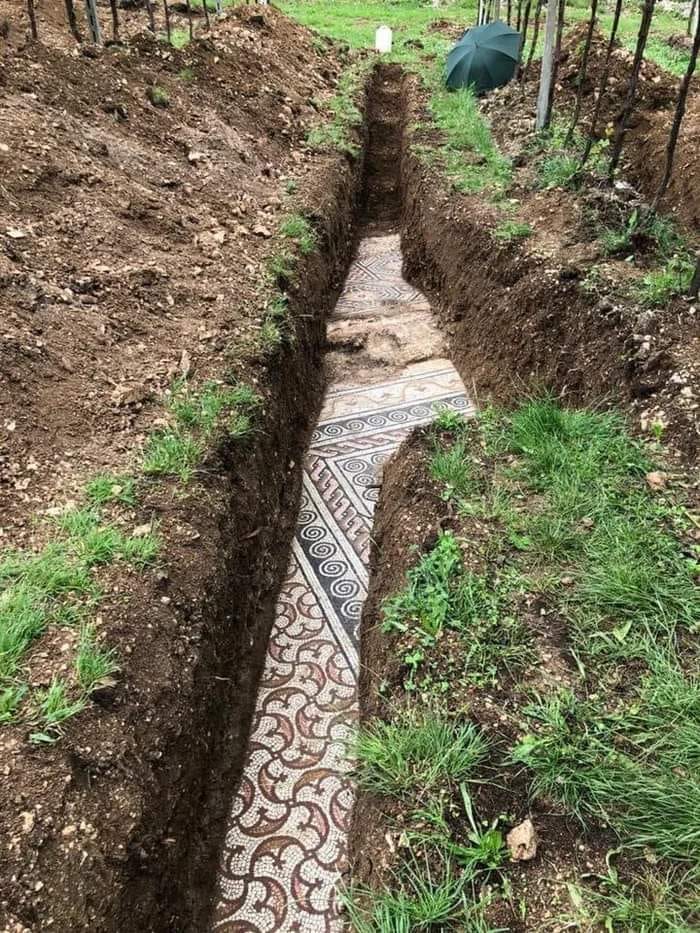
Mosaics Of A Roman Villa Found Under A Vineyard In Italy
Roman mosaics are beautiful. Timeless too, like they would never go out of style. TBH, I would be happy to have a mosaic in my own house.
Load More Replies...I live in Ohio USA and once found a pull top Schlitz beer can buried in my back yard. haha. To live somewhere with such rich history would be amazing.
Talk to the dogs. We don't dig.
Load More Replies...never, i repeat, never dig a hole in italy, you always found something and you have to stop the work :D
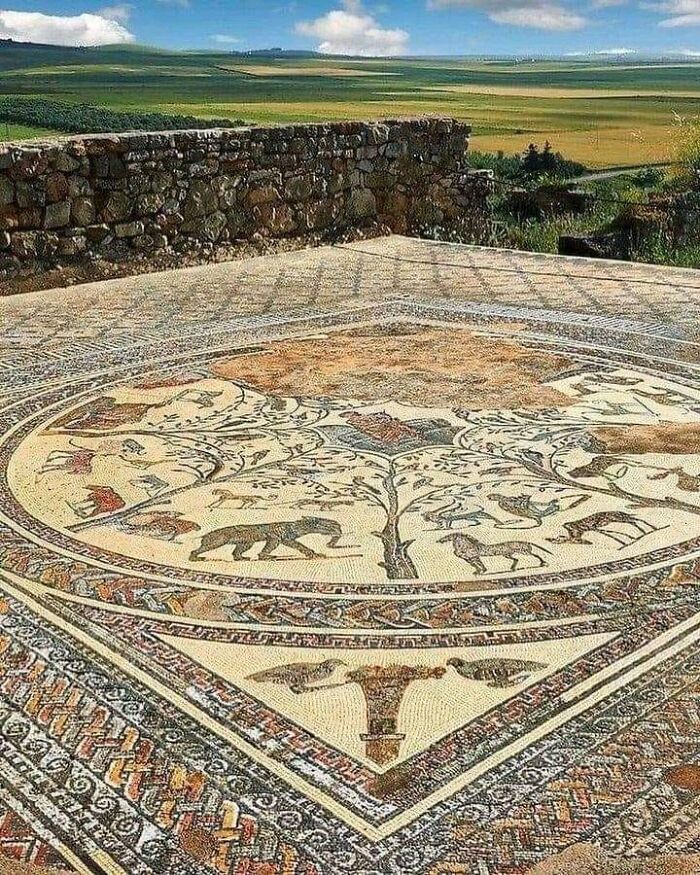
Mosaic Remains From Archaeological Site Of Volubilis, In Outskirts Of Meknes, Morocco
Archaeological site was founded in 3rd century BC, and was included in the UNESCO World Heritage List in 1997
I love mosaic sites. There is nothing more beautiful than a mosaic floor or wall in the ancient world. The imagination, creativity, patience and endurance of the men and women creators, I think, out shines those today in similar professions.
I read that the wealth of early people wasn't so much the stuff they had, but the time spent in making that stuff. Only a group who was able to (relatively) easily provide food, shelter, et. al. had the leisure to create beautiful things.
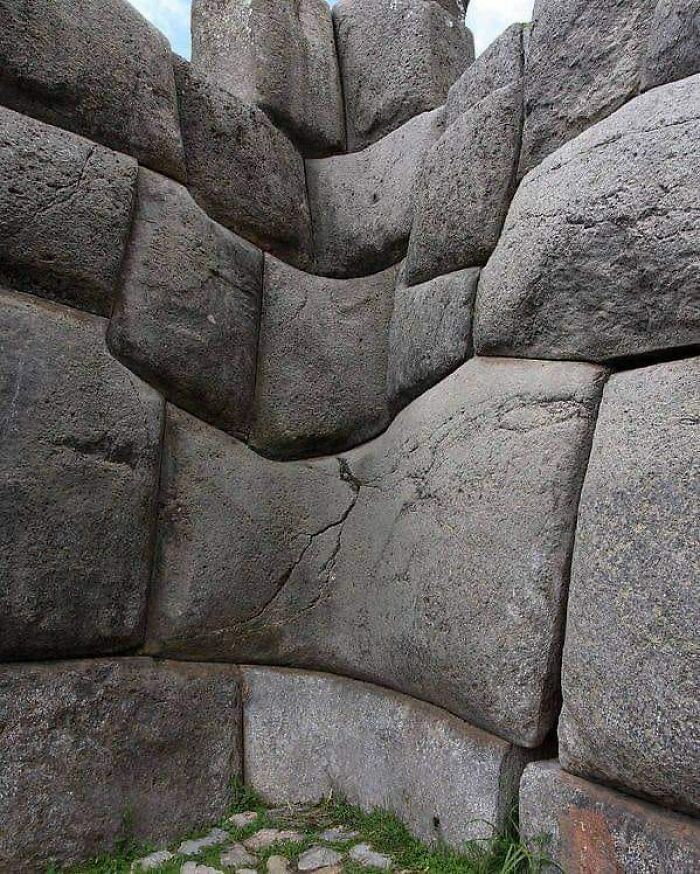
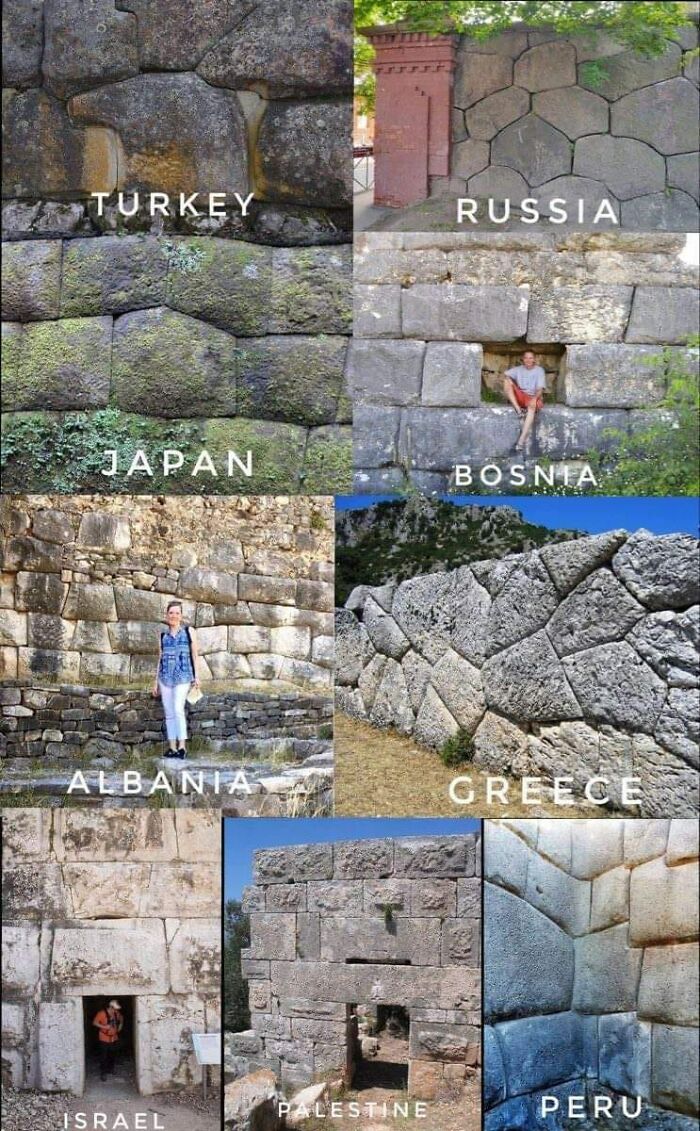
Load More Replies...Beautiful Ancient Stone Masonry
We don't have a clue. I've been to these sites in Peru, and some of the stones are fitted together so closely you can't get a knife blade or even a piece of paper between some of them. Either they were incredible at stone carving or they knew how to bend rocks. A mystery so far.
Load More Replies...I've never understood how they managed to be so exact in the stonework, but I have always been impressed by their exact methodology.
When Ravidat noticed it, he instantly got curious. He had heard of the long-lost Lascaux Manor where one could find hidden treasures and hoped that maybe he just accidentally stumbled upon a secret passage leading there. So, he went down a 50-foot-deep shaft expecting to find luxury on the other end.
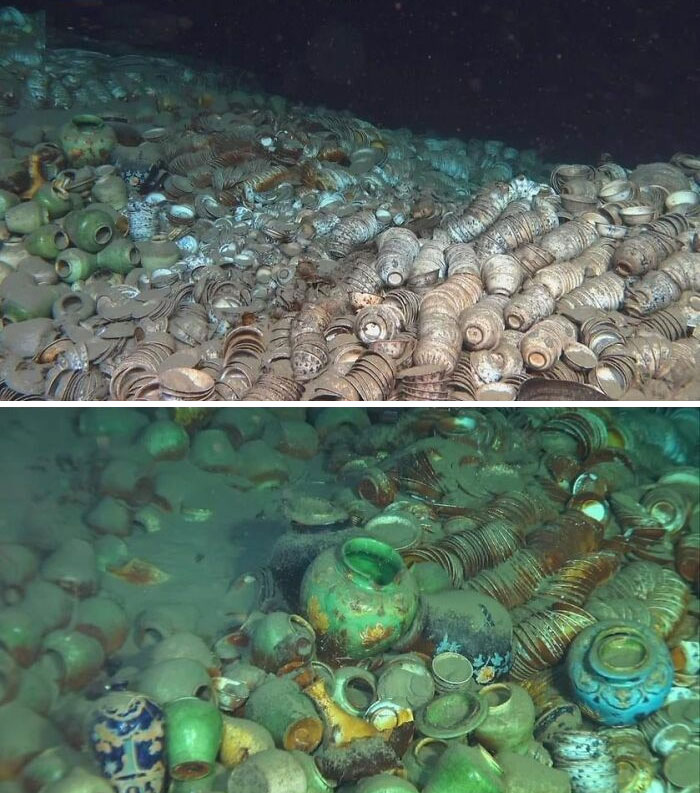
Over 100,000 Ceramic Wares From Two Chinese Shipwrecks, 1500 Meters Deep In The South China Sea. Discovered In May 2023. Ships Dated To The Ming Dynasty, 1506-1522 Ad
Is there a volleyball in there anywhere? His name is Wilson.
A really $$ good hoard to Aquire as a pirate, pity it sank
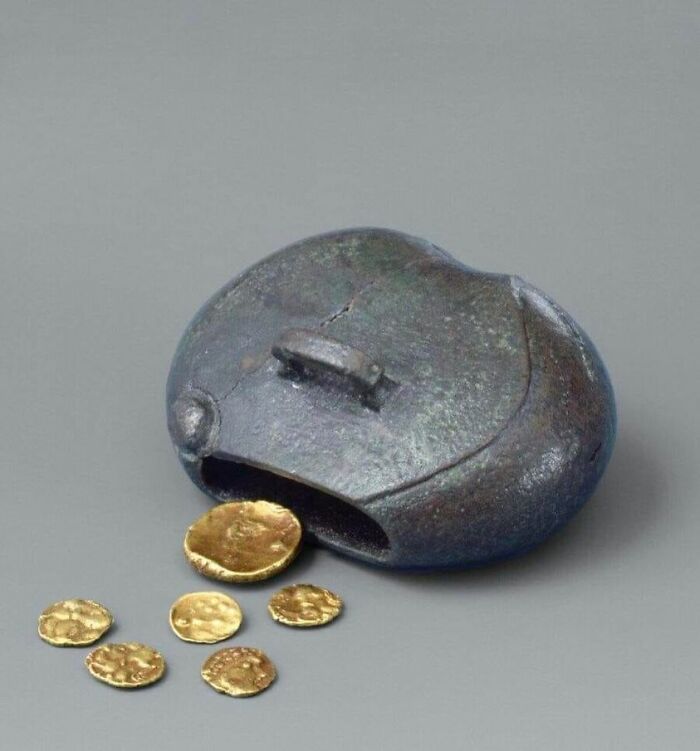
This Small Bronze Purse (4.3x3.3 Cm) Was Found With Six Gold Coins Still Inside In The Celtic Oppidum (Settlement) At Manching, Germany
It was originally sealed with an organic material, presumably a leather strap. Ca. 200 BCE

Wait - if this purse is 4.3 by 3.3 CENTIMETERS, it's friggin' TINY. The smallest coins would be like 4-5 mm in diameter. is that correct? Or is it rather 4.3 inches? That would leave the small coins at 10-12 mm.
It says there was originally a leather strap to close over the top.
Load More Replies...Paper currency first developed in Tang dynasty China during the 7th century, true paper money did not appear until the 11th century originally it was basically a promissory, convenience and security – in London, for example, from the late 1600s onwards. With the removal of precious metals from the monetary system, banknotes evolved into pure flat money note. (Wiki)
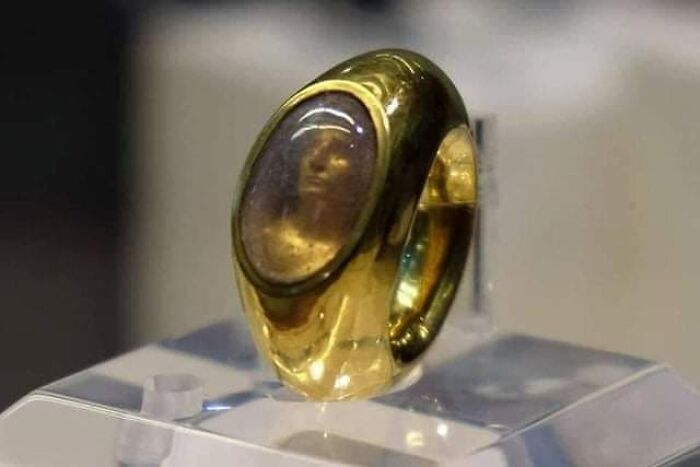
Load More Replies...Directly From Ancient Rome, Carvilio's Ring: The Excruciating Pain Of A Roman Mother For The Death Of Her Son
In 2000, during the removal of a high voltage pylon in a private property near Grottaferrata (a suburb of Rome) archaeologists found two sarcophagi, which contained the remains of the noble Aebutia Quarta and her son Carvilio Gemello, who lived in the first century after Christ. Carvilio died prematurely at the age of about eighteen, in mysterious circumstances (perhaps from poisoning).
After losing the only male child, the roman noblewoman built a wonderful sarcophagus, with accurate finishing and refined inscriptions for his son.
Due to the floral ornaments placed at the entrance and inside, the archeological site today is known as the "Hypogeum of the garlands".
When Ebuzia died (probably at the age of 40 or 50), she was buried in the same place of her son Carvilio.
The two nobles were embalmed (probably because they were followers of the cult of Isis, which was very fashionable at the time). Thanks to this procedure it was possible to find one of the most important and amazing jewels of ancient Rome that has come down to us: Aebutia wears a magnificent band ring.
The gold frame has a cavity where a chiseled miniature portrait has been placed, perfect in its details. It probably represents the young Carvilio Gemello, with wavy hair, intense gaze, fine lips, pronounced nose and bare bust.
The amazing miniature is wrapped in rock crystal (hyaline quartz, defined by the ancient Romans as "acentetus, the color of clear water"), which has given a timeless depth to the boy's expression.
It was certainly the pain and love for Carvilius that prompted her to commission the precious jewel from an imperial master of goldsmithing (who almost certainly lent his services to the emperor himself, given the magnificence of the find).
The ring of Carvilio, separated from its owner after millennia, is now on display at the Archaeological Museum of Palestrina, Italy.
She must have gazed many hours to her ring, her heart breaking each time again..
They separated her from her beloved ring! That's heartbreaking to me.
I don’t think Moos was lacking in empathy - it’s just a strangely worded passage with odd readability. And her name changes from Aebutia to Ebutzia and back again.
Load More Replies...Once he made his descent, he turned on the small light he had with him. Unfortunately, there weren’t any fancy rooms filled with buckets of gold there. Instead, he saw a cave full of animal paintings from the Paleolithic era.

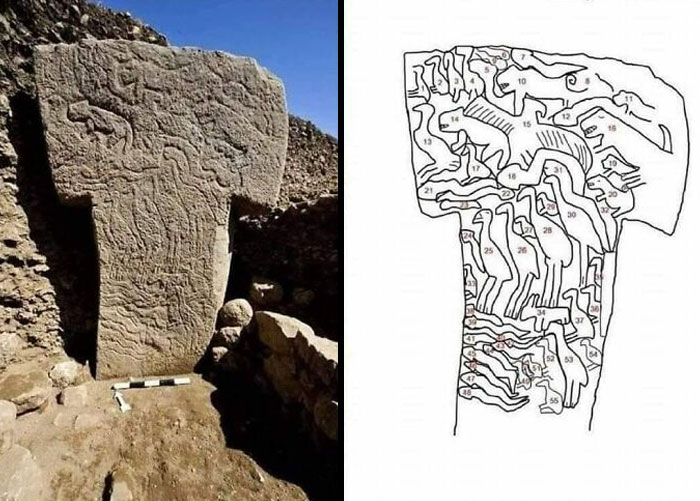
Details Of One Of The T Columns In Göbekli Tepe. It Is Approximately 12,000 Years Old, Making It Remarkably Older Than Egyptian Pyramids And Stonehenge
Y'all should also check out Catalhoyuk. A pre-pottery neolithic settlement that had their front doors on the roofs and buried their loved ones under the hearth. I honestly think neolithic times were one of our more interesting periods in our existence.
Catalhoyuk is so interesting. And they didn't make streets, they just built their houses wall to wall and like you said you entered from the roof. Love it.
Load More Replies...12000 years is around the time humans began populating the Americas. Last I knew, anyway.
It has been pretty conclusively pushed back to at least 23,000 years ago.
Load More Replies...Sad to read this just when I'd come to believe that the offensive cultural appropriation of 'y'all' was a fad that had come to its much-deserved end.
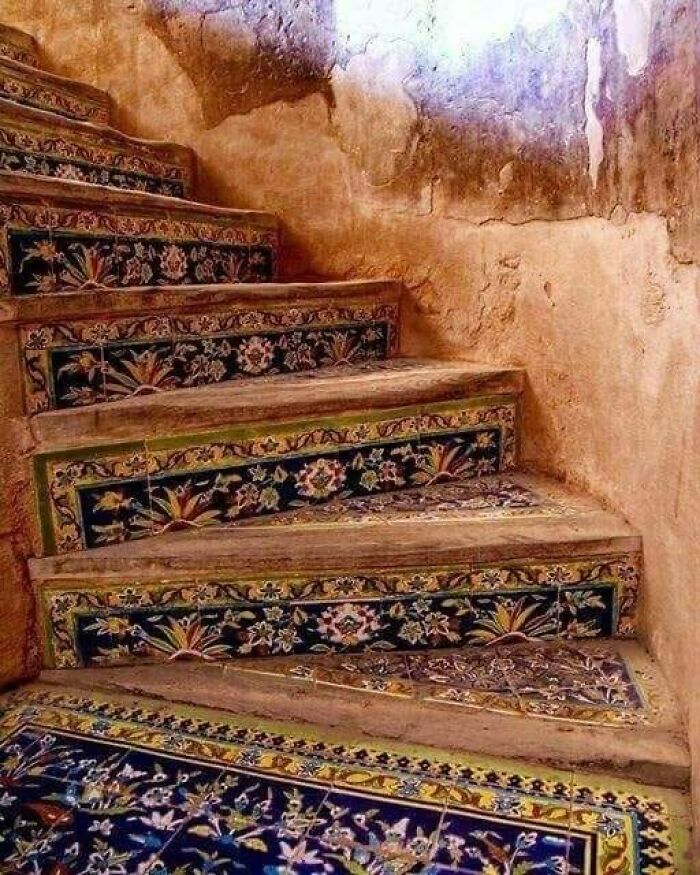
Tiled Stairs In Ali-Qapu Palace In Isfahan - Iran Built By The Safvaid King Shah Abbas I At The End Of The 16th Century (1597)
Maybe it's weird, but with so much in archeology being a mystery, it's almost cooler than the artifacts to know exactly who built them and when
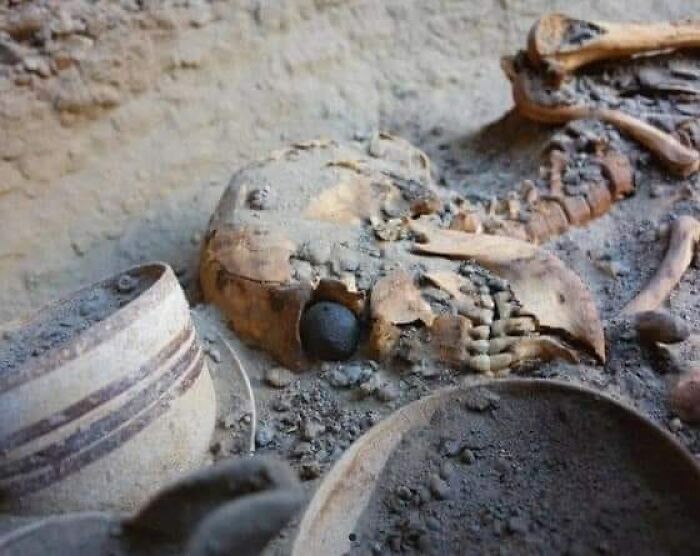
The World's Earliest Known Ocular Prosthesis Dated To Between 2900 And 2800 Bc. From "The Burnt City" (Shahr-E Sokht), Iran
In December 2006, archaeologists discovered the world's earliest known artificial eyeball. It was found by Mansour Sajjadi, leader of the Iranian team, which has been excavating an ancient necropolis at Shahr-i-Sokhta in the Sistan desert. It has a hemispherical form and a diameter of just over 2.5 cm (1 inch). It consists of very light material, probably bitumen paste. The surface of the artificial eye is covered with a thin layer of gold, engraved with a central circle (representing the iris) and gold lines patterned like sun rays. The female whose remains were found with the artificial eye was 1.82 m tall (6 feet), much taller than ordinary women of her time. On both sides of the eye are drilled tiny holes, through which a golden thread could hold the eyeball in place.
Since microscopic research has shown that the eye socket showed clear imprints of the golden thread, the eyeball must have been worn during her lifetime. The woman's skeleton has been dated to between 2900 and 2800 BC.
Shahr-e Sukhteh, is an archaeological site of a sizable Bronze Age urban settlement, associated with the Jiroft culture. It is located in Sistan and Baluchistan Province, the southeastern part of Iran, on the bank of the Helmand River, near the Zahedan-Zabol road. It was placed on the UNESCO World Heritage List in June 2014.

I never would have thought that this was done this early in time. Fascinating!
Look up the history of trepanning - now that really is astonishing !!!
Load More Replies...I believe the choice of the gold covering wasn’t decorative, but hygienic, same with the thread. Ancient people were a lot smarter than modern people think.
I'm showing my ignorance, but what was the golden thread hooked or threaded through? I don't see how or why from my angle.
The only guesses I can come up with would have been beyond painful.
Load More Replies...The guy was quick to tell his three friends about the discovery, and soon enough, they were inviting local kids to check out the mysterious-looking paintings for a small price. They also managed to persuade a local historian to go down and see the artwork for himself. Once the man saw it, he knew it was a valuable discovery.
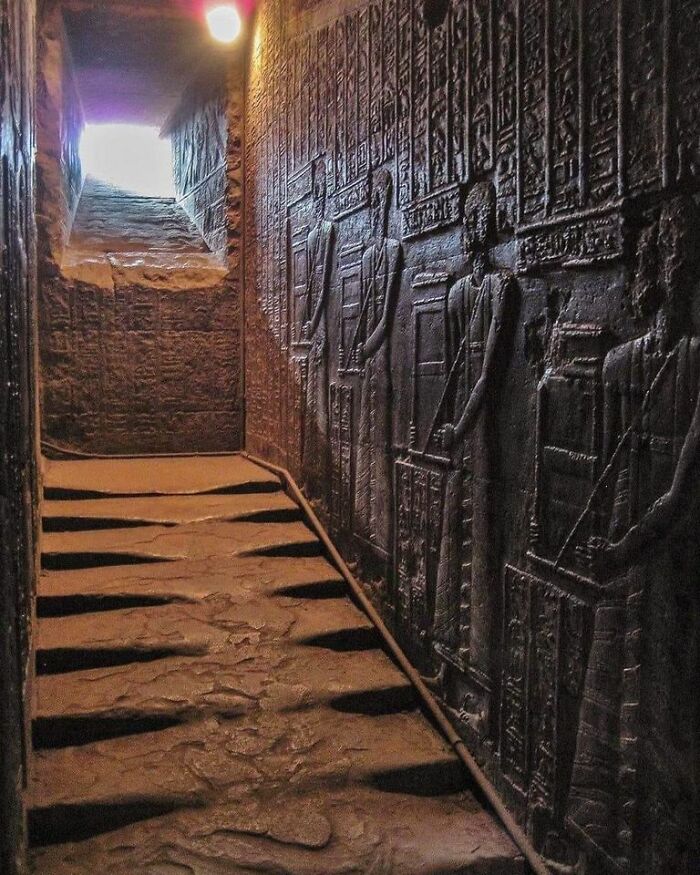
The ‘Melted’ Stairs And Fascinating Reliefs In Temple Of Hathor In Dendera, Egypt
Temple has been modified on same site starting as far back as Middle Kingdom (2030-1650 BC). Existing structure began construction in late Ptolemaic period at time of Ptolemy Auletes, 54 BC.
Natural wear and tear from people walking up and down them over a long period of time. There are plenty of similar examples if you search.
Load More Replies...Me, after sliding down these stairs: "Yeah, those stairs aren't to code."
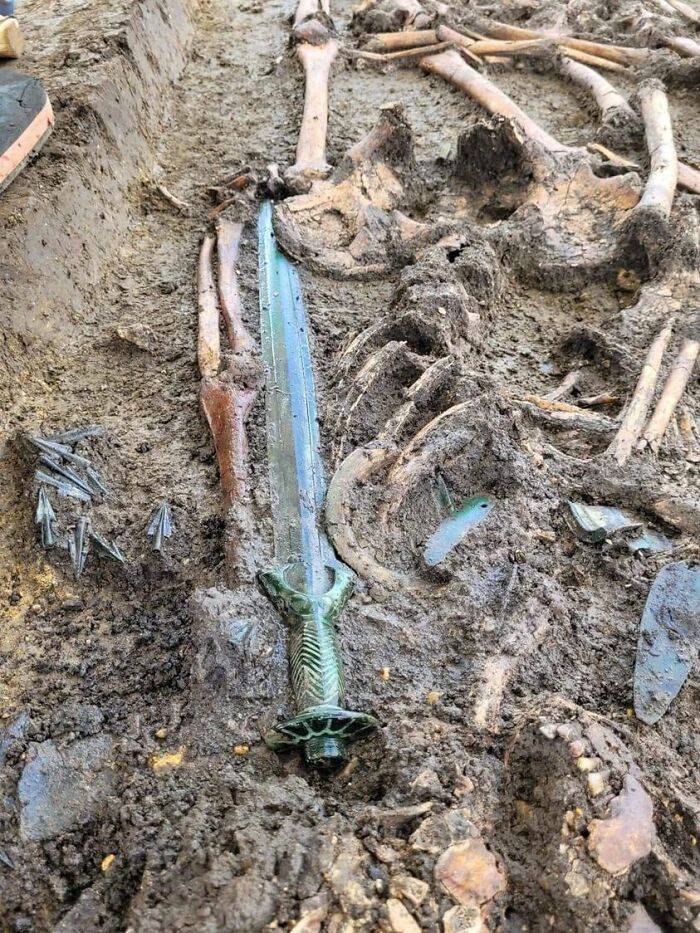
They Find In Germany A Sword From The Bronze Age Of More Than 3,000 Years Ago In An Exceptional State Of Conservation
Aaah....a connoisseur......I guess you are just looking what spells have... ;)
Load More Replies...As an archeologist I cam confirm it is in impeccable condition for a sword! As are the arrowheads. Blown away. Must have been great conservation conditions. I once found with my coworkers daggers, a sword, a shield.. from metal and they crumbled away between our fingers
It’s eerily preserved. I hope it wasn’t buried with the body for a reason, like some some local hero beat this bad guy and they buried him with his cursed sword of power for eternity. Only for us to come along and find it….
I have never seen a pic of a real sword I started to think they were a myth 😅
Armor Of An Officer Of The Imperial Palace Guard, China 18th Century
For anyone curious about the metal rivets - I have an accurte replica of Eight Banners armour (the non palace military of the Qing), and those rivets hold in place interlocking iron plates. It's a bit weighty, but a sword is going to have a very hard time getting through.
And now I found this new armor in that quest.... I'm gonna be deadly!!!!
What you're still missing is......a body...and a carved Galli violin...🙋🏽
I hope it was just for ceremonial occasions. Trying to wear that in everyday life would have been impossible to move in.
However, because of the war, archeologists couldn’t explore the cave right away. They opened it to the public in 1948, when they were done recording all the important information. Once it opened its doors, the cave became a popular tourist site, attracting thousands of people. This didn’t last long, though. Because of its popularity, it had to be closed in 1963 to preserve the paintings.
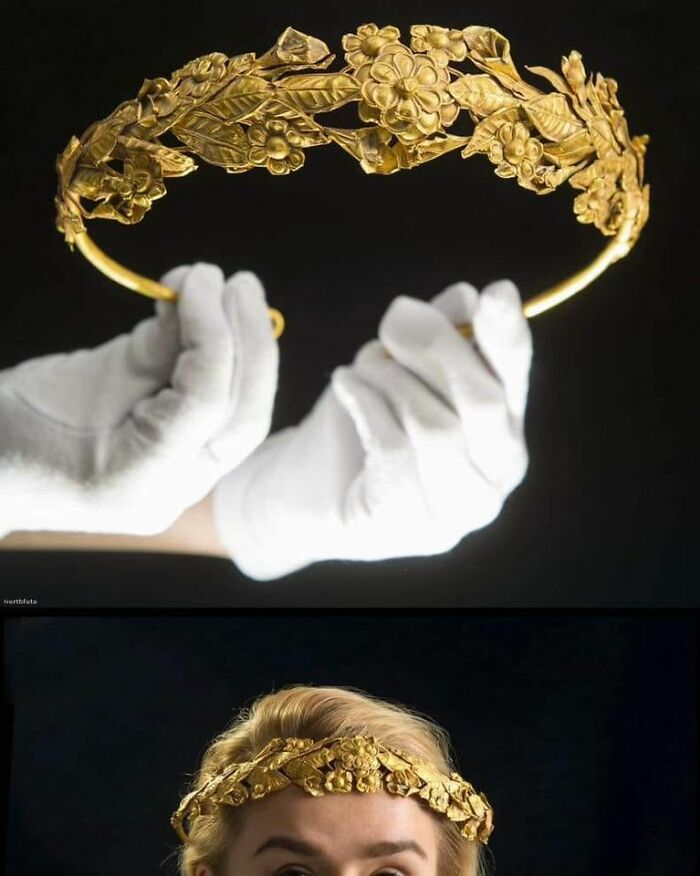
A 2,300-Year-Old Ancient Greek Gold Wreath Worth £100,000, Kept For Decades In A Tatty Box Of Old Newspapers Under Bed By Owner Who Had No Idea What It Was.
The wreath was put on sale at Duke’s of Dorchester auction house in 2016
Funny how an archaeological finding like, which by law when found belongs to the country no matter what land it was found on, ended, yet again, being auctioned in the UK for profit.
Under UK Law that's classified as "treasure" and the finder must offer it for sale to museums at a price set independent experts. If there are no buyers at that price, it's there's to do with. It's never owned by the state.
Load More Replies...Imagine having something of pure gold under your bed and just being like - huh- no idea. Wrap it in this tissue paper and throw it back under there.
The Jewel-Encrusted Skeletons Of Roman Martyrs: Photographs From Rome's Ancient Underground Catacombs
Stunning outfit. The only problem with this is that you have to be martyred first.
Catacomb saints. Beginning in the 16th century, the skeletons from the Vatican vaults were sold to places north of the Alps (mostly to southern Germany, Switzerland, Austria). The Vatican needed money to finish St. Peter's. Also, the Protestant rioters had burned down a lot of Catholic churches / art treasures, and the resident clergy needed to replace them with other items of worship. Anyway, small town parishes were happy to buy those old bones from the Vatican in order to to become local places of pilgrimage in their own right, and hence attract pilgrims (an early modern form of tourism). In other words, selling ancient bones became an industry that benefitted several interest groups. The decoration on those skeletons is Baroque, not from Roman times.
If I had endured martyrdom and were resting peacefully in some unknown catacomb, I would be kind of angry if someone dug me up to put me into some ridiculous jewelled costume and made a corny macabre exhibit out of me...
Probably not much you could do about it, except say the Latin equivalent of "boo" at appropriate times.
Load More Replies...Foxe's Book of Martyrs was considered quintessential reading for early teens in my church. While I understand the importance of the "never forget" concept, there are better ways to teach it. (It really is a good book, but definitely not for all.)
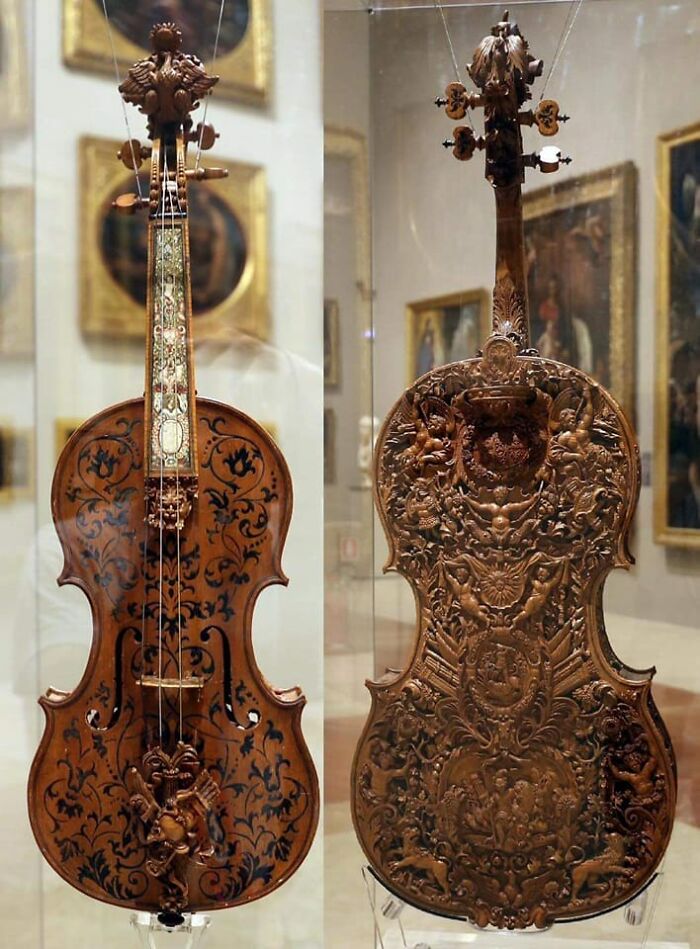
Intricately Carved Violin Of Domenico Galli, 1687
The carving kills it completely. I played the violin as a kid/teen and someone had a slightly carved violin, it had a castle on the back. Nothing too serious as in the above picture. But our teacher explained it made the violin sound worse
Load More Replies...»Dang, I was so hyper-focused that I even forgot that I was working on a friggin' violin!«
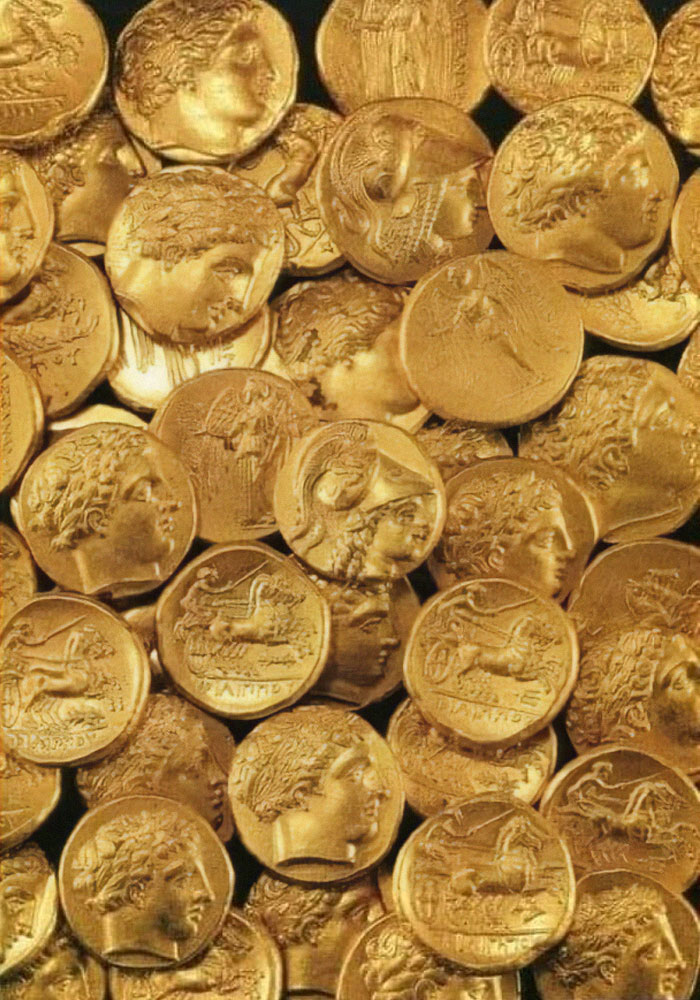
Treasure Of 51 Macedonian Gold Coins. Was Hidden Sometime After 330 Bce In A Cavity In A Rock In Ancient Corinth
I would like to find such a treasure - but can't get up from my sofa.
Too many to bat under the sofa. *curls up on the coins and naps*
Those are, of course, not the only accidental findings out there. Happy accidents like that happen all the time. So, next time you’re out and about, don’t forget to take your explorer’s hat with you. Maybe your discovery will find its place in our next list that celebrates antiques.
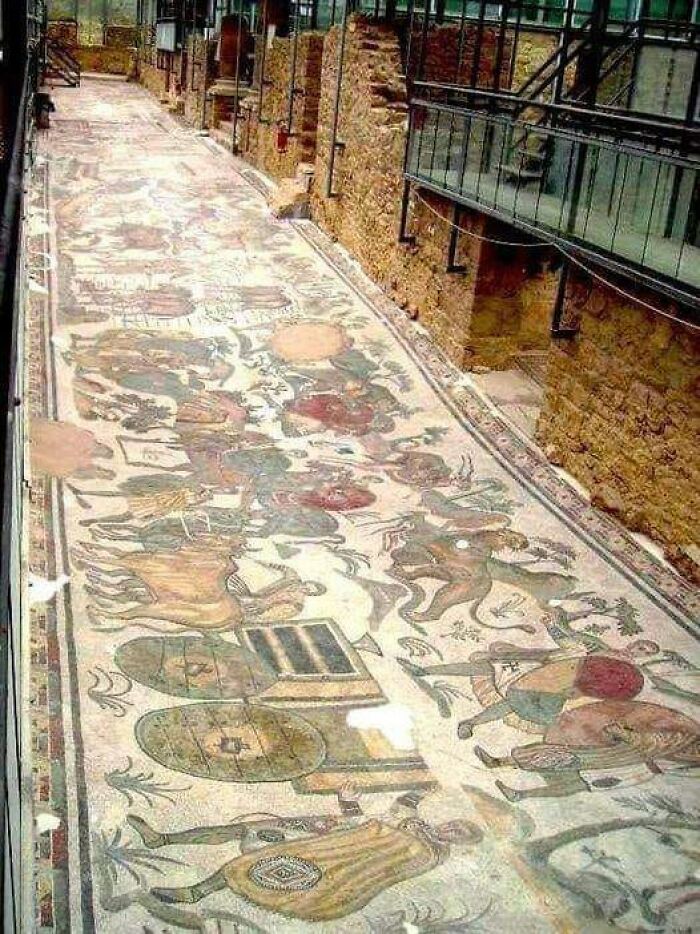
Pompeii - “The Mosaic Of The Great Hunt Of The Roman Villa Of Casale Di Piazza Armerina, Sicily.”
Wait... Pompeii is close to Naples in Campania, Piazza Armerina is in Sicily.
And yes, is not a painting is a mosaic. IMG_202309...f1e05d.jpg
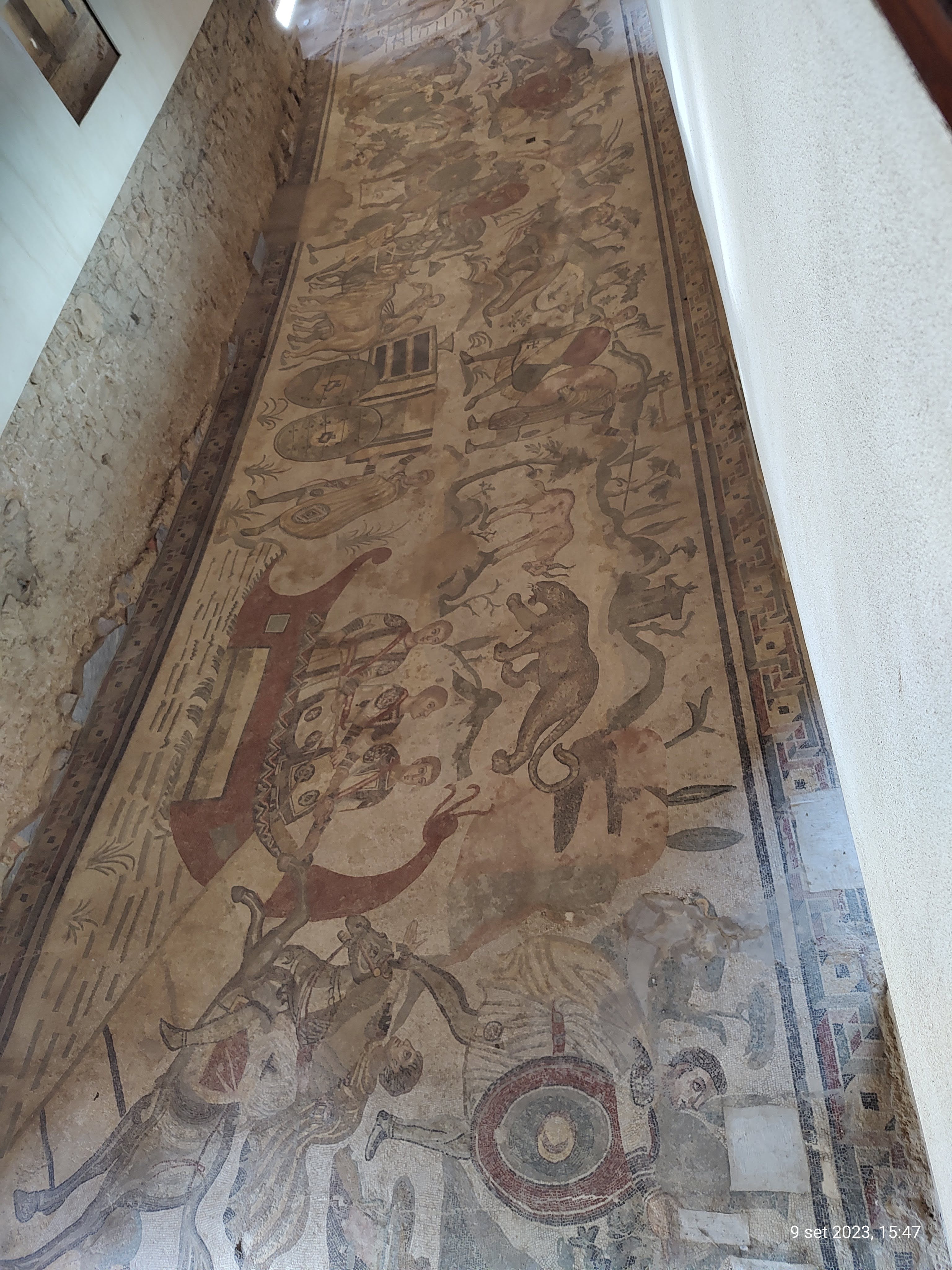
The day BP curates and fact-checks their content will be later than hell freezing over.
Load More Replies...Sicily, I confirm, we went there à few years ago. The Villa and it's mosaics are well worth à visit.
Almost looks like a guy walking behind an old steam traction engine.
This was many years ago, but when I was in Pompeii, I was surprised to see how many homeless dogs roam the premises. I wonder what their excretions will do to the art treasures on site. I asked the tour guide about it (actually our bus driver, which made me wonder about the professionalism of his explanations), who said that nobody seems to be bothered enough to do anything about it.
I've been recently and didn't see any dogs. (twice in the last 2 years). There was a couple of cats, but no dogs.
Load More Replies...All the mosaics shown have been incredibly beautiful , they also seem to be able to stay that way even when covered over for centuries, excellent workmanship 😍
I can’t believe people walked on something so beautiful. What are they going to find about us? Nothing. It’s all concrete and it doesn’t last like this.
Naples and Sicily are two far-apart, and very different places in Italy, though...
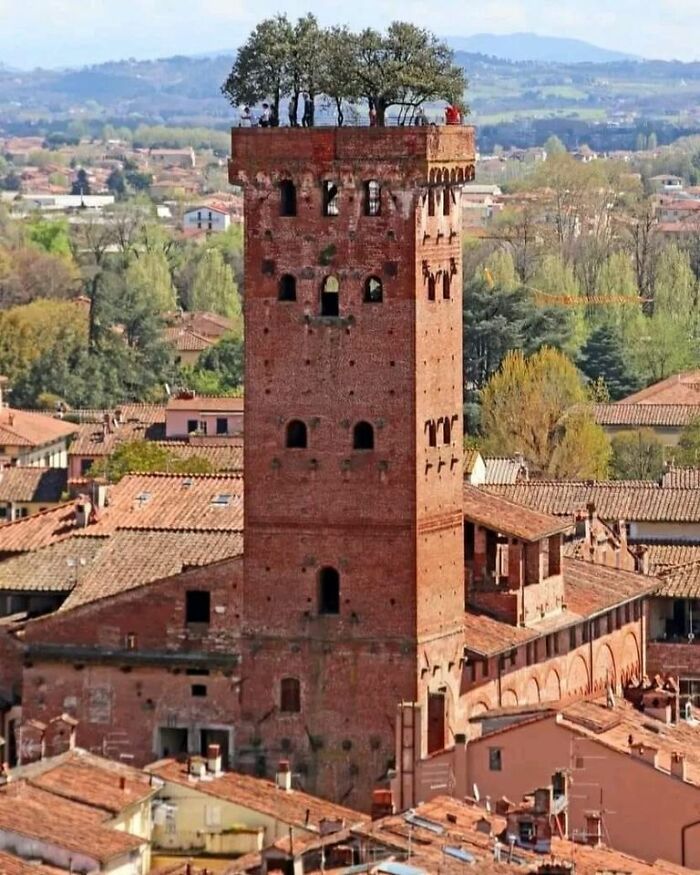
The Guinigi Tower - A 45-Metre-Tall Fortified Tower-House Built In The 1300s, With Holm Oak Trees Growing In Hanging Gardens At Its Top. Lucca, Italy
Not sure how this is an archaeological find - was it invisible for a couple of hundred years or what?
»Well, Dr. Jones, what brings you here to Lucca in Italy, so far from home?« • »As the local museum director, you're probably quite not surprised when I tell you that I've come for the tower.« • »What tower???« 🤔🤭
Load More Replies...TIL that hanging gardens are not actually hanging. That the hanging is derived from a word for hanging over but the plants themselves were not necessarily hanging. In my mind it was always more like those hanging flower baskets a couple of our local cities put up every year. I thought they were literally hanging by chains or something. It didn't help that an image I saw ages ago did show some plants hanging from chains. Which maybe happened but now I'm realizing that on the whole it was raised up planting areas.
These would have been public buildings, places of worship or the residences o nobility or royalty, where rock or brick was used for more general usage they would have been about the size of modern day bricks; the majority of people though, lived in wooden huts, buildings made of wattle and daub (basically plaster held together with wooden laths and straw) or in structures made with whatever material was to hand when it was built.
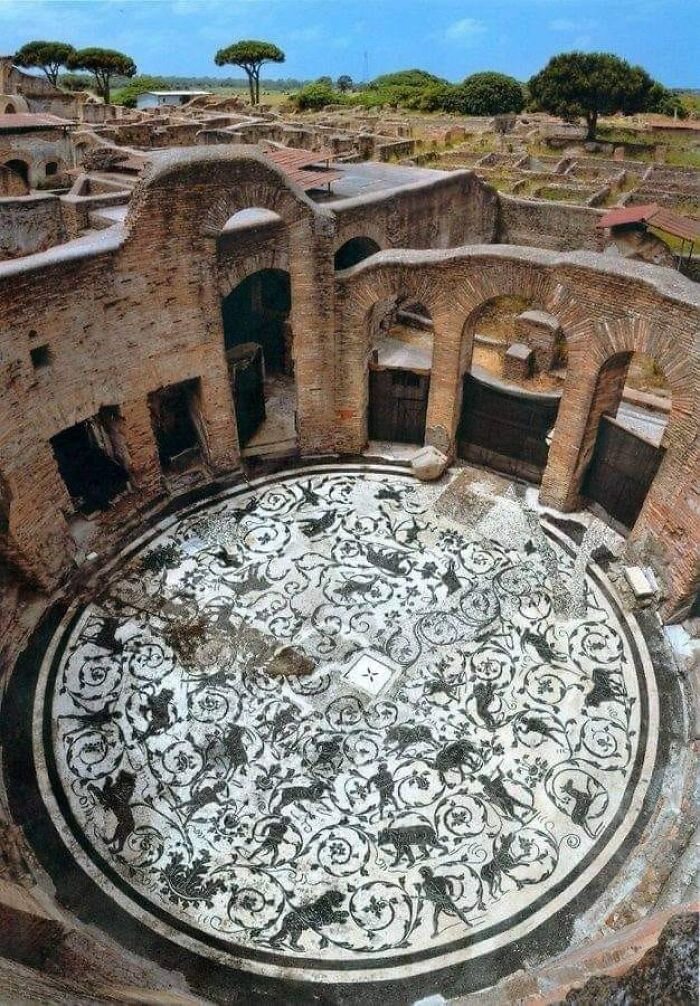
Load More Replies...A Massive Floor Mosaic From The Bath Of The Seven Wise Men At Ostia Antica. Made Around 1,800 Years Ago, It Depicts An Elaborate Black And White Hunting Scene
It only takes about half an hour by train from Rome (Piramide Station) to Ostia Antica. There you can walk among the ruins and see everything up close. An exceptional experience.
I really wish we still took the time to make functional things beautiful.
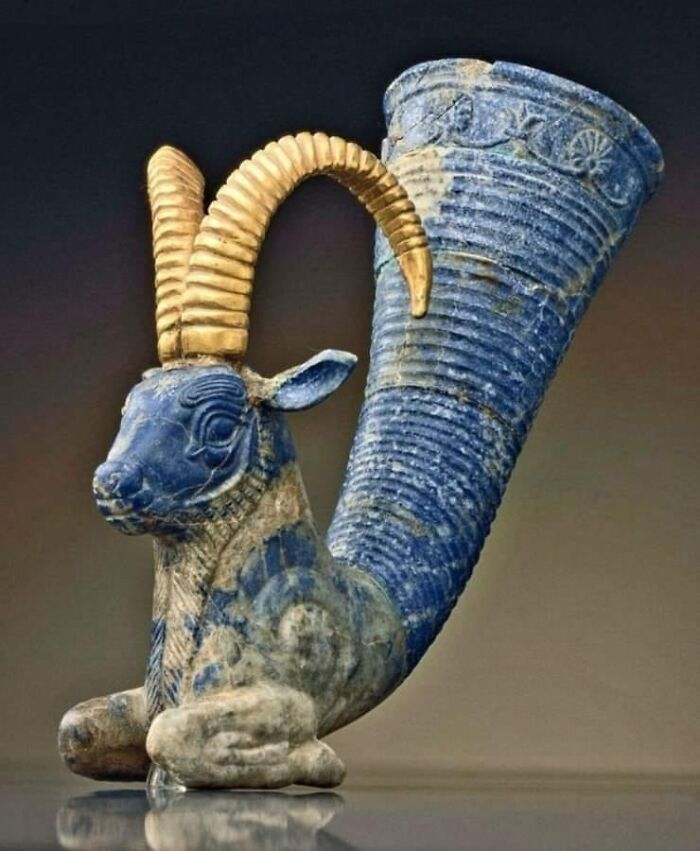
Persian Achaemenid Rhyton (Drinking Vessel Or Vessel For Pouring Libations) Made Of Lapis Lazuli And Gold. 6th-5th Century Bce. Abegg Foundation, Riggisberg, Switzerland (6.7.63)
Persian Achaemenid rhyton (drinking vessel or vessel for pouring libations) made of lapis lazuli and gold. 6th-5th century BCE. Abegg Foundation, Riggisberg, Switzerland (6.7.63)
Lapis is one of my favorite things. It cuts beautifully. Now I miss my lapidary and silver smithing days.
I don't think I want to drink out of that. It looks like you would be drinking almost out of its butt.
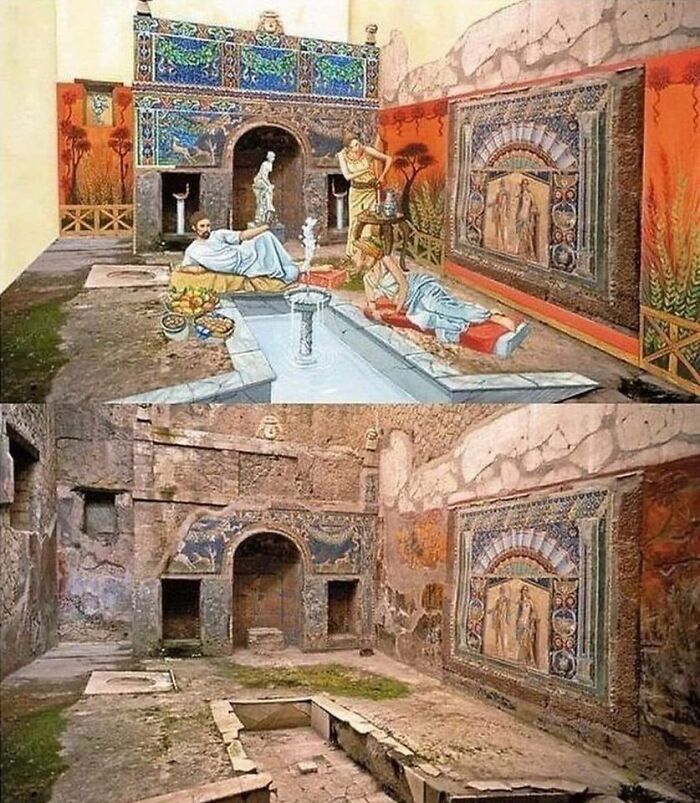
House Of Neptun And Amphitrite. Herculaneum, Italy
When Vesuvius erupted in AD 79, it buried not only the city of Pompeii, but a number of other nearby towns as well. One of them was Herculaneum. Among the many houses in Herculaneum is a relatively small, but richly decorated town house, called the House of the Neptune Mosaic, which must have belonged to a wealthy family

If ever you are in the bay of Naples area, go check out Herculaneum, I went a few years back,fascinating place,and less busier than Pompeii.
That’s always been my plan. I love Pompeii but sadly too many tourists.
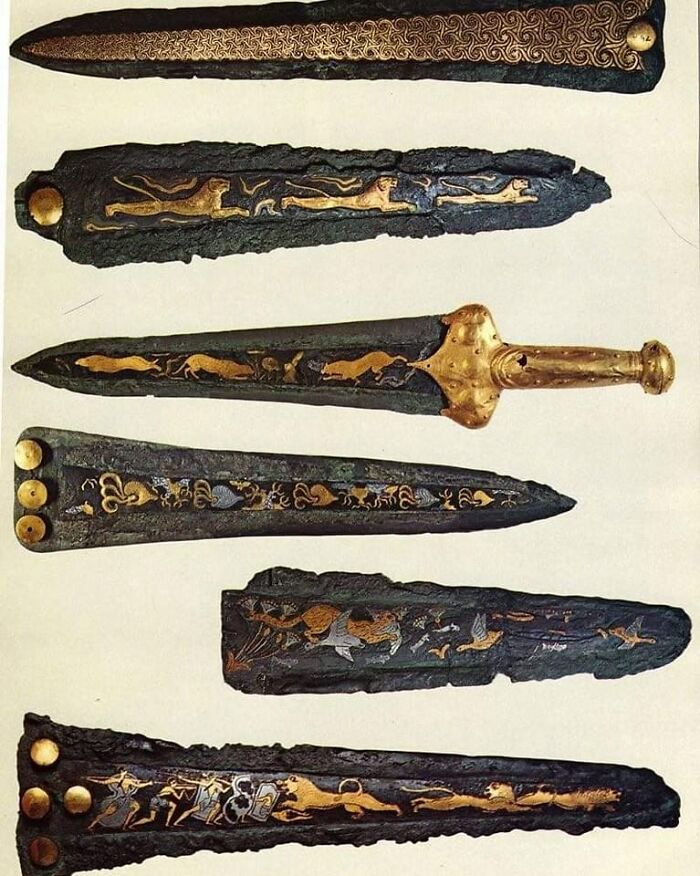
Load More Replies...Mycenaean Daggers, Made Of Silver And Gold. Found In Shaft Graves 4-7 In Grave Circle A, 1550-1500 B.c
Not just hours. One of these takes probably at least 2 years to make.
Load More Replies...I can't imagine being stabbed by one of those lol like a regular knife seems like it would be bad enough, those things look thick n jagged asf..life was brutal back then. Beautiful artwork tho.
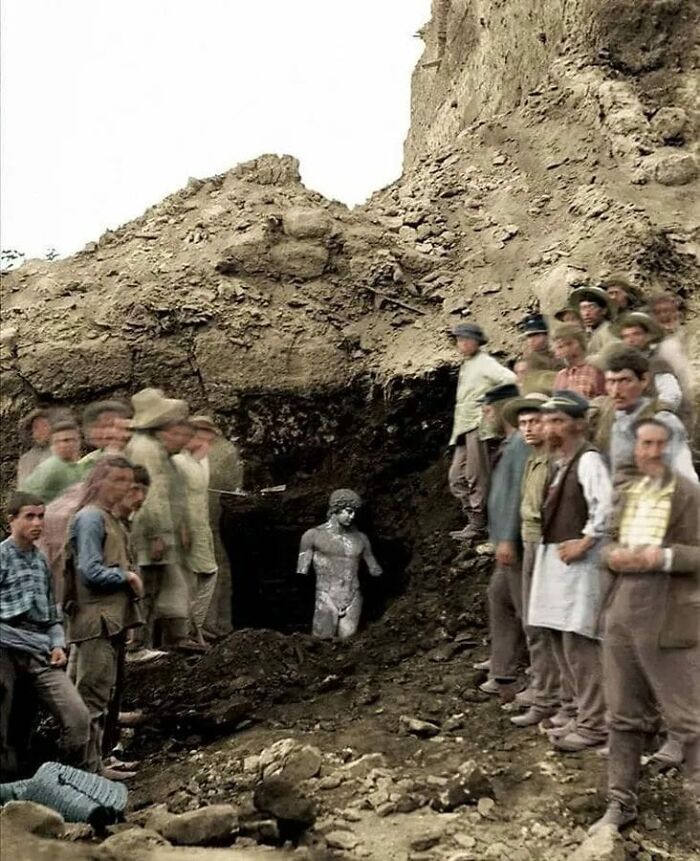
The Discovery Of The Ancient Statue Of Antinous Found In Delphi, Greece During An Excavation In 1894
The statue is ummmmmm interesting he forgot to put clothes on I think 🤔 😅
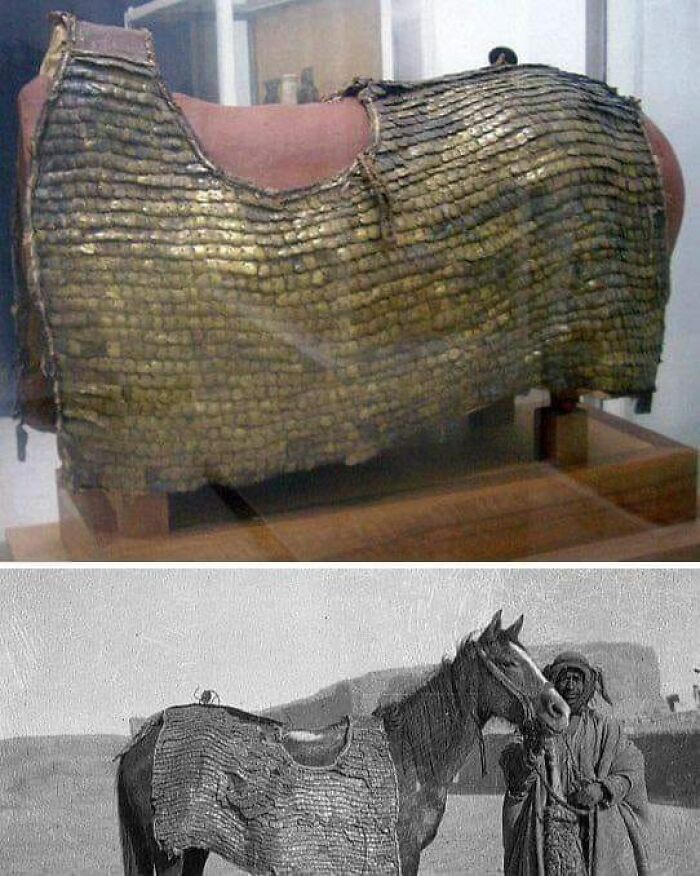
A 3rd Century Ce Roman Horse Armour, Made Up Of About 2000 Bronze Scales
Found in Dura-Europos, Syria, and is now housed at the National Museum of Damascus. The bottom picture shows the armour shortly after it was discovered in 1932

It's not that heavy, but less flexible than chainmail. Horse would have had zero problems with the weight.
Load More Replies...They tried to warn us but we didnt listen. And then 2 centuries later the dlc that started it all came out
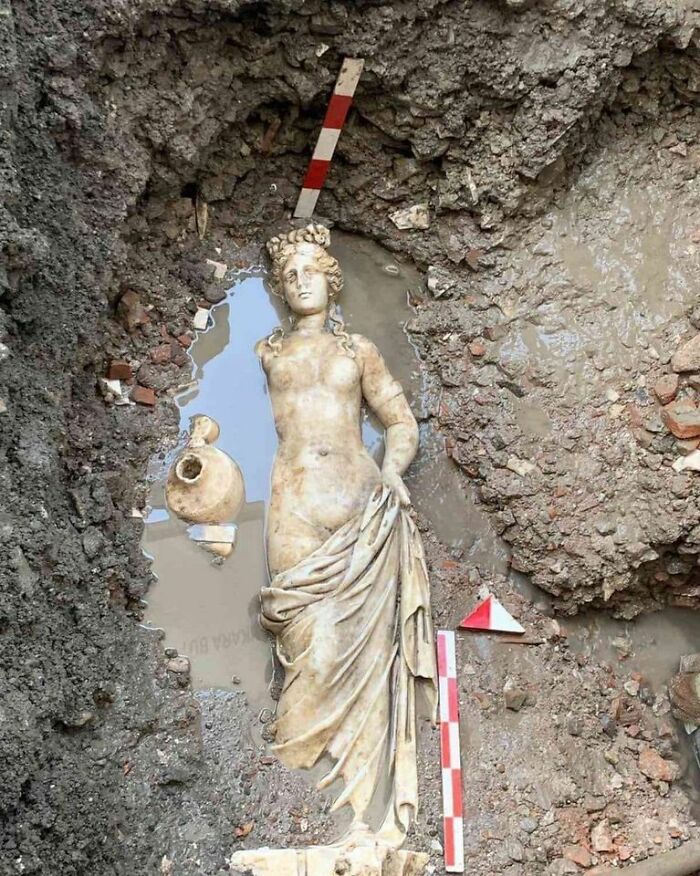
The 1800-year-old statue of a water nymph found in Amasra (Turkiye) on the Black Sea.
Just because some watery tart throws a sword at you....
That was amusing then. In 2023 it actually seems like a sensible plan. Given the alternatives
Load More Replies...The 1,800-year-old statue was examined in detail by academics and experts from Bartın University and the Culture and Tourism Ministry. Experts closely examined approximately 20 examples of Aphrodite statues found in Türkiye and determined that the statue had the characteristics of both a nymph and Aphrodite.
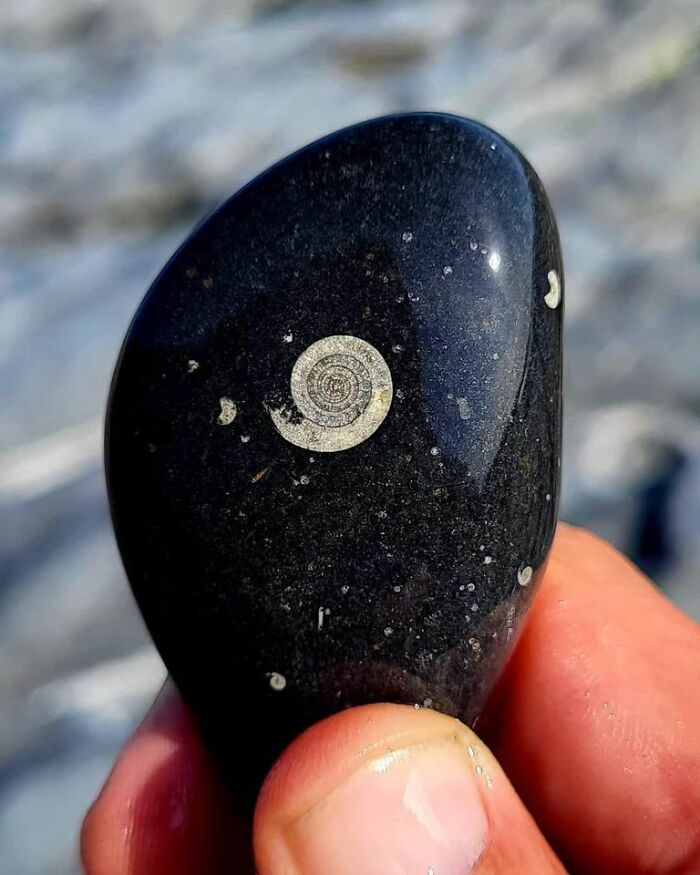
A Fortuitously Placed Fossil. A 320 Million Year Old Goniatite Fossil, County Clare, Ireland
Archaeologist here: No, However, Archaeology generally refers to human occupation/activity remnants. If this fossil displayed evidence of being altered by human hands, then it technically would be archaeology. But, as I think the post does not explicitly imply human involvement, then it is Palaeontology.
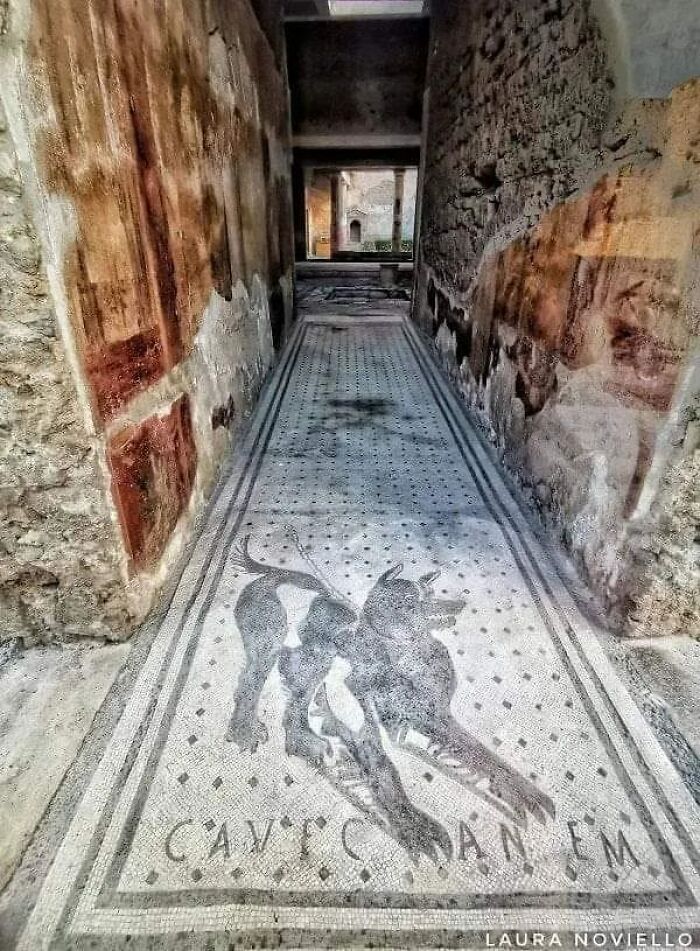
Load More Replies...Roman Mosaic At Entrance To House Of Tragic Poet In Ruins Of Pompeii, Which Was Destroyed In 79 Ad.
Mosaic is approximately 2000 years old and depicts a chained dog with caption "cave canem," which means "beware of the dog."
It’s believed that this dog was from the Canary Islands which were named after the dogs the Romans caught for hunting. Then the birds were named after the Islands.
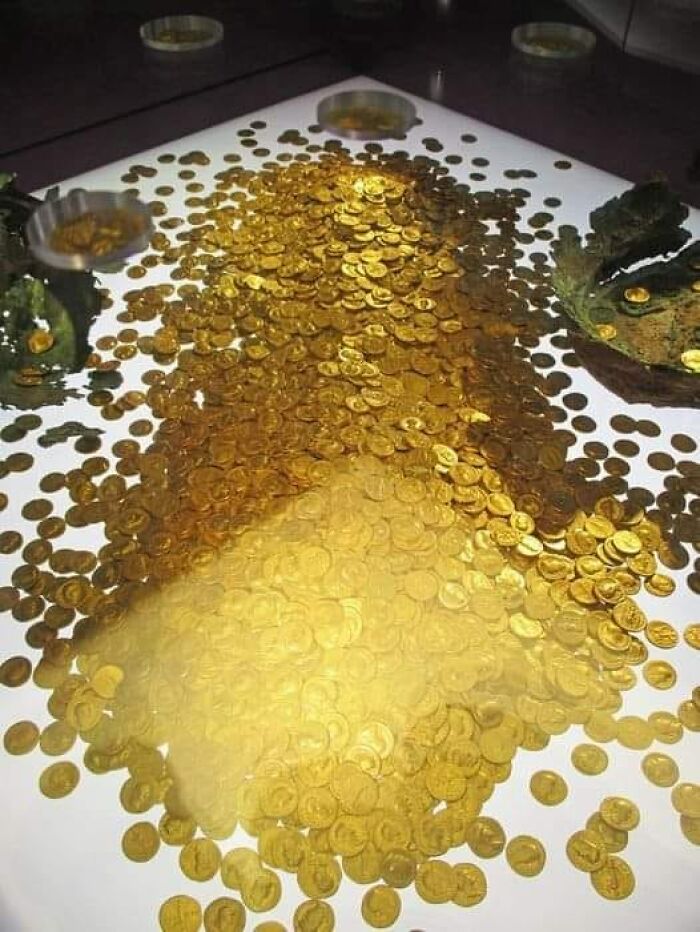
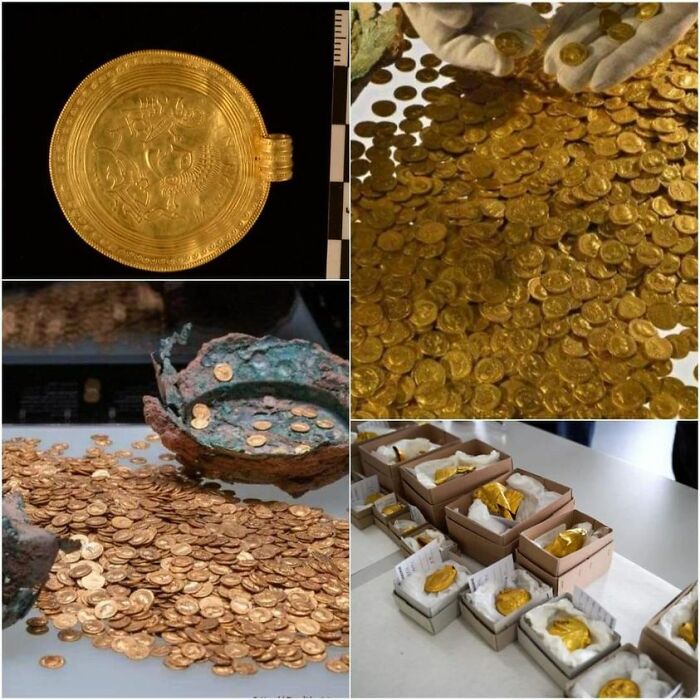
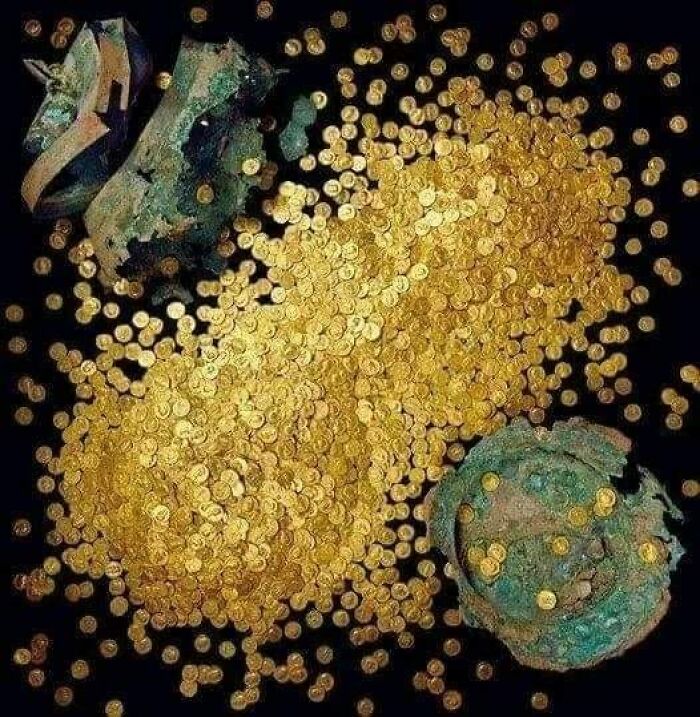
The 'Trier Gold Hoard' Was The Largest Roman Gold Hoard Ever Discovered
Comprising of 2,500 gold coins weighing 18.5 kg , the discovery was made during excavation works in 1993, nearly 1,800 years after it was hidden.
The discovery of the Gold Hoard in Trier in 1993 caused quite a sensation. Greater inspection revealed that it was not simply someone's personal fortune but most likely an official treasury. The treasury had been carefully administered and had grown over time. The Hoard equated to the annual salary of around 130 Roman soldiers. The aurei (gold coins) feature a total of 27 emperors, empresses and members of the imperial family, and some are still considered unique to this day.

In a city like Trier, which had been a bona fide megacity in Roman times ("Augusta Treverorum", and, if you believe some scholars, more sophisticated than Rome itself in some regards, as many of the Germanic settlements) it is very hard NOT to stumble on some Roman treasure. The city is definitely worth a visit, and it also has some decent wine.
One of those gold hoards was stolen from a museum in Germany (Manching / Bavaria) in 2022. How little value they must place on such an art treasure to have it pilfered away due to poor funding of the museums and hence a weak surveillance system.
I wonder what they do with all those coins? Would love to have some as a flex. Coins must get bored behind museum glass panes and in rich people's homes who aren't really home.
They bat them under the sofa, of course.
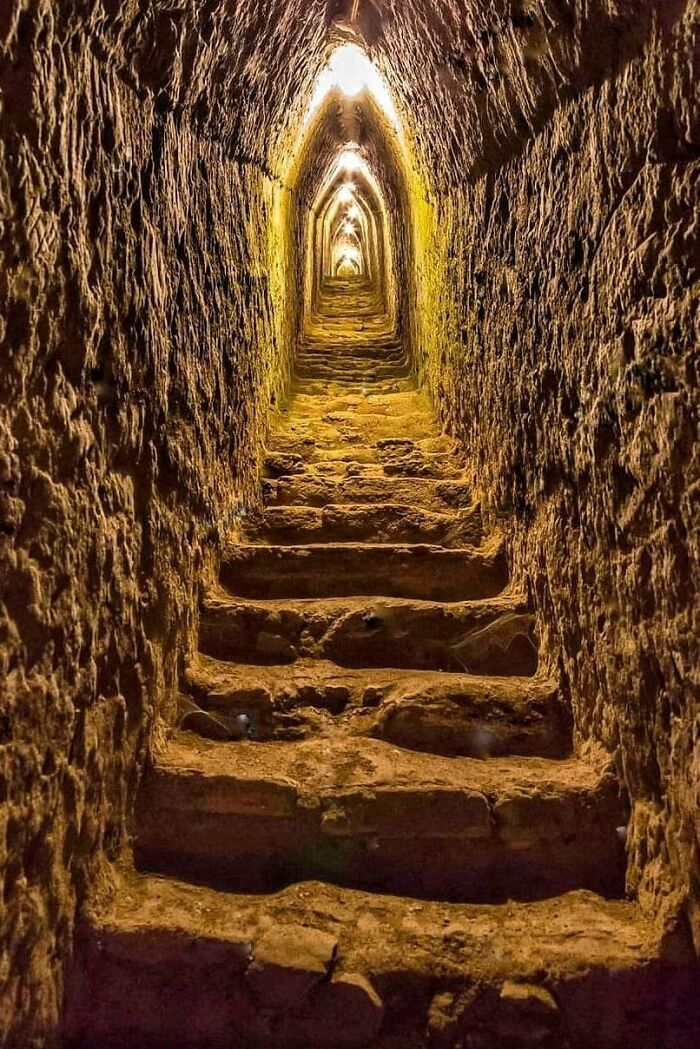
Load More Replies...Ancient Tunnel Under The Great Pyramid Of Cholula
The light bulbs were installed by Erich von Däniken on March 3rd in 7531 BC (or even AD)...you're welcome...🙋🏽
From Wikipedia: The Great Pyramid of Cholula, also known as Tlachihualtepetl (Nahuatl for "made-by-hand mountain"), is a complex located in Cholula, Puebla, Mexico. It is the largest archaeological site of a pyramid (temple) in the New World, as well as the largest pyramid by volume known to exist in the world today.[1][2] The adobe brick pyramid stands 25 metres (82 ft)[3] above the surrounding plain, which is significantly shorter than the Great Pyramid of Giza's height of 146.6m
Known to exist today? Try hiding something that big from the HOA.
Load More Replies...Imagine walking it back in the day in almost complete darkness, just equipped with a torch...creepy.
O.k., you go and take a video - I'll be waiting, out in the sun, to watch it.
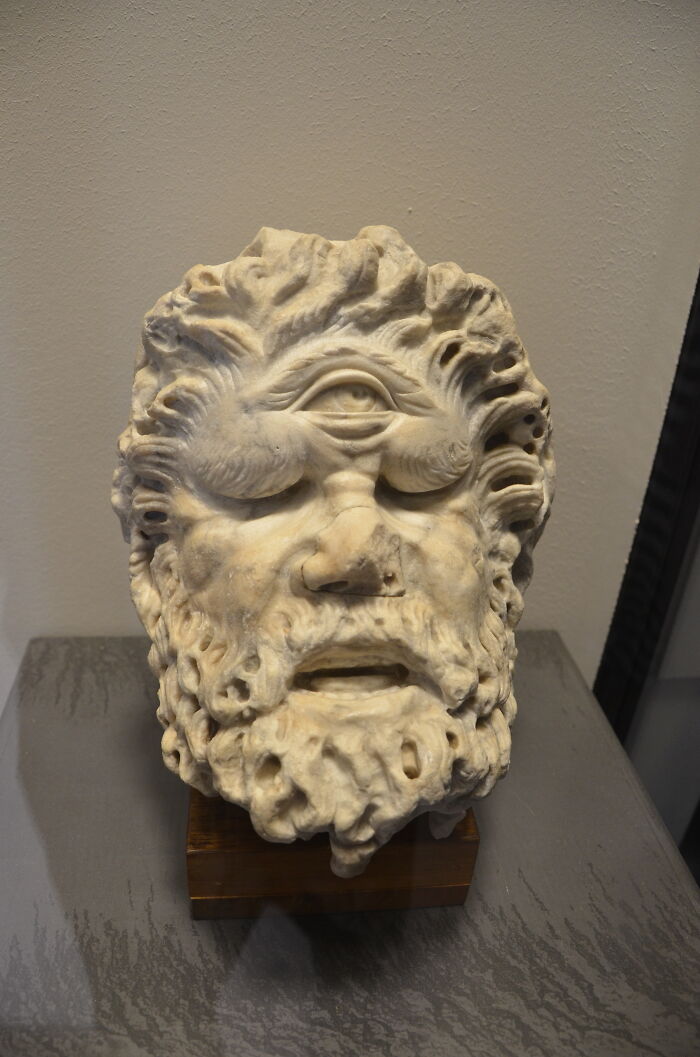
A 1st Century Ad Head Of A Cyclops From The Roman Colosseum
No. This is a statue of Polyphemus, and he is absolutely a Cyclops. Having vestigial eyesockets doesn't make him any less a Cyclops.
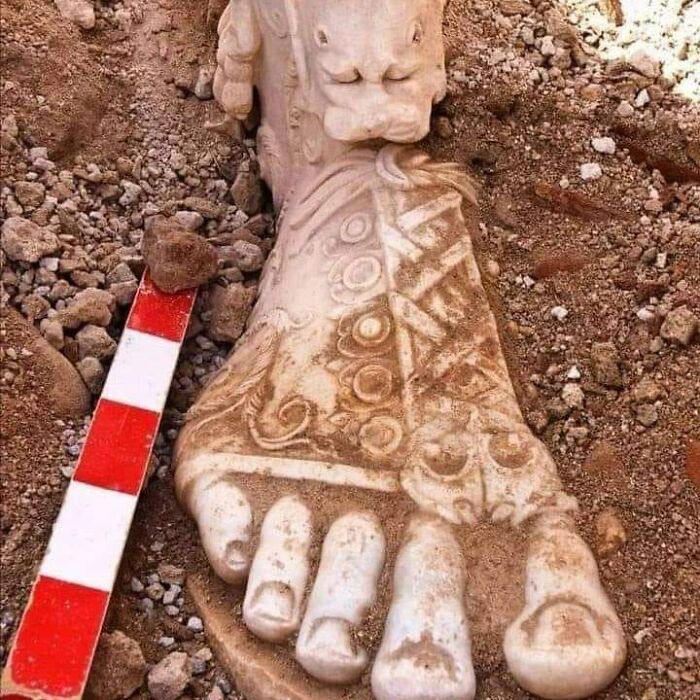
Load More Replies...Finding The Foot Of The Roman Emperor Marcus Aurelius Statue In Sagalassos Ancient City In Ağlasun, Burdur
Everything we hear is an opinion, not a fact. Everything we see is a perspective, not the truth." - Marcus Aurelius. He was a respected Emperor
Are the white and red blocks on the ruler each about a banana in length?
Banana for scale please. I have statuephobia and need to know if I should freak out.
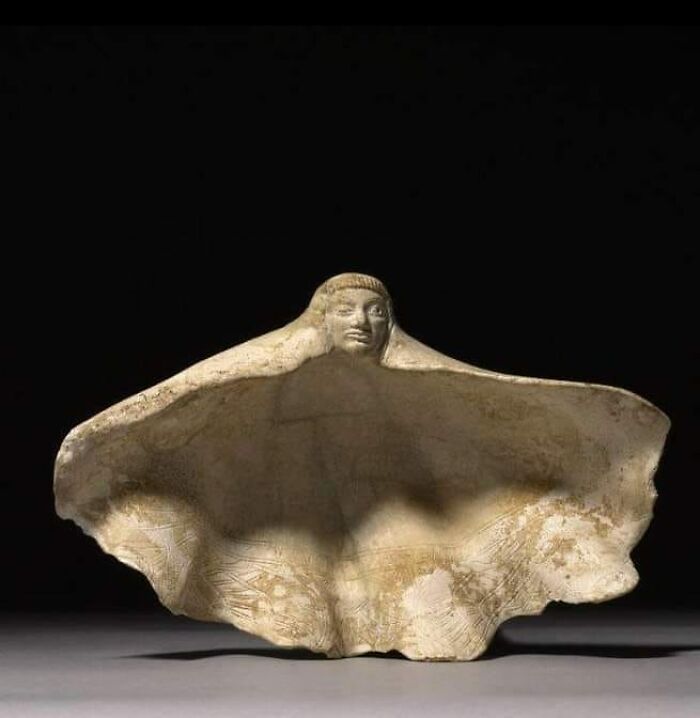
Sea Shell With Carved Head At The Apex (Probably Phoenician, 600 Bc)
The Phoenicians were the first people to wear purple clothing. Purple dye didn't exist before they produced it from molluscs.

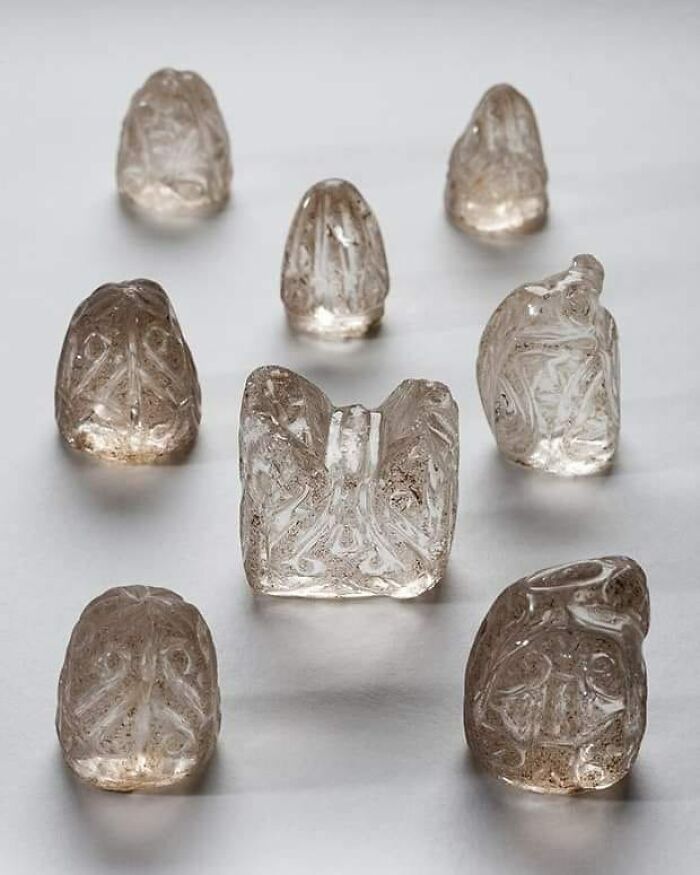
A Series Of 11th-Century Crystal Chess Pieces From The Museo Da Catedral In Ourense, Spain
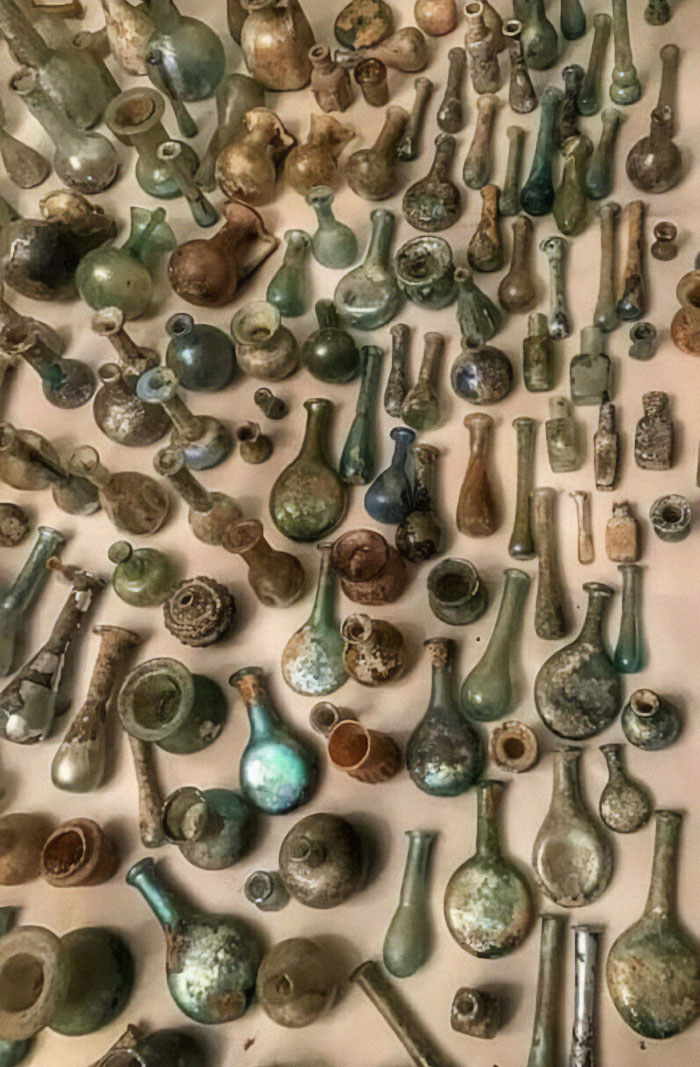
Ancient Roman Glass Bottles
Fascinating that they are so well preserved after so many years. My spouse and I each broke a glass over the past two week. These beautiful pieces would never have lasted in our house, and posterity would be that much poorer . . . .
'Whole' breakable objects (ceramics, glass) are mostly found in Graves, where they were never to be used (again). What men broke during life, he dug a hole in his garden to dump it or throw it in the uh toilet
Load More Replies...I thought that too. Not much between their "glass bottles" and a little pipe.
Load More Replies...Lots of sits to fits in! Come on, Audi. We have work to do!
The Romans had a lot of trouble making clear glass. So I'm rather shocked at the number of clear glass bottles in this collection.
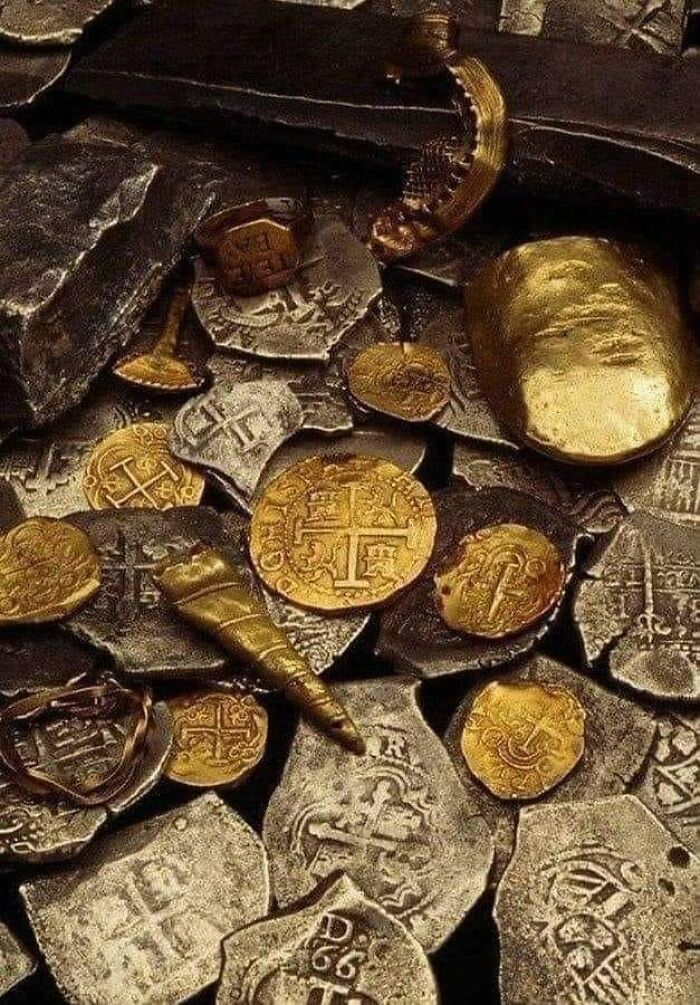
Treasure Recovered From The Wreck Of Theydah Gally
The only fully authenticated Golden Age pirate shipwreck ever discovered. The ship sank in 1717 killing nearly all of its 150-person crew, including its captain Bellamy.
The ship was actually called the "Whydah Gally", not whatever weird spelling they went for in the title.
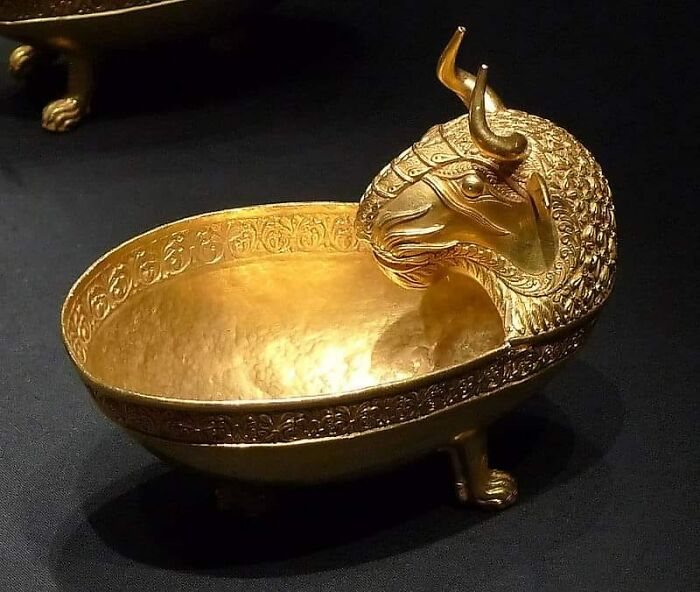
Gold Bull’s Head Bowl Known As “Attila’s Cup”, Part Of The Nagyszentmiklós Treasure Uncovered In Hungary, Dates To The 6th Century Ad
And here I am struggling to use a spoon without hurting anyone
Load More Replies...I would love to be a dude who makes stuff like this. I don't care about the so-called value gold. It's the lovely object.
The treasure can be seen at the Kunsthistorische Museum in Vienna. Absolutely stunning exhibition.
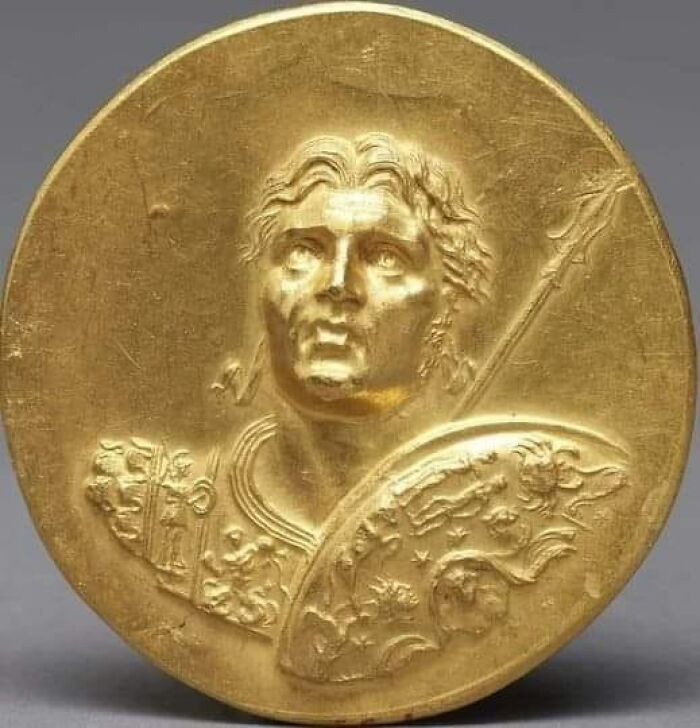
Stunning Gold Medallion With The Portrait Of Alexander The Great
This Medallion was discovered in Egypt as part of a hoard that comprised about twenty similar medallions (now dispersed among various museums), eighteen gold ingots, and six hundred gold coins issued by Roman emperors from Severus Alexander to Constantius I. One of the medallions, now in the Calouste Gulbenkian Museum in Lisbon, bears an inscription that possibly reads "Olympic games of the year 274", a date corresponding to 242-243 CE. It is possible that the medallions were intended as prizes to be given out at that event. Alternatively, they may have been issued by Emperor Caracalla who is potrayed on some of them. Caracalla liked to be compared to the great king and conquerror Alexander of Macedon. Like Alexander, this Roman emperor waged war in the East, and actually died in the course of his campaign against the Parthians. This particular medallion shows Alexander the Great gazing heavenward and bearing a shield decorated with signs of the zodiac. This portrait shows him with his hair pulled back. He wears a decorated cuirass with a figure of Athena on the shoulder strap and, on the chest, a scene from the Gigantomachy (War of the Giants). The back depicts Alexander and Nike, goddess of victory, riding in a chariot, flanked by the deities Roma and Mars.
Image property: The Walter Art Museum, Baltimore Maryland.
Hephaestion probably wouldn't appreciate that.
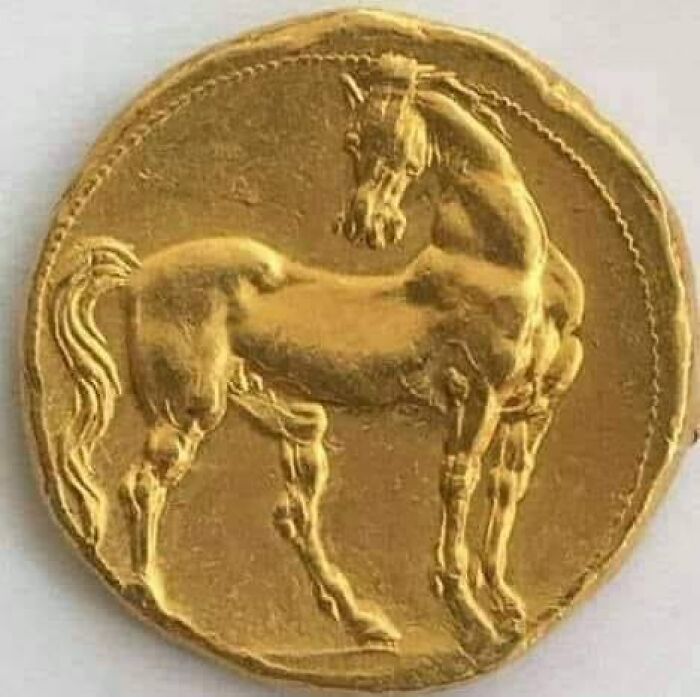
Load More Replies...The other side of this coin features Persephone and dates back to Carthage 260 Bce
*turns her phone around* I don't see the other side of the coin. Should I take my phone out of the case?
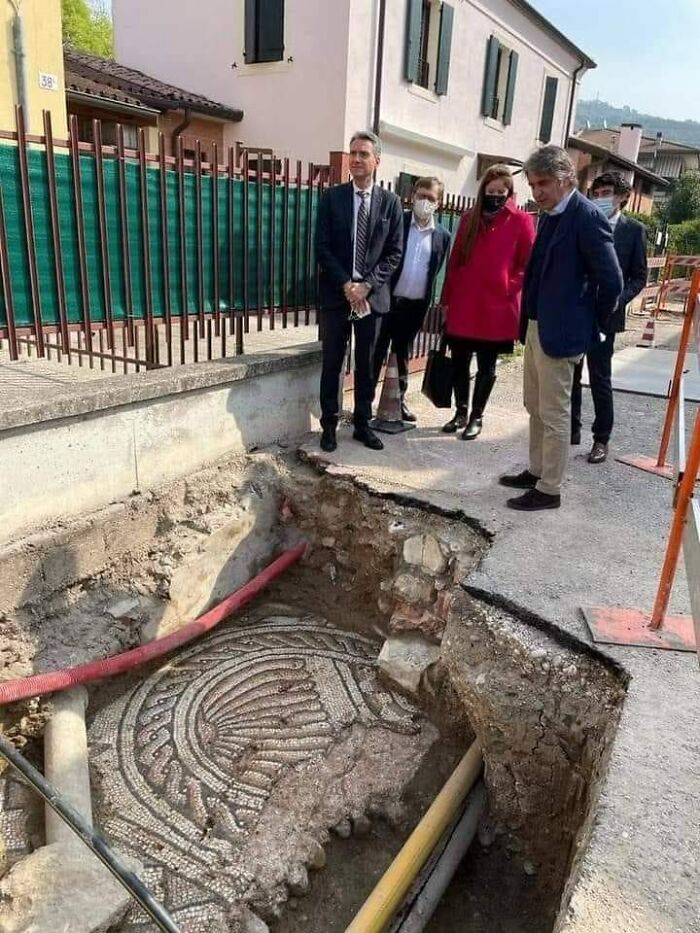
Load More Replies...A Mosaic Floor Of A Villa Dating Back To The 4th Or 5th Century Ad Was Found In Montorio, Verona, Italy
I grew up in a village in France where there used to be settlements dating from gallo-roman era, celt era and even paleolithic era. Problem is, during the 60's, bad greedy men discovered remains of a roman amphitheater where they wanted to build appartements for their workers. They rushed to cover it all in cement and start the construction before anyone could object, and it wasn't illegal at the time either so... It's gone now. :(
Load More Replies...Somebody knew it was there. Those pipes didn't burrow in on their own. I guess from a time when it was less important to us.
Italy is composed of layers of history. So are many other parts of the world.
There appears to be a deep layer of volcanic ash and debris on top of the ancient pavement.
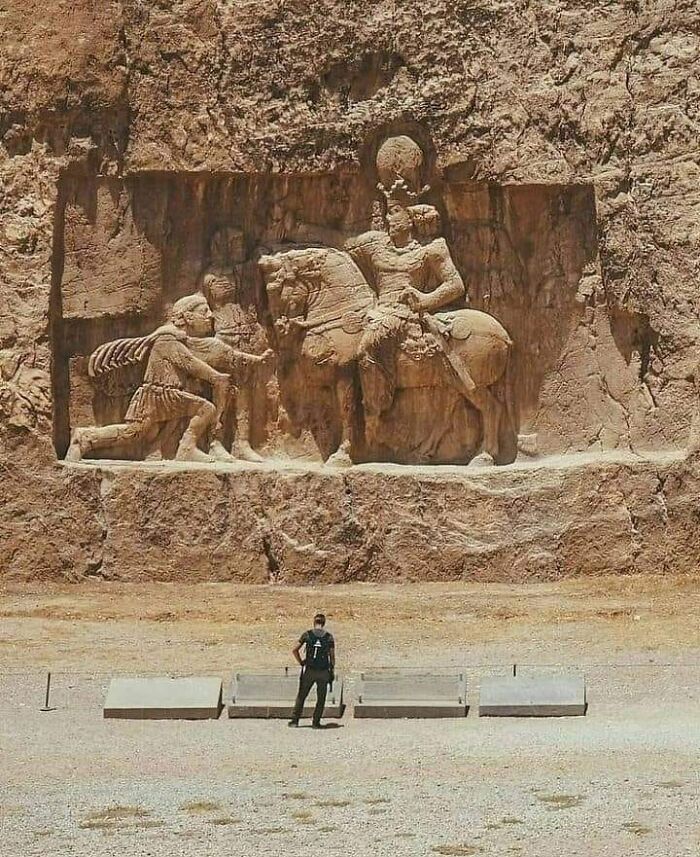
Roman Emperor Philippus The Arab Kneeling In Front Of Persian King Shapur I, Begging For Peace
The standing emperor represents Valerian who was taken captive by the Persian army in 260 AD, The triumph of Shapur I, Naqshe Rostam, Iran.
Didn't realize how big it was until I noticed the person standing in front of it. Just think about the person or person's carving that out.
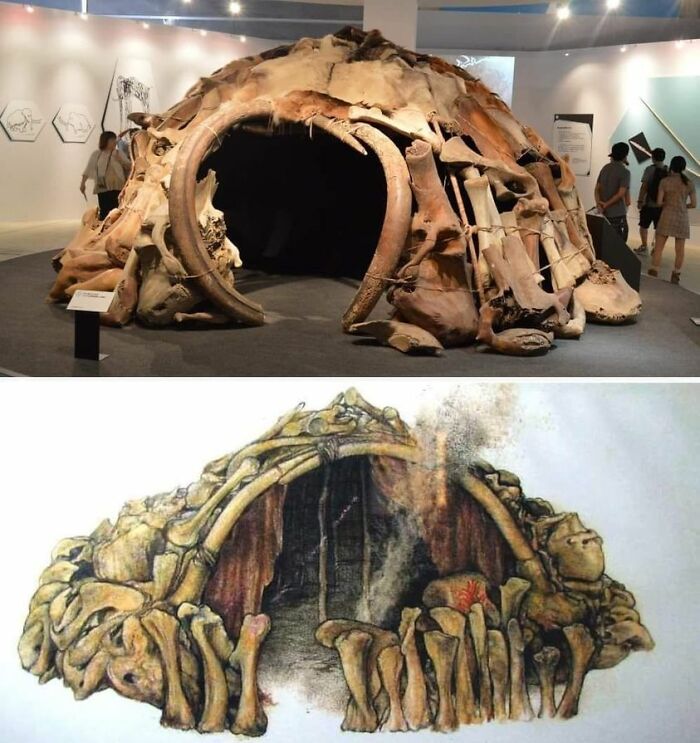
Huts Built From Mammoth Bones Found In Ukraine (Also At Locations In Czech Republic And Southern Poland)
May be the earliest structures built by humans, and thus the earliest examples of architecture.

I wonder if our living today will be as ancient, for future folks, as this to us? Or if this is the way life will be, and our time is just a half forgotten myth?
Today in 2023, in the future this era will be know as ''thum time era'' because the intelligent phone.
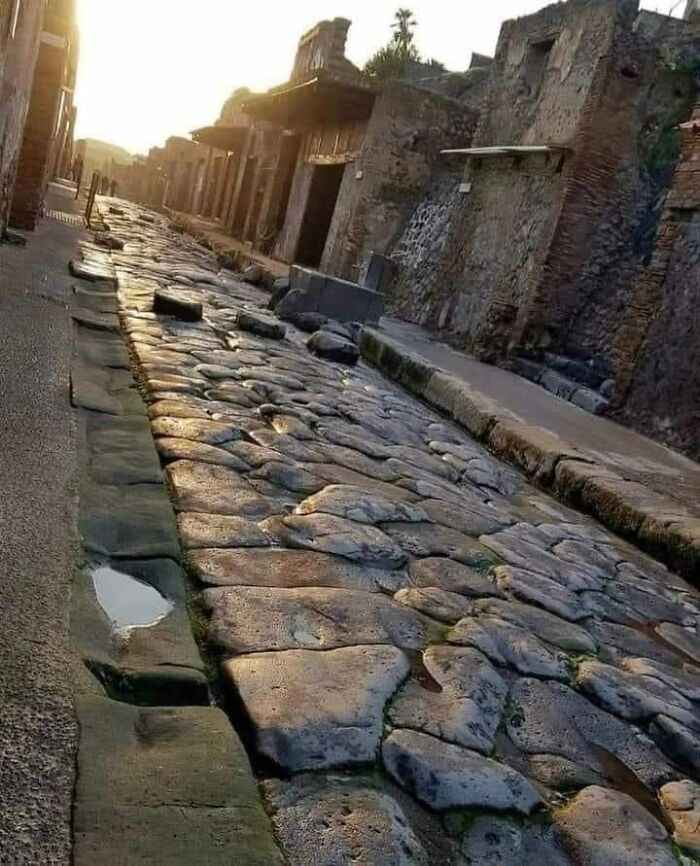
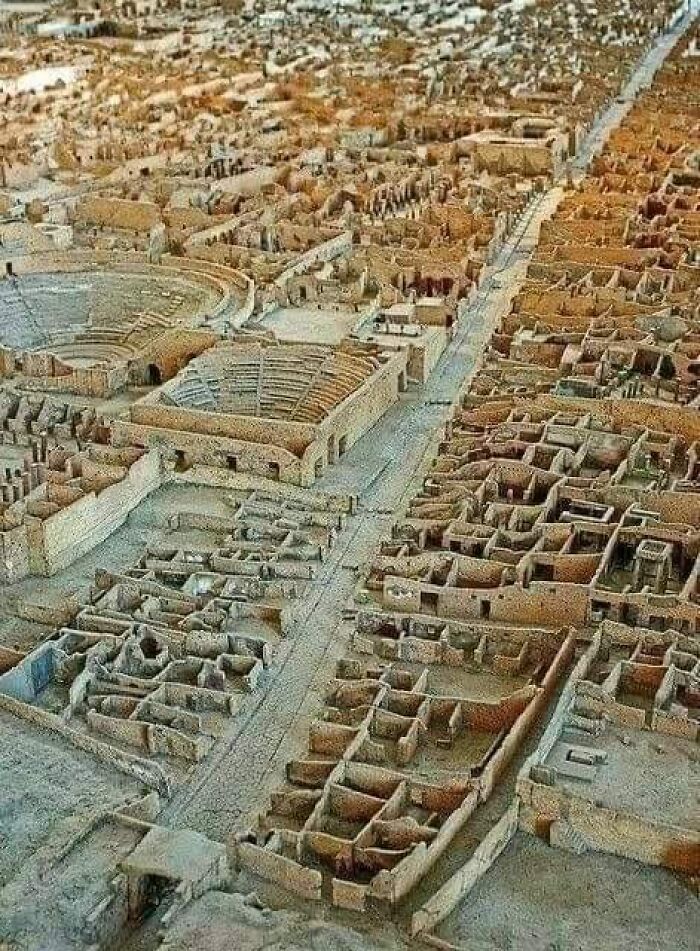
Load More Replies...A 2000 Year Old Street From Pompeii
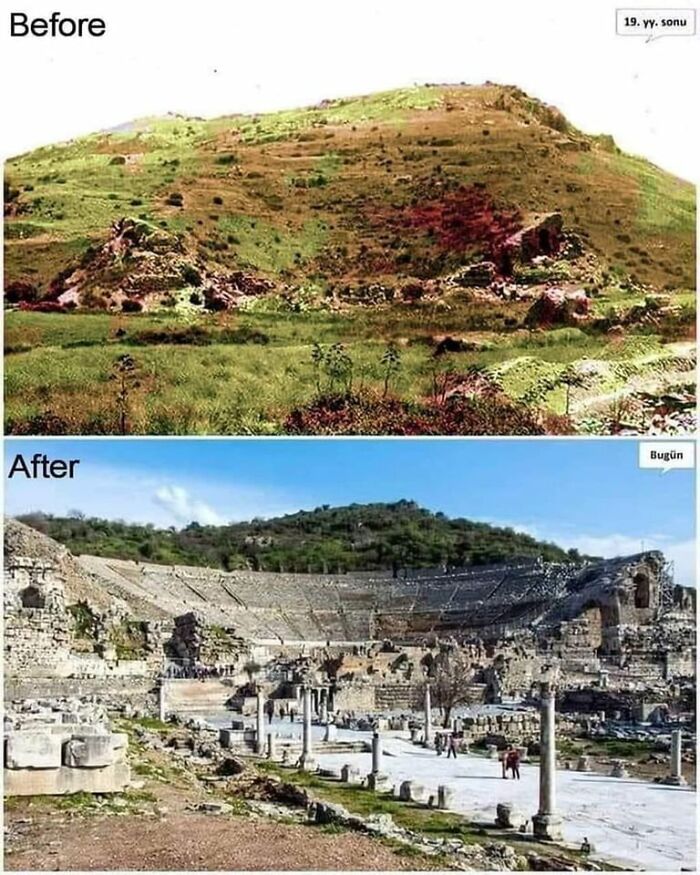
2,300-Year-Old Grand Theatre Of Ephesus, In Turkey, Before And After Excavation
I've always been impressed with archeologists who are able to painstakingly sift through ruins teaspoon by teaspoon and show us what life used to be like.
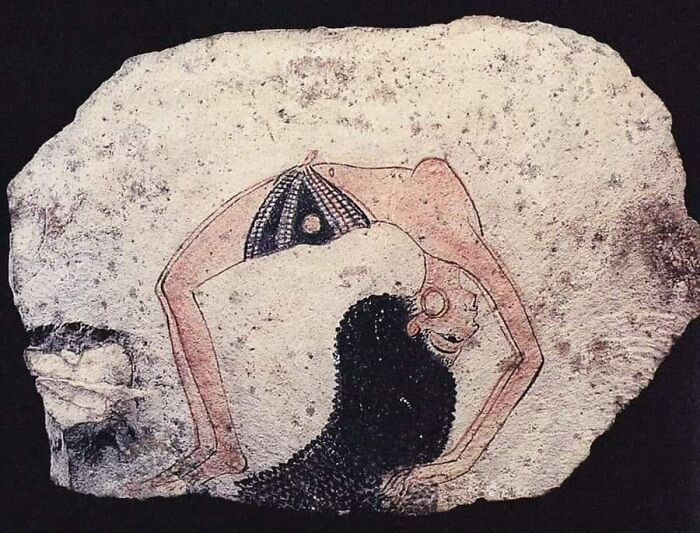
An Ostracon With Topless Dancer With Elaborate Hairstyle And Hoop Earrings In Gymnastic Backbend (Limestone), From Deir El-Medina; New Kingdom, 19th Dynasty, 1200 Bc. Egyptian Museum, Turin
She's clearly in the middle of a back flip as the direction of her boobs and earings indicate. If she was holding the pose, they would point downward. I WILL NOT TAKE ANY FURTHER QUESTIONS. THANK YOU.
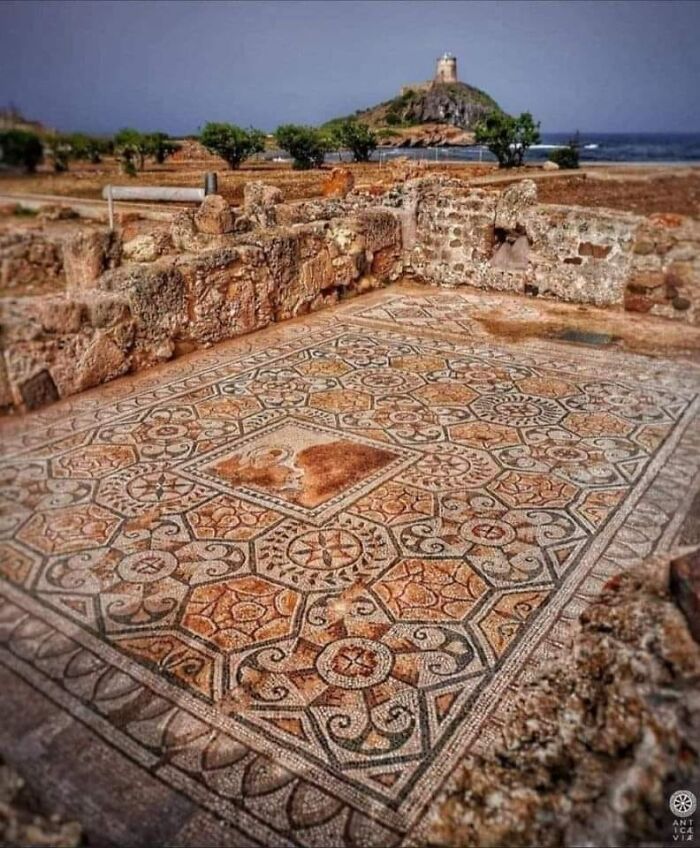
Mosaic In Sardinia, Italy
Usually, they're not exposed at first. Most of these have been excavated.
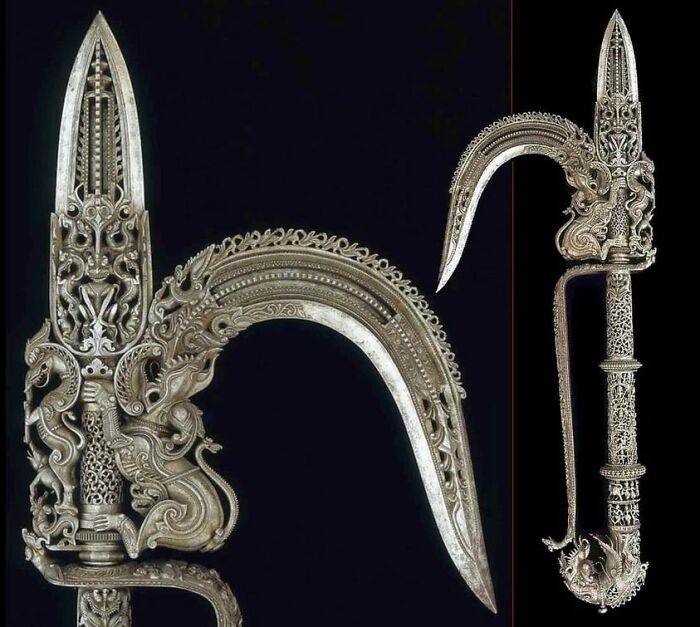
Load More Replies...Fantastic Skill!!! Indian Ankus (Elephant Goad), Nayaka Period, Probably Early 17th Century, Length 70.14 Cm (27 5/8 In.). Museum Of Fine Arts Boston
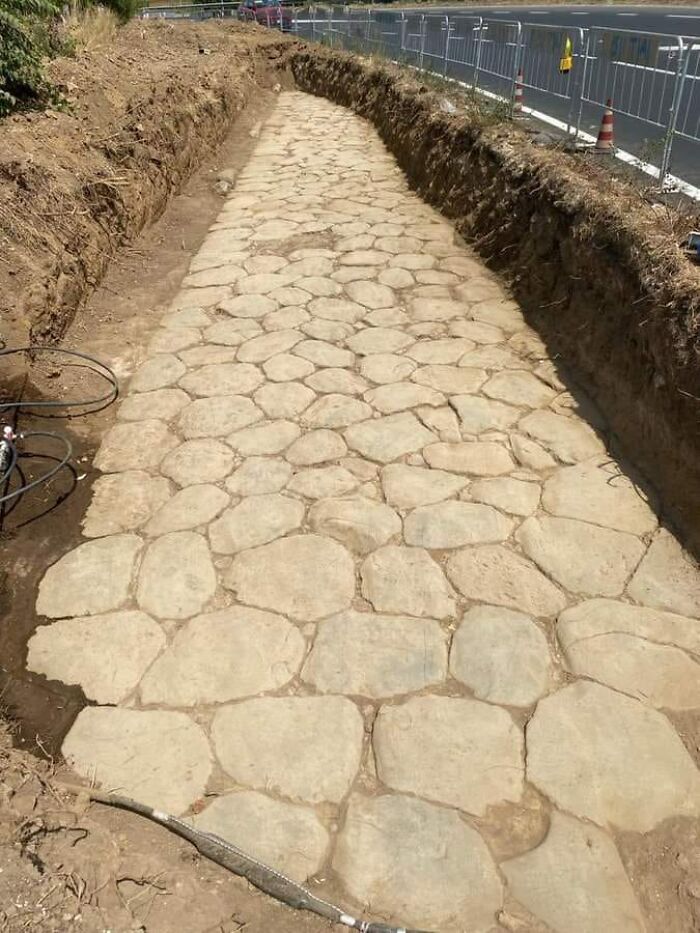
A Perfectly Preserved Section Of The Via Flaminia Roman Road, Discovered At A Depth Of 0.90m During Planning Of A New Water Pipeline In Riano
The Flaminian Way struck north from Rome, over the Apennines to the Adriatic coast
Life of Brian reference. "All right, but apart from the sanitation, the medicine, education, wine, public order, irrigation, roads, a fresh water system, and public health, what have the Romans ever done for us?"
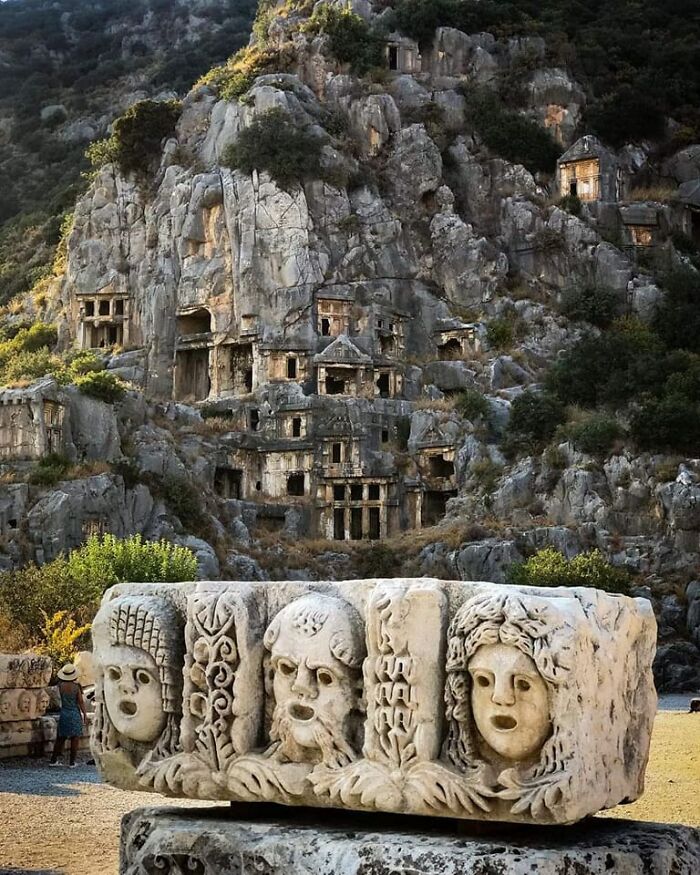
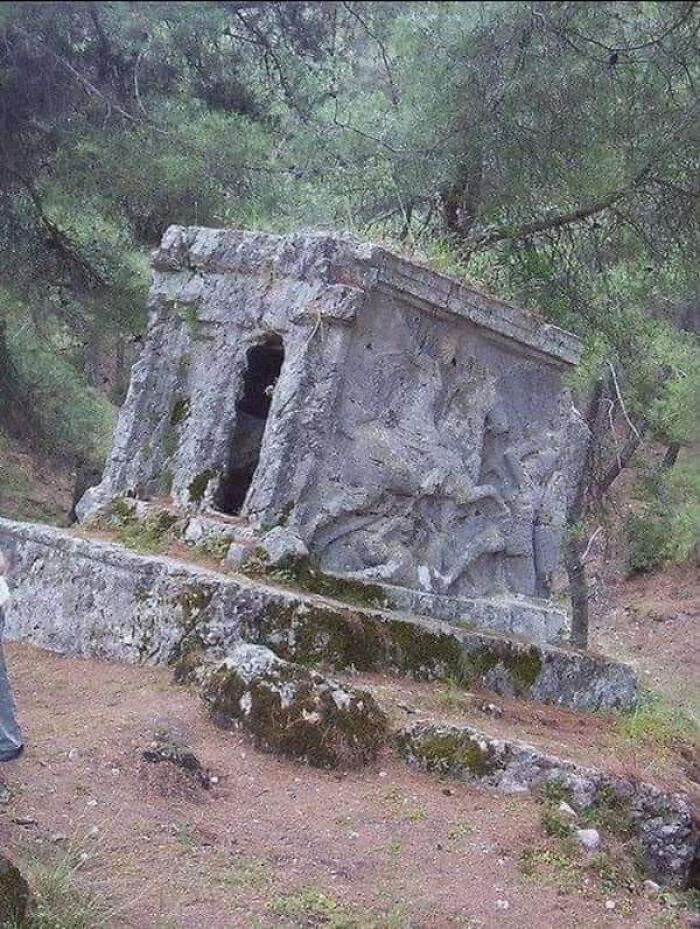
Load More Replies...Myra Ancient City – Ruins And Rock Tombs
I love it when they used to carve into the actual rocks to make structures like these without the benefit of machinery and such. There's some REAL skill involved in this.
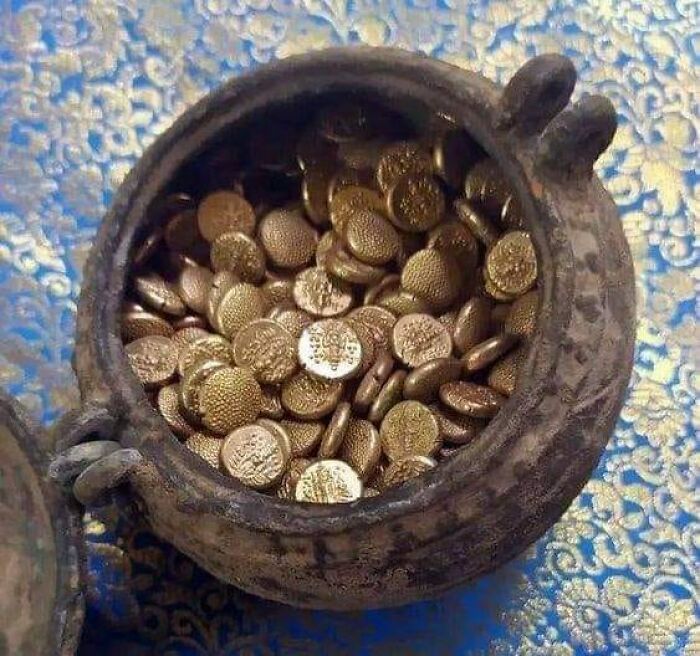
505 Gold Coins, Weighing 1.716 Kg, Were Found In A Vessel During Digging At The Jambukeswarar Temple In Thiruvanaikaval, Tiruchirappalli District Recently
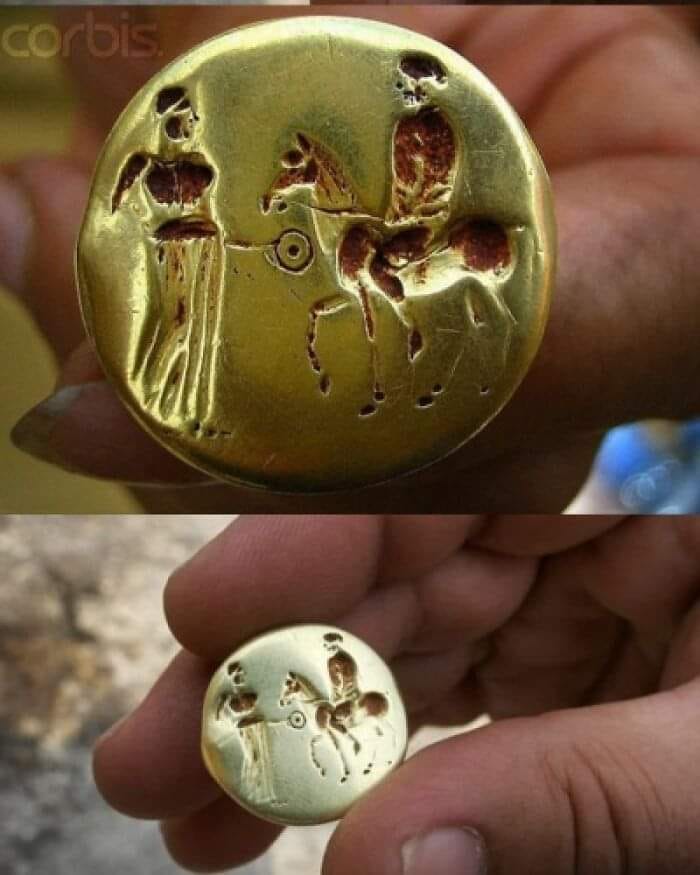
A Golden Ring Dating From The 4th Century Bce, Found In A Thracian King's Tomb Near Zlatinitsa - Malomirovo In Yambol Region, Bulgaria
The discovery of the golden ring in the Thracian king's tomb underscores the importance of jewelry in Thracian society, and it serves as a testament to the skill of Thracian artisans. It also provides valuable insights into the social hierarchy and status symbols of the ancient Thracians, as the ring was likely worn by a member of the ruling class.
Ruins Of Pompeii, Naples, Italy
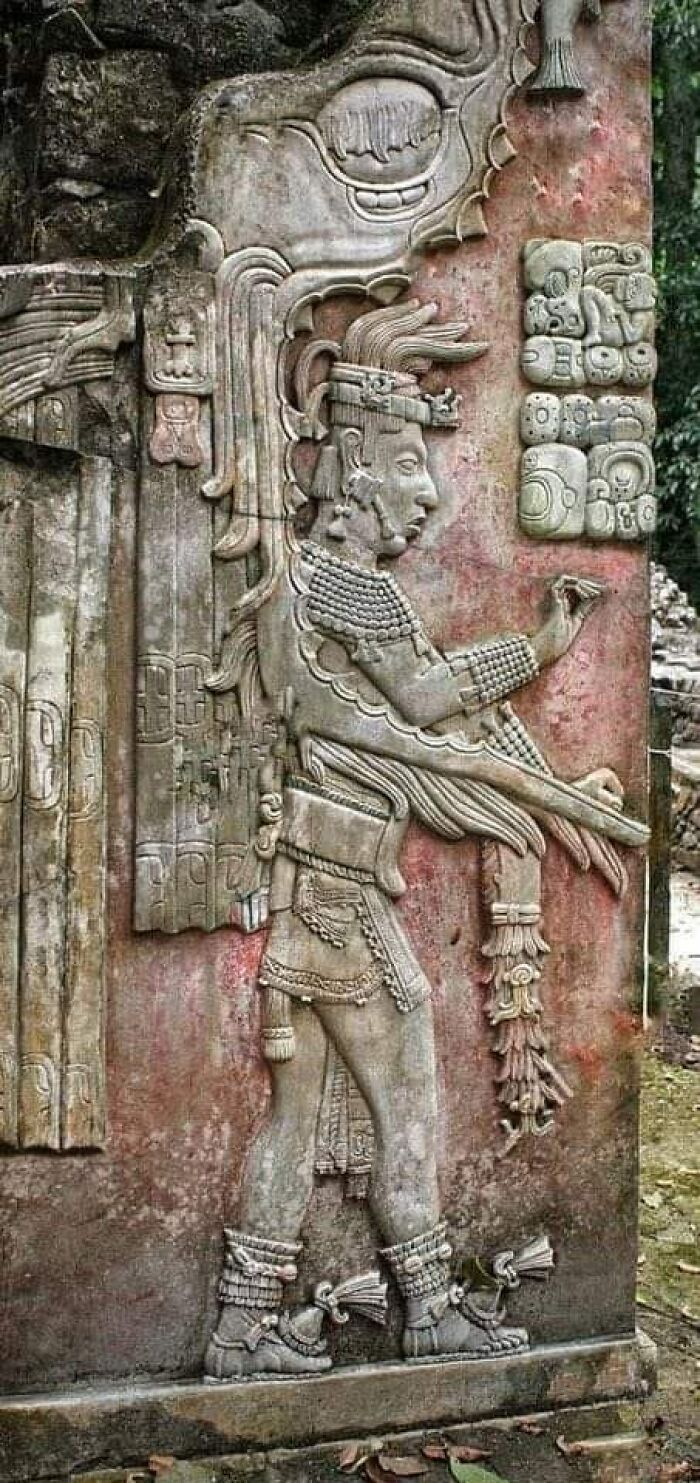
King Maya. Palenque. México
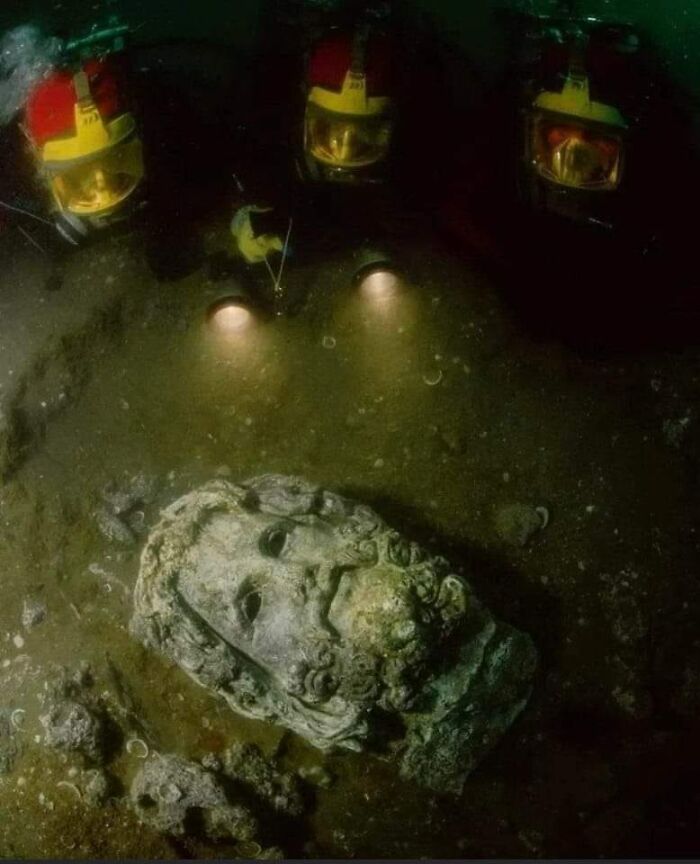
Divers Shining Lights On A Head Of Serapis, Found In The Sunken Egyptian Coastal Town Of Canopus. The Full Statue Was Once Over 4 Metres Tall And Dates To Circa 200 B.c
Google the head of Serapis from the Archaeological Museum of Thessaloniki, Greece. Canning resemblance!
Load More Replies...With oceans rising it's weird to think about that future generations will find things like that from us.
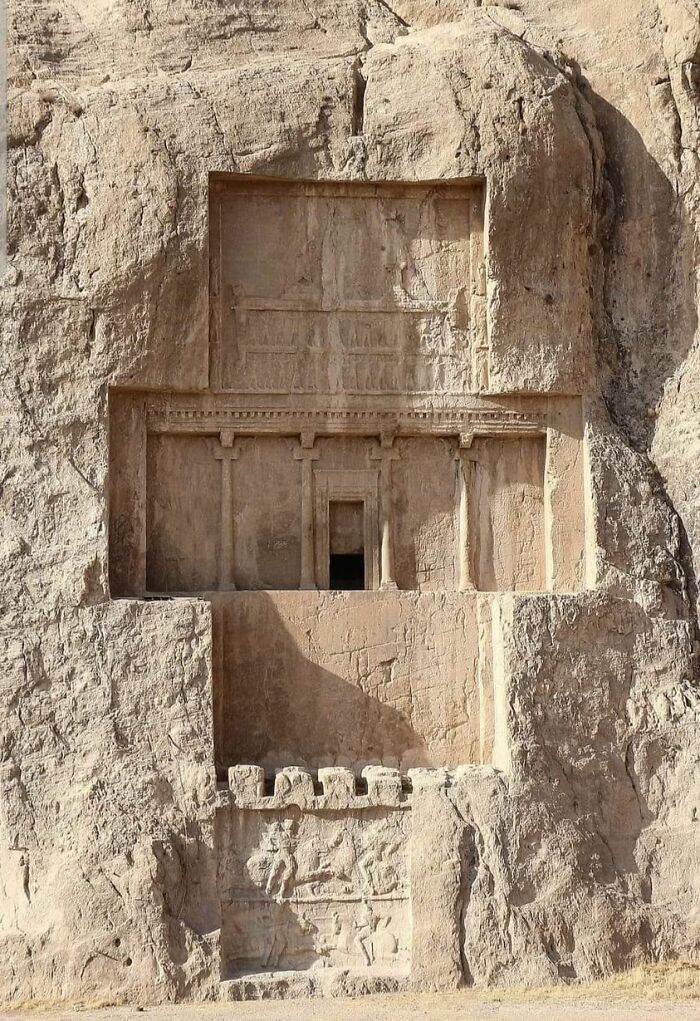
Tomb Of The Persian King Darius L (The Great) At Naqsh-E Rustam, In Iran
Reigning from c. 522 to c. 486 BC, he was one of the greatest Persian rulers. He ruled the Persian Empire when it was at its peak.
On the facade of the tomb there is an inscription that reads:
"A great god is Ahuramazda, who created this earth, who created yonder sky, who created man, who created happiness for man, who made Darius king, one king of many, one lord of many.
I am Darius the great king, king of kings, king of countries containing all kinds of men, king in this great earth far and wide, son of Hystaspes, an Achaemenid, a Persian, son of a Persian, an Aryan, having Aryan lineage.
King Darius says: By the favor of Ahuramazda these are the countries which I seized outside of Persia; I ruled over them; they bore tribute to me; they did what was said to them by me; they held my law firmly; Media, Elam, Parthia, Aria, Bactria, Sogdia, Chorasmia, Drangiana, Arachosia, Sattagydia, Gandara [Gadâra], India [Hiduš], the haoma-drinking Scythians, the Scythians with pointed caps, Babylonia, Assyria, Arabia, Egypt, Armenia, Cappadocia, Lydia, the Greeks (Yauna), the Scythians across the sea (Sakâ), Thrace, the petasos-wearing Greeks [Yaunâ], the Libyans, the Nubians, the men of Maka and the Carians.
King Darius says: Ahuramazda, when he saw this earth in commotion, thereafter bestowed it upon me, made me king; I am king. By the favor of Ahuramazda I put it down in its place; what I said to them, that they did, as was my desire.
If now you shall think that "How many are the countries which King Darius held?" look at the sculptures [of those] who bear the throne, then shall you know, then shall it become known to you: the spear of a Persian man has gone forth far; then shall it become known to you: a Persian man has delivered battle far indeed from Persia.
Darius the King says: This which has been done, all that by the will of Ahuramazda I did. Ahuramazda bore me aid, until I did the work. May Ahuramazda protect me from harm, and my royal house, and this land: this I pray of Ahuramazda, this may Ahuramazda give to me!
O man, that which is the command of Ahuramazda, let this not seem repugnant to you; do not leave the right path; do not rise in rebellion!" — DNa inscription of Darius I.
. . .
The tomb is one of four tombs at Naqsh-e Rustam. The others are believed to be that of Persian rulers Xerses l, Artaxerses and Darius ll. Unfortunately, the tombs were robbed in antiquity.
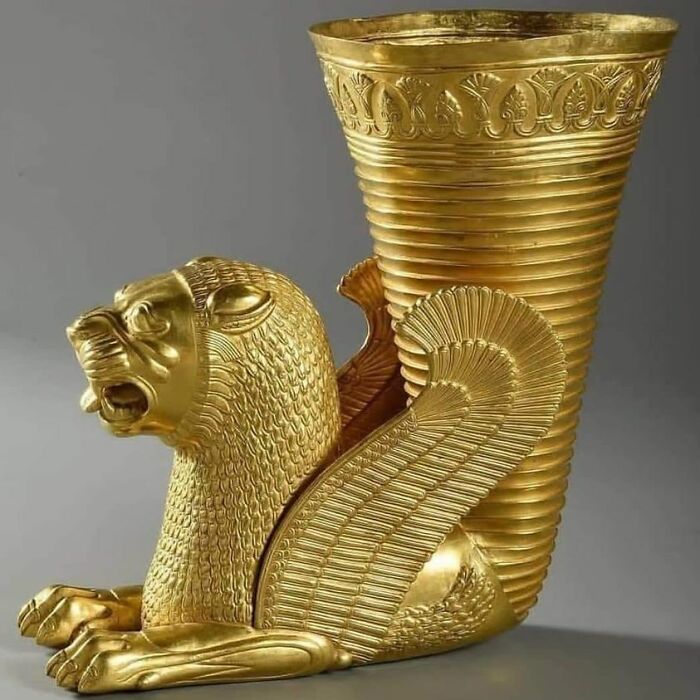
A Priceless 2500-Year-Old Gold Rhyton From Ancient #persia. It’s 2 Kilograms. National Museum Of Ancient Persia
How thin would they have had to beat the gold so that someone could pick it up to pour from it?

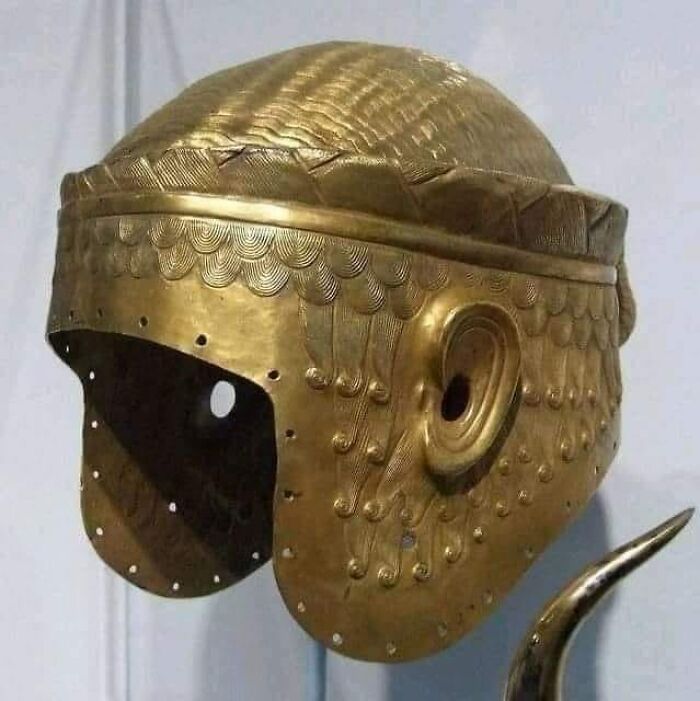
A Golden War Helmet Belonging To The Sumerian King Miscalamduk, Dating Back To 2600 Bc, Was Found In The Royal Tomb In The City Of Ur In Southern Iraq
This must have been ceremonial, as gold is very soft. Would be useless in actual battle.
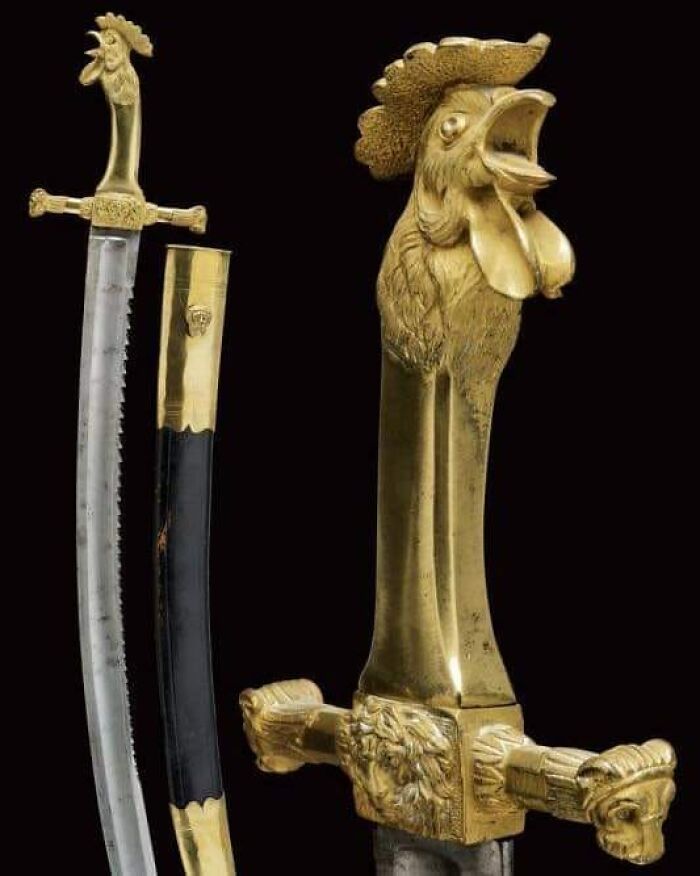
French Sapper Officer's Sword, Circa 1800
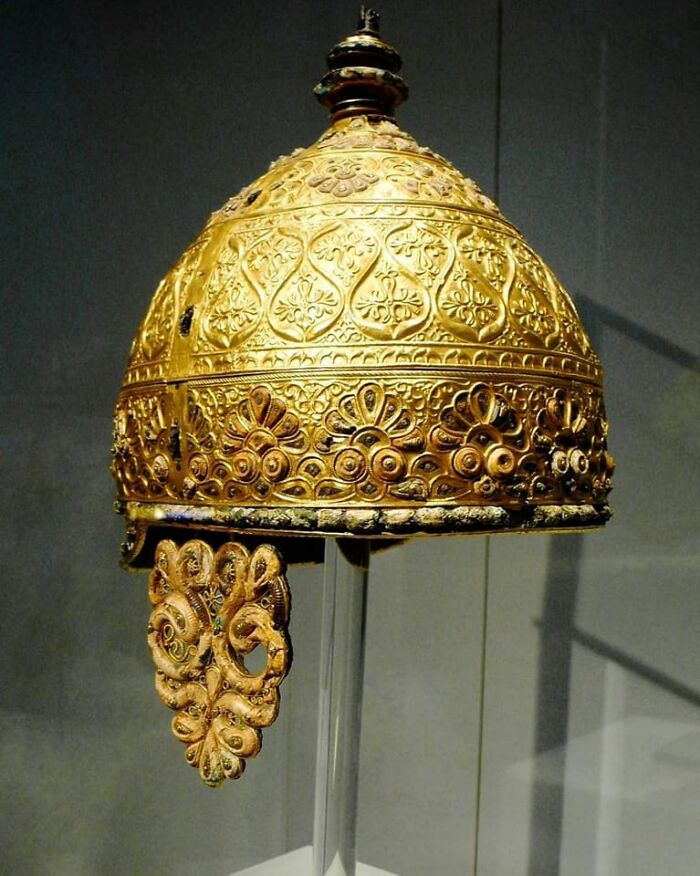
The Casque D'agris, A.k.a. Agris Helmet; A Ceremonial Celtic Helmet From Circa 350 Bc Found During 1981 In A Cave Near Agris, France
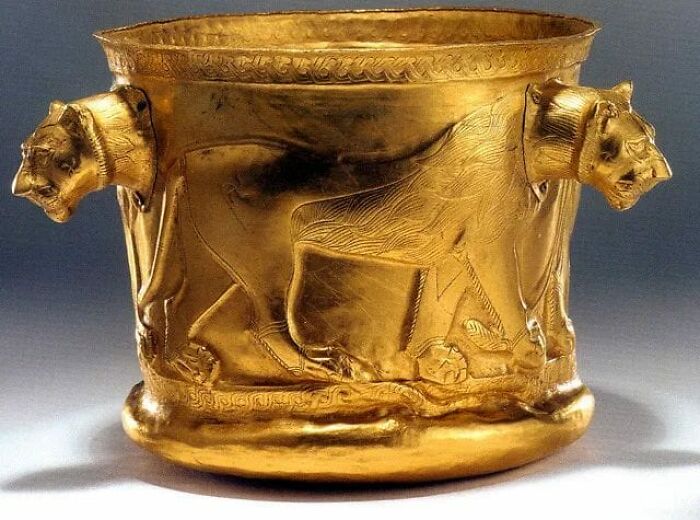
The Hyrcanian Golden Cup. Dated First Half Of First Millennium. Excavated At Kalardasht In Mazandaran, Iran. Collection: National Museum Of Iran
I m seeing a patron here. I think you like arqueology right? That's nice :)
Load More Replies...Tomb Of Hector
Hold on. Hector was a real person? I thought he was fictional. According to Facebook this is the "so called" tomb of Hector. IIRC, Hector appears in Homer's Iliad. Which is not much more reliable than the Bible.
To be fair, a lot of these stories may have some historical truth to them. Granted, they're not as fantastic as the stories themselves, but could offer some insights as to what happened prior to the historical age. In example, the flood myth in the bible could have been a retelling of what the proto-Sumerians experienced at the end of the ice age when the glaciers melted and the sea levels rose. There's indications (very few, so take this with a grain of salt) that prior to being city builders, they were living in small coastal settlements of hunter gathers. When the sea rose, they had to relocate, running into people who inhabited the land interior, mixed in with them and this creating early Sumerian culture. As for the tomb, looks like classical Greek, so it was built about a millenia after the Trojan war.
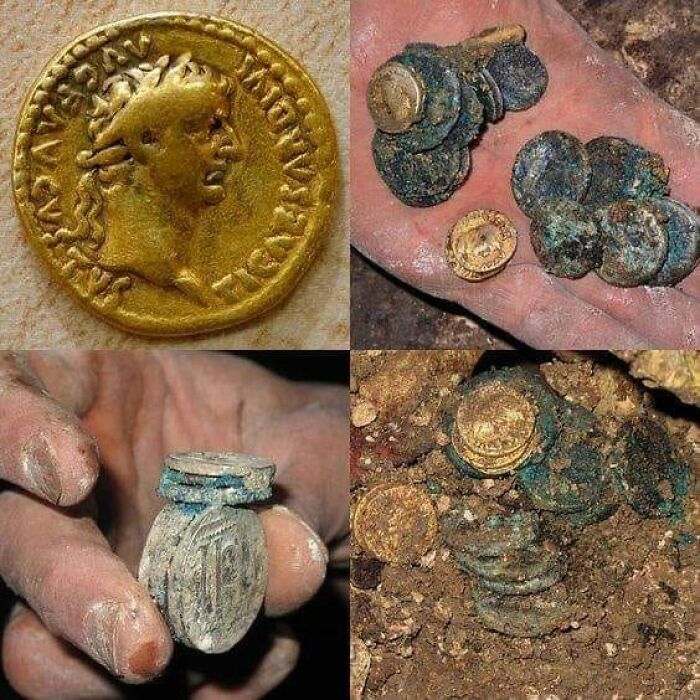
Load More Replies...Archaeological Discovery In Israel On August 2, 2009, A Researcher In The Caves Found 120 Roman Gold, Silver And Bronze Coins Dating From Ad 132-35
Celebrating The Remarkable Discovery Of The “Golden Treasure”: 18.5kg Of Roman Gold And 2,500 Glittering Pieces
Thank you! I was beginning to think it was just me who thought this.
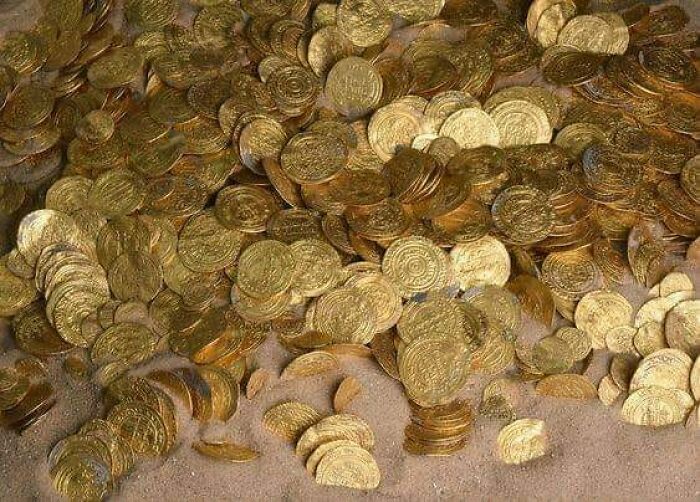
Load More Replies...A Hoard Of Nearly 2,000 Gold Coins That Were Minted By Rulers Of The Fatimid Kingdom A Millennium Ago Were Unearthed Off The Coast Of Israel
The Trier Gold Hoard Is A Hoard Of 2516 Gold Coins With A Weight Of 18.5 Kg, Found In Trier, Germany, In September 1993 During Construction Works, Nearly 1800 Years After It Was Hidden
It is described as the largest preserved Roman gold hoard worldwide.
Greater inspection revealed that it was not simply someone's personal fortune but most likely an official treasury. The treasury had been carefully administered and had grown over time. The Hoard equated to the annual salary of around 130 Roman soldiers.
The aurei (gold coins) feature a total of 27 emperors, empresses and members of the imperial family, and some are still considered unique to this day. The gold coins were buried in a cellar during a civil war in 196 AD.
Is this the same stash that was described in another one of these entries?

This was so freaking cool. Can we please get more stuff like this BP
The amount of talent and skill is beyond me. I can't even imagine being capable of creating such beauty.

And I'm just looking at my leg wondering how my feet stay the same distance from my knees
Not to forget the Lewis chessmen - another lucky archeological find.
This was so freaking cool. Can we please get more stuff like this BP
The amount of talent and skill is beyond me. I can't even imagine being capable of creating such beauty.
And I'm just looking at my leg wondering how my feet stay the same distance from my knees
Not to forget the Lewis chessmen - another lucky archeological find.