ADVERTISEMENT

Since the early 19th century, artists have depicted colorful – if sometimes fictional – animals (especially dinosaurs) and prehistoric environments, mingling science with unbridled fantasy as more and more fossils got uncovered and studied by the archeologists of that time.

It is pretty clear, though, that by only looking at a cluster of fossils such as bones, not much can be said about the appearance of the said animal that existed a long time ago. For example, the prehistoric reptiles could share similar bone structures thus revealing their true appearance was quite a hard task at the time.

However, nowadays, with the help of computers, artists and archeologists alike can get an idea about what these majestic creatures looked like millions of years ago.

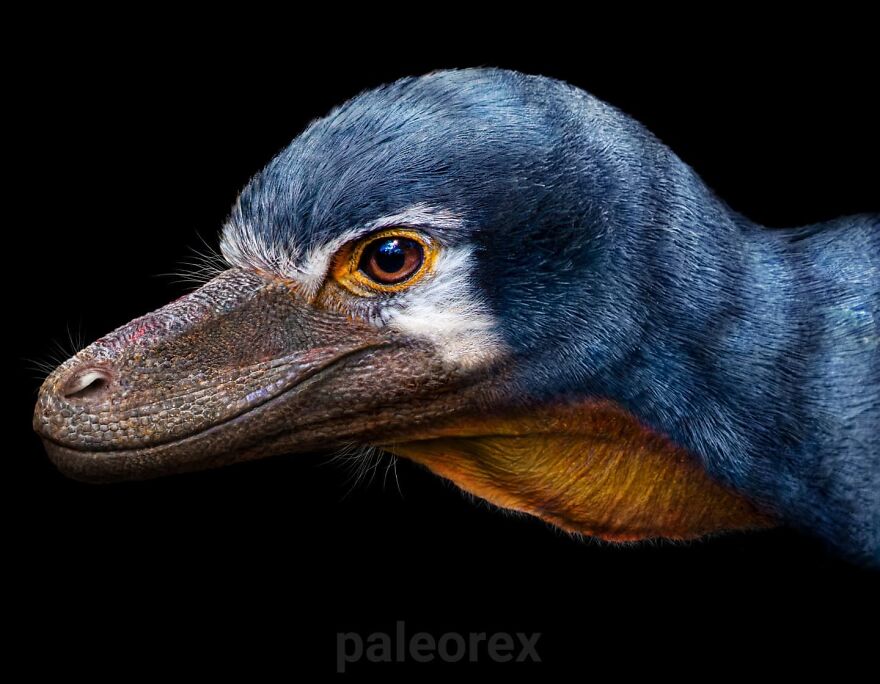
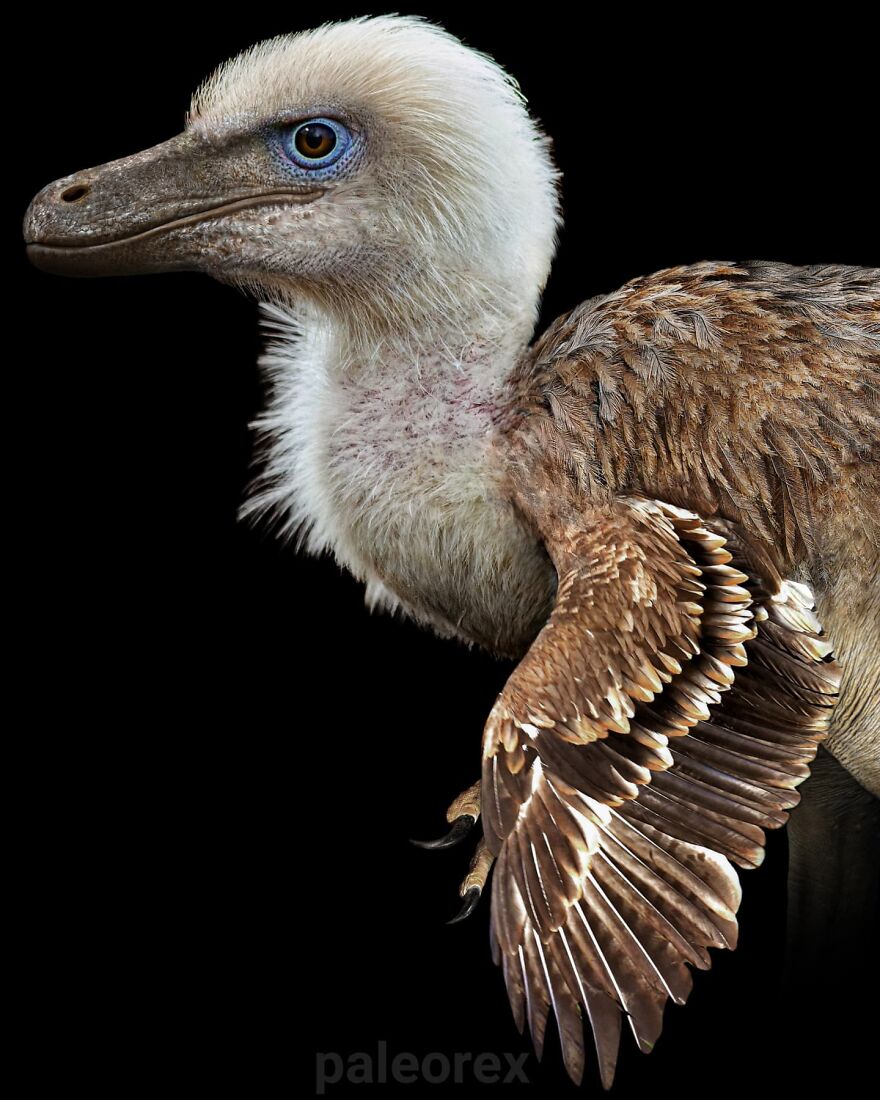
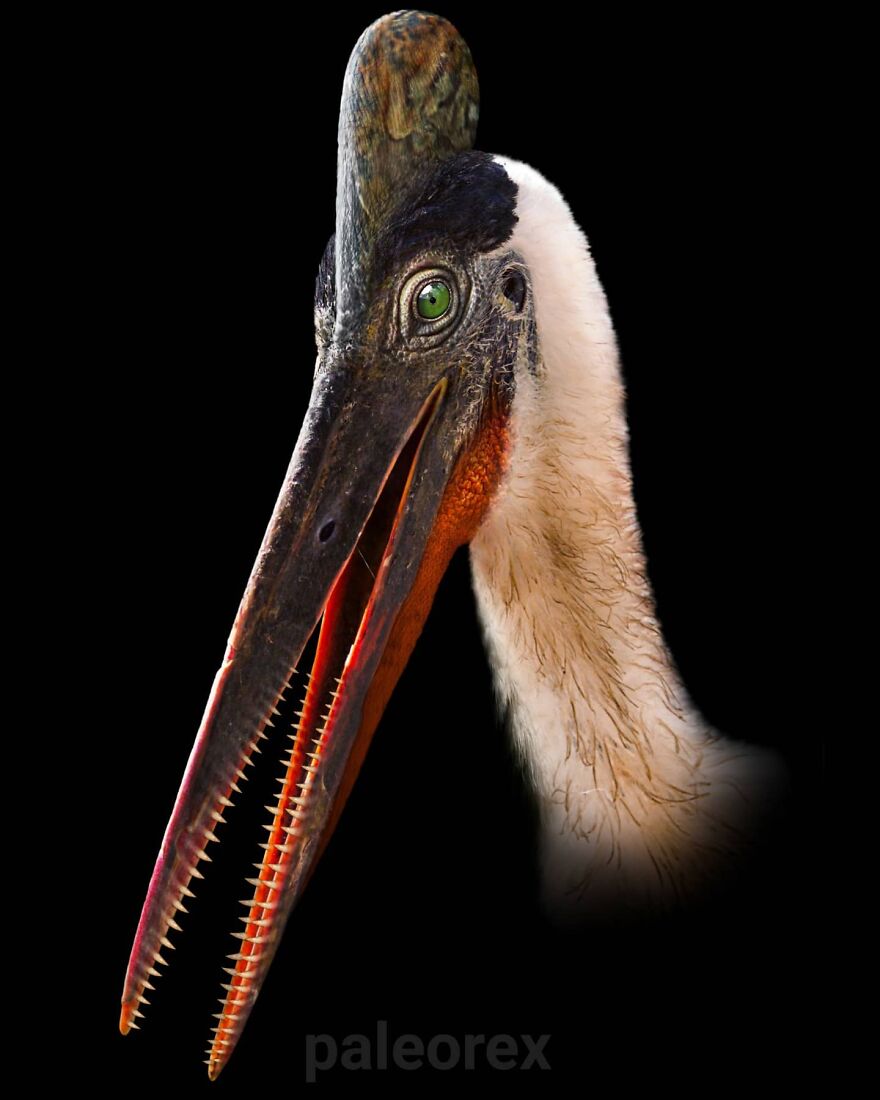
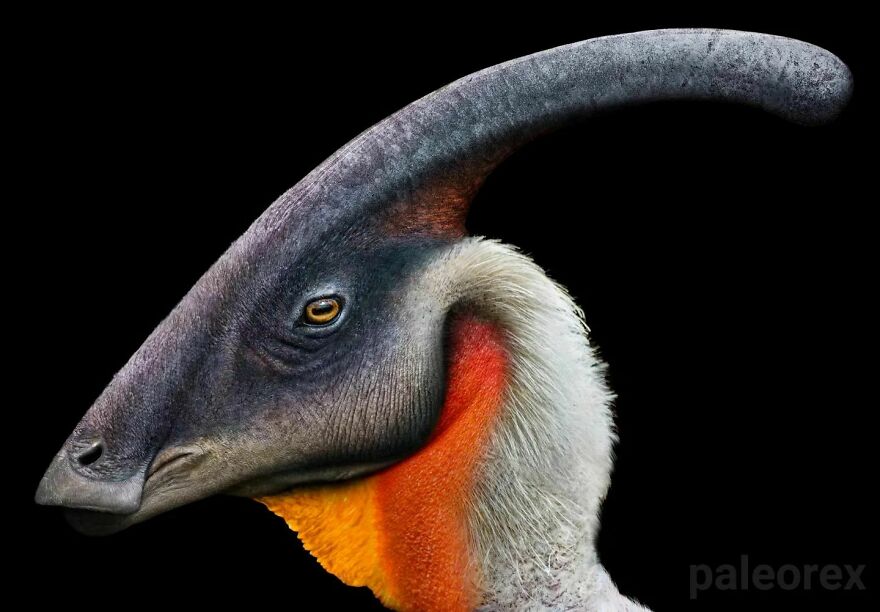
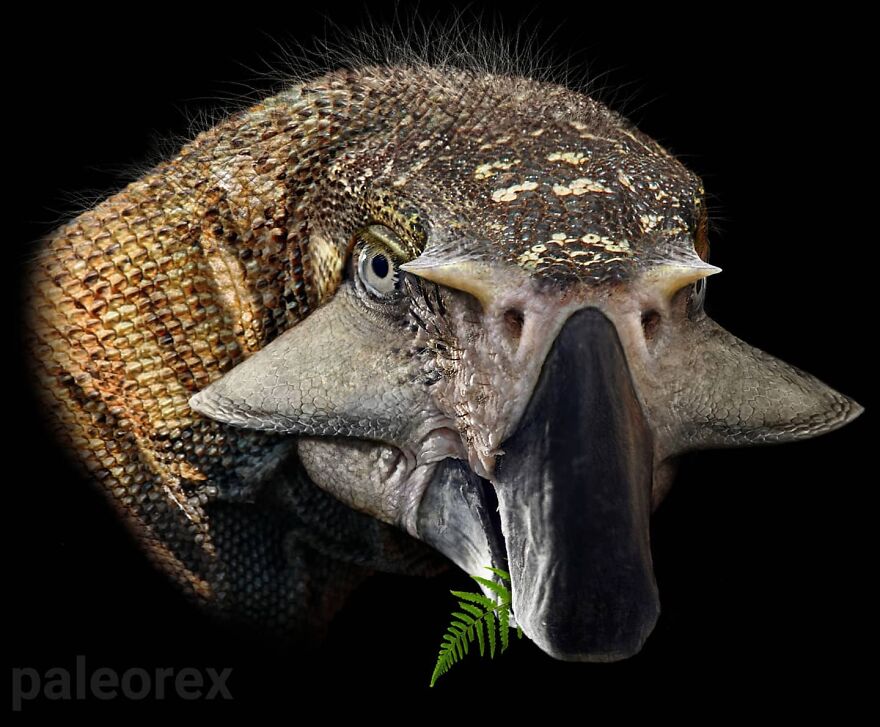
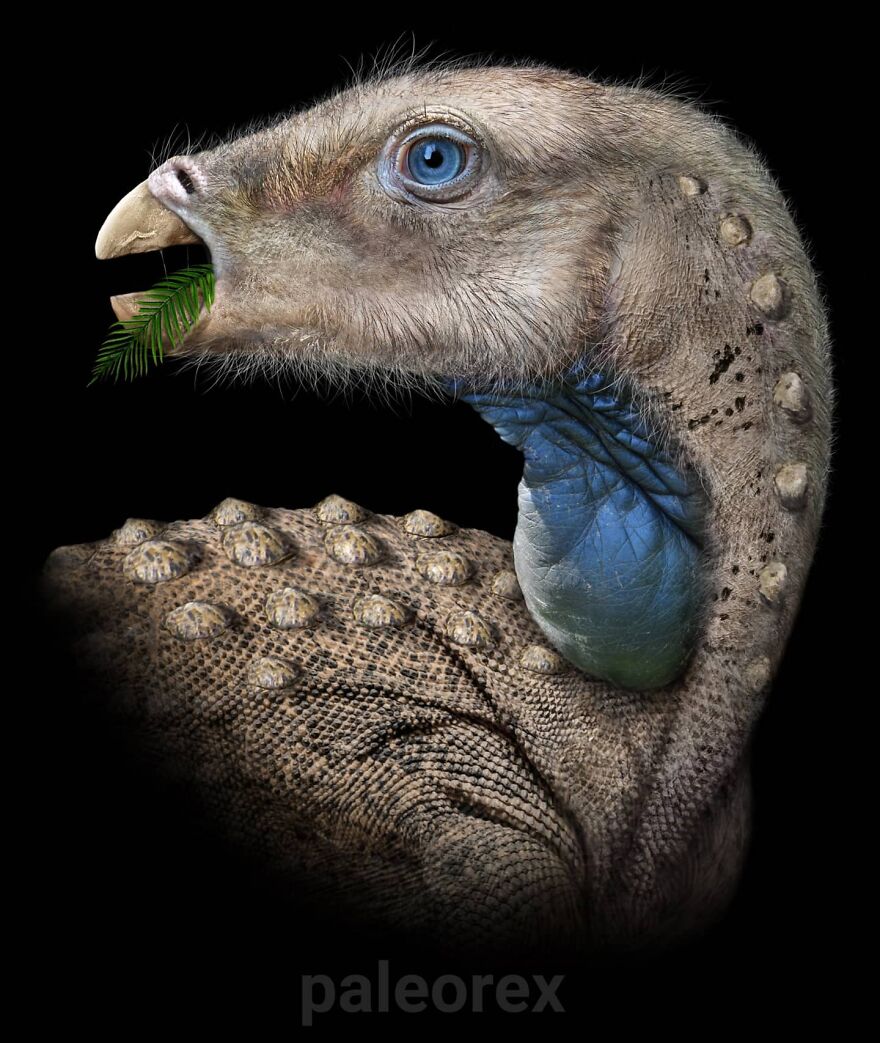
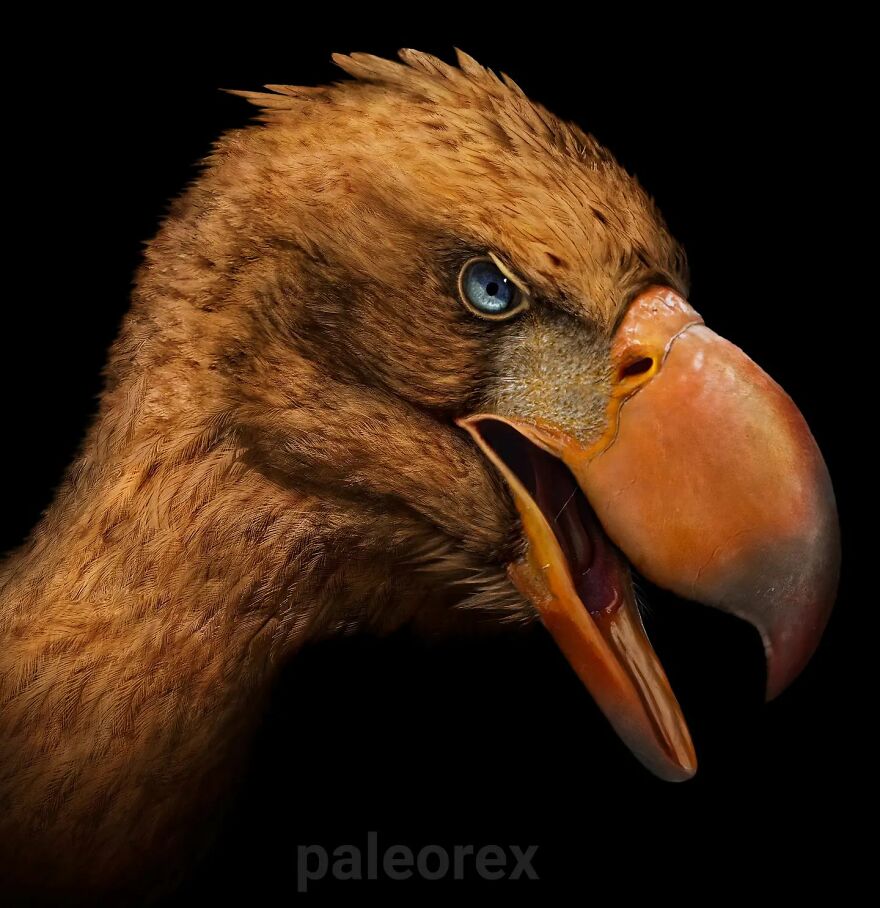
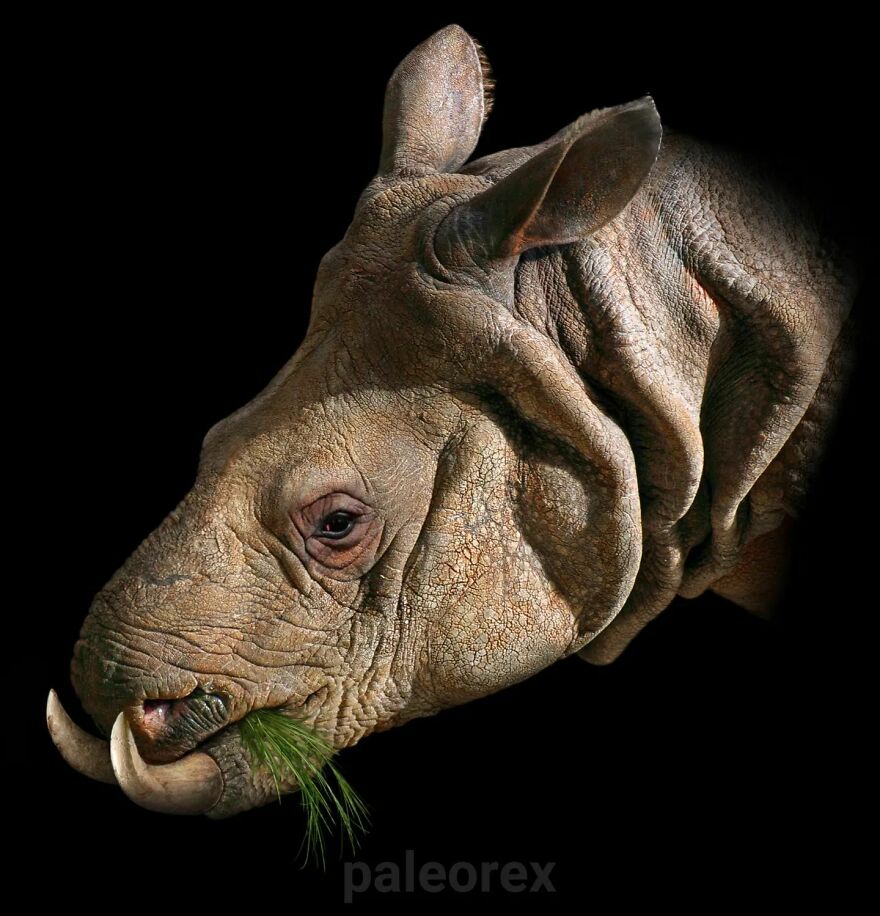
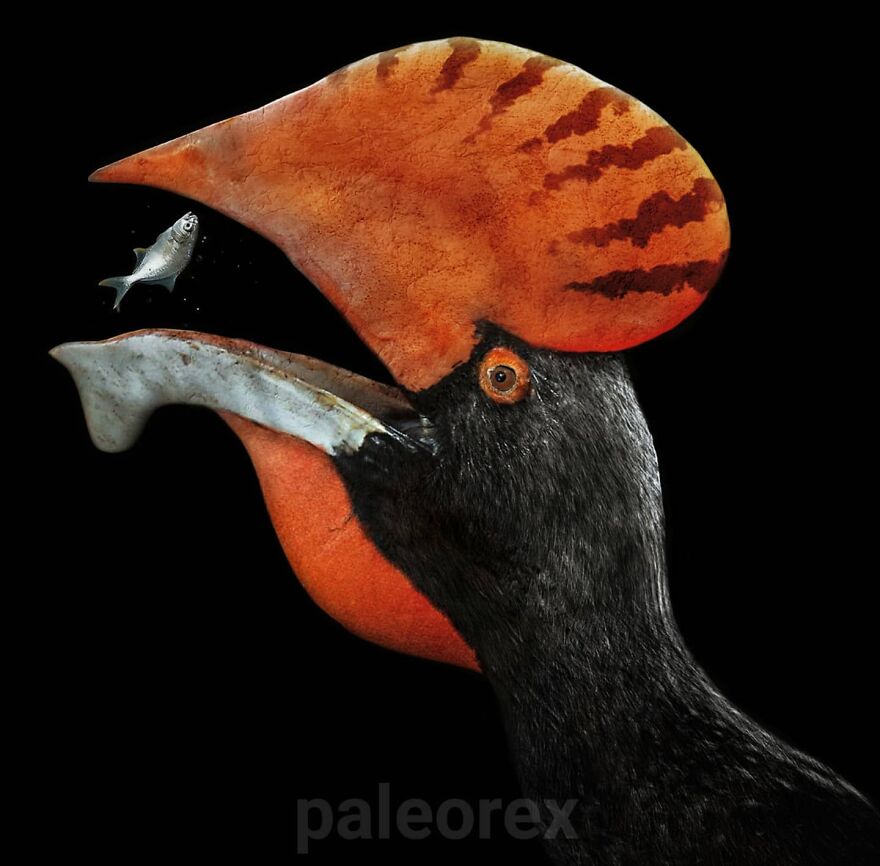
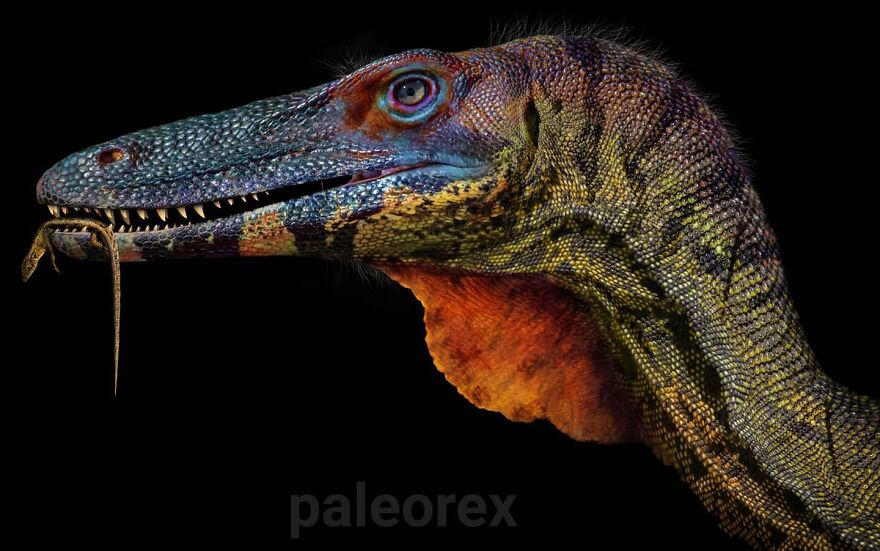
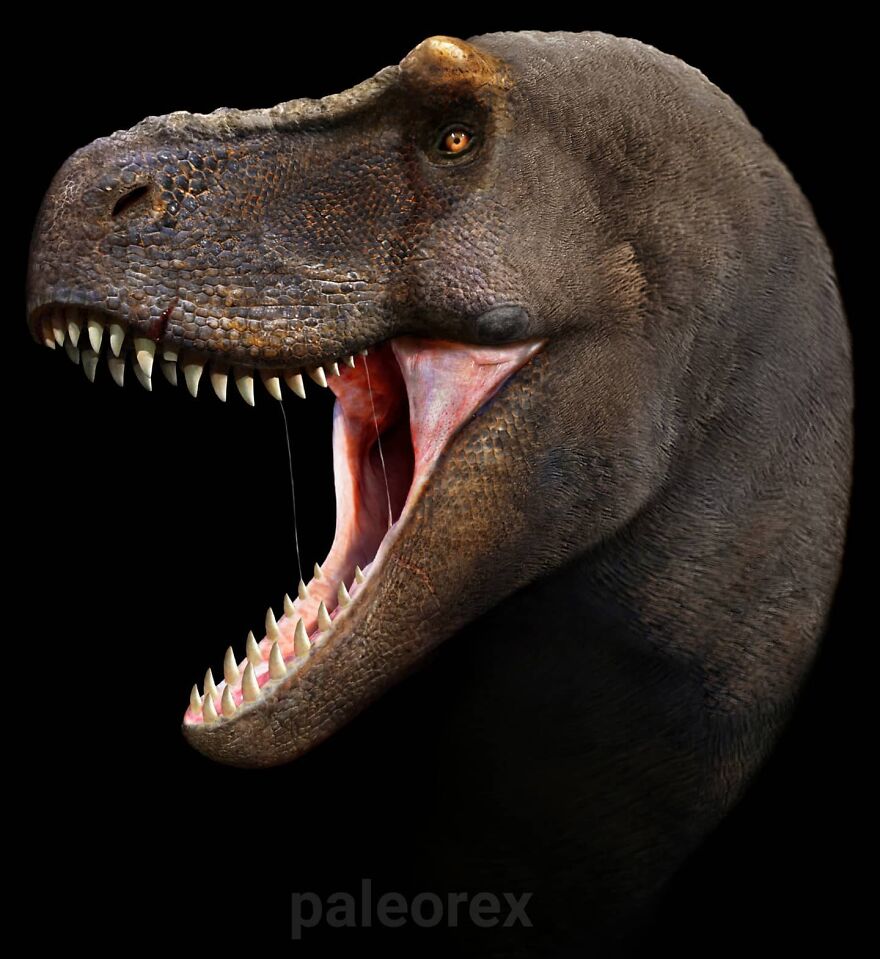
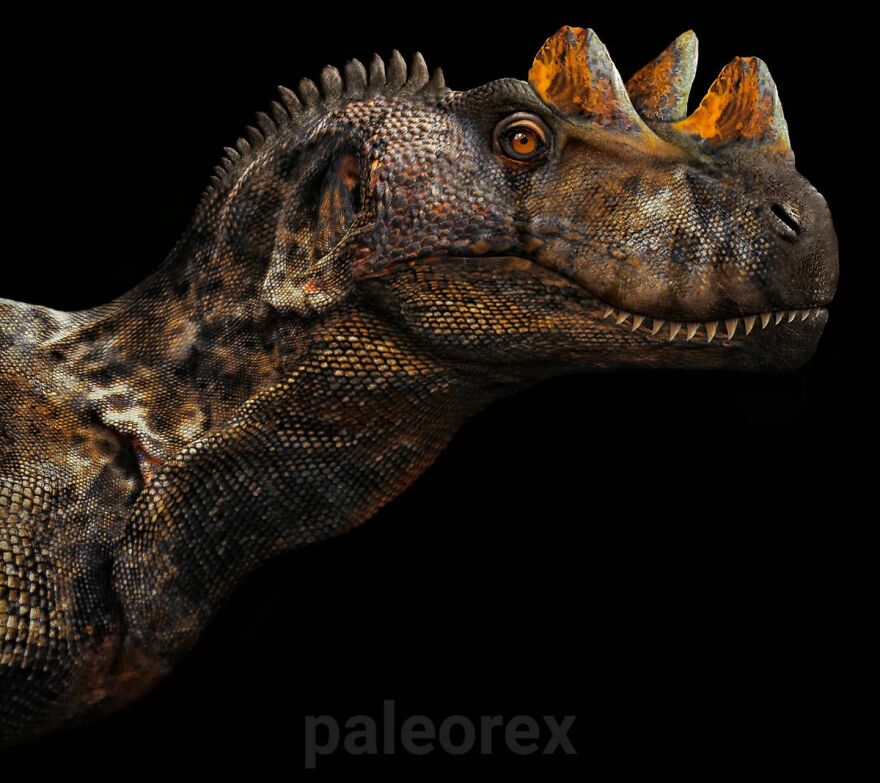
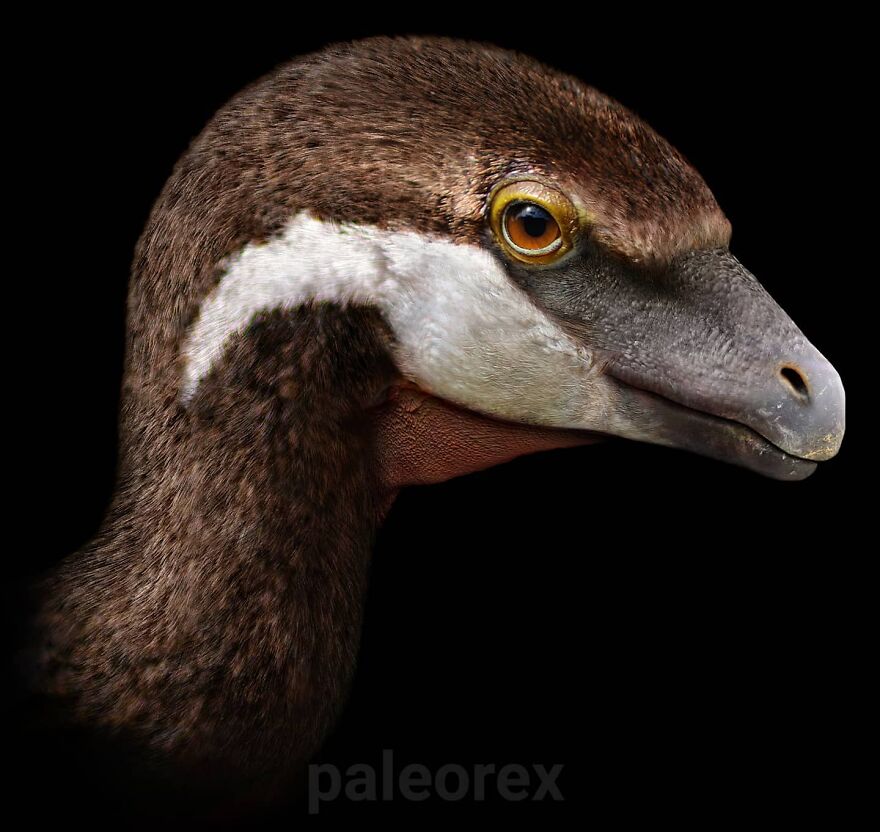
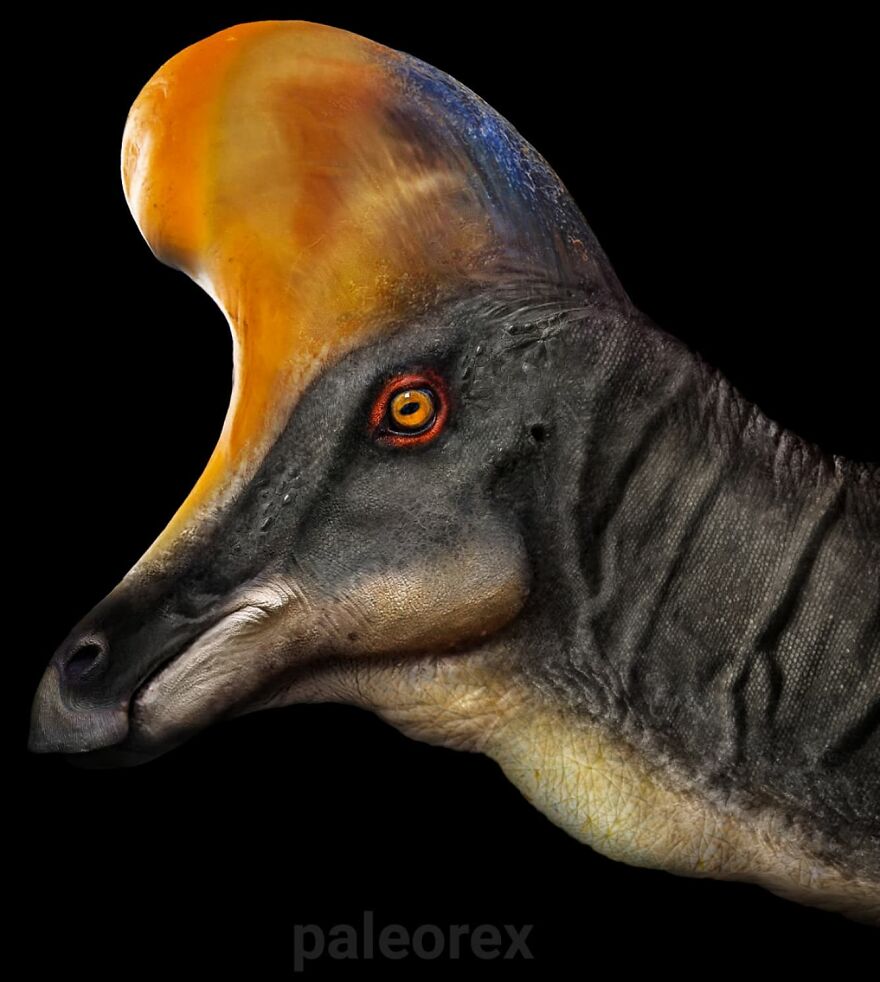
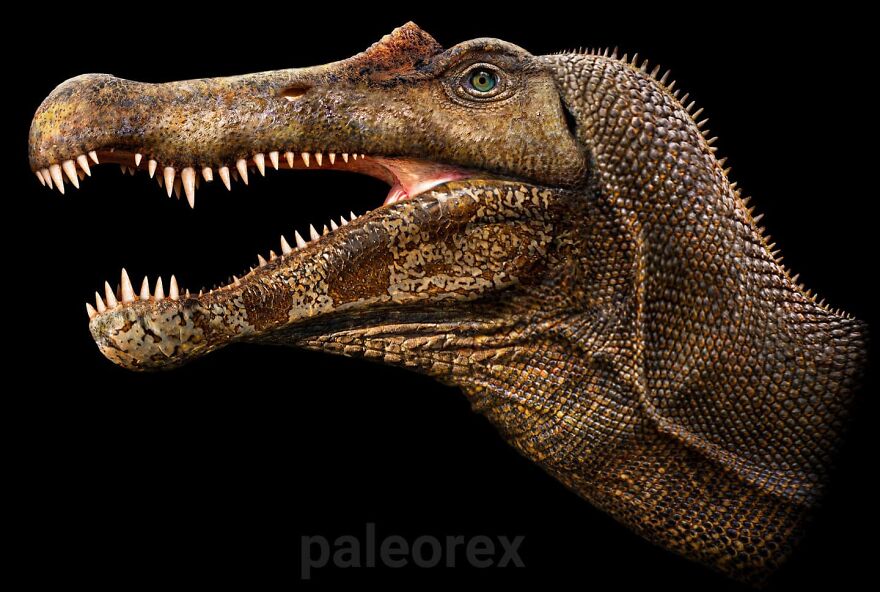
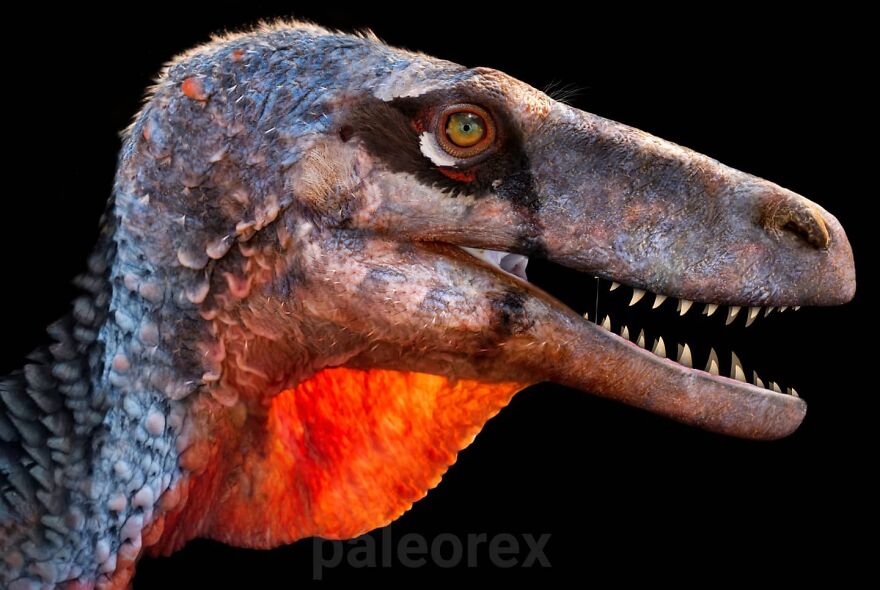
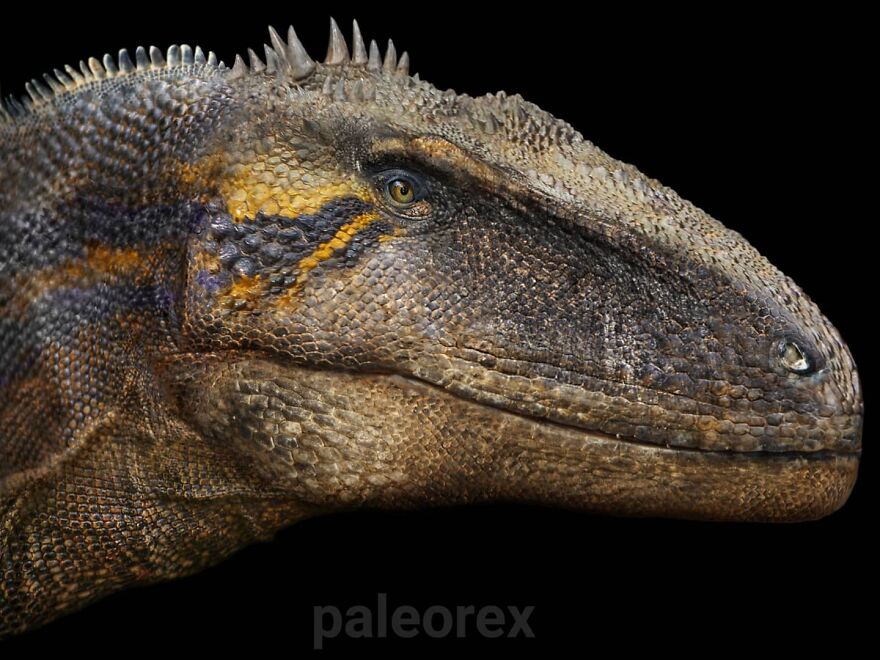
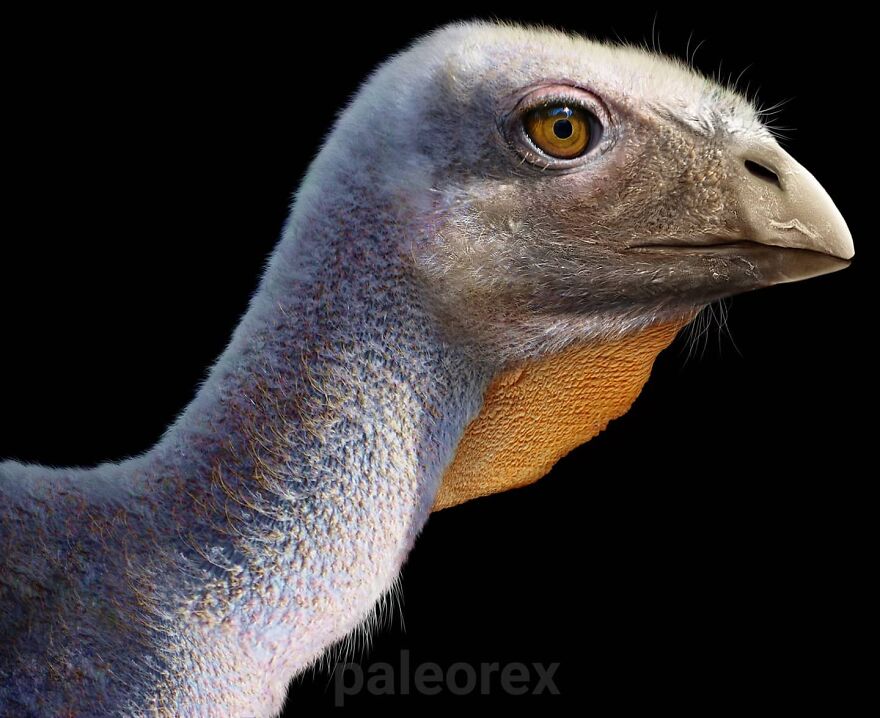
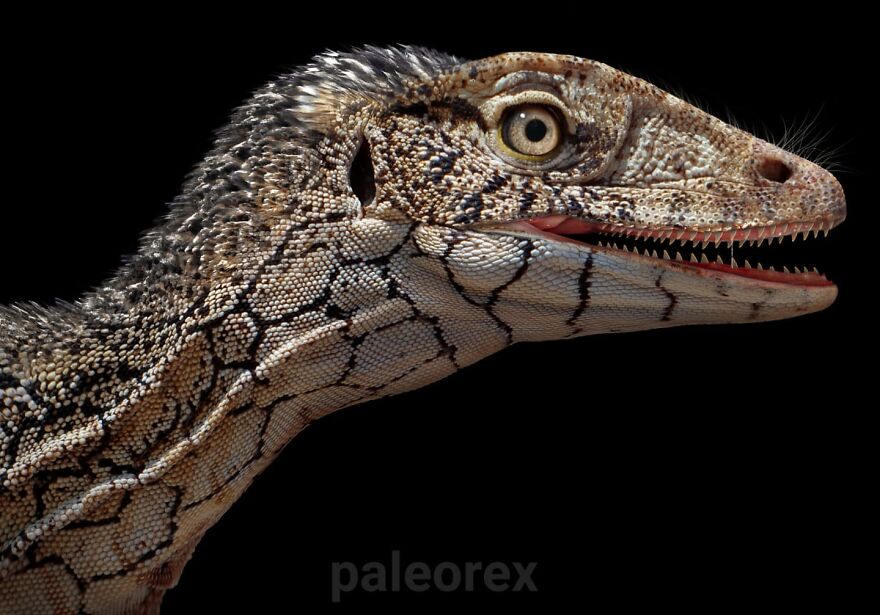
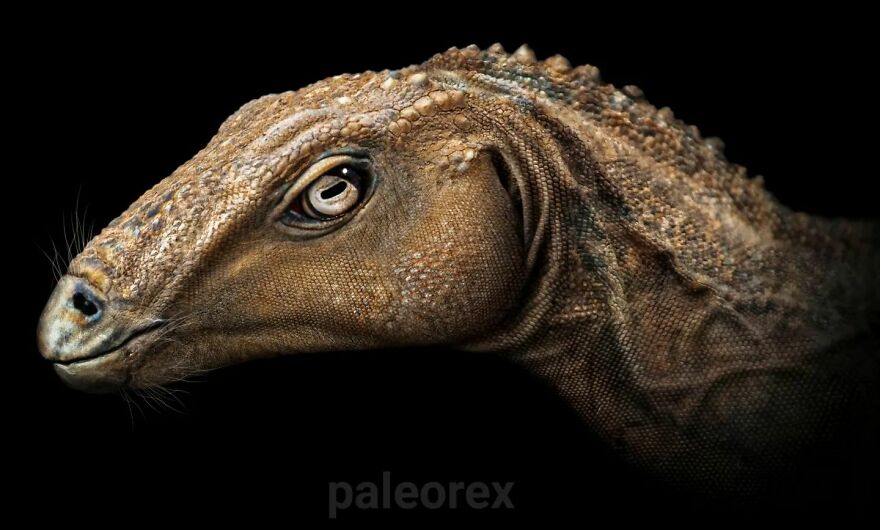
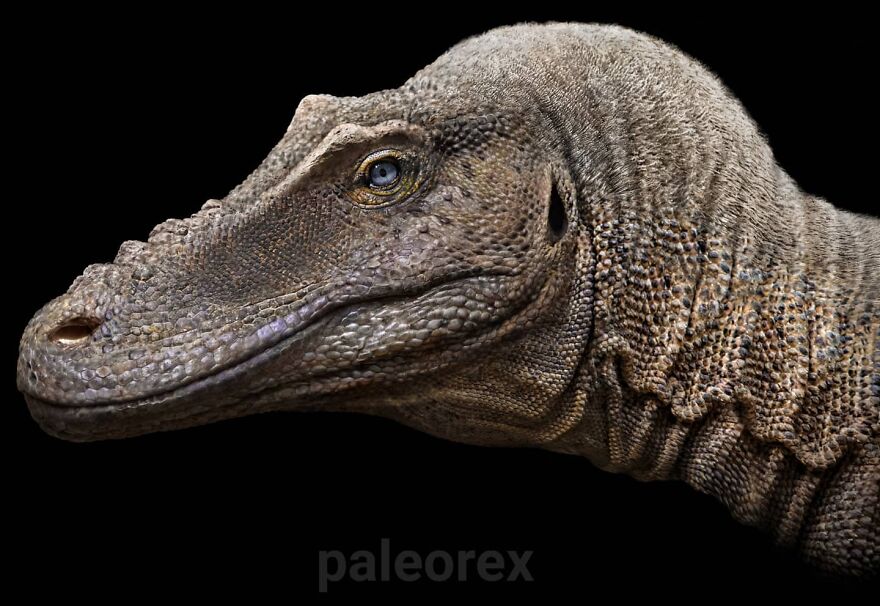
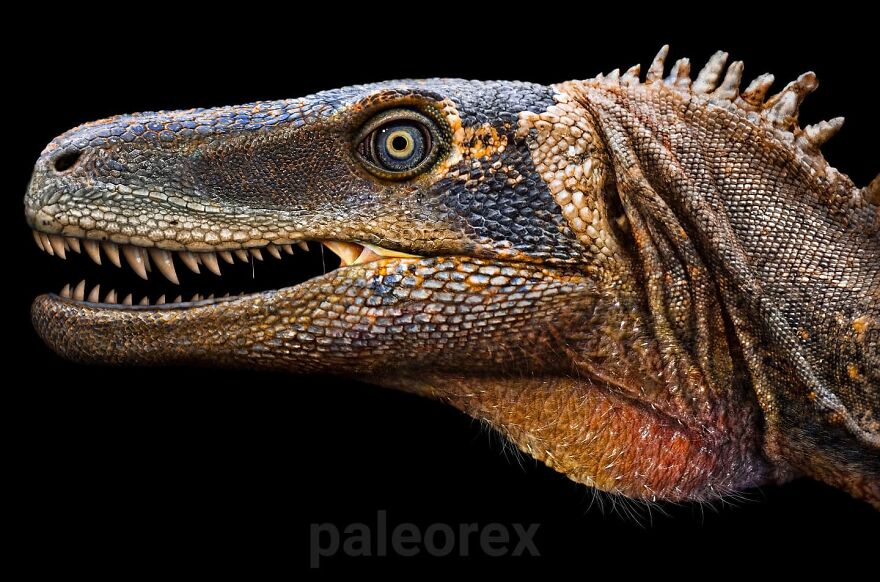
A paleoartist known as "Paleorex" on their Instagram shows how various prehistoric animals might’ve looked like millions of years ago by making 3D renders of them.

More info: Instagram

#1

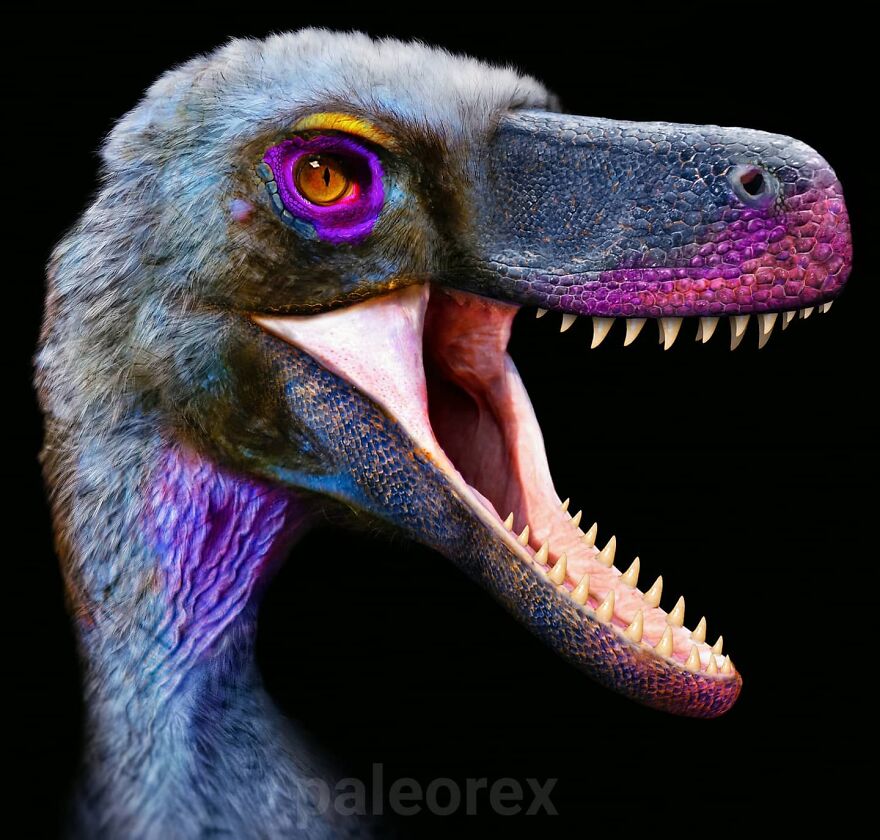
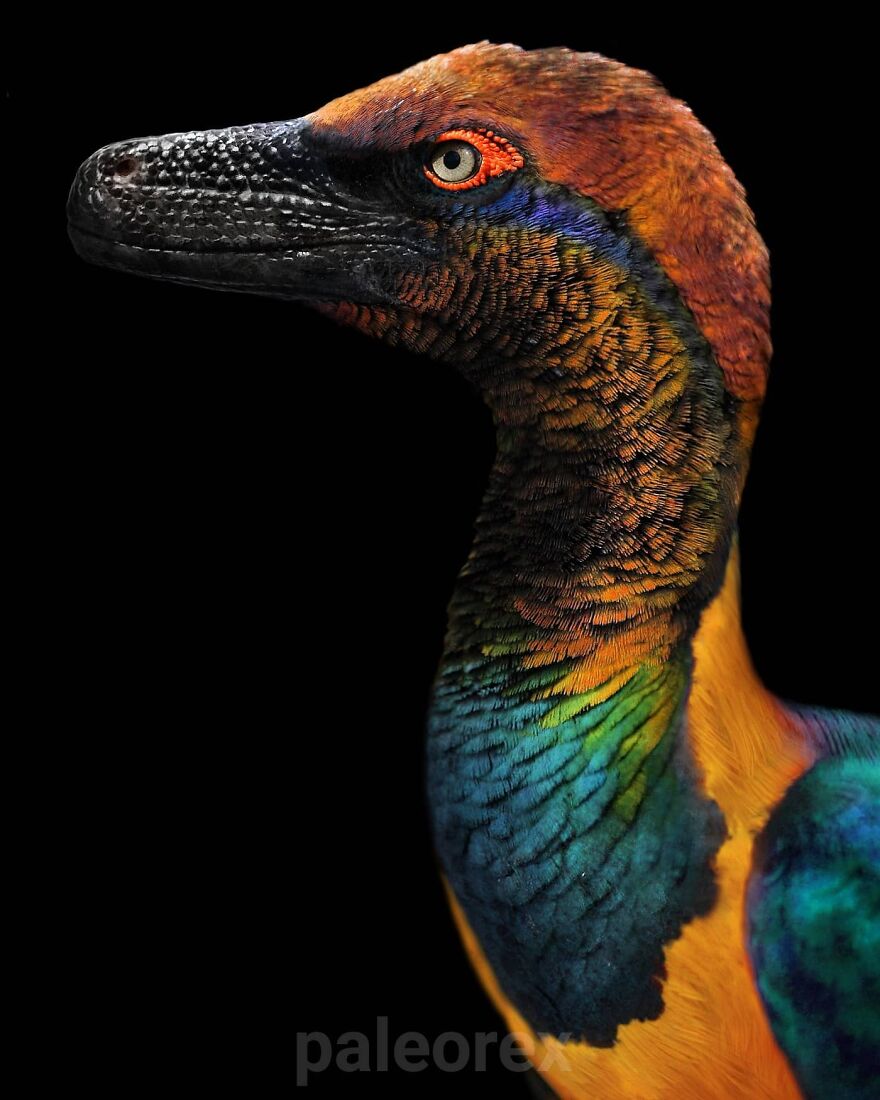
Illustration of an extinct animal with colorful feathers and sharp teeth, showing how extinct animals might’ve looked.

Velociraptor is one of the most iconic dinosaurs of all. It was a ferocious hunter that likely relied on its deadly sickle claws to pierce the vital areas of its victim’s body, much like today’s eagles.
Velociraptors have been misunderstood ever since they were featured in Jurassic Park as giant scaly dinosaurs. In reality, Velociraptor shared many traits found in modern-day birds, most notably, feathers. Through art, this long-extinct and fascinating animal is brought back to life!

paleorex Report

Jo Choto
Community Member
3 years ago Created by potrace 1.15, written by Peter Selinger 2001-2017

One day we will realize how many dinosaurs had some kind of feathers, and all our movies of naked dinosaurs will be laughed at.

QibliOfTheSandWings
Community Member
3 years ago Created by potrace 1.15, written by Peter Selinger 2001-2017

Can’t get “naked dinosaurs” out of my head now, thanks

Load More Replies...
jolie laide
Community Member
3 years ago Created by potrace 1.15, written by Peter Selinger 2001-2017

They were so smart! There's a whole class of them that kinda ranges from the time they popped on the radar until their death/fall out. They could range from the size of a big chicken/turkey (which is kinda misleading because they DID have a tail so they could be over 6 feet long but only 2 - 3 feet tall) to as big as the Utahraptor, which is what you see in the Jurassic Park movie. Those guys were raptors but NOT velociraptors, they were Utahraptors and they could grow to 20 feet long and up to 5 feet tall at hip height (aka from foot to hip they were 5 feet so they were tall!). It's theorized that they could swim and climb trees too. Robert Bakker, an American paleontologist, wrote a fiction book called "Raptor Red" which I think, is REALLY good. Utahraptors lived from 129 - 122 million years ago, whereas the velociraptor lived from about 89 - 71 million years ago and probably had feathers like this guy in the pic!

Camilo Madrigal
Community Member
3 years ago Created by potrace 1.15, written by Peter Selinger 2001-2017

He so cute! Ill hug him and squeeze him and call him Little Tom

Okatango
Community Member
3 years ago Created by potrace 1.15, written by Peter Selinger 2001-2017

I will no longer look at my tiny bird feeder visitors in the same way...

Firefoxy3121
Community Member
3 years ago Created by potrace 1.15, written by Peter Selinger 2001-2017

And they were about chicken size

Riftsrunner _
Community Member
3 years ago Created by potrace 1.15, written by Peter Selinger 2001-2017

Well, around the size of a large turkey. A single one would be negligible, but they travelled in flocks to hunt larger prey.

Load More Replies...
Shado Zilla
Community Member
3 years ago Created by potrace 1.15, written by Peter Selinger 2001-2017

Very bird like, love the purples and yellows

Sylvia Potts
Community Member
3 years ago Created by potrace 1.15, written by Peter Selinger 2001-2017

Jurassic park didn't get dinosaurs right at all. Not only did most of them have feathers. But it was highly unlikely that species like the T-Rex made a roaring sound but instead they twittered like birds. But obviously, that not what the audience want to see

View more comments

The Encylopedia describes paleoart as any original artistic work that attempts to depict prehistoric life according to scientific evidence. Works of paleoart may be representations of fossil remains or imagined depictions of the living creatures and their ecosystems. While paleoart is typically defined as being scientifically informed, it is often the basis of depictions of prehistoric animals in popular culture, which in turn influences public perception of and fuels interest in these animals.

ADVERTISEMENT
RELATED:
    #2

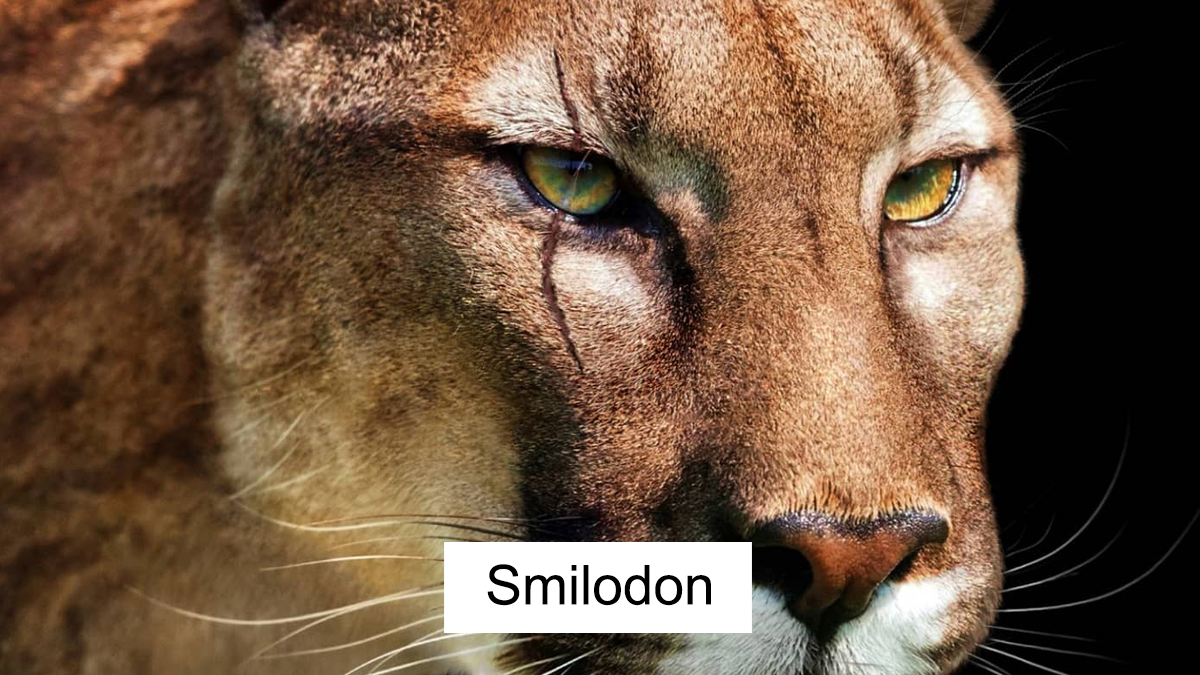
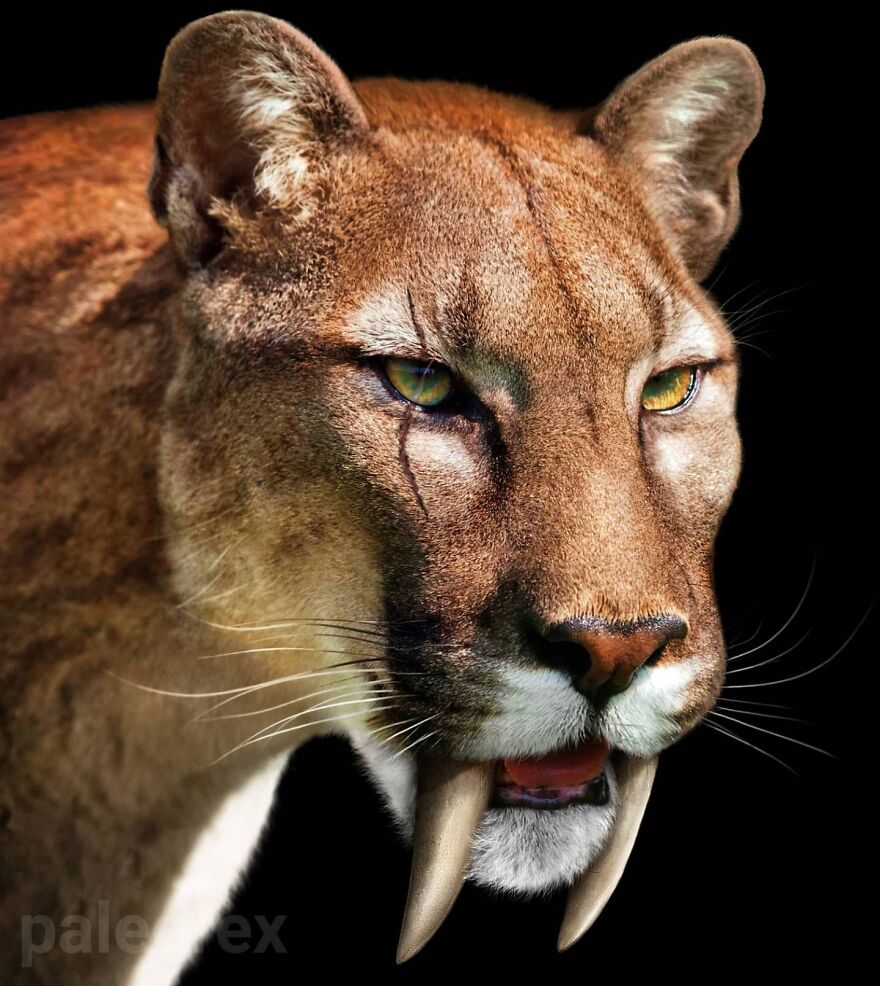
    Realistic illustration of an extinct animal showing how these creatures might’ve looked in real life by an artist.

    Up until about 10,000 years ago, the saber-toothed cat Smilodon was a ferocious predator that dominated the primeval landscape of the Americas. Smilodon means "knife-tooth", a perfectly fitting name given its enormous fangs, which measured up to 28 centimeters in length. This 250-kilogram feline was an apex predator and primarily hunted the large mammals it shared the land with, such as bison and camels.

    paleorex Report

    Alison Kennedy
    Community Member
    3 years ago Created by potrace 1.15, written by Peter Selinger 2001-2017

    So a cougar and a walrus mated and ...

    Nirrrina
    Community Member
    3 years ago Created by potrace 1.15, written by Peter Selinger 2001-2017

    Oh Lord don't give the scientists any ideas😉. They might just try it!

    Load More Replies...
    jolie laide
    Community Member
    3 years ago Created by potrace 1.15, written by Peter Selinger 2001-2017

    The really bad news, is that paleontologists think that Smilodon hunted in packs, like modern day lions. Rogues had a hard time going it a lone, some think even harder than today's lions because while their upper canines were INSANELY large, if one of them got broken off, it could result in a lot of pain for the animal, plus possible infection, not wanting to eat so starving, weakness, and death.

    Vexorg2
    Community Member
    3 years ago Created by potrace 1.15, written by Peter Selinger 2001-2017

    Yes except for the assumption that the cat would die from a single tooth break. There's a great fossil at la Brea of a Smilodon hip & femur that's just a pathological mess. The current idea is that it was disease but this cat wouldn't have been a runner. However in a social group like lions it could have been supported & likely helped with the kits.

    Load More Replies...
    Kristina Cowan
    Community Member
    3 years ago Created by potrace 1.15, written by Peter Selinger 2001-2017

    Love the scar, it actually looks beautiful, like two smilodons in a bar talking about their scars while having a pint.

    No Name
    Community Member
    3 years ago Created by potrace 1.15, written by Peter Selinger 2001-2017

    Ah so the smilodo looks like a mountain lion and the barbourofelis looks like a tiger. Interesting

    Vexorg2
    Community Member
    3 years ago Created by potrace 1.15, written by Peter Selinger 2001-2017

    There aren't any preserved Smilodon pelts as far as I know although one may turn up in the permafrost some day. So coloration is a guess. And Barbourofelis is too old to have any preserved in ice.

    Load More Replies...
    François Carré
    Community Member
    3 years ago Created by potrace 1.15, written by Peter Selinger 2001-2017

    AKA "Don Smilo", a sick bastard psychopath mafia boss.

    View more comments
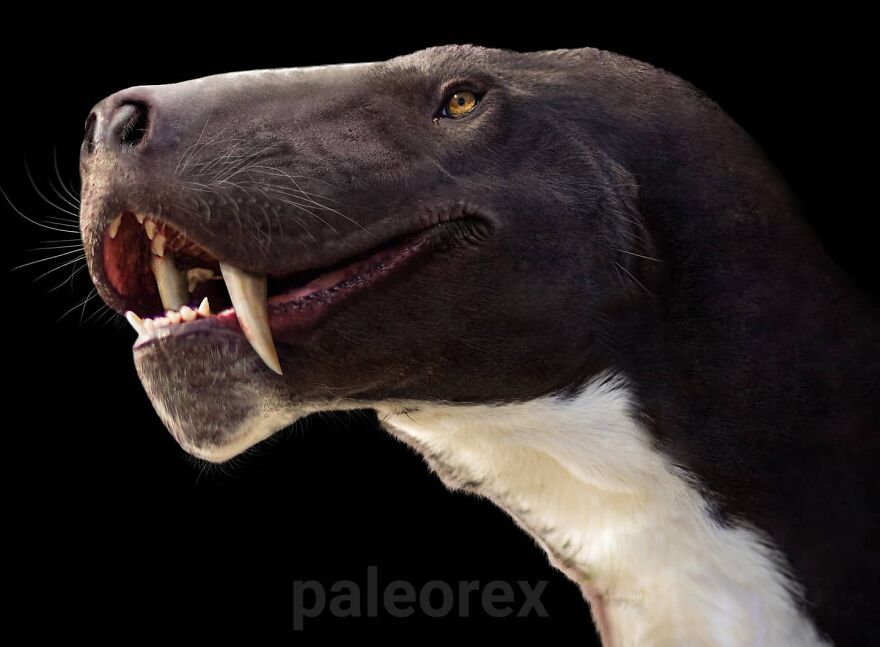
    #3

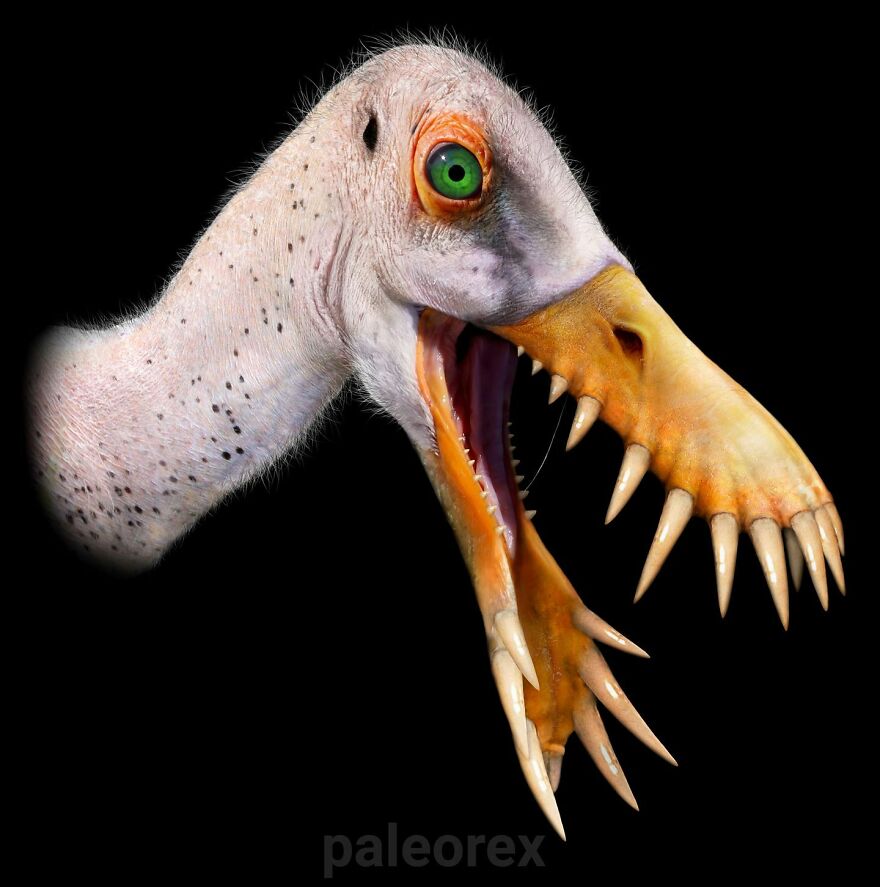
    Reconstruction of an extinct animal showing how it might’ve looked in real life by an artist’s detailed illustration.

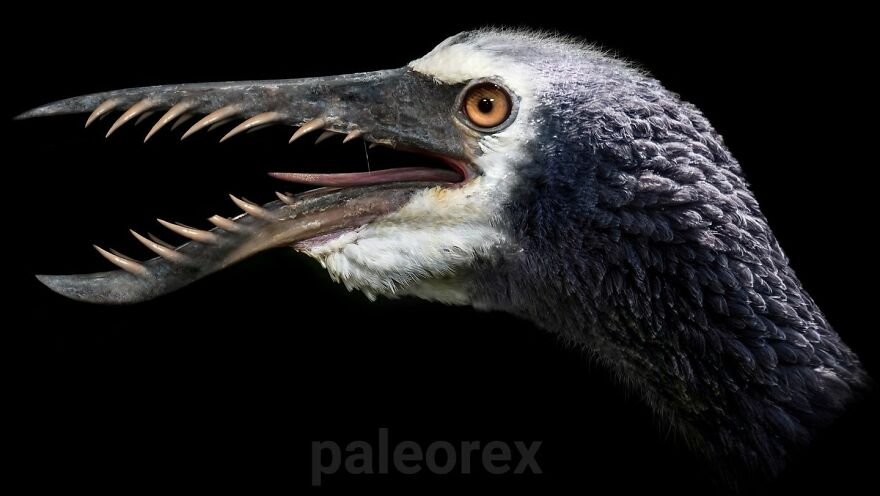
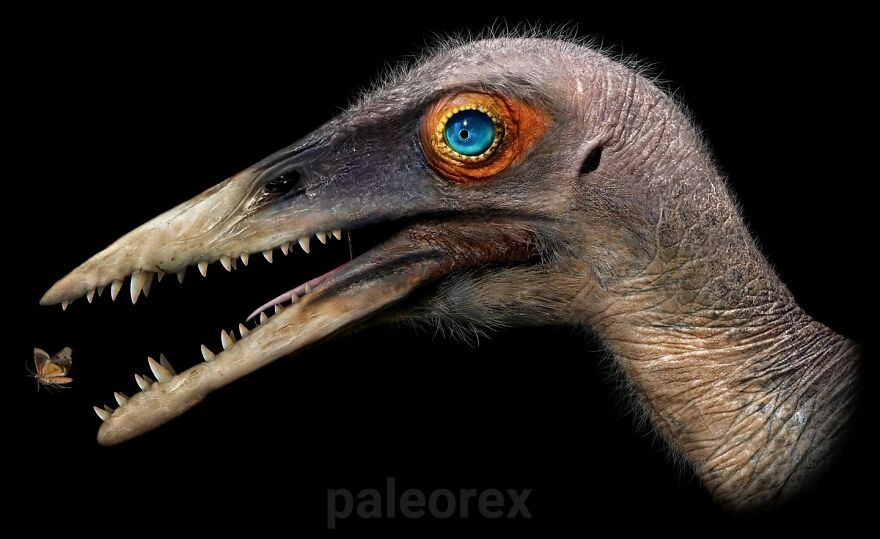
    Dorygnathus was a small pterosaur that lived in Europe during the Early Jurassic period approximately 180 million years ago when shallow seas flooded much of the continent. This flying reptile had a short wingspan of about 1.5 meters. The most striking feature of Dorygnathus is its incredible teeth, which were very long and sharp, ideal for catching small aquatic prey like prehistoric fish and squids.

    paleorex Report

    Angelar
    Community Member
    3 years ago Created by potrace 1.15, written by Peter Selinger 2001-2017

    The front teeth would not be for biting, but for skimming the sea and trapping the fish?

    Mokayokok
    Community Member
    3 years ago Created by potrace 1.15, written by Peter Selinger 2001-2017

    Those teeth look uncomfortable.

    Vicky Zar
    Community Member
    3 years ago Created by potrace 1.15, written by Peter Selinger 2001-2017

    This is not scary at all.... nope.... please don't turn off the lights

    View more comments
    ADVERTISEMENT

    In case you didn't know, through paleoart, most of the fossils found are "revived." A single drawing or sculpture can define how the public will visualize a whole category of extinct species. So paleoartists strive to keep their work as accurate as possible—a task that gets harder when the experts disagree and when more data is found and proved inaccurate.

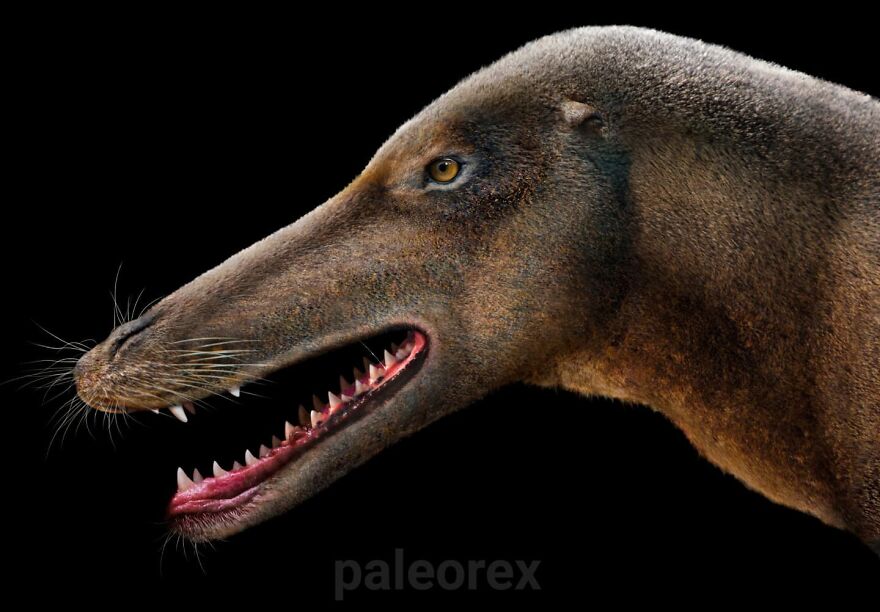
    #4

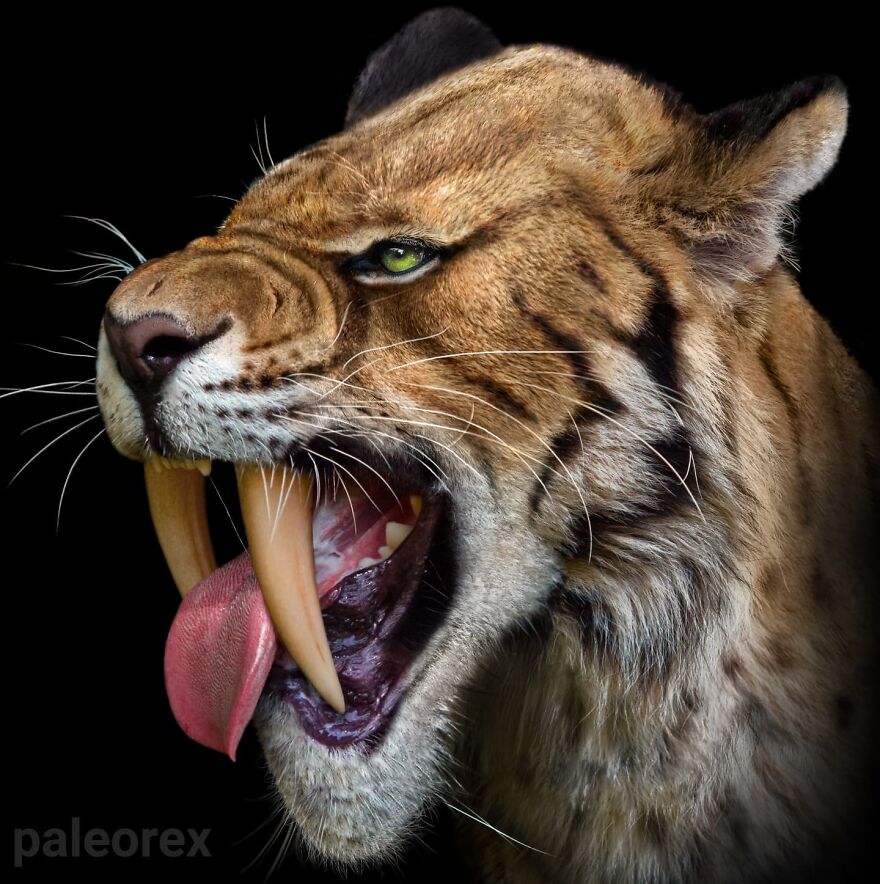
    Hyper-realistic illustration of an extinct saber-toothed animal showing detailed fur and large curved teeth in profile.

    Barbourofelis was one of the largest "false saber-tooth cats", which were carnivorous mammals that, due to convergent evolution, evolved to be very similar in appearance to cats, even though they were quite distantly related. Barbourofelis was up to 1.8 meters long and was a powerfully built predator, with a skeletal structure that is indicative of a strongly developed musculature. This hints Barbourofelis was a fierce predator, which likely hunted large prey in North America during the Pliocene.

    paleorex Report

    summer
    Community Member
    3 years ago Created by potrace 1.15, written by Peter Selinger 2001-2017

    i know these animals gone exstint but these are amzing she uses so much coler annd deatal

    Liam F.
    Community Member
    3 years ago Created by potrace 1.15, written by Peter Selinger 2001-2017

    I agree. Also, I'm sorry this might come out as mean but I just couldn't pass by this without saying you spelled detail wrong.

    Load More Replies...
    Jo Choto
    Community Member
    3 years ago Created by potrace 1.15, written by Peter Selinger 2001-2017

    Those teeth look extremely inconvenient.

    Community Member
    3 years ago Created by potrace 1.15, written by Peter Selinger 2001-2017

    I still think that when they gorged themselves to bursting I would like to try to pspspspsps them and scratch behind their ears.

    September
    Community Member
    3 years ago Created by potrace 1.15, written by Peter Selinger 2001-2017

    If it walks like a cat and chases Lazer pointers like a cat...

    Seabeast
    Community Member
    3 years ago Created by potrace 1.15, written by Peter Selinger 2001-2017

    There was a marsupial version in South America. Thylacosmilus.

    ohjojo
    Community Member
    3 years ago Created by potrace 1.15, written by Peter Selinger 2001-2017

    Who's a good kitty kitty kitty, you're a good kitty kitty kitty, yes you are, yes you are

    TyrantrumGogoat
    Community Member
    3 years ago Created by potrace 1.15, written by Peter Selinger 2001-2017

    I really want to pet it!! It's so beautiful!

    Crocodile
    Community Member
    3 years ago Created by potrace 1.15, written by Peter Selinger 2001-2017

    What I think I look like when I yawn.

    View more comments
    ADVERTISEMENT
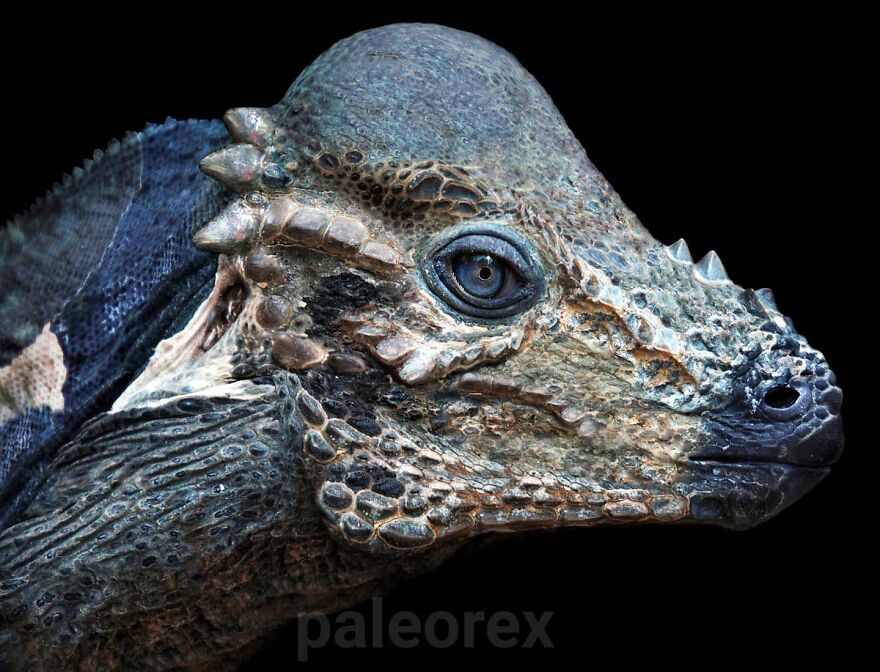
    #5

    Realistic illustration of an extinct animal showing detailed skin texture and lifelike features in digital art style

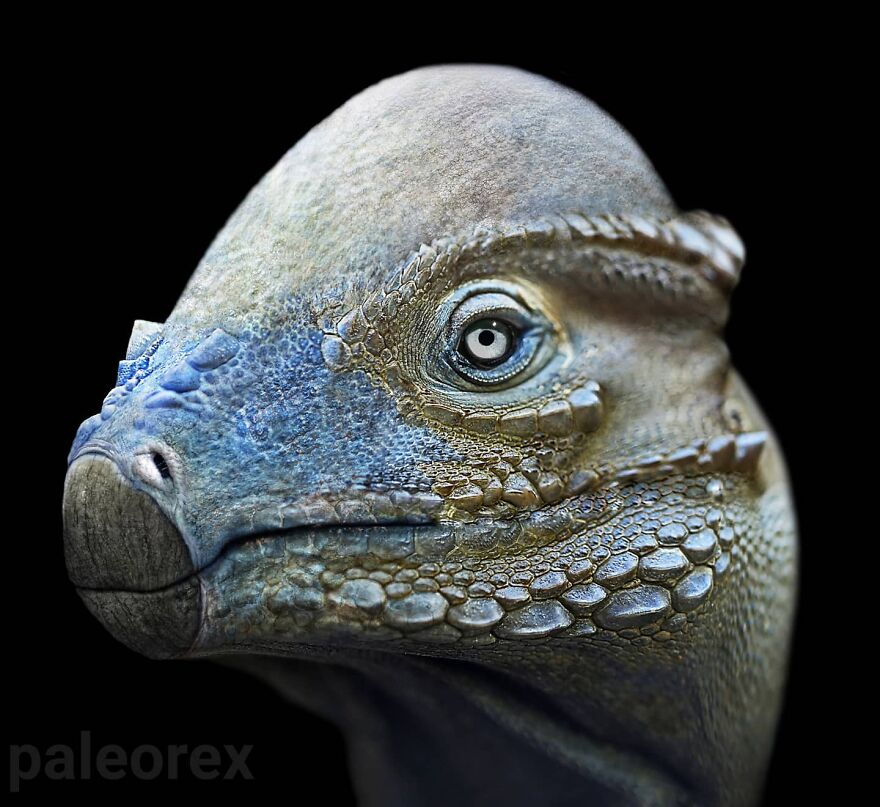
    Stegoceras was the prime example of a pachycephalosaur ("thick-headed lizard"), a family of ornithischian, plant-eating, bipedal dinosaurs, known for their extremely thick skulls. Although Stegoceras had a sleek build, it had a large dome on its head made of thick solid bone. Similarly to modern day bisons, experts believe that Stegoceras males used their very strong heads to shove and head-butt each other to win females during breeding season.

    This peculiar dinosaur lived in what is now North America around 75 million years ago, during the Late Cretaceous

    paleorex Report

    Ray Heap
    Community Member
    3 years ago Created by potrace 1.15, written by Peter Selinger 2001-2017

    I would take that on a date.

    TyrantrumGogoat
    Community Member
    3 years ago Created by potrace 1.15, written by Peter Selinger 2001-2017

    Wow!! I keep forgetting these are drawings!! This looks so amazing!

    Crocodile
    Community Member
    3 years ago Created by potrace 1.15, written by Peter Selinger 2001-2017

    Time to get this on Ark survival evolved.

    Lisa Samuelson
    Community Member
    3 years ago Created by potrace 1.15, written by Peter Selinger 2001-2017

    She looks like a very peaceful dinosaur!!

    Orange Is Aging
    Community Member
    3 years ago Created by potrace 1.15, written by Peter Selinger 2001-2017

    At first I read “stegosaurus” and I was like excuse me sir that is no stegosaurus

    Lola
    Community Member
    3 years ago Created by potrace 1.15, written by Peter Selinger 2001-2017

    It’s kinda cute.

    View more comments
    ADVERTISEMENT

    Paleoart doesn't always need to feature dinosaurs, though they are the most prevalent. All prehistoric organisms, from early palm trees to woolly mammoths, make quite worthy subjects! Nevertheless, the charismatic reptiles were pretty much always at the center of attention, and for a significant period in the history of this art form, there was even a "dinosaur renaissance."

    #6

    Realistic illustration of an extinct animal showing how it might have looked in real life by a skilled artist.

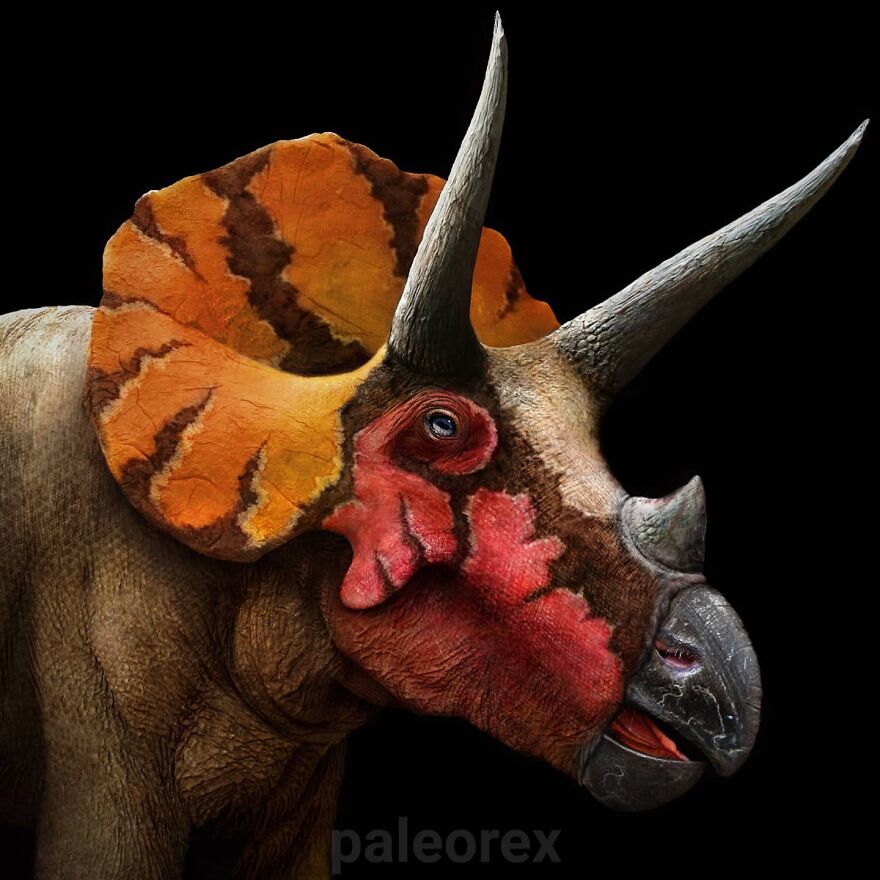
    Behold the mighty Triceratops, one of the most famous dinosaurs of all!

    With its 3 iconic horns, a parrot-like beak, and a large frill, the skull of Triceratops is one of the largest and most striking of any land animal.

    It is often considered the toughest of all dinosaurs, and indeed it used its sheer size, body strength, and imposing horns to fend off attacks from one of the deadliest predators to ever live, T-REX.

    paleorex Report

    Nathaniel
    Community Member
    3 years ago Created by potrace 1.15, written by Peter Selinger 2001-2017

    This Triceratops has just had a make over down at the local beauticians. You should see the nails.

    jolie laide
    Community Member
    3 years ago Created by potrace 1.15, written by Peter Selinger 2001-2017

    Hellooo Museums Victoria, Australia! In 2020, they confirmed that they'd found a 67 million year old Triceratops that was 87% complete, skeleton wise, which is AWESOME because it's the most complete specimen found yet! They have a complete skull and spine I think, but the really cool thing is that they have impressions of the skin and I think tendons too! The biggest Tric every found was from 66 million years ago, almost when the asteroid hit. They dubbed the remains "Big John" and he sold for over 6 million Euros! The fossilized skeleton (60%) was found in South Dakota, USA. The skull was about 9 feet long and almost 7 feet wide, and that was just the head! Triceratops lived from about 84 - 66 million years ago.

    ohjojo
    Community Member
    3 years ago Created by potrace 1.15, written by Peter Selinger 2001-2017

    The triceratops is often a parent's favorite for stepping on in the middle of the night. Far more effective than Lego

    TyrantrumGogoat
    Community Member
    3 years ago Created by potrace 1.15, written by Peter Selinger 2001-2017

    Yeah, do they always make dinosaur earth tones?? This looks great with a splash of color!!

    Jo Choto
    Community Member
    3 years ago Created by potrace 1.15, written by Peter Selinger 2001-2017

    I love the idea of a colourful triceratops. I'm a fan.

    Zane Paul
    Community Member
    3 years ago Created by potrace 1.15, written by Peter Selinger 2001-2017

    This is what I look like after I play "makeup" with my four year old niece

    Mike Morales
    Community Member
    3 years ago Created by potrace 1.15, written by Peter Selinger 2001-2017

    You think they changed colors over time but slowly? like red orange fad got played out so it switched over to like a green blue? Damn red orange boomers

    Mahogany Eclipse
    Community Member
    3 years ago Created by potrace 1.15, written by Peter Selinger 2001-2017

    They actually found bright color pigments on a triceratops fossil, so I think this is quite possibly how they might've looked.

    Sunny Day
    Community Member
    3 years ago Created by potrace 1.15, written by Peter Selinger 2001-2017

    Hard to picture him fighting off a T-Rex with that little beak

    View more comments
    #7

    Realistic illustration of an extinct animal showing detailed fur and facial features against a black background

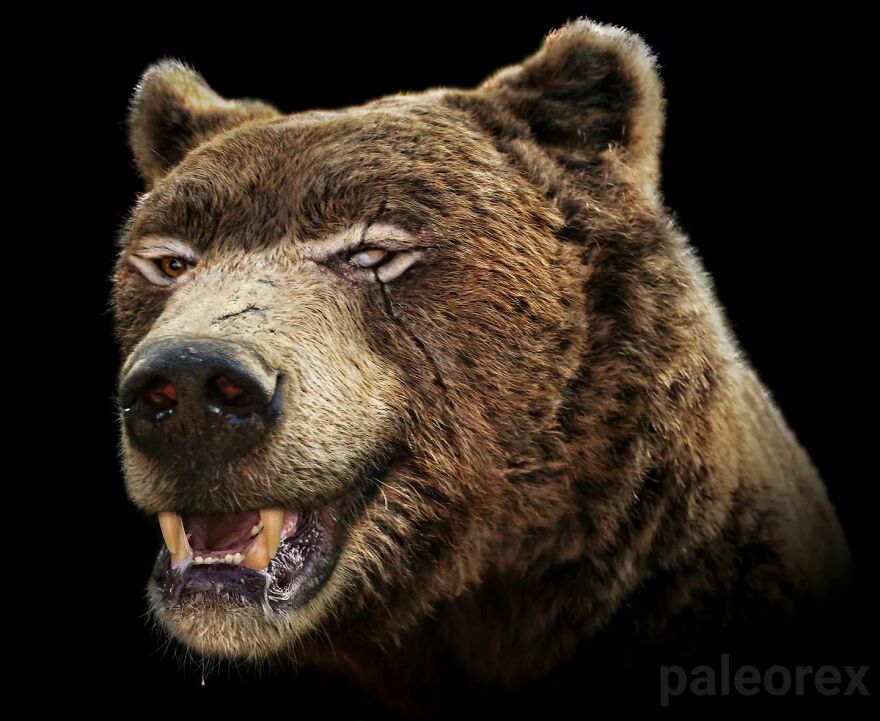
    Arctodus simus/short-faced bear. The short-faced Ibear was the largest and most powerful land carnivore in North America during the Ice Age. Its most distinctive feature was its very short face, hence its name. It was one of the largest bears to have ever lived, reaching a total body weight of about 700 kg.

    Arctodus simus was much taller than modern bears, such as the grizzly bear, but not so heavily built. Additionally, its limbs were longer and more slender compared to modern relatives, suggesting that it was a fast hunter.

    paleorex Report

    Jack Wiken
    Community Member
    3 years ago Created by potrace 1.15, written by Peter Selinger 2001-2017

    Yesss, I was waiting for the short faced bear! Scientists speculate these delayed human migration into N.A and that they could run over 40 miles per hour despite weighing over 1500 pounds

    Christine Beard
    Community Member
    3 years ago Created by potrace 1.15, written by Peter Selinger 2001-2017

    So a bear with the size and speed of a large warmblood horse. Eep!

    Load More Replies...
    Kristina Cowan
    Community Member
    3 years ago Created by potrace 1.15, written by Peter Selinger 2001-2017

    Enjoying a pint with smilodon, talking about their scars 😏

    Palo Sulek
    Community Member
    3 years ago Created by potrace 1.15, written by Peter Selinger 2001-2017

    The bear: "oh, that eye ? Should see the other guy...huh huh"

    666K9INFERNO666
    Community Member
    3 years ago Created by potrace 1.15, written by Peter Selinger 2001-2017

    Oh look....another one with a scar across its eye, I wonder if that's a dinosaurs weak point?

    Orange Is Aging
    Community Member
    3 years ago Created by potrace 1.15, written by Peter Selinger 2001-2017

    Sis got in a little fight I see

    View more comments
    ADVERTISEMENT

    It is clear that natural history artwork has always relied heavily on science, but scientific communication also benefits increasingly from carefully executed scientific illustration, in the form of artwork for press releases, manuscript figures, and journal cover images.

    #8

    Colorful extinct animal illustration showing a detailed blue feathered dinosaur with sharp teeth on black background

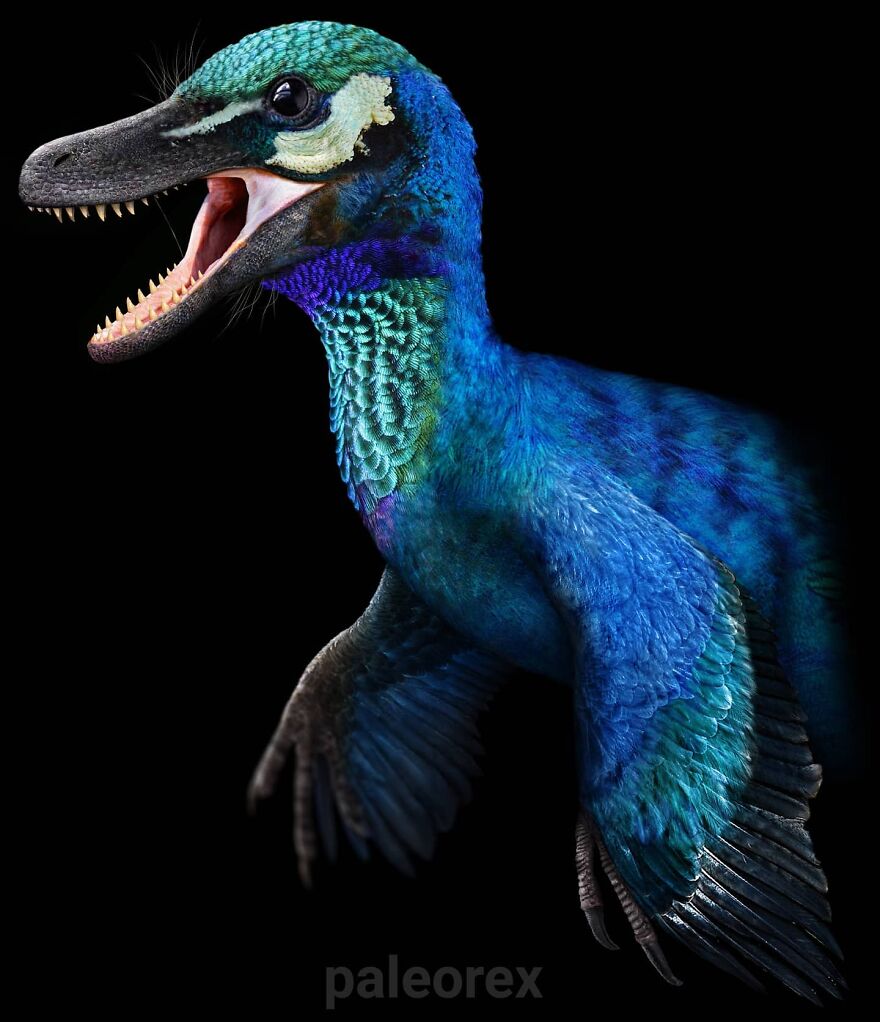
    Pyroraptor was a dromaeosaurid, a small, bird-like predatory theropod that possessed enlarged curved claws on the second toe of each foot. In Pyroraptor, these claws were 6.5 centimeters long and, as in other dromaeosaurids, these claws might have been used as weapons or as climbing aids. Pyroraptor lived during the Late Cretaceous, approximately 70 millions of years ago, in what is now France and Spain.

    paleorex Report

    Jo Choto
    Community Member
    3 years ago Created by potrace 1.15, written by Peter Selinger 2001-2017

    We know this is really a penguin.

    jolie laide
    Community Member
    3 years ago Created by potrace 1.15, written by Peter Selinger 2001-2017

    Dromaeosaurid is the raptor class, so these guys were distantly related to the Utahraptor (129 - 122 million years ago) and a cousin of the velociratpor (about 89 - 72 million years ago). Pyroraptor was next on the ladder! These guys were neat. They lived about 83 - 66 million years ago, so they were running around with their veloci cousins and survived a lot better than they did. The Pryo was smaller than the veloci (the veloci were about 6 feet long and about 3 feet tall), so they were really great ambush predators in terms of pouncing to get at the back of the neck. They had killed claws, and 1 main one just like most raptors but they probably used it to pin down prey. In a small group, which is theorized that they thrived in, they'd use their big claw to take down bigger prey to not only injure but to hold on while they went for the neck and throat. For smaller prey, they'd gut it. Pyro probably had feathers too, especially on it's head and legs and maybe on it's tail.

    Kitten Fenerty
    Community Member
    3 years ago Created by potrace 1.15, written by Peter Selinger 2001-2017

    And it shoots flames from it's mouth...

    Parthania Dawson
    Community Member
    3 years ago Created by potrace 1.15, written by Peter Selinger 2001-2017

    I came to the comments to see if anyone would make this reference.

    Load More Replies...
    xolitaire
    Community Member
    3 years ago Created by potrace 1.15, written by Peter Selinger 2001-2017

    This one still exists. It lives and terrorizes Australia.

    Serenity
    Community Member
    3 years ago Created by potrace 1.15, written by Peter Selinger 2001-2017

    PYRORAPTOR... Replacing this year's Burning Man as the most FYRE festival.

    View more comments
    ADVERTISEMENT
    #9

    Detailed illustration showing how extinct animals might’ve looked in real life with realistic textures and colors.

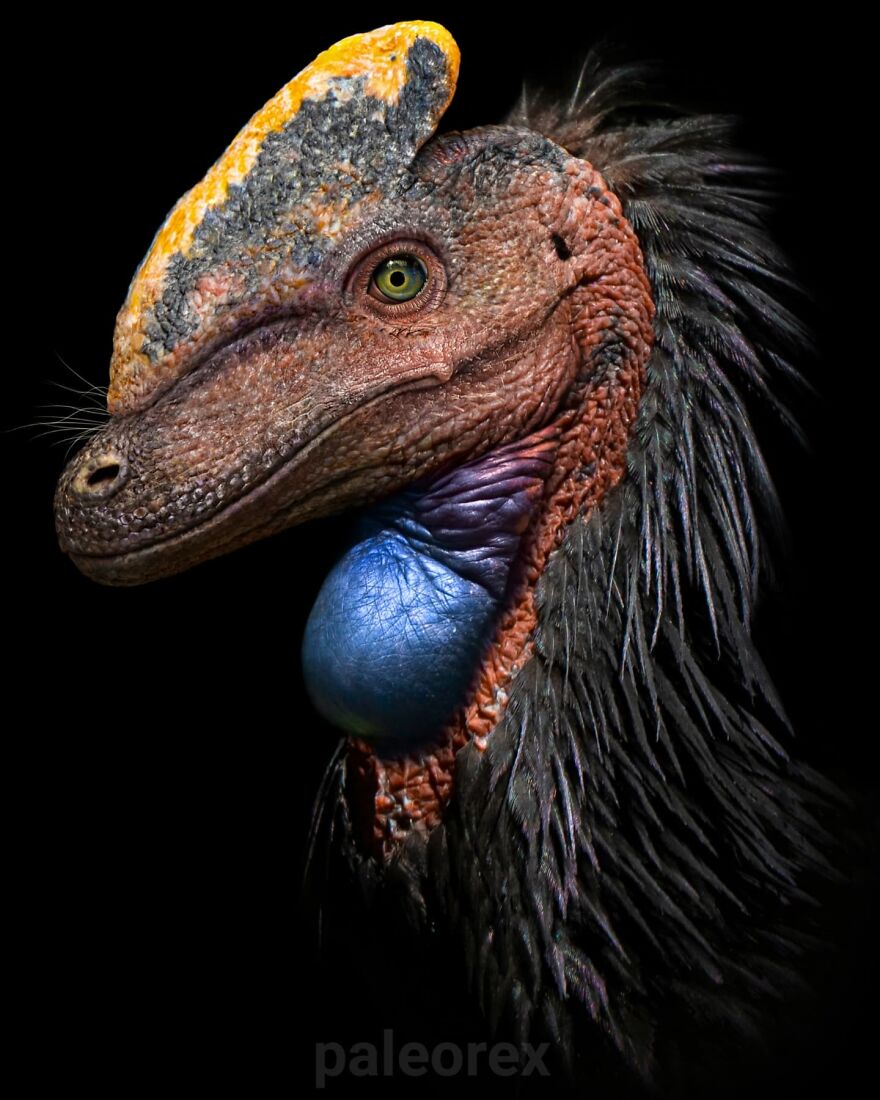
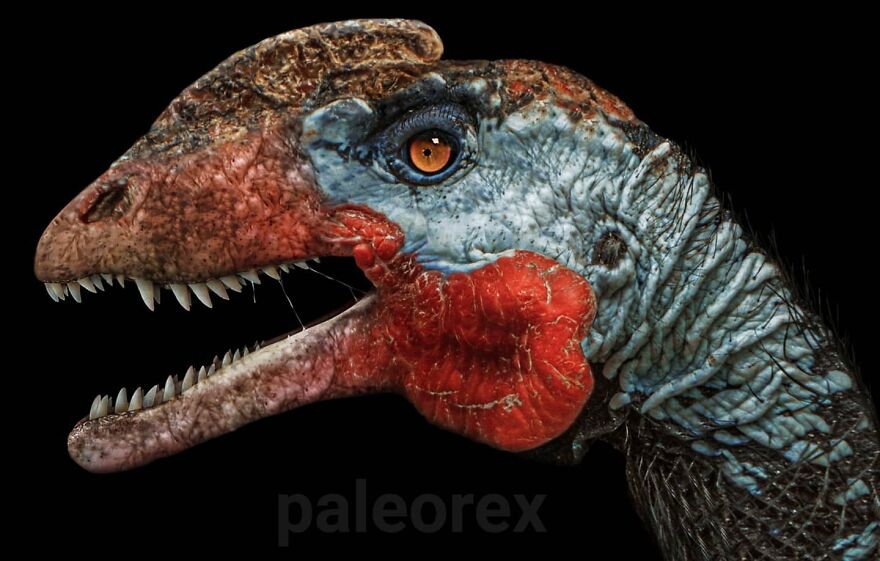
    In the late Jurassic it would have been hard to believe that such a relatively small predator like Guanlong would lead to the evolution of one of the largest and most ferocious carnivorous dinosaurs of all, Tyrannosaurus rex! In fact, it is one of the first known tyrannosaurids and lived in China about 95 million years before Tyrannosaurus rex. Its name comes from the Chinese words meaning "crown" and "dragon", a clear reference to its unusual crest, one of the most distinct among known theropod dinosaurs, which was probably used for display and to intimidate rivals.

    paleorex Report

    Misty Pendergrast
    Community Member
    3 years ago Created by potrace 1.15, written by Peter Selinger 2001-2017

    Yup. You look at a cassowary's foot and you know dinosaurs never completely died out. They just evolved into modern-day versions.

    Load More Replies...
    Rey Mohammed
    Community Member
    3 years ago Created by potrace 1.15, written by Peter Selinger 2001-2017

    Looks like the Cassowary from Hell

    jolie laide
    Community Member
    3 years ago Created by potrace 1.15, written by Peter Selinger 2001-2017

    (1) This is REALLY cool, because while Guanlong was in the evolutionary lineage of the T-Rex, GL still to this day has mostly been found in China, where as the popular T-Rex that everyone knows, has been found mostly in Montana, the Dakota's, and the Pacific NorthWest in the USA. So 95 million years ago, GL was in China (about 10 ft long and 3 feet high) but the earliest T-Rex we've found dated from about 90 million years ago (T-Rex on average was 40 feet long and 12+ feet high). The late Cretaceous lineage spanned from 90 - 66 million years ago, about until the asteroid hit. The Earth looked (on a map) like a VERY different place that long ago. Some scientists STILL aren't QUITE sure how the T-Rex evolved were/how it did, and traveled to high density areas in its evolution. BUT, scientists have also discovered that they dinosaurs got sick just like us! Respiratory infections, cancers, arthritis, gout, etc. The T-Rex fossil "Sue" shows signs of gout (a kind of arthritis that

    jolie laide
    Community Member
    3 years ago Created by potrace 1.15, written by Peter Selinger 2001-2017

    means swelling and pain) plus evidence of a really bad parasitic infection along her jaw, probably obtained by eating her prey. The parasites ate holes in Sue's lower jaw bones which would've bee incredible painful for her, most likely leading her to not wanting to eat and thus starving, weakening, and finally dying.

    Load More Replies...
    ohjojo
    Community Member
    3 years ago Created by potrace 1.15, written by Peter Selinger 2001-2017

    Often teased for being a ballchinian

    der sebbl
    Community Member
    3 years ago Created by potrace 1.15, written by Peter Selinger 2001-2017

    Fun fact: T-Rex is closer to us than to Jurassic dinosours

    Dreaming of starlight
    Community Member
    3 years ago Created by potrace 1.15, written by Peter Selinger 2001-2017

    Stop comparing non-avian dinosaurs to birds it's really stupid to just automatically assume "BiRd" when faced with reality

    Load More Replies...
    Vexorg2
    Community Member
    3 years ago Created by potrace 1.15, written by Peter Selinger 2001-2017

    Don't know about the fossil showing evidence of a pouch but it might just be an allusion to the close relationship between birds & meat eating dinos. Lots of birds (grouse, frigatebirds, etc) have throat pouches they inflate for mating displays. So... It's a boy 😁

    Load More Replies...
    François Carré
    Community Member
    3 years ago Created by potrace 1.15, written by Peter Selinger 2001-2017

    A very convincing portrait of grandma T-Rex.

    Mike Morales
    Community Member
    3 years ago Created by potrace 1.15, written by Peter Selinger 2001-2017

    I see a see a cassowary with blue balls....I'll see myself out

    Fancy Man
    Community Member
    3 years ago Created by potrace 1.15, written by Peter Selinger 2001-2017

    I always knew those things were the spawn of satan

    Load More Replies...
    View more comments
    ADVERTISEMENT
    #10

    Illustration of an extinct animal showing how it might’ve looked in real life with detailed head crest and vibrant colors.

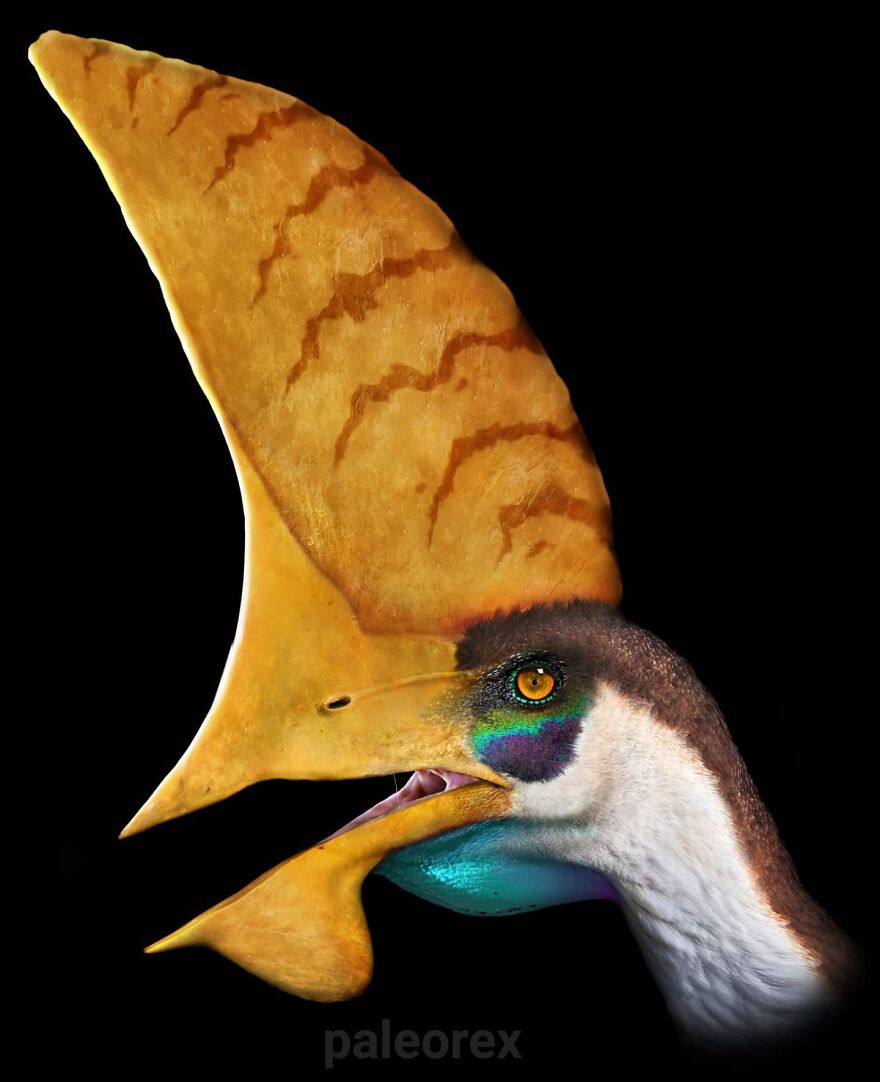
    Some of you know that I really enjoy depicting pterosaurs, especially the more "extreme" ones that used to live during the Cretaceous in what is now Brazil. Recently, a new and perfectly preserved pterosaur specimen of the genus Tupandactylus was discovered and what you see is my depiction of this once fascinating animal. Hope you like it!

    paleorex Report

    Ozacoter
    Community Member
    3 years ago Created by potrace 1.15, written by Peter Selinger 2001-2017

    Remember pterosaurs are not dinosaurs. Just another group of reptiles. As a lizard is not a turtle but they are both reptiles

    jolie laide
    Community Member
    3 years ago Created by potrace 1.15, written by Peter Selinger 2001-2017

    Well.. yes and no. The Tupandactylus is part of the pterodactyloid pterosaur genus from the Early Cretaceous period, and they ARE reptiles but they're kinda funky. Paleontologists aren't quite sure what all they ate but they think fruit probably played a big part in their diet, including poisonous species maybe but no one's sure. They sure could fly though! My god, these guys had a huge wing span of like, 15 - 20 feet! That's 5-6 meters I think. Body wise, I think they were similar to a adult male, give or take. But yeah these guys were found in Brazil, and they lived about 122 - 112 million years ago. The REALLY cool thing though, if it can be believed just yet, there was a study done a few months ago that says these guys might have been engaged in aerial battle for the best nesting sites in fruit heavy forest regions! The paper is mainly opinion, but it's awaiting peer review.

    Jill Pond
    Community Member
    3 years ago Created by potrace 1.15, written by Peter Selinger 2001-2017

    Can you imagine that battle?!?! Wow, to see something like that. Thanks for a different perspective!

    Load More Replies...
    TheFox
    Community Member
    3 years ago Created by potrace 1.15, written by Peter Selinger 2001-2017

    Someone forgot their Taco Bell quesadilla on its head

    somnomania
    Community Member
    3 years ago Created by potrace 1.15, written by Peter Selinger 2001-2017

    man, humans are so boring compared to this, i want a crest on my head and cool colors!

    Emma Nguyen
    Community Member
    3 years ago Created by potrace 1.15, written by Peter Selinger 2001-2017

    Ostrich, cassowary pelican thing

    Robyn Zelickson
    Community Member
    3 years ago Created by potrace 1.15, written by Peter Selinger 2001-2017

    Does that giant thing on its head not get in in the way of.. well, everything??

    September
    Community Member
    3 years ago Created by potrace 1.15, written by Peter Selinger 2001-2017

    Do you like it? They're all the rage in Laramidia, darling.

    View more comments
    #11

    Realistic illustration of an extinct animal showing detailed skin texture and features on a black background.

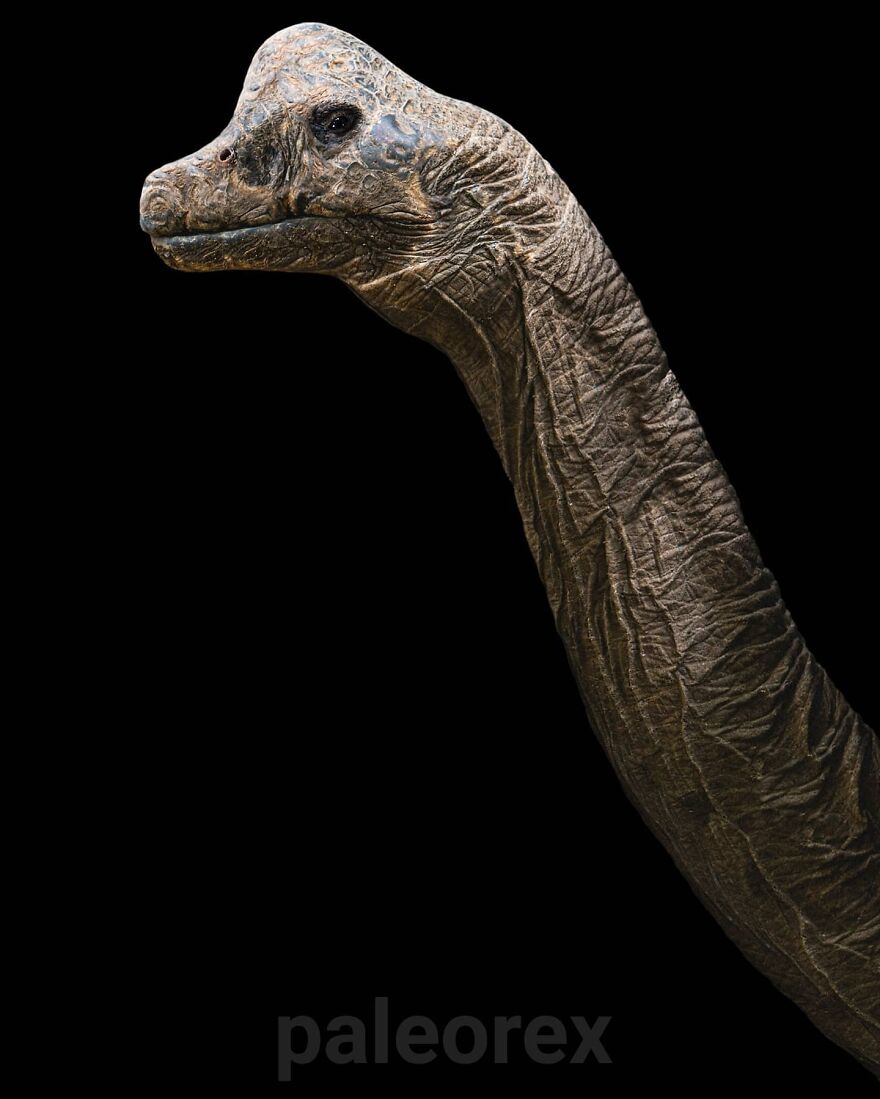
    The Mesozoic was a time when the ground was literally shaken by the colossal sauropods, the largest land animals to ever exist. Brachiosaurus was among the largest, with a length estimated at 26 meters and a weight of over 50 metric tons. It was so large in size that it was likely immune to all predators. Brachiosaurus had a huge body, a small head and an extremely long neck that allowed it to feed on the leaves of the tall trees that once grew in its habitat of North America. Thanks to their anatomical features, sauropods thrived for almost 100 millions years and were able to inhabit almost every continent.

    "With their passing, life will never again be this large".

    paleorex Report

    Louieeeeee
    Community Member
    3 years ago Created by potrace 1.15, written by Peter Selinger 2001-2017

    Earth has had some pretty impressive megafauna throughout the years.

    jolie laide
    Community Member
    3 years ago Created by potrace 1.15, written by Peter Selinger 2001-2017

    (1) Oh, I LOVE these guys! But new, easily studies show that they might not have lived as peacefully as we thought. "Dolly" the dinosaur (fossil) lived about 150 million years ago. She was a sauropod, like Brachiosaurus with a huge body, a looong neck and small head/brain. She was found in 1990 in Montana, USA and was about 15 - 20 years old when she died. She was about 60 feet long (18 meters?). From her fossils, they figured she had a real bad cough and probably a fever, likely caused by a fungal infection like birds get today, called aspergillosis.This would have infected her airway and her air sacs, slowly traveling down to her lungs. They found bony growth on some of her neck vertebrae. The body does this to try and encapsulate infection. In humans, this can happen with tuberculosis infection, and can cause premature arthritis. My Mom had spondylosis, and in treating her, they found latent TB (tuberculosis) that was encapsulated in new growth bony tissue. This isn't

    jolie laide
    Community Member
    3 years ago Created by potrace 1.15, written by Peter Selinger 2001-2017

    (2) QUITE what happened to Dolly, but her infection DID inspire her immune system and her bones, to form odd growth structures here and there. Paleontologists don't think that this would've caused a chronic sore throat, preventing Dolly from eating, but she was, at some point before her death, very sick. She was found in Montana, and 150 million years ago, the land was VERY different. The Rocky Mountains were just little babies, and the whole region was a very hot, humid tropical rain forest which would be ideal for fungal infections. Being a herd animal, she would've lived in a group so others might've been sick too. Scientists can't tell if this illness killed Dolly but they don't think so, but it might have really weakened her, leaving her open to weakness collapse or attack from desperate predators, etc. Dolly's remains date to 150 million years ago, but Brachiosaurs dates from 161 - 145 million years ago, so it stands to reason that other large bodied, long necked

    Load More Replies...
    Earl Grey
    Community Member
    3 years ago Created by potrace 1.15, written by Peter Selinger 2001-2017

    Before moisturizer was invented.

    Ozacoter
    Community Member
    3 years ago Created by potrace 1.15, written by Peter Selinger 2001-2017

    No, they were dinosaurs. So related to modern birds (considered nowadays dinosaurs as well). Turtles are very complicated but they are much older than dinos and dont seem to have many relatives

    Load More Replies...
    Caroline Sinclair
    Community Member
    3 years ago Created by potrace 1.15, written by Peter Selinger 2001-2017

    "...life ON LAND will never again be this large"!

    Caroline Sinclair
    Community Member
    3 years ago Created by potrace 1.15, written by Peter Selinger 2001-2017

    Although the quote should really be that VERTEBRATE life on land etc etc. Giant sequoias, aspen clones and honey mushrooms are life too!

    Load More Replies...
    Blue Boy
    Community Member
    3 years ago Created by potrace 1.15, written by Peter Selinger 2001-2017

    Reminds me of an elephant ngl

    Mike Morales
    Community Member
    3 years ago Created by potrace 1.15, written by Peter Selinger 2001-2017

    Sad to know that megafauna this big won't return unless the earth takes a complete and utter 180. We need higher oxygen levels...less humans...

    Jaclyn Minzell
    Community Member
    3 years ago Created by potrace 1.15, written by Peter Selinger 2001-2017

    That's not a Brachiosaurus. That's a Long neck 😁

    View more comments
    ADVERTISEMENT
    #12

    Detailed illustration of an extinct animal showing how prehistoric creatures might have looked in real life.

    Inostrancevia lived during the Late Permian period and was the largest of the gorgonopsid species. Inostrancevia's most striking feature was its long, saber-tooth-like canines. It had a total body length of around 3.5 m, a weight of 300 kg and a huge skull, which measured up to 60 cm in length. Inastroncevia was likely at the top of the food chain in Late Permian Russia, preying on the large herbivorous creatures it shared the land with.

    paleorex Report

    Zane Paul
    Community Member
    3 years ago Created by potrace 1.15, written by Peter Selinger 2001-2017

    Looks like my pitbull. Same coloring and everything

    Rose Button 🇺🇦
    Community Member
    3 years ago Created by potrace 1.15, written by Peter Selinger 2001-2017

    Me, reading this: He looks sweet! Ohhh big! All the better for cuddles! A heartless predator? Finally, something to clear the neighbors away with! Ok, were can I get one?

    MemiLove
    Community Member
    3 years ago Created by potrace 1.15, written by Peter Selinger 2001-2017

    dog sealion cat walurous otter??

    Sasha
    Community Member
    3 years ago Created by potrace 1.15, written by Peter Selinger 2001-2017

    Kinda looks like my dog-

    Abigail Bowman
    Community Member
    3 years ago Created by potrace 1.15, written by Peter Selinger 2001-2017

    Looks kinda like a cross between a seal and a saber-tooth. He looks very happy though lol

    No Name
    Community Member
    3 years ago Created by potrace 1.15, written by Peter Selinger 2001-2017

    Wait it hunted large herbs? It looks small in the picture

    Tia Rochon
    Community Member
    3 years ago Created by potrace 1.15, written by Peter Selinger 2001-2017

    Not large herbs; large herbivores. Herbs are plant's. Herbivores are the animals that eat plant's (like today's deer, cows, & sheep, etc.). Carnivores (like polar bear's, cat's & wolves) eat other animals. Omnivores (people, chimpanzees, black & grizzly bear's) eat plant's and animals.

    Load More Replies...
    Corn Pone
    Community Member
    3 years ago Created by potrace 1.15, written by Peter Selinger 2001-2017

    Yeah kinda looks like a dog and smilodon at same time

    View more comments
    ADVERTISEMENT
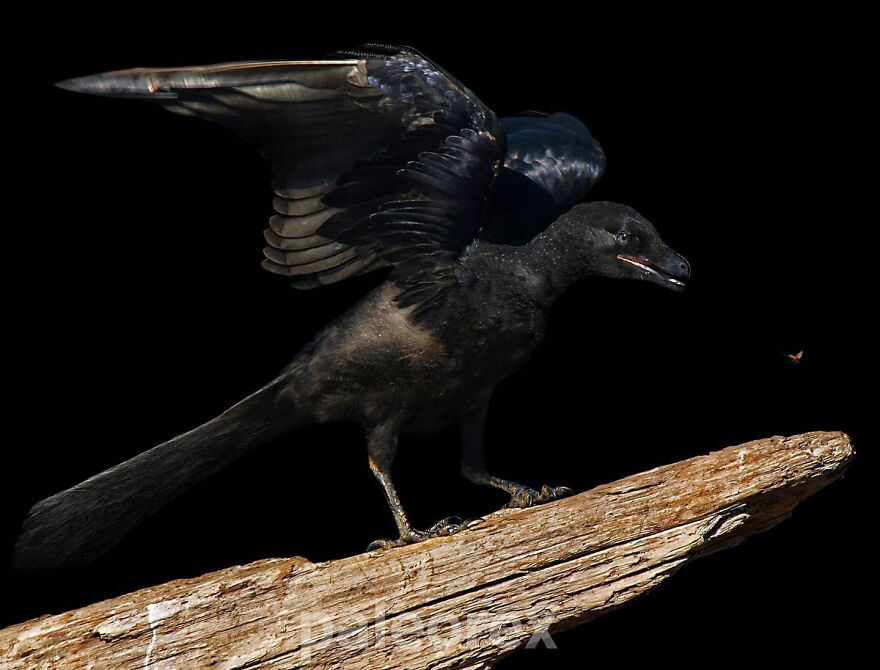
    #13

    Illustration of an extinct animal resembling a prehistoric bird perched on a branch against a black background.

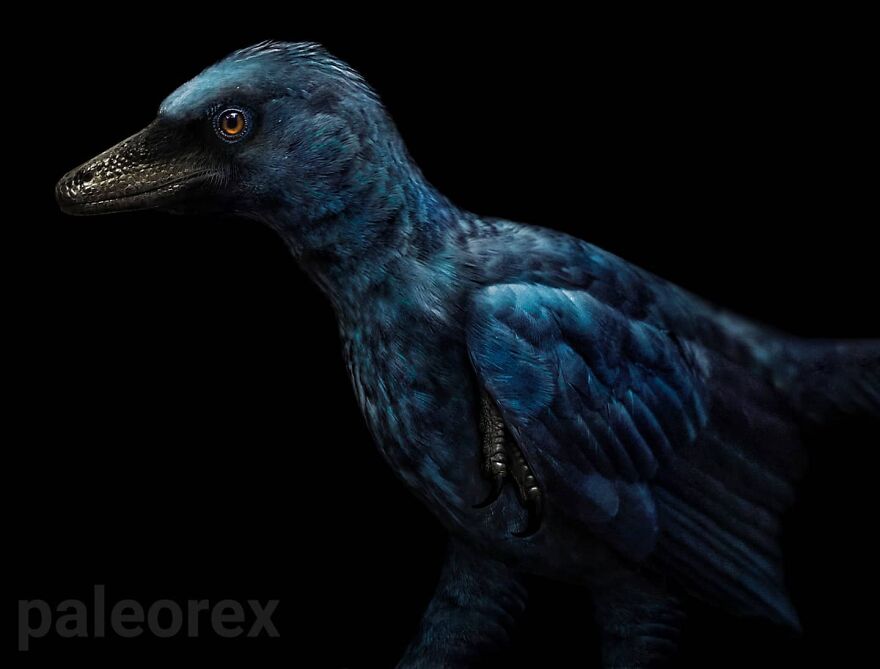
    Paleontologists view Archaeopteryx as a transitional fossil between dinosaurs and modern birds. With its blend of avian and reptilian features, it was long viewed as the earliest known bird. Discovered in 1860 in Germany, it's sometimes referred to as the "first bird". Its name is in fact a combination of two ancient Greek words: archaīos, meaning "ancient," and préryx, meaning "feather" or "wing." Archaeopteryx lived about 150 million years ago, during the late Jurassic Period in what is now southern Germany. At the time, most of Europe was an archipelago and was much closer to the equator than it is today, with latitude similar to Florida, providing this basal bird with a fairly warm climate. With an estimated weight of 0.8 kg, Archaeopteryx was about the size of the common raven. It also had well-developed wings and a long feathered tail. Based on these anatomical features, paleontologists believe that Archaeopteryx likely had some aerodynamic abilities, and could, therefore, fly.

    paleorex Report

    Susanne Bækvig
    Community Member
    3 years ago (edited) Created by potrace 1.15, written by Peter Selinger 2001-2017

    I have been wishing for pictures of more than the heads. This is as vivid as the heads but much more informative

    Crocodile
    Community Member
    3 years ago Created by potrace 1.15, written by Peter Selinger 2001-2017

    I have one of these on Ark Survival Evolved looks better with a mix of dark and light browns.

    Serenity
    Community Member
    3 years ago Created by potrace 1.15, written by Peter Selinger 2001-2017

    Fun fact!: Edgar Allan Poe's famous poem, 'The Raven', was originally called 'The Archaeopteryx'.

    Kevin Camp
    Community Member
    3 years ago Created by potrace 1.15, written by Peter Selinger 2001-2017

    If this bird is the evolutionary forebear of the classic Raven as we know today, that would help explain the relative high intelligence of the Raven today. It takes time for intelligence to develop even if it ends on an evolutionary dead end.

    Vexorg2
    Community Member
    3 years ago Created by potrace 1.15, written by Peter Selinger 2001-2017

    It's an ancient bird & I don't think that they've linked them to any modern family. Just burb.

    Load More Replies...
    Mike Morales
    Community Member
    3 years ago Created by potrace 1.15, written by Peter Selinger 2001-2017

    An OG bird. You do you, set the path for them all my feathered friend

    Kate Phillips
    Community Member
    3 years ago Created by potrace 1.15, written by Peter Selinger 2001-2017

    Preferred being called Steve, because not even he could pronounce his own name. Thought his parents were jerks.

    View more comments
    ADVERTISEMENT
    #14

    Realistic illustration of an extinct animal showing detailed features and sharp teeth in a side profile view.

    Ambulocetus was an early amphibious cetacean from Pakistan that lived roughly 48 million years ago during the Early Eocene. The name Ambulocetus means in fact “walking whale,” suggesting that this ancient mammal looked very different from modern whales and more like a dog-like animal. It likely lived both on land and in water, such as lakes and rivers.

    paleorex Report

    Shea Keenan
    Community Member
    3 years ago Created by potrace 1.15, written by Peter Selinger 2001-2017

    I was thinking it looks like an angry seal.

    Load More Replies...
    jolie laide
    Community Member
    3 years ago Created by potrace 1.15, written by Peter Selinger 2001-2017

    I don't know much of anything about this cutie either, will have to research! I'm have horrible survival instincts.. I want to boop the snoot even knowing I'd probably bleed out and die.

    Fluffy Doggo
    Community Member
    3 years ago Created by potrace 1.15, written by Peter Selinger 2001-2017

    It kinda looks like a Dobermann with seal ears

    TheWeirdDuckPerson
    Community Member
    3 years ago Created by potrace 1.15, written by Peter Selinger 2001-2017

    If you ignore the long spit it looks sorta like a platypus

    Bryn
    Community Member
    Premium
    3 years ago Created by potrace 1.15, written by Peter Selinger 2001-2017

    i can hear the throw up noise...

    YoyoSthlm
    Community Member
    3 years ago Created by potrace 1.15, written by Peter Selinger 2001-2017

    Well... it's not like the dinosaurs named themselves....

    View more comments
    #15

    Realistic illustration of an extinct animal showcasing detailed textures and features in lifelike form.

    The unusual and distinctive feature of Pachycephalosaurus is the high, domelike skull formed by a thick mass of solid bone, which safely cushioned its tiny brain. Abundant bony knobs at the front and sides of the skull further added to the unusual appearance. It has been suggested that these animals were head butters like living rams. Pachycephalosaurus lived during the Late Cretaceous Period of what is now North America.

    paleorex Report

    Hannah Edwards
    Community Member
    3 years ago Created by potrace 1.15, written by Peter Selinger 2001-2017

    I honestly don’t know why, but this pachycephalosaurus is giving me Jody Foster vibes.

    Kaveen Tdk
    Community Member
    3 years ago Created by potrace 1.15, written by Peter Selinger 2001-2017

    Oh my God its blue, thats fricking awesome

    View more comments
    ADVERTISEMENT
    #16

    Close-up of an extinct animal illustration showing detailed skin texture and feathers, highlighting extinct animals in real life.

    The considerable size of the skull of Stenonychosaurus contains one of the largest brain for its body size of any dinosaur, comparable to that of a modern emu. The teeth were sharp, curved, and serrated. The legs were particularly long and each foot was armed with a large killer claw, like that of the Velociraptor. Its large eyes suggest that Stenonychosaurus had keen eyesight and most likely hunted small prey, such as mammals, birds, and reptiles, at night or at dusk.

    paleorex Report

    PenguinPerson
    Community Member
    3 years ago Created by potrace 1.15, written by Peter Selinger 2001-2017

    does anybody see a penguin in this one?

    Got Myself 4 Dwarves
    Community Member
    3 years ago Created by potrace 1.15, written by Peter Selinger 2001-2017

    Thought it was cute, then I read the description

    Madison Souza
    Community Member
    3 years ago Created by potrace 1.15, written by Peter Selinger 2001-2017

    Nah, that's the Niffler from Fantastic Beasts.

    View more comments
    ADVERTISEMENT
    #17

    Realistic illustration of an extinct animal with detailed feathers showing how extinct animals might’ve looked.

    Bambiraptor is a Late Cretaceous, bird-like dromaeosaurid theropod dinosaur, which lived in North America. Although only juvenile specimens have been described, it is estimated that a fully grown Bambiraptor would have reached up to 1.5 meters in total length, and perhaps weighed only 5 kilograms. Bambiraptor was likely covered in feathers, and its skeleton shared many similarities with that of a modern bird. Based on analysis of the skull, experts suggest that this species had a brain nearly as large and complex as that of some modern birds. Bambiraptor was also a fast runner and a fierce hunter that may have preyed on small Cretaceous mammals and reptiles.

    paleorex Report

    No Name
    Community Member
    3 years ago Created by potrace 1.15, written by Peter Selinger 2001-2017

    I saw the name and was expecting a deer-like dino, oh my expectations 😔

    September
    Community Member
    3 years ago Created by potrace 1.15, written by Peter Selinger 2001-2017

    So named because of how it's mother died. Soon to meet Thumpersaurus, though so don't be sad

    Load More Replies...
    Judy Reynolds
    Community Member
    3 years ago Created by potrace 1.15, written by Peter Selinger 2001-2017

    An adult bambiraptor appears above. It is interesting to see the baby and the adult of the species.

    Fancy Man
    Community Member
    3 years ago Created by potrace 1.15, written by Peter Selinger 2001-2017

    Hopefully it’s mother didn’t die

    Debra McGeorge
    Community Member
    3 years ago Created by potrace 1.15, written by Peter Selinger 2001-2017

    Reminds me of an early eagle or seagull.

    Madison haynes
    Community Member
    3 years ago Created by potrace 1.15, written by Peter Selinger 2001-2017

    Looks like it's mixed with a dodo-

    Pamela Blue
    Community Member
    3 years ago Created by potrace 1.15, written by Peter Selinger 2001-2017

    If you've only ever found juvenile specimens, how do you know they're juvenile and not full grown? After all, you haven't found anything else to compare them with.

    View more comments
    ADVERTISEMENT
    #18

    Realistic illustration of an extinct animal showing detailed features and textures in vibrant colors against a black background.

    Pterodactylus is an iconic pterosaur that lived during the Late Jurassic in Germany. It was relatively small for a pterosaur, with a wingspan ranging from 50 centimeters to about 1 meter.

    It most likely hunted fish and had many long and narrow conical-shaped teeth.
    Like other pterosaurs, Pterodactylus had a crest on its skull composed mainly of soft tissues. However, solid crests have been found on larger, fully grown specimens, indicating that this was a display structure that became larger and more well developed as individuals reached maturity.

    paleorex Report

    Judy Reynolds
    Community Member
    3 years ago Created by potrace 1.15, written by Peter Selinger 2001-2017

    The most bird-like we have seen!

    Amy S.
    Community Member
    3 years ago Created by potrace 1.15, written by Peter Selinger 2001-2017

    Oh, the teeth. The teeth are freaking me out.

    Mystic Veteran
    Community Member
    3 years ago Created by potrace 1.15, written by Peter Selinger 2001-2017

    Reminds me of every day storks and cranes.

    Emma Nguyen
    Community Member
    3 years ago Created by potrace 1.15, written by Peter Selinger 2001-2017

    Terrifying pelican. I can't imagine having to get around a flock of these

    Sophia Morrison
    Community Member
    3 years ago Created by potrace 1.15, written by Peter Selinger 2001-2017

    I am not a fan of birds with teeth 😅

    Tanden Owell
    Community Member
    3 years ago Created by potrace 1.15, written by Peter Selinger 2001-2017

    Fun fact, Pterosaurs and Plesiosaurs are not dinosaurs but different groups of reptiles.

    Jill Pond
    Community Member
    3 years ago Created by potrace 1.15, written by Peter Selinger 2001-2017

    The crest reminds me of the Cassowary.

    View more comments
    #19

    Illustration of an extinct animal with a curved horn and colorful neck created by an artist showing how extinct animals looked.

    Parasaruolophus was a truly bizarre herbivorous dinosaur. Its most striking feature was the long bony crest projecting from the back of the skull. It was hollow and contained a series of tubes that elongated the nasal passages. Perhaps it was used to produce calls in order to keep in touch with its herd in the heart of thick forests. Other theories propose that the crest was used for display or as a means of thermoregulation.

    It was a docile herbivore but of considerable size, in fact, its body length is estimated at 9.5 meters, for a weight of over 2 tons.

    Parasaruolophus belonged to the hadrosaur family, a group of large herbivorous dinosaurs that is part of to the order of the Ornithischians, which lived during the Cretaceous period.

    paleorex Report

    Achilles of Myrmidon
    Community Member
    3 years ago (edited) Created by potrace 1.15, written by Peter Selinger 2001-2017

    It's eyes is strikingly similar to that of a goat

    jolie laide
    Community Member
    3 years ago Created by potrace 1.15, written by Peter Selinger 2001-2017

    I agree that they probably used their crests for sending out loud, long calls. These guys were all over the place here in North America, and I think Asia too but mainly western China into surrounding countries. Hadrosaurs seem to be sweethearts, they loved to keep in herds and seem to like raising their babies in the community. According to new studies (the help of the medical field), a lot of these guys also ended up suffering from cancer, sadly. There's also been studies that postulate that these guys REALLY enjoyed eating plants from along lake and river banks.

    Debra McGeorge
    Community Member
    3 years ago Created by potrace 1.15, written by Peter Selinger 2001-2017

    Your comments are so authoritative. They help me understand so much more. Thank you!

    Load More Replies...
    Silvia John
    Community Member
    3 years ago Created by potrace 1.15, written by Peter Selinger 2001-2017

    It reminds me to the weird creatures from "Star Wars". Kind of Jar Jar Binks...

    somnomania
    Community Member
    3 years ago Created by potrace 1.15, written by Peter Selinger 2001-2017

    ohhh, the goat-like pupils are a nice touch, i wonder if any dinosaurs actually had that! this is a childhood favorite species of mine, too.

    d3fau1t pl4yer
    Community Member
    3 years ago Created by potrace 1.15, written by Peter Selinger 2001-2017

    This is my favorite dinosaur I love the coloring in this depiction

    Timothy Workman
    Community Member
    3 years ago Created by potrace 1.15, written by Peter Selinger 2001-2017

    Yes! Not only is the coloring Beautiful. The animal looks pretty cool overall. Since it was an herbivore. We may have been able to interact with it. Just don't let it sit on you!!!!

    View more comments
    ADVERTISEMENT
    #20

    Colorful detailed illustration of an extinct animal showing how these creatures might have looked in real life.

    Bambiraptor is a Late Cretaceous, bird-like dromaeosaurid theropod dinosaur, which lived in North America.

    Although only juvenile specimens have been described, it is estimated that a fully grown Bambiraptor would have reached up to 1.5 meters in total length, and perhaps weighed only 5 kilograms. Bambiraptor was likely covered in feathers, and its skeleton shared many similarities with that of a modern bird. Based on analysis of the skull, experts suggest that this species had a brain nearly as large as that of some modern birds. Bambiraptor was also a fast runner and a fierce hunter that may have preyed on small Cretaceous mammals and reptiles.

    paleorex Report

    jolie laide
    Community Member
    3 years ago Created by potrace 1.15, written by Peter Selinger 2001-2017

    Hey, the mouse hunter! There were a couple papers put out in my country (USA) about these guys, and one of them postulated, that these guys were excellent mousers. Kinda like owls today, and from what I read at the time, based off of fossil records, etc. I can see that.

    Emma Nguyen
    Community Member
    3 years ago Created by potrace 1.15, written by Peter Selinger 2001-2017

    Aw so that little baby grew up so beautiful

    Helwin
    Community Member
    3 years ago Created by potrace 1.15, written by Peter Selinger 2001-2017

    With a name like that I expected it to have antlers at least !

    Rose Button 🇺🇦
    Community Member
    3 years ago Created by potrace 1.15, written by Peter Selinger 2001-2017

    Wow, gorgeous. The bird like species here blow me away.

    Steven McTowelie
    Community Member
    3 years ago (edited) Created by potrace 1.15, written by Peter Selinger 2001-2017

    1.5 meters but weighs 5 kg, must have been a long boi

    John mink
    Community Member
    3 years ago Created by potrace 1.15, written by Peter Selinger 2001-2017

    Same as 17 ? Juvenile and 20 adult?

    View more comments
    ADVERTISEMENT
    #21

    Realistic illustration of an extinct animal with blue feathers and detailed textures against a black background.

    Microraptor was a feathered dinosaur, an early ancestor to the birds. Incredibly well-preserved fossil remains found in China, have allowed paleontologists to piece together a better picture of the evolution of dinosaurs, from feathered ground dwelling creatures, to those that took to the skies, leading to the evolution of birds.

    At less than one meter in average length, Microraptor was one of the smallest dromaeosaurs or raptors of its time, hence its name, but still remains a specimen of much importance.

    Microraptor was unable to efficiently fly through the forests where it once lived during the early Cretaceous, instead it used not two, but four, feathered limbs to glide from tree to tree, likely to hunt its prey or evade from predators. These feathers were also used for maintaining body temperature and for show but, most importantly, their shape created the ideal aerodynamic surface.

    paleorex Report

    Ozymandias73
    Community Member
    3 years ago Created by potrace 1.15, written by Peter Selinger 2001-2017

    Which he would've painted it with its wings outspread. That would've looked awesome

    Crocodile
    Community Member
    3 years ago (edited) Created by potrace 1.15, written by Peter Selinger 2001-2017

    I hate. these on Ark.

    No Name
    Community Member
    3 years ago Created by potrace 1.15, written by Peter Selinger 2001-2017

    I'm in love with the blue 😍💙

    Tushar Roy Mukherjee
    Community Member
    3 years ago Created by potrace 1.15, written by Peter Selinger 2001-2017

    You should've painted it black to keep in continuity with modern melanosome analysis of its fossils...also, it had a tail fan , so thats 5 wings...but I must say, this is a beautiful job, and then, who knows, maybe it had a blue subspecies...like Cretaceous period bugs could tell black from blue, or it mattered, coz they were toast anyway...

    Tia Rochon
    Community Member
    3 years ago Created by potrace 1.15, written by Peter Selinger 2001-2017

    Obviously I wouldn't know, but perhaps she was implying that, much like a raven or crow, the black feather's shimmered blue (or blueish, purplish, greenish) in the sunlight.

    Load More Replies...
    Mike Morales
    Community Member
    3 years ago Created by potrace 1.15, written by Peter Selinger 2001-2017

    Have you seen exotic jungle birds or birds or paradise? The color of these animals would have been so brilliant

    Madison haynes
    Community Member
    3 years ago Created by potrace 1.15, written by Peter Selinger 2001-2017

    This dinosaur is my favorite dinosaur I've heard of, I like it because its smol

    Timothy Workman
    Community Member
    3 years ago Created by potrace 1.15, written by Peter Selinger 2001-2017

    Very cool!!! My favorite shade of Blue!!!!!

    View more comments
    ADVERTISEMENT
    #22

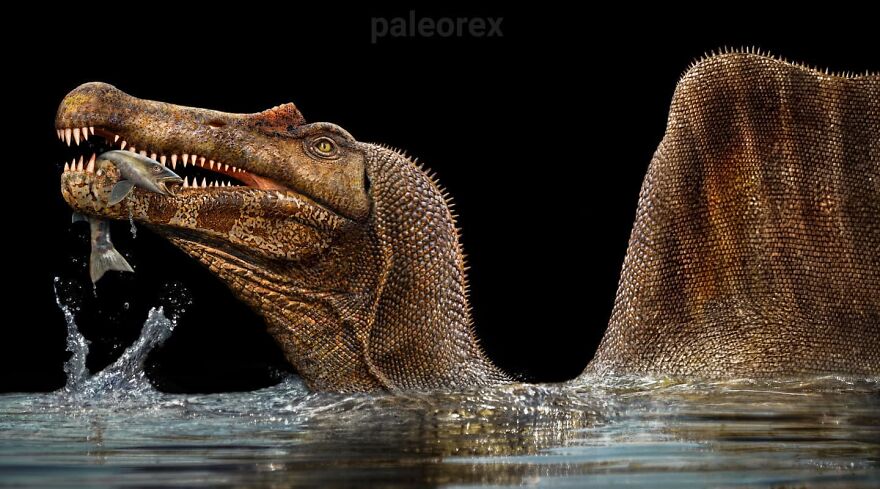
    Realistic illustration of an extinct Spinosaurus catching a fish, showcasing how extinct animals might’ve looked in real life.

    Spinosaurus is probably the most enigmatic dinosaur of all. For decades, this colossal theropod has been the subject of much controversy in the scientific community and many have wondered how this predatory giant from the Cretaceous period could live and hunt. Spinosaurus was huge, in fact it is considered the longest known carnivorous dinosaur and measured about 15 meters in length. It also had an extravagant "sail" on its back, which measured more than a man's height. The function of this peculiar back structure is not known with certainty. One hypothesis suggests that the sail was used to regulate body temperature.

    When the animal had its sail turned sideways towards the sun's rays, its large surface, covered with blood vessels, would quickly absorb the heat, thus heating the whole body. An alternative hypothesis suggests that the sail was decorated with bright colors, and was therefore used by males for sexual displays to attract the attention of females. Recent studies suggest that Spinosaurus spent most of its time in the water and swam using its powerful, fin-like tail. This lifestyle is apparently unique among dinosaurs. There were already several clues that suggested an adaptation of this animal to an aquatic lifestyle: the teeth were similar to those of crocodiles and perfect for catching fish, the front legs were equipped with strong curved claws to hold the most slippery prey, the hind legs were short and the foot bones were broad, suggesting that this dinosaur possessed webbed feet, like those of seabirds.
    paleorex Report

    Judy Reynolds
    Community Member
    3 years ago Created by potrace 1.15, written by Peter Selinger 2001-2017

    I like the contrast between the head view, and this one, showing more of the body.

    Dawn C
    Community Member
    3 years ago Created by potrace 1.15, written by Peter Selinger 2001-2017

    the original Loch Ness Monster 🙂😉

    Steve Griffin
    Community Member
    3 years ago Created by potrace 1.15, written by Peter Selinger 2001-2017

    So there were regular fish back then?

    Sam Cook
    Community Member
    3 years ago Created by potrace 1.15, written by Peter Selinger 2001-2017

    One of my favorite dinosaurs. I loved seeing it in Jurassic Park III, and I especially love its fight with the T-Rex.

    Bobby
    Community Member
    3 years ago Created by potrace 1.15, written by Peter Selinger 2001-2017

    If you highlight Spinosaurus and Search Web, Jurassic World makes it possible to view this dinosaur in your room, in 3D. Quite a cool effect.

    ADVERTISEMENT
    #23

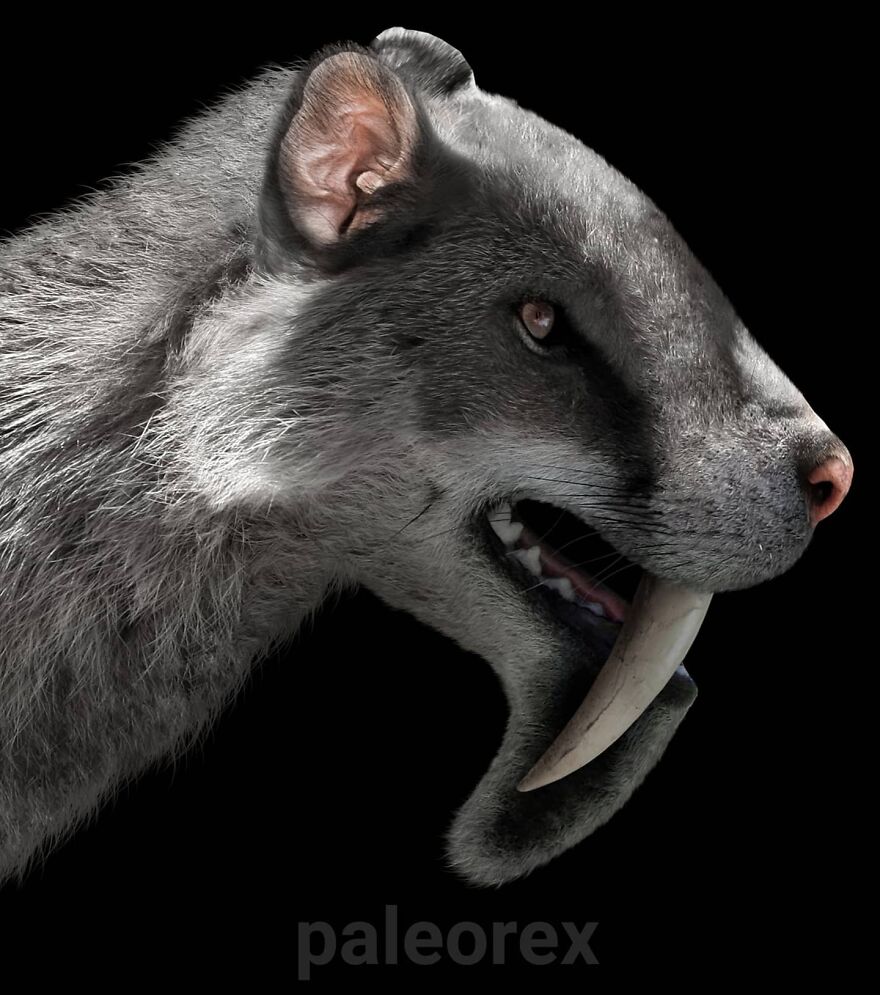
    Realistic illustration of an extinct saber-toothed animal showing detailed fur and teeth in a side profile view

    Thylacosmilus is an extinct genus of saber-toothed mammals that roamed South America between 9 and 3 million years ago. Though Thylacosmilus looks remarkably similar to the "saber-toothed cats", it was not a felid, like the well-known North American Smilodon, but a sparassodont, a group related to marsupials, and only superficially resembled other saber-toothed mammals due to convergent evolution.

    paleorex Report

    Mistralok
    Community Member
    3 years ago Created by potrace 1.15, written by Peter Selinger 2001-2017

    And I thought joeys might be a little scratchy in the pouch.

    Crocodile
    Community Member
    3 years ago Created by potrace 1.15, written by Peter Selinger 2001-2017

    Almost made it's chin as iconic as the angry grape with the rock collection from marvel

    Helwin
    Community Member
    3 years ago Created by potrace 1.15, written by Peter Selinger 2001-2017

    The ears are adorable, 100% would like to pet.

    Candice Kommer
    Community Member
    3 years ago Created by potrace 1.15, written by Peter Selinger 2001-2017

    I was thinking saber-toothed badger...

    TyrantrumGogoat
    Community Member
    3 years ago Created by potrace 1.15, written by Peter Selinger 2001-2017

    Wouldn't that hurt it? I love the long toothed cats!

    Vexorg2
    Community Member
    3 years ago Created by potrace 1.15, written by Peter Selinger 2001-2017

    Only when they're still nursing! Kidding! Baby teeth are much smaller. Rancho la Brea has baby Smilodons showing the growth stages.

    Load More Replies...
    Lisa Shaw
    Community Member
    3 years ago Created by potrace 1.15, written by Peter Selinger 2001-2017

    Early weaselid? That mated with an opossum?

    Jeremy Strout
    Community Member
    3 years ago Created by potrace 1.15, written by Peter Selinger 2001-2017

    Dudes got a Jawline that could but steel.

    Debra McGeorge
    Community Member
    3 years ago Created by potrace 1.15, written by Peter Selinger 2001-2017

    It’s truly amazing that this specimen is related to marsupials. It’s head is similar to a wolf.

    View more comments
    #24

    Realistic illustration of an extinct animal combining reptile and bird features shown in profile on black background

    Utahraptor, meaning Utah's predator, was one of the largest dromaeosaurid theropod dinosaurs or raptors to ever exist. It lived in North America during the Early Cretaceous period. Unlike most dromaeosaurids, it was much more heavy-built, comparable to a polar bear in weight, and estimated to have reached up to 7 meters in length. Like most of its kind, it possessed a large sickle claw, perfectly adapted to dispatch its prey. Although feathers have never been found in association with Utahraptor specimens, there is strong phylogenetic evidence suggesting that all dromaeosaurids possessed them.

    paleorex Report

    YoyoSthlm
    Community Member
    3 years ago Created by potrace 1.15, written by Peter Selinger 2001-2017

    That dude is going to the club

    somnomania
    Community Member
    3 years ago Created by potrace 1.15, written by Peter Selinger 2001-2017

    this is the species that the jurassic park raptors were originally based on; actual velociraptors (which is what the movie ones supposedly were) were closer to cat-size, much less intimidating than this

    View more comments
    ADVERTISEMENT
    ADVERTISEMENT
    #25

    Realistic illustration of an extinct animal with detailed textures showing how extinct animals might have looked in real life.

    Psittacosaurus is a genus of extinct ceratopsian dinosaur from the Early Cretaceous of what is now Asia, existing around 115 million years ago.

    The skull of Psittacosaurus is highly modified compared to other ornithischian dinosaurs of its time. It is very tall in height and short in length, and both upper and lower jaws sport a pronounced beak. The bony core of the beak may have been sheathed in keratin to provide a sharp cutting surface for cropping plantmaterial. Additionally, in some species, bony horns protrude from the skull.

    paleorex Report

    Dawn C
    Community Member
    3 years ago Created by potrace 1.15, written by Peter Selinger 2001-2017

    this 'saur has too much going on with its face! Don't know what to focus on!😆

    Norma
    Community Member
    3 years ago Created by potrace 1.15, written by Peter Selinger 2001-2017

    Isn't this the thing from Pitch Black???

    TyrantrumGogoat
    Community Member
    3 years ago Created by potrace 1.15, written by Peter Selinger 2001-2017

    Yeah, I think the Pokémon torterra was based off of this.

    Lauchlan gibson
    Community Member
    3 years ago Created by potrace 1.15, written by Peter Selinger 2001-2017

    Tons of Pokémon are based on prehistoric animals

    Load More Replies...
    View more comments
    #26

    Realistic illustration of an extinct animal showing detailed skin texture and feathers eating a leaf on a black background.

    Scutellosaurus was a small ornithischian dinosaur that lived approximately 196 million years ago during the Early Jurassic in what is now Arizona, USA. Scutellosaurus was lightly built and was around 1.2 metres long and 50 centimeters tall. One of the more striking features of this small herbivorous dinosaur was the large number of osteoderms that ran along its neck to its back and as far down as its tail. These formed parallel rows, with as many as five rows on each side.

    paleorex Report

    Tushar Roy Mukherjee
    Community Member
    3 years ago Created by potrace 1.15, written by Peter Selinger 2001-2017

    Did it belong to the Thyreophora( Stegosaur- Ankylosaur family) ?

    Emma Nguyen
    Community Member
    3 years ago Created by potrace 1.15, written by Peter Selinger 2001-2017

    Scutellosaurus? More like So-cute-llosaurus!😶I'll leave

    Iapetos
    Community Member
    3 years ago Created by potrace 1.15, written by Peter Selinger 2001-2017

    Scutellosaurus is best Ankylosaur.

    Jofeen
    Community Member
    3 years ago Created by potrace 1.15, written by Peter Selinger 2001-2017

    Why do many of these size Dinos have pouches in their necks?

    Louieeeeee
    Community Member
    3 years ago Created by potrace 1.15, written by Peter Selinger 2001-2017

    Scutell makes me think scuttle, like it would scuttle around

    View more comments
    ADVERTISEMENT
    #27

    Detailed digital illustration of an extinct animal showing realistic feathers and beak in vivid colors against a black background.

    Titanis was a giant flightless terror bird that inhabited in North America during the early Pliocene to early Pleistocene epochs. Titanis was a large fearsome predator, that was almost 2 meters tall and weighed around 150 kilograms. It had long and powerful legs and it could run at high speeds when hunting its prey. Although its skull has not been discovered yet, it is likely that it had a large, axe-like beak, like its relatives.

    paleorex Report

    Earl Grey
    Community Member
    3 years ago Created by potrace 1.15, written by Peter Selinger 2001-2017

    Now THAT is an angry bird.

    Jon S.
    Community Member
    3 years ago Created by potrace 1.15, written by Peter Selinger 2001-2017

    This artist is clearly a final fantasy fan!

    Abigail Bowman
    Community Member
    3 years ago Created by potrace 1.15, written by Peter Selinger 2001-2017

    100% just an angry, cheeto-dusted flamingo

    Mystic Veteran
    Community Member
    3 years ago Created by potrace 1.15, written by Peter Selinger 2001-2017

    Looks like an eagle, runs like an ostrich/emu

    Jenna
    Community Member
    3 years ago Created by potrace 1.15, written by Peter Selinger 2001-2017

    He looks like he is yelling at kids to get off his lawn

    Kait C.
    Community Member
    3 years ago Created by potrace 1.15, written by Peter Selinger 2001-2017

    Giving me major eagle vibes

    View more comments
    #28

    Realistic illustration of an extinct animal with textured skin and tusks, showing how extinct animals might have looked.

    Chilotherium is a genus of prehistoric rhinoceros that lived during the Miocene and Pliocene in Asia and Eastern Europe. At the shoulders, it was as tall as a fully grown man and weighed between 1 to 2.5 tons.

    Its most notable feature is its two large upward-curving tusks, formed from enlarged incisor teeth, which rose up from the lower jaw. Although these peculiar tusks were present in both males and females, they seem to have been larger in the males, suggesting that they might have been used for display. ‬They were also likely used for species recognition as well as possible practical applications.

    paleorex Report

    -logansucrose-
    Community Member
    3 years ago Created by potrace 1.15, written by Peter Selinger 2001-2017

    the tusks on the lower jaw are so cool

    Mystic Veteran
    Community Member
    3 years ago Created by potrace 1.15, written by Peter Selinger 2001-2017

    Sadly, modern rhinos are nearly extinct too

    Alana Voeks
    Community Member
    3 years ago Created by potrace 1.15, written by Peter Selinger 2001-2017

    You know, this makes me wonder. Has anyone ever drawn these more like hippos? They have that same tooth shape. And you don't see the bottom teeth with hippos unless their mouth is open.

    Linda Ingmanson
    Community Member
    3 years ago Created by potrace 1.15, written by Peter Selinger 2001-2017

    The lighting on this one is beautiful.

    Koenigsegg Jesko
    Community Member
    3 years ago Created by potrace 1.15, written by Peter Selinger 2001-2017

    ancient rhinocerus with a bit of pig vibes

    Orange Is Aging
    Community Member
    3 years ago Created by potrace 1.15, written by Peter Selinger 2001-2017

    So it’s a rhino with its horns in the wrong place

    View more comments
    ADVERTISEMENT
    ADVERTISEMENT
    #29

    Detailed illustration of an extinct animal showing how these creatures might’ve looked in real life by an artist.

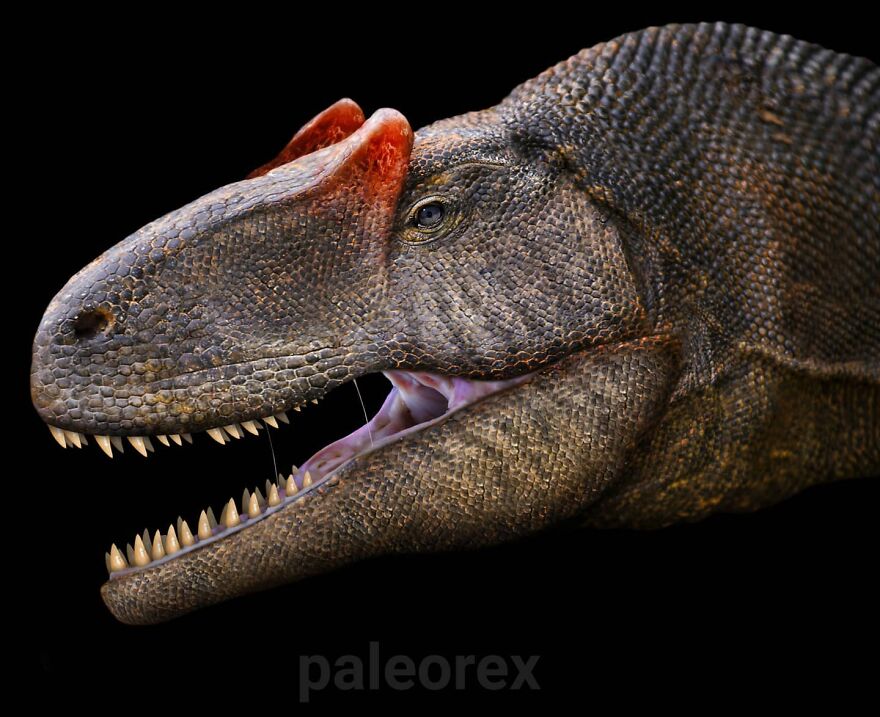
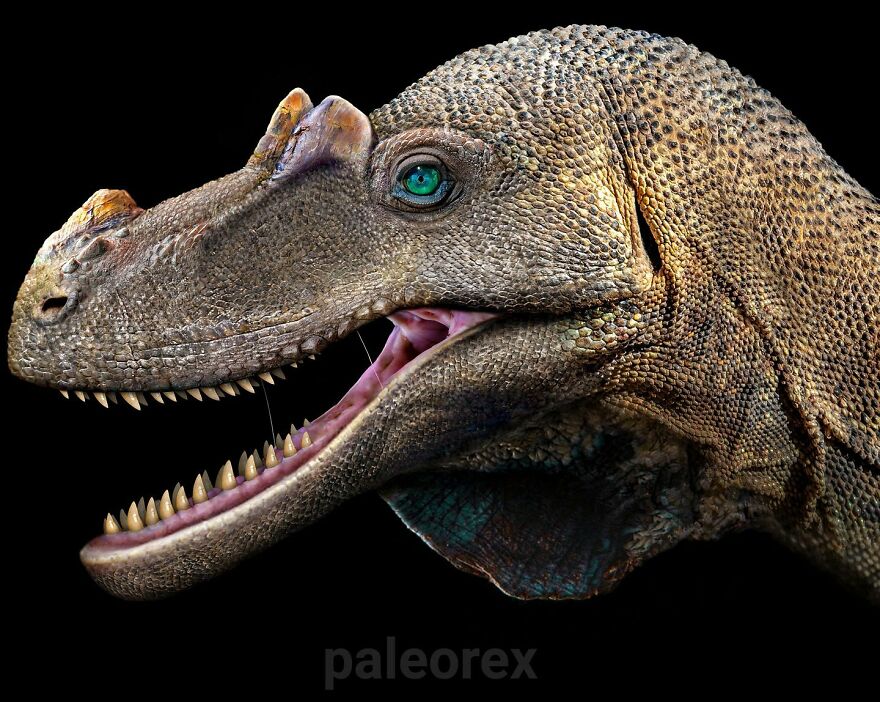
    As one of the most abundant large predators in the Jurassic, Allosaurus was at the top of the food chain, likely preying on the large herbivorous dinosaurs and, perhaps, also other predators it shared the land with. It averaged 9.5 meters in length, though fragmentary remains suggest it could have reached over 12 meters, making it one of the largest predatory dinosaurs of its time. The skull had a pair of horns above and in front of the eyes. They were likely covered in a keratin sheath and may have had a variety of functions, including: acting as sunshades for the eyes and being used for display, as they probably possessed a distinct and bright coloration.

    paleorex Report

    #30

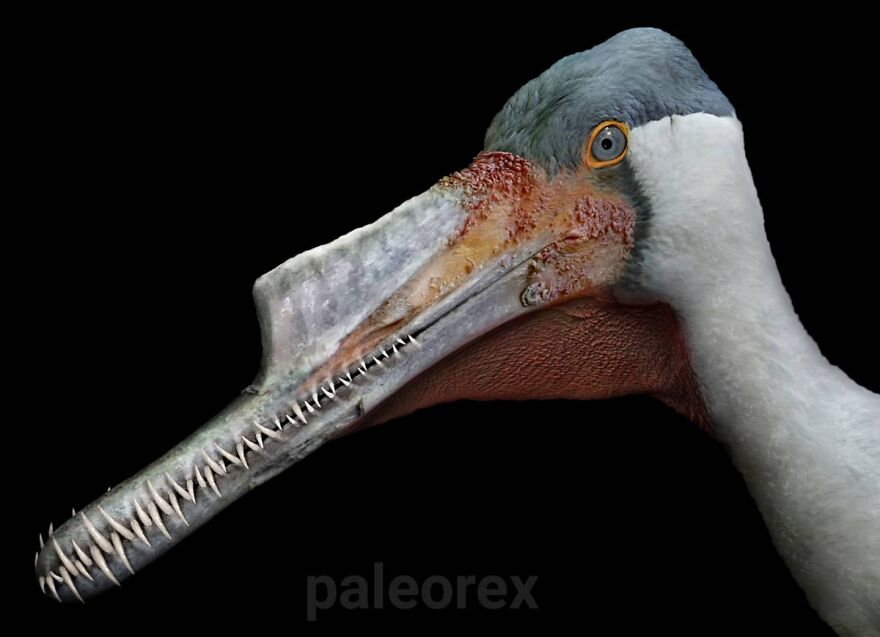
    Illustration of an extinct animal showing detailed features of a prehistoric bird with a long, toothed beak.

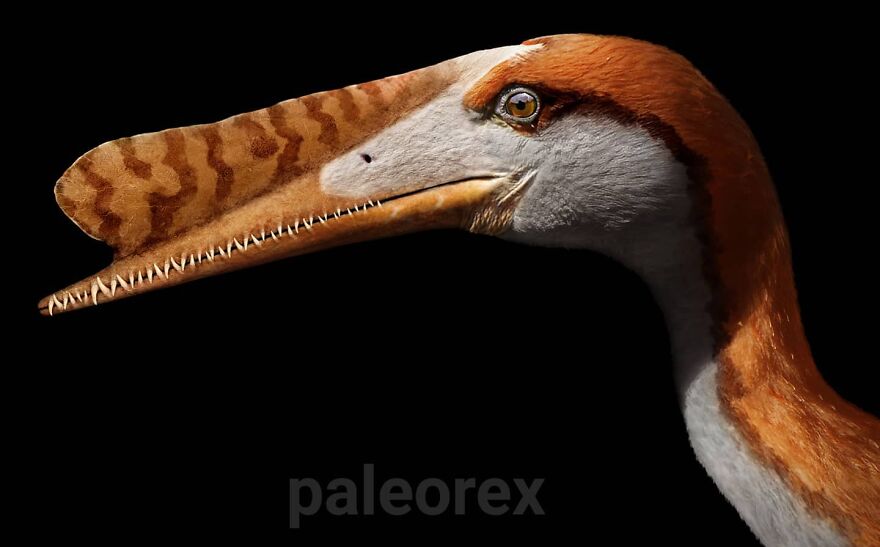
    Hamipterus was an early Cretaceous pterosaur that once lived in northwestern China. Its skull was relatively long and narrow, and on the top it had a long, bony crest running from near the tip of the snout to the rear of the skull. The teeth were thin, widely spaced and conical, and the tooth row extended for almost the entire length of the upper and lower jaws. It also estimated that Hamipterus would have grown to have a wingspan of up to 3.5 m, making it a medium-sized pterosaur.

    paleorex Report

    Kristina Peterson
    Community Member
    3 years ago Created by potrace 1.15, written by Peter Selinger 2001-2017

    WOW! The first one I said Wow and each picture is really Wow and amazing!!!❤️❤️❤️❤️❤️ So I love them all equally as they are amazing and out of this world!!!?

    Fieke Engelen
    Community Member
    3 years ago Created by potrace 1.15, written by Peter Selinger 2001-2017

    Why were animals so much more colourful than they are now?

    Jofeen
    Community Member
    3 years ago Created by potrace 1.15, written by Peter Selinger 2001-2017

    So cute until you see the teeth of nightmares

    KariLovesHerKat
    Community Member
    3 years ago Created by potrace 1.15, written by Peter Selinger 2001-2017

    It's all the teeth on these birds that's freaking me out

    Nolasaurous
    Community Member
    3 years ago Created by potrace 1.15, written by Peter Selinger 2001-2017

    Alexander Hamipeteris my name is Alexander Hamipeteris

    ADVERTISEMENT
    #31

    Quetzalcoatlus

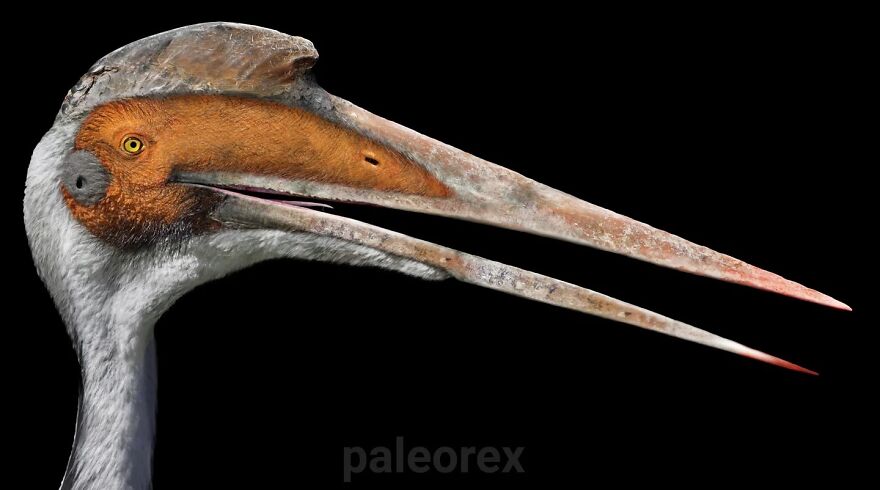
    Named after the serpent god of the Azteks, and with the same wingspan of a military fighter jet, Quetzalcoatlus was the undisputed king of the skies; a magnificent pterosaur, the largest flying vertebrate to have ever existed. It stood 5.5 meters high, so tall that it could have looked at a giraffe straight in the eyes. It soared over the lands of North America about 66 million years ago, during the Late Cretaceous. Fossil remains suggest that Quetzalcoatlus had a long sharp beak, similar to that of modern storks. It was probably a scavenger, scanning the ground for a meal from far up in the sky and using its long neck and skull to probe deep into the carcasses of dead animals such as dinosaurs.

    paleorex Report

    DuchessDegu
    Community Member
    3 years ago Created by potrace 1.15, written by Peter Selinger 2001-2017

    Not so lucky if it poops on you, you'd probably drown in bird s**t

    Tushar Roy Mukherjee
    Community Member
    3 years ago Created by potrace 1.15, written by Peter Selinger 2001-2017

    The neck should've been thicker, else its head would collapse under its own weight, despite being pneumatised.

    Joe Das
    Community Member
    3 years ago Created by potrace 1.15, written by Peter Selinger 2001-2017

    Although they look heavy, avian skulls are surprisingly light. Their construction might be thick and sturdy, but the material is ingeniously lightweight.

    Load More Replies...
    Steve R
    Community Member
    3 years ago Created by potrace 1.15, written by Peter Selinger 2001-2017

    "largest flying vertebrate"? Does that mean there's a flying invertebrate that's bigger? If not, just say it's the largest flying animal ever.

    Vexorg2
    Community Member
    3 years ago Created by potrace 1.15, written by Peter Selinger 2001-2017

    Biggest inverts only had 2.5' (Meganeura)

    Load More Replies...
    deadinside
    Community Member
    3 years ago Created by potrace 1.15, written by Peter Selinger 2001-2017

    OMG ITS EYES ARE SO SMOL I LOVE IT

    Becky Samuel
    Community Member
    3 years ago Created by potrace 1.15, written by Peter Selinger 2001-2017

    The eyes aren't small, the pterosaur is *huge*. It's the same illusion you get with a blue whale's eye.

    Load More Replies...
    Judy Reynolds
    Community Member
    3 years ago Created by potrace 1.15, written by Peter Selinger 2001-2017

    It could look a giraffe in the eye! Wow!!!

    Joe Das
    Community Member
    3 years ago Created by potrace 1.15, written by Peter Selinger 2001-2017

    How did this monstrosity ever take off???

    Vexorg2
    Community Member
    3 years ago Created by potrace 1.15, written by Peter Selinger 2001-2017

    There was a study that just came out Dec 21. They suggest 8' jumps to clear the ground for the 1st downstroke.... Maybe they kept their wings tucked in a little for the 1st downstroke to prevent damage if things went wrong.

    Load More Replies...
    party marty
    Community Member
    3 years ago Created by potrace 1.15, written by Peter Selinger 2001-2017

    Why does it remind me of ralph from the simpsons

    debrina blackmoon
    Community Member
    3 years ago Created by potrace 1.15, written by Peter Selinger 2001-2017

    Here's a quetzal from Central America. It really should be a pokémon. :) shuttersto...a-jpeg.jpg shutterstock-549082930_main_1543502021955-62268069a803a-jpeg.jpg

    View more comments
    #32

    Albertosaurus

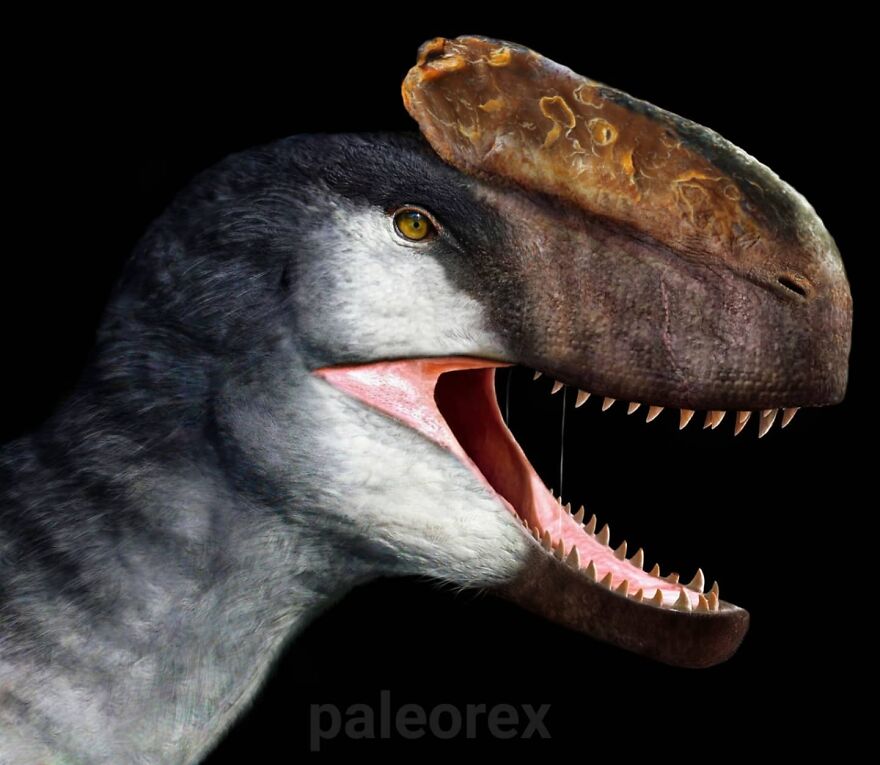
    Albertosaurus was a close relative of Tyrannosaurus, but smaller and not as heavily built. In lived in western North America during the Late Cretaceous Period, about 70 million years ago. Albertosaurus was a fierce predator and, on average, adults measured up to 9 m long and weighed between 1.3 tonnes and 1.7 tonnes, making them the apex predators of their environment.

    paleorex Report

    ADVERTISEMENT
    ADVERTISEMENT
    #33

    Majungasaurus

    Known from several well-preserved skeletal remains found in Madagascar, Majungasaurus has become one of the best-studied theropod dinosaurs from the Southern Hemisphere. It appears to be most closely related to the abelisaurids, a unique and bizarre group of carnivorous therapod dinosaurs that lived during the late Cretaceous.

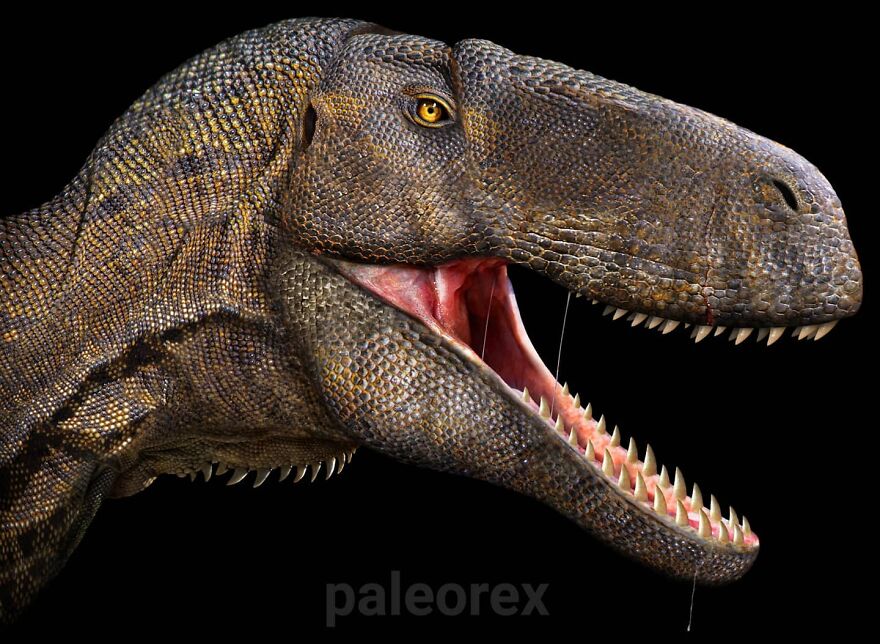
    Majungasaurus shared common characteristics with other abelisaurids, mainly the short snout and very short forelimbs. However, it was distinct for its wider skull and a single rounded horn on the roof of its skull. It also had a very rough, sculptured texture and thickened bone on the outside faces of the skull bones. This was carried to an extreme on the nasal bones, which were extremely thick and fused together. In life, these structures would have been covered with some sort of integument, possibly made of keratin. Majungasaurus was a medium-sized theropod that measured on average around 7 meters in length, though being the largest and most fierce predator in its domain.

    paleorex Report

    RafCo
    Community Member
    3 years ago Created by potrace 1.15, written by Peter Selinger 2001-2017

    Mmmmmm. Skeksis good yesssss

    ADVERTISEMENT
    #34

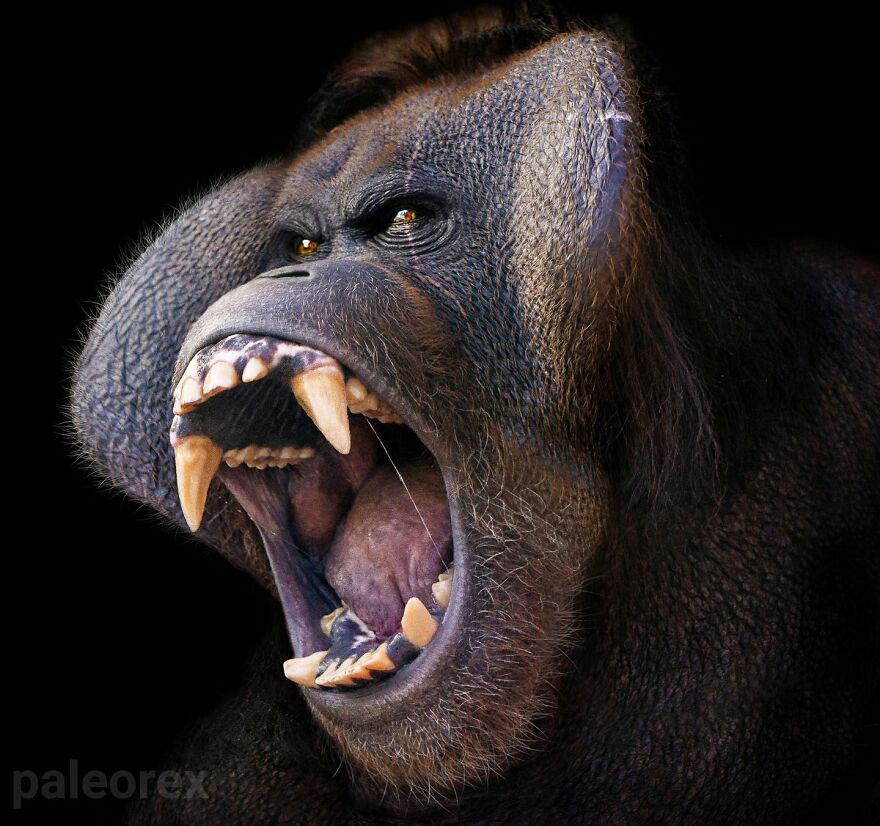
    Gigantopithecus

    Gigantopithecus was the largest ape to ever exist. It lived during the Early to Middle Pleistocene of southern China.
    Although the size estimates are highly speculative, as only tooth and jaw elements are known, it is estimated that
    Gigantopithecus had a total height of about 3 meters and a weight of up to 250 kg, which is about 40% heavier than the average male gorilla.

    paleorex Report

    Murtlap essence
    Community Member
    3 years ago Created by potrace 1.15, written by Peter Selinger 2001-2017

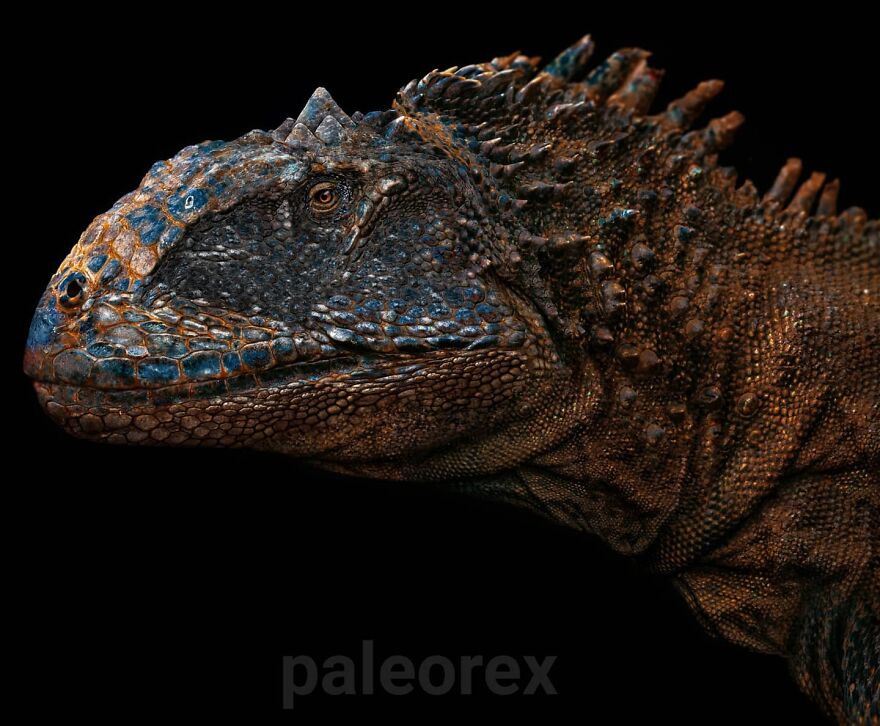
    Looks more like a male orangutan than a gorilla. Bigfoot is accurate.

    Load More Replies...
    #35

    Proceratosaurus

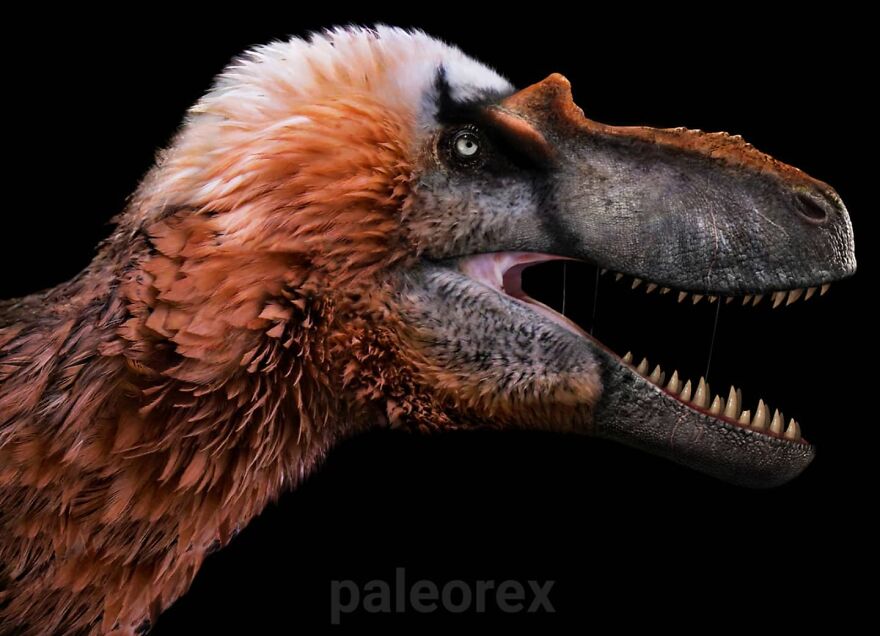
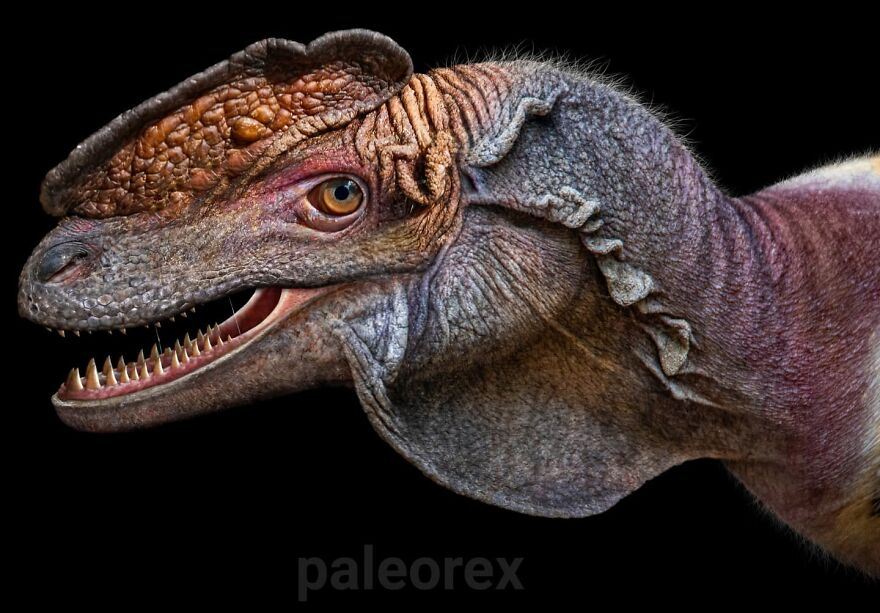
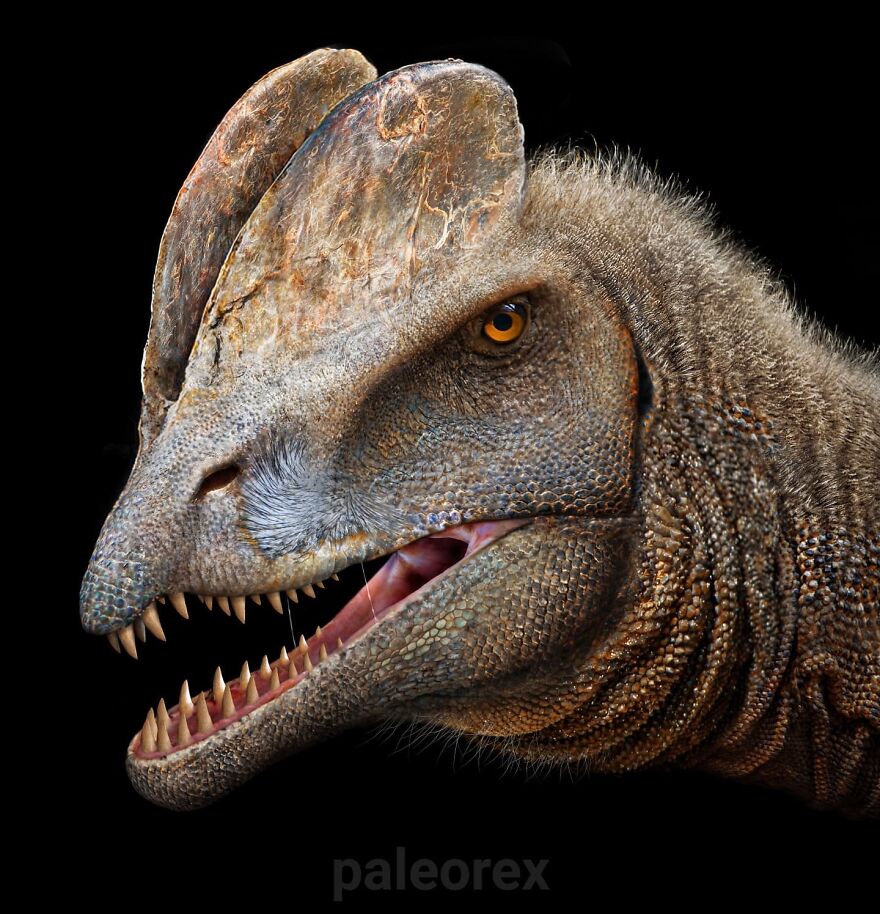
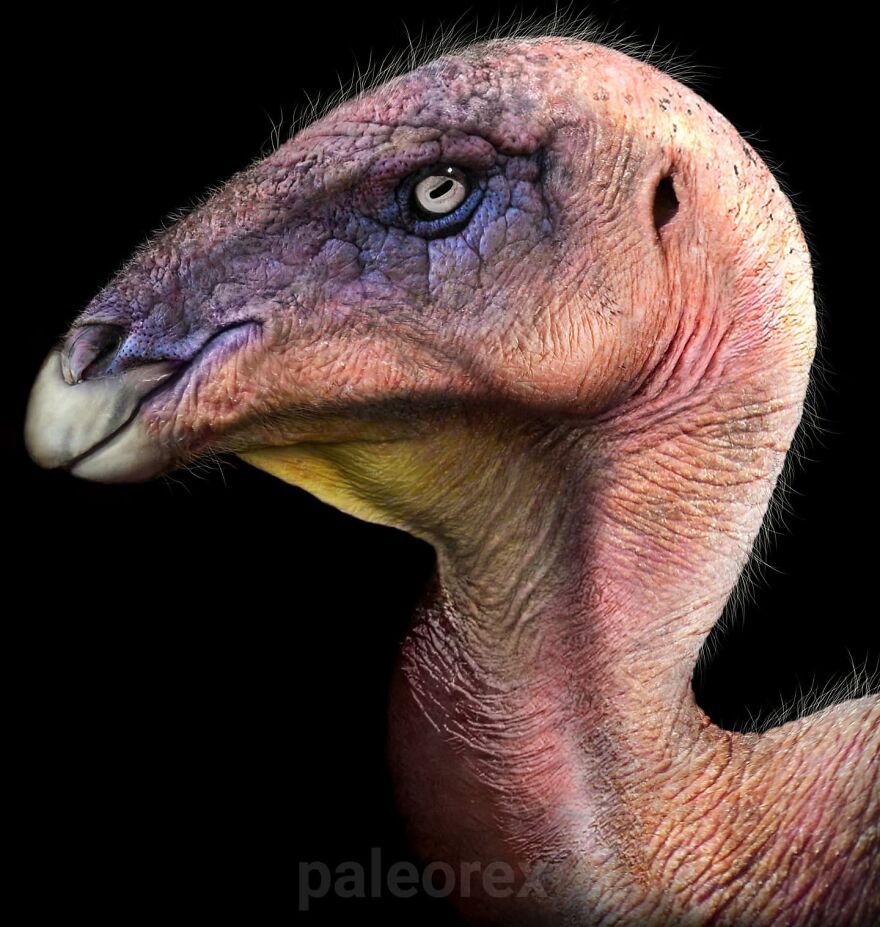
    Proceratosaurus had unusually large nostrils and a crest on its head. It lived in what is now England, about 167 million years ago, during the Middle Jurassic. Like most of the others theropods, Proceratosaurus was a predator and had sharp serrated teeth. Although it is known only from the discovery of a single partial skull, a recent examination of the same revealed many similarities with the Asian tyrannosauroids. Indeed, the shape of the teeth and the cranial crest of Proceratosaurus are characteristics also shared by the Guanlong (a primitive ancestor of Tyrannosaurus rex). Thus, based on these recent observations, it can be assumed that the Proceratosaurus is one of the oldest tyrannosaurids ever discovered.

    paleorex Report

    Iapetos
    Community Member
    3 years ago Created by potrace 1.15, written by Peter Selinger 2001-2017

    Looks way too fragile in my opinion. They are big game hunters, these flabby things will get torn!

    September
    Community Member
    3 years ago Created by potrace 1.15, written by Peter Selinger 2001-2017

    It's been infected with the phage! (Voyager s4)

    ADVERTISEMENT
    #36

    Citipati

    Citipati is a genus of oviraptorid dinosaur that lived in Asia during the Late Cretaceous period, about 75 million million years ago. It was among the largest oviraptorids; it is estimated to have been around 2.9 m in length and to have weighed about 80 kg. Its skull was peculiar in shape and relatively short. It also had a tall crest formed by the
    premaxilla and the nasal bones, which superficially resembled that of a modern cassowary. Both upper and lower jaws were toothless and developed a horny beak. This suggests that Citipati likely fed on seeds, insects, plants and perhaps, dinosaur eggs.

    paleorex Report

    Murtlap essence
    Community Member
    3 years ago Created by potrace 1.15, written by Peter Selinger 2001-2017

    This looks like a cassowary. Like, almost identical.

    Judy Reynolds
    Community Member
    3 years ago Created by potrace 1.15, written by Peter Selinger 2001-2017

    The skull looks unbalanced, with that short beak.

    Ari
    Community Member
    3 years ago Created by potrace 1.15, written by Peter Selinger 2001-2017

    Looks so disappointed

    ADVERTISEMENT
    See Also on Bored Panda
    #37

    Europejara

    Europejara is a relatively small pterosaur with an estimated wingspan of 2 metres. The jaws were toothless and the lower jaws bear a large downwards pointing crest. The diet of Europejara is still matter of debate. It lived during the early Cretaceous period, in what is now Spain, when most of Europe was made up of islands, surrounded by wide shallow seas. It is therefore likely that Europejara ate fish. However it is also possible that this pterosaur ate fruit, using its peculiar beak to better separate the fruit flesh from the seeds, like some extant toucans.

    paleorex Report

    ADVERTISEMENT
    See Also on Bored Panda
    #38

    Coelophysis

    Coelophysis was a relatively small carnivorous dinosaur whose remains have been found in Mid to Late Triassic strata of the western United States. It was a primitive theropod, usually growing to lengths of about 2 meters, and had a long, slender neck, tail, and hind legs. Its teeth were typical of predatory dinosaurs: blade-like, recurved, sharp and jagged with fine serrations on both the anterior and posterior edges, ideal for cutting flesh. Coelophysis also had a successful body plan: it was agile and lightly built and had a diet which possibly consisted of other small reptiles and early mammals.

    paleorex Report

    Orange Is Aging
    Community Member
    3 years ago Created by potrace 1.15, written by Peter Selinger 2001-2017

    Loving the vibes of that lizard hanging limply from its jaws

    Monica Leigh
    Community Member
    3 years ago Created by potrace 1.15, written by Peter Selinger 2001-2017

    He has a mere crumb of a lizard

    #39

    Tyrannosaurus Rex

    Tyrannosaurus rex, whose name means "king of the tyrant lizards", was one of the largest and deadliest predators to ever roam the Earth.

    With a massive body, sharp teeth, and jaws powerful enough to easily crush bones, this famous dinosaur was built to rule, and indeed it dominated North America during the Late Cretaceous, some 65 million years ago.

    paleorex Report

    TyrantrumGogoat
    Community Member
    3 years ago Created by potrace 1.15, written by Peter Selinger 2001-2017

    Love the detail with the saliva! Looks great!!

    Orange Is Aging
    Community Member
    3 years ago Created by potrace 1.15, written by Peter Selinger 2001-2017

    Didn’t scientists already determine the T-Rex was colorful and feathery like the velociraptor?

    A Jones
    Community Member
    3 years ago Created by potrace 1.15, written by Peter Selinger 2001-2017

    I like the course feathering.

    Samantha
    Community Member
    3 years ago Created by potrace 1.15, written by Peter Selinger 2001-2017

    For me? You shouldn't have!

    MemiLove
    Community Member
    3 years ago Created by potrace 1.15, written by Peter Selinger 2001-2017

    his eyes smaller than his brain

    Chaotic-Pansexual (she/they)
    Community Member
    3 years ago (edited) Created by potrace 1.15, written by Peter Selinger 2001-2017

    Its eyes seem comically small- nothing against the artist because the art is fantastic. Just a funny looking face

    Indigojinn
    Community Member
    3 years ago Created by potrace 1.15, written by Peter Selinger 2001-2017

    What a handsome chap, and you got his best side! Swipe left.

    ADVERTISEMENT
    See Also on Bored Panda
    #40

    Ceratosaurus

    With its distinctive prominent nasal horn and two other horns over both eyes, Ceratosaurus is instantly recognizable. This unique feature has actually led to its naming; Ceratosaurus, in fact, means "horned lizard" in Greek. Although only the bony horn core of the skull is known from fossils, in the living animal, this core would have supported a keratinous sheath, making it larger in size. It is likely that these structures were ornamental, hence, used during mating displays to impress females. Although Ceratosaurus was medium in size, compared to other late Jurassic predators of its time (like Allosaurus), it moved on powerful hind legs and was likely a formidable hunter.

    paleorex Report

    ADVERTISEMENT
    See Also on Bored Panda
    #41

    Rhamphorhynchus

    Rhamphorhynchus was a relatively small pterosaur that lived during the Jurassic period. It had a long tail and a peculiar skull. The teeth of Rhamphorhynchus used to intermesh when the jaws were closed and this suggests that it had a piscivorous diet. Adults also developed a strong upward "hook" at the end of the lower jaw. The largest known specimens would have measured up to 1.3 meters in length with a wingspan of about 1.8 meters.

    paleorex Report

    No Name
    Community Member
    3 years ago Created by potrace 1.15, written by Peter Selinger 2001-2017

    Oh my god, that beak, those teeth. Scary but cool!

    Vexorg2
    Community Member
    3 years ago Created by potrace 1.15, written by Peter Selinger 2001-2017

    Just skimming the water for lunch 🤭

    Load More Replies...
    Judy Reynolds
    Community Member
    3 years ago Created by potrace 1.15, written by Peter Selinger 2001-2017

    You are doing a really good job of illustrating the combination of reptiles and birds!

    JLN
    Community Member
    3 years ago Created by potrace 1.15, written by Peter Selinger 2001-2017

    It's looks like a Canada gooses psycho cousin

    ADVERTISEMENT
    See Also on Bored Panda
    #42

    Mymoorapelta

    Mymoorapelta was a very primitive ankylosaur. It was one of the few that lived during the Jurassic period. It is usually classified as being in Polacanthidae, but there is some debate, since it is so primitive, whether or not it deserves its own family. It was named after Mygatt-Moore, the quarry in which its fossil remains were found. It was about 3 meters long and the thick armor on its body was intended to provide protection from large Jurassic age predators such as Allosaurus.

    paleorex Report

    #43

    Daeodon

    Daeodon was a large, pig-like mammal known as an “entelodont”. It was widespread during the late Oligocene and early Miocene epochs, around 20 million years ago, in what is now the United States. Although entelodonts, like Daeodon, had pig-like physical characteristics, it is unclear whether they were directly related to true pigs, and recent studies point to a closer relationship to hippos instead.

    Daeodon's skull was enourmous, it had large canine tusks and it was covered in knobs and flaring protrusions, similarly to modern day warthogs. Daeodon was one of the largest of the entelodonts, it had a strong and muscular body and it was near in size to the rhinoceros of today. It may have been an omnivore, feeding on roots and tubers and scavenging on dead animals, much like the modern day warthogs.

    paleorex Report

    Tushar Roy Mukherjee
    Community Member
    3 years ago Created by potrace 1.15, written by Peter Selinger 2001-2017

    Hipposare already fromhell, and now we know they used to get this close to being even more rad?

    Linda Lee
    Community Member
    3 years ago (edited) Created by potrace 1.15, written by Peter Selinger 2001-2017

    I swear we have these running all over east Texas. It is legal to shoot them 365 days a year. Wild hogs, that is.

    ADVERTISEMENT
    See Also on Bored Panda
    #44

    Guanlong

    In the late Jurassic it would have been hard to believe that such a small predator like the Guanlong would lead to the evolution of the most ferocious and famous dinosaur of all, Tyrannosaurus rex. In fact, it is one of the first known tyrannosaurids and lived in China about 95 million years before Tyrannosaurus rex. Its name comes from the Chinese words meaning "crown" and "dragon", a clear reference to the unusual crest, one of the most distinct among known theropod dinosaurs, which was probably used for display and to intimidate rivals and predators.

    paleorex Report

    Tushar Roy Mukherjee
    Community Member
    3 years ago Created by potrace 1.15, written by Peter Selinger 2001-2017

    Juvenile? female? And since Dinosaurs are pretty godd at role reversals, male?

    No Name
    Community Member
    3 years ago (edited) Created by potrace 1.15, written by Peter Selinger 2001-2017

    Or actually, this one looks smaller then the other one. It's probably a juvi

    Load More Replies...
    Judy Reynolds
    Community Member
    3 years ago Created by potrace 1.15, written by Peter Selinger 2001-2017

    I think I prefer the other version of this dinosaur

    Timothy Workman
    Community Member
    3 years ago Created by potrace 1.15, written by Peter Selinger 2001-2017

    The plumage behind base of necks reminds me of that of eagle 🦅.

    Jace
    Community Member
    3 years ago Created by potrace 1.15, written by Peter Selinger 2001-2017

    Is it me or do some of the species in this thread have the same name? Guan Long has appeared before in this list.

    ADVERTISEMENT
    See Also on Bored Panda
    #45

    Zhenyuanopterus

    Zhenyuanopterus was a bizzare pterosaur from the early Cretaceous, known from a single specimen, which is almost entirely complete. The skull is 54 cm long and is characterized by a rectangular crest extending along the top of the snout. Both the upper and lower jaws are lined with many long, slightly curved, needle-shaped teeth, with the longest teeth concentrated near the ends of the jaws. Some of them are so long, that they extend above and below the margins of the jaws when the mouth is closed.

    paleorex Report

    Sasha
    Community Member
    3 years ago Created by potrace 1.15, written by Peter Selinger 2001-2017

    Kinda looks like a cross between a pelican and a swordfish ngl-

    ADVERTISEMENT
    #46

    Bergamodactylus

    Bergamodactylus is a genus of basal pterosaur that lived during the late stages of the Triassic in what is now present-day Bergamo, in Italy. Bergamodactylus is one of the smallest known pterosaurs, with an estimated wingspan of just under 0.5 meters.
    It also has has multi-cusped teeth, similar to those of Eudimorphodon, that would have been used to catch insects or fish.

    paleorex Report

    #47

    Saltriovenator

    Saltriovenator is one of the few large dinosaurs that have been discovered in Italy and it has been identified as a genus of ceratosaurian therapod dinosaur. It lived during the Early Jurassic, and because of the fragmentary nature of its remains, it is practically impossible to directly measure the size of Saltriovenator. However, by comparing the fossil evidence from Ceratosaurus, it is estimated that this mysterious dinosaur had a body length of about 7 meters.

    paleorex Report

    Judy Reynolds
    Community Member
    3 years ago Created by potrace 1.15, written by Peter Selinger 2001-2017

    I like the horns in front of the eyes! The horns must have been fairly common, judging by these portraits.

    Charlie Taube
    Community Member
    3 years ago Created by potrace 1.15, written by Peter Selinger 2001-2017

    Yeah, predatory Dinos liked their bony protrusions

    Load More Replies...
    Alexander Smith
    Community Member
    3 years ago Created by potrace 1.15, written by Peter Selinger 2001-2017

    This one looks similar to a komodo dragon.

    ADVERTISEMENT
    #48

    Dilophosaurus V2

    A lifelike reconstruction of one of the largest and most fascinating early Jurassic theropod dinosaurs, following the latest paleontological discoveries.

    paleorex Report

    Judy Reynolds
    Community Member
    3 years ago Created by potrace 1.15, written by Peter Selinger 2001-2017

    Looks to have been a bad tempered fellow!

    Tushar Roy Mukherjee
    Community Member
    3 years ago Created by potrace 1.15, written by Peter Selinger 2001-2017

    Are you working for InGen? You're making different versions of Dinosaurs...

    Linda Lee
    Community Member
    3 years ago Created by potrace 1.15, written by Peter Selinger 2001-2017

    Cassowary? Horrifying bird in Australia. It will hunt you.

    ADVERTISEMENT
    #49

    Eocursor

    Eocursor is a genus of basal ornithischian dinosaur that lived in what is now South Africa during the Early Jurassic.

    It was a relatively small, lightly built and gentle herbivore that measured about 1 meter in length.

    paleorex Report

    Linda Lee
    Community Member
    3 years ago Created by potrace 1.15, written by Peter Selinger 2001-2017

    I will hug him, and kiss him, and call him George.

    Timothy Workman
    Community Member
    3 years ago Created by potrace 1.15, written by Peter Selinger 2001-2017

    Another absolutely adorable Beautiful one!

    #50

    Lambeosaurus

    Lambeosaurus lived about 75 million years ago, during the Late Cretaceous period of North America. This relatively large hadrosaurid dinosaur, which measured up to 7 meters in length, is known for its distinctive cranial crest. This peculiar crest resembled a hatchet and it was somewhat shorter and more rounded in specimens interpreted as females. The cranial crest also presented a nasal cavity, which ran back through the crest, making it mostly hollow. Many suggestions have been made for the function of the crest, including improving the sense of smell, acting as a resonating chamber for producing sounds, or being a method for different sexes of the same species to recognize each other.

    paleorex Report

    ADVERTISEMENT
    #51

    Spinosaurus

    Spinosaurus is probably the most enigmatic dinosaur of all. For decades, this colossal theropod has been the subject of much controversy in the scientific community and many have wondered how this predatory giant from the Cretaceous period could live and hunt. Spinosaurus was huge, in fact it is considered the largest known carnivorous dinosaur and measured about 15 meters in length. It also had an extravagant "sail" on its back, which measured more than a man's height. The function of this peculiar back structure is not known with certainty. One hypothesis suggests that the sail was used to regulate body temperature.

    When the animal had its sail turned sideways towards the sun's rays, its large surface, covered with blood vessels, would quickly absorb the heat, thus heating the whole body. An alternative hypothesis suggests that the sail was decorated with bright colors, and was therefore used by males for sexual displays to attract the attention of females.

    Recent studies suggest that Spinosaurus spent most of its time in the water and swam using its powerful, fin-like tail. This lifestyle is apparently unique among dinosaurs. There were already several clues that suggested an adaptation of this animal to an aquatic lifestyle: the teeth were similar to those of crocodiles and perfect for catching fish, the front legs were equipped with strong curved claws to hold the most slippery prey, the hind legs were short and the foot bones were broad, suggesting that this dinosaur possessed webbed feet, like those of seabirds.

    paleorex Report

    ADVERTISEMENT
    #52

    Dilong

    Dilong is one of the most primitive known tyrannosaurs, a group that includes the mighty Tyrannosaurus rex and other similar dinosaurs, and the first tyrannosauroid discovered with feathers. It lived around 126 million years ago, in what is now western China. Dilong was comparatively small, with a total length of just under 2 metres. It also differed from other tyrannosaurs in having proportionally larger forelimbs and three-fingered, grasping hands, a trait that would be later lost by the larger tyrannosaurs.

    paleorex Report

    No Name
    Community Member
    3 years ago Created by potrace 1.15, written by Peter Selinger 2001-2017

    There are so many with crests, I don't care if I'm wrong but this just HAS to have a crest too lol

    Load More Replies...
    ADVERTISEMENT
    #53

    Carcharodontosaurus

    Carcharodontosaurus was one of the largest carnivorous dinosaurs to ever existed. Its head was impressive, in fact it measured as much as the height of a person. It is estimated that this colossal theropod reached 13 meters in length and a body weight of between 6 and 15 tons. Despite its incredible size, its body was relatively slender, with a long tail, slender yet powerful hind legs and well developed arms. Carcharodontosaurus lived about 100 million years ago in North Africa, at a time when the arid land of today was instead a lush and humid environment.

    paleorex Report

    Toddo Colorado
    Community Member
    3 years ago Created by potrace 1.15, written by Peter Selinger 2001-2017

    Isn't this like the 3rd one that is the " largest carnivorous dinosaur " ?

    Tushar Roy Mukherjee
    Community Member
    3 years ago Created by potrace 1.15, written by Peter Selinger 2001-2017

    This is the first time I've seen a sober Charcharodontosaurus...

    Ozymandias73
    Community Member
    3 years ago Created by potrace 1.15, written by Peter Selinger 2001-2017

    I'm imagining a giant Komodo dragon

    ADVERTISEMENT
    #54

    Pisanosaurus

    Pisanosaurus was a small, lightly-built herbivore that lived approximately 220 million years ago during the Late Triassic Period in what is now South America. It could grow up to 1 meter in length and weigh between 2.5 and 9 kilograms.

    paleorex Report

    Tushar Roy Mukherjee
    Community Member
    3 years ago Created by potrace 1.15, written by Peter Selinger 2001-2017

    Favourite dinosaur of ancient mathematicians...

    Vexorg2
    Community Member
    3 years ago Created by potrace 1.15, written by Peter Selinger 2001-2017

    Ran in groups of three & one female was always just a little bit preggers...

    Load More Replies...
    #55

    Scipionyx

    Scipionyx was a theropod dinosaur from the Early Cretaceous of Italy. There is only one perfectly preserved fossil known of Scipionyx, discovered in 1981 by an amateur paleontologist and brought to the attention of the scientific community in 1993. The fossil is that of a juvenile, the length being just 237 millimetres, and experts believe that it was perhaps just three days old. The full adult size of this carnivorous dinosaur is therefore still unknown.

    paleorex Report

    ADVERTISEMENT
    #56

    Megapnosaurus

    Megapnosaurus, also known as Syntarsus (possibly synonymous with Coelophysis), was a primitive theropod dinosaur.

    By the standards of the early Jurassic period, about 190 million years ago, this meat-eating dinosaur was relatively large in size: it measured 3 meters in length and may have weighed about 30 kilograms. It was an agile predator, much like Coelophysis. The bones of 30 Megapnosaurus individuals were found all together in a fossil bed in Zimbabwe, so paleontologists believe that this early theropod may have hunted in packs.

    paleorex Report

    ADVERTISEMENT
    #57

    Monolophosaurus

    Monolophosaurus was a medium size theropod dinosaur from the Middle Jurassic period. It was named after the large and single crest on top of its skull, which was probably brightly colored to aid in mating rituals. The only specimen that has been discovered measured 5 metres in length and weighed about 500 kilograms.

    paleorex Report

    Stannous Flouride
    Community Member
    3 years ago Created by potrace 1.15, written by Peter Selinger 2001-2017

    Though it appears hair-like it is thought to be more of a proto-feather. Evolved for the same purpose as hair in mammals, i.e., warmth and color, just a different evolutionary path.

    Load More Replies...
    ADVERTISEMENT
    #58

    Torvosaurus

    Torvosaurus, meaning "savage lizard" in Greek, was a large megalosaurid theropod from the Late Jurassic Morrison Formations, which lived about 145 million years ago.

    It was one of the largest known Jurassic theropods, rivaling other large predators, such as Saurophaganax, Allosaurus and Megalosaurus in size. It is estimated that it grew between 9 to 11 meters in length, and weighed between 2.5 and 5 tons, making it one of the largest carnivores to inhabit the Earth until the Late Jurassic. And, given its size, it was likely the top predator in what is now Portugal.

    paleorex Report

    #59

    Camptosaurus

    Camptosaurus is a genus of plant-eating, beaked ornithischian dinosaurs that lived in the Late Jurassic in western North America. Adult Camptosaurus could have reached up to 7 meters in length and about 830 kg in weight. And, based on studies of other iguanodonts, experts believe they may have been able to achieve running speeds of up to 25 km per hour, to avoid the large and hungry Jurassic predators like Allosaurus.

    paleorex Report

    ADVERTISEMENT
    #60

    Iguanodon

    Iguanodon was the largest, best known, and most widespread of all the iguanodontids, a group of herbivorous dinosaurs that is closely related to the hadrosaurs, or duck-billed dinosaurs. Iguanodon lived during the Jurassic and Cretaceous and was up to 9 metres long, stood nearly 2 metres tall at the hip, and weighed approximately 5 tons.

    paleorex Report

    deadinside
    Community Member
    3 years ago Created by potrace 1.15, written by Peter Selinger 2001-2017

    lol it looks like me when i get caught being an idiot

    ADVERTISEMENT
    #61

    Aardonyx

    Aardonyx was a basal sauropodomorph dinosaur that lived during the Early Jurassic in South Africa. It was about 7 meters long, 2 meters tall at the hips, and weighed around 500 kilograms.

    Experts believe that Aardonyx represents the transitional stage between bipedal ancestors and quadrupedal sauropod descendants, and this is evident when considering its strong legs, which show adaptations for slow and forceful walking, like larger long necked dinosaurs.

    paleorex Report

    -logansucrose-
    Community Member
    3 years ago Created by potrace 1.15, written by Peter Selinger 2001-2017

    i am not sure why i like this one so much

    ADVERTISEMENT
    #62

    Eoraptor

    Eoraptor was a small, lightly-built, basal saurischian dinosaur. It is recognized as one of the earliest-known dinosaurs and lived about 230 million years ago during the Late Triassic in Western Gondwana, in the region that is now known as northwestern Argentina.

    paleorex Report

    #63

    Tarbosaurus

    Tarbosaurus is a genus of tyrannosaurid dinosaurs that roamed in Asia about 70 million years ago, at the end of the Late Cretaceous Period. Fossils have been recovered in Mongolia, with more fragmentary remains found further afield in parts of China.

    Tarbosaurus was nearly as large as the fearsome Tyrannosaurus rex. While T-Rex can be called the Late Cretaceous king of the North American, Tarbosaurus was its counterpart in Asia. It had the smallest arms of any large tyrannosaur relative to its body size.

    paleorex Report

    Linda Lee
    Community Member
    3 years ago Created by potrace 1.15, written by Peter Selinger 2001-2017

    He always wanted to play the trombone but those tiny little arms.

    Zozo🤟
    Community Member
    3 years ago Created by potrace 1.15, written by Peter Selinger 2001-2017

    Imagine this fearsome looking Dino actually being a herbivore. He could eat big nuts, melons, coconuts, and stuff and be the happiest boi out there and we would never know.

    YoyoSthlm

    Community Member
    3 years ago Created by potrace 1.15, written by Peter Selinger 2001-2017

    Think he's compensating for something?

    ADVERTISEMENT
    #64

    Camptosaurus

    Camptosaurus is a genus of plant-eating, beaked ornithischian dinosaurs that lived in the Late Jurassic in western North America. Adult Camptosaurus could have reached up to 7 meters in length and about 830 kg in weight. And, based on studies of other iguanodonts, experts believe this dinosaur may have been able to achieve running speeds of up to 25 km per hour, to avoid the large and hungry Jurassic predators like Allosaurus.

    paleorex Report

    ADVERTISEMENT
    #65

    Qianzhousaurus

    Qianzhousaurus is often referred to by the nickname "Pinocchio Rex" for its long snout in comparison with other known tyrannosaurs. It was discovered in southern China and lived around 70 million years ago. Aside from its signature snout, Qianzhousaurus also had long and narrow teeth, while its relatives, like Tyrannosaurus rex and Tarbosaurus, had thick teeth and powerful, deep-set jaws for crushing their prey. Although only the skull of this animal has been discovered, it is estimated that Qianzhousaurus was 6.3 long and weighed about 750 kg.

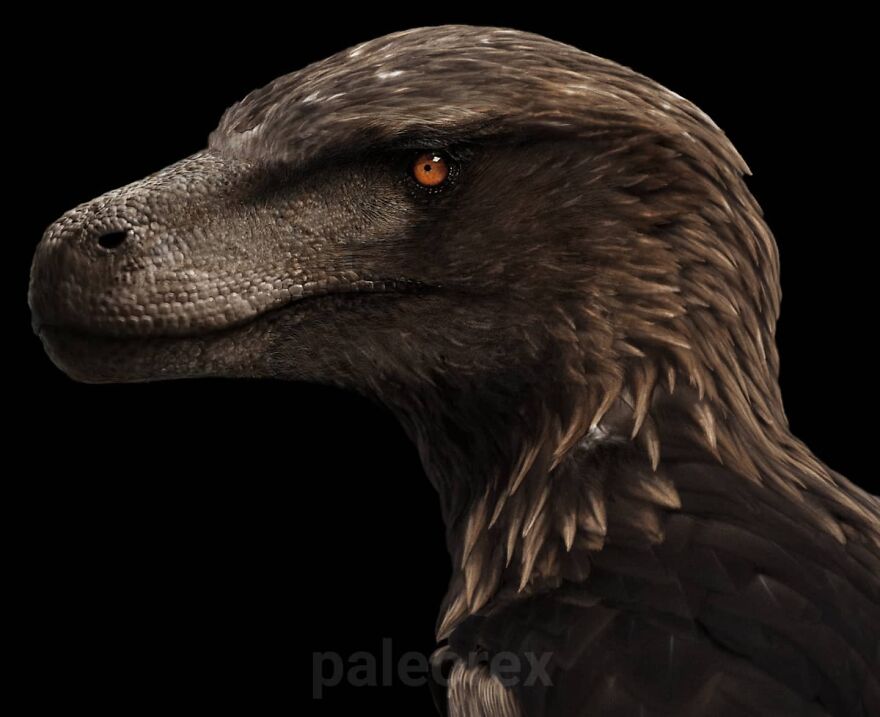
    paleorex Report

    ADVERTISEMENT
    #66

    Herrerasaurus

    Herrerasaurus lived about 237 million years ago, during the late Triassic, in Argentina. It was a contemporary of Eoraptor but much larger and more advanced. Its build was slender but strong, the hind limbs long and powerful and the front limbs very muscular. In addition, it had large claws on its hands that were used to grab prey, and sharp teeth to tear through flesh. Like many of the primitive dinosaurs, it was a carnivorous and bipedal animal. One reason for the success of the early dinosaurs was their ability to move quickly and nimbly on two legs.

    paleorex Report

    Timothy Workman
    Community Member
    3 years ago Created by potrace 1.15, written by Peter Selinger 2001-2017

    It's face looks similar to a piranha! 😱

    #67

    Saurornitholestes

    Saurornitholestes is a genus of carnivorous dromaeosaurid theropod dinosaur that lived in the late Cretaceous in Canada.

    Compared to other members in the Dromaeosauridae family, Saurornitholestes was more long-legged and lightly built. It resembled the well-known Velociraptor; it had large, fanglike teeth in the front of the jaws, a long, curving, blade-like claw on the second toe and measured almost the same length (1.8 m).

    paleorex Report

    ADVERTISEMENT
    #68

    Supersaurus

    Supersaurus was one of the largest sauropod dinosaurs to ever exist. Its fossil remains have been found in North America and date to about 153 million years ago. It possibly reached 34 meters in length, and a weight of 36 metric tons. It also had an incredibly long neck that was perfectly adapted to reach the tall Jurassic tree canopies and vegetation which it fed on.
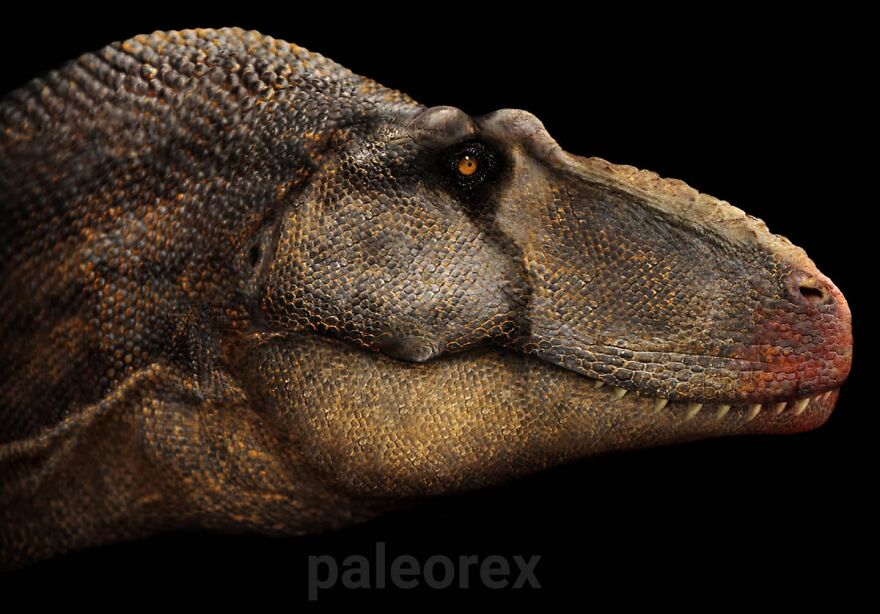
    paleorex Report

    Allmeow-err
    Community Member
    3 years ago (edited) Created by potrace 1.15, written by Peter Selinger 2001-2017

    Got that cheesy < i just told a dad joke > smile

    ADVERTISEMENT
    #69

    Liliensternus

    Liliensternus was a basal neotheropod dinosaur that lived about 210 million years ago during the Late Triassic in what is now Germany.It is considered to be an intermediate between Coelophysis and Dilophosaurus, hence, it is often depicted with a small crest on the top of its skull to resemble that of a Dilophosaurus.Liliensternus was a moderate-sized, bipedal carnivore, that could grow up to 5 meters in length.Unfortunately, no Liliensternus specimen has been preserved with skin impressions, so it is unknown whether Liliensternus (and its relatives) had feathers or proto-feathers. In case it had, these structures would have allowed Liliensternus to maintain its body temperature.

    paleorex Report

    ADVERTISEMENT
    #70

    Tarbosaurus

    Tarbosaurus is a genus of tyrannosaurid dinosaur that flourished in Asia about 70 million years ago, at the end of the Late Cretaceous Period. Fossils have been recovered in Mongolia, with more fragmentary remains found further afield in parts of China.

    Tarbosaurus was nearly as large as the fearsome Tyrannosaurus rex. While T-Rex can be called the Late Cretaceous king of the North American, Tarbosaurus was its counterpart in Asia. It had the smallest arms of any large tyrannosaur relative to its body size.

    paleorex Report