Get Premium
Dark mode theme is available exclusively for premium users. Learn more about the benefits of subscribing.
No fees, cancel anytime.

 Dark Mode Ad-Free Browsing Unlimited Content
 Ad-Free Browsing Unlimited Content Dark Mode
Join 1.2 million Panda readers who get the best art, memes, and fun stories every week!

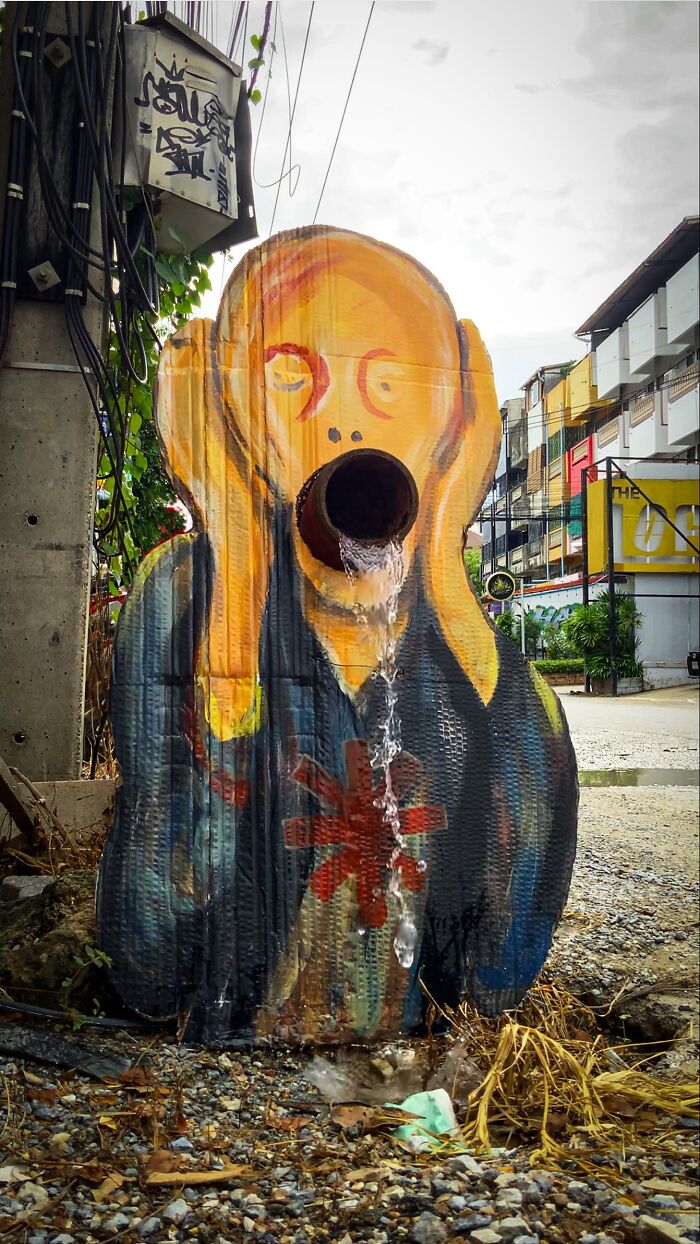
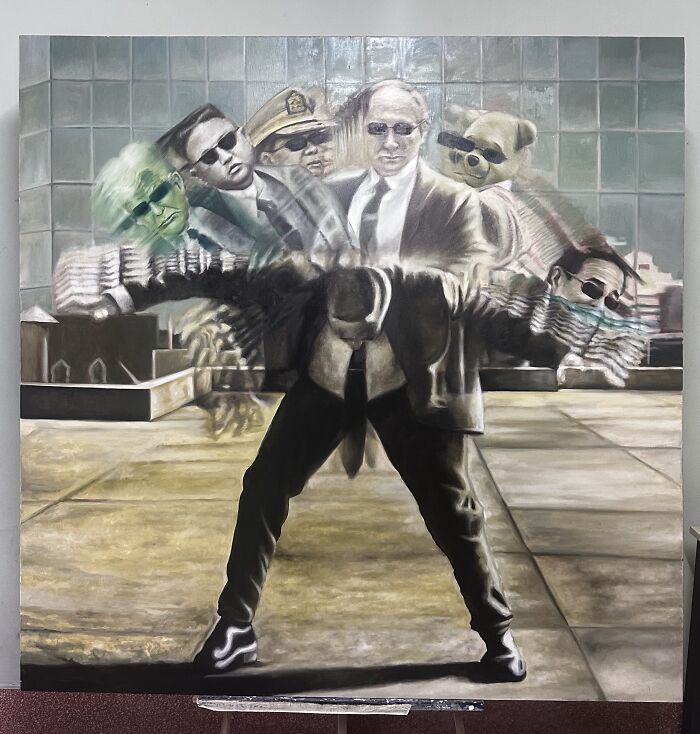
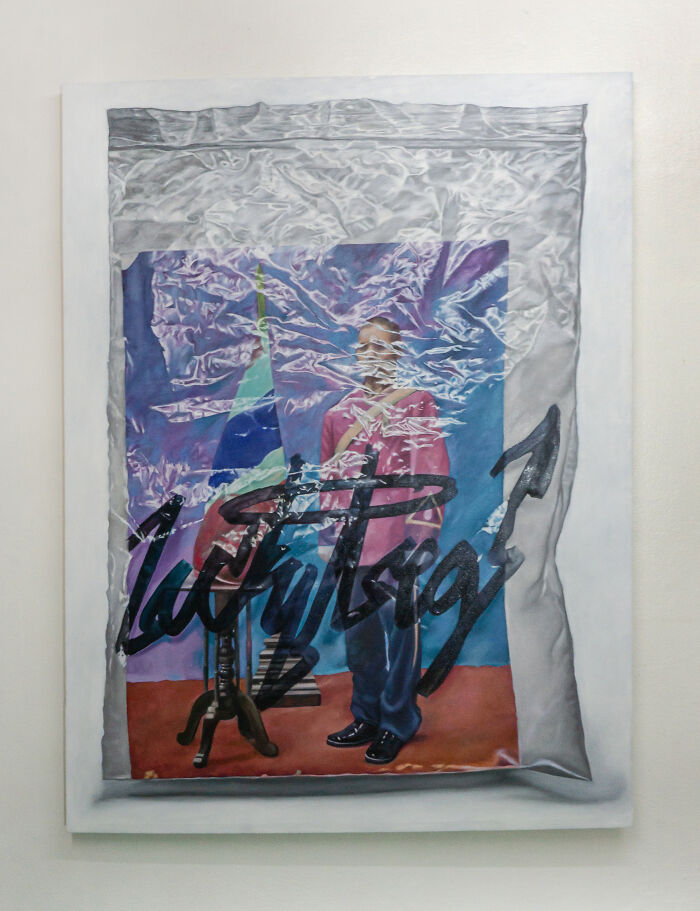
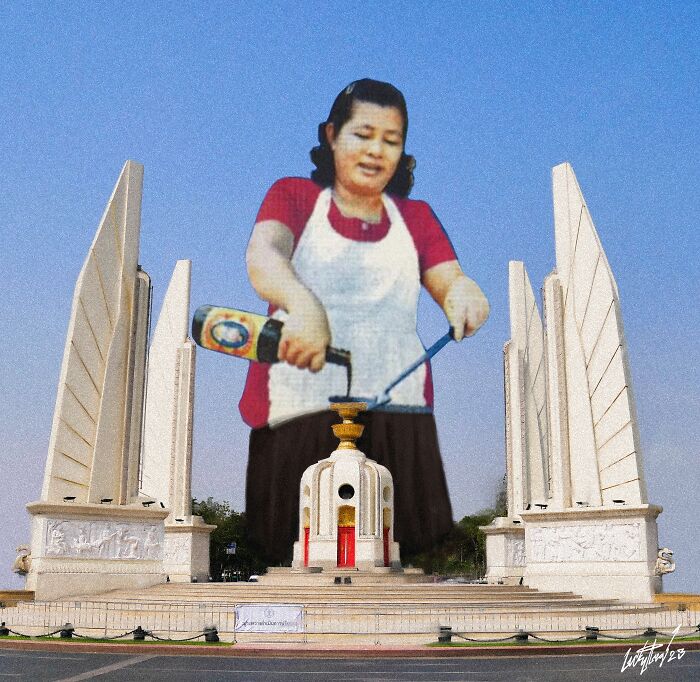
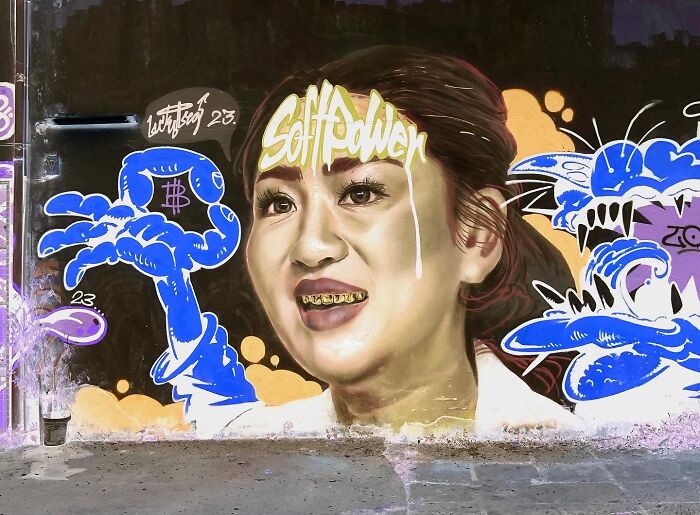
Thailand’s street art scene has a way of turning everyday walls into open-air editorials that can be absorbed in a quick glance, but then keep you thinking long after you’ve walked away. That tension between immediacy and deeper meaning is exactly where Thai street artist LuckyLeg likes to work. He moves between street murals, painting, sculpture, and digital work, utilizing a strong painterly foundation to create images that appear polished on the surface, and rebellious and confrontational underneath. Across his pieces, LuckyLeg continually circles the same big questions: how power operates, how ideology becomes normalized, and what human rights look like when they’re filtered through real life.
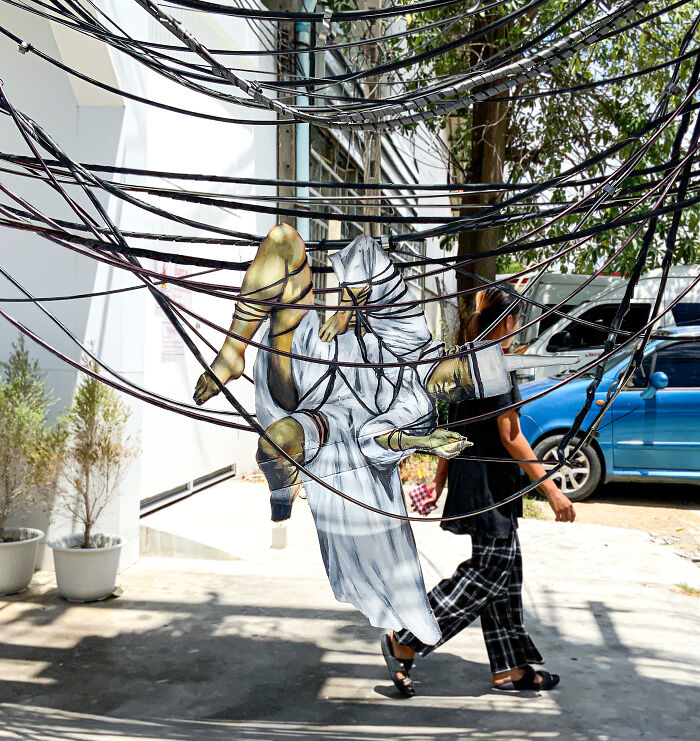
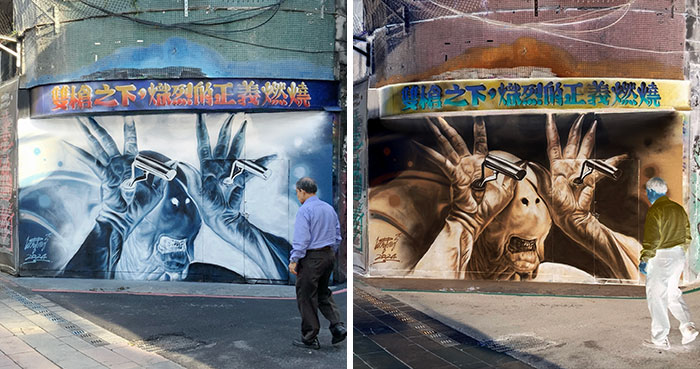
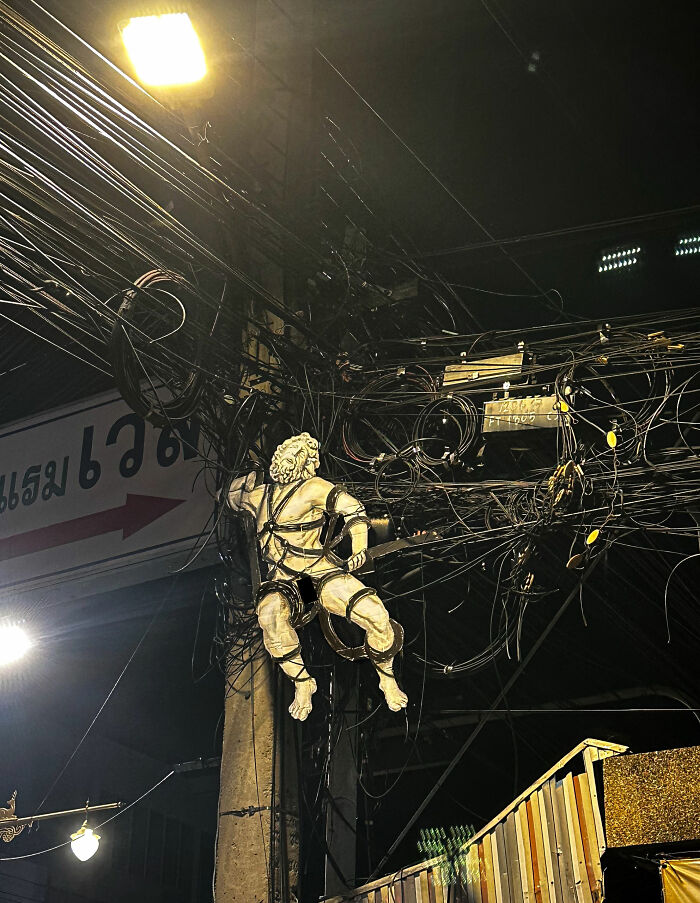
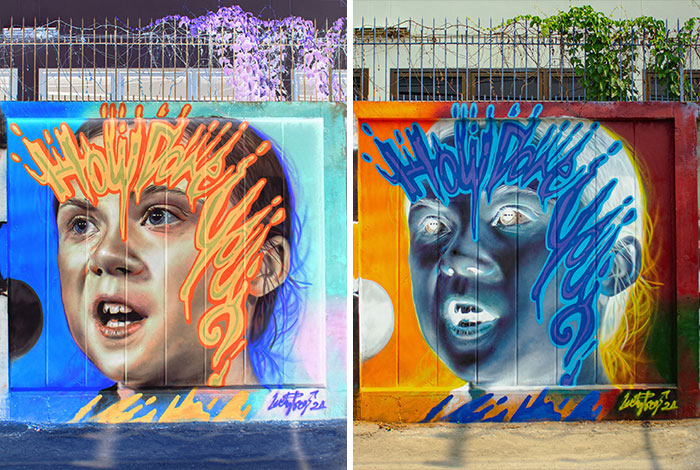
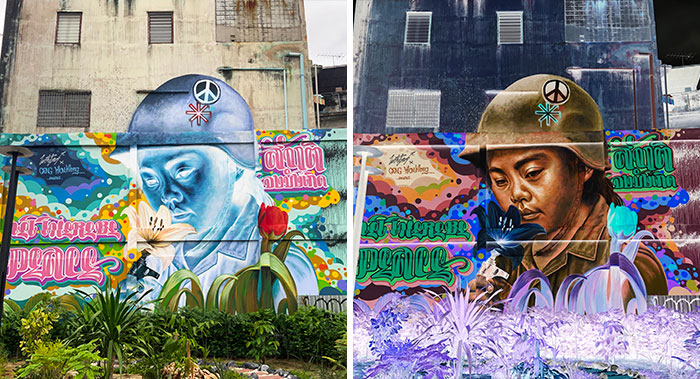
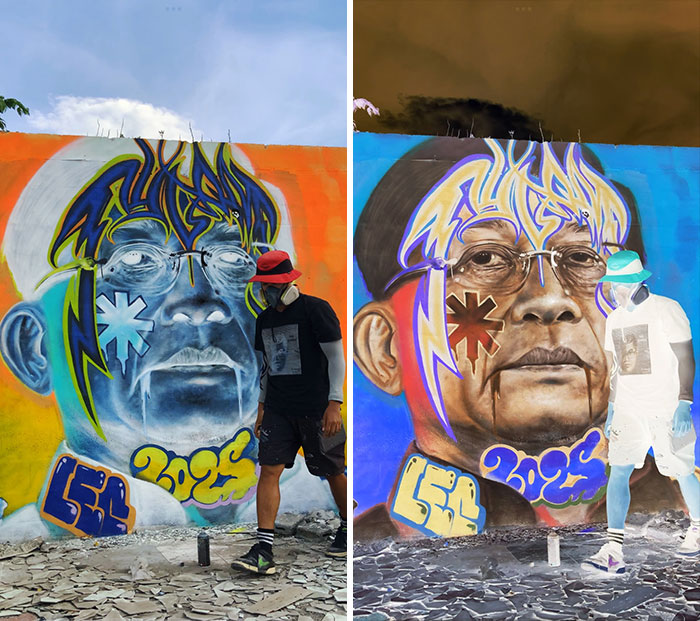
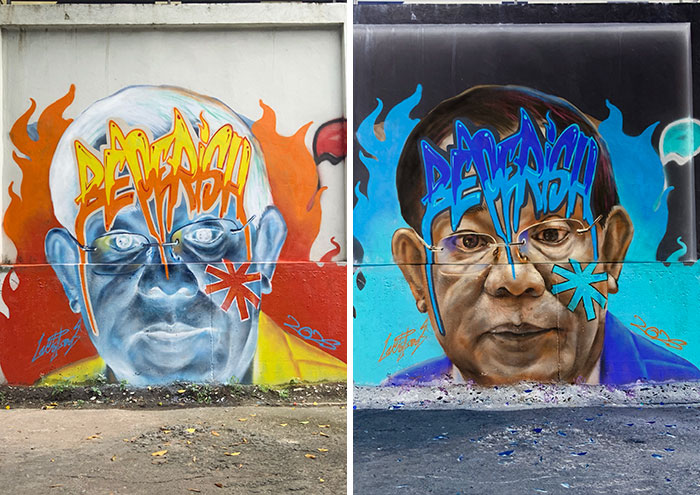
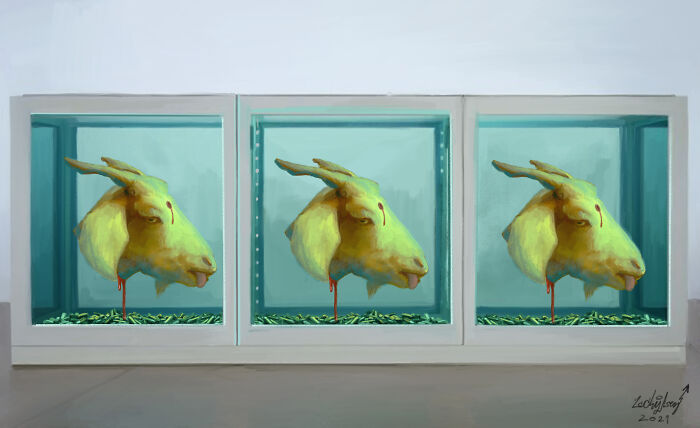
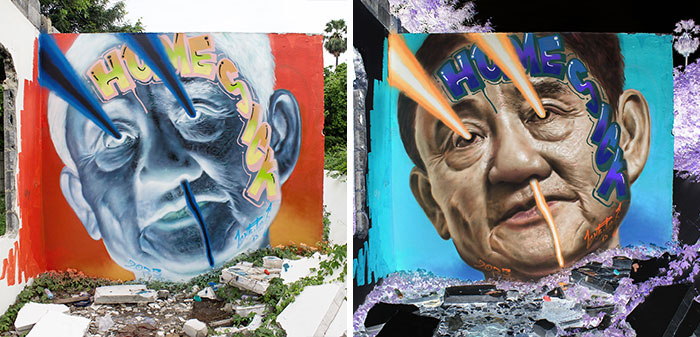
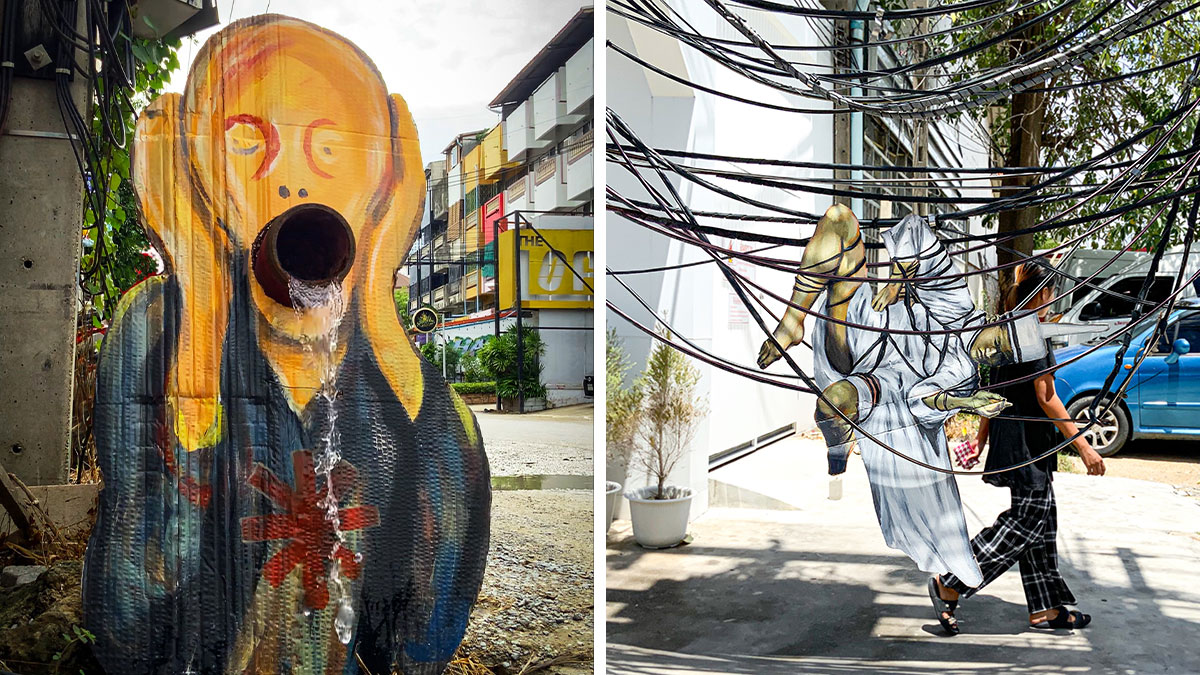
Visually, his work often pairs striking realism with sharp graphic elements, dark humor, and symbolism that hits close to home, especially in Thailand’s political climate. One of his most recognizable motifs is the “Tangled in Wires” series, where chaotic overhead cables become a metaphor for the systems people live inside: messy, binding, and hard to escape. He’s also known for experimenting with color inversion, sometimes presenting murals as negative images to reflect what he describes as a reality flipped upside down, one you can only see once you photograph the work.
We reached out to LuckyLeg to learn more about the ideas behind the work, the risks of making political street art, and what he wants viewers to take away from a wall that might only last a moment.
More info: Instagram | Facebook
This post may include affiliate links.
When asked how he’d introduce LuckyLeg to someone seeing his work for the first time, and what he hopes people feel or question, the artist said: “Art works where aesthetic elegance meets ideological rebellion, pushing the boundaries of artistic expression and provoking questions about the reality of our current existence.”
Speaking about why politics, human rights, and social reflection became such a central focus, LuckyLeg explained: “Everything started from the absurdities and deep-seated oddities of my country’s socio-political fabric, rooted in the lived experiences of both myself and my fellow citizens.”

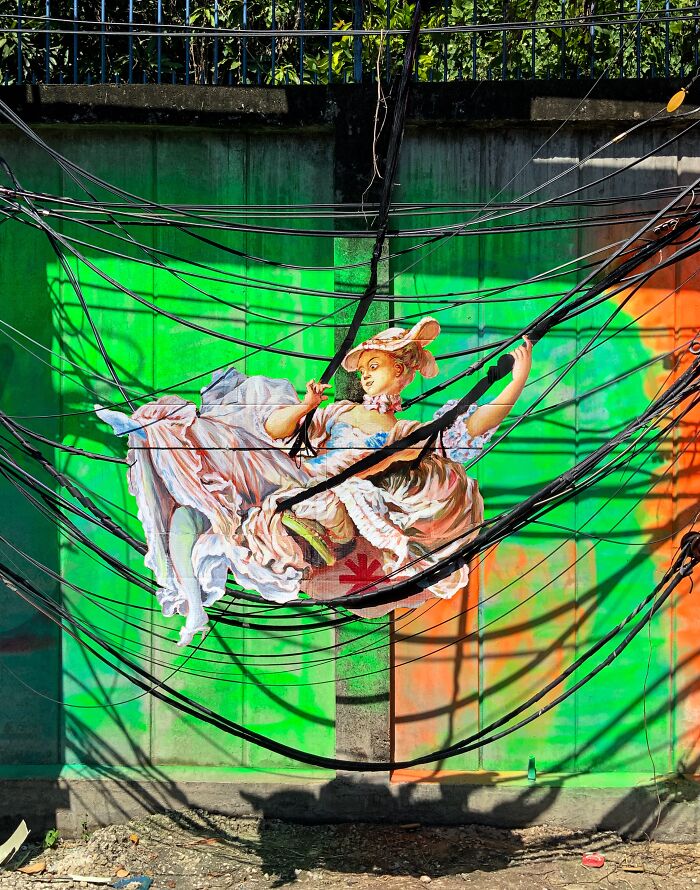
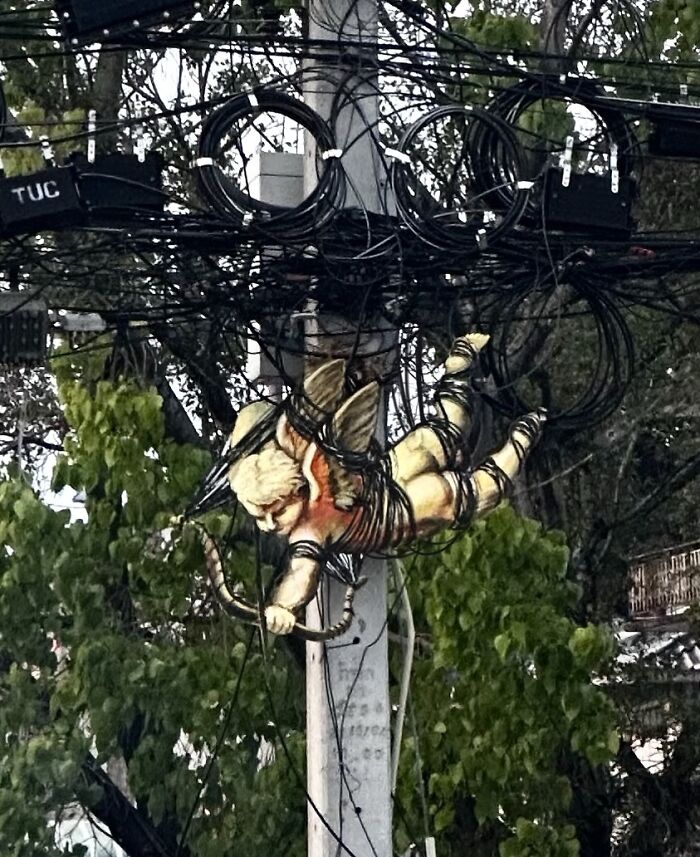
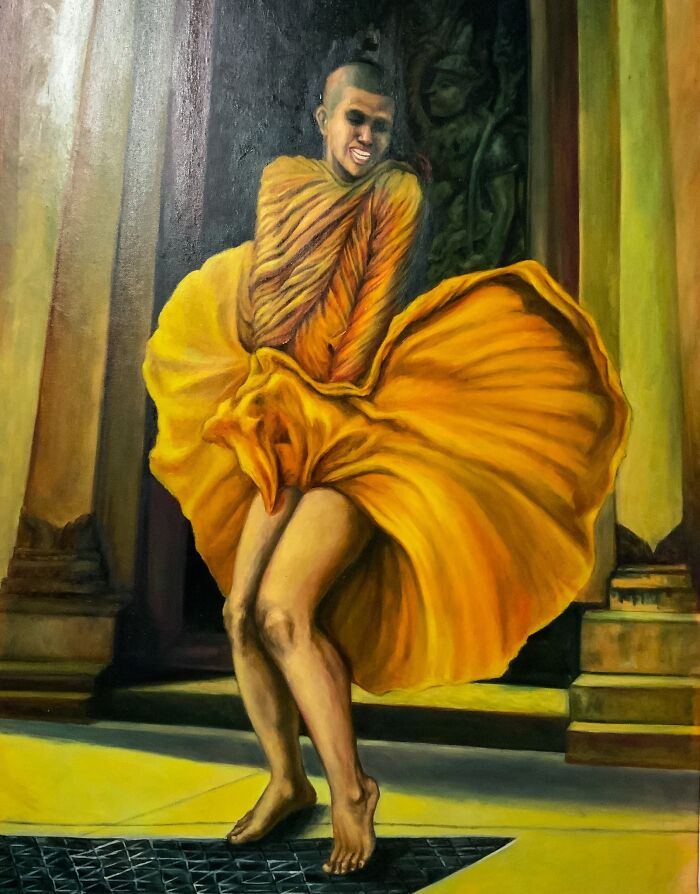
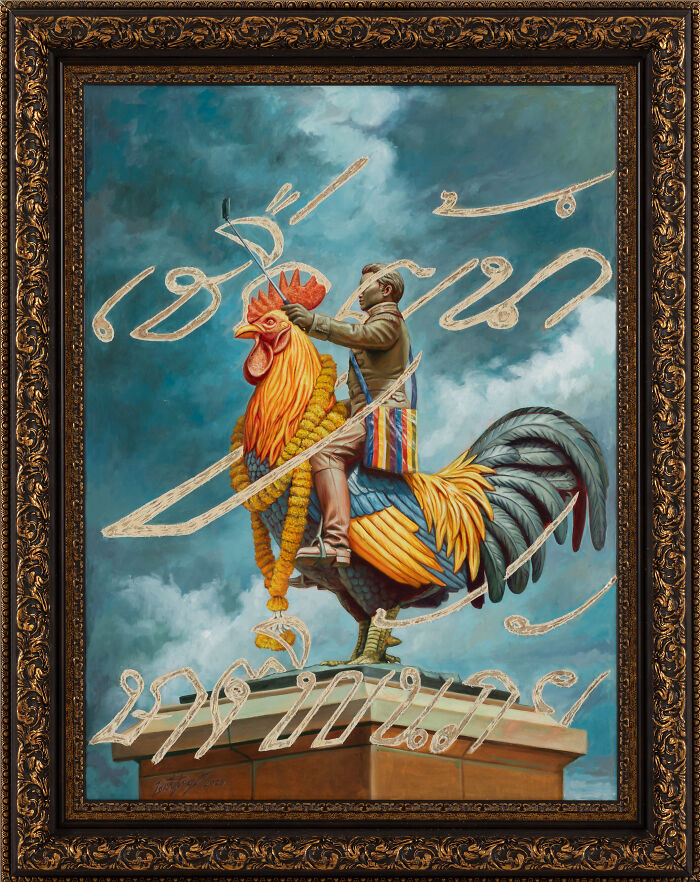
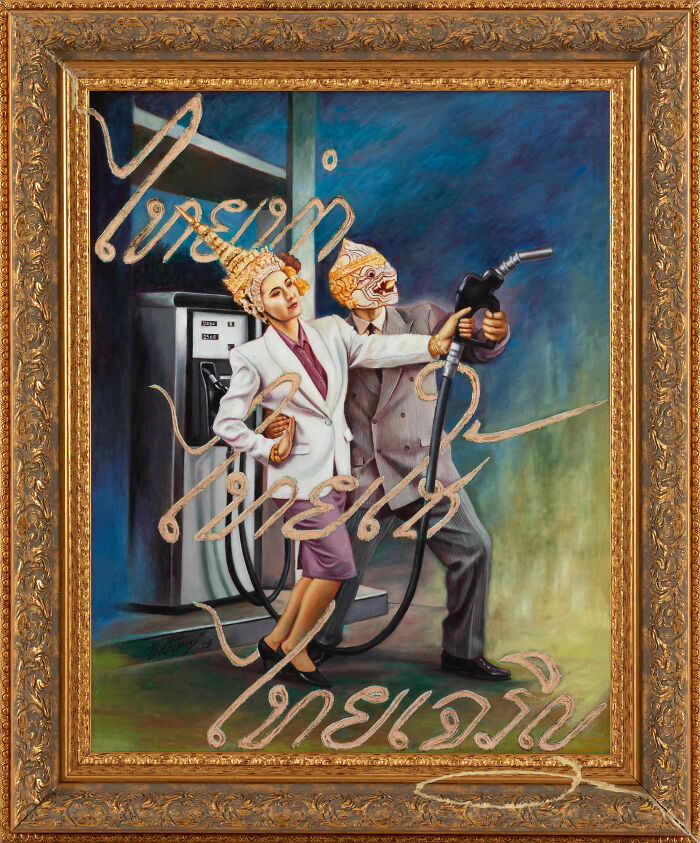
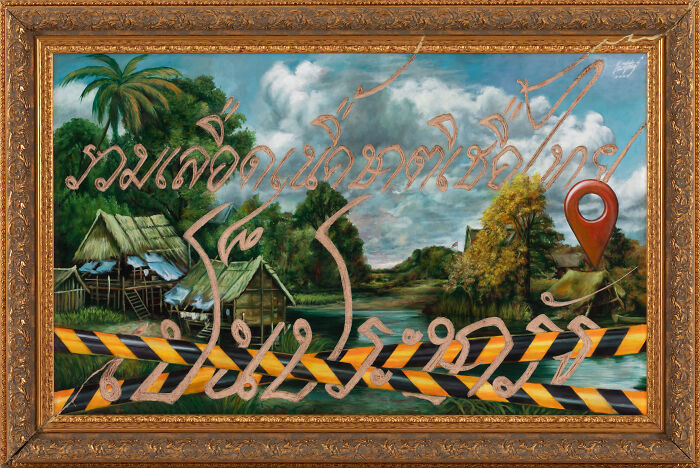
Look up the painting 'The Swing' by Jean-Honoré Fragonard, which this artist, LuckyLeg, has borrowed the object for this piece. The story behind the painting by Fragonard is not as innocent as one might think at first glance...
On what usually sparks a new piece, whether it starts with a specific event, something personal, or a larger pattern, he shared: “Each work is driven by a unique set of inspirations, reflecting whatever sparks my interest at the time, from domestic concerns to broader global perspectives, merged with my evolving fascination with specific artistic techniques.”

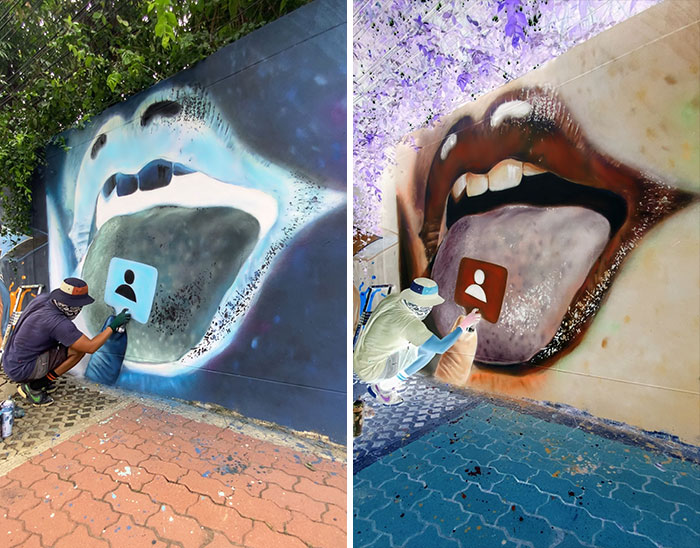
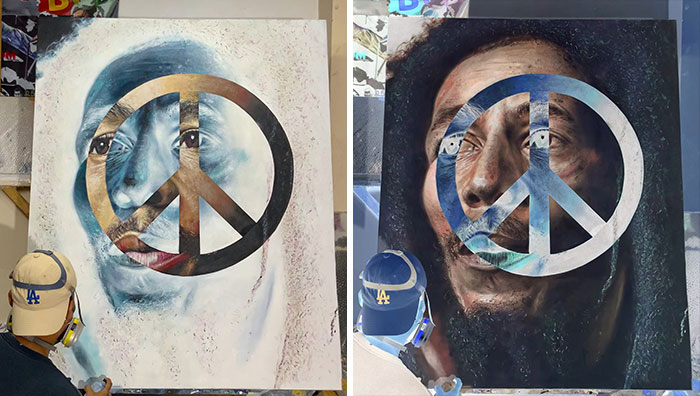
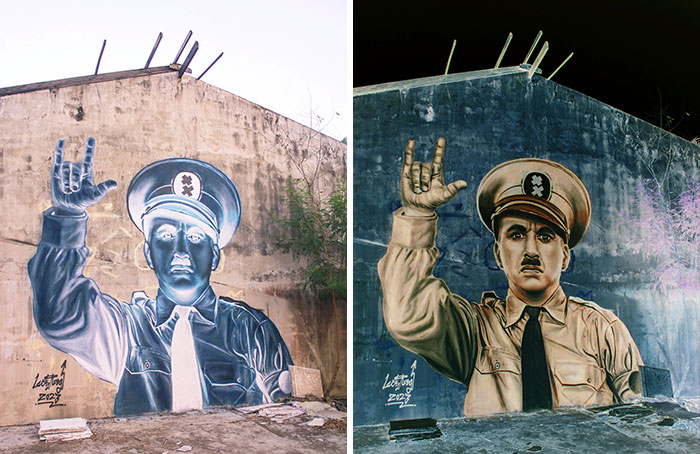
Oh, *Very* clever - AND well done! Using colors for the mural that mimic classic photo-negative hues, so a negative then becomes a 'positive print'! I *like* it!
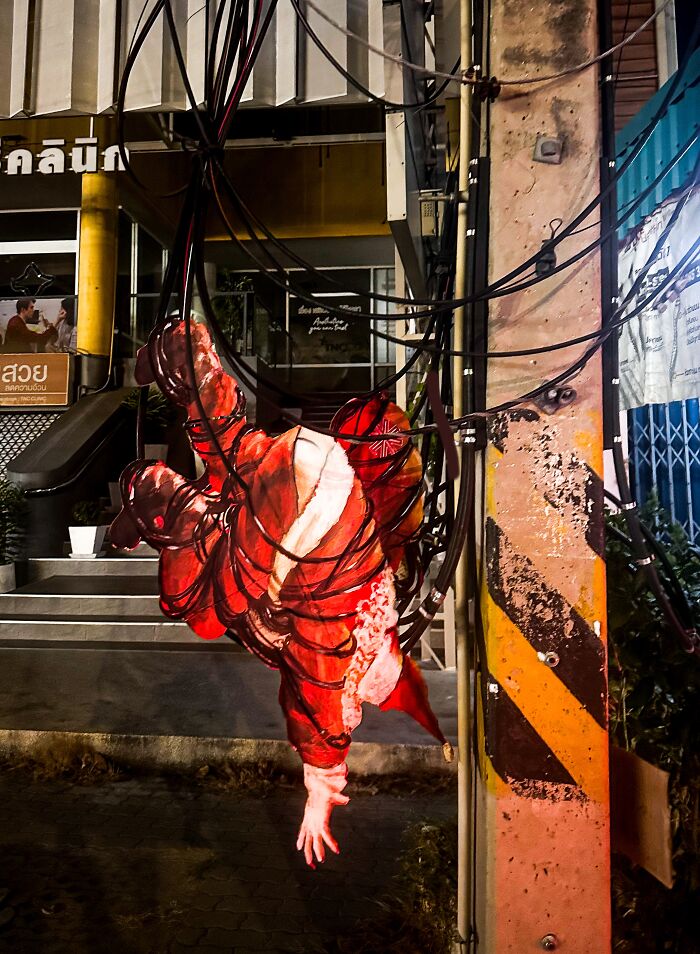
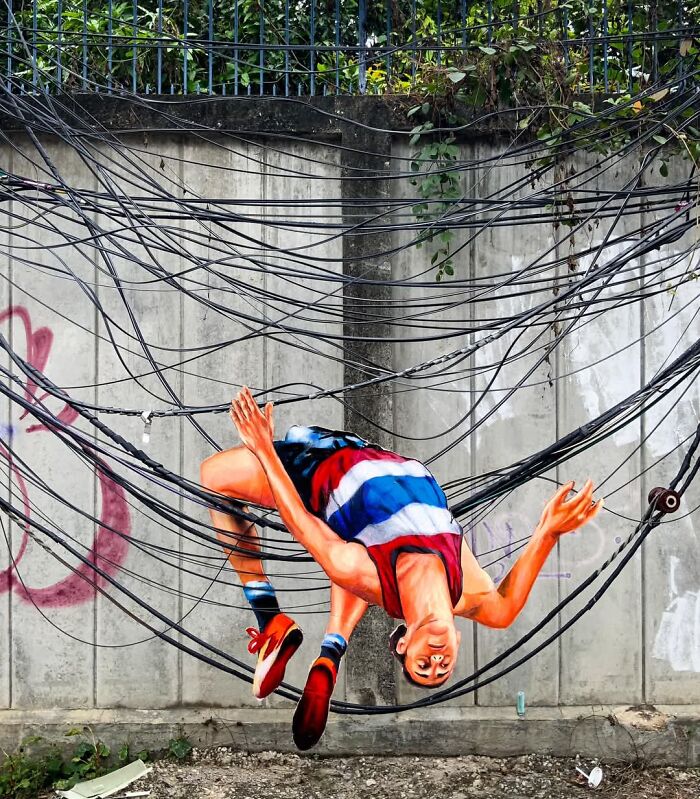
I'm starting to wonder if LuckyLeg doesn't harbor secret dreams of being Spider-Man?
When asked how he balances what needs to be understood instantly versus what can stay ambiguous, LuckyLeg pointed to the practical realities of painting in public: “My approach is dictated by the level of freedom and legal risk within a given space. I take the constraints of time and weather as the primary foundation for choosing the appropriate technique.”
On the idea that his work often feels like it’s speaking with the public rather than preaching at them, and how he thinks about different audiences, from locals to authorities to online viewers, he said: “People generally resonate with the aesthetics and the core concepts, seeing my art as a voice for their unspoken thoughts. However, addressing sensitive political and religious taboos comes at a price—ranging from high-speed escapes to actual arrests by the authorities.”
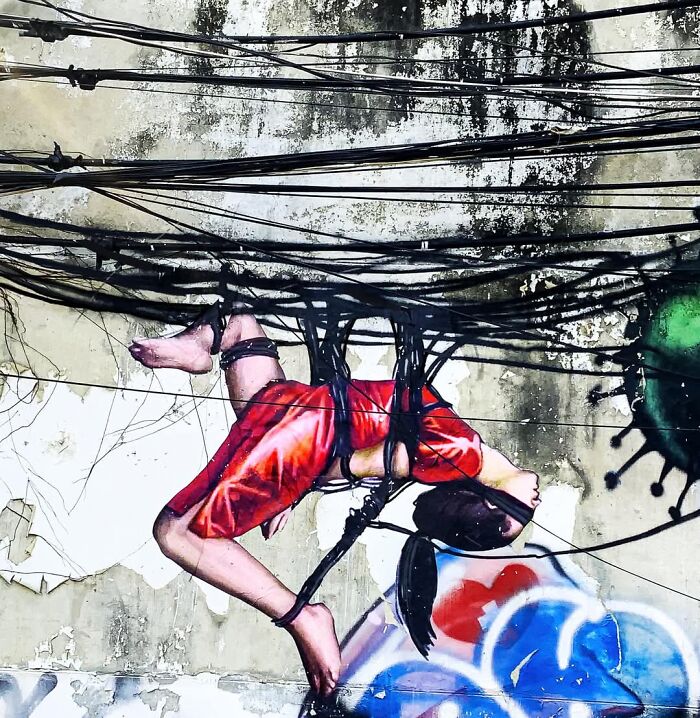
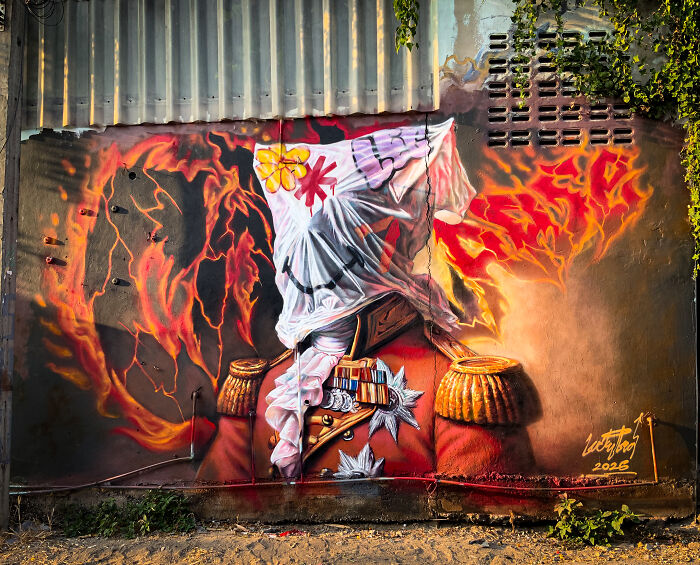
When the conversation turned to his instantly recognizable “Tangled in Wires” works, and what originally inspired the idea, LuckyLeg explained: “It’s something people in my country have seen forever; it’s become a part of Thai life. When I started doing street art, I wanted to speak on this chaotic mess, which serves as a perfect metaphor for our national structure—like a brief, punchy album cover of our country. I’m inspired to take these unappealing realities and give them new meaning through my interventions, offering people a fresh, creative perspective.”
Asked what the wires represent, and whether the meaning shifts depending on who or what appears underneath them, he added: “It speaks about the chaotic mess of Thailand's structure. My works consistently explore the theme of struggling against systemic bondage. They reflect the reality of living within a messy, intricate structure through a lens of passive resignation and biting dark comedy.”
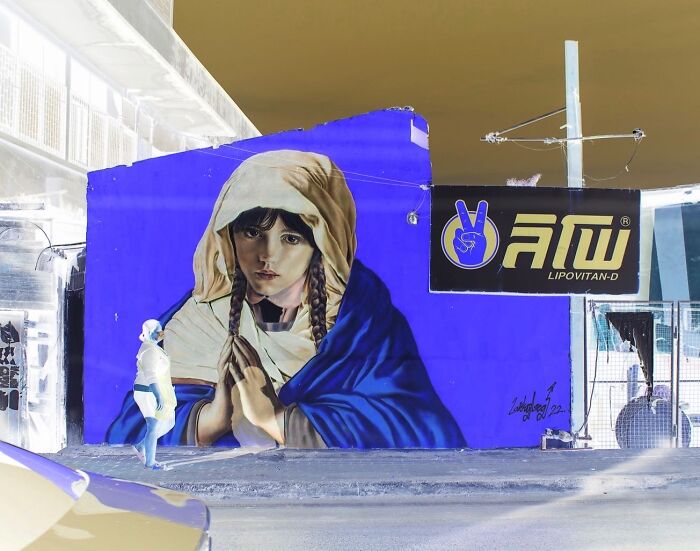
On his process, from choosing a wall and building the image, to selecting colors, and even deciding how a piece might look as a negative or positive photo, LuckyLeg said: “I started spraying street art during the military dictatorship, using color inversion to reflect a broken reality. It symbolizes a nation where justice is turned upside down: wrong becomes right, and right becomes wrong. This concept captures the essence of life under authoritarian control from then until now.”
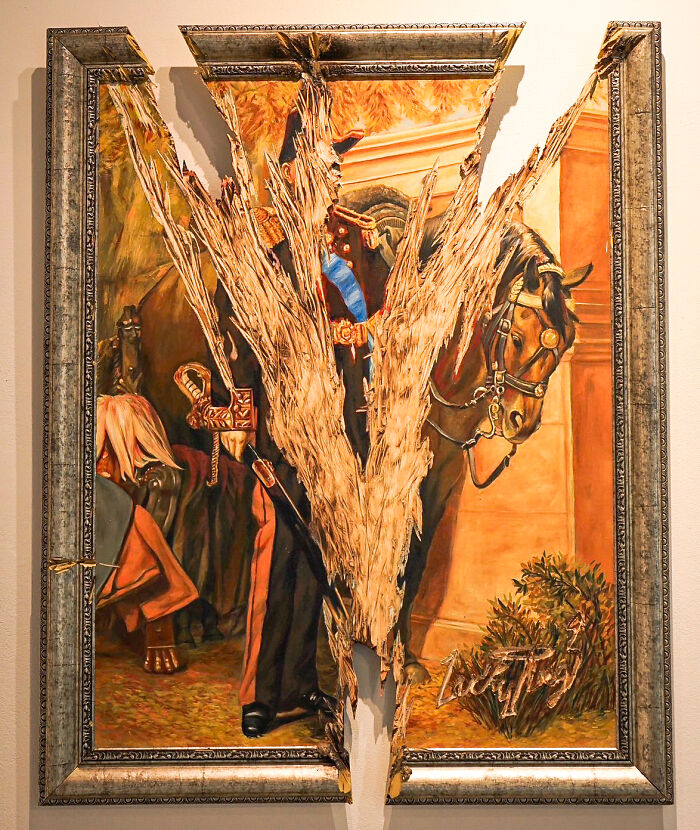
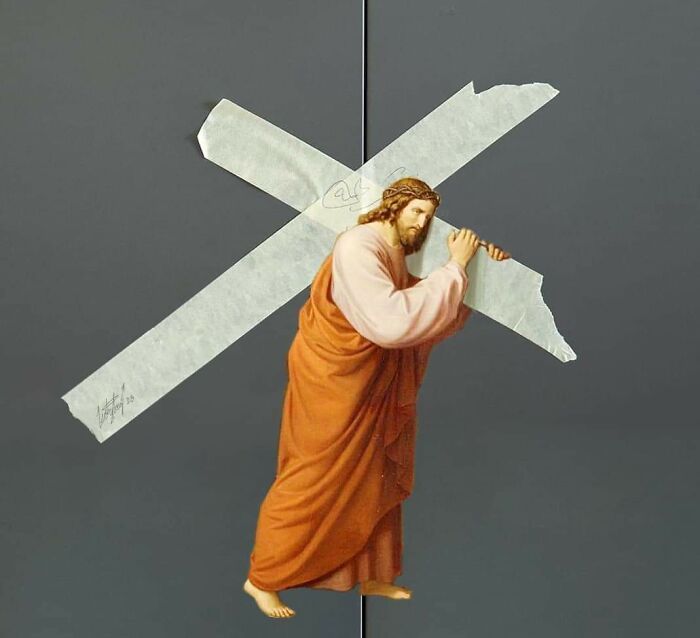
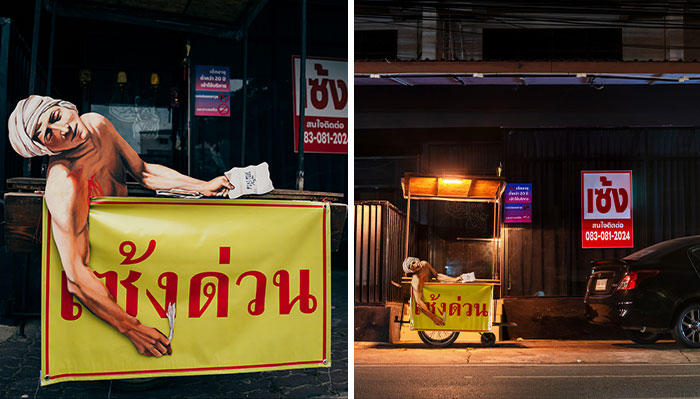
Objekt in this piece is borrowed from the painting 'The Death of Marat' by Jacques-Louis David
When asked how he navigates safety, legality, and censorship while making political street art, he answered: “Every piece is a calculated move. I assess the risks of the content and visuals, while tailoring my technique to the site’s constraints, from operational time to the potential need for a verbal defense of the work.”
And speaking about the role street art plays in Thailand today, and how the local scene compares to other places, LuckyLeg concluded: “Street art has gained more popularity than ever, embraced for its aesthetics, charm, and accessibility. It’s now even integrated into community development projects. However, we still face limitations in terms of conceptual depth and stylistic diversity compared to developed nations, largely due to ingrained traditional beliefs and social norms.”
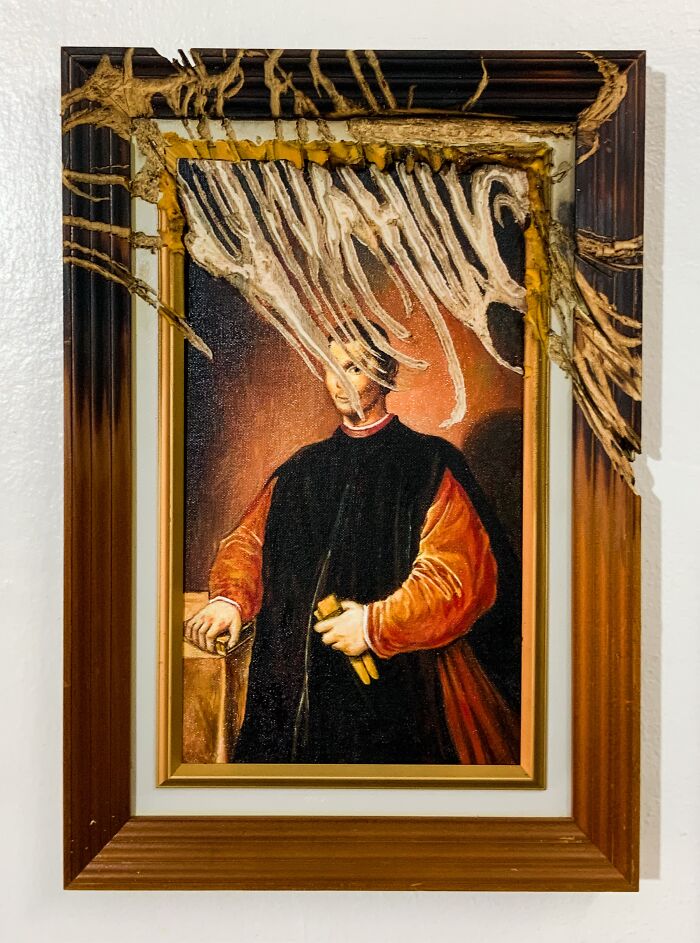
Yep - Charlie Chaplin, not Adolf Hitler. From Chaplin's masterpiece, 'The Great Dictator'. Proof is the 'double cross' insignia on the hat instead of the swastika.
A thank you to the Community Panda and Tarik Velić for a very interesting post! These are some strongly charged pieces of art, both politically as well as serving as a commentary on our current times.
A thank you to the Community Panda and Tarik Velić for a very interesting post! These are some strongly charged pieces of art, both politically as well as serving as a commentary on our current times.







 No fees, cancel anytime