Get Premium
Dark mode theme is available exclusively for premium users. Learn more about the benefits of subscribing.
No fees, cancel anytime.

 Dark Mode Ad-Free Browsing Unlimited Content
 Ad-Free Browsing Unlimited Content Dark Mode
Join 1.2 million Panda readers who get the best art, memes, and fun stories every week!
More and more people these days have begun to realize that self-care is important. Your mental health is as much a part of your overall well-being as your physical health. We all need to learn to be kind to ourselves, minimize our contact with toxic people, and do things that make us feel better.
It is important to remember that self-care doesn’t equal self-treatment. Telling yourself you’ll achieve your goal next time if this time it didn’t work out, doing what you feel like doing instead of being pressured into things by others, or just enjoying a bubble bath after a long day is absolutely great. It is also very necessary to keep your emotional health in balance.
However, if there already is an issue you don’t seem to be able to cope with, don’t self-diagnose and please don’t prescribe yourself any treatment based on what your friend’s aunt’s neighbor got from a doctor for a similar issue. Instead, talk to a mental health professional and let them help you. If you feel the need to ask someone how to get better (and that’s absolutely fine!), ask a person who is professionally equipped to give you a proper answer.
To celebrate World Mental Health Day (October 10), we have collected tips for mental health that, while not being a treatment in itself, will help you enjoy each day a little bit more and handle the emotional balance. All of them are scientifically approved by Mental Health America and several other reliable sources. If there is anything you regularly do to support your mental health, share it with us in the comments.
This post may include affiliate links.
 Hang out with animals.
Time with animals lowers the stress hormone and boosts oxytocin, which boosts the feeling of happiness.
Hang out with animals.
Time with animals lowers the stress hormone and boosts oxytocin, which boosts the feeling of happiness.

My cat used to always know when I'm not feeling 100%. He'd come lie down with me or snuggle up when I was feeling down.
Keep the temperature low for a good night's sleep. The optimal temperature for sleep is around 60-67 degrees Fahrenheit (16-19 degrees Celsius).
16-19? Wow, the only time we get those temps is in January-March and still quite rare. I need air conditioning lol
Drink plenty of water.
I try. I've got a 1L bottle on my desk to remind me everyday. I fail sometimes but I try.
Take a break if you need to. If you're feeling overwhelmed, even just a change of scene can help to relax.
 If you have something that's bothering you, write it down on paper.
Writing about upsetting experiences and events can reduce the symptoms of depression.
If you have something that's bothering you, write it down on paper.
Writing about upsetting experiences and events can reduce the symptoms of depression.

Another tip would be don’t write it down on paper, but type it electronically. Then, if you want, you can always delete it or password protect it and don’t have to keep anything physical (like a notebook or diary). Physical paper and pen may work for some, but this electronic method may work better for others.
Make sleep a priority. Stick to a schedule and make sure you're getting enough sleep.
Sleep is so important. I've also experienced depressive sleep which I call when you can't wait for the day to be over so you can use sleep as an escape. Still happens frim time to time.
Look after yourself. Basic self-care, like brushing your teeth or having a shower is important for your physical health and also can make you feel better.
Keep moving. Body and mind are one, so looking after our bodies can also help prevent or help to deal with mental problems.

I make a point to walk daily outside in the summer. Nature therapy saved my mental health.
Dance around while you do your housework. Not only you'll get your chores done in a more fun way, but also dancing reduces levels of cortisol (the stress hormone) and increases endorphins (the body's "feel-good" chemicals).
 Try to prep your lunches or picking out outfits for the work week.
Not only you'll save time in the mornings, but you'll also have a sense of control of the week ahead.
Try to prep your lunches or picking out outfits for the work week.
Not only you'll save time in the mornings, but you'll also have a sense of control of the week ahead.
I have to start the lunch prep. Work outfits not so problematic for me.
Try to set your sleeping environment comfortable. Small changes can help, like sleeping with a low light on, different bedding or different temperature.
Be kind and help create a better world. Research shows that being kind is beneficial for both giving and receiving sides. Showing kindness to others can boost our mood, help us feel more capable, strengthen connections and relationships with others, and even help cope with stress.
Eat healthy food. Food and drinks can affect our bodies, brains and moods in different ways, so a healthy diet is essential for good physical and mental health.
Work on your strengths. Do something you know you're good at, which will build your self-confidence and make tackling a tougher task easier.

There's nothing wrong with you that what's right with you can't transform
 Experiment.
Try a new recipe, write a poem, make a painting or a drawing, or try a new craft project. Not only it will break the routine, but the creative expression and overall well-being are also linked.
Experiment.
Try a new recipe, write a poem, make a painting or a drawing, or try a new craft project. Not only it will break the routine, but the creative expression and overall well-being are also linked.

I’ve been making AI art lately, and just got the go ahead from where my gf works to sell custom phone cases with my art on them!
Reach out to someone and show them some love. Close, quality relationships are essential for a happy life.
Try something that is outside your comfort zone, to bring adventure and excitement into your life.
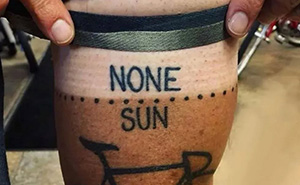
Work on a DIY project, such as fixing a broken gate, bike or something else.
Value yourself. Treat yourself with kindness, reward yourself and avoid self-criticism.

Wise words, if only it were that easy. Having quite an analytical approach, I tend to try to identify the reason that something went wrong so that I might fix it or better, avoid it in the future. It's quite hard to value yourself when you know that you are the reason you're in this mess. Once you are aware of it, you can't forget it either.
 Use night mode in your phone, computer and TV.
Blue light from screens can affect how quickly you fall asleep and how good that sleep is.
Use night mode in your phone, computer and TV.
Blue light from screens can affect how quickly you fall asleep and how good that sleep is.

Blue light or not, gripping your phone in bed at night like it's your life force will never help you sleep. It's going to do the opposite.
Go off the grid. Disconnect from all your social media, emails, alerts and other interruptions. Spend some time with someone face-to-face.
And put your phone down! You not off the grid if you're posting selfies or tik-toks
Try a mindfulness exercise in nature. Focus on your surroundings and find things to explore, see, hear, taste, smell or touch.
Get closer to nature. We have been living in nature, among animals and plants for the greater part of our history, so it's safe to say that nature can affect us in a calming manner.
Learn to understand and manage your feelings. A great number of us can feel a plethora of feelings, but not understand it or tell it apart. Is it sadness, fear, shame, loneliness, anger, all of them or something else entirely? We don't always know the reason we're feeling that way.
I have learnt to manage my outburst over the years. Basically kept reminding myself that nothing good comes of it.
 Be aware of using substances to cope with difficult feelings.
Not a single person wants to feel bad. Some turn to substances to help with coping with difficult emotions. However, substances offer only temporary relief. They do not stop the feelings from returning and can create other problems or make things worse, including mental health, physical health, relationships, work or studies.
Be aware of using substances to cope with difficult feelings.
Not a single person wants to feel bad. Some turn to substances to help with coping with difficult emotions. However, substances offer only temporary relief. They do not stop the feelings from returning and can create other problems or make things worse, including mental health, physical health, relationships, work or studies.
Get more from your sleep. There are times when all of us sleep badly, and some live in situations where a good night's sleep is just impossible. Sleep is also the first thing that suffers when we struggle with mental health. Try developing a relaxing bedtime routine to help you wind down. Avoid technologies, alcohol and coffee. Also, try getting up at the same time every day, including weekends.
If you're feeling stressed, try to smile. It might be hard to force yourself to do that, but smiling can help lower your heart rate and calm you down.
Send a thank you note for someone who assisted or helped you. Written expressions of gratitude are linked to increased happiness.
Try to enjoy 15 minutes of sunshine. Sunlight synthesizes Vitamin D, which is believed to be a mood elevator.
 Find free activities that would help you to get fit.
Try new hobbies that would challenge you. Like a new sport, writing or painting.
Practice stress coping techniques. Stress is part of life, and sometimes there's no escaping it. Learning how to deal with it can improve your life quality.
Try online learning. It's a good way to change up your routine if it's difficult to go out or you're short on time.
Establish a sleeping routine. Establish a regular activity routine before bed to set a regular sleeping pattern.
 Try to wind down before bed,
Make some time to relax before bed and avoid having caffeine in the evening.
Try to wind down before bed,
Make some time to relax before bed and avoid having caffeine in the evening.
Watch for thinking traps. There are times when something bad happens, and we get stuck in a negative thought train.
Talk to someone you trust for support. A lot of people have developed a habit of bottling their emotions inside and ignore any of the hurtful feelings they're experiencing. It takes a lot of courage to open up to someone else, especially for the first time, but just talking things through with another person can help and feel like a relief.
I bottle more than a soda factory. I know it's not good. I confide in maybe one friend but even then I try not to offload on them, they've got their trauma to deal with too.
Plan things to look forward to. Sometimes, we can get overwhelmed by things that are thrown at us, so planning an activity to look forward to, even something simple as watching your favorite TV show in the evening can help us cope with difficult situations.
Try to take some time to laugh. Go out with your funny friend, watch a comedy or spend some time looking at cute and funny videos online.
 Practice mindfulness, by focusing in the present.
Listen to a guided breathing exercise and later use this exercise before engaging in an activity at work, home or somewhere else.
Practice mindfulness, by focusing in the present.
Listen to a guided breathing exercise and later use this exercise before engaging in an activity at work, home or somewhere else.
It's hard to find problems in the present. By the time you think you've got one it's too late.
Do something with family and friends. Go to a park, play a game, or have dinner. People are more likely to feel happy when they spend 6-7 hours per day with friends and family.
While planning the next step, give yourself time. Go at your own pace, to not feel pressure from rushing.
Bring nature indoors. Flowers, potted plants or seeds for growing can give you the benefits of nature without having to go out or look for it.
 Try to keep active.
Try to work in a physical activity into your routine. It doesn't have to be anything big.
Try to keep active.
Try to work in a physical activity into your routine. It doesn't have to be anything big.
Write down a plan to solve a problem. Writing down a list of possible solution and trying them until you succeed can be a great way to move forward.
Be curious and open minded to new experiences. We all get stuck in routine sometimes, and it can call out thoughts like "it will never get better".
If you're feeling anxious, take some time to do some colouring. Pick a design that's geometric and a little complicated and spend about 20 minutes colouring to clear your mind.
Don't refrain yourself and yawn freely. Yawning can help to cool the brain and improve alertness, as well as mental efficiency.
 Relax in a warm bath once a week.
Adding Epsom salts could help soothe aches and pains, and boost magnesium levels, which can be depleted due to stress.
Relax in a warm bath once a week.
Adding Epsom salts could help soothe aches and pains, and boost magnesium levels, which can be depleted due to stress.
Practice forgiveness. Even if it's forgiving someone who cut you off on your way to work, practicing forgiveness can result in a better mental health and better satisfaction with life.
Compassion's better I think. Nobody owes me anything ultimately so nothing to forgive.
Volunteer at a local school, hospital or a community group.
Make the most of technology and try to stay in touch with people in your life that are far away.
Deep breaths. Take a nice, slow and deep breath. While slowly counting from 1 to 5, start breathing in from your belly, then expand to your ribs, chest and then lungs. Breath out just as slowly.
Also box breath, in for 4, hold for 4, out for 4, hold out for 4. Great quick way to get grounded and present when you're spiralizing.
Try what feels comfortable. It's not always easy to go out of your comfort zone, so start with something new that gives the most comfort.
Craft something that would challenge your brain. Dedicate an afternoon to craft some project, even if it will not have a purpose.
 Drink water regularly.
Being hydrated is essential for mental and physical health.
Drink water regularly.
Being hydrated is essential for mental and physical health.
Dive into nostalgia of comfort. Remember things which comforted you in the past, perhaps your childhood. It might now ground as much as it used to, but remembering your past might ignite a sense of compassion towards your old self, as well as hope that you will be able to reach that comfort again.
Try to make the most of your money and get help with debt problems. Anxiety from fear about paying debts, bills and other essentials on time can be very stressful. Burdens like this can make it harder to cope with everything, including money problems themselves.

And if you need financial help, pursue it. Find out the government qualifications for assistance.
Track gratitude and achievement. Include a number of things you are grateful for and a number of things that you were able to accomplish that day.
If there is something in your life that you'd like to improve, figure out the first step you can make towards it and work on it.
 Explore your own town.
Often people explore places on vacations elsewhere, but you'd be surprised how much cool things you could find in your town.
Explore your own town.
Often people explore places on vacations elsewhere, but you'd be surprised how much cool things you could find in your town.
Try to find some positives in something not necessarily good that happened recently.
Quiet your mind. Meditation and other relaxation exercises can improve your state of mind and the outlook on life.
 Try taking on a new responsibility at work, such as mentoring a junior staff member or improving your presentation skills.
Sometimes, we don't need a new activity to feel more joyful. Focus on the positive things in things you already have. Trying to be optimistic doesn't mean that you have to ignore the uglier side of things but focusing on the positive things as much as possible helps with your mental health.
If possible, take time each day to be with your family. For example, try arranging a fixed time to eat dinner together.































 No fees, cancel anytime