Get Premium
Dark mode theme is available exclusively for premium users. Learn more about the benefits of subscribing.
No fees, cancel anytime.

 Dark Mode Ad-Free Browsing Unlimited Content
 Ad-Free Browsing Unlimited Content Dark Mode
Join 1.2 million Panda readers who get the best art, memes, and fun stories every week!



Some people say that today there are almost no "blank spots" left on our planet - that is, places completely unexplored by humans. And therefore, supposedly, life today has become more boring than, say, a hundred or two hundred years ago. Well, that's definitely not true.
On the one hand, the depths of the oceans still hold many mysteries, and on the other, there's so much we still don't know about what directly surrounds us. What's more, we don't even know much about our own bodies! Still don't believe me? Then please feel free to read this list of interesting facts, made for you by Bored Panda!
More info: Reddit
This post may include affiliate links.

 So, you know how people with schizophrenia tend to hear voices, telling them all kinds of potential bad stuff...
Well, what do you think happens to people who were born deaf, but then get schizophrenia?
It turns out that if they were taught sign language, the "voices" come out as visions of disembodied hands signing at them to tell them the same kinds of bad stuff.
OTOH, people born blind apparently never get schizophrenia.

There's a guy who has hallucinations. His service dog is trained to 'greet' people. If the dog greet the person, the person is real. If the dog doesn't react, it's a hallucination. - - - The guy's name is Kody Green, and the dog is Luna. Whilst searching for his name, I found out there's a growing number of psychiatric service dogs.
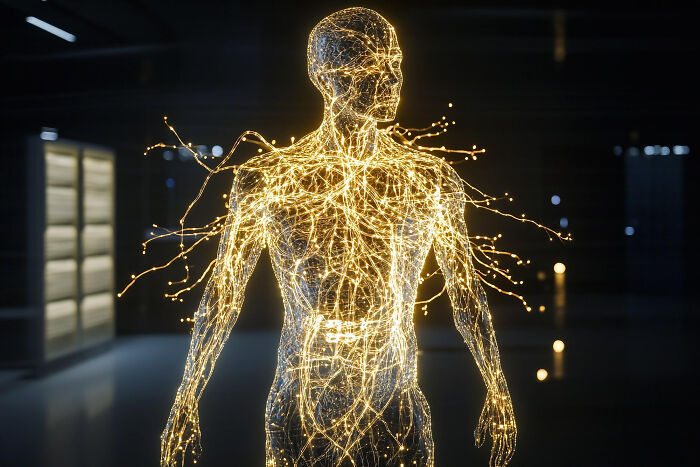 How about the recurrent laryngeal nerve, the nerve that runs from the brain to the larynx? Now you'd think that in humans, that would be a pretty short trip.
And you'd be wrong.
In fact, the nerve comes down from the brain, goes screaming right past the larynx and down to the vicinity of the heart, where it loops under the aortal arch, then finally comes back up to the larynx. And that is true for all mammals. In giraffes, the thing can be about 10 meters long.
And the reason it is that way is that evolved from a nerve that used to go from a fish brain to fish gills, and the shortest path was underneath the heart. But as fish evolved, their shape changed, and eventually they acquired a neck, moving the brain to a different place in the body. It's WAY easier for evolution to just make something longer as opposed to rewiring it, so the RLN just got longer and longer, still looping under the heart.
Reason #4821 why we know evolution is real.
 A baby girl is born with all of the eggs she will ever produce. This means when her mother was a fetus, the egg that would someday become her was carried in her maternal grandmother’s womb.
I adored my maternal grandmother and was extremely close to her. Knowing that she carried and nurtured part of me is such a beautiful thought.
A few days ago, in the AskReddit community, the user u/wassim_elia posed the question to netizens: "What's an interesting fact about the human body that a lot of people don't know?" The result was a thread that, in just a couple of days, has already garnered over 3.6K upvotes and around two and a half thousand various comments.
From amusing coincidences and absurdities to truly profound scientific opinions, netizens' “body facts” are astonishingly diverse. And the lively discussion surrounding many of these opinions and things truly makes them even more interesting. So, please read this selection of over three dozen of the most exciting pieces from this thread!
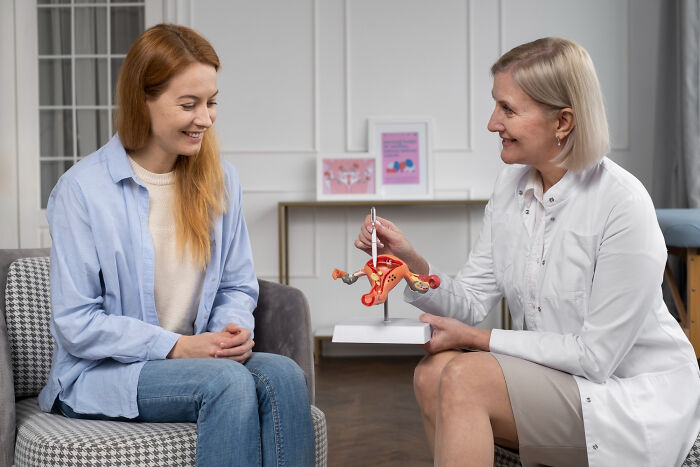 Oh okay I learned this fun one after some dumb little embryo stupidly implanted in my fallopian tube & kept trying to grow until the tube explode. Next thing ya know, I was in a hospital bed post-op from live saving surgery down an organ, one that I had no intention of parting ways with.
Fearful that I had essentially lost half my reproductive organs, the surgeon gave me an anatomy lesson.
So, typically when an egg is released by the left ovary, the left fallopian tube will snatch it up, same for the right side. I thought, “this is a bummer guess I have like half the opportunity to get pregnant again.” NOPE. My remaining tube can CREEP ACROSS my uterus to snatch up an egg released by the ovary on the opposing side.

Just one more reason why I wish I could have that whole system removed XD But it's astounding how difficult it is to convince an OBGYN that, at the age of 43, no, I'm NOT planning on having children and no, I DON'T have to talk it over with my husband (because I don't have one.) I wonder if, at my next annual, I should tell my OBGYN "Look, I KNOW my fallopian tubes can crawl around inside of me to snatch up my ova. NOW will you let me have a hysterectomy?" ......upon further thought, that'll probably just get me involuntarily committed... XD
 The brain is a very needy drama queen in many ways. It often acts like a selfish tyrant when it feels the need to protect itself... it can and *will* jeopardize nearly every other bodily system to save itself.
For example, fainting is essentially the brains super cool way of saying "I want better blood flow, but i'm not getting it, therefore I will *force* the body to be horizontal".
When you're on the floor, gravity acts in favor of better circulation to the brain than standing upright (the heart and brain are then on the same level).
Other examples can include glucose hoarding, blood shunting, and cushing's reflex, to name a few.
 Your tattoo ink is held in place by an army of living immune cells (macrophages) that don't know what to do with it. As they age and disappear, new guys come to the front line to hold the ink in place.
The evolution of human views on our own bodies is strikingly uneven. Two thousand years ago, Chinese and Roman doctors performed complex surgeries and inserted dentures - and just a couple of centuries later, millions of people in Europe seriously believed that humans were literally molded from a special kind of clay.
Some even considered attempting to understand how our bodies function as deeply sinful, while others, like Leonardo da Vinci, drew countless drawings of human muscles and bones to achieve maximum realism in their paintings. And so it has been throughout almost all of human history.
 When you do not get enough sleep, your brain can actually start eating itself. Microglial cells, which are responsible for cleaning up waste in the brain, begin breaking down and consuming healthy neurons and connections, not just damaged ones. This process, known as astrocytic phagocytosis, increases when you are sleep-deprived. Over time, this can lead to memory problems, slower thinking, and an increased risk of diseases like Alzheimer’s.
 That your stomach gets a brand new lining every 3 to 4 days. That’s your body basically saying to not worry about the acid in your stomach is under control. Stomach acid is strong enough to literally eat through metal if it could, so your stomach needs that constant makeover to keep itself from dissolving. Most people have no clue this is happening every single week.

My stomach threw it's toys out of it's pram over the weekend. It was not amused that I had a tiny amount of coffee. I suspect my stomach lining is made of nitroglycerin - prod it wrongly and it explodes. 🤢
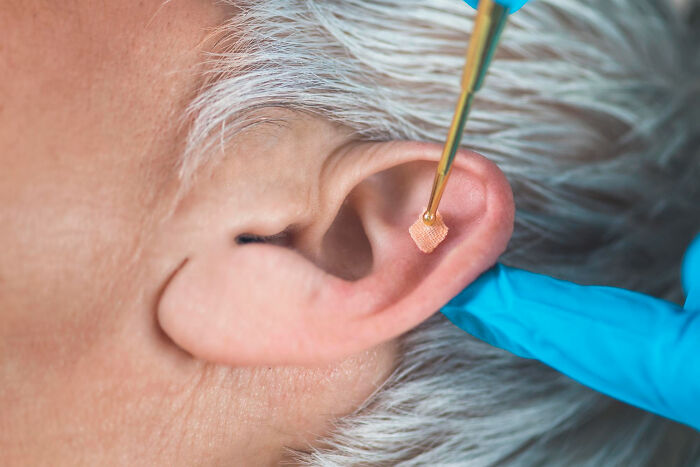 If you get shot in the ear the cartilage is damaged and will show a divot because it’s unrepairable.
Just over two hundred years ago, doctors learned to administer anesthesia during surgery, and a couple of decades later, they began actually washing their hands and disinfecting their tools. This revolutionized medicine.
However, the pioneers of these discoveries sometimes faced genuine persecution from "academic science" - like Ignaz Semmelweis, for example, who suggested that obstetricians simply disinfect their hands, thereby saving countless lives of new mothers and newborn babies.
But even in the 20th century, seemingly the most enlightened in terms of science and medicine, incredible things were sometimes quite common. With each passing decade, we learned more and more about our bodies - and often these discoveries completely overturned what had previously been considered absolute axioms.
Most people think Celiac Disease (a genetic autoimmune disease where the body destroys villi in the small intestine when gluten is consumed, leading to malnutrition, joint pain, ataxia, growth disturbance, and cancer) is something that affects Western populations, but it's actually turning out to be just as common (at around 1% of the population) in South East Asian and African populations as well as testing increases, particularly through immigration to countries where testing is common. The rate may also be similar in other populations as well if testing is ramped up there as well.
It's also not a new phenomena - it was first described in ancient Greece, and the Dutch Famine in WWII is what helped narrow down gluten as the culprit for what triggered Celiac - children dying of malnutrition in hospitals actually improved during the Famine because they were no longer fed bread.

And lactose intolerance where the body cannot digest milk sugar is common among people of African decent. This was not taken into account years ago when food donations to staving people included powdered milk. Those poor people ended up dehydrated from the diarrhea caused by consuming the milk.
 The nerves for your teeth run quite close to your sinuses.
If you get a sinus infection the swelling can push against the nerves and your brain thinks you have tooth ache. .
Back when I was in my 20s and my chronic migraines were really ramping up, I didn't yet know at that point that they WERE migraines, so I was desperately trying to figure out why I was getting all of these random pains in various places in my skull. I had a horrible "toothache" at one point, so I went to my dentist, convinced I had the very first cavity of my life. Nope, teeth were totally fine. Turns out it was a migraine, which can sometimes cause something called "referred pain", where the trigeminal nerve (which is affected by migraines) sends out signals that can be misinterpreted by the brain, which then convinces you that the pain is originating from other areas of your skull such as your forehead, eye, base of your skull, or your teeth XD
Very soon, in a couple of weeks, the first quarter of the 21st century will end, which many unfairly consider the era of the internet and computer technology. In fact, medical science has made tremendous strides in the last 25 years - in particular, we've gradually begun to achieve success in treating complex genetic diseases, as this dedicated article at National Geographic says.
And, beyond generating funny pictures and other meaningless slop that only clutters the internet, artificial intelligence is truly helping us discover new cures and solve health problems by finding new approaches to long-known problems. Every year brings us new knowledge about ourselves. We just need to have the desire to acquire this knowledge.
 I was just telling my kids about how if you put on special glasses that turn your vision upside-down, after a few days of wearing them your brain will 'correct' your vision back to right-side up. At that point without the glasses your 'normal' vision is upside down and takes a few hours to go back. I believe theres a paper by George Stratton about it.
 Located in the cochlea in your inner ear there are about 16,000 hairs called stereocillia. About 4000 of them are primarily responsible for your ability to hear. If you lost all 4000 hairs you would be deaf. If you lose a substantial amount of those hairs, your hearing will be reduced. Loud sounds, like machinery, explosions, cars and bikes and amplified music destroys those hairs. There isn’t really a “may harm” or “might damage” concept, just the degree of damage done when these loud sounds impact the hairs in the cochlea. Once damaged, these hairs never grow back. You have around 4000 and that is all you will have in your entire life. The more you lose, the worse your hearing will be. Forever.

Chemo can cause the lose of those hairs, my boss had perfectly fine hearing before going through chemo and now we have to yell when we talk to him.
 Your brain knows to ignore your nose. . . SITTING. . . RIGHT. . . THERE, because otherwise it would pretty much drive you nuts.
The brain ignores lots of things that present as constants. We don't generally hear our own heart beating, and we don't smell our own smell. Typically, we don't hear our own footsteps, unless they are echoing, or unusually loud. The brain says, "Nope, not interesting enough to use any processing power. What's next?"
Well, we're pretty sure you may know some of the facts listed in this selection, but some of them may be a real revelation for you. And then, in conversation with friends and colleagues, you can show off your new knowledge - after all, why not?
So please feel free to read this list to the very end - and in case you know something about the human body that isn't included here (after all, any list has its limits), please feel free to share your interesting piece of knowledge in the comments below.
Studies have shown that trauma can be inherited through markers on a person's genome that persist over multiple generations, meaning psychological trauma can be passed down through genetics.
For example, if your grandparent experiences a traumatic event in early childhood (say, a parents death) and lacks the appropriate support system to deal with the loss, the trauma they hold from this event can be passed to their child which in turn can be passed to you.

There are many fascinating studies on this. The best-written is about the genetic alterations caused by the trauma of the Họlọcaụst.
 The tongue is the only muscle attached at only one end.
According to my mother, mine is hung in the middle and flaps at both ends.
 If you ever need a kidney transplant, they don’t remove an old kidney they just add a third one.
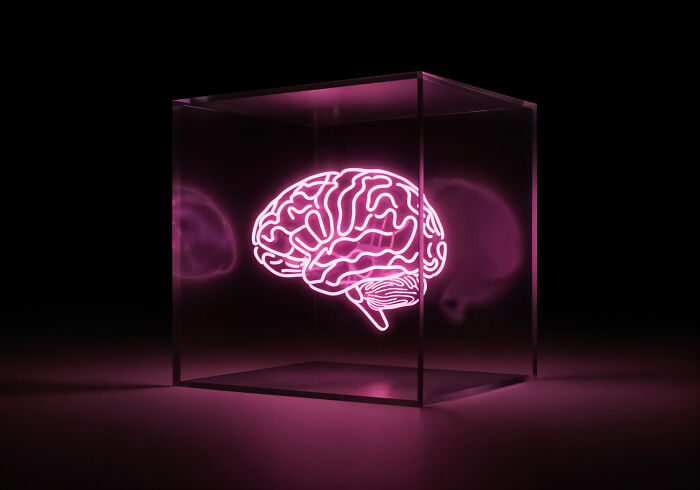 The human brain is pink, soft, jiggly and friable.
Source: I perform autopsies.
"Friable" means that it crumbles easily, NOT that it's easily fried in a frying pan, btw. Just in case someone was worrying that OP was pulling a Hannibal Lecter with the brains of the people they autopsy XD
 So there are these little bugs that live on your face. Pretty much everyone has them.. Demodex they are called. a mite that lives in human hair follicles, usually on your face. You can't wash em off as they bury too deep they eat your oily face sebum and reproduce at night.
 I’ll use myself for an example. I have a rare trait called antimetropia, in simple terms that means my eyes have opposite eyesight (one is nearsighted, the other is farsighted). Most people don’t seem to know this is possible. Even when I try to order glasses online… the websites tell me my prescription must be wrong because it’s too unusual.

My wife (and I'm sure man other people) ended up with this condition by design. Laser surgery on one eye to correct long-sightedness and actually make it slightly short-sighted. With such a situation the brain is able to combine the images to make a better complete picture at both short and long distances than either eye on its own. So after 30-plus years of wearing glasses she no longer needed them at all.
 Have you ever wondered why most animals all seem to basically look alike (at least until you become very familiar with some particular pet or something?) Whereas humans seem to be quite distinct.
Human faces, like our overall bodies, generally from one individual to another, are very similar in shape. We are not really different from other animals that way. People just _seem_ very unique because our brains are highly tuned to differentiate faces.
Also attractiveness in faces, aside from symmetry and masculinity/femininity, is mainly just about being the most average looking face possible. Meaning proportions that are most typical.
"Lactose intolerance" affects half of Americans and it's not a medical condition or flaw in any way. It's just not typical for human adults in general to be able to consume cow's milk. The idea that everyone should be able to drink it mainly comes from the dairy industry and maybe a little bit of racism. Cheese and pizza may be worth whatever the consequences are though :P
It's also not normal for humans to be able to routinely drink alcohol safely. That idea also comes from the alcohol industry.

Alcohol is literal poison so yeah, obviously it’s not normal for us to be able to drink it routinely and safely
 There is only one bone in our bodies connected to no other bones. It is called the hyoid bone and it is in your throat. .

 Our body loves fat but hates muscle because fat is like an energy storage for it and muscle is a "useless weight" for our body. Hence why is building muscle so hard. .
 The human body has more than 60 sphincters.
 People think their eyes are in the upper half of their skull. They are basically in the middle of your skull. Halfway between your chin and the top of your head.
I draw a lot of art of humans so I had to study a bit of basic human anatomy and I can verify this, if it weren’t for hair we’d see that we have large foreheads
 When a woman is pregnant, small bits of the baby's DNA cross the uterus barrier and stay in her body even after birth. So every child a woman carried has changed her forever.
Humans have stripes, but we usually cannot see them.
On the same subject, a lot of women are chimeras and don't know about it. They have different DNA in different parts of their bodies. Only a small portion discover it thanks to situations that demand DNA testing.
 You can actually smell your lungs while breathing but your brain ignores this smell.
Oh I learned this one recently: one of the X chromosomes in a person with two X chromosomes is inactive. So they’re technically only using one X chromosome (aka Barr Body).
All your senses (when stimulated) can wake you up EXCEPT smell! So if your house is burning at night you might wake up when the smoke starts to hurt your nose or throat but not because of the smell. That’s why fire alarms are very important!
 There’s regulatory mechanisms for the regulatory mechanisms that regulate gene expression. Triple regulation.
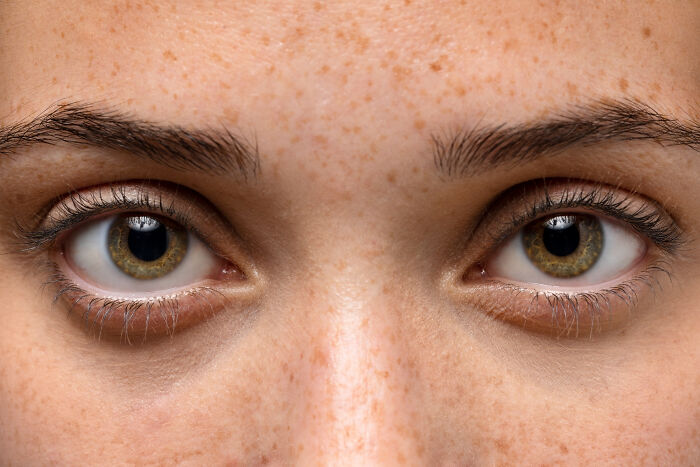 If your immune system discovers you have eyes, it will destroy them.
Not exactly, organs such as the eyes, CNS, foetus, placenta and the gonads have something called ‘immune privilege’ which basically means that these structures are allowed to deal with antigens on their own without the need for an inflammatory response as inflammation in these areas can have severe consequences. This post is way too oversimplified and may be misleading

For that question above, my answer would be teeth, I'd like to grow new teeth like a shark.

My favourite body fact, which is interesting for fans of Dr Evil from the Austin Powers movies: there is a tendon in the little finger that helps it extend. Its full name is the Extensort Digiti Minimi. Look up "minimi", I kid you not.
Not related to the article at all but as most of you guys know BP has started the ‘Christmas Marketplace’ thingy and it says that on collecting 1,000 gifts you’ll get 100% off on BP premium and I’m just a hundred short of reaching that goal. I don’t have any money of my own to purchase premium so it would be kind of neat if I was able to get it through this. So my question is should I really go for it and get 100% off on BP premium, would this website honour that claim or do you guys think it’s too risky and they’d end up charging me after a certain time?
Okay guys, I’ve reached the goal. I’ll sleep over it today and switch to premium tomorrow morning. I have no credit cards or any other way of online payment so they wouldn’t be able to charge me on renewal
Load More Replies... For that question above, my answer would be teeth, I'd like to grow new teeth like a shark.
My favourite body fact, which is interesting for fans of Dr Evil from the Austin Powers movies: there is a tendon in the little finger that helps it extend. Its full name is the Extensort Digiti Minimi. Look up "minimi", I kid you not.
Not related to the article at all but as most of you guys know BP has started the ‘Christmas Marketplace’ thingy and it says that on collecting 1,000 gifts you’ll get 100% off on BP premium and I’m just a hundred short of reaching that goal. I don’t have any money of my own to purchase premium so it would be kind of neat if I was able to get it through this. So my question is should I really go for it and get 100% off on BP premium, would this website honour that claim or do you guys think it’s too risky and they’d end up charging me after a certain time?
Okay guys, I’ve reached the goal. I’ll sleep over it today and switch to premium tomorrow morning. I have no credit cards or any other way of online payment so they wouldn’t be able to charge me on renewal
Load More Replies...



























 No fees, cancel anytime